

5
#000000
#FFFFFF
To donate by check, phone, or other method, see our More Ways to Give page.
Daily news & progressive opinion—funded by the people, not the corporations—delivered straight to your inbox.
"If even a professional athlete is saying this, maybe healthcare should just be universal and free."
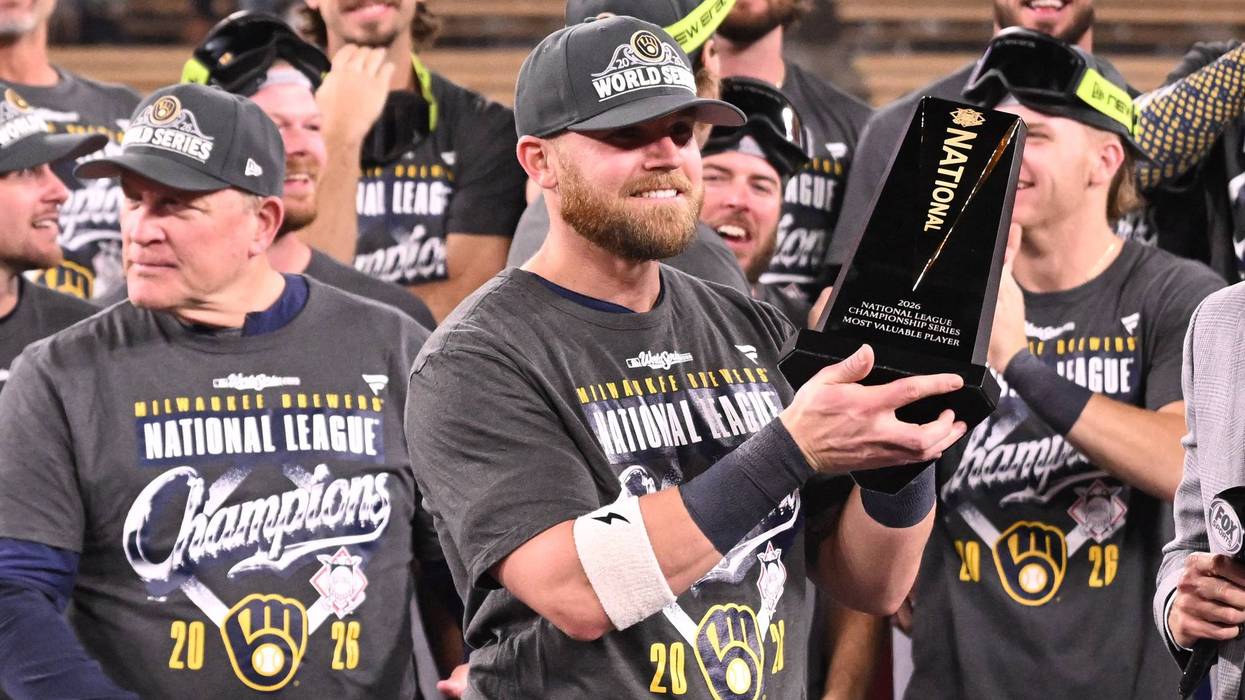
First baseman Jake Bauers of the Milwaukee Brewers helped his team end a 44-year drought Thursday night as they won the National League Championship Series to place them in the World Series, but in the process he kicked off a discussion—whether intentionally or not—about the role of employer-based health insurance that undergirds the for-profit system in the US.
While generating headlines throughout the pennant race due to his outstanding hitting and field play, Bauers journey to the top of Major League Baseball has Cinderella elements. Just two years ago, the Wall Street Journal reported Thursday that Bauers was ready to retire from the sport's highest level.
"He had been playing professional baseball since he was just 17, spending more than a decade bouncing across seven different organizations with little success," the paper reported. "After batting .199 for the Milwaukee Brewers in 2024, he was frustrated, burned out, and ready to move on.”
Life outside baseball intervened, but in a way familiar to millions of American families, not just pro athletes who can earn millions in lucrative contracts and endorsement deals.
“Bauers’ wife, Lauren, learned she was pregnant with the couple’s second child," the WSJ explained. "Suddenly, Jake’s plan to become a stay-at-home dad while Lauren returned to her teaching job no longer seemed viable. They needed health insurance—so Bauers begrudgingly decided to give his floundering athletic career one last chance."
After beating the Los Angeles Dodgers on Wednesday and taking a 3-0 series lead that his team would ultimately clean-sweep the following night, Bauers brought up that decision about his second child and his family's healthcare needs in a post-game interview.
Hahaha! What an awesome country! https://t.co/IYJmu5ZP0y
— Darkwoke Duck (@DylanTweetin) October 15, 2026
While the group of sportscasters conducting the interview laughed at the explanation, others who witnessed it recognized something more profound in what he described.
"If even a professional athlete is saying this, maybe healthcare should just be universal and free," said Luke Savage, a columnist for the left-wing magazine Jacobin.
In a subsequent Substack post published Thursday, Savage expanded on his thoughts about Bauer's situation, writing:
This obviously doesn’t rank anywhere near the top when it comes to horror stories about America’s healthcare system, but I still can’t get over how completely insane it is to hear. This is an elite professional athlete talking! And it’s the guaranteed outcome of a system that links health insurance so tightly to employment. In this case, that meant that a young couple’s desire to start a family was conditional on [squints] the ability of one partner to secure a contract with a professional baseball team (and, to a lesser extent, be good enough at the sport to work his way back up from the minors).
There are only so many ways to repeat the obvious here, but tying health insurance to employment is a Dickensian horror show. It gives employers tremendous power over their workers and forces people to stay in jobs they hate or want to leave. The same is true of private health care in general. It devastates families, burdens them with crippling medical debt, and limits their ability to have children. It stops them from seeking treatment when they’re sick and makes going to the hospital an economic decision. Even among those who can afford insurance, it creates different tiers of care and inevitably means that rich people get it faster and at higher quality — which is just another way of saying the American healthcare system ascribes your life greater or lesser moral weight depending on your bank balance.
Wendell Potter, a former health insurance executive turned whistleblower who now leads the nonprofit Center for Health & Democracy, agreed that Bauers, though his status as a professional athlete makes his situation seem exceptional, is incredibly normal within the nation's broken healthcare system.
"Sometimes it takes a high-profile sports figure or celebrity to help Americans understand how absurd and unfair our healthcare system is," Potter explained to Common Dreams. "If Jake Bauers did everything he could to stay in baseball primarily because he and his wife were terrified of losing health insurance that was tied to his job, imagine how many other Americans stay in jobs they would leave if it weren’t for their employer-sponsored coverage."
While Bauers may have been lucky to stay in the major leagues, said Potter, and even luckier to help his team make it to the World Series, the reality is that he—like millions of American workers—could have potentially been cut at any time, losing his job and his access to the health coverage he received through his employer.
"Millions of Americans are not so lucky. Many get laid off or have their jobs eliminated," Potter continued. "They lose not only their jobs but their family’s health insurance. No other developed country has a system that locks citizens into a job they’d like to leave or are scared to lose. I wish more prominent people in sports and entertainment would speak up as Bauer did about how vulnerable so many of us are to losing both our jobs and our health insurance."
"The reality," said Potter on Friday, "is that almost all Americans who are not covered by traditional Medicare are in danger of losing our health benefits and access to care because of a layoff or cuts to Medicaid that force millions into the ranks of the uninsured."
In 2019, a Business Insider poll showed that most Americans with employer-sponsored health coverage support switching to Medicare for All, undermining the often-repeated right-wing narrative that US workers are wedded to the for-profit insurance plans they receive.
As Common Dreams reported at the time, the survey found that 59% of respondents with employer-provided insurance “said they would support switching their employer-based health insurance to a government plan under Medicare for All” as long as coverage quality was maintained or improved.
In a post on his Health Care Un-Covered blog last month, Potter detailed how nearly 40% of Americans admit they’ve stayed in a job longer than they wanted because they or a family member needed the health coverage that came with it. The term for this dynamic is called "job lock," he notes. And nothing about this "is new to anyone who’s been paying attention," he writes. "What’s changed is how much sharper and more current the evidence has gotten" in recent years.
While Bauer's story about healthcare isn't political or partisan, the scale of the employer-based system in the US is deeply tied to the anxieties individuals and families experience. With Republicans actively undermining and attacking the floundering system that already exists, Savage in his column bemoans leaders from both parties who fail to embrace what has long been recognized by experts and progressives as the only viable solution to the crises: a universal, single-payer model best expressed by the Medicare for All legislation put forth by Sen. Bernie Sanders (I-Vt.) in the US Senate and Rep. Pramila Jayapal and others in the US House.
Exasperated by a political system that has denied US workers and families better healthcare, Savage asks, "What does one even say at this point?"
He said the so-called "debate" over the healthcare system in the US "is nothing of the kind."
"The leadership of both major parties oppose healthcare that’s free, universal, and public because they’re as addicted to dead market dogmas as they are to donations from a powerful industry," he writes. "The dumbest people alive will tell you that healthcare is best delivered by the marketplace and that the ability to purchase it as a commodity like any other is, in fact, the essence of freedom. Nothing could be further from the truth."
In his column from last month, Potter notes that critics of the employer-based system have long existed on the ideological right and left and argues that as long as health coverage remains "tethered to a single employer, job lock isn’t a glitch in the system," but rather "the system working as designed."
"The fact that people across the political spectrum have recognized that for decades," he concludes, "is exactly why it’s worth pressing the case again now."
Go Brewers!
"He’s so completely full of shit, and voters across the country know it," said one patient advocate.
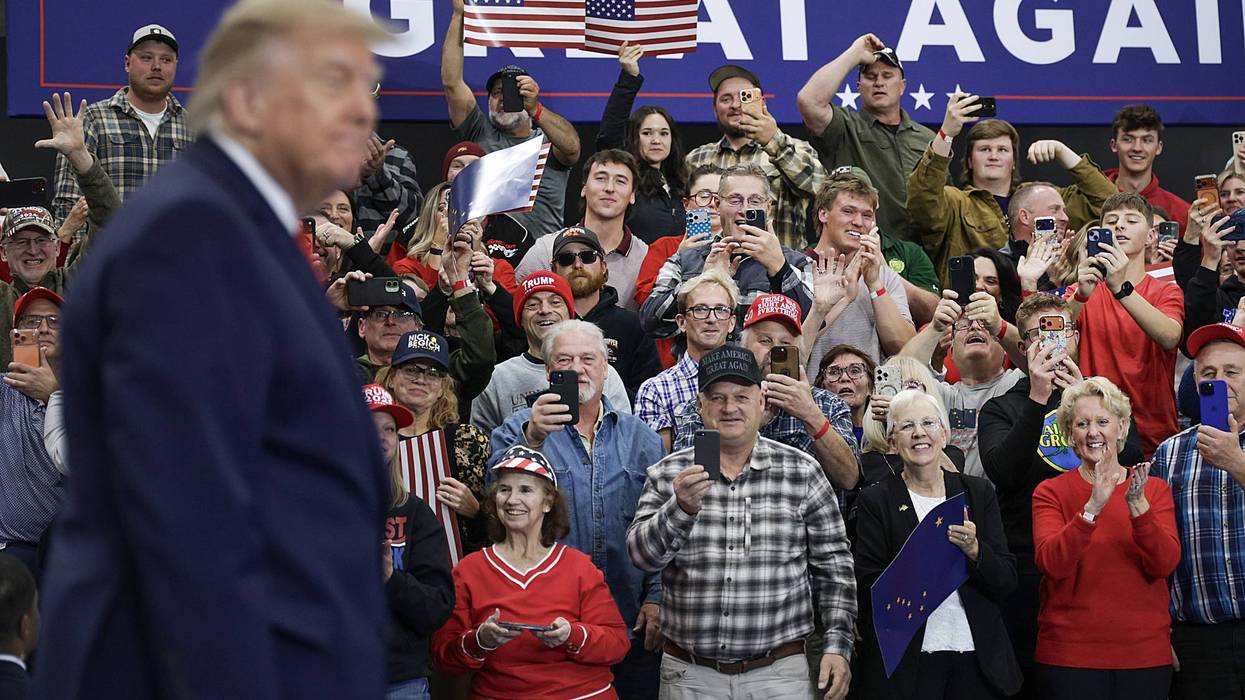
US President Donald Trump, who signed into law the largest Medicaid cuts in history last year and allowed private insurance premiums to skyrocket, assured supporters gathered at a rally in Wasilla, Alaska on Tuesday that he intends to enact "a truly great healthcare plan" if Republicans retain control of Congress in next month's midterm elections.
As with his earlier empty promises of a forthcoming overhaul of the US healthcare system, Trump offered virtually no detail on what his proposal would entail, saying vaguely that he wants to "stop all payments to big insurance companies" and "give the money directly to you, the people," to "go out and buy better healthcare."
While Trump's supporters in Wasilla applauded his promise—"clapping like seals," as one critic put it—patient advocates noted that Republicans have done nothing but make the country's healthcare system even more brutal and expensive over the past two years.
"All they did was cut Medicaid by $1 trillion to give tax cuts to billionaires and kick 3 million off of [Affordable Care Act] insurance," Dr. Rob Davidson, executive director of the Committee to Protect Healthcare, wrote in a social media post late Tuesday.
"He’s so completely full of shit," said Davidson, "and voters across the country know it."
Watch Trump's comments:
The advocacy group Protect Our Care noted ahead of Tuesday's rally that more than 34,000 Alaskans have health insurance coverage during Trump's second White House term. Brad Woodhouse, the group's president, said in a statement that “Trump has miserably failed Alaskans on healthcare, and now, with Election Day closing in, he has the audacity to waltz back into the state and act like none of it ever happened?"
"Make no mistake, this is a healthcare election, and Republicans have a whole lot to answer for," said Woodhouse. "With just weeks left until voters head to the polls, Trump is pulling out all the stops, from flashy rallies to desperate bribes. But the fallout from his healthcare cuts isn’t going anywhere. Families across Alaska are stretching their medications, skipping checkups, and crossing their fingers that nobody in the family gets sick enough to send them spiraling into debt."
"So Trump can put on his little show all he wants," Woodhouse added, "but eventually the stage lights will go out, the cameras will leave, and Alaskans will still be stuck paying the price."
Trump's rally came a week after the health policy organization KFF released a survey showing that 66% of Americans strongly or somewhat favor Medicare for All—the highest rate of approval since the group began asking about Medicare for All in 2017.
Separate Axios polling published Tuesday showed that a plurality of Americans support Medicare for All—and that Medicare for All's supporters outnumber its opponents nearly two to one.
Despite widespread and growing support for the proposal—which would guarantee comprehensive health coverage to everyone in the US at a lower overall cost than the status quo—Trump has openly attacked Medicare for All, falsely claiming it would cost "the entire budget of the whole country."
"We need Medicare for All," one critic said. "No private insurance necessary."
Corporate-backed Democrats evidently see the writing on the wall.
The latest polling from Axios-Ipsos American Health Index, released Wednesday, found that a purality of Americans support replacing the for-profit health insurance industry with a government-run Medicare for All plan, and that 62% of Democrats back the idea. Supporters of a single-payer healthcare program like those that have long existed in the United States' peer countries swept primary races across the US this year. And one of the top potential 2028 Democratic presidential candidates, Rep. Alexandria Ocasio-Cortez (D-NY), is a vehement supporter of the idea.
But instead of simply joining efforts to extend the popular Medicare program to everyone in the US, Majority Democrats—a group of Democratic lawmakers aimed at "reshaping and growing" the party, with billionaire hedge fund manager Stephen Mandel as its top funder—is intent on recycling an old proposal, with a new name.
The group introduced "Medicare for Americans" in a six-minute video posted on social media Tuesday—one that essentially described a "public option"—or a government-run healthcare program that would "compete" with health insurers instead of dismantling the $5.3 trillion-per-year for-profit system.
The video describes a plan similar to one unveiled in 2020 by former Transportation Secretary Pete Buttigieg, then a presidential candidate, who called his proposal "Medicare for All Who Want It."
"If we want to earn voters' trust back," says the narration, "we need a real solution... A revolutionary plan that will make a real difference in how we handle healthcare in this country."
The plan would "offer every American who is sick and tired of private insurance a plan through Medicare," the narrator continues. "People who want to keep the private insurance they have should be able to."
Sick of our broken healthcare system?Medicare is one of the most popular programs in American history. Why not give people the choice to enroll—and force insurance companies to compete?That’s Medicare for Americans. https://t.co/HQ8aIPPBRy
— Majority Democrats (@MajorityDems) October 11, 2026
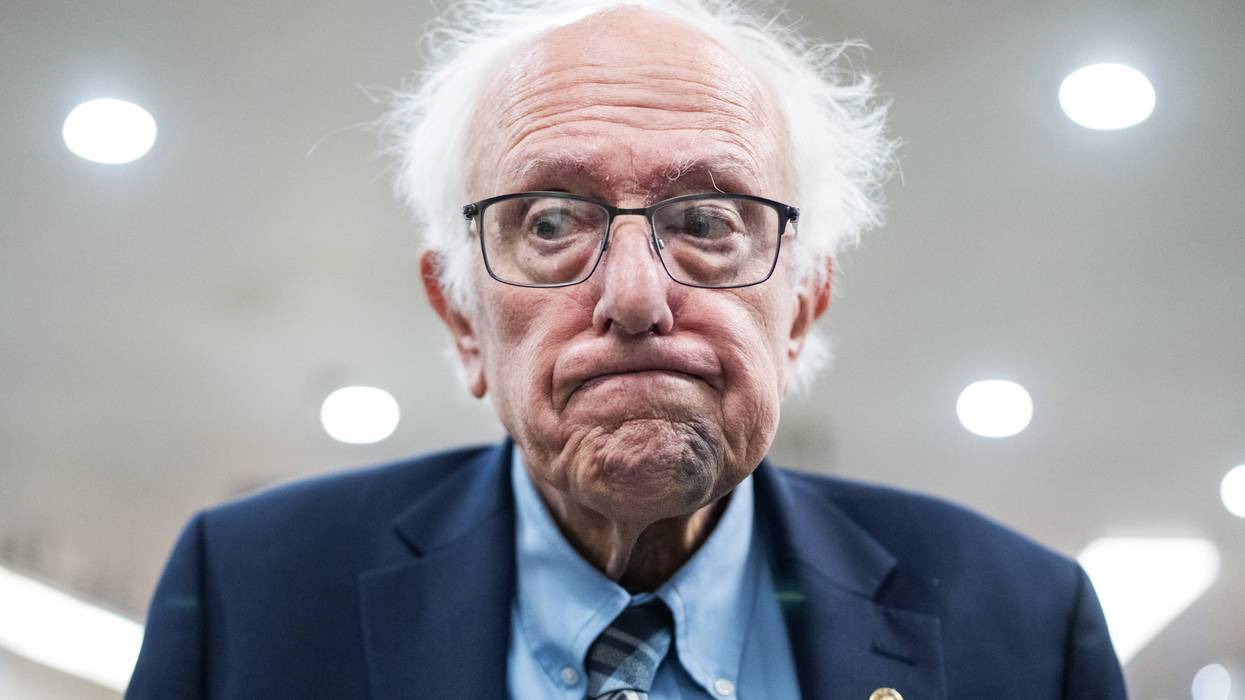
The video goes on to say that proponents of Medicare for All, like Sen. Bernie Sanders (I-Vt.) and Ocasio-Cortez, want to "blow up the whole system and tax the hell out of everyday Americans," while Republicans want to keep a "dysfunctional status quo."
It warns that Medicare for All "comes with a $40 trillion price tag," naming the estimated cost over a decade. But it neglects to mention that the annual cost of the current healthcare system—$5.3 trillion in 2024—is about $1 trillion higher than the annual cost of Medicare for All that was projected by researchers at Yale School of Public Health in an August study. Americans are also spending more on healthcare following the Republican Party's Medicaid cuts and refusal to extend subsidies under the Affordable Care Act.
"In one Axios-Ipsos survey, two-thirds of Americans, including half of Republicans, believe the federal government should be willing to increase public healthcare spending to lower consumer costs. But it’s misleading to suggest Medicare for All would cost more than our current system," noted The Lever, calling Medicare for Americans "the billionaire option."
Lis Smith, a Democratic political operative who has worked for Buttigieg and disgraced former New York Gov. Andrew Cuomo, praised the proposal as a "transformative, once-in-a-generation healthcare reform" that is "within reach... if Democrats are smart."
But one progressive streamer wrote that Majority Democrats "want to pretend like they support progressive healthcare policy but are just protecting private insurance."
"We need Medicare for All," she said. "No private insurance necessary."

"Costs are hitting Main Street from every direction at once and Washington doesn't seem to care about the needs of small business owners," said the head of a national coalition.
Arizona-based Gabe Hagen said Tuesday that "to keep my business afloat, I invested my 401(k) savings and leveraged my home equity as collateral for additional capital, putting my family's financial security on the line to sustain my business and employees."
"I raised my prices, but sales have just flattened out because customers are ordering less," explained Hagen, who founded the Tempe coffee roasting company Brick Road Community Corporation. He's among over 1,000 US small business owners polled by the national coalition Small Business for America's Future from mid-August to early October.
Among those surveyed, 77% have seen customers spend less, delay purchases, or trade down recently, with 46% saying that shoppers are spending "significantly less." Meanwhile, owners like Hagen are increasingly enduring more financial stress, with many cutting their own pay or pulling money from personal savings to keep their companies operating.
The survey exposes how "a combination of factors is crushing small business," the coalition said in a statement announcing its resulting report—which highlights soaring costs for everything from fuel to healthcare, and was released just weeks away from the US midterm elections that will determine control of Congress for the latter half of Trump's second term.
"Costs are hitting Main Street from every direction at once and Washington doesn't seem to care about the needs of small business owners," said Walt Rowen, the coalition's co-chair and president of Susquehanna Glass Co., a family-owned glass manufacturer in Columbia, Pennsylvania that's been around for over a century.
Rowen—whose company is located in a key swing state—noted that "my business is a good example of what is happening. We've been navigating erratic tariff policies that have disrupted our supply chains, and now my heating oil costs $4,000 to $6,000 a month."
"We've lived through the Depression, wars, and recessions," he said. "Heating my factory in this current economy is some of the hardest math I've ever had to do, and I'm expecting the bill to jump 30% to 40% this winter. This survey shows us that I am far from alone. Small business owners everywhere are comparing this economy to some of the worst moments we've had this century."
The survey shows that 83% of small business owners are concerned about their company's financial health over the next year, including 44% who are very concerned. Three-quarters called this one of the hardest economies of their careers, with over half drawing comparisons to the Covid-19 pandemic, and nearly a third pointing to the Great Recession.
A similar share (78%) accused decision-makers in Washington, DC of putting large corporations first, and 72% said running their business is harder than it was a year ago—with 85% citing inflation and rising prices as the source of strain. Majorities saw increases for utilities (72%); fuel (68%); transportation, shipping, or supplies (64%); business services (64%); healthcare and health insurance (54%); and employee wages and benefits (53%).
Those soaring costs have had consequences. Two-thirds of surveyed owners said they canceled, delayed, or scaled back investments in equipment, facilities, or technology. Over half did the same for hiring and expansion to new markets. Nearly two-thirds skipped or reduced their own pay, and 52% said their personal debt has increased in the past year.
Rising costs can be clearly connected to decisions by Trump and congressional Republicans—many of whom are up for reelection next month, as the GOP tries to hang on to its slim majorities in both chambers.
The president returned to power early last year having campaigned on a mass detention and deportation agenda, despite arguments from economists and elected Democrats that his approach was not only inhumane but economically risky. A clear majority of surveyed owners (61%) said that immigration enforcement has hurt the small business economy.
Trump and Republican lawmakers also enacted a 2025 budget package that cut federal healthcare spending and did not extend Affordable Care Act enhanced premium tax credits. Among surveyed business owners who buy their own insurance coverage through an ACA marketplace, 90% saw their premiums rise after the subsidies expired. Nearly three-quarters also said they fear rising health insurance costs will make it harder to hire and keep needed employees.
The administration's shifting tariff policy and refund process have caused further stress: 59% of owners said trade-related cost increases have made it harder to run their business, and only 3% have filed refund claims since the US Supreme Court's February ruling against many of Trump's tariffs.
Trump's illegal war on Iran continues to drive up fuel prices. The construction of artificial intelligence data centers—which the president has encouraged—is also increasing energy costs. Nearly three-quarters of those surveyed are worried about the impact of electricity demand from new AI facilities. Around the same share is concerned about the consequences of the new armed conflict in the Middle East, which the GOP-controlled Congress never authorized, but has refused to end.
In a social media post about all the findings, Small Business for America's Future urged, "Lawmakers, make your next decision with Main Street in mind."
“Healthcare is one of the significant ways that people experience economic pressure every day,” said Ipsos' president.
Yet another poll, this one released on Tuesday, shows significant support for Medicare for All as Americans grapple with rising healthcare costs and the Trump administration and congressional Republicans target federal programs upon which tens of millions of people rely.
A plurality—43%—of respondents to the latest Axios-Ipsos American Health Index said they support replacing private health insurance with a government-run Medicare for All system, compared with 24% who oppose the idea. Another 32% were unsure, leaving supporters outnumbering opponents by nearly two to one. Two-thirds of respondents also backed increased federal spending to reduce healthcare costs.
Respondents' views on Medicare for All are divided along party lines, with a majority of Democrats (62%) and a plurality of independents (47%) supporting the proposal, while a majority of Republicans (52%) oppose it.
Again: Supporting Medicare for All is not Radical — opposing it is. We can’t afford NOT to do it. #MedicareForAllNOW www.axios.com/2026/10/13/a...
[image or embed]
— The Tennessee Holler (@thetnholler.bsky.social) October 13, 2026 at 5:24 AM
The most commonly cited reason people said they oppose Medicare for All is fear that the quality of care would be inferior to that offered by private health insurance (38%), followed by concern that the program would be too expensive for taxpayers (22%), and that the federal government should not be involved in providing healthcare (21%). Supporters were not asked why they favor Medicare for All.
The survey also revealed deepening distrust of political leaders on healthcare issues. Just 20% of respondents said that they trusted President Donald Trump for health-related information, down from 31% in March 2025, while only 25% trusted Health and Human Services Secretary Robert F. Kennedy Jr. The poll also found that 49% would be less likely to support a candidate who received money from pharmaceutical company political action committees.
"Healthcare is one of the significant ways that people experience economic pressure every day," Mallory Newall, Ipsos senior vice president for US public affairs, told Axios. She noted that while many Americans still "have questions" about Medicare for All, the current level of support for the proposal is "noteworthy—and it is not solely driven by members of the Democratic Party."
Newall said that even if candidates "don't call it Medicare for All," expanding federal healthcare programs so that they cover more people "is a message that can connect with voters" as they prepare to cast their ballots in next month's midterm elections.
The stakes extend beyond Medicare for All. Republicans' sweeping 2025 budget law enacted the biggest cuts to Medicaid in the program's six-decade history, while enhanced Affordable Care Act premium tax credits expired at the beginning of 2026, threatening higher costs for millions of enrollees.
Progressives have cited these and other developments to argue that the private insurance system leaves working-class families vulnerable to corporate profiteers and political attacks.
A separate survey released last week by the health policy research organization KFF found that 66% of Americans favor Medicare for All, the highest level of support since the organization began tracking the issue a decade ago. While 84% of Democrats and 72% of Independents polled backed Medicare for All, 66% of Republican respondents opposed the proposal.
According to a study published in August by researchers at Yale University, shifting to a Medicare for All-type system would save more than 114,000 lives and around $1 trillion annually in the US. Sen. Bernie Sanders (I-Vt.) has cited the study while promoting his Medicare for All Act.
"Do not tell me we cannot afford Medicare for All," he said at the time of the study's publication. "What we cannot afford is a broken healthcare system based on greed."

Republicans' cuts to Medicaid and their refusal to extend enhanced Affordable Care Act subsidies are key factors in the coverage drop.
Independent healthcare analyst Charles Gaba on Thursday published an updated analysis estimating that up to 12 million Americans have lost their insurance coverage since the start of President Donald Trump's second term.
Gaba based his new estimate on updated data he compiled from recent reports for Medicare, Medicaid, and the Children's Health Insurance Program (CHIP), as well as some state enrollment data for Affordable Care Act (ACA) insurance exchanges.
In total, Gaba found that enrollment in Medicaid and CHIP has dropped by 6.2 million people since the start of Trump's second term, while enrollment in ACA exchanges is down by anywhere from 4.6 million to 6.1 million people, and enrollment in Basic Health Plans (BHP) is down by nearly 275,000 people over the same period.
While there are around 1.8 million more people enrolled in Medicare now than there were at the start of Trump's term, Gaba noted that this isn't nearly enough to make up for the loss of enrollment in other programs.
Adding everything up, Gaba estimated that "between 10.88 million and 12.40 million fewer Americans enrolled in a public healthcare coverage program as of June 2026 than in were as of January 2025."
As in prior analyses, Gaba examined the possibility that some of the people who lost coverage through these programs transitioned to employer-sponsored insurance, but deemed it "extremely unlikely... since unemployment is higher than it was in January 2025."
Over the last two years, Trump and congressional Republicans have taken a number of actions that have made healthcare less affordable and pushed people off coverage.
First, they cut spending on Medicaid by an estimated $900 billion over a 10-year period when they enacted the One Big Beautiful Bill Act in 2025. The Congressional Budget Office projects these cuts will leave more than 10 million fewer people enrolled in the program by 2034.
GOP lawmakers last year also refused to extend enhanced subsidies for insurance plans purchased through the ACA, even as insurers raised premiums on those plans by an average of 26% this year, according to an analysis published by KFF.
In a Thursday article published by Time, scholars Neale Mahoney and Abigail Sanchez of the Stanford Institute for Economic Research warned that the costs of private health insurance are set to spike even further in 2027.
"Employer health plan costs are projected to rise 8 to 10% next year," Mahoney and Sanchez explained, "the largest increase in more than 20 years and double the average increase of the 2010s."
The two researchers said there are three major reasons for the surge in insurance costs: The expiration of the enhanced ACA subsidies, an increase in premiums and out-of-pocket costs for employer-based insurance plans, and the upcoming Medicaid work requirements projected to push millions of people off the program.

A petition signed by nearly 6,500 healthcare workers demands accountability for the Israeli Medical Association, accusing the organization of complicity in human rights violations.
Thousands of healthcare workers from across the globe are calling on the World Medical Association to suspend Israel’s membership in the organization over the government's mass killing and detention of medical professionals in Gaza, destruction of the Palestinian territory's healthcare system, and ongoing genocide.
The demand came as the WMA's General Assembly gathered in The Netherlands for its annual meeting, which runs through Saturday. A petition addressed to WMA leadership and signed by around 6,500 healthcare workers declares that the Israeli Medical Association (IMA) has "failed to uphold core medical ethical standards" and is "complicit in serious violations of medical neutrality and human rights, committed by the Israeli military and government."
The petition points to Israel's systematic attacks on Palestinian healthcare infrastructure and personnel, detention and torture of medical professionals such as Dr. Hussam Abu Safiya, obstruction of medicine and other humanitarian aid in the occupied Palestinian territories, and the ongoing genocide in Gaza.
Supporters of the petition campaign demanded that the WMA suspend the IMA "until it publicly upholds medical ethics and humanitarian law, condemns murder and torture of Palestinian health workers and takes action against violations by its members." They also called on individual national members of the WMA to follow the example of the South African Medical Association, the British Medical Association, and the Turkish Medical Association in cutting institutional ties with the IMA.
"Medical ethics are the foundation of trust in healthcare," the petition states. "The international medical community has acted before, including during apartheid in South Africa. If medical ethics are to mean anything in the future, and we are to have confidence that the WMA can fulfill its role as the international guardian of medical ethics, then it must take concerted action to hold the IMA to account."
The Israeli military has killed around 1,700 healthcare workers and detained hundreds more without charge since it began its massive assault on Gaza in the aftermath of the Hamas-led October 7, 2023 attacks.
Last year, the IMA defeated a similar effort to suspend its WMA membership. Instead, the WMA General Assembly adopted a toothless resolution calling on the Israeli government to "instantly halt all forms of attacks on healthcare personnel, patients, healthcare facilities, and food and medical aid logistics."
“Thirty years of WMA dialogue with the IMA has done nothing but give the IMA a sense of impunity. Why should they change?” Jonathan Fluxman, a British Medical Association member and retired doctor, said in a statement on Friday. “It is time for national medical associations and the WMA to speak out and take action. Break your ties with the IMA and suspend the IMA from the WMA now.”
"Either a white coat is worth protecting everywhere, or it is protected nowhere."
Earlier this week, Doctors Without Borders—known internationally as Médecins Sans Frontières (MSF)—called on the WMA to "join the calls to conduct swift, transparent, and impartial investigations into attacks on healthcare in Gaza and the West Bank, while reiterating its call for the release of all arbitrarily detained healthcare workers."
Dr. Javid Abdelmoneim, MSF's international president, highlighted the case of Abu Safiya, the former head of Gaza's Kamal Adwan hospital who has been detained by Israeli authorities for over 18 months without charge.
"He continues to endure prolonged solitary confinement, severe weight loss, and untreated pre-existing conditions; an international petition for his release has drawn signatories from 41 countries," Abdelmoneim noted. "Alongside him stands Dr Mazen Al-Rantisi, the 71-year-old family physician from Ramallah, known as the ‘doctor of the poor,' arrested in June 2026 in a pre-dawn raid on his home. In addition, our long-time Médecins Sans Frontières colleague, Dr Mohammed Hassan Ali Obeid, a respected 43-year-old Palestinian orthopedic surgeon and father of three children, has been detained under the Unlawful Combatant Law in Israel for more than 600 days without charges."
"Healthcare workers are not targets," wrote Abdelmoneim. "Either a white coat is worth protecting everywhere, or it is protected nowhere. The test is not simply whether we affirm these principles, but whether we uphold them when it matters most."
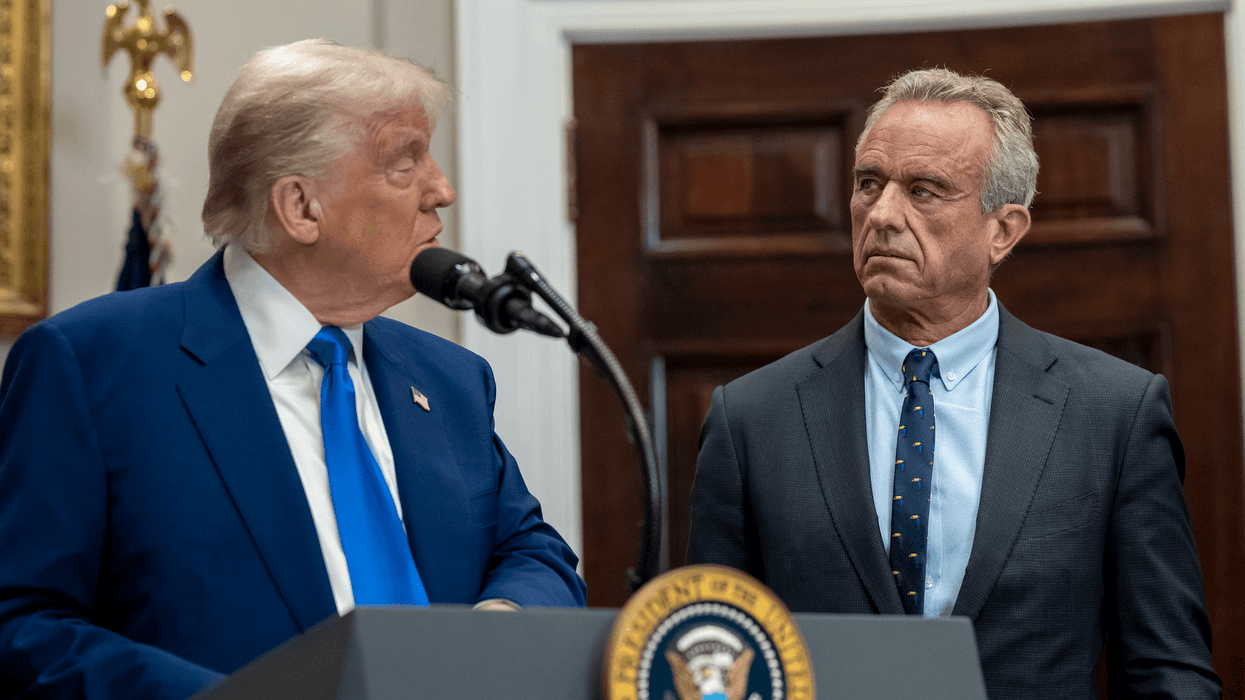
"Donald Trump is stealing taxpayers’ dollars that Congress set aside to improve Americans’ health," said a group of House Democrats.
An independent federal watchdog concluded on Wednesday that the Trump administration violated the law last year when it refused to spend $78 million that Congress appropriated to support lifesaving healthcare research.
The Government Accountability Office (GAO) said that the US Department of Health and Human Services, headed by Robert F. Kennedy Jr., violated the Impoundment Control Act of 1974 by withholding grant funds as the administration worked to gut the Agency for Healthcare Research and Quality (AHRQ). Researchers and advocacy organizations say the grant freeze has derailed key patient safety research.
In response to the GAO's finding, the congressional Democrats who called for the investigation said that the report "confirms what we have known for over a year: Donald Trump is stealing taxpayers’ dollars that Congress set aside to improve Americans’ health."
"The administration’s unilateral dismantling of the Agency for Healthcare Research and Quality’s grantmaking operations is an illegal impoundment of congressionally appropriated funds," said Reps. Diana DeGette (D-Colo.), Doris Matsui (D-Calif.), and Don Beyer (D-Va.). "Under Article I of the Constitution, the power of the purse rests strictly with Congress, not the executive branch. Trump’s administration cannot simply refuse to spend the resources we authorized for lifesaving healthcare research. Republicans must join Democrats in demanding that the Constitution is upheld."
HHS is currently facing a lawsuit over its unlawful withholding of grant funds. The Society of General Internal Medicine and the North American Primary Care Research Group, the groups behind the suit, said the Trump administration's assault on AHRQ has "eliminated" the agency's "ability to process research grant applications, delayed decisions on pending applications, and withheld the use of funds that Congress specifically appropriated for healthcare research."
"As a result, millions of dollars intended to support innovative studies on healthcare delivery have gone unused," the groups said after filing the lawsuit late last year. "By halting these funds, HHS has abandoned support for the healthcare research that Congress expected and that the American public needs.”
AHRQ has not issued a single new research grant over the past 18 months, according to Josh Caplan, director of advocacy at the nonprofit AcademyHealth. Most of the agency's staff has left or been pushed out by the Trump administration, which has waged a wholesale assault on the government workforce since taking power last year.
"Those reductions include the entirety of the staff overseeing [AHRQ's] extramural grant program that reviews, issues awards, and manages federal investments, as well as nearly all staff supporting the US Preventive Services Task Force, dissemination and communication efforts, and intragovernmental experts," Caplan wrote in a blog post on Wednesday.
Sen. Patty Murray (D-Wash.), the top Democrat on the Senate Appropriations Committee, said Wednesday that the GAO's decision confirms that "President Trump lit health research funding on fire last year, and it’s clear as day he’s just done the same again this year."
"In fact, President Trump announced to the world just a few days ago that he was illegally cutting nearly $30 million more, and HHS has failed to detail to the committee exactly how it has spent down AHRQ funding for fiscal year 2026," said Murray. "This is research that has saved tens of thousands of lives and saved billions of dollars in healthcare costs—but President Trump and Secretary Kennedy are intent on breaking the law to cut it off, and Republicans in Congress have all but let them do it."

"Mainers can't afford to pay their bills with a press release or a strongly worded letter," said Jackson.
Democratic US Senate candidate Troy Jackson took his Republican opponent, incumbent Sen. Susan Collins, to task during a Tuesday debate for her role in Maine's worsening healthcare crisis, accusing her of paving the way for the disaster while attempting to take credit for an inadequate relief fund.
"Senator Collins is like an arsonist who helped set the fire, and then she wants credit for bringing a cup of water to put it out," Jackson said after Collins touted her role in securing a $50 billion fund for rural hospitals. The fund was part of a Republican budget package that includes the largest Medicaid cuts in the program's history—roughly $900 billion over the next decade.
Collins, who is running for a sixth term, voted against final passage of the Republican budget legislation, but she played a key role in advancing the bill through the Senate.
"She could have stopped it," Jackson, the former president of Maine's Senate, said of the budget law, which is fueling hospital staffing cutbacks and closures across the US, including in Maine. "What she brought back is a pittance to what we're losing in this state. I mean, we're watching our healthcare system crash right in front of us."
Watch:
Tuesday's debate came weeks ahead of the November general election, which polling indicates is a tight race. A survey conducted at the end of September by the Maine People’s Resource Center found Jackson leading Collins 49.3% to 46.5%—an advantage that was within the poll's margin of error.
During the debate, Jackson hammered Collins over her pro-Trump voting record and repeatedly accused her of playing up minuscule or largely symbolic opposition to the president's unpopular actions, including his tariffs on Canada and his illegal war on Iran.
After Collins noted that she "got concrete, pulp, and road salt removed from the tariff list," Jackson responded: "We can't eat road salt."
"Mainers can't afford to pay their bills with a press release or a strongly worded letter," said Jackson.
Jackson also highlighted recent ProPublica reporting that placed Collins at the center of a “sprawling pay-to-play operation” involving a Hawaii-based defense contractor accused of funneling donations to lawmakers in exchange for federal contracts.
"As late as 2024, the FBI was circling around Senator Collins," Jackson noted, citing the federal investigation that ProPublica revealed. "Then, whenever President Trump came back, his administration dismantled the investigation. Now, she votes with Donald Trump 96% of the time."
"I don't owe Trump. I don't owe the billionaires nothing. In fact, I've spent my life fighting back against billionaires," Jackson added. "But I do owe the people of Maine everything. I refuse corporate PAC money, I want to ban congressional stock trading. I fight for working Mainers every day. I'm not taking money from corporations like Susan Collins does."
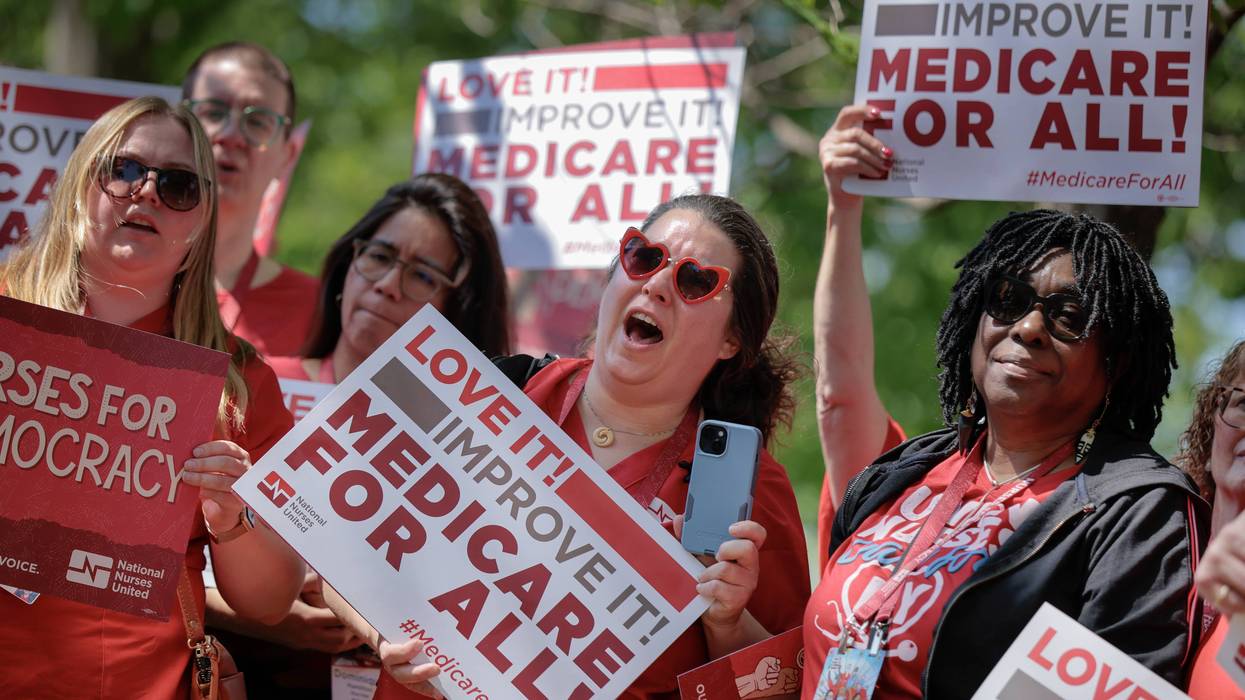
"Americans are done with a healthcare system that puts profits before people," said Congresswoman Ilhan Omar.
Two-thirds of Americans now support a national health insurance program commonly known as Medicare for All, according to a new poll released Tuesday by KFF, marking the highest level of support recorded since the public health policy group began tracking the proposal a decade ago.
The latest KFF Health Tracking Poll, conducted between September 16-21, found that 66% of US adults favor Medicare for All, up substantially from the 53% who supported the idea when KFF last asked the question in October 2020. Just 34% now oppose it.
KFF's findings come as healthcare affordability has emerged as a major concern heading into November's midterm elections. Health costs and gasoline prices are tied as Americans' top economic worries, while voters now trust Democrats over Republicans by a 20-point margin to handle healthcare costs, according to the poll.
Two-thirds of the public favor Medicare-for-All — the highest share since KFF began polling on the topic in 2016 — but public opinion is highly malleable and support shifts when competing claims from critics and proponents are heard: https://on.kff.org/4zgJv6z
[image or embed]
— KFF (@kff.org) October 6, 2026 at 11:04 AM
The poll results also underscore growing public frustration with the nation's costly and fragmented healthcare system, with progressives increasingly arguing that voters want more than incremental reforms.
"People are sick of a broken healthcare system driven by the greed of the insurance industry and Big Pharma," Sen. Bernie Sanders (I-Vt.)—who twice ran for president as a Democrat on a Medicare for All platform—said Tuesday on social media. "The time to pass Medicare for All is NOW."
Congresswoman Ilhan Omar (D-Minn.) said: "Two-thirds of Americans support Medicare for All. Americans are done with a healthcare system that puts profits before people."
"Medicare for All can save 114,000 lives and $1 trillion a year," Omar noted, referring to a recently published study out of Yale University and adding, "Turns out, progressive policies can be good politics AND good policy."
Audrey Kearney, a senior survey analyst at KFF, told Reuters that “all year, KFF polls have shown that the public is frustrated with the high cost of healthcare, and that may be leading to a desire for change."
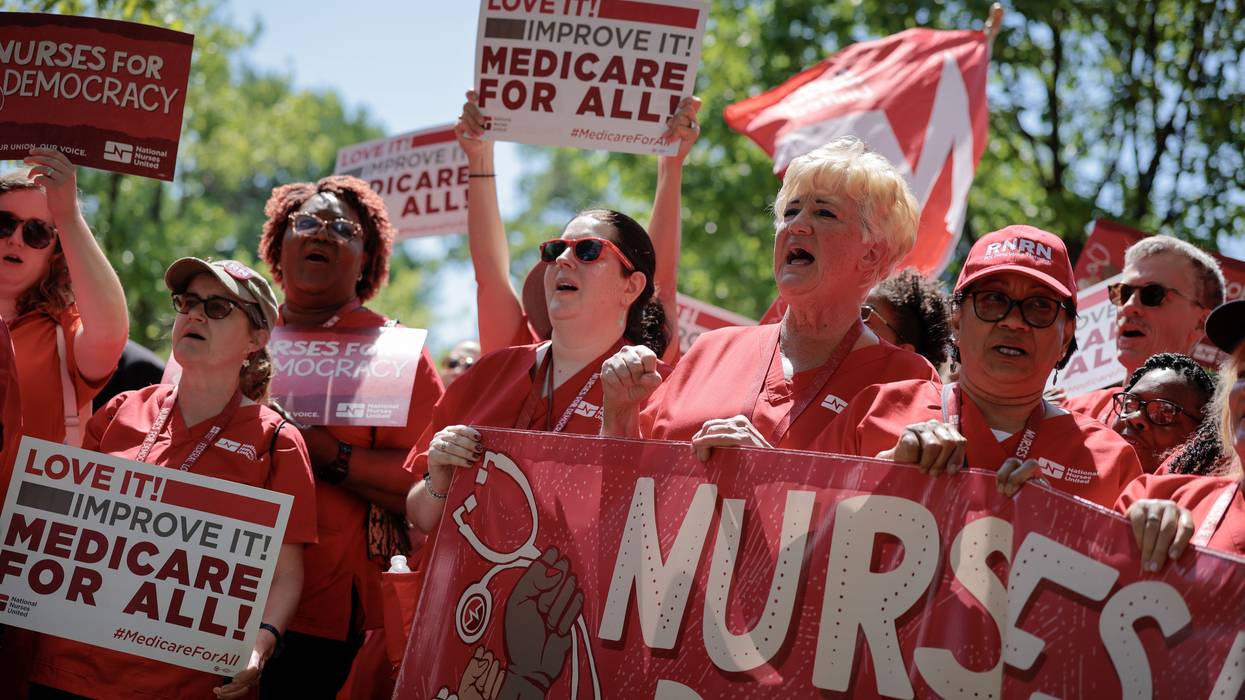
As The Guardian reported Sunday, 1,500 unionized nurses gathered in San Francisco last week to rally for Medicare for All, a policy their unions have championed for many years.
Michigan Democratic Senate nominee Abdul El-Sayed, one of the proposal's most prominent 2026 advocates, asked the nurses: “Medicare for who?”
"All!” they shouted back.
El-Sayed then described Medicare for All as addressing “the very simple idea that in the richest, most powerful country in the world you should not have to suffer for your healthcare.”
I believe in Medicare for All like I believe in public schools. There for you no matter what.
[image or embed]
— Abdul El-Sayed (@abdulelsayed.bsky.social) October 4, 2026 at 6:16 AM
The California Nurses Association's Michelle Gutierrez Vo, meanwhile, pointed to the costs and failures of the existing system.
“There’s too many unnecessary illnesses and unnecessary costs,” she said. “What are we doing?”