SUBSCRIBE TO OUR FREE NEWSLETTER
Daily news & progressive opinion—funded by the people, not the corporations—delivered straight to your inbox.
5
#000000
#FFFFFF
To donate by check, phone, or other method, see our More Ways to Give page.
Daily news & progressive opinion—funded by the people, not the corporations—delivered straight to your inbox.
On the anniversary of both Dobbs v. Jackson Women’s Health and US v. Skrmetti, support independent clinics in hard places keeping the doors open.
We’ve been here before. When Dobbs came for abortion care in our states, we did two things: We opened clinics across state lines so our patients would still have a legal option. And we stayed. We kept our original clinics open, expanding the care we'd always offered or always wanted to offer. When Skrmetti came for gender-affirming care, we kept providing that too, because abortion care patients and transgender patients are not separate communities. The calculation patients make before they walk through the door is identical for both communities: Will I be seen? Will I be safe? Will the person across from me treat my body like a problem to be managed, or a life to be supported? June marks anniversaries of both Dobbs v. Jackson Women’s Health and US v. Skrmetti, and that conviction has never felt more urgent.
Long before Dobbs or Skrmetti, the intersection of abortion rights and trans rights was already living in our waiting rooms, in the patients who received reproductive care and gender-affirming hormone therapy (GAHT) under the same roof; in the person who drove hours across the state because we were the only provider they trusted; and in those who trust us with their whole-person care because their grandmothers, mothers, sisters, aunts, and friends have relied on our clinics for care for 50 years. Throughout that history, our organizations have been guided by a simple principle: When members of our community are targeted, excluded, or denied the care they need, we do not look away. We listen, we adapt, and we show up.
When abortion care moved across the border after Dobbs, the patients who remained still needed care they couldn’t access at home. The wall between reproductive healthcare and LGBTQIA+ healthcare that exists in policy language and funding categories has never existed in our exam rooms.
What connects every patient who walks through our doors, whether they’re coming in for an abortion or a hormone therapy appointment, is something our staff recognized long before we had language for it: the experience of arriving at a clinic while carrying the weight of a political target on your back. A clinic’s job of creating a space where people can receive care without shame or fear has always been exactly the same job regardless of why they came.
Bodily autonomy is the foundational principle of reproductive rights, and it only means something if it applies to everyone.
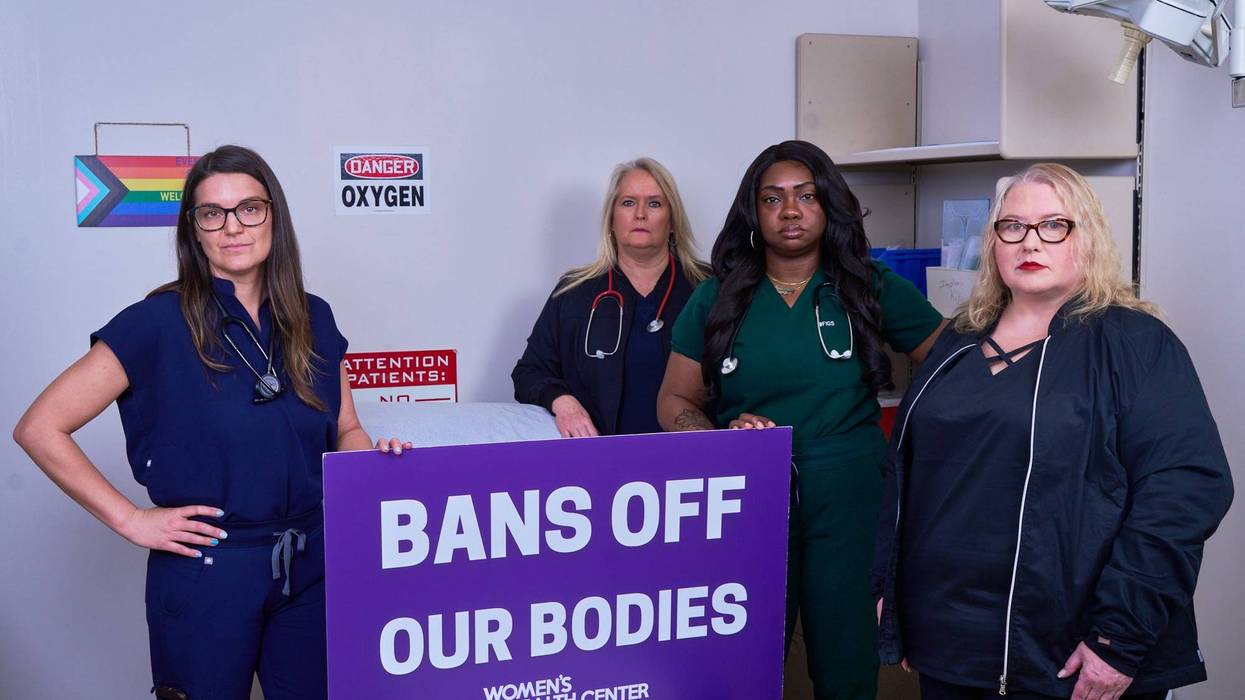
Marty had learned, growing up as a transgender person in rural Maryland, to brace himself before every medical appointment, because finding healthcare that was both competent and genuinely affirming had always required a fight. What he found at our clinic was a staff that met him without conditions, no justifications required, no explanations asked for. His mother has supported the Women’s Health Center (WHC) since its earliest days, and used to volunteer as a clinic escort. Watching the same clinic support her son in his gender-affirming care gave her, in her own words, a peace she hadn’t known she needed. When gaps in care left Ben, a transgender West Virginian, navigating painful dysphoric cycles and a transition that had stalled, he found his way to WHC West Virginia. Today, he says that every time he looks in the mirror, he sees more of himself looking back.
When one of our providers first interviewed to work for CHOICES, she didn't really know much about gender-affirming care. In the time she has been with CHOICES, she has cared for hundreds of gender-affirming care patients across the mid-South. "It's clear how important this care is for patients," she shared. "After patients start hormone replacement therapy, they come back as a much more energetic, vivacious person.” Since the state of Tennessee has restricted gender-affirming healthcare, including banning minors from accessing care, our patients are experiencing increased anxiety and fear about their privacy, safety, and continued access to care. CHOICES' provider shared, "Hormone replacement therapy is routine, like every other service we offer.” If something has such a profound impact on someone's life, why wouldn't we keep this care accessible?
The pattern behind Skrmetti is one reproductive rights advocates should recognize immediately, because it follows the same logic as the restrictions that led to Dobbs: They come for the most vulnerable first, in the states where the political ground is most hostile, and they build from there. Idaho passed the first transgender athlete ban in 2020, West Virginia followed with the Save Women’s Sports Act in 2021, and Tennessee’s restrictions on gender-affirming care for minors moved through the courts the same way abortion restrictions moved state by state in the years before Dobbs. Since abortion care moved across the border, thousands have received gender-affirming and LGBTQIA+ care at our clinics, even as the political, legal, and financial pressure on both organizations has intensified.
Bodily autonomy is the foundational principle of reproductive rights, and it only means something if it applies to everyone. When it becomes conditional, granted to some patients and denied to others, it stops being a principle and starts being a permission slip, and permission slips get revoked. The fights to protect abortion access and gender-affirming care are not parallel struggles that happen to share a difficult political moment. They are the same struggle, rooted in the same conviction, playing out in the same clinics with the same patients, and the forces working to end both of them have always understood that connection even when the rest of us have sometimes lost sight of it.
Between our two organizations, we’ve earned a century’s worth of experience at the practice of staying, enduring. CHOICES has kept their doors open for 52 years, and the Women’s Health Centers of West Virginia and Maryland will celebrate 50 years of care on June 24—the same day Roe v. Wade was overturned four years ago.
Support independent clinics in hard places keeping the doors open. And when the next fight comes, show up for the communities under pressure. Remember that those targeted first won’t be the last, but they will be the ones to lead the way.
Dissenting Justice Sonia Sotomayor wrote that "there is no constitutional justification" for the decision, and access to gender-affirming care "can be a question of life or death."
LGBTQ+ advocates decried Wednesday's U.S. Supreme Court decision upholding Tennessee's prohibition on gender-affirming medical treatments for minors as a dangerous green light for states to violate personal privacy and ban healthcare that many transgender people say saved their lives.
Writing for the 6-3 majority in U.S. v. Skrmetti, Chief Justice John Roberts stated that S.B. 1, Tennessee's 2023 ban on gender-affirming care for people under age 18, does not violate the equal protection clause of the 14th Amendment. The majority concurred with a lower court's ruling that S.B. 1 is not subject to heightened scrutiny, a standard of judicial review also known as intermediate scrutiny used to determine a law's constitutionality, especially in cases involving classifications based on sex or gender.
"The Supreme Court is green-lighting the eradication of trans people from society."
"This case carries with it the weight of fierce scientific and policy debates about the safety, efficacy, and propriety of medical treatments in an evolving field," Roberts wrote. "The voices in these debates raise sincere concerns; the implications for all are profound. The equal protection clause does not resolve these disagreements. Nor does it afford us license to decide them as we see best."
"Our role is not 'to judge the wisdom, fairness, or logic' of the law before us... but only to ensure that it does not violate the equal protection guarantee of the 14th Amendment," the ruling adds. "Having concluded it does not, we leave questions regarding its policy to the people, their elected representatives, and the democratic process."
BREAKING: In a 6-3 Roberts decision, the Supreme Court has ruled that Tennessee's ban on gender affirming care is not subject to heightened scrutiny. This decision will strip millions of trans people off their constitutional rights.www.supremecourt.gov/opinions/24p...
[image or embed]
— Alejandra Caraballo (@esqueer.net) June 18, 2025 at 7:17 AM
Roberts was joined in the majority by right-wing Justices Clarence Thomas, Samuel Alito, Neil Gorsuch, Brett Kavanaugh, and Amy Coney Barrett. Liberal Justices Sonia Sotomayor, Elena Kagan, and Ketanji Brown Jackson dissented.
Sotomayor wrote in her dissent that "there is no constitutional justification" for the decision, which "does irrevocable damage to the equal protection clause and invites legislatures to engage in discrimination by hiding blatant sex classifications in plain sight. It also authorizes, without second thought, untold harm to transgender children and the parents and families who love them."
She continued:
Transgender adolescents' access to hormones and puberty blockers... is not a matter of mere cosmetic preference. To the contrary, access to care can be a question of life or death. Some transgender adolescents suffer from gender dysphoria, a medical condition characterized by clinically significant and persistent distress resulting from incongruence between a person's gender identity and sex identified at birth. If left untreated, gender dysphoria can lead to severe anxiety, depression, eating disorders, substance abuse, self-harm, and suicidality. Suicide, in particular, is a major concern for parents of transgender teenagers, as the lifetime prevalence of suicide attempts among transgender individuals may be as high as 40%. Tragically, studies suggest that as many as one-third of transgender high school students attempt suicide in any given year.
S.B. 1—introduced by Tennessee state Sen. Jack Johnson (R-23)—who was also behind the state's public drag ban—prohibits minors from undergoing hormone therapy or taking prescribed puberty blockers. Three transgender teens and their parents, as well as a Tennessee doctor who treats trans youth, challenged the law, claiming it violated the equal protection clause.
The plaintiffs were joined by the Biden administration along with the national and state ACLU, Lambda Legal, and the law firm Akin Gump Strauss Hauer & Feld LLP in asking the Supreme Court to review the ban after the 6th U.S. Circuit Court of Appeals upheld it in September 2023.
Responding to Wednesday's ruling, Allison Scott of the Campaign for Southern Equality—which manages the Trans Youth Emergency Project (TYEP)—said: "I am heartbroken today. No one should be forced to leave their home state to access healthcare—and it is outrageous to see the U.S. Supreme Court uphold these bans and continue to allow the government to interfere with the personal medical decisions of families."
Scott was alluding to the argument often made by proponents of bans on not only trans healthcare but also abortion and other reproductive rights that people seeking such care are free to go where it is legal—even as some states pass laws banning such travel.
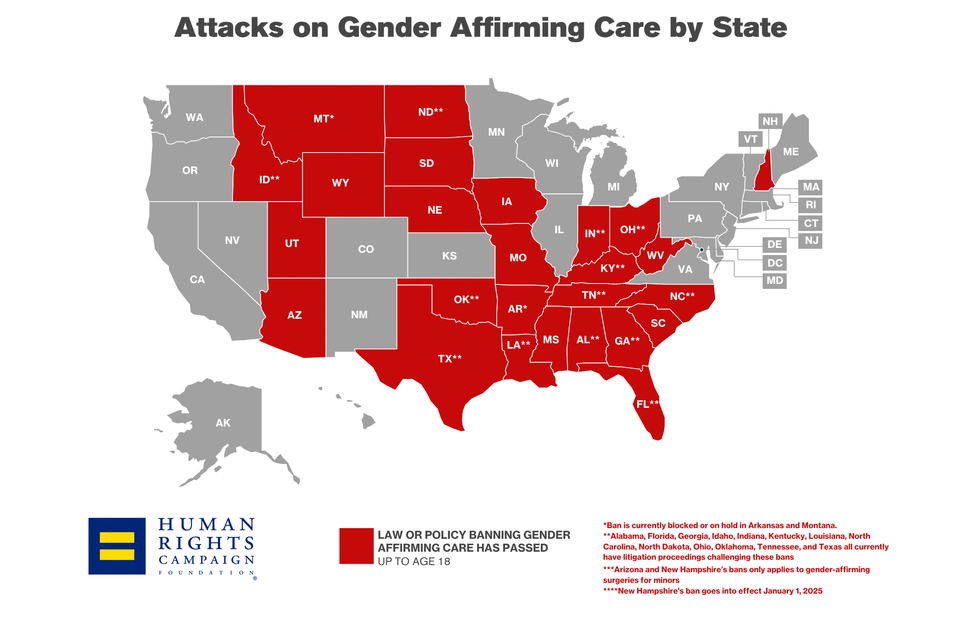
There are approximately 300,000 people aged 13-17 and 1.3 million adults in the United States who identify as transgender, according to the Williams Institute at the University of California, Los Angeles School of Law, which notes that more than two dozen states have passed laws similar to S.B. 1.
Transgender activist Alejandra Caraballo, a civil rights attorney and instructor at the Harvard Law School Cyberlaw Clinic, said on the social media site Bluesky, "I can't begin to tell you just how incredibly fucked trans people are here."
"This will pour gasoline on the Trump administration's attacks on trans people and they will get even harsher and more cruel," Caraballo added. "The Supreme Court is green-lighting the eradication of trans people from society."
Caraballo and others including the ACLU and trans rights activist Erin Reed noted that the decision is somewhat limited because it leaves previous rulings against anti-trans laws intact. However, Caraballo warned that "while the decision didn't explicitly say heightened scrutiny doesn't apply to all contexts involving trans people, it held that it was on the basis of medical diagnosis."
Therefore, "the government could just do whatever it wants to trans people based on gender dysphoria," she wrote. "For instance, they could strip everyone with gender dysphoria of security clearance in the government. Declare everyone with gender dysphoria a national security threat and purge them from the government entirely. The trans military ban will be upheld under this."
"Most importantly, states can now just ban gender-affirming care for everyone, including adults," Caraballo added. "We'll likely see that coming soon in addition to federal government efforts to eliminate access for all trans people."
"This will pour gasoline on the Trump administration's attacks on trans people."
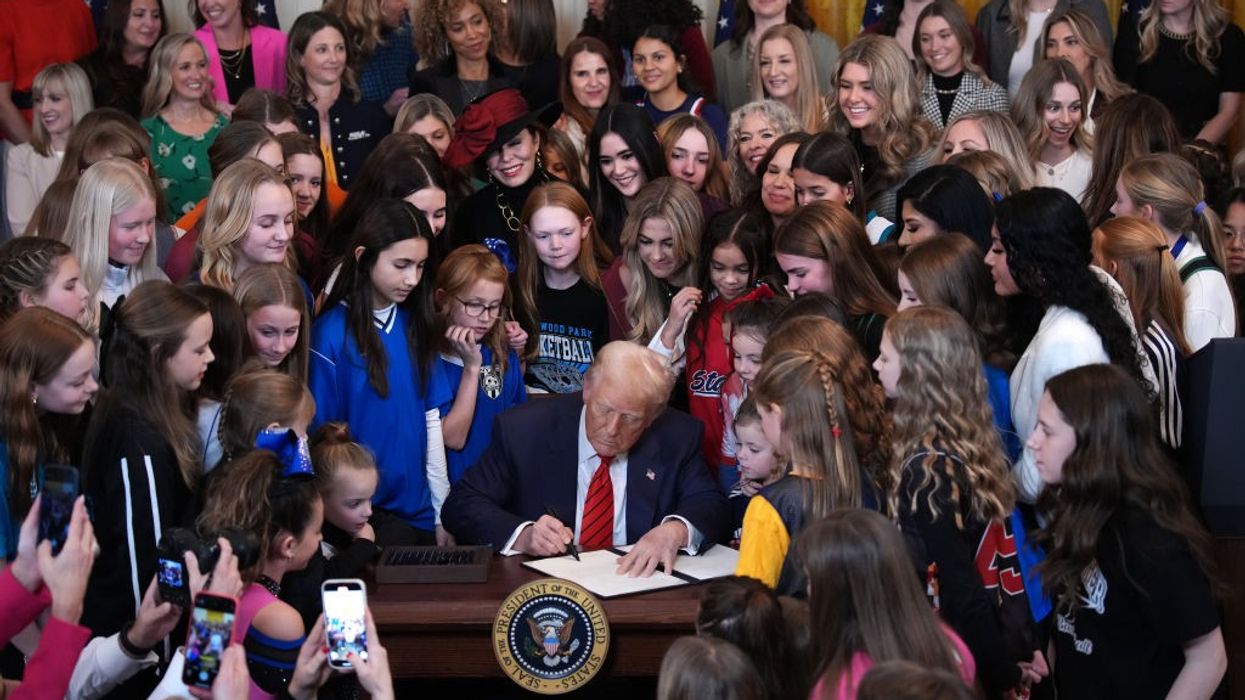
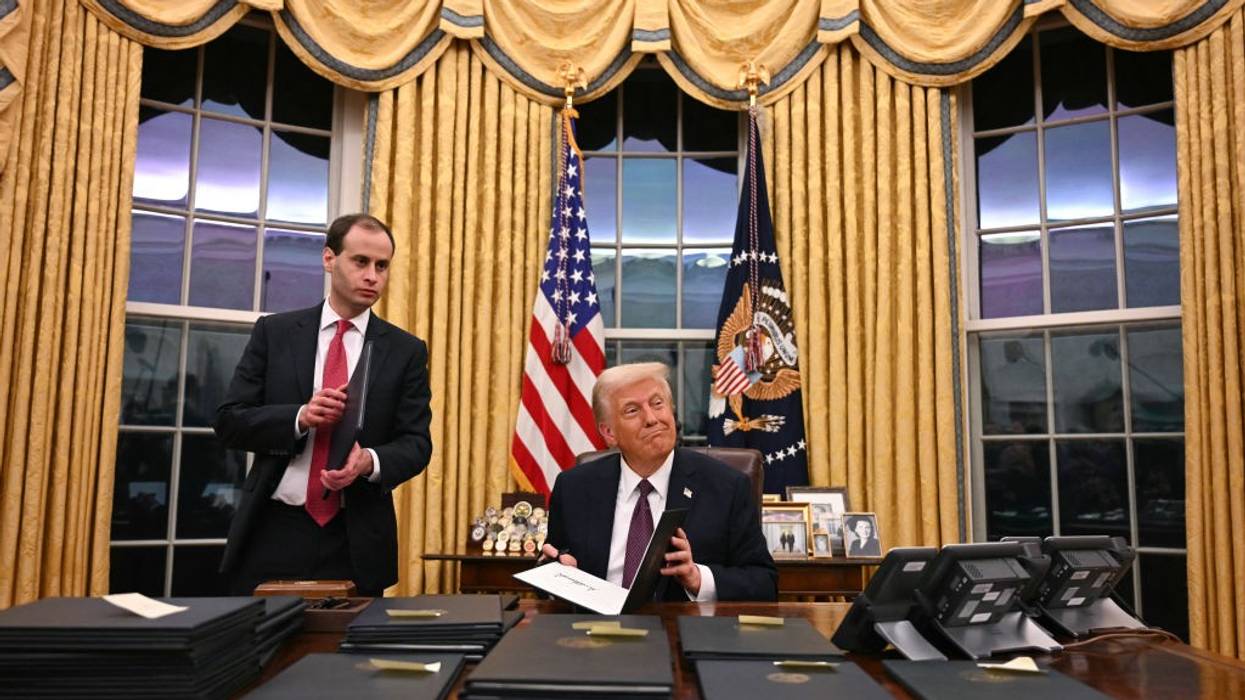
U.S. President Donald Trump has renewed and expanded his first-term attacks on transgender people, including by issuing a day one executive order declaring that only two genders exist, another order advocating action against educators who "facilitate the social transition of a minor," and yet another directing the Department of Education—which he has vowed to abolish—to notify school districts that allowing transgender girls and women to compete on female teams violates Title IX, the federal law prohibiting discrimination on the basis of sex in education.
Trump also appointed a transphobe to head the Justice Department's civil rights office, ordered the removal transgender people and issues from federal agency websites, and reinstated his first-term ban on new military enlistment by trans people, who—according to the White House—cannot lead an "honorable, truthful, and disciplined lifestyle."
"Every day I speak with families of transgender youth who are worried about the future," TYEP patient navigator Van Bailey said after Wednesday's ruling. "Many are panicking, unsure of where or when they'll get the medicine that their child needs to continue leading a healthy, happy life. These laws are cruelly thrusting families into impossible choices, and it is deeply unfair."
As we wait for legal guidance from our partners at @aclu.org and @lambdalegal.org, we want to share what we already know:The Supreme Court’s decision in U.S. v. Skrmetti is devastating, and we will not stop fighting.
[image or embed]
— Christopher Street Project (@christopherstreet.bsky.social) June 18, 2025 at 8:34 AM
ACLU LGBTQ & HIV Project co-director Chase Strangio—the first openly trans attorney to argue before the Supreme Court—said that "today's ruling is a devastating loss for transgender people, our families, and everyone who cares about the Constitution."
However, Strangio also noted that "the court left undisturbed Supreme Court and lower court precedent that other examples of discrimination against transgender people are unlawful."
"We are as determined as ever to fight for the dignity and equality of every transgender person and we will continue to do so with defiant strength, a restless resolve, and a lasting commitment to our families, our communities, and the freedom we all deserve," he added.
Jennifer Levi, senior director of transgender and queer rights at GLAD Law, said in a statement that "the court today failed to do its job."
"When the political system breaks down and legislatures bow to popular hostility, the judiciary must be the Constitution's backbone," Levi added. "Instead, it chose to look away, abandoning both vulnerable children and the parents who love them. No parent should be forced to watch their child suffer while proven medical care sits beyond their reach because of politics."
"When the political system breaks down and legislatures bow to popular hostility, the judiciary must be the Constitution's backbone."
National Center for LGBTQ Rights legal director Shannon Minter asserted: "The court's ruling abandons transgender youth and their families to political attacks. It ignored clear discrimination and disregarded its own legal precedent by letting lawmakers target young people for being transgender."
"Healthcare decisions belong with families, not politicians," Minter added. "This decision will cause real harm."
Sasha Buchert, counsel and director of the Nonbinary and Transgender Rights Project at Lambda Legal, called the ruling "heartbreaking" and contended it will make it "more difficult for transgender youth to escape the danger and trauma of being denied their ability to live and thrive."
"But we will continue to fight fiercely to protect them," Buchert added. "Make no mistake, gender-affirming care is often lifesaving care, and all major medical associations have determined it to be safe, appropriate, and effective. This is a sad day, and the implications will reverberate for years and across the country, but it does not shake our resolve to continue fighting."
The Supreme Court’s Skrmetti decision is a pivotal moment in our fight for LGBTQ+ equality. Here are three ways to TAKE ACTION:
[image or embed]
— Human Rights Campaign (@hrc.org) June 18, 2025 at 9:26 AM
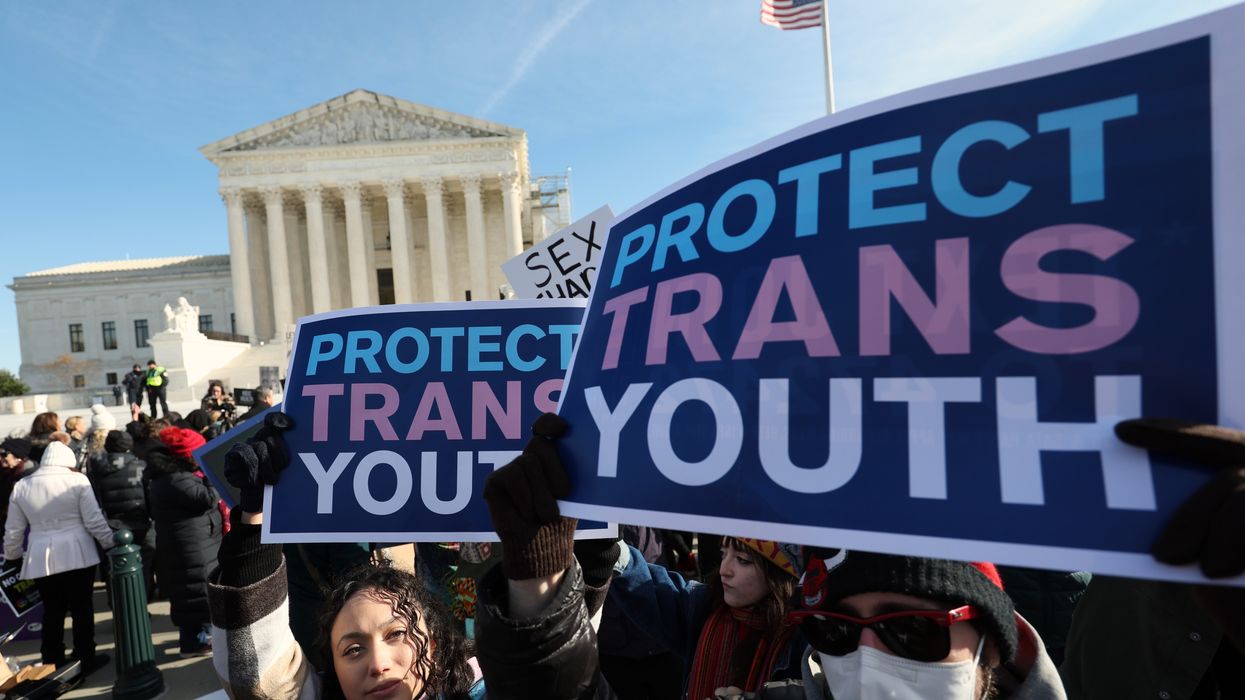
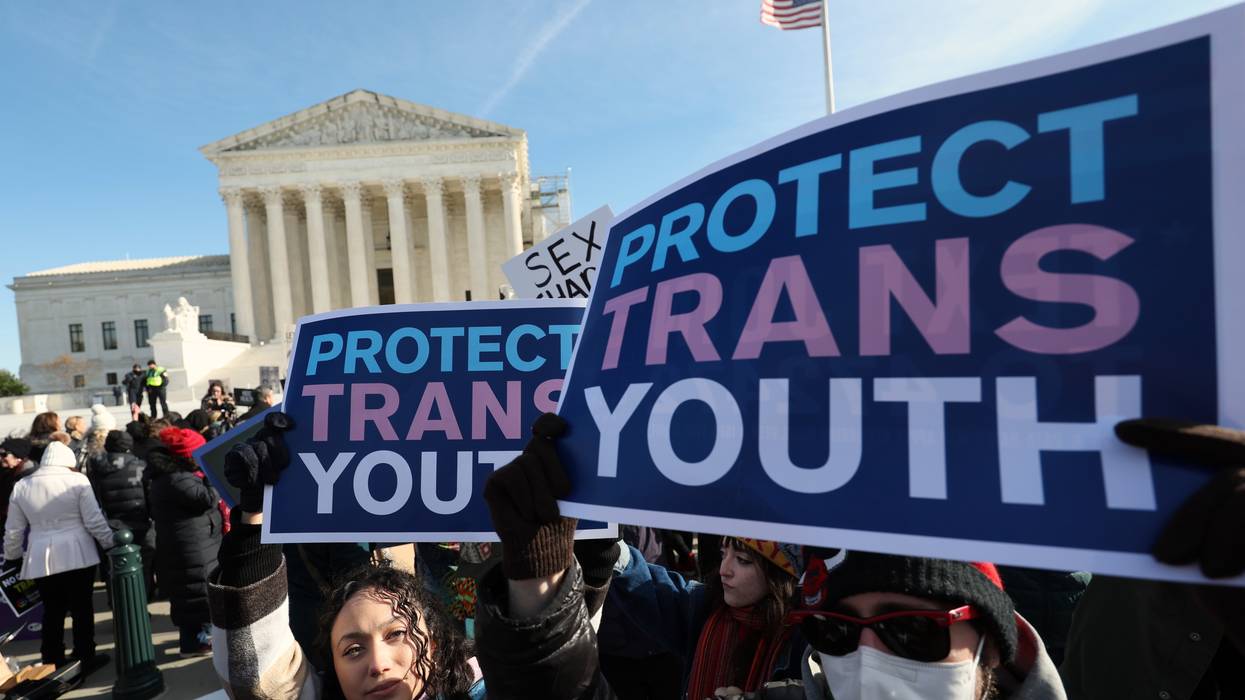
Human Rights Campaign (HRC), Lambda Legal, and other advocacy organizations are planning to hold a "decision day" rally at noon Wednesday outside the Supreme Court in Washington, D.C.
HRC lamented that Skrmetti "sets a dangerous precedent and threatens access to care for trans people across the country."
"We are showing up loud and clear: We will not go back," HRC said. "We will not be erased."
"They're spinning up the stochastic terror machine to threaten the judge into submission," said one critic.
Congressional Republicans on Monday continued to attack federal judges who rule against the Trump administration, with Rep. Andy Ogles of Tennessee introducing articles of impeachment against U.S. District Judge John Bates in Washington, D.C.
Bates, an appointee of former Republican President George W. Bush, recently demanded the restoration of information purged from federal websites to comply with President Donald Trump's executive order on gender—a decision that lead counsel Zach Shelley called "an important victory for doctors, patients, and the public health of the whole country."
The judge's move enraged far-right Republicans like Ogles, a member of the House Freedom Caucus who on Monday called Bates a "RADICAL LGBTQ ACTIVIST" and described his directive to restore resources on gender-affirming care "appalling."
"At no point in American history has the judiciary considered the surgical or chemical castration of healthy children to be a compelling or even legitimate health concern and it shouldn't start now," Ogles added in the social media post announcing the impeachment effort. "We must protect our children from predators like Judge Bates."
Billionaire Elon Musk, head of President Donald Trump's so-called Department of Government Efficiency (DOGE), shared Ogles' post on his social media platform X and said that it is "time to impeach judges who violate the law."
Elon wants to impeach judges for stopping him. This rep. called the judge a predator. They're spinning up the stochastic terror machine to threaten the judge into submission.
[image or embed]
— Alejandra Caraballo (@esqueer.net) February 24, 2025 at 2:29 PM
While there are no apparent legal violations on Bates' part, this isn't the first time Musk has backed ousting judges who impede Trump's agenda. Earlier this month, the richest person on Earth expressed support after Rep. Andrew Clyde (R-Ga.) announced that he was drafting articles of impeachment against Judge John McConnell of the U.S. District Court for the District of Rhode Island, one of the federal judges who blocked the Trump administration's funding freeze.
A third judge is also under attack by Musk and GOP members of Congress. As Courthouse News Service reported last week:
In Republicans' crosshairs is Southern District of New York Judge Paul Engelmayer, who this month issued an order keeping Musk's team out of the federal payments system. But it's unclear whether this move, aimed at ousting a judge with a lifetime appointment, has the political momentum it needs to clear the high hurdle of impeachment.
Regardless, the articles of impeachment against Engelmayer, filed Tuesday by Wisconsin Rep. Derrick Van Orden but published online Wednesday, represent the most extreme congressional action yet targeting the federal judiciary.
Although Republicans have majorities in both chambers of Congress, their margins aren't large enough to oust any of the judges without Democratic support, which they are highly unlikely to get.
Reuters noted Monday that "the attacks against judges for their rulings and calls for impeachment have been sharply criticized by bar groups and law professors, including John Collins of George Washington University," who said that the effort is "completely inappropriate" and "smacks of intimidation."
There are mounting fears that in addition to attacking individual judges, elected Republicans including Trump will simply refuse to comply with court orders. As Common Dreams reported earlier this month, the Revolving Door Project is tracking the Trump administration's refusal to comply with orders from the federal judiciary.
"We will not let the president turn back the clock or deter us from upholding California values," said Rob Bonta, the state's attorney general.
Fifteen Democratic state attorneys issued a joint statement Wednesday vowing to protect access to gender-affirming healthcare amid the Trump administration's attacks on transgender people, which include a new executive order aiming to ban trans girls and women from competing on female sports teams.
"We stand firmly in support of healthcare policies that respect the dignity and rights of all people," the attorneys general said in a statement decrying Republican President Donald Trump's January 28 executive order banning federal support for gender-affirming care—which the president described as "chemical and surgical mutilation"—for young adults and minors under the age of 19.
"Healthcare decisions should be made by patients, families, and doctors, not by a politician trying to use his power to restrict your freedoms," the statement continues. "Gender-affirming care is essential, lifesaving medical treatment that supports individuals in living as their authentic selves."
"The Trump administration's recent executive order is wrong on the science and the law," the attorneys general asserted. "Despite what the Trump administration has suggested, there is no connection between 'female genital mutilation' and gender-affirming care, and no federal law makes gender-affirming care unlawful. President Trump cannot change that by executive order."
"State attorneys general will continue to enforce state laws that provide access to gender-affirming care, in states where such enforcement authority exists, and we will challenge any unlawful effort by the Trump administration to restrict access to it in our jurisdictions," they added.
The attorneys general of California, Colorado, Connecticut, Delaware, Hawaii, Illinois, Maine, Maryland, Massachusetts, New Jersey, New York, Nevada, Rhode Island, Vermont, and Wisconsin signed the statement.
"California supports the rights of transgender youth to live their lives as their authentic selves," California Attorney General Rob Bonta said in a statement Wednesday. "We will not let the president turn back the clock or deter us from upholding California values."
"I understand that the president's executive order on gender-affirming care has created some confusion," Bonta added. "Let me be clear: California law has not changed, and hospitals and clinics have a legal obligation to provide equal access to healthcare services."
The statement from the 15 attorneys general came on the same day that Trump signed an executive order titled "Keeping Men Out of Women's Sports" that directs the Department of Education—which the president has vowed to abolish—to notify school districts that allowing transgender girls and women to compete on female teams violates Title IX, the federal law prohibiting discrimination on the basis of sex in education.
The executive order also directs the administration to "convene representatives of major athletic organizations and governing bodies, and female athletes harmed by such policies," and "convene state attorneys general to identify best practices in defining and enforcing equal opportunities for women to participate in sports and educate them about stories of women and girls who have been harmed by male participation in women's sports."
Wednesday's directive is the latest salvo in Trump's war on transgender people, which includes a day one executive order declaring that only two genders exist, another order advocating action against educators who "facilitate the social transition of a minor," a reinstatement of his first-term ban on new military enlistment by trans people—who, according to the White House, cannot lead an "honorable, truthful, and disciplined lifestyle"—nominating a transphobe to head the Justice Department's civil rights office, and scrubbing all mention of transgender people and issues from federal agency websites.
Trans people and their allies are fighting back. Lawsuits have been filed
challenging restrictions on access to gender-affirming healthcare and the transfer of transgender women inmates to men's prisons. On Wednesday, a federal judge appointed by former Republican President Ronald Reagan temporarily blocked federal prisons from moving transgender women to men's facilities and cutting off their access to hormone therapy, citing the Constitution's ban on cruel and unusual punishment. At least two federal judges have also issued temporary restraining orders on Trump administration efforts to freeze funding for federal agencies and programs.
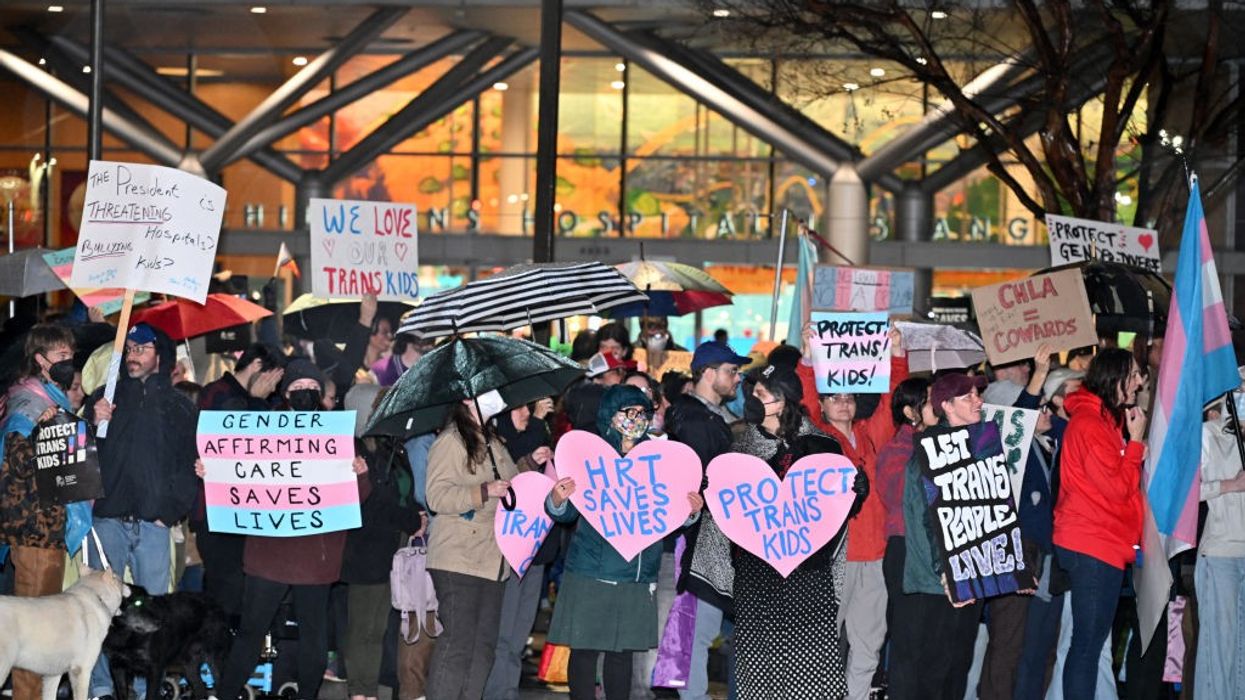
Protests in defense of gender-affirming healthcare and other trans rights have also taken place at hospitals and other locations across the country as Trump and allies including Department of Government Efficiency chief Elon Musk pressure the U.S. Treasury Department to defund any programs specifically helping transgender and other LGBTQ+ people.
"The protection of marginalized communities will not come solely from elected officials or bureaucratic processes—it will come from sustained, organized resistance," trans rights activist Erin Reed wrote Wednesday. "History shows that real power lies not in centralized institutions but in the collective action of those who refuse to be divided."
"Authoritarian governments rely on fragmentation, banking on the idea that the public will see themselves as isolated rather than interconnected," Reed added. "As protests grow and solidarity strengthens across movements, the coming months may test just how powerful a unified public can be."
"This order will kill kids, there's no other way to say it," asserted one critic.
In his administration's latest attack on LGBTQ+ Americans, Republican U.S. President Donald Trump on Tuesday issued an executive order banning the federal government from supporting a wide range of gender-affirming healthcare for transgender youth.
Trump's order—titled "Protecting Children From Chemical and Surgical Mutilation"—states that the federal government "will not fund, sponsor, promote, assist, or support the so-called 'transition' of a child from one sex to another, and it will rigorously enforce all laws that prohibit or limit these destructive and life-altering procedures."
"Child" is defined in the order as anyone younger than 19—including 18-year-old adults. The directive covers treatments and procedures including gender-affirming surgeries, puberty blockers, and hormone replacement therapy. The ban will adversely affect people who rely upon federal programs including Medicare, Medicaid, and TRICARE, through which the Department of Defense provides health coverage for nearly 2 million youth dependents.
This order will kill kids, there's no other way to say it. It's the government forcibly taking control of the bodies of thousands of children.
[image or embed]
— Katelyn Burns (@katelynburns.com) January 28, 2025 at 3:19 PM
Furthermore, the order—which is almost certain to be challenged in court—places hospitals, clinics, and other providers of gender-affirming care at risk of losing federal funding.
"This executive order is a brazen attempt to put politicians in between people and their doctors, preventing them from accessing evidence-based healthcare supported by every major medical association in the country," Kelly Robinson, president of the LGBTQ+ advocacy group Human Rights Campaign, said in a statement. "It is deeply unfair to play politics with people's lives and strip transgender young people, their families, and their providers of the freedom to make necessary healthcare decisions."
"Questions about this care should be answered by doctors—not politicians—and decisions must rest with families, doctors, and the patient," Robinson added. "Everyone deserves the freedom to make deeply personal healthcare decisions for themselves and their families—no matter your income, zip code, or health coverage."
Trump made opposing rights for transgender people—especially children—a major part of his 2024 campaign, as it was during his first term.
The president's executive order claims that "medical professionals are maiming and sterilizing a growing number of impressionable children under the radical and false claim that adults can change a child's sex through a series of irreversible medical interventions."
"This dangerous trend will be a stain on our nation's history, and it must end," asserts the directive, which dubiously claims that "countless children soon regret that they have been mutilated and begin to grasp the horrifying tragedy that they will never be able to conceive children of their own or nurture their children through breastfeeding."
However, trans advocate Erin Reed pushed back, noting on social media that "detransition is rare, 1-4% in most studies, and regret even lower."
Furthermore, many doctors and medical experts agree that gender-affirming care saves the lives of trans youth, who are at higher risk of suicide and other self-harm, partly due to discrimination, bullying, and other societal pressures.
Trans people and their allies are already fighting back against Trump's policies. On Tuesday, half a dozen active-duty transgender U.S. troops and two people seeking to join the military sued to block a revival of the president's first-term ban on trans people enlisting in the armed forces.
The previous day, a transgender woman inmate in a federal women's prison sued the Trump administration over a recent executive order narrowly defining sex, arguing it is motivated by hate, violates the Constitution's ban on cruel and unusual punishment, and places her in mortal danger if she is transferred to a men's facility as ordered by the government.
In stark contrast with the direction in which Trump is steering the U.S., health officials in Thailand—which last year became the first nation in Southeast Asia to legalize same-sex marriage equality—this week announced a multimillion-dollar initiative to provide gender-affirming care for 200,000 transgender people in the country.
Thai Prime Minister Paetongtarn Shinawatra said last week that the marriage equality law, which went into effect this month, "marks the beginning of Thai society's greater awareness of gender diversity, and our embrace of everyone regardless of sexual orientation, race, or religion—our affirmation that everyone is entitled to equal rights and dignity."
"Courts have already found that forcing trans women into men's prisons is cruel and unusual punishment," noted one media outlet.
A transgender woman inmate serving her sentence in a women's federal prison sued the Trump administration on Sunday, arguing that Republican U.S. President Donald Trump's recent executive order narrowly defining sex violates the Constitution's ban on cruel and unusual punishment, is "motivated by discriminatory animus" toward trans people, and forces "dangerous transfers to men's facilities."
A redacted copy of the lawsuit—which was filed by an inmate in an unspecified low-security federal prison identified as "Maria Moe"—claims Trump's January 20 executive order stating that it is henceforth federal policy "to recognize two sexes, male and female" violates her constitutional rights.
"Defendant Trump has been transparent about his hostility toward transgender people and openly stated his intentions to create legal obstacles to eliminate legal protections for transgender people and to deter them from obtaining medical care or being able to live in a sex other than their birth sex," the lawsuit states.
On Sunday, a transgender woman who is currently in prison sued Donald Trump, Acting A.G. McHenry, and the head of the Bureau of Prisons due to her treatment in the wake of the Jan. 20 anti-trans "sex" definition executive order. Read it all at Law Dork: www.lawdork.com/p/trans-woma...
[image or embed]
— Chris Geidner (@chrisgeidner.bsky.social) January 27, 2025 at 10:52 AM
"On November 15, 2022, when he announced his candidacy for president, he explicitly promised to target transgender Americans through executive action," the complaint continues. "He pledged a 'day one' executive order to 'cease all programs that promote the concept of sex and gender transition at any age.'"
"If Maria Moe is transferred to a men's facility, she will not be safe," the lawsuit stresses. "Transferring Maria Moe to a men's prison will pose a substantial risk of serious harm, including an extremely high risk of violence and sexual assault from other incarcerated people and [Federal Bureau of Prisons] staff."
"In a men's prison, Maria Moe will also be at high risk of worsening gender dysphoria, which can lead to serious physical and mental health conditions including severe depression and suicidality," the complaint adds. "These risks are obvious, well-documented, and well-known to BOP officials."
Furthermore, the suit says that ending Moe's federally funded hormone therapy "would constitute deliberate indifference to her serious medical needs and would violate the 8th Amendment's prohibition on cruel and unusual punishment."
As
LGBTQ Nation reported Monday, "Courts have already found that forcing trans women into men's prisons is cruel and unusual punishment."
According to the very small print on the BOP's "inmate gender" webpage, there are 1,529 transgender females in federal custody and 744 transgender males.
The new lawsuit preceded Monday reporting that Trump is expected to revive his first-term policy of banning new military enlistments by transgender people.
"We the people means all the people," said the ACLU. "There is no 'transgender' exception to the U.S. Constitution."
Attorneys who argued against Tennessee's ban on gender-affirming healthcare at the U.S. Supreme Court on Wednesday expressed hope that the court's nine justices will take "the opportunity to affirm the essential freedom and equality of all people before the law," while reports indicated that the right-wing majority is inclined to uphold the ban.
"Every day this law inflicts further pain, injustice, and discrimination on families in Tennessee and prevents them from receiving the medical care they need," said Lucas Cameron-Vaughn, staff attorney at the ACLU of Tennessee, which represented three families and a physician. "We ask the Supreme Court to commit to upholding the promises of the U.S. Constitution for all people by putting an end to Tennessee's state-sanctioned discrimination against trans youth and their families."
The law, S.B. 1, which was passed in March 2023, bars medical providers from prescribing puberty-delaying medications, other hormonal treatment, and surgical procedures to transgender minors and youths with gender dysphoria.
The Supreme Court case, United States v. Skrmetti, applies only to the ban on puberty blockers and hormonal therapy for minors; a lower court found the plaintiffs did not have legal standing to challenge the surgery ban.
The ACLU, the ACLU of Tennessee, Lambda Legal, and a law firm were joined by the Biden administration in arguing that Tennessee allows doctors to prescribe puberty blockers and other hormonal treatments for youths with congenital defects, early puberty, diseases, or physical injuries.
As such, said the plaintiffs, Tennessee's ban for transgender and nonbinary youths violates the U.S. Constitution's 14th Amendment, which guarantees equal treatment under the law.
"My heart—and the heart of every transgender advocate fighting this fight—is heavy with the weight of what these laws mean for people's everyday lives."
The court's three liberal justices—Justices Sonya Sotomayor, Elena Kagan, and Ketanji Brown Jackson—all indicated they believed Tennessee has tried to classify people according to sex or gender with the law.
"One of the articulated purposes of this law is essentially to encourage gender conformity and to discourage anything other than gender conformity," said Kagan. "Sounds to me like, 'We want boys to be boys and we want girls to be girls,' and that's an important purpose behind the law."
Matthew Rice, the lawyer representing Tennessee in the case, claimed the state simply wants to prevent "regret" among minors, and the court's six conservative justices signaled they were inclined to allow Tennessee to ban the treatments—which are endorsed by the American Academy of Pediatrics and other top medical associations.
Chief Justice John Roberts said the nine justices should not overrule the decision made by lawmakers representing Tennessee residents, considering there is debate over the issue, and pointed to changes some European countries have made to their gender-affirming care protocols for minors.
Representing the Biden administration, U.S. Solicitor General Elizabeth Prelogar acknowledged that there has been debate about gender-affirming care in the U.S. and abroad, but pointed out that countries including the U.K. and Sweden have not outright banned treatment.
"I think that's because of the recognition that this care can provide critical, sometimes lifesaving benefits for individuals with severe gender dysphoria," she said.
Following the arguments, plaintiff Brian Williams, who has a 16-year-old daughter in need of gender-affirming care, addressed supporters who had assembled outside the Supreme Court.
"Tennessee's ban on gender-affirming medical care is an active threat to the future my daughter deserves," said Williams. "It infringes not only on her freedom to be herself but on our family's love for her. We are not expecting everyone to understand everything about our family or the needs of transgender young people like our daughter. What we are asking for is for her freedom to be herself without fear. We are asking for her to be able to access the care she needs and enter adulthood knowing nothing is holding her back because of who she is."
Sotomayor said there is "very clear" evidence "that there are some children who actually need this treatment."
A 2022 study led by researchers at the University of Washington found that transgender and nonbinary youths aged 13-20 were 60% less likely to experience moderate or severe depression and 73% less likely to be suicidal after receiving gender-affirming care.
Prelogar asked the justices to "think about the real-world consequences of laws like S.B. 1," highlighting the case of a plaintiff identified as Ryan Roe.
Roe had such severe gender dysphoria that "he was throwing up before school every day," said Prelogar. "He thought about going mute because his voice caused him so much distress. And Ryan has told the courts that getting these medications after a careful consultation process with his doctors and his parents, has saved his life."
"But Tennessee has come in and categorically cut off access to Ryan's care," she added. "This law harms Ryan's health and the health of all other transgender adolescents for whom these medications are a necessity."
Tennessee is home to about 3,100 transgender teenagers, and about 110,000 transgender youths between the ages of 13-17 live in the 24 states where gender-affirming care is restricted.
More than 20 states have laws that could be impacted by the court's ruling in United States v. Skrmetti.
"My heart—and the heart of every transgender advocate fighting this fight—is heavy with the weight of what these laws mean for people's everyday lives," said Chase Strangio, co-director of the ACLU's LGBTQ & HIV Project. "But I also know that every out trans person has embraced the unknown in the name of living free from shame or the limits of other people's expectations."
"My heart aches for the parents who spent years watching their children in distress and eventually found relief in the medical care that Tennessee now overrides their judgment to ban," said Strangio. "Whatever happens today, tomorrow, and in the months and years to come, I trust that we will come together to fight for the realized promise of our Constitution's guarantee of equal protection for all."
A ruling in the case is expected in June.
"Decisions about healthcare belong to patients, their doctors, and their families—not politicians," said Rep. Mark Pocan.
As LGBTQ+ rights advocates prepare for oral arguments in a U.S. Supreme Court case about bans on gender-affirming healthcare for trans youth, 164 members of Congress on Tuesday urged the justices to strike down Tennessee's 2023 law.
Tennessee is one of over two dozen states that has recently banned some or all of such care for trans minors, according to the Movement Advancement Project. In response to challenges from advocacy groups and the Biden administration, the right-wing high court agreed to take the case in June.
Arguments in United States v. Skrmetti are expected in the fall. The justices will decide whether Tennessee Senate Bill 1—which bans surgery, puberty blockers, and hormone treatment for trans youth—violates the Equal Protection Clause of the 14th Amendment to the U.S. Constitution.
Congressional Democrats' new "friend of the court" brief argues that the court "should be highly skeptical of legislation banning safe and effective therapies that comport with the standard of care," and "should carefully examine the deeply troubling role that animosity towards transgender people has played in state legislation."
"The law at issue in this case is motivated by an animus towards the trans community and is part of a cruel, coordinated attack on trans rights by anti-equality extremists."
The amicus brief is led by House Judiciary Committee Ranking Member Jerry Nadler (D-N.Y.), Congressional Equality Caucus Chair Mark Pocan (D-Wis.), Rep. Frank Pallone Jr. (D-N.J.), Sen. Jeff Merkley (D-Ore.), and Senate Health, Education, Labor, and Pensions (HELP) Subcommittee on Primary Health and Retirement Chair Ed Markey (D-Mass.).
"For years, far-right Republicans have been leading constant, relentless, and escalating attacks on transgender Americans," Markey said in a statement. "Their age-old, discriminatory playbook now threatens access to lifesaving, gender-affirming care for more than 100,000 transgender and nonbinary children living in states with these bans if the Supreme Court upholds laws like Tennessee's at the heart of Skrmetti that are fueled by ignorance and hate."
"It takes a special type of cruelty to target children for who they are," he continued. "I am proud to stand with my colleagues against dangerous, transphobic attacks and to reaffirm that our nation's commitment should be to equality and justice for all."
Pocan emphasized that "decisions about healthcare belong to patients, their doctors, and their families—not politicians."
"The law at issue in this case is motivated by an animus towards the trans community and is part of a cruel, coordinated attack on trans rights by anti-equality extremists," he added. "We strongly urge the Supreme Court to uphold the Constitution's promise of equal protection under the law and strike down Tennessee's harmful ban."
The brief is co-signed by another 150 Democrats in the House of Representatives, eight other Democratic senators, and Sen. Bernie Sanders (I-Vt.), who caucuses with the party. It is also supported by the ACLU and the Human Rights Campaign (HRC).
"Thank you to the many members of Congress for standing with transgender and nonbinary youth across our country in asking the Supreme Court to find bans on lifesaving gender-affirming care to be unconstitutional," said HRC vice president of government affairs David Stacy.
"The government should not be able to interfere in decisions that are best made between families and doctors, particularly when that care is necessary and best practice," Stacy stressed. "These bans are dangerous, animated purely by anti-transgender bias, and have forced families to make heartbreaking decisions to support their children."
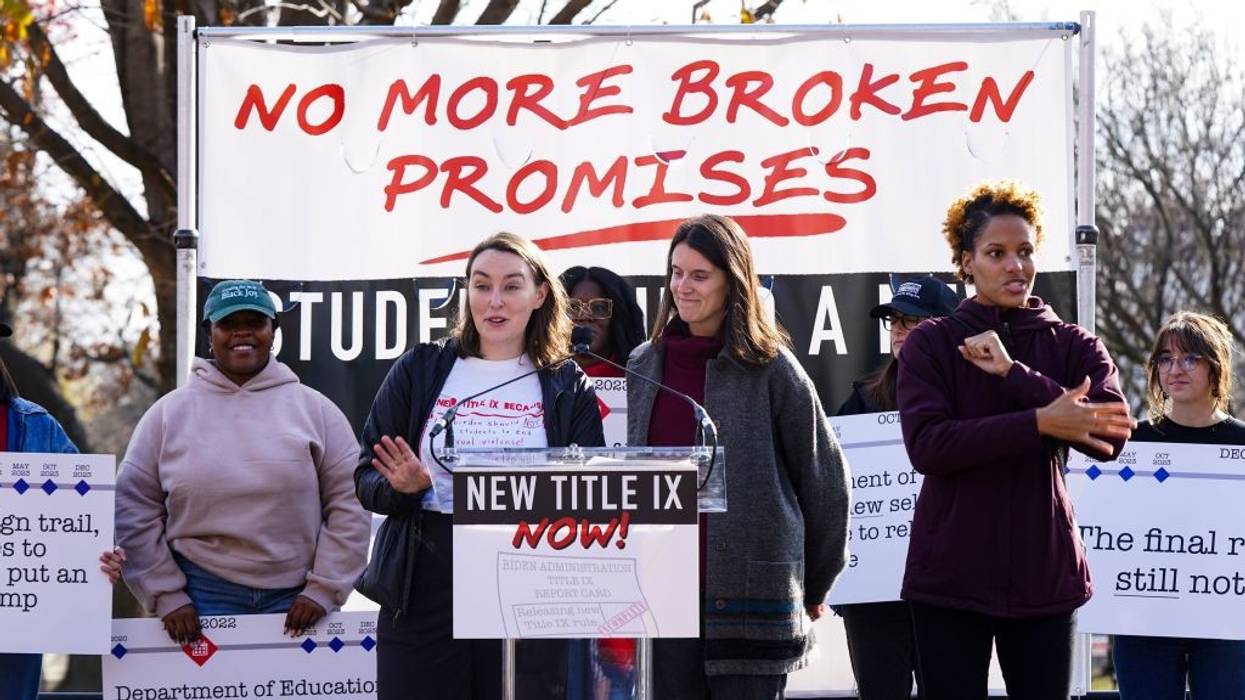
In a 5-4 ruling—with Justice Neil Gorsuch joining the liberals in dissent—the court delayed Biden's expansion of Title IX protections to include gender identity and sexual orientation.
The U.S. Supreme Court on Friday denied the Biden administration's emergency request to reinstate parts of its updated Department of Education Title IX rule expanding the definition of "discrimination on the basis of sex" to include sexual orientation, gender identity, and pregnancy status.
The nation's highest court ruled 5-4—with conservative Justice Neil Gorsuch joining liberal colleagues Sonia Sotomayor, Elena Kagan, and Ketanji Brown Jackson in dissent—that the Biden administration "has not provided this court a sufficient basis to disturb the lower courts' interim conclusions that the three provisions found likely to be unlawful are intertwined with and affect other provisions of the rule."
Republican attorneys general in more than two dozen states pushed courts to block the Biden administration's updated Title IX rule, which was set to take effect on August 1. The new rule has been on hold pending the outcome of litigation.
In her dissent, Sotomayor wrote: "A majority of this court leaves in place preliminary injunctions that bar the government from enforcing the entire rule—including provisions that bear no apparent relationship to respondents' alleged injuries. Those injunctions are overbroad."
While conservatives welcomed the ruling, LGBTQ+ advocates expressed disappointment.
"All young people deserve to show up to school and get an education without facing the threat of discrimination and bigotry. But five cruel justices on the Supreme Court just put countless LGBTQ+ students' health, safety, and lives in jeopardy," said Sarah Lipton-Lubet, president of the advocacy group Take Back the Court.
"The hateful right-wing movement with which these justices align themselves constantly invokes 'protecting children' as a false justification for their extremist agenda," Lipton-Lubet added. "But protecting children means keeping them safe from homophobic and transphobic violence; from gun violence; from attacks on equitable education; and from environmental destruction that threatens their futures. This court has failed them time and time again."
The Biden administration's effort to expand Title IX protections came amid a wave of anti-LGBTQ+ laws enacted in Republican-controlled states in recent years.
More than two dozen states have passed laws banning or restricting gender-affirming healthcare including puberty-blocking drugs, hormone therapy, and surgery for minors. At least 11 states have also passed laws banning transgender students from using school restrooms and other facilities consistent with their gender identity, and 25 states have banned transgender girls from competing on female scholastic sports teams.
Responding to Friday's decision, an Education Department spokesperson said that "while we do not agree with this ruling, the department stands by the final Title IX regulations released in April 2024, and we will continue to defend those rules in the expedited litigation in the lower courts."
Friday's ruling is not the last word on the Biden administration's Title IX rule, as the decision merely delays the issue pending further litigation that could ultimately be revisited by the Supreme Court in the future.
"When targeting LGBTQ people is a priority for our enemies, it's all the more critical that defending LGBTQ people remain a priority for our friends," said one ACLU official.
The American Civil Liberties Union released a detailed policy memo Tuesday outlining how Vice President Kamala Harris can and should work to protect LGBTQ+ people should she win the presidency in November.
The ACLU noted that Harris' record serving in the Biden-Harris administration provides the organization with "a strong basis for optimism that a Harris administration would continue to fight for LGBTQ people," but said it was driven to release the memo because of attacks on the community in recent years by Republican presidential nominee Donald Trump and lawmakers at the local, state, and federal level.
"When targeting LGBTQ people is a priority for our enemies, it's all the more critical that defending LGBTQ people remain a priority for our friends," said Mike Zamore, national director for policy and government affairs at the ACLU.
"The Biden-Harris administration has worked hard to earn the trust of LGBTQ people and our families through concerted efforts to protect transgender kids in our schools, defend the right to marriage equality, and ensure medical decisions stay between trans people and their doctors," added Zamore. "We're hopeful a Harris-Walz administration would build on this legacy, and we will bring all of our resources to bear to help them do so."
In the memo, titled Harris on LGBTQ Rights: Building on a Legacy of Undoing Harm, Expanding Protections, and Serving as a Bulwark Against State Attacks, the ACLU said one key action would be to issue an executive order directing federal agencies to examine how they can enhance access to gender-affirming healthcare in federally funded programs.
"This would send a powerful message about how a future-President Harris is prioritizing the healthcare needs of trans people, and it would strengthen coverage and access to gender-affirming care under federal policies and programs," reads the memo, which said protections could include mandatory coverage determinations and increased clarity for patients and providers.
"The Biden-Harris administration has worked hard to earn the trust of LGBTQ people and our families... We're hopeful a Harris-Walz administration would build on this legacy, and we will bring all of our resources to bear to help them do so."
The memo was released as the U.S. Supreme Court is expected to hear a challenge brought by the federal government and families in Tennessee against a state law banning gender-affirming care for transgender youths. Tennessee is one of 24 states that ban medication and surgical care for transgender youths—care that is supported by the American Academy of Pediatrics, the American Medical Association, and other health authorities. Six states have passed laws making it a felony to provide certain kinds of gender-affirming care.
In addition to appealing a lower court's decision to uphold Tennessee's ban, the Biden-Harris administration has sued several other state's over similar laws; ordered federal agencies to protect LGBTQ+ people from discrimination in employment, housing, healthcare, and credit lending; reversed a ban on transgender servicemembers in the military; and expanded access to gender-affirming care in government healthcare programs, including in prisons.
The ACLU also wants passage of the Equality Act—a bill introduced in 2019 that would amend the Civil Rights Act of 1964 to prohibit discrimination based on sexual orientation and gender identity. The group says it is "prepared to harness the public pressure necessary to push the Senate to restore its ability to deliver full equality under the law for LGBTQ individuals."
The ACLU—which also plans to publish memos this month outlining steps Harris should take to promote abortion rights, voting rights, immigrants, and other issues—also outlined how federal agencies can strengthen protections for LGBTQ people under a Harris administration.
The Department of Education should unveil "more robust enforcement of nondiscrimination rules and more vigorous investigation and resolutions of Education Office of Civil Rights complaints based on sex discrimination," reads the memo. "It is worth noting that the most recent department regulations clarifying how Title IX can be used to protect LGBTQ students are enjoined in certain states, so the administration must continue to fight in the courts to lift that injunction."
The ACLU also called on the Department of Health and Human Services' Office of Civil Rights to provide more robust enforcement of nondiscrimination rules, proactively ensuring public and private insurance policies don't exclude case for transgender patients and "rigorously investigating all complaints of discrimination."
A potential Harris administration, said the group, could work with states to ensure they have the resources needed to expand pro-equality protections, as nearly half of U.S. states work to erode LGBTQ+ rights.
"State employees and state-funded programs should be fully trained on LGBTQ competency, and state budgets must provide dedicated funding streams for LGBTQ-specific programs," reads the memo. "State medical facilities and insurance programs can ensure trans and gender-expansive people have access to the care that is medically necessary to live their lives. State housing programs must have policies in place to ensure they are affirming and accessible to LGBTQ people."
In the face of attacks from GOP-controlled state legislatures and with "a landmark Supreme Court case on the horizon," said James Esseks, co-director of the ACLU's LGBTQ & HIV Project, the ACLU recognizes the Biden-Harris administration's "strong record of protecting and expanding the freedom of LGBTQ people."
"We would encourage a Harris-Walz administration to continue this commitment and do everything in its power to protect our rights, our healthcare," said Esseks, "and our freedom to be ourselves without fear."