

SUBSCRIBE TO OUR FREE NEWSLETTER
Daily news & progressive opinion—funded by the people, not the corporations—delivered straight to your inbox.
5
#000000
#FFFFFF
To donate by check, phone, or other method, see our More Ways to Give page.
Daily news & progressive opinion—funded by the people, not the corporations—delivered straight to your inbox.
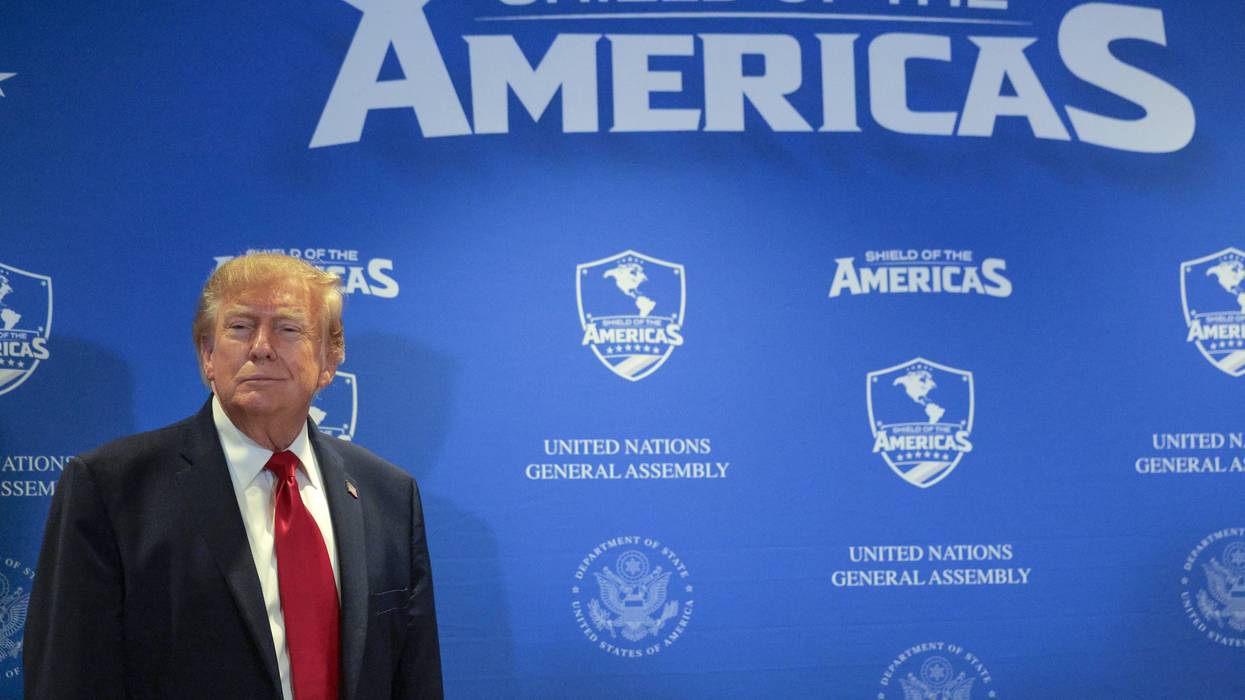
Critics have described Trump's boat strikes as extrajudicial killings that violate due process. At a meeting during this week's gathering of the UN General Assembly, he seemed to agree.
Critics have often described President Donald Trump's campaign of boat strikes in the Caribbean and Pacific—which have taken the lives of at least 234 mostly unknown people—as extrajudicial killings that flout the very basics of due process.
On Tuesday, Trump essentially described them that way too, seeming to suggest that killing people outside the law is the whole point.
"For years, administrations just played games, and they'd bring them to a court in Miami or something, and the judge would release them immediately, and they'd go back to selling drugs," Trump said. "But now, we don't waste our time doing it."
He was speaking at a meeting of the Washington-led "Shield of the Americas" coalition, an alliance of leaders and foreign ministers ostensibly dedicated to stamping out drug cartels and other criminal organizations across the Americas.
The boat strike campaign—known first by the Defense Department as “Operation Southern Spear” before it was rebranded last month as Joint Task Force Western Hemisphere—is part of this effort. The administration says the more than 70 vessels it has targeted with lethal strikes since last September were engaged in “narco-trafficking,” and that killing their operators is a justifiable form of self-defense.
The principal illicit cargo on the maritime routes targeted by Southern Spear is cocaine. But the White House rarely provides any evidence publicly to substantiate that the boats it targets are involved with drug trafficking, and members of Congress have complained that even classified briefings lacked hard evidence. Some of those killed in the strikes have later been identified as ordinary fishermen and other civilians with no known ties to the drug trade.
An investigation from the Washington Office on Latin America found in July that the military has relied on extraordinarily broad criteria to launch the strikes against anyone deemed to be "affiliated" with a secret list of designated terrorist groups. They do not require the commanders launching them to know the identities of those aboard a vessel or have any evidence that it is carrying drugs at all.
Even if the boats were engaged in drug trafficking as the administration claims, wrote Ben Saul, the United Nations special rapporteur on human rights and counterterrorism, in a report released earlier this week, there are no “international legal rights to unilaterally use military force” to counter drug cartels or other organized crime groups that have not mounted any “armed attack” against the US.
The strikes, Saul added, were not a “last resort” or “necessary or proportionate” since the US had not tried to use non-lethal means like intercepting or boarding them before resorting to bombings.
Concurring with several other UN experts, he said that the strikes were "contrary to international law, violate the human right to life, and plausibly constitute crimes against humanity," including "murder."
Trump's comments on Tuesday seemed to underscore what Saul and others critical of the boat bombings have emphasized: that rather than using lethal force as a last resort to repel an immediate threat, his administration was simply killing suspects as an alternative to avoid a cumbersome legal process.
Norman Ornstein, a political scientist and scholar at the conservative American Enterprise Institute, said in a post on social media that Trump's comments were "worthy of the International Criminal Court."
Defense Secretary Pete Hegseth has suggested the administration’s calls to “dismantle” the ICC are in part out of concern that the court, which prosecutes war crimes and other international criminality, could be used to prosecute members of the Trump administration over the boat strikes.
Trump described the ICC as “anti-American” and “evil" during a speech at the UN General Assembly earlier on Tuesday, in which he also threatened to "annihilate" Iran and celebrated that he was claiming the "spoils" of war from Venezuela.
During that same speech, he also boasted that his administration “has carried out dozens of strikes on cartel drug boats, destroying 97% of the drugs coming into the ocean and sea," a claim that his administration has not provided evidence to substantiate.
An internal analysis by the US Drug Enforcement Agency (DEA), reported on in July by the Washington Post, found the opposite, in fact, stating that the strikes “failed to affect the supply or price of cocaine in the United States.”
As Trump heralded the boat strike campaign before the eyes of the world on Tuesday, a coalition of more than 70 lawmakers across the Americas called for the US to end what it said were "hundreds of extrajudicial killings of civilians."
The statement was signed by 15 Democratic members of the US Congress, including Reps. Jesús “Chuy” García (D-Ill.), Greg Casar (D-Texas), Alexandria Ocasio-Cortez (D-NY), Ilhan Omar (D-Minn.), Rashida Tlaib (D-Mich.) and Pramila Jayapal (D-Wash.). It was also signed by lawmakers from Puerto Rico as well as 12 other countries across the Americas—Argentina, Brazil, Canada, Chile, Colombia, Ecuador, Guatemala, Honduras, Mexico, Paraguay, Peru, and Uruguay.
"The identities of nearly all the victims remain publicly unknown, and many families lack effective or safe avenues to obtain information or redress. Coastal and fishing communities face fear and uncertainty as these attacks put lives and livelihoods at risk," the lawmakers wrote.
"The rights to life, due process, and protections against the arbitrary use of force are core principles of democratic rule of law that our countries have committed to uphold," they added. "Allegations of drug trafficking, however serious, do not circumvent or override these protections, nor do they justify lethal force against people who pose no imminent threat."
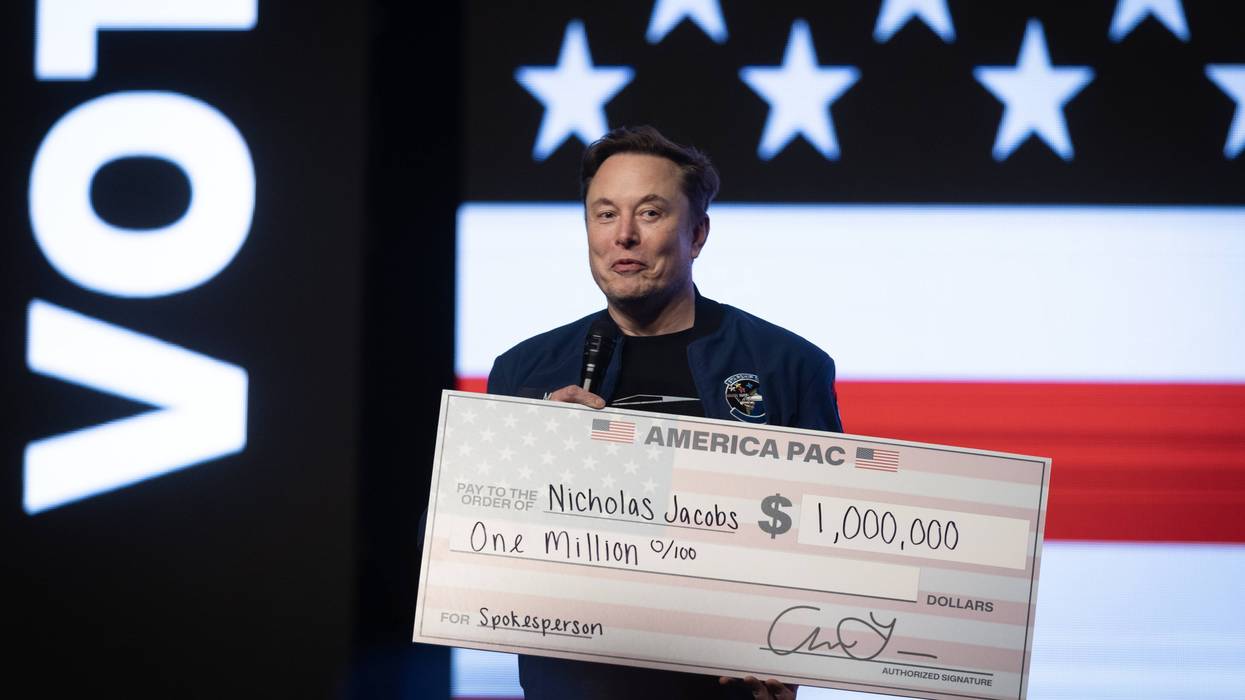
“Trump is making it easier for cartels, criminals, and US adversaries to abuse our financial system," said Sen. Andy Kim. "Because he’s in the pocket of billionaires like Elon Musk, who’d potentially benefit."
Critics are warning that the Trump administration just made financial crimes a lot easier to commit by permanently gutting a law that prevented criminals from using shell companies to obscure their activities. Elon Musk may benefit.
On Tuesday, the Treasury's Financial Crimes Enforcement Network (FinCEN) issued a final rule permanently exempting US individuals and companies from a section of the Corporate Transparency Act (CTA) requiring them to identify the true owners of opaque companies.
The law, which passed in 2020, was ironically introduced and championed by then-US Senator Marco Rubio (R-Fla.), who is now President Donald Trump’s secretary of state and national security adviser.
At the time, Rubio called the law—which he introduced with Sens. Ron Wyden (D-Ore.) and Sheldon Whitehouse (D-RI)—"the most significant anti-corruption and money laundering law in decades."
But Republicans have since pushed to repeal the legislation, which Sen. Tommy Tuberville (R-Ala.) referred to as "big government overreach."
With Republicans in Congress unable to muster the votes to reverse it legislatively, the Trump administration has effectively killed the law by weakening Treasury Department policy. In March 2025, Treasury adopted an interim rule exempting US companies from its requirements.
Plans for a rule change were announced by Treasury less than 24 hours after the SpaceX and Tesla CEO, Musk—who was then leading the so-called Department of Government Efficiency (DOGE)—commented on his social media platform X that he would “look into” the statute in response to a right-wing comedian who'd complained about it.
According to a May report by the nonpartisan Government Accountability Office, more than 99% of entities previously required to report under the law were now exempt. That exemption was made permanent this week.
Treasury Secretary Scott Bessent said it was "a victory for common sense and American small businesses" and called the reporting requirements "burdensome... for millions of law-abiding business owners without compromising our national security.”
Nelson Bunn, executive director of the National District Attorneys Association, said the exact opposite was true.
"By exempting domestic entities and owners from reporting, FinCEN has significantly hindered prosecutors’ ability to identify the bad actors from legitimate businesses when investigating US shell companies used by transnational cartels, human traffickers, and cyberscammers,” Bunn said. "Taking away this indispensable tool for law enforcement endangers American families and communities.”
The change is drawing outrage from Democrats and some Republicans. In a statement on Thursday, Whitehouse and Sen. Chuck Grassley (R-Iowa) said the rule change "undermines the clear intent of the law."
"The act gave the federal government needed tools to address criminal activity like human trafficking, terrorist financing, drug distribution, sanctions evasion, and more without unduly burdening legitimate commercial entities," they said. "This decision is an unfortunate one that fails to use all available tools to protect Americans and crack down on illicit financial schemes.”
Sen. Elizabeth Warren (D-Mass.), the ranking member of the Senate Banking, Housing, and Urban Affairs Committee, highlighted that the committee's previous oversight found the rollback would likely hamper efforts to stop a host of bad actors.
These included Chinese money-laundering networks that have been used to funnel proceeds to drug cartels, fraudsters using opaque ownership to rip off federal grants and benefits, and a Venezuelan national who allegedly used shell companies to hide over $1 billion in cryptocurrency transactions.
Rep. Don Beyer (D-Va.) said the law was “designed to stop criminals from laundering money, and Trump and Secretary Bessent are violating the Constitution to gut it,” and in doing so, “intentionally facilitating corruption and crime.”
In a letter sent to Bessent in March 2026, Warren and other Democratic lawmakers noted that Musk himself would be a direct beneficiary of the rule change, since he "uses a network of dozens of secretive companies—potentially the type of entities that, under the CTA, are required to report ownership information to the Treasury Department."
The New York Times found that in Texas alone, there are over 90 different companies and other legal entities tied to Musk, with others in California, Delaware, and Nevada, which he has used to buy property, structure business deals, hold assets, and pay for political activity—including more than $80 million in super political action committee spending to support Trump in 2024—without putting his own name on the transactions.
"Trump is making it easier for cartels, criminals, and US adversaries to abuse our financial system and harm Americans," said Sen. Andy Kim (D-NJ). "Why? Because he’s in the pocket of billionaires like Elon Musk, who’d potentially benefit from his shady and corrupt actions."
Warren said: "Secretary Bessent should reverse this decision. And he needs to testify in front of this Committee to explain why he’s putting American national security at risk.”

An Ecuadorian human rights group has called for a probe after “bombings, burning of homes, arbitrary detentions, torture, and threats against the civilian population” by the joint US-Ecuadorian military operation.
Just a day after President Donald Trump suggested that he'd use his crushing economic blockade in a bid to "take" Cuba, an administration official said much more American warfare is on the horizon across Latin America.
It's called "Operation Total Extermination," according to Joseph M. Humire, the acting assistant secretary of war for homeland defense and Americas security affairs, who testified last week before the House Armed Services Committee.
Humire explained in written testimony that beginning on March 3, the US Department of Defense (which the Trump administration refers to as the Department of War) "supported, at the request of Ecuador, bilateral kinetic actions against cartel targets along the Colombia-Ecuador border."
"The joint effort," Humire said, "is the start of a military offensive by Ecuador against transnational criminal organizations with the support of the US, setting the pace for regional, deterrence-focused operations against cartel infrastructure throughout Latin America and the Caribbean."
The operation with Ecuador, led by the right-wing president Daniel Noboa, is part of "Operation Southern Spear," the Trump administration's illegal bombing campaign in the Caribbean and eastern Pacific Ocean, targeted at boats accused, with little evidence, of ferrying drugs to the US.
The latest of these bombings, which killed at least two more people, occurred on Friday and brought the total death toll since September of last year up to at least 160.
No casualty counts have yet been released by the US or Ecuadorian government for its operations to target what they said were "domestic terrorist organizations." But reports from those on the ground suggest they may have been similarly bloody.
Víctor Gómez, a journalist for the Ecuadorian outlet Radio Sucumbíos, conducted interviews with the residents of the rural town of San Martín in northeastern Ecuador near the Colombian border, who said their community was attacked twice by Ecuadorian and American forces on March 3 and 6.
Noboa celebrated the attacks on the area, which he said housed "a training ground for drug traffickers," and reportedly the home of "Mono Tole," who is the leader of the Colombian drug trafficking group known as the Border Commandos.
But Gómez described the town as having "no trenches, no firing ranges, no traces of a clandestine military infrastructure," adding that "the only things there are horses, cows, and donkeys, at least that's what can be seen on the Radio Sucumbíos cameras."
Locals, many of whom did not have their names published to avoid retaliation, describe military patrols landing on the riverbank on March 3 and launching an "ambush" against four farmers.
“They tied my hands and feet and then hung me up. They put me in a bucket of water, as long as I could stand it… they kicked me, they hit me with the butt of a gun," one of the workers described.
Another said that the soldiers "were looking for someone we didn't know... they told us to hand things over, but we had nothing to hand over."
The soldiers then reportedly "doused the main house and the wooden kitchen with gasoline" and set it ablaze, leaving the flames to consume large amounts of farm equipment.
As residents attempted to advocate for their loved ones, the farm owner said, "The commander in charge wouldn't let us near; they greeted us with gunfire until they took them away."
The four captured farmers were reportedly transported by helicopter to the capital of Sucumbíos, Lago Agrio, where one of the young men described being taken to a tiny room and tortured.
“They shocked us with that thing they called a taser," he said. "They poured water on me and placed it on my ribs and asked us questions."
After finding no evidence of guilt, authorities released the four men near a hospital in the capital.
Three days later, planes and helicopters flew over San Martín, dropping bombs on the ruins of the same house that had already been burnt to the ground three days earlier and on another abandoned house.
Video of that bombing was shared on social media by the Ecuadorian Armed Forces.
“First they burned it on the 3rd, and then on the 6th they came to bomb it. That’s what they did," said the farm's owner.
“How can it be a training camp if this is a livestock area?" he asked. "There is nothing to justify it, there are no training grounds, there is nothing."
The Alliance for Human Rights Ecuador has called for an investigation into the military's alleged "bombings, burning of homes, arbitrary detentions, torture, and threats against the civilian population," which it said were "serious violations of international humanitarian law."
The fallout from the attack has spilled over to create an international incident with neighboring Colombia. Two weeks after the bombing of San Martín, an unexploded 500 lb. bomb was discovered on a farm on the other side of the San Miguel River in Colombia's Putumayo region.
The bomb was identified as a US-made Mark-82. According to the New York Times, "had the bomb exploded, it would have done so with the force of 192 pounds of TNT" and could have harmed people as far as over 1,900 feet away.
"We're being bombed by Ecuador," said Colombian President Gustavo Petro in response to the explosive's discovery. Noboa denied the accusation, saying that "we are acting in our territory, not yours."
Following the US military's January abduction of Venezuelan President Nicolás Maduro, whom the US Department of Justice accused of drug trafficking, leaks have suggested that the US may soon attempt to bring similar charges against Petro, another left-wing leader who has resisted cooperation with Trump. Petro has denied accusations of drug trafficking.
One unnamed official told Nick Turse of The Intercept that attacks along the Ecuador-Colombia border "increasingly look like a coordinated campaign to foment 'discord' if not conflict" in the country.
In his hearing before Congress, Humire said that the US military was providing Ecuador with “capabilities that they otherwise would not have."
Humire said he was not sure how many strikes have been conducted on land so far as part of Operation Total Extermination, but responded "yes" when asked by the committee's ranking member, Rep. Adam Smith (D-Wash.), if the Department of Defense would “be moving to a lot more terrestrial strikes."
He said that these attacks were "just the beginning" of a much broader campaign, adding that the US has entered into agreements with 17 partner nations in the Western Hemisphere as part of the so-called Americas Counter Cartel Coalition.
While Humire said the nations that have reached these agreements "want this support and most of them all are looking for this,” the same cannot necessarily be said for the people living in the crossfire of the operation.
Gomez said that the people of San Martín are still living with “psychological trauma” following the attack. According to the town's vice president, Vicente Garrid, families are living in constant fear that their homes could be targeted next.
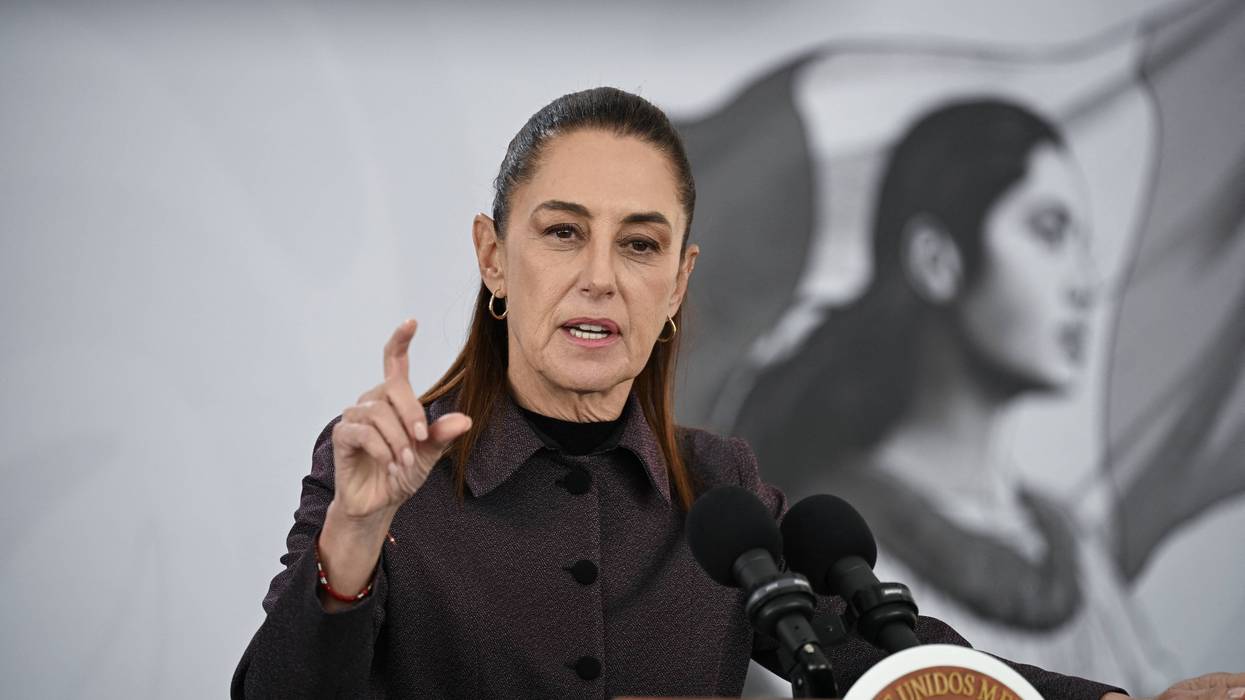
“The cartels are fueled by the United States’ demand for drugs and armed with US weapons, and thanks to the United States, they are able to orchestrate enormous bloodshed and chaos," said Mexico's president.
Amid months of threats by US leaders to attack drug gangs in Mexico, Mexican President Claudia Sheinbaum slapped back Monday against President Donald Trump's assertion that her country is the "epicenter" of cartel violence by urging him to stem the flow of illegal arms across the border—and domestic demand for illicit narcotics.
“If the flow of illegal weapons from the United States into Mexico were stopped, these groups wouldn’t have access to this type of high-powered weaponry to carry out their criminal activities,” Sheinabum said during her daily press briefing, citing a 2025 US Department of Justice report showing that approximately 3 in 4 guns used by Mexican criminal organizations were illicitly trafficked across the international border.
“There’s a very important aspect that needs to be addressed, which is reducing drug use in the United States,” she added.
In a separate interview with W Radio, Sheinbaum took aim at Trump's Saturday speech at his so-called "Shield of the Americas" summit with mostly right-wing Latin American leaders, during which he called Mexico the "epicenter of cartel violence" and announced a "brand-new military coalition" to tackle drug gangs.
“The epicenter of cartel violence is not Mexico, it’s the United States,” she said. “The cartels are fueled by the United States’ demand for drugs and armed with US weapons, and thanks to the United States, they are able to orchestrate enormous bloodshed and chaos throughout Latin America.”
In the latest in a series of threats to attack criminal organizations in Mexico—a scenario vehemently opposed by the Mexican government and most Mexicans—Trump said Saturday that allied right-wing Latin American governments have made “a commitment to using lethal military force to destroy the sinister cartels and terrorist networks.”
Mexicans are wary of US interventions, having lost half their national territory to the United States in an 1846-48 war that two US presidents—Abraham Lincoln and Ulysses Grant—said was waged under false pretext to conquer territory and expand slavery. The US also invaded and briefly occupied the port city of Veracruz in 1914 and launched a punitive invasion targeting the revolutionary Pancho Villa's forces in 1916-17.
Sheinbaum's remarks came after Mexican troops, supported by US intelligence, killed Jalisco New Generation Cartel chief Nemesio Oseguera Cervantes—known as “El Mencho”—during a raid last month. The operation sparked a wave of retaliatory cartel violence in some Mexican states.
Mexico has also arrested hundreds of suspected drug traffickers, destroyed numerous secret narcotics labs, and handed over dozens of alleged cartel criminals to US authorities in recent months.
Last year, the US Supreme Court dismissed a lawsuit brought by the Mexican government against US gun manufacturers, unanimously ruling that Mexico did not plausibly show the companies aided and abetted illegal arms sales.
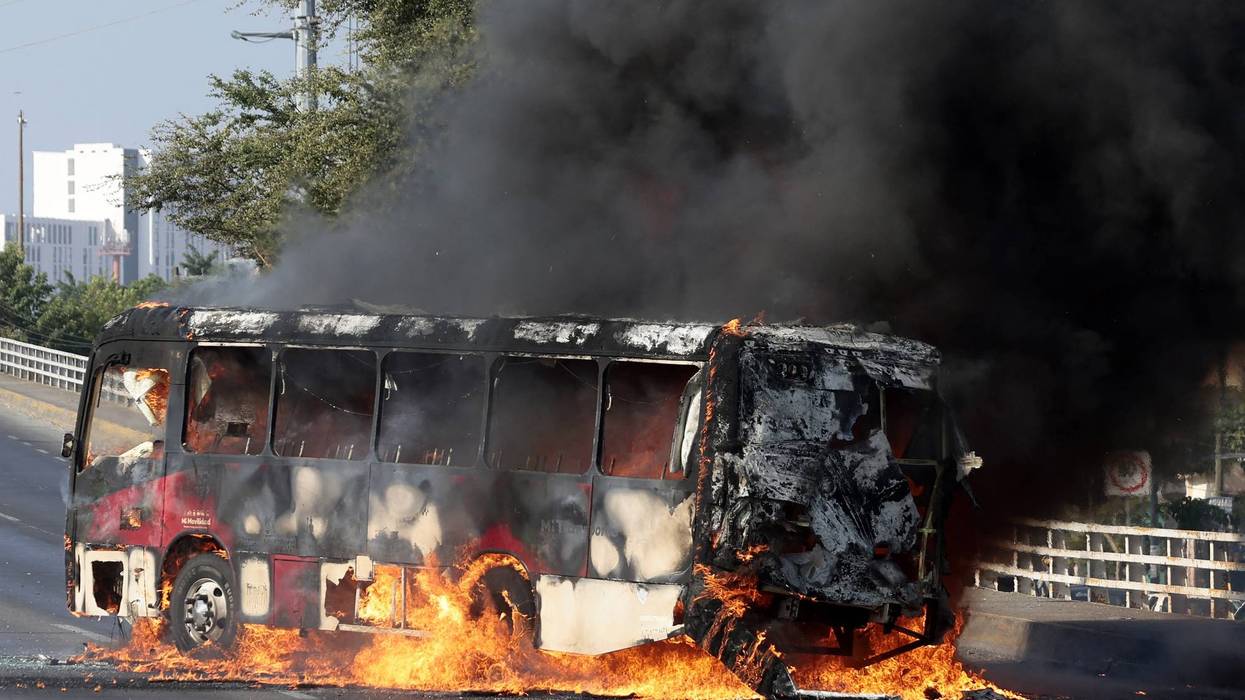
The killing of Mexico's top cartel leader, known as "El Mencho," has created a power struggle that "could plunge Mexico into almost record levels of violence," said one expert.
With support from the US, Mexican security forces killed one of the nation's most powerful cartel bosses on Sunday. Almost immediately, the country descended into violence and chaos.
The killing of Nemesio Oseguera Cervantes—known as "El Mencho"—has set off a violent power struggle within the organization he led, the Jalisco New Generation Cartel (CJNG), which has left civilians caught in the crossfire.
As NBC News reported on Sunday evening:
Cars set on fire by cartel members blocked roads in nearly a dozen Mexican states and left smoke billowing into the air. Jalisco’s capital, Guadalajara, was turned into a ghost town Sunday night as civilians hunkered down. Later, authorities announced they had cleared most of the more than 250 cartel roadblocks across 20 states.
Several Mexican states canceled school Monday, and local and foreign governments warned citizens to stay inside as violence erupted.
The sudden outbreak of violence has created a state of terror for many ordinary people in Mexico. One Guadalajara resident, Maria Medina, told Agence France-Presse that men with guns showed up at the gas station where she works, ordered everyone to leave, and set the building on fire.
"I thought they were going to kidnap us. I ran to a taco stand to take cover with the people there," Medina said.
The US State Department has urged Americans in parts of Mexico to “seek shelter and remain in residences or hotels.” Many flights out of the country have been canceled, leaving tourists stranded.
Visitors at the popular Jalisco beach resort of Puerto Vallarta have been forced into hiding as gunmen have taken over the streets.
One father in Seattle told the local news station Fox 13 that he received frightened texts from his daughter, who was visiting the area, around 3:30 in the afternoon, describing the chaos.
“The text she sent, talking about, ‘The whole city is on fire, and we are hiding at home,'" he said. "'The cartel are outside right now watching the citizens and making sure the military does not come in. The police are not here to help. We are hiding.’“
According to one open-source effort to map the fallout, at least 19 of Mexico's 32 states had seen outbreaks of violence as of Sunday evening.
So far, no civilian deaths have been confirmed. However, according to the Associated Press, at least 25 members of the National Guard have been killed since El Mencho's death.
United States forces were not reportedly involved in the operation that led to El Mencho's death. However, US fingerprints are all over the attack.
In a statement on Sunday night, White House Press Secretary Karoline Leavitt said the US "provided intelligence support to the Mexican government in order to assist with an operation" in which El Mencho was killed.
She added that "President [Donald] Trump has been very clear—the United States will ensure narcoterrorists sending deadly drugs to our homeland are forced to face the wrath of justice they have long deserved."
The attack comes after months of threats from Trump to use US military force to take out cartel leaders, against the wishes of Mexican President Claudia Sheinbaum.
At a press conference on Monday, Sheinbaum said that despite the previous day's chaos, "the country is at peace."
"We awoke today with no blockades,” she said. “All activity has practically been reestablished.”
Several news outlets have described the killing of El Mencho as a direct response to US sabre-rattling, which has ramped up following last month's operation to abduct Venezuelan President Nicolás Maduro.
El Mencho, who founded CJNG around 2010, has been "public enemy number one" for the US Drug Enforcement Agency (DEA) for nearly a decade, for his role in turning the cartel into a hyper-violent organization that coordinated global drug operations.
While CJNG has been considered one of the largest suppliers of Mexican fentanyl, heroin, and methamphetamine to the US—even greater than the more famous Sinaloa Cartel—experts say it’s unlikely that the killing of its 59-year-old kingpin will do much to solve the problem.
"What we've seen in the past is that the removal of the kingpin doesn't necessarily affect significant network disruption," Anthea McCarthy-Jones, an expert in Latin America at the University of New South Wales, told the Australian Broadcasting Corporation. "The removal of the leader doesn't have any impact on the day-to-day relations and the relationships that facilitate this kind of global drug trafficking operation."
US Deputy Secretary of State Christopher Landau boasted that taking out “one of the bloodiest and most ruthless drug kingpins” was “a great development for Mexico, the US, Latin America, and the world."
But David Mora, the senior Mexico analyst at the International Crisis Group (ICG), said it will likely trigger more instability.
"In the absence of a direct succession, a power vacuum is created that opens the door to violent realignments within the organization," Mora told AFP.
Chris Dalby, an organized crime expert who has written a book about the Jalisco cartel, told The Guardian that this power struggle could culminate in a full-scale civil war if no successor emerges to fill El Mencho's shoes.
“If no one can, if the CJNG finally splinters, you have four or five different lieutenants with the manpower, the weaponry, and the criminal empires to build their own fiefdoms—and that could plunge Mexico into almost record levels of violence," said Dalby.
The explosion of violence and instability following the death of just one cartel leader has mirrored what critics warned may follow if the US attempted to bring about the “total elimination” of drug cartels using airstrikes and special operations forces.
"At best, US military strikes in Mexico will weaken the cartels over the short term," wrote fellows Daniel DePetris and Christopher McCallion in a July paper for the think tank Defense Priorities. "At worst, they will cause the cartels to splinter even further, spiking the level of violence, straining the Mexican government’s military resources, and causing significant blowback against Americans in both Mexico and the United States."

"We're told that the UK is deeply uncomfortable with [the boat strikes], and they believe that it is pretty blatantly illegal," revealed a CNN reporter.
President Donald Trump's policy of bombing purported drug-trafficking boats in the Caribbean, which multiple legal experts have decried as an illegal act extrajudicial murder, is now meeting resistance from a top US ally.
CNN reported on Tuesday that the UK has now stopped sharing intelligence related to suspected drug-trafficking vessels with the US because the country does not want to be complicit in strikes that it believes violate international law.
CNN's sources say that the UK stopped giving the US information about boats in the region roughly a month ago, shortly after Trump began authorizing drone strikes against them in a campaign that so far has killed at least 76 people.
"Before the US military began blowing up boats in September, countering illicit drug trafficking was handled by law enforcement and the US Coast Guard, [and] cartel members and drug smugglers were treated as criminals with due process rights," explained CNN.
Last month, after his administration had already launched several strikes, Trump declared drug cartels enemy combatants and claimed he has the right to launch military strikes against suspected drug-trafficking boats.
Appearing on CNN on Tuesday to discuss the story, reporter Natasha Bertrand described the decision to stop sharing intelligence as "a really significant rupture" between the US and its closest ally.
"We're told that the UK is deeply uncomfortable with [the boat strikes], and they believe that it is pretty blatantly illegal," Bertrand explained. "It really underscores the continued questions surrounding the legality of this US military campaign."
🚨HOLY SHIT: The UK - our closest ally since WWI - just cut off ALL intelligence sharing with the U.S. about Caribbean drug trafficking boats, calling the strikes illegal.
Britain doesn’t trust us anymore. Trump has torched a century of friendship while he sucks up to dictators. pic.twitter.com/E0Was3WrrY
— CALL TO ACTIVISM (@CalltoActivism) November 11, 2025
The US military began its boat attacks in the Caribbean in September, and has since expanded them to purported drug boats operating in the Pacific Ocean.
Reporting last month from the Wall Street Journal indicated that the administration was also preparing to attack a variety of targets inside Venezuela, whose government Trump has baselessly accused of running drug cartels. Potential targets include “ports and airports controlled by the military that are allegedly used to traffic drugs, including naval facilities and airstrips.”
The Washington Post reported on Tuesday that the USS Gerald R. Ford aircraft carrier has now arrived off the coast of Latin America, in a move that the paper notes "has fueled speculation the Trump administration intends to dramatically escalate its deadly counternarcotics campaign there, possibly through direct attacks on Venezuela."
Reports from the US government and the United Nations have not identified Venezuela as a significant source of drugs that enter the United States, and the country plays virtually no role in the trafficking of fentanyl, the primary cause of drug overdoses in the US.
The administration's military aggression in Latin America has also sparked a fierce backlash in the region, where dozens of political leaders last month condemned the boat attacks, while also warning that they could just be the start of a regime change war reminiscent of Cold War-era US-backed coups like ones that occurred in Chile, Brazil, and other nations.

"So he is going to drone strike American citizens?" said one journalist.
US Attorney General Pam Bondi generated alarm on Wednesday when she said the Trump administration is going to take the "same approach" to antifa as it has to drug cartels—as the military bombs boats in the Caribbean it claims are smuggling drugs.
Antifa encompasses autonomous anti-fascist individuals and loosely affiliated groups who lack a national organizational structure or leadership. Still, as the increasingly authoritarian administration works to quash dissent on all fronts, President Donald Trump last month signed an executive order designating the antifa movement as a domestic terrorist organization.
During a related roundtable on Wednesday—held as the administration worked to deploy the National Guard in Democrat-led cities—Bondi said that "we're not gonna stop at just arresting the violent criminals we can see in the streets. Fighting crime is more than just getting the bad guy off the streets; it's breaking down the organization brick by brick, just like we did with cartels."
Glancing toward Trump, she continued: "We're going to take the same approach, President Trump, with antifa: Destroy the entire organization from top to bottom. We're going to take them apart. Thanks to your bold leadership, and the designation of antifa as a terrorist organization—which is exactly what they are—Americans will no longer tolerate their unhinged violence."
Lawyer and radio host Dean Obeidallah warned: "Please understand that this is Trump regime explaining how they will use the government to prosecute Democrats. Page 1 of the fascist playbook is imprison political opponents so that the fascist has one-party rule."
Others noted the violence the administration has already taken. Zeteo reporter Prem Thakker said: "My gosh. After the US bombed multiple boats in the middle of the ocean, murdering people on grounds that they were allegedly 'carrying drugs,' the US attorney general says, 'Just like we did with cartels, we're going to take the same approach…with antifa.'"
Zeteo founder Mehdi Hasan said, "So he is going to drone strike American citizens?"
HuffPost's SV Dáte similarly asked, "So the US military will be summarily killing them from above now?"
Trump has recently announced four bombings of boats he claimed were running drugs, without releasing any evidence. Those US military attacks have killed at least 21 people. Critics in Congress and beyond argue the strikes are illegal under federal and international law.
On Tuesday, top Democrats from key committees in the US House of Representatives demanded further information about the bombings and reminded Trump: "Congress has the sole constitutional responsibility to declare war and to authorize the use of force. You have failed to secure such authorization for these strikes."
Also on Tuesday, Bondi appeared before the Senate Judiciary Committee, where lawmakers grilled her on a range of topics. Asked about legal justification for the boat bombings by Sen. Chris Coons (D-Del.), she declined to comment.
Ahead of Bondi's Senate testimony, watchdog groups and hundreds of former employees of the US Department of Justice expressed alarm about her leadership of the DOJ.
“We’re seeing the erosion of the Justice Department’s fabric and integrity at an alarming pace," says a letter signed by 282 former DOJ officials. "Our democratic system cannot survive without the primary institution that enforces the law.”
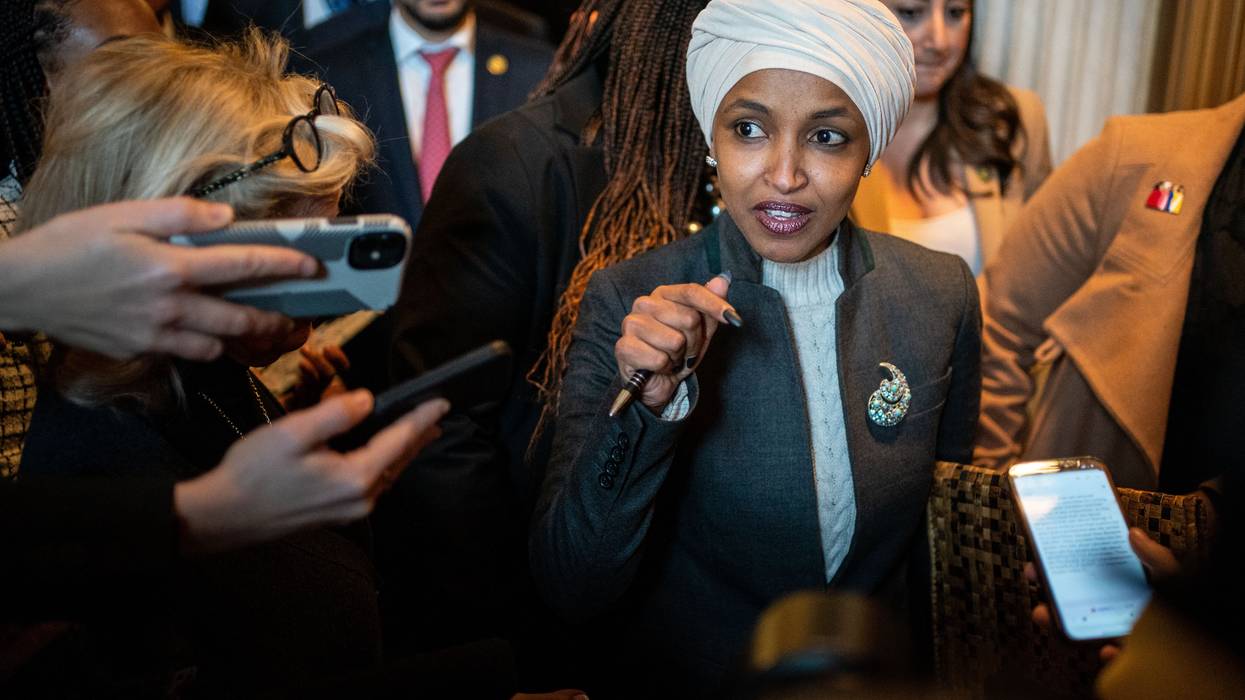
"They're now using the failed War on Drugs to justify their egregious violation of international law," the Minnesota progressive said of the Trump administration.
Congresswomen Ilhan Omar and Delia Ramirez on Thursday strongly condemned the Trump administration's deadly attack on a boat allegedly trafficking cocaine off the coast of Venezuela as "lawless and reckless," while urging the White House to respect lawmakers' "clear constitutional authority on matters of war and peace."
"Congress has not declared war on Venezuela, or Tren de Aragua, and the mere designation of a group as a terrorist organization does not give any president carte blanche," said Omar (D-Minn.), referring to President Donald Trump's day one executive order designating drug cartels including the Venezuela-based group as foreign terrorist organizations.
Trump—who reportedly signed a secret order directing the Pentagon to use military force to combat cartels abroad—said that Tuesday's US strike in international waters killed 11 people. The attack sparked fears of renewed US aggression in a region that has endured well over 100 US interventions over the past 200 years, and against a country that has suffered US meddling since the late 19th century.
"It appears that US forces that were recently sent to the region in an escalatory and provocative manner were under no threat from the boat they attacked," Omar cotended. "There is no conceivable legal justification for this use of force. Unless compelling evidence emerges that they were acting in self-defense, that makes the strike a clear violation of international law."
Omar continued:
They're now using the failed War on Drugs to justify their egregious violation of international law. The US posture towards the eradication of drugs has caused immeasurable damage across our hemisphere. It has led to massive forced displacement, environmental devastation, violence, and human rights violations. What it has not done is any damage whatsoever to narcotrafficking or to the cartels. It has been a dramatic, profound failure at every level. In Latin America, even right-wing presidents acknowledge this is true.
The congresswoman's remarks came on the same day that US Secretary of State Marco Rubio designated a pair of Ecuadorean drug gangs as terrorist organizations while visiting the South American nation. This, after Rubio said that US attacks on suspected drug traffickers "will happen again."
"Trump and Rubio's apparent solution" to the failed drug war, said Omar, is "to make it even more militarized," an effort that "is doomed to fail."
"Worse, it risks spiraling into the exact type of endless, pointless conflict that Trump supposedly opposes," she added.
Echoing critics including former Human Rights Watch director Kenneth Roth, who called Tuesday's strike a "summary execution," Ramirez (D-Ill.) said Thursday on social media that "Trump and the Pentagon executed 11 people in the Caribbean, 1,500 miles away from the United States, without a legal rationale."
"From Iran to Venezuela, to DC, LA, and Chicago, Trump continues to abuse our military power, undermine the rule of law, and erode our constitutional boundaries in political spectacles," Ramirez added, referring to the president's ordering of strikes on Iran and National Guard deployments to Los Angeles, the nation's capital, and likely beyond.
"Presidents don't bomb first and ask questions later," Ramirez added. "Wannabe dictators do that."
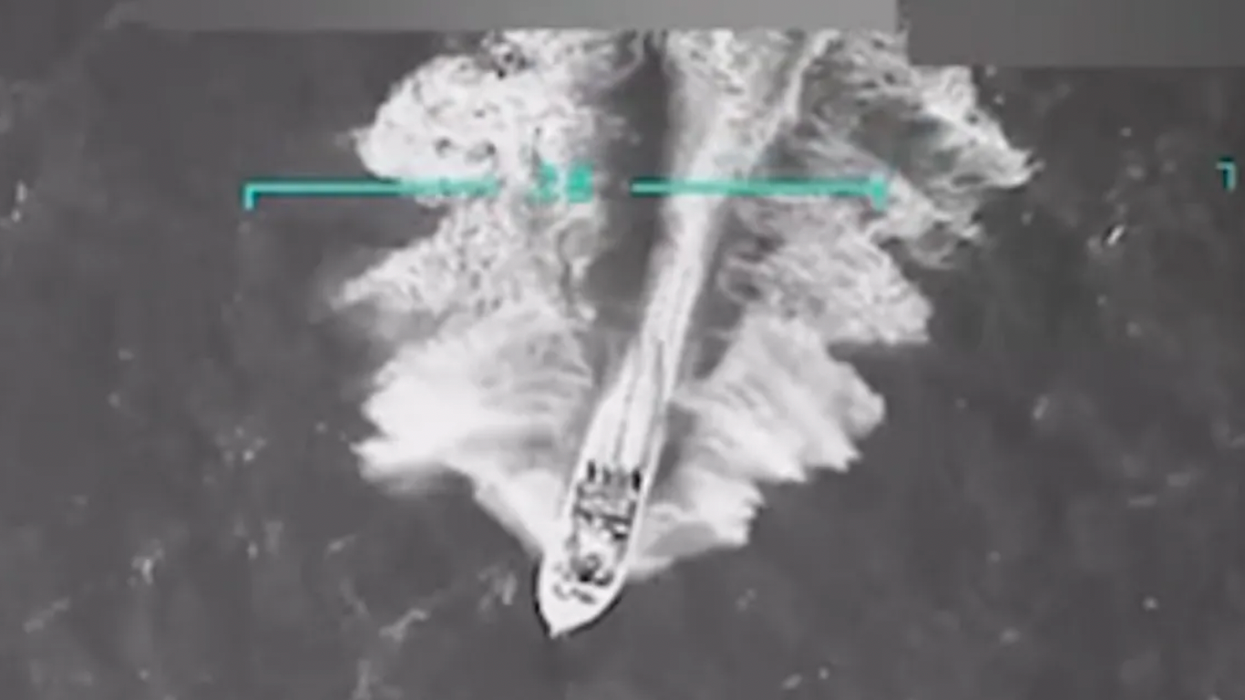
"Drug trafficking is a crime, not an act of war," noted one critic. "Traffickers must be arrested, not summarily executed."
Legal and human rights experts said that Tuesday's deadly US attack on a boat the Trump administration claimed was transporting cocaine off the coast of Venezuela violated international law.
"Drug trafficking is a crime, not an act of war," former Human Rights Watch director Kenneth Roth said on social media following the strike, which US President Donald Trump said killed 11 people. "Traffickers must be arrested, not summarily executed, which US forces just illegally did."
"Trump admits he ordered a summary execution—the crime of murder," Roth added. "Drug traffickers are not combatants who can be shot on sight. They are criminal suspects who must be arrested and prosecuted."
Declassified video showing the U.S. committing a war crime when it fired on a civilian vessel near Venezuela.Being suspected of carrying drugs does not carry a death sentence and certainly not without due process.
[image or embed]
— Arturo Dominguez 🇨🇺🇺🇸 (@extremearturo.bsky.social) September 2, 2025 at 4:02 PM
Michael Becker, an associate professor of international law at Trinity College, Dublin in Ireland, told the BBC Wednesday that the Trump administration's designation of the Venezuela-based Tren de Aragua and other drug trafficking groups as terrorist organizations "stretches the meaning of the term beyond its breaking point."
"The fact that US officials describe the individuals killed by the US strike as narcoterrorists does not transform them into lawful military targets," Becker said. "The US is not engaged in an armed conflict with Venezuela or the Tren de Aragua criminal organization."
"Not only does the strike appear to have violated the prohibition on the use of force, it also runs afoul of the right to life under international human rights law," Becker added.
Although the United States is not a signatory to the United Nations Convention on the Law of the Sea, US military legal advisers have asserted that the country should "act in a manner consistent with its provisions."
Luke Moffett, a professor of international law at Queens University Belfast in Northern Ireland, told the BBC that while "force can be used to stop a boat," this should generally be accomplished using "nonlethal measures."
Such action, said Moffett, must be "reasonable and necessary in self-defense where there is immediate threat of serious injury or loss of life to enforcement officials," and the US attack was likely "unlawful under the law of the sea."
"It reflects the worst of US militarism—secretive, unilateral, and contemptuous of due process, human rights, and the rule of law."
The peace group CodePink said Wednesday that "even if Washington's claims are accurate, drug trafficking does not justify a death sentence delivered by missile."
"International law is clear: The use of force is only lawful in self-defense or with explicit UN Security Council authorization," the group continued. "This strike had neither. It reflects the worst of US militarism—secretive, unilateral, and contemptuous of due process, human rights, and the rule of law."
"Under US law, it's equally indefensible," CodePink argued. "The Constitution gives Congress, not the president, the power to authorize war. Unilateral action may only be used in emergencies or self-defense, and this strike meets neither."
CodePink continued:
With the US Southern Command assets already deployed in the region, why blow up a vessel instead of capturing and interrogating the crew? If the goal were really to uncover evidence of [Venezuelan President Nicolás] Maduro's alleged involvement, this reckless approach raises only two possibilities: Either the narrative is fabricated and Washington used it as a pretext for a deadly show of force or it's real, and the US chose extrajudicial killing over law, evidence, and humanity.
CodePink called on Congressional Progressive Caucus Chair Greg Casar (D-Texas) "to lead the fight in Congress to stop this escalation," urging him to "introduce legislation to block unauthorized military force, hold hearings to expose the dangers of border militarization, insist on transparency of all relevant directives, and rally Congress to cut off funding for these reckless operations."
Tuesday's attack came amid Trump's deployment of an armada of naval warships off the coast of Venezuela, whose socialist government has long endured US threats of regime change—and sometimes more.
Infused with the notion that it has the right to meddle anywhere in the hemisphere under the Monroe Doctrine, the US has attacked, invaded, occupied, and otherwise intervened in Latin American and Caribbean nations well over 100 times since the dubious declaration was issued by President James Monroe in 1823.
Since the late 19th century, oil-rich Venezuela has seen US interventions including involvement in border disputes, help with military coups, support for dictators, and attempts to subvert the Bolivarian Revolution—including by officially recognizing opposition figures claiming to be the legitimate presidents of the country.
Critics of US imperialism highlighted Washington's hypocritical policies and practices toward Venezuela.
"Venezuela produces no cocaine, but US warships patrol its coastline under the banner of a 'drug war,'" New Hampshire Peace Action organizing director Michael "Lefty" Morrill wrote Wednesday.
Meanwhile, neighboring Colombia and nearby Peru—the world's two leading cocaine producers—get no such treatment. Nor does Ecuador, which has emerged as one of the world's leading trafficking hubs.
Morrill also briefly explored bits of the long US history of supporting narcotraffickers when strategically expedient, noting that former Panamanian President Manuel Noriega "was first a CIA asset, then branded a narco-dictator and dragged to a US prison."
"The Taliban was once a strategic partner in Afghanistan's opium trade, before being cast as the world's largest trafficker," he added. "'Drugs' are not simply powders; they are pretexts, shaped to fit the contours of empire."
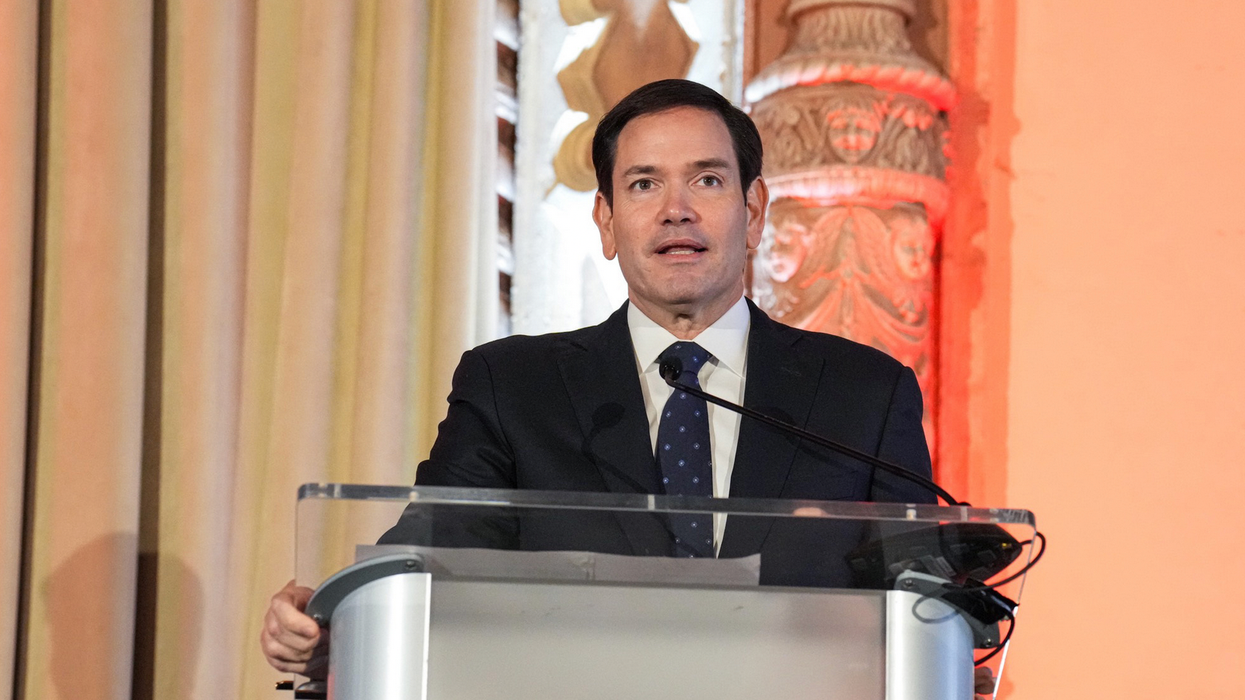
"This is not about drugs, crime, or national security," asserted one expert. "It is about oil that the US would rather not pay for."
Critics of US imperialism on Tuesday responded with skepticism after President Donald Trump and Secretary of State Marco Rubio announced a deadly military strike on what they claimed was a boat linked to a drug cartel off the coast of oil-rich Venezuela.
Trump said on his Truth Social network that 11 people were killed by a US attack in "international waters" on a boat "positively identified" as being used by the Tren de Aragua gang. Rubio said the "lethal strike" targeted "a drug vessel which had departed from Venezuela."
On the first day of his second term, Trump signed an executive order designating drug cartels as foreign terrorist organizations. Last month, the president reportedly signed a secret order directing the Pentagon to use military force to combat drug cartels abroad, sparking fears of renewed US aggression in a region that has endured well over 100 US attacks, invasions, occupations, and other interventions since the issuance of the dubious Monroe Doctrine in 1823.
shout-out to everyone who had Stupider Gulf Of Tonkin for Venezuela on their bingo cards
[image or embed]
— Kelsey Atherton (@atherton.bsky.social) September 2, 2025 at 12:30 PM
Trump has deployed numerous US warships and thousands of sailors and Marines off the coast of Venezuela, a country he has repeatedly threatened with regime change in the face of defiant anti-imperialist resistance from Venezuelan President Nicolás Maduro.
On Monday, Maduro responded to the US escalation during a press conference, telling reporters that he would declare a "republic in arms" in the event of any attack.
"In the face of this maximum military pressure, we have declared maximum preparedness for the defense of Venezuela," he said, calling the US action "an extravagant, unjustifiable, immoral, and absolutely criminal and bloody threat."
"Mr. President, Donald Trump," Maduro added, "watch out, because Mr. Rubio wants to stain your hands with blood."
Armed with the knowledge of more than a century of US meddling in Venezuelan affairs—a history that includes supporting coups and brutal dictatorships and policies of economic strangulation—anti-imperialist critics questioned the motives of Tuesday's attack.
Trump and Rubio celebrating blowing up a tiny Venezuelan boat that barely had enough cocaine for a bachelor party (if it had drugs at all!) is psychotic terrorist shit. Trump sent 7 warships and 4,500 troops to Venezuela to steal the oil and let war criminal Erik Prince occupy and plunder it.
— Secular Talk (@kylekulinskishow.bsky.social) September 2, 2025 at 3:23 PM
"If Venezuela didn't have oil, none of this would happen," one user on the social media site X contended.
Another X user asked, "What happened to Trump campaigning on 'No New Wars?'"
"This has jack shit to do with America First," they added. "Venezuela is zero threat to us. Just another attempt to divert attention away the Epstein files which implicate the rich and powerful across every strata of society."
The independent news site Venezuelanalysis responded to Rubio's announcement in a social media post asking, "Fake propaganda underway?"
"Lil' Marco claims the US military conducted a 'lethal strike' against a drug vessel," the post added, using Trump's old nickname for Rubio. "How did they know it had drugs before striking?"
In an opinion piece published Tuesday by Venezuelanalysis, former Italian parliamentarian and organized crime expert Pino Arlacchi called the latest US aggression against Venezuela a "great hoax" and "geopolitics disguised as 'War on Drugs.'"
"This is not about drugs, crime, or national security," Arlacchi asserted. "It is about oil that the US would rather not pay for."