

SUBSCRIBE TO OUR FREE NEWSLETTER
Daily news & progressive opinion—funded by the people, not the corporations—delivered straight to your inbox.
5
#000000
#FFFFFF
To donate by check, phone, or other method, see our More Ways to Give page.
Daily news & progressive opinion—funded by the people, not the corporations—delivered straight to your inbox.
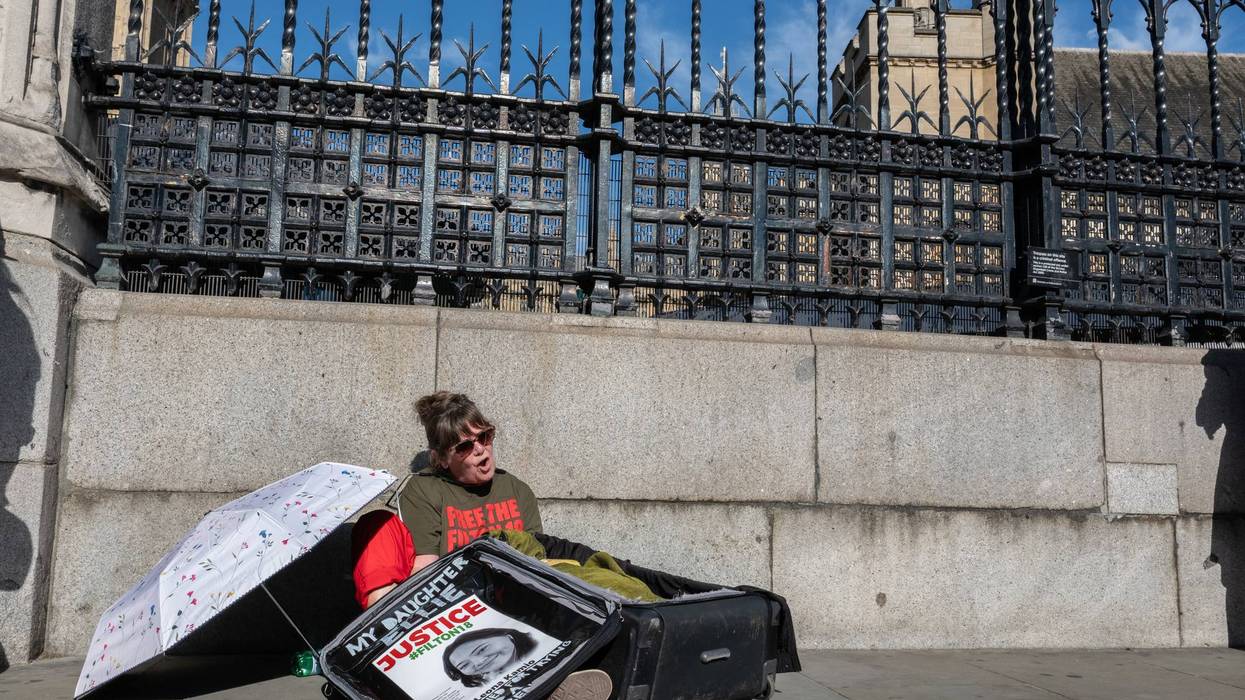
Emma Kamio's daughter, Ellie, was also "debanked" by Lloyds Bank before she was criminally convicted for her sabotage of Israeli military equipment.
One of the UK's largest financial institutions, Lloyds Bank, reportedly targeted a jailed Palestine Action protester and her family for financial punishment before she was ever convicted of a crime, according to a report out Wednesday from Novara Media.
The outlet reported that activist Leona "Ellie" Kamio had her account shuttered by Lloyds, a process known as "debanking," while she was being held on remand for her role in destroying Israeli military equipment at a factory owned by the technology firm Elbit Systems.
Ellie and four other activists were convicted of criminal damage earlier this year. But although a jury never convicted them of terrorism, they were sentenced as terrorists after a judge made an unprecedented ruling that their actions had a “terrorist connection," due to their political motivation. She and other members of the so-called "Filton Four" have appealed their sentences.
Ellie was held in prison on "remand" for more than 18 months before her first trial concluded in February 2026 although she was never charged with terrorism.
In February 2025, a year before her trial for criminal damage, Novara reports that Kamio was sent a letter by Lloyds informing her that it was closing her bank account because it was “unable to maintain a banking relationship." It did not give an explanation for the decision.
In June 2026, after Ellie had been convicted of criminal damage but before she was slapped with a terrorism sentence, her mother, Emma Kamio, learned that Lloyds had denied her request for a new mortgage on the commercial properties for her small business.
Lloyds made it clear that it was because of her daughter's case.
"We’ve now assessed the deal and consulted with our credit sanction team," a business development manager for the bank told Emma's mortgage broker. "Unfortunately, due to the adverse media, it’s not something they’re comfortable supporting at this time.”
When the broker offered an alternative plan to transfer the properties into her sister's ownership, Lloyds also rejected it.
Emma told Novara that she lost her properties as a result of Lloyds' decision. Her businesses, she said, "had to slip down the list of priorities as for the past two years, she's "spent every waking moment dealing with the trauma of my wrongful arrest or fighting for my daughter’s campaign and her release."
Emma was herself arrested in July 2025 after she locked herself to a suitcase outside Parliament to protest as members voted to enact the ban on Palestine Action. She was acquitted in April 2026.
"Thankfully, my drive for justice is more important to me than money," Emma said.
In the UK, banks are not allowed to cancel customers' accounts based on religion or belief. But they can be closed if the bank suspects a user is engaged in money laundering, terrorism financing, fraud, or other criminal activities that could pose a risk to the financial institution.
Emma contends that Lloyds "debanked my daughter Ellie with no reason at all, and while she was on remand and therefore innocent until proven guilty."
A spokesperson for Lloyds told Novara that the bank does not "close customer accounts or make lending decisions based on political or personal beliefs."
"Our decisions are based on relevant laws, regulations, account conditions, or lending requirements," the spokesperson said. "We’re unable to comment on individual cases.”
Anas Mustapha, the head of public advocacy at CAGE International, a UK-based organization focused on state abuses under terrorism laws, described the actions committed against Emma as “collective punishment."
"Emma Kamio has nothing to appeal against—just a bank’s discriminatory risk assessment, applied because her daughter took action to stop the supply chain of deadly weapons used in a genocide," Mustapha told Novara.
The highly controversial sentencing of Ellie and the rest of the "Filton Four" as terrorists was widely condemned by civil liberties and human rights activists, who described it as a dramatic escalation of the British government's effort to punish pro-Palestinian speech.
Last July, the Labour government of then-Prime Minister Keir Starmer used the Terrorism Act to ban Palestine Action, which has engaged in "direct action," including property destruction against entities activists believe are complicit in Israel's genocide in Gaza.
Not only is membership in the group now considered a terrorist offense, but nonviolent expressions of support for the group have also been criminalized.
Since the ban came into effect, 3,500 arrests of peaceful protesters have taken place across the country, according to Amnesty International, including more than 1,200 who've been charged with terrorism-related offenses.
Separately, official Home Office figures show that as of March, 92% of terrorism-related arrests in the UK over the previous year were linked to suspected support for Palestine Action.
Ellie and the other members of the Filton Four have defended their acts of sabotage against Israeli military equipment—including dozens of drones—as a justifiable response to Israel's destructive military campaign in Gaza.
That campaign, which many human rights organizations have described as a "genocide," has killed more than 73,000 Palestinians, including over 20,000 children, according to official tallies from the Gaza Ministry of Health, while independent analysts have argued the true death toll since October 2023 is much higher.
Elbit is one of the companies that provides much of Israel's drone fleet, which has been involved in attacks that have killed Palestinian civilians.
"Ellie was sentenced as a terrorist after she was convicted of criminal damage for destroying 40 Israeli weapons, including quadcopter drones," said Huda Ammori, one of the co-founders of Palestine Action, in a post on X. "For saving lives, she was deemed a terrorist, and her family is also being targeted."
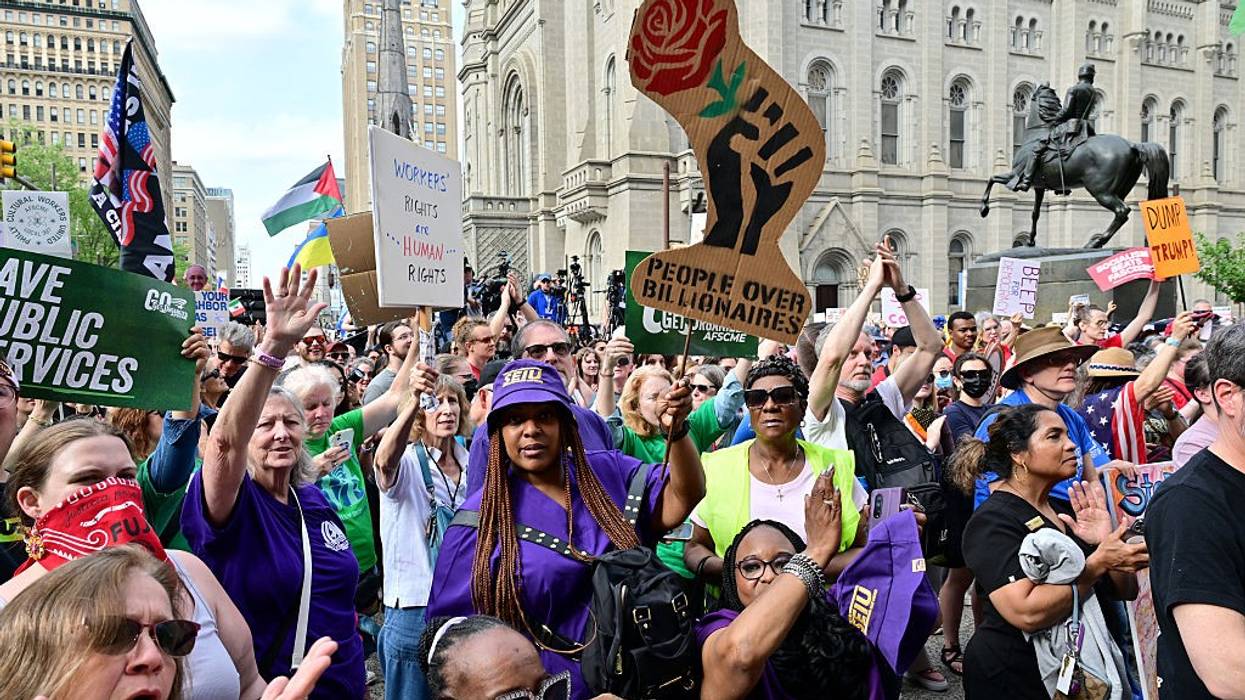
Action isn't only about pressuring institutions anymore. It's increasingly about jamming the system, slowing it down, or breaking its rhythm. In plain terms, we've shifted from representative politics toward something more like direct pressure.
For decades, American politics rested on one big, mostly unquestioned idea: Real change happens through the system. You vote, you lobby, you go to court, you work the parties. Even the biggest protest movements eventually tried to plug themselves back into those official channels. But lately—especially since Donald Trump burst onto the scene—that old assumption has been crumbling fast.
What we're seeing now, in things like the “May Day Strong” actions, isn't just more people protesting. It's a deeper change in how politics actually works. Action isn't only about pressuring institutions anymore. It's increasingly about jamming the system, slowing it down, or breaking its rhythm. In plain terms, we've shifted from representative politics toward something more like direct pressure.
The key driver here is the collapse of trust in institutions. One of the most striking things about Trumpism isn't any single policy—it's the relentless way it attacked the legitimacy of the middlemen: the media as “the enemy of the people,” judges as biased, elections as rigged. These weren't just throwaway lines. Over time, they sank in and reshaped how a lot of people view the system's ability to actually deliver.
When folks stop believing the formal channels can handle their grievances, they start looking for other levers. That's when direct action, civil disobedience, and economic disruption stop looking fringe and start feeling logical.
“May Day Strong” feels like a live experiment. It's testing how well networked groups can mobilize and whether hitting the economy where it hurts can deliver lasting political leverage. The answers will matter a lot for where democracy goes next.
“May Day Strong” sits right at that crossroads. The call for “No Work, No Shopping” isn't subtle. It says: If real power flows through the economy, then choking those flows becomes a form of politics. On the surface it seems straightforward, but it quietly rewrites the textbook definition of power.
In the old model, power lived in government buildings and political offices. You tried to influence them. In the emerging one, power is scattered across economic networks and social connections. So the game moves from representation to targeted disruption—from institutional politics to what you might call infrastructural politics.
This isn't purely ideological. It also grows out of how people actually experience daily life now: gig work, shaky jobs, disappearing benefits, and costs that keep climbing. When the ground under your feet feels unstable, waiting for institutions to fix things starts to feel naive.
So where does Trumpism fit? It didn't invent this distrust, but it poured gasoline on it. By hammering institutional norms, torching media credibility, and sharpening polarization, it helped create an environment where formal mechanisms look increasingly broken. In that kind of atmosphere, taking it to the streets—or to the supply chains—doesn't feel radical. It feels like common sense.
Still, there's real tension. Disrupting people's everyday lives is a double-edged sword. If folks see it as standing up for justice, it can build wide support. If it just looks like chaos that hurts regular people trying to get by, it can spark a strong backlash.
That tension defines politics in this post-trust era. Legitimacy no longer comes neatly from institutions. It gets fought over in public opinion—and more and more, the street has become the arena where that fight happens.
In that light, “May Day Strong” feels like a live experiment. It's testing how well networked groups can mobilize and whether hitting the economy where it hurts can deliver lasting political leverage. The answers will matter a lot for where democracy goes next.
If direct disruption keeps replacing traditional institutional routes, the line between protest and actual governance starts to blur. Suddenly, the power to halt things becomes its own kind of authority. That opens doors for groups that felt shut out—but it also raises the odds of deeper instability.
At the end of the day, this isn't simply politics getting more extreme. It's politics changing its fundamental shape. It's no longer just a contest to control the institutions. It's becoming a struggle to control the flows—of information, money, goods, and attention.
Trumpism didn't create this shift, but it accelerated it. By eroding trust and heating up divisions, it helped make direct action feel less like an outlier and more like a normal part of how politics gets done.
The big question now isn't how institutions can manage protest. It's whether institutions can hold onto their central role at all.
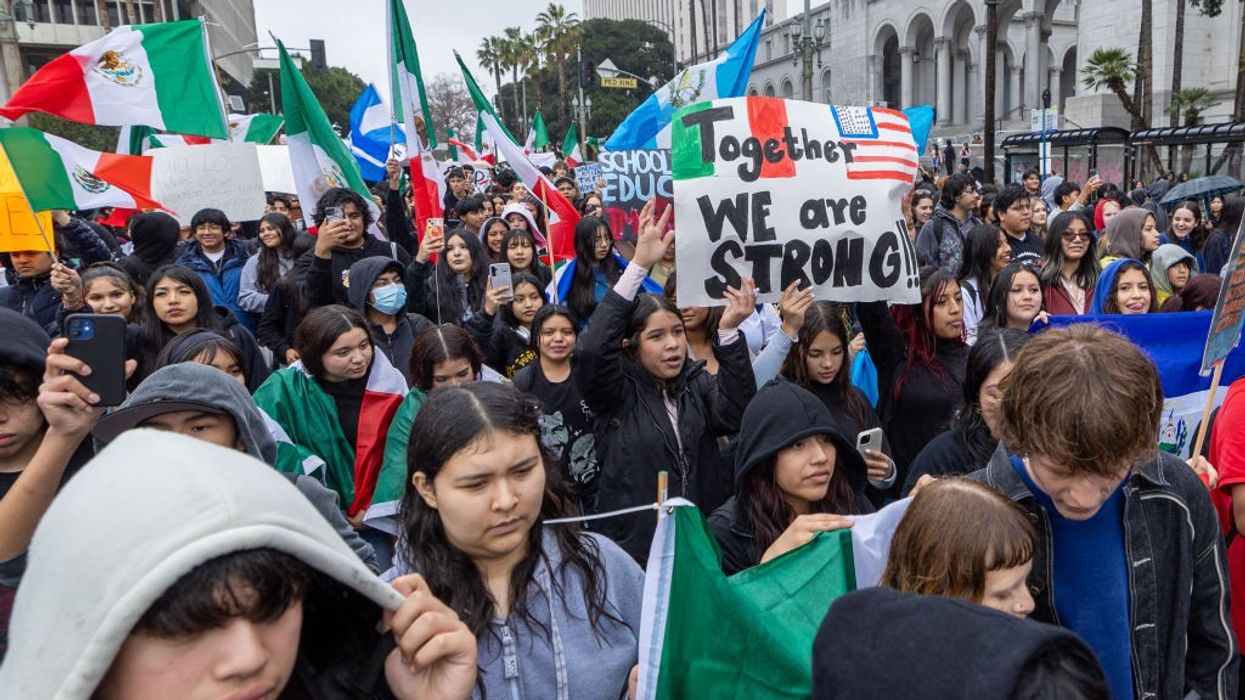
Social self-defense against the MAGA juggernaut can be the starting point for creating the world we want beyond MAGA.
As President Donald Trump launches illegal armed attacks against American cities, peaceful civilians, and people in foreign countries that have not attacked the US, it may look like a sign of strength and a harbinger of a future of total domination. But Trump’s turn to such extreme forms of violence is less an expression of growing power than an attempt to distract from the growth of opposition, the loss of public support, and the splits within the ranks of his own supporters. It is a sign not of strength but of weakness.
This report lays out a strategy to take advantage of that weakness to defend society against Trump’s MAGA assaults. That strategy is based on the principle of “social self-defense”—that all the people and institutions harmed by Trump’s autocracy can and must come together to protect society against his assault.
Resisting and eventually eliminating Trump and his MAGA tyranny requires more than his loss of popularity. It requires a concerted opposition that can rally powerful social forces to undermine his means of domination. In our two-party system, the responsibility for opposition lies on the opposition party—the Democratic Party. Unfortunately, with a few outstanding exceptions, the leadership of the Democratic Party has so far failed in its duty to oppose Trump’s burgeoning autocracy.
In response to the intensifying attack on democracy, millions of people in thousands of locations have joined actions to oppose his juggernaut. In the absence of adequate resistance in the electoral arena, an alliance of popular movements is functioning as the primary opposition to Trump’s authoritarian rule.
The emerging movement-based opposition aims to halt and undo the harm that has been done by the Trump regime, but it is not directed toward returning to the world as it existed before Trump.
This “movement-based opposition” has emerged rapidly during the first year of Trump’s presidency. It is represented by the mass nonviolent resistance to Immigration and Customs Enforcement (ICE) in Los Angeles and elsewhere and the 5 million participants in No Kings Day and other national days of action. It is developing significant power as more and more people see and experience the harm the Trump administration and the MAGA Congress are inflicting on individuals, groups, and society as a whole. This movement-based opposition is no longer a marginal force but is now MAGA’s most powerful opponent.
Sometimes called a non-electoral or independent opposition, such a movement-based opposition is a convergence of social movements that performs some of the classic functions of an opposition party without the goal of itself taking power in government. It draws diverse constituencies out of their silos to combine their power, but uses direct action rather than electing candidates as its means to exercise that power. Like a political party, it brings together different constituencies around common interests, exposes the lies of those in power, and wins support for alternatives.
This movement-based opposition can mobilize popular rejection of the MAGA agenda, block Trump’s initiatives, prod Democratic politicians into action, split off Republicans, and help lay the groundwork for “people power” nonviolent uprisings—aka “social strikes”—if they prove to be necessary to overcome authoritarian rule.
Trump’s authoritarian juggernaut is currently entering a more violent, militarized phase. At home, this includes the huge expansion of ICE, the military occupation of American cities, and the political repression using the assassination of Charlie Kirk as a pretext. Abroad, it means the bombing of Iran; the illegal, unprovoked attacks on Venezuelan boats; and ongoing collusion with genocide in Gaza. Who knows what else is in the works.
The opposition is also entering a new phase. This was heralded by the resistance to ICE and military occupation in Los Angeles that included community-based support groups; constant identification, tracking, and filming of ICE agents; mutual aid support for targets of ICE attacks; ongoing opposition from state and city officials; refusal of the Dodgers to let ICE enter their stadium; and refusal of grand juries to indict—out of the 38 felony cases filed by Trump’s US attorney, only seven have resulted in indictments. Opinion polls indicate that such exposure of ICE abuses had led public opinion in California and nationwide to shift against Trump’s anti-immigrant policies.
Chicago, Washington, DC, New York, Memphis, and other cities are readying for similar resistance. An estimated 25,000 demonstrated in DC against the occupation of the city. The National Guard troops sent into Los Angeles and Washington, DC have been widely reported to be antagonistic to their assignments. The majority of Americans are opposed to Trump’s deployment of troops to American cities and feel their own rights and freedoms would be less secure as a result. The opposition to Trump’s plan to occupy Chicago with the National Guard met so much resistance from Chicago citizens and unions, the mayor of the city, and the governor of Illinois that he initially reversed himself and announced that he was not going to send the troops because a railroad executive had advised him, “You're gonna lose Chicago, sir.”
As Secretary of Health and Human Services Robert F. Kennedy Jr. gutted America’s vaccine programs and other defenses against Covid-19 and other health threats, major medical associations such as the American Academy of Pediatrics denounced the new policies and promulgated their own treatment standards. Top officials in the Centers for Disease Control and Prevention (CDC) and other health agencies publicly resigned in protest—and hundreds of CDC employees, including some in full service uniforms, gathered outside the agency, cheering and clapping for the three officials who had quit. Four states, flouting Trumpian policy, announced a “health alliance” that made its own science-based standards for vaccination. Florida’s plan to eliminate all vaccine mandates was reversed in just two days following a furious backlash from medical experts and political opponents.
There are three mutually reinforcing strategies for the movement-based opposition’s struggle against Trump’s domination: nullifying his initiatives, voting his supporters out of office, and mass “social strikes” that mobilize enough people to make his continued rule impossible.
The emerging movement-based opposition aims to halt and undo the harm that has been done by the Trump regime, but it is not directed toward returning to the world as it existed before Trump. That is clearly not what the people want, and it offers little hope of solving our real problems. The movement-based opposition includes many different groups with different visions of the future. It is based on agreement about the immediate aim, plus agreement to disagree about other things. It should encourage discussion of areas of disagreement while bracketing them when they might interfere with immediately necessary collaboration.
The process of working together and defining common interests itself can help identify new areas of agreement and encourage mutual acceptance of differences. Indeed, Social Self-Defense against the MAGA juggernaut can be the starting point for creating the world we want beyond MAGA. As Abraham Lincoln said of the Civil War, it can become the means for a new birth of freedom.
For a growing database of more than 500 organizations that seek volunteers for many forms of social self-defense, go to https://allofusdirectory.org/
For the full Labor Network for Sustainability Report on which this piece is based go to “A Movement-Based Opposition to Trump and MAGA.”

"My arrest has focused international attention on Japan's continuing illegal whaling operations and their intent to go back to the Southern Ocean," said Watson. "So, in fact, these five months have been an extension of the campaign."
The prominent anti-whaling activist Paul Watson was released Tuesday from prison in Greenland after Danish officials rejected a request by Japan to extradite him.
Watson was arrested in Greenland, an autonomous territory of Denmark, in July due to a warrant issued by Japan in 2012, which alleged that Watson had interfered with a Japanese whaling vessel and caused injury to a crew member in 2010, according to The New York Times. He could have faced up to 15 years in jail if convicted.
"I am certainly relieved as this means I get to see my two little boys. That's really been my only concern this entire time. I understand the risks of what we do and sometimes you get arrested—although I am proud of the fact that I have never been convicted of a crime," Watson told the Guardian. Watson's two sons are aged three and eight.
To the outlet AFP, he said: "My arrest has focused international attention on Japan's continuing illegal whaling operations and their intent to go back to the Southern Ocean... So, in fact, these five months have been an extension of the campaign."
Watson, a Canadian American who co-founded Greenpeace and founded Sea Shepherd—a group that uses direct action to protect marine wildlife and oceans—was traveling in July with 25 volunteers on a mission to the North Pacific for the Captain Paul Watson Foundation (CPWF), which he started after leaving Sea Shepherd in 2022. When the vessel arrived in Nuuk, Greenland to refuel, Danish police arrested him.
The CPWF denounced the surprise arrest, which came as Watson planned to intercept a new Japanese factory whaling ship.
Watson was also featured in the Animal Planet television show Whale Wars that ran from 2008 until 2015, in which he led efforts to disrupt Japanese whaling on the high seas.
Japan has a long, complicated history with whaling. Whale meat was seen as an important protein for the country after World War II. Japan joined the International Whaling Commission, an international body that placed a moratorium on commercial whaling in the 1980s, in 1951. In 2019, Japan left the body and began catching whales commercially the same year, according to the International Whaling Commission.
In 2014, the International Court of Justice ruled against Japan in a case involving charges that Japan was using a scientific research program as a front for a commercial whaling venture in the Antarctic.
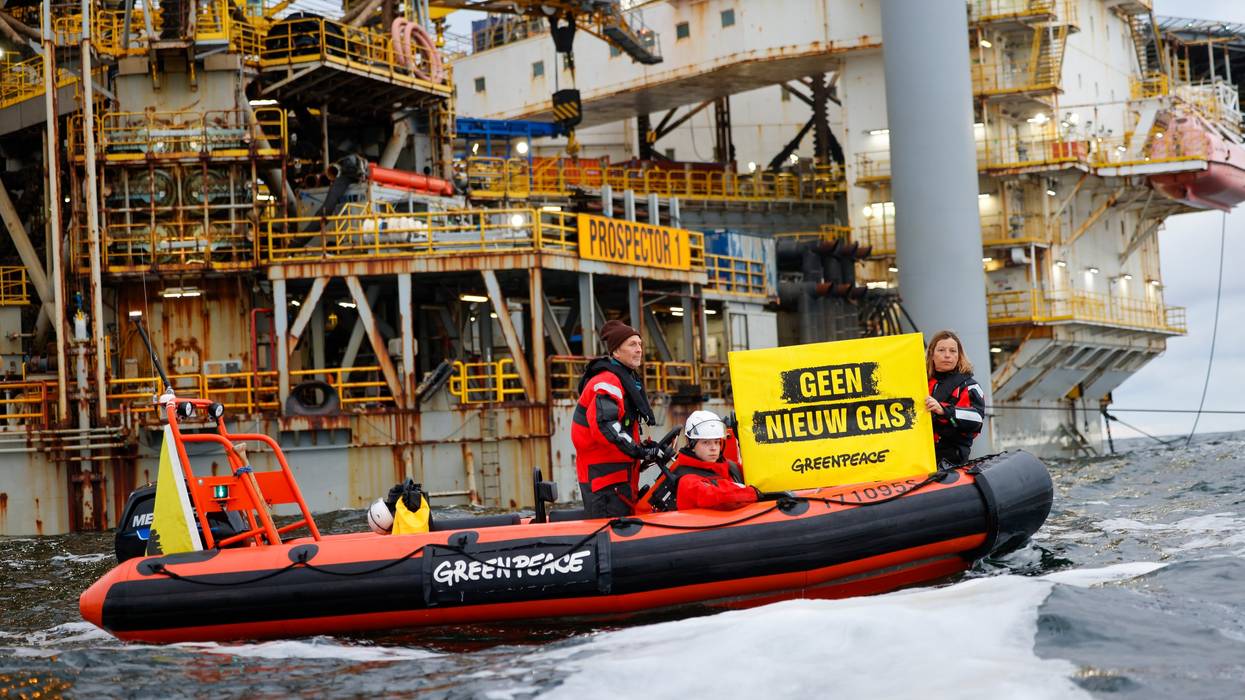
"Today's events show that people power works!" a campaigner said. "Whether it is occupying a gas rig or challenging it in court, people will not be silent, we are standing up to the fossil fuel industry."
A Dutch court on Tuesday ordered a pause to a gas drilling initiative in the North Sea after Greenpeace activists occupied a platform owned by the company behind the project, leading the environmental group to declare "victory" as it pushes for an end to new fossil fuel infrastructure in Europe.
The activists sought to disrupt the work of Dutch energy company ONE-Dyas, which had just received the go-ahead for offshore drilling from the Dutch government last week and quickly sent the drilling platform to the site, which is about 12 miles from the German island of Borkum and straddles Dutch and German waters.
"The science is clear, we must stop digging and drilling for fossil fuels if we are to avoid the worst of climate chaos," Mira Jaeger, energy expert from Greenpeace Germany, said in a statement released earlier on Tuesday, before the court decision. "We cannot afford any new fossil fuel extraction projects. Not in the North Sea or anywhere else."
"Today's events show that people power works!" Jaeger said in another statement following the ruling. "Whether it is occupying a gas rig or challenging it in court, people will not be silent, we are standing up to the fossil fuel industry."
🔊VICTORY: The gas drilling platform currently occupied by @greenpeace_de and @greenpeaceNL activists has been ordered to stop their drilling activities by a Dutch court.
Resistance WORKS! #StopFossilGas https://t.co/MRhJZ2ZXiQ pic.twitter.com/5d6x2jzO6l
— Greenpeace International (@Greenpeace) June 4, 2024
Greenpeace, an environmental group that engages in nonviolent direct action, has previously occupied oil and gas rigs in the North Sea and elsewhere. Last year, the group's campaigners occupied a platform contracted by Shell, a multinational oil and gas company, as it made its way to work in U.K. waters.
The planned Borkum drilling project, which Greenpeace has said would threaten rocky reefs and a local nature reserve, has been the subject of a legal and regulatory fight in recent years. Environmental and community groups filed a lawsuit against it in Dutch court, and a judge halted the project for over a year starting in April 2023. However, following court-ordered changes, the Dutch state secretary for economic affairs and climate approved the project last week. On Monday, Offshore Energy, a trade publication, declared that the project, which it said involves an investment of more than $500 million, had "no more legal woes" and would produce gas by the end of the year. A Dutch official noted the importance of a domestic supply of natural gas in approving the project, Offshore Energy reported.
With the company moving quickly, Greenpeace activists aimed to block the installation of the platform on Tuesday. Five of the 21 who went to sea for the action occupied the platform, called Prospector 1, and tied themselves to pillars, according to Greenpeace. The occupation lasted 8 hours, ending when news came of the court ruling.
Tuesday's ruling suspended the approval granted by the Dutch state secretary for economic affairs, and is to be followed by a hearing on June 12. The decision came at the request of environmental and community groups, which submitted an application on Friday for "provisional relief." The groups aim to block the drilling initiative entirely, arguing that ONE-Dyas should abandon its "legal tricks" and "accept reality and abandon the project."
Greenpeace, which was one of the plaintiffs in the application, reiterated its demand on Tuesday that the project be permanently canceled, while calling for the E.U. to abandon all fossil fuel infrastructure projects.
"The Borkum project is just the tip of the iceberg: in Europe, fossil fuel companies are pushing European states into such massive, unnecessary investments just like TotalEnergies’ LNG terminal in France, or OMV’s Neptun Deep gas drilling project in Romania," the first Greenpeace statement said. "But the European Union can and must put its member states on a path away from fossil fuels, by banning new fossil fuel projects and investing in an energy system based on renewables and energy sufficiency."

"What we are witnessing right now in Palestine is one of the greatest human rights issues of our time," said Seven Circles Alliance.
A small number of demonstrators were arrested on Thursday for disrupting the Macy's Thanksgiving Day Parade on Sixth Avenue in New York City to protest Israel's "ongoing ethnic cleansing and genocide of Palestinians" in the Gaza Strip.
"Floats, marching bands, and the parade's iconic balloons were navigating around the protesters as cops moved in to make arrests," the New York Daily News reported. "Protestors clad in white jumpsuits, some emblazoned with the words 'Colonialism,' 'Militarism,' and 'Ethnic Cleansing' poured fake blood on one another and the roadway."
Taking credit for the direct action, Seven Circles Alliance said in a statement that the coalition of climate, social justice, and political activists is calling on the United States to "cease its support for Israel's occupation of Palestine" and for both the U.S. and Israel to recognize the International Criminal Court (ICC).
"A free Palestine and the liberation and decolonization of all people, everywhere is deeply linked with the climate movement," the alliance asserted. "If the powers of the West are unabashedly supporting genocide and ethnic cleansing, it is crystal clear that they will not budge an inch in addressing climate breakdown and preventing societal collapse. Climate is a human rights issue, and what we are witnessing right now in Palestine is one of the greatest human rights issues of our time."
The direction action wasn't the only expression of solidarity with Palestine during Thursday's parade. Someone riding on the Mashpee Wampanoag Tribe float also held up a Palestinian flag.
Israeli airstrikes and raids in Gaza have killed more than 14,500 Palestinians, including over 6,000 children, since Israel declared war in response to a Hamas-led attack on October 7. The assault has also displaced about three-quarters of the besieged strip's 2.3 million residents and devastated civilian infrastructure.
Massive street protests around the world over the past several weeks have pressured political leaders to demand a cease-fire and path toward peace in Gaza, while genocide experts and other critics of Israel's war—including some Israelis—have advocated for action by the ICC.
Some U.S. lawmakers have also called for a cease-fire, but President Joe Biden has stressed his "unwavering" support for Israel and asked Congress to authorize $14.3 billion for the war effort, on top of the $3.8 billion in military aid that Israel already gets from the United States annually.
A four-day pause in fighting is scheduled to begin at midnight to allow for the release of 150 Palestinian women and children from Israeli prisons as well as 50 hostages held by Hamas.
"A temporary pause in the violence is not enough," U.S. Rep. Rashida Tlaib (D-Mich.), the only Palestinian American in Congress, said earlier this week. "We must move with urgency to save as many lives as possible and achieve a permanent cease-fire agreement."
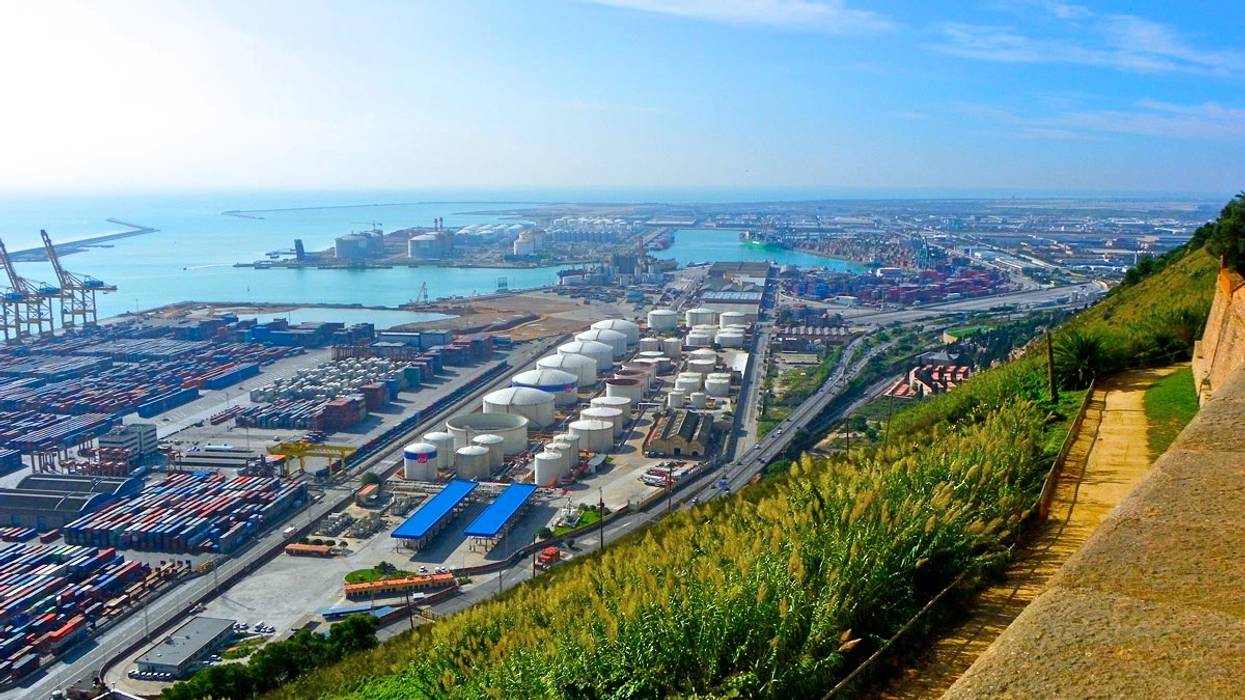
The move builds on a growing number of direct actions targeting weapons bound for Israel as its bombardment of Gaza has claimed more than 10,000 lives.
The union representing Barcelona's dockworkers promised Monday not to load or unload military materials onto any ship bound for Israel or another warzone where they could be used against civilians.
In their statement, the Organization of Port Stevedores of Barcelona, OEPB in Catalan, called for a cease-fire in Israel, Palestine, Ukraine, and every other global conflict.
"We have decided... not to allow shipping activity in our port that contains military equipment, with the sole purpose of protecting any civilian population in any territory," the union wrote. "No cause justifies sacrificing civilians."
OEPB said it was its duty as a workers' organization to "respect and vehemently defend" the Universal Declaration of Human Rights—"Human rights that appear to have been forgotten by the countries that have signed their Magna Carta, and that are now being violated in Ukraine, Israel, the Palestinian territories, and other parts of the planet."
The union's statement came as the death toll from Israel's bombardment of the Gaza Strip surpassed 10,000. Hamas also killed 1,400 in the October 7 attack on Israel that launched the current bout of open conflict, though Gaza has been under Israeli blockade for 16 years. At least 9,614 civilians have been killed in Ukraine between when Russia invaded on February 24, 2022, and September 10, the Office of the United Nations High Commissioner for Human Rights said.
In addition to calling for a cease-fire in all global hostilities, the OEPB called on the United Nations specifically to "cease its posture of complicity through inaction" and return to its mission of preserving international peace and security, protecting human rights, distributing humanitarian aid, supporting sustainable development and climate action, and protecting international rights.
"We, several unions active in ground logistics, call on our members not to handle any flights that ship military equipment to Palestine/Israel."
It's unsure how many weapons the OEPB's promise will actually stop from reaching their destination, according to Reuters. Spain exported 1.3 billion euros in military equipment during the first half of 2022, with 9 million of that sent to Israel. However, the Spanish government has said it does not plan to export any deadly weapons to Israel to use in its current attack on Gaza.
OEPB secretary Josep Maria Deop told Reuters Tuesday that the statement was largely symbolic and intended to encourage other Spanish ports to follow his union's example. But he said that military equipment did likely ship from Barcelona and that peace organizations could help the union pinpoint which vessels to avoid.
The move also builds on a growing number of direct actions targeting weapons bound for Israel. It came a week after four Belgian transport unions issued a statement urging their members not to handle Israel-bound military equipment, as Reuters reported at the time.
"While a genocide is under way in Palestine, workers at various airports in Belgium are seeing arms shipments in the direction of the war zone," the unions said.
"We, several unions active in ground logistics, call on our members not to handle any flights that ship military equipment to Palestine/Israel, like there were clear agreements and rules at the start of the conflict with Russia and Ukraine," their statement continued.
Protesters also attempted to block the MV Cape Orlando from leaving the ports of Oakland and Tacoma after receiving word it was being loaded with weapons destined for Israel. They delayed its progress for nine hours in Oakland on Friday and more than eight in Tacoma on Monday.
Also on Monday, more than 75 activists blocked the entrances to a Boeing plant in Missouri that manufactures bombs used by Israel in Gaza, as Middle East Eye reported. The plant had provided Israel with nearly 1,000 bombs including Small Diameter Bombs and Joint Direct Attack Munitions.
"We are joining millions of people across the U.S. and around the world in demanding an end to Israel's brutal assault on Gaza and its decades-long occupation of Palestine," Ellie Tang, an organizer with the anti-war group Dissenters, told Middle East Eye.
The protest, which also included members of the St. Louis Palestine Solidarity Committee and Resist STL, prevented Boeing workers from entering the plant for a few hours Monday morning, the St. Louis Post-Dispatch reported.
Members of Palestine Action in the U.K. and Palestine Action U.S. have also carried out several direct actions targeting weapons makers, in particular Elbit Systems, which is Israel's largest arms manufacturer. On Monday, Palestine Action blockaded an Elbit factory in Kent, after which three protesters were arrested. On Tuesday, they blocked off the entrance to Elbit headquarters in Bristol.
In Bristol, police arrested four protesters and took more than three hours to remove the blockade once they arrived, the group said.
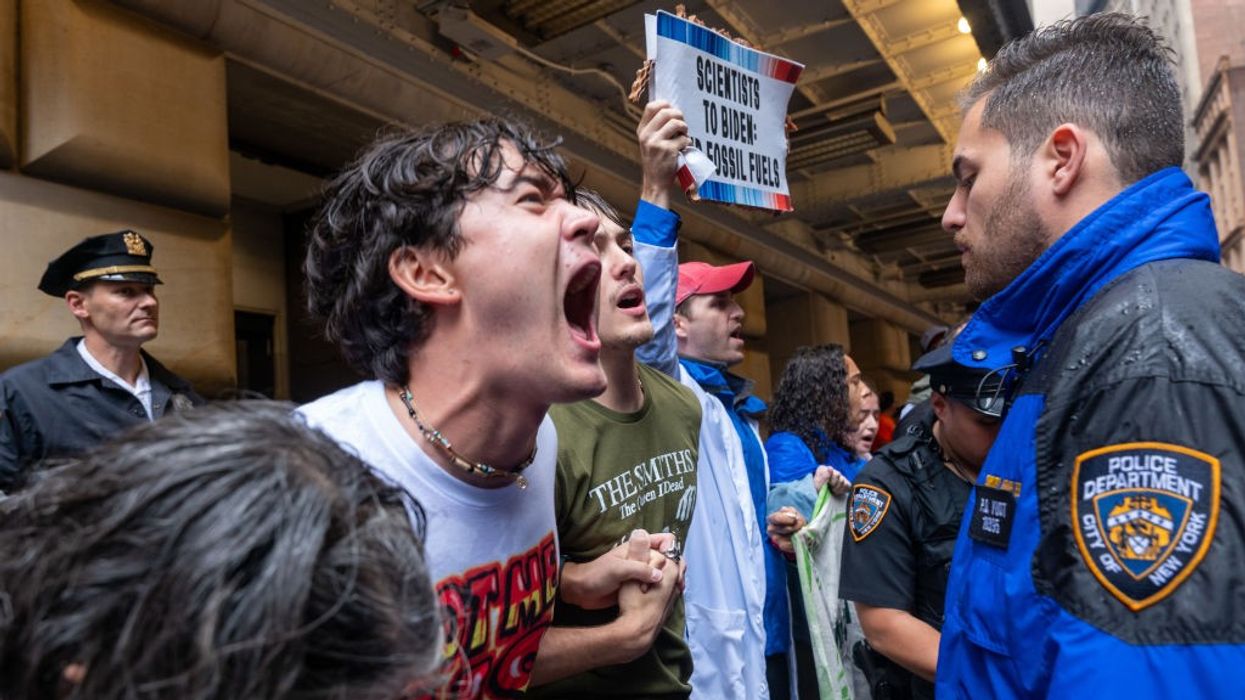
“Are you fucking serious?” one banker asked me, before trying to shoulder his way past us again. When he realized that we were, in fact, serious, he left to try and find another way into work.
At 8:30 am, we marched onto the public plaza of Citibank’s HQ, our chant filling the air: Stop funding fossil fuels. As we’d rehearsed, around fifty of us moved straight into position blocking the six doors that make up the entrance to the 150-meter-high skyscraper. As we unfurled our banners, linked arms and refused to move, a stream of Citi employees immediately began to back up into the plaza, unsure of how they could get into work.
A wiry, middle-aged man in a dapper suit tried to barge past me and another protestor. As our bodies connected, we stood firm and refused to move. “Are you fucking serious?” he asked, before trying to shoulder his way past us again. When he realized that we were, in fact, serious, he left to try and find another way into work. But wherever he went, he would have met a similar situation. We had all twelve entrances into Citi’s HQ blocked.
The action at Citi’s HQ was one of many confrontational anti-fossil fuel protests that happened between September 13th and September 20th, the week leading up to the UN’s Climate Ambition Summit in New York. In all, nearly two hundred arrests were made at protests targeting companies, politicians and cultural institutions with ties to the fossil fuel industry.
In several ways, this wave of action―organized primarily by New York Communities for Change, the Climate Organizing Hub, and the Oil and Gas Action Network―felt different from previous climate mobilizations. For one, not only were some of the actions less purely symbolic than many climate protests that have come before, but they were targeting and disrupting the right people and institutions, something which seems to have been missing from recent climate protests.
Not only were some of the actions less purely symbolic than many climate protests that have come before, but they were targeting and disrupting the right people and institutions, something which seems to have been missing from recent climate protests.
In one action, dozens of young people swarmed into the Museum of Modern Art (MOMA) to protest the museum's ties to Henry Kravis, founder and chairman of KKR, a private equity firm that has been buying up oil and gas companies and is the primary owner of the Coastal GasLink pipeline that’s being fiercely opposed by the Wet’suwet’en nation. The goal of the action was to communicate to both Kravis and MOMA leadership that it’s no longer possible to be both a fossil fuel baron and an accepted face in polite society. In response to the protest, the museum―which was the target, not just the scene, of the action―closed its doors hours early, turning away several thousand customers who were lining up to pay $25 each to enter the museum. An action that costs its target close to one hundred thousand dollars in revenue is no longer a simple symbolic protest.
When we blockaded every entrance into Citibank’s Global HQ, more than one thousand white-collar Citi workers were unable to get into work; workers backed up in their hundreds in the plaza outside as activists explained why they were going to be hours late for work that day. Even when irate workers tried to ram and kick and punch their way into the building, the blockade held firm. Activists chose to take blows rather than cede their ground.
Of course, the US climate movement has witnessed activists standing up to blows infinitely greater than the kicks that a couple of activists received around the back of Citi’s HQ. At Standing Rock police reigned terror upon peaceful Water Protectors. At Line 3, activists were blasted with rubber bullets and tear gas. At Cop City, police murdered the forest defender Manuel Esteban Paez Terán, shooting them fifty-seven times as they held their hands in the air.
But one difference here was that this was the climate movement going on the offensive. People weren’t standing in the way of a bulldozer in order to defend their homeland, a forest or a body of water. They were traveling to New York in order to block, disrupt and occupy the very centers of fossil capital. That, too, feels newer.
Over the last few months, few groups have gone more on the offensive than Climate Defiance. The youth-led direct action group has disrupted and shut down speeches by dozens of politicians and Biden officials, uncompromisingly demanding an end to fossil fuels. Last week, some of their activists prevented Tommy Beaudreau―the Biden official who signed off on the Willow project―from entering a climate event. As they refused to let him in the building they chanted “fuck you man” in his face. That is the chant of a movement that is done with asking nicely.
People weren’t standing in the way of a bulldozer in order to defend their homeland, a forest or a body of water. They were traveling to New York in order to block, disrupt and occupy the very centers of fossil capital.
This change in tone was evident throughout the week of action. Inside the Museum of Modern Art, activists―led by the youth group People over Profit―initiated dance parties to raucous, upbeat chants of “tax the rich.” When the climate movement evolves from marching and chanting “climate justice now” to dancing and chanting “tax the mother fucking rich,” something meaningful has begun to shift.
With income inequality at historic highs and the world’s wealthiest 1% responsible for double the emissions of the world’s poorest 50%, “tax the rich” isn’t just a catchy chant. It’s also a precise policy demand. Don’t be surprised if it’s a demand that begins to take greater center stage in the climate movement. And don’t be surprised if the actions blocking private jets, storming golf clubs, and infiltrating elite neighborhoods not only continue, but escalate.
Even the mass march that occurred during the week of action was different. Attracting an estimated 75,000 people, the march wasn’t the largest climate march this country has seen―both the Peoples’ Climate March and the 2019 Climate Strikes were far larger. But this was the largest ever march where the primary demand was the abolition of the fossil fuel industry. We have evolved beyond climate change being the problem, to grasping that the problem really is the oil, gas and coal executives and the financiers and politicians that enable them.
With income inequality at historic highs and the world’s wealthiest 1% responsible for double the emissions of the world’s poorest 50%, “tax the rich” isn’t just a catchy chant. It’s also a precise policy demand.
All of these are important evolutions for the climate movement. As academics Laura Thomas-Walters and Kevin Young convincingly argue, actions that directly target and meaningfully disrupt the operations, bottom lines, and daily routines of the rich and the powerful are far more strategic than actions that are purely symbolic, or actions that don’t have a clear demand and disrupt the lives of everyday people who are just trying to get to work or enjoy a sports game.
Last week, the Citibank CEO was almost certainly briefed that a thousand of her most important employees were unable to get to work that morning, especially as the action came the day after the company announced a major corporate restructuring. The leadership of the Museum of Modern Art were almost certainly informed that their business lost revenue due to a protest around one of its board members. By contrast, it’s hard to imagine that any oil barons, financiers or political enablers of the climate crisis were inconvenienced by the recent disruption at the US Open Semi-final.
In the years ahead―as the climate crisis continues to escalate in severity―bold civil disobedience that directly and meaningfully disrupts the lives and operations of business and political elites will be more important than ever.
Of course, as we consider the future of direct action within the climate movement, it’s important to point out that civil disobedience and confrontational action is only one tool in the activists’ toolkit, and many more tools will be needed to rein in the worst of the climate crisis. In the bank campaigns that we help to run at Stop the Money Pipeline, our strategy also involves organizing shareholders, customers and bank workers―and we’re developing secondary campaigns designed to agitate some of our targets’ most important and wealthy clients to join us in the fight to end financing for fossil fuels.
But in the years ahead―as the climate crisis continues to escalate in severity―bold civil disobedience that directly and meaningfully disrupts the lives and operations of business and political elites will be more important than ever. After the recent actions in New York, there is good reason to believe that the climate movement is ready for this evolution.
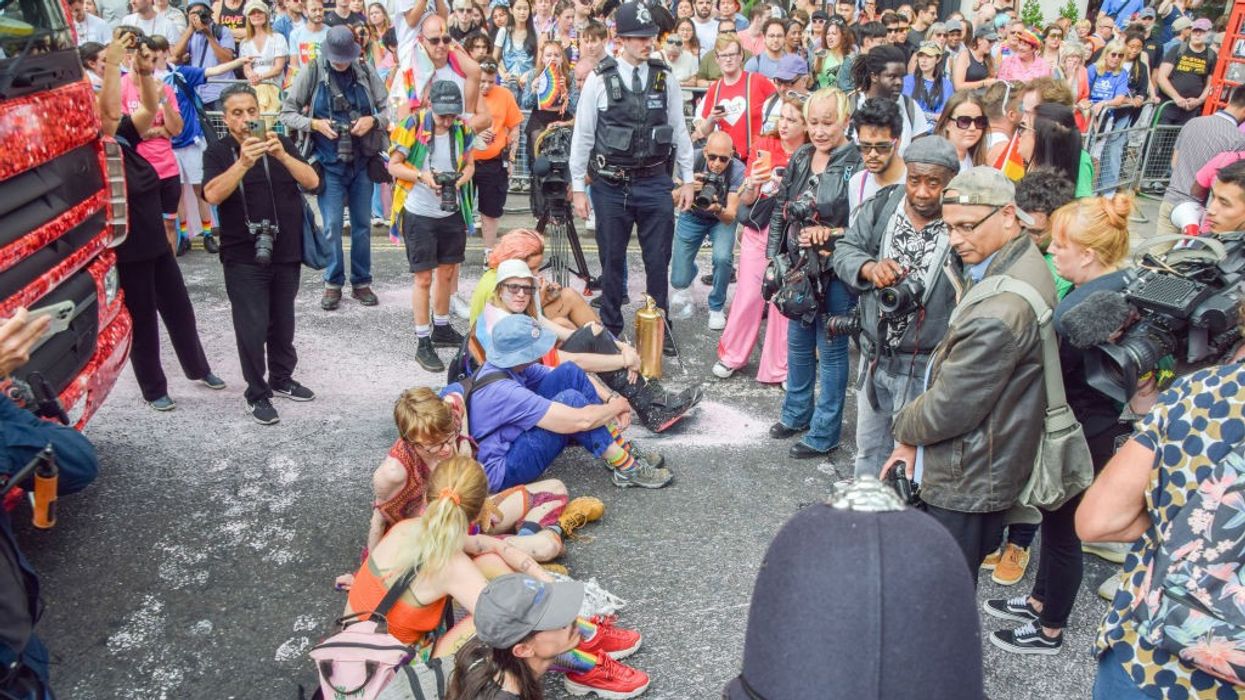
'These partnerships embarrass the LGBTQ+ community at a time when much of the cultural world is rejecting ties to these toxic industries'
Just Stop Oil protesters temporarily blocked London’s Pride Parade Saturday afternoon to protest the event accepting sponsorship money from “high-polluting industries.”
Pride faced accusations of “pinkwashing” over its decision to make United Airlines the headline sponsor of this year’s event.
Seven protesters were arrested at 1:30 pm after blocking the road in front of a Coca-Cola truck. Coca-Cola is seen as the world's biggest plastic polluter.
LGBTQ+ members of Just Stop Oil called on organizers to condemn new oil, gas, and coal licenses and stop allowing the inclusion of floats from these corporations in the parade.
James Skeet, a Just Stop Oil spokesperson, said in a statement:
“Pride was born from protest. It speaks to how far we’ve come as a community, that high-polluting industries and the banks that fund them, now see Pride as a useful vehicle for sanitizing their reputations, waving rainbow flags in one hand whilst accelerating social collapse with the other. It is queer people, and particularly queer people of color in the global south, who are suffering first in this accelerating social breakdown. What would those who instigated the gay liberation movement during the Stonewall riots in 1969, make of the corporatized spectacle Pride has now become?"
“These partnerships embarrass the LGBTQ+ community, at a time when much of the cultural world is rejecting ties to these toxic industries. We call on Pride to remember the spirit in which it was founded and to respect the memory of all those who fought and died to secure the rights we now possess whilst taking the necessary steps to protect our community long into the future.”
London Mayor Sadiq Khan speaking before the parade said:
“I agree with protesting in a way that is lawful, safe, and peaceful. I think that Extinction Rebellion and Just Stop Oil are really important pressure groups trying to put power on those who have power and influence."
“I fully support the right to protest. It’s really important to recognize the joy of democracy is protest."
“I am somebody who feels quite passionately that we have to tackle the climate emergency. And I feel quite passionately about encouraging people to join the movement to tackle the climate emergency. In my view, protest should be peaceful, lawful, and safe.”
Peter Tatchell, the legendary LGBTQ+ rights campaigner, and prominent member of the Gay Liberation Front and the civil resistance group OutRage! Said:
“I helped organize the first Pride in the UK in 1972 and have attended every Pride London march since then. Pride was always meant to be both a celebration and a protest. From the outset, we stood in solidarity with other struggles for freedom and social justice, against corporate pinkwashing and all forms of exploitation. We saw queer liberation as just one aspect of a wider liberation movement.”
“Climate destruction is destroying communities, jobs, homes and lives across the world, especially in poorer countries. Fossil fuels are endangering the survival of humanity – including LGBTQ+ people. Our community must not collude with environment, species and climate destroying companies.”

"Many gas projects and terminals are emerging across Europe and the U.S., directly threatening the health of communities near production sites and the entire planet with disastrous environmental and climate impacts."
Expressing solidarity with people in frontline communities where the fossil fuel industry has for decades polluted the air and water and exposed millions of people to public safety risks, nearly two dozen campaigners with Greenpeace Belgium on Saturday entered the liquefied natural gas terminal of energy infrastructure company Fluxys in Zeebrugge, to demand an end to European imports of LNG from the United States.
Ten people climbed the infrastructure and 12 people kayaked into the terminal, displaying signs that read "U.S. Gas Kills" and "Solidarity with the U.S. Gulf South."
The campaigners came from countries including Austria, France, and Germany and climbed onto platforms used for loading and unloading the tankers that transport LNG, which is gas that's been cooled and liquefied after fracking or drilling extraction process. They unfurled a large banner reading, "Gas kills."
"Greenpeace asks Fluxys and our authorities to abandon any new gas infrastructure that locks us into dependence on fossil gas," said Greenpeace Belgium on social media. "We demand a European exit from gas by 2035 in order to achieve our climate goals."
Although Europe's gas demand has not gone up, Greenpeace said, LNG imports from the U.S. to Europe surged by 140% in 2022, from 28.2 billions of cubic meters (bcm) in 2021 to 68.96 bcm last year.
Since 2018, imports have gone up 1,767%.
"Following the shock of Russia's invasion of Ukraine, gas operators like Fluxys quickly shifted their public messaging and lobbying from 'energy transition' to 'energy security' and cynically used the opportunity to frighten governments into massive, unneeded investment into and expansion of fossil gas imports and infrastructure," said Mathieu Soete, an energy expert with Greenpeace Belgium. "Under pressure from companies like Fluxys, many gas projects and terminals are emerging across Europe and the U.S., directly threatening the health of communities near production sites and the entire planet with disastrous environmental and climate impacts."
According to the group, in the past 12 months, 17 shipments of LNG—amounting to 1.150 million tonnes—have traveled from the U.S. Gulf Coast to the Fluxys terminal in Zeebrugge, including nine from Sabine Pass, Texas; five from Cameron, Louisiana; and three from Calcasieu Pass, Louisiana.
The lifecycle greenhouse gas emissions associated with those shipments would be 6.9 million tonnes carbon dioxide equivalent per year—the same amount emitted by 1.5 million fossil fueled cars.
Saturday's protest followed the publication of a Greenpeace International report titled Who Profits From War: How Gas Corporations Capitalize on War in Ukraine.
That analysis detailed how, following the Russian invasion of Ukraine, which pushed Europe to end its use of Russian oil and gas, "gas infrastructure operators, portfolio traders, and gas companies have declared that imported liquefied gas is the answer to the crisis and will remain so for decades to come."
"This LNG expansion threatens the health of communities living near these export terminals, extraction sites, and pipelines, while potentially pushing planet warming emissions past levels to meet global climate goals," the report states.
As Greenpeace advocates climbed the Fluxys infrastructure, the group posted on social media a call from U.S. activist and Gulf Coast resident John Beard, who described the high rates of cancer, other diseases, and pollution his community faces as a result of LNG extraction and exporting.
"It has come to my attention that you all are importing this fossil gas to Belgium and the Europe," said Beard. "And it's also been brought to my attention that you are not looking at due diligence issues of what importing this gas might do to communities like mine and others along the Gulf Coast."
The Greenpeace report published this month notes that nearly all European countries that are importing LNG have banned fracking on their own land due to research showing proximity to oil and gas extraction projects can cause cancer, poor birth outcomes, respiratory impacts such as asthma, and other health impacts.
"Our governments must not allow the gas lobby to influence our energy policies," said Soete. "We cannot lock ourselves into dependence on gas—all gas kills, whether Russian, American, or Norwegian. Policymakers must stop the fossil fuel expansion and build a wall between themselves and the fossil fuel lobby to accelerate the transition to decentralized, renewable, and clean energies and slash energy waste."