SUBSCRIBE TO OUR FREE NEWSLETTER
Daily news & progressive opinion—funded by the people, not the corporations—delivered straight to your inbox.
5
#000000
#FFFFFF
To donate by check, phone, or other method, see our More Ways to Give page.


Daily news & progressive opinion—funded by the people, not the corporations—delivered straight to your inbox.
Let's make it clear not just to T-Mobile but all of corporate America: There are costs to siding with this authoritarian government.
Ever since the Irish Land League organized community members in County Mayo to band together and refuse to serve, work for, trade with, or even deliver mail to the English land agent, Captain Charles Boycott, the boycott has become a staple in activists’ toolkit. And nearly 160 years since Captain Boycott was effectively ostracized—as US President Donald Trump and his cronies assail American democracy and send troops into our cities and masked goons onto our streets—it's a tool that’s gaining a renewed prominence once again.
After Target dropped its diversity, equity, and inclusion (DEI) targets in February, Black faith leaders, including Pastor Jamal Bryant, called for a boycott of the company. “What we learned from the Montgomery bus boycott is that racist America doesn’t respond to speeches, it responds to dollars,” Pastor Bryant told his parishioners at his 10,000-member megachurch in Atlanta.
In the months that followed, Target’s sales, foot traffic, and stock price tanked. By August, Forbes was announcing that the boycott had cost the Target CEO his job and the company’s investors $12 billion.
After Elon Musk started his attempts to destroy the US government earlier this year, including bragging about putting USAID into the woodchipper, an act that may have killed half-a-million people so far, thousands committed to boycotting Tesla as part of the #TeslaTakedown movement.
If a company like T-Mobile believes that there are no economic consequences to siding with authoritarianism, they are much more likely to do it.
In the midst of the boycott, Tesla sales collapsed, the stock price cratered, and before long Musk was out of the government and engaging in a very public bitching session about President Trump.More recently, after Disney suspended Jimmy Kimmel for comments following the tragic murder of Charlie Kirk, a boycott of Disney grew so rapidly, with tens of thousands of cancellations of Disney, Hulu, and ESPN, that it forced the company into reinstating the comedian.
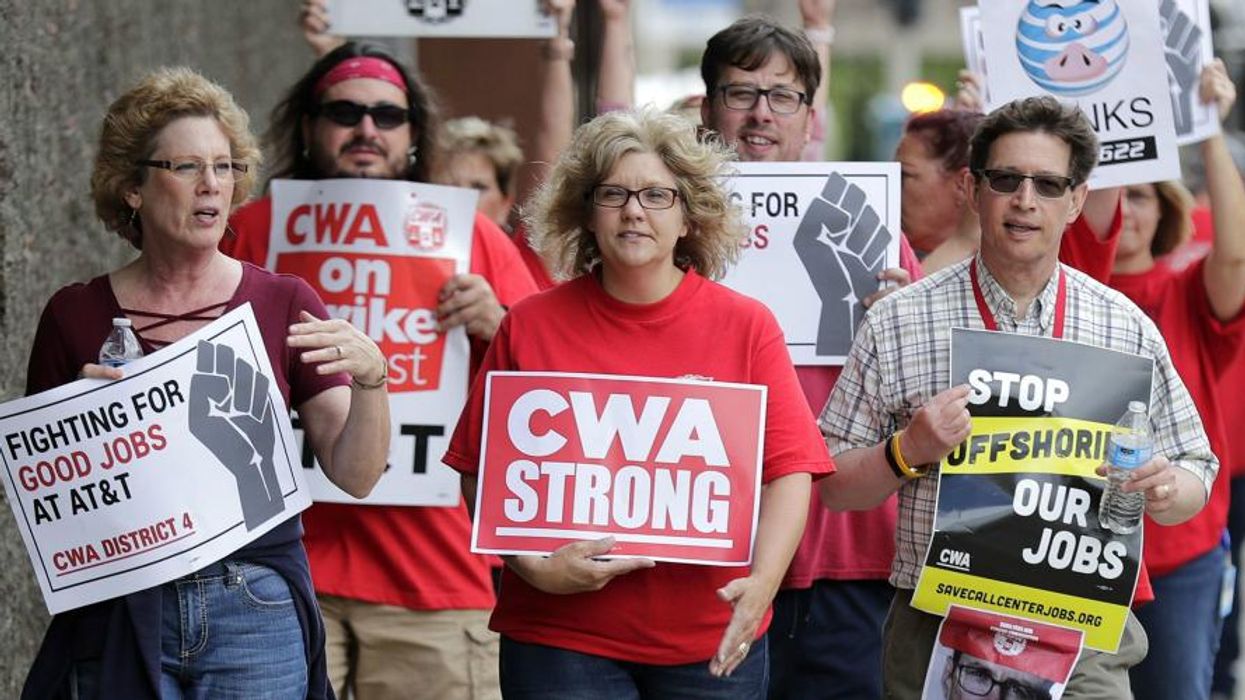
Attempting to build on this, the labor union, the Communication Workers of America, the Tesla Takedown campaign, and the climate coalition I held lead, Stop the Money Pipeline, have launched the T-Mobile Boycott.
In the fight to save democracy, T-Mobile has chosen the wrong side: It’s hosting Trump Mobile on its network, despite the conflicts of interest being so great they may amount to corruption. T-Mobile is also partnering with Elon Musk’s Starlink, pouring billions into the far-right extremist’s pockets, and it lobbied in favor of Trump’s deadly budget bill, which will strip healthcare from millions of Americans. T-Mobile has also engaged in years of union busting so vicious it recently became the first telecommunications company to be added to the AFL-CIO’s boycott list.
We’ve set a goal of 10,000 T-Mobile customers canceling their contracts between November 14-16. In the process, we hope to build on the energy of the Target, Tesla, and Disney boycotts and make it clear not just to T-Mobile but all of corporate America: There are costs to siding with this authoritarian government.
If you’re a T-Mobile customer, you can take the pledge to hang up on T-Mobile here.
Even if you’re not a customer, we encourage you to take the pledge to boycott T-Mobile. The boycott is happening right before the holiday season, when a lot of people switch carriers—tens of thousands of people pledging to never switch to T-Mobile at this time of year is an important part of the campaign.
But I also want to be honest with you, I don’t know if this campaign will work. While we’re urging people to cancel en masse next month, I recently completed a test run and canceled my contract with T-Mobile and switched to Visible (saving more than $60 on my monthly cell phone bill in the process).
As economically advantageous as it was however, it took me about 45 minutes to switch from T-Mobile, including a call to the company to get a “port out pin.” In the grand scheme of things, 45 minutes isn’t an eternity, but it’s also not nothing. It took me less than four minutes to cancel my Disney+ subscription after Kimmel’s suspension.
I have no idea if we can get 10,000 people to do something that might take them nearly 45 minutes, even if we can convince them it is a small but important act in the fight to save democracy.
But I do know this, in On Tyranny: Twenty Lessons from the 20th Century, Timothy Snyder’s first lesson was, “Do not obey in advance.” And not only is T-Mobile obeying in advance, it's actively courting the administration, even as the horrors pile up: the attacks on free speech, the naked threats against political opponents, the vanishing of countless human beings into a gulag in El Salvador.
So, in this time of grave peril for this country and the world, let us use our money to build the world we want to see.
From Target to Tesla to T-Mobile, let us boycott the collaborators.
"This fight is bigger than any one state," said the chairman of the Texas House Democratic Caucus.
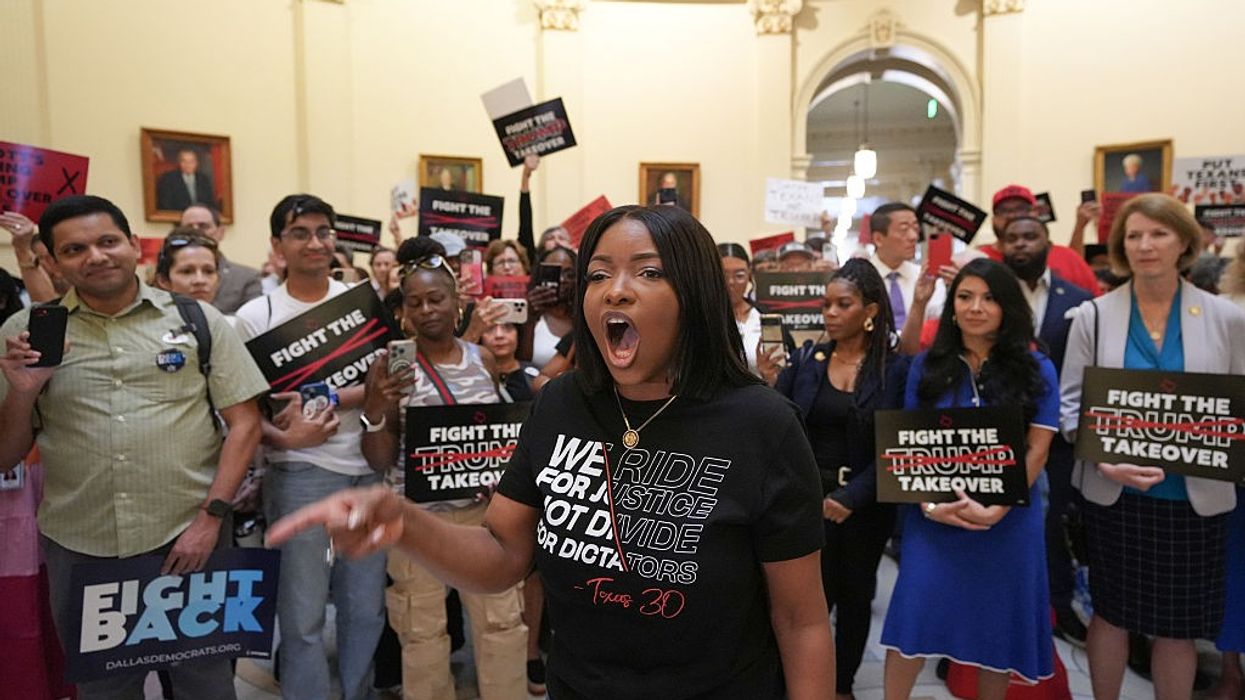
Nationwide protests against US President Donald Trump's scheme to get Republican state legislatures to redraw their congressional maps are set to kick off this weekend.
The "Fight the Trump Takeover" movement is planning a national day of action on Saturday, August 16 that will feature coast-to-coast demonstrations from as far east as Lubec, Maine, to as far west as Anchorage, Alaska.
"Trump is trying to steal the 2026 election by rigging the system and changing electoral maps," the coalition behind the protests said on its website. "He started in Texas, but he won’t stop there. We are fighting back."
The protests are being done in partnership with several prominent progressive groups, including Indivisible, MoveOn, Human Rights Campaign, Public Citizen, and the Communication Workers of America. Some Texas-specific groups—including Texas Freedom Network, Texas AFL-CIO, and Texas for All—are also partners in the protest.
Axios reports that an "anchor rally" in Austin, Texas will kick off the nationwide events and will feature speakers including Democratic US Reps. Greg Casar and Lloyd Doggett, as well as former Democratic Rep. Beto O'Rourke and labor activist Dolores Huerta.
The location of the Austin rally is symbolically important because Texas is trying to become the first state to redraw its maps to benefit Republicans under Trump's nationwide gerrymandering scheme, which in the coming weeks could include states such as Ohio, Indiana, Florida, and Missouri.
Texas House Democratic Caucus Chair Gene Wu told Axios that "this fight is bigger than any one state" because "we're defending our entire country from the Trump takeover, and I'm honored to stand with every patriotic American who refuses to let extremists rig the system."
Ezra Levin, the co-founder and co-executive director of progressive organizing group Indivisible, told Axios that Trump's plan "is as crooked as it gets" and described it as part of a larger plot to "lock in minority rule for a generation."
Democratic-controlled states, led by California under Gov. Gavin Newsom, have started to fight back against the Trump plan by proposing their own redrawn maps aimed at squeezing out Republicans in their states. Newsom this week held a big rally in Los Angeles with other California Democratic heavyweights where he stressed the need for Democrats to give Republicans a taste of their own medicine.
"It's not enough to just hold hands, have a candlelight vigil, and talk about way the world should be," Newsom said at the rally. "We have got to recognize the cards that have been dealt, and we have got to meet fire with fire!"
"The video game industry generates billions of dollars in profit annually," said one union leader. "The driving force behind that success is the creative people who design and create those games."
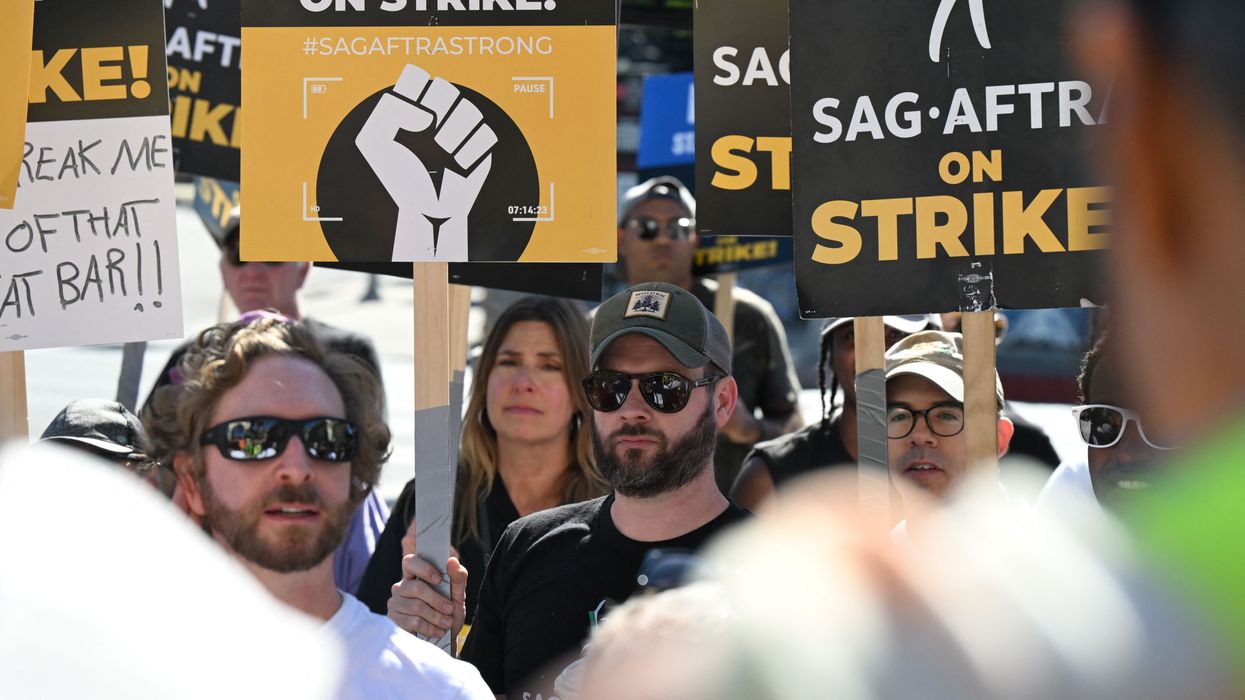
After nearly two years of negotiations with video game giants and no deal that would protect performers from artificial intelligence, unionized voice and motion capture actors who work in video game development announced Thursday that they will go on strike starting at 12:01 am on Friday, July 26.
The performers are represented by Screen Actors Guild-American Federation of Television and Radio Artists (SAG-AFTRA), which last year won a contract for TV and film actors that included "unprecedented provisions for consent and compensation that will protect members from the threat of AI," after the union went on strike for four months.
The union has been negotiating on behalf of video game actors with major production companies including Disney Character Voices Inc., Activision Productions Inc., and WB Games Inc., and has won concessions over wages and job safety—but "AI protections remain the sticking point," said SAG-AFTRA on Thursday as the impending strike was announced.
Unionized actors want protections that would stop video game companies from training AI to replicate actors' voices or likeness without their consent and without compensating them.
"The video game industry generates billions of dollars in profit annually," said Duncan Crabtree-Ireland, national executive director and chief negotiator for SAG-AFTRA. "The driving force behind that success is the creative people who design and create those games. That includes the SAG-AFTRA members who bring memorable and beloved game characters to life, and they deserve and demand the same fundamental protections as performers in film, television, streaming, and music: fair compensation and the right of informed consent for the AI use of their faces, voices, and bodies."
"Frankly, it's stunning that these video game studios haven't learned anything from the lessons of last year—that our members can and will stand up and demand fair and equitable treatment with respect to AI, and the public supports us in that," he added.
Sarah Elmaleh, negotiating committee chair for the union's interactive media agreement, said the negotiations have shown the companies "are not interested in fair, reasonable AI protections, but rather flagrant exploitation."
"We look forward to collaborating with teams on our interim and independent contracts, which provide AI transparency, consent, and compensation to all performers, and to continuing to negotiate in good faith with this bargaining group when they are ready to join us in the world we all deserve," said Elmaleh.
The unionized actors voted in favor of the strike authorization with a 98.32% yes vote, said SAG-AFTRA.
The strike was announced as more than 500 workers who help develop the popular World of Warcraft video game franchise voted to join the Communications Workers of America (CWA), with the games publisher, Blizzard Entertainment, recognizing the bargaining unit.
CWA noted that the workers' journey to union representation began with a walkout in 2021 at Activision Blizzard, which was later bought by Microsoft, over sexual harassment and discrimination.
"What we've accomplished at World of Warcraft is just the beginning," Eric Lanham, a World of Warcraft test analyst, said in a statement. "We know that when workers have a protected voice, it's a win-win for employee standards, the studio, and World of Warcraft fans looking for the best gaming experience."
Companies like Maximus that are getting so much government money should have to create good jobs with liveable wages, decent benefits, and the right to unionize.
I love my job.
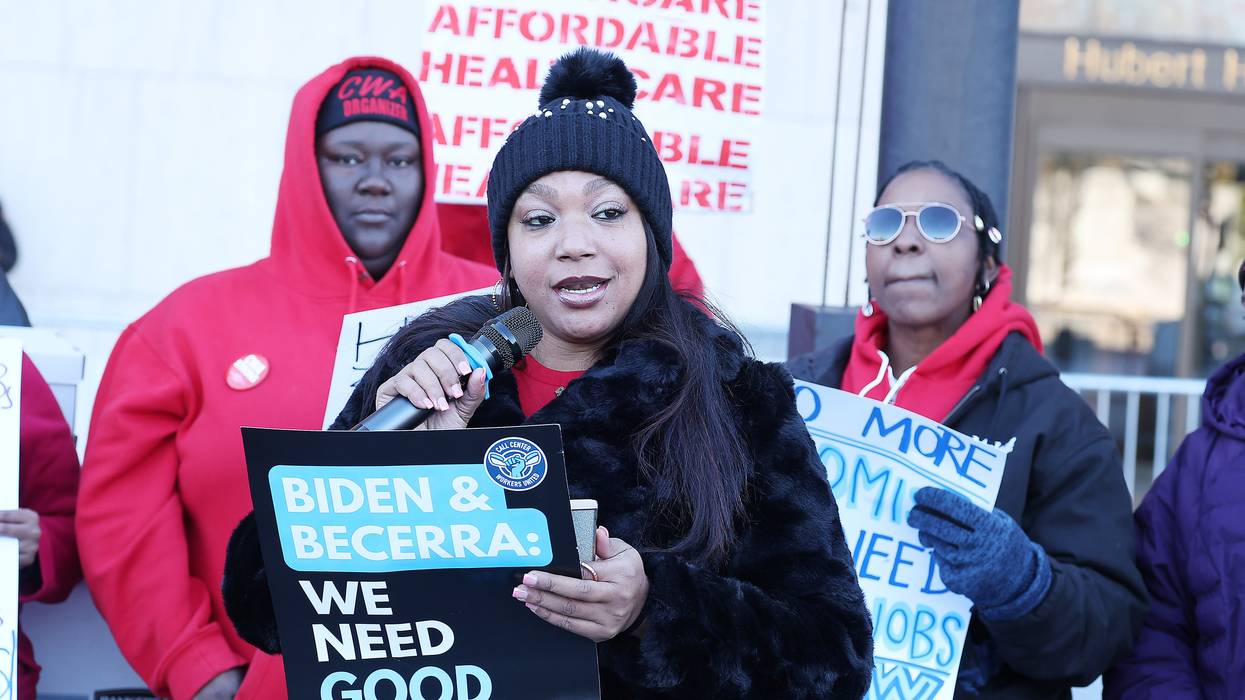
Every day I get to answer phone calls from some of the tens of millions of Americans who rely on the Affordable Care Act and help them get the healthcare benefits they need.
Even though I do an essential job, my employer—the federal call center run by Maximus in Tampa, Florida—does not pay me enough or provide me with the healthcare benefits needed to be able to treat my own health condition.
Maximus signed a 10-year deal worth $6.6 billion in 2022 to field calls about the federal healthcare marketplace and Medicare. The company has 10,000 employees across 12 call centers, mostly in the South and Southwest.
I’m supposed to visit the doctor every three months to treat a chronic health condition, but because our deductibles are so high, I haven’t been in two years.
Companies like Maximus that are getting so much government money should have to create good jobs with liveable wages, decent benefits, and the right to unionize—the same conditions that federal workers enjoy. President Joe Biden has taken some important steps, especially to set high standards for construction workers on new big infrastructure and clean energy projects. But more needs to be done to make sure service contract workers like me get a fair reward for our labor—instead of letting so much of public money go to rich executives and shareholders.
While many of us at Maximus who field calls all day make around $17 an hour, our CEO, Bruce Caswell, got a 17% raise last year to $7.3 million. Over the past four years combined, Maximus has awarded Caswell over $27 million and spent over half a billion dollars on stock buybacks and dividends to enrich shareholders.
This September will mark 10 years of working at Maximus for me. My only major raise in that time came when President Biden set the minimum wage for all federal contract workers at $15 dollars in 2022. While we appreciate the pay hike, for a single mother of two the minimum doesn’t cut it, I need a real living wage. Instead, my only raise in the last two years was 22 cents.
Our healthcare benefits aren’t much better. I’m supposed to visit the doctor every three months to treat a chronic health condition, but because our deductibles are so high, I haven’t been in two years.
Because of the issues with pay and healthcare, last year I joined the campaign to unionize Maximus workers with the Communication Workers of America. The process is long, and different locations are moving at different speeds, but we’ve already had some victories.
After we protested our high health costs, Maximus dropped our health insurance deductibles significantly.
We need more help, though. I’ve participated in several protests at my call center demanding $25 an hour and increased benefits from Maximus.
I’ve also gone to Washington, D.C., to call on the Biden administration to follow through on its promise to create “good jobs” with federal money. Last fall I even got to take my daughter with me to speak with lawmakers in Congress.
I’m not going to quit because I don’t feel properly valued or because the benefits are not good. I’m going to stay and fight within the company to make it better, because the ACA is a great program that is helping millions of Americans.
And even though I know that I can be fired at any time—Maximus laid off more than 700 employees in one month last year—I’m standing up for my rights. I’m standing up for a better company and for a better future for my children.
The administration has the power to use public money to ensure contractors like Maximus pay living wages and engage in fair employment practices.
As a federal customer service representative, I help seniors access the healthcare they need through Medicare. I often handle hundreds of calls per day to sign people up, answer their questions, help them navigate billing, and more.
The hard truth is that despite working for the largest federal call center contractor, Maximus, I don’t have access to affordable health coverage for myself or children, and my pay is so low I’m struggling to stay afloat. That’s why I went on strike this November with hundreds of my co-workers who are experiencing similar struggles.
It’s not easy navigating our healthcare system, and I take pride in making sure the process is as painless as possible for seniors who feel frustrated by it. Sadly, I know that feeling all too well.
We need the administration to follow through on its commitment to use federal dollars to create good jobs and end the two-tier system in which we’re expected to do similar work to federal employees but aren’t paid enough to support our families.
Unlike workers directly employed by the government, who are paid living wages and receive good benefits, I make $16.20 per hour—the minimum allowed for federal contract workers. My children and I live in a home that’s owned by my children’s grandparents. If it wasn’t for their help, we’d likely be homeless.
While Maximus rakes in billions in federal dollars, I’ve had to go without meals to ensure my children have food on the table. Over a year ago, my son had an allergic reaction and had to go to the emergency room. I still have medical debt from that visit because my health insurance from Maximus doesn’t cover a lot of costs, and I can’t afford the bill.
Nobody should have to endure this kind of hardship, especially while working for a company with a $6.6 billion federal contract that’s spent $20 million on CEO pay and hundreds of millions of dollars on stock buybacks.
As our one-day strike showed, I’m not the only one struggling at Maximus. A new report shows that 9 in 10 surveyed workers at Maximus report having medical debt or having to avoid or postpone medical treatment due to cost. And 91% report earning significantly less than the living wage needed to sustain a household with children.
Our employer is well aware of these issues. In the call center where I work, Maximus announced a program that asks us to donate used clothing for co-workers who may not be able to afford new clothes. It would be better to simply pay us a living wage.
In our call centers in Mississippi, Florida, Arizona, Virginia, Texas, and Louisiana, many of my coworkers are Black and Latina women like myself. We make up close to a majority of the lowest-paid workers at the company. This is not a coincidence.
We’ve been sounding the alarm for years about this, and we’ve been disappointed by the failure of the Biden administration, which pays Maximus to run its Affordable Care Act and Medicare call centers, to make things better.
The administration has the power to use public money to ensure contractors like Maximus pay living wages and engage in fair employment practices.Yet they awarded Maximus another massive contract just last year—and haven’t taken any steps to address our demands for living wages and affordable healthcare.
We need the administration to follow through on its commitment to use federal dollars to create good jobs and end the two-tier system in which we’re expected to do similar work to federal employees but aren’t paid enough to support our families.
The Biden administration says they believe healthcare is a right not a privilege, that federal money should be used to create good jobs, and that Black women are the backbone of their coalition. I stand with hundreds of my co-workers to say: prove it.
The Alabama city is moving beyond its tragic past to emerge as a place with forward-looking governance more equitably reflecting the makeup of its population.
The racial overtones of the incident cannot be ignored, and yet the response to this violent clash gives me hope that Montgomery, a city infamous for its civil rights history, is making progress towards racial and economic justice.
What exactly happened? Increasingly, video is the most effective eyewitness and once again, it documented what occurred.
While many have felt as hopeless about Alabama’s disempowered workforce as they have about the state’s race relations, we’re seeing progress on that front as well.
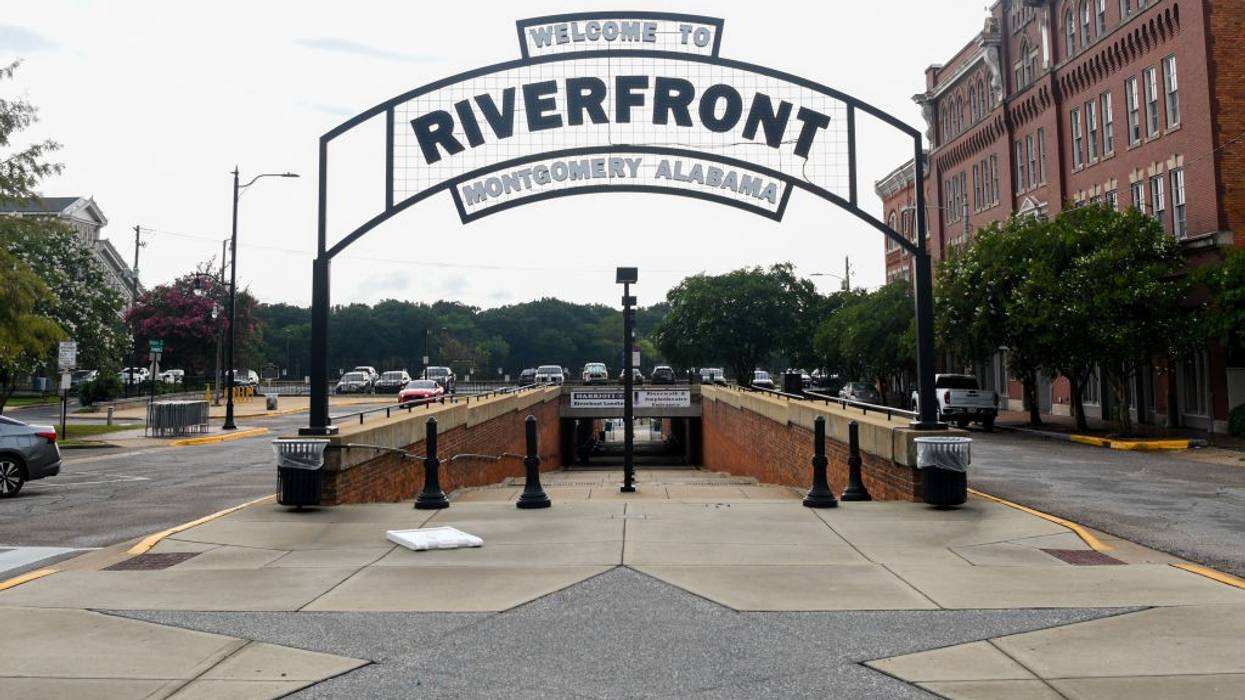
A small pontoon boat was situated at a place reserved for a larger riverboat offering cruises with nearly 300 guests aboard.
The captain had tried for nearly an hour, with a megaphone, to get the smaller boat to move to let the riverboat dock. The requests were met by the white occupants of the boat with obscene gestures and other aggressive acts.
Damien Pickett, the Black co-captain of the riverboat, approached the pontoon to make a personal request for them to move to allow the riverboat to dock. He was then viciously attacked by the pontoon’s occupants.
Both Black and white bystanders tried to help him, openly acknowledging that he was blameless and merely trying to do his job. As tensions escalated, however, a full-scale brawl broke out.
For some, the violence immediately evoked memories of the city’s ugly racist history. After all, Montgomery was one of the most prolific slave-trading cities in the country.
And there is painful irony in the fact that the fight occurred at the same dock where enslaved Americans arrived by steamboat to be sold in the center of town.
But here is my takeaway: Montgomery is moving beyond its tragic past to emerge as a city with forward-looking governance more equitably reflecting the makeup of its population.
One sign of this progress: the recent election of Montgomery Mayor Steven Reed, the first Black mayor of this majority-Black city.
My union, the Communications Workers of America, supported Reed’s campaign and look forward to working with him to advance the intertwined goals of civil rights and economic justice.
Also positive is the fact that so many looked beyond race during the riverfront incident to come to the aid of the Black co-captain as a man unfairly attacked just for doing his job.
And all indications are that the Montgomery Police Department, once justifiably feared by civil rights activists, is doing its job too, acting fairly and impartially to hold those who escalated to violence accountable.
And while many have felt as hopeless about Alabama’s disempowered workforce as they have about the state’s race relations, we’re seeing progress on that front as well.
Recently, a group of AT&T Mobility workers at In Home Expert hubs in the Alabama cities of Huntsville, Birmingham, and Mobile joined CWA because, as one member said, “We deserve respect and dignity on the job, and a union contract protects the rights of all workers.”
Respect and dignity. That’s what it’s all about.
When Captain Pickett approached the pontoon boat docked in Montgomery, he deserved respect, not assault.
Thanks to the hard work and sacrifice of generations of civil rights leaders, bystanders, elected officials, and law enforcement recognize that, and the Montgomery Riverfront Brawl has become a powerful symbol of resistance and change.
An audacious plan for a first-ever CWA presidential debate was a major break with “business as usual.”
When a labor organization doesn’t have direct election of its national officers, hasn’t had a contested convention vote for union president since the 1950s, and has never held a presidential debate, how should members respond to a rare opportunity to vet candidates for top union office and hold them accountable for any personal misconduct?
Local union leaders, like Kieran Knutson, president of Communications Workers of America (CWA) Local 7250 in Minneapolis, had two choices. They could treat the current three-way race for the CWA presidency as a matter of concern only to a 1,000 convention delegates personally casting ballots at a July 10-12 meeting in St. Louis. Or they could find ways to generate broader debate about the future of CWA among 360,000 dues-paying members with no direct voice in choosing their new national leader.
“This election should be about ideas, plans, and program—not personalities,” Knutson declared in a March appeal to fellow union officers. “It is an important opportunity for all CWA members to take stock of where we are and where we need to go.”
In May and June, working with two different ad hoc groups of CWA activists, Knutson proceeded to play a key role in making sure that happened. Although president of a small AT&T local with only 400 members, Knutson first took the lead in organizing a highly unusual debate between the three International union officials vying for the top job.
This first-ever candidate forum was held on May 31, with hundreds of members, participating via Zoom and Livestream. They heard from—and in some cases directly questioned—CWA Secretary-Treasurer Sara Steffens, who hails from my own NewsGuild/CWA local in California; Claude Cummings, a CWA Vice-President and civil right leader from Texas, who deals regularly with AT&T, the union’s largest telecom employer; and V-P Ed Mooney, a long-time Verizon contract negotiator who represents the mid-Atlantic states on CWA’s executive board.
As part of a nine-member Emergency Mutual Respect Committee (EMRC) committee—composed of active or retired leaders of locals with a combined membership of more than 30,000—Knutson joined the fray again this month when the EMRC object to Mooney’s candidacy because of his longstanding “pattern of bullying, bigotry, abuse, discrimination, threats of violence and harassment.” The EMRC based this finding on direct testimony, written statements, and related documents provided by seven witnesses of personal misbehavior which, the group contends, violates both a 20-year-old “CWA Policy on Mutual Respect” and the union constitution.
Mooney’s best-known public accuser is Shane Larson, a past co-president of PRIDE at Work, AFL-CIO. He is a former government affairs director for the CWA-affiliated Association of Flight Attendants, served as CWA’s own legislative director for nine years, and is now an assistant to national union President Chris Shelton. Shelton led CWA’s 2016 strike against Verizon (VZ), an anti-concession struggle much applauded on the left. In February, he announced his retirement and strongly endorsed Steffens as his partner, for the last eight years, in “the daily push and pull of running our great Union and our fight to dismantle racism and all forms of prejudice throughout CWA.”
In a June 16, 2023 letter to CWA local officers, Shelton reported that he had personally admonished Mooney on several prior occasions for making “bullying remarks” to fellow members, including ones that “were also racial in nature.” After the most recent incident in 2021, Mooney agreed to “attend sensitivity training” conducted by CWA’s own Employee Assistance Program. This time, Shelton said, the seriousness and scale of the EMRC accusations required an immediate investigation assisted by “two individuals who will not be members or on CWA’s payroll.” The probe will be headed by former CWA Secretary-Treasurer Jeff Rechenbach, a widely-respected figure in the union who will be reporting his findings before the presidential vote next month.
Mooney accused the EMRC of issuing a “one-sided report…in an attempt to influence the outcome of the election.” But he said he “welcomed a complete and unbiased investigation of these accusations” and seconded the Executive Board motion authorizing it.
While candidate debates—and now “Me Too” moments—are a standard feature of U.S. political campaigns, they are not part of the culture of union electioneering. In CWA, those seeking to become Executive Vice-President (a position later abolished) or Secretary-Treasurer in 1998, 2011, and 2015 never debated their opponents, either before or after the conventions where those contested races were decided. Asking candidates to fill out questionnaires to better determine their positions on issues is also rarely done.
Even in a relatively democratic union, most internal politicking is rooted in personal relationships, tribal loyalties, and union patronage networks. Delegates are courted privately and, in CWA, too often subjected to pressure to fall in line behind regional and national officials, who see themselves as the real power brokers. Thus, Local 7250’s audacious plan for a first-ever CWA presidential debate was a major break with such “business as usual.”
The idea of hosting a debate was immediately rejected by CWA’s Minnesota State Council, by a 5 to 4 margin. But the four locals, including Knutson’s in the Council minority, found four other CWA affiliates to back the effort. They also enlisted the CWA Telecommunications and Technologies National Mobilization Committee, a rank-and-file grouping, to host the Live Stream version on its website.
The live event on May 31 could also be accessed via Zoom. It was moderated by Knutson and attracted 270 participants, far more than expected. Representatives of telecom and manufacturing workers in Minnesota, wireless and wireline workers in Arizona, New Mexico, Iowa, and North and South Dakota, and a NewsGuild/CWA Freelancers unit in California got first crack at questioning the candidates. Other members posted their own queries and comments in the chat section of the Zoom. Since May 31, many more rank-and-file members from around the country have viewed the 90-minute exchange in this YouTube video version.
Steffens, Cummings, and Mooney all led off with a short introduction of themselves, a longer stump speech, and closing remarks. In the Q&A portion of the debate, issues highlighted in Local 7250’s candidate questionnaire (which only Steffens and Cummings completed) were often raised. The candidates were asked for their views on open bargaining; expanded organizing of non-union competitors; dealing with grievance and arbitration backlogs; better coordinating telecom strike activity; campaigning for Medicare for All; and basing CWA’s 2024 presidential endorsement on a binding membership poll.
Afterward, Steffens invited her two rivals to participate in a second debate, either before or at the CWA convention. When and if the presidential candidates meet again for another online or in-person exchange, doubts about Mooney’s fitness for the job will loom larger in the discussion.
On June 15, the day that CWA’s executive board discussed the Mutual Respect Committee report, Claude Cummings said he had “no knowledge of these allegations” against his opponent. He planned to ask questions, get answers at the board meeting and address the matter later. Meanwhile, Steffens pulled no punches. “CWA needs to treat bullying and discrimination within our own union with the same seriousness as when a member is harassed on the job,” she said, in a campaign statement. “We much create clear policies and procedures on how our Policy on Mutual Respect applies to elected leadership, including those of us on the Executive Board. The burden of responding and confronting should not fall solely on the targets of unwelcome conduct. We must change our culture together…”
That same day, at a pre-convention meeting of CWA delegates from the northeast, CWA Vice-President Dennis Trainor ignored the EMRC report and Shelton’s endorsement of Steffens. Trainor took over from Shelton in 2015 as leader of the union’s largest region, which includes 116,000 members in telecom, manufacturing, healthcare, higher education, and government jobs. On June 15, the 76-year old former telephone worker tried to get local officers to back Mooney, while also lining up support for his own uncontested run for another 4-year term.
This move was backed by Verizon strike veterans like Al Russo, Vice-President of Local 1101 in Manhattan, who told me, several weeks ago, that “a lot of telephone folks are asking, ‘How can we not support the guy who has been in lock-step with us in Verizon bargaining?” Yet Trainor’s poorly-timed effort on behalf of Mooney was strongly opposed by EMRC members or supporters like Ken McNamara, whose state worker local in NJ is the largest in District One. By the end of the meeting, Trainor threw in the towel and told D-1 delegates they could support whoever they wanted for CWA president (something they had been free to do all along, whether he approved or not).
Another subdivision of CWA sending delegates to St. Louis next month is the 48,000-member Association of Flight Attendants (AFA), headed by Sara Nelson. Media savvy and outspoken on many labor topics, Nelson joined the unanimous June 15 executive board vote to investigate the charges against Mooney. But she remains quite reticent on the subject of who should succeed Shelton.
A much-touted progressive contender for national AFL-CIO president and, more recently, U.S. Secretary of Labor, Nelson didn’t get elected or nominated to either position. Now that her own union has a chance to make history by electing its first female or African-American president, most Nelson fans, outside of CWA, might assume that she would be backing one or the other. Instead, CWA insiders report, Nelson actually encouraged Mooney to run, even though he’s the most politically conservative contender for the job. And now stands accused by a former high-ranking AFA staffer of engaging in “bullying, demeaning and outrageous rants and attacks for well over a decade.”
In a belated response to multiple email and phone queries before the Mutual Respect report was released, Nelson would neither confirm nor deny she favored Mooney. In a June 16 email message, AFA Communications Director Taylor Garland also declined to provide “any comment regarding the election,” but reported that AFA leaders and members were “still having internal discussions and weighing the candidates internally.”
Hopefully, AFA members will soon have their own opportunity to weigh the choices before them, after scrutinizing the records of all three candidates and asking them tough questions, in a public forum not just a closed-door discussion. As CWA’s first-ever presidential debate showed last month and the Mutual Respect Committee demonstrated this month, union problems and crises are often best addressed by bottom up initiatives. Waiting for leaders to act—or make decisions that members themselves should be making—is not the best way forward in any union, much less one like CWA that prides itself on being democratic, progressive, inclusive, and harassment-free.
Note: Steve Early has been involved in the Communications Workers of America since 1980. He is a former CWA international rep in New England who also served as administrative assistant to the vice president of CWA District 1, the union’s largest region. He is currently a NewsGuild/CWA member in the Bay Area and an active supporter of Sara Steffens’ campaign for president. He can be reached at Lsupport@aol.com.
"The largest labor mobilization in history begins today, supercharged by the excitement and enthusiasm of hundreds of thousands of union volunteers who will work tirelessly to reelect a president they know has our backs," said the AFL-CIO president.
On the eve of a Philadelphia rally hosted by labor leaders, the AFL-CIO and 17 unions on Friday endorsed Democratic U.S. President Joe Biden and Vice President Kamala Harris for reelection in 2024.
During the 2020 campaign and since taking office, Biden has pledged "to be the most pro-union President leading the most pro-union administration in American history." He has won praise for various appointments—including Julie Su for labor secretary, which still lacks U.S. Senate approval—and actions to improve the lives of exploited workers.
Although Biden also has at times angered organized labor—particularly in December when he signed a congressional resolution preventing a nationwide rail strike as industry workers were fighting for paid sick leave—AFL-CIO president Liz Shuler still stressed Friday that "there's absolutely no question that Joe Biden is the most pro-union president in our lifetimes."
"From bringing manufacturing jobs home to America to protecting our pensions and making historic investments in infrastructure, clean energy, and education, we've never seen a president work so tirelessly to rebuild our economy from the bottom up and middle out," Shuler said. "We've never seen a president more forcefully advocate for workers' fundamental right to join a union."
"We've never seen a president more forcefully advocate for workers' fundamental right to join a union."
"Now, it's time to finish the job," she declared. "The largest labor mobilization in history begins today, supercharged by the excitement and enthusiasm of hundreds of thousands of union volunteers who will work tirelessly to reelect a president they know has our backs and will always fight for us."
Coming nearly 17 months before the 2024 election, Friday's announcement is the earliest presidential endorsement in history for the general board of the AFL-CIO—which represents 60 unions and more than 12.5 million workers.
Biden-Harris campaign manager Julie Chávez Rodríguez said that the president—also a former vice president, U.S. senator, and county council member—"has been an unwavering champion of the labor movement his entire career" and the "historic groundswell of support" from the AFL-CIO and unions is "an unprecedented show of solidarity and strength for our campaign."
"Joe Biden ran for president four years ago because he knows the way to grow the economy is to grow the middle class, and that starts with strong unions and labor representation," she continued. "With the early support from the labor movement, our campaign can tap into organized labor's incomparable organizing abilities, which allows us to reach deep into communities and talk to voters about the tens of thousands of good-paying union jobs created by President Biden's first-term agenda."
"These endorsements are personal to President Biden and Vice President Harris," added Chávez Rodríguez, the granddaughter of the late United Farm Workers leader César Chávez. "They are proud to be the most pro-labor administration in our country's history, and this campaign will honor that commitment by working to earn each and every vote come November 2024."
Along with the AFL-CIO, unions individually endorsing the Biden-Harris campaign include the Actors' Equity Association; American Federation of Government Employees; American Federation of State, County and Municipal Employees (AFSCME); American Federation of Teachers (AFT); Communications Workers of America; International Brotherhood of Electrical Workers; International Union of Operating Engineers; International Association of Bridge, Structural, Ornamental, and Reinforcing Iron Workers; Laborers' International Union of North America; and National Nurses United (NNU).
AFSCME similarly noted that "before Joe Biden was sworn in, the pandemic was raging, and our economy was in free fall. Politicians—including the former president—shook hands with frontline public service workers for the cameras, then stabbed them in the back when the cameras were off by doing nothing as essential workers were laid off because of budget shortfalls."
"As political extremists try to roll back all the progress we've made and take away fundamental freedoms," said Saunders, "Joe Biden will work with us to address the top issue for public service workers today: resolving the staffing crisis that is pushing millions of public service workers to exhaustion and leaving our communities unprepared for the next crisis."
There is a crowded field for the 2024 Republican presidential primary but twice-impeached, twice-indicted former President Donald Trump—who just turned 77—is leading the polls, despite arguments that the U.S. Constitution bars him from ever holding elected office again for inciting the January 6, 2021 insurrection. On the Democratic side, the 80-year-old Biden incumbent faces a pair of longshot candidates: Marianne Williamson and Robert F. Kennedy Jr.
Biden's new labor endorsements were intentionally announced ahead of the Saturday event at the Pennsylvania Convention Center in Philadelphia, which will be the president's first rally since confirming in April that he is seeking a second term.
Harris was in Philly on Tuesday to meet with leaders from the Service Employees International Union. The Philadelphia Inquirer reported that the vice president said during the event, "Joe Biden lives, breathes, and cares so deeply about the importance of strengthening and uplifting working people, through strengthening and uplifting labor unions."
Calling Biden and Harris "the most pro-labor, pro-public education leaders our country has seen in modern history," AFT president Randi Weingarten declared Friday that "this weekend, the entire labor movement is joining together in an unprecedented show of strength and support to harness the collective power of working people determined to move this country in the direction of freedom, justice, and opportunity for all."
Citing "mass layoffs and recent pay deductions" and inspiration from unionizing workers at Starbucks and Amazon, hundreds of workers at telecommunications giant T-Mobile on Wednesday announced that they are forming an independent union, the T-Force Social Care Alliance.
"It's been more and more layoffs, more and more pay cuts, more and more work pressure."
The nascent TSCA--which represents around 300 T-Mobile social media customer service workers--said in a statement that it has "tried to work with" the company, whose U.S. branch alone is worth over $170 billion, but "has been brushed aside."
TSCA tweeted Thursday that its "mission is to have management recognize our union, advocate for our fellow workers through empowerment, economic justice, job security, and healthy work standards for all."
More Perfect Union reports:
The effort has been spurred by two moves from management: One, to force workers back into the workplace, despite years of remote work; and two, to restructure workers' bonus pay system, in some cases cutting workers' take-home pay by thousands of dollars.
More broadly, workers are looking to the union for job security. T-Mobile merged with Sprint in 2019, promising government regulators that the move would result in job creation "from day one"; instead, the company has shed over 6,000 jobs in the years since, with further layoffs announced as recently as July.
The Communication Workers of America estimates the job loss is closer to 20,000. Watching the company eliminate positions as part of "organizational shifts" has customer service workers worried they might be next.
"If we don't do something as far as getting federal protection through unionizing, our jobs are next," TSCA member Tyler Roquemore told Democracy Now! Wednesday. "And, you know, ever since the merger with [Sprint], it's been more and more layoffs, more and more pay cuts, more and more work pressure. So, this is what we feel is the right thing to do, is stand in solidarity for worker rights."
In 2017, the National Labor Relations Board and the U.S. 5th Circuit Court of Appeals ordered T-Mobile to rescind illegal workplace rules that prohibited discussions about pay, employment conditions, and other issues, and banned documentation of safety violations and other problems.
"T-Mobile's culture made it a perfect stronghold against unions for years, but the clear shift to profits over people has changed the perception of many of their employees," TSCA said.
Related Content

The new T-Mobile union comes amid a wave of labor organizing across the United States. Defying corporate union-busting, workers at more than 200 U.S. Starbucks locations, as well as employees of companies including Amazon, Amy's Kitchen, Apple, Chipotle, HelloFresh, and Trader Joe's have moved to unionize, as have Minor League Baseball players.
"The TSCA hopes to follow in the footsteps of the brave Starbucks and Amazon workers who have shown us this is possible," the new union said. "We hope not just to secure protections for ourselves, but be the spark that unites T-Mobile's frontline fight."
The youth-led Sunrise Movement and the Communications Workers of America union announced Wednesday that they have reached a "visionary, one-of-its-kind collective bargaining agreement" for professional climate campaigners.
"Onward to combat the existential crisis of our time, while standing up for workers and good jobs everywhere."
"As workers across the country are realizing their power and forming unions, Sunrise Movement management and staff are proud to have reached an innovative and rigorous bargaining agreement with the CWA," the two groups said in a joint statement.
"We are thankful for all of the workers and bargaining members whose vision and drive in these last nine months have made this a reality," they continued. "Strong unions are a core pillar of the Green New Deal. Our commitment to the labor movement and the dignity of all workers is crucial in our fight. We all benefit from a strong, pro-worker contract."
Sunrise and CWA added: "We are especially proud that this contract is one of the most progressive agreements reached by CWA. In particular, our revolutionary nondiscrimination article, voluntary recognition and neutrality details, and our time-off and leave provisions are some of the first of their kind."
Sunrise Movement executive director Varshini Prakash said that "I am so damn proud of this visionary collective bargaining agreement that gives our staff dignified and healthy working conditions."
"Our people deserve to get paid well, get enough vacation and rest, and have support if they choose to have a family or unexpectedly get sick," Prakash continued. "I have nothing but respect for our workers and the good team at CWA and the partnership we've built over the last year."
"Onward to combat the existential crisis of our time, while standing up for workers and good jobs everywhere," she added.
Wednesday's announcement follows a 2020 vote by 95% of Sunrise staff members to form a union with CWA Local 1180 in New York. Sunrise and CWA have worked together on numerous climate and labor-related campaigns, including Good Jobs for All, an "economic vision for a post-pandemic society that puts millions of people to work stopping the climate crisis."
"This Sunrise Movement contract now will hopefully set an example for other nonprofits down the road."
The 2020 vote took place following the departure of Sunrise regional organizer Akshai Singh, who claimed they were fired for union organizing--an allegation Sunrise refuted.
In addition to representing workers at wide range of companies in the media, communications, airline, and other industries, CWA counts workers at activist groups including Amnesty International among its approximately 700,000 members in 1,200 chartered local unions.
"It is a breath of fresh air to negotiate a contract for our members with a management team that understands the value of its employees and knows that an unbalanced work-life schedule will lead to their demise," CWA Local 1180 president Gloria Middleton said in a statement.
"When management and unions can find a way of working together for the best interests of all parties involved, then everyone comes out a winner," she added. "This Sunrise Movement contract now will hopefully set an example for other nonprofits down the road."