

SUBSCRIBE TO OUR FREE NEWSLETTER
Daily news & progressive opinion—funded by the people, not the corporations—delivered straight to your inbox.
5
#000000
#FFFFFF
To donate by check, phone, or other method, see our More Ways to Give page.
Daily news & progressive opinion—funded by the people, not the corporations—delivered straight to your inbox.
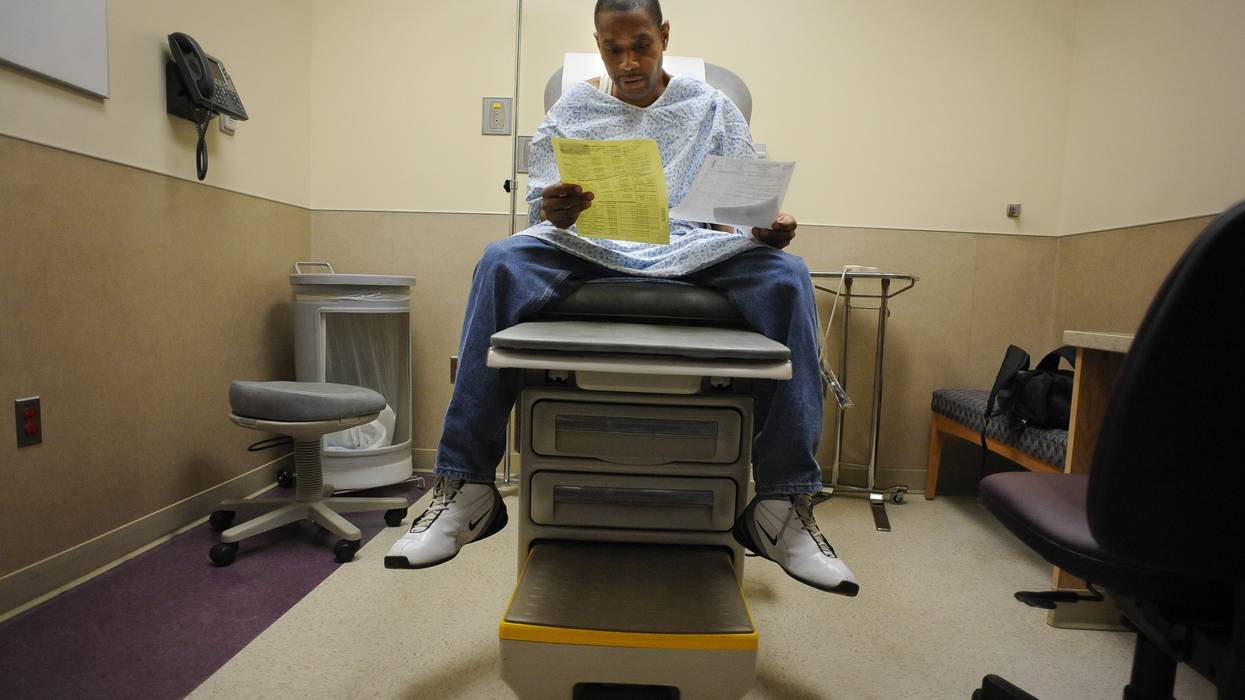
The Centers for Medicare and Medicaid Services' implementation of the One Big Beautiful Bill narrows the very protections Congress included to prevent vulnerable people nationwide from losing the health coverage they need.
The biggest Medicaid fight today isn't happening in Congress—it's happening inside the Centers for Medicare and Medicaid Services.
Now, a year after H.R. 1’s passage (the 2025 federal reconciliation bill enacting significant cuts and changes to Medicaid), CMS’ recently issued interim final rule (IFR) implementing the law’s work-reporting requirements in the program narrows the very protections Congress included to prevent vulnerable people nationwide from losing the health coverage they need.
The Congressional Budget Office previously estimated that more than 5 million people will lose Medicaid coverage because of these requirements. Already a conservative estimate as other organizations estimated over 10 million people are at risk of losing coverage, the number will surely be higher given CMS' IFR goes beyond the statutory language of the law.
The clearest example of this is the IFR's treatment of the medically frail exemption.
If the goal is really healthier communities and greater workforce participation, making it harder for medically vulnerable people to keep their health insurance is exactly the wrong approach.
Congress recognized that people living with complex medical conditions, disabilities, and chronic illnesses, including substance use disorder (SUD), should be protected from burdensome work-reporting requirements. As such, H.R. 1 specifically includes “medically frail” individuals among those exempt from the new requirements.
Yet CMS has added a new hurdle, putting millions of eligible Americans at dire risk of losing access to essential healthcare.
Under the IFR, people with SUD and other qualifying health conditions must also demonstrate that their condition "significantly impairs" their ability to satisfy the requirement before they can qualify for the exemption. This additional standard does not appear in the statute and will inevitably reduce the number of people who can secure the exemption.
For people living with SUD, the consequences could be profound.
While SUD is a chronic but treatable medical condition, pervasive stigma and discriminatory barriers have led to fewer than 1 in 5 people who need treatment actually receiving it. Amid persistent addiction and overdose crises, we should be making it easier for people to access the services and supports they need to become and stay well, not erecting additional barriers to lifesaving care.
Moreover, while CMS' rule relies heavily on Medicaid claims data and provider documentation to identify individuals who qualify as medically frail, the administration’s approach overlooks the reality that many people with SUD have never entered treatment due to the above-mentioned stigma and discrimination. Requiring additional documentation will not "motivate" people to seek care, as CMS suggests. Instead, it creates yet another barrier for people who are already among the hardest to reach.
When people are deprived of Medicaid access, their ability to engage in preventive care, behavioral health services, medications, and treatment that keep chronic conditions under control is also lost. And it doesn’t take a rocket scientist to understand how untreated health conditions can not just impede a person’s capacity to work but quickly lead to costly emergency services.
These are not only personal tragedies—they are costly public policy failures.
Taking away health coverage does not eliminate health needs. It just shifts and raises costs while undermining public health and safety. Access to healthcare is precisely what enables many people to work, care for their families, and be productive community members, so why are we erecting so many barriers?
If the goal is really healthier communities and greater workforce participation, making it harder for medically vulnerable people to keep their health insurance is exactly the wrong approach.
Last month, both our organizations, along with many other leading advocates nationwide, explicitly articulated these concerns and submitted comments urging the agency to reverse course and faithfully reinforce the protections Congress included in the law. While CMS' public comment period on the IFR is now closed, all those who share the same perspective can still take action by calling their members of Congress to share their concerns about the impact of H.R. 1 and specifically, how the administration is planning to implement the law.
A year after H.R. 1’s passage, the question is no longer simply about what Congress enacted—it is whether the regulations that make the law real will preserve purposeful protections or quietly erode them through administrative action.

"Another day, another Trump policy to make voting harder. His new target? Nursing homes."
The Trump administration's far-reaching assault on voting rights has extended to nursing homes, a group of Democratic senators warned on Thursday, pointing to federal guidance recently issued by the Center for Medicare and Medicaid Services.
The guidance, released in July, removes previous recommendations on how nursing home staff can assist residents in exercising their constitutional rights and warns facility employees against violating "federal or state voting laws." The guidance points to a highly dubious Texas case in which a social worker was charged with orchestrating an election fraud scheme, even though no improper votes were cast.
In a letter sent earlier this week to CMS Administrator Mehmet Oz, Sens. Alex Padilla (D-Calif.), Elizabeth Warren (D-Mass.), and 11 other Democrats argued that the agency's July guidance "may intimidate nursing home staff from helping residents exercise their constitutional right to vote and ultimately prevent nursing home residents from voting."
"The nation’s 1.2 million nursing home residents face unique problems in obtaining access to the voting booth," the lawmakers added, "and must not be denied their rights because they are disabled, elderly, lack transit, or face difficulties in obtaining a ballot or voting in person."
The senators emphasized that the new CMS memo breaks with guidance issued during President Donald Trump's first term in the White House. That guidance, issued in October 2020, states that "nursing homes should have a plan to ensure residents can exercise their right to vote, whether in person, by mail, absentee, or other authorized process."
Such language is entirely absent from the new guidance, which focuses heavily on preventing voter fraud—an obsession of Trump's, despite it being extremely rare in the US.
"CMS's release of this memo is just the latest in a series of actions the Trump administration has taken to restrict vote by mail and undermine the right to vote based on unfounded allegations of voter fraud tied to the president’s denial of prior valid election results," the Democratic senators wrote in their letter. "We are concerned that by highlighting examples of prior voter fraud investigations and threatening criminal penalties on nursing home staff—many of whom are legal immigrants who have already been targeted by Trump’s immigration policies—CMS’s July 2026 guidance may intimidate nursing home staff from helping residents with the voting process."
"And the removal of guidance on vote by mail procedures, combined with specific threats to investigate nursing home staff for assisting residents who are exercising their right to vote, may deter nursing homes from assisting residents with voting by mail," they added. "Ultimately, we are concerned that the changes to CMS’s guidance will result in the disenfranchisement of nursing home residents."
Another day, another Trump policy to make voting harder.
His new target? Nursing homes.
Dr. Oz issued a memo that seems designed to intimidate nursing home staff from helping residents vote.
I’m calling on Dr. Oz to withdraw this guidance and stop impeding the right to… https://t.co/Fg4LA4pH9p
— Elizabeth Warren (@SenWarren) August 13, 2026
The Houston Chronicle, in its coverage of the new CMS guidance, spotlights the Trump administration's decision to cite the Texas case, which involved social worker Kelly Brunner.
"When Kelly Brunner was tasked in 2020 with getting the State Supported Living Center in Mexia ready to vote, she was excited to assist the residents with intellectual and developmental disorders prepare for a big election. Instead, her work as the assistant voter registrar at the facility east of Waco spiraled into a nightmare," the outlet noted. "Brunner admitted making technical errors in the complicated registration system, which were all quickly caught; no resident cast an improper vote. Yet, pushed by Attorney General Ken Paxton—who at the time was promoting President Donald Trump’s false claims of a rigged presidential election—she was criminally charged with orchestrating one of the largest election fraud cases ever in Texas."
"Brunner spent $50,000 on lawyers, pleaded guilty to minor charges to put it behind her, lost her teacher’s license and nearly her social worker’s license," the Chronicle added. "Still, she thought the episode was finally over—until... [CMS] cited Brunner as the reason it needed to officially place employees of long-term care facilities on notice that they should be on the lookout for voter fraud in the upcoming midterm elections."
Richard Mollot, executive director of the New York-based Long Term Care Community Coalition, told the Chronicle that the Trump administration's heavy focus on preventing voter fraud "will have a chilling effect" on nursing home resident voting.
"The language is important,” said Mollot. “Most nursing homes will do as little as possible; if you’re not affirmatively telling them what to do, they won’t do it."

One advocate warned that new Medicaid rules issued by the Trump administration would have "disastrous impacts on individuals and healthcare systems."
The Trump administration earlier this week unveiled a new rule that advocates said would make it harder for states to fund their Medicaid programs, compounding damage caused by expanded work requirements and other changes enacted under the 2025 Republican budget law.
The law bars states from creating new provider taxes—levies on hospitals and other healthcare providers—and limits existing ones. The new Centers for Medicare and Medicaid Services (CMS) rule, which is open for public comment until September, would codify the GOP law's changes.
Anthony Wright, executive director of Families USA, said Wednesday that the CMS rule "goes beyond the harsh restrictions already imposed by Congress to further narrow the options that states have to fund Medicaid services and providers."
"Along with Congress’ other restrictions on taxing healthcare providers—restrictions that gut Medicaid funding in all states—CMS estimates this new proposed rule will cut $198.7 billion in state Medicaid funding over 10 years," Wright noted. "This rule comes at a time when states are already under significant budgetary pressure to foot the bill for the cost of implementing complex and unnecessary work reporting requirements; in tandem with a proposed rule that slashes Medicaid provider payments and further eliminates state flexibility."
“Taken together," Wright warned, "these three rules serve as a coordinated dismantling of the Medicaid program, including its eligibility systems, payment structures and financing mechanisms, with disastrous impacts on individuals and healthcare systems."
The Republican budget measure, which President Donald Trump signed into law last summer, includes roughly $900 billion in Medicaid cuts over the next decade. Millions of Americans have lost Medicaid coverage since the GOP law took effect.
Earlier this week, the entire House Democratic caucus implored CMS to "reconsider" its recently published Medicaid work requirement rule, warning it "will create an undue burden for beneficiaries with serious healthcare needs and put people at risk of losing coverage, while also creating significant implementation challenges for states."
"This rule will require beneficiaries to frequently prove and verify their exemptions in order to maintain coverage, which will cause confusion, create bureaucratic burdens for patients seeking care, and, as a result, will lock patients out of lifesaving treatments," the lawmakers wrote. "Forcing vulnerable patients to exhaustively document their symptoms simply to maintain access to basic
healthcare is both imprudent and inconsistent with federal law."
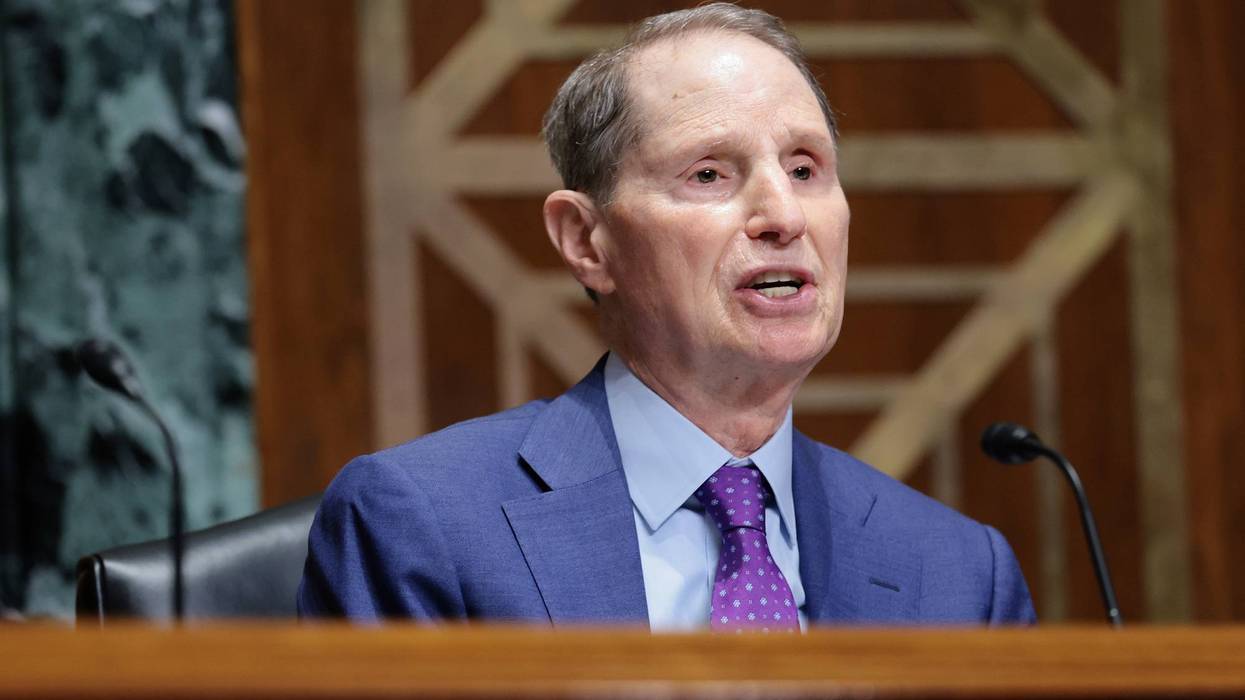
"The bottom line is this: Seniors who choose traditional Medicare should not have their care blocked by AI," said one campaigner.
Advocates for seniors on Wednesday urged US senators to vote for a resolution that, if passed, would block a new Trump administration pilot program under which claims by patients seeking certain healthcare services through traditional Medicare would be reviewed by private companies using artificial intelligence to deny care.
Upper chamber lawmakers are set to vote Thursday on a resolution introduced by Sen. Ron Wyden (D-Ore.) and supported by 20 Democratic colleagues and Sen. Bernie Sanders (I-Vt.) to stop the US Centers for Medicare and Medicaid Services' so-called Wasteful and Inappropriate Service Reduction (WISeR) Model.
CMS claims WISeR "helps protect American taxpayers by leveraging enhanced technologies, such as artificial intelligence (AI) and machine learning, along with human clinical review, to ensure timely and appropriate Medicare payment for select items and services."
What CMS doesn't mention—and what alarms a growing number of physicians and advocates—about the voluntary model is that AI-assisted reviews could contribute to inappropriate care denials, despite the required human review. Private Medicare Advantage healthcare profiteers have been using AI to deny care for years.
Critics argue that, even if a human must sign off, AI will effectively drive many of the recommendations, making it easier and faster to deny or delay care. They also warn of inevitable financial incentives tied to reducing Medicare spending, raising concerns that AI would likely be used as a cost-cutting tool.
"WISeR is not wise at all. It is a dangerous, profit-motivated experiment that allows private third parties to use artificial intelligence to delay and deny seniors’ medical care," Social Security Works executive director Alex Lawson said Wednesday. "Under the WISeR pilot program, which went live in January 2026, reports already show Medicare beneficiaries are waiting 2 to 4 times longer to access certain care."
"This is just one more example of the harm that Republicans’ disastrous healthcare agenda has already waged on American patients," he continued. "Last year, Republicans slashed $1 trillion in Medicaid and Affordable Care Act spending to line their cronies’ pockets. Now, they are importing the worst parts of Medicare Advantage—automated care denials—into traditional Medicare."
"The bottom line is this: Seniors who choose traditional Medicare should not have their care blocked by AI," Lawson added.
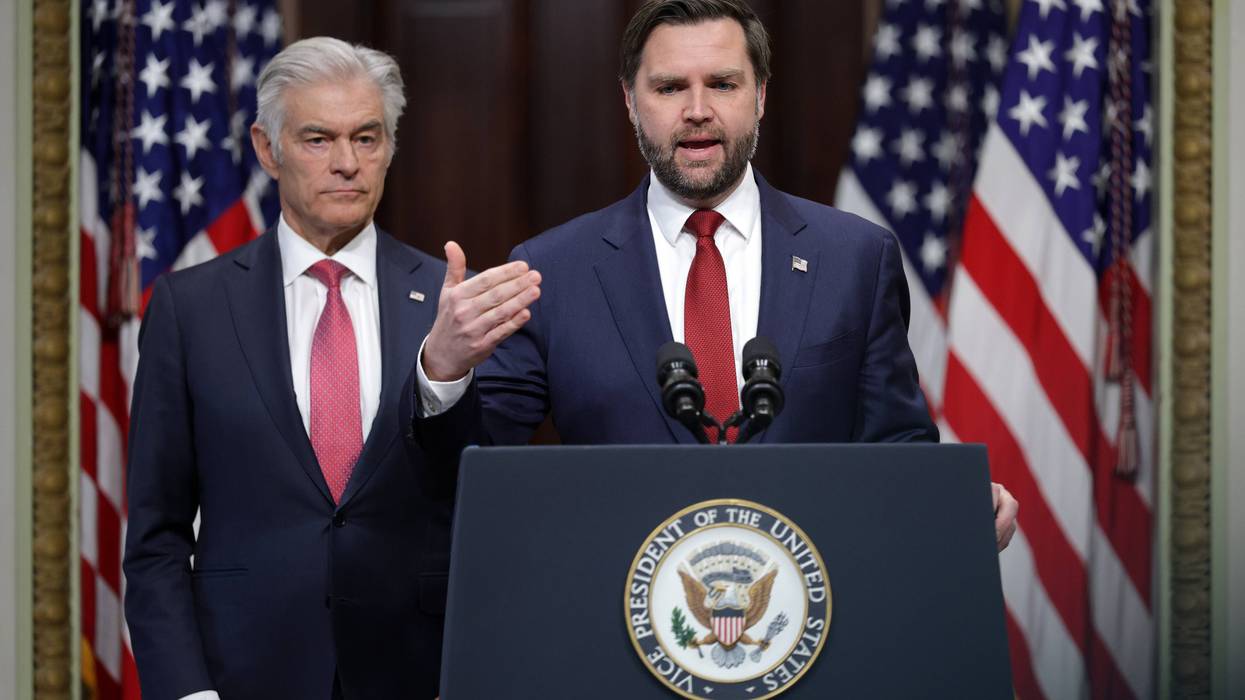
"The Constitution clearly gives Congress the power to spend taxpayer funds, and no law allows the president to halt if he feels some US states aren’t being 'good stewards' of the money," said one critic.
US Vice President JD Vance said Wednesday that the Trump administration will pause some Medicaid funding for Minnesota over fraud concerns—without offering any guarantees that the suspension will not adversely impact the more than 1 million Minnesotans who depend upon the key healthcare program.
"We're announcing today that we have decided to temporarily halt certain amounts of Medicaid funding that is going to the state of Minnesota in order to ensure that the state of Minnesota takes its obligations seriously to be good stewards of the American people's tax money," Vance said at a White House press conference with Centers for Medicare and Medicaid Services (CMS) Administrator Mehmet Oz.
"Now what is this gonna mean?" Vance continued. "What this means is that, first of all, the providers on the ground in Minnesota have actually already been paid... What we're doing is we are stopping the federal payments that will go to the state government until the state government takes it obligations seriously to stop the fraud that's being perpetrated."
They already targeted SNAP in Minnesota. They’ve killed two Minnesotans and injured or kidnapped hundreds more. Now they’re stealing their Medicaid. They’re going to deny people healthcare because of a YouTube video about a Somali daycare scam that wasn’t even true.
[image or embed]
— Kelly (@broadwaybabyto.bsky.social) February 25, 2026 at 3:05 PM
Oz demanded that Democratic Minnesota Gov. Tim Walz determine "who these providers are; make sure they're not already in trouble for doing bad stuff, and then reevaluate all the current providers to make sure they're supposed to be able to provide these services."
Responding to Oz's remarks, Gaia Leadership Project founder Elizabeth Cronise McLaughlin said on Bluesky, "So Minnesota is supposed to review every appointment by a Medicaid recipient with every doctor to get funds already lawfully allocated to the state?"
Asked by a reporter how he intends to ensure that the funding pause "doesn't impact the people who are enrolled in Medicaid," Vance said he is "worried about the justice of it all."
"I think it's offensive that American taxpayers pay into these programs and they're defrauded... and it's really sad that American children who need these services are unable to get them, because they're going to fraudsters," Vance replied.
"Look, we're certainly gonna make sure that our anti-fraud efforts go after the fraudsters and not after anybody who actually benefits from these services," he continued. "But I actually think the question is a little off, in a way, because the problem is not going after the fraud, the problem is that these programs are being defrauded to begin with."
"Our social safety net will disappear unless we take fraud more seriously," added the vice president, whose boss, President Donald Trump, last year signed into law the biggest cuts to Medicaid and the Supplemental Nutrition Assistance Program, or SNAP, in the nation's history as part of the One Big Beautiful Bill Act.
Medicaid is the primary healthcare safety net for lower-income Americans, with nearly 70 million people enrolled nationwide at the end of last year.
While federal prosecutors are investigating Minnesota’s Medicaid system—specifically, 14 high-risk service programs such as housing support and personal-care services—on suspicion of billions of dollars in fraudulent billings since 2018, and dozens of people have been convicted of stealing public money through the state’s social services system, critics noted that Congress, not the president, has the power of the purse.
Some observers noted that Trump has already targeted Minnesota—which voted against him all three times he ran for president—with his deadly crackdown on undocumented immigrants and their defenders and racist attacks on Somali immigrants, including Congresswoman Ilhan Omar (D-Minn.).
The Medicaid freeze follows the Trump administration's $10 billion cut in federal childcare funding to five Democrat-led states, including Minnesota, last month—a move that opponents argue punishes working families who committed no fraud.
University of Illinois professor Nicholas Grossman called the Medicaid pause "taxation without representation."
"The Constitution clearly gives Congress the power to spend taxpayer funds, and no law allows the president to halt if he feels some US states aren’t being 'good stewards' of the money," he said on Bluesky. "In case there’s any confusion on this, the Impoundment Control Act forbids it."
"The people of Minnesota vote for representatives to Congress," Grossman added. "Minnesota representatives and senators were in DC, representing their constituents, when Congress passed laws using proper procedure that allocated Medicaid funding. The president breaking those laws violates the fundamental compact of the republic."
Oz on Wednesday also announced "a six-month national moratorium blocking all new enrollments for durable medical equipment—prosthesis, orthotics—supplies across the board" in the name of fighting fraud. The move targets suppliers, not individual Medicaid beneficiaries.
This from Oz, a promoter of privatized Medicare Advantage programs, which are notorious for overcharging taxpayers and denying patients necessary care. The CMS under Oz increased federal funding for Medicare Advantage plans by more than $25 billion for 2026.
As Common Dreams recently reported, United Health Group (UHG), one of the country's largest for-profit health insurance companies, has been the leading beneficiary of a long-running Medicare Advantage fraud scheme that the Medicare Payment Advisory Commission—an independent, nonpartisan legislative branch agency—warned could cost US taxpayers $1.2 trillion over the next decade.
Some critics said that if Trump really cared about fraud, he'd go after companies like UHG—and stop pardoning so many convicted criminals who committed billions of dollars worth of fraud.
"These guys are despicable," Michigan State University professor Brendan Cantwell said Wednesday in response to Vance and Oz's announcement.
Robert Weissman, co-president of the consumer advocacy group Public Citizen, said in a statement Wednesday that “Medicaid fraud is a serious problem that requires cracking down on fraudsters—not patients."
Weissman continued:
This administration’s anti-fraud rhetoric is itself a fraud. In fact, the administration has gutted anti-fraud government agencies and programs and let fraudsters off the hook. It has issued record-breaking pardons to fraudsters; sought to eliminate the most important anti-consumer fraud agency, the Consumer Financial Protection Bureau; eviscerated the corps of inspectors general whose job is to root out waste, fraud, and abuses; and dropped dozens of fraud and fraud-related investigations against large corporations.
“The Trump administration suspension of Medicaid funding in Minnesota is a bad-faith, punitive, and shameful measure that will punish people in Minnesota as part of the same deceptive story that the Trump administration has told to justify the outrageous [Immigration and Customs Enforcement] invasion of the state," Weissman added.

The Trump administration’s rural hospital fund, meant to soften the impact of the brutal Medicaid cuts in HR1, will require a murky submission process and will not come close to closing the gap for rural communities.
Amid furious efforts to cover their tracks, Republicans included $50 billion in new funding to offset the disastrous cuts that rural hospitals will face as a result of President Donald Trump’s House Resolution 1. Trump’s new Centers for Medicare and Medicaid Services Director, Dr. Mehmet Oz, gave an explanation which would be laughable if this weren’t so serious. He stated that the Rural Health Fund “is part of a broader effort to modernize rural healthcare… [and that] innovation is the reigning theme” citing growing opportunities for rural providers to become more engaged in the healthcare system.
The “Rural Health Fund” was established by HR1 to soften the impact of the legislation, which cuts $911 billion in federal Medicaid spending over 10 years, due to start after 2030. The good news is that the distribution of the $50 billion will begin before the Medicaid cuts take effect (conveniently before the midterms). The bad news is that the temporary $50 billion in new funding will offset a little over one-third (37%) of the estimated $137 billion in permanent cuts to federal Medicaid spending in rural areas. People everywhere can do the math. Fifty is a whole lot less than 137.
On September 15, Centers for Medicare and Medicaid Services (CMS) released a Notice of Funding Opportunity for states to apply for the funds. Half of the funds, $25 billion, will be distributed by CMS equally across all states with approved applications, and the other half distributed based on four factors identified by CMS, including priorities that align with the Make America Healthy Again agenda. While some of the goals are welcome, such as expanding access to opioid-use and substance-use disorder treatment and mental healthcare and recruiting and retraining clinicians in rural areas, other priorities, such as supporting value-based care, alternative payment models, and other innovative delivery arrangements that shift risk to practitioners away from insurance companies and that have been demonstrated to increase costs in Medicare, are worrisome. Predictably, no funds can be used to pay for abortions for women living in rural areas.
Each state, regardless of the size of their rural population and needs, will receive the same amount from the first $25 billion tranche. States with few rural hospitals, such as Delaware, with three rural hospitals, will receive equal funding as California, with 66 rural hospitals, some of which have closed and many which are at risk of closing, and that assumes that both states are approved for funding.
We urge residents of rural communities to stand together and demand the right to excellent healthcare that our wealthy nation can and must provide.
Disbursement of the funds promises to be a cronyism gravy train requiring applications, murky decision criteria, no administrative or judicial review, and nonexistent information as to the amount a state will receive, how the funds will be distributed, or even if the funds will go only to rural hospitals. A merit review panel will review the state applications with final award decisions made by CMS. The program runs for five years, but because CMS will reevaluate state initiatives every year, CMS could withhold, reduce, or even recover funding from the state depending on a state’s progress or if continued funding is “in the government’s best interests.” The only thing that is clear is that hospitals and their administrators will spend countless hours and resources on evaluation, reports, and contractors hired to write these reports.
The stakes for rural hospitals couldn’t be higher. As a result of the Medicaid cuts, hundreds of rural hospitals are at risk of closing. But even before cuts, rural hospitals have been shuttering: From 2005 to 2024, 193 rural hospitals closed. In the wake of HR1Sen. Ed Markey (D-Mass.) and others asked the Sheps Center to identify rural hospitals at risk of closing because of the Medicaid cuts. The Sheps Center identified 338 hospitals which either experienced three consecutive years of negative total margins, serve the highest share of Medicaid patients, or both. These are the hospitals that, because of their heavy reliance on Medicaid funds, will likely shutter.
What will happen to the millions of people who live in these rural communities when these hospitals close? The median travel distance to the next hospital, emergency room, substance-use, or heart specialty care center will jump seven- to eightfold. This translates to higher mortality from many common conditions: heart disease, cancer, stroke, and unintentional injury.
In "The False Promises of VA Privatization", author Suzanne Gordon highlights the plight of healthcare access for veterans and Americans who live in rural communities, the majority of whom already live in so-called medical and mental health deserts. For example, 81% of rural communities do not have even one psychiatric nurse practitioner and 65% do not have a single psychiatrist. The shuttering of rural hospitals will also mean the loss of thousands of healthcare worker jobs and the ensuing negative economic impact on those communities.
The $50 billion rural health fund earmarked by the Trump administration will not transform these rural medical deserts, will not protect the livelihood of workers and their families, nor will it safeguard their communities. The piddly funds will not staunch the bleeding the brutal cuts to Medicaid will cause.
National Single Payer has launched a “Save Our Rural Hospitals with National Single Payer” campaign. We believe that a national, improved Medicare for All, free from profit in the financing and the delivery of care, would provide the reliable, equitable funding needed to help hospitals and physicians not only survive, but thrive in rural areas. The funding from global budgets would be based on community healthcare needs and not on industry interests.
We urge individuals who live in districts where the at-risk hospitals are located to contact their representatives and ask them to cosponsor HR3069, the Medicare for All Act. If your representative is already a cosponsor, tell them to do more to put national single payer on the nation’s agenda.
People can also pass a resolution in their local organization or city council going on record in favor of saving and sustaining their rural hospitals by calling on Congress to pass national, improved Medicare for All, free from profit.
We urge residents of rural communities to stand together and demand the right to excellent healthcare that our wealthy nation can and must provide. The 46 million people living in America’s rural communities don’t need a temporary Band-Aid—they deserve what everyone deserves, no matter where they live—healthcare as a human right, free from profit.

"Millions of Americans who buy their own insurance on Healthcare.gov are unaware of the catastrophic premium hikes barreling towards them," the senators warned.
More than half of the Democratic Party caucus in the US Senate on Monday accused the Trump administration of covering up massive planned premium increases that are going to hit Americans who buy their health insurance through Affordable Care Act exchanges.
In a letter to Centers for Medicare and Medicaid Services (CMS) administrator Mehmet Oz, the senators charged that his agency has "failed to open early window-shopping" the week before the start of open enrollment, which they said has left "millions of Americans who buy their own insurance on Healthcare.gov... unaware of the catastrophic premium hikes barreling towards them."
The senators emphasized that the early window-shopping period is crucial because "the 24 million people who buy insurance on the ACA Marketplace need as much time and information as possible to understand and prepare for these significant premium increases."
The letter also argued that CMS has reduced enrollees' ability to access this crucial information by issuing guidance last summer that "allowed insurance companies to omit premium numbers and tax credit information from the notices they are required to send to enrollees ahead of open enrollment," while also "allowing insurance plans to delay sending information to their enrollees."
As a result of this, the letter continued, "millions of Americans have still not received any information from their insurance plan, or from CMS, about the biggest premium hike in history."
The senators' letter concluded with a demand for CMS to "launch window-shopping immediately and deliver the transparency American families deserve ahead of open enrollment on November 1."
The fight over health insurance premiums is at the heart of the current shutdown of the federal government, as Democrats say they will not vote to fund the government without an extension of enhanced ACA tax credits that were first passed into law under the American Rescue Plan in 2021.
The Washington Post last week reported on leaked documents showing that the most popular healthcare plans purchased on the ACA exchanges are expected to see a 30% hike next year, which would mark the "largest annual premium increases by far in recent years."
Were the enhanced tax credits for these plans allowed to expire, the Post added, this would likely result in millions of Americans seeing their insurance premiums double or triple next year.
The expiring subsidies aren’t the only threat to Americans’ healthcare, as Republicans over the summer passed a massive budget law that cut spending on Medicaid by nearly $1 trillion over the next decade, which the Congressional Budget Office estimated would result in more than 10 million people, among the nation’s poorest, losing their coverage. Congressional Democrats have also demanded undoing some Medicaid cuts in government shutdown negotiations.
A new AI-driven Medicare prior-authorization pilot could dramatically weaken Medicare, just another frightening step toward privatization and profiteering.
The odds are that if you have private health insurance or someone in your family has private health insurance, you have heard the dreaded phrase “we need preauthorization” from your insurance company. What this means is that your insurance company needs to approve in advance that your treatment or prescription is covered. In theory, this should be no big deal. However, reality is something else. But as the New York Times points out:
Private insurers often require a cumbersome review process that frequently results in the denial or delay of essential treatments that are readily covered by traditional Medicare. This practice, known as prior authorization, has drawn public scrutiny, which intensified after the murder of a UnitedHealthcare executive last December.
So, reading this you might think that you are glad that you or someone in your family choose traditional Medicare (in other words not a Medicare Advantage plan), so you would be able to avoid the “prior authorization needed” drama. Well, unfortunately you would be wrong as the prior authorization is slowly coming to Medicare. In late June, the Centers for Medicare and Medicaid Services (CMS) issued a press release:
The Centers for Medicare & Medicaid Services (CMS) is announcing a new Innovation Center model aimed at helping ensure people with Original Medicare receive safe, effective, and necessary care. Through the Wasteful and Inappropriate Service Reduction (WISeR) Model, CMS will partner with companies specializing in enhanced technologies to test ways to provide an improved and expedited prior authorization process relative to Original Medicare’s existing processes, helping patients and providers avoid unnecessary or inappropriate care and safeguarding federal taxpayer dollars. This model builds on other changes being made to prior authorization as announced by the US Department of Health and Human Services and CMS on Monday.
In theory, this move by CMS does not sound bad. Who could be against reducing wasteful spending in Medicare and making sure that people receive appropriate treatment? A spokesman for CMS has been quoted that the government would not review emergency services or hospital stays.
The CMS prior Medicare authorization model is being rolled out in January 2026 as a six-year trial program in six states: Arizona, New Jersey, Ohio, Oklahoma, Texas, and Washington State. In theory, the preauthorization program will look at those medical treatments that are not of benefit to Medicare beneficiaries.
What CMS is not drawing attention to is that this preauthorization will be done by artificial intelligence (AI)—or as CMS puts it “enhanced technologies.” It is not until much later in the press release that CMS gets to the fact that AI will do the screening authorization:
The WISeR Model will test a new process on whether enhanced technologies, including artificial intelligence (AI), can expedite the prior authorization processes for select items and services that have been identified as particularly vulnerable to fraud, waste, and abuse, or inappropriate use.
CMS, at the moment, says that the AI preauthorization screening will be used on only an extremely limited number of procedures. But what guarantees do Medicare beneficiaries have? The bottom line is that you have to ask yourself: Would you be comfortable having your access to your earned Medicare benefits be determined by AI? My answer is a firm, “No, thank you.”
We also need to ask what are the financial incentives that Medicare is injecting into the system though preauthorization? It is hard not to conclude that this is a step toward privatization of traditional Medicare.
Healthcare professionals are concerned by CMS’ preauthorization program. In mid-July, the American Medical Association (AMA) wrote to CMS:
While the stated goal of the model is to curb wasteful spending and protect the Medicare Trust Fund, the mechanisms employed raise several significant issues that must be addressed prior to implementation. The AMA strongly urges CMS to pause the January 1, 2026 implementation of the WISeR Model to allow additional stakeholder input, full analysis of the model’s operational impacts, and development of clear guidance for physicians. Physicians should not be forced to adapt to such substantial administrative requirements without sufficient time to understand the implications and prepare. Absent this opportunity for meaningful physician and stakeholder engagement, the model risks creating confusion, administrative burden, and unintended consequences that could ultimately undermine CMS’ own goals to reduce waste, fraud, and abuse.
On Capitol Hill, a number of House Democrats led by Rep. Alexandria Ocasio-Cortez of New York have pushed back on the AI preauthorization pilot project. In late July, they wrote to CMS:
We understand that CMMI has intentionally selected healthcare services that are reported to have limited clinical value and may be vulnerable to abuse in the Medicare program, and we support efforts to ensure Medicare remains a good steward of taxpayer dollars. However, the expansion of AI-fuelled prior authorization will not improve program integrity in Traditional Medicare. Giving private for-profit actors a veto over care provided to seniors and people with disabilities in Traditional Medicare, even as a pilot program, opens the door to further erosion of our Medicare system. We therefore strongly urge you to immediately halt the proposed WISeR model and instead consider steps to address the well-documented waste, fraud, and abuse in the Medicare Advantage program.
The House Democrats raise a very intriguing question about why CMS is not focused more on fighting waste, fraud, and abuse in Medicare Advantage plans? As the Center for Budget and Policy Priorities reported in January of this year, there is considerable evidence to show that Medicare Advantage plans are overpaid by the government. It would make sense for CMS in pursing fraud and waste to follow the money which means looking at Medicare Advantage plans.
Give the political dynamics in Washington, it seems likely that the CMS preauthorization demonstration project will go into effect in January 2026. Then in the summer of 2026, with the midterm elections looming, as members of Congress will begin hearing from constituents who have had their earned Medicare benefits denied by AI, Congress will revisit this issue. It is tragic that in the meantime people will be hurt.
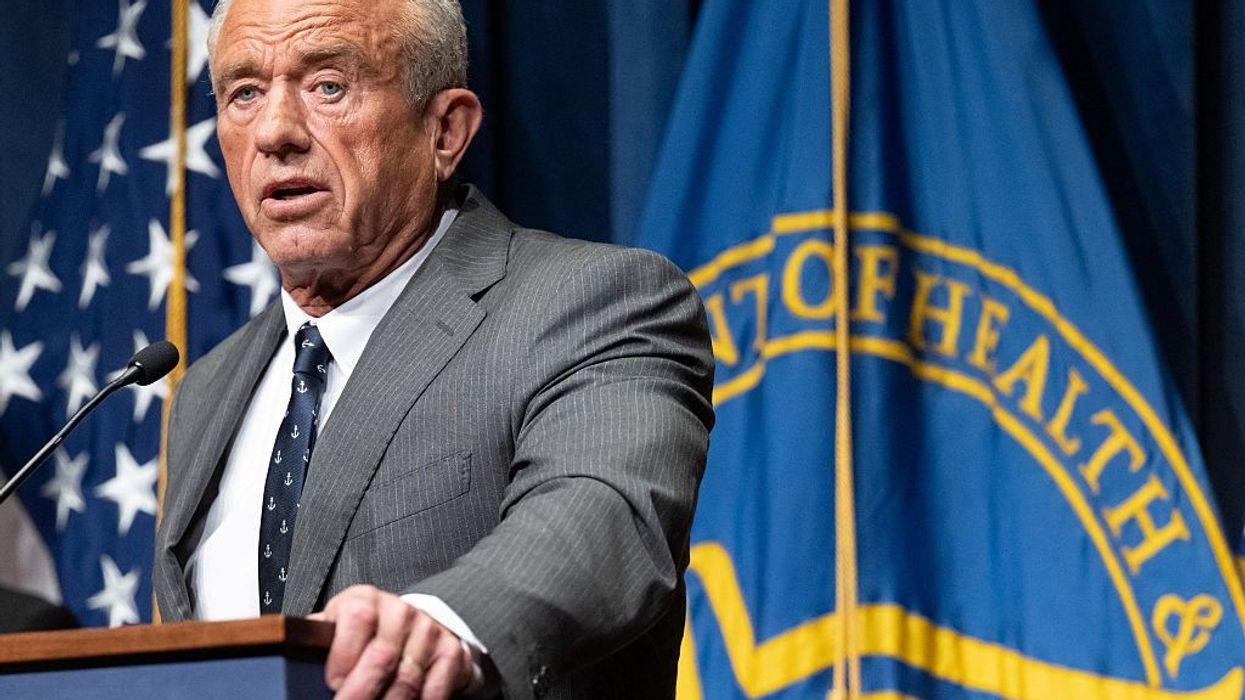
"Trump has nominated unqualified and dangerous people to serve in the most important health positions in the country," said Eagan Kemp, the author of the report for the consumer advocacy group Public Citizen.
The government watchdog group Public Citizen published a report on Tuesday warning that U.S. President Donald Trump's "dangerous health cabal threatens patients, providers, and the programs they rely on."
The report, written by healthcare policy advocate Eagan Kemp, takes aim at several of Trump's appointees to top healthcare posts. Among those highlighted are Secretary of Health and Human Services (HHS) Robert F. Kennedy Jr., Centers for Medicare and Medicaid Services (CMS) head Mehmet Oz, Deputy HHS Secretary Jim O'Neill, and surgeon general nominee Casey Means.
"The first few months of the Trump administration have brought chaos and disaster to an already fragmented and dysfunctional health care system," the report says. "From efforts to make massive cuts to the ACA and Medicare and layoffs of huge numbers of HHS staff across the agency, it is tough to keep up with all the damage being done."
Kennedy, the report says, has aggressively promoted "conspiracy theories and dangerous anti-science views" during his time as HHS secretary.
The report notes Kennedy's fear-mongering about the safety of the highly effective measles vaccine as the U.S. experienced the largest outbreak in recent years, and his purge of credentialed independent experts from the panel that makes national vaccine recommendations in favor of a clique of anti-vaccine activists.
The report also points to Kennedy's decision to de-emphasize research into infectious disease and prescription drugs and his mass firings at other agencies within HHS, including the Food and Drug Administration (FDA) and the National Institutes of Health (NIH).
"With Kennedy taking command of the HHS, Americans are presented lies and disinformation at an unprecedented scale that are capable of unwinding a century of progress on fighting disease and promoting public health," it says.
The report also highlights Oz's efforts to further privatize Medicare by championing Medicare Advantage, which it says "would leave more Americans at the whim of greedy health insurance corporations." It cites one study, which found that since 2007, overpayments to private Medicare providers added up to more than $600 billion, and could amount to another trillion over the next decade.
Additionally, the report cites findings from the Government Accountability Office (GAO) that patients with significant healthcare needs were more likely to drop Medicare Advantage in favor of returning to traditional Medicare, which it says "indicates that these patients were unable to receive necessary care" under the privatized program.
It describes Oz's "massive conflicts of interest," including his six-figure investments in Medicare Advantage providers like UnitedHealth and CVS Health.
"Medicare Advantage plans regularly deny needed care, making it difficult for low-resource hospitals to remain open to serve the public," the report says."If Oz gets his wish of further expanding Medicare Advantage, it will threaten the solvency of many hospitals, particularly rural hospitals currently at risk of closure, as they would struggle to keep their doors open because they wouldn't have the consistent funding they need to continue serving their communities."
O'Neill, who was appointed last month as Kennedy's deputy at HHS, is described as "a long-time venture capital investor with concerning views that reflect his significant financial ties to for-profit biomedical companies," adding that "his interests run counter to [HHS's] public health mandate."
The report notes O'Neill—a staunch libertarian—is opposed to FDA regulations to ensure the safety and efficacy of drugs, which he said "kill a lot of people and provide a lot of harm to the economy."
He has called to eliminate the agency's mandate to ensure that drugs are effective before they are approved for sale. In a 2014 speech to a biotech group, O'Neill said the FDA should "let people start using them, at their own risk."
As an official in the George W. Bush administration's HHS, he also opposed FDA regulations on diagnostic tests that rely on computer algorithms—an even more pressing issue today given the increasing ubiquity of artificial intelligence, including in healthcare.
"While he has a limited public record of comments on health issues broadly," the report says, "his dangerous and misinformed views about the workings of the FDA provide deep cause for concern that he will prioritize ideological and corporate profit considerations over the public health mandate of the department."
Means, Trump's pick for surgeon general—who would be the top authority on public health recommendations—is described as having "little to no managerial experience in the context of government agencies or scientific research."
She does not have an active medical license, and dropped out of her surgical residency. According to colleagues, she did so after coming to believe "that modern medicine is a conspiracy to keep people sick."
A "wellness influencer" in the mold of Kennedy, she has a history of anti-vaccine views and has advocated for getting rid of the Hepatitis B vaccination for babies, which is credited with reducing HBV infection by 68% over a decade after its introduction in 1991. Means has also said that birth control pills are overprescribed, and that they signal a "disrespect of life."
She also stands to potentially profit from her decisions as surgeon general, the report says, since she remains the chief medical officer of a glucose monitoring technology company and has not stepped down from her post despite the possible conflicts of interest.
"The range of unscientific ideas, wellness products, and conspiratorial claims that Means is associated with," the report says, "makes her a potentially dangerous person to serve in a role that requires being a credible health communicator for the country and upholding sound science."
The state of healthcare in the United States, the report says, is about to become more precarious following the passage of the "One Big Beautiful Bill Act," which is projected to result in 10 million people losing their health insurance. Medicare privatization has also accelerated, with hiked rates for Medicare Advantage plans.
"The fact that Trump, Kennedy, and their allies have taken so many dangerous and misguided actions on health in just the early months of the new administration," the report says, "highlights the need for vigilance and strong pushback from anyone who wants a better healthcare system."

"The Trump administration will stop at nothing to rip coverage away from American families, even kids they claim they want to protect," said Sen. Ron Wyden.
The Trump administration on Thursday said it will restrict waivers that have allowed states to keep kids enrolled in Medicaid or the Children's Health Insurance Program beyond the 12-month period of continuous coverage required under federal law.
The Centers for Medicare and Medicaid Services (CMS), led by Mehmet Oz, announced the move on Thursday, saying that it has informed states of a "clear shift away from policies that extend beyond statutory limits," specifically restricting Section 1115 waivers that have been sought and approved in dozens of states across the U.S.
"CMS will allow currently approved initiatives to run out their course but does not anticipate extending them nor approving new waivers," the agency said in a statement, which came less than two weeks after President Donald Trump signed into law the largest Medicaid cuts in U.S. history.
Sen. Ron Wyden (D-Ore.), the top Democrat on the Senate Finance Committee, called the CMS announcement a "terrible development" and "yet one more awful example of the Trump administration's obsession with making it as hard as possible for Americans to access the healthcare they are eligible for."
In 2022, Oregon became the first state in the nation to receive federal approval to provide children with continuous Medicaid coverage from birth up to age 6 through a Section 1115 waiver. The policy was described as a "ground-breaking initiative" that would "help infants and young children get off to a healthy start in life without parents having to worry about renewing their Medicaid coverage annually," regardless of temporary changes to family income or other factors.
The CMS announcement points to the Oregon policy without explicitly naming the state. Oregon's federal waiver is set to expire in 2027.
Wyden said Thursday that "the Trump administration will stop at nothing to rip coverage away from American families, even kids they claim they want to protect."
Joan Alker, executive director of Georgetown University's Center for Children and Families, wrote that "in the name of 'protecting vulnerable Americans,' the Trump administration will rip away Medicaid coverage from babies and toddlers."
👀In the name of “protecting vulnerable Americans” the Trump Administration will rip away Medicaid coverage from babies and toddlers👀
CMS announces Medicaid demos that 8 states are implementing to cover babies and young children continuously w/o gaps will no longer be allowed pic.twitter.com/aXF0mKXL9S
— Joan Alker (@JoanAlker1) July 17, 2025
CMS insisted that the newly announced changes are aimed at protecting Medicaid's finances by ensuring that those who are no longer eligible for the program are removed.
But Amaya Diana, a policy analyst at the health research organization KFF, wrote Thursday that "not everyone who loses coverage at renewal is no longer eligible."
"During the unwinding of the [pandemic-era] Medicaid continuous enrollment provision, seven in 10 Medicaid enrollees who lost coverage were disenrolled for procedural reasons," Diana noted. "While some were no longer eligible, others lost coverage due to barriers such as communication issues."