SUBSCRIBE TO OUR FREE NEWSLETTER
Daily news & progressive opinion—funded by the people, not the corporations—delivered straight to your inbox.
5
#000000
#FFFFFF
To donate by check, phone, or other method, see our More Ways to Give page.
Daily news & progressive opinion—funded by the people, not the corporations—delivered straight to your inbox.
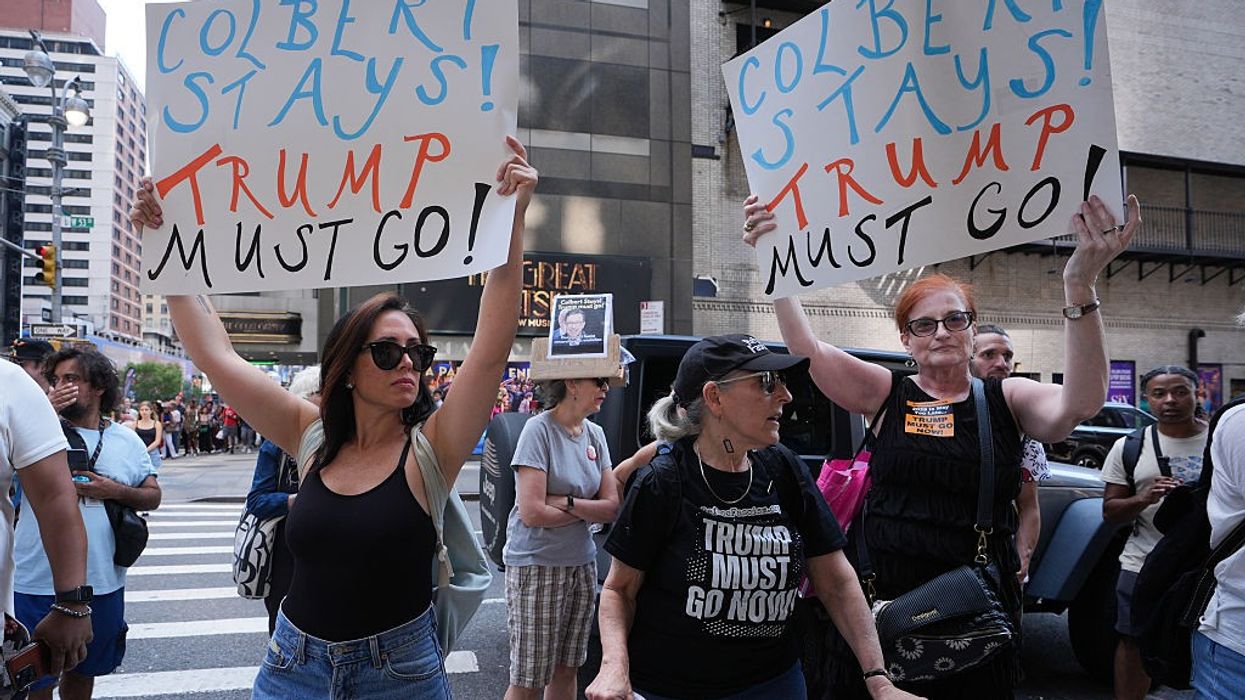
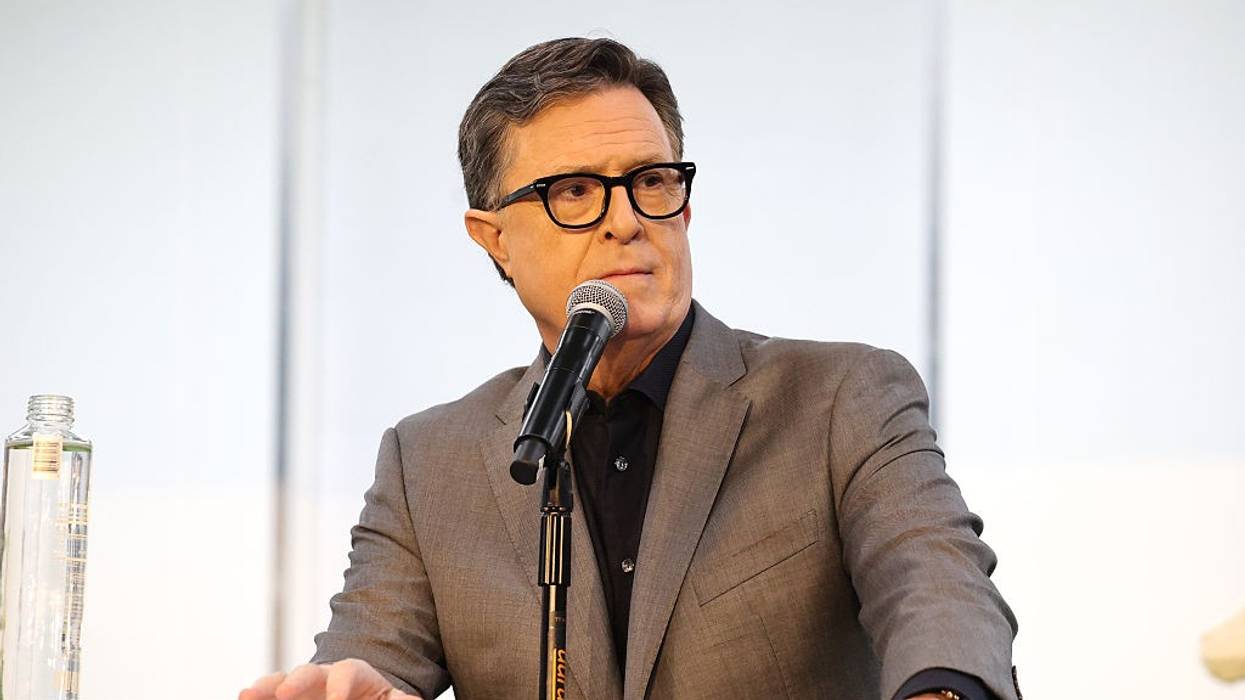
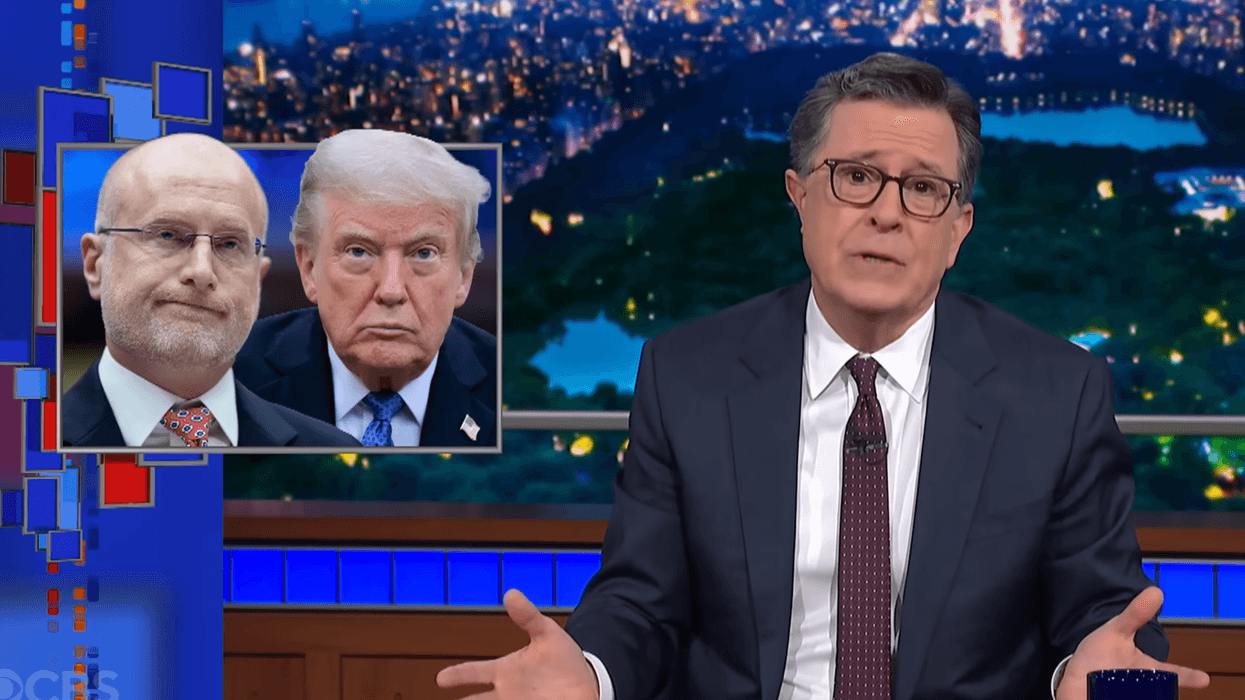
"Let’s just call this what it is: Donald Trump’s administration wants to silence anyone who says anything bad about Trump on TV," said Stephen Colbert, host of "The Late Show."
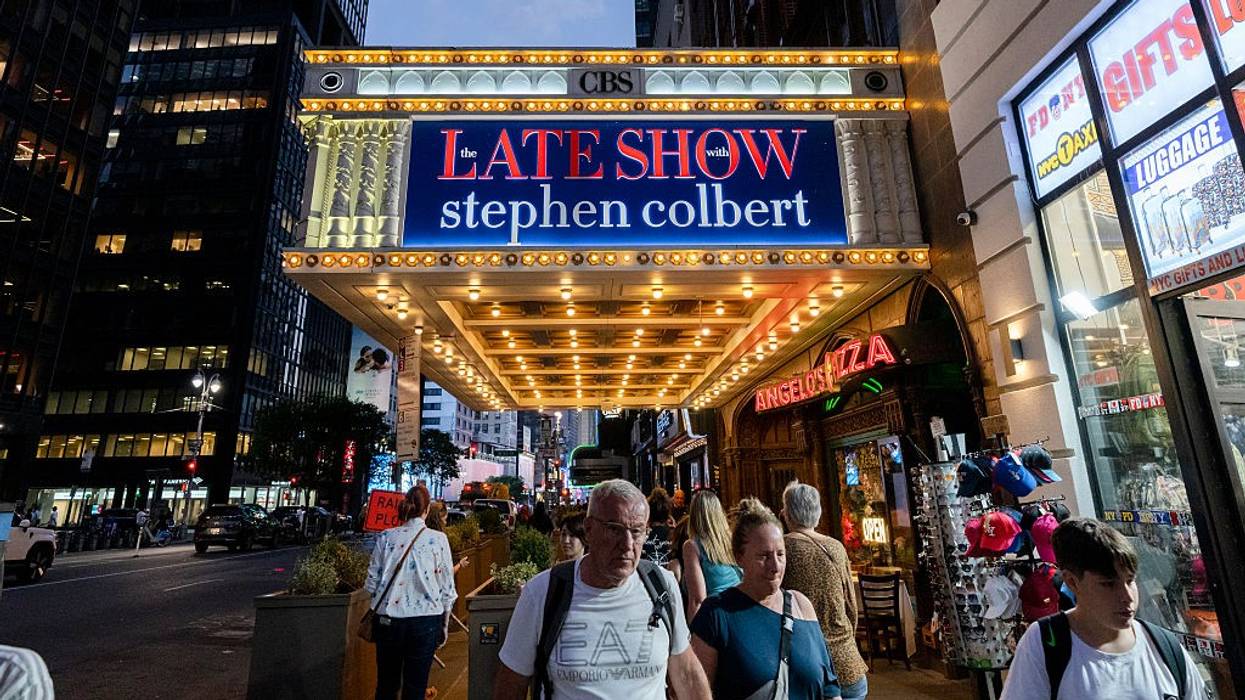
"Late Show" host Stephen Colbert unloaded on higher-ups at CBS late Monday for refusing to air his interview with Texas US Senate candidate James Talarico, allegedly out of fear that the Federal Communications Commission—led by Trump lackey Brendan Carr—would retaliate against the network.
During an on-air segment late Monday, Colbert called attention to FCC Media Bureau guidance issued last month stating that daytime and late-night talk shows featuring interviews with political candidates must give equal time to opposing candidates, effectively dispensing with a decades-old exemption for the programs.
Colbert slammed CBS for "unilaterally enforcing" the FCC guidance, a decision he said was made for "purely financial reasons." CBS is owned by Paramount Skydance, whose chief executive, David Ellison, is the son of billionaire Trump ally and donor Larry Ellison.
Watch Colbert's segment:
CBS leadership's decision to block the airing of Colbert's interview with Talarico came days after the Republican-led FCC launched an investigation into whether ABC's "The View" violated equal time rules with its Talarico interview earlier this month. US Rep. Jasmine Crockett (D-Texas), who is running against Talarico in the Senate primary, appeared on "The View" in January.
Anna Gomez, the lone Democratic commissioner on the FCC, denounced the ABC investigation as a "sham."
“Let’s be clear on what this is. This is government intimidation, not a legitimate investigation," said Gomez. "Like many other so-called ‘investigations’ before it, the FCC will announce an investigation but never carry one out, reach a conclusion, or take any meaningful action."
"The real purpose is to weaponize the FCC’s regulatory authority to intimidate perceived critics of this administration and chill protected speech. That is not how a free society operates," she continued. "I urge broadcasters and their parent networks to stand strong against these unfounded attacks and continue exercising their constitutional rights without fear or favor."
By refusing to let the Talarico interview air on the televised broadcast, CBS opted to cave to the administration, according to Colbert.
"Let’s just call this what it is: Donald Trump’s administration wants to silence anyone who says anything bad about Trump on TV, because all Trump does is watch TV, OK? He’s like a toddler with too much screen time," said Colbert. "He gets cranky and then drops a load in his diaper."
Talarico, for his part, declared in a social media post that "this is the interview Donald Trump didn’t want you to see," posting a clip of his appearance on "The Late Show."
Watch the full interview:
"I think that Donald Trump is worried that we're about to flip Texas," Talarico said during the interview. "This is the party that ran against cancel culture, and now they're trying to control what we watch, what we say, what we read."
"They went after 'The View' because I went on there," he continued. "They went after Jimmy Kimmel for telling a joke they didn't like. They went after you for telling the truth about Paramount's bribe to Donald Trump. Corporate media executives are selling out the First Amendment to curry favor with corrupt politicians."
Other critics of the CBS decision said it's the latest example of media conglomerates bending to Trump's bullying.
"Big media self-censorship is real," warned Tim Karr, senior director of strategy and communications with the advocacy group Free Press.
Trump's latest threat came shortly after he once against lashed out at late-night host Stephen Colbert.
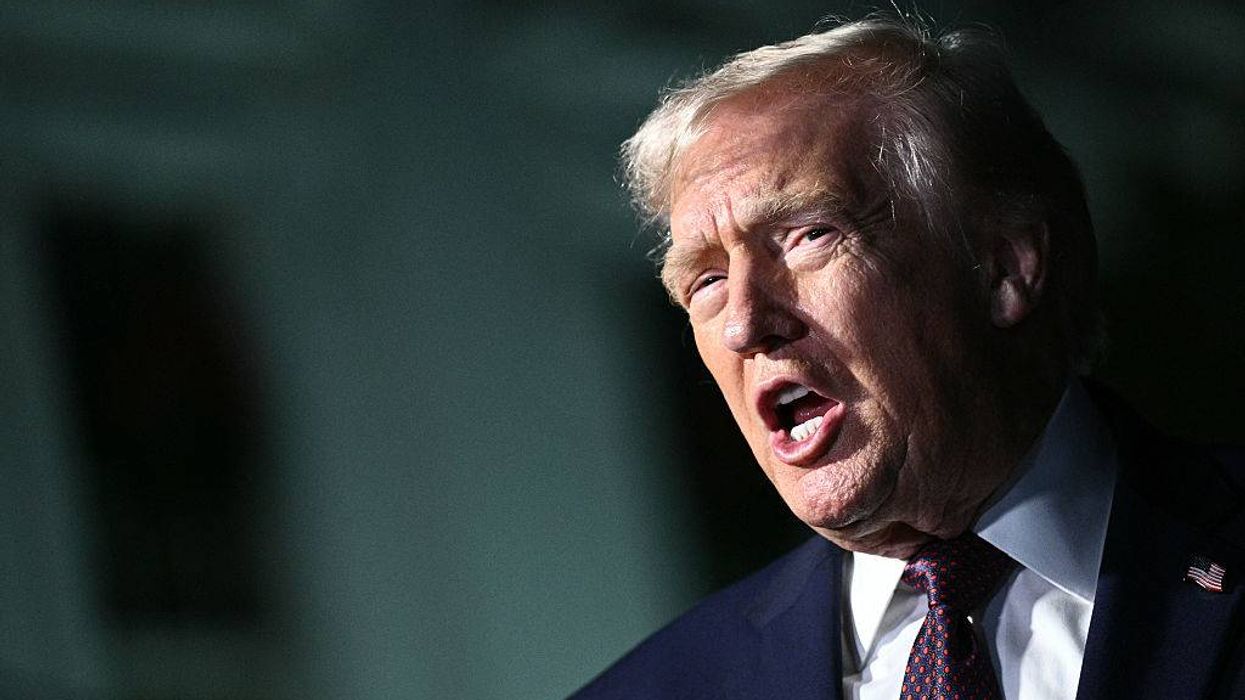
President Donald Trump sent out a cheery Christmas greeting early Wednesday morning just three minutes after threatening to shut down US broadcasters if their programs did not provide him with more positive coverage.
In a Truth Social post sent out at 12:36 am, Trump renewed his threat to once again strip broadcast licenses from networks that cover or portray him and his administration in a negative light.
"If Network NEWSCASTS, and their Late Night Shows, are almost 100% Negative to President Donald J. Trump, MAGA, and the Republican Party, shouldn’t their very valuable Broadcast Licenses be terminated?" Trump wrote. "I say, YES!"
Just three minutes afterward, at 12:39 am, Trump posted an all-caps message that read, "MERRY CHRISTMAS!!!!!"
It is unclear what sparked Trump's latest threat, although shortly before it was posted he lashed out at comedian Stephen Colbert, whose time hosting CBS' "The Late Show" is set to end in May 2026.
"Stephen Colbert is a pathetic trainwreck, with no talent or anything else necessary for show business success," he wrote. "Now, after being terminated by CBS, but left out to dry, he has actually gotten worse, along with his nonexistent ratings. Stephen is running on hatred and fumes. A dead man walking! CBS should, 'put him to sleep,' NOW, it is the humanitarian thing to do!"
While Trump frequently delivered angry rants about media coverage throughout his first term, his words appear to be carrying significantly more weight during his second term.
For example, the announcement of Colbert's cancellation raised eyebrows earlier this year because it came shortly before the Federal Communications Commission (FCC) signed off on an $8 billion deal for CBS parent company Paramount to be bought by Skydance Media, the company founded by David Ellison, son of Trump ally Larry Ellison.
Weeks after this, Trump-appointed FCC Chairman Brendan Carr threatened to rescind broadcast licenses for Disney-owned ABC unless it took late-night host Jimmy Kimmel, a frequent Trump critic, off the air. Hours after Carr's threat, Kimmel's show was suspended before being put back on the air days later amid a public outcry.
Over the weekend, CBS News boss Bari Weiss spiked a segment on the network's flagship news program "60 Minutes" that cast a critical eye on the Trump administration for sending hundreds of Venezuelan immigrants to a notorious El Salvadoran prison where they were allegedly subjected to abuse and torture.
Weiss' decision to at least temporarily quash the story came as Larry Ellison is making a hostile bid to buy Warner Brothers Discovery that will once again need FCC approval in the future in order to succeed.
"A Trump denial is not a fact," said one media critic.
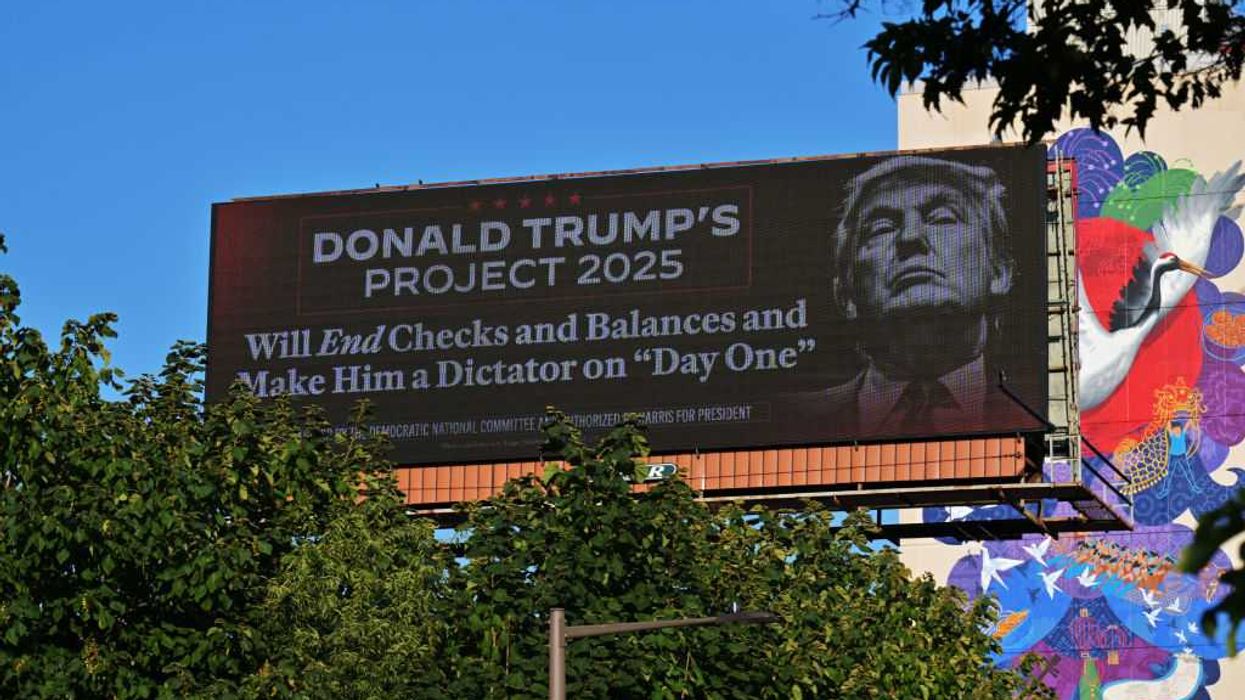
As President Donald Trump openly embraces Project 2025, mainstream media outlets are facing criticism for their role in helping him downplay his ties to the wildly unpopular far-right governing playbook in the lead-up to his reelection last year.
After she became the Democratic nominee in July, former Vice President Kamala Harris made the Heritage Foundation's over 900-page manifesto for “the next conservative president” central to her case against Trump during the 2024 election, often referring to it as "Trump's Project 2025."
She and other Democrats warned that if he retook power, he would swiftly enact many of its most extreme and unpopular proposals and dramatically expand executive power while doing it.
Among those proposals were steep cuts to social safety net programs like Medicaid and the Supplemental Nutrition Assistance Program (SNAP), the "mass deportations" of millions of immigrants, the elimination of the Department of Education, new restrictions on abortions, the gutting of climate protections, and the replacement of career civil servants with political appointees, among many others.
Democrats amplified the plan's danger at the Democratic National Convention and in campaign ads, and Trump began to distance himself from the platform. Despite the fact that as many as 140 people who'd worked in his first administration—including Paul Dans, Heritage's director of Project 2025—had a hand in its creation, Trump said: "I know nothing about Project 2025. I have no idea who is behind it."
This was demonstrably untrue, even at the time. Media Matters for America dug up a clip from as far back as May 2023 of Dans stating that "President Trump's very bought in with this," speaking of the program.
Project 2025 was almost inconceivably unpopular. An NBC News poll from September 2024 showed that while 57% of registered voters viewed the plan negatively, just 4% viewed it positively.
But in the critical months leading up to the election, many media outlets took Trump's denial at face value, publishing fact checks and other commentary that painted Democrats' warnings about his connection to the plan as alarmist or misleading.
Responding to a social media post in July stating that "Trump has made his authoritarian intentions quite clear with his Project 2025 plan," a fact check by USA Today rated the statement "false," because, as the headline said, "Project 2025 is an effort by the Heritage Foundation, not Donald Trump."
In September, after Harris confronted Trump about Project 2025 at the first and only debate between the two, the paper published another fact-check with the headline: "Harris repeats claim that Project 2025 is Trump's plan. That's still not right."
In response to Harris' claim during the debate that Project 2025 was "a detailed and dangerous plan... that the former president intends on implementing if he were elected,” Washington Post fact-checker Glenn Kessler, whose coverage received a fair bit of criticism during the 2024 cycle, reported in bold text that "Project 2025 is not an official campaign document."
A CNN fact check of the Harris campaign's social media in September remarked that one account "frequently invokes Project 2025," before caveating that "Project 2025 is not Trump’s initiative, and he has said he disagrees with some of its proposals."
In an October interview on CBS's "Face the Nation," anchor Norah O'Donnell, Harris attempted to warn about Project 2025, before O'Donnell responded: "You know that Donald Trump has disavowed Project 2025. He says that is not his campaign plan."
After nine months back in power, the website Project 2025 Tracker estimates that Trump has already implemented approximately 48% of the objectives outlined in the policy document.
In addition to his key campaign promises many of his second administration's policies are highly specific to Project 2025, such as his pledge to abolish the Federal Emergency Management Agency (FEMA), his efforts to privatize the National Weather Service (NWS), his reconfiguration of Title X funding to promote pregnancy, and his elimination of the Office for Civil Rights and Civil Liberties.
Trump is no longer hiding his connection to Project 2025, having brought in many of its hiring picks and authors to staff his administration almost immediately after his victory last November.
This week, he began to boast about it openly. As his Office of Management and Budget (OMB) director, Russ Vought, one of Project 2025's architects, began using the current government shutdown to unilaterally cut off funding to infrastructure projects in blue states and cities, Trump lauded him as "he of PROJECT 2025 Fame."
"This was always the plan," Harris responded on social media.
While many commentators expressed outrage that Trump blatantly lied about his connections to Project 2025, others dredged up old clips of newspapers and anchors taking him at his word.
"All those 2024 media fact checks that said, 'Donald Trump and the Trump campaign deny any connection to Project 2025' look pretty ridiculous right now," said MeidasTouch editor-in-chief Ron Filipkowski. "A Trump denial is not a fact. You just used his lies to 'debunk' a reality that was obvious to anyone paying attention."
Mehdi Hasan, the founder of the independent media company Zeteo, highlighted the CBS interview, saying Trump's embrace of Project 2025 was "embarrassing not just for Norah O'Donnell but a whole host of leading American anchors and reporters who echoed Trump’s false denials."
"Nothing showed the difference between mainstream and independent media better than the response to Trump’s obvious lie about not knowing anything about Project 2025," said David Pepper, author of the book Saving Democracy: A User's Manual. "Most mainstream media started fact-checking those who claimed a connection to be somehow false. Others 'both sides'ed' it. Far more in independent media called it out as a whopping lie."
"This capitulation is... a pervasive trend that applies to nearly all commercial media, including cable and telecommunications firms and online platforms," said Free Press.
Media advocacy organization Free Press on Tuesday unveiled an index that documents and rates major media organizations' reactions to the coercive demands being made by U.S. President Donald Trump.
As Free Press explained in a press release, its Media Capitulation Index tracks actions being taken by 35 major media conglomerates who are facing pressure from Trump and his allies to curb critical reporting and commentary on his administration.
"In this investigation, Free Press found that to varying degrees the owners of America's largest media firms are caving to pressure from an authoritarian-minded president and his captured federal agencies," the organization wrote. "This capitulation is not unique to owners of news outlets—like Paramount (which owns CBS), Disney (ABC) and Warner Bros. Discovery (CNN). Rather, it's a pervasive trend that applies to nearly all commercial media, including cable and telecommunications firms and online platforms."
Free Press argued that media companies have been bending to Trump's will through four major methods: Paying out lavish settlements in lawsuits brought by the president; rolling back their programs for enhancing diversity, equity, and inclusion; pressuring journalists and commentators to soften or even censor their criticisms of the president; and "attempting to curry favor with the president during inaugural ceremonies, private dinners at Mar-a-Lago, and meetings in the White House."
The index uses a scale to rate media organizations that range from "independent" on one end to "propaganda" on the other. Of all the media companies surveyed by Free Press, only two are rated as independent: Bloomberg Media Group and Netflix. The New York Times Company for now is the least compromised of any print media conglomerate outside of Bloomberg and is merely listed as "vulnerable," while Nant Capital, the owner of the Los Angeles Times, is the most compromised and is rated as "obeying" the Trump administration.
When it comes to broadcast media, no companies earned an "independent" ranking, and CBS owner Paramount was ranked as "obeying" the Trump administration in the wake of its decisions to give Trump a $16 million payout and then cancel the show of longtime Trump critic Stephen Colbert.
Former New York Times public editor Margaret Sullivan, a longtime critic of the American media's response to Trump, praised Free Press on her Substack page for highlighting the major problems facing the American media in the second Trump term.
"Huge, diverse corporations own news companies, and independent journalism all too often takes a back seat to corporate profits, mergers, and other forms of consolidation," she said. "Meanwhile, public media has been defunded, local journalism lacks local ownership, and partisan propaganda has found an influential home on radio and cable news."
She also interviewed Tim Karr, who works as Free Press' senior director of strategy and communications, about why her former employer did not earn an "independent" rating on the index.
"There is a tendency to 'both-sides' reporting about the Trump administration,” Karr said of The New York Times' coverage, which he added seems to give "equal weight to the forces of democracy and the forces of authoritarianism."
The latest moves from CBS’ owners mark the latest seismic shift to the right in the U.S. media landscape.
The media production company Skydance is acquiring Paramount Global. The deal may be thought largely to be an entertainment merger, as Paramount owns Comedy Central, MTV, BET, Nickelodeon, Showtime, and the Paramount film studio. But Paramount owns broadcast network CBS and its news programming, which means that the deal has enormous implications for journalism—particularly given that it requires federal approval.
The coast certainly seems clear for the merger at this point [Editor’s Note: It was approved on Thursday]: Paramount has settled what is widely regarded as a frivolous lawsuit from U.S. President Donald Trump for $16 million over a CBS “60 Minutes” interview with former Vice President Kamala Harris; it has also canceled its highly successful and long-running “Late Show With Stephen Colbert,” whose host was critical of the settlement. Meanwhile, Paramount‘s soon-to-be-owner has met with “anti-woke” crusader Bari Weiss about a potential partnership with CBS.
U.S. President Donald Trump has used his institutional power to attack media he dislikes such as ABC and CBS, as well as to defund liberal-leaning public broadcasters NPR and PBS (FAIR.org, 4/25/25; Variety, 7/18/25; USA Today, 7/18/25). Late last year, Disney settled a similarly ludicrous Trump lawsuit over ABC‘s election coverage (FAIR.org, 12/16/24).
Trump has also used his power to take control of government broadcaster Voice of America, once a Cold War propaganda tool for U.S. power projection abroad, and fill it with content from One America News Network (AP, 5/7/25), a pro-Trump outlet FAIR founder Jeff Cohen once said “makes Fox News sound like Democracy Now!” (FAIR.org, 10/15/21).
The latest moves from CBS‘ owners mark the latest seismic shift to the right in the U.S. media landscape.
The lawsuit that Paramount settled to pave the way for the deal preposterously claimed that an interview with Democratic presidential candidate Kamala Harris on the CBS show “60 Minutes” was deceptively edited to favor her over Trump (BBC, 7/2/25). Anyone who cares about journalism or media freedom would have rooted for Paramount and CBS to fight the lawsuit, but Paramount‘s leading stockholder, Shari Redstone, apparently saw the settlement as a small price to keep Trump’s Federal Communications Commission (FCC) from standing in the way of the lucrative sale. (Trump claims that the combined company has also agreed to air $16 million more in PSAs, described as messages that will “support conservative causes supported by President Trump,” as part of the settlement, though Paramount denies such a side agreement exists—Variety, 7/4/25).
The settlement has been “broadly criticized as capitulation” by CBS staffers (Vanity Fair, 7/2/25). Reuters (7/2/25) reported that one “60 Minutes” source said:
Newsroom staff expressed “widespread distress” about the settlement and concerns about the future of the CBS News prime time news magazine and its hard-hitting brand of journalism.
A filing with the FCC (Deadline, 7/18/25) suggested that an upcoming shift in CBS’ news coverage was part of the deal to get the acquisition approved. It said that Skydance and FCC officials had “discussed Skydance’s commitment to unbiased journalism and its embrace of diverse viewpoints, principles that will ensure CBS’ editorial decision-making reflects the varied ideological perspectives of American viewers.”
Presumably those “varied ideological perspectives” will not include those offensive to Trump, since airing those resulted in Paramount paying a multi-million-dollar settlement. As I previously wrote (FAIR.org, 2/26/25), FCC chair Brendan Carr is a lieutenant in the MAGA movement, and wrote the FCC section for Project 2025, the right-wing policy roadmap for the second Trump administration. While vowing to reduce regulation, he has shown no qualms about using state power to impose ideological limits on broadcast news.
Paramount also promised to install an ombud who would investigate “any complaints of bias or other concerns” at CBS News, and to eliminate all diversity, equity, and inclusion programs (Wrap, 7/23/25).
As the deal approached, it became clear that CBS’ ability to operate as a fair news provider was slipping, as Bill Owens, the executive producer of “60 Minutes,” “announced his resignation, saying he can no longer make independent journalism decisions for the program” (NPR, 4/23/25). With Colbert’s termination, it’s unclear whether any part of the new Skydance empire will escape ideological purification.
CBS‘ announcement that it would cancel the “Late Show With Stephen Colbert” has been read as a muzzling of a prominent critic, not just of Trump, but of the Paramount settlement. The Writers Guild of America East (7/18/25) spelled out the authoritarian moment plainly:
On July 15, during a regular show of the “Late Show With Stephen Colbert,” Colbert went on-air and called the settlement a “big fat bribe” in exchange for a favorable decision on the proposed merger between Paramount and Skydance, a charge currently under investigation in California.
Less than 48 hours later, on July 17, Paramount canceled the “Late Show With Stephen Colbert,” a show currently performing first in its timeslot, giving vague references to the program’s “financial performance” as the only explanation. For 10 years, the show has been one of the most successful, beloved, and profitable programs on CBS, entertaining an audience of millions on late night television, on streaming services, and across social media.
Given Paramount’s recent capitulation to President Trump in the CBS News lawsuit, the Writers Guild of America has significant concerns that the “Late Show’s” cancellation is a bribe, sacrificing free speech to curry favor with the Trump administration as the company looks for merger approval.
In its first new episode in over a year, the Comedy Central flagship animated comedy “South Park” (7/23/25), often embraced by conservatives for its eagerness to offend liberals, attacked both Trump and the channel’s owner Paramount. In its raunchy style, USA Today (7/24/25) reported, it “referenced everything from the company’s controversial settlement with the president to its shock decision to cancel the ‘Late Show With Stephen Colbert.’” Show creators Trey Parker and Matt Stone had previously commented on X (7/2/25), “This merger is a shitshow, and it’s fucking up ‘South Park.’” It remains to be seen whether the thin-skinned Trump White House will hold up the acquisition in retaliation for the satire. [Editor’s Note: It did not.]
There are indications that more ideological restructuring at the network is on its way. CNN (7/11/25) reported that “Paramount’s owner-in-waiting, David Ellison, met with journalist entrepreneur Bari Weiss… about a possible tie-up between CBS News and her startup The Free Press.” The report added that “Ellison is said to be interested in infusing Weiss’ editorial perspective into CBS News.”
For those who are unfamiliar with Weiss, she is a former New York Times editor and writer who gained fame for attacking “wokeness” (Commentary, 11/21)—which for the right is any politics that seeks to address racial and gender inequalities—and her advocacy for Israel and against critics of its government (Intercept, 3/8/18).
While David Ellison donated to former President Joe Biden’s reelection efforts (CNBC, 4/16/24) and other Democratic campaigns, the political commitments of his father Larry Ellison may be more relevant. Larry is the cofounder of the software giant Oracle and, according to the Forbes 400 list, the fourth-richest person in the United States, behind Meta‘s Mark Zuckerberg, Amazon‘s Jeff Bezos, and X‘s Elon Musk. As The New York Times (4/2/25) noted, Larry “is putting up most of the $8 billion bid by his son, David, to buy Paramount.”
The elder Ellison is well-known for his contributions to conservative causes (Vox, 2/12/20; Washington Post, 5/20/22). He gave $4 million to a super PAC supporting Marco Rubio’s presidential bid (Politico, 2/20/16), and $15 million to one backing Sen. Tim Scott (R–S.C.) (Politico, 2/19/22).
Slate (9/14/20) called Oracle the “Trump Administration’s Favorite Tech Company,” as evidenced by the fact that Trump picked Oracle to potentially “partner” with TikTok, giving the Chinese-owned social media company a reliable ideological watchdog in order to avoid a congressionally mandated ban (FAIR.org, 12/6/24).
One thing the Ellisons agree on is wholehearted support for Zionism. In 2017, Larry Ellison gave $16.6 million to the Friends of the Israeli Defense Forces (Jewish Telegraphic Agency, 11/5/17). Two years ago, the Hollywood Reporter (10/13/23) reported that “Skydance Media, led by David Ellison, has committed $1 million to humanitarian relief efforts in Israel” in response to the October 7, 2023 Hamas attack. It quoted the company:
Skydance stands with Israel, strongly condemns the attacks against its citizens, is donating support to the victims of this tragic act of terrorism, and prays for the safe release of innocents hostages.
Last year, The Jerusalem Post (7/31/24) ran a story “written in cooperation with SkyDance” that highlighted support for Israel by David Ellison and Redstone’s son, “Brandon Korff, heir to the Paramount empire.” The article quoted a “source familiar with the details” who described Ellison and Korff sharing “Zionist values” and noted that “both quietly donate quite a bit to the state of Israel and the [Israel Defense Forces.]”
Redstone herself has been an outspoken Zionist during her time at the head of Paramount; when CBS admonished host Tony Dokoupil for his hostile interview with author Ta-Nehisi Coates, in which Dokoupil suggested that Coates was an “extremist” on Palestine, Redstone publicly criticized network management (LA Times, 10/9/24).
Given the talks with Weiss and The Free Press, one might expect CBS coverage to skew even further to the right on the Middle East, as well as on the Trump’s administration effort to clamp down on critical speech against Israel’s genocide and its support from the U.S. While Weiss’s brand is all about free speech, she got her start in politics agitating for the censorship of professors with pro-Palestinian views (Jewish Currents, 7/23/20).
Why now? It was either pandering to Trump, management’s incompetence, or both.
Timing is everything.
The news that “The Late Show with Stephen Colbert” will end in May 2026 has focused on whether his termination was part of a “deal” (implicit or explicit) to get Federal Communications Commission (FCC) approval of the pending merger between CBS’ parent company Paramount and Skydance Media. If so, it was another “bend-the-knee” moment in the media’s ongoing capitulation to U.S. President Donald Trump’s attack on democracy’s foundational institutions.
But the timing of the announcement itself is raises a critical unanswered question: Why now? It was either pandering to Trump, management’s incompetence, or both.
Skydance’s owner David Ellison is the son of Oracle’s billionaire founder Larry Ellison, Trump’s friend and supporter.
Through her family’s holding company National Amusements, Sheri Redstone owns a controlling interest in Paramount and is a member of its board of directors.
If the FCC approves the Skydance-Paramount merger announced in July 2024, Skydance will pay National Amusements $2.4 billion.
Comic Stephen Colbert has become one of Trump’s fiercest TV critics. Beginning in 2016 and continuing for nine consecutive seasons, “The Late Show with Stephen Colbert” has been the highest-rated program in its time slot.
Already swirling in controversy over the departure of “60 Minutes” producer and settling the Trump case, Paramount and CBS anticipated the outrage and skepticism that terminating Colbert and “The Late Show” would generate. Contemporaneously with Colbert’s firing, George Cheeks (co-CEO of Paramount Global and president and CEO of CBS), Amy Reisenbach (president of CBS Entertainment), and David Stapf (president of CBS Studios) issued a statement declaring: “This is purely a financial decision against a challenging backdrop in late night. It is not related in any way to the show’s performance, content, or other matters happening at Paramount.”
Following the announcement, “leaked” reports from anonymous CBS sources and “sources close to the network” suggested that “The Late Show” was losing millions of dollars yearly.
Maybe it was. But that argument proves too much.
“[T]wo people familiar with the show’s finances” told The New York Times anonymously that the show “was racking up losses of tens of millions of dollars a year.” If true, the losses weren’t a new problem. And there’s no evidence that CBS gave Colbert, who produces the top-rated show, an opportunity to explore less expensive production possibilities.
So why announce cancellation of the program 10 months before it would leave the air in mid-2026?
It’s possible—but unlikely—that Colbert’s contract required 10-months’ advance notice of termination. But if so, CBS’ failure to include such context to blunt the otherwise apparent connection to the merger was a profound management failure.
On the other hand, if Colbert’s contract did not require 10 months advance notice prior to termination, the announcement was either: 1) one more effort to grease the Paramount-Skydance merger skids by “bending the knee” to Trump; or 2) a different management failure that intensified the preexisting cloud over CBS’ integrity.
Either way, Paramount and CBS owe shareholders and viewers an answer to a simple question: Why now?
Their first press release was an exercise in obfuscation.
The Writers Guild of America voiced concern that Paramount is "sacrificing free speech to curry favor with the Trump administration as the company looks for merger approval."
The Writers Guild of America is calling on New York's attorney general to launch a bribery investigation into Paramount Global following the cancellation of "The Late Show With Stephen Colbert."
WGA, some of whose members worked on the CBS show, said in a statement that while "cancellations are part of the business," a "corporation terminating a show in bad faith due to explicit or implicit political pressure is dangerous and unacceptable in a democratic society."
"Paramount's decision comes against a backdrop of relentless attacks on a free press by President Trump, through lawsuits against CBS and ABC, threatened litigation of media organizations with critical coverage, and the unconscionable defunding of PBS and NPR," the union said.
WGA noted that the show's cancellation—which CBS insisted was a "purely financial" decision—came after Colbert criticized Paramount's $16 million settlement of a lawsuit brought by President Donald Trump.
In a July 15 segment, aired 48 hours prior to his show's cancellation, Colbert called the settlement with Trump a "big, fat bribe" aimed at greasing federal approval of Paramount's pending merger with the entertainment company Skydance. Paramount owns CBS, and Paramount's controlling shareholder, Shari Redstone, has reportedly been monitoring the network's coverage of the president.
The day of the Colbert segment, the CEO of Skydance met with Federal Communications Commission Chair Brendan Carr to discuss the pending merger.
In its statement, WGA urged New York Attorney General Letitia James to investigate "potential wrongdoing" at Paramount, which is headquartered in New York City.
"Given Paramount's recent capitulation to President Trump in the CBS News lawsuit, the Writers Guild of America has significant concerns that 'The Late Show' cancellation is a bribe, sacrificing free speech to curry favor with the Trump administration as the company looks for merger approval," the union said. "We call on our elected leaders to hold those responsible to account, to demand answers about why this beloved program was canceled, and to assure the public that Colbert and his writers were not censored due to their views or the whims of the president."
Ahead of the official settlement announcement, California's Senate launched an investigation into whether Paramount "violated state laws against bribery and unfair competition" by offering Trump $15 million to end the legal fight, Semafor reported.
After news of the settlement deal broke earlier this month, Democratic U.S. senators called for a federal investigation.
"With Paramount folding to Donald Trump at the same time the company needs his administration's approval for its billion-dollar merger, this could be bribery in plain sight," Sen. Elizabeth Warren (D-Mass.) said in a statement. "Paramount has refused to provide answers to a congressional inquiry, so I'm calling for a full investigation into whether or not any anti-bribery laws were broken."
The network announced the cancellation three days after host Stephen Colbert lambasted its parent company for a $16 million legal settlement with President Donald Trump.
U.S. Sen. Elizabeth Warren was among those calling into question the official story behind CBS' cancellation of "The Late Show with Stephen Colbert" on Thursday—suggesting that the decision to end the show's 32-year run wasn't driven by finances but by "political reasons."
The announcement from CBS executives came just three days after Colbert spoke out on his show about a recent $16 million settlement reached by CBS parent company Paramount over an interview that "60 Minutes" aired with former Vice President Kamala Harris ahead of the 2024 election, in which Harris ran against President Donald Trump.
Colbert had told his audience that the settlement appeared to be a "big fat bribe" to end a "nuisance lawsuit."
"This all comes as Paramount's owners are trying to the get the Trump administration to approve the sale of our network to a new owner," said Colbert, referring to a pending $8.4 billion merger with the entertainment company Skydance—whose billionaire founder, David Ellison, has been spotted with Trump in recent months.
Warren (D-Mass.) said Thursday that the public "deserves to know if [Colbert's] show was canceled for political reasons."
Trump's lawsuit against Paramount claimed the Harris interview was deceptively edited and amounted to "partisan and unlawful acts of election and voter interference," allegations that legal experts and First Amendment scholars denounced as "ridiculous" and "dangerous."
After the settlement was announced earlier this month, with Paramount pledging to release transcripts of future "60 Minutes" interviews with presidential candidates, one press freedom group condemned the company for "capitulating" to the president's demands.
CBS executives appeared to preemptively respond to expected allegations that they were canceling Colbert's show due to his criticism of the settlement—and his frequent rebukes of the president—saying the decision, effective in May 2026, was "purely a financial" one.
"It is not related in any way to the show's performance, content, or other matters happening at Paramount," they said.
Sen. Bernie Sanders (I-Vt.) expressed doubt that the end of Colbert's show, days after he spoke out against his parent company's legal decision, was "a coincidence."
Media critics joined lawmakers including Sanders and Warren in expressing skepticism.
"'The Late Show' isn't dying because people stopped watching late-night TV," wrote Parker Molloy at The New Republic. "It's being murdered because Stephen Colbert spent the last decade being one of Trump's most persistent critics on network television, and the billionaires about to take over CBS need Trump's approval for their merger."
Anonymous "Late Show" staffers also told The Independent they believed the cancellation of the show was "part and parcel of the Trump shakedown settlement."
Political scientist Norman Ornstein called the impending end of "The Late Show," considering the surrounding circumstances, "a terrible sign for democracy."
"There's only one reason to do this, and we know what it is," said Ornstein. "The same reason that this disgraceful excuse for a network succumbed to blackmail from Trump over the '60 Minutes' interview."
Trump, whose Federal Communications Commission is still deciding on approval of the merger, weighed in on Friday regarding the show's cancellation, saying in a social media post, "I absolutely love that Colbert got fired," and criticizing other late-night comedians who have taken aim at him.
As Status News reported after the Paramount settlement was announced, speculation has increased that comedian Jon Stewart, who co-hosts "The Daily Show"—where Colbert spent several years—could also "soon be silenced" after publicly criticizing the settlement. That show airs on Comedy Central, which is owned by the CBS parent company.
"Inside 'The Daily Show,' I'm told staffers have taken pride that Stewart showed once again he is willing to stand up to powerful interests, even if it potentially risks his future employment," wrote Oliver Darcy. "And while they may not yet know it, inside certain power circles, there is an open question: How much longer will Stewart have this platform?"
MSNBC anchor Chris Hayes said Friday that it is not "an overstatement to say that the test of a free society is whether or not comedians can make fun of the country's leader on TV without repurcussions."
On U.S. TV news, viewers were more likely to hear climate denial than reporting that made the essential connection between fossil fuel consumption and worsening wildfires.
Skies on the U.S.’s East Coast turned an apocalyptic orange in early June, as wildfire smoke from Canada blew south. On Wednesday, June 7, New York City’s air quality ranked the worst in the world, with an Air Quality Index rating of more than 400 out of 500—deemed “hazardous” for any individual.
Scientists expect forest fires to increase with the advance of climate disruption—mainly driven by fossil fuel consumption. Hotter, dryer weather, an increase in the type of brush that fuels these fires, and more frequent lightning strikes all contribute to this outcome (NOAA, 8/8/22; U.N., 2/23/22; PNAS, 11/1/21; International Journal of Wildland Fire, 8/10/09).
With a sepia hue and the smell of a campfire engulfing the East Coast, the immediate effects of human-caused climate change seemed as concrete as they had ever been.
Short-term exposure to fine particulate matter in wildfire smoke can cause nose, throat, and lung irritation, as well as worsening underlying conditions like asthma and heart disease. Over months or years, this exposure can increase chances of chronic bronchitis, as well as hospital admissions and deaths due to conditions like lung cancer and heart disease. In Delhi, India, which typically has the worst air quality in the world, pollution takes an average of nine years off residents’ life expectancy (Democracy Now!, 6/8/23).
With a sepia hue and the smell of a campfire engulfing the East Coast, the immediate effects of human-caused climate change seemed as concrete as they had ever been. But on U.S. TV news, viewers were more likely to hear climate denial than reporting that made the essential connection between fossil fuel consumption and worsening wildfires—if they heard mention of climate change at all.
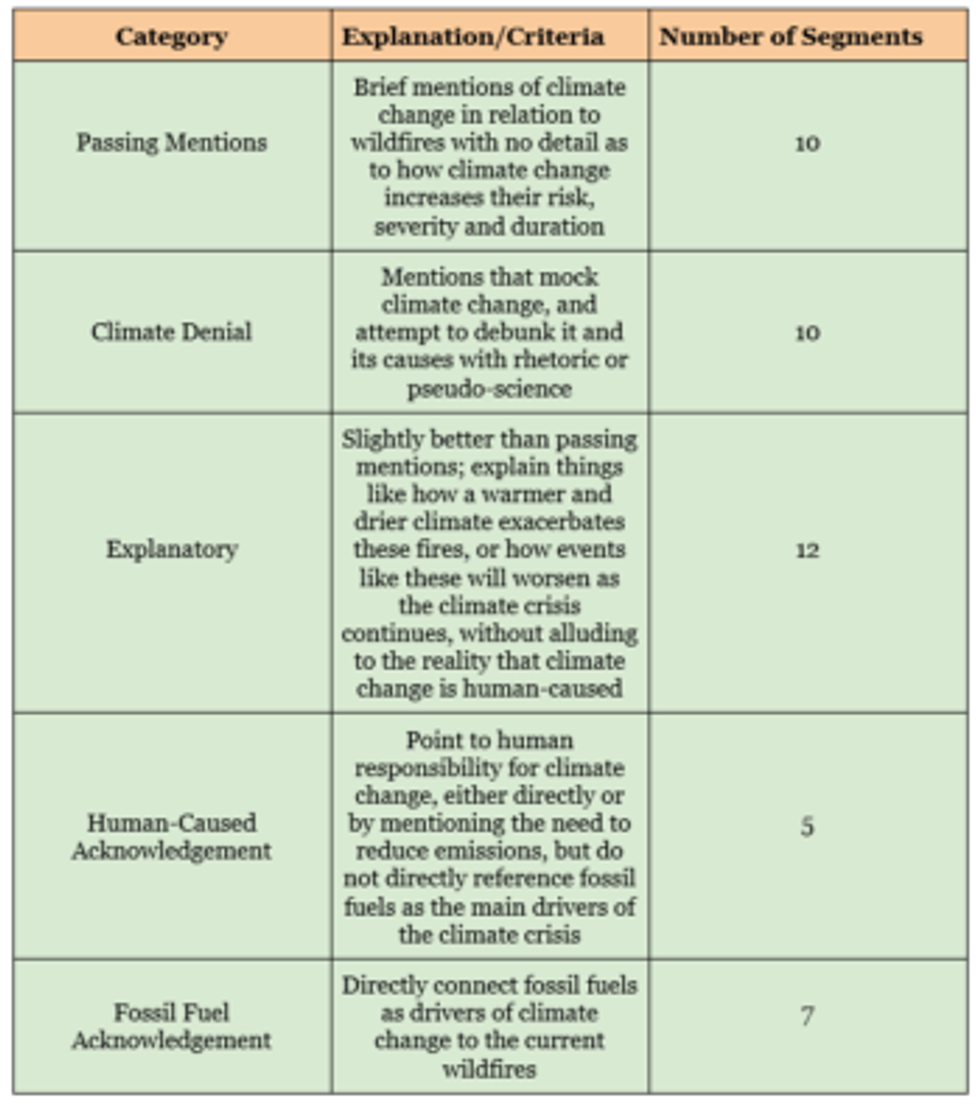
Searching the Nexis news database for transcripts from June 5–9 on ABC, CBS, NBC, CNN, Fox, and MSNBC, FAIR found 115 news segments that mentioned the forest fires and their effect on air quality. Of those 115 segments, only 44 (38%) mentioned climate change’s role.
(FAIR defined a “segment” as any portion of a news show that discussed the wildfire pollution. Brief top-of-show or pre-commercial mentions that previewed segments airing later in the show were counted as part of the segments they referred to. When shows included more than one segment covering wildfire pollution, each was counted separately.)
Outlets varied widely in attention to the wildfire pollution issue: The broadcast outlets ranged from 20 segments at CBS to 10 at ABC and three at NBC. Among cable outlets, CNN had 55 segments, Fox had 23, and MSNBC four. (Note: Nexis relies on outlets to submit content, and submission policies vary among outlets.)
Only seven wildfire pollution segments (6% of all 115 segments) named or even alluded to fossil fuels—by far the largest contributor to climate change—in a way that did not engage in climate denial.
At MSNBC, it was mentioned in three out of four segments (75%), and in two out of three segments (67%) on NBC. Climate change was mentioned in 48% of segments at Fox, 40% at ABC and CNN, and 10% at CBS.
Even when outlets mentioned climate change, the detail and usefulness of the information varied greatly.
Only seven wildfire pollution segments (6% of all 115 segments) named or even alluded to fossil fuels—by far the largest contributor to climate change—in a way that did not engage in climate denial. By disconnecting climate change causes and consequences, media outlets shield the fossil fuel industry and the politicians who aid and abet them from accountability, and avoid discussions about urgently needed action.
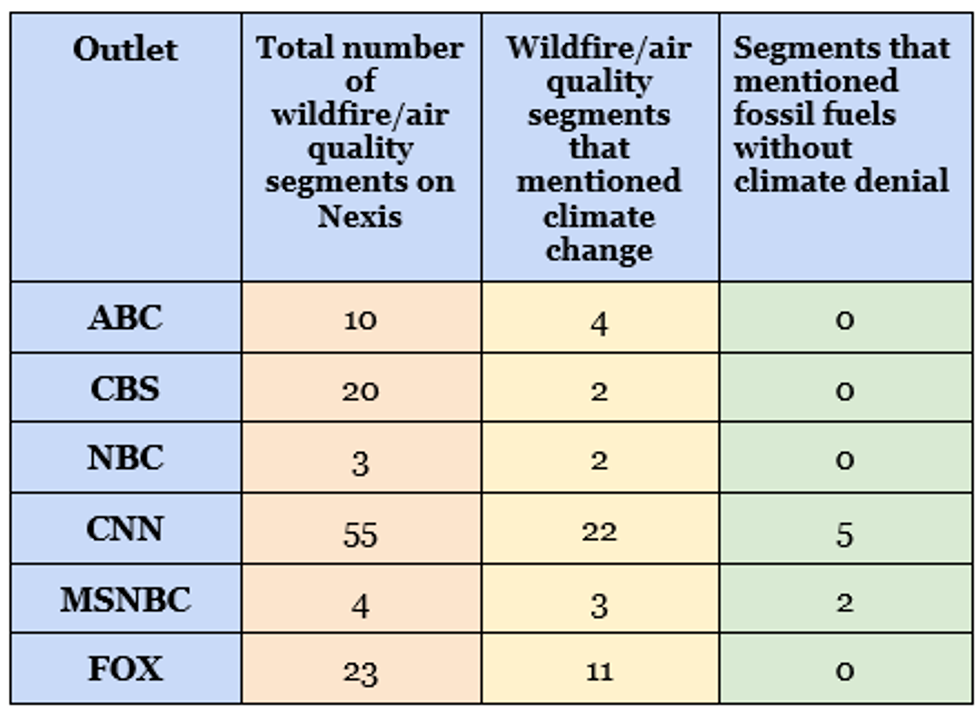
Of the 44 segments that mentioned climate change in relation to wildfire pollution, 10 did so only in passing, with no detail as to how, exactly, climate change increases the risk, severity, and duration of such fires.
For instance, CNN Tonight (6/6/23) referred to the air quality in New York City as a “climate crisis,” but went no further into discussing how the broader climate crisis is exacerbating events like these.
CNN’s Poppy Harlow (This Morning, 6/8/23) remarked on how “important it is that we focus on climate change and all that is happening,” but said nothing else to direct the audience’s focus in that direction.
Though a passing mention is better than no mention at all, tossing in the term “climate change” does very little to help audiences understand how climate disruption exacerbates events like these, or to explain the human causes of the climate crisis.
ABC also had two passing mentions, as when World News Tonight (6/7/23) aired a soundbite from White House press secretary Karine Jean-Pierre describing the smoke as “yet another alarming example of the ways in which the climate crisis is disturbing our lives and our communities.” Then the segment ended.
Though a passing mention is better than no mention at all, tossing in the term “climate change” does very little to help audiences understand how climate disruption exacerbates events like these, or to explain the human causes of the climate crisis. This silence deprives viewers of any conversation about potential climate solutions or mitigations, leaving them only with confusion and fear.
Ten segments in the study period engaged in outright climate change denial, either mocking or attempting to debunk climate change with pseudo-science. These segments were less helpful than not mentioning climate change at all, actively discouraging people from taking action to ameliorate the climate catastrophe.
CNN aired an interview with Mike Pence (CNN Live Event, 6/7/23), who claimed climate change isn’t happening “as dramatically as the radical environmentalists like to present,” and that the solution is “expanding American energy and natural gas.” He faced no pushback for his scientifically illiterate response.
But Fox led in climate disinformation, with nine denialist segments. Jesse Watters (6/7/23) offered a typical example:
A liberal in Canada goes camping, starts a forest fire, smokes out America, and they tell us to pay Elon Musk. But, is manmade global warming causing Canadian forest fires? Why don’t you open a history book, and you’ll learn about New England’s Dark Day. It happened in 1780, long before the Industrial Revolution. Dark clouds stretched from Maine to New Jersey, blotting out the sun…. That dark cloud in 1780 was from Canadian wildfires, 240 years ago. Can’t blame that on climate change. Everybody was riding horses.
And you might be surprised to find out, over the last 100 years, there have been less wildfires, not more. The Wall Street Journal says in the early 1900s, about 4% of land worldwide burned every year. By 2021, that was down to 2.5%. So, instead of obsessing over climate change, they should take a look at forest management and making sure Canadian campers listen to Smokey the Bear.
The Wall Street Journal op-ed (10/27/21) Watters cited is by a climate denialist, and misleadingly only takes into account the metric of land burned, ignoring factors like the severity and frequency of more recent fires, and the likelihood of land burned trending back upward (WWF International, 2020). The World Resources Institute (8/17/22) found that forest fires burned nearly twice as much tree coverage globally in 2021 than they did in 2001.
Blaming fires solely on poor forest management despite clear links to climate change was a common tactic at Fox (The Five, 6/7/23; see Media Matters, 6/9/23). Laura Ingraham (Ingraham Angle, 6/9/23) argued that because forest fires are “so normal that Canada’s government website has a page… devoted to educating the public about them,” that concern over these out-of-control fires is “hysteria.”
In reality, Canada is having its worst-ever wildfire season (Bloomberg, 6/7/23). In early June, more than 200 wildfires burned across Canada, accompanied in some areas by record heat. More than half were out of control (Washington Post, 6/3/23).
If only centrist corporate outlets were as committed to offering climate crisis context as Fox is to promoting climate change denial.
Earlier in the week (6/7/23), Ingraham’s guest, Steve Milloy of the conservative, climate-denying Energy and Environment Legal Institute, claimed that “there’s no health risk” from wildfire smoke (not true), and that there are no public health emergencies in countries like India and China due to their low air quality. (Also a lie—air pollution was responsible for nearly 18% of deaths in India in 2019, and causes an estimated 2 million deaths in China per year.) He argued that wildfire smoke is “natural” and “not because of climate change.”
Fox also applied its typical red-scare tactics, saying climate concern is “about socialism” (Hannity, 6/7/23), and that “the climate crazies are trying to use a Canadian forest fire as yet another excuse to take your freedom, take your power and take your money” (Ingraham Angle, 6/7/23).
Meanwhile, Fox misled viewers that mainstream media coverage of the fires was rife with discussions about the climate crisis. On The Five (6/7/23), Greg Gutfeld complained: “So, already, the media is blaming climate change. ABC is connecting it to climate change. USA Today asked if the fires were actually caused by climate change.”
If only centrist corporate outlets were as committed to offering climate crisis context as Fox is to promoting climate change denial.
Twelve other segments that mentioned climate change offered slightly better than a passing mention, explaining things like how a warmer and drier climate exacerbates these fires, or how events like these will worsen as the climate crisis continues. But these segments did not allude to the reality that climate change is caused by people.
Some of these segments included the sparest of explanations, as when ABC’s Rob Marciano (World News Tonight, 6/7/23) briefly mentioned “climate change with the extra warmth” amplifying the fires, and potentially contributing to weather systems that kept the smoke hanging over the northeastern U.S.
Three mentions (The Lead, 6/8/23; Situation Room, 6/8/23; CNN Newsroom, 6/9/23) were of the same brief soundbite, from Daniel Westervelt, anti-pollution adviser to the U.S.. State Department, warning, “With increasing climate change and increasing warming, we can expect more and more of these kind of wildfires to continue.”
CNN climate correspondent Bill Weir (Erin Burnett Outfront, 6/7/23) offered perhaps the most thorough explanation of how the climate crisis worsens wildfires, demonstrating the connection to the melting ice in the Arctic:
The Arctic, the northern top of the planet, has been warming up four times faster than the rest of the planet. When I do those reports, I can almost hear the viewers’ eyes glazing over. Like, what do I care about what happens in the Arctic?
This is directly related to that. There was a heat anomaly in May over Canada, looked like a giant red blob of paint where they had temperatures in the high 90s, way sooner than is normal, that dries things out, one lightning strike sets that off like a tinderbox. And that’s why there’s over 100 fires burning in central Quebec.
And then the weather patterns connect us. Now, we’re breathing the results of a climate in crisis.
Weir went on to briefly mention the “cost of doing nothing”; however, he was referring entirely to the economic impact of people not being able to leave their homes on poor air quality days. While he thoroughly explained the connection between a warming planet and devastating wildfires, he did not elaborate on the human causes—nor the human solutions—to the climate crisis.
Five of the 44 segments that mentioned climate change did point to human responsibility for climate change, either directly or by mentioning the need to reduce emissions. But these segments did not reference fossil fuels, which are the main way humans are changing the climate and the major source of greenhouse gas emissions.
Thus Fox (Special Report, 6/7/23) aired a soundbite of New York City Mayor Eric Adams saying, “We must continue to draw down emissions,” without remarking on Adams’ comment.
On CNN Newsroom (6/9/23), climate scientist Zeke Hausefather said briefly, “I hope it will serve as a wake-up call that we need to cut emissions and reduce the impacts of this going forward.”
The fossil fuel distinction is important, especially because the industry has spent billions to confuse the public on its environmental impact.
Other segments that described or alluded to the climate crisis as human-caused without mentioning fossil fuels included CNN‘s Lead (6/7/23), MSNBC‘s All In (6/7/23) and CNN This Morning (6/8/23).
The fossil fuel distinction is important, especially because the industry has spent billions to confuse the public on its environmental impact. In the early 2000s, a PR firm for BP coined the term “carbon footprint,” diverting the blame of the climate crisis onto individual citizens and away from these greedy corporations. We can sip our iced coffee out of paper straws all we want, but unless the world’s economies immediately and drastically cut fossil fuels, the planet is headed to far exceed the 1.5°C rise scientists have warned about (Amnesty International, 3/20/23).
All of the segments that took the crucial next step of connecting the wildfires to fossil fuel emissions—seven in all—appeared on cable news networks.
On MSNBC’s The Reidout (6/7/23), host Joy Reid called out the world’s “unrelenting dependence on oil,” warning that
we will suffer the consequences, as the planet we live on and that our children and grandchildren will inherit becomes even more dangerous to live in.
Environmentalist Bill McKibben appeared on CNN Newsroom (6/8/23) to link the poor quality of New York’s air to the dire situations facing people across the world as a result of fossil fuel–driven pollution:
It’s terrible in New York right now, and we shouldn’t make light of it. But it’s precisely how most people across much of the world live every single day. That’s why nine million people a year—one death in five on this planet—comes from the effects of breathing fossil fuel combustion.
Beyond fear-mongering, McKibbon offered a solution:
The good news is we have an easy fix. We now live on a planet where the cheapest way to produce power is to point a sheet of glass at the sun. We should be in an all-out effort to move to renewable energy and to save energy so we don’t have to use as much of it.
In another segment that day, CNN Newsroom (6/8/23) discussed the American Lung Association’s report that stated 90,000 lives would be saved if the U.S. could electrify its vehicle fleet by 2050. “That doesn’t account for the prevalence of wildfire smoke now more common on a planet heated up by fossil fuels,” CNN chief climate correspondent Weir reported.
This data was mentioned in two other CNN segments (Anderson Cooper 360 Degrees, 6/7/23; CNN Newsroom, 6/8/23).
Elsewhere, Weir (This Morning, 6/8/23) attributed India’s poor air quality to coal burning, unchecked motor regulations, and the burning of agricultural fields.
And on his MSNBC show (Alex Wagner Tonight, 6/7/23), Alex Wagner called out Republican efforts to defend a household source of fossil fuel emissions even as the wildfires demonstrated the dire effects of unchecked climate disruption:
House Republicans had an agenda item on the topic of air quality, but it had nothing to do with combating climate change. They were taking a vote on protecting gas stoves.
When the best mainstream TV news outlets have to offer during an environmental and public health crisis is seven mentions of the key cause that needs to be urgently addressed, there’s little for the public to gain.
In a recent segment on Democracy Now! (6/30/23), Genevieve Guenther, author and director of End Climate Silence, emphasized the importance of these connections, advocating for all reporters to be educated on the climate crisis, regardless of the beat they cover. “You need to connect the dots from what you’re reporting to the climate crisis, and then through the climate crisis to the use of fossil fuels that is heating up our planet,” she said.
It is necessary to go beyond cursory headlines to name what is responsible, not to further fear and complicity, but because doing so allows us to offer solutions. We live in a time where, despite Big Oil’s tireless efforts to confuse the public, renewable energy is cheaper—and by many measures, more efficient—than fossil fuels (ASAP Science, 9/9/20).
A 2022 study shows that news framing that centers credible responses to climate problems were associated with confidence in one’s ability to make changes and more support for collective action (Environmental Communication, 11/11/22). If apocalyptic air enveloping major news headquarters hundreds of miles away from record-setting fires doesn’t prompt these necessary conversations, what will?
CBS CEO Les Moonves, who in December (Intercept, 12/10/15; FAIR.org, 1/23/16) said of GOP presidential candidate Donald Trump, "Go Donald! Keep getting out there!" because "the more they spend, the better it is for us," had more to say about the business of politics at another investors' conference, as The Intercept's Lee Fang (2/29/16) reported.
Speaking to the Morgan Stanley Technology, Media and Telecom Conference at San Francisco's Park Hotel, Moonves observed that "in local [broadcasting], the No. 1 word is 'political' [advertising]," and continued:
Man, who would have expected the ride we're all having right now? This is pretty amazing.... Who would have thought that this circus would come to town?
But, you know--it may not be good for America, but it's damn good for CBS, that's all I got to say.
So what can I say? It's--you know, the money's rolling in, and this is fun.
Moonves noted that the election has been a boost for ratings--"We had a debate a couple of weeks ago, it was 14 million people on a Saturday night. You know, it's amazing, that's all I can say"--but, more importantly, the spending by candidates on political advertising goes directly into CBS's coffers:
Yeah, [Trump's] getting a lot of free media, but all that's happening out there, there's a lot of money in the marketplace, there's a lot of money in the marketplace....
They're not even talking about issues. They're throwing bombs at each other, and I think the advertising reflects that. Most of the ads are not about issues; they're sort of like the debates. They're saying, he did this or he did that. Doesn't say what I stand for.
I've never seen anything like this, and this is going to be a very good year for us. Sorry. It's a terrible thing to say, but bring it on, Donald, go ahead, keep going.
Moonves did not want his cheering on Trump--whose campaign promotes xenophobia, war crimes and threats of violence against various groups, including journalists--to be mistaken for an endorsement:
I said that at another investor conference, and the next day some blog put out, "Moonves Supporting Trump Wholeheartedly." I said, no no no, I'm not taking any side. I'm just saying, for us, economically, Donald's place in this election is a good thing.
Moonves chuckles like a Bond villain as he tells his wealthy audience how his company is profiting at the expense of the nation. It's not actually all that funny, though, for a television executive to celebrate how a campaign that's hurting the United States is driving his network's profit bonanza. Among CBS's chief assets are the 16 TV broadcasting licenses it holds, along with its 117 radio station licenses. These licenses each include a public interest clause:
The licensee shall, during the term of this license, render such broadcasting service as will serve the public interest, convenience, or necessity to the full extent of the privileges herein conferred.
When a broadcaster cheers on the electoral "circus" ("bring it on, Donald, go ahead, keep going") that he acknowledges "may not be good for America, but it's damn good for CBS," can he really be said to be "render[ing] such broadcasting service as will serve the public interest"? Or when he brags about how much money he's making from running ads that are "not even talking about issues...sort of like the debates"--you know, the ones that his corporation helps put on?
Over decades, the FCC has progressively lowered the standard broadcasters have to meet to fulfill their public interest requirements. But as long as there is any kind of standard, surely "the money's rolling in, and this is fun" doesn't meet it.
Hear Les Moonves' remarks, courtesy of The Intercept: