

SUBSCRIBE TO OUR FREE NEWSLETTER
Daily news & progressive opinion—funded by the people, not the corporations—delivered straight to your inbox.
5
#000000
#FFFFFF
To donate by check, phone, or other method, see our More Ways to Give page.
Daily news & progressive opinion—funded by the people, not the corporations—delivered straight to your inbox.

"These are not abstract numbers," wrote National Education Association president Becky Pringle. "These are real children who show up to school eager to learn but are instead distracted by hunger."
The leader of the largest teachers union in the United States is sounding the alarm over the impact that President Donald Trump's newly enacted budget law will have on young students, specifically warning that massive cuts to federal nutrition assistance will intensify the nation's child hunger crisis.
Becky Pringle, president of the National Education Association (NEA)—which represents millions of educators across the U.S.—wrote for Time magazine earlier this week that "as families across America prepare for the new school year, millions of children face the threat of returning to classrooms without access to school meals" under the budget measure that Trump signed into law last month after it cleared the Republican-controlled Congress.
Estimates indicate that more than 18 million children nationwide could lose access to free school meals due to the law's unprecedented cuts to the Supplemental Nutrition Assistance Program (SNAP) and Medicaid, which are used to determine eligibility for free meals in most U.S. states.
The Trump-GOP budget law imposes more strict work-reporting requirements on SNAP recipients and expands the mandates to adults between the ages of 55 and 64 and parents with children aged 14 and older. The Congressional Budget Office said earlier this week that the more aggressive work requirements would kick millions of adults off SNAP over the next decade—with cascading effects for children and other family members who rely on the program.
"Educators see this pain every day, and that's why they go above and beyond—buying classroom snacks with their own money—to support their students."
Pringle wrote in her Time op-ed that "our children can't learn if they are hungry," adding that as a middle school science teacher she has seen first-hand "the pain that hunger creates."
"Educators see this pain every day, and that's why they go above and beyond—buying classroom snacks with their own money—to support their students," she wrote.
The NEA president warned that cuts from the Trump-GOP law "will hit hardest in places where families are already struggling the most, especially in rural and Southern states where school nutrition programs are a lifeline to many."
"In Texas, 3.4 million kids, nearly two-thirds of students, are eligible for free and reduced lunch," Pringle wrote. "In Mississippi, 439,000 kids, 99.7% of the student population, were eligible for free and reduced-cost lunch during the 2022-23 school year."
"These are not abstract numbers," she added. "These are real children who show up to school eager to learn but are instead distracted by hunger and uncertainty about when they will eat again. America's kids deserve better.
Pringle's op-ed came as school leaders, advocates, and lawmakers across the country braced for the impacts of Trump's budget law.
"We're going to see cuts to programs such as SNAP and Medicaid, resulting in domino effects for the children we serve," Rep. LaMonica McIver (D-N.J.) said during a recent gathering of lawmakers and experts. "For many of our communities, these policies mean life or death."
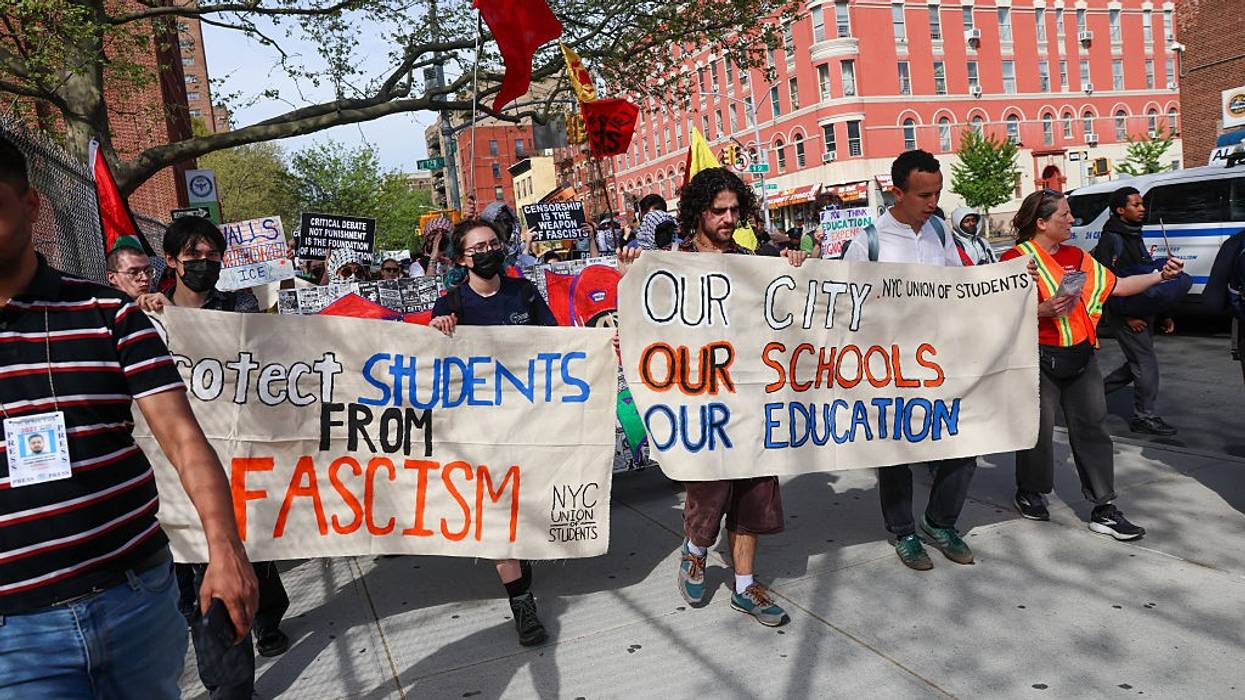
"This administration deserves no credit for just barely averting a crisis they themselves set in motion," said one Democratic senator.
While welcoming reporting that the Trump administration will release more than $5 billion in federal funding for schools that it has been withholding for nearly a month, U.S. educators and others said Friday that the funds should never have been held up in the first place and warned that the attempt to do so was just one part of an ongoing campaign to undermine public education.
The Trump administration placed nearly $7 billion in federal education funding for K-12 public schools under review last month, then released $1.3 billion of it last week amid legal action and widespread backlash. An administration official speaking on condition of anonymity told The Washington Post that all reviews of remaining funding are now over.
"There is no good reason for the chaos and stress this president has inflicted on students, teachers, and parents across America for the last month, and it shouldn't take widespread blowback for this administration to do its job and simply get the funding out the door that Congress has delivered to help students," U.S. Senate Appropriations Committee Vice Chair Patty Murray (D-Wash.) said Friday.
"This administration deserves no credit for just barely averting a crisis they themselves set in motion," Murray added. "You don't thank a burglar for returning your cash after you've spent a month figuring out if you'd have to sell your house to make up the difference."
🚨After unlawfully withholding billions in education funding for schools, the Trump Admin. has reversed course.This is a massive victory for students, educators, & families who depend on these essential resources.And it's a testament to public pressure & relentless organizing.
[image or embed]
— Congresswoman Ayanna Pressley (@pressley.house.gov) July 25, 2025 at 1:42 PM
Skye Perryman, president and CEO of Democracy Forward—which represents plaintiffs in a lawsuit challenging the Trump administration's funding freeze—said Friday that "if these reports are true, this is a major victory for public education and the communities it serves."
"This news following our legal challenge is a direct result of collective action by educators, families, and advocates across the country," Perryman asserted. "These funds are critical to keeping teachers in classrooms, supporting students in vulnerable conditions, and ensuring schools can offer the programs and services that every child deserves."
"While this development shows that legal and public pressure can make a difference, school districts, parents, and educators should not have to take the administration to court to secure funds for their students," she added. "Our promise to the people remains: We will go to court to protect the rights and well-being of all people living in America."
Democratic Arizona Attorney General Kris Mayes—a plaintiff in a separate lawsuit challenging the withholding—attributed the administration's backpedaling to litigatory pressure, arguing that the funding "should never have been withheld in the first place."
They released the 7 B IN SCHOOL FUNDS!! This is a huge win. It means fighting back matters. Fighting for what kids & communities need is always the right thing to do! www.washingtonpost.com/education/20...
[image or embed]
— Randi Weingarten (@rweingarten.bsky.social) July 25, 2025 at 11:46 AM
Becky Pringle, president of the National Education Association—the largest U.S. labor union—said in a statement: "Playing games with students' futures has real-world consequences. School districts in every state have been scrambling to figure out how they will continue to meet student needs without this vital federal funding, and many students in parts of the country have already headed back to school. These reckless funding delays have undermined planning, staffing, and support services at a time when schools should be focused on preparing students for success."
"Sadly, this is part of a broader pattern by this administration of undermining public education—starving it of resources, sowing distrust, and pushing privatization at the expense of the nation's most vulnerable students," Pringle added. "And they are doing this at the same time Congress has passed a budget bill that will devastate our students, schools, and communities by slashing funds meant for public education, healthcare, and keeping students from their school meals—all to finance massive tax breaks for billionaires."
While expanding support for private education, the One Big Beautiful Bill Act signed by President Donald Trump earlier this month weakens public school programs including before- and after-school initiatives and services for English language learners.
"Sadly, this is part of a broader pattern by this administration of undermining public education."
Trump also signed an executive order in March directing Education Secretary Linda McMahon to begin the process of shutting down the Department of Education—a longtime goal of Project 2025, the Heritage Foundation-led roadmap for a far-right takeover and gutting of the federal government closely linked to Trump, despite his unconvincing efforts to distance himself from the highly controversial and unpopular plan.
Earlier this week, the nonpartisan Government Accountability Office determined that the U.S. Health and Human Services Department illegally impounded crucial funds from the Head Start program, which provides comprehensive early childhood education, health, nutrition, and other services to low-income families.
"Instead of spending the last many weeks figuring out how to improve after-school options and get our kids' reading and math scores up, because of President Trump, communities across the country have been forced to spend their time cutting back on tutoring options and sorting out how many teachers they will have to lay off," Murray noted.
"It's time for President Trump, Secretary McMahon, and [Office of Management and Budget Director] Russ Vought to stop playing games with students' futures and families' livelihoods—and end their illegal assault on our students and their schools," the senator added.

With the ADL appealing to the NEA’s nine-member executive committee to reconsider the motion, union President Becky Pringle walks a tightrope as the committee studies whether to say yay or nay to the majority of delegates rejecting the ADL.
National Education Association teachers in support of Palestinian rights are celebrating their breakthrough success at the NEA’s Representative Assembly in Portland this summer. After years of organizing with both one-on-one conversations and state delegation talks, NEA delegates voted to pass a Drop the Anti-Defamation League motion that rejects the ADL as a curriculum and professional development partner.
“We are witnessing a sea change in people’s understanding of who the Palestinians are and what colonialism has done to them,“ said Merrie Najimy, former president of the Massachusetts Teachers Association (MTA) and Founder of MTA Rank and File for Palestine. “In the past, too many people didn’t see the humanity of Palestinians because Israeli propaganda erased and dehumanized them. We call that anti-Palestinian racism.”
While the Council on American-Islamic Relations (CAIR), Jewish Voice for Peace (JVP), and CODEPINK applauded the motion, the Anti-Defamation League blamed a “pro-Hamas” cabal inside the NEA for rejecting an organization that smears peace activists and slams Muslims and anti-Zionist Jews.
The “pro-Hamas” accusation echoes the verbiage of Project Esther, the Heritage Foundation’s MAGA blueprint for crushing pro-Palestinian voices amid Israel’s genocide in Gaza. The product of Christian nationalists, Project Esther has earned the ire of the Academic Council of Jewish Voice for Peace for blasting anti-genocide protesters as members of a fictitious U.S. Hamas Support Network.
“Allowing the ADL to determine what constitutes antisemitism would be like allowing the fossil fuel industry to determine what constitutes climate change.”
In response to the motion’s passage at the NEA Representative Assembly (RA), an enraged ADL sent out a mass email urging its supporters to tell the NEA executive committee to reverse the NEA delegates’ recommendation that teachers not “use, endorse, or publicize” ADL materials, nor “participate in ADL programs or publicize ADL professional development offerings.”
A national Drop the ADL From Schools campaign has long criticized the ADL’s materials for whitewashing the ethnic cleansing of Palestine, where Zionist militias destroyed over 500 Palestinian villages in the Nakba (Arabic word for catastrophe) of 1947-48 when the State of Israel was declared.
The ADL’s mass email made no mention, however, of Palestine, focusing instead on the urgency of providing resources to fight antisemitism. “Don’t let the radical anti-Israel advocates within the NEA marginalize Jewish voices,” read the ADL email.
Whereas Merriam-Webster defines antisemitism as “hostility toward or discrimination against Jews as a religious, ethnic, or racial group” and makes no distinction between the antisemitism that fueled the Holocaust and today’s white supremacist chants “Jews will not replace us,” the ADL’s Echoes and Reflections curriculum, co-developed with the Shoah Foundation and Yad Vashem, includes a unit that defines contemporary antisemitism as “anti-Zionism and opposition to the State of Israel.”
The unit introduces a pro-Israel vocabulary framework—delegitimization, demonization, and double-standards–a 3D test to evaluate whether an incident is antisemitic. Under this rubric, the campus slogan “From the river to the sea, Palestine will be free” is noted 600 times in the ADL’s 2024 audit of antisemitic incidents, according to the magazine Jewish Currents, which conducted a “line by line” examination of the audit. Even the ADL admits that 58% of the incidents cited in its 2024 audit were related to criticism of Israel.
Still, teachers and students who access ADL curriculum—No Place for Hate, Echoes and Reflections, A World of Difference—are encouraged, through links back to the ADL website, to complete a complaint form accusing others of involvement in what the ADL defines as antisemitic incidents.
On the floor of the Representative Assembly, delegate Stephen Siegel of Oregon reminded the delegates that Wikipedia editors determined the ADL is not a reliable source on antisemitism. “Allowing the ADL to determine what constitutes antisemitism would be like allowing the fossil fuel industry to determine what constitutes climate change,” said Siegel.
Backers of the NEA motion object to the ADL’s Zionist framing and stereotyping of all Jews as supporters of Israel.
“The ADL and other Zionist organizations continually try to equate criticism of Israel with antisemitism,” said Judy Greenspan, the Oakland Education Association NEA delegate who introduced the motion that emerged from the Educators for Palestine Caucus inside the 3-million-member union. “The NEA will no longer be bullied into supporting this genocidal war,” added Greenspan, a public school teacher and member of Jewish Voice for Peace who was among the 6,000 delegates at the NEA Representative Assembly.
In the days following the RA, photos of delegates who championed the motion were posted on social media, leading to “doxing, harassment, and hate emails,” according to Greenspan.
In contrast, Jason Goldfisher, an NEA Jewish Affairs Caucus delegate, complained on his Facebook page that his Jewish friends did not feel safe following the vote at the NEA convention. “There were tears. Panic attacks. Silent breakdowns,” wrote Goldfisher, who noted the presence of keffiyehs in the assembly room.
“Yes, many of us wore keffiyehs throughout the NEA Representative Assembly,” said Greenspan, “because we wanted to visibly show our support for the Palestinian people who are being brutally murdered by the U.S. and Israel in what can only be called a genocidal holocaust. One of the continuing mantras of the Zionists is that our anti-Zionist activism makes them feel ‘unsafe.’ It is such a false narrative because looking at what is happening in the world objectively, it is the Palestinians who are being brutally massacred by the Israeli government with U.S. bombs and military equipment.”
On the floor of the assembly, a delegate from the “great state of New Jersey” skipped over Israel’s concentration camp in Gaza to “rise in opposition” to the NEA motion. “The ADL defends members of the Jewish community against hate, discrimination, and antisemitism. That support extends to our students and fellow educators who use those resources regularly,” said the delegate whose name was “unclear” in a transcript of the debate.
The ADL, however, did not defend New England teachers who developed a counternarrative to the “land without a people for a people without a land" mythology. Former MTA President Najimy said the ADL launched a smear campaign against the MTA to accuse the union of antisemitism following the MTA’s development of resources on Palestinian history and indigeneity. “So why would we partner with an organization that is actively trying to discredit the teachers’ union?” said Najimy.
In 2024, when the federal census added a new category—Middle East-North Africa—the NEA bestowed formal recognition on a MENA Caucus, which Najimy said helped delegates understand that the union’s commitment to antiracism must include support for equal rights for Palestinians. Israel’s live-streamed genocide also brought new member delegates to the NEA RA, making passage of the motion possible due to widespread outrage, according to Najimy.
The NEA motion rejecting the ADL followed a similar motion passed overwhelmingly last spring by the governing body of United Teachers of Los Angeles (UTLA), which represents 35,000 educators in the country’s second-largest teachers union, right behind New York City. The UTLA motion asked Los Angeles Unified School Board members, administrators, and educators not to adopt or teach ADL curriculum or partner with the ADL for professional development because “the organization conflates anti-Zionism with antisemitism to suppress debate.”
In its rationale, the UTLA motion referenced the ADL’s history of surveilling activists (UAW, NAACP, ACLU), suing school districts, and sending a threatening letter to college presidents demanding investigations of the nonviolent Students for Justice in Palestine.
With the ADL appealing to the NEA’s nine-member executive committee to reconsider the motion, union President Becky Pringle walks a tightrope as the committee studies whether to say yay or nay to the majority of delegates rejecting the ADL.
Pringle assured the public that the NEA is committed to combating “all forms of hate and discrimination, including antisemitism and anti-Palestinian bigotry.” In a public statement on the actions taken at this summer’s NEA’s Representative Assembly, Pringle reminded critics that the NEA hosted a panel on antisemitism, honored a Holocaust survivor, and voted to honor Jewish American Heritage Month.
The NEA executive committee will forward its recommendation on the motion to the NEA board, which will then circle back with the Representative Assembly for a final vote, according to Najimy.
In solidarity with Educators for Palestine, CODEPINK urged its supporters to reach out to the NEA executive committee, and Jewish Voice for Peace asked its members to weigh in with a one-click tweet to NEA leadership:
Thank you @NEAToday for voting to cut ties with the ADL. The ADL pretends it’s a civil rights group, but really, it’s a pro-Israel lobbying group that smears Palestinian rights, and it should never be trusted as an educational resource. I urge all educators to #DropTheADL.
"The more the president stacks his administration with eccentric billionaires, the further the system gets rigged against working people, seniors, and students," argued one critic.
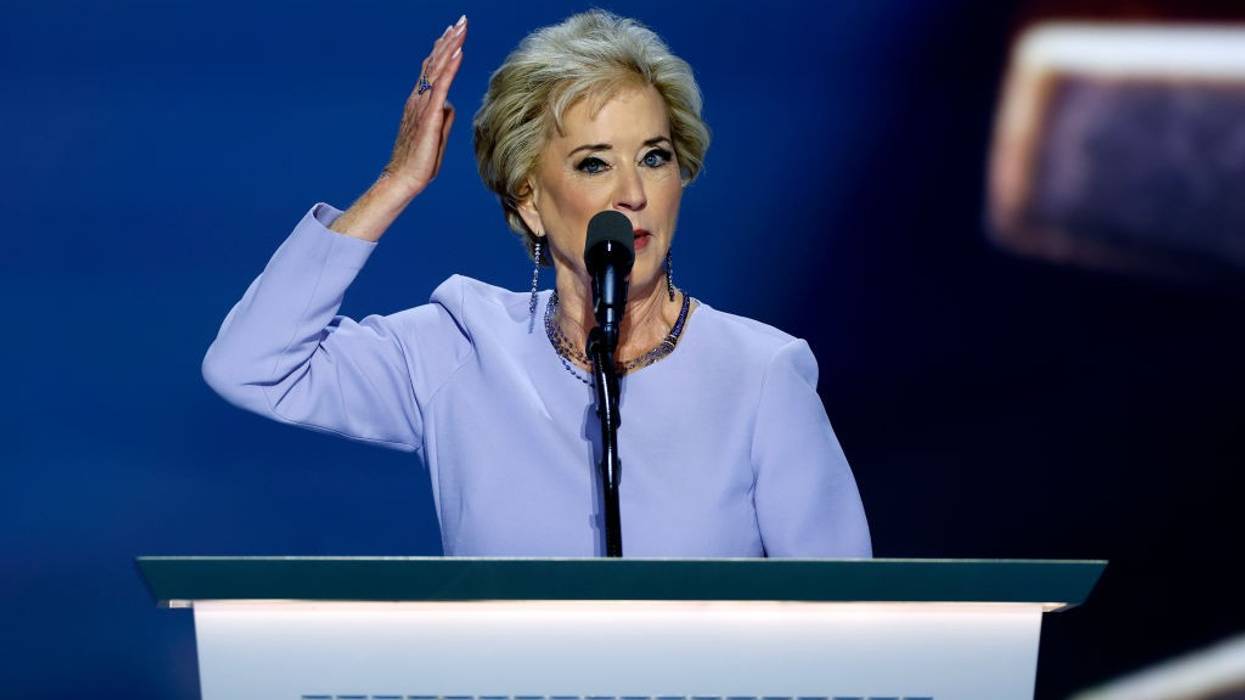
Continuing what one watchdog called "their pattern of rubber-stamping deeply flawed and unqualified" Cabinet nominees of President Donald Trump, Senate Republicans on Monday confirmed sports entertainment billionaire and prolific GOP fundraiser Linda McMahon to head the U.S. Department of Education—an agency the president has repeatedly vowed to abolish.
Senators confirmed McMahon in a 51-45 vote. The loyal Trump ally and top fundraiser previously led the Small Business Administration during the president's first term. However, other than serving one year on the Connecticut Board of Education and as a trustee for Sacred Heart University, she has little experience in the field.
Republicans—many of whom share Trump's desire to end the Department of Education—didn't seem to care, with Sen. Chuck Grassley of Iowa asserting that "education is still mostly a state and local responsibility."
BREAKING: Senate Republicans just confirmed Linda McMahon as Education Secretary—another unqualified billionaire who doesn't understand the Department she's tasked with leading and who is ready to grab the hatchet and help Trump destroy the Department of Education altogether.
— Senator Patty Murray (@murray.senate.gov) March 3, 2025 at 3:29 PM
McMahon gained a more dubious reputation for what one campaigner called her "documented history of enabling sexual abuse of children and sweeping sexual violence under the rug" during her tenure as World Wrestling Entertainment CEO.
The 76-year-old finds herself in the position of being simultaneously tasked with dismantling the DOE and ramping up attacks on diversity, equity, and inclusion programs; "woke" education; transgender students; and other right-wing bugaboos. She is also expected to promote expanded voucher programs, which supporters call "school choice."
Randi Weingarten, president of the American Federation of Teachers—which is leading a "Protect Our Kids" nationwide day of action Tuesday—said in a statement that "we know we will disagree with Secretary McMahon on a host of issues, including her stance on using public funds for private school vouchers."
"We're deeply concerned that her boss, Donald Trump, wants her to take a wrecking ball to the Department of Education and this nation's public schools," Weingarten added. "We want to work with her on strengthening public schools and ramping up high school career and technical education and workforce development efforts across the nation. We ask that she respect the hardworking and amazing educators of this country who are helping young people every day."
National Education Association president Becky Pringle said in a
statement that "every student—no matter where they live, how much their family earns, or the color of their skin—deserves the opportunity, resources, and support they need to grow into their full brilliance."
"Linda McMahon has pledged to dismantle public education and take away resources students need by hollowing out the Department of Education, destroying programs that support students with disabilities, making higher education less accessible, and gutting civil rights protections," Pringle continued.
"While educators and parents would hope McMahon will reflect upon the enormous responsibility she has to our nation's students, sadly there is no evidence to believe she will use her position to focus on strengthening public schools so every student can thrive," she added.
Tony Carrk, the executive director of the watchdog Accountable.US, argued that "every senator who confirmed McMahon is now complicit in the Trump-Project 2025 scheme to abolish the Education Department and jeopardize billions in federal funding needed to strengthen public schools and support special education programs."
"The one-two gut punch of the administration's plans to starve states,
especially conservative ones, of critical federal Medicaid and education money to pay for another wasteful tax break for billionaires like McMahon will leave millions of Americans behind for decades to come," Carrk added. "The more the president stacks his administration with eccentric billionaires, the further the system gets rigged against working people, seniors, and students."

"The bill threatens a system of checks and balances that is crucial to ensuring our government serves the people—not the president's personal goals and interests."
More than 160 civil society groups on Wednesday urged U.S. congressional leaders to vote against proposed legislation that would "cut critical funding to hundreds of communities in 32 states across the country for programs that American communities depend on," if their officials refuse to cooperate with the Trump administration's mass deportation and detention program.
The groups—including the ACLU, American Federation of Teachers, League of Women Voters, MoveOn, NAACP, National Education Association (NEA), Planned Parenthood, Service Employees International Union, and others—are united in opposition to H.R. 32, which would withhold federal funding from municipalities that don't help with immigration enforcement.
The bill's Republican sponsors call it the "No Bailout for Sanctuary Cities Act." The rights groups have dubbed it the "Defund Our Communities Act."
"Congress should not pass legislation handing the Trump administration vast and vaguely worded authority it may use to further intimidate, coerce, and inflict chaos on schools, hospitals, local police, and other institutions that our communities rely on," the groups wrote in a letter to House Speaker Mike Johnson (R-La.) and House Minority Leader Hakeem Jeffries (D-N.Y.).
"Nor should Congress, through this legislation, concede its 'power of the purse'—a vital aspect of our constitutional balance of powers that is perhaps more important than ever," the groups added.
This bill would blackmail sanctuary cities and states into carrying out Trump's mass deportations or risk losing funding for schools, hospitals, and housing. Tell your representatives to vote NO on the Defund Our Communities Act.
[image or embed]
— ACLU (@aclu.org) February 19, 2025 at 1:49 PM
The letter continues:
H.R. 32 would allow the administration to strip a state or local government of federal funds it "intends to use for the benefit" of undocumented immigrants. While couched in terms of immigration, we fear the actual result of this bill would be a funding cut off across the board, putting critical services to all our community members at risk. As you well know, state and local agencies do not generally segregate their funding allocations for citizens versus noncitizens, let alone noncitizens without legal status versus all others...
The Trump administration could weaponize H.R. 32 to freeze vast amounts of federal funding to hundreds of cities and dozens of states—simply because state and local agencies choose or are legally obligated not to fully participate in President [Donald] Trump's unprecedented mass deportation drive, or because they lack the resources to do so and are unable to meet the Trump administration's latest demands. Congress should not put the vast array of services that your constituents rely on at the whim and mercy of the Trump administration.
"This bill would undermine our constitutional balance of powers in two ways: escalating federal intimidation of state and local governments; and undermining Congress' power of the purse," the letter's signers argued. "In both cases, the bill threatens a system of checks and balances that is crucial to ensuring our government serves the people—not the president's personal goals and interests."
Deirdre Schifeling, the ACLU's chief political and advocacy officer, said in a statement Wednesday that "the 'Defund Our Communities Act' is a gross violation of the constitutional balance of powers that our democracy depends on."
"Congress should not hand the Trump administration the authority to threaten, intimidate, and coerce local governments across the country—doing so would set a dangerous precedent," Schifeling added.
NEA president Becky Pringle said that "most of us believe every student deserves the opportunity, resources, and support to reach their full potential no matter where they live, the color of their skin, or place of birth."
"As educators, we have accepted the sacred responsibility to protect students—regardless of their immigration status—and to protect families, schools, and communities," she continued. "The 'Defund Our Communities Act' would trample on these basic principles and, devastatingly, have a lasting, harmful effect on our most vulnerable students by taking away critical funding for school breakfast, lunch programs, and other essential services."
"All across America," Pringle added, "as educators encounter students terrified by threats of mass deportation, we will continue to protect students from the reckless agenda and actions from politicians who want to play dangerous games with the lives of our students."
The groups' letter comes as local officials, school districts, healthcare professionals, religious institutions, and others across the United States vow to resist Trump's anti-immigrant agenda, including his order allowing Immigration and Customs Enforcement agents to arrest undocumented immigrants in or around "sensitive" locations like schools, places of worship, hospitals, and shelters.

"We are sending a powerful message to PPS, to the city of Portland, to the state, that Portland communities won't settle for less than great public schools for all," said one strike leader.
Demanding adequate investments in students, schools, and educators, 4,500 members of the Portland Association of Teachers went on strike Wednesday following months of failed negotiations with Oregon's largest school district.
"We are making history in Portland today," Portland Association of Teachers (PAT) president Angela Bonilla said at a Wednesday afternoon rally outside Roosevelt High School in North Portland's St. Johns neighborhood.
"We are sending a powerful message to PPS, to the city of Portland, to the state, that Portland communities won't settle for less than great public schools for all," said Bonilla, referring to the Portland Public Schools district.
The strike, which came after PAT rejected an eleventh-hour offer from PPS, resulted in the closure of all 81 of the district's public schools, sending some parents scrambling to find daycare—and in some cases, food—for their children, many of whom rely upon the district's breakfast and lunch services.
Oregon Food Bank president Susannah Morgan told KGW that "even when Portland Public Schools is closed, food is still available."
PAT wants PPS to hire more counselors, provide more planning time for teachers, increase support for special education students, reduce class sizes, and boost salaries and cost-of-living adjustments.
Bonilla noted teachers working as many as 20 unpaid hours a week to keep up with workloads, schools unable to sufficiently serve students' mental health needs, and the district's crowded classrooms—which sometimes don't have enough desks—as causes for the strike.
According to The Oregonian:
The strike, the first in district history, comes after a 10-month stalemate during which district and union leaders were unable to agree on even basic budget realities. How long the strike might last is unknown, though sources have pegged the likely duration as three days to two weeks. Teachers will lose their health insurance for December if they do not return to work by mid-November.
There is a yawning gap of at least $200 million between what teachers are seeking and what the district says it can afford without having to make deep and painful cuts in the years ahead, whether through layoffs, fewer instructional days, closed schools, or a combination of the three. The two sides will not meet again to negotiate until Friday, which means schools will close Thursday too. Friday was already a day off for students and had been scheduled as a teacher professional development day.
"Our kids don't deserve the bare minimum; they deserve everything," Bonilla said during an October 28 teachers' march across the Burnside Bridge. "And we will not stop fighting until we can give them the schools that they deserve."
The median salary for Portland teachers is $87,000, slightly above the area's median income. PPS offered educators a 4.5% raise for the first year of a prospective contract, with 3% increases in each subsequent year. Union members want an 8.5% raise in the first year and 5-6% annual increases.
PPS—and Oregon Gov. Tina Kotek, a Democrat endorsed by PAT—say the district can't afford the union's demands, citing, among other constraints, a state law limiting its power to increase school taxes.
Brittany Doris, a fifth grade teacher at Capitol Hill Elementary School in the city's Capitol Hill neighborhood, told Oregon Public Broadcasting that she has 34 students—and rats—in her classroom. Although Doris has a master's degree, she recently moved in with a roommate because she can't afford to rent on her own in the neighborhood.
"We have students with disabilities who aren't getting served because our team is so overworked," she explained. "We have too few adults for too many kids with some really big needs."
Becky Pringle, president of the National Education Association, flew in from Philadelphia to stand in solidarity with the striking Portland teachers, telling the crowd at Roosevelt High School Wednesday that she knows what PAT educators are fighting for, "because that's what all teachers are fighting for all across the country."
"No one goes into teaching to make a lot of money, but we do expect that we will be able to take care of our families," Pringle said.
A survey of 1,000 registered Oregon voters conducted by the New York-based Democratic pollster GBAO Strategies in mid-September
found that an overwhelming majority of respondents support teachers striking for more high-quality educators, smaller class sizes, and more student support services.
The strike has also drawn the support of elected officials, from the local to the federal level.
"Over the last three years, our educators have strived to maintain a quality, equitable education program for our children through the enormous difficulties of the Covid-19 pandemic," Oregon's two U.S. senators, Jeff Merkley and Ron Wyden—both Democrats—said in a joint statement. "They have been underpaid and overstressed, and we strongly affirm our support for Portland's educators exercising their right to strike for an equitable collective bargaining agreement."
"At the same time, we urge leadership from both the Portland Association of Teachers and Portland Public Schools to continue working in good faith toward an agreement that addresses a number of key issues, including class size, salaries and benefits, safety in the classroom, stronger equity programs, and expanded services for early learning and special education," the senators added.