SUBSCRIBE TO OUR FREE NEWSLETTER
Daily news & progressive opinion—funded by the people, not the corporations—delivered straight to your inbox.
5
#000000
#FFFFFF
To donate by check, phone, or other method, see our More Ways to Give page.
Daily news & progressive opinion—funded by the people, not the corporations—delivered straight to your inbox.
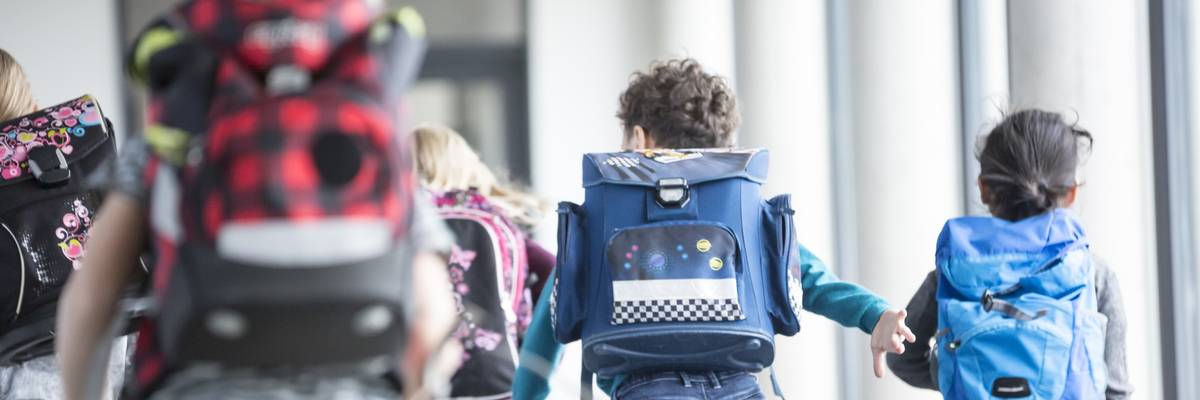
A group of children rushes through a school hallway.
"He's still illegally withholding $5.5 billion more from schools," said Sen. Bernie Sanders. "Congress passed it. The president signed it. Trump must release it."
Following widespread backlash and threats of legal action, the administration of U.S. President Donald Trump announced Friday that it will free up part of the $6.8 billion worth of education funding the president has withheld from states.
Earlier this week, 24 states sued the administration after it announced it would refuse to send the money—which had already been appropriated by Congress—to states just weeks before the start of the school year, citing "ongoing programmatic review" to ensure that none of it is used to fund diversity, equity, and inclusion (DEI) initiatives.
According to The New York Times:
The withheld money includes about 14% of all federal funding for elementary and secondary education across the country. It helps pay for free or low-cost after-school programs that give students a place to go while their parents work. It also covers training to improve the effectiveness of teachers and help for children learning English.
These programs provide a critical source of childcare that allow low-income families to work. Without them, organizations like the YMCA and the Boys and Girls Club of America have said they'd need to scale back their offerings.
A report issued last week by New America noted the disproportionate impact the cuts would have on low-income students:
Students from low-income backgrounds are especially at risk of losing education resources. Districts serving high-poverty student populations (those where over 25% of children live in poverty) will lose over five times as much funding per pupil as low-poverty school districts (those where fewer than 10% of children live in poverty). The 100 school districts facing the biggest cuts on a per-pupil basis have an average child poverty rate of 24.4%, much higher than the national average of 15.3%.
The administration held up the funding for weeks, causing a building panic among educators and families. A group of 10 Republican senators even sent a letter on Wednesday urging a top Trump official to let the money flow to their states.
Then, on Friday, the administration announced that it would allow $1.4 billion worth of funding to be released to states beginning Monday, though they would still reserve the right to choke it off once again should any of it be used to violate the president's executive orders.
The administration said it will continue to withhold the remaining $5.5 billion and provided no timeline for when it might be released.
According to Education Week, schools around the country had been "banking" on that money for teacher training, English-learner services, migrant and adult education programs, and academic enrichment being delivered on its expected due date of July 1.
David Schuler, executive director of AASA, an association of school superintendents, said that while he was happy to see some of the money released, withholding the rest was still putting severe strain on schools.
"Districts should not be in this impossible position where the administration is denying funds that had already been appropriated to our public schools, by Congress," Schuler said in a statement. "The remaining funds must be released immediately—America's children are counting on it."
Senate Appropriations Committee Vice Chair Patty Murray (D-Wash.) announced Friday that she would block the fast-tracking of a Trump appointee for the Department of Education until Trump releases all the funds.
"Just weeks out from the new school year, families, teachers, and school districts are suffering the consequences of President Trump's needless and illegal blockade of this funding," Murray said. "This administration won't so much as explain why the money is held up or when we can expect it to go out."
Sen. Bernie Sanders (I-Vt.), who joined Murray's efforts, welcomed the news that some of the funding had been unfrozen.
"Today we forced Trump to release $1.3 billion for more than 10,000 summer and after-school programs helping 1.4 million students," he said.
But, Sanders added, "it's not enough. He's still illegally withholding $5.5 billion more from schools. Congress passed it. The president signed it. Trump must release it."
Dear Common Dreams reader, It’s been nearly 30 years since I co-founded Common Dreams with my late wife, Lina Newhouser. We had the radical notion that journalism should serve the public good, not corporate profits. It was clear to us from the outset what it would take to build such a project. No paid advertisements. No corporate sponsors. No millionaire publisher telling us what to think or do. Many people said we wouldn't last a year, but we proved those doubters wrong. Together with a tremendous team of journalists and dedicated staff, we built an independent media outlet free from the constraints of profits and corporate control. Our mission has always been simple: To inform. To inspire. To ignite change for the common good. Building Common Dreams was not easy. Our survival was never guaranteed. When you take on the most powerful forces—Wall Street greed, fossil fuel industry destruction, Big Tech lobbyists, and uber-rich oligarchs who have spent billions upon billions rigging the economy and democracy in their favor—the only bulwark you have is supporters who believe in your work. But here’s the urgent message from me today. It's never been this bad out there. And it's never been this hard to keep us going. At the very moment Common Dreams is most needed, the threats we face are intensifying. We need your support now more than ever. We don't accept corporate advertising and never will. We don't have a paywall because we don't think people should be blocked from critical news based on their ability to pay. Everything we do is funded by the donations of readers like you. When everyone does the little they can afford, we are strong. But if that support retreats or dries up, so do we. Will you donate now to make sure Common Dreams not only survives but thrives? —Craig Brown, Co-founder |
Following widespread backlash and threats of legal action, the administration of U.S. President Donald Trump announced Friday that it will free up part of the $6.8 billion worth of education funding the president has withheld from states.
Earlier this week, 24 states sued the administration after it announced it would refuse to send the money—which had already been appropriated by Congress—to states just weeks before the start of the school year, citing "ongoing programmatic review" to ensure that none of it is used to fund diversity, equity, and inclusion (DEI) initiatives.
According to The New York Times:
The withheld money includes about 14% of all federal funding for elementary and secondary education across the country. It helps pay for free or low-cost after-school programs that give students a place to go while their parents work. It also covers training to improve the effectiveness of teachers and help for children learning English.
These programs provide a critical source of childcare that allow low-income families to work. Without them, organizations like the YMCA and the Boys and Girls Club of America have said they'd need to scale back their offerings.
A report issued last week by New America noted the disproportionate impact the cuts would have on low-income students:
Students from low-income backgrounds are especially at risk of losing education resources. Districts serving high-poverty student populations (those where over 25% of children live in poverty) will lose over five times as much funding per pupil as low-poverty school districts (those where fewer than 10% of children live in poverty). The 100 school districts facing the biggest cuts on a per-pupil basis have an average child poverty rate of 24.4%, much higher than the national average of 15.3%.
The administration held up the funding for weeks, causing a building panic among educators and families. A group of 10 Republican senators even sent a letter on Wednesday urging a top Trump official to let the money flow to their states.
Then, on Friday, the administration announced that it would allow $1.4 billion worth of funding to be released to states beginning Monday, though they would still reserve the right to choke it off once again should any of it be used to violate the president's executive orders.
The administration said it will continue to withhold the remaining $5.5 billion and provided no timeline for when it might be released.
According to Education Week, schools around the country had been "banking" on that money for teacher training, English-learner services, migrant and adult education programs, and academic enrichment being delivered on its expected due date of July 1.
David Schuler, executive director of AASA, an association of school superintendents, said that while he was happy to see some of the money released, withholding the rest was still putting severe strain on schools.
"Districts should not be in this impossible position where the administration is denying funds that had already been appropriated to our public schools, by Congress," Schuler said in a statement. "The remaining funds must be released immediately—America's children are counting on it."
Senate Appropriations Committee Vice Chair Patty Murray (D-Wash.) announced Friday that she would block the fast-tracking of a Trump appointee for the Department of Education until Trump releases all the funds.
"Just weeks out from the new school year, families, teachers, and school districts are suffering the consequences of President Trump's needless and illegal blockade of this funding," Murray said. "This administration won't so much as explain why the money is held up or when we can expect it to go out."
Sen. Bernie Sanders (I-Vt.), who joined Murray's efforts, welcomed the news that some of the funding had been unfrozen.
"Today we forced Trump to release $1.3 billion for more than 10,000 summer and after-school programs helping 1.4 million students," he said.
But, Sanders added, "it's not enough. He's still illegally withholding $5.5 billion more from schools. Congress passed it. The president signed it. Trump must release it."
Following widespread backlash and threats of legal action, the administration of U.S. President Donald Trump announced Friday that it will free up part of the $6.8 billion worth of education funding the president has withheld from states.
Earlier this week, 24 states sued the administration after it announced it would refuse to send the money—which had already been appropriated by Congress—to states just weeks before the start of the school year, citing "ongoing programmatic review" to ensure that none of it is used to fund diversity, equity, and inclusion (DEI) initiatives.
According to The New York Times:
The withheld money includes about 14% of all federal funding for elementary and secondary education across the country. It helps pay for free or low-cost after-school programs that give students a place to go while their parents work. It also covers training to improve the effectiveness of teachers and help for children learning English.
These programs provide a critical source of childcare that allow low-income families to work. Without them, organizations like the YMCA and the Boys and Girls Club of America have said they'd need to scale back their offerings.
A report issued last week by New America noted the disproportionate impact the cuts would have on low-income students:
Students from low-income backgrounds are especially at risk of losing education resources. Districts serving high-poverty student populations (those where over 25% of children live in poverty) will lose over five times as much funding per pupil as low-poverty school districts (those where fewer than 10% of children live in poverty). The 100 school districts facing the biggest cuts on a per-pupil basis have an average child poverty rate of 24.4%, much higher than the national average of 15.3%.
The administration held up the funding for weeks, causing a building panic among educators and families. A group of 10 Republican senators even sent a letter on Wednesday urging a top Trump official to let the money flow to their states.
Then, on Friday, the administration announced that it would allow $1.4 billion worth of funding to be released to states beginning Monday, though they would still reserve the right to choke it off once again should any of it be used to violate the president's executive orders.
The administration said it will continue to withhold the remaining $5.5 billion and provided no timeline for when it might be released.
According to Education Week, schools around the country had been "banking" on that money for teacher training, English-learner services, migrant and adult education programs, and academic enrichment being delivered on its expected due date of July 1.
David Schuler, executive director of AASA, an association of school superintendents, said that while he was happy to see some of the money released, withholding the rest was still putting severe strain on schools.
"Districts should not be in this impossible position where the administration is denying funds that had already been appropriated to our public schools, by Congress," Schuler said in a statement. "The remaining funds must be released immediately—America's children are counting on it."
Senate Appropriations Committee Vice Chair Patty Murray (D-Wash.) announced Friday that she would block the fast-tracking of a Trump appointee for the Department of Education until Trump releases all the funds.
"Just weeks out from the new school year, families, teachers, and school districts are suffering the consequences of President Trump's needless and illegal blockade of this funding," Murray said. "This administration won't so much as explain why the money is held up or when we can expect it to go out."
Sen. Bernie Sanders (I-Vt.), who joined Murray's efforts, welcomed the news that some of the funding had been unfrozen.
"Today we forced Trump to release $1.3 billion for more than 10,000 summer and after-school programs helping 1.4 million students," he said.
But, Sanders added, "it's not enough. He's still illegally withholding $5.5 billion more from schools. Congress passed it. The president signed it. Trump must release it."