

SUBSCRIBE TO OUR FREE NEWSLETTER
Daily news & progressive opinion—funded by the people, not the corporations—delivered straight to your inbox.
5
#000000
#FFFFFF
To donate by check, phone, or other method, see our More Ways to Give page.
Daily news & progressive opinion—funded by the people, not the corporations—delivered straight to your inbox.

Under the new rule, an immigrant rights activist said, many asylum seekers "will never get a chance to argue their case."
The Trump administration published a new regulation on Monday that will immediately allow it to potentially send almost a third of asylum applicants straight into deportation proceedings without an interview to evaluate their claims.
US asylum law requires the government to give asylum seekers a “reasonable opportunity” to present evidence that they face persecution in their country of origin as a result of race, religion, nationality, social group membership, or political opinion.
For more than three decades, US Citizenship & Immigration Services explicitly stated that this process includes the "right" to an interview, where those seeking asylum have the opportunity to describe the persecution they fear and provide facts that may not have been included in their written asylum application.
But an interim final rule is scheduled to take effect on Tuesday that will scrap this right, allowing USCIS to skip the interview and refer applicants directly to immigration judges based solely on other documents they have submitted, which are often prepared without the help of an attorney in a language the applicant may not speak fluently.
In the filing for the new rule, USCIS acknowledged that applicants may be more likely to provide greater detail in face-to-face interviews, but that the overwhelming backlog of cases makes this unsustainable.
The filing states that the new rule will “more quickly place certain aliens into removal proceedings” at the Executive Office of Immigration Review (EOIR), the agency within the Department of Justice (DOJ_ that runs the federal immigration court system.
While these officials are referred to as "judges," they are really part of the executive branch, appointed at the discretion of the attorney general and not subject to any Senate confirmation process.
Critics say that under President Donald Trump, these appointees have been selected to carry out his restrictive immigration agenda.
For these positions, which the administration has advertised as “deportation judges,” The Washington Post found that two-thirds of those appointed as of April 2026 had no immigration law experience. Immigration judges granted asylum in fewer than 5% of cases in February 2026, compared with 48% in 2024.
In September, the Trump DOJ gave immigration judges broader discretion to toss out claims by allowing them to "pretermit" those that they decide are "legally deficient," meaning that applicants can be deported without a full hearing.
As it has carried out its "mass deportation" campaign, the administration has often violated the due process of immigrants in the US by removing them without notice or hearings, detaining longtime residents without the opportunity to secure bond, restricting access to legal counsel, and using mass court procedures to prevent claims from being meaningfully heard in court.
Aaron Reichlin-Melnick, a senior fellow at the American Immigration Council, said that the new rule will allow USCIS to "deny hundreds of thousands of applications without an interview, sending applicants directly to deportation proceedings."
According to the filing, the Department of Homeland Security estimated that the new rule could affect as many as 444,724 pending cases and roughly 132,000 future applicants each year.
"This means many people will never get a chance to argue their case," Reichlin-Melnick said.
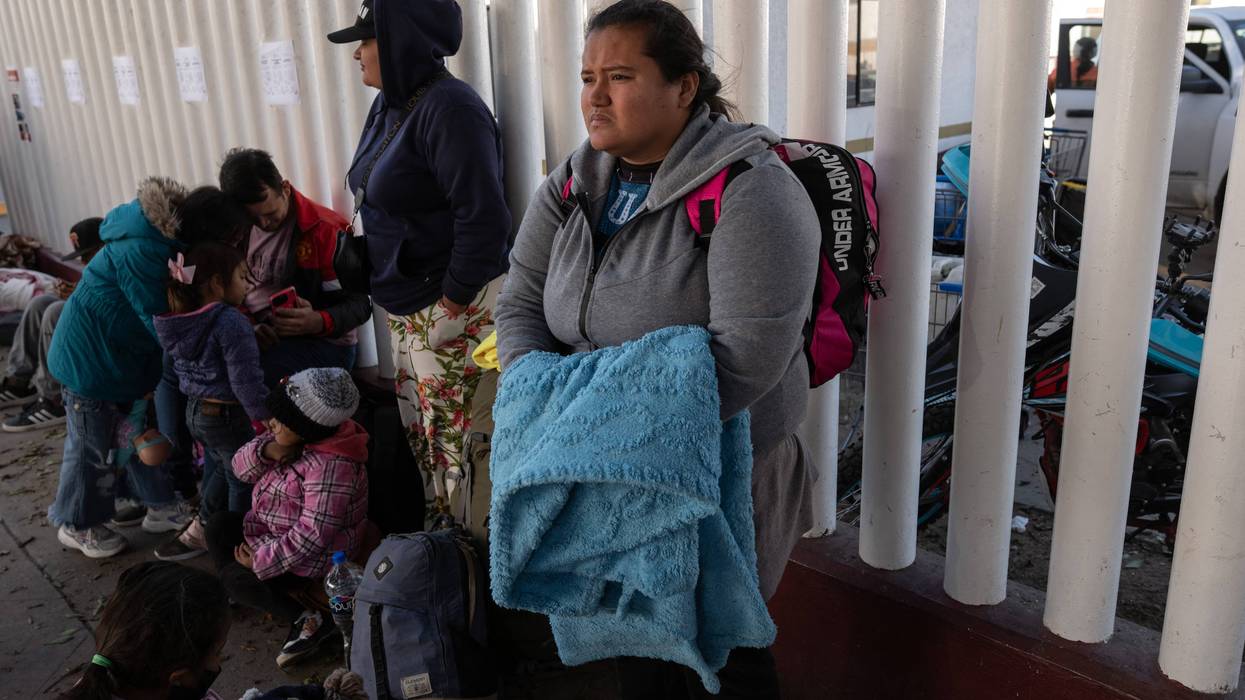
The liberal justice lamented that the majority ruling in Mullin v. Al Otro Lado empowers the Trump administration to slam the door shut on refugees "even if the asylum seeker is certain to be persecuted, or killed."
The US Supreme Court's right-wing majority on Thursday affirmed the Trump administration's deadly policy of blocking people legally seeking asylum from entering the United States in a ruling that prompted liberal Justice Sonia Sotomayor to take the rare step of reading her dissent from the bench.
In Mullin v. Al Otro Lado, the justices reversed lower-court rulings, including a 2024 9th Circuit Court of Appeals panel decision that people approaching authorized border entries are arriving "in" the United States under federal law.
The Trump administration had asked the Supreme Court to rule on the practice of "metering," by which US authorities limit the number of asylum seekers who can present themselves at a port of entry each day to request protection. The policy was first implemented during the Obama administration and expanded during President Donald Trump's first term, with US Solicitor General D. John Sauer calling it “a critical tool for addressing border surges and for preventing overcrowding at ports of entry along the border.”
“In ordinary English, a person ‘arrives in’ a country only when he comes within its borders,” Sauer argued in court filings. “An alien thus does not ‘arrive in’ the United States while he is still in Mexico.”
Justice Samuel Alito, who wrote for the majority—Chief Justice John Roberts, Justice Clarence Thomas, and Trump-appointed Justices Neil Gorsuch, Brett Kavanaugh, and Amy Coney Barrett—agreed.
“In ordinary speech, no one would say that a person ‘arrives in’ a place—for example, a house, a city, or a country—before the person enters that place," Justice Samuel Alito said.
“We hold that an alien who is standing in Mexico does not ‘arrive in the United States’ by attempting, and failing, to set foot in this country," he added. "An alien ‘arrives in the United States’ only when he crosses the border."
Justices Elena Kagan and Ketanji Brown Jackson joined a scathing dissent penned by fellow liberal Sonia Sotomayor. Jackson also dissented separately. In a sign of her vigorous objection to the ruling, Sotomayor took the rare step of reading parts of her 35-page dissent—which is nearly twice as long as the majority opinion—from the bench.
"The Court today holds that the Executive Branch may circumvent all these mandatory procedures by having US immigration officers stand at the border and physically block noncitizens from setting a foot onto US soil," Sotomayor began. "They may do so even if the asylum seeker is at the threshold of a port of entry designated to receive all noncitizens who seek entrance into the country. Even if the port of entry has ample capacity to inspect that person, including an available asylum officer trained to process asylum applications. Even if the asylum seeker is certain to be persecuted, or killed, if she is turned away."
Sotomayor noted that metering "created dire humanitarian conditions at the border."
As US Customs and Border Protection "turned back more and more asylum seekers who had traveled treacherous distances to reach that point, makeshift camps sprung up on the Mexican side of the border, with tens of thousands of those turned away waiting days, then weeks and months, for asylum processing that often never took place," she continued.
Sotomayor noted the dangerous conditions in the border camps, asserting that "those turned away under the metering policy also found themselves subject to the very 'persecution and crime' they were fleeing," and citing cases in which people waiting in Mexico were murdered, raped, kidnapped, and assaulted. She detailed instances in which desperate asylum seekers, including children, drowned while attempting to swim across the Rio Grande into the United States.
"Hundreds of others have met a similar fate, and many more died crossing the desert along the southern border, all making 2020 and 2021 some of the 'deadliest years for migrant crossings' in various regions of the southern border," Sotomayor wrote.
"The words of a statute must be read in their context and with a view to their place in the overall statutory scheme."
"The majority’s conclusion focuses almost exclusively on the word 'in' within the phrase 'arrives in the United States,'" Sotomayor stressed. "If that were all this case were about, the majority might have the better of the argument. Statutory interpretation, however, requires much more."
"The words of a statute must be read in their context and with a view to their place in the overall statutory scheme," she continued, pointing to one of the most frequently cited principles in modern US jurisprudence.
"The majority’s interpretation of 'arrives in the United States' makes no sense," Sotomayor argued. "To start, the majority ignores that 'arrival' and 'arriving' in the immigration context have never focused on the precise location of a noncitizen’s feet."
She continued:
Imagine a movie theater policy that states, “Anyone who arrives in the theater may buy a ticket and all moviegoers must have their tickets scanned before entering.” If a person walks up to a ticket booth located just outside the theater, it would be unreasonable to think they could not buy a ticket under the policy because they are not “in” the theater yet. Perhaps the policy could have been clearer by using the preposition “at,” but everyone understands, from context, what the policy means.
Context leads to the same conclusion here. Requiring an asylum seeker to plant a foot across the border to become an “applicant for admission"... might be plausible looking at the words “arrives in” in a vacuum, but it makes a hash of the statutory scheme overall. Instead, construing text in context, an asylum seeker can be fairly said to “arrive in the United States” for purposes of being an applicant for admission and seeking asylum when she walks up to a port of entry and physically presents herself to an immigration officer who is standing on US soil.
Sotomayor further noted that the modern asylum system "developed in response to the international moral reckoning that followed the Holocaust and World War II," when the United States and other indifferent nations turned back shiploads of desperate Jewish refugees and denied asylum to Jews fleeing almost certain death in Nazi-occupied Europe, including the family of famous diarist Anne Frank.
The dissenting justice highlighted the ill-fated voyage of the M.S. St. Louis, which carried over 900 Jewish refugees fleeing Nazi persecution. After being refused docking in Cuba, the United States, and Canada, the ship returned to Europe, where hundreds of its passengers were killed during the Holocaust.
"Congress passed the Refugee Act in 1980 because it did not want this country to repeat the mistakes of its past," Sotomayor said. "Yet if the refugees on the M.S. St. Louis were to walk up to a port of entry on our southern border today, the majority’s interpretation would allow immigration officers to refuse even to consider their asylum applications by physically blocking them from stepping foot onto US soil."
"The majority’s interpretation permits the government to do that even if the refugees complied with all applicable laws and regulations, even if the port had ample capacity to inspect them, and even if turning them back would result in the very persecution from which they narrowly escaped," she added. "The consequences of today’s decision are predictable. More people will die."
In another extraordinary move, Alito followed Sotomayor's reading by defending the metering policy as necessary for maintaining "orderly and humane" conditions at the border. He then moved on to his next opinion, which upheld the Trump administration's cancellation of temporary deportation protections for hundreds of thousands of Haitians and Syrians.
Responding to the Mullin ruling, Al Otro Lado executive director Erika Pinheiro said, "We believe that today’s ruling violates international law, as well as the express intent of Congress, which enshrined the rights and obligations of the Refugee Convention into US federal law over 40 years ago."
"For decades, the United States has allowed individuals and families who are fleeing persecution, torture, and death to ask for protection at US borders and exercise their legal right to seek asylum,” she continued. "This decision has destroyed the United States’ position as a global leader in promoting the rights of refugees and threatens to serve as a dangerous justification for other countries that unlawfully prevent refugees from crossing borders in search of safety."
"In a world of increasing conflict and climate disaster, this hardening of borders to keep out the most vulnerable is sure to result in many more lives lost," Pinheiro added.
Today, the Supreme Court delivered a devastating blow to asylum rights in the United States.In a 6-3 decision in Mullin v. Al Otro Lado, the Court ruled that the Trump administration may turn back asylum seekers at ports of entry along the U.S.-Mexico border.
[image or embed]
— American Immigration Council (@immcouncil.org) June 25, 2026 at 9:32 AM
Vanessa Cárdenas, executive director of America’s Voice, also issued a statement, contending that the two rulings "will devastate women and children who are fleeing unimaginable danger, vetted workers who have been in the US for decades making significant contributions, senior citizens who depend on their healthcare providers for lifesaving care, and business owners who rely on their workers to sustain their businesses, among many others."
Congresswoman Analilia Mejia (D-NJ) said that "whether denying asylum seekers the chance to be heard or ripping Temporary Protected Status away from families who have spent years building their lives in this country, this corrupt court, beholden to an authoritarian-like president, once again chose politics over the Constitution."
"Asylum seekers deserve the opportunity to have their claims heard before the government decides their fate," she continued. "Above all else, this case is simply cruel and denies humanity to our fellow human beings seeking safety."
"These rulings should alarm every American," Mejia added. "When the government can deny one group a hearing or strip away protections they have relied on for years, it is not just immigrants who lose. It sends a dangerous message that constitutional rights can be discarded whenever those in power find it politically useful."
Congresswoman Pramila Jayapal (D-Wash.) said that by targeting asylum, the justices "are preventing the most vulnerable people from even seeking safety on our shores."
On social media, Rep. Summer Lee (D-Pa.) said, "This extremist Supreme Court just gave Trump the green light to block asylum seekers at the border and end TPS protections for Haitians and Syrians."
"People fleeing danger deserve compassion, not cruelty," Lee added. "We must reform and expand the court immediately."
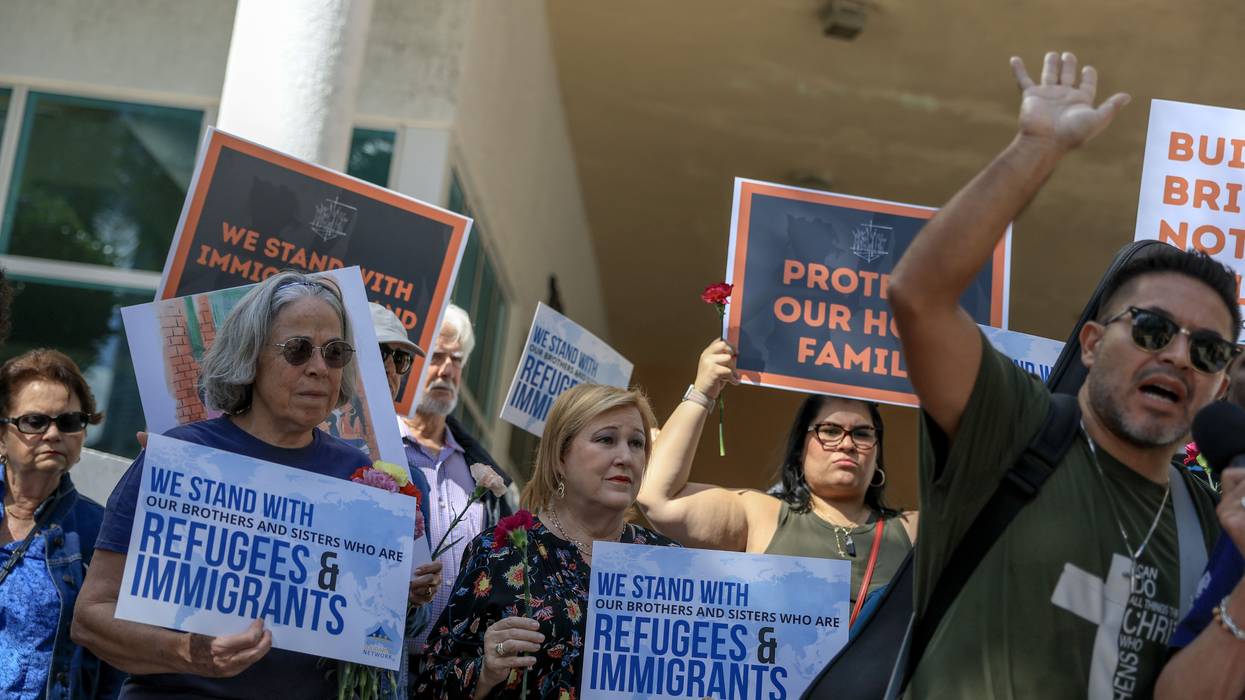
“This ruling reaffirms a basic principle: The federal government cannot shut down lawful immigration pathways or discriminate against people based on where they come from,” said one advocate.
A federal judge in Rhode Island on Friday struck down a series of President Donald Trump's policies that he ruled were rooted in "anti-immigrant sentiments" and ordered the administration to resume processing of asylum grants and immigration benefit applications of people from 39 targeted countries.
Last November, US Citizenship and Immigration Services indefinitely suspended asylum adjudications and froze immigration applications for people affected by a travel ban implemented after a man from Afghanistan allegedly shot two National Guard troops in Washington, DC.
Trump vowed to “permanently pause migration from all Third World countries” and expedite the removal of people his administration doesn’t consider “a net asset” to the United States. The administration's move halted the ability of people from affected nations to obtain green cards, US citizenship, and other benefits.
US District Judge John J. McConnell Jr., an appointee of former President Barack Obama, said in his ruling that the administration's policies are rooted in “anti-immigrant sentiments that it is forbidden from letting influence its decision-making" and have placed immigrants living in the United States in "indeterminate legal limbo."
“The challenged policies placed the lives of countless individuals on hold—solely by virtue of their countries of birth,” McConnell wrote. “Over six months later, many of those individuals remain without work, without legal status, and without any meaningful ability to plan for their futures.”
“The government effectively invites the court to shut its eyes and ignore the strong evidence of anti-immigrant animus before it,” the judge added. “Doing so would require profound naiveté on the court’s part. Unfortunately for the government, that is an invitation that this court will have to decline.”
US Department of Homeland Security (DHS) General Counsel James Percival slammed McConnell's ruling in a social media post accusing "the Left" of "running the same gambit with so-called 'animus' claims since 2017."
"It is sabotage dressed in legal clothing," Percival added. "It goes like this: (1) the admin is racist, (2) therefore a policy I don’t like is motivated by race, (3) therefore it is invalid. They have used it on virtually every Trump-era DHS policy."
Plaintiffs and others involved in the case welcomed McConnell's decision.
“This ruling reaffirms a basic principle: The federal government cannot shut down lawful immigration pathways or discriminate against people based on where they come from,” Democracy Forward president and CEO Skye Perryman said in a statement.
"These unlawful policies caused enormous harm to families, workers, asylum seekers, and communities across the country who were left in limbo, unable to work, access protections, or move forward with their lives," Perryman added. "We are pleased that the court recognized the devastating human consequences of these policies. Our communities deserve a fair process governed by law, not political targeting rooted in fear-mongering and discrimination.”
🚨 STATEMENT: Federal Judge Rejects Trump Admin’s Unlawful Immigration Restrictions, Restoring Access to Asylum for Immigrant NYers“Everyone deserves a fair chance to have their case heard under the law." Murad Awawdehnyic.org/press
[image or embed]
— New York Immigration Coalition (NYIC) (@thenyic.bsky.social) June 5, 2026 at 10:43 AM
Milagro Sique, CEO at the Dorcas International Institute of Rhode Island, said: “Today is a good day. On behalf of the thousands of immigrants we serve, we are grateful to Judge McConnell for his ruling."
"These policies were wrong, plain and simple, and caused profound fear and uncertainty for so many of our friends, neighbors, and coworkers," Sique added. "Having the judicial process work as intended—by upholding the rule of law—gives us some reassurance that all is not lost and allows those who have been impacted to move forward with their lives in a meaningful way."
Abbey Koenning-Rutherford, staff attorney at Muslim Advocates, said that "today’s decision is an unsparing rejection of the government’s discriminatory and unlawful actions to gut access to immigration benefits under the false pretext of national security."
“These policies unjustly revived the discriminatory logic of the first Muslim and African bans and expanded them widely to millions of community members already inside the United States," she continued, referring to policies enacted during Trump's first term.
"In vacating these unlawful policies, the court makes it unmistakably clear that the Trump administration cannot hold the lives of immigrants in legal limbo based on their countries of birth, and must continue processing their applications for status and benefits as required by law," Koenning-Rutherford added.
Congresswoman Pramila Jayapal (D-Wash.)—an immigrant from India—was among the Democratic lawmakers who applauded Friday's ruling, writing on social media that "this is a BIG win."
"A judge has now reaffirmed that Trump’s freeze on processing immigration applications for 39 countries is illegal and that processing must restart immediately," she added. "Today’s ruling is not the end of the fight, but it is a major step in the right direction."

"Ministers' position on the return regulation reveals the EU's dogged and misguided insistence on ramping up deportations, raids, surveillance, and detention at any cost," said an Amnesty International campaigner.
Advocacy organizations on Monday renewed sharp criticism of European Union policymakers' plans for new rules targeting undocumented immigrants after the Council of the EU finalized its "return regulation" proposal at a meeting in Brussels.
Building on the EU's Pact on Migration and Asylum—set to take effect next June despite being denounced as a "bow to right-wing extremists and fascists"—the European Commission this past March proposed common rules for expelling migrants. The council's deal on Monday established its position on the proposal for negotiations with the European Parliament on the final text.
Despite serious pressure from civil society, including joint statements in September and last week, the Council of the EU—made up of national ministers from the bloc's 27 member states—agreed to support "strict obligations on returnees," such as limiting certain benefits, refusing or withdrawing work permits, and imposing criminal sanctions, including imprisonment.
The council also backed the creation of "return hubs" outside of the European Union, putting in place "special measures for people who pose a security risk," mutual recognition of bloc members' deportation decisions, and a form that will be filled out and added to the EU's information-sharing system for security and border management.
The EU Council’s recent Returns Regulation deal goes against key demands from about 70 civil society organisations.🔊The main demand: A rights-based approach focused on voluntary, dignified return, strict detention limits, and full compliance with EU and international law.
— ECRE (@theecre.bsky.social) December 8, 2025 at 8:44 AM
"EU ministers' position on the return regulation reveals the EU's dogged and misguided insistence on ramping up deportations, raids, surveillance, and detention at any cost," declared Olivia Sundberg Diez, Amnesty International's EU advocate on migration and asylum, in a statement. "These punitive measures amount to an unprecedented stripping of rights based on migration status and will leave more people in precarious situations and legal limbo."
"In addition, EU member states continue to push for cruel and unworkable 'return hubs,' or offshore deportation centers outside of the EU—forcibly transferring people to countries where they have no connection and may be detained for long periods, violating protections in international law," she continued. "This approach mirrors the harrowing, dehumanizing, and unlawful mass arrests, detention, and deportations in the US, which are tearing families apart and devastating communities."
US President Donald Trump returned to office in January, having campaigned on a promise of mass deportations despite facing global condemnation for his first-term immigration policies, particularly family separation. His second term has featured masked federal agents prowling the streets; engaging violently with undocumented immigrants, US citizens of color, and protesters, including Democratic politicians; and detaining migrants—most of whom lack criminal convictions—in inhumane conditions.
The Trump administration aims to boost a far-right movement already on the rise in Europe, claiming in a "national security strategy" document released last Thursday that the continent faces the "stark prospect of civilizational erasure" due to mass migration and the United States must take steps to help "correct its current trajectory."
As Agence France-Presse reported:
A decline in irregular entries to Europe—down by around 20% so far in 2025 compared to last year—has not eased the pressure to act on the hot-button issue.
"We have to speed up," said EU migration commissioner Magnus Brunner, "to give the people the feeling that we have control over what is happening."
...Under the impetus of Denmark, which holds the EU's rotating presidency and has long advocated for stricter migration rules, member states are moving forward at a rapid pace.
On Monday, as Sundberg Diez put it, the Council of the EU took "an already deeply flawed and restrictive commission proposal and opted to introduce new punitive measures, dismantling safeguards and weakening rights further, rather than advancing policies that promote dignity, safety, and health for all."
"They will inflict deep harm on migrants and the communities that welcome them," the campaigner added. "Amnesty International urges the European Parliament, which is yet to adopt its final position on the proposal, to reverse this approach and place human rights firmly at the center of upcoming negotiations."
The Platform for International Cooperation on Undocumented Migrants (PICUM)—which, like Amnesty, was among over 250 groups that signed the September statement—also urged the European Parliament to reject the council's policies, taking aim at plans for home raids; expansion of detention, including of children; deportation hubs outside the EU; 20-year entry bans; and more.
"This so-called 'return regulation' ushers in a deportation regime that entrenches punishment, violence, and discrimination," said PICUM advocacy officer Silvia Carta. "Instead of investing in safety, protection, and inclusion, the EU is choosing policies that will push more people into danger and legal limbo. The council's position goes against basic humanity and EU values. Now it is up to the European Parliament to reject this approach. Migration governance must be rooted in dignity and rights—not fear, racism, or exclusion."
Sarah Chander, director at the Equinox Initiative for Racial Justice, was similarly critical, arguing that with the proposal, "the EU is legitimizing offshore prisons, racial profiling, and child detention in ways we have never seen. Instead of finding ways to ensure safety and protection for everybody, the EU is pushing a punishment regime for migrants, which will help no one."
Alkistis Agrafioti Chatzigianni, an advocacy officer and lawyer at the Greek Council for Refugees, noted that "Greece has become one of the EU's starkest experiments in detaining asylum applicants—marked by prison-like conditions, a lack of effective monitoring mechanisms, and repeated findings of rights violations."
The return regulation, the expert warned, "threatens to replicate and entrench this model across Europe. Instead of learning from the profound failures of detention-based approaches, the EU is choosing to scale them up, turning border zones into sites of coercion and trauma for people seeking protection. This is a dangerous step backwards. A humane migration system must be built on dignity, transparency, and the right to seek safety."
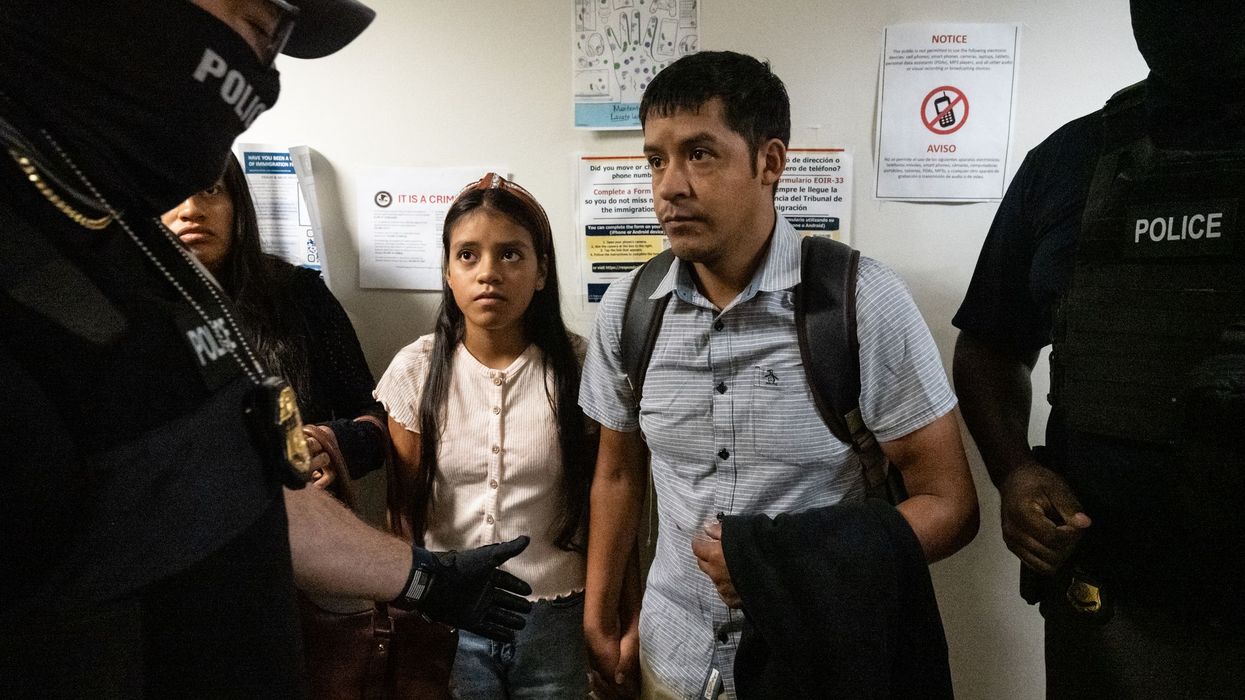
"The goal is to transform an imperfect system which aimed for fairness into a rubber stamp mill, leaving only the 'deportation judges' they want," said one policy expert.
As the Trump administration intensifies a push to hire what officials call "deportation judges," eight judges were fired Monday from the New York City immigration court that's become the epicenter for anti-immigrant enforcement in the city.
The National Association of Immigration Judges, the union that represents judges who handle immigration cases, confirmed to the New York Times that the eight officials had been dismissed in what one recently fired judge described as a "Monday afternoon massacre."
"The court has been basically eviscerated,” said former Judge Olivia Cassin, who presided over another immigration court in New York City until being fired in November, told the Times.
The judges who were dismissed Monday had worked at the immigration court at 26 Federal Plaza, where the city's US Immigration and Customs Enforcement (ICE) offices are also located.
The building has been the scene of harrowing ICE arrests in recent months, with an agent throwing an asylum-seeker to the ground in September as she pleaded with him not to detain her husband, and masked officers arresting NYC Comptroller Brad Lander in June when he tried to offer assistance to an immigrant.
The immigration court at 26 Federal Plaza employs 34 judges. Nearly 100 immigration judges have now been fired across the US this year.
Among those dismissed on Monday was Judge Amiena A. Khan, who served as the assistant chief immigration judge and supervised other jurists.
The Transactional Records Access Clearinghouse found that from 2019-24, Khan ruled on 620 asylum cases and granted asylum to 544 applicants. Cassin decided on 669 asylum cases from 2020-25 and granted asylum to 582 people. Immigration judges across the country denied asylum to refugees more frequently than Khan and Cassin over those same periods, according to TRAC.
After Monday's dismissals were announced, American Immigration Council senior fellow Aaron Reichlin-Melnick posited that "the Trump administration is systematically firing immigration judges across the country for no reason other their above-average grant rates."
Last week, the US Department of Homeland Security (DHS) posted on social media a call for legal professionals to join the Justice Department as "a deportation judge to defend your community."
"End the invasion," urged DHS.
David Bier, director of immigration studies at the libertarian Cato Institute, said the Trump administration appears to want "to poison the applicant pool."
"The job of an immigration judge isn’t to 'end the invasion,'" said Bier. "It is to evaluate whether someone is eligible for relief from deportation under civil immigration law."
Immigration attorney Allen Orr said Tuesday that if an administration's goal is to "improve vetting, you don't fire eight immigration judges in NYC—the epicenter of the national backlog."
Such mass firings are done, he said, "to stall the system, punish immigrants, and create crises. Dismantling is deliberate, not security."
On Monday, former Chicago immigration Judge Carla Espinoza described to Al Jazeera how she was abruptly fired from her courtroom position in July.
The judges who have been fired this year include "attorneys who previously represented immigrants or provided pro bono help to immigrants before they became a judge," she said.
In this episode of #UNMUTE, former US immigration judge Carla Espinoza discusses the wave of firings of judges under the Trump administration. pic.twitter.com/HhT1jhxhzt
— Al Jazeera English (@AJEnglish) December 1, 2025
"For the first time," said Espinoza, "we're seeing a clear indication that there's an expectation that we do things a certain way, that we rule on motions in cases before us a certain way, that we rush through cases, which is something we've never heard before."
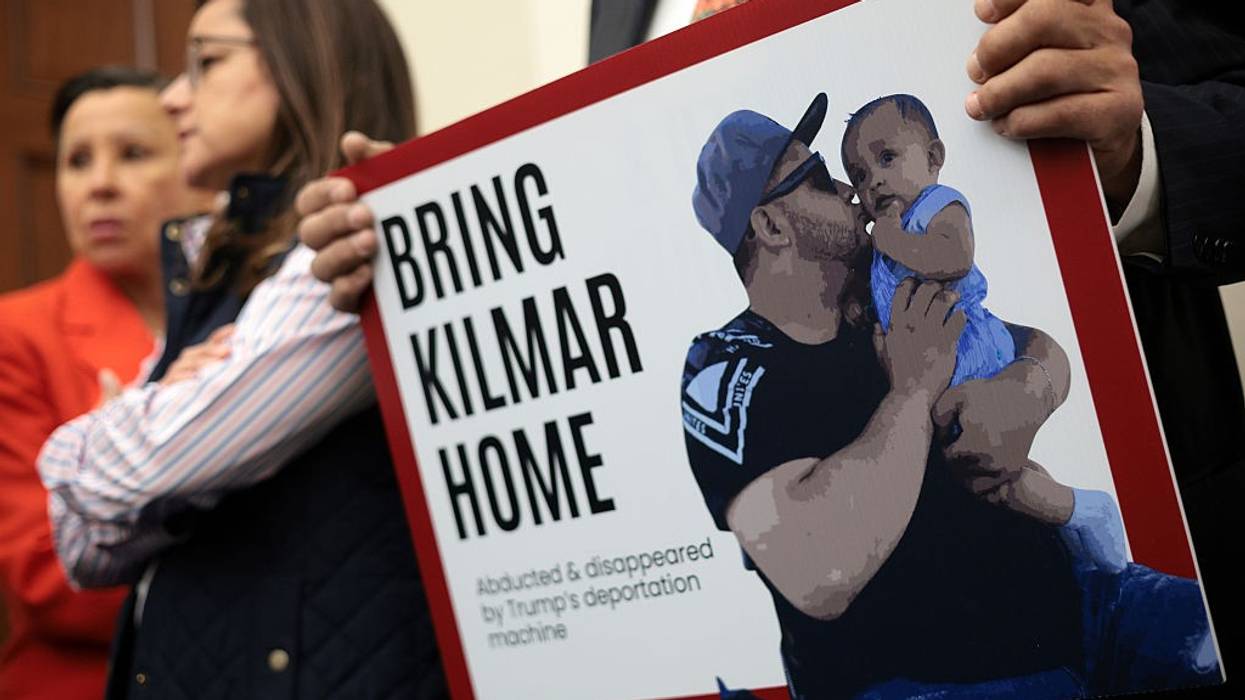
The judge ruled Abrego Garcia had presented "insufficient evidence" to show that the Trump administration planned his "imminent removal to Uganda."
Kilmar Ábrego García, the man whom the Trump administration wrongly deported to El Salvador earlier this year, has been denied a bid to reopen his asylum case.
The Washington Post reported on Wednesday that Immigration Judge Philip P. Taylor rejected Ábrego García's asylum request, as he found "insufficient evidence" to show that the Trump administration planned his "imminent removal to Uganda," even though the US Department of Homeland Security wrote in a social media post in late August that he would be processed for removal to that nation.
In explaining his ruling, Taylor noted that the government had not yet filed any paperwork to send Ábrego García to Uganda, and a government attorney said that deporting him to Uganda was merely a possibility not a foregone conclusion.
Ábrego García now has 30 days to appeal to the Board of Immigration Appeals.
The Trump administration this past June complied with a Supreme Court order to facilitate Ábrego García's return to United States after it acknowledged months earlier that he had been improperly deported to El Salvador, where a US immigration judge had ruled years earlier he faced direct danger from gang threats against him and his family.
While imprisoned in El Salvador’s infamous Terrorism Confinement Center (CECOT), Ábrego García's attorneys allege he was subjected to physical and psychological abuse "including but not limited to severe beatings, severe sleep deprivation, inadequate nutrition, and psychological torture."
Upon his return, the US Department of Justice promptly hit him with human smuggling charges to which he has pleaded not guilty.
President Donald Trump and Attorney General Pam Bondi have also accused Ábrego García of being a member of the gang MS-13, although they have produced no evidence to back up that assertion.

"Over [in Ecuador], they beat us there too," said Monica Moreta-Galarza. "I didn’t think I’d come here to the United States and the same thing would happen to me."
In the latest display of brutality by US Immigration and Customs Enforcement, a video that has gone viral on social media shows a plainclothes ICE agent hurling an Ecuadorian asylum-seeker, Monica Moreta-Galarza, to the ground at an immigration courthouse in New York City following the arrest of her husband in front of their two children.
According to the Department of Homeland Security (DHS), the agent has been relieved of his duties while his conduct is investigated.
The incident was captured by multiple reporters on the scene Thursday. A video posted by Elaad Eliahu of the conservative Timcast News network shows Moreta-Galarza's husband—who had appeared for a court hearing with his family as part of their legal application for asylum—being wrestled away from his family by several masked agents as he attempts to cling to them. After ripping him away, three agents are shown dragging him out the door.
In another video, Moreta-Galarza is seen tearfully pleading in Spanish with one of the ICE agents, who is wearing a blue flannel shirt, a baseball cap, and no mask. He is shown repeatedly shouting "adios" at her, telling her to leave. When she moves toward him, he quickly grabs her and flings her across the room, through a crowd of photographers, and into the opposite wall. He then grabs her again and pushes her to the ground.
After she rises to her feet, the agent shoves Moreta-Galarza into the arms of security guards who escort her from the building.
Though Eliahu's post described the man arrested as an "illegal alien," ProPublica's Till Eckert, who was at the scene and spoke with Moreta-Galarza after the fact, reported that she "was seeking asylum with her family," which is legal under US law.
The incident occurred at 26 Federal Plaza, a federal building that houses an immigration courthouse and a makeshift detention facility in which migrants have been shown to be living in wretched conditions recently. Last week, over 70 demonstrators, including several state lawmakers, were arrested during a protest at the facility.
"For the past two weeks, I’ve been going to the same New York City immigration courthouse," Eckert said. "Nearly every time, I see ICE agents arresting immigrants. Today, a woman was slammed to the ground after begging officials not to take her husband away."
Eckert reported that Moreta-Galarza's injuries from the encounter required her to go to the hospital, where she has since been discharged.
The arrest is part of an increasing trend under the second Trump administration of immigrants being detained, often violently, while attempting to follow the legal process by appearing in court for immigration hearings.
As Stateline reported in August, ICE has increasingly been using a new, "unexpected legal tactic" to lure immigrants: "Rather than pursue a deportation case, it is convincing judges to dismiss immigrants’ cases—thus depriving the immigrants of protection from arrest and detention—then taking them into custody." While some are undocumented entrants, many of those snatched up in these courthouse arrests are legal applicants for asylum.
Eckert explained that "these sorts of actions were outside the norm historically for ICE agents."
"Yet under Trump’s second term, immigration courts have shifted from being seen as relatively safe venues into places where immigrants face the risk of surveillance, arrest, and sometimes even violence," he said.
While the Trump administration often describes those arrested by ICE as "the worst of the worst," immigration data as of September 7 showed just over 70% of those currently detained have no criminal convictions. On Friday, The Guardian reported that a plurality of people currently in ICE custody have not even been charged with crimes.
Rep. Dan Goldman (D-NY) said that Moreta-Galarza "fled to my office for safety after she was assaulted by this [ICE] agent in an egregious act of excessive force."
In a recorded interview after the incident, Goldman said his office would "continue to follow this particular story because it is just one example of too many where we have these secret police officers who are attacking our communities with excessive violence, excessive force, and they just think that they can do it with impunity because nobody is holding them accountable."
Social media users later identified another video outside the same court in August, which appeared to show the same ICE agent forcibly prying a crying young girl away from her father as he is arrested and his family watched in tears.
In a statement provided to CBS News on Friday, Tricia McLaughlin, a spokesperson for DHS, called the agent's conduct toward Moreta-Galarza "unacceptable."
"Our ICE law enforcement are held to the highest professional standards and this officer is being relieved of current duties as we conduct a full investigation," she said.
New York City comptroller Brad Lander, who has been arrested twice at the facility—once in June while escorting an immigrant out of his court hearing and again last week while protesting the facility—expressed outrage at the treatment of Moreta-Galarza and her family.
"An ICE agent violently threw this bereft woman to the ground in front of her kids. She had not touched him. She did not pose any threat. She had to be taken to the hospital," Lander said. "Seconds earlier, her husband had been abducted by masked ICE agents who did not identify themselves, did not present a warrant, did not give any lawful grounds for his detention."
"Every day, masked ICE agents are acting violently against our neighbors, illegally abducting them, holding them in cruel and inhumane conditions. Treating them as less-than-human and not deserving due process," Lander continued. "We will not stop bearing witness, stop condemning them, or stop doing all we can to stand up to this lawless behavior."
Zohran Mamdani, the Democratic nominee for mayor of New York, called the agent's behavior "sickening," and said, "the fact that Mayor [Eric] Adams has rolled out the red carpet for ICE is a stain on our city."
After being discharged from the hospital, Moreta-Galarza spoke about her experience to reporters.
"Over [in Ecuador], they beat us there too," she said in Spanish. "I didn’t think I’d come here to the United States and the same thing would happen to me."

"This visceral event is just another frightening example of a broader and deeply disturbing pattern by this administration."
A video of US Immigration and Customs Enforcement agents with a 5-year-old autistic girl outside her family home in Leominster, Massachusetts generated alarm after it was published Monday by NBCUniversal's Spanish-language Telemundo Nueva Inglaterra.
While Telemundo first reported that the family accused Immigration and Customs Enforcement of holding the girl in an effort to pressure her father, 22-year-old Edward Hip Mejía, to surrender to ICE, and the agency initially did not respond to a request for comment, the outlet updated the article on Tuesday, including with a comment from a government spokesperson.
The video from last Tuesday shows the little girl seated outside an open vehicle, drinking from a water bottle while surrounded by law enforcement. A man can be heard shouting "Don't touch her!" and a woman identified as the girl's mother tells one agent that the others took her daughter, who is 5 years old and on the autism spectrum. She also says, "Give me my daughter back."
The mother, who did not want her name shared, told Telemundo that her husband called her while driving with their daughter because he thought they were being followed. Her husband "managed to run back into the parking lot of my house," she said, and her daughter was left with the agents. The video shows agents trying to get Hip Mejía to come outside the house to show them identification.
According to NBC Boston, "Leominster police arrived at the scene, recovered the child, and returned her to the family."
Medically complex and disable children shouldn’t be bargaining chips, period. This outrageous act by #immigration officials is inexcusable and ultimately led to the separation of this 5-year-old autistic girl from Massachusetts 😡
[image or embed]
— Little Lobbyists (@littlelobbyists.com) September 23, 2025 at 10:43 AM
The couple has two children who were born in the United States. Neither parent was taken into custody that day. However, two days later, ICE returned to their home and took Hip Mejía into custody, his wife said. He is now being held at a detention center in Plymouth.
Tricia McLaughlin, assistant secretary for public affairs at the US Department of Homeland Security, responded to NBC News' English version of the initial reporting, calling it "a disgusting smear." She claimed that Hip Mejia "ignored law enforcement emergency lights to pull over and drove back to his house," and then "abandoned his 5-year-old daughter in the car."
The family's experience is part of an attempt by ICE to deliver on US President Donald Trump's promise of mass deportations.
The initial reporting and footage sparked swift outrage, with critics across the United States and beyond condemning agents' treatment of the family as "fascism," "truly evil," and "a fucking abomination."
Joanna Kuebler, chief of programs at the advocacy group America's Voice, said in a Tuesday statement that "this visceral event is just another frightening example of a broader and deeply disturbing pattern by this administration."
"The combination of cruelty and impunity in pursuit of a mass deportation crusade is dangerous for America and all of our safety," Kuebler added. "Smashing car windows, ripping families apart, and traumatizing children threatens the public safety of American communities and the stability of our nation.”
This article has been updated with comment from the US Department of Homeland Security and corrections by Telemundo Nueva Inglaterra.
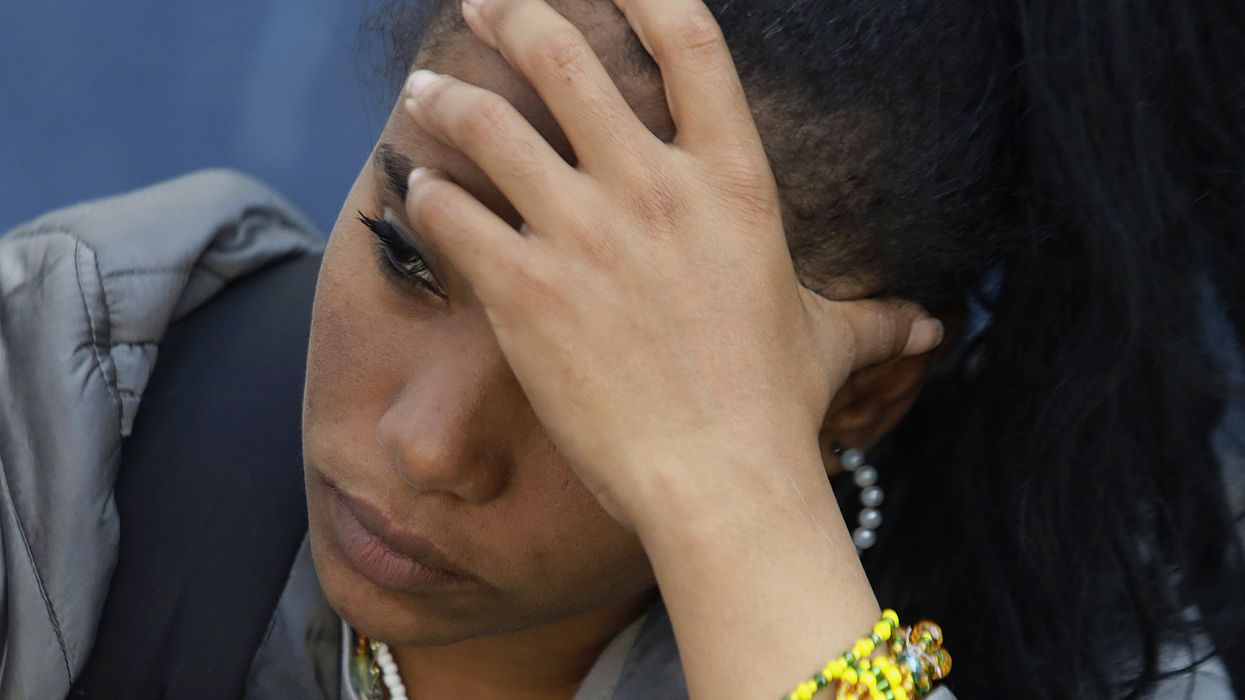
"The immigration laws do not give the president autocratic power to override Congress and brazenly violate U.S. treaty obligations related to the protection of refugees," said one advocate.
Accusing U.S. President Donald Trump of using "racist conspiracy theories" and lies about refugees to block people from exercising their right to seek asylum in the United States, several advocacy groups filed a federal lawsuit on Monday to block the Republican president's recent proclamation aimed at shutting down the asylum process at the southern border.
Disregarding the fact that the right to seek asylum has been part of U.S. law for more than four decades, the president quickly said after taking office last month that he was suspending the asylum process at the U.S.-Mexico border until the "invasion at the southern border has ceased."
The move left "no avenue open for people to seek asylum, even if they present themselves at a port of entry," said the groups, including the Texas Civil Rights Project, the National Immigrant Justice Center, and the ACLU.
Migrants who had traveled across Central America and Mexico in hopes of seeking asylum found soon after Trump's inauguration that their appointments with U.S. Customs and Border Protection had been canceled, leading to scenes of desperation at the border.
"This is the latest flagrantly illegal attempt by the executive branch to end humanitarian protection at the U.S.-Mexico border," said Richard Caldarone, senior litigation attorney at the National Immigrant Justice Center. "The immigration laws do not give the president autocratic power to override Congress and brazenly violate U.S. treaty obligations related to the protection of refugees. This latest attempt to do so will make thousands of people vulnerable to persecution, torture, and death, and we will not stop fighting until all those who require protection have the opportunity guaranteed by U.S. law to seek asylum in this country."
"Just as he did in his first term, the president is attempting to rewrite our laws by executive fiat and impose an illegal policy of mass expulsions."
Melissa Crow, director of litigation at the Center for Gender & Refugee Studies, warned that Trump cannot use the "lie" of an invasion by "families, children, and adults seeking safety" at the border to circumvent U.S. laws.
"Just as he did in his first term, the president is attempting to rewrite our laws by executive fiat and impose an illegal policy of mass expulsions," said Crow.
The asylum proclamation is just one of the anti-immigration actions Trump has taken in his first weeks in office. He declared an end to birthright citizenship—and was quickly challenged in court by rights groups and Democratic state attorneys general, with a judge ruling that the order was "blatantly unconstitutional"—and has directed Immigration and Customs Enforcement to round up thousands of undocumented immigrants, roughly half of whom didn't have a criminal record.
"Once again, the Trump administration wants to eliminate the ability of families to seek safety in our country in the form of asylum, a legal pathway," said Jennifer Babaie, director of advocacy and legal services of Las Americas Immigrant Advocacy Center. "Regardless of any person's individual beliefs on immigration, any government attempt to blatantly violate our laws is a serious issue impacting all communities across the country. Spreading falsehoods about an 'invasion' at our border only fuels fear, aiming to dismantle the entire asylum process and weaponize our immigration laws."
Rochelle Garza, president of the Texas Civil Rights Project, said the suspension of asylum was "extreme, unjust, and a disservice to families seeking safety at our southern border."
"Denying migrants and displaced individuals from the opportunity to find safety undermines our nation's values and creates additional strain on our already burdened border communities," said Garza. "Our lawsuit underscores the unlawful nature of this policy and emphasizes the need to protect asylum seekers' rights. The U.S. should lead by example in implementing fair immigration practices and treating the most vulnerable with dignity."
"Banning asylum and punishing people seeking safety only causes more chaos and dysfunction at the border, and more refugee deaths," said one advocacy center.
While fearful of what a second Trump administration would mean for immigrants, rights advocates this weekend sounded the alarm over messaging on the southern border from Vice President Kamala Harris, the Democratic presidential nominee.
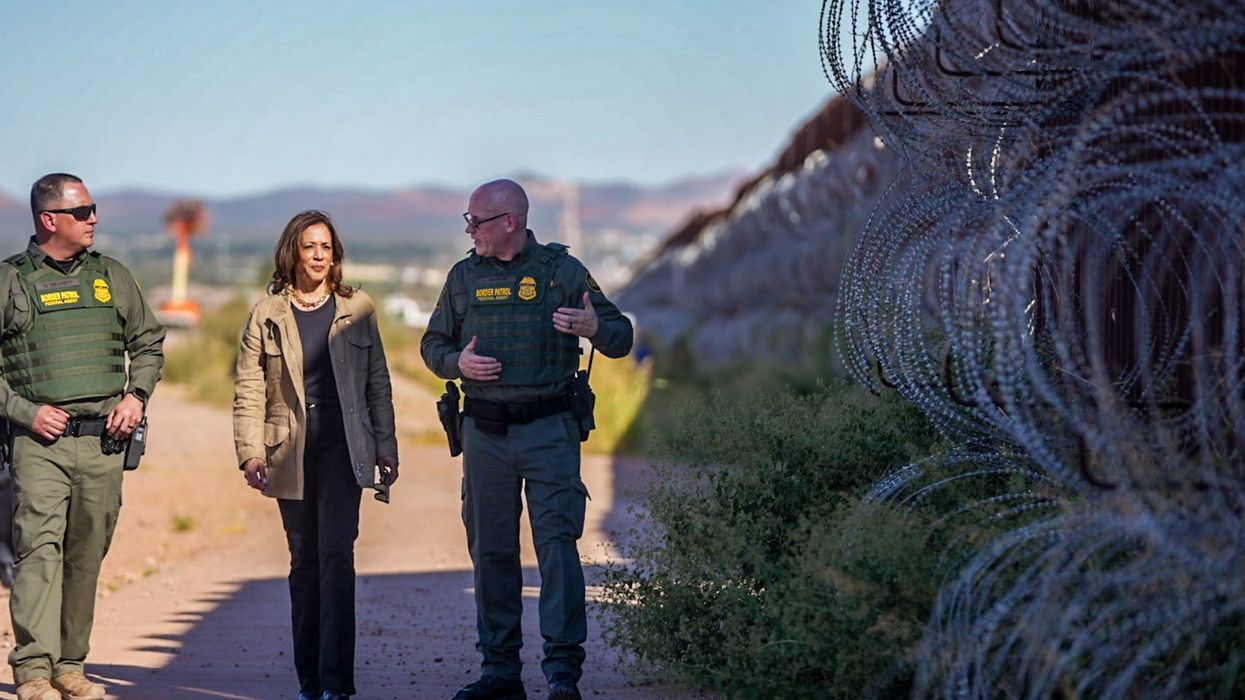
The vice president traveled to Douglas, Arizona on Friday for her first campaign trip to the U.S.-Mexcio border. There, she met with Border Patrol agents—she was photographed walking with them next to a barbed-wire-covered wall—and delivered what The New York Times called "one of her party's toughest speeches on immigration and border policy in a generation."
After Harris' address, the Center for Gender & Refugee Studies (CGRS)
expressed agreement with her that "we need to build a fair, orderly, and humane immigration system," while also warning that her "proposed border policies would do the opposite."
"Banning asylum and punishing people seeking safety only causes more chaos and dysfunction at the border, and more refugee deaths," CGRS said. "We want real solutions to the humanitarian challenges at our border, too. But these policies of cruelty and exclusion fail us, every single time."
CGRS urged Harris to embrace the #WelcomeWithDignity Campaign's policy
solutions: restore access to asylum at the border; support existing systems and launch new ones to receive and integrate people seeking safety; create a more effective and timely immigration system; and strengthen refugee resettlement programs and other pathways to the United States.
During the speech and on social media, Harris emphasized combating drugs. She said: "As attorney general of California, I prosecuted transnational criminal organizations that trafficked guns, drugs, and human beings. I know the importance of safety and security, especially at our border. Today, I visited the U.S.-Mexico border and spoke with Customs and Border Protection officials about our progress to secure our border and disrupt the flow of illegal fentanyl into our nation."
She also took aim at her GOP opponent, former President Donald Trump, for his infamous family separation policy and for killing a bipartisan border bill. While the Republican attacked the legislation so he could campaign on immigration and promise mass deportations, progressives in Congress and rights advocates opposed its "extreme and unworkable enforcement-only policies."
The Democratic nominee also vowed to strengthen asylum restrictions that President Joe Biden imposed in June, which are being challenged in court by critics including the ACLU. The administration's policy change has been followed by a drop in border numbers but also "rampant rights violations," according to migrant rights groups.
Pushing back against Harris' framing that asylum-seekers simply need to go to legal entry points rather than crossing the border unlawfully, Christina Asencio, a research director at Human Rights First, explained on Friday that the border bill would do what the June asylum ban has already done: suspend processing at ports of entry unless people obtain an appointment.
"Human Rights First has documented the life-threatening harm families with children and adults face in Mexico while forced to wait up to nine months for an appointment [through] an app that's only available in three languages," she added. "This is not a solution."
In a social media thread highlighting reports of agents "removing asylum-seekers who explicitly communicated their fear of return in violation of refugee law" since the introduction of Biden's ban, Robyn Barnard, an attorney with the group, said:
Human Rights First and others have interviewed asylum-seekers who expressly requested asylum, relayed their past persecution, explained their asylum claims, showed agents their injuries, had anxiety attacks, sobbed, and begged to be heard, but were ignored.
Other families recounted that not only were they not asked whether they had a fear of return or why they came to the United States, they were not even allowed to speak.
Harris' pledge to toughen the June policy followed Thursday reporting by CBS News that the Biden-Harris administration "is planning to soon issue a regulation to cement the sweeping asylum restrictions it enacted at the southern border" earlier this year.
In response to the reporting, the immigrant youth-led group United We Dream (UWD)
declared, "There's no other way to say this: Turning your backs on people seeking asylum is WRONG and it keeps us stuck in the past with failed policies."
"Communities nationwide agree that our immigration system must be humane, efficient, and fair above all else. Those seeking safety deserve respect and dignity," UWD said. "Our message to the Biden-Harris administration remains clear: We will organize—now and in the future—against any attempts to gut asylum and put our people's lives on the line."
UWD also pointed to a September 4 letter in which it led over 80 groups in warning Biden and Harris that the bipartisan Border Act of 2024 "would cause irreparable harm to our asylum system, our standing on the global stage, and most importantly, it would cause countless deaths at our borders and in other countries."
While many immigrant rights advocates are frustrated with both Biden and Harris, multiple groups continue to support her candidacy—given that the alternative is Trump—and even some critics praised certain parts of her Friday remarks.
"It was good to hear [Harris] recognize the need for more asylum officers and immigration judges, which are a must to tackle asylum backlogs and enable timely asylum decisions," said Eleanor Acer, director of Human Rights First's refugee protection program. "Real solutions like these are needed, NOT bans and bills that cut due process and deny access to asylum."
Immigrant rights advocate Erika Andiola, "who has lived through some of the most traumatic experiences because of our broken immigration system," said that "I was so glad to hear her talk about our undocumented community and a promise to fight for a path to citizenship."
"I'm so glad to see Harris pushing back on Trump's scapegoating of immigrants," she continued. "I wish she would have also talked about his plan for mass deportations and the consequences that could have. Consequences not only for our immigrant community, but also for millions of mixed-status families and our economy overall."
The advocate also expressed sadness over her "promise to criminalize reentries" and urged Harris to "move away from starting the conversation on this issue speaking about drugs and criminal activity at the border," stressing that "yes, those are important issues for voters, but conflating security with human migration just creates more fear in the public about our people."
"We must change the narrative about our immigrant community," she argued. "We must show the humanity, tell the stories, and detangle the problems we as immigrants face from the need of the American people to feel safe. Immigrants, we are part of the fabric of this country. We are your neighbors, classmates, and coworkers. That's where the conversation should start."