SUBSCRIBE TO OUR FREE NEWSLETTER
Daily news & progressive opinion—funded by the people, not the corporations—delivered straight to your inbox.
5
#000000
#FFFFFF
To donate by check, phone, or other method, see our More Ways to Give page.
Daily news & progressive opinion—funded by the people, not the corporations—delivered straight to your inbox.
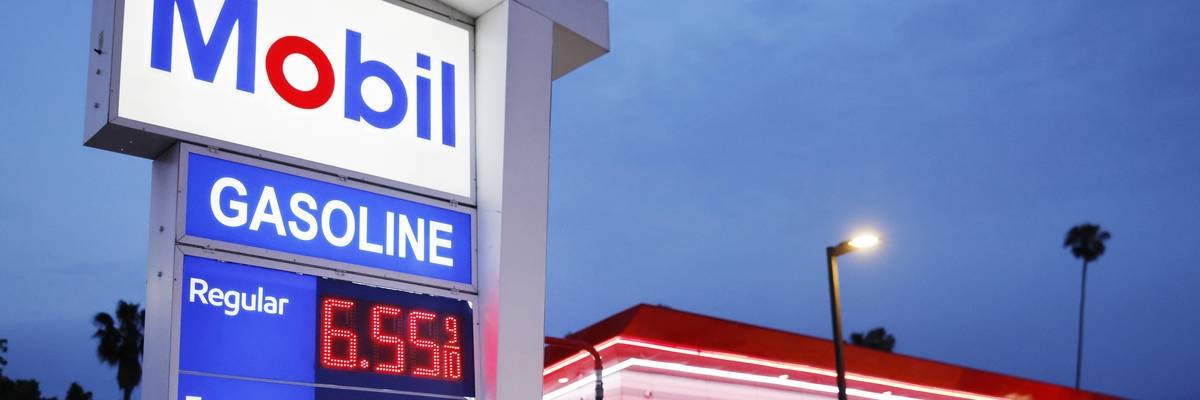
Gas prices are displayed at a Mobil gas station on March 30, 2026 in Pasadena, California.
The oil and gas companies that invested at least $75 million in Trump’s reelection are cashing in on the instability he has caused.
Our dependence on fossil fuels does more than pollute our air. It destabilizes the world and empowers the ultra wealthy to profit off of that volatility, leaving working families to pay the price.
This dynamic has been on full display since President Donald Trump’s attack on Iran.
Trump’s invasion of one of the world’s most oil-rich regions jolted energy markets, sending gas prices soaring to the highest level in either of his terms. In 2024 he campaigned on cutting them in half. Instead, Americans are now on track to pay roughly $720 more for gasoline this year.
The full cost to working families will be much steeper as high gas prices drive up prices on consumer goods across the board. We’re already seeing that ripple effect take hold, as the US Postal Service has proposed a temporary 8% fuel surcharge on package deliveries to offset rising transportation costs tied directly to the war-driven spike in oil prices.
To reclaim our foreign policy from those who see a global crisis as a line item on an earnings call, we must break the billionaire grip on our energy system, economy, and democracy writ large.
At the same time, the oil and gas companies that invested at least $75 million in Trump’s reelection are cashing in on this instability. A recent Financial Times analysis estimates that US oil companies could collect an additional $63 billion in revenue this year if crude prices remain at these wartime levels. In March alone, the industry is expected to generate $5 billion in extra cash flow.
This type of windfall isn’t a fluke. We’ve seen this pattern for decades.
Oil has a way of appearing in the background of every chapter of US military intervention in the Middle East and beyond. Iran nationalized its oil industry in the 1950s, and a CIA-backed coup followed. Iraq, sitting on some of the world’s largest reserves, was invaded in 2003. And earlier this year, the US invaded Venezuela and immediately began plans for a taxpayer-backed oil industry takeover.
Dependence on fossil fuels keeps us trapped in this cycle. Oil executives have spent billions to maintain this status quo, backing politicians like Trump who will protect their profits. As the oil industry rakes in eye-popping profits, it gains more power to elect leaders who prioritize policies that ensure Americans remain reliant on fossil fuels.
Following Russia’s invasion of Ukraine, Congress considered a windfall profits tax on large oil companies that would capture the excess profits generated by the crisis—and return the money to American households. Roughly 80% of Americans supported the idea.
Failure to advance that legislation cost us. Researchers calculated that if the US had redistributed the portion of fossil fuel profits that exceeded 2021 returns, every American household could have received $1,715.
As oil executives profit off the war in Iran, Congress must once again push for a windfall profits tax on the largest oil companies. This isn’t an outlandish idea. Other countries have already done it. After the 2022 energy shock, the United Kingdom enacted a windfall tax on oil and gas companies, raising about $3.3 billion in its first year and roughly $4.5 billion the next—money used to help households pay their energy bills.
The current situation in Iran underscores how unchecked extreme wealth fuels corporate control, leaving working families vulnerable. New data from Impact Research for Tax the Greedy Billionaires shows that voters blame billionaires for the affordability crisis and want leaders to do more to address this. In fact, 77% of voters nationwide—including 65% of Republicans, 75% of Independents, and 91% of Democrats—support raising taxes on billionaires.
Under the Trump administration, war profiteering has reached new extremes. Confronting corporate power and taxing the ultra wealthy isn’t just about economic fairness—it’s a national security imperative.
To reclaim our foreign policy from those who see a global crisis as a line item on an earnings call, we must break the billionaire grip on our energy system, economy, and democracy writ large. If we want a democracy that works for the people, we must stop letting it be sold to the highest bidder.
Dear Common Dreams reader, It’s been nearly 30 years since I co-founded Common Dreams with my late wife, Lina Newhouser. We had the radical notion that journalism should serve the public good, not corporate profits. It was clear to us from the outset what it would take to build such a project. No paid advertisements. No corporate sponsors. No millionaire publisher telling us what to think or do. Many people said we wouldn't last a year, but we proved those doubters wrong. Together with a tremendous team of journalists and dedicated staff, we built an independent media outlet free from the constraints of profits and corporate control. Our mission has always been simple: To inform. To inspire. To ignite change for the common good. Building Common Dreams was not easy. Our survival was never guaranteed. When you take on the most powerful forces—Wall Street greed, fossil fuel industry destruction, Big Tech lobbyists, and uber-rich oligarchs who have spent billions upon billions rigging the economy and democracy in their favor—the only bulwark you have is supporters who believe in your work. But here’s the urgent message from me today. It's never been this bad out there. And it's never been this hard to keep us going. At the very moment Common Dreams is most needed, the threats we face are intensifying. We need your support now more than ever. We don't accept corporate advertising and never will. We don't have a paywall because we don't think people should be blocked from critical news based on their ability to pay. Everything we do is funded by the donations of readers like you. When everyone does the little they can afford, we are strong. But if that support retreats or dries up, so do we. Will you donate now to make sure Common Dreams not only survives but thrives? —Craig Brown, Co-founder |
Our dependence on fossil fuels does more than pollute our air. It destabilizes the world and empowers the ultra wealthy to profit off of that volatility, leaving working families to pay the price.
This dynamic has been on full display since President Donald Trump’s attack on Iran.
Trump’s invasion of one of the world’s most oil-rich regions jolted energy markets, sending gas prices soaring to the highest level in either of his terms. In 2024 he campaigned on cutting them in half. Instead, Americans are now on track to pay roughly $720 more for gasoline this year.
The full cost to working families will be much steeper as high gas prices drive up prices on consumer goods across the board. We’re already seeing that ripple effect take hold, as the US Postal Service has proposed a temporary 8% fuel surcharge on package deliveries to offset rising transportation costs tied directly to the war-driven spike in oil prices.
To reclaim our foreign policy from those who see a global crisis as a line item on an earnings call, we must break the billionaire grip on our energy system, economy, and democracy writ large.
At the same time, the oil and gas companies that invested at least $75 million in Trump’s reelection are cashing in on this instability. A recent Financial Times analysis estimates that US oil companies could collect an additional $63 billion in revenue this year if crude prices remain at these wartime levels. In March alone, the industry is expected to generate $5 billion in extra cash flow.
This type of windfall isn’t a fluke. We’ve seen this pattern for decades.
Oil has a way of appearing in the background of every chapter of US military intervention in the Middle East and beyond. Iran nationalized its oil industry in the 1950s, and a CIA-backed coup followed. Iraq, sitting on some of the world’s largest reserves, was invaded in 2003. And earlier this year, the US invaded Venezuela and immediately began plans for a taxpayer-backed oil industry takeover.
Dependence on fossil fuels keeps us trapped in this cycle. Oil executives have spent billions to maintain this status quo, backing politicians like Trump who will protect their profits. As the oil industry rakes in eye-popping profits, it gains more power to elect leaders who prioritize policies that ensure Americans remain reliant on fossil fuels.
Following Russia’s invasion of Ukraine, Congress considered a windfall profits tax on large oil companies that would capture the excess profits generated by the crisis—and return the money to American households. Roughly 80% of Americans supported the idea.
Failure to advance that legislation cost us. Researchers calculated that if the US had redistributed the portion of fossil fuel profits that exceeded 2021 returns, every American household could have received $1,715.
As oil executives profit off the war in Iran, Congress must once again push for a windfall profits tax on the largest oil companies. This isn’t an outlandish idea. Other countries have already done it. After the 2022 energy shock, the United Kingdom enacted a windfall tax on oil and gas companies, raising about $3.3 billion in its first year and roughly $4.5 billion the next—money used to help households pay their energy bills.
The current situation in Iran underscores how unchecked extreme wealth fuels corporate control, leaving working families vulnerable. New data from Impact Research for Tax the Greedy Billionaires shows that voters blame billionaires for the affordability crisis and want leaders to do more to address this. In fact, 77% of voters nationwide—including 65% of Republicans, 75% of Independents, and 91% of Democrats—support raising taxes on billionaires.
Under the Trump administration, war profiteering has reached new extremes. Confronting corporate power and taxing the ultra wealthy isn’t just about economic fairness—it’s a national security imperative.
To reclaim our foreign policy from those who see a global crisis as a line item on an earnings call, we must break the billionaire grip on our energy system, economy, and democracy writ large. If we want a democracy that works for the people, we must stop letting it be sold to the highest bidder.
Our dependence on fossil fuels does more than pollute our air. It destabilizes the world and empowers the ultra wealthy to profit off of that volatility, leaving working families to pay the price.
This dynamic has been on full display since President Donald Trump’s attack on Iran.
Trump’s invasion of one of the world’s most oil-rich regions jolted energy markets, sending gas prices soaring to the highest level in either of his terms. In 2024 he campaigned on cutting them in half. Instead, Americans are now on track to pay roughly $720 more for gasoline this year.
The full cost to working families will be much steeper as high gas prices drive up prices on consumer goods across the board. We’re already seeing that ripple effect take hold, as the US Postal Service has proposed a temporary 8% fuel surcharge on package deliveries to offset rising transportation costs tied directly to the war-driven spike in oil prices.
To reclaim our foreign policy from those who see a global crisis as a line item on an earnings call, we must break the billionaire grip on our energy system, economy, and democracy writ large.
At the same time, the oil and gas companies that invested at least $75 million in Trump’s reelection are cashing in on this instability. A recent Financial Times analysis estimates that US oil companies could collect an additional $63 billion in revenue this year if crude prices remain at these wartime levels. In March alone, the industry is expected to generate $5 billion in extra cash flow.
This type of windfall isn’t a fluke. We’ve seen this pattern for decades.
Oil has a way of appearing in the background of every chapter of US military intervention in the Middle East and beyond. Iran nationalized its oil industry in the 1950s, and a CIA-backed coup followed. Iraq, sitting on some of the world’s largest reserves, was invaded in 2003. And earlier this year, the US invaded Venezuela and immediately began plans for a taxpayer-backed oil industry takeover.
Dependence on fossil fuels keeps us trapped in this cycle. Oil executives have spent billions to maintain this status quo, backing politicians like Trump who will protect their profits. As the oil industry rakes in eye-popping profits, it gains more power to elect leaders who prioritize policies that ensure Americans remain reliant on fossil fuels.
Following Russia’s invasion of Ukraine, Congress considered a windfall profits tax on large oil companies that would capture the excess profits generated by the crisis—and return the money to American households. Roughly 80% of Americans supported the idea.
Failure to advance that legislation cost us. Researchers calculated that if the US had redistributed the portion of fossil fuel profits that exceeded 2021 returns, every American household could have received $1,715.
As oil executives profit off the war in Iran, Congress must once again push for a windfall profits tax on the largest oil companies. This isn’t an outlandish idea. Other countries have already done it. After the 2022 energy shock, the United Kingdom enacted a windfall tax on oil and gas companies, raising about $3.3 billion in its first year and roughly $4.5 billion the next—money used to help households pay their energy bills.
The current situation in Iran underscores how unchecked extreme wealth fuels corporate control, leaving working families vulnerable. New data from Impact Research for Tax the Greedy Billionaires shows that voters blame billionaires for the affordability crisis and want leaders to do more to address this. In fact, 77% of voters nationwide—including 65% of Republicans, 75% of Independents, and 91% of Democrats—support raising taxes on billionaires.
Under the Trump administration, war profiteering has reached new extremes. Confronting corporate power and taxing the ultra wealthy isn’t just about economic fairness—it’s a national security imperative.
To reclaim our foreign policy from those who see a global crisis as a line item on an earnings call, we must break the billionaire grip on our energy system, economy, and democracy writ large. If we want a democracy that works for the people, we must stop letting it be sold to the highest bidder.