
An American soldier passes an Afghan child while on patrol near Kandahar, Afghanistan.
Ukraine: Look to Afghanistan for Lessons About US Proxy Wars
"Ukraine needs to learn from the horrible experience of Afghanistan to avoid becoming a long-term disaster."
The greatest enemy of economic development is war. If the world slips further into global conflict, our economic hopes and our very survival could go up in flames. The Bulletin of the Atomic Scientists has moved the hands of the Doomsday Clock to a mere 90 seconds to midnight.
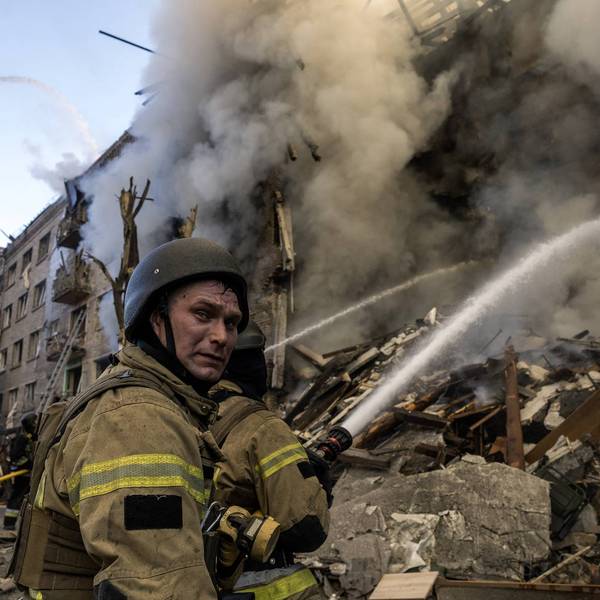
The world’s biggest economic loser in 2022 was Ukraine, where the economy collapsed by 35% according to the International Monetary Fund. The war in Ukraine could end soon, and economic recovery could begin, but this depends on Ukraine understanding its predicament as victim of a U.S.-Russia proxy war that broke out in 2014.
The U.S. has been heavily arming and funding Ukraine since 2014 with the goal of expanding NATO and weakening Russia. America’s proxy wars typically rage for years and even decades, leaving battleground countries like Ukraine in rubble.
Unless the proxy war ends soon, Ukraine faces a dire future. Ukraine needs to learn from the horrible experience of Afghanistan to avoid becoming a long-term disaster. It could also look to the U.S. proxy wars in Vietnam, Cambodia, Lao PDR, Iraq, Syria, and Libya.
Afghanistan lies in ruins. While the U.S. wasted more than $2-trillion of U.S. military outlays, Afghanistan is impoverished, with a 2021 GDP below $400 per person!
Starting in 1979, the U.S. armed the mujahideen (Islamist fighters) to harass the Soviet-backed government in Afghanistan. As president Jimmy Carter’s national security advisor Zbigniew Brzezinski later explained, the U.S. objective was to provoke the Soviet Union to intervene, in order to trap the Soviet Union in a costly war. The fact that Afghanistan would be collateral damage was of no concern to U.S. leaders.
The Soviet military entered Afghanistan in 1979 as the U.S. hoped, and fought through the 1980s. Meanwhile, the US-backed fighters established al-Qaeda in the 1980s, and the Taliban in the early 1990s. The U.S. “trick” on the Soviet Union had boomeranged.
In 2001, the U.S. invaded Afghanistan to fight al-Qaeda and the Taliban. The U.S. war continued for another 20 years until the U.S. finally left in 2021. Sporadic U.S. military operations in Afghanistan continue.
Afghanistan lies in ruins. While the U.S. wasted more than $2-trillion of U.S. military outlays, Afghanistan is impoverished, with a 2021 GDP below $400 per person! As a parting “gift” to Afghanistan in 2021, the U.S. government seized Afghanistan’s tiny foreign exchange holdings, paralyzing the banking system.
The proxy war in Ukraine began nine years ago when the U.S. government backed the overthrow of Ukraine’s president Viktor Yanukovych. Yanukovych’s sin from the US viewpoint was his attempt to maintain Ukraine’s neutrality despite the U.S. desire to expand NATO to include Ukraine (and Georgia). America’s objective was for NATO countries to encircle Russia in the Black Sea region. To achieve this goal, the U.S. has been massively arming and funding Ukraine since 2014.
The American protagonists then and now are the same. The U.S. government’s point person on Ukraine in 2014 was Assistant Secretary of State Victoria Nuland, who today is Undersecretary of State. Back in 2014, Nuland worked closely with Jake Sullivan, president Joe Biden’s national security adviser, who played the same role for Vice President Biden in 2014.
The U.S. overlooked two harsh political realities in Ukraine. The first is that Ukraine is deeply divided ethnically and politically between Russia-hating nationalists in western Ukraine and ethnic Russians in eastern Ukraine and Crimea.
The second is that NATO enlargement to Ukraine crosses a Russian redline. Russia will fight to the end, and escalate as necessary, to prevent the U.S. from incorporating Ukraine into NATO.
The U.S. repeatedly asserts that NATO is a defensive alliance. Yet NATO bombed Russia’s ally Serbia for 78 days in 1999 in order to break Kosovo away from Serbia, after which the U.S. established a giant military base in Kosovo. NATO forces similarly toppled Russian ally Moammar Qaddafi in 2011, setting off a decade of chaos in Libya. Russia certainly will never accept NATO in Ukraine.
At the end of 2021, Russian president Vladimir Putin put forward three demands to the U.S.: Ukraine should remain neutral and out of NATO; Crimea should remain part of Russia; and the Donbas should become autonomous in accord with the Minsk II Agreement.
The Biden-Sullivan-Nuland team rejected negotiations over NATO enlargement, eight years after the same group backed Yanukovych’s overthrow. With Putin’s negotiating demands flatly rejected by the U.S., Russia invaded Ukraine in February 2022.
In March 2022, Ukraine’s president Volodymyr Zelensky seemed to understand Ukraine’s dire predicament as victim of a U.S.-Russia proxy war. He declared publicly that Ukraine would become a neutral country, and asked for security guarantees. He also publicly recognised that Crimea and Donbas would need some kind of special treatment.
Israel’s prime minister at that time, Naftali Bennett, became involved as a mediator, along with Turkey. Russia and Ukraine came close to reaching an agreement. Yet, as Bennett has recently explained, the U.S. “blocked” the peace process.
Since then, the war has escalated. According to U.S. investigative reporter Seymour Hersh, U.S. agents blew up the Nord Stream pipelines in September, a claim denied by the White House. More recently, the U.S. and its allies have committed to sending tanks, longer-range missiles, and possibly fighter jets to Ukraine.
The basis for peace is clear. Ukraine would be a neutral non-NATO country. Crimea would remain home to Russia’s Black Sea naval fleet, as it has been since 1783. A practical solution would be found for the Donbas, such as a territorial division, autonomy, or an armistice line.
Most importantly, the fighting would stop, Russian troops would leave Ukraine, and Ukraine’s sovereignty would be guaranteed by the U.N. Security Council and other nations. Such an agreement could have been reached in December 2021 or in March 2022.
Above all, the government and people of Ukraine would tell Russia and the U.S. that Ukraine refuses any longer to be the battleground of a proxy war. In the face of deep internal divisions, Ukrainians on both sides of the ethnic divide would strive for peace, rather than believing that an outside power will spare them the need to compromise.
We are at a crossroads
This country and this world are at a monumental crossroads. In a few short weeks, US voters will have an opportunity to beat back the forces of fascism and confront the billionaires who are rigging the economy, our media system, and our democracy, making it increasingly impossible for ordinary people to get by. We’re not just talking about the election. We’re talking about what must be done once these fascist elements are vanquished from power. We need a bolder set of solutions than what either major party has so far been willing to offer and a working-class movement ready to fight like hell for it. Trump didn't emerge from nowhere. The conditions that fueled MAGA authoritarianism were created by decades of radical neoliberal economic policies and a corrupt political system dominated by corporate interests. They slashed taxes on the super-rich, promising that the benefits would trickle down. They said giveaways to the corporate titans would make life more affordable for the rest of us. It was all bullshit. And when a bitter, betrayed populace searches for someone to blame, right-wing demagogues have little trouble finding scapegoats. People know when they're being lied to, but you won't hear any of this from the corporate media. Only independent journalism—powered and funded by people who believe in building a better world—can deliver truly trustworthy daily news. Our Fall Campaign is underway, and we need your help. To power our newsroom through the rest of the year, we need to raise $125,000 by midnight on October 31. So if you share our vision, please contribute whatever you can to sustain our work. |
The greatest enemy of economic development is war. If the world slips further into global conflict, our economic hopes and our very survival could go up in flames. The Bulletin of the Atomic Scientists has moved the hands of the Doomsday Clock to a mere 90 seconds to midnight.
The world’s biggest economic loser in 2022 was Ukraine, where the economy collapsed by 35% according to the International Monetary Fund. The war in Ukraine could end soon, and economic recovery could begin, but this depends on Ukraine understanding its predicament as victim of a U.S.-Russia proxy war that broke out in 2014.
The U.S. has been heavily arming and funding Ukraine since 2014 with the goal of expanding NATO and weakening Russia. America’s proxy wars typically rage for years and even decades, leaving battleground countries like Ukraine in rubble.
Unless the proxy war ends soon, Ukraine faces a dire future. Ukraine needs to learn from the horrible experience of Afghanistan to avoid becoming a long-term disaster. It could also look to the U.S. proxy wars in Vietnam, Cambodia, Lao PDR, Iraq, Syria, and Libya.
Afghanistan lies in ruins. While the U.S. wasted more than $2-trillion of U.S. military outlays, Afghanistan is impoverished, with a 2021 GDP below $400 per person!
Starting in 1979, the U.S. armed the mujahideen (Islamist fighters) to harass the Soviet-backed government in Afghanistan. As president Jimmy Carter’s national security advisor Zbigniew Brzezinski later explained, the U.S. objective was to provoke the Soviet Union to intervene, in order to trap the Soviet Union in a costly war. The fact that Afghanistan would be collateral damage was of no concern to U.S. leaders.
The Soviet military entered Afghanistan in 1979 as the U.S. hoped, and fought through the 1980s. Meanwhile, the US-backed fighters established al-Qaeda in the 1980s, and the Taliban in the early 1990s. The U.S. “trick” on the Soviet Union had boomeranged.
In 2001, the U.S. invaded Afghanistan to fight al-Qaeda and the Taliban. The U.S. war continued for another 20 years until the U.S. finally left in 2021. Sporadic U.S. military operations in Afghanistan continue.
Afghanistan lies in ruins. While the U.S. wasted more than $2-trillion of U.S. military outlays, Afghanistan is impoverished, with a 2021 GDP below $400 per person! As a parting “gift” to Afghanistan in 2021, the U.S. government seized Afghanistan’s tiny foreign exchange holdings, paralyzing the banking system.
The proxy war in Ukraine began nine years ago when the U.S. government backed the overthrow of Ukraine’s president Viktor Yanukovych. Yanukovych’s sin from the US viewpoint was his attempt to maintain Ukraine’s neutrality despite the U.S. desire to expand NATO to include Ukraine (and Georgia). America’s objective was for NATO countries to encircle Russia in the Black Sea region. To achieve this goal, the U.S. has been massively arming and funding Ukraine since 2014.
The American protagonists then and now are the same. The U.S. government’s point person on Ukraine in 2014 was Assistant Secretary of State Victoria Nuland, who today is Undersecretary of State. Back in 2014, Nuland worked closely with Jake Sullivan, president Joe Biden’s national security adviser, who played the same role for Vice President Biden in 2014.
The U.S. overlooked two harsh political realities in Ukraine. The first is that Ukraine is deeply divided ethnically and politically between Russia-hating nationalists in western Ukraine and ethnic Russians in eastern Ukraine and Crimea.
The second is that NATO enlargement to Ukraine crosses a Russian redline. Russia will fight to the end, and escalate as necessary, to prevent the U.S. from incorporating Ukraine into NATO.
The U.S. repeatedly asserts that NATO is a defensive alliance. Yet NATO bombed Russia’s ally Serbia for 78 days in 1999 in order to break Kosovo away from Serbia, after which the U.S. established a giant military base in Kosovo. NATO forces similarly toppled Russian ally Moammar Qaddafi in 2011, setting off a decade of chaos in Libya. Russia certainly will never accept NATO in Ukraine.
At the end of 2021, Russian president Vladimir Putin put forward three demands to the U.S.: Ukraine should remain neutral and out of NATO; Crimea should remain part of Russia; and the Donbas should become autonomous in accord with the Minsk II Agreement.
The Biden-Sullivan-Nuland team rejected negotiations over NATO enlargement, eight years after the same group backed Yanukovych’s overthrow. With Putin’s negotiating demands flatly rejected by the U.S., Russia invaded Ukraine in February 2022.
In March 2022, Ukraine’s president Volodymyr Zelensky seemed to understand Ukraine’s dire predicament as victim of a U.S.-Russia proxy war. He declared publicly that Ukraine would become a neutral country, and asked for security guarantees. He also publicly recognised that Crimea and Donbas would need some kind of special treatment.
Israel’s prime minister at that time, Naftali Bennett, became involved as a mediator, along with Turkey. Russia and Ukraine came close to reaching an agreement. Yet, as Bennett has recently explained, the U.S. “blocked” the peace process.
Since then, the war has escalated. According to U.S. investigative reporter Seymour Hersh, U.S. agents blew up the Nord Stream pipelines in September, a claim denied by the White House. More recently, the U.S. and its allies have committed to sending tanks, longer-range missiles, and possibly fighter jets to Ukraine.
The basis for peace is clear. Ukraine would be a neutral non-NATO country. Crimea would remain home to Russia’s Black Sea naval fleet, as it has been since 1783. A practical solution would be found for the Donbas, such as a territorial division, autonomy, or an armistice line.
Most importantly, the fighting would stop, Russian troops would leave Ukraine, and Ukraine’s sovereignty would be guaranteed by the U.N. Security Council and other nations. Such an agreement could have been reached in December 2021 or in March 2022.
Above all, the government and people of Ukraine would tell Russia and the U.S. that Ukraine refuses any longer to be the battleground of a proxy war. In the face of deep internal divisions, Ukrainians on both sides of the ethnic divide would strive for peace, rather than believing that an outside power will spare them the need to compromise.