SUBSCRIBE TO OUR FREE NEWSLETTER
Daily news & progressive opinion—funded by the people, not the corporations—delivered straight to your inbox.
5
#000000
#FFFFFF
To donate by check, phone, or other method, see our More Ways to Give page.
Daily news & progressive opinion—funded by the people, not the corporations—delivered straight to your inbox.
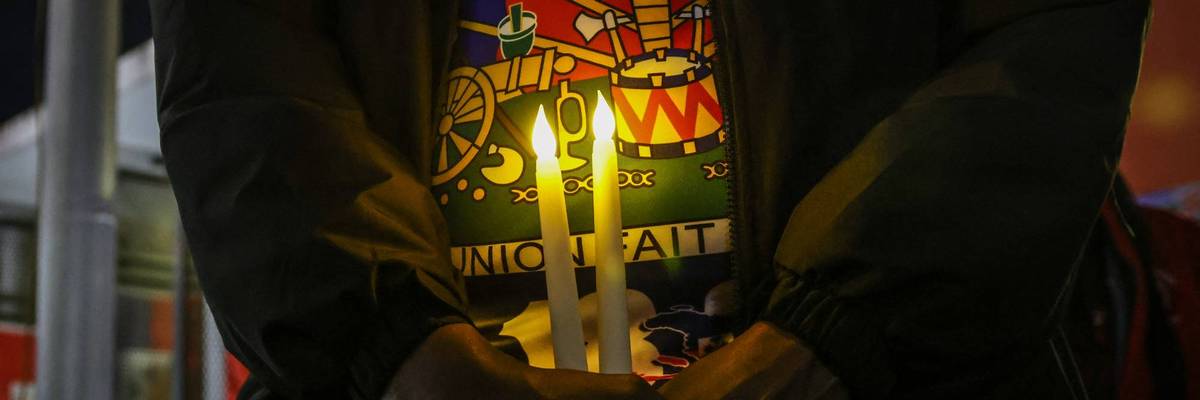
A man attends a candlelight vigil for Haitians living in the US under the Temporary Protected Status (TPS) immigration program in Miami, Florida on February 3, 2026.
We are a people who will fight for our survival and dignity, but there is also a limit to our resilience. The Trump administration's attacks have not only threatened our physical safety, they are also working to destroy our sense of psychological safety.
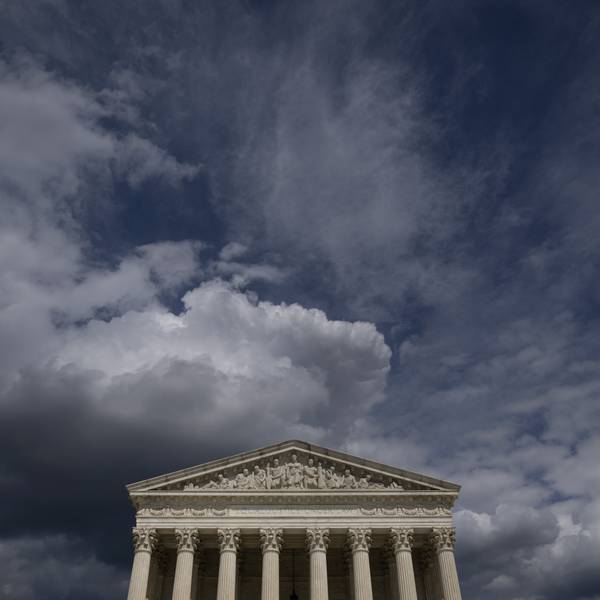
Over the summer, the Supreme Court gave the Trump administration free rein to terminate Temporary Protected Status for Haitian and Syrian immigrants, along with hundreds of thousands of TPS holders from other countries, limiting the accountability any administration will have for making determinations about TPS for the foreseeable future.
Last month, a young pre-med college student named Pierre Damas Bel from Springfield, Ohio was found dead, by an apparent suicide. He was suffering depression brought on by the termination of TPS and being forced to wear an Immigration and Custom Enforcement-issued ankle bracelet.
What happened to Damas Bel represents the real human cost of these inhumane policies. But sadly, I don’t believe we have reached the nadir of this administration’s cruelty.
Those of us who have more legal protections against these violent policies must be resolute in speaking out, and finding ways to shield Haitians and other TPS holders from their cruelty.
Haitians have been here before.
For centuries, we’ve witnessed a similar pattern of using Haitian immigrants as political scapegoats. Haitians know all too well what it feels like to be targeted, and as a result we live with the collective trauma of being treated as less than human.
When I arrived in 1984, I encountered hatred fueled by ignorance, misinformation, and xenophobia. I was bullied relentlessly. I was called "Boat People," "HBO" (Haitian Body Odor), "f***ing Haitian," and "HIV carrier." I was physically assaulted on my way to and from school. Those experiences taught me, at a very young age, how quickly stereotypes and lies can strip someone of their dignity and sense of belonging.
Fast forward to 2024, I would never have imagined hearing a former president utter the words: "They're eating the cats. They're eating the dogs. They're eating the pets," during a presidential debate. At the time, many people dismissed those comments as absurd, entertaining, or inconsequential. I could not.
As a 52-year-old father of two teenage boys, I wasn't amused. I was triggered. Those words reopened wounds I had buried for decades and forced me to relive the trauma I experienced as a newly arrived Haitian immigrant in New York City.
But by 2024, I was no longer afraid for myself. I was afraid for my sons, who had grown up embracing their Haitian heritage with pride and confidence. I wondered what these renewed attacks on Haitians would mean for them. Would they become targets of ridicule or violence? Would they feel pressured to hide a core part of who they are? Would they experience the same fear and isolation that defined so much of my youth?
Those questions kept me awake at night. Eventually, they compelled me to have "the talk" with my boys. For the first time, I shared the painful experiences I had buried for decades. We discussed what they were seeing and hearing in their social circles, and I tried to prepare them to navigate a climate where hateful rhetoric can quickly lead to real-life consequences. It was a conversation I had hoped I would never have to have. However, it reminded me that every generation must remain vigilant in confronting prejudice and defending the human rights and dignity of those who come after us.
The psychological ramifications of TPS' end have reverberated across the Haitian community in devastating ways. There are those who have already been deported and face an unsafe future, those of us who exist on bated breath, and then there are people like Damas Bel whose mental health has been shattered by the indignity of it all.
When I feel dejected and afraid for my community, I try to remember the Haitian Day of Outrage in 1990 when an estimated 50,000-150,000 Haitians and allies marched across the Brooklyn Bridge, shutting down Lower Manhattan. We were protesting against the US Food and Drug Administration's (FDA) discriminatory designation of Haitians as a high-risk group for HIV/AIDS and its policy of banning Haitian Americans from donating blood. The policy was rooted in racism rather than science, and fueled dangerous stereotypes. That historic demonstration played a significant role in pressuring the FDA to eventually reverse its position.
That memory reminds me that we are a people who will fight for our survival and dignity, but there is also a limit to our resilience. These attacks have not only threatened our physical safety, they are also working to destroy our sense of psychological safety.
We must ask ourselves how we can protect young Haitians like Damas Bel, and all those made vulnerable by the Trump administration and its far-right MAGA supporters. Those of us who have more legal protections against these violent policies must be resolute in speaking out, and finding ways to shield Haitians and other TPS holders from their cruelty.
The best way to know what you can do to stand in solidarity with these communities is to first connect with local organizations taking decisive steps to protect and stand with those who are in the bullseye of the current administration’s attempts to strip all of us of our rights and dignity.
Haitian Women for Haitian Refugees, where I work as a case manager and community organizer, is one of these organizations. We know that people power is the only thing that will protect us. We are using every tool at our disposal to provide care and safety for our community.
Here are some ways that you can join us in supporting Haitian and all TPS holders.
Actions you can take TODAY:
Dear Common Dreams reader, It’s been nearly 30 years since I co-founded Common Dreams with my late wife, Lina Newhouser. We had the radical notion that journalism should serve the public good, not corporate profits. It was clear to us from the outset what it would take to build such a project. No paid advertisements. No corporate sponsors. No millionaire publisher telling us what to think or do. Many people said we wouldn't last a year, but we proved those doubters wrong. Together with a tremendous team of journalists and dedicated staff, we built an independent media outlet free from the constraints of profits and corporate control. Our mission has always been simple: To inform. To inspire. To ignite change for the common good. Building Common Dreams was not easy. Our survival was never guaranteed. When you take on the most powerful forces—Wall Street greed, fossil fuel industry destruction, Big Tech lobbyists, and uber-rich oligarchs who have spent billions upon billions rigging the economy and democracy in their favor—the only bulwark you have is supporters who believe in your work. But here’s the urgent message from me today. It's never been this bad out there. And it's never been this hard to keep us going. At the very moment Common Dreams is most needed, the threats we face are intensifying. We need your support now more than ever. We don't accept corporate advertising and never will. We don't have a paywall because we don't think people should be blocked from critical news based on their ability to pay. Everything we do is funded by the donations of readers like you. When everyone does the little they can afford, we are strong. But if that support retreats or dries up, so do we. Will you donate now to make sure Common Dreams not only survives but thrives? —Craig Brown, Co-founder |
Over the summer, the Supreme Court gave the Trump administration free rein to terminate Temporary Protected Status for Haitian and Syrian immigrants, along with hundreds of thousands of TPS holders from other countries, limiting the accountability any administration will have for making determinations about TPS for the foreseeable future.
Last month, a young pre-med college student named Pierre Damas Bel from Springfield, Ohio was found dead, by an apparent suicide. He was suffering depression brought on by the termination of TPS and being forced to wear an Immigration and Custom Enforcement-issued ankle bracelet.
What happened to Damas Bel represents the real human cost of these inhumane policies. But sadly, I don’t believe we have reached the nadir of this administration’s cruelty.
Those of us who have more legal protections against these violent policies must be resolute in speaking out, and finding ways to shield Haitians and other TPS holders from their cruelty.
Haitians have been here before.
For centuries, we’ve witnessed a similar pattern of using Haitian immigrants as political scapegoats. Haitians know all too well what it feels like to be targeted, and as a result we live with the collective trauma of being treated as less than human.
When I arrived in 1984, I encountered hatred fueled by ignorance, misinformation, and xenophobia. I was bullied relentlessly. I was called "Boat People," "HBO" (Haitian Body Odor), "f***ing Haitian," and "HIV carrier." I was physically assaulted on my way to and from school. Those experiences taught me, at a very young age, how quickly stereotypes and lies can strip someone of their dignity and sense of belonging.
Fast forward to 2024, I would never have imagined hearing a former president utter the words: "They're eating the cats. They're eating the dogs. They're eating the pets," during a presidential debate. At the time, many people dismissed those comments as absurd, entertaining, or inconsequential. I could not.
As a 52-year-old father of two teenage boys, I wasn't amused. I was triggered. Those words reopened wounds I had buried for decades and forced me to relive the trauma I experienced as a newly arrived Haitian immigrant in New York City.
But by 2024, I was no longer afraid for myself. I was afraid for my sons, who had grown up embracing their Haitian heritage with pride and confidence. I wondered what these renewed attacks on Haitians would mean for them. Would they become targets of ridicule or violence? Would they feel pressured to hide a core part of who they are? Would they experience the same fear and isolation that defined so much of my youth?
Those questions kept me awake at night. Eventually, they compelled me to have "the talk" with my boys. For the first time, I shared the painful experiences I had buried for decades. We discussed what they were seeing and hearing in their social circles, and I tried to prepare them to navigate a climate where hateful rhetoric can quickly lead to real-life consequences. It was a conversation I had hoped I would never have to have. However, it reminded me that every generation must remain vigilant in confronting prejudice and defending the human rights and dignity of those who come after us.
The psychological ramifications of TPS' end have reverberated across the Haitian community in devastating ways. There are those who have already been deported and face an unsafe future, those of us who exist on bated breath, and then there are people like Damas Bel whose mental health has been shattered by the indignity of it all.
When I feel dejected and afraid for my community, I try to remember the Haitian Day of Outrage in 1990 when an estimated 50,000-150,000 Haitians and allies marched across the Brooklyn Bridge, shutting down Lower Manhattan. We were protesting against the US Food and Drug Administration's (FDA) discriminatory designation of Haitians as a high-risk group for HIV/AIDS and its policy of banning Haitian Americans from donating blood. The policy was rooted in racism rather than science, and fueled dangerous stereotypes. That historic demonstration played a significant role in pressuring the FDA to eventually reverse its position.
That memory reminds me that we are a people who will fight for our survival and dignity, but there is also a limit to our resilience. These attacks have not only threatened our physical safety, they are also working to destroy our sense of psychological safety.
We must ask ourselves how we can protect young Haitians like Damas Bel, and all those made vulnerable by the Trump administration and its far-right MAGA supporters. Those of us who have more legal protections against these violent policies must be resolute in speaking out, and finding ways to shield Haitians and other TPS holders from their cruelty.
The best way to know what you can do to stand in solidarity with these communities is to first connect with local organizations taking decisive steps to protect and stand with those who are in the bullseye of the current administration’s attempts to strip all of us of our rights and dignity.
Haitian Women for Haitian Refugees, where I work as a case manager and community organizer, is one of these organizations. We know that people power is the only thing that will protect us. We are using every tool at our disposal to provide care and safety for our community.
Here are some ways that you can join us in supporting Haitian and all TPS holders.
Actions you can take TODAY:
Over the summer, the Supreme Court gave the Trump administration free rein to terminate Temporary Protected Status for Haitian and Syrian immigrants, along with hundreds of thousands of TPS holders from other countries, limiting the accountability any administration will have for making determinations about TPS for the foreseeable future.
Last month, a young pre-med college student named Pierre Damas Bel from Springfield, Ohio was found dead, by an apparent suicide. He was suffering depression brought on by the termination of TPS and being forced to wear an Immigration and Custom Enforcement-issued ankle bracelet.
What happened to Damas Bel represents the real human cost of these inhumane policies. But sadly, I don’t believe we have reached the nadir of this administration’s cruelty.
Those of us who have more legal protections against these violent policies must be resolute in speaking out, and finding ways to shield Haitians and other TPS holders from their cruelty.
Haitians have been here before.
For centuries, we’ve witnessed a similar pattern of using Haitian immigrants as political scapegoats. Haitians know all too well what it feels like to be targeted, and as a result we live with the collective trauma of being treated as less than human.
When I arrived in 1984, I encountered hatred fueled by ignorance, misinformation, and xenophobia. I was bullied relentlessly. I was called "Boat People," "HBO" (Haitian Body Odor), "f***ing Haitian," and "HIV carrier." I was physically assaulted on my way to and from school. Those experiences taught me, at a very young age, how quickly stereotypes and lies can strip someone of their dignity and sense of belonging.
Fast forward to 2024, I would never have imagined hearing a former president utter the words: "They're eating the cats. They're eating the dogs. They're eating the pets," during a presidential debate. At the time, many people dismissed those comments as absurd, entertaining, or inconsequential. I could not.
As a 52-year-old father of two teenage boys, I wasn't amused. I was triggered. Those words reopened wounds I had buried for decades and forced me to relive the trauma I experienced as a newly arrived Haitian immigrant in New York City.
But by 2024, I was no longer afraid for myself. I was afraid for my sons, who had grown up embracing their Haitian heritage with pride and confidence. I wondered what these renewed attacks on Haitians would mean for them. Would they become targets of ridicule or violence? Would they feel pressured to hide a core part of who they are? Would they experience the same fear and isolation that defined so much of my youth?
Those questions kept me awake at night. Eventually, they compelled me to have "the talk" with my boys. For the first time, I shared the painful experiences I had buried for decades. We discussed what they were seeing and hearing in their social circles, and I tried to prepare them to navigate a climate where hateful rhetoric can quickly lead to real-life consequences. It was a conversation I had hoped I would never have to have. However, it reminded me that every generation must remain vigilant in confronting prejudice and defending the human rights and dignity of those who come after us.
The psychological ramifications of TPS' end have reverberated across the Haitian community in devastating ways. There are those who have already been deported and face an unsafe future, those of us who exist on bated breath, and then there are people like Damas Bel whose mental health has been shattered by the indignity of it all.
When I feel dejected and afraid for my community, I try to remember the Haitian Day of Outrage in 1990 when an estimated 50,000-150,000 Haitians and allies marched across the Brooklyn Bridge, shutting down Lower Manhattan. We were protesting against the US Food and Drug Administration's (FDA) discriminatory designation of Haitians as a high-risk group for HIV/AIDS and its policy of banning Haitian Americans from donating blood. The policy was rooted in racism rather than science, and fueled dangerous stereotypes. That historic demonstration played a significant role in pressuring the FDA to eventually reverse its position.
That memory reminds me that we are a people who will fight for our survival and dignity, but there is also a limit to our resilience. These attacks have not only threatened our physical safety, they are also working to destroy our sense of psychological safety.
We must ask ourselves how we can protect young Haitians like Damas Bel, and all those made vulnerable by the Trump administration and its far-right MAGA supporters. Those of us who have more legal protections against these violent policies must be resolute in speaking out, and finding ways to shield Haitians and other TPS holders from their cruelty.
The best way to know what you can do to stand in solidarity with these communities is to first connect with local organizations taking decisive steps to protect and stand with those who are in the bullseye of the current administration’s attempts to strip all of us of our rights and dignity.
Haitian Women for Haitian Refugees, where I work as a case manager and community organizer, is one of these organizations. We know that people power is the only thing that will protect us. We are using every tool at our disposal to provide care and safety for our community.
Here are some ways that you can join us in supporting Haitian and all TPS holders.
Actions you can take TODAY: