SUBSCRIBE TO OUR FREE NEWSLETTER
Daily news & progressive opinion—funded by the people, not the corporations—delivered straight to your inbox.
5
#000000
#FFFFFF
To donate by check, phone, or other method, see our More Ways to Give page.
Daily news & progressive opinion—funded by the people, not the corporations—delivered straight to your inbox.
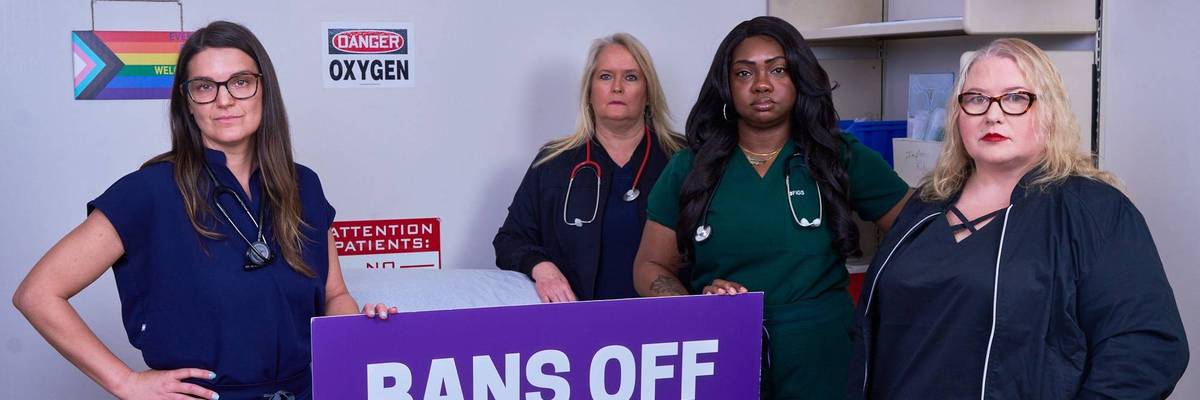
The clinical team of the Women's Health Center of West Virginia poses in a procedural room.
On the anniversary of both Dobbs v. Jackson Women’s Health and US v. Skrmetti, support independent clinics in hard places keeping the doors open.
We’ve been here before. When Dobbs came for abortion care in our states, we did two things: We opened clinics across state lines so our patients would still have a legal option. And we stayed. We kept our original clinics open, expanding the care we'd always offered or always wanted to offer. When Skrmetti came for gender-affirming care, we kept providing that too, because abortion care patients and transgender patients are not separate communities. The calculation patients make before they walk through the door is identical for both communities: Will I be seen? Will I be safe? Will the person across from me treat my body like a problem to be managed, or a life to be supported? June marks anniversaries of both Dobbs v. Jackson Women’s Health and US v. Skrmetti, and that conviction has never felt more urgent.
Long before Dobbs or Skrmetti, the intersection of abortion rights and trans rights was already living in our waiting rooms, in the patients who received reproductive care and gender-affirming hormone therapy (GAHT) under the same roof; in the person who drove hours across the state because we were the only provider they trusted; and in those who trust us with their whole-person care because their grandmothers, mothers, sisters, aunts, and friends have relied on our clinics for care for 50 years. Throughout that history, our organizations have been guided by a simple principle: When members of our community are targeted, excluded, or denied the care they need, we do not look away. We listen, we adapt, and we show up.
When abortion care moved across the border after Dobbs, the patients who remained still needed care they couldn’t access at home. The wall between reproductive healthcare and LGBTQIA+ healthcare that exists in policy language and funding categories has never existed in our exam rooms.
What connects every patient who walks through our doors, whether they’re coming in for an abortion or a hormone therapy appointment, is something our staff recognized long before we had language for it: the experience of arriving at a clinic while carrying the weight of a political target on your back. A clinic’s job of creating a space where people can receive care without shame or fear has always been exactly the same job regardless of why they came.
Bodily autonomy is the foundational principle of reproductive rights, and it only means something if it applies to everyone.
Marty had learned, growing up as a transgender person in rural Maryland, to brace himself before every medical appointment, because finding healthcare that was both competent and genuinely affirming had always required a fight. What he found at our clinic was a staff that met him without conditions, no justifications required, no explanations asked for. His mother has supported the Women’s Health Center (WHC) since its earliest days, and used to volunteer as a clinic escort. Watching the same clinic support her son in his gender-affirming care gave her, in her own words, a peace she hadn’t known she needed. When gaps in care left Ben, a transgender West Virginian, navigating painful dysphoric cycles and a transition that had stalled, he found his way to WHC West Virginia. Today, he says that every time he looks in the mirror, he sees more of himself looking back.
When one of our providers first interviewed to work for CHOICES, she didn't really know much about gender-affirming care. In the time she has been with CHOICES, she has cared for hundreds of gender-affirming care patients across the mid-South. "It's clear how important this care is for patients," she shared. "After patients start hormone replacement therapy, they come back as a much more energetic, vivacious person.” Since the state of Tennessee has restricted gender-affirming healthcare, including banning minors from accessing care, our patients are experiencing increased anxiety and fear about their privacy, safety, and continued access to care. CHOICES' provider shared, "Hormone replacement therapy is routine, like every other service we offer.” If something has such a profound impact on someone's life, why wouldn't we keep this care accessible?
The pattern behind Skrmetti is one reproductive rights advocates should recognize immediately, because it follows the same logic as the restrictions that led to Dobbs: They come for the most vulnerable first, in the states where the political ground is most hostile, and they build from there. Idaho passed the first transgender athlete ban in 2020, West Virginia followed with the Save Women’s Sports Act in 2021, and Tennessee’s restrictions on gender-affirming care for minors moved through the courts the same way abortion restrictions moved state by state in the years before Dobbs. Since abortion care moved across the border, thousands have received gender-affirming and LGBTQIA+ care at our clinics, even as the political, legal, and financial pressure on both organizations has intensified.
Bodily autonomy is the foundational principle of reproductive rights, and it only means something if it applies to everyone. When it becomes conditional, granted to some patients and denied to others, it stops being a principle and starts being a permission slip, and permission slips get revoked. The fights to protect abortion access and gender-affirming care are not parallel struggles that happen to share a difficult political moment. They are the same struggle, rooted in the same conviction, playing out in the same clinics with the same patients, and the forces working to end both of them have always understood that connection even when the rest of us have sometimes lost sight of it.
Between our two organizations, we’ve earned a century’s worth of experience at the practice of staying, enduring. CHOICES has kept their doors open for 52 years, and the Women’s Health Centers of West Virginia and Maryland will celebrate 50 years of care on June 24—the same day Roe v. Wade was overturned four years ago.
Support independent clinics in hard places keeping the doors open. And when the next fight comes, show up for the communities under pressure. Remember that those targeted first won’t be the last, but they will be the ones to lead the way.
Dear Common Dreams reader, It’s been nearly 30 years since I co-founded Common Dreams with my late wife, Lina Newhouser. We had the radical notion that journalism should serve the public good, not corporate profits. It was clear to us from the outset what it would take to build such a project. No paid advertisements. No corporate sponsors. No millionaire publisher telling us what to think or do. Many people said we wouldn't last a year, but we proved those doubters wrong. Together with a tremendous team of journalists and dedicated staff, we built an independent media outlet free from the constraints of profits and corporate control. Our mission has always been simple: To inform. To inspire. To ignite change for the common good. Building Common Dreams was not easy. Our survival was never guaranteed. When you take on the most powerful forces—Wall Street greed, fossil fuel industry destruction, Big Tech lobbyists, and uber-rich oligarchs who have spent billions upon billions rigging the economy and democracy in their favor—the only bulwark you have is supporters who believe in your work. But here’s the urgent message from me today. It's never been this bad out there. And it's never been this hard to keep us going. At the very moment Common Dreams is most needed, the threats we face are intensifying. We need your support now more than ever. We don't accept corporate advertising and never will. We don't have a paywall because we don't think people should be blocked from critical news based on their ability to pay. Everything we do is funded by the donations of readers like you. When everyone does the little they can afford, we are strong. But if that support retreats or dries up, so do we. Will you donate now to make sure Common Dreams not only survives but thrives? —Craig Brown, Co-founder |
We’ve been here before. When Dobbs came for abortion care in our states, we did two things: We opened clinics across state lines so our patients would still have a legal option. And we stayed. We kept our original clinics open, expanding the care we'd always offered or always wanted to offer. When Skrmetti came for gender-affirming care, we kept providing that too, because abortion care patients and transgender patients are not separate communities. The calculation patients make before they walk through the door is identical for both communities: Will I be seen? Will I be safe? Will the person across from me treat my body like a problem to be managed, or a life to be supported? June marks anniversaries of both Dobbs v. Jackson Women’s Health and US v. Skrmetti, and that conviction has never felt more urgent.
Long before Dobbs or Skrmetti, the intersection of abortion rights and trans rights was already living in our waiting rooms, in the patients who received reproductive care and gender-affirming hormone therapy (GAHT) under the same roof; in the person who drove hours across the state because we were the only provider they trusted; and in those who trust us with their whole-person care because their grandmothers, mothers, sisters, aunts, and friends have relied on our clinics for care for 50 years. Throughout that history, our organizations have been guided by a simple principle: When members of our community are targeted, excluded, or denied the care they need, we do not look away. We listen, we adapt, and we show up.
When abortion care moved across the border after Dobbs, the patients who remained still needed care they couldn’t access at home. The wall between reproductive healthcare and LGBTQIA+ healthcare that exists in policy language and funding categories has never existed in our exam rooms.
What connects every patient who walks through our doors, whether they’re coming in for an abortion or a hormone therapy appointment, is something our staff recognized long before we had language for it: the experience of arriving at a clinic while carrying the weight of a political target on your back. A clinic’s job of creating a space where people can receive care without shame or fear has always been exactly the same job regardless of why they came.
Bodily autonomy is the foundational principle of reproductive rights, and it only means something if it applies to everyone.
Marty had learned, growing up as a transgender person in rural Maryland, to brace himself before every medical appointment, because finding healthcare that was both competent and genuinely affirming had always required a fight. What he found at our clinic was a staff that met him without conditions, no justifications required, no explanations asked for. His mother has supported the Women’s Health Center (WHC) since its earliest days, and used to volunteer as a clinic escort. Watching the same clinic support her son in his gender-affirming care gave her, in her own words, a peace she hadn’t known she needed. When gaps in care left Ben, a transgender West Virginian, navigating painful dysphoric cycles and a transition that had stalled, he found his way to WHC West Virginia. Today, he says that every time he looks in the mirror, he sees more of himself looking back.
When one of our providers first interviewed to work for CHOICES, she didn't really know much about gender-affirming care. In the time she has been with CHOICES, she has cared for hundreds of gender-affirming care patients across the mid-South. "It's clear how important this care is for patients," she shared. "After patients start hormone replacement therapy, they come back as a much more energetic, vivacious person.” Since the state of Tennessee has restricted gender-affirming healthcare, including banning minors from accessing care, our patients are experiencing increased anxiety and fear about their privacy, safety, and continued access to care. CHOICES' provider shared, "Hormone replacement therapy is routine, like every other service we offer.” If something has such a profound impact on someone's life, why wouldn't we keep this care accessible?
The pattern behind Skrmetti is one reproductive rights advocates should recognize immediately, because it follows the same logic as the restrictions that led to Dobbs: They come for the most vulnerable first, in the states where the political ground is most hostile, and they build from there. Idaho passed the first transgender athlete ban in 2020, West Virginia followed with the Save Women’s Sports Act in 2021, and Tennessee’s restrictions on gender-affirming care for minors moved through the courts the same way abortion restrictions moved state by state in the years before Dobbs. Since abortion care moved across the border, thousands have received gender-affirming and LGBTQIA+ care at our clinics, even as the political, legal, and financial pressure on both organizations has intensified.
Bodily autonomy is the foundational principle of reproductive rights, and it only means something if it applies to everyone. When it becomes conditional, granted to some patients and denied to others, it stops being a principle and starts being a permission slip, and permission slips get revoked. The fights to protect abortion access and gender-affirming care are not parallel struggles that happen to share a difficult political moment. They are the same struggle, rooted in the same conviction, playing out in the same clinics with the same patients, and the forces working to end both of them have always understood that connection even when the rest of us have sometimes lost sight of it.
Between our two organizations, we’ve earned a century’s worth of experience at the practice of staying, enduring. CHOICES has kept their doors open for 52 years, and the Women’s Health Centers of West Virginia and Maryland will celebrate 50 years of care on June 24—the same day Roe v. Wade was overturned four years ago.
Support independent clinics in hard places keeping the doors open. And when the next fight comes, show up for the communities under pressure. Remember that those targeted first won’t be the last, but they will be the ones to lead the way.
We’ve been here before. When Dobbs came for abortion care in our states, we did two things: We opened clinics across state lines so our patients would still have a legal option. And we stayed. We kept our original clinics open, expanding the care we'd always offered or always wanted to offer. When Skrmetti came for gender-affirming care, we kept providing that too, because abortion care patients and transgender patients are not separate communities. The calculation patients make before they walk through the door is identical for both communities: Will I be seen? Will I be safe? Will the person across from me treat my body like a problem to be managed, or a life to be supported? June marks anniversaries of both Dobbs v. Jackson Women’s Health and US v. Skrmetti, and that conviction has never felt more urgent.
Long before Dobbs or Skrmetti, the intersection of abortion rights and trans rights was already living in our waiting rooms, in the patients who received reproductive care and gender-affirming hormone therapy (GAHT) under the same roof; in the person who drove hours across the state because we were the only provider they trusted; and in those who trust us with their whole-person care because their grandmothers, mothers, sisters, aunts, and friends have relied on our clinics for care for 50 years. Throughout that history, our organizations have been guided by a simple principle: When members of our community are targeted, excluded, or denied the care they need, we do not look away. We listen, we adapt, and we show up.
When abortion care moved across the border after Dobbs, the patients who remained still needed care they couldn’t access at home. The wall between reproductive healthcare and LGBTQIA+ healthcare that exists in policy language and funding categories has never existed in our exam rooms.
What connects every patient who walks through our doors, whether they’re coming in for an abortion or a hormone therapy appointment, is something our staff recognized long before we had language for it: the experience of arriving at a clinic while carrying the weight of a political target on your back. A clinic’s job of creating a space where people can receive care without shame or fear has always been exactly the same job regardless of why they came.
Bodily autonomy is the foundational principle of reproductive rights, and it only means something if it applies to everyone.
Marty had learned, growing up as a transgender person in rural Maryland, to brace himself before every medical appointment, because finding healthcare that was both competent and genuinely affirming had always required a fight. What he found at our clinic was a staff that met him without conditions, no justifications required, no explanations asked for. His mother has supported the Women’s Health Center (WHC) since its earliest days, and used to volunteer as a clinic escort. Watching the same clinic support her son in his gender-affirming care gave her, in her own words, a peace she hadn’t known she needed. When gaps in care left Ben, a transgender West Virginian, navigating painful dysphoric cycles and a transition that had stalled, he found his way to WHC West Virginia. Today, he says that every time he looks in the mirror, he sees more of himself looking back.
When one of our providers first interviewed to work for CHOICES, she didn't really know much about gender-affirming care. In the time she has been with CHOICES, she has cared for hundreds of gender-affirming care patients across the mid-South. "It's clear how important this care is for patients," she shared. "After patients start hormone replacement therapy, they come back as a much more energetic, vivacious person.” Since the state of Tennessee has restricted gender-affirming healthcare, including banning minors from accessing care, our patients are experiencing increased anxiety and fear about their privacy, safety, and continued access to care. CHOICES' provider shared, "Hormone replacement therapy is routine, like every other service we offer.” If something has such a profound impact on someone's life, why wouldn't we keep this care accessible?
The pattern behind Skrmetti is one reproductive rights advocates should recognize immediately, because it follows the same logic as the restrictions that led to Dobbs: They come for the most vulnerable first, in the states where the political ground is most hostile, and they build from there. Idaho passed the first transgender athlete ban in 2020, West Virginia followed with the Save Women’s Sports Act in 2021, and Tennessee’s restrictions on gender-affirming care for minors moved through the courts the same way abortion restrictions moved state by state in the years before Dobbs. Since abortion care moved across the border, thousands have received gender-affirming and LGBTQIA+ care at our clinics, even as the political, legal, and financial pressure on both organizations has intensified.
Bodily autonomy is the foundational principle of reproductive rights, and it only means something if it applies to everyone. When it becomes conditional, granted to some patients and denied to others, it stops being a principle and starts being a permission slip, and permission slips get revoked. The fights to protect abortion access and gender-affirming care are not parallel struggles that happen to share a difficult political moment. They are the same struggle, rooted in the same conviction, playing out in the same clinics with the same patients, and the forces working to end both of them have always understood that connection even when the rest of us have sometimes lost sight of it.
Between our two organizations, we’ve earned a century’s worth of experience at the practice of staying, enduring. CHOICES has kept their doors open for 52 years, and the Women’s Health Centers of West Virginia and Maryland will celebrate 50 years of care on June 24—the same day Roe v. Wade was overturned four years ago.
Support independent clinics in hard places keeping the doors open. And when the next fight comes, show up for the communities under pressure. Remember that those targeted first won’t be the last, but they will be the ones to lead the way.