SUBSCRIBE TO OUR FREE NEWSLETTER
Daily news & progressive opinion—funded by the people, not the corporations—delivered straight to your inbox.
5
#000000
#FFFFFF
To donate by check, phone, or other method, see our More Ways to Give page.
Daily news & progressive opinion—funded by the people, not the corporations—delivered straight to your inbox.
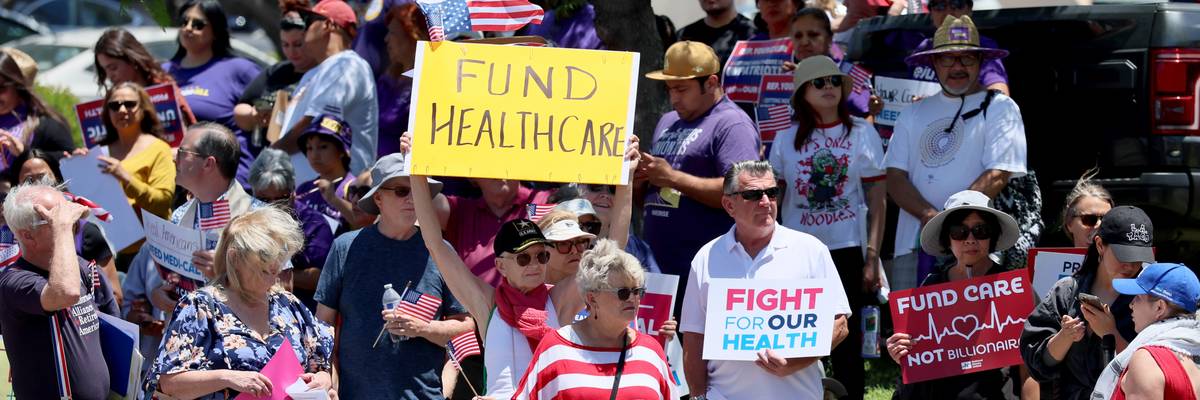
A protest co-led by the California Nurses Association called on Rep. Young Kim (R-Calif.) to vote against US President Donald Trump’s spending bill that would slash spending on healthcare and other federal safety net programs while extending tax cuts outside Kim’s field office in Anaheim, California on Tuesday, July 1, 2025.
Trump and his allies in Congress have not so much dismantled these programs yet as chipped away at them; if this movement continues unabated, we may be left with the crumbling foundations of programs that were built to last.
There is reason to celebrate Medicare and Medicaid turning 61 years old. Both highly successful programs were signed into law by President Lyndon B. Johnson on July 30, 1965 as a cornerstone of his Great Society agenda. But this year, our celebration is tempered by grave concern over the future of both programs under the Trump regime.
Let’s compare the words of the two presidents:
LBJ:
No longer will older Americans be denied the healing miracle of modern medicine. No longer will illness crush and destroy the savings that they have so carefully put away over a lifetime. No longer will young families see their own incomes, and their own hopes, eaten away simply because they are carrying out their deep moral obligations to their parents.
It’s not possible for us to take care of… Medicaid, Medicare, all these individual things. They can do it on a state basis. You can’t do it on a federal. We have to take care of one thing: military protection. We have to guard the country.
The comparison speaks volumes. One is a leader who understood that the federal government has a crucial role in the protecting the health and well-being of our most vulnerable citizens—including the poor, disabled, and the elderly. The other is a president who claims to support Medicare and then says that the federal government can’t afford it because of his illegal war in Iran. So much for supporting Medicare.
But this goes deeper than Trump’s rhetoric. The Medicare program, like Social Security, is at a pivotal point in its history. The Part A hospital) trust fund must be fortified so that it doesn’t run dry in the 2030s. (There are reasonable solutions that Congress could enact without hurting seniors.) So far, though, we have heard no constructive ideas from Trump.
More urgently, though, the Trump administration is actively undermining the "traditional Medicare" program that LBJ signed into law. The administration has begun a pilot program to use AI bots to determine whether traditional Medicare patients will be covered for procedures their doctors have ordered. This appears to be an attempt to cut costs by erecting obstacles to medically necessary care—with decisions made by bots instead of human beings.
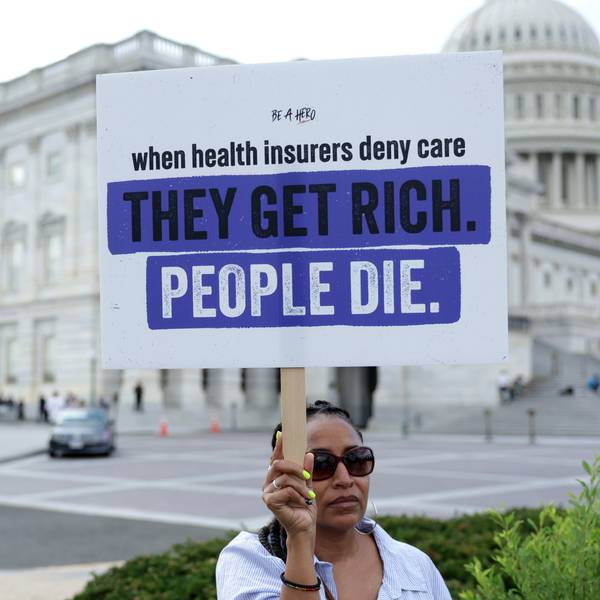
It could be the first step in a scheme to corrupt traditional Medicare and make it more like the privatized Medicare Advantage program run by for-profit insurers, which is a glorified HMO (with frequent denials of care, limited provider networks, and surprise out-of-pocket costs for beneficiaries). Unfortunately, thanks to deceptive but pervasive advertising, Medicare Advantage has now captured more than 51% of the market, leaving traditional Medicare with a shrinking share of enrollees.
The problem is that Medicare Advantage (MA) puts profits over patients. Participating insurance companies have been overbilling the federal government by billions of dollars a year. Ironically, this privatized program was supposed to save taxpayers money. Instead, Medicare Advantage plans cost the government an average of 14% more per patient than traditional Medicare. That translates into an additional $76 billion in federal spending this year alone.
The bottom line: Medicare Advantage puts taxpayers’ money into the hands of large insurance companies while failing to deliver superior or more cost-effective care. It is fair to say that this is not what LBJ had in mind when he created the public Medicare program. (Medicare Advantage arrived—in nascent form—in 1997, after considerable pressure from the insurance industry.)
When we talk about the financial shortfall facing the Medicare program, we must look at Medicare Advantage as an aggravating factor. Reining-in MA would go a long way toward restoring the overall program to fiscal health—along with other commonsense reforms. Unfortunately, the Trump administration has been inconsistent on this issue, initially floating strict curbs on MA overpayments but ultimately rewarding insurance companies with higher payouts.
Traditional Medicare is far from perfect. It should have caps on patients’ out-of-pocket medical costs. It should cover vision, dental, and hearing care. (President Joe Biden attempted to expand coverage in the ill-fated Build Back Better Act.) These are improvements that we have long urged Congress and the White House to enact.
Medicare also faces compound financial challenges—including the overall rise in healthcare costs and soaring prescription drug prices. The Biden administration and Democrats in Congress took a major step in the right direction with the Inflation Reduction Act, which empowered Medicare to negotiate drug prices with Big Pharma. This process is expected to save the government more than $230 billion by 2031.
For the most part, the Trump administration has adhered to the law and continued negotiating with drugmakers—but it also expanded the list of cancer drugs that won’t be eligible for negotiations. The president has largely relied on smoke and mirrors to make it appear that the administration is "tough on Big Pharma," using gimmicks like TrumpRx. Meanwhile, in a move that will make medications less affordable for seniors, the Trump administration has just announced it is ending Biden-era subsidies in the Medicare Part D prescription drug program.
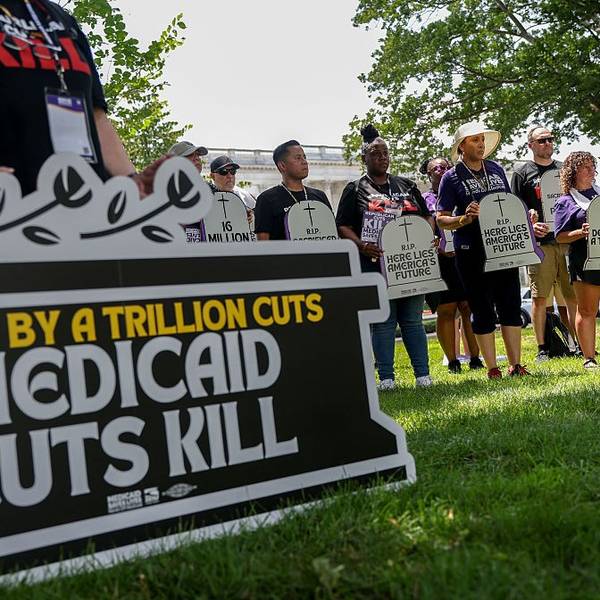
Of course, it’s also Medicaid’s 61st anniversary. The damage that Trump and the Republicans have done to Medicare’s sister program would take up another entire article. Suffice it to say that more than 3 million Americans have already lost health coverage since Trump and the GOP enacted their Big, Ugly Bill, which slashed nearly $1 trillion from Medicaid. (This also hurts older people dually enrolled in both Medicare and Medicaid.) It was correctly labeled the biggest cut in healthcare in US history—to pay for tax cuts largely benefiting the wealthy.
The political right has always been wary of the New Deal and Great Society legacy programs that lifted people out of poverty and provided older and lower-income Americans with basic retirement and health security. Some on the right have outright committed themselves to dismantling these programs, despite their distinguished histories. Trump and his allies in Congress have not so much dismantled these programs yet as chipped away at them under the guise of fighting "fraud and abuse." If this movement continues unabated, we may be left with the crumbling foundations of programs that were built to last, for the good of the American people.
Dear Common Dreams reader, It’s been nearly 30 years since I co-founded Common Dreams with my late wife, Lina Newhouser. We had the radical notion that journalism should serve the public good, not corporate profits. It was clear to us from the outset what it would take to build such a project. No paid advertisements. No corporate sponsors. No millionaire publisher telling us what to think or do. Many people said we wouldn't last a year, but we proved those doubters wrong. Together with a tremendous team of journalists and dedicated staff, we built an independent media outlet free from the constraints of profits and corporate control. Our mission has always been simple: To inform. To inspire. To ignite change for the common good. Building Common Dreams was not easy. Our survival was never guaranteed. When you take on the most powerful forces—Wall Street greed, fossil fuel industry destruction, Big Tech lobbyists, and uber-rich oligarchs who have spent billions upon billions rigging the economy and democracy in their favor—the only bulwark you have is supporters who believe in your work. But here’s the urgent message from me today. It's never been this bad out there. And it's never been this hard to keep us going. At the very moment Common Dreams is most needed, the threats we face are intensifying. We need your support now more than ever. We don't accept corporate advertising and never will. We don't have a paywall because we don't think people should be blocked from critical news based on their ability to pay. Everything we do is funded by the donations of readers like you. When everyone does the little they can afford, we are strong. But if that support retreats or dries up, so do we. Will you donate now to make sure Common Dreams not only survives but thrives? —Craig Brown, Co-founder |
There is reason to celebrate Medicare and Medicaid turning 61 years old. Both highly successful programs were signed into law by President Lyndon B. Johnson on July 30, 1965 as a cornerstone of his Great Society agenda. But this year, our celebration is tempered by grave concern over the future of both programs under the Trump regime.
Let’s compare the words of the two presidents:
LBJ:
No longer will older Americans be denied the healing miracle of modern medicine. No longer will illness crush and destroy the savings that they have so carefully put away over a lifetime. No longer will young families see their own incomes, and their own hopes, eaten away simply because they are carrying out their deep moral obligations to their parents.
It’s not possible for us to take care of… Medicaid, Medicare, all these individual things. They can do it on a state basis. You can’t do it on a federal. We have to take care of one thing: military protection. We have to guard the country.
The comparison speaks volumes. One is a leader who understood that the federal government has a crucial role in the protecting the health and well-being of our most vulnerable citizens—including the poor, disabled, and the elderly. The other is a president who claims to support Medicare and then says that the federal government can’t afford it because of his illegal war in Iran. So much for supporting Medicare.
But this goes deeper than Trump’s rhetoric. The Medicare program, like Social Security, is at a pivotal point in its history. The Part A hospital) trust fund must be fortified so that it doesn’t run dry in the 2030s. (There are reasonable solutions that Congress could enact without hurting seniors.) So far, though, we have heard no constructive ideas from Trump.
More urgently, though, the Trump administration is actively undermining the "traditional Medicare" program that LBJ signed into law. The administration has begun a pilot program to use AI bots to determine whether traditional Medicare patients will be covered for procedures their doctors have ordered. This appears to be an attempt to cut costs by erecting obstacles to medically necessary care—with decisions made by bots instead of human beings.
It could be the first step in a scheme to corrupt traditional Medicare and make it more like the privatized Medicare Advantage program run by for-profit insurers, which is a glorified HMO (with frequent denials of care, limited provider networks, and surprise out-of-pocket costs for beneficiaries). Unfortunately, thanks to deceptive but pervasive advertising, Medicare Advantage has now captured more than 51% of the market, leaving traditional Medicare with a shrinking share of enrollees.
The problem is that Medicare Advantage (MA) puts profits over patients. Participating insurance companies have been overbilling the federal government by billions of dollars a year. Ironically, this privatized program was supposed to save taxpayers money. Instead, Medicare Advantage plans cost the government an average of 14% more per patient than traditional Medicare. That translates into an additional $76 billion in federal spending this year alone.
The bottom line: Medicare Advantage puts taxpayers’ money into the hands of large insurance companies while failing to deliver superior or more cost-effective care. It is fair to say that this is not what LBJ had in mind when he created the public Medicare program. (Medicare Advantage arrived—in nascent form—in 1997, after considerable pressure from the insurance industry.)
When we talk about the financial shortfall facing the Medicare program, we must look at Medicare Advantage as an aggravating factor. Reining-in MA would go a long way toward restoring the overall program to fiscal health—along with other commonsense reforms. Unfortunately, the Trump administration has been inconsistent on this issue, initially floating strict curbs on MA overpayments but ultimately rewarding insurance companies with higher payouts.
Traditional Medicare is far from perfect. It should have caps on patients’ out-of-pocket medical costs. It should cover vision, dental, and hearing care. (President Joe Biden attempted to expand coverage in the ill-fated Build Back Better Act.) These are improvements that we have long urged Congress and the White House to enact.
Medicare also faces compound financial challenges—including the overall rise in healthcare costs and soaring prescription drug prices. The Biden administration and Democrats in Congress took a major step in the right direction with the Inflation Reduction Act, which empowered Medicare to negotiate drug prices with Big Pharma. This process is expected to save the government more than $230 billion by 2031.
For the most part, the Trump administration has adhered to the law and continued negotiating with drugmakers—but it also expanded the list of cancer drugs that won’t be eligible for negotiations. The president has largely relied on smoke and mirrors to make it appear that the administration is "tough on Big Pharma," using gimmicks like TrumpRx. Meanwhile, in a move that will make medications less affordable for seniors, the Trump administration has just announced it is ending Biden-era subsidies in the Medicare Part D prescription drug program.
Of course, it’s also Medicaid’s 61st anniversary. The damage that Trump and the Republicans have done to Medicare’s sister program would take up another entire article. Suffice it to say that more than 3 million Americans have already lost health coverage since Trump and the GOP enacted their Big, Ugly Bill, which slashed nearly $1 trillion from Medicaid. (This also hurts older people dually enrolled in both Medicare and Medicaid.) It was correctly labeled the biggest cut in healthcare in US history—to pay for tax cuts largely benefiting the wealthy.
The political right has always been wary of the New Deal and Great Society legacy programs that lifted people out of poverty and provided older and lower-income Americans with basic retirement and health security. Some on the right have outright committed themselves to dismantling these programs, despite their distinguished histories. Trump and his allies in Congress have not so much dismantled these programs yet as chipped away at them under the guise of fighting "fraud and abuse." If this movement continues unabated, we may be left with the crumbling foundations of programs that were built to last, for the good of the American people.
There is reason to celebrate Medicare and Medicaid turning 61 years old. Both highly successful programs were signed into law by President Lyndon B. Johnson on July 30, 1965 as a cornerstone of his Great Society agenda. But this year, our celebration is tempered by grave concern over the future of both programs under the Trump regime.
Let’s compare the words of the two presidents:
LBJ:
No longer will older Americans be denied the healing miracle of modern medicine. No longer will illness crush and destroy the savings that they have so carefully put away over a lifetime. No longer will young families see their own incomes, and their own hopes, eaten away simply because they are carrying out their deep moral obligations to their parents.
It’s not possible for us to take care of… Medicaid, Medicare, all these individual things. They can do it on a state basis. You can’t do it on a federal. We have to take care of one thing: military protection. We have to guard the country.
The comparison speaks volumes. One is a leader who understood that the federal government has a crucial role in the protecting the health and well-being of our most vulnerable citizens—including the poor, disabled, and the elderly. The other is a president who claims to support Medicare and then says that the federal government can’t afford it because of his illegal war in Iran. So much for supporting Medicare.
But this goes deeper than Trump’s rhetoric. The Medicare program, like Social Security, is at a pivotal point in its history. The Part A hospital) trust fund must be fortified so that it doesn’t run dry in the 2030s. (There are reasonable solutions that Congress could enact without hurting seniors.) So far, though, we have heard no constructive ideas from Trump.
More urgently, though, the Trump administration is actively undermining the "traditional Medicare" program that LBJ signed into law. The administration has begun a pilot program to use AI bots to determine whether traditional Medicare patients will be covered for procedures their doctors have ordered. This appears to be an attempt to cut costs by erecting obstacles to medically necessary care—with decisions made by bots instead of human beings.
It could be the first step in a scheme to corrupt traditional Medicare and make it more like the privatized Medicare Advantage program run by for-profit insurers, which is a glorified HMO (with frequent denials of care, limited provider networks, and surprise out-of-pocket costs for beneficiaries). Unfortunately, thanks to deceptive but pervasive advertising, Medicare Advantage has now captured more than 51% of the market, leaving traditional Medicare with a shrinking share of enrollees.
The problem is that Medicare Advantage (MA) puts profits over patients. Participating insurance companies have been overbilling the federal government by billions of dollars a year. Ironically, this privatized program was supposed to save taxpayers money. Instead, Medicare Advantage plans cost the government an average of 14% more per patient than traditional Medicare. That translates into an additional $76 billion in federal spending this year alone.
The bottom line: Medicare Advantage puts taxpayers’ money into the hands of large insurance companies while failing to deliver superior or more cost-effective care. It is fair to say that this is not what LBJ had in mind when he created the public Medicare program. (Medicare Advantage arrived—in nascent form—in 1997, after considerable pressure from the insurance industry.)
When we talk about the financial shortfall facing the Medicare program, we must look at Medicare Advantage as an aggravating factor. Reining-in MA would go a long way toward restoring the overall program to fiscal health—along with other commonsense reforms. Unfortunately, the Trump administration has been inconsistent on this issue, initially floating strict curbs on MA overpayments but ultimately rewarding insurance companies with higher payouts.
Traditional Medicare is far from perfect. It should have caps on patients’ out-of-pocket medical costs. It should cover vision, dental, and hearing care. (President Joe Biden attempted to expand coverage in the ill-fated Build Back Better Act.) These are improvements that we have long urged Congress and the White House to enact.
Medicare also faces compound financial challenges—including the overall rise in healthcare costs and soaring prescription drug prices. The Biden administration and Democrats in Congress took a major step in the right direction with the Inflation Reduction Act, which empowered Medicare to negotiate drug prices with Big Pharma. This process is expected to save the government more than $230 billion by 2031.
For the most part, the Trump administration has adhered to the law and continued negotiating with drugmakers—but it also expanded the list of cancer drugs that won’t be eligible for negotiations. The president has largely relied on smoke and mirrors to make it appear that the administration is "tough on Big Pharma," using gimmicks like TrumpRx. Meanwhile, in a move that will make medications less affordable for seniors, the Trump administration has just announced it is ending Biden-era subsidies in the Medicare Part D prescription drug program.
Of course, it’s also Medicaid’s 61st anniversary. The damage that Trump and the Republicans have done to Medicare’s sister program would take up another entire article. Suffice it to say that more than 3 million Americans have already lost health coverage since Trump and the GOP enacted their Big, Ugly Bill, which slashed nearly $1 trillion from Medicaid. (This also hurts older people dually enrolled in both Medicare and Medicaid.) It was correctly labeled the biggest cut in healthcare in US history—to pay for tax cuts largely benefiting the wealthy.
The political right has always been wary of the New Deal and Great Society legacy programs that lifted people out of poverty and provided older and lower-income Americans with basic retirement and health security. Some on the right have outright committed themselves to dismantling these programs, despite their distinguished histories. Trump and his allies in Congress have not so much dismantled these programs yet as chipped away at them under the guise of fighting "fraud and abuse." If this movement continues unabated, we may be left with the crumbling foundations of programs that were built to last, for the good of the American people.