SUBSCRIBE TO OUR FREE NEWSLETTER
Daily news & progressive opinion—funded by the people, not the corporations—delivered straight to your inbox.
5
#000000
#FFFFFF
To donate by check, phone, or other method, see our More Ways to Give page.
Daily news & progressive opinion—funded by the people, not the corporations—delivered straight to your inbox.
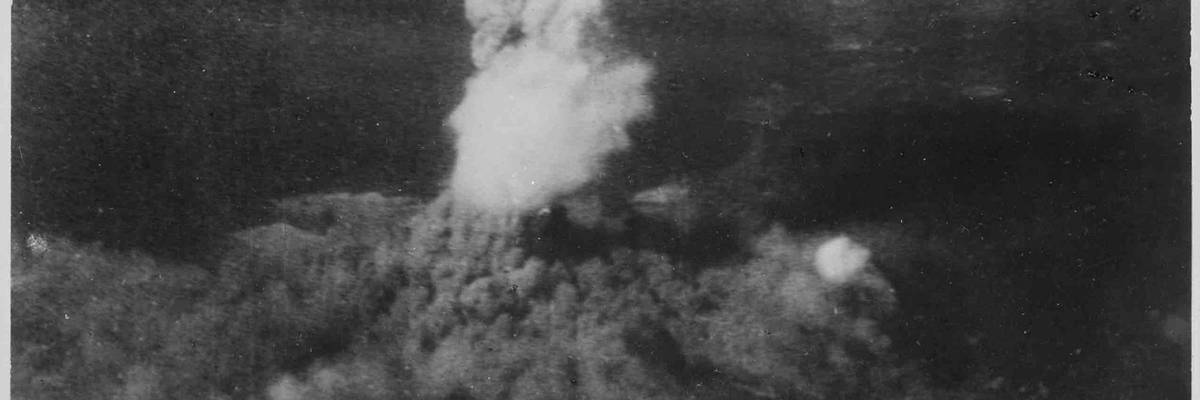
The atom bomb detonated in Hiroshima on August 6, 1945.
From the claim that dropping the atom bombs was necessary to end World War II to the fabricated nuclear threats used to justify the 21st century US wars in Iraq and Iran, nuclear weapons have a way of spawning deadly lies.
The atomic age began with a lie.
Eighty-one years ago this week, a single American airplane, flying almost unnoticed over a Japanese city, dropped a single bomb that destroyed the entire city. Three days later another American plane destroyed a second city.
The atomic bombs dropped on Hiroshima on August 6, 1945 and Nagasaki on August 9, 1945 killed 100,000 people outright. By the end of the year another 100,000 succumbed to radiation sickness, burns, and other injuries from the blasts. Over 90% were civilians.
The stated reason for killing all these people was a lie. The claim that we had to drop atomic bombs to avoid the horrific losses US troops would have been suffered in an invasion of the Japanese home islands was false—and American decision-makers knew it when they decided to drop the bombs.
In the face of these unspeakable horrors, the atomic death of 200,000 Japanese civilians stands out because they were the world’s first victims of nuclear warfare—and their unnecessary deaths, excused by a set of lies, ushered in an era of peril for all humanity.
Because the United States had broken Japanese military codes, American intelligence learned in July 1945 that the Japanese government had already contacted the Soviet Union, America’s World War II ally, to discuss surrender. The Japanese hoped, above all, to ensure that the Allies’ demand for unconditional surrender did not require the Japanese Emperor to abdicate—a condition that US readily agreed to in the end.
As Gar Alperovitz convincingly explains in his book, Atomic Diplomacy: Hiroshima and Potsdam, the destruction of the two Japanese cities had to do with emerging Cold War politics, not with avoiding an invasion of the Japanese islands.
Those who made the decision knew that Japan was seeking to end the war and believed that the entry of the Soviet Union into the war, after the Allies’ victory in Europe, would likely be enough to precipitate Japan’s capitulation.
A long-hidden, top-secret US intelligence study in 1946 confirmed that the atomic blasts were not what ended the war—it was Russia’s August 8, 1945 declaration of war against Japan and Soviet troop movements.
Because Russia was preoccupied with the life-and-death struggle against Nazi Germany, they had not participated in the war against Japan until then. But in July 1945, at a conference in occupied Potsdam, Germany, President Harry Truman secured Joseph Stalin’s promise to join the war against Imperial Japan.
“Fini Japs when that occurs,” Truman observed in his war-time, hand-written journal in July 1945. “We’ll end the war a year sooner now,” Truman wrote in a letter around the same time. “Think of all the kids who won’t be killed.”
US war leaders confirmed the atomic bombing was not needed. The Supreme Commander of Allied Forces General Dwight D. Eisenhower (later President Eisenhower) concluded that “Japan was already defeated and that dropping the bomb was completely unnecessary... no longer mandatory as a measure to save American lives.”
Fleet Admiral William Leahy, then Truman’s chief of staff, agreed: “The Japanese were already defeated and ready to surrender... The use of this this barbarous weapon... was of no material assistance in our war against Japan.”
Truman did not hesitate to drop the bombs anyway. “The atom bomb was no ‘great decision,’” he said 15 years later.
The World War II era was an age of atrocity. The Second Sino-Japanese War—Japan’s war of conquest against China from 1937 to 1945—caused an estimated 10-20 million deaths. Nazi Germany murdered 6 million European Jews. The Germans also murdered 2 million captured Russian soldiers through starvation. And there was the rape of Nanking, the destruction of Dresden, the 1943 famine of Bengal, and the firebombing of Tokyo and 60 other Japanese cities.
In the face of these unspeakable horrors, the atomic death of 200,000 Japanese civilians stands out because they were the world’s first victims of nuclear warfare—and their unnecessary deaths, excused by a set of lies, ushered in an era of peril for all humanity.
The lies and the dangers did not stop with the end of World War II. As we should have learned, nuclear weapons have a way of spawning lies.
In the wake of the 9-11 attacks, in 2003 the Bush regime constructed the fiction that Iraq had nuclear weapons, as an excuse for invading and occupying the oil-rich nation. But Iraq had neither nukes nor other weapons of mass destruction. The neoconservatives who promoted the invasion of Iraq (and urged President George W. Bush to proceed to invade Iran as well) had manipulated dubious intelligence to promote fears of an imaginary threat.
The price of those lies was high. In the end, the US occupation of Iraq cost the United States trillions of dollars and thousands of US service members’ lives—and caused hundreds of thousands of Iraqi civilian deaths.
This year President Donald Trump returned to the right-wing dream of overthrowing the Iranian government, again lying about nuclear weapons to support a completely unnecessary war. Trump and his aides claimed that Iran was on the verge of building a nuclear bomb and was developing long-range missiles that could soon strike the United States. US intelligence agencies confirmed that these claims were both lies.
The persistence of presidential lies about fictional nuclear threats should not obscure the all-too-real dangers of nuclear proliferation.
Citizens who are concerned about threats to our existence on this planet have rightly focused on climate change. But a world increasingly subjected to the stresses of climate change and its impacts—extreme temperatures, sea-level rise, mega storms, uncontrollable fires, crop destruction, drought, famine, refugee flows, and xenophobic politics—is a world in which desperate and megalomaniacal rulers may feel tempted to use thermonuclear weapons. And the nuclear age could end, as it began, with lies.
Dear Common Dreams reader, It’s been nearly 30 years since I co-founded Common Dreams with my late wife, Lina Newhouser. We had the radical notion that journalism should serve the public good, not corporate profits. It was clear to us from the outset what it would take to build such a project. No paid advertisements. No corporate sponsors. No millionaire publisher telling us what to think or do. Many people said we wouldn't last a year, but we proved those doubters wrong. Together with a tremendous team of journalists and dedicated staff, we built an independent media outlet free from the constraints of profits and corporate control. Our mission has always been simple: To inform. To inspire. To ignite change for the common good. Building Common Dreams was not easy. Our survival was never guaranteed. When you take on the most powerful forces—Wall Street greed, fossil fuel industry destruction, Big Tech lobbyists, and uber-rich oligarchs who have spent billions upon billions rigging the economy and democracy in their favor—the only bulwark you have is supporters who believe in your work. But here’s the urgent message from me today. It's never been this bad out there. And it's never been this hard to keep us going. At the very moment Common Dreams is most needed, the threats we face are intensifying. We need your support now more than ever. We don't accept corporate advertising and never will. We don't have a paywall because we don't think people should be blocked from critical news based on their ability to pay. Everything we do is funded by the donations of readers like you. When everyone does the little they can afford, we are strong. But if that support retreats or dries up, so do we. Will you donate now to make sure Common Dreams not only survives but thrives? —Craig Brown, Co-founder |
The atomic age began with a lie.
Eighty-one years ago this week, a single American airplane, flying almost unnoticed over a Japanese city, dropped a single bomb that destroyed the entire city. Three days later another American plane destroyed a second city.
The atomic bombs dropped on Hiroshima on August 6, 1945 and Nagasaki on August 9, 1945 killed 100,000 people outright. By the end of the year another 100,000 succumbed to radiation sickness, burns, and other injuries from the blasts. Over 90% were civilians.
The stated reason for killing all these people was a lie. The claim that we had to drop atomic bombs to avoid the horrific losses US troops would have been suffered in an invasion of the Japanese home islands was false—and American decision-makers knew it when they decided to drop the bombs.
In the face of these unspeakable horrors, the atomic death of 200,000 Japanese civilians stands out because they were the world’s first victims of nuclear warfare—and their unnecessary deaths, excused by a set of lies, ushered in an era of peril for all humanity.
Because the United States had broken Japanese military codes, American intelligence learned in July 1945 that the Japanese government had already contacted the Soviet Union, America’s World War II ally, to discuss surrender. The Japanese hoped, above all, to ensure that the Allies’ demand for unconditional surrender did not require the Japanese Emperor to abdicate—a condition that US readily agreed to in the end.
As Gar Alperovitz convincingly explains in his book, Atomic Diplomacy: Hiroshima and Potsdam, the destruction of the two Japanese cities had to do with emerging Cold War politics, not with avoiding an invasion of the Japanese islands.
Those who made the decision knew that Japan was seeking to end the war and believed that the entry of the Soviet Union into the war, after the Allies’ victory in Europe, would likely be enough to precipitate Japan’s capitulation.
A long-hidden, top-secret US intelligence study in 1946 confirmed that the atomic blasts were not what ended the war—it was Russia’s August 8, 1945 declaration of war against Japan and Soviet troop movements.
Because Russia was preoccupied with the life-and-death struggle against Nazi Germany, they had not participated in the war against Japan until then. But in July 1945, at a conference in occupied Potsdam, Germany, President Harry Truman secured Joseph Stalin’s promise to join the war against Imperial Japan.
“Fini Japs when that occurs,” Truman observed in his war-time, hand-written journal in July 1945. “We’ll end the war a year sooner now,” Truman wrote in a letter around the same time. “Think of all the kids who won’t be killed.”
US war leaders confirmed the atomic bombing was not needed. The Supreme Commander of Allied Forces General Dwight D. Eisenhower (later President Eisenhower) concluded that “Japan was already defeated and that dropping the bomb was completely unnecessary... no longer mandatory as a measure to save American lives.”
Fleet Admiral William Leahy, then Truman’s chief of staff, agreed: “The Japanese were already defeated and ready to surrender... The use of this this barbarous weapon... was of no material assistance in our war against Japan.”
Truman did not hesitate to drop the bombs anyway. “The atom bomb was no ‘great decision,’” he said 15 years later.
The World War II era was an age of atrocity. The Second Sino-Japanese War—Japan’s war of conquest against China from 1937 to 1945—caused an estimated 10-20 million deaths. Nazi Germany murdered 6 million European Jews. The Germans also murdered 2 million captured Russian soldiers through starvation. And there was the rape of Nanking, the destruction of Dresden, the 1943 famine of Bengal, and the firebombing of Tokyo and 60 other Japanese cities.
In the face of these unspeakable horrors, the atomic death of 200,000 Japanese civilians stands out because they were the world’s first victims of nuclear warfare—and their unnecessary deaths, excused by a set of lies, ushered in an era of peril for all humanity.
The lies and the dangers did not stop with the end of World War II. As we should have learned, nuclear weapons have a way of spawning lies.
In the wake of the 9-11 attacks, in 2003 the Bush regime constructed the fiction that Iraq had nuclear weapons, as an excuse for invading and occupying the oil-rich nation. But Iraq had neither nukes nor other weapons of mass destruction. The neoconservatives who promoted the invasion of Iraq (and urged President George W. Bush to proceed to invade Iran as well) had manipulated dubious intelligence to promote fears of an imaginary threat.
The price of those lies was high. In the end, the US occupation of Iraq cost the United States trillions of dollars and thousands of US service members’ lives—and caused hundreds of thousands of Iraqi civilian deaths.
This year President Donald Trump returned to the right-wing dream of overthrowing the Iranian government, again lying about nuclear weapons to support a completely unnecessary war. Trump and his aides claimed that Iran was on the verge of building a nuclear bomb and was developing long-range missiles that could soon strike the United States. US intelligence agencies confirmed that these claims were both lies.
The persistence of presidential lies about fictional nuclear threats should not obscure the all-too-real dangers of nuclear proliferation.
Citizens who are concerned about threats to our existence on this planet have rightly focused on climate change. But a world increasingly subjected to the stresses of climate change and its impacts—extreme temperatures, sea-level rise, mega storms, uncontrollable fires, crop destruction, drought, famine, refugee flows, and xenophobic politics—is a world in which desperate and megalomaniacal rulers may feel tempted to use thermonuclear weapons. And the nuclear age could end, as it began, with lies.
The atomic age began with a lie.
Eighty-one years ago this week, a single American airplane, flying almost unnoticed over a Japanese city, dropped a single bomb that destroyed the entire city. Three days later another American plane destroyed a second city.
The atomic bombs dropped on Hiroshima on August 6, 1945 and Nagasaki on August 9, 1945 killed 100,000 people outright. By the end of the year another 100,000 succumbed to radiation sickness, burns, and other injuries from the blasts. Over 90% were civilians.
The stated reason for killing all these people was a lie. The claim that we had to drop atomic bombs to avoid the horrific losses US troops would have been suffered in an invasion of the Japanese home islands was false—and American decision-makers knew it when they decided to drop the bombs.
In the face of these unspeakable horrors, the atomic death of 200,000 Japanese civilians stands out because they were the world’s first victims of nuclear warfare—and their unnecessary deaths, excused by a set of lies, ushered in an era of peril for all humanity.
Because the United States had broken Japanese military codes, American intelligence learned in July 1945 that the Japanese government had already contacted the Soviet Union, America’s World War II ally, to discuss surrender. The Japanese hoped, above all, to ensure that the Allies’ demand for unconditional surrender did not require the Japanese Emperor to abdicate—a condition that US readily agreed to in the end.
As Gar Alperovitz convincingly explains in his book, Atomic Diplomacy: Hiroshima and Potsdam, the destruction of the two Japanese cities had to do with emerging Cold War politics, not with avoiding an invasion of the Japanese islands.
Those who made the decision knew that Japan was seeking to end the war and believed that the entry of the Soviet Union into the war, after the Allies’ victory in Europe, would likely be enough to precipitate Japan’s capitulation.
A long-hidden, top-secret US intelligence study in 1946 confirmed that the atomic blasts were not what ended the war—it was Russia’s August 8, 1945 declaration of war against Japan and Soviet troop movements.
Because Russia was preoccupied with the life-and-death struggle against Nazi Germany, they had not participated in the war against Japan until then. But in July 1945, at a conference in occupied Potsdam, Germany, President Harry Truman secured Joseph Stalin’s promise to join the war against Imperial Japan.
“Fini Japs when that occurs,” Truman observed in his war-time, hand-written journal in July 1945. “We’ll end the war a year sooner now,” Truman wrote in a letter around the same time. “Think of all the kids who won’t be killed.”
US war leaders confirmed the atomic bombing was not needed. The Supreme Commander of Allied Forces General Dwight D. Eisenhower (later President Eisenhower) concluded that “Japan was already defeated and that dropping the bomb was completely unnecessary... no longer mandatory as a measure to save American lives.”
Fleet Admiral William Leahy, then Truman’s chief of staff, agreed: “The Japanese were already defeated and ready to surrender... The use of this this barbarous weapon... was of no material assistance in our war against Japan.”
Truman did not hesitate to drop the bombs anyway. “The atom bomb was no ‘great decision,’” he said 15 years later.
The World War II era was an age of atrocity. The Second Sino-Japanese War—Japan’s war of conquest against China from 1937 to 1945—caused an estimated 10-20 million deaths. Nazi Germany murdered 6 million European Jews. The Germans also murdered 2 million captured Russian soldiers through starvation. And there was the rape of Nanking, the destruction of Dresden, the 1943 famine of Bengal, and the firebombing of Tokyo and 60 other Japanese cities.
In the face of these unspeakable horrors, the atomic death of 200,000 Japanese civilians stands out because they were the world’s first victims of nuclear warfare—and their unnecessary deaths, excused by a set of lies, ushered in an era of peril for all humanity.
The lies and the dangers did not stop with the end of World War II. As we should have learned, nuclear weapons have a way of spawning lies.
In the wake of the 9-11 attacks, in 2003 the Bush regime constructed the fiction that Iraq had nuclear weapons, as an excuse for invading and occupying the oil-rich nation. But Iraq had neither nukes nor other weapons of mass destruction. The neoconservatives who promoted the invasion of Iraq (and urged President George W. Bush to proceed to invade Iran as well) had manipulated dubious intelligence to promote fears of an imaginary threat.
The price of those lies was high. In the end, the US occupation of Iraq cost the United States trillions of dollars and thousands of US service members’ lives—and caused hundreds of thousands of Iraqi civilian deaths.
This year President Donald Trump returned to the right-wing dream of overthrowing the Iranian government, again lying about nuclear weapons to support a completely unnecessary war. Trump and his aides claimed that Iran was on the verge of building a nuclear bomb and was developing long-range missiles that could soon strike the United States. US intelligence agencies confirmed that these claims were both lies.
The persistence of presidential lies about fictional nuclear threats should not obscure the all-too-real dangers of nuclear proliferation.
Citizens who are concerned about threats to our existence on this planet have rightly focused on climate change. But a world increasingly subjected to the stresses of climate change and its impacts—extreme temperatures, sea-level rise, mega storms, uncontrollable fires, crop destruction, drought, famine, refugee flows, and xenophobic politics—is a world in which desperate and megalomaniacal rulers may feel tempted to use thermonuclear weapons. And the nuclear age could end, as it began, with lies.