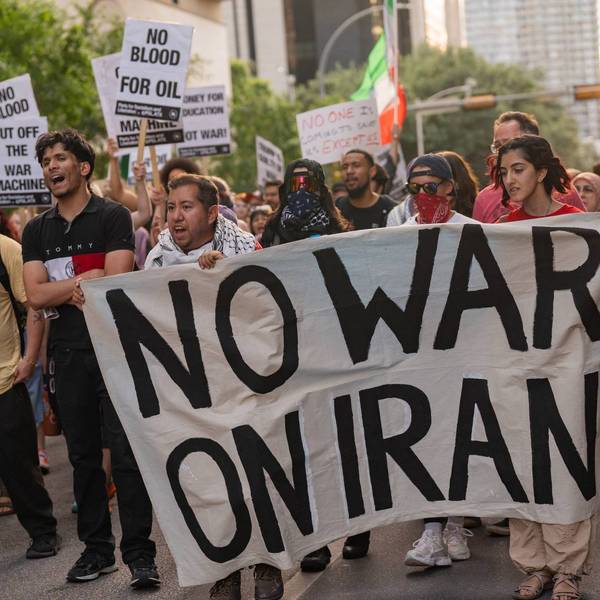
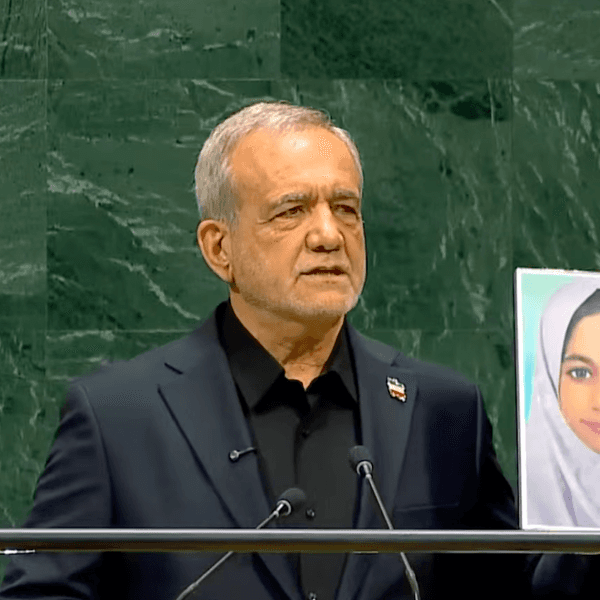
Is Iran War Another Vietnam for the US? No, It's Even Worse
It will not be a localized loss in a specific theater of the American Imperium, like Vietnam and Iraq and Afghanistan were. It will be the defeat on a global scale of the Imperium itself.
Twenty-two years ago this week, I published an article in this space, “Is Iraq Another Vietnam?” It proved prescient, for the Iraq War was, inevitably, lost. Part of the reason—and this was the burden of that article—was that the US hadn’t learned the obvious lessons from Vietnam, the first war America had ever lost. Nor has it, since.
Because of that, Iran, too, will prove another Vietnam: not the first or even the second or third war America ever lost, but certainly the most consequential. It will not be a localized loss in a specific theater of the American Imperium, like Vietnam and Iraq and Afghanistan were. It will be the defeat on a global scale of the Imperium itself. It’s worthwhile understanding why this has happened.
The contexts for Vietnam and Iran are different, but they bear haunting similarities; situations the US couldn’t stay out of, but conflicts it couldn’t win, either. That is the working definition of “quagmire.”
Vietnam became a US challenge in the most perilous years of the Cold War. India had joined the Soviet camp when it gained independence, in 1947. China went communist in 1949. The Korean War ended in 1953 but was only fought to a draw. The Vietnamese defeated the French at Dien Bien Phu in 1954. The US was clearly losing the Cold War, at least in Asia.
By its actions, the US has explicitly, unambiguously repudiated its legitimacy as the global leader. It is taking care of itself, and to hell with everybody else.
In the middle of all that, Vietnam declared that it wanted to detach from the US orbit and align itself with the Soviet Union. If successful, it would be a model to the scores of other nations in Africa and Asia that were then fighting Western imperial powers to become free, themselves, from centuries of colonial bondage.
Where it ended, nobody could tell. President Dwight D. Eisenhower saw dominos falling from Vietnam through Cambodia, Thailand, Burma, all the way to the Persian Gulf and the world’s greatest supply of oil. It had to be stopped.
Because of this, there was no way the US could stay out of Vietnam. But neither would it ever be able to win. Why?
Ho Chi Minh had approached Harry Truman in 1946 asking for US help in ejecting the French who had occupied his country as a colony since 1870. Truman not only didn’t help Vietnam, he sided with the French. That was the “original sin” that made it impossible for the US to ever “win the hearts and minds” of the Vietnamese people, and, therefore, to ever win the war.
Iran: fraught with the seeds of defeat
The stage, today, is no longer the Cold War but the global transition to multipolarity. The Global South wants to end the unipolar era of US dominance and replace it with a more equitable, peaceful, collaborative, sovereignty-respecting global order. The US doesn’t want that. It wants to retain its position as global hegemon. But it is faltering, badly.
It lost its war in Iraq. It lost its war in Afghanistan. It isn’t announced, yet, but it has lost its war against Russia, through its proxy, Ukraine. The US destroyed incalculable moral stature through its lusty, broad-spectrum support of Israel’s genocide of the Palestinians. It’s hard to fathom more rapid, self-inflicted imperial damage.
As for its economy, the US is actuarily bankrupt. It deindustrialized in the 1980s and 1990s, moving its manufacturing base to low-cost countries. That forced it to have to borrow $38 trillion in the past 45 years (almost $1 trillion a year). It will never be repaid. If foreign countries do not help fund the US’ $2-odd trillion per year budget deficit (in a good year), the lights will go out. That’s not hysteria. It’s accounting.
Meanwhile, China has blown by the US, lifting more people out of poverty in a shorter period of time, than has any country, ever. It became the largest economy in the world, in 2014. China dominates the planet in all manner of manufacturing, trading, exports, and development assistance to other countries. It is the global economic powerhouse of the 2020s that the US was in the 1950s.
The US strategy to deal with this epic, decades-long decline is to try to seize control of the world’s oil and use that control to extort wealth from all the other countries of the world, especially China. It is pure banditry masquerading as muscular strategy.
That’s what the destruction of Libya and Iraq were all about. It’s what the attack, via Ukraine, against Russia was about. It’s what the piracy of seizing Venezuela’s oil was about. It’s what this illegal, unprovoked attack on Iran is about. Control the oil. The US doesn’t have a Plan B to regain its privileged perch atop the global order. It has to try to make this strategy work.
But, as was the case in Vietnam, the US will not be able to win, here, either. The reasons are eerily similar.
In 1953 (the same time the US was helping the French fight the Vietnamese), the US staged a coup d’etat against Mohammed Mossadegh, the democratically elected leader of Iran. It installed a brutal dictator, the Shah Reza Pahlavi, who ruled until he was deposed in the Islamic Revolution of 1979.
In 1980, in retaliation for Iranians taking back control of their own government, the US had its local proxy, Iraq, under Saddam Hussein, attack Iran. The Iran-Iraq War lasted until 1988 and killed an estimated 500,000 Iranians. Since then, the US has imposed a harsh regimen of sanctions against Iran designed to foster domestic discontent and undermine the Iranian state.
So, just as it had done to the 35 million Vietnamese, the US has unified 93 million Iranians into a visceral, unshakable compact against it. That unification was solidified when, in February, President Donald Trump tried to decapitate the Iranian leadership. That gambit backfired, spectacularly, unifying the county even more.
So, that’s the context. As was the case with Vietnam, the US can’t afford to stay out. But it won’t be able to win, either. Again, that is the definition of “quagmire,” the essential, fateful trap of the US in Vietnam.
What about strategy?
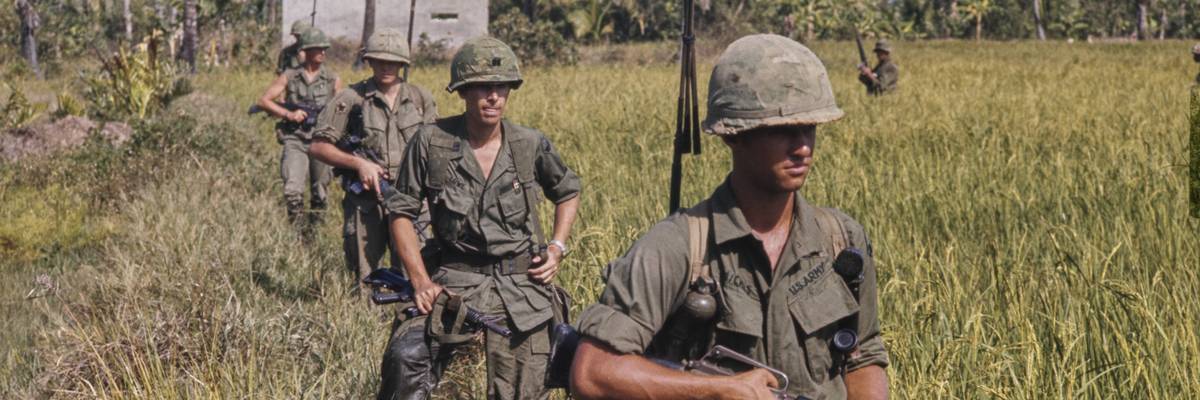
In both wars, the US relied on overwhelming force to bring the enemy to submission. In Vietnam, it dropped 12,000,000 TONS of bombs, four times the tonnage dropped in all theaters in all of World War II, combined. Did it work? Obviously not.
The US lost the war, including 58,000 soldiers killed and another 300,000 wounded. It spent $450 billion, or $3 trillion in today’s dollars. It wrecked its economy, inflicted traumatic civic pain on itself, and grievously damaged its reputation in the world.
Against such overwhelming force, Vietnam’s strategy was enervation: Stay alive and sap the foe of its will to fight. Knowing the superiority of US fire power, the North Vietnamese army avoided direct conflicts. It fought opportunistically, when odds favored it, and melted away when necessary, to preserve men, ammunition, and weapons. Did this work? Obviously, it did.
Even though the US inflicted 9 casualties for each 1 it incurred, it couldn’t sustain those losses in its war-fighting context. As more and more boys came home in body bags, the American people demanded the war be ended. The Vietnamese watched this seething, swelling discontent and waited the Americans out. Ho Chi Minh commented, “Eventually, the Americans will tire of their losses and will have to go home.” He was right.
Iran’s strategy reflects many learnings from Vietnam, mainly the learning of resilience. It knew it could not match US firepower. It had to do only two things. It had to survive a withering first attack. And it had to have deep enough resources to deliver a devastating counterattack. It has done this, brilliantly.
Within 48 hours of the US first strike, Iran took out almost all US radar installations in the Persian Gulf, leaving the US largely sightless. Then, it waited while the US fired off thousands of offensive missiles and defensive interceptors, gravely depleting its finite inventories. Then, it began its counterattack.
It decimated more than a dozen US bases in the Persian Gulf, including the Al Udeid airbase in Qatar, the largest air base in the Middle East. Al Udeid is and was the headquarters of the US’ Combined Air Operations Center, which manages US air assets from North Africa to South Asia.
It dealt extensive damage to the Manama Naval Base in Bahrain, the headquarters of the US Fifth Fleet responsible for naval activities in that part of the world. It has destroyed more than 40 US aircraft and billions of dollars worth of other military assets. It drove the USS Gerald Ford aircraft carrier, the largest military ship ever built, from the field of battle.
With both the US and Israel having fired a huge share of their existing stocks of missiles in the expectation of a quick decapitation, they are left gravely exposed. Iran has declared “missile dominance” over Israel, easily choosing the time, place, and nature of the attacks it now freely rains down.
Similarly for the US in the Persian Gulf. Its open-aired military assets with radars destroyed are becoming defenseless against sustained fusillades of Iranian drones and missiles. The US has proven unable to protect its Gulf allies—Kuwait, Bahrain, Qatar, UAE, Oman, and Saudi Arabia—against Iranian attacks. Hundreds of billions of dollars of their economic assets have been destroyed, recompense for their providing staging areas for US attacks on Iran.
This is why Iran is not intimidated by Trump’s or Pentagon Secretary Pete Hegseth’s childish, simian-like chest beating about “bombing them back to the Stone Age.” By the way, it was Curtis LeMay, head of the US Air Force in Vietnam, who, in response to North Vietnam’s resilience, issued the original threat to “bomb them back to the Stone Age.” Who won that face-off?
The tactic of asymmetric warfare
In Vietnam, the Viet Cong had infiltrated US operations, from military bases and fuel depots to armories, staging yards, and more. A single mole—one individual—so placed, could tip off the enemy about US forces’ planned activities, exposing potentially thousands of soldiers to ambush and death. The asymmetry of such effect is almost impossible to register, or counter. It’s a major reason Vietnam won the war, defeating “the greatest military power the world had ever known.”
In Iran, the asymmetry lies with its control of the Straits of Hormuz through which 20% of the world’s oil flows. It needs only threaten to attack ships and all shipping is stopped. With little more than a feint, a bluff, a head fake, it has inflicted hundreds of billions of dollars of damage on the world through higher oil prices.
Most of the world blames that on the US, since the Strait was open before the war, and Iran had announced it would close the Strait if it was attacked, which the US did, unprovoked. At virtually no cost to itself, Iran can inflict hundreds of billions of dollars of damage, which falls to the discredit of the US in the eyes of the world. That is asymmetry exponentiated. Iran has played it masterfully.
A final word about Vietnam and Iran’s allies.
Vietnam’s allies were the Soviet Union and, to a lesser extent, China. In Iran, they are Russia and China. The difference is that in Vietnam, the Soviet Union and China were nowhere close to being able to challenge US power. In the early 1960s, they even became adversaries, making them still less effective in standing up to US aggression.
Today, Russia has shed its inefficient communist past and crushed US weapons, its proxy, and strategy in Ukraine. China, too, abandoned communism and has crushed US manufacturing, technology, and commerce throughout the world. The two now work more closely than ever to provide a new, non-US-centric paradigm for global organization, one that honors civilizational differences, respects national sovereignty, and promotes collaborative frameworks for national development. Most of the world is lining up behind it.
Where does all this leave us?
The context, strategy, tactics, and alliances in the war all weigh heavily against the US, just as they did in Vietnam. That’s why the US has not achieved any of its objectives. It hasn’t achieved regime change. It hasn’t seized the enriched uranium. It hasn’t deterred Iran from enriching more uranium, nor going for a nuclear weapon. It hasn’t stopped the missile and drone attacks. It hasn’t opened the Strait. It hasn’t undercut Iran’s support of its regional allies: Hezbollah; the Houthis; the Islamic Resistance in Iraq; etc. These things matter, greatly. Here’s why.
The most important public goods a global leader must provide to earn its legitimacy in the eyes of the world are peace, respect for the rule of law, and an economic environment that makes possible prosperity for all. With its nakedly illegal, unprovoked attack on Iran, the US has delivered exactly the opposite: the hottest war in decades, piracy as policy, and a global economic environment that, through higher oil prices, reliably syphons wealth and, therefore, prosperity from every country in the world.
By its actions, the US has explicitly, unambiguously repudiated its legitimacy as the global leader. It is taking care of itself, and to hell with everybody else.
Russia and China, on the other hand, however imperfectly, form an able and ready replacement for the US as the organizing locus of the global community. The world sees the destruction attendant on the US hegemonic model: economic extortion, resource banditry, military thuggery, and diplomatic blackmail. Nobody wants it anymore. Even US allies are distancing themselves from it.
Iran will prove the catalytic event where US primacy in the world was taken down, where it was defeated militarily, broken economically, isolated diplomatically, and humiliated strategically. Had it better learned from its errors in Vietnam, instead of repeating them, again, and again, and again, it might have enjoyed a more graceful, self-directed descent. That is the fatal cost of arrogance, immaturity, and stupidity.
We are at a crossroads
This country and this world are at a monumental crossroads. In a few short weeks, US voters will have an opportunity to beat back the forces of fascism and confront the billionaires who are rigging the economy, our media system, and our democracy, making it increasingly impossible for ordinary people to get by. We’re not just talking about the election. We’re talking about what must be done once these fascist elements are vanquished from power. We need a bolder set of solutions than what either major party has so far been willing to offer and a working-class movement ready to fight like hell for it. Trump didn't emerge from nowhere. The conditions that fueled MAGA authoritarianism were created by decades of radical neoliberal economic policies and a corrupt political system dominated by corporate interests. They slashed taxes on the super-rich, promising that the benefits would trickle down. They said giveaways to the corporate titans would make life more affordable for the rest of us. It was all bullshit. And when a bitter, betrayed populace searches for someone to blame, right-wing demagogues have little trouble finding scapegoats. People know when they're being lied to, but you won't hear any of this from the corporate media. Only independent journalism—powered and funded by people who believe in building a better world—can deliver truly trustworthy daily news. Our Fall Campaign is underway, and we need your help. To power our newsroom through the rest of the year, we need to raise $125,000 by midnight on October 31. So if you share our vision, please contribute whatever you can to sustain our work. |
Robert Freeman is the Founder and Executive Director of The Global Uplift Project, a leading provider of educational infrastructure for the developing world. He is the author of The Best One Hour History series whose titles include World War I, The Cold War, The Vietnam War, and many others.
Twenty-two years ago this week, I published an article in this space, “Is Iraq Another Vietnam?” It proved prescient, for the Iraq War was, inevitably, lost. Part of the reason—and this was the burden of that article—was that the US hadn’t learned the obvious lessons from Vietnam, the first war America had ever lost. Nor has it, since.
Because of that, Iran, too, will prove another Vietnam: not the first or even the second or third war America ever lost, but certainly the most consequential. It will not be a localized loss in a specific theater of the American Imperium, like Vietnam and Iraq and Afghanistan were. It will be the defeat on a global scale of the Imperium itself. It’s worthwhile understanding why this has happened.
The contexts for Vietnam and Iran are different, but they bear haunting similarities; situations the US couldn’t stay out of, but conflicts it couldn’t win, either. That is the working definition of “quagmire.”
Vietnam became a US challenge in the most perilous years of the Cold War. India had joined the Soviet camp when it gained independence, in 1947. China went communist in 1949. The Korean War ended in 1953 but was only fought to a draw. The Vietnamese defeated the French at Dien Bien Phu in 1954. The US was clearly losing the Cold War, at least in Asia.
By its actions, the US has explicitly, unambiguously repudiated its legitimacy as the global leader. It is taking care of itself, and to hell with everybody else.
In the middle of all that, Vietnam declared that it wanted to detach from the US orbit and align itself with the Soviet Union. If successful, it would be a model to the scores of other nations in Africa and Asia that were then fighting Western imperial powers to become free, themselves, from centuries of colonial bondage.
Where it ended, nobody could tell. President Dwight D. Eisenhower saw dominos falling from Vietnam through Cambodia, Thailand, Burma, all the way to the Persian Gulf and the world’s greatest supply of oil. It had to be stopped.
Because of this, there was no way the US could stay out of Vietnam. But neither would it ever be able to win. Why?
Ho Chi Minh had approached Harry Truman in 1946 asking for US help in ejecting the French who had occupied his country as a colony since 1870. Truman not only didn’t help Vietnam, he sided with the French. That was the “original sin” that made it impossible for the US to ever “win the hearts and minds” of the Vietnamese people, and, therefore, to ever win the war.
Iran: fraught with the seeds of defeat
The stage, today, is no longer the Cold War but the global transition to multipolarity. The Global South wants to end the unipolar era of US dominance and replace it with a more equitable, peaceful, collaborative, sovereignty-respecting global order. The US doesn’t want that. It wants to retain its position as global hegemon. But it is faltering, badly.
It lost its war in Iraq. It lost its war in Afghanistan. It isn’t announced, yet, but it has lost its war against Russia, through its proxy, Ukraine. The US destroyed incalculable moral stature through its lusty, broad-spectrum support of Israel’s genocide of the Palestinians. It’s hard to fathom more rapid, self-inflicted imperial damage.
As for its economy, the US is actuarily bankrupt. It deindustrialized in the 1980s and 1990s, moving its manufacturing base to low-cost countries. That forced it to have to borrow $38 trillion in the past 45 years (almost $1 trillion a year). It will never be repaid. If foreign countries do not help fund the US’ $2-odd trillion per year budget deficit (in a good year), the lights will go out. That’s not hysteria. It’s accounting.
Meanwhile, China has blown by the US, lifting more people out of poverty in a shorter period of time, than has any country, ever. It became the largest economy in the world, in 2014. China dominates the planet in all manner of manufacturing, trading, exports, and development assistance to other countries. It is the global economic powerhouse of the 2020s that the US was in the 1950s.
The US strategy to deal with this epic, decades-long decline is to try to seize control of the world’s oil and use that control to extort wealth from all the other countries of the world, especially China. It is pure banditry masquerading as muscular strategy.
That’s what the destruction of Libya and Iraq were all about. It’s what the attack, via Ukraine, against Russia was about. It’s what the piracy of seizing Venezuela’s oil was about. It’s what this illegal, unprovoked attack on Iran is about. Control the oil. The US doesn’t have a Plan B to regain its privileged perch atop the global order. It has to try to make this strategy work.
But, as was the case in Vietnam, the US will not be able to win, here, either. The reasons are eerily similar.
In 1953 (the same time the US was helping the French fight the Vietnamese), the US staged a coup d’etat against Mohammed Mossadegh, the democratically elected leader of Iran. It installed a brutal dictator, the Shah Reza Pahlavi, who ruled until he was deposed in the Islamic Revolution of 1979.
In 1980, in retaliation for Iranians taking back control of their own government, the US had its local proxy, Iraq, under Saddam Hussein, attack Iran. The Iran-Iraq War lasted until 1988 and killed an estimated 500,000 Iranians. Since then, the US has imposed a harsh regimen of sanctions against Iran designed to foster domestic discontent and undermine the Iranian state.
So, just as it had done to the 35 million Vietnamese, the US has unified 93 million Iranians into a visceral, unshakable compact against it. That unification was solidified when, in February, President Donald Trump tried to decapitate the Iranian leadership. That gambit backfired, spectacularly, unifying the county even more.
So, that’s the context. As was the case with Vietnam, the US can’t afford to stay out. But it won’t be able to win, either. Again, that is the definition of “quagmire,” the essential, fateful trap of the US in Vietnam.
What about strategy?
In both wars, the US relied on overwhelming force to bring the enemy to submission. In Vietnam, it dropped 12,000,000 TONS of bombs, four times the tonnage dropped in all theaters in all of World War II, combined. Did it work? Obviously not.
The US lost the war, including 58,000 soldiers killed and another 300,000 wounded. It spent $450 billion, or $3 trillion in today’s dollars. It wrecked its economy, inflicted traumatic civic pain on itself, and grievously damaged its reputation in the world.
Against such overwhelming force, Vietnam’s strategy was enervation: Stay alive and sap the foe of its will to fight. Knowing the superiority of US fire power, the North Vietnamese army avoided direct conflicts. It fought opportunistically, when odds favored it, and melted away when necessary, to preserve men, ammunition, and weapons. Did this work? Obviously, it did.
Even though the US inflicted 9 casualties for each 1 it incurred, it couldn’t sustain those losses in its war-fighting context. As more and more boys came home in body bags, the American people demanded the war be ended. The Vietnamese watched this seething, swelling discontent and waited the Americans out. Ho Chi Minh commented, “Eventually, the Americans will tire of their losses and will have to go home.” He was right.
Iran’s strategy reflects many learnings from Vietnam, mainly the learning of resilience. It knew it could not match US firepower. It had to do only two things. It had to survive a withering first attack. And it had to have deep enough resources to deliver a devastating counterattack. It has done this, brilliantly.
Within 48 hours of the US first strike, Iran took out almost all US radar installations in the Persian Gulf, leaving the US largely sightless. Then, it waited while the US fired off thousands of offensive missiles and defensive interceptors, gravely depleting its finite inventories. Then, it began its counterattack.
It decimated more than a dozen US bases in the Persian Gulf, including the Al Udeid airbase in Qatar, the largest air base in the Middle East. Al Udeid is and was the headquarters of the US’ Combined Air Operations Center, which manages US air assets from North Africa to South Asia.
It dealt extensive damage to the Manama Naval Base in Bahrain, the headquarters of the US Fifth Fleet responsible for naval activities in that part of the world. It has destroyed more than 40 US aircraft and billions of dollars worth of other military assets. It drove the USS Gerald Ford aircraft carrier, the largest military ship ever built, from the field of battle.
With both the US and Israel having fired a huge share of their existing stocks of missiles in the expectation of a quick decapitation, they are left gravely exposed. Iran has declared “missile dominance” over Israel, easily choosing the time, place, and nature of the attacks it now freely rains down.
Similarly for the US in the Persian Gulf. Its open-aired military assets with radars destroyed are becoming defenseless against sustained fusillades of Iranian drones and missiles. The US has proven unable to protect its Gulf allies—Kuwait, Bahrain, Qatar, UAE, Oman, and Saudi Arabia—against Iranian attacks. Hundreds of billions of dollars of their economic assets have been destroyed, recompense for their providing staging areas for US attacks on Iran.
This is why Iran is not intimidated by Trump’s or Pentagon Secretary Pete Hegseth’s childish, simian-like chest beating about “bombing them back to the Stone Age.” By the way, it was Curtis LeMay, head of the US Air Force in Vietnam, who, in response to North Vietnam’s resilience, issued the original threat to “bomb them back to the Stone Age.” Who won that face-off?
The tactic of asymmetric warfare
In Vietnam, the Viet Cong had infiltrated US operations, from military bases and fuel depots to armories, staging yards, and more. A single mole—one individual—so placed, could tip off the enemy about US forces’ planned activities, exposing potentially thousands of soldiers to ambush and death. The asymmetry of such effect is almost impossible to register, or counter. It’s a major reason Vietnam won the war, defeating “the greatest military power the world had ever known.”
In Iran, the asymmetry lies with its control of the Straits of Hormuz through which 20% of the world’s oil flows. It needs only threaten to attack ships and all shipping is stopped. With little more than a feint, a bluff, a head fake, it has inflicted hundreds of billions of dollars of damage on the world through higher oil prices.
Most of the world blames that on the US, since the Strait was open before the war, and Iran had announced it would close the Strait if it was attacked, which the US did, unprovoked. At virtually no cost to itself, Iran can inflict hundreds of billions of dollars of damage, which falls to the discredit of the US in the eyes of the world. That is asymmetry exponentiated. Iran has played it masterfully.
A final word about Vietnam and Iran’s allies.
Vietnam’s allies were the Soviet Union and, to a lesser extent, China. In Iran, they are Russia and China. The difference is that in Vietnam, the Soviet Union and China were nowhere close to being able to challenge US power. In the early 1960s, they even became adversaries, making them still less effective in standing up to US aggression.
Today, Russia has shed its inefficient communist past and crushed US weapons, its proxy, and strategy in Ukraine. China, too, abandoned communism and has crushed US manufacturing, technology, and commerce throughout the world. The two now work more closely than ever to provide a new, non-US-centric paradigm for global organization, one that honors civilizational differences, respects national sovereignty, and promotes collaborative frameworks for national development. Most of the world is lining up behind it.
Where does all this leave us?
The context, strategy, tactics, and alliances in the war all weigh heavily against the US, just as they did in Vietnam. That’s why the US has not achieved any of its objectives. It hasn’t achieved regime change. It hasn’t seized the enriched uranium. It hasn’t deterred Iran from enriching more uranium, nor going for a nuclear weapon. It hasn’t stopped the missile and drone attacks. It hasn’t opened the Strait. It hasn’t undercut Iran’s support of its regional allies: Hezbollah; the Houthis; the Islamic Resistance in Iraq; etc. These things matter, greatly. Here’s why.
The most important public goods a global leader must provide to earn its legitimacy in the eyes of the world are peace, respect for the rule of law, and an economic environment that makes possible prosperity for all. With its nakedly illegal, unprovoked attack on Iran, the US has delivered exactly the opposite: the hottest war in decades, piracy as policy, and a global economic environment that, through higher oil prices, reliably syphons wealth and, therefore, prosperity from every country in the world.
By its actions, the US has explicitly, unambiguously repudiated its legitimacy as the global leader. It is taking care of itself, and to hell with everybody else.
Russia and China, on the other hand, however imperfectly, form an able and ready replacement for the US as the organizing locus of the global community. The world sees the destruction attendant on the US hegemonic model: economic extortion, resource banditry, military thuggery, and diplomatic blackmail. Nobody wants it anymore. Even US allies are distancing themselves from it.
Iran will prove the catalytic event where US primacy in the world was taken down, where it was defeated militarily, broken economically, isolated diplomatically, and humiliated strategically. Had it better learned from its errors in Vietnam, instead of repeating them, again, and again, and again, it might have enjoyed a more graceful, self-directed descent. That is the fatal cost of arrogance, immaturity, and stupidity.
Robert Freeman is the Founder and Executive Director of The Global Uplift Project, a leading provider of educational infrastructure for the developing world. He is the author of The Best One Hour History series whose titles include World War I, The Cold War, The Vietnam War, and many others.
Twenty-two years ago this week, I published an article in this space, “Is Iraq Another Vietnam?” It proved prescient, for the Iraq War was, inevitably, lost. Part of the reason—and this was the burden of that article—was that the US hadn’t learned the obvious lessons from Vietnam, the first war America had ever lost. Nor has it, since.
Because of that, Iran, too, will prove another Vietnam: not the first or even the second or third war America ever lost, but certainly the most consequential. It will not be a localized loss in a specific theater of the American Imperium, like Vietnam and Iraq and Afghanistan were. It will be the defeat on a global scale of the Imperium itself. It’s worthwhile understanding why this has happened.
The contexts for Vietnam and Iran are different, but they bear haunting similarities; situations the US couldn’t stay out of, but conflicts it couldn’t win, either. That is the working definition of “quagmire.”
Vietnam became a US challenge in the most perilous years of the Cold War. India had joined the Soviet camp when it gained independence, in 1947. China went communist in 1949. The Korean War ended in 1953 but was only fought to a draw. The Vietnamese defeated the French at Dien Bien Phu in 1954. The US was clearly losing the Cold War, at least in Asia.
By its actions, the US has explicitly, unambiguously repudiated its legitimacy as the global leader. It is taking care of itself, and to hell with everybody else.
In the middle of all that, Vietnam declared that it wanted to detach from the US orbit and align itself with the Soviet Union. If successful, it would be a model to the scores of other nations in Africa and Asia that were then fighting Western imperial powers to become free, themselves, from centuries of colonial bondage.
Where it ended, nobody could tell. President Dwight D. Eisenhower saw dominos falling from Vietnam through Cambodia, Thailand, Burma, all the way to the Persian Gulf and the world’s greatest supply of oil. It had to be stopped.
Because of this, there was no way the US could stay out of Vietnam. But neither would it ever be able to win. Why?
Ho Chi Minh had approached Harry Truman in 1946 asking for US help in ejecting the French who had occupied his country as a colony since 1870. Truman not only didn’t help Vietnam, he sided with the French. That was the “original sin” that made it impossible for the US to ever “win the hearts and minds” of the Vietnamese people, and, therefore, to ever win the war.
Iran: fraught with the seeds of defeat
The stage, today, is no longer the Cold War but the global transition to multipolarity. The Global South wants to end the unipolar era of US dominance and replace it with a more equitable, peaceful, collaborative, sovereignty-respecting global order. The US doesn’t want that. It wants to retain its position as global hegemon. But it is faltering, badly.
It lost its war in Iraq. It lost its war in Afghanistan. It isn’t announced, yet, but it has lost its war against Russia, through its proxy, Ukraine. The US destroyed incalculable moral stature through its lusty, broad-spectrum support of Israel’s genocide of the Palestinians. It’s hard to fathom more rapid, self-inflicted imperial damage.
As for its economy, the US is actuarily bankrupt. It deindustrialized in the 1980s and 1990s, moving its manufacturing base to low-cost countries. That forced it to have to borrow $38 trillion in the past 45 years (almost $1 trillion a year). It will never be repaid. If foreign countries do not help fund the US’ $2-odd trillion per year budget deficit (in a good year), the lights will go out. That’s not hysteria. It’s accounting.
Meanwhile, China has blown by the US, lifting more people out of poverty in a shorter period of time, than has any country, ever. It became the largest economy in the world, in 2014. China dominates the planet in all manner of manufacturing, trading, exports, and development assistance to other countries. It is the global economic powerhouse of the 2020s that the US was in the 1950s.
The US strategy to deal with this epic, decades-long decline is to try to seize control of the world’s oil and use that control to extort wealth from all the other countries of the world, especially China. It is pure banditry masquerading as muscular strategy.
That’s what the destruction of Libya and Iraq were all about. It’s what the attack, via Ukraine, against Russia was about. It’s what the piracy of seizing Venezuela’s oil was about. It’s what this illegal, unprovoked attack on Iran is about. Control the oil. The US doesn’t have a Plan B to regain its privileged perch atop the global order. It has to try to make this strategy work.
But, as was the case in Vietnam, the US will not be able to win, here, either. The reasons are eerily similar.
In 1953 (the same time the US was helping the French fight the Vietnamese), the US staged a coup d’etat against Mohammed Mossadegh, the democratically elected leader of Iran. It installed a brutal dictator, the Shah Reza Pahlavi, who ruled until he was deposed in the Islamic Revolution of 1979.
In 1980, in retaliation for Iranians taking back control of their own government, the US had its local proxy, Iraq, under Saddam Hussein, attack Iran. The Iran-Iraq War lasted until 1988 and killed an estimated 500,000 Iranians. Since then, the US has imposed a harsh regimen of sanctions against Iran designed to foster domestic discontent and undermine the Iranian state.
So, just as it had done to the 35 million Vietnamese, the US has unified 93 million Iranians into a visceral, unshakable compact against it. That unification was solidified when, in February, President Donald Trump tried to decapitate the Iranian leadership. That gambit backfired, spectacularly, unifying the county even more.
So, that’s the context. As was the case with Vietnam, the US can’t afford to stay out. But it won’t be able to win, either. Again, that is the definition of “quagmire,” the essential, fateful trap of the US in Vietnam.
What about strategy?
In both wars, the US relied on overwhelming force to bring the enemy to submission. In Vietnam, it dropped 12,000,000 TONS of bombs, four times the tonnage dropped in all theaters in all of World War II, combined. Did it work? Obviously not.
The US lost the war, including 58,000 soldiers killed and another 300,000 wounded. It spent $450 billion, or $3 trillion in today’s dollars. It wrecked its economy, inflicted traumatic civic pain on itself, and grievously damaged its reputation in the world.
Against such overwhelming force, Vietnam’s strategy was enervation: Stay alive and sap the foe of its will to fight. Knowing the superiority of US fire power, the North Vietnamese army avoided direct conflicts. It fought opportunistically, when odds favored it, and melted away when necessary, to preserve men, ammunition, and weapons. Did this work? Obviously, it did.
Even though the US inflicted 9 casualties for each 1 it incurred, it couldn’t sustain those losses in its war-fighting context. As more and more boys came home in body bags, the American people demanded the war be ended. The Vietnamese watched this seething, swelling discontent and waited the Americans out. Ho Chi Minh commented, “Eventually, the Americans will tire of their losses and will have to go home.” He was right.
Iran’s strategy reflects many learnings from Vietnam, mainly the learning of resilience. It knew it could not match US firepower. It had to do only two things. It had to survive a withering first attack. And it had to have deep enough resources to deliver a devastating counterattack. It has done this, brilliantly.
Within 48 hours of the US first strike, Iran took out almost all US radar installations in the Persian Gulf, leaving the US largely sightless. Then, it waited while the US fired off thousands of offensive missiles and defensive interceptors, gravely depleting its finite inventories. Then, it began its counterattack.
It decimated more than a dozen US bases in the Persian Gulf, including the Al Udeid airbase in Qatar, the largest air base in the Middle East. Al Udeid is and was the headquarters of the US’ Combined Air Operations Center, which manages US air assets from North Africa to South Asia.
It dealt extensive damage to the Manama Naval Base in Bahrain, the headquarters of the US Fifth Fleet responsible for naval activities in that part of the world. It has destroyed more than 40 US aircraft and billions of dollars worth of other military assets. It drove the USS Gerald Ford aircraft carrier, the largest military ship ever built, from the field of battle.
With both the US and Israel having fired a huge share of their existing stocks of missiles in the expectation of a quick decapitation, they are left gravely exposed. Iran has declared “missile dominance” over Israel, easily choosing the time, place, and nature of the attacks it now freely rains down.
Similarly for the US in the Persian Gulf. Its open-aired military assets with radars destroyed are becoming defenseless against sustained fusillades of Iranian drones and missiles. The US has proven unable to protect its Gulf allies—Kuwait, Bahrain, Qatar, UAE, Oman, and Saudi Arabia—against Iranian attacks. Hundreds of billions of dollars of their economic assets have been destroyed, recompense for their providing staging areas for US attacks on Iran.
This is why Iran is not intimidated by Trump’s or Pentagon Secretary Pete Hegseth’s childish, simian-like chest beating about “bombing them back to the Stone Age.” By the way, it was Curtis LeMay, head of the US Air Force in Vietnam, who, in response to North Vietnam’s resilience, issued the original threat to “bomb them back to the Stone Age.” Who won that face-off?
The tactic of asymmetric warfare
In Vietnam, the Viet Cong had infiltrated US operations, from military bases and fuel depots to armories, staging yards, and more. A single mole—one individual—so placed, could tip off the enemy about US forces’ planned activities, exposing potentially thousands of soldiers to ambush and death. The asymmetry of such effect is almost impossible to register, or counter. It’s a major reason Vietnam won the war, defeating “the greatest military power the world had ever known.”
In Iran, the asymmetry lies with its control of the Straits of Hormuz through which 20% of the world’s oil flows. It needs only threaten to attack ships and all shipping is stopped. With little more than a feint, a bluff, a head fake, it has inflicted hundreds of billions of dollars of damage on the world through higher oil prices.
Most of the world blames that on the US, since the Strait was open before the war, and Iran had announced it would close the Strait if it was attacked, which the US did, unprovoked. At virtually no cost to itself, Iran can inflict hundreds of billions of dollars of damage, which falls to the discredit of the US in the eyes of the world. That is asymmetry exponentiated. Iran has played it masterfully.
A final word about Vietnam and Iran’s allies.
Vietnam’s allies were the Soviet Union and, to a lesser extent, China. In Iran, they are Russia and China. The difference is that in Vietnam, the Soviet Union and China were nowhere close to being able to challenge US power. In the early 1960s, they even became adversaries, making them still less effective in standing up to US aggression.
Today, Russia has shed its inefficient communist past and crushed US weapons, its proxy, and strategy in Ukraine. China, too, abandoned communism and has crushed US manufacturing, technology, and commerce throughout the world. The two now work more closely than ever to provide a new, non-US-centric paradigm for global organization, one that honors civilizational differences, respects national sovereignty, and promotes collaborative frameworks for national development. Most of the world is lining up behind it.
Where does all this leave us?
The context, strategy, tactics, and alliances in the war all weigh heavily against the US, just as they did in Vietnam. That’s why the US has not achieved any of its objectives. It hasn’t achieved regime change. It hasn’t seized the enriched uranium. It hasn’t deterred Iran from enriching more uranium, nor going for a nuclear weapon. It hasn’t stopped the missile and drone attacks. It hasn’t opened the Strait. It hasn’t undercut Iran’s support of its regional allies: Hezbollah; the Houthis; the Islamic Resistance in Iraq; etc. These things matter, greatly. Here’s why.
The most important public goods a global leader must provide to earn its legitimacy in the eyes of the world are peace, respect for the rule of law, and an economic environment that makes possible prosperity for all. With its nakedly illegal, unprovoked attack on Iran, the US has delivered exactly the opposite: the hottest war in decades, piracy as policy, and a global economic environment that, through higher oil prices, reliably syphons wealth and, therefore, prosperity from every country in the world.
By its actions, the US has explicitly, unambiguously repudiated its legitimacy as the global leader. It is taking care of itself, and to hell with everybody else.
Russia and China, on the other hand, however imperfectly, form an able and ready replacement for the US as the organizing locus of the global community. The world sees the destruction attendant on the US hegemonic model: economic extortion, resource banditry, military thuggery, and diplomatic blackmail. Nobody wants it anymore. Even US allies are distancing themselves from it.
Iran will prove the catalytic event where US primacy in the world was taken down, where it was defeated militarily, broken economically, isolated diplomatically, and humiliated strategically. Had it better learned from its errors in Vietnam, instead of repeating them, again, and again, and again, it might have enjoyed a more graceful, self-directed descent. That is the fatal cost of arrogance, immaturity, and stupidity.