July, 16 2020, 12:00am EDT

For Immediate Release
Contact:
Rachel Cohen, rachel@immdefense.org
Jen Nessel, jnessel@ccrjustice.org
Rey Wences, rwences@ocadchi.org
Immigrant Rights Groups FOIA for Info on ICE's Chicago Vigilante Training
WASHINGTON
On Thursday, the Immigrant Defense Project (IDP), Organized Communities Against Deportations (OCAD) and the Center for Constitutional Rights filed a Freedom of Information Act Request to demand more information on the Immigration and Customs Enforcement's announcement of a pilot Enforcement and Removals Operation (ERO) Citizen Academy to be held in Chicago over a six-week period starting in mid-September of this year. The request also asks for information on past ICE "citizen academies" held in other cities, which have recently come to light.
At a time when the nation is being forced to grapple with systemic police violence, ICE has invited civilians in Chicago to engage "in scenario-based training and exercises conducted in a safe and positive environment, including, but not limited to defensive tactics, firearms familiarization, and targeted arrests." This has raised alarm with OCAD as well as other immigrant rights organizers and advocates in Chicago who see the trainings as potentially encouraging vigilantes to profile and target people in their communities.
A hallmark of the Trump administration has been the campaign of terror waged against migrants at the border and increased ICE raids at homes, on the street, at courthouses, and in workplaces. The administration has used escalated ICE presence in cities with policies that limit police collaboration with ICE, such as Chicago and New York, to threaten and intimidate these cities.
Of additional concern to the organizations is that ICE ERO is planning to hold this initial Academy in Chicago and include "scenario-based training and exercises" on firearms familiarization, just three years after ICE agents shot an individual in Chicago during a raid. That same year community groups exposed ICE's use of Chicago Police Department resources, such as the Citizen and Law Enforcement Analysis and Reporting (CLEAR) system to target immigrant communities. In 2018, it was reported that ICE detained more than 150 individuals in the Chicagoland area in cases where the agency did not have administrative warrants or reasonable suspicion to take people into custody. A pending lawsuit alleges this type of enforcement was fueled by "racial profiling."
The Immigrant Defense Project has documented ICE tactics for the past seven years, and, in the first few months of 2020 alone, ICE massively escalated their raids in the New York City region--at a rate of 400% greater than the previous three months--with increasingly aggressive tactics, including shooting a bystander in the face, pulling teenagers out of cars and holding guns on them, and waving an assault rifle on a Bronx street. Through analyzing the over 1400 reports of ICE raids reported to IDP as well as reviewing ICE memos, guidances, trainings and internal documents received via FOIA litigation, IDP found that ICE policies and strategies encourage and justify overly-aggressive policing tactics, widespread surveillance, and a disregard for constitutional and human rights.
"It is outrageous at a time when many are condemning the violence of policing and efforts to defund police are gaining momentum, that ICE would invest in training civilians to embrace and support their criminalizing and dehumanizing agenda," said Mizue Aizeki, Deputy Director of the Immigrant Defense Project. "When ICE recruits local police to serve as immigration agents, racial profiling and civil rights abuses persist. Recruiting civilians into ICE missions is similarly problematic, threatening community safety and encouraging vigilantism."
"Trainings like this are part of strategies used by law enforcement to normalize violence and spread propaganda under the guise of improving community relations. This is a program designed to institutionalize ICE's actions such as the use of firearms, use of violence, and questionable tactics that lead to the separation of families in Chicago and across the country. Law enforcement agencies like ICE can't improve community relations when they are part of the problem, they need to be dismantled," said Rey Wences, community organizer with OCAD.
Click here to read the FOIA request.
The Immigrant Defense Project (IDP) is a New York-based nonprofit that works to secure fairness and justice for immigrants in the racially-biased U.S. criminal and immigration systems. IDP fights to end the current era of unprecedented mass criminalization, detention and deportation through a multi-pronged strategy including advocacy, litigation, legal support, community partnerships, and strategic communications. Visit www.immigrantdefenseproject.org and follow @ImmDefense.
Organized Communities Against Deportations (OCAD) is an undocumented-led group that organizes against deportations, detention, criminalization, and incarceration, of Black, brown, and immigrant communities in Chicago, Illinois and surrounding areas since 2013. Through grassroots organizing, legal and policy work, direct action, and cross-movement building OCAD fights alongside families and individuals to stop deportations and to create an environment for undocumented communities to thrive, work, and organize with happiness and without fear. Visit www.organizedcommunities.org and follow @OCAD_CHI.
The Center for Constitutional Rights is dedicated to advancing and protecting the rights guaranteed by the United States Constitution and the Universal Declaration of Human Rights. Founded in 1966 by attorneys who represented civil rights movements in the South, CCR is a non-profit legal and educational organization committed to the creative use of law as a positive force for social change. Visit www.ccrjustice.org and follow @theCCR.
The Center for Constitutional Rights is dedicated to advancing and protecting the rights guaranteed by the United States Constitution and the Universal Declaration of Human Rights. CCR is committed to the creative use of law as a positive force for social change.
(212) 614-6464LATEST NEWS
Big Tech Has Become the 'Ubiquitous Villain' of the 2026 Midterms
"Trump and his anti-AI regulation posture is dragging the party to a politically suicidal place," said one Democratic strategist.
Oct 22, 2026
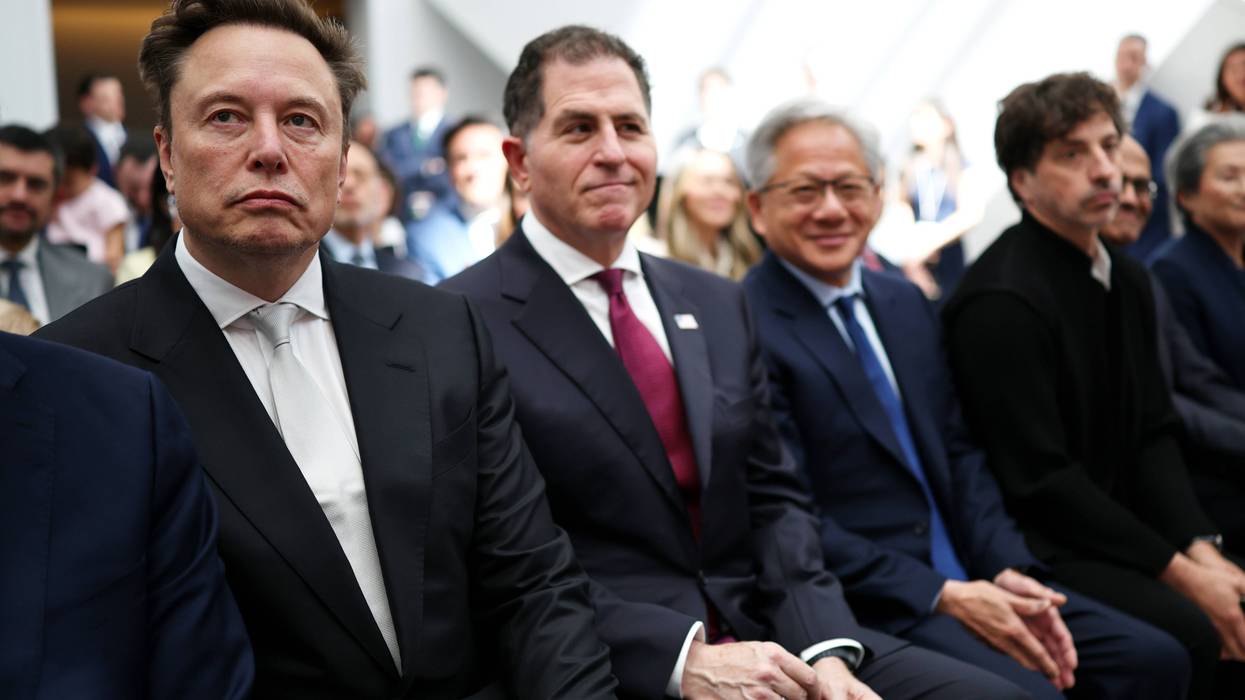
American voters' antipathy toward Big Tech companies has become a central theme of campaigns in the 2026 midterm elections, according to an analysis published by The Guardian on Thursday.
The Guardian noted that hundreds of midterm campaign ads attacking data centers have aired over the past two months, with both Republicans and Democrats accusing one another of being pawns of the artificial intelligence industry.
"And it’s not only data centers," The Guardian added. "The public anxiety over AI and distaste for the billionaires developing it, as well as backlash over encroaching tech like surveillance cameras, has turned the tech industry into a ubiquitous villain this election cycle."
Silicon Valley has become a punching bag for politicians even as Big Tech moguls have been throwing record sums of money to elect politicians sympathetic to their needs.
Super political action committees (PACs) "funded by tech billionaires are among the top spenders in this election cycle," The Guardian explained. "Leading the Future, formed by OpenAI president Greg Brockman and venture capitalist Marc Andreessen, has raised more than $75 million to back tech-friendly candidates. [SpaceX CEO] Elon Musk has sunk $366 million into Republican causes, more than he spent on the 2024 presidential election."
Much of the Big Tech money has been going toward Republican candidates this cycle, even though the industry has traditionally had close ties with elected Democrats.
Texas Democratic US Senate candidate James Talarico in recent days has been trying to turn Big Tech money being spent against him into an advantage, highlighting in particular the outsize role that Musk is playing funding the campaign of his Republican rival, Texas Attorney General Ken Paxton.
After Musk on Wednesday used his platform X to declare that "there is something deeply wrong with Talarico," the Texas Democrat quickly returned fire.
"There is something deeply wrong with a political system," Talarico wrote, "that allows one trillionaire to buy his own personal US senator."
A report published by The Atlantic on Monday examined how the tech industry's embrace of President Donald Trump during his second term has given Democrats an incentive to pummel the industry, particularly when polls show a bipartisan hostility to AI data centers.
In fact, Democratic strategists told The Atlantic that data centers have proven to be a top wedge issue capable of getting normally loyal GOP voters to think twice before voting for a Republican candidate.
"Trump and his anti-AI regulation posture is dragging the party to a politically suicidal place,” Democratic strategist Rob Flaherty told The Atlantic. "They are grabbing the wrong side of an 80–20 issue at exactly the wrong time."
Democratic strategists started pushing the party to take a more populist approach toward the tech industry when polling data "showed surprising concern about AI" even in traditionally conservative rural districts, The Atlantic reported.
Rishi Bharwani, US director of tech regulation advocacy group Reset Tech, said much has changed since Democrats under former President Barack Obama embraced the industry as a positive force for society.
“What we all experienced was a ton of growth in the tech sector, the creation of numerous new billionaires, and even the world’s first trillionaire," said Bharwani, "and a bunch of working families basically recognizing that they’re not sharing. These tech companies are actually undermining their economic security and their safety."
Keep ReadingShow Less

From Bad to Catastrophic: Report Details How Trump's GOP 'Taking This Country Backward' on Healthcare
A new report warns that President Donald Trump and the GOP's assault on key healthcare programs is set to push up the number of uninsured people to 37 million—a level not seen in more than a decade.
Oct 22, 2026
A comprehensive report on the state of the for-profit US healthcare system published Thursday shows that President Donald Trump and the Republican Party's assault on Medicaid and the Affordable Care Act is on track to reverse more than a decade of progress on expanding insurance coverage, fueling a worsening medical debt crisis and forcing millions to delay or forgo treatment.
The Commonwealth Fund's annual status report on the American health insurance system notes that the uninsured rate for working-age US adults rose from 8.9% in 2024 to 11.2% this year, as the Trump-GOP cuts to Medicaid and their refusal to extend enhanced ACA subsidies pushed millions off their coverage. The report emphasizes that the worst is yet to come, given that many of the Medicaid cuts included in the 2025 Trump-GOP budget law—including punitive new work reporting requirements—have not taken effect nationwide.
"The combined effects of these changes are expected to drive the number of uninsured people to 37 million by 2036—about the same as in 2014, when most of the ACA’s changes took effect," the report observes. "At the same time, rapid growth in health costs is making both insurance and care even less affordable—and contributing to medical debt—for Americans across the country."
Looking beyond just the uninsured rate, the Commonwealth Fund report shows that nearly half of working-age adults were "inadequately insured" this year due to a coverage gap or unaffordable plans. Around 30% of US adults reported having medical debt, according to the new report.
"Unlike peer countries, the US does not guarantee adequate health insurance for all its residents," the report states. "Our survey findings show just how detrimental a lack of continuous coverage and high out-of-pocket costs are to people’s ability to afford care and maintain their health—without going into debt."
The report comes as Americans casting their ballots in the November 3 midterm elections identify healthcare as a key issue amid a broader affordability crisis that Trump has repeatedly dismissed as a "hoax" perpetrated by his political opponents.
According to the Commonwealth Fund's survey, 73% of US adults "believe the federal government has a responsibility to ensure all Americans have coverage, including 45% of Republicans, 93% of Democrats, and 76% of independents." That finding is consistent with an earlier poll from the health policy group KFF showing that two-thirds of the American public has a favorable view of Medicare for All.
Trump has publicly and misleadingly attacked Medicare for All while insisting—without providing any specifics—that he intends to pass "a truly great healthcare plan" if the GOP retains control of Congress next month.
Trump has also touted small, one-time healthcare rebate checks that his administration has sent out to some Americans ahead of the midterms. The checks pale in comparison to the healthcare cost increases facing tens of millions of Americans.
Leslie Dach, chair of the advocacy group Protect Our Care, said in response to the Commonwealth Fund report that "Trump and Republicans are taking this country backward."
"Families are facing skyrocketing premiums, mounting medical bills, and going without coverage altogether," said Dach. "They’re being forced to put off seeing a doctor, skip prescriptions, or gamble with their health because they can’t afford care. And it’s only going to get worse as millions more Americans are expected to lose their health insurance as the full force of Republican cuts takes hold."
"This is a damning report on Donald Trump and Republicans’ healthcare agenda, which is making it harder to afford and access care for working families across the country," Dach added. "The only way to fix this is through the choices that Americans make in November.”
The Commonwealth Fund report came as KFF found that American workers now pay around $7,470 per year on average for employer-sponsored family health coverage—an increase of 9% compared to 2025.
“We have been hearing a lot about Affordable Care Act and Medicaid cuts," said KFF president and CEO Drew Altman. "Now add a 9% increase in what workers with employer coverage paid toward family premiums in 2026 to the reasons voters are so concerned about their healthcare costs."
Keep ReadingShow Less
'Shameful': Trump DOJ Ditches Civil Rights and School Desegregation Cases
Meanwhile, Rep. Jamie Raskin noted, "this administration carries out presidential vendettas, covers up child sex trafficking, promotes corruption, and pardons and coddles violent felons in the president’s private militia."
Oct 22, 2026
A pair of papers published Thursday by the legal group Democracy Forward detail how, under President Donald Trump, the Department of Justice has dumped dozens of cases focused on school desegregation and the civil rights of people of color, all while weaponizing the DOJ to serve "the most dangerous criminal in US history" and his allies.
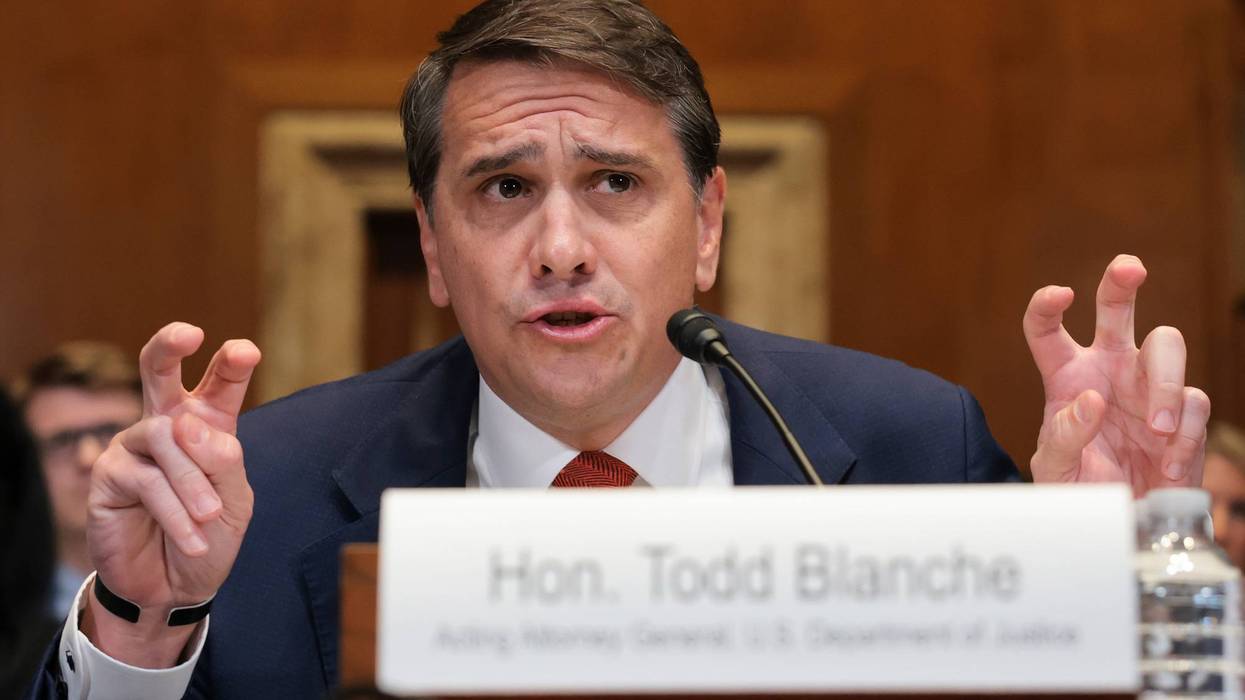
The cases were previously taken up by the DOJ's Civil Rights Division, currently led by Harmeet Dhillon, whose confirmation was controversial—like those of Trump's first attorney general for this term, Pam Bondi, whom he fired in April and replaced with his former personal lawyer, Todd Blanche.
The new analyses of the cases—"Walking Away: DOJ's Abandonment of Civil Rights Cases for People of Color" and "Filling in The Gaps: Tracking The 50+ School Desegregation Cases DOJ Says It Is Ending"—were developed by Democracy Forward's oversight and accountability project Red Line for Civil Rights.
"People and communities rely on DOJ to pursue vital cases to address threats to civil rights under our nation's laws. The Red Line for Civil Rights reports don't just highlight the cases that have been abandoned, but also make clear the harm that DOJ's abandonment of its mission retreat has caused," said Democracy Forward president and CEO Skye Perryman.
The project found at least 36 abandoned cases and probes addressing discrimination against Black, Latino, and Native American people, from Voting Rights Act lawsuits and redlining settlements with banks to firefighter and police hiring issues.
There was United States v. Cobb County, Georgia, in which the DOJ alleged that credit checks and a written exam illegally screened out Black firefighter applicants, and United States v. Patriot Bank, a 2024 consent order over redlining of Black and Hispanic neighborhoods in Memphis, Tennessee.
In United States v. SouthEast Bank, the department argued that a student loan refinancing product discriminated against Alaska Native, American Indian, and Black applicants, and in United States v. City of Minneapolis, the DOJ concluded that police discriminated against Black and Native American in Minnesotans.
"The shameful withdrawal of DOJ resources from these cases and investigations highlights how this administration is abandoning communities across the country," said Megan Marks, a former leader in the department who is now the project's deputy director and managing editor. "Walking away from them doesn't mean the discrimination has been addressed. It just means DOJ is no longer watching."
In its second analysis, the project identified 56 school districts in 12 states where the department has moved to ditch or end a desegregation case, or did not oppose ending one—from Athens City, Alabama and Chesterfield County, South Carolina to South Bend, Indiana and Waterbury, Connecticut.
 Tanisha Milton teaches a lesson on busing and the desegregation of Boston, Massachusetts public schools during an 8th grade civics class at TechBoston Academy on May 22, 2024. (Photo by Craig F. Walker/The Boston Globe via Getty Images)
"The Supreme Court held in its landmark 1954 case, Brown v. Board of Education, that segregating public school students by race violates the 14th Amendment's guarantee of equal protection," the report notes. "Since Brown, DOJ has monitored and enforced desegregation orders, reviewing evidence and often working collaboratively with school districts and, in some cases, private plaintiffs to support progress."
"This work was central to the Civil Rights Division's history. The Civil Rights Act of 1964 authorized DOJ to file its own school desegregation lawsuits against public schools or institutions of higher education and to join cases that families had already brought," the paper explains. "These school desegregation cases are how the promise of Brown reaches individual classrooms. Behind each of these cases are children, families, and a community that fought, sometimes at great personal risk, for the right to an equal education."
Shaheena Simons previously oversaw the Justice Department's desegregation docket but is now a senior adviser at the Lawyers' Committee for Civil Rights Under Law. In response to the report, she said that the "DOJ's haste to end these cases without deliberation or transparency is a betrayal of Black students who continue to face segregation and inequality in our schools."
"This retreat is part of a much bigger picture," Simons emphasized. "Not only has the Civil Rights Division abandoned its work to protect the rights of our most marginalized students, but it is also weaponizing civil rights statutes against them."
Democratic leaders in the US House of Representatives also spoke out about the project's findings. Education and Workforce Committee Ranking Member Bobby Scott (Va.) accused the "politicized" department of "turning its back on workers and students by abandoning entire categories of discrimination cases and ending the fight against school desegregation altogether."
Democrats on his panel "are committed to the protection of civil rights and to guaranteeing that all Americans are protected from discrimination in accordance with the civil rights laws that so many Americans fought to secure," pledged Scott, as his party prepares for next month's midterm elections, in which Republicans could lose control of one or both chambers of Congress.
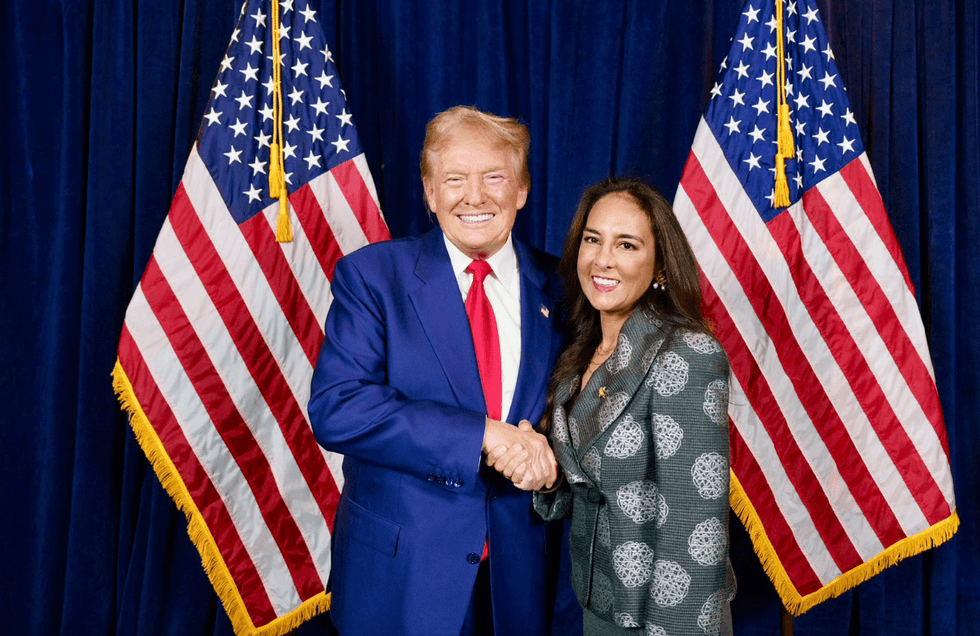 Harmeet Dhillon shakes hands with Republican US President-elect Donald Trump in a photo she posted on social media on October 31, 2024. (Photo: Harmeet Dhillon/X)
Fellow Democratic Congressman Jamie Raskin (Md.), a constitutional scholar and ranking member on the House Judiciary Committee, said that "Democracy Forward's reports expose the Justice Department's shocking betrayal of its central duty to protect Americans against race discrimination."
"While DOJ devotes its resources to persecuting Trump's political enemies, it has dropped protection of voting rights and is allowing discrimination to proliferate by abandoning school desegregation and job discrimination cases," he said, as the Trump administration pursues everyone from former Federal Bureau of Investigation Director James Comey to New York Attorney General Letitia James and Rep. Ilhan Omar (D-Minn.).
"We need a Department of Justice that stands by the rule of law and the rights of all Americans," Raskin asserted. "But this administration carries out presidential vendettas, covers up child sex trafficking, promotes corruption, and pardons and coddles violent felons in the president's private militia."
Keep ReadingShow Less

‘This Is Assault’: Utah Woman Speaks Out After Cop Body Slammed Her at Data Center Protest
“I have a habit of talking at data center meetings. But never have I been met with such excessive force."
Oct 22, 2026
A Utah woman is speaking out after video showed a police officer slamming to the ground as she was protesting against the approval of an artificial intelligence data center.
In a Thursday interview with Fox 13 Salt Lake City, 27-year-old Aspen Azalea demanded the firing of Utah County Sheriff's Deputy Phillip Crawford after he was caught on video throwing her to the ground during a Wednesday night meeting of the Utah County Planning Commission in the city of Provo.
"Bare minimum, Phil Crawford needs to be fired, bare minimum,” Azalea said. “This is assault. He did throw me to the ground."
Video of the incident shows Crawford pulling Azalea out of her seat at the meeting and escorting her out of the main chamber. Shortly after bringing her into the lobby area, he slams her face-first onto the floor.
Utah county residents are demanding accountability after police forcibly removed a woman from a council meeting where officials unanimously approved a controversial data centre rule without public comment. The woman reportedly suffered a concussion and facial injuries. https://t.co/gq0zeLECZU
— Al Jazeera English (@AJEnglish) October 22, 2026
The Utah County Sheriff's Office claimed that Azalea kicked Crawford in the groin just before he slammed her to the ground, which Azalea denied.
“No, I never kicked him,” she told Fox 13 Salt Lake City. “I absolutely didn’t kick him."
The woman also noted that, had the deputy thrown her to the ground just a few feet further, she could have hit her head on a nearby bench.
“What really scares me about that situation is that he could have killed me because there was a bench,” she said. “If he threw me into that bench, I don't think I'd be here today."
In a separate interview published Thursday by The Salt Lake Tribune, Azalea said that she suffered a concussion, as well as bruises on her jaw, knee, and shoulder.
Azalea acknowledged to The Salt Lake Tribune that she shouted during the Wednesday meeting, as she has shouted at other meetings to protest the development of data centers.
“I have a habit of talking at data center meetings,” she told the newspaper. “But never have I been met with such excessive force.”
Azalea faces misdemeanor charges of assaulting a police officer, resisting arrest, and disrupting a meeting.
Keep ReadingShow Less
'Where Is Our Humanity?': Anger After ICE Tried to Arrest Father Who Held Crying Toddlers
"Trump and ICE are traumatizing our children, ripping apart families, and terrorizing our communities," said Congresswoman Ayanna Pressley. "The cruelty is the point."
Oct 22, 2026
Anger mounted Thursday following the publication of video footage showing US Immigration and Customs Enforcement agents attempting to arrest a father carrying his two distraught toddlers while on his way to work in Providence, Rhode Island.
The man, whose middle name is Sebastian—he did not want to disclose his full name—is originally from Guatemala. He told The Boston Globe that he was taking his children to their babysitter before heading off to work in construction.
The video, recorded by a bystander, shows three ICE agents, two of them masked, on a residential street, trying to arrest Sebastian as he holds a crying child in each arm.
The ICE agents repeatedly ordered the woman recording the interaction to stand back, eventually threatening to pepper spray her if she didn't stay at least 25 feet away from them.
The agents were apparently uncertain how to proceed.
“This gentleman has two kids,” one of them said into a handheld radio while holding on to Sebastian's arm. “You wanna keep him or let him go?”
They decided to let him go, but told him to report to ICE on Wednesday or risk the arrest of his whole family.
According to the Globe, Sebastian has no criminal record in Rhode Island.
US Sen. Jack Reed (D-RI) was among the Democratic officials who condemned the arrest attempt and President Donald Trump's wider deadly immigration crackdown.
"No Rhode Islander can watch this video of a man trying to keep his children safe and think the actions of these federal agents are acceptable," he said on social media. "Surely we can acknowledge that traumatizing toddlers on the streets of Providence is a betrayal of our values as Americans."
Congresswoman Ayanna Pressley (D-Mass.) asked: "Where is our humanity? How is this keeping anyone safe?"
"Trump and ICE are traumatizing our children, ripping apart families, and terrorizing our communities," she added. "The cruelty is the point."
The encounter left Sebastian's family fearing for their future. His wife, Petronila, told the Globe that she's afraid that if they leave home, they may never return.
“Are they going to detain us, take us away?” she asked. “What is going to happen, what are we going to do?”
Keep ReadingShow Less

Finnish Petition Demands Data Center Regulation After Google Felled 250,000 Trees to Make Way for AI Project
“It has been done in the wrong way," said one resident of the Finnish town of Muhos. "American style. No sense. No sense at all."
Oct 22, 2026
A petition calling for more regulation of data centers in Finland has gathered more than 96,400 signatures—nearly twice the amount needed to force the Finnish Parliament to formally take up the petition for a debate—after Google infuriated residents and officials of two towns where the tech giant illegally chopped down an estimated 250,000 trees across 815 acres of forest after purchasing the land area.
The company felled the trees and stripped the entire area of its top soil without conducting a legally required environmental impact assessment, prompting the Finnish Licensing and Supervision Authority (LVV) to order Google to suspend all "measures that significantly change the environment."
The company was given a deadline of October 23 to halt the work in the rural towns of Muhos and Otanmäki, and LVV said it would consider enforcement proceedings and fines if Google does not comply.
Google's Finland country manager, Antti Järvinen, said last week that the company had acted “on the best understanding we had of the legislation at the time" as it cleared the land for its €13 billion ($14.5 billion) artificial intelligence infrastructure projects.
With 145 new data centers planned in Finland, where vast swaths of uninhabited land and the cool climate have attracted AI companies looking to rapidly build out the massive facilities, the petition proposed by citizens calls on Parliament to draft legislation that would ensure data centers are subject to "conditions and restrictions [in] connection to the electricity network."
The legislation must take "into account the capacity of the electricity network, mandatory reserve power, and the utilization of waste heat," reads the petition. "The aim of the legislative drafting is to ensure the adequacy and affordability of electricity for households and other industries."
Citizens are also calling for a "data center fee" to be imposed, "the basis for which must correspond to the environmental damage caused by the operation and the resources used (e.g. electricity, water, land use) to act as a system that compensates for these disadvantages."
Across the US and in other countries, the rapid AI data center build-out pushed by President Donald Trump, tech CEOs, and other leaders has prompted outcry in numerous communities, where residents have led grassroots efforts to block the construction of the centers.
Public approval for data centers has plummeted as residents have raised concerns about the facilities hiking household energy bills, guzzling water supplies, and providing few, if any, long-term jobs.
But Finnish Prime Minister Petteri Orpo of the conservative National Coalition Party has called attracting investment from AI firms a "top priority" for the Nordic country and has promised that Google's development will “deliver lasting benefits for both parties."
Speaking to The Guardian Thursday, Jussi Kangasharju, a computer science expert at the University of Helsinki, was skeptical of those claims.
“Really, for Finland, there are no benefits,” he told the outlet. “They are international companies serving international customers. Very little corporate taxes go to Finland. Data centers ultimately have very little benefit for others except the data center operator.”
Hanna Halmeenpää, chair of the Finnish Association for Nature Conservation (SLL), expressed disbelief over Google's destruction of the country's prized forests.
“I have never heard that any company has done anything like this in Finland," Halmeenpää told The Guardian Thursday. “They bought the vast land area, and they just started to cut it, just like that... It’s pure arrogance."
Another SLL official, Vesa Hyyryläinen, told the newspaper that wildlife in the forest that used to surround Otanmäki, including nesting woodpeckers, had been pushed out, while a resident whose family has lived in the town for generations explained how Google may have endangered locals by cutting down the biodiverse forest.
“We had wolves coming into the village because all the wild animals moved out of the forest,” Anni Ranta told The Guardian.
Conservationists were unimpressed Thursday with Google's pledge to plant trees across 130 hectares in the Muhos area and to work to protect water quality in the town following the destruction of the forest.
“It has been done in the wrong way," Muhos resident Aantti Jakonen told The Guardian. "American style. No sense. No sense at all."
Keep ReadingShow Less
Under Assault From Trump, Embattled ICC Wins Top Human Rights Prize in Europe
Yannis Maniatis, whose bloc nominated the court to receive the award, said it was meant to demonstrate "that no one is above the law."
Oct 22, 2026
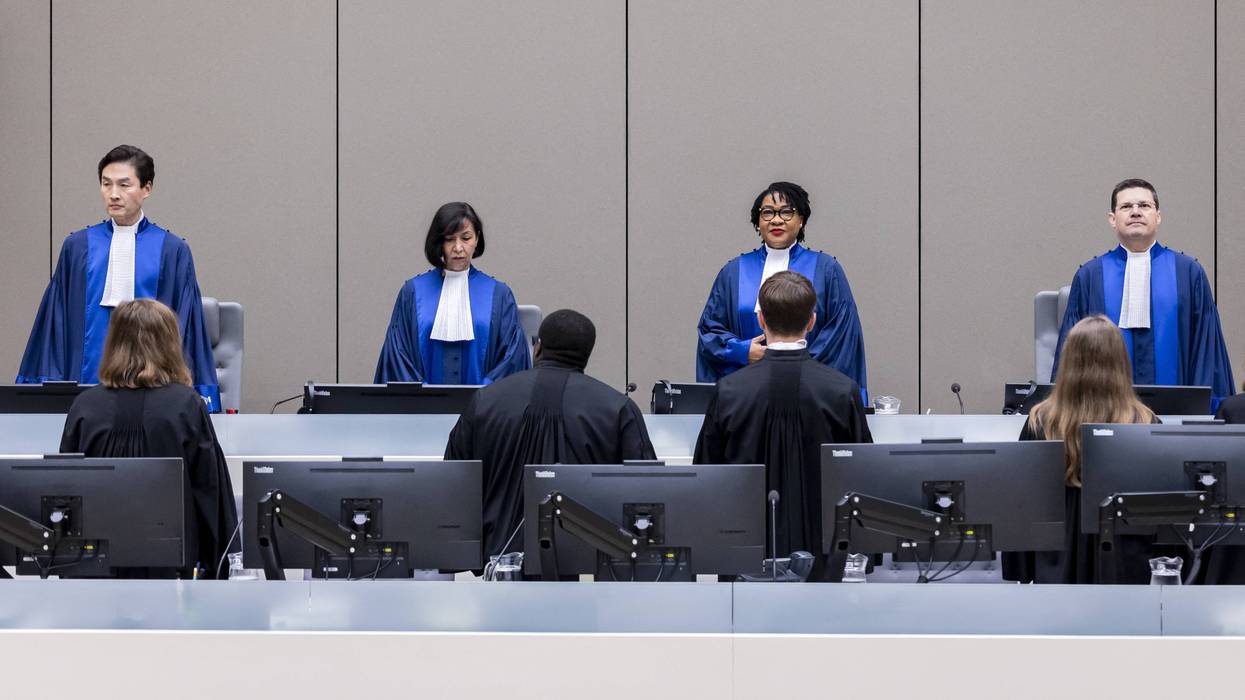
The European Union on Thursday awarded its most prestigious human rights prize to the International Criminal Court and its officials in a rebuke to President Donald Trump’s efforts to destroy the institution.
The EU’s Sakharov Prize for Freedom of Thought—previously awarded to figures such as Nelson Mandela and Malala Yousafzai—follows another international honor this month for a former ICC judge. Earlier in October, Navi Pillay, a former judge for the war crimes court, received the Nobel Peace Prize.
“The European Union is built on respect for multilateralism and international institutions," said European Parliament President Roberta Metsola as she announced the award on Thursday. “With the award of the Sakharov Prize to the International Criminal Court and its officials, the European Parliament recognizes the court’s important work in upholding international law and justice.”
Welcoming the award, which will be presented in December, ICC president Tomoko Akane noted that it “comes at a time when the court and its officials face unprecedented challenges.” She added, “There is no peace without justice and no security without law.”
In retaliation for the ICC’s 2024 arrest warrant for Israeli Prime Minister Benjamin Netanyahu, the Trump administration has declared war on the court, with Secretary of State Marco Rubio saying the goal was to “dismantle” it.
The US and Israel have not ratified the Rome Statute that created the ICC in 2002, and they claim that the court therefore has no power to hold their citizens accountable for war crimes. Supporters of the body argue that it has jurisdiction over crimes committed by Americans or Israelis in member states, such as Afghanistan and Palestine.
At last month's United Nations General Assembly meeting in New York, Trump raged against the court as an "evil group of people" and declared that he would "never allow US service members or anyone else to be investigated or given show trials by an anti-American tribunal with no jurisdiction over us." During the same speech, he threatened to "annihilate" Iran and bragged about seizing Venezuela's oil as "spoils" of war.
After sanctioning individual judges, UN experts, and human rights organizations that provided evidence of Israeli war crimes in Gaza, the Trump administration earlier this month sanctioned the court as a whole—threatening to cut it off from financial services and technology it needs to function. Human rights organizations have decried the sanctions as a fundamental assault on international law itself and a declaration of impunity by the United States.
Yannis Maniatis, a Greek lawmaker and vice president for foreign affairs of the European Parliament’s Socialists and Democrats bloc, which nominated the ICC for the prize, said the honor was meant to reinforce the idea “that no one is above the law.”
“We stand by the ICC and its officials, and we are committed to safeguarding its work," he said Monday. "We must guarantee that the ICC is able to operate independently, free from pressure or external interference."
"The court ensures that victims around the world have access to justice," he added. "It is a people-based organization, not a political one. If the aggressors become the victims, and if we stand by helplessly as international justice erodes, we risk allowing those who believe themselves above the law to prevail."
Ursula von der Leyen, the president of the European Commission, likewise welcomed the award.
"For victims of the world's gravest crimes, justice means a voice," she said. “The [ICC] must be free to pursue its mission independently and without pressure or intimidation.”
Some European lawmakers have warned that expressions of solidarity with the ICC will mean little unless the EU takes decisive action to shield the court from US sanctions.
Earlier this month, the chairs of five European Parliament bodies said that "targeting the court as an institution crosses a fundamental red line, one that threatens the independence and integrity of a tribunal established to uphold accountability for the gravest crimes of concern to the international community."
"The European Union must now demonstrate unwavering solidarity with the ICC and its personnel—not only with words but also with concrete acts," they said. "The European Commission must immediately trigger the EU Blocking Statute, shielding the court and European actors from the extraterritorial reach of these sanctions. Europe must stand firm in defense of international law and the rule of law.”
On Monday, European Commission spokesperson Siobhan McGarry confirmed that the measure remained under consideration but announced no decision or timeline for activating it.
The Left, a coalition of socialist and other left-wing parties in the European Parliament, said awarding the Sakharov Prize to the ICC sent a “strong signal to the European Commission to immediately invoke the Blocking Statute and protect international justice from US sanctions and intimidation.”
Keep ReadingShow Less
'A Perfect Metaphor': Hegseth Staffers Broke Historic Globe After Pentagon Chief Demanded It for His Office
"I cannot think of a more apt metaphor for Pete Hegseth’s DoD," said one critic.
Oct 22, 2026
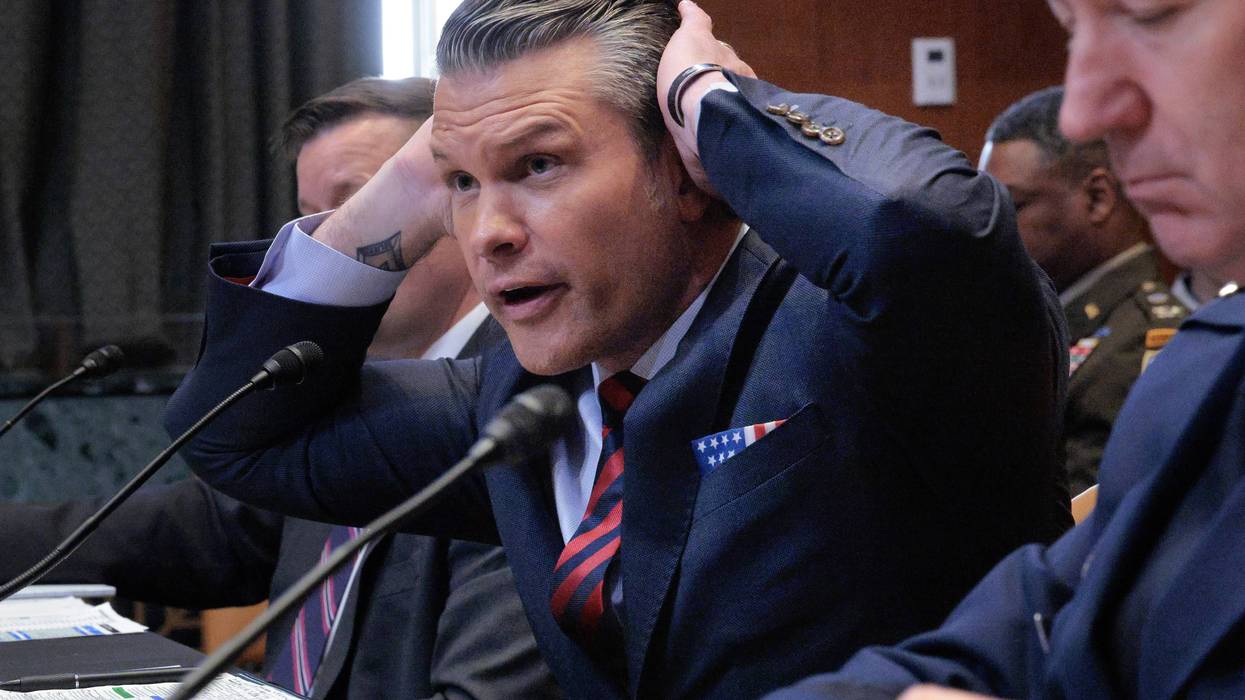
Staffers for US Defense Secretary Pete Hegseth broke a globe used by Gen. Dwight Eisenhower during World War II after the Trump Cabinet official demanded that it be moved to his office in the Pentagon.
The Washington Post reported on Thursday that Hegseth wanted the historic 30-inch globe delivered to his office because he found its historical significance "attractive."
The Post noted that while moving historical items such as the globe is normally "a deliberate process overseen by trained curators," Hegseth's staff dispensed with such formalities and attempted to move it by themselves.
The staffers subsequently dropped the globe, cracking its shell and creating a gash several inches wide.
While the US Department of Defense denied requests from Post reporters to inspect the globe in person, the newspaper nonetheless obtained photos of the artifact, which revealed a large hole at its base.
After the globe was damaged, the staffers abandoned plans to bring it to Hegseth's office.
Ty Seidule, a retired brigadier general who taught history at the US Military Academy at West Point, told the Post that it appears Hegseth "wants an Eisenhower totem to be like Ike, brilliant in war and peace."
"Hegseth is no Ike," Seidule continued. "The globe won’t give him Ike’s attributes of humility, intellect, and judgment."
Other critics of Hegseth drew attention to the symbolism of the defense secretary breaking a historic artifact while eschewing expert assistance.
"They broke Eisenhower’s globe because they didn’t want to wait for a team of specialist historians to move it," wrote weapons systems expert John Ridge in a social media post. "I cannot think of a more apt metaphor for Pete Hegseth’s DoD."
Drop Site reporter Ryan Grim remarked that "Hegseth’s frat brothers breaking Eisenhower’s globe is a bit too on the nose."
Pod Save America co-host Tommy Vietor argued that the globe incident was "a perfect metaphor" for Hegseth's reign at the Pentagon, as it was "stupid, impulsive, driven by vanity, and the result is destruction."
Yale historian Joanne Freeman wrote that the symbolism of Hegseth's team breaking the globe "is too much to bear."
"And of course, they ignored the TRAINED EXPERTS WHO HANDLE HISTORICAL ITEMS," Freeman added. "Because EDUCATION? EXPERTISE? WHO NEEDS IT?"
Writer David Simon, creator of hit TV series The Wire, said the symbolism of the globe debacle was too heavy-handed even for a Hollywood drama.
"This metaphor is ridiculously obvious and unsubtle," Simon wrote. "Fire the writers. They're hacks."
Keep ReadingShow Less

'This Is Huge,' Economist Says as Filing Shows Zuckerberg Getting Ready to Pay CA Billionaire Tax
"This SEC filing is proof that the campaign for Proposition 40 is working," said Gabriel Zucman. "We are at a turning point."
Oct 22, 2026
Federal filings released Wednesday reveal how Meta CEO Mark Zuckerberg, one of the richest men in the world, is getting ready to potentially pay a billionaire wealth tax that is on California's November midterm ballot—an indication of the grassroots campaign's impact.
"This is huge," economist Gabriel Zucman, an outspoken supporter of the proposed tax, wrote on social media in response to Meta's new filing with the US Securities and Exchange Commission. "We are witnessing a global turning point unfold before our eyes."
The New York Times reported Wednesday that the filing discloses the outcome of tense, months-long negotiations between Zuckerberg and Meta's board. Meta is headquartered in California, and Zuckerberg lives in a sprawling compound in Palo Alto.
According to the Times, Zuckerberg threatened to sell his home and leave California if board members didn't agree to a deal that would allow him to sell shares to cover his possible tax bill without relinquishing any control of Meta.
"On Wednesday, the company unveiled the result: In January, it will issue a new class of stock to shareholders, which Mr. Zuckerberg can sell to pay the potential wealth tax without cutting into his 60.6% voting power at the Silicon Valley firm," the Times reported. "Mr. Zuckerberg’s decision to preemptively restructure his stock holdings shows how fearful Silicon Valley is that the tax measure, Proposition 40, might pass in the midterm election on November 3."
WOW. New SEC filing: Zuckerberg is preparing to pay California’s billionaire tax, AND has signed an agreement to stay in the state for 8 years.Two myths down: no, billionaires won’t all flee, and yes, they can pay their fair share without losing their companies.Just 12 days left to win this! Holy shit this could be historic.
— Rutger Bregman (@rutgerbregman) October 22, 2026
If California voters approve Proposition 40 and defeat competing initiatives that would cancel it out, billionaires living in California as of January 1, 2026 would face 5% tax on their wealth, which they could pay all at once or over a five-year period.
The tax would raise an estimated $100 billion in revenue, funds that would help offset federal Medicaid cuts and fund California's education system. Prominent billionaires, led by Google cofounder Sergey Brin, have spent aggressively against the proposed tax, but Zuckerberg is not known to have donated to the opposition efforts.
Zucman, a world-renowned expert on inequality, noted that Meta's CEO would face a roughly $10 billion tax bill under Proposition 40. Zucman has argued the tax could serve as a model for broader efforts to rein in wealth inequality.
"Until now, Mark Zuckerberg has paid very little in taxes relative to the staggering growth of his fortune," the economist wrote on Wednesday. "Proposition 40—the California billionaire tax—would change that."
"This SEC filing is proof that the campaign for Proposition 40 is working," Zucman added. "Mark Zuckerberg is preparing to pay the wealth tax if California voters decide to approve Prop 40. Voting is already underway, and it ends in just 12 days. We are at a turning point. California is closer than ever to enacting the first billionaire wealth tax in history. This is a historic moment."
Keep ReadingShow Less
Judge Blocks Error-Riddled Effort by Trump DHS to Crack Down on Vanishingly Rare Voting by Noncitizens
"It was clear from the start that DHS built its lists on bad data, never checked how often it was wrong, and recklessly sent agents to people's homes weeks before an election," said one voting rights advocate.
Oct 22, 2026
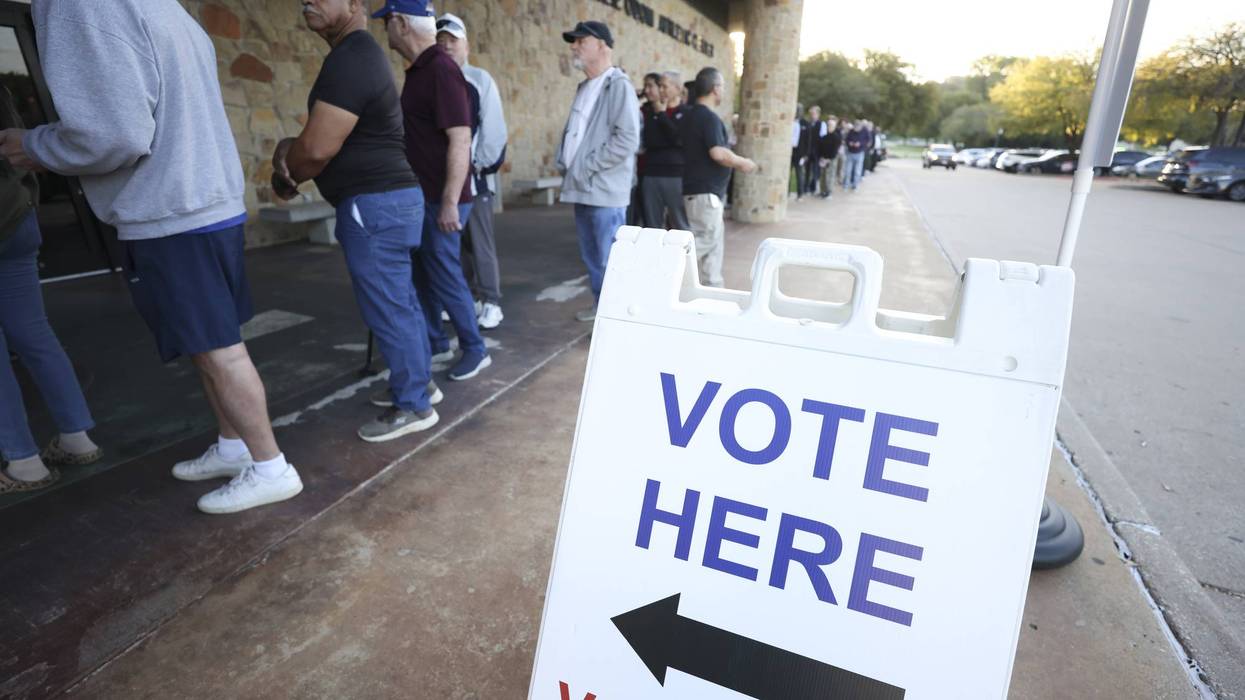
A federal judge in California ruled late Wednesday that the US Department of Homeland Security has violated the Voting Rights Act by sending agents door-to-door and demanding information from people about their immigration status and whether they've voted in recent elections—part of President Donald Trump's perennial effort to prove the baseless claim that noncitizens are committing mass voter fraud to secure Democratic victories.
In the US District Court of the Northern District of California, District Judge Araceli Martinez-Olguin ordered federal agents to end their "elections-related field operations and field interviews" in nine states, including California, New York, Missouri, Connecticut, Georgia, Nevada, Pennsylvania, Washington, and Wisconsin.
DHS can no longer carry out the operations if they are likely to involve interrogations of people whom agency officials "know, suspect, or should reasonably know or suspect are US citizens," said the judge.
Because the Trump administration has been turned away by state and local agencies when officials have demanded access to voter data, DHS has been forced to compile its lists of targets using commercially available information and comparing it with federal records.
That method has resulted in target lists that are "voluminous and unreliable," wrote Martinez-Olguin.
In Nevada last month, for example, Homeland Security Secretary Markwayne Mullin asserted that his agency had determined there were close to 16,000 noncitizens on the state voter rolls. DHS sent the state a list of 185 people from that list, whom it claimed had been improperly permitted to register to vote.
But a deputy attorney general for the state tersely informed Mullin that records indicated all 185 people DHS was targeting were citizens.
“You have provided nothing of substance to suggest otherwise," he wrote.
Martinez-Olguin suggested she would not tolerate more large-scale errors that threaten the voting rights of thousands of Americans, and said the Trump administration's so-called "Unlawful Voter Initiative" violates a section of the Voting Rights Act that makes it illegal to "intimidate, threaten, or coerce" people and groups that contribute to voter mobilization efforts or assist with voting.
"Plaintiffs do not claim, nor does the court find, that it is unlawful for federal officials to undertake investigations into unlawful voting in federal elections," the judge said in her ruling. "Rather, plaintiffs seek to stop DHS from continuing to investigate US citizens, who have a legal right to vote, in a way that intimidates and threatens the participation" of National Nurses United and California Nurses Association, which have been involved in voter mobilization and sued DHS over its policy.
Martinez-Olguin added that "the public’s interest in safe elections, free from interference or intimidation... far exceed defendants’ purported interest in combating unlawful voting by non-US citizens.”
The Department of Justice has indicated that a tiny fraction of registered voters in the US—156 people—have been charged with offenses related to "voter fraud," despite Trump's claims that voting by noncitizens, which is illegal, is rampant in the US.
In California, federal authorities this week said they had identified 28 immigrants who were suspected of voting before they became naturalized citizens. They all denied knowingly registering to vote or voting, and the group represented about 0.0001% of registered voters in California.
"It was clear from the start that DHS built its lists on bad data, never checked how often it was wrong, and recklessly sent agents to people's homes weeks before an election," Beau Tremitiere, counsel at Protect Democracy, which also sued over the policy, told CBS News. "Today's ruling should remind us that American citizens hold the ultimate power in our democracy, not the government—no matter what the administration says otherwise."
Keep ReadingShow Less
See More
Most Popular