

5
#000000
#FFFFFF
To donate by check, phone, or other method, see our More Ways to Give page.
Daily news & progressive opinion—funded by the people, not the corporations—delivered straight to your inbox.
Ross Floyd, 815-761-5546, wmrossfloyd@gmail.com, Jones College Prep Student
Israel Munoz, 773-603-4688, israel.munoz94@gmail.com, Kelly High School 2013 Graduate
A group of at least 35 Chicago Public School students are attending Wednesday's Board of Education meeting at 125 S. Clark St. Students will tell the board, in their own words, how school closings will affect them. Students who have signed up to speak at the meeting will address the impact closings, layoffs, privatization, and charter schools have on current CPS students.
"Students are speaking out because our voices are not being heard," says Jamie Leann Adams, a rising sophomore at Roosevelt High School, who will address the Board of Education on Wednesday. "We're the experts on Chicago Public Schools, and we know best how closings will affect us. The Board of Education says they want to put students first. To do that, they need to listen to us."
Students from 15 Chicago Public Schools are organizing under the banner of Chicago Students Organizing to Save Our Schools (CSOSOS), a student-led organization dedicated to amplifying student voice and engaging students in educational activism.
"School closings hurt the students more than anyone," says Avelardo Rivera, a rising sophomore at Whitney Young High School, who will address the Board of Education on Wednesday. "We're losing our relationships with our teachers, homeless students are losing vital services, and students with special needs are being left behind."
Students will be holding a press conference outside of 125 S. Clark St. immediately following the Board of Education meeting.
Additionally, opponents of school closings are organizing a picket of the Chicago Board of Education headquarters on Wednesday, July 24, at 125 S.Clark at 8:30 AM, and are calling for a twitter storm Tuesday, July 23 from 7pm to 9pm CST using the hashtag #StopCPSCuts.
For live updates on Twitter, follow: @OCPress @gregrgoodman
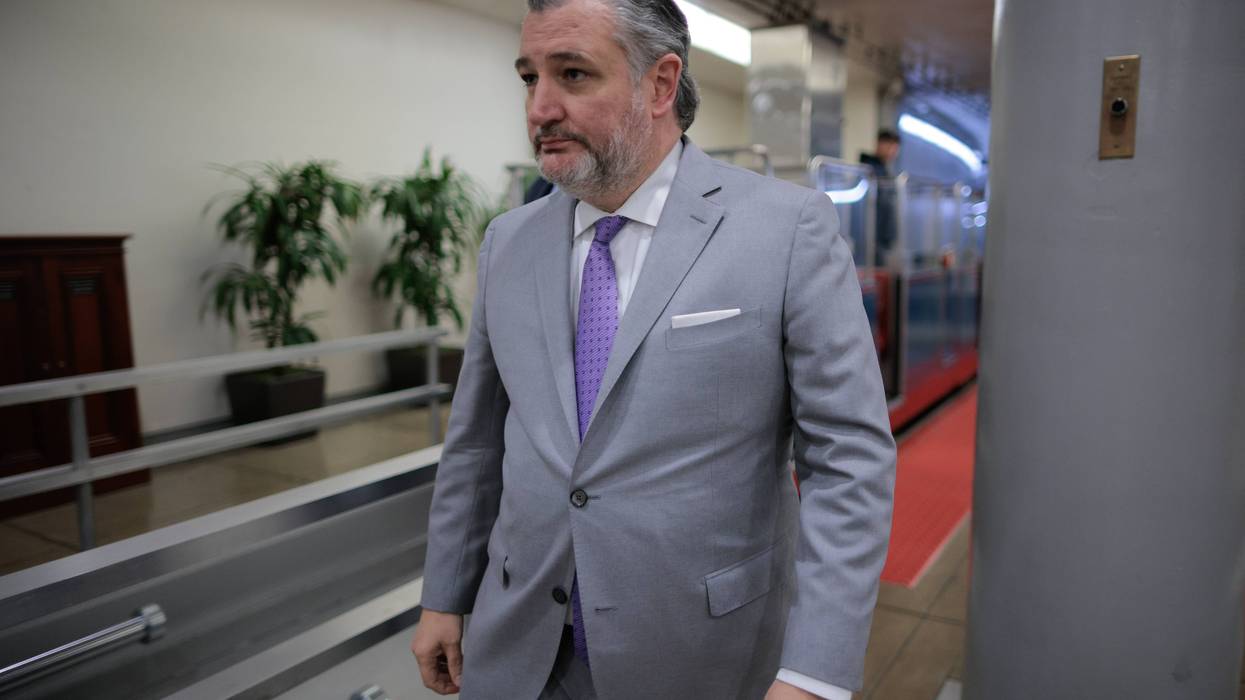
"Nothing was accomplished by Operation Epic Fury except putting the Islamic Revolutionary Guard Corps in charge of Iran and the Strait of Hormuz," said one critic of the war.
President Donald Trump revealed on Saturday that he is mulling a deal that would end his illegal war with Iran, and some hawks within the Republican Party are expressing alarm.
According to a Sunday report in The New York Times, many details of the agreement to end the war remain murky, with the fate of Iran's enriched uranium up in the air. US and Iranian officials have also given contradictory messages about the proposed deal's contents, suggesting there is much work still to be done before any agreement is finalized.
Regardless, three hawkish GOP senators on Saturday raised major concerns about the contents of the deal, warning against accepting any agreement that will leave Iran in a stronger position than before Trump illegally launched a war against it without any authorization from Congress in late February.
"If it is perceived in the region that a deal with Iran allows the regime to survive and become more powerful over time, we will have poured gasoline on the conflicts in Lebanon and Iraq," wrote Sen. Lindsey Graham (R-SC), who lobbied Trump to attack Iran repeatedly before the start of the war. "A deal that is perceived to allow Iran to survive and possess the ability to control the [Strait of Hormuz] in the future will put Hezbollah in Lebanon and the Shia militias in Iraq on steroids.
Sen. Ted Cruz (R-Texas), another longtime Iran hawk, said he was "deeply concerned" about what he's been hearing about the deal and expressed particular worry about Iran getting relief from US sanctions while still maintaining the ability to shut down the Strait of Hormuz.
"If the result of all that is to be an Iranian regime—still run by Islamists who chant 'death to America'—now receiving billions of dollars," Cruz wrote, "being able to enrich uranium and develop nuclear weapons, and having effective control over the Strait of Hormuz, then that outcome would be a disastrous mistake."
Sen. Roger Wicker (D-Miss.) was even blunter in his condemnation of the reported agreement.
"The rumored 60-day ceasefire—with the belief that Iran will ever engage in good faith—would be a disaster," Wicker wrote. "Everything accomplished by Operation Epic Fury would be for naught!"
Ben Rhodes, a former deputy national security adviser for President Barack Obama, challenged Wicker's claims that Trump's illegal war had achieved anything of value.
"Nothing was accomplished by Operation Epic Fury," Rhodes wrote, "except putting the Islamic Revolutionary Guard Corps in charge of Iran and the Strait of Hormuz."
Rhodes' criticism was echoed by Stephen Wertheim, senior fellow at the Carnegie Endowment for International Peace, who wrote that "everything accomplished by Operation Epic Fury is already for naught."
Ali Vaez, director of the Iran Project at the International Crisis Group, accused the Iran hawks of being delusional for thinking further bombing would force Iran to capitulate.
"DC's Iran hawks got two wars, nearly every conceivable sanction designation, a blockade, threw a wrench in global economy," Vaez wrote, "and will still claim that just a little more pressure and a touch more bombing will magically yield the concessions they still won't be satisfied with."

Data released by the University of Michigan and Gallup this week showed US consumer sentiment cratering even as stock markets hit record highs.
Multiple polls and surveys released in recent days have shown US consumer sentiment cratering—and all the while, the US stock market keeps hitting record highs.
The Kobeissi Letter, a financial newsletter, posted a graphic Saturday that matched consumer sentiment as measured by the University of Michigan's Surveys of Consumers with the performance of the S&P 500 stock index over a 30-year span.
The graphic shows that, up until around 2020, consumer sentiment matched stock market performance closely, although there was a large divergence between the two leading up to the 2008 financial crisis, where stocks briefly outperformed consumer sentiment before crashing downward as the housing bubble burst.
But throughout the last six years, the graphic shows, the S&P 500 has produced an almost continuous upward surge even as consumer sentiment spirals downward.
Absolutely incredible:
Over the last 6 years, the S&P 500 has risen +130% while US Consumer Sentiment has collapsed by -55%, to its lowest since data began in 1952.
We are witnessing the formation of the biggest wealth divide in modern history. https://t.co/XGMR6DfuNc pic.twitter.com/2w7cRvn7ok
— The Kobeissi Letter (@KobeissiLetter) May 23, 2026
"Absolutely incredible," commented Kobeissi Letter. "Over the last six years, the S&P 500 has risen +130% while US Consumer Sentiment has collapsed by -55%, to its lowest since data began in 1952. We are witnessing the formation of the biggest wealth divide in modern history."
Kobeissi Letter produced the graphic one day after the University of Michigan's latest survey found consumer sentiment hitting the lowest level on record.
Joanne Hsu, director of the survey, observed that "the cost of living continues to be a first-order concern, with 57% of consumers spontaneously mentioning that high prices were eroding their personal finances, up from 50% last month."
On the same day, Gallup published new data showing that Americans' economic confidence has fallen to its lowest level since October 2022, with just 16% of Americans rating the economy as excellent or good, and nearly half describing it as poor.
Axios reported on Saturday that even Republicans have been growing sour on the US economy, citing a recent poll from The Associated Press showing GOP approval of President Donald Trump on the economy to be at around 60%, down from 80% just three months ago.
"The growing GOP gloom could hardly come at a worse time for Trump and the party," Axios noted, "less than six months out from a midterm election that's likely to turn on the economy."
The gap between overall consumer sentiment and stock market performance also lines up with recent consumer spending trends. Data published by The Financial Times earlier this year showed that the top 10% of earners in the US now account for nearly half of all consumer spending, while the bottom 80% of earners now account for less than 40% of all consumer spending.
A February report from TD Economics economist Ksenia Bushmeneva noted that “the economic divide between America’s households at the top of the income spectrum and everyone else continued to widen last year,” as “upper-income households benefited from the still-robust wage growth, strong gains in equity markets, and better access to consumer credit.”
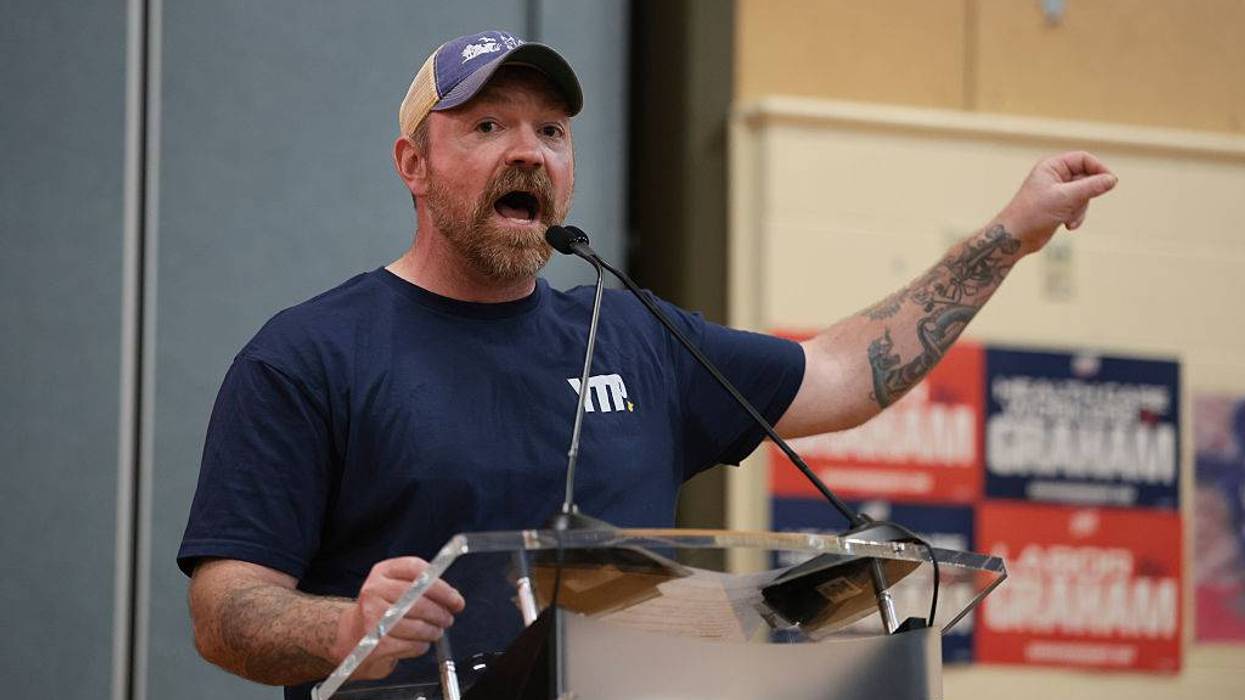
"Private equity is destroying our favorite baseball team, stripping them for parts," Democratic US Senate candidate Platner said in an ad that aired on the New England Sports Network.
Maine Democratic US Senate candidate Graham Platner on Saturday said that a campaign ad that aired during a Boston Red Sox game was "taken down" after it took aim at the team's ownership.
The ad in question features Platner discussing the role that private equity firms play in the US economy, including sports teams.
"Private equity is destroying our favorite baseball team, stripping them for parts," Platner says at the start of the ad. "Private equity is buying up our homes, our sports, and our lives. I will reverse the private equity curse."
Private equity is taking our homes. It's taking our hospitals. It's taking beloved local businesses and stripping them for parts.
And now private equity is running the Red Sox into the ground.
Our new ad ⬇️ pic.twitter.com/w7LapElpdA
— Graham Platner for Senate (@grahamformaine) May 22, 2026
Platner concludes the ad by saying that he approves this message "because I miss Mookie Betts," the star player whom the Red Sox traded to the Los Angeles Dodgers in 2020 in a deal that was widely decried by local fans as a salary dump.
According to Platner, his campaign began airing the ad Friday on the New England Sports Network (NESN), the cable TV station owned partially by Fenway Sports Group, the conglomerate that owns the Red Sox.
However, he said that "midway through the game the ad was taken down" by NESN, after which the Red Sox proceeded to blow a 4-0 lead, losing to the Minnesota Twins by a final score of 8-6.
Platner, an oyster farmer and upstart candidate who has never before held political office, became the Democratic Party's presumptive nominee for the 2026 US Senate race in Maine last month after his top rival, Democratic Maine Gov. Janet Mills, dropped out of the race.
In recent weeks, Platner has pivoted to challenging incumbent Sen. Susan Collins (R-Maine), who has held the seat since 1996 and is now running for her sixth term in office.