

SUBSCRIBE TO OUR FREE NEWSLETTER
Daily news & progressive opinion—funded by the people, not the corporations—delivered straight to your inbox.
5
#000000
#FFFFFF
To donate by check, phone, or other method, see our More Ways to Give page.
Daily news & progressive opinion—funded by the people, not the corporations—delivered straight to your inbox.
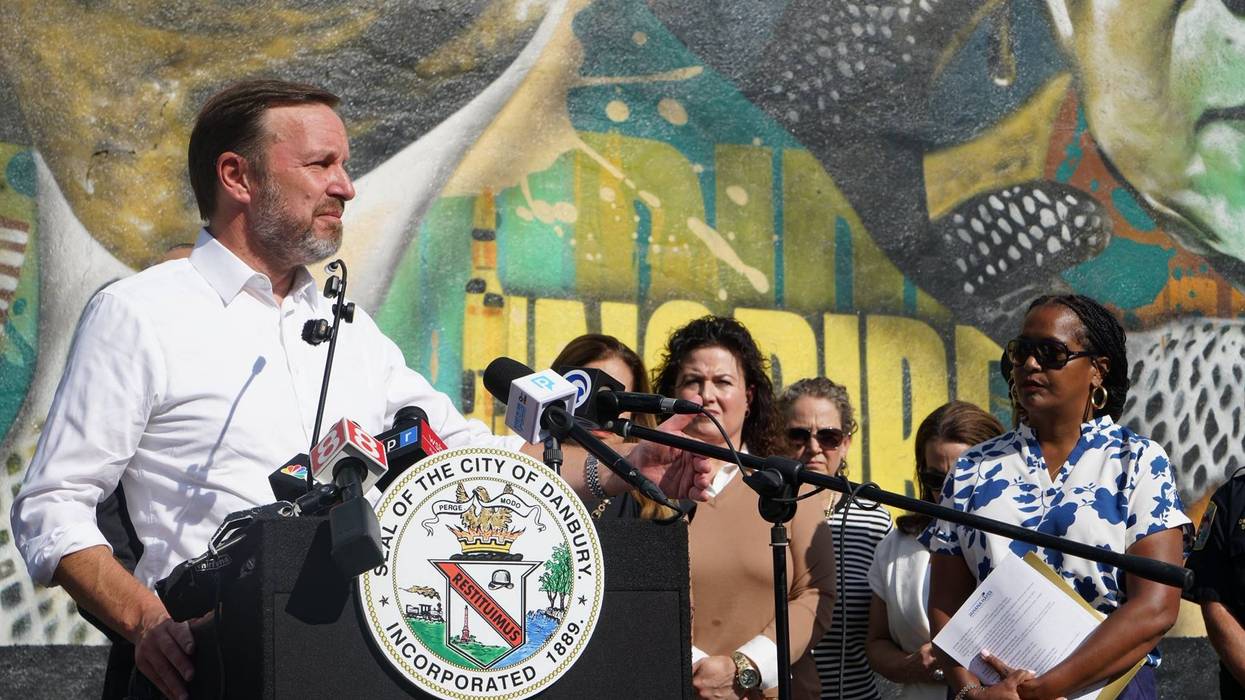
“ICE is not here to protect Danbury,” Sen. Chris Murphy said. “ICE is here to put Danbury into a state of terror.”
National, state, and local Democratic officials joined activists in Danbury, Connecticut on Wednesday to demand accountability for the dozens of immigrants—some of them reportedly in the country legally—detained in recent days by US Immigration and Customs Enforcement agents, including parents who were seized while seeing their children off to school.
“This morning in Danbury, ICE was arresting parents at school bus stops,” US Sen. Chris Murphy (D-Conn.) said in a social media post. He alleged that agents waited until children had boarded buses, potentially leaving them to return home from school without their parents.
“I’m heading to Danbury,” he said. Murphy joined other Connecticut Democrats, including Gov. Ned Lamont, US Rep. Jahana Hayes, Lt. Gov. Susan Bysiewicz, and Danbury Mayor Roberto Alves, as well as immigrant rights advocates at Kennedy Park to condemn the Trump administration's deadly and xenophobic crackdown.
“ICE is not here to protect Danbury,” Murphy told the crowd in the Fairfield County city of 86,000 residents—around 35% of whom are foreign-born immigrants. “ICE is here to put Danbury into a state of terror.”
“Congress should not authorize a single additional dollar for ICE while this illegality continues,” the senator added.
Hayes said, “What I would hate to see is a snowball effect where a parent is detained, and then a child goes into state custody because there's no one to pick them up."
Alves said that nearly 50 community members have been detained this week that he knows of, but warned that the actual number of arrests is likely higher.
"ICE has increased enforcement and stepped up its tactics with an intentional brutality you have all seen," the mayor told the crowd in the park. "The operations coincided with the start of school here in Danbury."
“We’re here because mothers, fathers, workers, and longtime community members are being swept up, with no rhyme or reason, not as part of a targeted campaign of folks who have committed serious crimes," he continued. "We’re seeing racial profiling, random people being picked up off the streets."
“ICE is pulling people after they put their kids on the school bus," Alves said. "Operations in front of a daycare, where 3- to 5-year-olds are looking out the window asking what’s going on. An operation on the first day of school at our second-most-populated, highly diverse elementary school in Danbury as students are being dropped off by parents and school buses."
"This isn’t a coincidence; this is intentional,” he stressed, adding that he received reports of legal residents being detained.
“So when we hear folks say, ‘Oh, we want people to do it the right way,’ the folks doing it the right way are also getting deported," he added. "We can’t stand for that anymore."
Juan Fonseca Tapia, a Mexican immigrant and co-founder of the advocacy group Danbury Unites for Immigrants (DUFI), broke down while recounting what he said he saw during the blitz, including one person getting pepper-sprayed and another taken to the hospital after being struck by an ICE vehicle.
“They were taking people everywhere. They hurt them. They were bleeding," he said. "I saw the chains they put on them—not handcuffs, literal chains.”
DUFI volunteer Clementina Lunar described a father being arrested while putting his child on a school bus.
“When he handed the child to the bus helper, ICE came and took him,” she said.
Lunar added that Danbury residents are mobilizing to help each other and monitor school bus stops.
“There is fear," she said, "but there is also a lot of resilience and resistance."

"To come here and say, 'Have some perspective'? You ought to have some damn perspective," Jackson said in a video reply to the vice president.
Troy Jackson, the Democratic US Senate nominee for a critical seat in Maine, denounced Vice President JD Vance on Monday for downplaying the killing of Johan Sebastián Durán Guerrero, a 25-year-old Colombian national who was killed by a federal immigration agent last month in Biddeford.
During a visit to Maine on Monday, Vance told residents who are "so worried about that situation" to "have a little bit of perspective." Vance added that "we can absolutely investigate every shooting and we will, but we can also secure our border and ensure that that poison stops coming into our country." (The legal representative for Durán Guerrero's family said no federal agencies have reached out as part of any investigation into the killing.)
Jackson, the former president of Maine's Senate who is running to unseat Republican US Sen. Susan Collins, responded to the vice president in a video message posted to social media.
"JD Vance is a dirtbag," said Jackson. "There was a young man who had a Social Security number, he had a job, I mean, he had a life. He had a family. To come here and say, 'Have some perspective'? You ought to have some damn perspective. I mean, you don't even know what the hell's goin' on. You got a rogue agency that's going around, pulling people out of homes."
Jackson then turned his attention to Collins, who recently voted for legislation that included around $70 billion in funding for US immigration agencies, including nearly $40 billion for Immigration and Customs Enforcement (ICE). After an ICE agent killed Durán Guerrero last month, Collins refused to say she regretted her vote to boost the agency's funding.
"I want to know: What are you doing about it, Susan?" Jackson asked. "She gave them an additional $70 billion to pull this shit off. We lost a person that JD Vance seems to not give a shit about. And that should piss us all off. So I want to know: Do you agree with JD Vance dismissing the killing of this young man? Because I tell you what, 'concerns' and all that does nothing for all of us, does nothing for that family, and I'm sick of your 'concerns.'"
My response to @JDVance saying we should "have a little bit of perspective" on ICE murdering a young father pic.twitter.com/fNRxN9oBiF
— Troy Jackson (@TroyJackson207) August 24, 2026
During his remarks in Brewer, Maine on Monday, Vance said Collins is "doing an amazing job" and characterized her as "the most independent member of the United States Senate," even though she votes with President Donald Trump around 96% of the time.
Misha Linnehan, a spokesperson for the Maine Democratic Party, said in response to the vice president's remarks that "Susan Collins voted to give Donald Trump and JD Vance $70 billion to send armed ICE agents into Maine with no guardrails."
"Now that a man has been killed," said Linnehan, "JD Vance thinks Mainers need to ‘have a little bit of perspective’ about children losing their father and a wife losing her husband—does Susan Collins agree?"

One Democratic congresswoman denounced the expulsions, which followed the lifting of temporary protected status for 350,000 Haitians, as "a humanitarian betrayal that will stain America for generations."
A US Immigration and Customs Enforcement charter flight on Thursday deported 161 Haitians following the Trump administration's cancellation of temporary protected status for 350,000 people from the Caribbean nation ravaged by deadly gang violence and a wider humanitarian crisis.
The first of what the administration says will be a wave of mass deportations to Haiti followed a June decision by the right-wing US Supreme Court affirming the Department of Homeland Security's revocation of temporary protected status for Haitians and 6,000 Syrians, many of whom have lived in the United States for years under TPS due to unsafe conditions in their countries.
However, Haiti's National Office of Migration said that none of those aboard Thursday's flight were former TPS beneficiaries; rather, they were "people facing removal proceedings after entering the US without authorization, people who had served prison sentences, and some individuals born outside Haiti to at least one Haitian parent," according to The Haitian Times.
Late last month, President Donald Trump ordered ICE to ramp up arrests of Haitians, who have been the target of racist verbal attacks by the president and other Republicans. Vice President JD Vance, infamously—and baselessly—claimed during Trump's 2024 presidential campaign that the migrants were killing and eating people's pets in Springfield, Ohio.
Beloved Springfield pastor Gilbert Joubert Adrien was arrested along with another Haitian by ICE agents on Thursday morning.
Carl Ruby, also a local pastor and founder of immigrant advocacy group G92, told the Springfield News-Sun on Friday that Adrien's arrest inflicted a "profound wound" to the "embattled" Haitian community.
“Pastor Joubert Adrien left Haiti because his life was in danger, served Christ and his congregation faithfully, and his arrest shows how far ICE will stoop to incite panic among people who came here peacefully, came here legally, and offered nothing but good to our community,” Ruby said.
Thursday's deportations came despite continuing warnings about Haiti's deteriorating security conditions. Gangs control an estimated 70% of the capital city of Port-au-Prince and major transportation routes, while roughly 1.5 million of the Caribbean nation's approximately 12 million people have been displaced by violence, according to the United Nations International Organization for Migration.
The UN says more than 3,100 Haitians were killed and nearly 1,200 others wounded between January and June of this year. The violence isn't confined to Port-au-Prince; for example, at least 70 people were killed and 30 injured in a March gang massacre in the Artibonite region.
Krish O’Mara Vignarajah, president and CEO of the immigration nonprofit Global Refuge, said earlier this month that it is a “stunning contradiction” that a government that advises Americans against traveling to Haiti due to the dangerous security situation there would “compel hundreds of thousands of Haitians into such dire circumstances."
The Trump administration policy, O'Mara Vignarajah added, "is an unconscionable abdication of our moral responsibility."
Democratic US lawmakers also condemned the deportations.
Congresswoman Ayanna Pressley (D-Mass.)—who earlier this year led the Republican-controlled House of Representatives' remarkable passage of a bill extending TPS for Haiti for three years—called the Trump administration's policy "cruel and shameful."
"We should not deport ANYONE into an ongoing humanitarian crisis," Pressley added. "The Senate must come back into session NOW and pass our bill to extend TPS for Haiti before more people die."
The biggest deportation flight in months is sending Haitian families back to the violence and instability they fled in the first place.These folks have nowhere to go because they have lived most of their lives in the U.S. This is utterly shameful.
[image or embed]
— Rep. Maxwell Alejandro Frost (@frost.house.gov) August 21, 2026 at 9:08 AM
Sen. Elizabeth Warren (D-Mass.) said Wednesday on social media: "Haitian families on TPS are part of the fabric of our community and our economy. They're neighbors, workers, and friends who have been in the US legally to stay safe from horrific violence in Haiti. It is cruel for Donald Trump to end TPS protections for them now."
Congressman Greg Landsman (R-Ohio) also took to social media, writing Thursday that "our Haitian neighbors deserve dignity and respect... not this dangerous deportation effort from the Trump administration."
Rep. Yvette Clarke (D-NY) asserted Friday that "our Haitian neighbors asked only for safety from the gang violence, rampant sexual exploitation, and vicious anarchy that has totally overtaken their nation."
"Donald Trump saw their suffering, and asked only how he could make it worse," she added. "His act to force thousands of men, women, and children back into the same hell they barely escaped with their lives is a humanitarian betrayal that will stain America for generations."
Thursday's ICE flight landed in the relatively peaceful northern city of Cap-Haitien, where The Associated Press interviewed deportees including Jean Diane Louis, who left Haiti when he was 5 years old.
"ICE came and took me without questioning me,” Louis said. “They just sent me here.”
Back in Ohio, Viles Dorsainvil, director of the Haitian Support Center in Springfield, told the News-Sun that “behind every number is a human being."
"Behind every detention is a family," Dorsainvil added. "Behind every deportation is a mother, a father, a husband, a wife, a child, a friend, a church member, a coworker, or a neighbor whose life may be changed forever.”
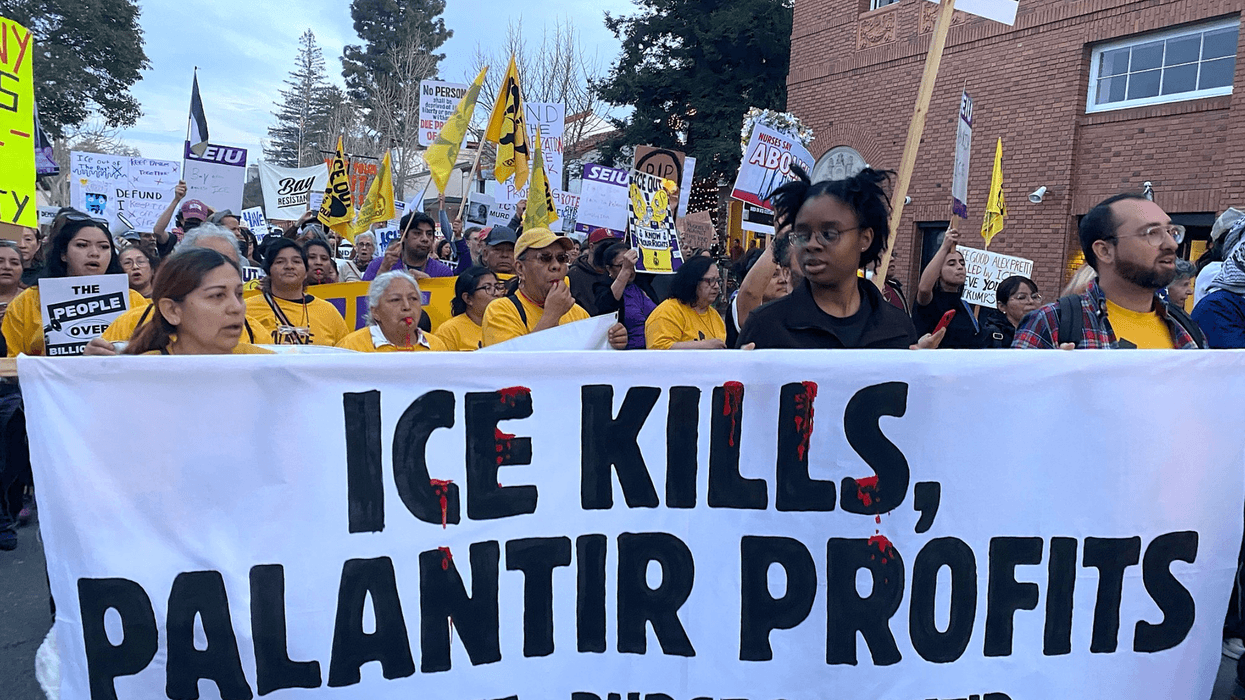
Not only does the partnership "create an inherent conflict of interest," it "fails the journalists who have been assaulted and falsely arrested while covering immigration enforcement actions and protests."
More than 800 unionized journalists and other media workers at USA Today Co. demanded this week that the nation’s largest newspaper chain abandon a newly announced partnership with surveillance tech giant Palantir to collect and analyze reader data, warning that the deal threatens privacy, public trust, and newsroom independence.
USA Today Co. chair Mike Reed told investors during an August 6 meeting that the company, formerly known as Gannett, is working with Palantir to “drive more effective and faster monetization across our platform" by using its software to collect and analyze reader data. Reed did not say how long USA Today had been using the software.
In a statement released earlier this week, workers represented by The NewsGuild-CWA said they were “shocked” by the company’s decision to partner with the controversial data analytics firm. Thirty-one unions representing employees across USA Today Co. publications have called on management to immediately terminate the agreement.
"We have significant ethical issues with Palantir, whose artificial intelligence (AI) software has been used to advance widespread surveillance and power immigration crackdowns," the union said. "Not only does partnering with Palantir, a major player in the news we cover, create an inherent conflict of interest, but it fails the journalists who have been assaulted and falsely arrested while covering immigration enforcement actions and protests."
Journalists are committed to upholding First Amendment principles to serve the democratic process. That’s in direct contrast with a company like Palantir, whose cofounder, Peter Thiel, once said freedom and democracy were not compatible. newsguild.org/usa-today-jo...
[image or embed]
— The NewsGuild-CWA (@newsguild.org) August 10, 2026 at 9:02 AM
"USA Today Co. has provided minimal details about this partnership and the parameters of its agreement with Palantir," the statement continues. "We have serious concerns and questions about how readers’ personal information and data will be used under this partnership and how their data would be protected. Without answers, how can journalists encourage readers to subscribe to our news outlets?"
The journalists noted that billionaire Palantir co-founder Peter Thiel—who "once said freedom and democracy were not compatible"—is responsible for products tied to human rights abuses and privacy violations.
"Technologists and even former employees have warned that it’s not far-fetched to imagine a future where Palantir’s AI technology is used to surveil American citizens and target dissidents," their statement notes. "And throughout history, journalists are often the first to be targeted."
"These concerns should be reason enough for USA Today Co. to steer clear," the journalists asserted. "This partnership with Palantir arrives as USA Today Co. executives dive headfirst into AI without sufficient regard for workers or the public after decimating newsrooms across the country."
"We will continue pushing back on ill-planned attempts to force AI into our newsrooms and onto our readers, who deserve quality, human-led journalism," they added. "We will advocate for the responsible use of new technologies when it emboldens our journalists and their work instead of shamelessly promoting AI to support profit-driven corporate edicts."
News organizations increasingly operate not just as publishers, but as data collection businesses. The USA Today journalists' concerns come against a backdrop of increasingly sophisticated tracking across digital news. USA Today Co.'s own public Data Collection Explorer shows that the company already operates an extensive system for collecting, routing, and analyzing user data across its publications and platforms, including through third-party analytics vendors.
Mike Davis, a reporter for the Asbury Park Press—a USA Today Co. newspaper in southern New Jersey—told NiemanLab that “part of the problem" with the Palantir partnership "is that we know very, very little" about how the company's software is being used.
“It’s pretty surprising that our company would unilaterally decide to bring in such a controversial partner like Palantir without providing a complete explanation to its employees, most of whom are naturally skeptical journalists," Davis said.
“An investigative reporter who keeps a ton of sensitive notes, source information, and confidential documents on their devices is going to be naturally concerned about protecting that information, and who could blame them?” he added. “It’s pretty hard to trust management’s intentions when the goalposts shift so often that there’s always a fear that what’s true today won’t be true in six months. We’ve all seen the years of disinvestment in local news, especially in the name of going all-in on AI.”
Under current circumstances, no friends, family members, or employment counselors of young veterans should encourage them to answer the siren call of ICE—no matter how much they need a job.
The media spent a lot of time this summer examining whether a certain Maine oysterman and Marine veteran seeking federal employment should have been better vetted by those around him.
Even after Graham Platner abandoned his US Senate bid, his friends and foes argue about whether service-related conditions—which earned him a 100% disability rating from the Department of Veterans Affairs (VA)—contributed to past substance abuse, mental health problems, and aggression against intimate partners.
Now, in the same state, the spotlight has shifted to David Brouillette, a troubled Afghan war vet who might also have been better off harvesting oysters. Brouillette spent eight years in the US Army and state National Guard before getting hired for not one, but two federal jobs. Thanks to an ill-advised push to recruit more ex-military personnel for law enforcement roles, without proper background checks, he got to carry a gun again.
Last month, after serving as a Department of Veterans Affairs (VA) police officer, a prison guard, and then joining the Department of Homeland Security (DHS), Brouillette fatally shot Johan Sebastian Duran Guerrero, a young Colombian immigrant, during a traffic stop in Biddeford, Maine.
Thanks to Congress allocating $30 billion to create 10,000 more positions for that agency between 2025 and 2030—and job cuts at other federal departments, which often employ veterans—more ex-soldiers are getting hired into a paramilitary workforce, with insufficient screening, minimal training, and leaders who valorize brutality. Those who have already been cops go to the head of the line for signing bonuses as high as $50,000.
Brouillette is among the 200,000 veterans disproportionately represented in the nation’s nearly 1 million law enforcement jobs, ranging from local police departments to the fast-growing Immigration and Customs Enforcement (ICE).
During a 10-year period, nearly one-third of more than 500 cops involved in a shooting incident were veterans.
For their own good and the welfare of all Americans, some of these vets should not trade one uniform for another. That’s because past military service not only produces Post-Traumatic Stress Disorder (PTSD); it can also leave former service members with traumatic brain injuries that trigger aggressive and impulsive behavior.
In the case of Maine mass shooter Robert Card, a longtime Army Reserve grenade range instructor who never served in combat, that condition led to the slaughter of 18 neighbors at a bar and bowling alley in Lewiston, Maine, almost three years ago. Far more common is the rocky personal transition to civilian life typified by twice-divorced Brouillette, whose father and brother also served in the military.
According to Brouillette’s first ex-wife, Ashley, he first became verbally and physically abusive after joining the military in 2007. His subsequent misbehavior, she told The New York Times, included choking her, slamming her to the floor, and pushing her against a wall. In 2012, such “threats and harassment were so persistent,” she fled the state to escape him. “He has mental health issues, he’s short-tempered, he’s reactive, [and] he should be in treatment,” she says.
Seven years later, his next ex-wife sought a restraining order against Brouillette after he “broke her door down, destroyed her belongings, and dumped her clothes over a bridge,” and spat in her face. In her court filing, she expressed fear about his stalking her by “coming to my home or sitting in the parking lot of my work.” So, as CNN found, a judge twice issued temporary orders requiring Brouillette to relinquish any firearms in 2019 and 2021.
To make matters worse, when Brouillette retrained to become a firefighter in 2021, a heavy I-beam fell on his head, inflicting serious damage. In a lawsuit over the accident, he confessed to having “impaired memory, cognitive deficits, headaches, vertigo, and high sensitivity.”
Long before he fired the shots that killed Guerrero, he had already worked among VA patients and staff in Maine, as part of an agency police force with its own troubled history of using excessive force. And then he moved on seamlessly to ICE last December, despite a checkered court record and non-military head injury that should have been disqualifying.
When we were researching an earlier book on veterans, two retired Army officers, both West Point grads, expressed deep concern about policing, of any kind, as a post-military career among veterans at risk for substance abuse and suicide because of PTSD, chronic pain, or traumatic brain injuries.
Daniel Sjursen, a much-decorated major who served in Afghanistan and Iraq, told us that, “when you leave the service, there’s no de-programming…They just load you up on meds, and then you go straight to the police academy.” Because “military-style of policing is based on the notion that high-crime areas should be treated like occupied countries, a guy can come back to Baltimore, Camden, or Detroit and function the same way we did when occupying Kabul or Baghdad.”
As his fellow officer, a Gulf War combat vet and military historian Andrew Bacevic noted, “To the extent that we’ve got a bunch of damaged young people, then maybe the last thing we want to do is put them in a job where they carry a gun in an environment that’s going to make things worse.”
So don’t hold your breath waiting for justice for Johan Sebastian Duran Guerrero. For the last 18 months, federal immigration agents have operated with far less public oversight and accountability than any local police department.
Even during Barack Obama’s administration, the US Department of Justice (DOJ) was not listening to such knowledgeable insiders. Instead, the DOJ provided local police departments around the country with tens of millions of dollars to fund veterans-only positions.
As noted in a 2017 report by the Marshall Project, “When Warriors Put On the Badge,” this combination of special funding and preferential hiring mandated by state or federal law has made it harder to “build police forces that resemble and understand diverse communities.” The new hires benefiting most have been disproportionately white, because 60% of all enlisted men and women are not people of color.
Under the first Trump administration, the DOJ had little interest in tracking the later job performance of recently hired veterans or how their military background might affect their behavior.
By that time, however, the International Association of Chiefs of Police (IACP) had already raised concerns about “the integration of military personnel” into law enforcement. In their own 2009 hiring guide, the IACP noted that, in the case of returning combat veterans from Iraq or Afghanistan, their combat environment and their policing environments may appear surprisingly similar.”
As a result, prior military service in the Middle East “may cause returning officers to mistakenly blur the lines between military combat situations and civilian crime situations, resulting in inappropriate decisions and actions, particularly in the use of lethal force.”
Cosponsored by the DOJ’s Bureau of Justice Assistance, this IACP report also noted that vets who have PTSD and related “depression, anger, withdrawal, and family issues” may have “a low tolerance for civilian complaints” and greater propensity for the “inappropriate use of force.” Some police chiefs interviewed reported that veterans under their command had come back “ill prepared for the civilian world” because their PTSD left them with “exaggerated survival instincts.”
Researchers at the University of Texas School of Public Health found that Dallas Police Department officers with military experience used their guns while on duty more than non-veterans. During a 10-year period, nearly one-third of more than 500 cops involved in a shooting incident were veterans. Those who had been deployed overseas were nearly three times as likely to have fired their weapon; those who had not been deployed were still twice as likely to be involved in a shooting. This study, published in the Journal of Public Health, concluded that some veterans employed by the Dallas police department lacked “critical thinking skills” when confronted with “high stress scenarios.”
The Marshall Project reported similar findings after it studied use-of-force complaints and fatal police shootings in several cities. In Boston and Miami, officers with military experience generated more civilian complaints of excessive force. Nearly one-third of the Albuquerque officers involved in a total of 35 fatal shootings between January 2010 and April 2014 were veterans. One of the officers sued after killing an unarmed motorist was an Iraq War veteran whose PTSD caused flashbacks, nightmares, and blackouts. Nevertheless, as the Marshall Project discovered, he was “assigned to patrol a high-crime area of town known as ‘the War Zone.’”
“To ensure public safety and guarantee a stable, reliable, and productive workforce,” Marshall Project researchers cited the need for clear and consistent police department policies to “evaluate employees’ mental and physical fitness. Yet local police department screening practices, around the country, remain far from standardized or effective. Some agencies employ the use of administrative interviews and psychological evaluations to assess how veteran officers will perform the essential functions of their position, while other agencies revert to their department medical officer, or lack any policy at all.”
Whatever unhelpful contribution to militarized policing has been made by hiring too many post-9/11 vets, new and old cops in Dallas, Boston, Miami, and other cities at least walk the streets without masks on. They display badges with their names and, in most places, wear body cameras as well. If they screw up in a high-stress situation, they are subject to internal affairs investigations or civilian police review board questioning, particularly if an officer-involved shooting has occurred.
When an Army veteran named Derek Chauvin put George Floyd in a fatal choke hold six years ago in Minneapolis, he was even prosecuted and sentenced to a long prison term. When another military veteran named Jonathan Rose—a former machine gunner in Iraq deployed in the Twin Cities last winter as an ICE agent—fired on Renee Good, did he face any criminal charges for killing a gay non-immigrant mother of three? Not yet.
So don’t hold your breath waiting for justice for Johan Sebastian Duran Guerrero. For the last 18 months, federal immigration agents have operated with far less public oversight and accountability than any local police department. In the process, they have killed 23 people under circumstances that homicide detectives and local prosecutors have been blocked from properly investigating.
The Department of Homeland Security has just doubled down on its policy of not releasing the names of officers involved in these fatal encounters. Agents of the Federal Bureau of Investigation (FBI) have been directed to stop investigating claims by those, like David Brouillette, who say they used lethal force in response to being endangered.
Under current circumstances, no friends, family members, or employment counselors of young veterans should encourage them to answer the siren call of ICE—no matter how much they need a job. As one former ICE official told the Boston Globe, ”We should all be concerned… that they have lowered standards, that they have rushed hiring, and they have made offers to people before their vetting is complete.”
Even if applicants from military backgrounds lack the self-confessed “cognitive deficits” of Brouillette, wearing camo again—while stopping traffic, knocking down doors, brandishing automatic weapons, and engaging in car chases—is not a healthy career choice, for them or us.
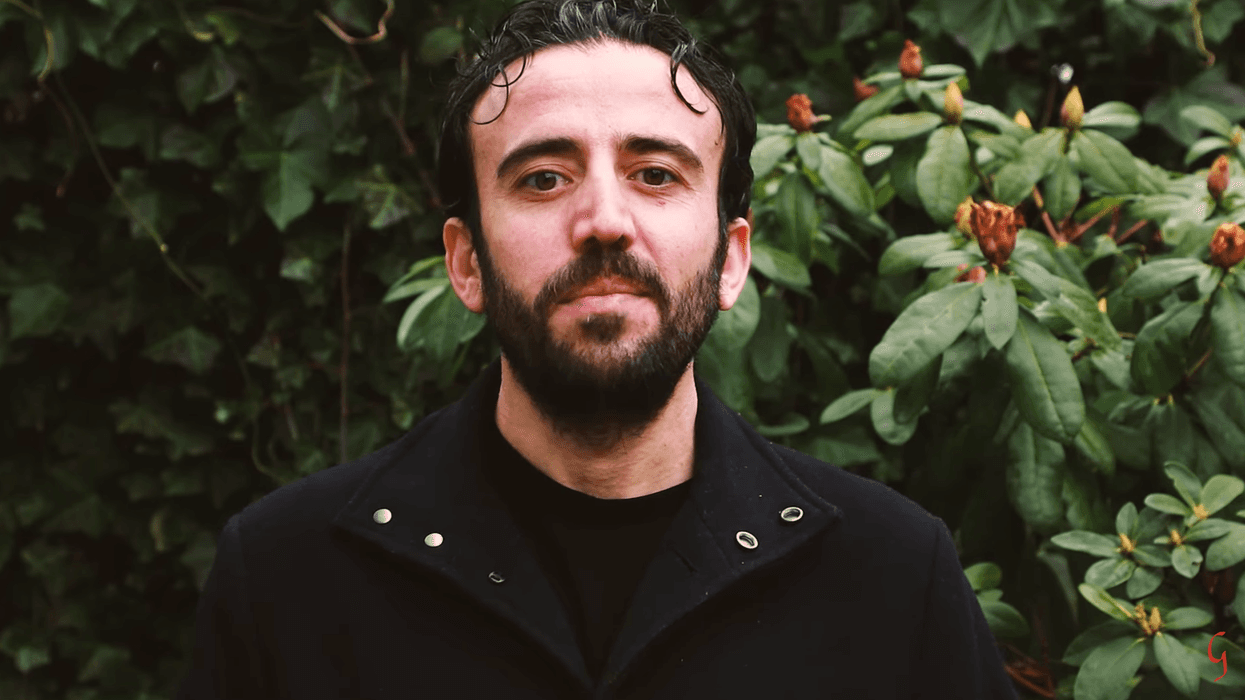
“That is just not medical care," said one expert, "that is torture."
In the latest articles in his series on former hunger-striking asylum-seekers who were force-fed while detained by US Immigration and Customs Enforcement, Guardian immigration reporter José Olivares on Monday featured a Kurdish filmmaker who said he is still suffering from physical and psychological pain from the torture he endured last year.
Iran-born Gabar Choli told Olivares that he went voluntarily with guards to the infirmary at ICE's Port Isabel Service Processing Center in Los Fresnos, Texas, the first time he was force-fed.
“First I did not resist," he said. "But after I saw they were torturing me, I started protesting: ‘I’m not coming with you people.'"
From there, things only got worse. Choli said that guards would pin him down while staff shoved a plastic tube through his nose, down his throat and esophagus, and into his stomach to pump him full of nutritional liquid without his consent.
“Two guards would hold my feet; two hold my hands; one hold my head—and they would shove tubes in my nose,” Choli told Olivares. “It’s not easy to be wrestled to the ground twice a day by men that are stronger than you. And you just take it. You have 60cm (2 feet) of tube going through you, and you just feel every centimeter of it.”
“I was respectful. I just told them I am protesting for humane treatment, nothing else,” he said. “But they were determined to break me.”
Choli recounted how one nurse working for ICE “shoved the tube so hard” that “he tore my nose from the inside.”
“They would take me to solitary cell and I would just choke on my blood and drink the blood from inside [my throat],” he said.
The force-feeding continued for the next eight months. One time, a guard's rough treatment injured his ribs and made breathing painful for weeks. Another time, guards “pressed so hard on my shoulder, I thought my chest was going to break in half."
During another session, medical staff ignored Choli's warnings and accidentally shoved the nasogastric feeding tube into his lung.
On some Fridays, Choli agreed to drink the nutritional shakes if guards let him pray and socialize with other detainees.
Court records viewed by Olivares showed Choli suffered injuries and medical issues including swollen sinuses, esophageal damage, and stomach problems following his force-feeding.
Dr. Chanelle Diaz, an assistant professor at Columbia University’s medical center, told The Guardian, "That is just not medical care, that is torture."
Choli admitted: "It just broke me, mentally broke me. It came to a point that I decided to write my body an apology letter.”
The writer and director of short dramas including Waves Goodbye, Love if Loud, and We Don't Understand Him, He Speaks in Broken English, Choli advocates for Kurdish independence and legally sought asylum in the United States upon entering the country from Canada in 2022. He lived legally in Los Angeles, attended his required ICE check-ins, and obtained a US work permit while his asylum case was processed.
An immigration judge denied Choli's asylum claim in 2024, but granted him protection against being deported to Iran, barring the government from sending him back there. He was arrested in February 2025 during a routine ICE check-in following President Donald Trump's return to the White House.
Choli was first sent to the Desert View Annex in Adelanto, California—run by private prison profiteer GEO Group—where detainees have reported medical and mental health neglect, excessive use of force and pepper spray, mold, punsafe drinking water, inadequate food, poor sanitation, and use of solitary confinement, among other alleged abuses.
The following month, as ICE officials pressured him to agree to be deported to Iran—where his advocacy for Kurdish independence could cost him his life—Choli began his hunger strike, demanding better conditions and a fair resolution to his case.
“I am not suicidal,” Choli declared to a judge. “I am using hunger strike as the only available option to protest the abuse and mistreatment.”
Around two weeks after beginning his hunger strike, Choli was transferred to Port Isabel, where he was held in solitary confinement—which survivors and experts call a form of psychological torture—as he continued his hunger strike.
US District Judge Rolando Olvera—an appointee of former President Barack Obama—ordered Choli's force-feeding following a request from ICE, which called the detainee's hunger strike an attempt "to manipulate the immigration system" and “a serious threat to the security and good order” at Port Isabel. Olvera did not meet with Choli, who had no legal representation throughout his ordeal.
The US Department of Homeland Security told The Guardian that ICE “provides involuntary medical treatment only to prevent imminent life-threatening harm or death."
However, under the World Medical Association’s Declaration of Malta, doctors are advised not to force-feed prisoners who choose to hunger strike and understand the consequences of their actions.
During The Troubles in Northern Ireland, British authorities allowed 10 imprisoned Irish Republican Army members, including former Member of Parliament Bobby Sands, to starve themselves to death.
In contrast, force-feeding is institutional policy in US prisons, including the Guantánamo Bay concentration camp in Cuba, where detainees—most of whom were charged with no crime—were force-fed during the George W. Bush and Barack Obama administrations.
During Trump's two terms, hundreds of people have gone on hunger strike at ICE detention centers across the country to protest overcrowded and unsanitary conditions, spoiled and worm-infested food and water, inadequate medical care, delays in immigration procedures, alleged physical and psychological torture, and other mistreatment.
In May, US Homeland Security Secretary Markwayne Mullin dismissed the hunger strikers as a “handful” of detainees whom he falsely claimed were striking because they “want their ethnic right food.”
"This isn't Holiday Inn," Mullin said, referring to the hotel chain.
In early January, ICE deported Choli to Canada, where he was reunited with his siblings. He told Olivares that he had to learn to eat again.
"The price of it was my kidneys, my gallbladder," he said. "My intestines. My being. My bladder, you know, is damaged. Every time I twist and turn, I feel pain. But this is the price you pay for making a stand for what is right.”
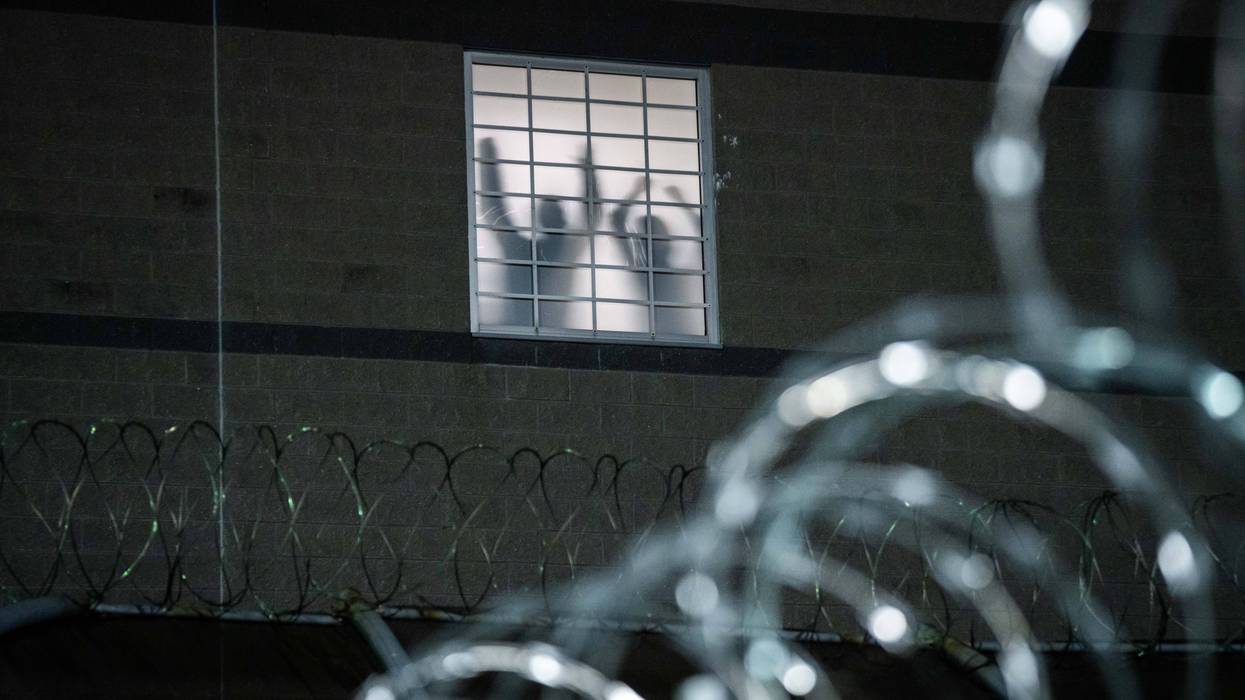
"If they admit openly that there are hunger strikes, they admit that the conditions in detention are so bad that people are willing to forgo food in order to raise awareness," one lawyer said of the administration.
The Trump administration subjected hunger-striking immigrants held in US Immigration and Customs Enforcement detention centers to involuntary medical procedures, including forced feeding, a blatant and painful violation of medical ethics widely considered to be torture.
In the second article of a two-piece series, The Guardian revealed on Monday that court records showed ICE personnel attempted to subject at least 10 hunger-striking detainees to the procedures. At least three, and possibly five, detainees were force-fed, while five others ended their hunger strikes at the last minute rather than undergo the invasive, non-consensual insertion of a plastic tube through the nose, down the throat and esophagus, and into the stomach to deliver liquid nutrition against their will.
Hundreds of people have gone on hunger strike at ICE detention centers across the country to protest overcrowded and unsanitary conditions, spoiled and worm-infested food and water, inadequate medical care, delays in immigration procedures, alleged physical and psychological torture, and other mistreatment.
The Guardian's investigation found that one Kurdish asylum seeker detained at ICE's Port Isabel Service Processing Center in Los Fresnos, Texas was subjected to force-feeding for eight months, while another hunger-striker at the same facility endured six months of the painful procedure. In six cases reviewed by The Guardian, immigrants who were force-fed had no legal representation.
The Department of Homeland Security maintains that detainees receive adequate meals and care and disputes reports of abuse.
In May, Homeland Security Secretary Markwayne Mullin dismissed the hunger strikers as a "handful" of detainees and falsely claimed they were striking because they "want their ethnic right food."
"Well, they can go back to their country and get whatever food they want... This isn't Holiday Inn," he added while Commerce Secretary Howard Lutnick looked on and smiled approvingly.
DHS Secretary Mullin dismisses the detainee hunger strike in an ICE facility:
They're refusing to eat because they want their ethnic food. Well, they can go back to their country and get whatever food they want. This isn't Holiday Inn. pic.twitter.com/tdUYMkUy1K
— FactPost (@factpostnews) May 27, 2026
A judge must authorize the forced feeding of ICE detainees. According to The Guardian, judges often quickly issue the requested emergency orders before immigrants can legally object.
“There’s very little due process in these proceedings,” immigrant rights attorney Eunice Cho told the newspaper, comparing the judges' orders to a "rubber stamp."
Global medical authorities, United Nations bodies, human rights defenders, and others—including people subjected to it—call forced feeding a form of torture.
"The tube went inside a little bit and then got stuck," Ajay Kumar, a former ICE detainee force-fed during Trump's first term in 2019, told The Intercept, which in 2022 obtained video of the Indian asylum seeker being strapped and pinned down by five guards in riot gear before having the nasogastric tube forced into him.
"I felt as if [the tube] was going down my throat, tearing up the insides, and blood started coming from my mouth and nose," he said. "It was very hard."
"After that they took me for an X-ray. After doing the X-ray, they informed me that the tube has not been inserted properly, so we will have to insert it again," Kumar recalled. He was asked if he wanted to end his hunger strike and, when he said no, the second insertion began. "It was more painful. These people are torturing me. The one ICE officer, I never forget him. He's smiling."
Kumar was taken for a second X-ray and was again informed that the tube was incorrectly inserted. He was again asked if he would continue his strike.
"You can torment me as much as you want, you won't be able to break my spirits," he told them. The tube was correctly inserted the third time and Kumar was pumped full of a nutritional shake. He said he could not breathe, sleep, or speak properly for weeks after.
Kumar said he was force-fed in front of three other detainees "so that they would all start eating after seeing what's happening to me."
"Whenever the doctors said, 'Yes, we are helping you, we cannot let you die like this,' I used to tell them, you are treating me worse than dying," he added.
Under the World Medical Association’s Declaration of Malta, doctors are advised to not force-feed prisoners who choose to hunger strike and understand the consequences of their actions.
“Forcible feeding is never ethically acceptable,” the declaration states.
In 1981, UK authorities allowed 10 imprisoned Irish Republican Army members, including former Member of Parliament Bobby Sands, to starve themselves to death in Northern Ireland. Their deaths occurred after between 46 and 73 days of refusing food.
In contrast, force-feeding is institutional policy in US prisons, including the Guantánamo Bay concentration camp in Cuba, where detainees—most of whom were charged with no crime—were force-fed during the George W. Bush and Barack Obama administrations.
Immigrants detained by the US have been force-fed since at least the Obama administration.
Sarah Houston, a managing attorney at ImmDef, told The Guardian that an ICE Health Service Corps document acknowledging the force-feeding of detainees and viewed by the newspaper is a "blatant admission" that the practice is being used by the Trump administration.
“But if they admit openly that there are hunger strikes, they admit that the conditions in detention are so bad that people are willing to forgo food in order to raise awareness about the situation,” Houston said. “Because no one goes on hunger strike unless they are really desperate.”
Matthew Wynia, a medical ethicist and director of the Center for Bioethics and Humanities at the University of Colorado, said that “it is unethical to force treatment on someone who is saying, 'Don’t do this to me.'"
“People who are on hunger strike do not want to die, they are not suicidal," he continued. "They are using the only tool available to them to protest the circumstances of their confinement.”
“The idea of health professionals serving as agents of the state, rather than protectors of our patients, has a notorious history," Wynia added. "And for the medical profession, we really don’t want to go down that path again."
The Guardian series comes amid a broader pattern of abuse and neglect, sometimes deadly, of ICE detainees, many of whom are locked up in facilities run by private prison profiteers.
According to ICE’s public database, more than 50 people have died while detained by the Department of Homeland Security (DHS) agency during President Donald Trump’s second term, including two people who were killed in a sniper attack on an ICE administrative and processing center in Dallas. At least 10 of the deaths were men who killed themselves, according to an Associated Press investigation published late last month.
Many of the deaths were preventable, say experts who point to systemic understaffing and DHS policy choices that weaken detainee care and employee oversight.

Data centers built in our hometowns are already bringing the surveillance technology of war to our public spaces and private lives.
The Israeli military’s Orwellian use of artificial intelligence for surveillance, targeting, and execution of attacks against Palestinians in Gaza and the West Bank has been well-documented by journalists, reporters, and activists in Israel and the United States. Less known is the close collaboration between the military and police departments in the United States, which have been quietly adopting tactics pioneered by Israel in their perpetual campaigns in the Occupied Territories, including US police departments sending their officers to Israel for training.
This dynamic, combined with the US’ direct funding of the Israeli military through taxpayer dollars, creates a feedback loop in which the US is effectively funding the real-world experimentation and refinement of AI technology on Palestinian civilians by the Israeli military, which then provides models for how the police in the United States can more effectively surveil their own citizens and—especially chillingly—potentially quash dissent. Cities in Nevada, like Reno and Sparks, find themselves at the forefront of this unsettling reality, as developments on both ends of the process—data center construction that powers AI use, and the proliferation of Flock and Axon cameras used for state surveillance—are currently taking place under the sanction of our local governments.
The Generative AI systems that are being used for warfare abroad and surveillance at home require staggering amounts of data storage and energy. In Northern Nevada, data centers can occupy huge swathes of land with footprints larger than the biggest nearby cities, or nestle right into our communities where they can support local police surveillance. Apart from initial construction, they produce few jobs, poison the groundwater, and generate noise pollution that can harm physical and mental health. The Great Basin is so called because the water that enters the Basin does not drain out again—any toxins that leach from the data centers will stay there, despite promises about closed-loop wastewater-based systems. Data centers also facilitate the shadowy nature of private entities that are funded by the government—Palantir, which develops a variety of AI-based surveillance technologies utilized by the US, does not own its own data centers, but rather contracts with companies like Google to hide their exact location.
Much of the processing power generated in these centers is utilized by the Israeli military and surveillance apparatus, which is in turn funded by US aid. The US has sent Israel approximately $174 billion in aid to date, allowing Israel to continuously remain on the cutting edge of surveilling and murdering Palestinians and their other neighbors in the Middle East. Unit 8200 is one of Israel’s cyber warfare units, and it has developed a variety of target identification tools that rely on generative AI to generate lists of potential targets with little or no human intervention or decision-making. Lavender is a system that has been used to generate kill lists. The Gospel is another—one which had its guardrails with respect to target size removed in 2023. These systems rely on a variety of data sources, including facial recognition and data mining through social media and internet use. Unit 8200’s technologies closely mirror those developed by Palantir, such as ELITE—a system used in Operation Black Rose, the Department of Homeland Security surveillance project in Oregon designed to identify and arrest targets for Immigration and Customs Enforcement. These similarities should not be surprising—it’s not unusual for key players in Palantir and other private AI technology developers to have close ties with Unit 8200.
We unwittingly fund all of this, and so it becomes our duty to resist it on every level possible.
For those who follow the Epstein files, it’s important to note that Jeffrey Epstein was deeply involved in Israeli intelligence—and therefore can be connected to the burgeoning projects of surveillance in the US—representing the fusion of private interests and military operations. As sinister as these systems are, it’s essential to recognize that they are fundamentally faulty: Palantir also developed the Maven Smart System, which was used to target the school in Iran where 120 children and 37 adults were bombed to death based on faulty, out-of-date information. The lack of human decision-making contributes to violence on false premises.
Now we are witnessing the disturbing yet unsurprising development of surveillance technology developed in Israel with US aid money returning to US cities. Flock Cameras and the systems that support them are an increasingly notorious example. Flock claims that its own cameras function only as Automated License Plate Readers (ALPRs), but they allow police departments to connect a wide range of camera systems to a central database. Police cameras, as well as privately owned cameras, can be connected to these databases, which are typically then shared across police departments nationwide. This is already making Americans less safe, as was demonstrated when a journalist in Georgia discovered that an unauthorized Flock employee was viewing the cameras within a Jewish community center. Faulty target identification is also coming home to roost in the US, as evidenced by the false charge against Chrisanna Elser in Colorado. Elser was charged with stealing a package on the basis of a false identification by ALPR cameras. While the case was eventually dropped, this precedent will inevitably lead to more individuals being wrongly targeted for crimes they did not commit.
These systems are all supported by data centers. Data centers built in our hometowns are already bringing the surveillance technology of war to our public spaces and private lives. We unwittingly fund all of this, and so it becomes our duty to resist it on every level possible: tax resistance, blocking data centers from being built in our communities, and resisting the reckless use of AI by government and private entities. The struggle for Palestinian rights, dignity, and livelihood is inextricably connected with the preservation of our freedoms in the US.
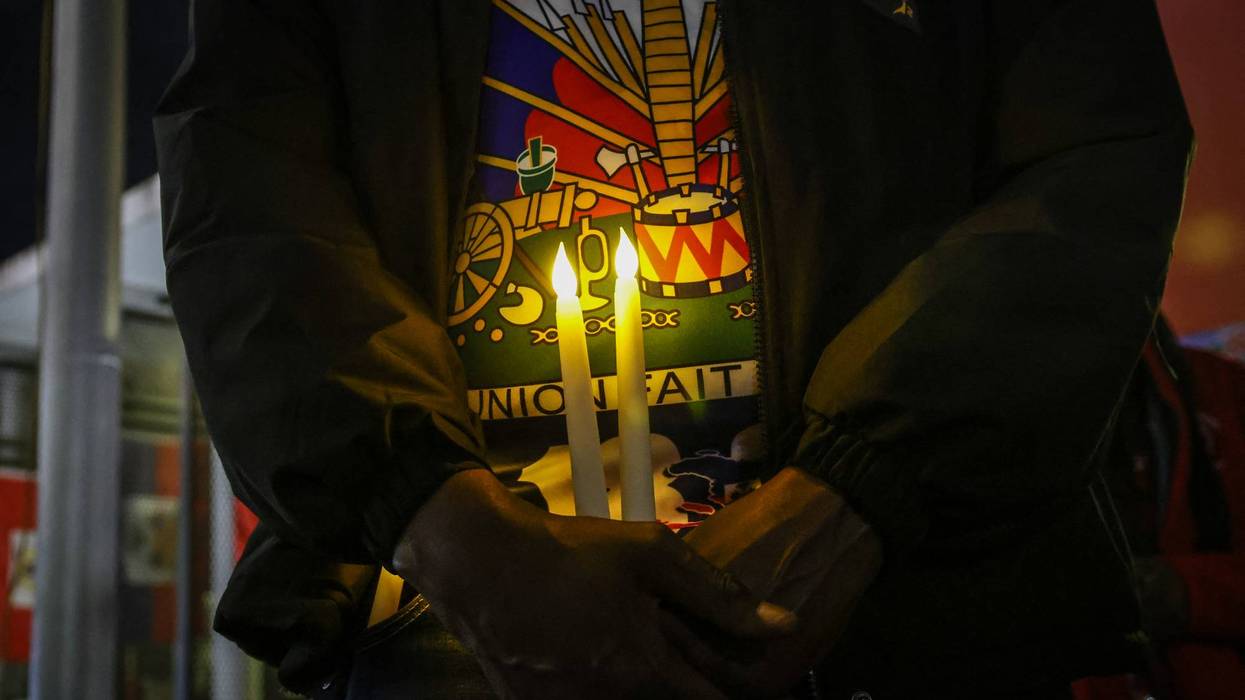
This is the reality that TPS recipients now face: either they willingly self-deport to an unsafe country or remain in the US and be hunted by ICE agents.
On June 25, the Supreme Court ruled 6-3 that decisions made by the Department of Homeland Security regarding Temporary Protected Status, or TPS, are not subject to judicial review. As the American Immigration Council notes, because of the Supreme Court’s procedures, that decision will not formally go into effect until 32 days after the ruling was issued. This small window has allowed the lower courts to continue blocking the Trump administration’s efforts to prematurely end humanitarian protections for Haitians and other groups.
That all ends on July 27—today, 32 days after Mullin v. Doe, hundreds of thousands of TPS recipients from Haiti and several other countries are expected to lose their work permits. More terminations will follow in the upcoming months. This includes protections for people from Somalia (August 20), El Salvador (September 9), Sudan (October 19), Ukraine (October 19) and Lebanon (November 27). The latter of which are currently facing violent military invasions from Russia and Israel respectively.
With the Supreme Court’s mandate now going into effect, there will be little, if anything, the lower courts can do to block these terminations.
To be frank, the situation is bleak. While the Department of Homeland Security (DHS) contends that conditions in Haiti have “improved enough that it is safe for Haitian citizens to return home,” the State Department actively advises Americans to avoid traveling to Haiti “for any reason due to the risk of crime, terrorism, kidnapping, unrest, and limited healthcare.” Similar travel advisories have been issued for Syria, Burma, Lebanon, Somalia, Sudan, South Sudan, Ukraine, and Yemen.
This is what passes as “generosity” in President Donald Trump’s “Christian nation”: intentionally putting the lives of hundreds of thousands of hardworking, law-abiding people in danger while offering them a pittance to leave their lives and loved ones behind.
The Trump administration knows these countries are not safe. It knows that deporting TPS recipients to these places puts their lives at risk. It simply does not care.
On July 17, DHS General Counsel James Percival posted on Twitter-X: “For those with an expiring TPS designation, these final days provide one last opportunity to accept $2,600 and a free flight home. We strongly suggest you take advantage of this generous offer.” This is what passes as “generosity” in President Donald Trump’s “Christian nation”: intentionally putting the lives of hundreds of thousands of hardworking, law-abiding people in danger while offering them a pittance to leave their lives and loved ones behind.
Thus far, congressional efforts have failed to stop this blatant cruelty. On July 23, Senate Republicans blocked an attempt to extend TPS for Haitians.
To make matters even worse, Immigration and Customs Enforcement (ICE) has reportedly made plans to ramp up operations to arrest and deport Haitian migrants. Documents obtained by CBS News suggest that these operations could start as early as this week—not even a month after ICE agents murdered Lorenzo Salgado Araujo and Joan Sebastián Durán Guerrero.
These plans include targeting migrants in Ohio, home to one of the nation’s largest Haitian communities. These are the same communities that, in 2024, then-candidates Trump and Vice President JD Vance targeted with their racist lies about “they are eating the dogs” and “eating the cats.” And to be clear, even Vance admits that they were lies: “If I have to create stories so that the American media actually pays attention to the suffering of the American people, then that's what I'm going to do.” This is the same vile bigotry that Justice Samuel Alito and the other conservatives on the Supreme Court found to be not “overtly racial.”
Importantly, this is not the first time that ICE has reportedly made plans targeting Ohio. In late January, news outlets reported that ICE was preparing to launch an operation in the state lasting at least 30 days. That operation would have started sometime after TPS for Haitians were slated to end on February 3. Fortunately, a district court intervened and extended those protections, thereby preventing this Minnesota-style raid from occurring.
This is the reality that TPS recipients now face: either they willingly self-deport to an unsafe country or remain in the US and be hunted by ICE agents.
While there is still time (and to be clear, and it’s quickly running out), I urge everyone to call their representatives and senators and demand that they extend TPS for Haitians, Syrians, and others whose protections are at risk.
What few legal options they may have had are quickly disappearing. The Supreme Court’s decision bars review of any non-constitutional claim. Any challenge regarding racial discrimination “will likely fail.” Meanwhile, the Trump administration has indefinitely paused visa processing for nationals from 75 countries, including Haiti, Syria, Somalia, Ethiopia, and Afghanistan. On February 2, the National Immigration Law Center and several other advocacy groups filed a lawsuit challenging the legality of this policy. That case—Catholic Legal Immigration Network (CLINIC) v. Rubio—is currently pending in court.
The administration is also making it harder to obtain a green card, not processing new Deferred Action for Childhood Arivals applications (while also intentionally delaying the processing of renewals), and severely restricting refugee and asylum programs. As the CATO Institute notes, the Trump administration’s policies have significantly cut legal immigration far more than unauthorized entries. Their analysis found that these cuts are harming US citizens, undermining US prosperity, and increasing the US deficit.
Ending TPS for Haitians and other groups will only worsen these problems. Rep. Mike Lawler (R-NY), for instance, remarked that this decision will “create a crisis in our hospitals, nursing, and in the I/DD [intellectual and developmental disabilities] community” where roughly one-third of Haitian TPS holders work. Gov. Mike DeWine (R-Ohio) has warned, “If [Haitians] lose temporary protected status and they no longer can work and the companies can’t employ them, that’s a blow to the economy, that’s a blow to the state.”
The tragic irony in all this is that the Trump administration’s policies serve no one. TPS is helping people in dire need—people who are contributing to the US. Deporting them only makes the country poorer. If ending those protections leads to more ICE agents flooding our cities, then all of us will be less safe.
As things stand now, Congress remains the most—and perhaps only—viable option for helping TPS recipients. While there is still time (and to be clear, and it’s quickly running out), I urge everyone to call their representatives and senators and demand that they extend TPS for Haitians, Syrians, and others whose protections are at risk.
Helping these people is the morally right thing to do. It is also politically and economically in the best interest of the country and international community. For their sake and our own, we must extend TPS.
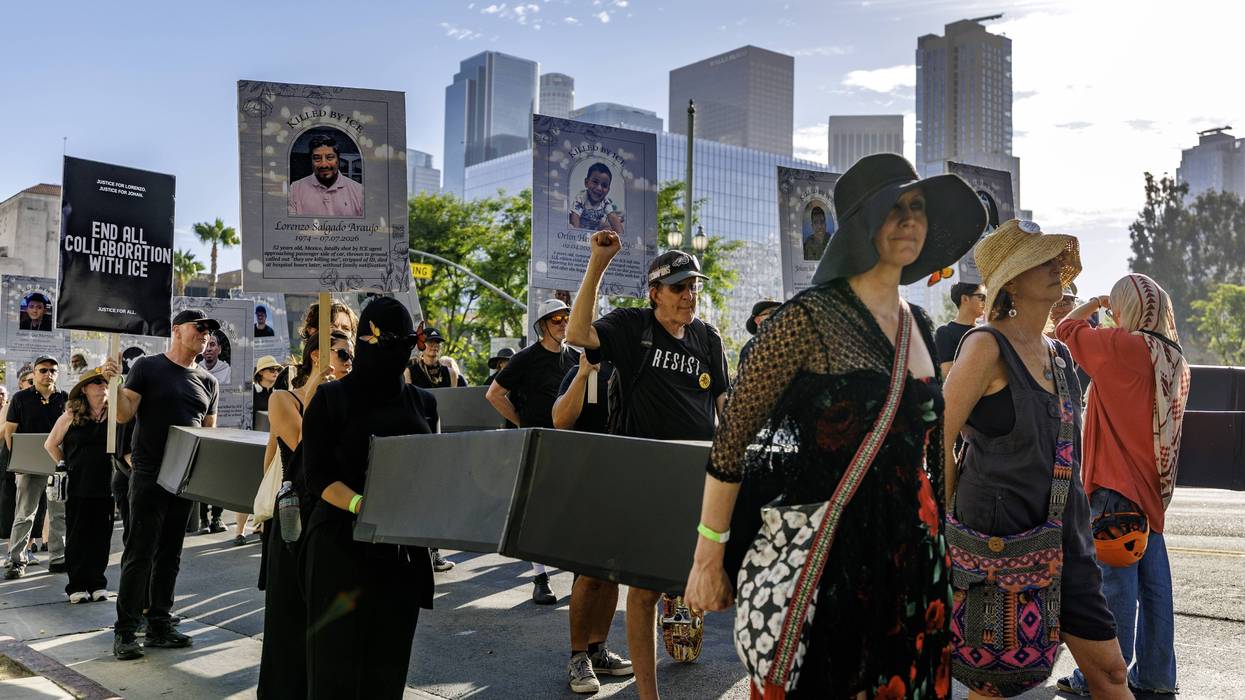
Protesters rallied against the Trump administration's deadly anti-immigrant crackdown in the wake of the killings of Lorenzo Salgado Araujo, Johan Sebastían Guerrero, Juan Jairo Coronilla Durán, and others.
Protesters gathered in cities and towns across the United States on Saturday at vigils to remember and demand justice for people killed by US Immigration and Customs Enforcement and other federal agents during President Donald Trump's deadly crackdown on immigrants and their defenders.
The July 25 Day of Action was organized by advocacy groups and volunteers across the country, with support from the Disappeared in America project hosted by Public Citizen, the National Day Laborer Organizing Network, The Workers Circle, Detention Watch Network, and the League of United Latin American Citizens (LULAC).
The vigils brought together clergy, activists, progressive advocates, and other concerned and outraged citizens, who remembered Lorenzo Salgado Araujo, Johan Sebastían Guerrero, Juan Jairo Coronilla Durán, and the dozens of people who have died in ICE custody during Trump's second term.
“Lorenzo Salgado Araujo was a husband, a father of three, and a small business owner who built his American dream with his own hands. Johan Sebastían Guerrero was killed in front of his partner and his toddler,” LULAC CEO Juan Proaño said in a statement. “ICE has now taken the lives of immigrants and US citizens alike, and if they can kill Lorenzo and Johan, they can kill anyone."
In the Twin Cities area of Minnesota, vigils honored the immigrants killed by ICE, as well as Renee Good and Alex Pretti, two US citizens fatally shot by Department of Homeland Security agents in January.
“They weren’t doing anything wrong. They were trying to help their neighbors, simple as that," said Lisa Erbes of Indivisible Twin Cities. "They were legally observing what ICE was doing, and they were both killed for it, and that could have happened to me. It could have happened to probably every single person who is here right now. Any of us could have been Renee or Alex."
This weekend marked six months since Pretti, a 37-year-old nurse, was shot by US Customs and Border Protection agents in Minneapolis.
"No one has been held accountable, no apologies, not a single phone call from any governmental official, hospital personnel, or the police," Susan Pretti, Alex's mother, wrote Saturday on social media.
“Six months of pain, a roller-coaster of trauma over and over," she added. "I wonder how to move forward. Will I ever get over this loss and this pain? Will I ever be able to enjoy life again?”
In Chicago—where Trump deployed hundreds of federal enforcers during Operation Midway Blitz—at least hundreds of people gathered in Grant Park and marched down Michigan Avenue.
“There’s collective trauma that impacted our communities that no one can understand unless you were here and felt the helicopters and saw the unpredictability of neighbors getting snatched off the streets,” 46-year-old demonstrator Melody Rose of Rogers Park told the Chicago Tribune. “All of us, especially those who have been directly impacted and seen what that’s like, have to keep showing up and spreading the word because this isn’t over and it could be us any day."
United Church of Rogers Park pastor Rev. Hannah Kardon told Chicago rallygoers: “Remember the dead and demand the kind of world where we never would have lost them in the first place. We will not forget them, and we will live differently because of them.”
Los Angeles-area demonstrations included a march by hundreds of people in downtown LA, where protesters carried cardboard coffins representing lives lost to Trump's crackdown.
"Our communities will never be the same," protester Joseph Morales told KABC. "Even though we're strong and we hold each other together, our communities are not the same, and we grieve that loss."
STOP KILLING US!
Justice for All
Disappeared in America Coalition Vigil for ICE slain immigrant in America!
Los Angeles Coffin Protest #StopKillingUs #USDemocracy #JusticeForAll #SomosLorenzo #DondeEstan #USDemocracy pic.twitter.com/KnqeTBRTHh
— Ruben Garcia (@goRubenRuben) July 26, 2026
In Pasadena, around 50 people turned out to protest the ICE killings.
“We were originally told, ‘Oh they’re going to go after the criminals, the people who are the worst of the worst.’ That’s a lie; that is not what’s happening," 61-year-old organizer Andra Clarke—who held a sign reading "Neighbors Say ICE Out"—told the Los Angeles Times.
“They’re targeting communities, they’re targeting people of color. It’s fascism," she added. "Anybody who cares about humanity should care about what’s happening.”
Around 100 protesters rallied outside ICE's downtown Atlanta field office, including Gail Maclin, who told Atlanta News First that her Senegalese husband is among the 675,000 people forcibly deported during Trump's second term.
“I lost my housing. I’ve lost my car. I’ve lost all my worldly possessions," she said. "I still have Amari, but Amari’s not here—he’s in Senegal."
Among the approximately 150 people who attended a vigil in the Silicon Valley city of Mountain View—headquarters of Google, where workers have protested the company's complicity in Trump's deadly crackdown—were members of the Raging Grannies, a longtime activist group known for their protest songs.
"People are being targeted here, and are afraid," Raging Granny Ruth Robertson told CBS News Bay Area. "They're afraid to go out of their houses, they're afraid to go to work."
A crowd of demonstrators gathered for a roadside vigil along Route 29 in Centreville, Virginia, a suburb of Washington, DC.
Rev. David Miller of the Unitarian Universalist Congregation of Fairfax told protesters: “I think that there is a moral obligation for us to speak up about our values. These values are not being represented well by this administration and certainly not by the way that ICE has been acting in our communities.”
Julio Hernandez, the director of the Congregation Action Network, told Centreville vigilgoers that “we're here to tell the story of our community being terrorized and torn apart, families being separated, children living in fear."
“We're here to ask the community to be aware of what's happening and also asking ICE to get out of our communities,” he added.