July, 27 2009, 05:45pm EDT
Abortion Care Coverage and Health Care Reform: Getting the Facts Straight
There has been a great deal of misinformation being spread about abortion care in health reform efforts. First, the majority of private insurance plans today cover abortion care. Second, a recent Mellman poll revealed that most Americans will NOT support health care reform if it doesn't include comprehensive reproductive health care, including abortion. And, third, Americans do not want to see benefits taken away under health care reform. In other words, people don't want women to be worse off under health reform than they are today.
WASHINGTON
There has been a great deal of misinformation being spread about abortion care in health reform efforts. First, the majority of private insurance plans today cover abortion care. Second, a recent Mellman poll revealed that most Americans will NOT support health care reform if it doesn't include comprehensive reproductive health care, including abortion. And, third, Americans do not want to see benefits taken away under health care reform. In other words, people don't want women to be worse off under health reform than they are today.
Myth: Abortion coverage will be mandated under the current health care reform bills making their way through Congress unless explicitly restricted.
Reality: Nothing in any of the current health care reform bills mandates abortion coverage -- or any other type of medical procedure -- in the Exchange. Abortion is not mandated any more than any other medical procedure in health care reform. Like all other coverage decisions, it would not be determined by Congress, but instead, decided by a panel of medical experts. Opponents of women's health and health care reform are exploiting this legislation as a way to push for unprecedented prohibitions on abortion coverage in the private marketplace. And they are trying to undermine health care reform.
Currently, the majority of private health plans cover abortion care as part of a broader health care package. Moreover, according to a recent poll conducted by the Mellman Group, nearly 60 percent of likely voters would not support health care reform efforts if they failed to include reproductive health care, including abortion. Any attempt to prohibit health plans from covering abortion care in the Exchange would be a reduction in benefits and make women worse off under health care reform than they are today. This would be a dramatic and dangerous shift in the status quo for women, weakening access to care.
Myth: Health care reform would result in the greatest expansion of abortion since Roe v. Wade.
Reality: Currently, the majority of plans already cover basic reproductive health care, including abortion care. A Guttmacher Institute survey found that 86.5 percent of employment-based health plans cover medical abortion and 86.9 percent of employment-based health plans cover surgical abortion. The Kaiser Family Foundation's 2003 Employer Health Benefits Survey found that 46 percent of workers have coverage for abortion services. And when looking at larger firms, the rate is more than 50 percent.
Allowing private plans to continue offering what they are already providing today simply does not amount to an expansion. Republicans and Democrats alike believe that under health care reform, people shouldn't lose benefits they currently have from the provider of their choice. Why should women's health care be any different? Moreover, according to a recent Mellman poll, most Americans would not support health care reform efforts if they failed to include existing reproductive health care, including abortion.
Myth: Health care reform would mandate that virtually every American be forced into a health plan that includes abortion coverage.
Reality: Nothing in any of the current health care reform bills mandates abortion coverage -- or any other type of medical procedure -- in the Exchange.
Myth: Taxpayer money would be used to pay for abortions in the public plan.
Reality: Opponents of reproductive health care are trying to make you think that the public plan is a government-funded health plan like Medicaid or Medicare -- it is not. The public health insurance plan in the Exchange would operate like any private insurance plan would. Government employees will administer the public plan, but the plan will be funded in the same way the private plans in the exchange are funded. Therefore, there is no reason to treat any coverage issue, including abortion coverage, differently in the public health insurance plan than in private plans in the Exchange.
Myth: Health care reform would require medical providers to violate their consciences and perform abortions -- or risk losing their jobs.
Reality: Not true. Current law already protects individuals from having to perform abortions if doing so violates their religious or moral beliefs. There is nothing in any of the health care reform proposals that would change current law or would require an individual health care provider to perform abortions.
Myth: Employers are choosing plans that do not cover abortion care.
Reality: Currently, the majority of private insurance plans cover abortion care. A Guttmacher Institute survey found that 86.5 percent of employment-based health plans cover medical abortion and 86.9 percent of employment-based health plans cover surgical abortion.
The Kaiser Family Foundation's 2003 Employer Health Benefits Survey found that 46 percent of workers have coverage for abortion care. And when looking at larger firms, the rate is more than 50 percent.
Bottom Line
Singling out abortion for exclusion from plans in a health insurance exchange is both discriminatory and harmful to women's health. With the majority of private insurance plans covering abortion today, any attempt to restrict this coverage in the health insurance exchange would constitute an unprecedented restriction on women -- taking benefits away that they currently have today.
Planned Parenthood Federation of America (PPFA) is many things to many people. We are a trusted health care provider, an informed educator, a passionate advocate, and a global partner helping similar organizations around the world. Planned Parenthood delivers vital health care services, sex education, and sexual health information to millions of women, men, and young people.
LATEST NEWS
Caving to Trump 'Temper Tantrum,' Two Republicans Flip to Block Iran War Powers Resolution
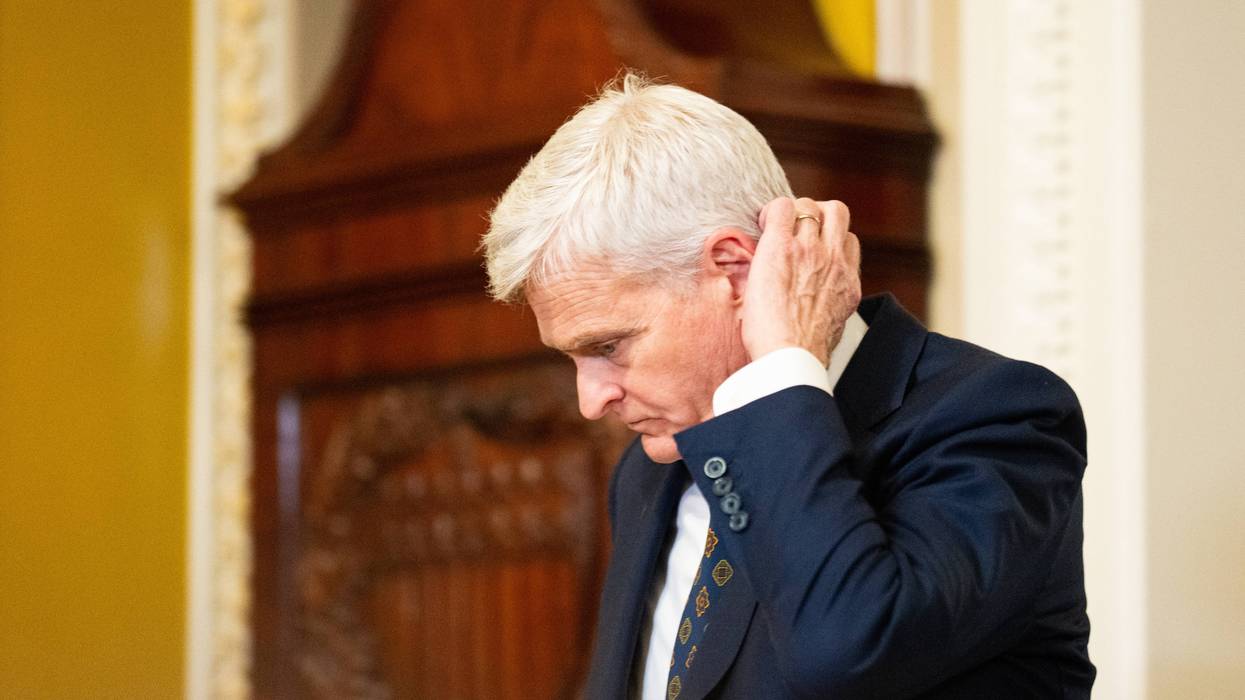
Republican Sen. Bill Cassidy, who lost reelection last month and said he would not be "bullied," switched his vote to no after the president berated him during a closed-door lunch hours earlier.
Jun 25, 2026
Two Senate Republicans who supported a previous resolution calling for an end to the US war on Iran changed their votes late Wednesday after President Donald Trump publicly and privately berated GOP lawmakers, calling them "losers" who provided "aid and comfort to the enemy."
In Wednesday's procedural vote, Sen. Bill Cassidy (R-La.)—who reportedly got into a shouting match with Trump over the Iran war during a closed-door lunch hours earlier—sided with virtually every other Republican in opposing the war powers resolution, just a day after he supported a separate, symbolic resolution calling for the removal of US forces from the conflict. Sen. Rand Paul (R-Ky.) also switched, changing his vote to "present" at the urging of the president.
Senate Republicans forced late Wednesday's vote in a clear effort to placate Trump, who fumed at "Republican losers" who backed the symbolic war powers resolution that passed the upper chamber earlier this week. Sen. Tim Kaine (D-Va.), the lead sponsor of the resolution that Republicans blocked on Wednesday, said the vote was held to "appease [Trump's] temper tantrum."
"After both Republican-majority Houses took the historic step of voting that additional war against Iran is illegal without congressional authorization, President Trump came to the Capitol and tried to browbeat Republican senators for upholding their oaths of office," said Kaine. Wednesday's vote, the senator added, "does not undo the expressed position of Congress that further war against Iran is illegal unless Congress votes for it."
Trump, who has repeatedly threatened to resume attacks on Iran if negotiations collapse, celebrated Wednesday's vote in a late-night post on his social media platform, thanking Senate GOP leaders and highlighting that Cassidy and Paul changed their votes.
Cassidy, who lost reelection last month and insisted hours before the vote that he would not "be bullied" by the administration, subsequently thanked the White House for giving him a "thorough briefing" on Iran to "address many of my concerns." Trump reportedly called Cassidy a "lunatic" during Wednesday's private lunch.
"This president is telling the American people there’s no money for healthcare, housing, or childcare—but there should be endless taxpayer dollars to fund wars they don’t support."
Wednesday's vote came amid tenuous negotiations between the US and Iran on a diplomatic resolution to end the illegal war that Trump launched in late February, killing thousands of Iranians, throwing the global economy into chaos, and driving up prices at home.
On Wednesday, prior to the Senate war powers vote, the White House asked Congress to approve an $87.6 billion supplemental funding package that includes nearly $70 billion for military programs to address "operational costs incurred" during the war on Iran.
Rep. Brendan Boyle (D-Pa.), the top Democrat on the House Budget Committee, said in a statement that "the tens of billions in military spending requested by the Trump administration could be used to protect Americans’ healthcare, feed hungry children, and help working families afford everyday life."
"Instead, Trump wants taxpayers to continue footing the bill for his reckless war in Iran, which has sent the cost of gas and everyday goods skyrocketing, put our brave men and women in uniform at risk, and left the region no safer than before," Boyle added.
Senate Democrats' top appropriator, Patty Murray of Washington, said she would not "rubberstamp tens of billions more for this disastrous war of choice."
“This president is telling the American people there’s no money for healthcare, housing, or childcare—but there should be endless taxpayer dollars to fund wars they don’t support," said Murray.
Keep ReadingShow Less

'The Message Is Pretty Clear,' Says Sanders After Progressive Wins in NY
"The American people—in New York and all across this country—are sick and tired of status quo politics... of a rigged economy... of billionaires and their super PACs buying elections."
Jun 24, 2026
Democratic socialist firebrand US Sen. Bernie Sanders on Wednesday welcomed a wave of progressive primary victories in New York as proof that Americans "are sick and tired of status quo politics" and "want to end the corrupt campaign finance system, which enables billionaires to spend huge amounts of money to elect candidates who will represent their interests and go to war against working-class people."
Sanders (I-Vt.) said so in a video posted on social media, as New York voters and progressives around the world celebrated Tuesday wins by Claire Valdez in New York's 7th Congressional District, Brad Lander in the 10th District, and Darializa Avila Chevalier in the 13th District.
As Common Dreams reported earlier Wednesday, the trio campaigned on affordable housing, Medicare for All, stronger union protections, and an end to US military support for Israel's genocidal assault on Palestinians—and all three were backed by New York City Mayor Zohran Mamdani, a democratic socialist supported and even sworn in by Sanders.
"What we saw last night in New York City and what we've been seeing for the last few months all across this country—the message is pretty clear," said the Brooklyn-born senator, who last year launched his Fighting Oligarchy Tour and this year has backed progressive candidates at various levels of government in the lead-up to the November midterm elections.
"People want change," asserted Sanders, who sought the Democratic presidential nomination in 2016 and 2020. "Our job is to grow that movement. Volunteer. Run for office. Stand up and fight. We can win this thing if we stand together."
While establishment Democrats in Washington, DC "downplayed the results, denying they reflected any major leftward shift nationally," according to NOTUS, other congressional progressives joined Sanders in cheering the results in New York.
Sen. Ed Markey (D-Mass.) said that "last night in New York, we saw progressives win. And win big. Voters are making their voices heard—they're done with the status quo, and they're ready for a progressive majority. Happy to see our movement rising and to see the power of true grassroots organizing. Congratulations."
Another Massachusetts Democrat, Rep. Ayanna Pressley, declared: "That’s right, a little louder for the folks in the back NY! The people demand and deserve elected officials who fight for working families, stand against genocide, reject corporate greed, and reject anti-Blackness. A more just America is possible, we're building it together."
Congratulating the trio along with Micah Lasher, the Democratic primary winner in New York's 12th District, Congressional Progressive Caucus Chair Emerita Pramila Jayapal (D-Wash.) said that "something powerful happened in New York last night. Four bold, people-powered candidates took on the Democratic establishment and won."
"They ran on Medicare for All. On a public option for housing. On a foreign policy that centers human dignity over political convenience. And they won," she continued. "This is what happens when movements build power. People-powered movements win."
Rep. Alexandria Ocasio-Cortez, a New York Democrat who has become a leading progressive voice in Congress since her 2018 primary upset and overwhelmingly won in the 14th District on Tuesday, congratulated those four, plus Cait Conley in the 17th District, "on their impressive primary victories."
"I look forward to working together as a delegation as we fight for working families across New York," she said.
Beyond Capitol Hill, Ben Davis—who worked on the data team for Sanders' 2020 campaign and is an active member of the Democratic Socialists of America (DSA)—tied the developments in New York to Chris Rabb's win in Pennsylvania's 3rd Congressional District last month, after which "the left won across Los Angeles" and "swept the elections in the District of Columbia."
Noting that in New York on Tuesday, DSA's "down-ballot slate also swept across the board, taking out four incumbent state legislators," Davis wrote for The Guardian that "the Democratic electorate has moved radically to the left over the past four years, and this will shape politics this year and for decades to come. There are a number of factors at play here, many of them long-term, but the magnitude of this shift shows a rapid movement among Democratic primary voters. This is spurred first by the second Trump administration."
"The second major factor that needs to be mentioned is the impact of Israel's assault on Gaza and its mass exposure," he continued. "Democratic voters have turned sharply against Israel—within the Democratic coalition, this is now an 80/20 issue, while the party establishment and elected officials trail, having completely missed the moral outrage felt by the Democratic base and across the political spectrum."
"Democrats are also moving to the left because of a generational shift. Sanders won large margins with Democrats under 35 in 2016. The oldest of those voters are now 45, but still voting the same," he added. "Lastly, the left surge is based on a return to mass politics, specifically, DSA as a democratically run, member-funded organization."
He concluded that "after the last month, Democratic leadership should be seriously taking stock of their position. The energy is on their left. The people are on their left. Democrats want fighters, and they want a politics rooted in the collective struggles of the masses, not decided in smoke-filled rooms. We still need moderate Democrats to win those pesky median voters, for now. But the party's leadership is deeply out of touch with its base. A leftist wave is cresting across the country."
Current Affairs editor in chief Nathan Robinson wrote Wednesday that "I feel like I've been waiting for this moment for 10 years. Back in 2016, it was frustratingly obvious that Sanders-style leftism, which centered the material needs of working people, was the best way to fight back against the Trumpian right. But Sanders could not defeat the party establishment in 2016 or 2020."
During Democratic former President Joe Biden's sole term, he noted, "DSA membership declined. Mamdani's victory was an exciting moment, and he's showing how democratic socialist politicians can both win and govern effectively. But I’m almost more excited by the congressional victories, because they show that the movement is growing beyond Mamdani, albeit with his help."
"There is little room for error here," he warned. "Socialists in power must be hyper-competent, so that voters can immediately see a clear contrast between the feckless Democratic establishment, which does not care about them, and the movement that prioritizes their most urgent needs and embodies their aspirations for a livable country. These candidates get that. They know that winning elections is actually the easy part, even though it is very hard. The most difficult work comes after, when you have to demonstrate that socialism is not a bunch of impossible 'pie in the sky' promises, but a set of workable ideas that will achieve results."
"We are facing a once-in-a-generation opportunity to test our politics in practice," Robinson added. "At last, the left has a real shot at taking power in places around the country. It is an exciting, unprecedented, and uncertain moment. Hopefully this new generation of socialists is up for the challenge. But the signs, so far, are encouraging."
Keep ReadingShow Less
Democrats Fume Over Trump's Moms.gov Website Promoting Anti-Abortion Centers
"Moms.gov is not about promoting women’s health. It is an attempt to use HHS resources to further strip women of their rights and privacy.”
Jun 24, 2026
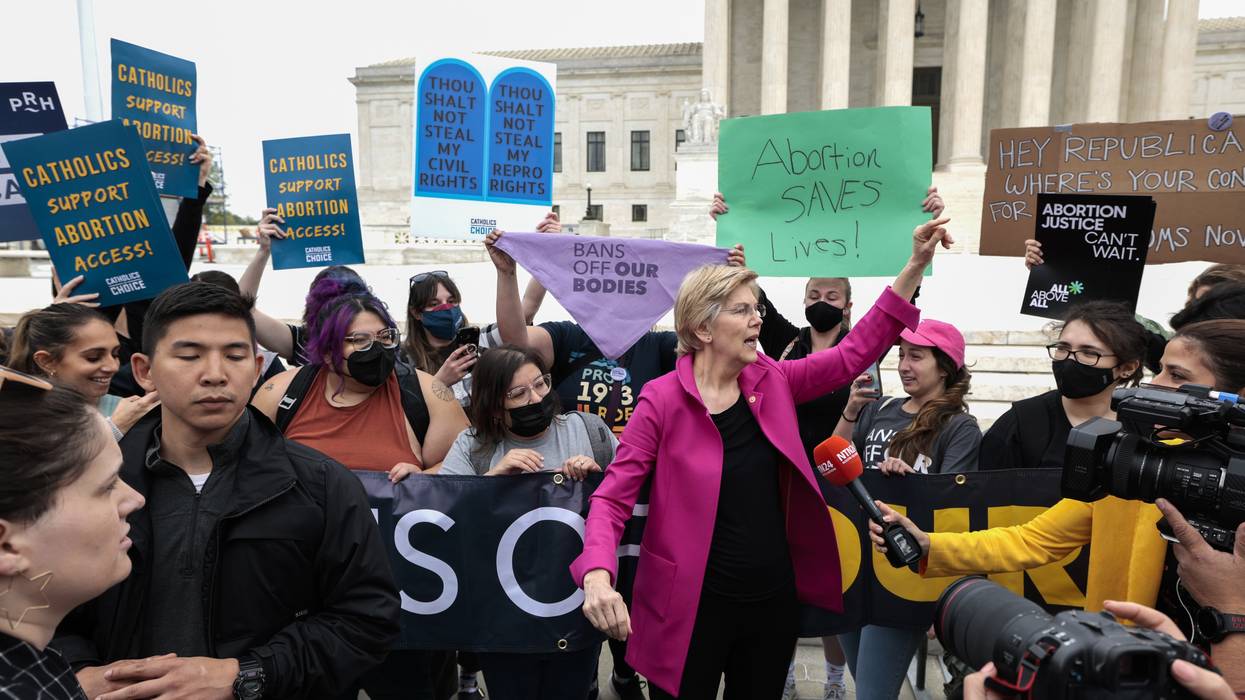
Eleven members of the Senate Democratic Caucus on Wednesday urged US President Donald Trump and Health and Human Services Secretary Robert F. Kennedy Jr. to “cease using federal resources to direct people to anti-abortion crisis pregnancy centers" via a government website.
Last month, the Department of Health and Human Services (HHS) launched Moms.gov, which claims to offer "resources, information, and help for new and expecting mothers" by "addressing the needs of mothers and fathers who face difficult or unexpected pregnancies and ensuring the well-being of mothers and the health of American families."
The site has two main options: so-called "crisis pregnancy centers" (CPCs)—which present themselves as reproductive health clinics but often provide misleading information and counseling aimed at discouraging abortion—and "federally qualified health centers," which, presented alongside anti-abortion services on Moms.gov, can blur the distinction between evidence-based healthcare providers and ideologically driven groups.
"This raises profound concerns about the health, safety, and privacy of people who access this government website at a time when women’s health and reproductive rights face increasing attacks,” the 11 senators said in a letter to Trump and Kennedy and shared with HuffPost. “Instead of offering concrete resources to protect the health and safety of pregnant women and their families, the Trump administration is using this website to highlight anti-abortion CPCs."
The letter—led by Sens. Elizabeth Warren (D-Mass.), Chuck Schumer (D-NY), Mazie Hirono (D-Hawaii), and Bernie Sanders (I-Vt.) and signed by Democratic Sens. Ron Wyden (Ore.), Tammy Duckworth (Ill.), Ed Markey (Mass.), Tina Smith (Minn.), John Hickenlooper (Colo.), Cory Booker (NJ), and Michael Bennett (Colo.)—was sent on the four-year anniversary of Dobbs v. Jackson Women’s Health Organization, a ruling by the right-wing US Supreme Court that canceled half a century of abortion rights formerly enshrined in Roe v. Wade.
“Since the US Supreme Court took away the fundamental right to abortion care... 21 states have banned or severely restricted access to abortion, decimating access to care for tens of millions of people,” the senators wrote.
The lawmakers said that the direct link to Option Line, an anti-abortion hotline, "on a government website is also troubling from a data privacy perspective," as the site collects and shares user data with "affiliates, partners, vendors, or contract organizations" and has been beset by breaches.
“Moms.gov is not about promoting women’s health—it is an attempt to use HHS resources to further strip women of their rights and privacy," the letter asserts. “In order to protect the health and data privacy of millions of women, HHS should remove the pregnancy center link from Moms.gov and cease using federal resources to direct people to anti-abortion crisis pregnancy centers.”
In a Wednesday interview with HuffPost, Warren said, "It's horrific that the Trump administration is using taxpayer dollars to prop up a website that pushes pregnant women towards nonmedical anti-abortion centers."
"The Republican plan is to sneak through anti-abortion resources and backdoor abortion bans because they know Americans don’t support their extreme agenda," she added. "Democrats are fighting back.”
Keep ReadingShow Less
Most Popular