
As the climate crisis intensifies extreme weather events, President Donald Trump's head of federal disaster relief sent a stark message to states on Tuesday: You're on your own.
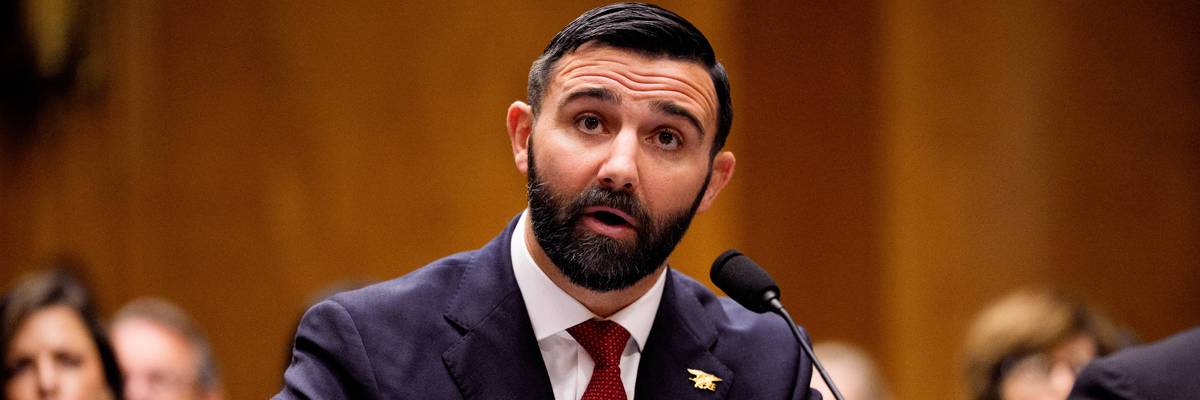
Politico reported that Cameron Hamilton, the administrator of the US Federal Emergency Management Agency (FEMA), told state officials at the National Emergency Management Association’s annual meeting in Little Rock, Arkansas, that they would need to allocate resources to respond to most disasters without help from the federal government.
“Every state must have the appropriate financial reserves” and other abilities “to ensure that recovery efforts can start immediately and not necessarily be held up simply because of the federal [disaster] declaration process,” Hamilton said, according to a recording of his remarks obtained by the outlet.
“A future that I hope we would shoot for is one where we wouldn’t require as many disasters because the capability of states is so high and so substantial,” Hamilton added, referring to presidential authorizations of federal disaster aid.
Trump has instituted dramatic cuts to FEMA that have hampered its response to disasters. When Texas faced floods last year that killed at least 138 people, for example, the administration’s spending restrictions delayed FEMA’s deployment of search-and-rescue teams for more than 72 hours, while lapsed call-center contracts left thousands of survivors’ calls for assistance unanswered.
While cutting its workforce, Trump has suggested FEMA is "very bureaucratic" and "very slow" and has floated shutting the agency down entirely, shifting its responsibilities to the states. Yet a FEMA report released Friday found that state disaster agencies are "typically understaffed and underfunded, and many depend heavily on federal assistance."
Hamilton's speech comes days after the publication of an internal memo stating that FEMA would “strengthen state and local emergency management capacity." The memo, also obtained by Politico, said that "reducing federal dependency requires partners to build, maintain, and exercise the capabilities needed to manage incidents effectively."
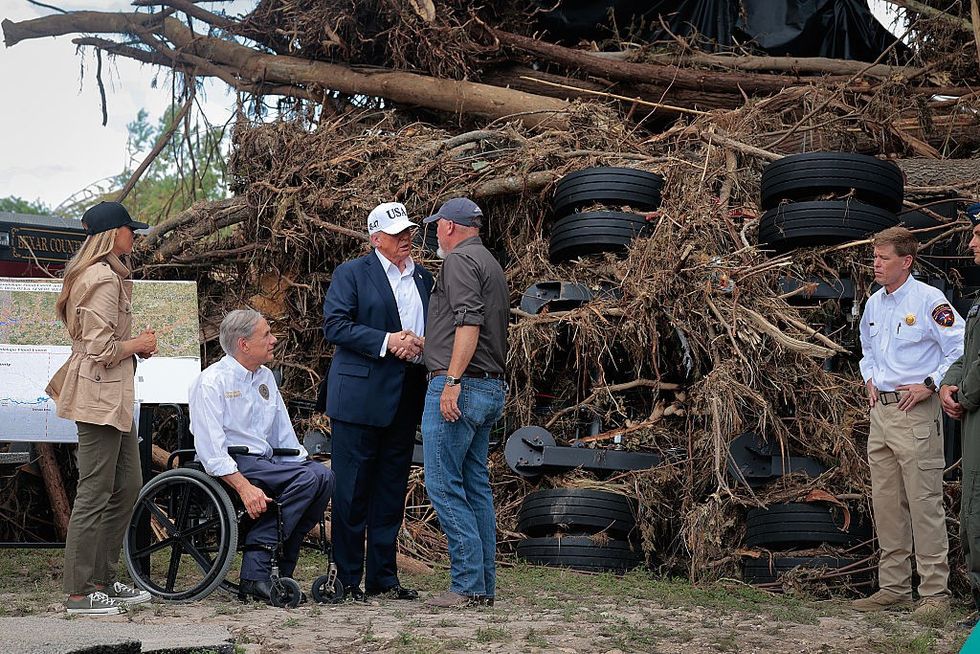 President Donald Trump, first lady Melania Trump, and Texas Gov. Greg Abbott meet with local emergency services personnel as they survey flood damage along the Guadalupe River on July 11, 2025, in Kerrville, Texas. (Photo by Chip Somodevilla/Getty Images)
"This is just the latest step in Trump’s agenda to push the cost of disasters onto states who are already stretched thin," said Mia Logan, a senior adviser to Climate Power. "States rely on federal disaster aid to rebuild roads, bridges, and the communities where people live and work. From his first days in office to now, Trump’s message to Americans has been consistent: If extreme weather hits, you’re on your own, because help is probably not coming.”
Dana Fisher, an American University professor who studies climate politics, has stressed that Trump is pulling back disaster aid "even though the United States is experiencing more disasters as the climate changes."
"The hottest US summer on record left millions of Americans facing life-threatening heatwaves," she wrote for The Conversation. "Extreme heat and drought set the stage for wildfires. Flooding from powerful storms and days of heavy rainfall inundated communities in several states. And now a ‘Super El Niño,’ on top of already rising temperatures and sea levels, is expected to make extreme events worse, at least into spring 2027."
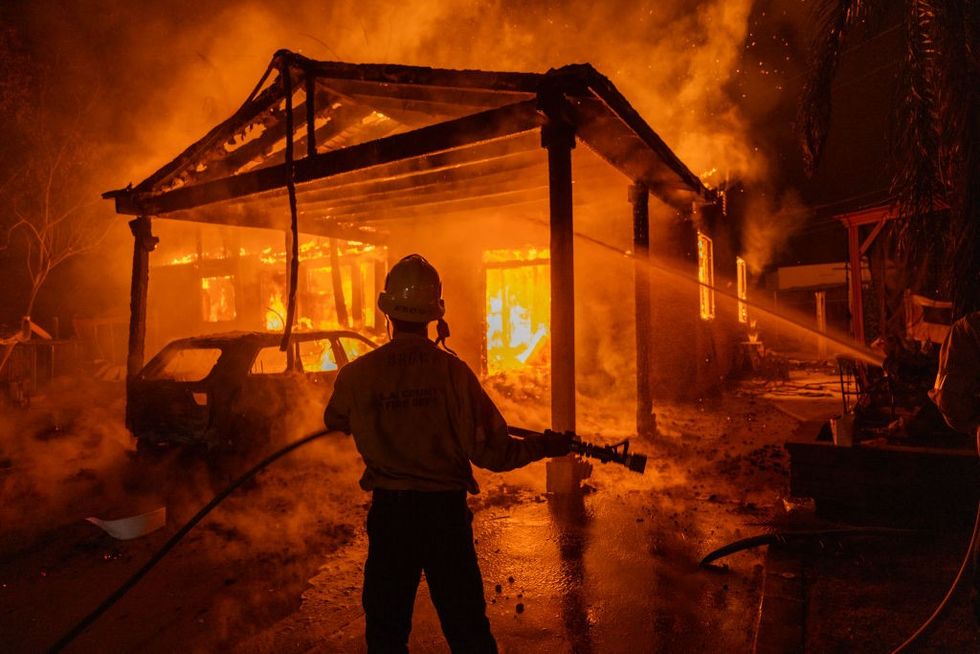 Firefighters battle the Eaton Fire on January 8, 2025, in Altadena, California. (Photo by David McNew/Getty Images)
Dan Koh, a former Biden White House official who helped coordinate federal disaster responses, called placing the recovery burden on states "batshit insane."
"I worked with FEMA in the White House," he wrote on social media. "States don’t have the budget for this."
He pointed to Hurricane Katrina as an example: The storm caused about $108 billion in damage, nearly six times Louisiana's entire 2005 operating budget of about $18.7 billion.
"There are many states with minuscule emergency management offices and budgets," wrote Eric Holdeman, the former emergency management director for King County, Washington, in a blog post. "There are states with slim rainy-day funds and no capacity to make up for a lack of federal disaster recovery funds—without RAISING TAXES."
He suggested that the scarce federal funds that remain could be wielded by presidents as a political tool—something Trump has already done many times during his second term. An Associated Press investigation in July found that Trump had approved three-quarters of disaster aid requests from states he won in 2024, compared with less than half from states he lost.
On the campaign trail last month, Trump told North Carolina voters the state would not receive disaster recovery funds for Hurricane Helene unless Republican Michael Whatley won his competitive Senate race, though he later said he was "only kidding."
Trump has also used disaster recovery to coerce states into adopting specific policies. In California, he threatened to withhold assistance for recovery from last year's devastating wildfires unless the state adopted voter identification requirements and changed its water policies.
Hamilton told state officials on Tuesday that changes to federal disaster assistance could begin “in the next six months”—just as the developing El Niño is expected to intensify extreme weather through next spring.
In response, Democratic California Gov. Gavin Newsom—who is expected to run for president in 2028—wrote that "Donald Trump's FEMA has a message to Americans during hurricane season and ahead of a historic El Niño: DROP DEAD."
As the climate crisis intensifies extreme weather events, President Donald Trump's head of federal disaster relief sent a stark message to states on Tuesday: You're on your own.
Politico reported that Cameron Hamilton, the administrator of the US Federal Emergency Management Agency (FEMA), told state officials at the National Emergency Management Association’s annual meeting in Little Rock, Arkansas, that they would need to allocate resources to respond to most disasters without help from the federal government.
“Every state must have the appropriate financial reserves” and other abilities “to ensure that recovery efforts can start immediately and not necessarily be held up simply because of the federal [disaster] declaration process,” Hamilton said, according to a recording of his remarks obtained by the outlet.
“A future that I hope we would shoot for is one where we wouldn’t require as many disasters because the capability of states is so high and so substantial,” Hamilton added, referring to presidential authorizations of federal disaster aid.
Trump has instituted dramatic cuts to FEMA that have hampered its response to disasters. When Texas faced floods last year that killed at least 138 people, for example, the administration’s spending restrictions delayed FEMA’s deployment of search-and-rescue teams for more than 72 hours, while lapsed call-center contracts left thousands of survivors’ calls for assistance unanswered.
While cutting its workforce, Trump has suggested FEMA is "very bureaucratic" and "very slow" and has floated shutting the agency down entirely, shifting its responsibilities to the states. Yet a FEMA report released Friday found that state disaster agencies are "typically understaffed and underfunded, and many depend heavily on federal assistance."
Hamilton's speech comes days after the publication of an internal memo stating that FEMA would “strengthen state and local emergency management capacity." The memo, also obtained by Politico, said that "reducing federal dependency requires partners to build, maintain, and exercise the capabilities needed to manage incidents effectively."
President Donald Trump, first lady Melania Trump, and Texas Gov. Greg Abbott meet with local emergency services personnel as they survey flood damage along the Guadalupe River on July 11, 2025, in Kerrville, Texas. (Photo by Chip Somodevilla/Getty Images)
"This is just the latest step in Trump’s agenda to push the cost of disasters onto states who are already stretched thin," said Mia Logan, a senior adviser to Climate Power. "States rely on federal disaster aid to rebuild roads, bridges, and the communities where people live and work. From his first days in office to now, Trump’s message to Americans has been consistent: If extreme weather hits, you’re on your own, because help is probably not coming.”
Dana Fisher, an American University professor who studies climate politics, has stressed that Trump is pulling back disaster aid "even though the United States is experiencing more disasters as the climate changes."
"The hottest US summer on record left millions of Americans facing life-threatening heatwaves," she wrote for The Conversation. "Extreme heat and drought set the stage for wildfires. Flooding from powerful storms and days of heavy rainfall inundated communities in several states. And now a ‘Super El Niño,’ on top of already rising temperatures and sea levels, is expected to make extreme events worse, at least into spring 2027."
Firefighters battle the Eaton Fire on January 8, 2025, in Altadena, California. (Photo by David McNew/Getty Images)
Dan Koh, a former Biden White House official who helped coordinate federal disaster responses, called placing the recovery burden on states "batshit insane."
"I worked with FEMA in the White House," he wrote on social media. "States don’t have the budget for this."
He pointed to Hurricane Katrina as an example: The storm caused about $108 billion in damage, nearly six times Louisiana's entire 2005 operating budget of about $18.7 billion.
"There are many states with minuscule emergency management offices and budgets," wrote Eric Holdeman, the former emergency management director for King County, Washington, in a blog post. "There are states with slim rainy-day funds and no capacity to make up for a lack of federal disaster recovery funds—without RAISING TAXES."
He suggested that the scarce federal funds that remain could be wielded by presidents as a political tool—something Trump has already done many times during his second term. An Associated Press investigation in July found that Trump had approved three-quarters of disaster aid requests from states he won in 2024, compared with less than half from states he lost.
On the campaign trail last month, Trump told North Carolina voters the state would not receive disaster recovery funds for Hurricane Helene unless Republican Michael Whatley won his competitive Senate race, though he later said he was "only kidding."
Trump has also used disaster recovery to coerce states into adopting specific policies. In California, he threatened to withhold assistance for recovery from last year's devastating wildfires unless the state adopted voter identification requirements and changed its water policies.
Hamilton told state officials on Tuesday that changes to federal disaster assistance could begin “in the next six months”—just as the developing El Niño is expected to intensify extreme weather through next spring.
In response, Democratic California Gov. Gavin Newsom—who is expected to run for president in 2028—wrote that "Donald Trump's FEMA has a message to Americans during hurricane season and ahead of a historic El Niño: DROP DEAD."