SUBSCRIBE TO OUR FREE NEWSLETTER
Daily news & progressive opinion—funded by the people, not the corporations—delivered straight to your inbox.
5
#000000
#FFFFFF
To donate by check, phone, or other method, see our More Ways to Give page.
Daily news & progressive opinion—funded by the people, not the corporations—delivered straight to your inbox.
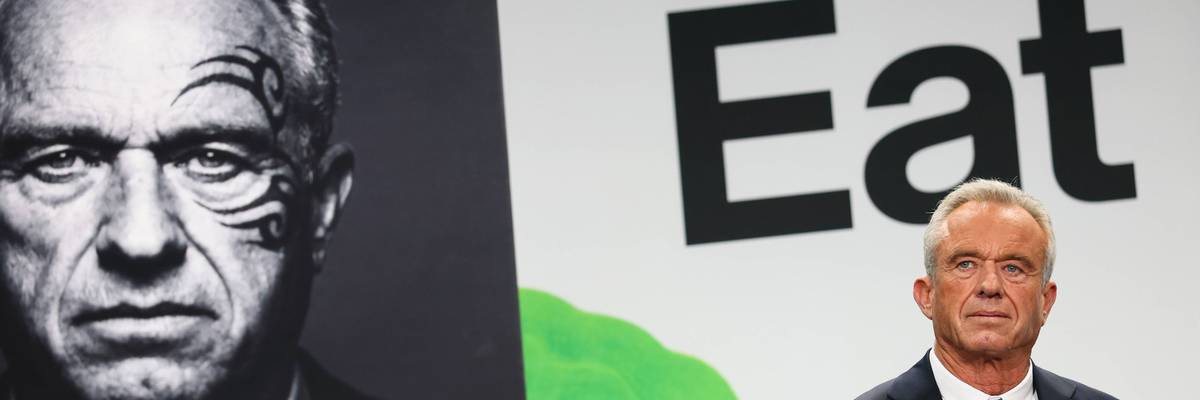
US Secretary of Health and Human Services Robert F. Kennedy Jr. stands silently next to a poster depicting him with legendary boxer Mike Tyson's face tattoo during an event on February 11, 2026.
A new report argues it is "impossible to reconcile" the Trump administration's Make America Healthy Again rhetoric with unprecedented cuts to federal nutrition assistance.
The unprecedented cuts to federal nutrition assistance that President Donald Trump and congressional Republicans enacted nearly a year ago directly undermine the administration's "Make America Healthy Again" initiative, argues a new report by a pair of food policy experts.
The so-called MAHA project, spearheaded by Health and Human Services Secretary Robert F. Kennedy Jr., emphasizes the importance of a healthy diet to childhood development. But the new white paper, published Wednesday and authored by Joelle Johnson of the Center for Science in the Public Interest and Priya Fielding-Singh of George Washington University's Global Food Institute, notes that research shows the Supplemental Nutrition Assistance Program (SNAP) "reduces food insecurity—which is itself linked to increased risk of poorer diets among children—and may improve health outcomes among households with low incomes."
"How the administration’s health objectives can be achieved alongside policies that reduce both food access and nutrition education is a question these dual agendas do not resolve," the report states. "Understanding this tension also helps explain why the administration’s MAHA messaging has at times appeared disconnected from the SNAP policies it has simultaneously pursued."
The GOP's One Big Beautiful Bill Act (HR 1) will inflict nearly $190 billion in cuts to SNAP over the next decade—the largest in the program's history—and expand work reporting requirements, despite evidence showing that such mandates do virtually nothing to boost employment or reduce poverty. According to one estimate, the expanded SNAP work reporting requirements could cause nearly 70,000 avoidable deaths by 2040.
The Republican law also forces states to pay a portion of SNAP benefits for the first time, straining budgets and potentially forcing deeper food aid cuts.
Millions of people across the US—including more than 800,000 children—have lost SNAP benefits since Trump signed the Republican budget package into law on July 4, 2025. It is well established that food insecurity, which is on the rise across the US, is associated with chronic disease.
“It is impossible to reconcile the administration’s MAHA rhetoric on reducing chronic disease in childhood with the cruel cutbacks to SNAP brought about by HR 1,” Johnson, who serves as deputy director for healthy food access at the Center for Science in the Public Interest (CSPI), said in a statement. “Whatever MAHA initiatives CSPI might have otherwise supported are completely subsumed by the biggest cut to SNAP in the program’s history.”
"Cutting off food assistance for millions of families undermines MAHA's stated goals of improving diet quality and preventing chronic disease."
The new report stresses the "ripple effects" of the Trump-GOP SNAP cuts across the food safety net, pointing to negative impacts on kids' eligibility for school meals and the Special Supplemental Nutrition Program for Women, Infants, and Children (WIC).
"Approximately 16 million children live in households that rely on SNAP to meet their basic food needs, and many will face cascading losses of access to other nutrition programs as a result of HR 1's cuts," the report warns. "Children who lose SNAP also risk losing automatic enrollment in WIC and free school meals, forcing families already stretched thin to navigate multiple re-enrollment processes with no guarantee of restored access."
Trump and the GOP are not finished attacking nutrition assistance for low-income families. Last month, House Republicans approved legislation that would slash fruit and vegetable benefits for millions of young children and pregnant and postpartum women—a cut consistent with the White House's budget proposal for the coming fiscal year.
"If we are serious about improving Americans' health, we need policies that make healthy food more accessible, not less," said Fielding-Singh, director of policy and programs at the Global Food Institute. "Cutting off food assistance for millions of families undermines MAHA's stated goals of improving diet quality and preventing chronic disease. Food security and public health go hand in hand."
Dear Common Dreams reader, It’s been nearly 30 years since I co-founded Common Dreams with my late wife, Lina Newhouser. We had the radical notion that journalism should serve the public good, not corporate profits. It was clear to us from the outset what it would take to build such a project. No paid advertisements. No corporate sponsors. No millionaire publisher telling us what to think or do. Many people said we wouldn't last a year, but we proved those doubters wrong. Together with a tremendous team of journalists and dedicated staff, we built an independent media outlet free from the constraints of profits and corporate control. Our mission has always been simple: To inform. To inspire. To ignite change for the common good. Building Common Dreams was not easy. Our survival was never guaranteed. When you take on the most powerful forces—Wall Street greed, fossil fuel industry destruction, Big Tech lobbyists, and uber-rich oligarchs who have spent billions upon billions rigging the economy and democracy in their favor—the only bulwark you have is supporters who believe in your work. But here’s the urgent message from me today. It's never been this bad out there. And it's never been this hard to keep us going. At the very moment Common Dreams is most needed, the threats we face are intensifying. We need your support now more than ever. We don't accept corporate advertising and never will. We don't have a paywall because we don't think people should be blocked from critical news based on their ability to pay. Everything we do is funded by the donations of readers like you. When everyone does the little they can afford, we are strong. But if that support retreats or dries up, so do we. Will you donate now to make sure Common Dreams not only survives but thrives? —Craig Brown, Co-founder |
The unprecedented cuts to federal nutrition assistance that President Donald Trump and congressional Republicans enacted nearly a year ago directly undermine the administration's "Make America Healthy Again" initiative, argues a new report by a pair of food policy experts.
The so-called MAHA project, spearheaded by Health and Human Services Secretary Robert F. Kennedy Jr., emphasizes the importance of a healthy diet to childhood development. But the new white paper, published Wednesday and authored by Joelle Johnson of the Center for Science in the Public Interest and Priya Fielding-Singh of George Washington University's Global Food Institute, notes that research shows the Supplemental Nutrition Assistance Program (SNAP) "reduces food insecurity—which is itself linked to increased risk of poorer diets among children—and may improve health outcomes among households with low incomes."
"How the administration’s health objectives can be achieved alongside policies that reduce both food access and nutrition education is a question these dual agendas do not resolve," the report states. "Understanding this tension also helps explain why the administration’s MAHA messaging has at times appeared disconnected from the SNAP policies it has simultaneously pursued."
The GOP's One Big Beautiful Bill Act (HR 1) will inflict nearly $190 billion in cuts to SNAP over the next decade—the largest in the program's history—and expand work reporting requirements, despite evidence showing that such mandates do virtually nothing to boost employment or reduce poverty. According to one estimate, the expanded SNAP work reporting requirements could cause nearly 70,000 avoidable deaths by 2040.
The Republican law also forces states to pay a portion of SNAP benefits for the first time, straining budgets and potentially forcing deeper food aid cuts.
Millions of people across the US—including more than 800,000 children—have lost SNAP benefits since Trump signed the Republican budget package into law on July 4, 2025. It is well established that food insecurity, which is on the rise across the US, is associated with chronic disease.
“It is impossible to reconcile the administration’s MAHA rhetoric on reducing chronic disease in childhood with the cruel cutbacks to SNAP brought about by HR 1,” Johnson, who serves as deputy director for healthy food access at the Center for Science in the Public Interest (CSPI), said in a statement. “Whatever MAHA initiatives CSPI might have otherwise supported are completely subsumed by the biggest cut to SNAP in the program’s history.”
"Cutting off food assistance for millions of families undermines MAHA's stated goals of improving diet quality and preventing chronic disease."
The new report stresses the "ripple effects" of the Trump-GOP SNAP cuts across the food safety net, pointing to negative impacts on kids' eligibility for school meals and the Special Supplemental Nutrition Program for Women, Infants, and Children (WIC).
"Approximately 16 million children live in households that rely on SNAP to meet their basic food needs, and many will face cascading losses of access to other nutrition programs as a result of HR 1's cuts," the report warns. "Children who lose SNAP also risk losing automatic enrollment in WIC and free school meals, forcing families already stretched thin to navigate multiple re-enrollment processes with no guarantee of restored access."
Trump and the GOP are not finished attacking nutrition assistance for low-income families. Last month, House Republicans approved legislation that would slash fruit and vegetable benefits for millions of young children and pregnant and postpartum women—a cut consistent with the White House's budget proposal for the coming fiscal year.
"If we are serious about improving Americans' health, we need policies that make healthy food more accessible, not less," said Fielding-Singh, director of policy and programs at the Global Food Institute. "Cutting off food assistance for millions of families undermines MAHA's stated goals of improving diet quality and preventing chronic disease. Food security and public health go hand in hand."
The unprecedented cuts to federal nutrition assistance that President Donald Trump and congressional Republicans enacted nearly a year ago directly undermine the administration's "Make America Healthy Again" initiative, argues a new report by a pair of food policy experts.
The so-called MAHA project, spearheaded by Health and Human Services Secretary Robert F. Kennedy Jr., emphasizes the importance of a healthy diet to childhood development. But the new white paper, published Wednesday and authored by Joelle Johnson of the Center for Science in the Public Interest and Priya Fielding-Singh of George Washington University's Global Food Institute, notes that research shows the Supplemental Nutrition Assistance Program (SNAP) "reduces food insecurity—which is itself linked to increased risk of poorer diets among children—and may improve health outcomes among households with low incomes."
"How the administration’s health objectives can be achieved alongside policies that reduce both food access and nutrition education is a question these dual agendas do not resolve," the report states. "Understanding this tension also helps explain why the administration’s MAHA messaging has at times appeared disconnected from the SNAP policies it has simultaneously pursued."
The GOP's One Big Beautiful Bill Act (HR 1) will inflict nearly $190 billion in cuts to SNAP over the next decade—the largest in the program's history—and expand work reporting requirements, despite evidence showing that such mandates do virtually nothing to boost employment or reduce poverty. According to one estimate, the expanded SNAP work reporting requirements could cause nearly 70,000 avoidable deaths by 2040.
The Republican law also forces states to pay a portion of SNAP benefits for the first time, straining budgets and potentially forcing deeper food aid cuts.
Millions of people across the US—including more than 800,000 children—have lost SNAP benefits since Trump signed the Republican budget package into law on July 4, 2025. It is well established that food insecurity, which is on the rise across the US, is associated with chronic disease.
“It is impossible to reconcile the administration’s MAHA rhetoric on reducing chronic disease in childhood with the cruel cutbacks to SNAP brought about by HR 1,” Johnson, who serves as deputy director for healthy food access at the Center for Science in the Public Interest (CSPI), said in a statement. “Whatever MAHA initiatives CSPI might have otherwise supported are completely subsumed by the biggest cut to SNAP in the program’s history.”
"Cutting off food assistance for millions of families undermines MAHA's stated goals of improving diet quality and preventing chronic disease."
The new report stresses the "ripple effects" of the Trump-GOP SNAP cuts across the food safety net, pointing to negative impacts on kids' eligibility for school meals and the Special Supplemental Nutrition Program for Women, Infants, and Children (WIC).
"Approximately 16 million children live in households that rely on SNAP to meet their basic food needs, and many will face cascading losses of access to other nutrition programs as a result of HR 1's cuts," the report warns. "Children who lose SNAP also risk losing automatic enrollment in WIC and free school meals, forcing families already stretched thin to navigate multiple re-enrollment processes with no guarantee of restored access."
Trump and the GOP are not finished attacking nutrition assistance for low-income families. Last month, House Republicans approved legislation that would slash fruit and vegetable benefits for millions of young children and pregnant and postpartum women—a cut consistent with the White House's budget proposal for the coming fiscal year.
"If we are serious about improving Americans' health, we need policies that make healthy food more accessible, not less," said Fielding-Singh, director of policy and programs at the Global Food Institute. "Cutting off food assistance for millions of families undermines MAHA's stated goals of improving diet quality and preventing chronic disease. Food security and public health go hand in hand."