SUBSCRIBE TO OUR FREE NEWSLETTER
Daily news & progressive opinion—funded by the people, not the corporations—delivered straight to your inbox.
5
#000000
#FFFFFF
To donate by check, phone, or other method, see our More Ways to Give page.
Daily news & progressive opinion—funded by the people, not the corporations—delivered straight to your inbox.
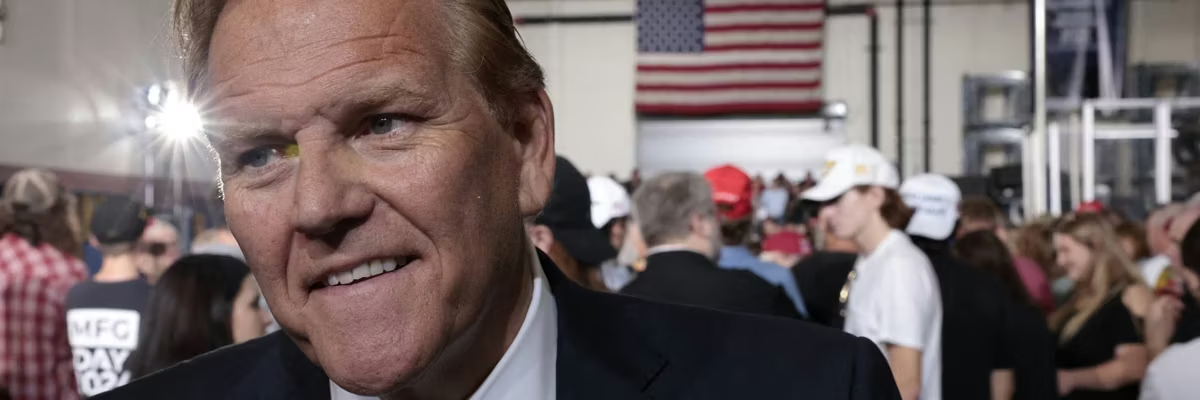
Former congressman and current 2026 US Senate candidate Mike Rogers, Republican from Michigan, speaks to reporters before Vice President JD Vance delivers remarks during a visit to a precision metal stamping facility in Howell, Michigan, on September 17, 2025.
"You can't have your privacy violated if you don't know your privacy is violated," Rogers said in an infamous clip from 2013 as he defended the NSA's mass spying programs.
Amid an expanding assault on privacy by the federal government, Democratic nominee Dr. Abdul El-Sayed has brought the issue of mass surveillance to the forefront of Michigan's Senate race, attacking his Republican opponent, former Rep. Mike Rogers, for his longtime defense of the PATRIOT Act.
"Mike Rogers out here fighting for the Peeping Tom vote," wrote El-Sayed, a former public health official, in a social media post on Monday. "Creepy stuff, Mike."
El-Sayed was responding to an unearthed comment from Rogers, then the chair of the House Intelligence Committee, made during a 2013 committee hearing in Congress just months after whistleblower Edward Snowden's explosive revelations about the extent of the National Security Agency's (NSA) warrantless surveillance of Americans.
At the time, Congress was debating whether to enact legislation reining in a provision in the PATRIOT Act, Section 215, which the government had used to secretly collect phone records and other information in bulk from Americans not accused of wrongdoing.
Rogers was pushing American University law professor Stephen Vladeck to agree that the government should be allowed to examine Americans' business records to determine if they were connected to a foreign terrorist organization. Vladeck said he believed it should, but that protecting Americans' privacy needed to be taken into account. "The way we do it matters," he said.
The chair responded that in the decade since the policy had been enacted, nobody had ever complained about it. Vladeck, noting that the program was a secret, responded: "But who would be complaining?”
"Somebody whose privacy was violated," Rogers retorted. "You can't have your privacy violated if you don't know your privacy is violated."
The quote is highly representative of Rogers' record of support for extensive government surveillance over his decade-and-a-half in Congress. He was one of the PATRIOT Act's leading champions since its introduction in 2001 and led the charge to stop mass collection powers from being curtailed after the Snowden revelations.
“The charge that the program tramples on the privacy of citizens is simply wrong,” he said in a statement with Rep. Dutch Ruppersberger (D-Md.), then the ranking member of the Intelligence Committee.
Rogers and Ruppersberger also coauthored the Cyber Intelligence Sharing and Protection Act (CISPA) in 2012, which would have allowed companies to share cybersecurity-related information with the government, including the NSA, with protections from existing privacy restrictions. The American Civil Liberties Union argued that the bill, which failed in the Senate, would have allowed the government to obtain large amounts of sensitive personal data with few restrictions.
"You can't have your privacy violated if you don't know your privacy is violated."
In 2026, as artificial intelligence becomes a new tool for even more powerful and pervasive spying, El-Sayed has said the government must be banned from using it to "conduct warrantless surveillance."
As part of an AI policy platform rolled out in June, he said rules should be put in place to prevent its use for "domestic authoritarianism," including "mass political surveillance, protected-characteristic predictive policing, or AI targeting of dissent."
During President Donald Trump's second term, as he's used anti-"terrorism" rhetoric to justify a legal crackdown on domestic opposition, the government's expanding spy powers have become an increasing concern.
With the aid of private surveillance companies like Palantir, the administration has created an unprecedented surveillance dragnet that connects AI-powered facial recognition technology, license plate readers, and phone location tools to piles of data on Americans that have been used to supercharge its mass deportation campaign and aggressively monitor protesters and dissenters.
It has been met with some pushback in the Senate, where Republicans earlier this year narrowly failed to extend Trump's powers to surveil noncitizens under Section 702 of the Foreign Intelligence Surveillance Act (FISA) without warrants. Though US citizens are not supposed to be targeted, civil liberties advocates argue that their information is often collected easily and the government has used it to prosecute them.
Rogers has attempted to back off some of his earlier defense of mass surveillance, though he has not meaningfully pushed to reduce the government's spying powers. During a losing Senate bid against Sen. Elissa Slotkin (D-Mich.) in 2024, he said that it's "wrong" for the FBI to conduct warrantless searches against US citizens, but did not call for actually repealing or blocking Section 702.
Since serving in Congress, Rogers parlayed his time overseeing the intelligence community into a lucrative career advising and governing cybersecurity, intelligence, and government-contracting firms.
He served as a senior security adviser to AT&T while the company operated a little-known program that gave law enforcement access to searches of trillions of domestic phone records, though there is no record that he personally worked on the program.
Michigan Advance reported earlier this year that he also made almost $100,000 advising a company that helped the government of former Venezuelan President Nicolás Maduro spy on dissidents.
Noting the Republican nominee's recent pivot to Trumpian election denialism, journalist Spencer Ackerman—who has extensively covered the expansion of government surveillance during the War on Terror—suggested in a post on social media that there is little reason to believe Rogers has changed much after over a decade out of Congress.
"I saw up close his efforts, post-Snowden, to protect the NSA and ensure it continues to nullify your constitutionally-protected privacy," Ackerman said. "He was for impunity then and wants the same thing for himself."
Dear Common Dreams reader, It’s been nearly 30 years since I co-founded Common Dreams with my late wife, Lina Newhouser. We had the radical notion that journalism should serve the public good, not corporate profits. It was clear to us from the outset what it would take to build such a project. No paid advertisements. No corporate sponsors. No millionaire publisher telling us what to think or do. Many people said we wouldn't last a year, but we proved those doubters wrong. Together with a tremendous team of journalists and dedicated staff, we built an independent media outlet free from the constraints of profits and corporate control. Our mission has always been simple: To inform. To inspire. To ignite change for the common good. Building Common Dreams was not easy. Our survival was never guaranteed. When you take on the most powerful forces—Wall Street greed, fossil fuel industry destruction, Big Tech lobbyists, and uber-rich oligarchs who have spent billions upon billions rigging the economy and democracy in their favor—the only bulwark you have is supporters who believe in your work. But here’s the urgent message from me today. It's never been this bad out there. And it's never been this hard to keep us going. At the very moment Common Dreams is most needed, the threats we face are intensifying. We need your support now more than ever. We don't accept corporate advertising and never will. We don't have a paywall because we don't think people should be blocked from critical news based on their ability to pay. Everything we do is funded by the donations of readers like you. When everyone does the little they can afford, we are strong. But if that support retreats or dries up, so do we. Will you donate now to make sure Common Dreams not only survives but thrives? —Craig Brown, Co-founder |
Amid an expanding assault on privacy by the federal government, Democratic nominee Dr. Abdul El-Sayed has brought the issue of mass surveillance to the forefront of Michigan's Senate race, attacking his Republican opponent, former Rep. Mike Rogers, for his longtime defense of the PATRIOT Act.
"Mike Rogers out here fighting for the Peeping Tom vote," wrote El-Sayed, a former public health official, in a social media post on Monday. "Creepy stuff, Mike."
El-Sayed was responding to an unearthed comment from Rogers, then the chair of the House Intelligence Committee, made during a 2013 committee hearing in Congress just months after whistleblower Edward Snowden's explosive revelations about the extent of the National Security Agency's (NSA) warrantless surveillance of Americans.
At the time, Congress was debating whether to enact legislation reining in a provision in the PATRIOT Act, Section 215, which the government had used to secretly collect phone records and other information in bulk from Americans not accused of wrongdoing.
Rogers was pushing American University law professor Stephen Vladeck to agree that the government should be allowed to examine Americans' business records to determine if they were connected to a foreign terrorist organization. Vladeck said he believed it should, but that protecting Americans' privacy needed to be taken into account. "The way we do it matters," he said.
The chair responded that in the decade since the policy had been enacted, nobody had ever complained about it. Vladeck, noting that the program was a secret, responded: "But who would be complaining?”
"Somebody whose privacy was violated," Rogers retorted. "You can't have your privacy violated if you don't know your privacy is violated."
The quote is highly representative of Rogers' record of support for extensive government surveillance over his decade-and-a-half in Congress. He was one of the PATRIOT Act's leading champions since its introduction in 2001 and led the charge to stop mass collection powers from being curtailed after the Snowden revelations.
“The charge that the program tramples on the privacy of citizens is simply wrong,” he said in a statement with Rep. Dutch Ruppersberger (D-Md.), then the ranking member of the Intelligence Committee.
Rogers and Ruppersberger also coauthored the Cyber Intelligence Sharing and Protection Act (CISPA) in 2012, which would have allowed companies to share cybersecurity-related information with the government, including the NSA, with protections from existing privacy restrictions. The American Civil Liberties Union argued that the bill, which failed in the Senate, would have allowed the government to obtain large amounts of sensitive personal data with few restrictions.
"You can't have your privacy violated if you don't know your privacy is violated."
In 2026, as artificial intelligence becomes a new tool for even more powerful and pervasive spying, El-Sayed has said the government must be banned from using it to "conduct warrantless surveillance."
As part of an AI policy platform rolled out in June, he said rules should be put in place to prevent its use for "domestic authoritarianism," including "mass political surveillance, protected-characteristic predictive policing, or AI targeting of dissent."
During President Donald Trump's second term, as he's used anti-"terrorism" rhetoric to justify a legal crackdown on domestic opposition, the government's expanding spy powers have become an increasing concern.
With the aid of private surveillance companies like Palantir, the administration has created an unprecedented surveillance dragnet that connects AI-powered facial recognition technology, license plate readers, and phone location tools to piles of data on Americans that have been used to supercharge its mass deportation campaign and aggressively monitor protesters and dissenters.
It has been met with some pushback in the Senate, where Republicans earlier this year narrowly failed to extend Trump's powers to surveil noncitizens under Section 702 of the Foreign Intelligence Surveillance Act (FISA) without warrants. Though US citizens are not supposed to be targeted, civil liberties advocates argue that their information is often collected easily and the government has used it to prosecute them.
Rogers has attempted to back off some of his earlier defense of mass surveillance, though he has not meaningfully pushed to reduce the government's spying powers. During a losing Senate bid against Sen. Elissa Slotkin (D-Mich.) in 2024, he said that it's "wrong" for the FBI to conduct warrantless searches against US citizens, but did not call for actually repealing or blocking Section 702.
Since serving in Congress, Rogers parlayed his time overseeing the intelligence community into a lucrative career advising and governing cybersecurity, intelligence, and government-contracting firms.
He served as a senior security adviser to AT&T while the company operated a little-known program that gave law enforcement access to searches of trillions of domestic phone records, though there is no record that he personally worked on the program.
Michigan Advance reported earlier this year that he also made almost $100,000 advising a company that helped the government of former Venezuelan President Nicolás Maduro spy on dissidents.
Noting the Republican nominee's recent pivot to Trumpian election denialism, journalist Spencer Ackerman—who has extensively covered the expansion of government surveillance during the War on Terror—suggested in a post on social media that there is little reason to believe Rogers has changed much after over a decade out of Congress.
"I saw up close his efforts, post-Snowden, to protect the NSA and ensure it continues to nullify your constitutionally-protected privacy," Ackerman said. "He was for impunity then and wants the same thing for himself."
Amid an expanding assault on privacy by the federal government, Democratic nominee Dr. Abdul El-Sayed has brought the issue of mass surveillance to the forefront of Michigan's Senate race, attacking his Republican opponent, former Rep. Mike Rogers, for his longtime defense of the PATRIOT Act.
"Mike Rogers out here fighting for the Peeping Tom vote," wrote El-Sayed, a former public health official, in a social media post on Monday. "Creepy stuff, Mike."
El-Sayed was responding to an unearthed comment from Rogers, then the chair of the House Intelligence Committee, made during a 2013 committee hearing in Congress just months after whistleblower Edward Snowden's explosive revelations about the extent of the National Security Agency's (NSA) warrantless surveillance of Americans.
At the time, Congress was debating whether to enact legislation reining in a provision in the PATRIOT Act, Section 215, which the government had used to secretly collect phone records and other information in bulk from Americans not accused of wrongdoing.
Rogers was pushing American University law professor Stephen Vladeck to agree that the government should be allowed to examine Americans' business records to determine if they were connected to a foreign terrorist organization. Vladeck said he believed it should, but that protecting Americans' privacy needed to be taken into account. "The way we do it matters," he said.
The chair responded that in the decade since the policy had been enacted, nobody had ever complained about it. Vladeck, noting that the program was a secret, responded: "But who would be complaining?”
"Somebody whose privacy was violated," Rogers retorted. "You can't have your privacy violated if you don't know your privacy is violated."
The quote is highly representative of Rogers' record of support for extensive government surveillance over his decade-and-a-half in Congress. He was one of the PATRIOT Act's leading champions since its introduction in 2001 and led the charge to stop mass collection powers from being curtailed after the Snowden revelations.
“The charge that the program tramples on the privacy of citizens is simply wrong,” he said in a statement with Rep. Dutch Ruppersberger (D-Md.), then the ranking member of the Intelligence Committee.
Rogers and Ruppersberger also coauthored the Cyber Intelligence Sharing and Protection Act (CISPA) in 2012, which would have allowed companies to share cybersecurity-related information with the government, including the NSA, with protections from existing privacy restrictions. The American Civil Liberties Union argued that the bill, which failed in the Senate, would have allowed the government to obtain large amounts of sensitive personal data with few restrictions.
"You can't have your privacy violated if you don't know your privacy is violated."
In 2026, as artificial intelligence becomes a new tool for even more powerful and pervasive spying, El-Sayed has said the government must be banned from using it to "conduct warrantless surveillance."
As part of an AI policy platform rolled out in June, he said rules should be put in place to prevent its use for "domestic authoritarianism," including "mass political surveillance, protected-characteristic predictive policing, or AI targeting of dissent."
During President Donald Trump's second term, as he's used anti-"terrorism" rhetoric to justify a legal crackdown on domestic opposition, the government's expanding spy powers have become an increasing concern.
With the aid of private surveillance companies like Palantir, the administration has created an unprecedented surveillance dragnet that connects AI-powered facial recognition technology, license plate readers, and phone location tools to piles of data on Americans that have been used to supercharge its mass deportation campaign and aggressively monitor protesters and dissenters.
It has been met with some pushback in the Senate, where Republicans earlier this year narrowly failed to extend Trump's powers to surveil noncitizens under Section 702 of the Foreign Intelligence Surveillance Act (FISA) without warrants. Though US citizens are not supposed to be targeted, civil liberties advocates argue that their information is often collected easily and the government has used it to prosecute them.
Rogers has attempted to back off some of his earlier defense of mass surveillance, though he has not meaningfully pushed to reduce the government's spying powers. During a losing Senate bid against Sen. Elissa Slotkin (D-Mich.) in 2024, he said that it's "wrong" for the FBI to conduct warrantless searches against US citizens, but did not call for actually repealing or blocking Section 702.
Since serving in Congress, Rogers parlayed his time overseeing the intelligence community into a lucrative career advising and governing cybersecurity, intelligence, and government-contracting firms.
He served as a senior security adviser to AT&T while the company operated a little-known program that gave law enforcement access to searches of trillions of domestic phone records, though there is no record that he personally worked on the program.
Michigan Advance reported earlier this year that he also made almost $100,000 advising a company that helped the government of former Venezuelan President Nicolás Maduro spy on dissidents.
Noting the Republican nominee's recent pivot to Trumpian election denialism, journalist Spencer Ackerman—who has extensively covered the expansion of government surveillance during the War on Terror—suggested in a post on social media that there is little reason to believe Rogers has changed much after over a decade out of Congress.
"I saw up close his efforts, post-Snowden, to protect the NSA and ensure it continues to nullify your constitutionally-protected privacy," Ackerman said. "He was for impunity then and wants the same thing for himself."