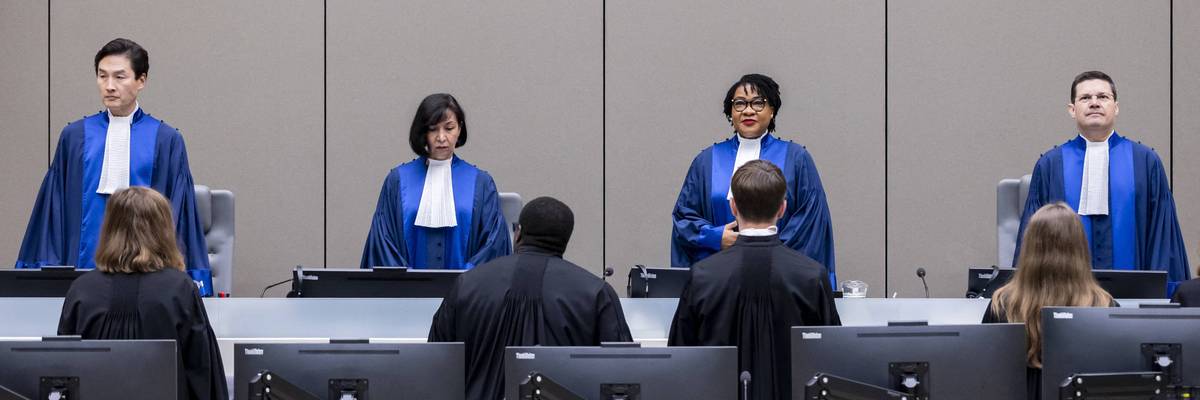
International Criminal Court (ICC) judges enter a courtroom in The Hague on September 23, 2026, for a ruling in the war crimes and crimes against humanity case against former Central African Republic rebel commander Mahamat Said Abdel Kani.
Under Assault From Trump, Embattled ICC Wins Top Human Rights Prize in Europe
Yannis Maniatis, whose bloc nominated the court to receive the award, said it was meant to demonstrate "that no one is above the law."
The European Union on Thursday awarded its most prestigious human rights prize to the International Criminal Court and its officials in a rebuke to President Donald Trump’s efforts to destroy the institution.
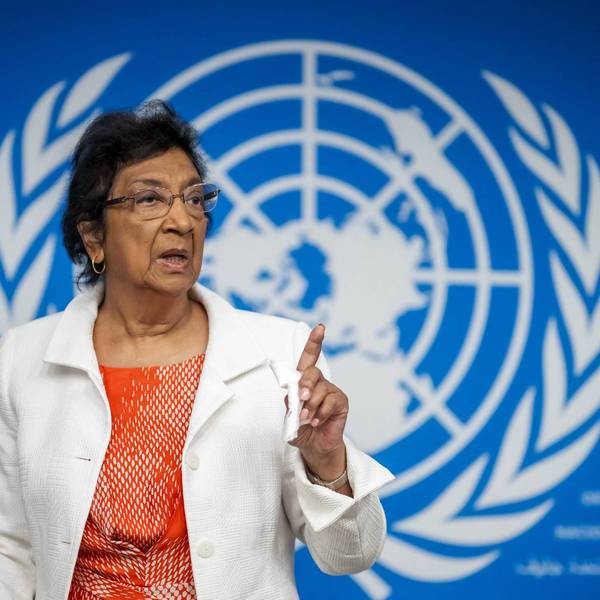
The EU’s Sakharov Prize for Freedom of Thought—previously awarded to figures such as Nelson Mandela and Malala Yousafzai—follows another international honor this month for a former ICC judge. Earlier in October, Navi Pillay, a former judge for the war crimes court, received the Nobel Peace Prize.
“The European Union is built on respect for multilateralism and international institutions," said European Parliament President Roberta Metsola as she announced the award on Thursday. “With the award of the Sakharov Prize to the International Criminal Court and its officials, the European Parliament recognizes the court’s important work in upholding international law and justice.”
Welcoming the award, which will be presented in December, ICC president Tomoko Akane noted that it “comes at a time when the court and its officials face unprecedented challenges.” She added, “There is no peace without justice and no security without law.”
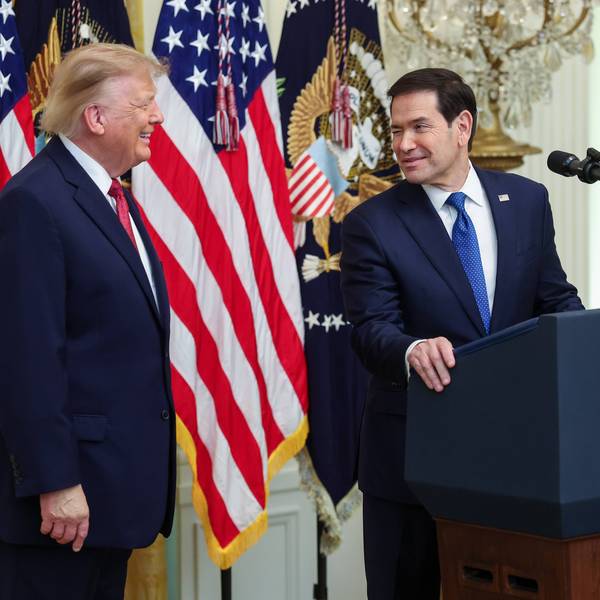
In retaliation for the ICC’s 2024 arrest warrant for Israeli Prime Minister Benjamin Netanyahu, the Trump administration has declared war on the court, with Secretary of State Marco Rubio saying the goal was to “dismantle” it.
The US and Israel have not ratified the Rome Statute that created the ICC in 2002, and they claim that the court therefore has no power to hold their citizens accountable for war crimes. Supporters of the body argue that it has jurisdiction over crimes committed by Americans or Israelis in member states, such as Afghanistan and Palestine.
At last month's United Nations General Assembly meeting in New York, Trump raged against the court as an "evil group of people" and declared that he would "never allow US service members or anyone else to be investigated or given show trials by an anti-American tribunal with no jurisdiction over us." During the same speech, he threatened to "annihilate" Iran and bragged about seizing Venezuela's oil as "spoils" of war.
After sanctioning individual judges, UN experts, and human rights organizations that provided evidence of Israeli war crimes in Gaza, the Trump administration earlier this month sanctioned the court as a whole—threatening to cut it off from financial services and technology it needs to function. Human rights organizations have decried the sanctions as a fundamental assault on international law itself and a declaration of impunity by the United States.
Yannis Maniatis, a Greek lawmaker and vice president for foreign affairs of the European Parliament’s Socialists and Democrats bloc, which nominated the ICC for the prize, said the honor was meant to reinforce the idea “that no one is above the law.”
“We stand by the ICC and its officials, and we are committed to safeguarding its work," he said Monday. "We must guarantee that the ICC is able to operate independently, free from pressure or external interference."
"The court ensures that victims around the world have access to justice," he added. "It is a people-based organization, not a political one. If the aggressors become the victims, and if we stand by helplessly as international justice erodes, we risk allowing those who believe themselves above the law to prevail."
Ursula von der Leyen, the president of the European Commission, likewise welcomed the award.
"For victims of the world's gravest crimes, justice means a voice," she said. “The [ICC] must be free to pursue its mission independently and without pressure or intimidation.”
Some European lawmakers have warned that expressions of solidarity with the ICC will mean little unless the EU takes decisive action to shield the court from US sanctions.
Earlier this month, the chairs of five European Parliament bodies said that "targeting the court as an institution crosses a fundamental red line, one that threatens the independence and integrity of a tribunal established to uphold accountability for the gravest crimes of concern to the international community."
"The European Union must now demonstrate unwavering solidarity with the ICC and its personnel—not only with words but also with concrete acts," they said. "The European Commission must immediately trigger the EU Blocking Statute, shielding the court and European actors from the extraterritorial reach of these sanctions. Europe must stand firm in defense of international law and the rule of law.”
On Monday, European Commission spokesperson Siobhan McGarry confirmed that the measure remained under consideration but announced no decision or timeline for activating it.
The Left, a coalition of socialist and other left-wing parties in the European Parliament, said awarding the Sakharov Prize to the ICC sent a “strong signal to the European Commission to immediately invoke the Blocking Statute and protect international justice from US sanctions and intimidation.”
We are at a crossroads
This country and this world are at a monumental crossroads. In a few short weeks, US voters will have an opportunity to beat back the forces of fascism and confront the billionaires who are rigging the economy, our media system, and our democracy, making it increasingly impossible for ordinary people to get by. We’re not just talking about the election. We’re talking about what must be done once these fascist elements are vanquished from power. We need a bolder set of solutions than what either major party has so far been willing to offer and a working-class movement ready to fight like hell for it. Trump didn't emerge from nowhere. The conditions that fueled MAGA authoritarianism were created by decades of radical neoliberal economic policies and a corrupt political system dominated by corporate interests. They slashed taxes on the super-rich, promising that the benefits would trickle down. They said giveaways to the corporate titans would make life more affordable for the rest of us. It was all bullshit. And when a bitter, betrayed populace searches for someone to blame, right-wing demagogues have little trouble finding scapegoats. People know when they're being lied to, but you won't hear any of this from the corporate media. Only independent journalism—powered and funded by people who believe in building a better world—can deliver truly trustworthy daily news. Our Fall Campaign is underway, and we need your help. To power our newsroom through the rest of the year, we need to raise $125,000 by midnight on October 31. So if you share our vision, please contribute whatever you can to sustain our work. |
The European Union on Thursday awarded its most prestigious human rights prize to the International Criminal Court and its officials in a rebuke to President Donald Trump’s efforts to destroy the institution.
The EU’s Sakharov Prize for Freedom of Thought—previously awarded to figures such as Nelson Mandela and Malala Yousafzai—follows another international honor this month for a former ICC judge. Earlier in October, Navi Pillay, a former judge for the war crimes court, received the Nobel Peace Prize.
“The European Union is built on respect for multilateralism and international institutions," said European Parliament President Roberta Metsola as she announced the award on Thursday. “With the award of the Sakharov Prize to the International Criminal Court and its officials, the European Parliament recognizes the court’s important work in upholding international law and justice.”
Welcoming the award, which will be presented in December, ICC president Tomoko Akane noted that it “comes at a time when the court and its officials face unprecedented challenges.” She added, “There is no peace without justice and no security without law.”
In retaliation for the ICC’s 2024 arrest warrant for Israeli Prime Minister Benjamin Netanyahu, the Trump administration has declared war on the court, with Secretary of State Marco Rubio saying the goal was to “dismantle” it.
The US and Israel have not ratified the Rome Statute that created the ICC in 2002, and they claim that the court therefore has no power to hold their citizens accountable for war crimes. Supporters of the body argue that it has jurisdiction over crimes committed by Americans or Israelis in member states, such as Afghanistan and Palestine.
At last month's United Nations General Assembly meeting in New York, Trump raged against the court as an "evil group of people" and declared that he would "never allow US service members or anyone else to be investigated or given show trials by an anti-American tribunal with no jurisdiction over us." During the same speech, he threatened to "annihilate" Iran and bragged about seizing Venezuela's oil as "spoils" of war.
After sanctioning individual judges, UN experts, and human rights organizations that provided evidence of Israeli war crimes in Gaza, the Trump administration earlier this month sanctioned the court as a whole—threatening to cut it off from financial services and technology it needs to function. Human rights organizations have decried the sanctions as a fundamental assault on international law itself and a declaration of impunity by the United States.
Yannis Maniatis, a Greek lawmaker and vice president for foreign affairs of the European Parliament’s Socialists and Democrats bloc, which nominated the ICC for the prize, said the honor was meant to reinforce the idea “that no one is above the law.”
“We stand by the ICC and its officials, and we are committed to safeguarding its work," he said Monday. "We must guarantee that the ICC is able to operate independently, free from pressure or external interference."
"The court ensures that victims around the world have access to justice," he added. "It is a people-based organization, not a political one. If the aggressors become the victims, and if we stand by helplessly as international justice erodes, we risk allowing those who believe themselves above the law to prevail."
Ursula von der Leyen, the president of the European Commission, likewise welcomed the award.
"For victims of the world's gravest crimes, justice means a voice," she said. “The [ICC] must be free to pursue its mission independently and without pressure or intimidation.”
Some European lawmakers have warned that expressions of solidarity with the ICC will mean little unless the EU takes decisive action to shield the court from US sanctions.
Earlier this month, the chairs of five European Parliament bodies said that "targeting the court as an institution crosses a fundamental red line, one that threatens the independence and integrity of a tribunal established to uphold accountability for the gravest crimes of concern to the international community."
"The European Union must now demonstrate unwavering solidarity with the ICC and its personnel—not only with words but also with concrete acts," they said. "The European Commission must immediately trigger the EU Blocking Statute, shielding the court and European actors from the extraterritorial reach of these sanctions. Europe must stand firm in defense of international law and the rule of law.”
On Monday, European Commission spokesperson Siobhan McGarry confirmed that the measure remained under consideration but announced no decision or timeline for activating it.
The Left, a coalition of socialist and other left-wing parties in the European Parliament, said awarding the Sakharov Prize to the ICC sent a “strong signal to the European Commission to immediately invoke the Blocking Statute and protect international justice from US sanctions and intimidation.”