

SUBSCRIBE TO OUR FREE NEWSLETTER
Daily news & progressive opinion—funded by the people, not the corporations—delivered straight to your inbox.
5
#000000
#FFFFFF
To donate by check, phone, or other method, see our More Ways to Give page.
Daily news & progressive opinion—funded by the people, not the corporations—delivered straight to your inbox.
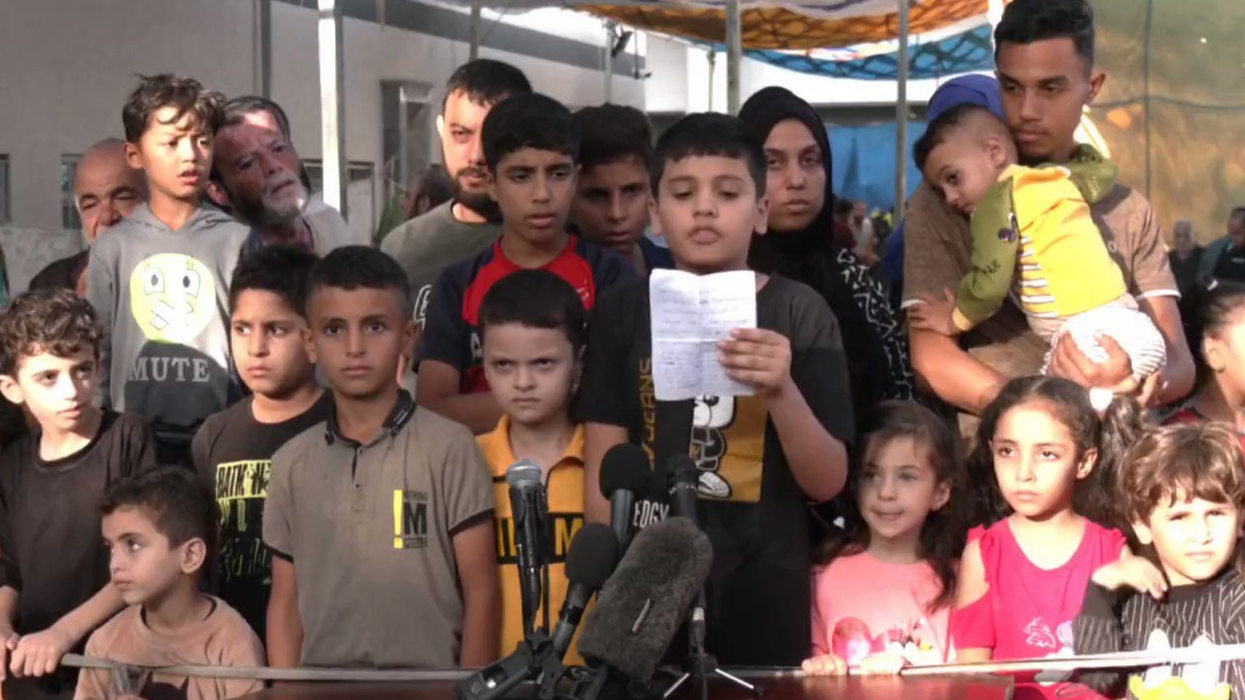
What heart refuses to protect and even worse, intentionally targets “the child” along with the people and institutions that provide the care and protection necessary to sustain the child’s life?
"Whereas mankind owes to the child the best it has to give…"—United Nations Declaration on the Rights of the Child, 1959
There were Iraqi children before Gaza, before Hind. Before Iran and the Minab School bombing. Iraqi children dying by the thousands, as many as 500,000 as a result of US-supported UN economic sanctions and wars in Iraq. Governments expressed “concern.” International scholars and lawyers called it a genocide. Former Secretary of State under Bill Clinton, Madeleine Albright, called it a price worth paying.
Who are we; what universe is this where one writes again and again in support of children, of “the child” as if they were some political cause. It’s the new abnormal, where everyday brings news of children suffering, injured and dying, in Iraq, in Ukraine, and Sudan. In Gaza and the Occupied West Bank, in Iran and Lebanon to name a few.
The child is trapped in a car, shot dead; they are buried under the rubble of their bombed-out house, of their school or the hospital where they have just been born. They’re wounded, missing eyes, arms, and legs; missing parents and siblings, aunts and uncles.They’re missing all the little as well as the significant “stuff” that is, that should be, a child's life. They’re sick and there are no doctors or medicines; they’re hungry and there’s no food or clean water. There’s no school, no mosque, no church, and no more neighborhood. Out of a house, in a tent or on the street, forcibly moved from here to there. What sort of world is this, what kind of culture. What heart refuses to protect and even worse, intentionally targets “the child” along with the people and institutions that provide the care and protection necessary to sustain the child’s life?
We know, everyone knows this is not the world “fit for Children” promised by global leaders at the UN some 30 years ago, yet it continues.
While instinct—some call it maternal—helps insure the future of a species, caring about and for one’s own offspring doesn’t necessarily translate to caring about all children. This enormous responsibility has been taken up by governments and international organizations; children need guaranteed special protections because they are “…innocent, vulnerable, and dependent.” The Convention on the Rights of the Child (CRC, 1990), the most widely endorsed human rights document in history, committed world leaders to giving children the “first call” on human and financial resources and know-how to address critical issues such as: poverty, education, child and maternal health, and protection during armed conflicts. With great fanfare, they reaffirmed these aspirations, calling for a world “fit” for children in 2002 at the UN Special Session on Children, the largest ever gathering for a UN Special Session.
The disconnect of words to actions and to the actual situation for children in 2002, as the Special Session convened, was not lost on those of us who cared about Iraq and Iraqi children. An estimated half million had died. The alarming increase in birth defects and childhood cancers was stressing a medical system under siege. The overall health of Iraqi children as measured by the Under 5 Mortality Rate (U5MR) “…the single most significant indicator of the state of a nation’s children…” had declined by 160% in the decade since the CRC. It was the largest decline in well-being by far for children in any country in the world. And this, like the overall destruction of Iraq and Iraqi society was brought on by war and sustained by the severe US-supported UN economic sanctions imposed by the very agency pledging to take responsibility for the world’s children.
International law failed to protect Iraqi children; it has failed Palestinian children for decades despite their well-documented fragility under Israeli occupation. And now, we watch as the already precarious “child” in Gaza and the Occupied West Bank suffers unimaginable atrocities.“Atrocity in the ordinary sense of the term, as evoking simply the shock and horror that most would feel in the face of such enormous and gratuitous human damage; a circumstance in which we would be hard-pressed not to disparage the justifications” (Joy Gordon, Invisible War: The United States and the Iraq Sanctions, 2010).
UN and human rights organizations wring their hands and issue condemnations. Some do not call this a genocide. The majority that might help to end this catastrophe has stood by—including women, mothers, and global health and human rights organizations—and watched the occupation and genocide kill and maim thousands and thousands of Palestinian children and their extended families. Watched as the very country is rendered uninhabitable. Stood silently by as the very ones seeking to protect Palestinian children are treated and prosecuted as terrorists.
The moving promises of UN declarations and their aspirations on behalf of children have come to nothing. We’re being subjected to a form of global violence Joy Gordon warned about, that of "a single nation," or in today’s world, two nations—the US and Israel—"hijacking an institution of international governance, substituting their own agenda in place of the interests and will of the international community.” This should not stand.
According to the Ministry of Health, 73,386 Palestinians—including 21,000 children—were killed in the Gaza Strip and another 174,256 were injured between October 7, 2023 and August 9, 2026. This includes 1,258 fatalities and 4,295 injuries between the announcement of a ceasefire agreement on October 10, 2025 and August 9, 2026. We know, everyone knows this is not the world “fit for Children” promised by global leaders at the UN some 30 years ago, yet it continues. I’m at a loss. What can be said that hasn’t been said, or written that hasn’t been written. What poem or investigative article, what personal narrative could possibly bring an end to this carnage.
In 1915 Henry James declared, “The war has used up words, they have weakened, they have deteriorated…” Dr. Salma Al-Hadad, head of the pediatric oncology unit at Children’s Welfare Teaching Hospital in Baghdad since 1992, shared his view. After years of interviews revealing the struggles to save increasing numbers of patients with increasingly difficult cancers without even the most basic medicines and technology, she went silent. “The very hard times I’ve experienced over these years,” she wrote sometime in a mid-2000 email, “have rendered me silent. I find no comment.”
The moral universe owes a deep debt to the people of Palestine who have not gone silent, or ceased to document the atrocities against them. They pay for this every day with their lives, and in many cases the lives of other family members. I urge myself on. We have to repay that debt by breaking the silence even when we feel there is nothing more to say. Silence cannot be an option for those who are suffering under the weight of the atrocities being committed against children.
"All people,” wrote Leo Tolstoy, “live, Not by reason of any care they have for themselves, But by the love for them that is in other people.” If we truly care about “the child,” we have to increase our efforts on their behalf.
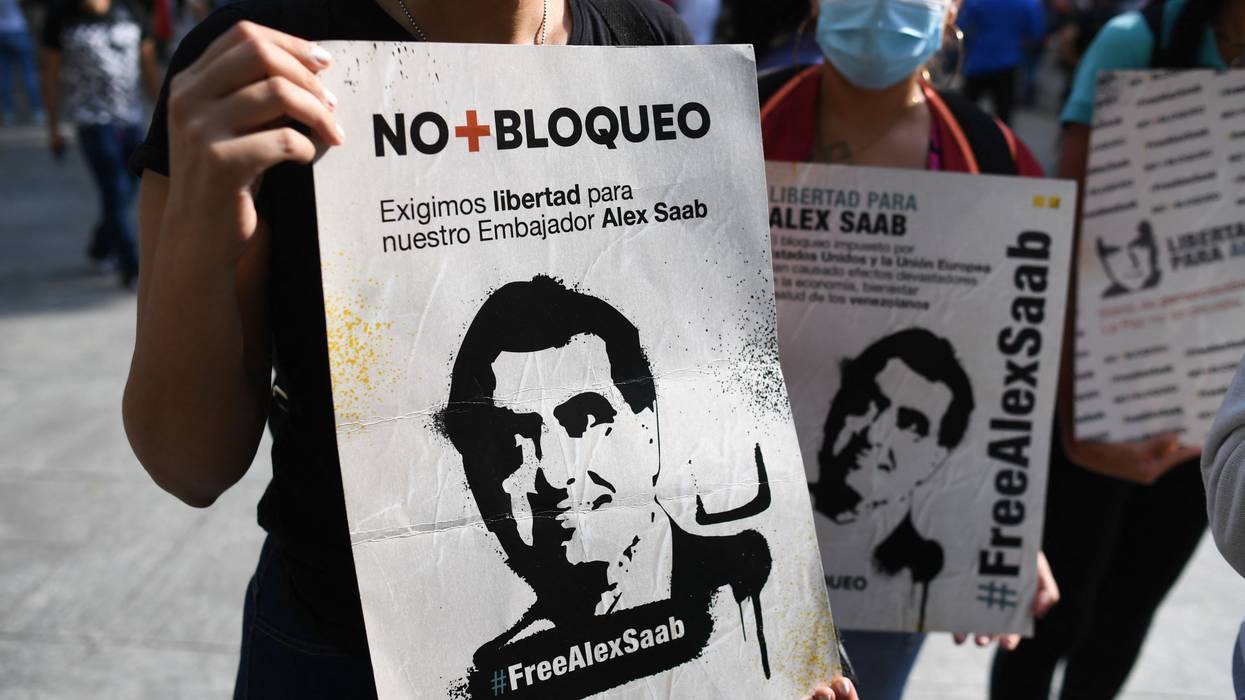
It’s difficult not to see the renewed imprisonment of Alex Saab as a disappointing capitulation to US coercion after so many of us fought for his freedom, but we cannot forget the task at hand.
The recent deportation of Alex Saab from Caracas to the US on May 18, 2026 has generated shock, confusion, anger, and intense debate across sectors of the international solidarity movement and many Venezuelans themselves.
Alex Saab, a Colombian businessman who became closely associated with the Venezuelan government during the years of heavy US sanctions, is seen by many Venezuelans as someone who helped the country bypass sanctions, obtain fuel and food, open financial channels, and resist economic collapse under blockade conditions.
The US accuses Saab of corruption and money laundering connected to Venezuelan state contracts, but for many people in Venezuela and across the international left, Saab came to represent something larger than an individual businessman: the broader struggle over sanctions, sovereignty, and Venezuela’s ability to survive under extraordinary economic and geopolitical pressure.
The Venezuelan revolution did not survive the last decade of US economic warfare without contradictions. It survived through improvisation, exhaustion, loyalty, fear, sanctions, migration, stubbornness, and an almost unbearable national fatigue that few outside the country truly understand.
Reducing every painful decision to betrayal while ignoring the enormous machinery of coercion surrounding Venezuela risks reproducing the very fragmentation that external aggression was designed to create in the first place.
The United States did not merely sanction Venezuela. It attempted to break it. It froze national assets, it openly pursued regime change, backed parallel governments, economically strangled the country, and ultimately launched a military operation to kidnap President Nicolás Maduro and First Lady Cilia Flores from Venezuelan soil.
To understand why Saab became such a powerful figure, one must first understand what Venezuela became under sanctions: a country forced into survival mode.
And now, after the deportation of Saab to the United States and the growing accusations against Delcy Rodríguez, I watch many people speak with the confidence of hindsight. As if everything had always been obvious. As if Venezuelans navigating one of the most aggressive campaigns of economic warfare, destabilization, and military coercion in modern Latin American history had the luxury of moral purity.
As a Venezuelan American, I am struggling too to understand and process this moment. I stood there too. I called for Alex Saab’s freedom when he was detained in Cape Verde during the height of the Trump administration’s maximum pressure campaign against Venezuela. At the time, the reality that existed for many of us was that Saab was a Venezuelan diplomat helping the country navigate sanctions.
Recently, Venezuelan National Assembly President Jorge Rodríguez publicly stated that Alex Saab has maintained relationships with US agencies since 2019. These revelations, combined with Saab’s deportation, have generated painful questions for many people who spent years defending him publicly.
What did we actually know?
What kinds of compromises were going on inside a country trying to survive under siege?
These are painful questions. And at this moment, there are still far more questions than answers.
Maybe painful compromises were made.
Maybe Saab was never what many believed him to be.
Maybe serious betrayals occurred.
Maybe the deportation was justified.
Maybe realities existed behind closed doors that ordinary Venezuelans never had access to. Or maybe decisions were made inside an impossible reality where preventing wider war, deeper collapse, and even greater harm for ordinary Venezuelans became more urgent.
Because since the kidnapping of Maduro, Venezuela has not been operating in an atmosphere of freedom. It is operating under threat.
And it is easy to demand uncompromising heroism from a country under attack when you are not the one responsible for preventing millions of people from falling into even greater catastrophe.
People who defended Saab for years are now confronting the possibility that parts of the story may have been hidden from them. Others are immediately translating uncertainty into accusations of betrayal against Delcy Rodríguez and the entire Bolivarian process.
But I think there is something dangerous about how quickly so many people are rushing toward absolute conclusions while fragments of information, accusations, leaks, and political narratives are still colliding in real time.
Maybe there will come a moment for deeper criticism of Delcy Rodríguez and others within the Bolivarian process. Maybe new information will eventually clarify realities that today remain obscured by contradiction, secrecy, pressure, and war.
But I think there is a certain political myopia in discussing Venezuela's internal contradictions while removing the broader reality of US pressure and coercion from the story entirely.
Because regardless of what may eventually be revealed about Alex Saab, the larger reality remains unchanged: Venezuela was subjected to years of sanctions, destabilization, economic strangulation, coup attempts, international isolation, and eventually direct military intervention.
The aggressor has not disappeared from the story.
And reducing every painful decision to betrayal while ignoring the enormous machinery of coercion surrounding Venezuela risks reproducing the very fragmentation that external aggression was designed to create in the first place.
It’s difficult not to see the renewed imprisonment of Alex Saab as a disappointing capitulation to US coercion after so many of us fought for his freedom, but we cannot forget the task at hand. If we are serious about ending US aggression toward Venezuela, we cannot allow our solidarity with the Venezuelan people to be deterred. They have shown us how to sustain a revolution amid contradictions, and that is what we must do.
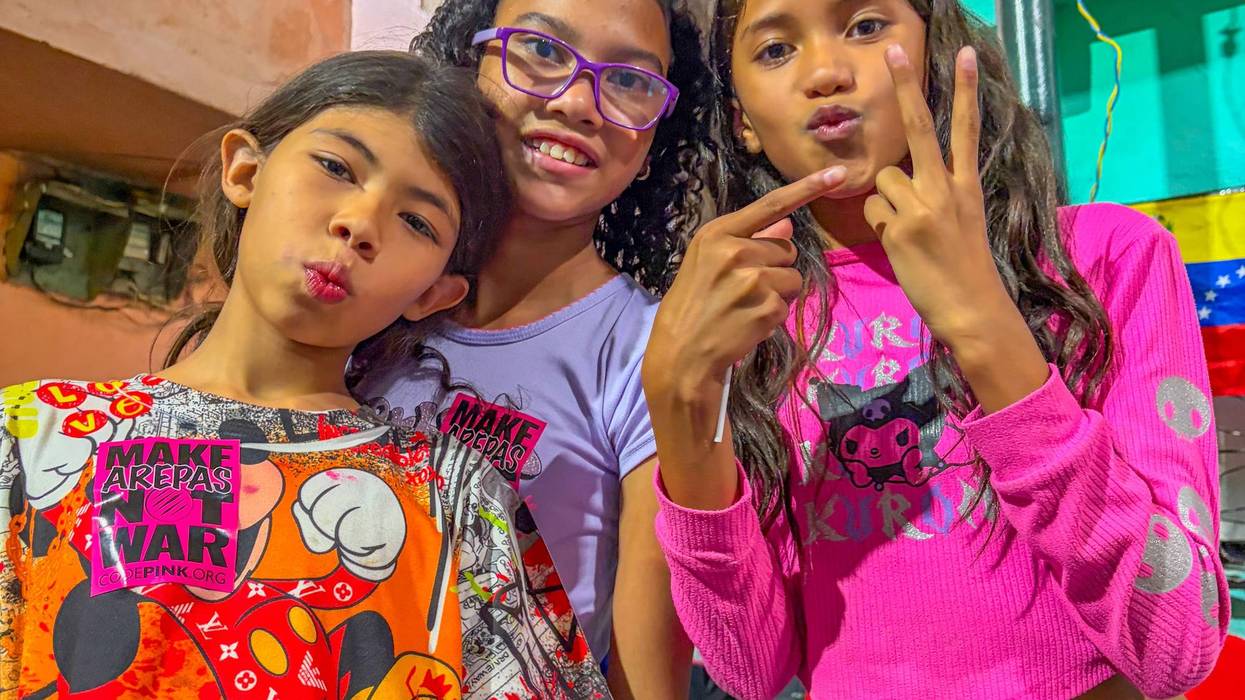
The current fraught détente with Washington is a window of opportunity to recover an economy operating at roughly 30% of its pre-sanctions level.
Although progressives are rightly concerned about US-coerced compromises and concessions, it is equally important to understand the resilience and continuing successes of Venezuela’s Bolivarian Revolution. Focusing only on the half-empty aspect of the proverbial glass obscures the strength of the resistance and conceals the vulnerabilities of the imperial juggernaut.
On a delegation to Venezuela, the constant refrain from both high-ranking government officials and grassroots Chavistas—supporters of the movement led by former President Hugo Chávez—was that they were urgently “buying time.”
A quarter-century of US hybrid war on Venezuela, especially the unilateral coercive measures (sanctions), has had a corrosive effect. The current fraught détente with Washington is a window of opportunity to recover an economy operating at roughly 30% of its pre-sanctions level.
The kidnapping of President Nicolás Maduro and First Lady Cilia Flores by US special forces on January 3 was “the one scenario we didn’t expect,” according to former Venezuelan Deputy Foreign minister Carlos Ron.
The kidnapping was a military success for the US. But politically Washington had no viable alternative to the Chavistas retaining power.
Abducting a lawful head of state—an egregious violation of international law—is not, however, unprecedented. In 2004, the US flew Haiti’s Jean-Bertrand Aristide to the Central African Republic in what Washington claimed was a voluntary decision, but which Aristide called a kidnapping. In 1990, following a bloody invasion, the US extradited Panama’s Manuel Noriega.
Leading up to January 3, Washington had incrementally tightened its stranglehold over Venezuela. Initial sanctions imposed in 2015 evolved from targeted measures to broad sectoral restrictions, especially on oil and finance. “Secondary sanctions” followed, penalizing non-US actors engaged with Venezuela. By December an outright military “total and complete blockade” piratically seized oil tankers.
US President Donald Trump also designated the so-called Cartel de los Soles as a terrorist organization, allegedly headed by Maduro. A $25-million bounty on Maduro under former US President Joe Biden was doubled in August. The following month, the US commenced extrajudicial murders of alleged drug runners in small boats in the Caribbean and the eastern Pacific. By October, Trump suspended all communication with the Maduro government.
Despite post-kidnapping concessions, it is instructive to consider what hasn’t happened. The political leadership did not splinter, and the country did not descend into chaos. The US-directed fate of Libya in 2011 was not to be repeated in Venezuela.
Venezuela maintained constitutional continuity. Shortly after the strike, then Vice President Delcy Rodríguez was sworn in as acting president. Other top leaders—National Assembly President Jorge Rodríguez, Interior Minister Diosdado Cabello, and Defense Minister Vladimir Padrino López—remained in place and unified. The civic-military unity held fast.
Under intense US pressure, high-ranking militants have been replaced. Padrino, who was swapped for Gustavo González López, another committed Chavista, remains influential in his new cabinet position heading the critical agricultural ministry. In this whack-a-mole scenario, the major exception to the government’s strategy of yielding in form to US pressure but maintaining a Chavista essence is the new Vice Foreign Minister for North America and Europe, Oliver Blanco, who is from the opposition.
Another triumph is that a highly divided population did not erupt into civil conflict. Instead, the attack produced a rally-around-the-flag effect, with some moderate opposition figures showing a new openness to the ruling party.
Nor was Noble Prize winner and far-rightist María Corina Machado imposed as president. She had signaled that if she took power there would be a retaliatory bloodbath against Chavistas. Meanwhile, the US effectively abandoned the bogus claim that Maduro headed the Cartel de los Soles.
On March 7, Washington formally recognized the Venezuelan government led by Rodríguez, marking a reversal of its policy since 2019. Trump even informally referred to her as “president-elect,” though the return of Maduro from US imprisonment as the rightful chief remains Venezuela’s national priority. On April 27, the US modified sanctions to allow the Venezuelan government to pay Maduro’s defense lawyers.
Financial easing is proceeding. In the late 1990s-early 2000s, the US bought more than half of Venezuela’s oil exports. Oil sales have again resumed under a highly restructured and controlled system, while the US has also taken steps to shield Venezuelan state assets from creditor seizure. The Rodríguez government is in the process of regaining control of Citgo Petroleum, the “crown jewel” of Venezuela's foreign assets, which the US had seized.
What has been achieved is not a lifting of sanctions, but a controlled reentry into international finance under US licensing and oversight.
Washington has authorized transactions with Venezuela’s central bank and major state banks, reversing the 2019 measures that had effectively cut them off from the global financial system. This policy change allows dollar-denominated transactions and access to US financial channels.
For the first time in years, Venezuela’s core financial institutions can operate in international banking channels. What makes this significant is that it allows oil revenues from US transactions to enter the domestic economy. That in turn helps stabilize liquidity, reducing the need for monetary expansion that had fueled inflation.
On April 16, the International Monetary Fund (IMF) resumed engagement with Venezuela. Previously, the US-dominated IMF had cut Venezuela off from its $5-million “special drawing rights” (SDR). Rodríguez said she will only access its rightful SDR account to be used for social programs and not apply for loans.
Still, the core US sanctions framework remains in place, with most transactions subject to case-by-case authorization. Full unrestricted access to global capital markets has not been restored. What has been achieved is not a lifting of sanctions, but a controlled reentry into international finance under US licensing and oversight.
Gross Domestic Product (GDP) continues its consecutive 20-quarter expansion. New and long-considered legislative reforms for hydrocarbons and minerals encourage needed foreign investment vital for economic recovery. Although the changes involved some bitter pills, the rationale is that it is better to compromise than to keep these resources in the ground where they generate no income.
Rodríguez lauded a new amnesty law, creating a “new historical moment… of national reunification.” The long-polarized Venezuelan people yearn for domestic tranquility, according to Jesús Rodríguez-Espinoza, editor of the Caracas-based Orinoco Tribune.
Venezuela has so far escaped the severity of the economic strangulation that Cuba is now suffering or the military pummeling on the scale of Iran. The US-Israeli war in the Middle East may even be creating a temporary opening for Venezuela, as Trump needs the prospect of freely available Venezuelan oil to help calm jittery oil markets.
Trump may have also calculated that engagement with the Chavistas offered greater strategic benefits than assassination or a large-scale invasion, while using the kidnapping to placate domestic hawks pushing for full regime change. Significantly for US imperial objectives, Venezuela’s connections with other counter-hegemonic countries were curtailed.
Washington’s strategy since January 3 has focused on Venezuela’s stabilization and economic recovery. Their deferred third phase, “political transition,” is another word for regime change. Rodríguez has made clear that “free and fair” elections can be held only if the blackmail of US sanctions is removed. Thousands marched in a national “Pilgrimage for a Venezuela Without Sanctions and Peace.”
The kidnapping was a military success for the US. But politically Washington had no viable alternative to the Chavistas retaining power, given their strength, according to former Venezuelan Foreign Minister Jorge Areaza. The only other option for the invader was to face a Vietnam-style guerilla war. The Bolivarian Revolution has persisted and is still fighting. On balance, the glass is decisively more than half full.

A solidarity brigade visited Ciudad Tiuna 50 days after the US bombing to hear the resident’s accounts. Here's what we learned.
The large-scale US airstrike on Venezuela was unprecedented in modern history. The surprise attack forcibly kidnapped President Nicolás Maduro and his wife, First Combatant Cilia Flores, from Fort Tiuna on the outskirts of Caracas. The US killed over 100 people in the early morning hours of January 3, 2026, including reportedly some civilians in the neighboring Ciudad Tiuna social housing complex.
We visited Ciudad Tiuna 50 days after the US bombing to hear the resident’s accounts. We were the second “solidarity brigade” to visit Venezuela and the first to arrive by air. The delegation consisted primarily of activists from the US, along with Canada, Colombia, Brazil, and Mexico. CodePink, Task Force on the Americas, Veterans for Peace, and World Beyond War were among the solidarity organizations represented.
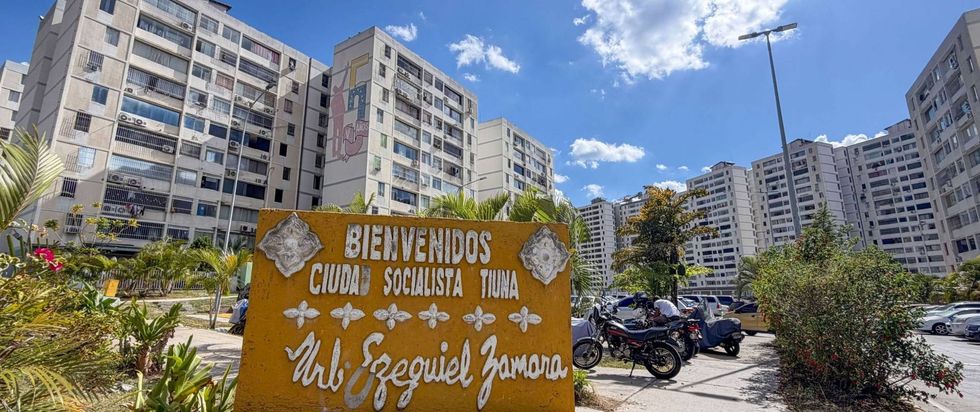 A sign reads, "Welcome to the socialist city of Tiuna." (Photo by Roger D. Harris)
Ciudad Tiuna is a planned housing complex of some 20,000 units, part of the national Gran Misión Vivienda Venezuela program. Apartments are allocated with priority to families displaced by disasters and to low-income households. As of December 2025, over 5 million units have reportedly been delivered nationwide.
We were enthusiastically greeted by a community-based club affiliated with the Abuelos y Abuelas de la Patria (Grandparents of the Homeland) mission, a government program empowering seniors in communal life. They organized a cultural presentation and introduced us to social and political organizations in their socialist city.
Our hosts also had a frank take-home message for us: “We never invaded; we liberated. Take our passion and love to give you strength to do what you must and rise up.”
A woman sang for Mother Earth accompanied by a shaman drum. A man read poetry by Allen Ginsberg and Walt Whitman, remarking “not all North Americans fornicate with their mothers” (loosely translated from Spanish).
In a tribute to Cuba, residents said they do not speak of solidarity with Cubans because “we are one people.” They praised the Cuban’s courage, including the 32 presidential guards murdered by the US in the January 3 attack. They also highlighted Cuban’s generosity in helping Venezuela achieve “territory free of illiteracy” status by 2005. Programs such as Misión Barrio Adentro brought thousands of Cuban doctors into poor urban and rural communities to provide free primary care.
And most of all, they deeply lamented the current US military blockade of Cuba, which has prevented Venezuela from supplying vital oil to the island. The suffering imposed by Washington on the Cubans pained them deeply.
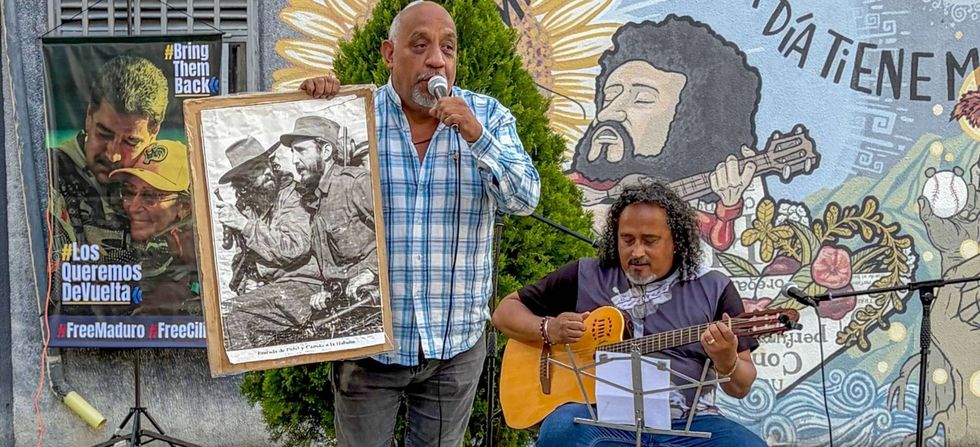 They do not speak of solidarity with Cubans because “we are one people.” (Photo by Roger D. Harris)
They shared a flyer titled “Never Again–January 3–Diplomacy for Peace,” which read in part:
Neither forgiveness nor forgetting! Memory is not resentment, but the heart of the people’s dignity who have been attacked. A people without justice becomes submissive. Impunity flourishes if we do not sow justice. We will not tire of weaving unity to triumph.
Their immediate demand is the release of their president and first lady. The flyer also calls for defense of popular sovereignty, no intervention by imperialism in Venezuelan affairs, and reparations for the “offended homeland.”
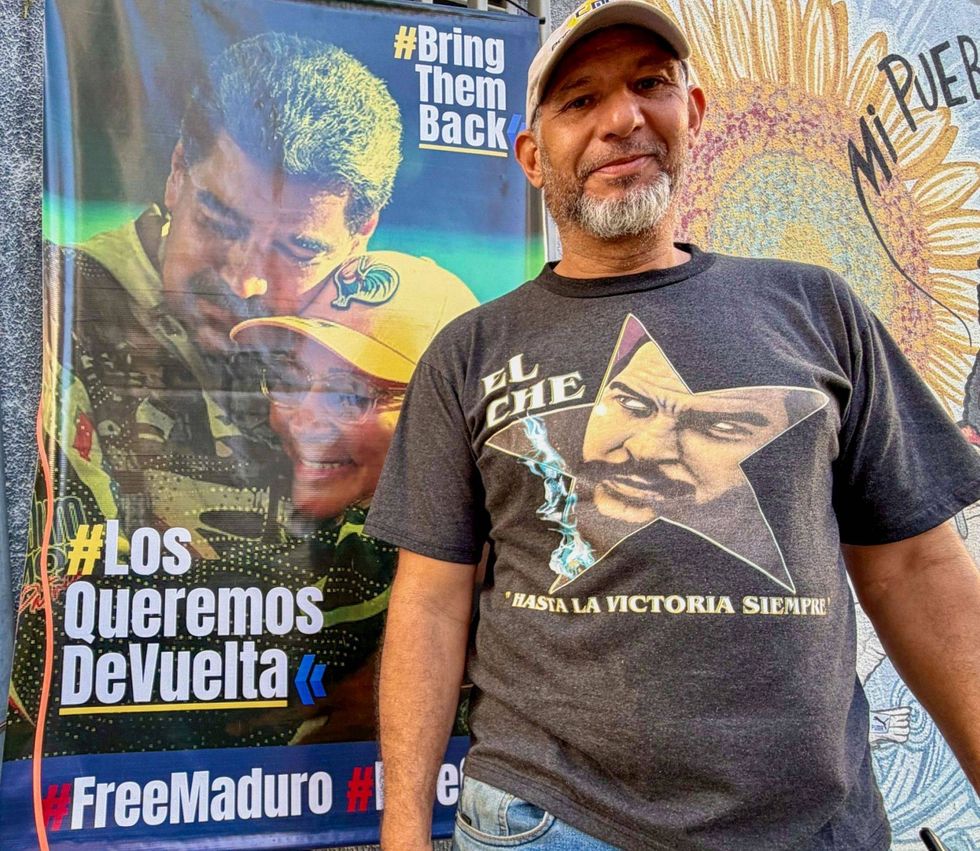 Their immediate demand is the release of their president and first lady. (Photo by Roger D. Harris)
The flier concludes with a quote from Delcy Rodríguez: “The dignity of the Venezuelan people is the first line of defense. We have to preserve our integrity as a people, guarantee our territorial integrity, and preserve our national independence.”
January 3 was not unanticipated but nevertheless a great shock. During a walking tour, they described the terror of the sneak attack. They told us each time the Venezuelan people successfully resisted Washington’s attempts at regime change—attacks dating back from the founding of their Bolivarian Revolution 26 years ago by then-Venezuelan President Hugo Chávez—the siege has been racketed up.
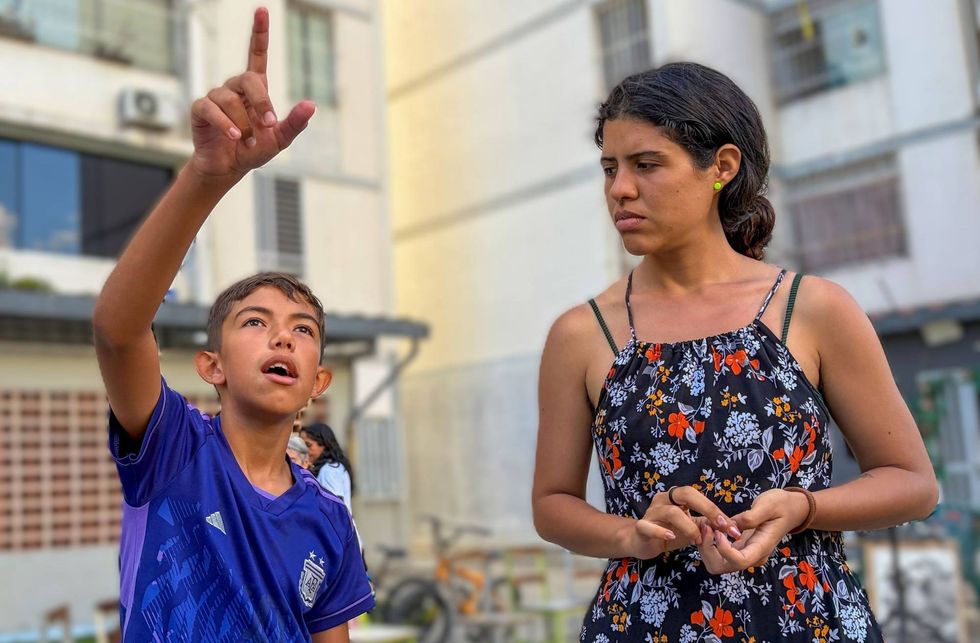 “We were all running because we were being bombed.” (Photo by Roger D. Harris)
Fabricio, age 11, described a sky lit red with explosions and filled with US helicopters. The elders vowed, “Never again will we allow our children to be traumatized.” Government mental health workers have since been regularly visiting Ciudad Tiuna.
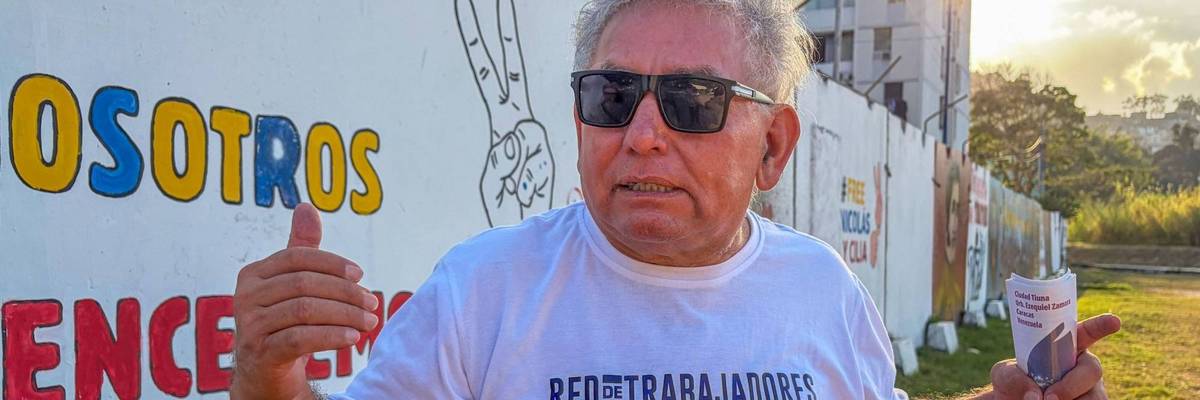 “Never again will we allow our children to be traumatized.” (Photo by Roger D. Harris)
They explained how they truly felt the horror that the Palestinians experience. The difference, they added, was that for them it was a single day while in Gaza it is every day.
At the time, many feared the attack could signal a protracted full-scale land invasion. Such an incursion, they warned, could well be launched in the future. (This was also the opinion of government officials that we conferred with.)
They are proud that the Bolivarian leadership remains firm and united. This they attribute to the support of the people such as themselves. The concessions forced upon the government under the threat of an even more devastating attack have been bitter to accept, but better than the alternative of greater destruction.
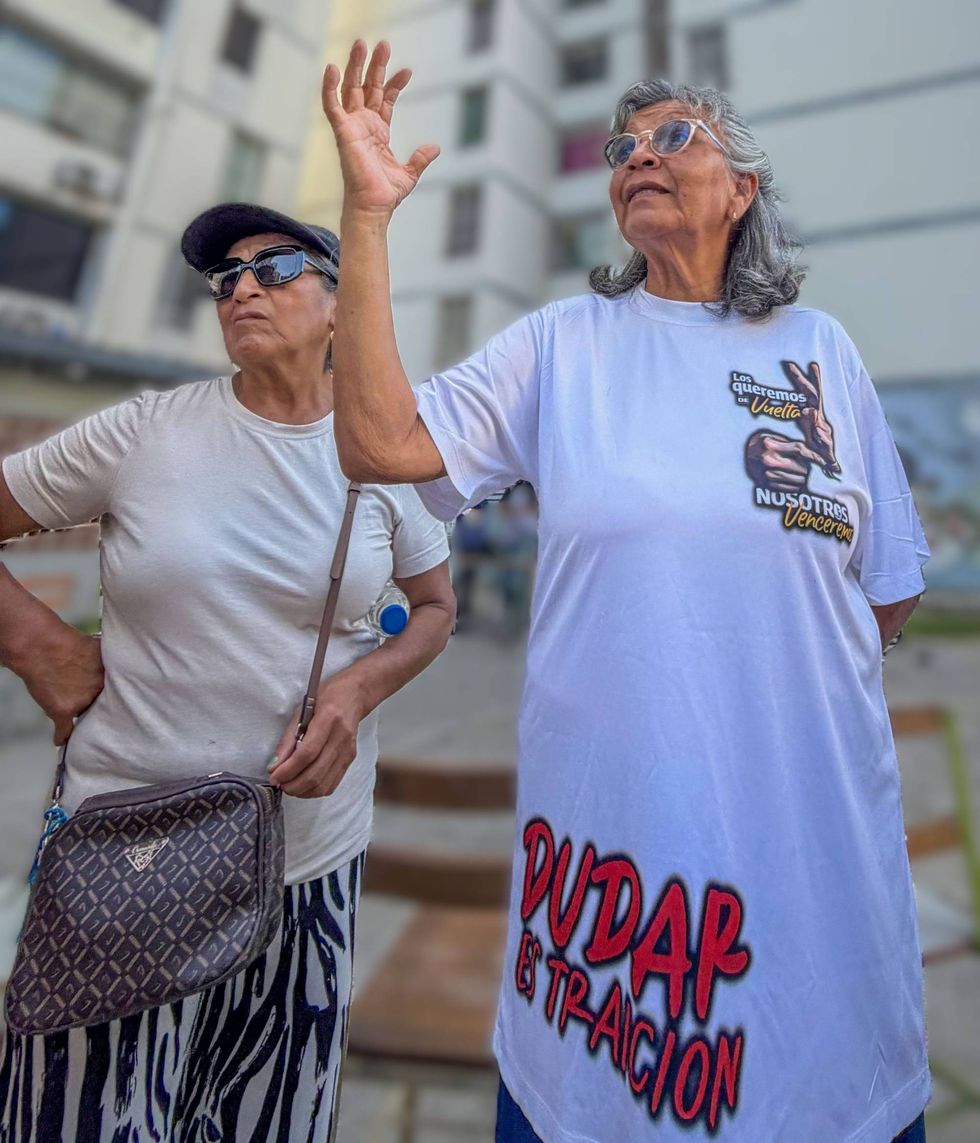 Dudar es traición—to doubt is to betray. (Photo by Roger D. Harris)
Our hosts described themselves as Chavistas, militants in support of the current government. Some wore shirts bearing the phrase dudar es traición—to doubt is to betray. Their lived experience is of a nation under imperial siege—in a perpetual state of war with the threat of more. Under such circumstances unity is prioritized.
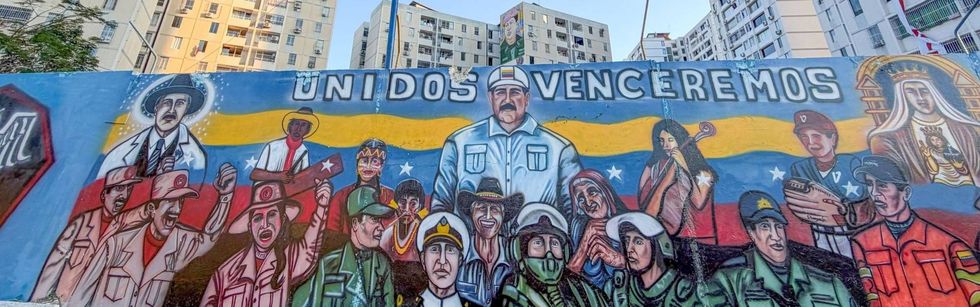 Under conditions of siege, unity is prioritized. (Photo by Roger D. Harris)
They rejected speculation that the kidnapping was aided by traitors within, arguing that such narratives serve the purposes of the enemy of eroding unity by fostering distrust. They emphasized the continuity of revolutionary policy from Chávez to Maduro and now to Delcy, as she is affectionately called.
Conditions have changed, but not the leadership’s dedication. They noted that regional solidarity has weakened, leaving Venezuela ever more isolated.
Before we departed, several children gave us gifts: handmade wristbands in the national colors, decorated pencils, and a book on climate change from a Marxist perspective. Our hosts also had a frank take-home message for us: “We never invaded; we liberated. Take our passion and love to give you strength to do what you must and rise up.” The hardships caused by the US sanctions—including shortages of medicine and essential goods—are linked to the failure of North Americans to restrain our own government.
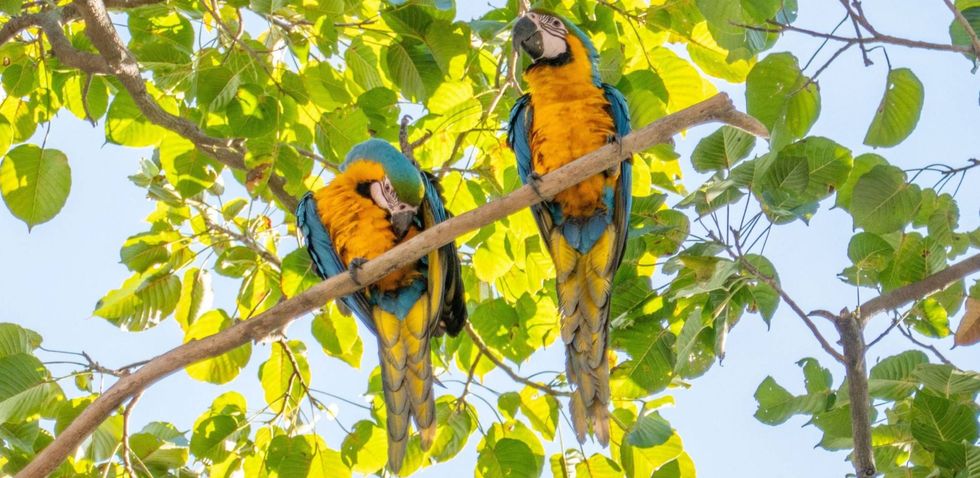 After being scared away by the US bombing, the wild parrots have returned to the community. (Photo by Roger D. Harris)
Meanwhile, the wild guacamayas (blue-and-yellow macaws), which once came to Ciudad Tiuna to be fed by residents but disappeared after the bombing, have now returned to a community that asks only to be left in peace.
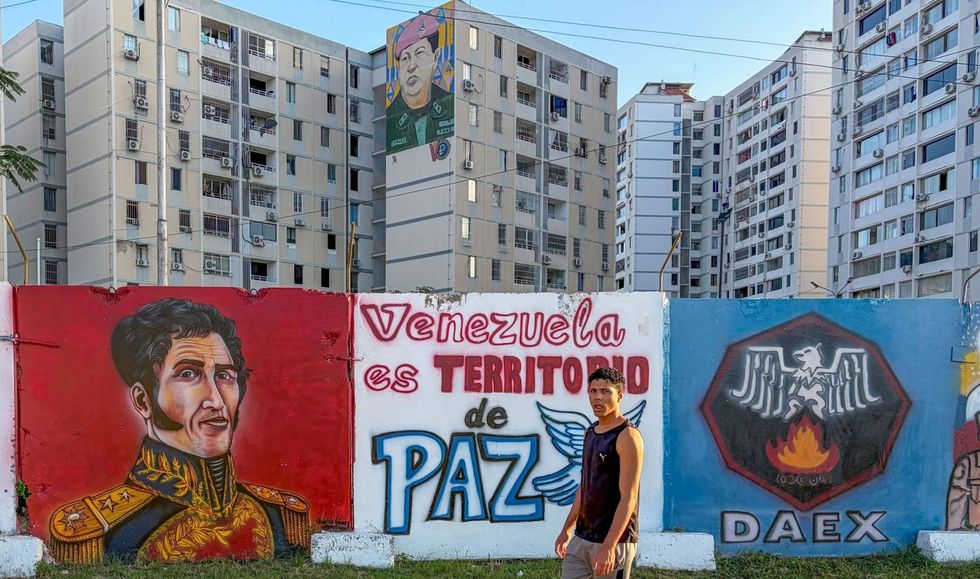 Venezuela is a territory of peace. (Photo by Roger D. Harris)
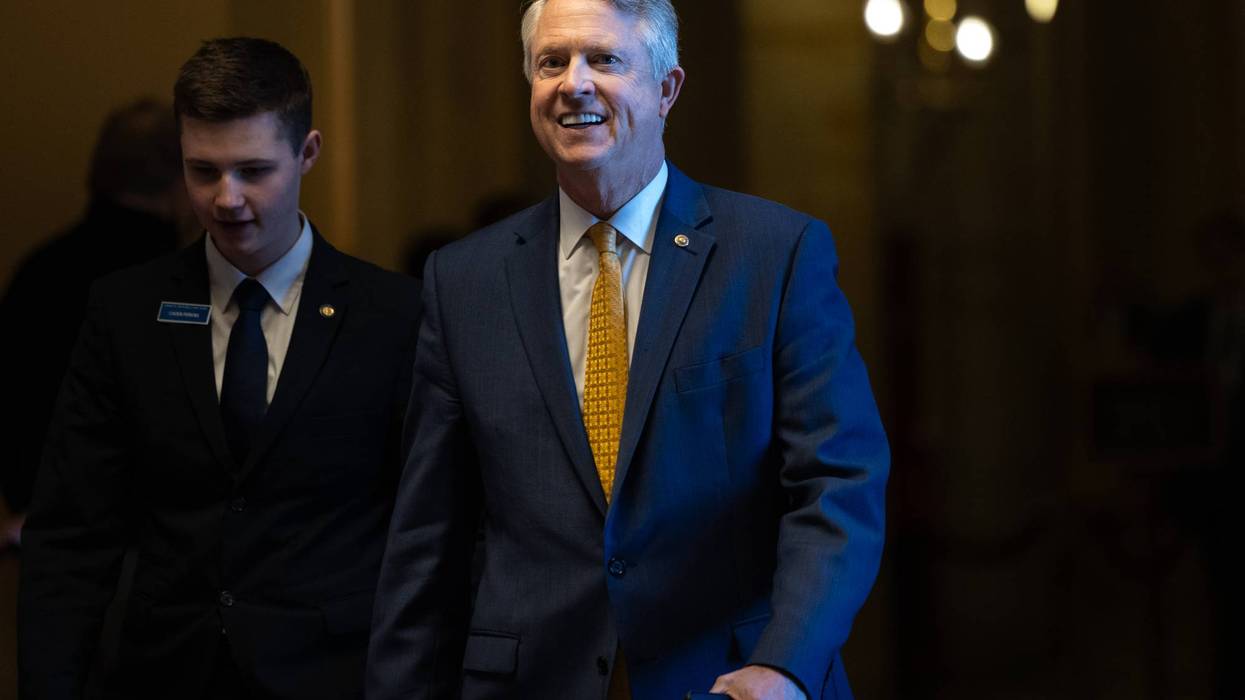
One foreign policy analyst said the senator was effectively admitting that “we’re literally committing crimes against humanity.”
A Republican US senator proudly declared that President Donald Trump's blockade of Iranian ports is "starving" Iranians on Wednesday, in yet another piece of counterevidence to the idea that the president's war there is meant to "liberate" the people.
"We have this embargo working, this blockade, and we're literally starving them," said Sen. Roger Marshall (R-Kan.) during an interview on Newsmax. "Both financially, and they can't feed themselves either, very long."
During the same interview, Marshall said Trump must “take everything into consideration” to finish the war against Iran and compared the decision Trump must make to "President [Harry] Truman’s decision on dropping the bomb, and D-Day for President [then-Gen. Dwight] Eisenhower.”
The comments came after Trump announced that he would extend a two-week ceasefire while continuing his naval blockade of Iranian ports, enacted as a counter to Iran's closure of the Strait of Hormuz, which has caused chaos and inflation across the global economy.
It was yet another 180-degree spin from Trump, who just days before had issued another genocidal threat to "blow up" the "whole country" of Iran, including civilian infrastructure, if it did not capitulate to his demands in a ceasefire agreement, which was roundly condemned by international organizations as a pledge to commit war crimes.
The Iranian population suffered tremendously under Trump's "maximum pressure sanctions" before the war, which fueled 58% food inflation year over year in September 2025.
The war launched by the US and Israel in February has only heightened the pain: Last month, Iran's inflation rate hit a record 72%, and the cost of its staple food basket soared to 134% compared with the previous year.
More than 750,000 jobs had been lost as of last week, and the United Nations Development Program predicted that Iran's economy could contract by as much as 10% as a result of the war. In just 40 days of war, the UNDP found that 3.5-4.1 million Iranians have fallen below the poverty line.
Trump's blockade of Iranian ports has tightened the noose even more, cutting off about 90% of the nation's maritime trade.
According to The Wall Street Journal, the blockade immediately affected nearly a million tons of grain and oilseeds. Prices for commodities like rice, which have already increased sevenfold in recent months, are expected to soar even further.
While Iran is much larger and more self-sufficient than Cuba, the blockade mirrors the economic warfare Trump has waged against the island in what he has said is an effort to force its leadership from power or outright "take" it for the US.
The blockade of fuel shipments to the island enacted through tariff threats has paralyzed its economy and resulted in rolling blackouts that have disrupted hospital care, agriculture, and every other facet of daily life for the Cuban people, drawing condemnation from United Nations human rights experts, who have called it a "serious violation of international law" and an act of "extreme unilateral economic coercion."
The Trump administration and its cheerleaders in Congress have not been shy about their goal for sanctions in Iran—to inflict suffering upon the people of Iran in hopes that they will rise up and overthrow their government. But Marshall's declaration that Trump was trying to "starve" Iran was seen by critics as an even more explicit endorsement of collective punishment than most.
Dylan Williams, the vice president for government affairs at the Center for International Policy, said it confirmed that Trump was pitching "genocide as a tactic in Iran."
In less than two months, at least 1,700 civilians have been killed, including more than 250 children, according to the US-based Human Rights Activist News Agency. More than 26,000 people have been injured, according to the Iranian Health Ministry.
The international affairs researcher Derek Davison wrote that by cheering a policy he said was "literally starving" Iran, Marshall was basically saying: "We're literally committing crimes against humanity. It's awesome."
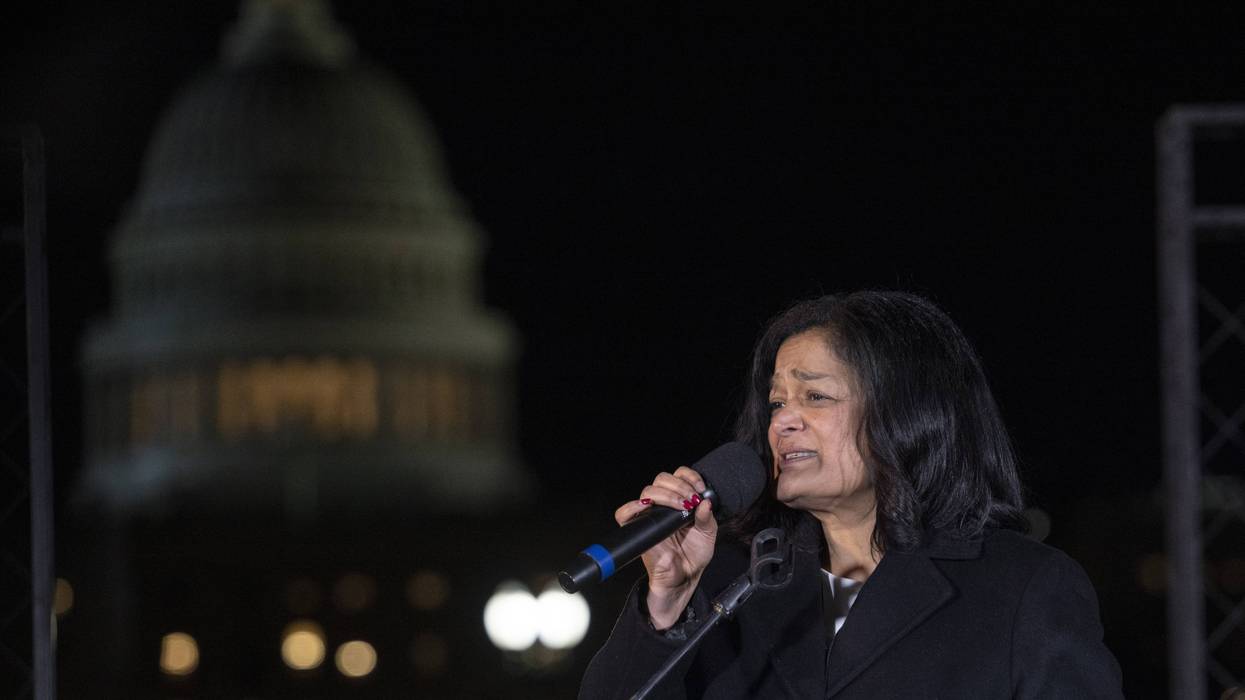
Reps. Pramila Jayapal and Jonathan Jackson described Trump's blockade of the island as "effectively an economic bombing of the infrastructure of the country that has produced permanent damage."
After returning from a delegation trip to Cuba, US Reps. Pramila Jayapal and Jonathan Jackson on Sunday renewed calls for President Donald Trump to end his illegal fuel blockade of the island, which they described as "cruel collective punishment."
The pair of progressive lawmakers were the first to visit the island since Trump imposed the blockade in January in a bid to cripple the island's economy as part of an effort to overthrow its government, or, in the president's words, "take" the island.
Almost no oil has been allowed to enter for more than three months, which Jayapal (D-Wash.) and Jackson (D-Ill.) described as "effectively an economic bombing of the infrastructure of the country—that has produced permanent damage."
"We witnessed firsthand premature babies in incubators, weighing just two pounds, who are at tremendous risk because their ventilators and incubators cannot function without electricity," they said. "Children cannot attend school because there is no fuel for them or their teachers to travel. Cancer patients cannot receive lifesaving treatments because of a lack of medications."
"There is a water shortage because there is little electricity to pump water," they continued. "Businesses have closed. Families cannot keep food refrigerated, and food production on the island has dropped to just 10% of the people’s needs."
The oil blockade is an escalation of more than 60 years of punitive economic warfare by the US against Cuba, imposed through an embargo that has limited Cuba's ability to trade with the rest of the world and hampered its economic development to the tune of trillions of dollars.
Jayapal had previously visited Cuba in February 2024 on a trip with other members of the Congressional Progressive Caucus. Since her last time in Havana, she said, "There's such a big difference."
"So many of the streets of this beautiful city were deserted. People were already lining up for food," she said in an interview with the Cuban outlet Belly of the Beast. "I don't think that any American wants to create this kind of devastation for the Cuban children, for the babies, for the moms, for the people."
She said the phrase "collective punishment," while accurate, almost felt "too technocratic" to describe what she witnessed.
"We are strangling the Cuban people," Jayapal said.
The United Nations General Assembly has voted 33 times to call for the end of the embargo since 1993.
In February, a group of UN experts condemned Trump's fuel blockade as "a serious violation of international law and a grave threat to a democratic and equitable international order" and an "extreme form of unilateral economic coercion."
Cuban President Miguel Diaz-Canel has acknowledged having talks with Trump in recent weeks in order to negotiate an end to the embargo and threats of further aggression.
The Cuban government has taken actions that the lawmakers described as "signs that Cuba is changing." It has released more than 2,000 prisoners, announced economic reforms to allow more involvement of American businesses, and allowed the FBI to investigate Cuban troops' lethal shooting of five armed Cuban exiles as they approached in a speedboat in February.
While hardly softening his threats to Cuba, which he continued to insist was “finished,” Trump last week allowed a Russian oil tanker to dock on the island without incident and deliver around 700,000 barrels of much-needed oil.
But the lawmakers said it's not enough. Jackson, noting the "generosity" of Cuba as a provider of medical treatment around the world, said the US must allow food and fuel to be allowed to return to the island "so that the Cuban people can continue to rise."
Jayapal said that when they spoke with Diaz-Canel, he expressed "a real desire for a real negotiation" with the US, but that he also expressed "sadness" and "frustration" at what was being done to his country.
"These kinds of sanctions, embargoes, they don't get to the government. They hurt the people," Jayapal said. "Perhaps the American people don't understand the violence of an economic sanction versus the violence of dropping a bomb."
Jackson—whose father, the late Rev. Jesse Jackson, took many trips to Cuba during his life—described America's treatment of the nation’s people as a “crucifixion.”
"Americans would not want to see what I saw in that hospital," Jackson said, describing a malnourished baby named Alejandro, whom he said was "fighting for life."
Due to the intermittent power surges caused by the lack of fuel, he said, "We didn't know when the incubator was going to start working."
"That's an act of war," he said. "We have to put an end to that."
He added that Secretary of State Marco Rubio, himself a Cuban-American who has long sought to bring about regime change, "should come before the Congress and explain his policy."
In late March, Jayapal introduced legislation that would block Trump from conducting military action against Cuba without congressional authorization. She said she'd continue to push for bills to block Trump from launching a war and to push for sanctions relief.
The Trump administration has portrayed its economic warfare as part of an effort to "liberate" the Cuban people from an oppressive government.
But the lawmakers, who met with wide swaths of Cuban society—including business and religious leaders, humanitarian groups, and civil society organizations—said that "Cubans across the political spectrum," including anti-government dissidents, expressed similar feelings.
"Across all sectors, there is agreement," they said. "This illegal blockade must end immediately."
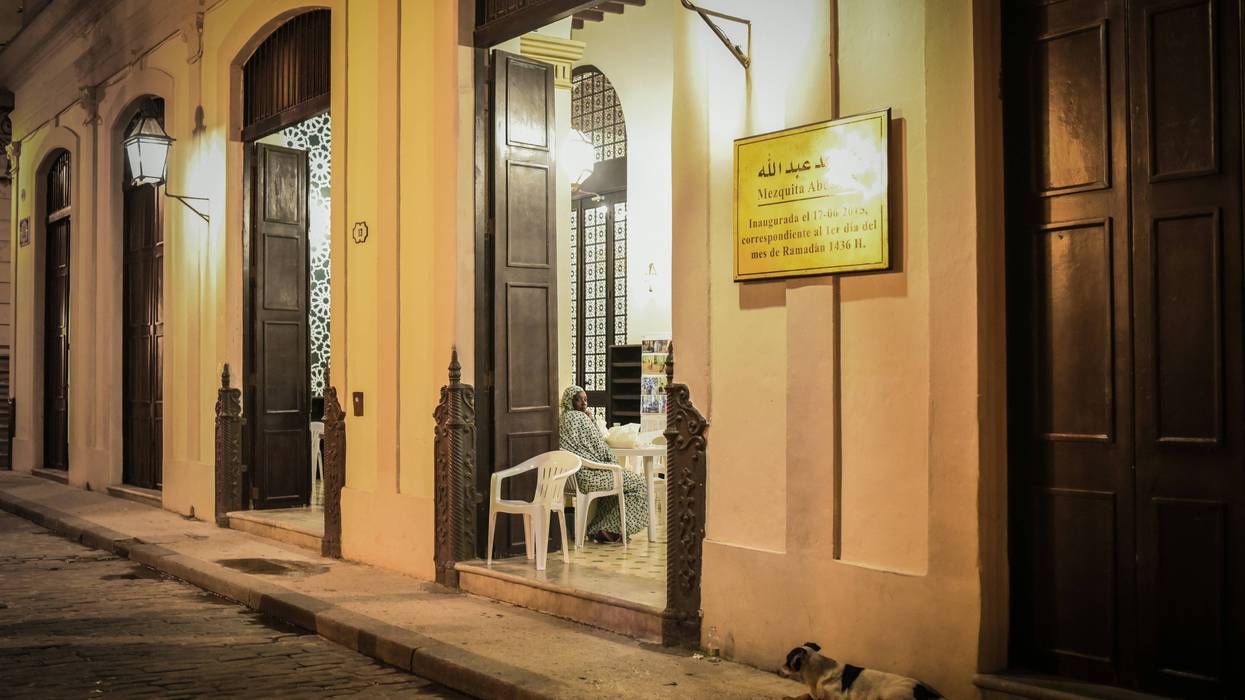
For Cuba's tiny Muslim community, the electricity blackouts, the food shortages, and the sharp reduction of public transportation make it increasingly difficult to participate in all the traditions that come with Ramadan.
In the Spring of 2022, I spent the last nights of Ramadan and Eid al-Adha in Havana, Cuba. I made it to Mezquita Abdallah, the only mosque in the whole country, before the sun went down—I'd missed the Eid prayer entirely, but I was able to sit around a table and talk with some of the women there. They told me what it was like to be Muslim in Cuba; many of them were converts like me, and few had Muslim families aside from the ones they made from scratch. Since I left Cuba in 2022, life there has gotten a lot worse.
International Women's Day is on March 8. Around the world, women and families are bearing the brunt of brutal US sanctions and militarism, and Cuba is no different. I've kept in touch with the women of the Havana mosque through a collection of WhatsApp messages, phone calls, and voice notes. This year, in the days leading up to the holy month of Ramadan, I conducted a series of interviews with them. In the wake of President Donald Trump's complete blockade of oil to the island, these women face an intensifying struggle to survive and provide for their families. Muslims in Cuba are entering one of the most beloved times of the year while grappling with a level of scarcity that is unimaginable to most. The women I talked to will ring in International Women's Day trying to balance the strains of living under a blockade while fasting for Ramadan.
For Cuba's tiny Muslim community, the electricity blackouts, the food shortages, and the sharp reduction of public transportation make it increasingly difficult to participate in all the traditions that come with Ramadan.
"For most people, it's very difficult to access the mosque during Ramadan,” said a 36-year-old mother. “There is no reliable transportation due to the lack of fuel. Many of us will have to stay home to break our fast because we live far away from the mosque. Without transportation, it becomes almost impossible to get there."
What will happen to the women living under the boot of the US empire if women here sit back and merely wait for the next election cycle?
Muslims who don’t live at the center of Havana’s old city (and most of them don’t) can’t pray at the mosque during the holiest month of the year. Lack of access to food on the island as a whole naturally leads to less access to non-pork options and halal meats, and the mosque is generally a place where halal foods would be distributed.
A single woman from the Mosque remarked that oftentimes, Muslims in Cuba practice their faith without any family support. "Cuban Muslim women face big challenges every day. Maintaining our religion in the correct way and surviving in the difficult economic situations," she said, "This is difficult for Muslim women who live by themselves, who are sick, or don’t get support from their families and society. And those who are elderly and alone."
She mentioned that she is the sole caretaker for her elderly mother, who is very sick. "I'm taking care of her, Alhamdulillah," she said, which means "Praise to God" or "Thank God."
The world has become somewhat familiar with the concept of blockades by watching what’s happening in Gaza. While the blockade on Gaza is enforced physically by the heavily armed Israeli military, the blockade on Cuba has been imposed economically, relying on trade threats and sanctions by the United States. Both types of blockades lead to food and medicine shortages, spiked prices, and widespread inaccessibility, causing hunger and the worsening of treatable medical conditions. Without access to proper nourishment and equipment, people die. Economic sanctions alone kill half a million people every single year. Cuba has some of the best and most capable doctors in the world, and there is no shortage of manpower—but the blockade increasingly restricts medical equipment coming into the country.
Around the world, it’s not uncommon for the responsibility of childcare and eldercare to fall on women. And when food and medicine are scarce, women carry the weight of keeping their families healthy, often faced with impossible choices.
Mayerci, another mother from the mosque, has two young children. Her son has struggled with his health for the last four years. Previously, the family was given nutritional support like supplementary milk and chicken rations, but the food shortages caused by the blockade effectively ended that extra assistance. Hospitals have run out of the zinc sulfate and asthma medication that he needs to remain healthy. On top of that, Mayerci herself is in need of surgery to treat her cystic fibrosis—but the hospitals no longer have the equipment for it. While dealing with her own illness, she has to try to make sure her children survive under increased scarcity.
"This is the life of Cubans today: if you buy food, you cannot afford clothing or medicines, and if you buy medicines, you cannot afford food," said Mayerci.
These interviews all took place about a week after the Trump administration implemented the total blockade on fuel. The conditions have only gotten worse since then, and will likely continue to decline for the foreseeable future. The effects compound for women, and evidently even more so for Muslim women at this time of the year.
While the women didn’t express any optimism for the near future, when I asked about Trump and Secretary of State Marco Rubio's talking points on Cuba, one of them remarked to me, "Personally, I don’t believe capitalism is the solution."
There is a glimmer of hope, though—much like we saw with Gaza, the world is mobilizing in solidarity with Cuba. In March, Cuba will receive massive shipments of solar panels that were crowdsourced by people near and far. Caravans and flotillas are also traveling to Cuba during the springtime, carrying suitcases stuffed with food and medicines to aid the Cuban people. By air, by land, and by sea, organizations like The People's Forum, CODEPINK, Progressive International, and others will attempt to provide some semblance of relief to the Cuban people.
This act of solidarity is powerful, but it won’t be enough. The solar panels won’t be able to power the entire Cuban electrical grid, and individual people can only fit so many supplies in their personal suitcases. Much like the genocide in Gaza, an end to the suffering in Cuba would require the people of the United States to rise up and fervently resist the warfare being carried out in their name by the likes of Marco Rubio and Donald Trump. With the US military intercepting ships bringing fuel to Cuba, and considering the violent history of US intervention, one cannot rule out some sort of armed US attack on Cuba. After the world set such an alarming precedent in Gaza, I can’t help but worry for my friends in Cuba—what will happen to the women living under the boot of the US empire if women here sit back and merely wait for the next election cycle?
History shows us the resilience of the Cuban people. My friends are surviving by cooking on coal, strategically using the limited hours of electricity to take care of their families—but how long can that last?
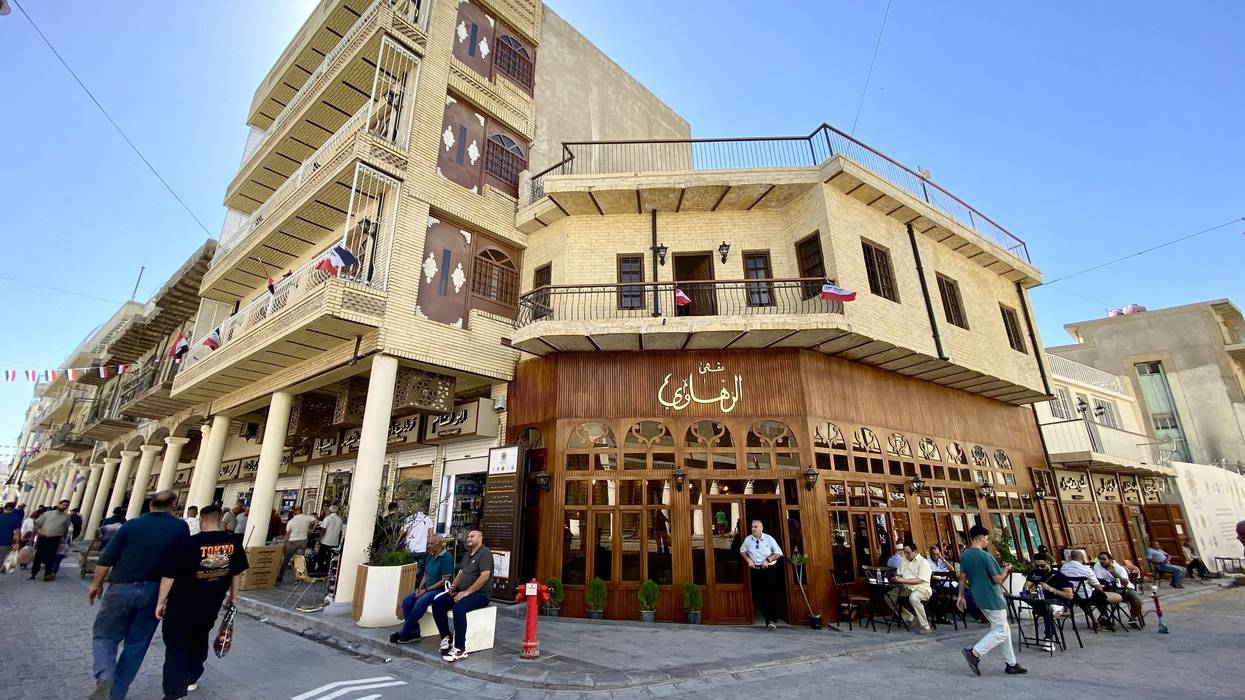
As I leave Baghdad, I carry a sense of Iraq’s resilience, the palpable scars of war, the warmth of its people, the hope for a better future, and the ongoing story of a nation rebuilding itself.
I arrived at the Taj Hotel in Baghdad's Jadriyah neighborhood at 6:00 am, worn thin by the long flight from Los Angeles. After sleeping until mid-afternoon, I stepped out into the 90°F heat on a simple mission: find falafel, fries, and a place to exchange money. A local bus picked me up and dropped me right across from a falafel shop—a small act of hospitality. Full and settled, I walked beside the Tigris River, watching construction cranes against the sky. Life was visibly moving forward. Yet the mental newsreel kept playing: bombs falling on these same banks 20 years earlier. I was a tourist now in a country I had once protested my own nation for invading. Needing to escape both the heat and the weight of those memories, I returned to the hotel for Nutella cake and Iraqi tea, yet deeply conscious of the complex layers beneath the surface.
The next day settled heavily. We started at Tahrir Monument and the roundabout where Saddam’s statue once stood—toppled in 2003 by US Marines in an image seen around the world. Today, no plaque marks the spot. Only election banners fluttered in the wind. From there, we traveled to the Arch of Ctesiphon, a soaring Persian vault from 540 AD. Nearby lay the relics of a different era: a derelict tourist complex and a museum designed by North Koreans, its walls scarred with bullet marks. Al-Mada’in, our guide remarked, had been a final stronghold against the invasion. It’s one thing to read about war and occupation, another to stand where it happened and touch the pockmarked concrete.
Just yards away, young boys kicked a soccer ball in the dust, a powerful scene of life insisting on moving forward. That contrast stayed with me: The tourist complex, once a thriving vacation spot with a luxurious pool, is now a place to store garbage. Aside from the enduring arch, the entire area lies in ruins, destroyed in the war and never rebuilt. Who knows if it ever will be. For some parts of Iraq, rebuilding only began around 2017, over a decade after the invasion. With elections approaching, I wondered about Iraq’s future—and what accountability looks like when destruction runs so deep.
A slower day followed, wandering through Old Baghdad: its bazaar, colonial facades, antique shops, Christian churches, and tea houses thick with the smoke of cigarettes. But I felt an unease seeing Saddam-era memorabilia, like old currency, sold as casual souvenirs. My time in Iraqi Kurdistan, at Amna Suraka and Halabja Memorial, had shown me the human cost of his brutal regime. Later, we passed the haunting cement skeleton of one of Saddam’s grand mosques, frozen mid-construction by the 2003 war. It stood empty, monumental yet abandoned, like a set from Dune—a stark metaphor for interrupted futures.
Now, as the world’s attention drifts to other conflicts, the weight of history here feels so obvious.
We traveled to Babylon. Before entering, we paused before one of the last remaining monuments to Saddam. His image is now outlawed; we gazed at the bullet marks and graffiti scoring the stone. Nearby, his palace loomed over the Euphrates—a hollow shell gazing across timeless dust. After roaming Babylon’s ruins, we crossed a low fence onto the palace grounds. Entering the space once occupied by a brutal dictator again filled me with unease. While others explored the looted, spray-painted halls, I was struck by the collision of histories here: ancient civilization, the US invasion, and the regime’s own atrocities against the Kurds.
From there, we journeyed to Karbala and the breathtaking Al-Abbas Holy Shrine. I wore an abaya to enter, humbled by the devotion, chanting, and crying that resonated in the air. The contrast stayed with me: between ransacked palaces of fallen power, land ravaged by war, and this enduring faith. We paused briefly at one of the world’s largest cemeteries in Najaf before visiting the Holy Shrine of Imam Ali. The long drive south to Nasiriyah that followed gave me space to hold all these layers: history, belief, silence, and dust.
A highlight came in the Mesopotamian Marshes. Gliding by water buffalo through vast wetlands, said to be the Garden of Eden, I felt a deep connection to this ancient ecosystem and the Indigenous communities who sustain it. The use of reeds to build entire homes felt like a quiet miracle. Later, we visited the Great Ziggurat of Ur—a stairway to a Sumerian sky. We moved through biblical landscapes that day, though in the distance stood an old American military base, now repurposed by the Iraqis. Someone showed me photos of US soldiers standing on those same Ziggurat steps.
As I leave Baghdad, I carry a sense of Iraq’s resilience, the palpable scars of war, the warmth of its people, the hope for a better future, and the ongoing story of a nation rebuilding itself. Now, as the world’s attention drifts to other conflicts, the weight of history here feels so obvious. The US footprint left in Iraq is deep—and as it threatens Iraq with sanctions, it is the last thing this country needs as it tries to move forward and heal.
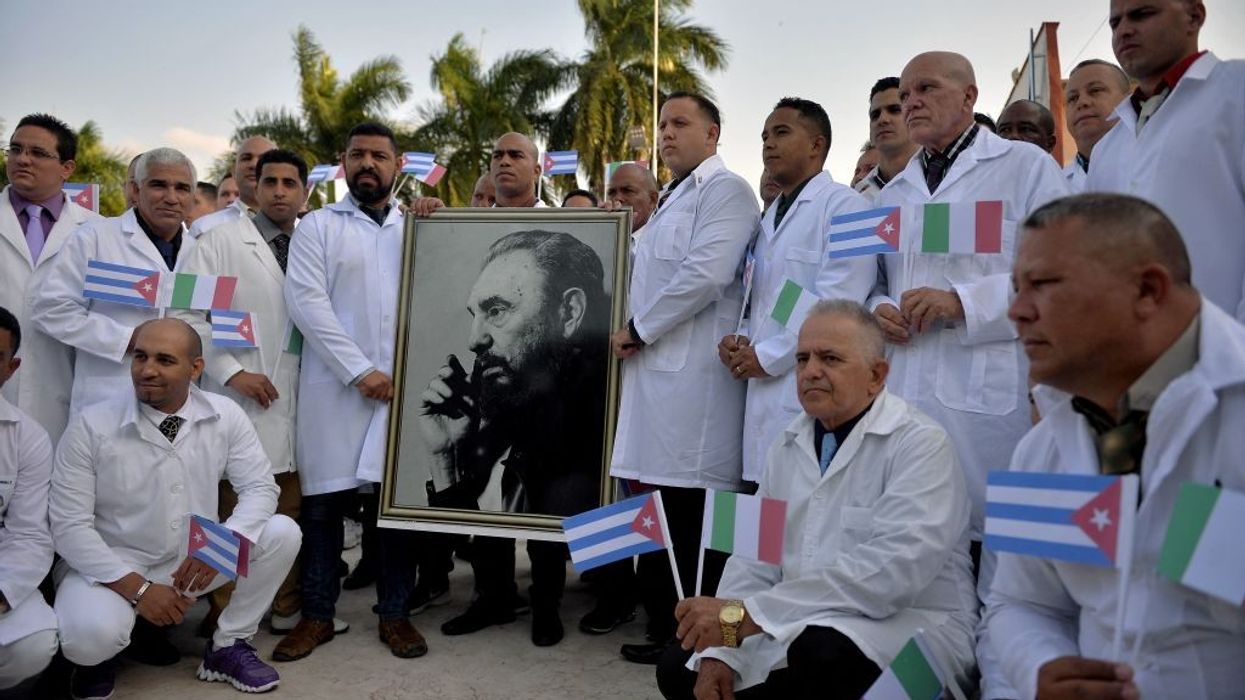
"The U.S. State Department should explain to Americans and the international community how the attack on Cuban medical services, on which the health of millions of people in dozens of countries depends, enhances their country," said Cuba's president.
The Trump administration is under fire this week for expanding a visa restriction policy that targets Cuba's medical missions around the world—which U.S. Secretary of State Marco Rubio described as "forced labor," a characterization Cuban officials reject.
"This expanded policy applies to current or former Cuban government officials, and other individuals, including foreign government officials, who are believed to be responsible for, or involved in, the Cuban labor export program, particularly Cuba's overseas medical missions," Rubio, the son of Cuban immigrants, said Tuesday. "This policy also applies to the immediate family of such persons."
Social media users called the Trump administration's move " depraved," "beyond cruel," and "absolutely repulsive," and warned of the impact it could have on patients across the globe.
Medea Benjamin, co-founder of the U.S.-based peace group CodePink, said that "this is PURE EVIL. Punishing people who help provide healthcare to poor people around the world."
As Reuters reported Wednesday:
Since its 1959 leftist revolution, Cuba has dispatched an "army of white coats" to disaster sites and disease outbreaks around the world in the name of solidarity. In the last decade, they have fought cholera in Haiti and Ebola in West Africa.
But Cuba has also exported doctors on more routine missions in exchange for cash or goods in recent decades, an increasingly critical source of hard currency in a nation suffering a deep economic crisis.
Venezueanalysis noted Wednesday that "according to official figures, Cuban doctors in Venezuela numbered as many as 30,000, with approximately 255,000 serving in the country since the start of the program following a deal signed by Venezuelan President Hugo Chávez and Cuban President Fidel Castro in the year 2000, primarily working in low-income barrios. Havana's support was key during the Covid-19 pandemic, supplying vaccines that Caracas found hard to secure due to wide-reaching U.S. sanctions."
Cuba has been targeted by U.S. sanctions for decades—and although former President Joe Biden notified Congress of his intent to remove the island nation from the State Sponsors of Terrorism list shortly before leaving office last month, President Donald Trump swiftly reversed that decision and restored a list of "restricted entities" created during the Republican's first term.
Cuban President Miguel Díaz-Canel and Foreign Minister Bruno Rodriguez denounced those decisions and the visa policy.
Rodriguez took aim at the U.S. secretary of state on Tuesday, saying in English and Spanish social media posts that "once again, Marco Rubio puts his personal agenda before the U.S. interests. The suspension of visas associated to Cuba's international medical cooperation is the seventh unjustified aggressive measure against our population within a month."
"The decision announced today, based on falsehoods and coercion, is intended to affect health services of millions in Cuba and the world, to benefit special groups of interest for which Rubio... guarantees the squandering of the U.S. taxpayers' money," he said.
Díaz-Canel said that "the U.S. State Department should explain to Americans and the international community how the attack on Cuban medical services, on which the health of millions of people in dozens of countries depends, enhances their country."
The new sanctions against Cuba notably come as Republicans in the U.S. Congress work to gut healthcare programs that serve low-income Americans, who have to contend with a for-profit healthcare system dominated by corporate greed.
Every person living in Cuba has access to its universal healthcare system, which is free at the point of service and government-run.
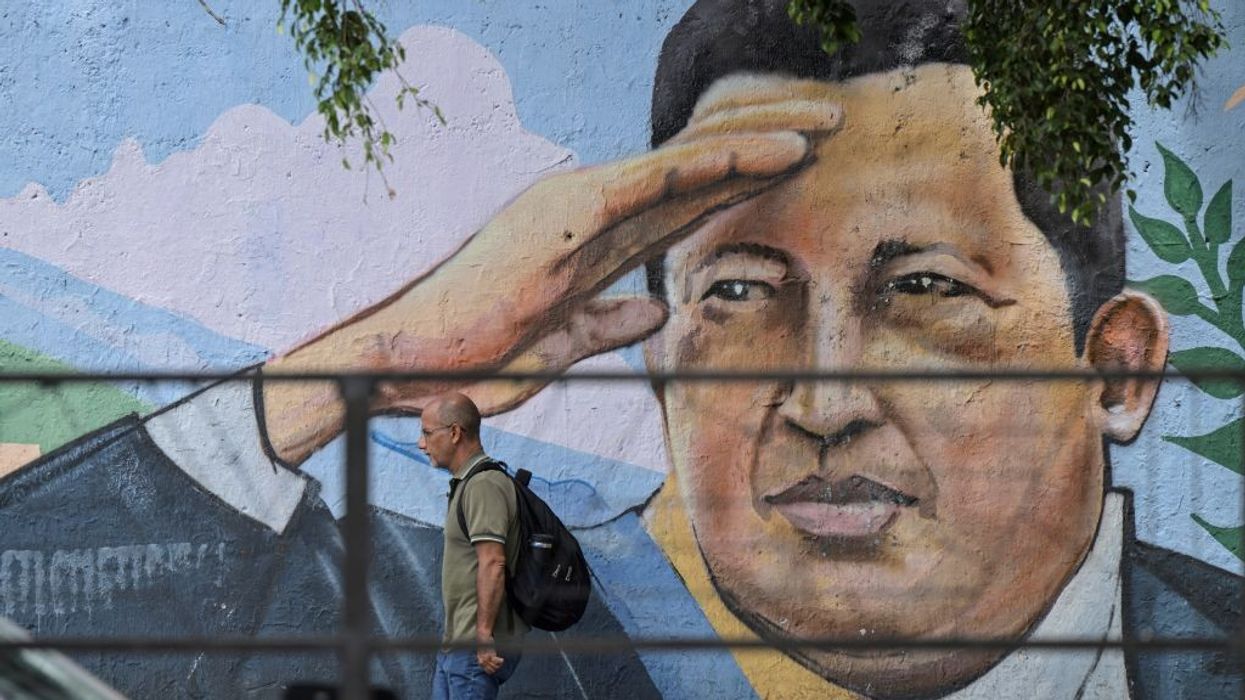
Following a disputed election, the government of President Nicolás Maduro has yet to publicly release the full tally sheets of the results. Meanwhile, U.S. officials are keeping quiet about their links to the opposition.
Since the disputed July 28 presidential election in Venezuela, U.S. officials have been calling for transparency from the Venezuelan government while keeping quiet about their efforts at regime change.
Claiming that Venezuelan President Nicolás Maduro has stolen the election, U.S. officials have been working to bring to power the Venezuelan opposition. With nothing to say about their decadeslong relationship with opposition leader María Corina Machado, who has previously benefited from U.S. funding, U.S. officials have been portraying the opposition as a popular movement that won the election, all without external support or interference.
“The Venezuelan people deserve an election that genuinely reflects their will, free from any manipulation,” Secretary of State Antony Blinken said on the day of the election.
If U.S. officials are serious about wanting to see an election free from any manipulation, then they must be transparent about the U.S. role in the country. While it remains important for the Venezuelan government to release detailed voting results, just as several leftist leaders in Latin America have requested, it also remains critical for the United States to release detailed records about its relationship with the opposition, something it has spent years trying to keep hidden.
For decades, the United States has been the primary source of manipulation in Venezuela. With the goal of achieving regime change, the United States has been supporting an opposition movement that has been trying to mobilize the Venezuelan people against the Venezuelan government.
During the early 2000s, U.S. officials worked closely with Machado, the current opposition leader, who has long faced allegations of trying to overthrow the Venezuelan government. With funding from the U.S. government and support from U.S. diplomats, she and her organization Súmate led an effort in 2004 to oust then-Venezuelan President Hugo Chávez in a recall referendum. When it failed, Machado repeatedly cast doubt on the results, even though data collected by her organization indicated that Chávez had won, just as election monitors found.
At the time, former President Jimmy Carter charged members of Súmate with deliberately distributing misleading data for the purpose of manipulating the election. “There’s no doubt some of their leaders deliberately distributed this erroneous exit poll data,” Carter said, as reported by The New York Times.
Since then, U.S. leaders have overseen many additional efforts at regime change, targeting both Chávez and Maduro, all of which have failed. In 2019, the Trump administration made one of the most audacious moves, rallying behind opposition leader Juan Guaidó, who led a failed uprising and later fled the country.
At the same time that they are demanding that the Venezuelan government be transparent about the results, [U.S. officials] are keeping quiet about their own efforts to empower the opposition and achieve regime change.
“Our conundrum, which is to keep the opposition united, has proven devilishly difficult,” then-Secretary of State Mike Pompeo lamented, as reported by The Washington Post.
In the July 28 election, the Venezuelan people voted in the context of widespread social and economic collapse, which has been facilitated by the United States. During the Trump administration, U.S. officials imposed severe sanctions on Venezuela, trying to make life so miserable for the Venezuelan people that they would turn against the Venezuelan government.
As former officials in the Trump administration recently acknowledged, they expected their approach to cause the Venezuelan economy to collapse and many people to flee the country. Not only did their actions push Venezuela into the one of worst economic collapses in modern history, but they made life so difficult that more than 7 million Venezuelans fled the country in one of the worst humanitarian crises in the world.
Many Venezuelan migrants have sought entry to the United States, driving the large increase in border crossings, all of which had been anticipated.
The Venezuelan people who have remained in their homeland are still suffering from the effects of U.S. sanctions. Even with the recent election, they have faced few good options, having been forced to deal with a hostile United States.
One of their options has been to support Venezuelan President Nicolás Maduro, the current target of the United States. A vote for Maduro could lead the United States to preserve its sanctions, all but guaranteeing more years of suffering.
Another one of their options has been to side with the U.S.-backed opposition. A vote for the opposition could lead to relief from U.S. sanctions, but it risks bringing to power a right-wing regime that will prioritize U.S. interests and perhaps even transfer the country’s oil wealth to U.S. corporations. Machado, for example, has insisted that she will privatize PDVSA, the state oil company.
Although the Venezuelan government barred Machado from running for office, she remains the main opposition leader, being the driving force behind little-known opposition candidate Edmundo González, who has been serving as her proxy.
U.S. officials have said that public opinion polls display widespread support for González, but critics have questioned their reliability. Analysts at the Center for Economic Policy and Research have reported that support for González has been overestimated, largely due to polling bias.
Through it all, U.S. officials have been highly secretive about their actions, even while calling for transparency. They have not disclosed which opposition groups they are funding, a longstanding practice.
Neither have they been open about their links to Machado, perhaps due to a critical change in their approach that they began to consider after the 2004 referendum. Once the Venezuelan government began publicizing Machado’s connections to the United States, even charging her and her colleagues with treason, U.S. officials began to consider how they could empower her without appearing as if they were her puppet-master.
During a private meeting on January 10, 2005, then-U.S. Senator Christopher Dodd (D-CT) floated one possibility, advising Machado and her colleagues “to seek international financing from non-U.S. sources” so that the Venezuelan government “cannot credibly label Súmate as a USG-backed organization.”
Machado rejected the advice, however, insisting that Súmate should be able to openly receive funding from the United States, including from the National Endowment for Democracy (NED). “Foreign financing for NGOs is legal, despite the GOV’s contention to the contrary,” she claimed. “Súmate will continue to apply for NED and other grants.”
Initially, the U.S. government supported her approach. In 2005, then-President George W. Bush welcomed Machado to the White House, where he openly supported her. Not long after the meeting, Machado announced that the United States would provide Súmate with additional funding.
Concerned about how the Venezuelan government might respond, U.S. diplomats in Venezuela, who were closely coordinating with Súmate, called for some adjustments. Their main advice was to continue supporting Súmate while making it appear as if there was some distance between Súmate and the United States.
“A continuing, too evident, public identification with the U.S. could now be counterproductive,” the diplomats warned. “At the same time, however, we need to ensure that Súmate has the resources it needs to exploit this new vantage point it enjoys.”
Not only have U.S. officials remained silent about these past moves, but they have been employing many of the same tactics. Taking the approach favored by U.S. diplomats, officials in Washington have been trying to appear distant from the opposition while remaining supportive.
During the most recent election, the Biden administration prepared for multiple scenarios, including ways of supporting the opposition in the case that Maduro was declared the winner. With its public diplomacy, it has framed the vote as a struggle by an admirable and heroic opposition against a corrupt and fraudulent government, just as past administrations have done.
In perhaps its most striking move, Biden administration declared that the opposition won the election, even without having access to the data that administration officials repeatedly said is necessary for confirming the results. After spending days demanding that the Venezuelan government release detailed polling data, the administration went ahead and announced the opposition’s victory anyway.
“Venezuelan opposition and civil society provided decisive evidence showing that Edmundo González received a majority of the votes in this election,” State Department Spokesperson Vedant Patel claimed.
Indeed, U.S. officials are once again throwing their support behind the opposition. At the same time that they are demanding that the Venezuelan government be transparent about the results, they are keeping quiet about their own efforts to empower the opposition and achieve regime change.
Until the United States lifts its sanctions and ends its meddling, the people of Venezuela will never participate in elections that are free from manipulation, just as Secretary of State Antony Blinken insisted they deserve.