SUBSCRIBE TO OUR FREE NEWSLETTER
Daily news & progressive opinion—funded by the people, not the corporations—delivered straight to your inbox.
5
#000000
#FFFFFF
To donate by check, phone, or other method, see our More Ways to Give page.
Daily news & progressive opinion—funded by the people, not the corporations—delivered straight to your inbox.
"The federal government shares the tech industry’s vision for AI to be embedded everywhere, displacing human thought and labor, and deepening the strains on the environment and climate."
With backlash against the artificial intelligence industry growing throughout the US, one government watchdog has created a database to help keep tabs on the people it describes as the biggest "AI villains."
The Revolving Door Project on Thursday launched a webpage that tracks the actions of major players in the AI industry and their ties to President Donald Trump's administration.
"The Trump administration is all in on artificial intelligence," the Revolving Door Project explained. "The federal government shares the tech industry’s vision for AI to be embedded everywhere, displacing human thought and labor, and deepening the strains on the environment and climate."
The watchdog added that the government is pursuing an "AI first" policy "despite little proof that its value for the American public is anywhere close to commensurate with its costs."
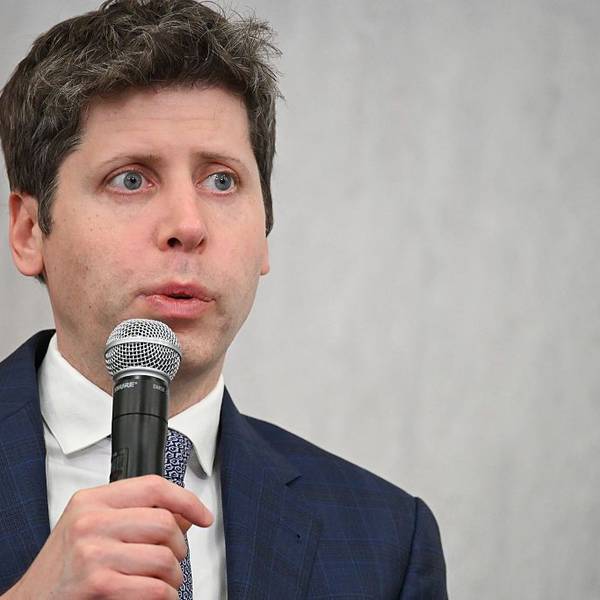
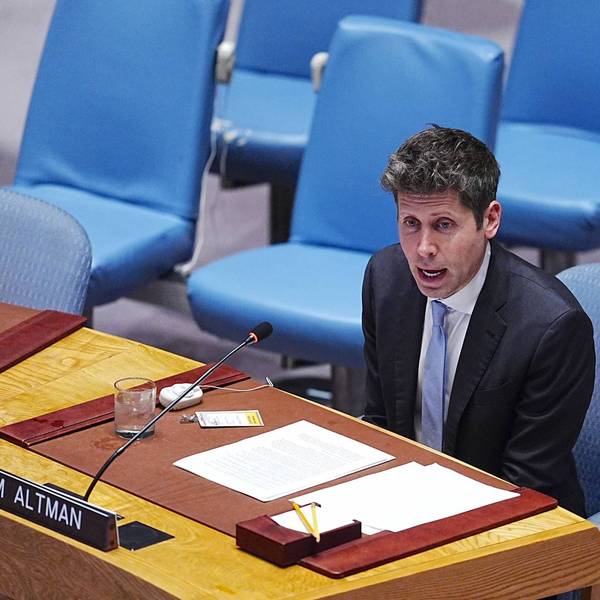
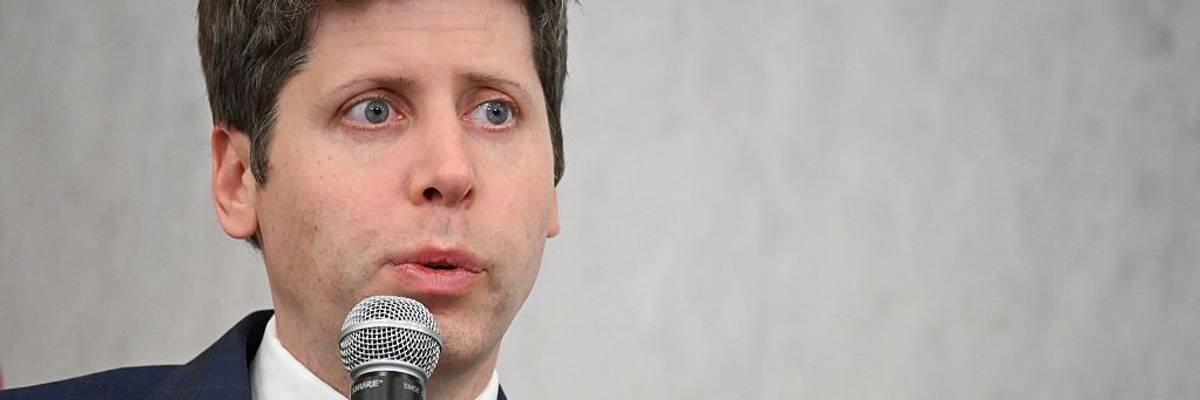
While there are several well known names on the Revolving Door Project's list—including SpaceX CEO Elon Musk, OpenAI CEO Sam Altman, and Oracle co-founder Larry Ellison—it also shines a light on more obscure figures including Chris Lehane, director of government affairs at OpenAI, and Greg Brockman, president of OpenAI.
Lehane is notable due to his long connections to Democratic Party politics, including a stint as a special assistant counsel in the Clinton administration and work as deputy campaign manager for former Vice President Al Gore's 2000 presidential campaign. Since then, he has mostly done public relations work for Silicon Valley firms, including Airbnb and Coinbase.
According to The Revolving Door Project, Lehane during the second Trump administration has been a big proponent of an AI regulatory framework that he describes as "reverse federalism" that aims to shut down individual states' powers to put guardrails on the industry.
Brockman, meanwhile, is much more traditionally aligned with the GOP, as he and his wife were the largest donors to the MAGA, Inc. super PAC in 2025, and he is described by the watchdog as "a regular attendee at White House events throughout Trump’s second term."
This coziness has helped Brockman push for policies beneficial to the AI industry such as fast-tracking data center construction and the aforementioned "reverse federalism" regulatory framework.
The Revolving Door Project also pays special attention to Marc Andreesen, co-founder of venture capital firm Andreessen Horowitz (a16z), whose allies the watchdog describes as "deeply entrenched" in the Trump administration.
Among the Andreesen acolytes to have worked in the Trump are Sriram Krishnan, a former general partner at a16z who served as a senior AI policy advisor; Peter Bowman-Davis, former engineering fellow at a16z who served as acting chief AI officer at the Department of Health and Human Services; and Scott Kupor, former managing partner at a16z who serves as director of the Office of Personnel Management.
Andreesen himself serves as a member of the President’s Council of Advisors on Science and Technology, which the Revolving Door Project describes as a "vessel... to freely lobby on behalf of the tech industry’s interests without the need for lobbyist intermediaries—especially at meetings with the president and his closest advisors."
In a newsletter explaining the purpose of the tracker, the Revolving Door Project's Fletcher Calcagno wrote that it was needed to help understand why the Trump administration so far has been willing to "accept Big Tech’s maximally irresponsible recommendations" for AI regulation.
Dear Common Dreams reader, It’s been nearly 30 years since I co-founded Common Dreams with my late wife, Lina Newhouser. We had the radical notion that journalism should serve the public good, not corporate profits. It was clear to us from the outset what it would take to build such a project. No paid advertisements. No corporate sponsors. No millionaire publisher telling us what to think or do. Many people said we wouldn't last a year, but we proved those doubters wrong. Together with a tremendous team of journalists and dedicated staff, we built an independent media outlet free from the constraints of profits and corporate control. Our mission has always been simple: To inform. To inspire. To ignite change for the common good. Building Common Dreams was not easy. Our survival was never guaranteed. When you take on the most powerful forces—Wall Street greed, fossil fuel industry destruction, Big Tech lobbyists, and uber-rich oligarchs who have spent billions upon billions rigging the economy and democracy in their favor—the only bulwark you have is supporters who believe in your work. But here’s the urgent message from me today. It's never been this bad out there. And it's never been this hard to keep us going. At the very moment Common Dreams is most needed, the threats we face are intensifying. We need your support now more than ever. We don't accept corporate advertising and never will. We don't have a paywall because we don't think people should be blocked from critical news based on their ability to pay. Everything we do is funded by the donations of readers like you. When everyone does the little they can afford, we are strong. But if that support retreats or dries up, so do we. Will you donate now to make sure Common Dreams not only survives but thrives? —Craig Brown, Co-founder |
With backlash against the artificial intelligence industry growing throughout the US, one government watchdog has created a database to help keep tabs on the people it describes as the biggest "AI villains."
The Revolving Door Project on Thursday launched a webpage that tracks the actions of major players in the AI industry and their ties to President Donald Trump's administration.
"The Trump administration is all in on artificial intelligence," the Revolving Door Project explained. "The federal government shares the tech industry’s vision for AI to be embedded everywhere, displacing human thought and labor, and deepening the strains on the environment and climate."
The watchdog added that the government is pursuing an "AI first" policy "despite little proof that its value for the American public is anywhere close to commensurate with its costs."
While there are several well known names on the Revolving Door Project's list—including SpaceX CEO Elon Musk, OpenAI CEO Sam Altman, and Oracle co-founder Larry Ellison—it also shines a light on more obscure figures including Chris Lehane, director of government affairs at OpenAI, and Greg Brockman, president of OpenAI.
Lehane is notable due to his long connections to Democratic Party politics, including a stint as a special assistant counsel in the Clinton administration and work as deputy campaign manager for former Vice President Al Gore's 2000 presidential campaign. Since then, he has mostly done public relations work for Silicon Valley firms, including Airbnb and Coinbase.
According to The Revolving Door Project, Lehane during the second Trump administration has been a big proponent of an AI regulatory framework that he describes as "reverse federalism" that aims to shut down individual states' powers to put guardrails on the industry.
Brockman, meanwhile, is much more traditionally aligned with the GOP, as he and his wife were the largest donors to the MAGA, Inc. super PAC in 2025, and he is described by the watchdog as "a regular attendee at White House events throughout Trump’s second term."
This coziness has helped Brockman push for policies beneficial to the AI industry such as fast-tracking data center construction and the aforementioned "reverse federalism" regulatory framework.
The Revolving Door Project also pays special attention to Marc Andreesen, co-founder of venture capital firm Andreessen Horowitz (a16z), whose allies the watchdog describes as "deeply entrenched" in the Trump administration.
Among the Andreesen acolytes to have worked in the Trump are Sriram Krishnan, a former general partner at a16z who served as a senior AI policy advisor; Peter Bowman-Davis, former engineering fellow at a16z who served as acting chief AI officer at the Department of Health and Human Services; and Scott Kupor, former managing partner at a16z who serves as director of the Office of Personnel Management.
Andreesen himself serves as a member of the President’s Council of Advisors on Science and Technology, which the Revolving Door Project describes as a "vessel... to freely lobby on behalf of the tech industry’s interests without the need for lobbyist intermediaries—especially at meetings with the president and his closest advisors."
In a newsletter explaining the purpose of the tracker, the Revolving Door Project's Fletcher Calcagno wrote that it was needed to help understand why the Trump administration so far has been willing to "accept Big Tech’s maximally irresponsible recommendations" for AI regulation.
With backlash against the artificial intelligence industry growing throughout the US, one government watchdog has created a database to help keep tabs on the people it describes as the biggest "AI villains."
The Revolving Door Project on Thursday launched a webpage that tracks the actions of major players in the AI industry and their ties to President Donald Trump's administration.
"The Trump administration is all in on artificial intelligence," the Revolving Door Project explained. "The federal government shares the tech industry’s vision for AI to be embedded everywhere, displacing human thought and labor, and deepening the strains on the environment and climate."
The watchdog added that the government is pursuing an "AI first" policy "despite little proof that its value for the American public is anywhere close to commensurate with its costs."
While there are several well known names on the Revolving Door Project's list—including SpaceX CEO Elon Musk, OpenAI CEO Sam Altman, and Oracle co-founder Larry Ellison—it also shines a light on more obscure figures including Chris Lehane, director of government affairs at OpenAI, and Greg Brockman, president of OpenAI.
Lehane is notable due to his long connections to Democratic Party politics, including a stint as a special assistant counsel in the Clinton administration and work as deputy campaign manager for former Vice President Al Gore's 2000 presidential campaign. Since then, he has mostly done public relations work for Silicon Valley firms, including Airbnb and Coinbase.
According to The Revolving Door Project, Lehane during the second Trump administration has been a big proponent of an AI regulatory framework that he describes as "reverse federalism" that aims to shut down individual states' powers to put guardrails on the industry.
Brockman, meanwhile, is much more traditionally aligned with the GOP, as he and his wife were the largest donors to the MAGA, Inc. super PAC in 2025, and he is described by the watchdog as "a regular attendee at White House events throughout Trump’s second term."
This coziness has helped Brockman push for policies beneficial to the AI industry such as fast-tracking data center construction and the aforementioned "reverse federalism" regulatory framework.
The Revolving Door Project also pays special attention to Marc Andreesen, co-founder of venture capital firm Andreessen Horowitz (a16z), whose allies the watchdog describes as "deeply entrenched" in the Trump administration.
Among the Andreesen acolytes to have worked in the Trump are Sriram Krishnan, a former general partner at a16z who served as a senior AI policy advisor; Peter Bowman-Davis, former engineering fellow at a16z who served as acting chief AI officer at the Department of Health and Human Services; and Scott Kupor, former managing partner at a16z who serves as director of the Office of Personnel Management.
Andreesen himself serves as a member of the President’s Council of Advisors on Science and Technology, which the Revolving Door Project describes as a "vessel... to freely lobby on behalf of the tech industry’s interests without the need for lobbyist intermediaries—especially at meetings with the president and his closest advisors."
In a newsletter explaining the purpose of the tracker, the Revolving Door Project's Fletcher Calcagno wrote that it was needed to help understand why the Trump administration so far has been willing to "accept Big Tech’s maximally irresponsible recommendations" for AI regulation.