SUBSCRIBE TO OUR FREE NEWSLETTER
Daily news & progressive opinion—funded by the people, not the corporations—delivered straight to your inbox.
5
#000000
#FFFFFF
To donate by check, phone, or other method, see our More Ways to Give page.
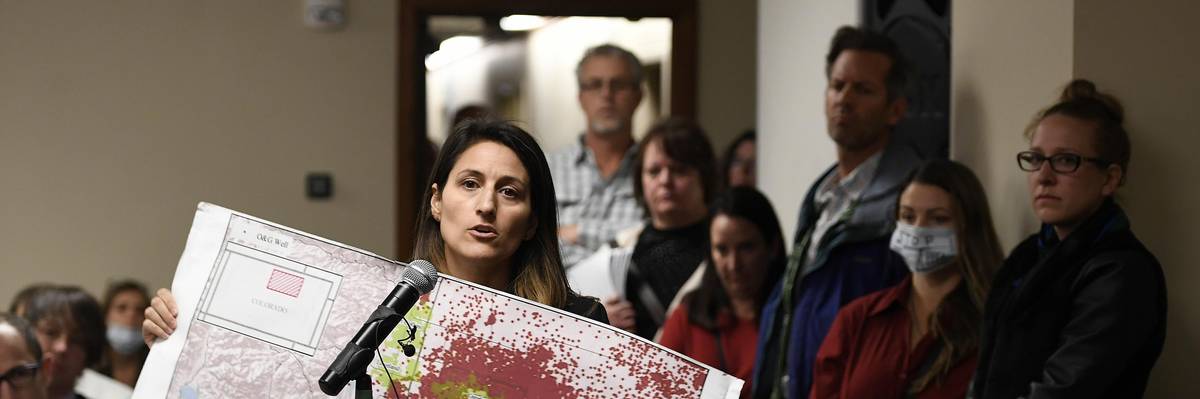
Roughly 17.3 million people in the United States, including nearly four million children, live within a half-mile radius of active oil and gas production, which puts them at increased risk of suffering severe health problems from toxic air pollution.
"Seniors are more likely to die, and babies are more likely to be born with congenital heart disease."
That's according to the Oil & Gas Threat Map, a geospatial analysis released Tuesday by Earthworks, which collaborated with FracTracker Alliance to create the data visualization tool.
"The Oil & Gas Threat Map highlights the shockingly large numbers of Americans impacted by drilling pollution," Ranjana Bhandari, executive director of the environmental justice group Liveable Arlington, said in a statement. "Almost a million residents of my Texas county, about half the population, live less than half a mile from oil and gas operations."
The U.S. Environmental Protection Agency (EPA), said Bhandari, "must act with great urgency to protect them by issuing and enforcing stringent rules to drastically reduce toxic pollution from existing drilling as we rapidly transition to clean energy and end new fracking. This is the only way to reduce health impacts for extraction communities, and slow down the worst climate effects of fracking."
Nationwide, about 213,000 square miles are under threat from more than 1.5 million oil and gas wells, compressors, and processors. The overall area of this "health threat radius" has grown larger than Texas, includes almost 12,500 schools, and is home to 4.7 million more people now than in 2017--further evidence of the negative consequences of expanding domestic fossil fuel production.
Citing a slew of peer-reviewed studies, Earthworks and FracTracker Alliance determined that a half-mile radius "is a very conservative estimate of the area within which elevated levels of toxic pollution are seen, and the distance within which health impacts have most clearly been correlated with the presence of oil and gas facilities."
Dr. Anne C. Epstein, clinical associate professor at Texas Tech University Health Sciences Center, stressed that "living in close proximity to oil and gas development is a threat to public health."
Related Content

"Health research shows that the closer you live and the more you are exposed to oil and gas development, the higher your risk of exposure to toxic air pollution, and the higher your risk of serious heart disease, respiratory disease, and leukemia," said Epstein. "Seniors are more likely to die, and babies are more likely to be born with congenital heart disease and with complications of pregnancy."
As the analysis explains: "What threatens the areas, people, and schools on the Oil & Gas Threat Map are toxic volatile organic compounds (VOCs) emitted alongside methane. Normally invisible, these toxics commonly include benzene, toluene, ethylbenzene, and xylene--the so-called BTEX chemicals."
Using optical gas imaging cameras to make methane--a greenhouse gas at least 80 times more potent than carbon dioxide in the short-term--and carcinogenic VOCs visible, Earthworks' thermographers have recorded more than 1,700 videos of oil and gas production sites since 2014, including the following samples taken at facilities in the Front Range.
The oil and gas industry is by far the largest source of methane emissions and toxic air pollution in the U.S.
President Joe Biden's EPA has proposed new federal safeguards to reduce methane and other harmful pollutants from new and existing fossil fuel operations, but Earthworks and FracTracker Alliance describe them as "flawed."
"Fortunately," the groups note, "they are not yet final and EPA has explicitly said they will consider strengthening them."
According to Earthworks and FracTracker Alliance, implementing the strongest possible protections "will require EPA to fill gaps on critical issues such as frequent inspections for smaller wells and a ban on routine flaring when it finalizes the rule later next year. These must be strongly addressed before the proposal is finalized to ensure EPA is protecting frontline communities from pollution and meeting this moment to tackle the climate crisis. Anything less is a missed opportunity that could have dire consequences."
Related Content

Adding to the case for rapid decarbonization, another study published last week found that slashing air pollution emissions from energy-related sources would prevent more than 50,000 premature deaths and save $608 billion per year in the U.S. alone.
The Oil & Gas Threat Map, meanwhile, "shows 17 million living, breathing reasons to strengthen EPA's methane proposal," Lauren Pagel, Earthworks' policy director, said Tuesday.
"Pollution-prone oil and gas wells should not be exempt from frequent monitoring, and no company should be able to burn off methane as waste," Pagel added. "But no matter how strong these rules are, climate justice during a climate emergency means using every tool in the toolbox including declaring a national emergency on climate change."
Roughly 17.3 million people in the United States, including nearly four million children, live within a half-mile radius of active oil and gas production, which puts them at increased risk of suffering severe health problems from toxic air pollution.
"Seniors are more likely to die, and babies are more likely to be born with congenital heart disease."
That's according to the Oil & Gas Threat Map, a geospatial analysis released Tuesday by Earthworks, which collaborated with FracTracker Alliance to create the data visualization tool.
"The Oil & Gas Threat Map highlights the shockingly large numbers of Americans impacted by drilling pollution," Ranjana Bhandari, executive director of the environmental justice group Liveable Arlington, said in a statement. "Almost a million residents of my Texas county, about half the population, live less than half a mile from oil and gas operations."
The U.S. Environmental Protection Agency (EPA), said Bhandari, "must act with great urgency to protect them by issuing and enforcing stringent rules to drastically reduce toxic pollution from existing drilling as we rapidly transition to clean energy and end new fracking. This is the only way to reduce health impacts for extraction communities, and slow down the worst climate effects of fracking."
Nationwide, about 213,000 square miles are under threat from more than 1.5 million oil and gas wells, compressors, and processors. The overall area of this "health threat radius" has grown larger than Texas, includes almost 12,500 schools, and is home to 4.7 million more people now than in 2017--further evidence of the negative consequences of expanding domestic fossil fuel production.
Citing a slew of peer-reviewed studies, Earthworks and FracTracker Alliance determined that a half-mile radius "is a very conservative estimate of the area within which elevated levels of toxic pollution are seen, and the distance within which health impacts have most clearly been correlated with the presence of oil and gas facilities."
Dr. Anne C. Epstein, clinical associate professor at Texas Tech University Health Sciences Center, stressed that "living in close proximity to oil and gas development is a threat to public health."
Related Content
"Health research shows that the closer you live and the more you are exposed to oil and gas development, the higher your risk of exposure to toxic air pollution, and the higher your risk of serious heart disease, respiratory disease, and leukemia," said Epstein. "Seniors are more likely to die, and babies are more likely to be born with congenital heart disease and with complications of pregnancy."
As the analysis explains: "What threatens the areas, people, and schools on the Oil & Gas Threat Map are toxic volatile organic compounds (VOCs) emitted alongside methane. Normally invisible, these toxics commonly include benzene, toluene, ethylbenzene, and xylene--the so-called BTEX chemicals."
Using optical gas imaging cameras to make methane--a greenhouse gas at least 80 times more potent than carbon dioxide in the short-term--and carcinogenic VOCs visible, Earthworks' thermographers have recorded more than 1,700 videos of oil and gas production sites since 2014, including the following samples taken at facilities in the Front Range.
The oil and gas industry is by far the largest source of methane emissions and toxic air pollution in the U.S.
President Joe Biden's EPA has proposed new federal safeguards to reduce methane and other harmful pollutants from new and existing fossil fuel operations, but Earthworks and FracTracker Alliance describe them as "flawed."
"Fortunately," the groups note, "they are not yet final and EPA has explicitly said they will consider strengthening them."
According to Earthworks and FracTracker Alliance, implementing the strongest possible protections "will require EPA to fill gaps on critical issues such as frequent inspections for smaller wells and a ban on routine flaring when it finalizes the rule later next year. These must be strongly addressed before the proposal is finalized to ensure EPA is protecting frontline communities from pollution and meeting this moment to tackle the climate crisis. Anything less is a missed opportunity that could have dire consequences."
Related Content
Adding to the case for rapid decarbonization, another study published last week found that slashing air pollution emissions from energy-related sources would prevent more than 50,000 premature deaths and save $608 billion per year in the U.S. alone.
The Oil & Gas Threat Map, meanwhile, "shows 17 million living, breathing reasons to strengthen EPA's methane proposal," Lauren Pagel, Earthworks' policy director, said Tuesday.
"Pollution-prone oil and gas wells should not be exempt from frequent monitoring, and no company should be able to burn off methane as waste," Pagel added. "But no matter how strong these rules are, climate justice during a climate emergency means using every tool in the toolbox including declaring a national emergency on climate change."
Roughly 17.3 million people in the United States, including nearly four million children, live within a half-mile radius of active oil and gas production, which puts them at increased risk of suffering severe health problems from toxic air pollution.
"Seniors are more likely to die, and babies are more likely to be born with congenital heart disease."
That's according to the Oil & Gas Threat Map, a geospatial analysis released Tuesday by Earthworks, which collaborated with FracTracker Alliance to create the data visualization tool.
"The Oil & Gas Threat Map highlights the shockingly large numbers of Americans impacted by drilling pollution," Ranjana Bhandari, executive director of the environmental justice group Liveable Arlington, said in a statement. "Almost a million residents of my Texas county, about half the population, live less than half a mile from oil and gas operations."
The U.S. Environmental Protection Agency (EPA), said Bhandari, "must act with great urgency to protect them by issuing and enforcing stringent rules to drastically reduce toxic pollution from existing drilling as we rapidly transition to clean energy and end new fracking. This is the only way to reduce health impacts for extraction communities, and slow down the worst climate effects of fracking."
Nationwide, about 213,000 square miles are under threat from more than 1.5 million oil and gas wells, compressors, and processors. The overall area of this "health threat radius" has grown larger than Texas, includes almost 12,500 schools, and is home to 4.7 million more people now than in 2017--further evidence of the negative consequences of expanding domestic fossil fuel production.
Citing a slew of peer-reviewed studies, Earthworks and FracTracker Alliance determined that a half-mile radius "is a very conservative estimate of the area within which elevated levels of toxic pollution are seen, and the distance within which health impacts have most clearly been correlated with the presence of oil and gas facilities."
Dr. Anne C. Epstein, clinical associate professor at Texas Tech University Health Sciences Center, stressed that "living in close proximity to oil and gas development is a threat to public health."
Related Content
"Health research shows that the closer you live and the more you are exposed to oil and gas development, the higher your risk of exposure to toxic air pollution, and the higher your risk of serious heart disease, respiratory disease, and leukemia," said Epstein. "Seniors are more likely to die, and babies are more likely to be born with congenital heart disease and with complications of pregnancy."
As the analysis explains: "What threatens the areas, people, and schools on the Oil & Gas Threat Map are toxic volatile organic compounds (VOCs) emitted alongside methane. Normally invisible, these toxics commonly include benzene, toluene, ethylbenzene, and xylene--the so-called BTEX chemicals."
Using optical gas imaging cameras to make methane--a greenhouse gas at least 80 times more potent than carbon dioxide in the short-term--and carcinogenic VOCs visible, Earthworks' thermographers have recorded more than 1,700 videos of oil and gas production sites since 2014, including the following samples taken at facilities in the Front Range.
The oil and gas industry is by far the largest source of methane emissions and toxic air pollution in the U.S.
President Joe Biden's EPA has proposed new federal safeguards to reduce methane and other harmful pollutants from new and existing fossil fuel operations, but Earthworks and FracTracker Alliance describe them as "flawed."
"Fortunately," the groups note, "they are not yet final and EPA has explicitly said they will consider strengthening them."
According to Earthworks and FracTracker Alliance, implementing the strongest possible protections "will require EPA to fill gaps on critical issues such as frequent inspections for smaller wells and a ban on routine flaring when it finalizes the rule later next year. These must be strongly addressed before the proposal is finalized to ensure EPA is protecting frontline communities from pollution and meeting this moment to tackle the climate crisis. Anything less is a missed opportunity that could have dire consequences."
Related Content
Adding to the case for rapid decarbonization, another study published last week found that slashing air pollution emissions from energy-related sources would prevent more than 50,000 premature deaths and save $608 billion per year in the U.S. alone.
The Oil & Gas Threat Map, meanwhile, "shows 17 million living, breathing reasons to strengthen EPA's methane proposal," Lauren Pagel, Earthworks' policy director, said Tuesday.
"Pollution-prone oil and gas wells should not be exempt from frequent monitoring, and no company should be able to burn off methane as waste," Pagel added. "But no matter how strong these rules are, climate justice during a climate emergency means using every tool in the toolbox including declaring a national emergency on climate change."