SUBSCRIBE TO OUR FREE NEWSLETTER
Daily news & progressive opinion—funded by the people, not the corporations—delivered straight to your inbox.
5
#000000
#FFFFFF
To donate by check, phone, or other method, see our More Ways to Give page.
Daily news & progressive opinion—funded by the people, not the corporations—delivered straight to your inbox.
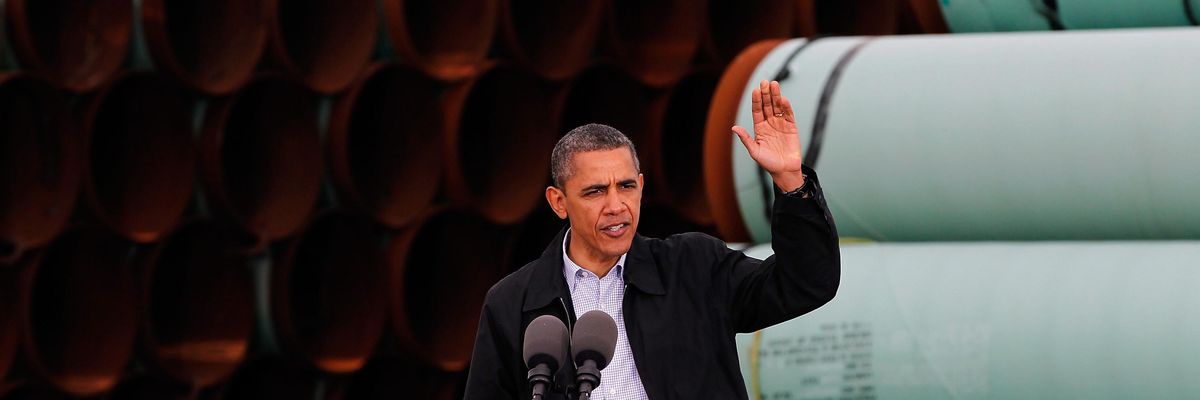
Former U.S. President Barack Obama speaking at the southern site of the Keystone XL pipeline on March 22, 2012 in Cushing, Oklahoma. At the time, despite loud warnings from progressives about the project's destructive impacts and his earlier vows to lead on the climate crisis, Obama was pressing federal agencies to expedite the section of the Keystone XL pipeline between Oklahoma and the Gulf Coast. (Photo: Tom Pennington/Getty Images)
After more than a decade of grassroots organizing, agitation, and tireless opposition by the international climate movement, the final nail was slammed into the Keystone XL's coffin Wednesday afternoon when the company behind the transnational tar sands pipeline officially pulled the plug on its plans.
"This victory is thanks to Indigenous land defenders who fought the Keystone XL pipeline for over a decade." --Clayton Thomas Muller, 350.org
Following consultation with Canadian officials and regulators--including "its partner, the Government of Alberta"--TC Energy confirmed its "termination" of the project in a statement citing the revocation of a federal U.S. permit by President Joe Biden on his first day in office on January 20 as the leading reason.
Climate campaigners, however, were immediate in claiming a final victory after years of struggle against the company and its backers both in Washington, D.C. and Ottawa.
"TC Energy just confirmed what we already knew but it's a thrilling reality all the same--the Keystone XL pipeline is no more and never will be," said David Turnbull, strategic communications director with Oil Change International (OCI).
"After more than 10 years of organizing we have finally defeated an oil giant, Keystone XL is dead!" declared the Indigenous Environmental Network (IEN) in reaction. "We are dancing in our hearts because of this victory! From Dene territories in Northern Alberta to Indigenous lands along the Gulf of Mexico, we stood hand-in-hand to protect the next seven generations of life, the water and our communities from this dirty tar sands pipeline. And that struggle is vindicated."
IEN said that the win over TC Energy and its supporters was "not the end--but merely the beginning of further victories," and also reminded the world that there are "still frontline Indigenous water protectors like Oscar High Elk who face charges for standing against the Keystone XL pipeline."
Calling the news "yet another huge moment in an historic effort," Turnbull at OCI said that while the Canadian company's press statement failed to admit it, "this project is finally being abandoned thanks to more than a decade of resistance from Indigenous communities, landowners, farmers, ranchers, and climate activists along its route and around the world."
Jared Margolis, a senior attorney at the Center for Biological Diversity, declared the victory in the drawn-out battle--which largely took place under the Democratic administration of former President Barack Obama--"a landmark moment in the fight against the climate crisis."
"We need to keep moving away from dirty, dangerous pipelines that lock us into an unsustainable future," added Margolis, who said he now hopes President Joe Biden will take this lesson and apply to other polluting fossil projects. "We're hopeful that the Biden administration will continue to shift this country in the right direction by opposing fossil fuel projects that threaten our climate, our waters and imperiled wildlife," he said. "Good riddance to Keystone XL!"
Jamie Henn and Bill McKibben, both co-founders of 350.org and key architects of the decision to make the Keystone XL pipeline a target and symbol of the global climate movement, also heralded the news.
"When this fight began, people thought Big Oil couldn't be beat." --Bill McKibben, 350.org co-founder
"When this fight began, people thought Big Oil couldn't be beat," said McKibben, who was among those arrested outside the White House in 2011 protesting the pipeline.
"Keystone XL is now the most famous fossil fuel project killed by the climate movement, but it won't be the last," said Henn. "The same coalition that stopped this pipeline is now battling Line 3 and dozens of other fossil fuel projects across the country. Biden did the right thing on KXL, now it's time to go a step further and say no to all new fossil fuel projects everywhere."
Clayton Thomas Muller, another longtime KXL opponent and currently a senior campaigns specialist at 350.org in Canada, said: "This victory is thanks to Indigenous land defenders who fought the Keystone XL pipeline for over a decade. Indigenous-led resistance is critical in the fight against the climate crisis and we need to follow the lead of Indigenous peoples, particularly Indigenous women, who are leading this fight across the continent and around the world. With Keystone XL cancelled, it's time to turn our attention to the Indigenous-led resistance to the Line 3 and the Trans Mountain tar sands pipelines."
McKibben also made the direct connection to KXL and the decision now looming before Biden when it comes to Line 3 in northern Minnesota. "When enough people rise up we're stronger even than the richest fossil fuel companies," he said. "And by the way, the same climate test that ruled out Keystone should do the same for Line 3."
Dear Common Dreams reader, It’s been nearly 30 years since I co-founded Common Dreams with my late wife, Lina Newhouser. We had the radical notion that journalism should serve the public good, not corporate profits. It was clear to us from the outset what it would take to build such a project. No paid advertisements. No corporate sponsors. No millionaire publisher telling us what to think or do. Many people said we wouldn't last a year, but we proved those doubters wrong. Together with a tremendous team of journalists and dedicated staff, we built an independent media outlet free from the constraints of profits and corporate control. Our mission has always been simple: To inform. To inspire. To ignite change for the common good. Building Common Dreams was not easy. Our survival was never guaranteed. When you take on the most powerful forces—Wall Street greed, fossil fuel industry destruction, Big Tech lobbyists, and uber-rich oligarchs who have spent billions upon billions rigging the economy and democracy in their favor—the only bulwark you have is supporters who believe in your work. But here’s the urgent message from me today. It's never been this bad out there. And it's never been this hard to keep us going. At the very moment Common Dreams is most needed, the threats we face are intensifying. We need your support now more than ever. We don't accept corporate advertising and never will. We don't have a paywall because we don't think people should be blocked from critical news based on their ability to pay. Everything we do is funded by the donations of readers like you. When everyone does the little they can afford, we are strong. But if that support retreats or dries up, so do we. Will you donate now to make sure Common Dreams not only survives but thrives? —Craig Brown, Co-founder |
After more than a decade of grassroots organizing, agitation, and tireless opposition by the international climate movement, the final nail was slammed into the Keystone XL's coffin Wednesday afternoon when the company behind the transnational tar sands pipeline officially pulled the plug on its plans.
"This victory is thanks to Indigenous land defenders who fought the Keystone XL pipeline for over a decade." --Clayton Thomas Muller, 350.org
Following consultation with Canadian officials and regulators--including "its partner, the Government of Alberta"--TC Energy confirmed its "termination" of the project in a statement citing the revocation of a federal U.S. permit by President Joe Biden on his first day in office on January 20 as the leading reason.
Climate campaigners, however, were immediate in claiming a final victory after years of struggle against the company and its backers both in Washington, D.C. and Ottawa.
"TC Energy just confirmed what we already knew but it's a thrilling reality all the same--the Keystone XL pipeline is no more and never will be," said David Turnbull, strategic communications director with Oil Change International (OCI).
"After more than 10 years of organizing we have finally defeated an oil giant, Keystone XL is dead!" declared the Indigenous Environmental Network (IEN) in reaction. "We are dancing in our hearts because of this victory! From Dene territories in Northern Alberta to Indigenous lands along the Gulf of Mexico, we stood hand-in-hand to protect the next seven generations of life, the water and our communities from this dirty tar sands pipeline. And that struggle is vindicated."
IEN said that the win over TC Energy and its supporters was "not the end--but merely the beginning of further victories," and also reminded the world that there are "still frontline Indigenous water protectors like Oscar High Elk who face charges for standing against the Keystone XL pipeline."
Calling the news "yet another huge moment in an historic effort," Turnbull at OCI said that while the Canadian company's press statement failed to admit it, "this project is finally being abandoned thanks to more than a decade of resistance from Indigenous communities, landowners, farmers, ranchers, and climate activists along its route and around the world."
Jared Margolis, a senior attorney at the Center for Biological Diversity, declared the victory in the drawn-out battle--which largely took place under the Democratic administration of former President Barack Obama--"a landmark moment in the fight against the climate crisis."
"We need to keep moving away from dirty, dangerous pipelines that lock us into an unsustainable future," added Margolis, who said he now hopes President Joe Biden will take this lesson and apply to other polluting fossil projects. "We're hopeful that the Biden administration will continue to shift this country in the right direction by opposing fossil fuel projects that threaten our climate, our waters and imperiled wildlife," he said. "Good riddance to Keystone XL!"
Jamie Henn and Bill McKibben, both co-founders of 350.org and key architects of the decision to make the Keystone XL pipeline a target and symbol of the global climate movement, also heralded the news.
"When this fight began, people thought Big Oil couldn't be beat." --Bill McKibben, 350.org co-founder
"When this fight began, people thought Big Oil couldn't be beat," said McKibben, who was among those arrested outside the White House in 2011 protesting the pipeline.
"Keystone XL is now the most famous fossil fuel project killed by the climate movement, but it won't be the last," said Henn. "The same coalition that stopped this pipeline is now battling Line 3 and dozens of other fossil fuel projects across the country. Biden did the right thing on KXL, now it's time to go a step further and say no to all new fossil fuel projects everywhere."
Clayton Thomas Muller, another longtime KXL opponent and currently a senior campaigns specialist at 350.org in Canada, said: "This victory is thanks to Indigenous land defenders who fought the Keystone XL pipeline for over a decade. Indigenous-led resistance is critical in the fight against the climate crisis and we need to follow the lead of Indigenous peoples, particularly Indigenous women, who are leading this fight across the continent and around the world. With Keystone XL cancelled, it's time to turn our attention to the Indigenous-led resistance to the Line 3 and the Trans Mountain tar sands pipelines."
McKibben also made the direct connection to KXL and the decision now looming before Biden when it comes to Line 3 in northern Minnesota. "When enough people rise up we're stronger even than the richest fossil fuel companies," he said. "And by the way, the same climate test that ruled out Keystone should do the same for Line 3."
After more than a decade of grassroots organizing, agitation, and tireless opposition by the international climate movement, the final nail was slammed into the Keystone XL's coffin Wednesday afternoon when the company behind the transnational tar sands pipeline officially pulled the plug on its plans.
"This victory is thanks to Indigenous land defenders who fought the Keystone XL pipeline for over a decade." --Clayton Thomas Muller, 350.org
Following consultation with Canadian officials and regulators--including "its partner, the Government of Alberta"--TC Energy confirmed its "termination" of the project in a statement citing the revocation of a federal U.S. permit by President Joe Biden on his first day in office on January 20 as the leading reason.
Climate campaigners, however, were immediate in claiming a final victory after years of struggle against the company and its backers both in Washington, D.C. and Ottawa.
"TC Energy just confirmed what we already knew but it's a thrilling reality all the same--the Keystone XL pipeline is no more and never will be," said David Turnbull, strategic communications director with Oil Change International (OCI).
"After more than 10 years of organizing we have finally defeated an oil giant, Keystone XL is dead!" declared the Indigenous Environmental Network (IEN) in reaction. "We are dancing in our hearts because of this victory! From Dene territories in Northern Alberta to Indigenous lands along the Gulf of Mexico, we stood hand-in-hand to protect the next seven generations of life, the water and our communities from this dirty tar sands pipeline. And that struggle is vindicated."
IEN said that the win over TC Energy and its supporters was "not the end--but merely the beginning of further victories," and also reminded the world that there are "still frontline Indigenous water protectors like Oscar High Elk who face charges for standing against the Keystone XL pipeline."
Calling the news "yet another huge moment in an historic effort," Turnbull at OCI said that while the Canadian company's press statement failed to admit it, "this project is finally being abandoned thanks to more than a decade of resistance from Indigenous communities, landowners, farmers, ranchers, and climate activists along its route and around the world."
Jared Margolis, a senior attorney at the Center for Biological Diversity, declared the victory in the drawn-out battle--which largely took place under the Democratic administration of former President Barack Obama--"a landmark moment in the fight against the climate crisis."
"We need to keep moving away from dirty, dangerous pipelines that lock us into an unsustainable future," added Margolis, who said he now hopes President Joe Biden will take this lesson and apply to other polluting fossil projects. "We're hopeful that the Biden administration will continue to shift this country in the right direction by opposing fossil fuel projects that threaten our climate, our waters and imperiled wildlife," he said. "Good riddance to Keystone XL!"
Jamie Henn and Bill McKibben, both co-founders of 350.org and key architects of the decision to make the Keystone XL pipeline a target and symbol of the global climate movement, also heralded the news.
"When this fight began, people thought Big Oil couldn't be beat." --Bill McKibben, 350.org co-founder
"When this fight began, people thought Big Oil couldn't be beat," said McKibben, who was among those arrested outside the White House in 2011 protesting the pipeline.
"Keystone XL is now the most famous fossil fuel project killed by the climate movement, but it won't be the last," said Henn. "The same coalition that stopped this pipeline is now battling Line 3 and dozens of other fossil fuel projects across the country. Biden did the right thing on KXL, now it's time to go a step further and say no to all new fossil fuel projects everywhere."
Clayton Thomas Muller, another longtime KXL opponent and currently a senior campaigns specialist at 350.org in Canada, said: "This victory is thanks to Indigenous land defenders who fought the Keystone XL pipeline for over a decade. Indigenous-led resistance is critical in the fight against the climate crisis and we need to follow the lead of Indigenous peoples, particularly Indigenous women, who are leading this fight across the continent and around the world. With Keystone XL cancelled, it's time to turn our attention to the Indigenous-led resistance to the Line 3 and the Trans Mountain tar sands pipelines."
McKibben also made the direct connection to KXL and the decision now looming before Biden when it comes to Line 3 in northern Minnesota. "When enough people rise up we're stronger even than the richest fossil fuel companies," he said. "And by the way, the same climate test that ruled out Keystone should do the same for Line 3."