

SUBSCRIBE TO OUR FREE NEWSLETTER
Daily news & progressive opinion—funded by the people, not the corporations—delivered straight to your inbox.
5
#000000
#FFFFFF
To donate by check, phone, or other method, see our More Ways to Give page.
Daily news & progressive opinion—funded by the people, not the corporations—delivered straight to your inbox.
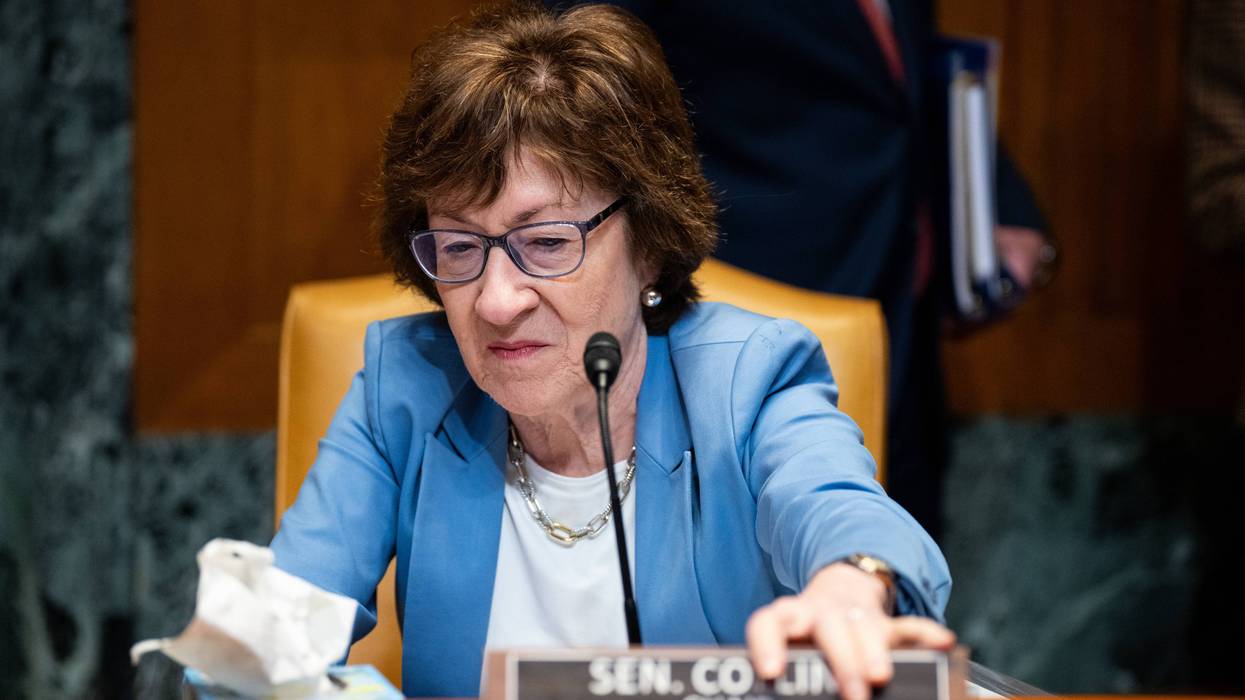
"I'm not going to stand up for ICE, and I don't think Senator Collins should either," said Democratic US Senate candidate Troy Jackson.
Democratic US Senate candidate Troy Jackson on Tuesday castigated his Republican opponent, incumbent Sen. Susan Collins, for voting to funnel tens of millions of dollars to Immigration and Customs Enforcement just over a month before one of the agency's officers killed 25-year-old Johan Sebastián Durán Guerrero in Biddeford, Maine.
"Senator Collins paid for the bullets at [President] Donald Trump's command. Now she wants credit for not pulling the trigger," Jackson said in his closing remarks at the third debate of the critical US Senate contest. The debate was held three months to the day after ICE agent David Brouillette shot and killed Durán Guerrero—a father and Colombian national who had been authorized to work in the US—during a traffic stop.
Jackson pointed to Collins' June vote in favor of a $70 billion funding package that included nearly $40 billion for ICE, whose agents Trump has unleashed on American cities with deadly consequences. According to a CBS News review, federal immigration agents have killed at least nine people and injured over a dozen more in roughly 30 shootings so far during Trump's second White House term.
Days after the shooting in Biddeford, Collins—who chairs the powerful Senate Appropriations Committee—declined to say she regretted supporting the additional ICE funding, which had few meaningful guardrails.
During Tuesday's debate, Collins admitted that "far too many ICE officers were hired and deployed without adequate vetting and training" and touted funding she secured for body cameras and "deescalation training" for immigration agents. (Collins voted against a Democratic amendment to the $70 billion funding package that would have required federal immigration agents to wear body cameras and make footage "accessible to Congress.")
Jackson said marginal reforms aren't enough to rein in "a rogue agency that's doing Trump's bidding."
"I do believe it's important to get rid of it and take that money and prioritize it into existing law enforcement," said Jackson. "So, no, I'm not going to stand up for ICE, and I don't think Senator Collins should either."

"Mainers can't afford to pay their bills with a press release or a strongly worded letter," said Jackson.
Democratic US Senate candidate Troy Jackson took his Republican opponent, incumbent Sen. Susan Collins, to task during a Tuesday debate for her role in Maine's worsening healthcare crisis, accusing her of paving the way for the disaster while attempting to take credit for an inadequate relief fund.
"Senator Collins is like an arsonist who helped set the fire, and then she wants credit for bringing a cup of water to put it out," Jackson said after Collins touted her role in securing a $50 billion fund for rural hospitals. The fund was part of a Republican budget package that includes the largest Medicaid cuts in the program's history—roughly $900 billion over the next decade.
Collins, who is running for a sixth term, voted against final passage of the Republican budget legislation, but she played a key role in advancing the bill through the Senate.
"She could have stopped it," Jackson, the former president of Maine's Senate, said of the budget law, which is fueling hospital staffing cutbacks and closures across the US, including in Maine. "What she brought back is a pittance to what we're losing in this state. I mean, we're watching our healthcare system crash right in front of us."
Watch:
Tuesday's debate came weeks ahead of the November general election, which polling indicates is a tight race. A survey conducted at the end of September by the Maine People’s Resource Center found Jackson leading Collins 49.3% to 46.5%—an advantage that was within the poll's margin of error.
During the debate, Jackson hammered Collins over her pro-Trump voting record and repeatedly accused her of playing up minuscule or largely symbolic opposition to the president's unpopular actions, including his tariffs on Canada and his illegal war on Iran.
After Collins noted that she "got concrete, pulp, and road salt removed from the tariff list," Jackson responded: "We can't eat road salt."
"Mainers can't afford to pay their bills with a press release or a strongly worded letter," said Jackson.
Jackson also highlighted recent ProPublica reporting that placed Collins at the center of a “sprawling pay-to-play operation” involving a Hawaii-based defense contractor accused of funneling donations to lawmakers in exchange for federal contracts.
"As late as 2024, the FBI was circling around Senator Collins," Jackson noted, citing the federal investigation that ProPublica revealed. "Then, whenever President Trump came back, his administration dismantled the investigation. Now, she votes with Donald Trump 96% of the time."
"I don't owe Trump. I don't owe the billionaires nothing. In fact, I've spent my life fighting back against billionaires," Jackson added. "But I do owe the people of Maine everything. I refuse corporate PAC money, I want to ban congressional stock trading. I fight for working Mainers every day. I'm not taking money from corporations like Susan Collins does."
"Under the anti-choice positions Bobby holds today, even in cases of rape, I would not have been able to make a decision about my own body should that have become necessary," said Anita Charles, a sexual assault survivor.
Just two weeks after Maine gubernatorial candidate Bobby Charles drew national headlines with his comments about sending immigration agents to polling stations, the Republican's sister publicly explained why she won't be voting for him in November, calling out his campaign rhetoric and platform as well as his relationship with an infamous pedophile.
The campaign website for Bobby Charles, a former Washington, DC lobbyist, highlights that their mother was a public school teacher. In a Wednesday opinion piece for The Portland Press Herald, Anita Charles, a longtime educator herself, wrote that their mother taught them both "that how we treat other people matters."
"She taught us to be compassionate, not to name-call or judge people by their race, gender, religion, country of origin, or who they love. She taught us that differences do not diminish us, and that we have a responsibility to treat others with dignity. Those lessons shaped my entire life, as well as my career," according to Anita Charles. "They are also the reason I cannot support my brother's campaign for governor."
Anita Charles acknowledged that "Bobby and I have never agreed politically. For most of our adult lives, we have managed those differences with civility. But as divisive rhetoric has become central to his campaign, I can no longer remain silent. It shows up in how he talks about our schools, our vulnerable communities, and about women's healthcare."
She noted that "there is one issue I cannot discuss without speaking from the deepest part of my own experience: sexual assault."
As she detailed:
Bobby was a close friend and colleague of former House Speaker Dennis Hastert from 1995 to 1999. He praised Hastert and benefited from their relationship as he built his career in Washington. Hastert later admitted to sexually abusing children and was convicted of illegally paying hush money to conceal that abuse. Bobby has never publicly renounced that association.
That is difficult for me to understand because my own childhood was marked by sexual violence. Someone who was part of our lives for more than a decade was a pedophile who repeatedly assaulted me. My brother has known what happened to me for 50 years.
Under the anti-choice positions Bobby holds today, even in cases of rape, I would not have been able to make a decision about my own body should that have become necessary. This isn't a debate I'm observing from a distance; it's about my childhood. And it's about my ongoing health and well-being as a woman.
As the Bangor Daily News noted Wednesday, Bobby Charles' current "campaign website doesn't list any proposals about abortion," but he has "called abortion 'abhorrent' and supported the 2022 US Supreme Court decision overturning Roe v. Wade."
Arguing that "Maine deserves leadership rooted in empathy, dignity, intellectual honesty, and respect for every person who calls this state home," Bobby Charles' sister concluded that she will be voting for Democrat Hannah Pingree for governor.
The op-ed quickly circulated on social media after its publication. Local writer Anthony Emerson said that an "atom bomb dropped in the Maine governor’s race this morning."
Anita Charles' article came as her brother continues to face criticism for boasting about his ties to President Donald Trump's border czar, Tom Homan, at a Maine Young Republicans event and claiming that he would ask the federal offical to send US Immigration and Customs Enforcement (ICE) and US Marshals to the state's voting booths.
Maine AFL-CIO president Cynthia Phinney said in a Wednesday statement that "in Maine and the United States, voters elect our leaders in free and fair elections. Calling for masked federal agents to be deployed around polling locations is a cynical attempt to intimidate voters."
"No one should be afraid to show up and exercise their constitutional right to vote, but that's exactly what this is trying to do," Phinney continued. "Our union movement rejects this desperate political tactic, and we know our democracy is strongest when all of us show up to exercise our democratic rights in peaceful elections free from fear or intimidation."
Trump's weaponization of ICE has been a key issue in Maine politics this cycle—including the contest between Republican US Sen. Susan Collins and Democratic challenger Troy Jackson—particularly since an agent fatally shot Biddeford resident Johan Sebastián Durán Guerrero in July.
"Every Mainer deserves to feel safe in their own neighborhood," Pingree said last month. "As governor, I'll demand real, independent oversight, not empty promises. I'll keep fighting for accountability. ICE out of Maine."
The US National Domestic Violence Hotline can be reached at 1-800-799-SAFE (7233), by texting "START" to 88788, or through chat at thehotline.org. It offers 24/7, free, and confidential support. DomesticShelters.org has a list of global and national resources.
"His plan to ask Trump’s border czar to send ICE agents to Maine polling places just weeks before Election Day is not only deeply alarming—it is likely illegal," said the head of the state Democratic Party.
By letting attendees at a Maine Young Republicans event in on his "secret" plan for the midterm elections, the state's Republican nominee for governor detailed a proposal that, according to one public policy think tank, is wholly illegal.
In an audio clip released Wednesday by the Bangor Daily News, Bobby Charles, a lawyer and former Reagan administration staffer, boasted about his connections to the Trump administration's border czar, Tom Homan, a key figure in President Donald Trump's mass deportation operation.
"Here's my secret. I have a friend named Tom Homan," said Charles, drawing applause from the GOP voters. "I'm going to ask Tom... three or four weeks before the election, maybe three, I'm going to make an appeal for ICE and Marshals to be at our voting booths."
🚨 NEW Audio: Bobby Charles reveals "secret" plan to invite ICE to Maine three weeks before Election Day. pic.twitter.com/nSx2o9yxjJ
— Maine Democrats (@MaineDems) August 26, 2026
Charles was referring to US Immigration and Customs Enforcement and the US Marshals, both armed federal law enforcement officers whose presence at polling sites to intimidate voters would be against the law, according to the Brennan Center for Justice .
Trump has also alluded to sending ICE and other armed federal agents to polling places during the midterm elections in November, saying in May when he was asked about the idea that he would "do anything necessary to make sure we have honest elections."
At the Brennan Center for Justice last month, senior counsel Hayne Yoon wrote that "despite the implied threat, the law is clear."
"Sending armed federal agents, including those from ICE, to election sites is illegal," wrote Yoon. "Federal law and many states’ laws prohibit not only armed federal agents at polling sites, but also interference in elections or voter intimidation by any officials or private citizens. More important, using these tactics would be a flagrant attempt to hold on to power through force and intimidation and an affront to free and fair elections."
In his comments at the Young Republicans event, Charles also asked rhetorically whether “illegals who are being paid money” to vote would "like" the deployment of ICE agents at polling places. The remark made the gubernatorial candidate one of several Republicans to push the baseless claim that undocumented immigrants or noncitizens have committed voter fraud in order to sway elections.
There are no documented reports of immigrants ever being paid to vote, and a 2024 American Immigration Council analysis of data collected by the right-wing Heritage Foundation found only 68 cases of proven noncitizen voting dating back to 2000, "amounting to less than 0.0001% of total votes."
Democratic gubernatorial candidate Hannah Pingree said Wednesday that Charles' comments make clear that he would push Trump's MAGA agenda, despite his recent attempts to distance himself from the president, who is unpopular with Mainers.
"He is begging Trump's ICE to come interfere with our free and fair elections," said Pingree. "I think that conduct speaks for itself and I trust the Maine people to see it for what it is."
Devon Murphy-Anderson, executive director of the Maine Democratic Party, added that Charles "continues to prove that he is a MAGA extremist who will stop at nothing to put himself and his MAGA agenda ahead of Mainers. His plan to ask Trump’s border czar to send ICE agents to Maine polling places just weeks before Election Day is not only deeply alarming—it is likely illegal. This is a blatant attempt to intimidate voters and yet another reason Bobby Charles is too extreme for Maine.”
Charles' comments come six weeks after an ICE agent fatally shot Biddeford, Maine resident Johan Sebastián Durán Guerrero in an incident that the Trump administration has not appeared to investigate. ICE has made more arrests in Maine so far this year than it did in all of 2024-25 combined, and out of 491 arrests made, 89% of those detained had no criminal convictions.
Homan recently told a Republican state lawmaker that the state would soon "see a lot more enforcement action" due to Trump's decision to end Temporary Protected Status for Haitians and Syrians.
The Justice Department announced this month that it would deploy at least 1,000 federal officers to polling places as people vote in the November 3 elections. The administration has suggested the public should not be alarmed by the plan because anyone who is a citizen will not be targeted by the agents, but as the ACLU noted, at least 155 citizens in eight states last year, including 32 children, were detained, targeted, or subjected to misconduct by federal immigration agents.

"To come here and say, 'Have some perspective'? You ought to have some damn perspective," Jackson said in a video reply to the vice president.
Troy Jackson, the Democratic US Senate nominee for a critical seat in Maine, denounced Vice President JD Vance on Monday for downplaying the killing of Johan Sebastián Durán Guerrero, a 25-year-old Colombian national who was killed by a federal immigration agent last month in Biddeford.
During a visit to Maine on Monday, Vance told residents who are "so worried about that situation" to "have a little bit of perspective." Vance added that "we can absolutely investigate every shooting and we will, but we can also secure our border and ensure that that poison stops coming into our country." (The legal representative for Durán Guerrero's family said no federal agencies have reached out as part of any investigation into the killing.)
Jackson, the former president of Maine's Senate who is running to unseat Republican US Sen. Susan Collins, responded to the vice president in a video message posted to social media.
"JD Vance is a dirtbag," said Jackson. "There was a young man who had a Social Security number, he had a job, I mean, he had a life. He had a family. To come here and say, 'Have some perspective'? You ought to have some damn perspective. I mean, you don't even know what the hell's goin' on. You got a rogue agency that's going around, pulling people out of homes."
Jackson then turned his attention to Collins, who recently voted for legislation that included around $70 billion in funding for US immigration agencies, including nearly $40 billion for Immigration and Customs Enforcement (ICE). After an ICE agent killed Durán Guerrero last month, Collins refused to say she regretted her vote to boost the agency's funding.
"I want to know: What are you doing about it, Susan?" Jackson asked. "She gave them an additional $70 billion to pull this shit off. We lost a person that JD Vance seems to not give a shit about. And that should piss us all off. So I want to know: Do you agree with JD Vance dismissing the killing of this young man? Because I tell you what, 'concerns' and all that does nothing for all of us, does nothing for that family, and I'm sick of your 'concerns.'"
My response to @JDVance saying we should "have a little bit of perspective" on ICE murdering a young father pic.twitter.com/fNRxN9oBiF
— Troy Jackson (@TroyJackson207) August 24, 2026
During his remarks in Brewer, Maine on Monday, Vance said Collins is "doing an amazing job" and characterized her as "the most independent member of the United States Senate," even though she votes with President Donald Trump around 96% of the time.
Misha Linnehan, a spokesperson for the Maine Democratic Party, said in response to the vice president's remarks that "Susan Collins voted to give Donald Trump and JD Vance $70 billion to send armed ICE agents into Maine with no guardrails."
"Now that a man has been killed," said Linnehan, "JD Vance thinks Mainers need to ‘have a little bit of perspective’ about children losing their father and a wife losing her husband—does Susan Collins agree?"

"No one really wants it here," said one local resident who helped gather signatures in support of blocking the data center.
Residents of Eastport, Maine are set to attend a public hearing Monday evening on two proposed ordinances to halt the construction of large artificial intelligence data centers, with proponents of the proposals hoping the coastal city's planning board will be able to prevent the build-out of a 27-acre, $100 million facility that a Massachusetts-based developer aims to build underwater—right near Eastport's working waterfront.
The public hearing is being held days after President Donald Trump's Federal Energy Regulatory Commission (FERC) accepted a preliminary permit for DeepGreen Holdings, LLC, the firm managed by luxury real estate development Louis Wolfson, which aims to build the facility that would be powered by tidal energy.
The 48-month permit does not allow DeepGreen to start construction, but gives approval for engineering and environmental studies needed to secure funding and officially begin the project.
DeepGreen would use ocean water to cool the heat created by the facility's massive computer servers. The company has also proposed using ocean tides to power turbines that would generate up to 5 megawatts of electricity.
The approval came weeks after FERC asked DeepGreen to amend its application, lowering its energy output from 51 megawatts to 15 megawatts and creating scalable project phases.
The community has mobilized against the proposed data center since DeepGreen applied for the permit in February, with the Eastport City Council voting unanimously earlier this month in support of a 180-day moratorium halting all progress on the center.
The local policymakers said the moratorium would give the city time to consult with the planning board about the two citizen-led initiatives to pass new ordinances—one that would permanently ban data centers in Eastport, which the city's legal counsel has said could be put to voters with a minor formatting change to the question, and another that would require voter approval for any new industrial or commercial development larger than 10,000 square feet in the ocean or 25,000 square feet on land.
The second ordinance was found by the legal counsel to be "unenforceable and unlawful," as the town is not permitted to regulate elections via ordinance.
But residents, officials with the Sipayik Passamaquoddy community, and local groups like Eastport Coalition for Healthy Oceans are all pushing to stop DeepGreen and the development it incorporated a month before applying for the permit, DeepGreen Western Passage SPV, or special purpose vehicle.
DeepGreen has also applied for a permit to build an underwater data center in Cook Inlet, Alaska.
Opponents say thermal pollution from the project would be destructive to the habitat of lobsters off the coast of Eastport, which are crucial to the city's fishing economy and working waterfront. They have also raised concerns that a data center off the coast would harm tourism as well as whales and other marine wildlife.
One local opponent, commercial fisherman and renewable energy developer Nathan Curtis, said DeepGreen carries "unmitigated risks of thermal pollution.”
The proposed data center would "require continuous ocean cooling, converting Western Passage into an unmetered industrial heat sink," wrote Curtis in a letter to FERC before the commission issued the permit. "Continuous thermal discharge into the water column threatens local water temperatures, localized current dynamics, and critical benthic habitats that support Eastport’s commercial fisheries and working waterfront.”
Wolfson denied that the data center, which was approved for an energy output up to 15 megawatts, would harm the coastal region of Eastport.
"As a property manager and developer who has operated within coastal dynamics for 40 years, I have too much respect for working waterfronts to introduce a project that threatens them," said Wolfson in a letter to Monitor Local.
But Eastport resident Suellen Hendrix, who was part of a local effort to gather signatures in support for the proposed ordinances, told Maine Public that locals appear unconvinced by any assurances from the data center developer.
"Everyone was behind 'we don't want this data center,'" Hendrix told Maine Public. "Nobody was questioning, 'Well, we need the jobs.' Nobody was questioning why it should be here because no one really wants it here."
As Common Dreams reported last week, as the Trump administration and AI executives have aggressively pushed for the expansion of data centers, public support has collapsed, with 75% of respondents to a poll by Embold Research saying they would not support a data center near where they live.
"This has happened nationwide, folks, it's nothing new," Dwayne Tomah, a historian with the Sipayik Passamaquoddy community adjacent to Eastport, told a crowd of data center opponents at a recent rally on the town's waterfront. "We've got to resist."

"I ask only of God and of the justice system that my son’s case be brought to light, along with the cases of the many others who have had to go through something like this," said the father of Johan Sebastián Durán Guerrero.
With Republican lawmakers refusing to use their congressional authority to investigate a federal agent's fatal shooting last month of Johan Sebastián Durán Guerrero in Biddeford, Maine, Democratic leaders assembled a "shadow hearing" on Monday at a local high school, where the 25-year-old's grieving father was among those who spoke to a crowd of about 200 people and pleaded for answers about his son's killing.
“The death of Johan Sebastián, under those conditions, at the hands of ICE, filled our community with fear and uncertainty," said Omar Durán, referring to US Immigration and Customs Enforcement. "That is why I ask only of God and of the justice system that my son’s case be brought to light, along with the cases of the many others who have had to go through something like this.”
Durán Guerrero was at least the 11th person to be fatally shot by federal agents since President Donald Trump began deploying ICE and other agencies under the Department of Homeland Security (DHS) to cities and towns across the US to carry out his mass deportation operation.
Federal agents have shot at more than 20 people on US streets under the Trump administration; Durán Guerrero was among several who have been shot at while driving a vehicle, which is against ICE's own policies.
Rep. Chellie Pingree (D-Maine) reported Monday that the ICE agents who were operating in Durán Guerrero's neighborhood in Biddeford on the morning of July 13 were actually looking for his roommate, who owned the car he was driving.
NEW: Chellie Pingree reveals the intended target of the Biddeford ICE stop last month was Johan Sebastian Guerrero's roommate: pic.twitter.com/AEubBvMAjN
— The Maine Wire (@TheMaineWire) August 17, 2026
Pingree said agents did not have a final removal order for the person who was the target of their operation, contrary to what DHS has said about the case.
“This shocking revelation in clear contradiction to what ICE and DHS have been saying about the operation raises fundamental questions,” Pingree said. “How is ICE deciding who to target and detain in Maine? What information are agents relying on?”
"If ICE cannot accurately determine a person's immigration status or circumstance before taking enforcement action, that is a profound failure of competence and accountability," the congresswoman added.
Even in cases where ICE has a deportation order for a person, agents are prohibited from using deadly force unless they have reason to believe the target of the operation poses an imminent threat to an officer's or someone else's safety.
An agent identified as David Michael Brouillette shot Durán Guerrero, who had a 3-year-old daughter with his partner, and DHS has claimed that the officer fired his weapon because Durán Guerrero was trying to flee and Brouillette feared "for public safety."
The agents involved in the operation were not wearing body cameras that were turned on at the time of the shooting, but an eyewitness reported that Durán Guerrero said, "I tried to stop" when the officers pulled him out of his vehicle, bleeding profusely from his head. Surveillance footage taken from a nearby store showed a white car circling an intersection after the shooting before agents stopped it.
"If there were active body cameras on every law enforcement member who was participating there, we wouldn’t be looking at some scratchy videos from one store that’s over here, or one person that’s standing in their doorway that’s trying to get it,” Pingree said at a news conference after Monday's hearing. “We would actually know every moment that’s happened at the scene.”
Durán Guerrero worked as a delivery driver and a cleaner at a veterinary clinic, and had a valid work permit and a pending asylum case.
A lawyer for Durán Guerrero's family said state investigators have interviewed his partner, Karolina Rojas, but no federal agencies have ever contacted her following the killing.
"Any reasonable investigation would include interviewing the family and eyewitnesses,” the lawyer, Ben Gideon, said Monday.
DHS said after the shooting that its inspector general would investigate, but both the agency and the Justice Department refused to answer questions from The New York Times about whether the probe had begun.
The office of Maine Attorney General Aaron Frey is investigating the shooting, and is expected to present its findings to the Maine Deadly Force Review Panel. The panel can make recommendations to DHS, but it does not have jurisdiction over the federal agency.
Durán Guerrero's parents traveled from his home country of Colombia for the shadow hearing. His mother did not speak publicly, while his father described the "deep pain" of hearing his young granddaughter ask where Durán Guerrero is.
The father of Johan Sebastian Duran Guerrero, the man who was shot and killed by an ICE officer in Biddeford last month, delivered an emotional statement during a field hearing about the deadly shooting in Maine. https://t.co/QH8J1JtFVk pic.twitter.com/jYx70sCAUw
— WMTW TV (@WMTWTV) August 17, 2026
"Our dream was always to be reunited and to hold each other again," he said. "Today, that dream can no longer come true."

"They're scared of a movement that demands Medicare for All, prescription drug coverage, and a government that everyday people can be proud of and know works for them."
Troy Jackson, the Maine Democrat running to unseat Republican US Sen. Susan Collins in November, took aim at Elon Musk and other billionaires Wednesday evening for supporting his GOP opponent directly or through a key super political action committee.
"Look, the billionaires in the country know whose side they're on, and it's not ours," Jackson, a former logger and state Senate president, said in a brief video shared on social media, including Musk's platform X.
Jackson—chosen as the Democratic nominee via a convention process last month, after primary winner Graham Platner left the race following a rape allegation that he denied—pointed to a $42 million investment in the contest from the Senate Leadership Fund (SLF), whose backers include Musk and various other right-wing megadonors.
"They're here to prop up Susan Collins because they want her to continue to be a rubber stamp and get their income tax cuts," Jackson said. "They're already out with an ad attacking me and my family, to try and make sure that they totally don't talk about the issues."
SLF's 30-second ad, which launched Wednesday, notes his son's lobbying work and smears Jackson as "another dirty politician."
According to Jackson: "They're scared of a movement that goes against the things that they want. They're scared of a movement that demands Medicare for All, prescription drug coverage, and a government that everyday people can be proud of and know works for them."
Wednesday isn't the first time Jackson—who previously ran for governor—has called out billionaires, specifically Musk. After The New York Times reported last month that through his America PAC, Musk intends to spend up to $120 million on a program to help elect Republicans in at least eight states, including Maine, Jackson released a video stressing that the billionaire "doesn't care about us. Really doesn't care about Susan. He cares about him."
"So I would say to you Elon: Maine and really the whole United States doesn't want your dirty money in our politics," Jackson continued. "You don't get to buy the government that you want. This is about all of us coming together and fighting for the government that we deserve, and you're not in it."
Musk became the world's first trillionaire in June, when his company SpaceX made its public market debut, but his current net worth is estimated at over $860 billion, according to the regularly updated Bloomberg and Forbes lists. His trillionaire status came after the early months of the second Trump administration, when Musk was the de facto leader of the Department of Government Efficiency.
Reuters reported Thursday that new data from the American Federation of Labor and Congress of Industrial Organizations shows how Musk's controversial compensation plans for SpaceX and Tesla are benefiting other chief executives. Fred Redmond, the AFL-CIO's secretary-treasurer, said that his pay "changes the dynamic when other CEO compensation plans come up, boards use it as a reference."
The average ratio of CEO to worker pay at S&P 500 companies rose from 285:1 in 2024 to 312:1 last year, excluding Musk's Tesla compensation. When that is included, the ratio becomes 5,387:1. Redmond told Reuters that "as we talk to our members, they're pissed off over what's happening to them, and they feel as though they should be more vocal in terms of calling attention to inequality."
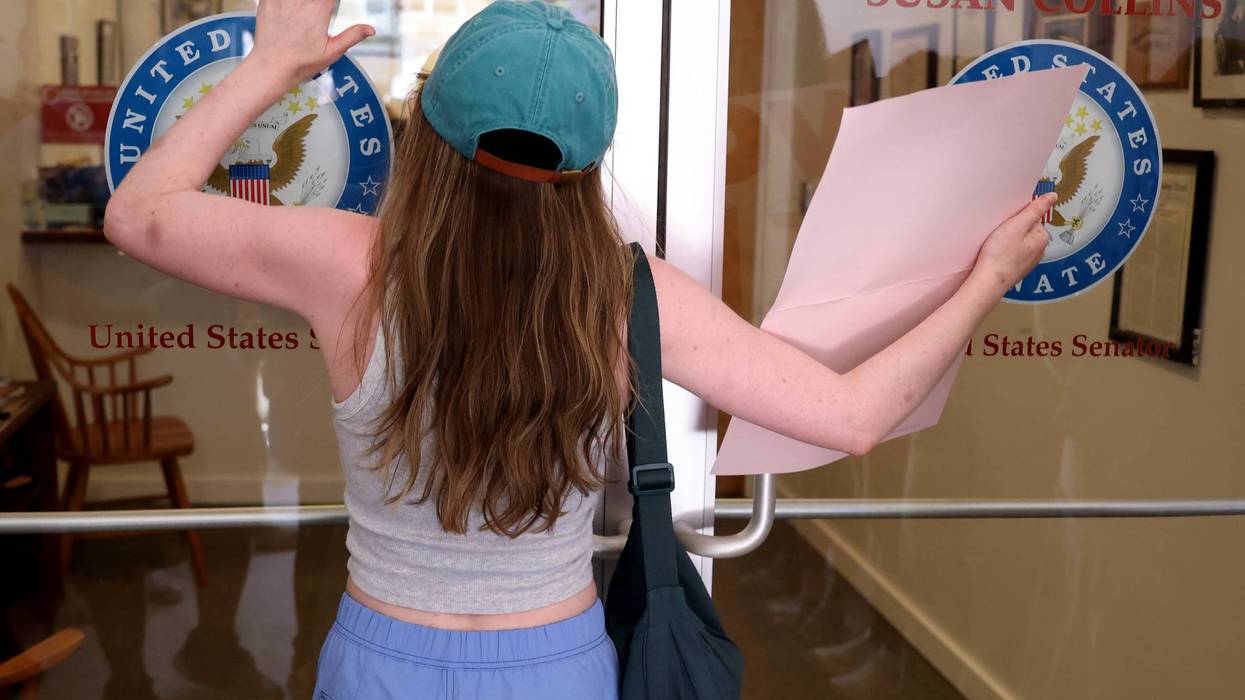
"Congress must end the blank check to ICE," said the president of one immigrant rights group.
As Mainers continue to target Sen. Susan Collins' office with protests following a recent killing by an immigration agent, new reporting shows how some of the $70 billion she and her GOP colleagues gave to President Donald Trump's immigration agencies is being spent.
According to the Associated Press on Tuesday:
Immigration and Customs Enforcement (ICE) officers may soon be outfitted with gloves that can deliver painful electric shocks intended to gain compliance from combative individuals.
ICE plans to spend up to $20 million to purchase thousands of “conductive distraction and de-escalation devices” for officers and agents by March, according to a notice published Monday by the Department of Homeland Security.
The devices are known as the GLOVE, which stands for Generated Low Output Voltage Emitter, and are manufactured by Compliant Technologies LLC of Lexington, Kentucky. They have been used in recent years by some jails and police departments.
As the company's website explains, "the discomfort associated with the stimulation is usually effective in bringing individuals into compliance in less than three seconds and leaves no burns, marks, or scars." It describes them as a "humane, low-optics, de-escalation solution for many situations facing our men and women in uniform."
John Peters, president of the Institute for the Prevention of In-Custody Deaths, told the AP that the sensation is "immediate and sharp," comparing it to a "bee sting."
While he said it could be an effective tool to prevent "resistance," he warned that it should not be used as a form of punishment against those merely exhibiting “verbal defiance or belligerence” or on high-risk populations such as children, pregnant women, or elderly or disabled people.
But given the recent record of rampant civil rights abuses, extrajudicial killings, excessive use of force, and efforts to lie about misconduct, civil rights advocates are warning that these gloves are being placed into, or onto, the exact wrong hands.
"ICE spent the last year showing this country that they are willing to disregard the law and are too quick to use force, with devastating and at times fatal consequences for citizens and noncitizens alike," Jenn Rolnick Borchetta, deputy director on policing at the American Civil Liberties Union, told Common Dreams. "Now they might be equipped with a device that allows them to deliver an electric shock with their hands by pushing a small button, in a move that might be imperceptible to those watching."
Kica Matos, president of the National Immigration Law Center, concurred, telling Common Dreams that ICE is a "rogue agency with an $80 billion slush fund that allows them to concoct and fund new ways to visit cruelty upon our communities."
"Arming poorly trained agents with electric shock gloves to inflict pain on our neighbors is disgusting and barbaric," Matos added. "Congress must end the blank check to ICE, and ICE must get out of our communities.”
The shock gloves are just one way that immigration agencies are spending the $70 billion in additional funding they were given back in June, when Republicans in the Senate voted 52-47 to authorize the funding despite rampant lawlessness. Only one Republican, Sen. Lisa Murkowski (Alaska), voted against supercharging the funding.
In a July 16 letter to Democratic Gov. Janet Mills, Collins defended her vote for the increased ICE funding by pointing to "reforms" passed in April as part of the Department of Homeland Security's broader appropriations bill, which included $20 million for body cameras and $2 million for "de-escalation" training.
Collins' office did not immediately respond when asked by Common Dreams whether she believes electric shock gloves were a good form of "de-escalation."
A five-term senator in the midst of a fierce reelection bid against Democrat Troy Jackson has taken fierce criticism for her vote to support ICE on the campaign trail, which has only grown in intensity since July's fatal shooting of 25-year-old Johan Sebastián Durán Guerrero in Biddeford.
It was one of two fatal shootings of men without criminal records over the course of a week. ICE later acknowledged that the victims were not the target of their operations.
When asked after the shooting, Collins declined to say that she regretted her vote for increased ICE funding.
Protesters who gathered outside Collins' Biddeford office on Tuesday said she should.
"$70 billion to fund the terror that left my family and community in fear,” Fernanda McLaughlin, a Maine resident and community organizer, said over the loudspeaker, according to NBC News Center Maine. "You know what that money can be really used for? To feed Mainers. To fund our schools. To fund our health system."
"There were no guardrails included, and she still voted yes on it," McLaughlin said. "Simple guardrails that exist in nearly every other law enforcement agency across our nation."
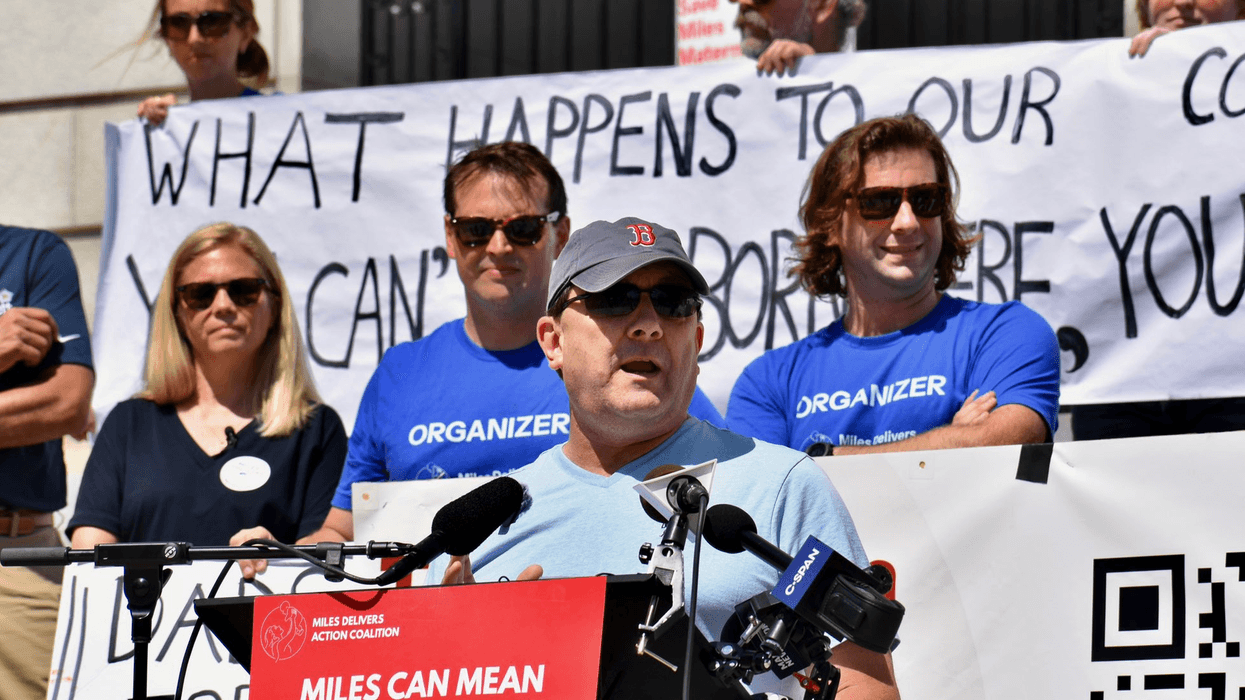
"It's past time that we fix our broken, profit-centered healthcare system that leaves many of us struggling to get care, and most of us struggling to pay for it when we do," said the US Senate candidate.
Democratic US Senate candidate Troy Jackson on Friday was among the Maine leaders expressing anger over the decision by MaineHealth, the state's largest nonprofit healthcare system, to close a labor and delivery unit that's crucial to families in three counties after local residents organized a monthslong grassroots effort to keep the department open.
"I'm angry," said Jackson, the former state Senate president who officially became the Democratic candidate last month. "This marks the 12th labor and delivery ward we've lost in this state since 2015."
With rural hospitals across Maine expected to continue closing—partially due to nearly $3 billion in Medicaid cuts over the next decade, which were included in President Donald Trump's One Big Beautiful Bill Act along with tax cuts for the wealthy—Jackson repeated his call for a government-funded universal healthcare system.
"It's past time that we fix our broken, profit-centered healthcare system that leaves many of us struggling to get care, and most of us struggling to pay for it when we do," said Jackson. "We must pass Medicare for All."
MaineHealth's Board of Trustees voted Thursday in favor of closing the labor and delivery unit at Lincoln Hospital on the health network's Miles Campus in the coastal town of Damariscotta. The decision leaves Lincoln, Waldo, and Sagadahoc counties without any labor and delivery units, and leaves half of the state's 34 hospitals without birthing wards.
The hospital system said it had reached the decision because it cannot "continue providing safe, reliable care for every mother and every baby, every day and every night," according to CEO Andrew Mueller.
Labor and delivery "requires highly specialized teams that are available around the clock and prepared to respond immediately to routine deliveries and unexpected emergencies," said Mueller. "We concluded that we could no longer consistently ensure that level of staffing and clinical coverage at Lincoln Hospital over the long term.”
Cindy Wade, president of Lincoln Hospital, told community members ahead of the vote that the potential closure was "not driven by finance," while acknowledging that staffing is a problem for the facility.
The day before the decision was announced, a woman named Corinna Stum, who had been set to deliver her baby at Miles in January—a month after the unit is set to close—filed a lawsuit in an effort to stop the closure. Stum requested an emergency injunction while the court determines whether MaineHealth violated its obligation to serve the public and be transparent in its review process
A grassroots organization called Miles Delivers Action Coalition, started by three women from the area, has held rallies alongside Jackson, Democratic gubernatorial candidate Hannah Pingree, and other local leaders, as well as working with clinicians to determine how the Miles Campus could deliver sustainable care for parents and babies and finding obstetricians who would be willing to work at the hospital.
The group also examined the finances of the $4 billion healthcare network, finding that the Miles Campus outperformed its parent system in terms of profitability and that deliveries at the hospital are on the rise, despite declining birth rates nationwide.
"A CEO paid $2.2 million should be expected to find solutions, not simply eliminate services," said the coalition as it rallied 10,000 supporters in a matter of months to help convince the hospital to keep the unit open.
When the coalition reached out to MaineHealth with its ideas for continuing to provide maternity services, the company argued that pregnant patients will be able to travel to Mid Coast Hospital for their deliveries—a 26-mile, 43-minute drive from Damariscotta.
When announcing the closure, MaineHealth also suggested families could also transfer their obstetrical care to Pen Bay Hospital, which is roughly the same distance from the town.
Dr. Tim Goltz, a family physician at Miles, told NPR earlier this week: "There's no doubt in my mind that if OB goes away at Miles, that there will be mothers and babies who die because of that decision. The literature is very clear that the further you have to travel to deliver a baby, the higher the risk is of serious complications and death. "
Miles Delivers Action Coalition said the vote on Thursday resulted in "one of the most harmful decisions our community will ever see," and accused MaineHealth of "cowardice."
“They have ignored the voice of our governor, politicians on all sides, the local ambulance service, businesses, far and wide, and they are creating a maternity desert in Lincoln County,” the group said. “This isn’t a hospital, it’s a morgue.”
Former US Senate candidate and organizer Jordan Wood, also an advocate for Medicare for All, said decisions like MaineHealth's would lead Mainers to "lose trust and faith in democracy."
"Millennials, women, moms, young moms, pregnant women organized in our community the minute that news broke that there was a possibility that Miles would close," said Wood. "It can feel like a failure, but it's not... We will fix this problem. This is a setback, it's not a failure."
MaineHealth just voted to close labor and delivery at Miles. The last birthing unit in Lincoln County. You can't make a birth profitable. So this system cuts it. Every time.
This isn’t the end of our fight. pic.twitter.com/fpXLzkAYKi
— Jordan Wood (@JordanWood) August 7, 2026
"There is no way to make labor and delivery profitable," said Wood. "We are living in an absolutely broken healthcare system by profit. By for-profit health insurance companies and pharmaceutical companies that only make money off of us being sick... This is the reminder for so many of us about why this healthcare system is so corrupt and broken and in need of a total overhaul."