December, 08 2015, 01:30pm EDT

For Immediate Release
Contact:
Email:,info(at)fwwatch(dot)org,Seth Gladstone -,sgladstone@fwwatch.org
Precedent-setting Campaign to Block Nestle and Others from Bottling Water in Oregon County Submits Three Times the Number of Signatures Needed to Qualify for Ballot
Residents of this picturesque Columbia River Gorge county this week submitted three times as many signatures as they need to qualify for the ballot an initiative that would block corporate behemoth, Nestle, from bottling and selling their precious public water. The precedent-setting local ballot measure would block Nestle's proposed water bottling plant in the Gorge and prohibit commercial water bottling in Hood River County.
Hood River County, Ore.
Residents of this picturesque Columbia River Gorge county this week submitted three times as many signatures as they need to qualify for the ballot an initiative that would block corporate behemoth, Nestle, from bottling and selling their precious public water. The precedent-setting local ballot measure would block Nestle's proposed water bottling plant in the Gorge and prohibit commercial water bottling in Hood River County.
Local Water Alliance (LWA), the grassroots group spearheading the campaign, collected more than 1,600 signatures in just over a month, making it virtually certain that the county will verify the 497 signatures needed to send the Hood River Water Protection Measure to county voters.
"It has been fantastic to see all the support for this measure from people across the political spectrum," said Aurora del Val, Campaign Director for Local Water Alliance. "We considered gathering even more signatures, but we think voters want to make their opinions known as soon as possible."
While locals have long been concerned about Nestle's proposal to set up shop in the small city of Cascade Locks and bottle more than 200 million gallons of water each year, they really mobilized over the summer, when Governor Kate Brown declared drought emergencies in dozens of Oregon counties, including Hood River County.
"Our entire economy relies heavily on water," said del Val who lives in Cascade Locks. "Passing this initiative means standing up and saying that Hood River County isn't willing to give away the future of our water security. It means showing that we won't risk our entire future for the small number of jobs Nestle could create at a highly automated bottling plant. We can do better for our community. We don't need Nestle here."
Hood River business owner Michael Barthmus agrees. "It was an easy petition to get people to sign because most people understand that water is a resource and basic human need, and not a commodity to be exploited. Shipping water outside of our county seems like poor stewardship, especially during a time of shortage and droughts. Our families, farms and the fish in our rivers should be our top priority."
The initiative in Hood River County is the first of its kind and has captured attention across the county and around the world for its potential to become a model for other communities that want to protect local water from being bottled by multinational corporations that, like Nestle, have terrible track records around the globe.
The communities we work with all over the United States are watching what's happening in Hood River County, Oregon," said Julia DeGraw, Northwest organizer for Food & Water Watch. "These local residents are an inspiration to everyone fighting to protect their water supplies from becoming commodities for profit-driven corporations like Nestle. The public energy behind this precedent-setting campaign is truly impressive."
"Across the globe, communities and consumers are coming together to protect local water resources from being exploited by companies like Nestle. More than 156,000 people around the world are standing with Hood River County in this fight to protect their water," explained Nicole Carty, US campaigner for SumOfUs.org. "Should this initiative be successful, the effects could be game changing: This legislation could serve as a national benchmark and a crucial model to any region looking to keep its natural resources out of the reach of Big Bottled Water.
The local election officials in Hood River County will verify the signatures; campaigners expect official confirmation by the end of the week that the measure has qualified for the ballot.
Food & Water Watch mobilizes regular people to build political power to move bold and uncompromised solutions to the most pressing food, water, and climate problems of our time. We work to protect people's health, communities, and democracy from the growing destructive power of the most powerful economic interests.
(202) 683-2500LATEST NEWS
'The Message Is Pretty Clear,' Says Sanders After Progressive Wins in NY
"The American people—in New York and all across this country—are sick and tired of status quo politics... of a rigged economy... of billionaires and their super PACs buying elections."
Jun 24, 2026
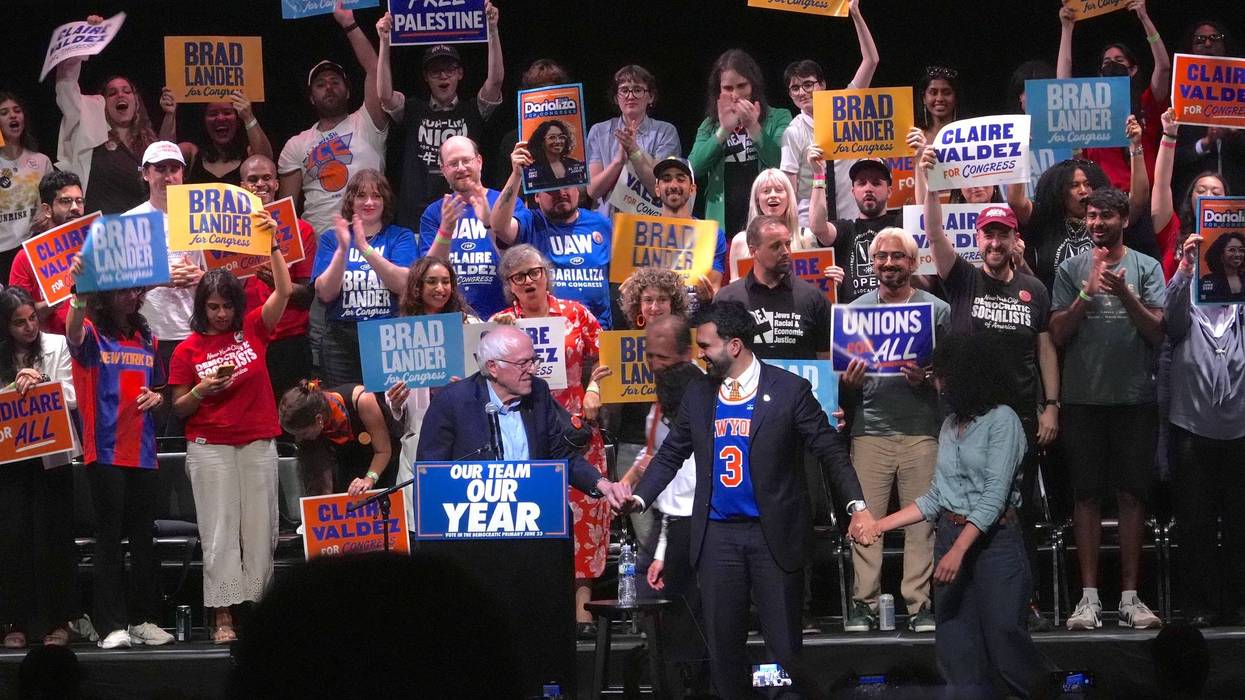
Democratic socialist firebrand US Sen. Bernie Sanders on Wednesday welcomed a wave of progressive primary victories in New York as proof that Americans "are sick and tired of status quo politics" and "want to end the corrupt campaign finance system, which enables billionaires to spend huge amounts of money to elect candidates who will represent their interests and go to war against working-class people."
Sanders (I-Vt.) said so in a video posted on social media, as New York voters and progressives around the world celebrated Tuesday wins by Claire Valdez in New York's 7th Congressional District, Brad Lander in the 10th District, and Darializa Avila Chevalier in the 13th District.
As Common Dreams reported earlier Wednesday, the trio campaigned on affordable housing, Medicare for All, stronger union protections, and an end to US military support for Israel's genocidal assault on Palestinians—and all three were backed by New York City Mayor Zohran Mamdani, a democratic socialist supported and even sworn in by Sanders.
"What we saw last night in New York City and what we've been seeing for the last few months all across this country—the message is pretty clear," said the Brooklyn-born senator, who last year launched his Fighting Oligarchy Tour and this year has backed progressive candidates at various levels of government in the lead-up to the November midterm elections.
"People want change," asserted Sanders, who sought the Democratic presidential nomination in 2016 and 2020. "Our job is to grow that movement. Volunteer. Run for office. Stand up and fight. We can win this thing if we stand together."
While establishment Democrats in Washington, DC "downplayed the results, denying they reflected any major leftward shift nationally," according to NOTUS, other congressional progressives joined Sanders in cheering the results in New York.
Sen. Ed Markey (D-Mass.) said that "last night in New York, we saw progressives win. And win big. Voters are making their voices heard—they're done with the status quo, and they're ready for a progressive majority. Happy to see our movement rising and to see the power of true grassroots organizing. Congratulations."
Another Massachusetts Democrat, Rep. Ayanna Pressley, declared: "That’s right, a little louder for the folks in the back NY! The people demand and deserve elected officials who fight for working families, stand against genocide, reject corporate greed, and reject anti-Blackness. A more just America is possible, we're building it together."
Congratulating the trio along with Micah Lasher, the Democratic primary winner in New York's 12th District, Congressional Progressive Caucus Chair Emerita Pramila Jayapal (D-Wash.) said that "something powerful happened in New York last night. Four bold, people-powered candidates took on the Democratic establishment and won."
"They ran on Medicare for All. On a public option for housing. On a foreign policy that centers human dignity over political convenience. And they won," she continued. "This is what happens when movements build power. People-powered movements win."
Rep. Alexandria Ocasio-Cortez, a New York Democrat who has become a leading progressive voice in Congress since her 2018 primary upset and overwhelmingly won in the 14th District on Tuesday, congratulated those four, plus Cait Conley in the 17th District, "on their impressive primary victories."
"I look forward to working together as a delegation as we fight for working families across New York," she said.
Beyond Capitol Hill, Ben Davis—who worked on the data team for Sanders' 2020 campaign and is an active member of the Democratic Socialists of America (DSA)—tied the developments in New York to Chris Rabb's win in Pennsylvania's 3rd Congressional District last month, after which "the left won across Los Angeles" and "swept the elections in the District of Columbia."
Noting that in New York on Tuesday, DSA's "down-ballot slate also swept across the board, taking out four incumbent state legislators," Davis wrote for The Guardian that "the Democratic electorate has moved radically to the left over the past four years, and this will shape politics this year and for decades to come. There are a number of factors at play here, many of them long-term, but the magnitude of this shift shows a rapid movement among Democratic primary voters. This is spurred first by the second Trump administration."
"The second major factor that needs to be mentioned is the impact of Israel's assault on Gaza and its mass exposure," he continued. "Democratic voters have turned sharply against Israel—within the Democratic coalition, this is now an 80/20 issue, while the party establishment and elected officials trail, having completely missed the moral outrage felt by the Democratic base and across the political spectrum."
"Democrats are also moving to the left because of a generational shift. Sanders won large margins with Democrats under 35 in 2016. The oldest of those voters are now 45, but still voting the same," he added. "Lastly, the left surge is based on a return to mass politics, specifically, DSA as a democratically run, member-funded organization."
He concluded that "after the last month, Democratic leadership should be seriously taking stock of their position. The energy is on their left. The people are on their left. Democrats want fighters, and they want a politics rooted in the collective struggles of the masses, not decided in smoke-filled rooms. We still need moderate Democrats to win those pesky median voters, for now. But the party's leadership is deeply out of touch with its base. A leftist wave is cresting across the country."
Current Affairs editor in chief Nathan Robinson wrote Wednesday that "I feel like I've been waiting for this moment for 10 years. Back in 2016, it was frustratingly obvious that Sanders-style leftism, which centered the material needs of working people, was the best way to fight back against the Trumpian right. But Sanders could not defeat the party establishment in 2016 or 2020."
During Democratic former President Joe Biden's sole term, he noted, "DSA membership declined. Mamdani's victory was an exciting moment, and he's showing how democratic socialist politicians can both win and govern effectively. But I’m almost more excited by the congressional victories, because they show that the movement is growing beyond Mamdani, albeit with his help."
"There is little room for error here," he warned. "Socialists in power must be hyper-competent, so that voters can immediately see a clear contrast between the feckless Democratic establishment, which does not care about them, and the movement that prioritizes their most urgent needs and embodies their aspirations for a livable country. These candidates get that. They know that winning elections is actually the easy part, even though it is very hard. The most difficult work comes after, when you have to demonstrate that socialism is not a bunch of impossible 'pie in the sky' promises, but a set of workable ideas that will achieve results."
"We are facing a once-in-a-generation opportunity to test our politics in practice," Robinson added. "At last, the left has a real shot at taking power in places around the country. It is an exciting, unprecedented, and uncertain moment. Hopefully this new generation of socialists is up for the challenge. But the signs, so far, are encouraging."
Keep ReadingShow Less
Democrats Fume Over Trump's Moms.gov Website Promoting Anti-Abortion Centers
"Moms.gov is not about promoting women’s health. It is an attempt to use HHS resources to further strip women of their rights and privacy.”
Jun 24, 2026
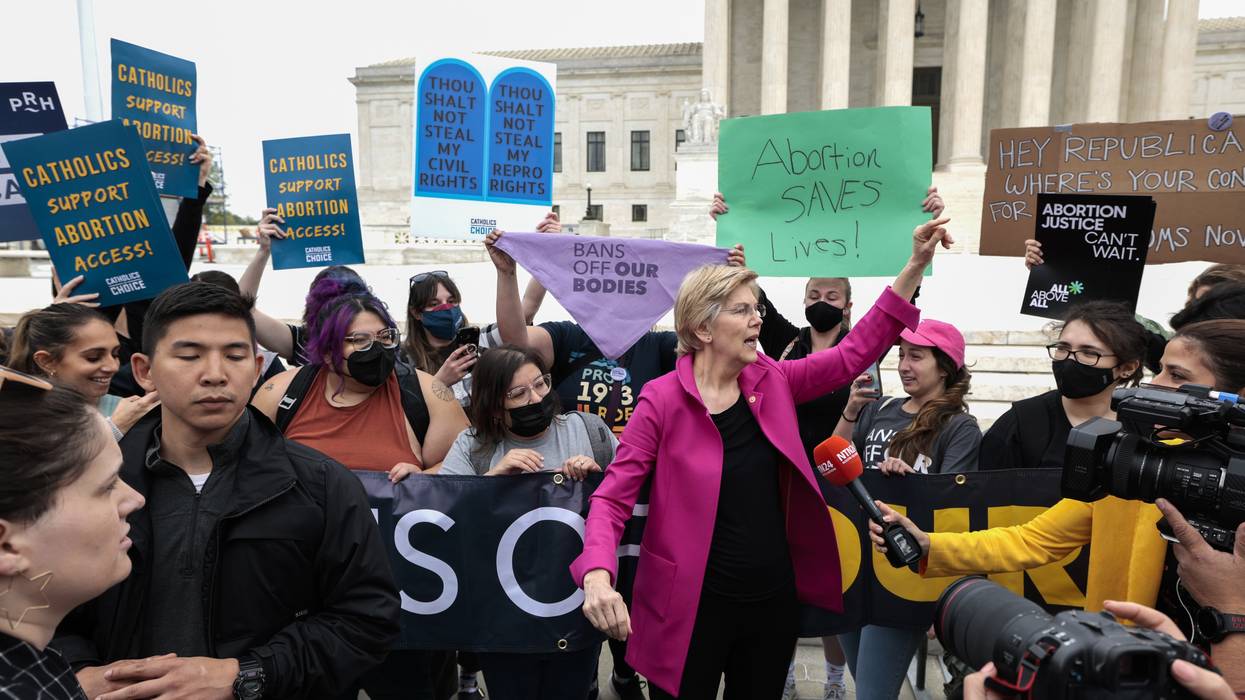
Eleven members of the Senate Democratic Caucus on Wednesday urged US President Donald Trump and Health and Human Services Secretary Robert F. Kennedy Jr. to “cease using federal resources to direct people to anti-abortion crisis pregnancy centers" via a government website.
Last month, the Department of Health and Human Services (HHS) launched Moms.gov, which claims to offer "resources, information, and help for new and expecting mothers" by "addressing the needs of mothers and fathers who face difficult or unexpected pregnancies and ensuring the well-being of mothers and the health of American families."
The site has two main options: so-called "crisis pregnancy centers" (CPCs)—which present themselves as reproductive health clinics but often provide misleading information and counseling aimed at discouraging abortion—and "federally qualified health centers," which, presented alongside anti-abortion services on Moms.gov, can blur the distinction between evidence-based healthcare providers and ideologically driven groups.
"This raises profound concerns about the health, safety, and privacy of people who access this government website at a time when women’s health and reproductive rights face increasing attacks,” the 11 senators said in a letter to Trump and Kennedy and shared with HuffPost. “Instead of offering concrete resources to protect the health and safety of pregnant women and their families, the Trump administration is using this website to highlight anti-abortion CPCs."
The letter—led by Sens. Elizabeth Warren (D-Mass.), Chuck Schumer (D-NY), Mazie Hirono (D-Hawaii), and Bernie Sanders (I-Vt.) and signed by Democratic Sens. Ron Wyden (Ore.), Tammy Duckworth (Ill.), Ed Markey (Mass.), Tina Smith (Minn.), John Hickenlooper (Colo.), Cory Booker (NJ), and Michael Bennett (Colo.)—was sent on the four-year anniversary of Dobbs v. Jackson Women’s Health Organization, a ruling by the right-wing US Supreme Court that canceled half a century of abortion rights formerly enshrined in Roe v. Wade.
“Since the US Supreme Court took away the fundamental right to abortion care... 21 states have banned or severely restricted access to abortion, decimating access to care for tens of millions of people,” the senators wrote.
The lawmakers said that the direct link to Option Line, an anti-abortion hotline, "on a government website is also troubling from a data privacy perspective," as the site collects and shares user data with "affiliates, partners, vendors, or contract organizations" and has been beset by breaches.
“Moms.gov is not about promoting women’s health—it is an attempt to use HHS resources to further strip women of their rights and privacy," the letter asserts. “In order to protect the health and data privacy of millions of women, HHS should remove the pregnancy center link from Moms.gov and cease using federal resources to direct people to anti-abortion crisis pregnancy centers.”
In a Wednesday interview with HuffPost, Warren said, "It's horrific that the Trump administration is using taxpayer dollars to prop up a website that pushes pregnant women towards nonmedical anti-abortion centers."
"The Republican plan is to sneak through anti-abortion resources and backdoor abortion bans because they know Americans don’t support their extreme agenda," she added. "Democrats are fighting back.”
Keep ReadingShow Less

Despite Trump-Iran Deal, Netanyahu Says Israel Will Not Leave Lebanon 'As Long as I Am Prime Minister'
"Words are not enough to restrain the Israelis," one journalist said. "There have to be real consequences."
Jun 24, 2026
Israeli Prime Minister Benjamin Netanyahu stated on Wednesday that he will not end the military occupation of Lebanon even if it tanks US President Donald Trump's peace deal with Iran.
"As long as I am prime minister, we will maintain the security zone in southern Lebanon," he said, referring to Israel's occupation, which has cleared about one-fifth of the country of its inhabitants.
About 1.2 million residents have been displaced by Israeli attacks and forced evacuation orders since March as part of a military campaign that's killed about 4,200 people, according to the Lebanese Ministry of Public Health.
As Trump seeks an end to his war with Iran, the Iranian delegation has stressed that it must be peace "on all fronts," including Lebanon, which was outlined in the memorandum of understanding that has served as the basis for ongoing negotiations.
Behind the scenes, Trump has reportedly fumed that by ramping up attacks on Lebanon, Israel is trying to sabotage the deal and drag the US back into war.
But while he and Vice President JD Vance have offered some uncommonly blunt criticism of Israel over the past week, they've not yet gone beyond words. And Israel's leaders seem to believe they won't.
Echoing the prime minister, Defense Minister Israel Katz said on Wednesday that the Israel Defense Forces were "not withdrawing" from Lebanon "even if there is an American demand to do so."
But he also stated that despite a US-mediated ceasefire between Israel and Hezbollah, "as of this moment... there is no American demand for Israel to withdraw from Lebanon," which he described as "a political achievement."
That's not likely to sit well with the Iranians, who, in response to a wave of Israeli attacks this weekend, announced that they were once again closing off the Strait of Hormuz, threatening more of the economic pandemonium that Trump wants to quell by ending the war.
“For us, a ceasefire in Lebanon is as important as a ceasefire in Iran and, further, an end to the war in Lebanon is as important as an end to the war in Iran,” said Mohammad Bagher Ghalibaf, Iran's parliamentary speaker and lead negotiator, on Wednesday.
US Secretary of State Marco Rubio has attempted to thread the needle by claiming on Wednesday that "the Israelis have been clear they don't have any quarrels with the Lebanese people, nor do they have any claims on the territory of Lebanon."
But this was undercut somewhat by Katz's statement on Wednesday that the 200,000 civilians whom Israel ordered to leave southern Lebanon "will not return" to their homes because of the risk they allegedly pose to Israeli soldiers.
"Soldiers in, residents out," Katz said. "The infrastructure is destroyed, the houses are dangerous and ruined. We are not withdrawing."
Critics have pointed out that Trump does have ample amounts of leverage to coerce the Israelis to get with the program, including threatening to cut off US weapons shipments, and that his failure to do this may destroy any chance at peace with Iran.
"The Israelis are going to continue testing what they can get away with," said Rania Khalek, a journalist for BreakThrough News, on social media. "Iran was very clear that a deal with the US is dependent on a ceasefire in Lebanon."
"How embarrassing for Trump that the Israelis don’t care about his orders. They are trying to preserve their ability to kill all their neighbors," she added. "Words are not enough to restrain the Israelis. There have to be real consequences."
Keep ReadingShow Less
Most Popular