January, 04 2013, 10:45am EDT
The Campaign for America's Future is the strategy center for the progressive movement. Our goal is to forge the enduring progressive majority needed to realize the America of shared prosperity and equal opportunity that our country was meant to be.
LATEST NEWS
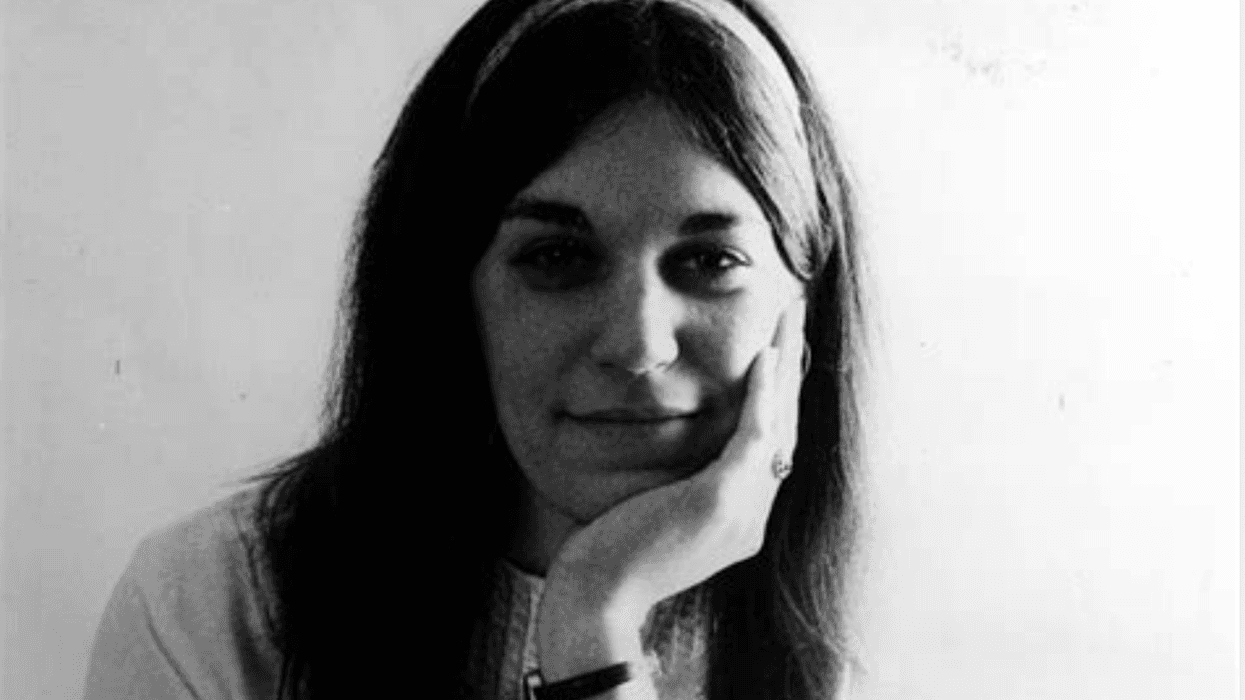
Chilean Judge Convicts US-Trained Pinochet Agents for 1976 Murder of Ronni Moffitt
There is no legal status of murder in Chile, where homicides are divided into two categories, simple and qualified (aggravated).
On the morning of September 21, 1976, Moffit, Letelier, and Michael Moffitt—Ronni's husband of four months, who also worked at IPS—were on their way to work when the Chevy Malibu in which they were traveling was blown up in Sheridan Circle on Washington, DC's Embassy Row.
Michael, who was sitting in the back seat, survived the blast and watched as Ronni staggered from the mangled car, mortally wounded in the neck, drowning in her own blood. Letelier, whose legs were blown off and torso mangled, died before an ambulance arrived.
Never before and never since has a foreign diplomat been assassinated on American soil.
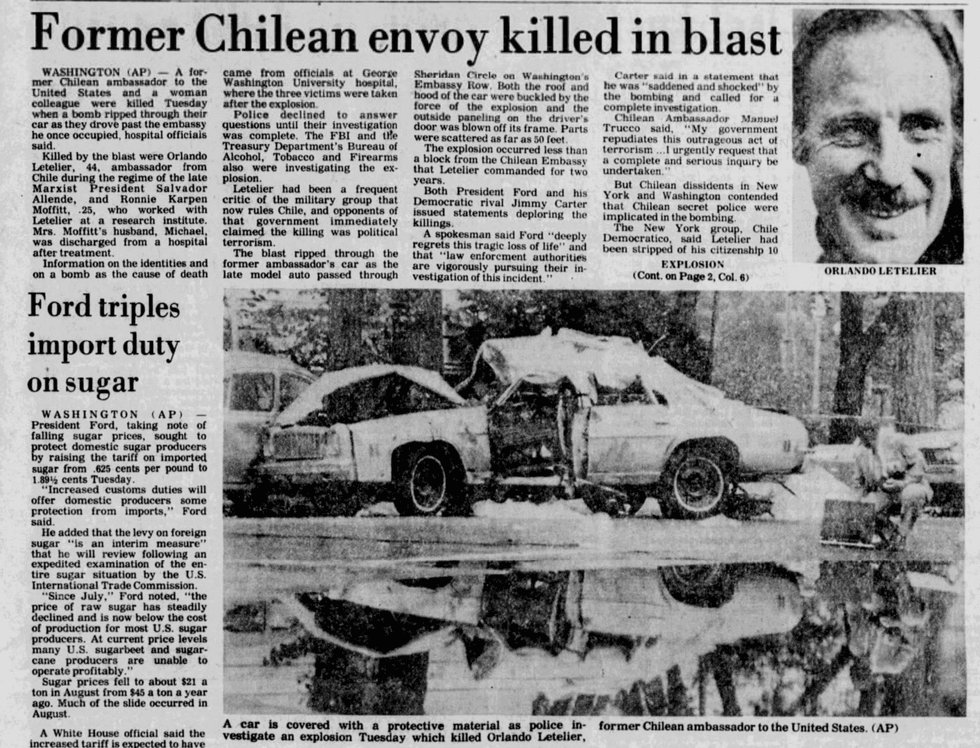 Associated Press coverage of the Letelier-Moffitt assassination, as published in the Fargo-Moorehead Forum on Sept. 22, 1976.
“For a half century, IPS has turned this heinous act of international terrorism into a force for justice and for lifting up new human rights champions in the United States and Latin America,” IPS executive director Tope Folarin said in response to the sentences. “We are thrilled to see this huge step towards accountability for the murder of Ronni Karpen Moffitt, a young American woman whose work to improve lives in her community and her world was cut tragically short.”
Moffitt's niece, Rebecca Karpen, said that "the recent sentencing of three of the men responsible for my aunt’s murder comes 50 years after their crime was committed—17 years after the death of my grandfather, Murray Karpen, who dedicated his life to fighting for justice for his daughter, and four years after the death of her brother, my father Harry, who carried her picture in his wallet for decades after his big sister was murdered."
"It is often said that justice delayed is justice denied," Karpen added. "So many of my family members who loved Ronni never lived to see this measure of justice applied, and that is a tragedy."
"So many of my family members who loved Ronni never lived to see this measure of justice applied, and that is a tragedy."
Plaza noted that the attack was planned under the direction of then-DINA Director Gen. Manuel Contreras Sepulveda and his deputy, Pedro Octavio Espinoza Bravo, as part of "a series of attacks outside the national territory against the lives of Chilean citizens" during Operation Condor.
The secret, US-backed effort, which ran from 1975-83, saw right-wing military dictatorships in Chile, Argentina, Uruguay, Bolivia, Paraguay, Brazil, Peru, and Ecuador collaborate on an international campaign of terror in which an estimated 60,000 leftists were killed, while tens of thousands of others were arrested and tortured.
Letelier was targeted because he was once a Chilean foreign minister under former socialist President Salvador Allende, who had become a prominent critic of the Pinochet dictatorship while living in exile after the US-backed 1973 coup that overthrew his democratically elected reformist government and brought Pinochet to power.
Other prominent leftists forced into exile during Pinochet's reign of terror—including former Army commander Gen. Carlos Prats and his wife Sofia Cuthbert—were assassinated during Operation Condor. In fact, Contreras and the three men convicted last week were also found guilty in 2010 of killing the couple in a 1974 car bombing in Buenos Aires.
Officials in the administration of US President Gerald Ford, including Secretary of State Henry Kissinger, knew Pinochet's government and other Condor partners were planning to murder their political opponents abroad. The State Department drafted warnings regarding the impending assassinations but withdrew them shortly before the Letelier-Moffitt killings.
In her sentencing order last week, Plaza affirmed the role of DINA Capt. Armando Fernández Larios in obtaining passports for members of the hit squad, as well as for US citizen Michael Townley, a US-born DINA operative who built the remote-control bomb and placed it under Letelier's driver's seat. According to court records, declassified documents, and media reporting, Townley consulted with notorious anti-Castro Cuban militants Orlando Bosch and Luis Posada Carriles—who were behind terrorist attacks including the bombing of Cubana Flight 455—while selecting operatives for the Letelier assassination.
However, last week's convictions and sentences were solely for Espinoza, Zara, and Iturriaga—and exclusively for Moffitt's murder.
In 1993, Contreras and Bravo were convicted in Chile for ordering and implementing Letelier's assassination. Contreras was sentenced to seven years in prison, where he died in 2015 while serving hundreds of years of cumulative sentences for Pinochet-era crimes. Bravo was sentenced to six years behind bars.
Townley, Fernández, and five right-wing Cuban exile militants were separately convicted in the United States in connection with Letelier's assassination. Townley served just over five years before being placed in witness protection due to his cooperation with investigators. Fernández was released after seven months, due to a plea bargain. Two of the Cubans served eight years; the convictions of their three co-defendants were overturned on appeal.
All three men convicted and sentenced last week for Moffitt's murder attended the US Army School of the Americas (SOA), then located in Panama. So did Contreras and Fernández.
SOA is sometimes called the School of Assassins and the School of Coups due to its notorious graduates and their crimes, including the drug trafficking Panamanian president Manuel Noriega, Bolivian despot Hugo Banzer, Haitian death squad commander Raoul Cedras, and Argentine “Dirty War” dictator Leopoldo Galtieri
At least hundreds of war criminals from throughout the hemisphere have been trained at the SOA, whose graduates planned, ordered, committed, or covered up some of the most notorious atrocities of the era, including the Guatemalan genocide; El Mozote massacre; assassination of Archbishop Óscar Romero; Jesuit massacre; and kidnapping, rape, and murder of four US churchwomen.
Juan Pablo Letelier, the son of Orlando Letelier and a former Chilean senator, called last week's sentences "an act of justice."
"Truth has prevailed," Letelier asserted. "Many years have gone by in this effort for truth and justice. Yet, with perseverance and with conviction, we’ve reached the point where, in a Chilean court, this act of terrorism in which an American citizen was assassinated by Chile’s secret police in 1976 has finally had a case, an investigation, and a sentencing of the three main people responsible."
"We hope that US government authorities will now consider that what has been done in Chile should also be done in the US regarding the investigation and the sanctioning of those responsible for this terrorist act," he added. "There are persons who are responsible for Ronni Karpen Moffitt’s death 50 years ago who are still in liberty on US soil, and there are pending Chilean requests for their extradition with which the US government has not complied."
Chile is seeking the extradition of Fernández, who was arrested by US Immigration and Customs Enforcement agents in Florida last year but has not been handed over to Chilean authorities to stand trial.
“Justice is slow," Letelier recently wrote. "There are many families in Chile who were victims... and they want justice... Armando Fernández Larios should never have been free in the United States.”

Most Popular