

SUBSCRIBE TO OUR FREE NEWSLETTER
Daily news & progressive opinion—funded by the people, not the corporations—delivered straight to your inbox.
5
#000000
#FFFFFF
To donate by check, phone, or other method, see our More Ways to Give page.
Daily news & progressive opinion—funded by the people, not the corporations—delivered straight to your inbox.

Kirsten Stade (202) 265-7337
The U.S. Environmental Protection Agency has not come clean on its
plan to dramatically raise permissible radioactive release levels,
according to a lawsuit filed today by Public Employees for
Environmental Responsibility (PEER). The new draft standards have been
promulgated in secrecy despite sharp controversy about allowing public
exposure to radiation levels vastly higher than those EPA had
previously deemed unacceptably dangerous.
The plan to
markedly relax radiation standards was signed off on in the final days
of the Bush administration, and suspended by the new Obama
administration prior to its publication. Obama EPA appointees are now
weighing its fate. On June 11, 2009, PEER submitted a request under
the Freedom of Information Act for all of the comments submitted by EPA
and other federal and state agency officials to the EPA Office of
Radiation and Indoor Air (ORIA) as it prepared its updated Protective
Action Guides, which govern radiation protection decisions following
releases from accidents or attacks. PEER had received verbal reports
that both internal and external reviewers registered grave concerns
about the radical relaxation of radiation exposure limits being
proposed.
ORIA has yet to produce a single document requested by PEER, months
beyond the response deadlines mandated under the Freedom of Information
Act. On October 16, 2009, EPA's Office of General Counsel directed
ORIA to comply but conceded that the only way to enforce its order
would be in court. ORIA had not met previous self-announced timelines
for delivery of documents or promises to provide records on a rolling
basis, as they had been cleared for release. Today, PEER filed a
lawsuit in federal district court in Washington, D.C. to compel
production.
"President Obama directed all agencies to act in a transparent way by
placing important documents in the public domain in a timely fashion,"
said PEER Counsel Christine Erickson, who drafted the complaint.
"Avoiding embarrassment is not a legal basis for deception or delay."
The radiation guides are protocols for responding to radiological
incidents ranging from nuclear power-plant accidents to transportation
spills to "dirty" bombs. They would significantly increase allowable
public exposure to radioactivity in drinking water, including a nearly
1000-fold increase in strontium-90, a 3000 to 100,000-fold hike for
iodine-131, and an almost 25,000 increase for nickel-63. The new
radiation guidance would also allow long-term cleanup standards
thousands of times more lax than anything EPA has ever before accepted,
permitting doses to the public that EPA itself estimates would cause a
cancer in as much as every fourth person exposed. These relaxations of
radiation protection requirements are favored by the nuclear industry
and allies in the Nuclear Regulatory Commission and Energy Department.
"EPA has bypassed open dialogue on how much radiation the public will
be allowed to receive in the event of a release, and is now suppressing
evidence of internal dissent on these controversial proposals," stated
PEER Executive Director Jeff Ruch, noting that congressional leaders,
such as Rep. Edward Markey (D-MA), have been expressing concerns about
EPA's intentions. "Who knew that EPA had a Doctor Strangelove wing?"
###
Read the PEER complaint
See the background of the radiation guidance issue
Look at Rep. Markey's news release
View EPA's invitation to sue
PEER protects public employees who protect our environment. We are a service organization for environmental and public health professionals, land managers, scientists, enforcement officers, and other civil servants dedicated to upholding environmental laws and values. We work with current and former federal, state, local, and tribal employees.

Iran's chief negotiator accused the Trump administration of giving the Israeli government a "green light" to continue attacking Lebanon and undermining diplomatic talks.
Update:
US President Donald Trump, Pakistan's prime minister, and the Iranian Foreign Ministry said Sunday that the US and Iran have reached an agreement on a framework to end the war that Trump launched in late February.
Iran's deputy foreign minister, Kazem Gharibabadi, said the terms of the deal will be made public after the memorandum of understanding is signed on Friday in Switzerland. Pakistani Prime Minister Shehbaz Sharif wrote on social media that "both sides have declared the immediate and permanent termination of military operations on all fronts, including in Lebanon."
The memorandum of understanding is expected to extend the current ceasefire agreement by 60 days while detailed negotiations take place.
Gharibabadi said the start of the 60-day negotiations will be contingent on the US lifting its naval blockade of Iranian ports, "ending the state of war and military operations," and "releasing Iran's frozen funds."
Earlier:
The Israeli military bombed the southern suburbs of Beirut on Sunday just as Iranian and US officials voiced optimism that a diplomatic agreement is in reach, prompting accusations that the government of Prime Minister Benjamin Netanyahu is trying to derail the negotiations.
Israel's strikes reportedly targeted a five-story apartment building, killing at least three people, according to Lebanese authorities. Netanyahu said the bombing was a response to Hezbollah rocket fire into northern Israel.
The latest bombing of Beirut came hours after US President Donald Trump said he expected a memorandum of understanding (MOU) to be signed as early as Sunday, potentially setting the stage for negotiations to end the illegal war Trump started in late February. Iranian officials have pushed back on the US president's claim that the MOU will be signed Sunday, but Iran's foreign minister said Friday that an agreement had "never been closer."
The Associated Press reported Sunday that Israel's new strikes on Beirut "threatened to hamper negotiations over a deal, which in its current form is a deep disappointment to Israel’s government."
"The last time Israel struck the Beirut suburbs a week ago, it set off the most serious escalation of fighting between Iran and Israel since the tenuous ceasefire took hold April 7," AP added.
Kenneth Roth, former executive director of Human Rights Watch, wrote on social media that "as a US-Iranian deal seems like it might be closer, Israel predictably bombs the Beirut suburbs, evidently hoping to sabotage the deal."
"Why does Trump put up with this and continue to arm and fund such obstructionism?" Roth asked.
Mohammad Bagher Ghalibaf, Iran's chief negotiator and speaker of parliament, said Israel's strikes indicate that the US "either does not have the will or the ability to fulfill its obligations."
"You cannot gain concessions by giving [Israel] a green light," he added. "The good cop, bad cop routine has become old. If you do not have the will or the ability to fulfill your commitments, then there is no basis for talking about continuing down this path."
As the US & Iran reportedly near a deal that includes ending the war in Lebanon, Israel is attacking Beirut again.
Either Trump can't restrain Netanyahu, or the deal is already being violated before it's signed.
Either way, it undermines the deal's value for Iran. pic.twitter.com/v08c21i7wa
— Sina Toossi (@SinaToossi) June 14, 2026
While the MOU that's reportedly under consideration has not been released in full, its broad outlines have been reported in media outlets and divulged by Iranian and US officials in recent days. Reuters reported Sunday that "a final draft of the memorandum of understanding with the US covered a range of issues, from Tehran’s nuclear work to reopening the Strait of Hormuz and US waivers on oil sanctions, with a final deal to be discussed in the 60 days following agreement by the two sides."
Under the MOU, Iran would immediately reopen the Strait of Hormuz and the US would end its illegal blockade of Iranian ports, according to Reuters. The US would also agree to waive oil sanctions on Iran and release $25 billion in frozen Iranian assets, while Iran would agree to "maintain the current status of its nuclear program, refraining from further uranium enrichment and expansion of nuclear facilities."
Abbas Araghchi, Iran's foreign minister, said in a television interview on Friday that the MOU's proposed 60-day ceasefire extension would include Lebanon.
Axios reported that Netanyahu has "found himself in the dark" as US-Iran negotiations have progressed in recent days, "calling allies close to the Trump administration to try and gather information."
Following Sunday's strike on Beirut, Trump told Axios' Barak Ravid that Netanyahu "has no fucking judgment."
"I passed this message on to him—that I am very unhappy with the attack in Beirut," said Trump, whose administration has approved billions of dollars worth of weapons sales to the Israeli government.
Trita Parsi, executive vice president of the Quincy Institute for Responsible Statecraft, warned that "Israel will do more sabotage unless Trump imposes a cost on Israel."
"Netanyahu knows exactly what he is doing and is judging that an attack on Beirut—rather than southern Lebanon—is exactly what's needed to derail the pending US-Iran deal," Parsi argued.
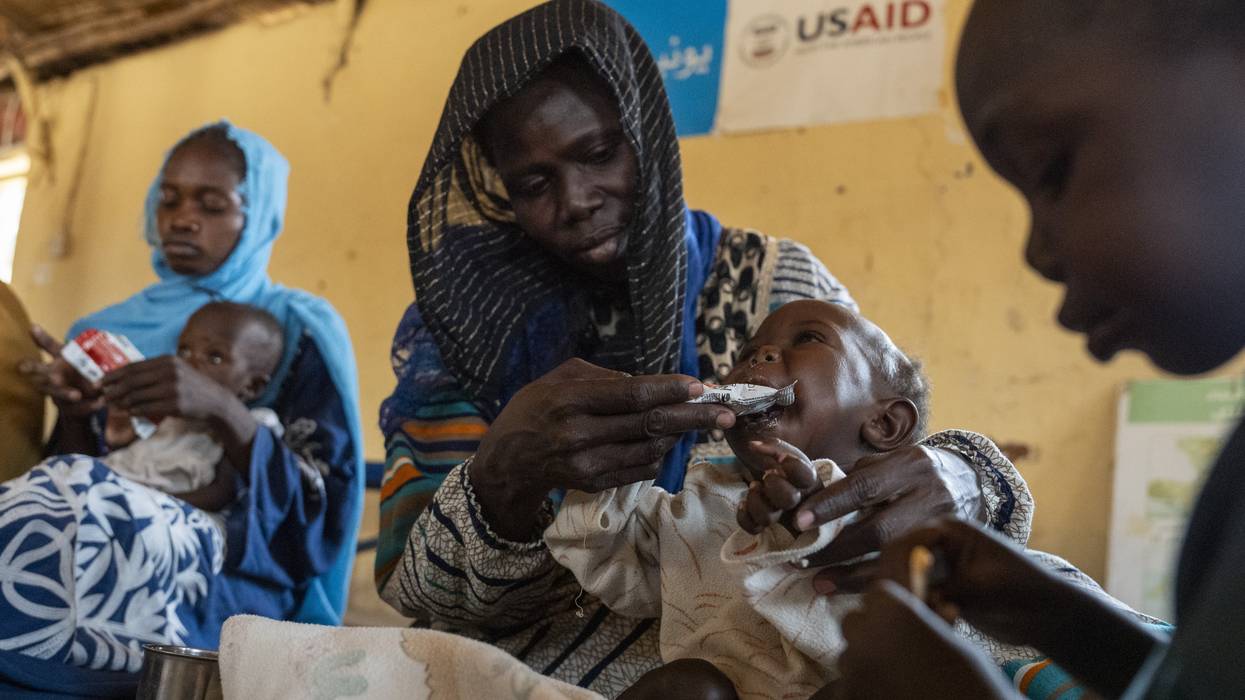
"Now in its third consecutive year of famine, Sudan received nothing."
Elon Musk's vault to trillionaire status following the public debut of his rocket company SpaceX came on the heels of an analysis showing the devastating impact of his destruction of the US Agency for International Development on millions of people in countries facing or on the brink of famine.
The analysis, authored by Council on Foreign Relations expert and longtime aid worker Sam Vigersky, noted that Musk's targeting of USAID during his tenure as head of the Department of Government Efficiency (DOGE) resulted in the transfer of the Food for Peace program to the US Department of Agriculture (USDA), an agency "without international humanitarian or disaster-response expertise."
Vigersky found that the USDA this year chose just seven countries to receive American grain under the Food for Peace program: the Democratic Republic of Congo, Ethiopia, Guatemala, Haiti, Kenya, El Salvador, and Rwanda. The latter two countries, Vigersky noted, "do not meet an emergency threshold" for assistance.
"Meanwhile, the country facing the largest hunger crisis in the world—Sudan—did not make the list. Now in its third consecutive year of famine, Sudan received nothing. In fact, more than 40% of Sudan’s community kitchens, a lifeline for the displaced, have closed in the past six months as funding dried up, according to Islamic Relief," Vigersky reported. "Afghanistan, Lebanon, and Yemen were also passed over. Millions of people in those countries live one step from famine, according to the Integrated Food Security Phase Classification (IPC), the UN-backed monitoring system that uses a standardized five-point scale (five being famine) to measure the severity of food insecurity."
Experts assessing the global impact of USAID's decimation at the hands of billionaire US President Donald Trump and the world's first trillionaire, who bragged publicly about "feeding USAID into the wood chipper," estimate that hundreds of thousands of people have already died as a result of the large-scale loss of humanitarian assistance—and millions more will die in the coming years if swift action is not taken to restore aid.
"The impacts of the cuts were immediate and tragic," Nicholas Enrich, a former USAID employee who became a whistleblower, wrote in The Boston Globe on Friday. "Health clinics and emergency ambulance services shuttered overnight. Clinical trials were deserted. Thousands of healthcare workers lost their jobs. Lifesaving food and medicine was left to expire in warehouses. According to conservative estimates, in the year since USAID was dismantled, 750,000 people have died as a result of the cuts. For the first time in a generation, more children died in one year — 2025—than in the previous year."
Oxfam has estimated that a 10% tax on Musk's $1 trillion fortune would generate enough revenue to end extreme poverty worldwide for a year.

Trump claimed on social media that a diplomatic agreement would be signed on Sunday, but Iran's Foreign Ministry pushed back on that timeline.
President Donald Trump claimed Saturday that the US and Iran are on track to sign a diplomatic agreement this weekend, but added that "we have the ultimate alternative" if the process doesn't "work out."
"The 'ultimate alternative' sounds a lot like a nuclear threat," Sina Toossi, a senior fellow at the Center for International Policy, wrote in response to the president's Truth Social post. "Not the first time Trump has hinted at it."
The agreement Trump referenced is believed to be "memorandum of understanding" that's expected be fleshed out in "technical talks" that could begin next week, according to Pakistani Prime Minister Shehbaz Sharif, who is mediating the negotiations.
"We are closer to a peace deal than ever before," Sharif wrote on social media, echoing Iranian Foreign Minister Abbas Araghchi, who said on Friday that "the Islamabad Memorandum of Understanding has never been closer."
"Pending its finalization, the media should refrain from entering speculation about its content," Araghchi added. "In line with our responsible and transparent approach, all details will be shared with the public in due course."
On Saturday, a spokesperson for the Iranian Foreign Ministry cast doubt on the timeline put forth by Trump and Sharif.
"We will have to wait and see about the exact date of the signing of the memorandum of understanding, although it will not be tomorrow,” said Esmaeil Baqaei, as reported by Iranian state media. “The possibility of this happening in the coming days cannot be ruled out. However, due to the hesitation of the other side, we must be cautious in making any comments about this process.”
In his Truth Social post on Saturday, Trump declared that the Strait of Hormuz will be "OPEN TO ALL" immediately after the deal is signed—a condition that Iran has not confirmed.
"We look forward to working with Iran, and the entire Middle East, long into the future," Trump added. "Hopefully, this process will all work out quickly, easily, and smoothly. If it doesn’t, we have the ultimate alternative, hopefully never to be used again!"
Trump has repeatedly issued genocidal threats against Iran since launching the illegal war in late February, openly declaring his intention to target Iran's civilian infrastructure and wipe out its "whole civilization." Experts say such threats, even if they aren't acted on, constitute war crimes under international law.