

The Pentag
Across the world in the Maldives, rising sea levels continue to threaten this Indian Ocean archipelago. It is the world's lowest-lying nation, on average only 1.3 meters above sea level. The plight of the Maldives gained global prominence when its young president, the first-ever democratically elected there, Mohamed Nasheed, became one of the world's leading voices against climate change, especially in the lead-up to the 2009 U.N. climate-change summit in Copenhagen. Nasheed held a ministerial meeting underwater, with his cabinet in scuba gear, to illustrate the potential disaster.
In February, Nasheed was ousted from his presidency at gunpoint. The Obama administration, through State Department spokesperson Victoria Nuland, said of the coup d'etat, "This was handled constitutionally." When I spoke to Nasheed last month, he told me: "It was really shocking and deeply disturbing that the United States government so instantly recognized the former dictatorship coming back again. ... The European governments have not recognized the new regime in the Maldives." There is a parallel between national positions on climate change and support or opposition to the Maldives coup.
Nasheed is the subject of a new documentary, "The Island President," in which his remarkable trajectory is traced. He was a student activist under the dictatorship of Maumoon Abdul Gayoom and was arrested and tortured, along with many others. By 2008, when elections were finally held, Gayoom lost, and Nasheed was elected. As he told me, though: "It's easy to beat a dictator, but it's not so easy to get rid of a dictatorship. The networks, the intricacies, the institutions and everything that the dictatorship has established remains, even after the elections." On the morning of Feb. 7, 2012, under threat of death to him and his supporters from rebelling army generals, Nasheed resigned.
While no direct link has been found yet between Nasheed's climate activism and the coup, it was clear in Copenhagen in 2009 that he was a thorn in the Obama administration's side. Nasheed and other representatives from AOSIS, the Alliance of Small Island States, were taking a stand to defend their nations' very existence, and building alliances with grass-roots groups like 350.org, that challenge corporate-dominated climate policy.
Back in the U.S., March delivered this year's first weather disaster that caused more than $1 billion in damage, with tornadoes ravaging four central states and killing 41. Dr. Jeff Masters of the weather website Weather Underground blogged about March that "records not merely smashed, but obliterated." On March 23, conservative Texas Gov. Rick Perry renewed the state of emergency declared there last year as a result of massive droughts.
Texas lists 1,000 of the state's 4,710 community water systems under restrictions. Spicewood, Texas, population 1,100, has run dry, and is now getting water trucked in. Residents have severe restrictions on water use. But for Perry, restricting corporations whose greenhouse-gas emissions lead to climate change is heresy.
Mitt Romney is on track to be the Republican candidate for president, with the support of former challengers like Perry. They are already attacking President Obama on climate change. The American Legislative Exchange Council, or ALEC, has been promoting legislation in statehouses to oppose any climate legislation, and rallying members of Congress to block federal action, especially by hampering the work of the Environmental Protection Agency. As the Center for Media and Democracy has detailed in its "ALEC Exposed" reporting, ALEC is funded by the country's major polluters, including ExxonMobil, BP America, Chevron, Peabody Energy, and Koch Industries. The Koch brothers have also funded tea-party groups like FreedomWorks, to create the appearance of grass-roots activism.
This election season will likely be marked by more extreme weather events, more massive loss of life, and billions of dollars in damages.
President Nasheed is working to run again for his lost presidency, as President Obama tries to hold on to his. The climate may hang in the balance.
Denis Moynihan contributed research to this column.
The Pentag
Across the world in the Maldives, rising sea levels continue to threaten this Indian Ocean archipelago. It is the world's lowest-lying nation, on average only 1.3 meters above sea level. The plight of the Maldives gained global prominence when its young president, the first-ever democratically elected there, Mohamed Nasheed, became one of the world's leading voices against climate change, especially in the lead-up to the 2009 U.N. climate-change summit in Copenhagen. Nasheed held a ministerial meeting underwater, with his cabinet in scuba gear, to illustrate the potential disaster.
In February, Nasheed was ousted from his presidency at gunpoint. The Obama administration, through State Department spokesperson Victoria Nuland, said of the coup d'etat, "This was handled constitutionally." When I spoke to Nasheed last month, he told me: "It was really shocking and deeply disturbing that the United States government so instantly recognized the former dictatorship coming back again. ... The European governments have not recognized the new regime in the Maldives." There is a parallel between national positions on climate change and support or opposition to the Maldives coup.
Nasheed is the subject of a new documentary, "The Island President," in which his remarkable trajectory is traced. He was a student activist under the dictatorship of Maumoon Abdul Gayoom and was arrested and tortured, along with many others. By 2008, when elections were finally held, Gayoom lost, and Nasheed was elected. As he told me, though: "It's easy to beat a dictator, but it's not so easy to get rid of a dictatorship. The networks, the intricacies, the institutions and everything that the dictatorship has established remains, even after the elections." On the morning of Feb. 7, 2012, under threat of death to him and his supporters from rebelling army generals, Nasheed resigned.
While no direct link has been found yet between Nasheed's climate activism and the coup, it was clear in Copenhagen in 2009 that he was a thorn in the Obama administration's side. Nasheed and other representatives from AOSIS, the Alliance of Small Island States, were taking a stand to defend their nations' very existence, and building alliances with grass-roots groups like 350.org, that challenge corporate-dominated climate policy.
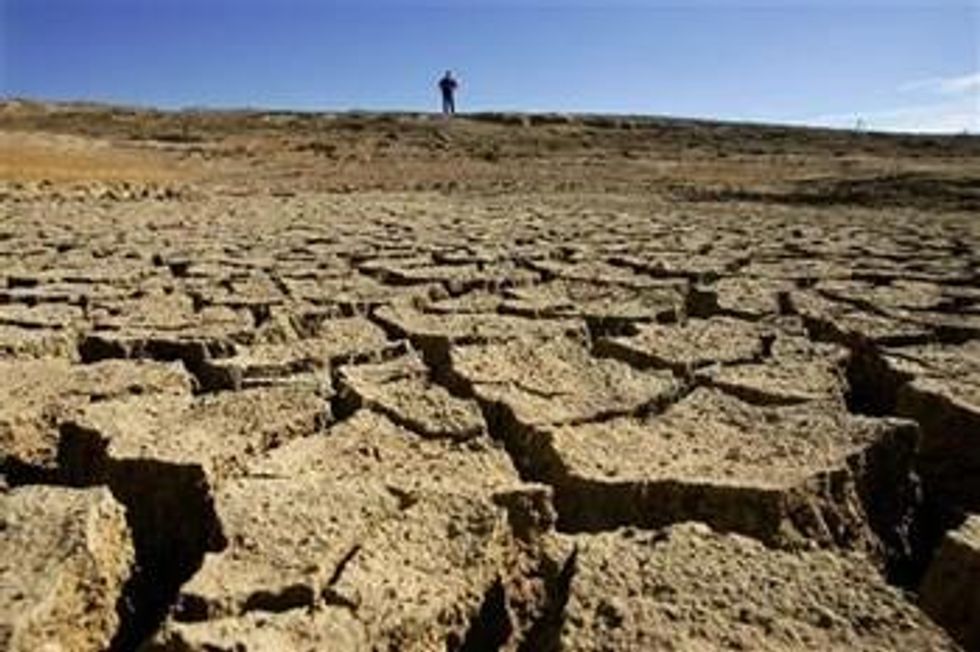
Back in the U.S., March delivered this year's first weather disaster that caused more than $1 billion in damage, with tornadoes ravaging four central states and killing 41. Dr. Jeff Masters of the weather website Weather Underground blogged about March that "records not merely smashed, but obliterated." On March 23, conservative Texas Gov. Rick Perry renewed the state of emergency declared there last year as a result of massive droughts.
Texas lists 1,000 of the state's 4,710 community water systems under restrictions. Spicewood, Texas, population 1,100, has run dry, and is now getting water trucked in. Residents have severe restrictions on water use. But for Perry, restricting corporations whose greenhouse-gas emissions lead to climate change is heresy.
Mitt Romney is on track to be the Republican candidate for president, with the support of former challengers like Perry. They are already attacking President Obama on climate change. The American Legislative Exchange Council, or ALEC, has been promoting legislation in statehouses to oppose any climate legislation, and rallying members of Congress to block federal action, especially by hampering the work of the Environmental Protection Agency. As the Center for Media and Democracy has detailed in its "ALEC Exposed" reporting, ALEC is funded by the country's major polluters, including ExxonMobil, BP America, Chevron, Peabody Energy, and Koch Industries. The Koch brothers have also funded tea-party groups like FreedomWorks, to create the appearance of grass-roots activism.
This election season will likely be marked by more extreme weather events, more massive loss of life, and billions of dollars in damages.
President Nasheed is working to run again for his lost presidency, as President Obama tries to hold on to his. The climate may hang in the balance.
Denis Moynihan contributed research to this column.
The Pentag
Across the world in the Maldives, rising sea levels continue to threaten this Indian Ocean archipelago. It is the world's lowest-lying nation, on average only 1.3 meters above sea level. The plight of the Maldives gained global prominence when its young president, the first-ever democratically elected there, Mohamed Nasheed, became one of the world's leading voices against climate change, especially in the lead-up to the 2009 U.N. climate-change summit in Copenhagen. Nasheed held a ministerial meeting underwater, with his cabinet in scuba gear, to illustrate the potential disaster.
In February, Nasheed was ousted from his presidency at gunpoint. The Obama administration, through State Department spokesperson Victoria Nuland, said of the coup d'etat, "This was handled constitutionally." When I spoke to Nasheed last month, he told me: "It was really shocking and deeply disturbing that the United States government so instantly recognized the former dictatorship coming back again. ... The European governments have not recognized the new regime in the Maldives." There is a parallel between national positions on climate change and support or opposition to the Maldives coup.
Nasheed is the subject of a new documentary, "The Island President," in which his remarkable trajectory is traced. He was a student activist under the dictatorship of Maumoon Abdul Gayoom and was arrested and tortured, along with many others. By 2008, when elections were finally held, Gayoom lost, and Nasheed was elected. As he told me, though: "It's easy to beat a dictator, but it's not so easy to get rid of a dictatorship. The networks, the intricacies, the institutions and everything that the dictatorship has established remains, even after the elections." On the morning of Feb. 7, 2012, under threat of death to him and his supporters from rebelling army generals, Nasheed resigned.
While no direct link has been found yet between Nasheed's climate activism and the coup, it was clear in Copenhagen in 2009 that he was a thorn in the Obama administration's side. Nasheed and other representatives from AOSIS, the Alliance of Small Island States, were taking a stand to defend their nations' very existence, and building alliances with grass-roots groups like 350.org, that challenge corporate-dominated climate policy.
Back in the U.S., March delivered this year's first weather disaster that caused more than $1 billion in damage, with tornadoes ravaging four central states and killing 41. Dr. Jeff Masters of the weather website Weather Underground blogged about March that "records not merely smashed, but obliterated." On March 23, conservative Texas Gov. Rick Perry renewed the state of emergency declared there last year as a result of massive droughts.
Texas lists 1,000 of the state's 4,710 community water systems under restrictions. Spicewood, Texas, population 1,100, has run dry, and is now getting water trucked in. Residents have severe restrictions on water use. But for Perry, restricting corporations whose greenhouse-gas emissions lead to climate change is heresy.
Mitt Romney is on track to be the Republican candidate for president, with the support of former challengers like Perry. They are already attacking President Obama on climate change. The American Legislative Exchange Council, or ALEC, has been promoting legislation in statehouses to oppose any climate legislation, and rallying members of Congress to block federal action, especially by hampering the work of the Environmental Protection Agency. As the Center for Media and Democracy has detailed in its "ALEC Exposed" reporting, ALEC is funded by the country's major polluters, including ExxonMobil, BP America, Chevron, Peabody Energy, and Koch Industries. The Koch brothers have also funded tea-party groups like FreedomWorks, to create the appearance of grass-roots activism.
This election season will likely be marked by more extreme weather events, more massive loss of life, and billions of dollars in damages.
President Nasheed is working to run again for his lost presidency, as President Obama tries to hold on to his. The climate may hang in the balance.
Denis Moynihan contributed research to this column.