

5
#000000
#FFFFFF
To donate by check, phone, or other method, see our More Ways to Give page.
Daily news & progressive opinion—funded by the people, not the corporations—delivered straight to your inbox.
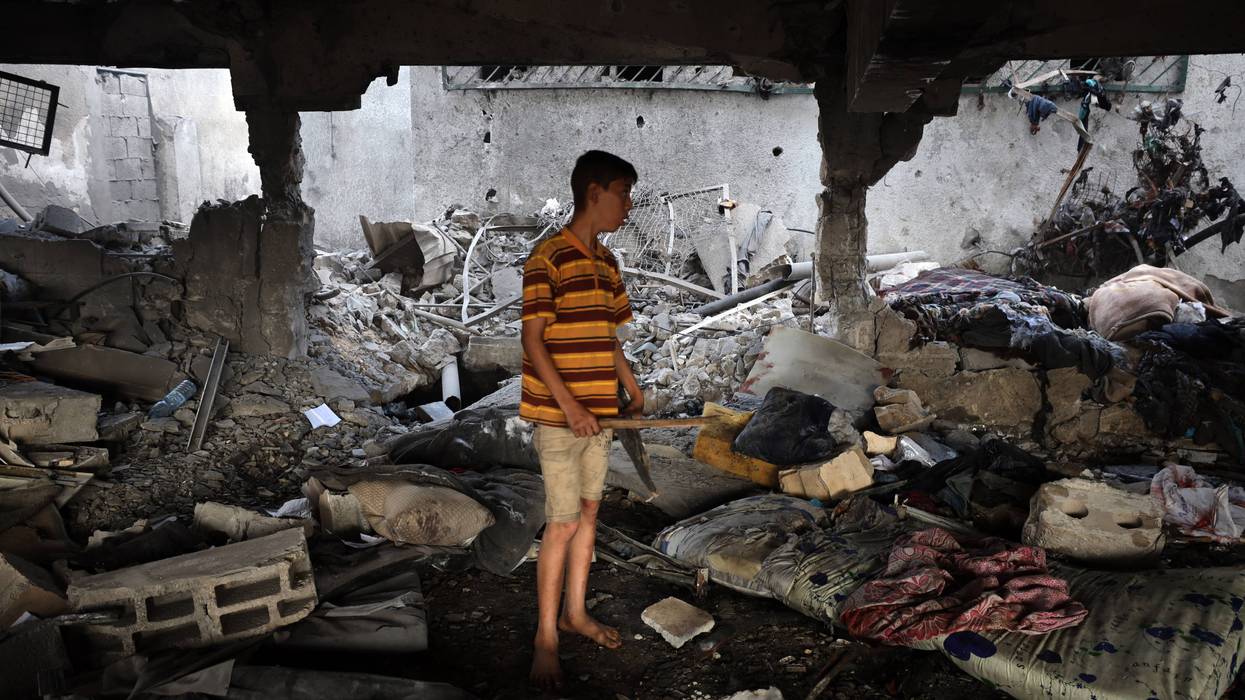
The coalition leader behind the report called the figures "a warning that the global norms that once protected children are collapsing," and "the world is drifting toward a place where even the youngest are no longer off‑limits.”
From the Gaza Strip to Ukraine and beyond, violent attacks on students, teachers, and schools have surged in recent years, according to a report released Monday by an international coalition.
The report, titled "Education Under Attack 2026," documents at least 8,566 attacks on education and cases of military forces using educational facilities from the beginning of 2024 to the end of last year, a more than 40% increase from the previous two-year period.
"We believe the true increase is far higher," noted Felicity Pearce, lead researcher for the Global Coalition to Protect Education from Attack (GCPEA) report, in a statement. "Escalating conflict, shrinking humanitarian access, and widespread information blackouts mean many attacks are never reported."
The 2024-25 attacks harmed at least 10,600 students, educators, and other personnel across 83 countries, including 55 that are not in active conflict. GCPEA found the highest incidence in Colombia, the Democratic Republic of the Congo (DRC), Ethiopia, Haiti, Palestine, and Ukraine, while Cameroon, Myanmar, Nigeria, and Yemen had the greatest numbers of people harmed or killed.
"Cameroon continued to face overlapping security crises, which continued to heavily affect civilians in 2024-2025, marked by persistent violence in the Far North region and protracted armed conflict in the Northwest and Southwest regions," the report explains. GCPEA recorded at least 67 attacks on schools, 85 attacks on students and staff, and 11 reports of military use of educational facilities.
It's now been a decade since the Colombian government and the Revolutionary Armed Forces of Colombia signed peace accords, but GCPEA still identified at least 160 reports of attacks on educational facilities, 129 reports of attacks on students and personnel, and 107 reports of military use of schools.
In the DRC, as "armed conflict intensified" between the Rwandan Defense Force-backed March 23 Movement and the Congolese national armed forces—supported by Burundi's military and allied militias—there were at least 350 attacks on schools, 15 attacks on students and staff, and 313 cases of military use of facilities.
"Conflict in Ethiopia continued to impact access to education for millions of children," the publication states. GCPEA tracked around 100 attacks on schools and seven on students and personnel—though acknowledged monitoring and reporting challenges—as well as approximately 1,200 schools used for military purposes, a sharp increase from the previous period.
"As armed gangs in Haiti merged and gained control over more of the country, escalating violence included attacks on schools, school students, and staff, as well as the military use of schools, and disrupted education for over 1.2 million children," according to the report. Specifically, there were at least 339 attacks on schools, 55 attacks on students and staff, and 27 reports of military use of facilities.
In Myanmar, "as internal conflict intensified between the military junta that seized power in February 2021 and armed resistance groups," GCPEA tracked 212 attacks on schools, 18 attacks on students and personnel, and 84 military occupations.
As armed conflict between the Nigerian government and non-state armed groups continued during the reporting period, attacks on schools dropped slightly, to nine, while attacks on students and staff were consistent, at 14—but at least 90 people were killed or injured, and over 700 were abducted. There were at least five incidents of the military using schools.
"Israel continued to commit genocidal violence against the Palestinian population in Gaza," the report says, and there were increased attacks on schools, students, and teachers in both the coastal strip—where most educational buildings have been "severely damaged"—and the occupied West Bank. Across Palestine, GCPEA identified at least 620 attacks on schools, 2,400 attacks on students and staff, and 10 cases of the military use of educational facilities.
As Ukrainian forces continued to fight Russian invaders, GCPEA tracked more than 900 attacks on schools and at least one case of military use of a school. The report also points out that "1,611 schools had been damaged or destroyed since the start of the full-scale invasion, including at least 339 that had been completely destroyed," forcing 741,000 children to study in a hybrid format, and another 443,000 to learn entirely online.
In Yemen, "a fragile truce largely held through 2024 and 2025," but the continued battle among the internationally recognized government, Houthi forces, and regional actors meant there were still at least 16 attacks on schools, 62 attacks on students and staff, and 63 cases of military use of facilities.
Lisa Chung Bender, director of the GCPEA, told The Guardian that the report's findings "are a warning that the global norms that once protected children are collapsing."
"A warning that the world is drifting toward a place where even the youngest are no longer off‑limits," she said. "And a warning that if we do not hold the line now, we may never get it back."
The report urges support for the Safe Schools Declaration, and features recommendations for governments and civil society.
Its release follows the latest publication from the Explosive Weapons Monitor, which was released last week and documents at least 22,616 civilian fatalities from explosive weapons across 65 countries and territories last year. The monitor found 1,416 attacks on education in 2025, a 64% increase from 2024, and also highlighted Myanmar, Palestine, and Ukraine.
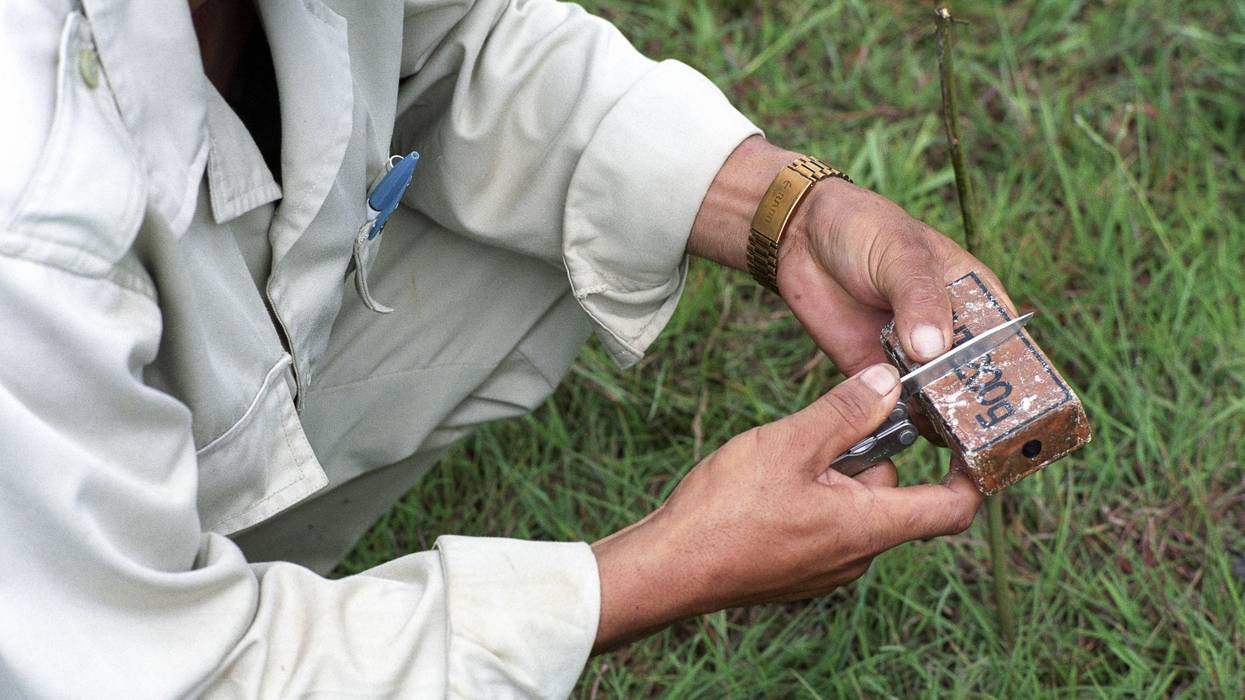
This Earth Month, as we reflect on the power we hold, we should recognize that some of the most profound acts of environmental stewardship begin not with planting or preservation, but with making the ground safe enough to stand on.
During the 1960s, America was deep in the throes of the US War in Vietnam. In addition to student protests of the war, there were also “teach-ins”—gatherings that questioned not just the war, but the systems behind it, on campuses all across the country. This anti-war movement inspired the start of another; the fight for environmental protection, giving birth to Earth Month in 1970.
Earth Month is not only a moment of reflection about sustainability and the protection of the environment; it is a test of what we choose to do with what we know. This year’s theme, “Our Power, Our Planet,” asks us to consider where power truly lives. In Laos and Ukraine, the answer is clear: It lives in the land and its people.
Land feeds families and shapes culture. It determines whether a child grows up with stability or scarcity. In Laos, more than 70% of the population depends on agriculture. Golden green glutinous, or “sticky,” rice fields stretch across the country, joined by cassava, coffee, and vegetables that sustain both households and local markets. In Ukraine, fertile black soil has long made the country a cornerstone of the global food system, feeding more than 400 million people through exports of wheat, corn, barley, and sunflower seed.
In both countries, the land carries a hidden burden.
Safe land means farmers can plant without fear, invest in their futures, and pass on their livelihoods to the next generation.
Between 1964 and 1973, the US dropped at least 2.5 million tons of ordnance on Laos, with nearly a third failing to detonate. Today, unexploded ordnance litters every province, leaving a quarter of villages affected. Fertile ground is laced with danger.
Ukraine is now becoming all too familiar with this reality. Over four years into Russia’s full-scale invasion, over a quarter of its land is estimated to be contaminated with explosive remnants of war. Just like in Laos, their legacy will endure for generations.
For farmers, this threat is daily life.
In Ukraine, images circulate of tractors moving steadily through fields under gray skies, in rain, even under fire. There is a kind of grim humor in the idea that farmers will cultivate their land no matter the obstacle. Beneath the dark humor of those internet memes is a gritty determination to survive.
In Laos, that risk has been a constant for decades.
Mae Tao Seesom was just in her early 20s during the war in Laos. She remembers having to hide in caves to avoid danger. Unable to farm their land, she and fellow villagers had to harvest what grew in the forest.
Decades after the war, in 2019, Mae Tao Seesom was cooking for her grandchildren when a cluster bomb exploded under her fire. Luckily, no one was injured. This time.
In Ukraine, Oksana Lukiyanchuk’s newly inherited farm is only 35 kilometers from the front lines; she moved to her own farm in 2021 to generate a livelihood for her young family and a legacy to pass on to her newborn son. Only months later, Russia invaded.
The war has drained her workforce; she now works her land with just one hired hand. Under constant threat of drones, Oksana continues to build her business; as a fifth-generation farmer, her ties to the soil here keep her from leaving. This sense of belonging emanates widely among Ukrainian farmers, and is the reason many continue to risk everything to grow on these front lines.
What lies beneath the soil does more than threaten lives; it constrains entire economies.
In Laos, farmers often avoid deep plowing or expanding irrigation for fear of what they might uncover. The result is lower yields and lost potential. Infrastructure—from roads to schools to clinics—cannot move forward without clearance. Decades after the last bombs fell, vast areas of land remain unused.
Ukraine now stands at the beginning of a similar economic struggle. Agriculture is one of its largest sectors, with consequences far beyond its borders. Smaller farms face labor shortages as workers are drawn into military service. Larger producers race to maintain supply chains under constant disruption.
Yet, this is not a story of helplessness. It is a story of leadership.
In Laos, unexploded ordnance clearance has become a national priority, embedded in its development strategy and backed by decades of commitment. Progress has been steady: Casualties have declined, and more land is made safe each year. National institutions, international organizations, and local communities work in concert, ensuring that clearance efforts reach those most in need.
In Ukraine, that same sense of urgency has taken root with remarkable speed. Organizations like Fondation Suisse de Déminage hire hundreds of explosive ordnance risk educators to meet farm staff where they are—at farmers markets, in schools, and on their land—to ensure everyone living in hazardous areas knows the threat of these weapons. As the country develops new landmine technology, this risk education saves lives now, and will remain necessary for decades on.
While the risks of demining are immediate, so are the returns.
Safe land means farmers can plant without fear, invest in their futures, and pass on their livelihoods to the next generation. It allows roads to be built, markets to grow, and communities to thrive. It restores not only productivity, but dignity.
This is why demining is not simply a humanitarian effort. It is one of the most direct and effective investments in development. It strengthens food systems, reduces poverty, and builds resilience all at once.
It is also achievable.
The experience of Laos shows that progress, while gradual, is real. With sustained commitment, improved technology, and strong partnerships, contamination can be reduced, lives can be saved, and land can be returned to those who depend on it.
Ukraine’s future is not yet written. But the path ahead is clearer because others have walked it before.
If land is life, then clearing land is renewal.
This Earth Month, as we reflect on the power we hold, we should recognize that some of the most profound acts of environmental stewardship begin not with planting or preservation, but with making the ground safe enough to stand on.
In Laos and Ukraine, that work is already underway—unceasingly, by the people, and with extraordinary courage.
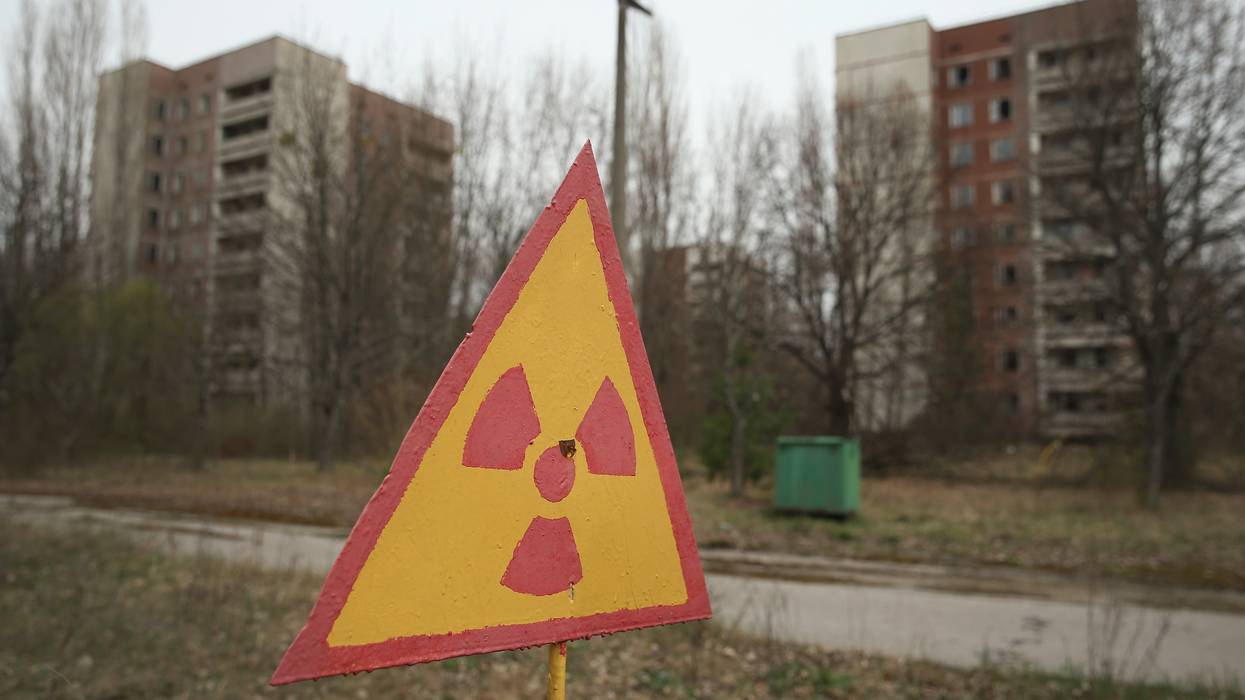
"Nuclear power stations have inherent risks," said an official at Greenpeace Ukraine. "In a world at war, with massive geopolitical tension and climate extremes, those risks are increasing."
The continuing conflict between Russia and Ukraine is once again raising concerns about a nucelar disaster in the region on the 40th anniversary of the catastrophic accident at the Chernobyl power plant.
Reuters reported on Monday that a Ukrainian drone the struck a transport department at the Zaporizhzhia Nuclear Power Plant, which has been under Russian control since March 2022, shortly after its armed forces invaded Ukraine.
The Russian government said that an employee at the Zaporizhzhia plant was killed in the attack, and International Atomic Energy Agency Director General Rafael Mariano Grossi reiterated in a social media post that "strikes on or near [nuclear power plants] can endanger nuclear safety and must not take place."
Russia has also engaged in dangerous attacks around nuclear power infrastructure over the last four years, and a report released this month by Greenpeace Ukraine found that the New Safe Confinement (NSC) at Chernobyl, which contains the ruins of the plant's reactor unit 4, was significantly compromised after being struck by a high-explosive warhead from a Russian drone last year.
"The Russian drone strike... destroyed the main functions of the [NSC]," the report states. "The impact of the drone on the northwest side of the NSC caused an opening... which penetrated both the outside and inside arch shells. Critical structural elements of the NSC have been deformed and damaged including the Main Crane System, making their load-bearing capability impossible to assess."
The drone strike also burned the membrane layer inside the NSC, which has taken out the ability to control humidity at the site and could lead to accelerated corrosion of the NSC's steel components.
"The NSC was designed to last 100 years on the basis that its low humidity control was maintained," notes the report. "Accelerated corrosion may reduce the 100-year design life of the structure if humidity control is not restored by 2030."
Greenpeace Ukraine nuclear expert Shaun Burnie described the damage done to the NSC as "a Russian-made war crime," and lamented it will mean "years of repairs and further delays before the sarcophagus can be safely dismantled."
Polina Kolodiazhna, senior campaigner from Greenpeace Ukraine, said on Sunday that Russia's invasion of Ukraine had added new urgency for her country to end its dependence on nuclear power given the massive environmental and human risks.
"Nuclear power stations have inherent risks, and those risks are escalating," Kolodiazhna said. "Russia, for the first time in the history of warfare, has systematically attacked and occupied nuclear plants, showing how they can be used as military and political tools. In a world at war, with massive geopolitical tension and climate extremes, those risks are increasing."
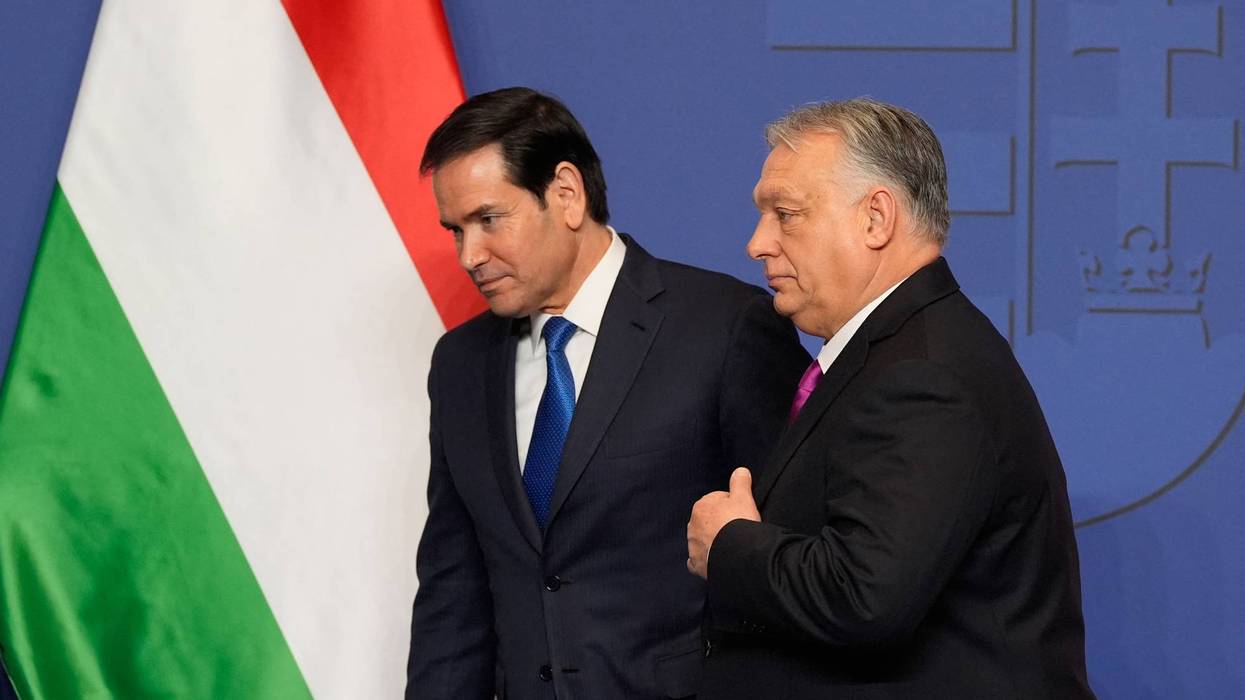
"It’s time to take the gloves off and fight for our future," the democratic socialist congresswoman asserted.
As US Secretary of State Marco Rubio heaped praise upon Viktor Orbán as he seeks a sixth term as Hungary's increasingly autocratic prime minister, progressive Congresswoman Alexandria Ocasio-Cortez on Monday implored democracy defenders to "take the gloves off and fight for our future."
Visiting Budapest, the Hungarian capital, on the last leg of a three-country tour of Europe, Rubio pressed the Trump administration's thumb on the proverbial scale of Hungary's April election with a ringing endorsement of Orbán, telling him that President Donald Trump "is deeply committed to your success."
That's a glaring departure from a 2019 warning from lawmakers including then-Sen. Rubio (R-Fla.) to Trump that democracy had "significantly eroded" in Hungary as Orbán consolidated control over the electoral process, judiciary, and press. Now, Rubio says Orbán's success is "essential and vital" to US national interests.
"From Orbán to Trump, the rise of far-right movements is tightly coordinated and transcends borders," Ocasio-Cortez said on Facebook in response to Rubio's visit. "So too should be our international defense of democracy and the fight for working people. From policy to tactics, it’s time to take the gloves off and fight for our future."
Although Hungary openly flouted a US ban on importing oil, natural gas, or coal from Russia amid President Vladimir Putin's ongoing invasion and occupation of Ukraine, Trump recently granted Budapest a one-year exemption from sanctions.
And while Venezuelan President Nicolás Maduro's pursuit of an independent foreign policy—which included close relations with Russia and China—was cited as a reason for the US invasion of Venezuela and abduction of Maduro, Rubio said that Orbán's increasingly close ties with Moscow and Beijing are a matter of Hungarian sovereignty.
“We’re not asking any country in the world to isolate themselves from anybody,” Rubio said, although that's exactly what the Trump administration reportedly ordered Venezuela's interim government to do to China, Russia, Iran, and Cuba.
“There’s no reason to sugarcoat it. I’m going to be very blunt with you," Rubio told reporters Monday, adding that Trump and Orbán "have a very, very close personal relationship and working relationship, and I think it has been incredibly beneficial to the relationship between our two countries.”
Speaking Friday at the Munich Security Conference in Germany, Ocasio-Cortez accused Trump of trying to usher in an "age of authoritarianism."
“We have to have a working-class-centered politics if we are going to succeed,” she said, “and also if we are going to stave off the scourges of authoritarianism, which provides political siren calls to allure people into finding scapegoats to blame for rising economic inequality, both domestically and globally.”
Ocasio-Cortez—whose increasingly high profile has sparked speculation of a possible run for higher office—also slammed the "hypocrisies" of US foreign policy, “whether it is kidnapping a foreign head of state, whether it is threatening our allies to colonize Greenland, whether it is looking the other way in a genocide, hypocrisies are vulnerabilities, and they threaten democracies globally."
"This is a moment where we are seeing our presidential administration tear apart the transatlantic partnership,” she added. “What is happening is indeed very grave, and we are in a new era, domestically and globally."
The attacks came as Trump and Zelenskyy are expected to discuss critical questions in a Ukraine-Russia peace deal, including its territorial sovereignty, NATO protections, and control over its natural resources.
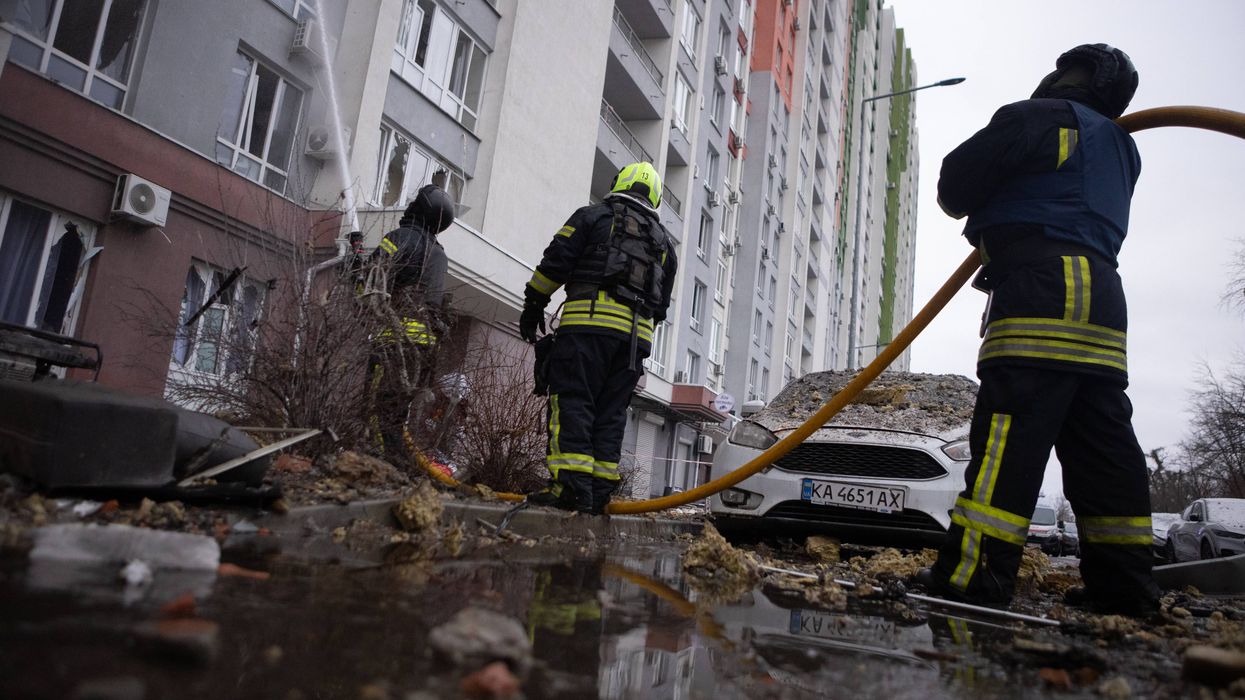
As Ukrainian President Volodymyr Zelenskyy made his way to Florida for a pivotal set of talks this weekend with US President Donald Trump, Russia launched a barrage of drone and missile attacks on Kyiv early Saturday morning.
At least two people were killed in the Ukrainian capital during the 10-hour attack, with 44 more—including two children—injured. Hundreds of thousands of residents are left to brave near-freezing temperatures without heat following the attack, which cut off power supplies.
The attack came as Zelenskyy prepared to stop in Canada before meeting with Trump on Sunday to discuss a 20-point plan to end the nearly four-year war with Russia that has been the subject of weeks of negotiation between US and Ukrainian emissaries.
Zelenskyy is seeking to maintain Ukraine's territorial sovereignty without having to surrender territory—namely, the eastern Donbass region that is largely occupied by Russian forces. He also hopes that any agreement to end the war will come with a long-term security guarantee reminiscent of NATO.
On Friday, Zelenskyy told reporters that the peace deal was 90% complete. But Trump retorted that Zelenskyy "doesn't have anything until I approve it."
Trump has expressed hostility toward Zelenskyy throughout his presidency. In February, before berating him in a now-infamous Oval Office meeting, Trump insisted falsely that Ukraine, not Russia, was responsible for starting the war in 2022.
Zelenskyy's latest peace proposal was issued in response to Trump's proposal last month, which was heavily weighted in Russia's favor.
It called for Ukraine to recognize Russia's illegal annexation of Crimea and cede the entirety of the Donbass, about 2,500 square miles of territory, to Russia, including territory not yet captured. Trump's plan puts a cap of 600,000 personnel on Ukraine's military and calls for Ukraine to add a measure in its constitution banning it from ever joining NATO.
Earlier this year, Trump demanded that Ukraine give up $500 billion worth of its mineral wealth in what he said was "repayment" for US military support during the war (even though that support has only totalled about $175 billion).
In his latest proposal, Trump has pared down his demands to the creation of a "Ukraine Development Fund" that would include the "extraction of minerals and natural resources" as part of a joint US-Ukraine reconstruction effort.
While those terms appear less exploitative, the reconstruction program is expected to be financed by US loans from firms like BlackRock, which have been heavily involved in the diplomatic process.
"The infrastructure rebuilt with these loans—ports, rail lines, power grid—won’t be Ukrainian in any meaningful sense. It’ll be owned by international consortiums, operated for profit, with revenues flowing out to service the debt," wrote the Irish geopolitical commentator Deaglan O'Mulrooney on Tuesday. "In other words, Ukraine will be gutted."
Despite the criticism, Zelenskyy has signaled support in principle for the US reconstruction proposal as an alternative to direct expropriation.
The "red lines" for Zelenskyy heading into his talk with Trump are related to Ukraine's territorial integrity. He has said he will not recognize Russian control of the Donbass, or the Zaporizhzhia nuclear power plant, the largest nuclear facility in Europe, which Russia currently controls. He has also demanded that all terms of a peace agreement come up for a referendum among the Ukrainian people, which is strongly against territorial concessions.
At the same time, however, he insisted Saturday that "Ukraine is willing to do whatever it takes to stop this war."
“Antipersonnel landmines are inherently indiscriminate weapons that take a disproportionate toll on civilian lives, oftentimes long after conflicts end," said the group's director for Europe and Central Asia.
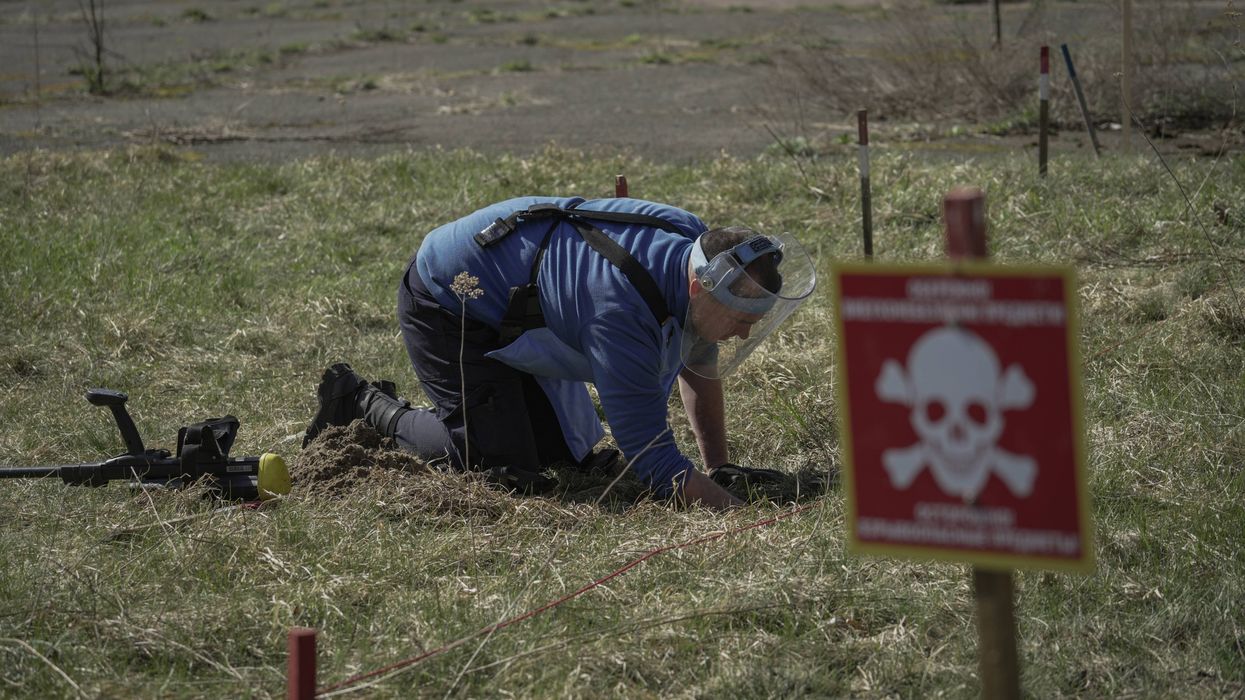
In a move decried by human rights organizations, the Trump administration has scrapped a Biden-era prohibition on the use of antipersonnel landmines, which killed thousands of noncombatants last year.
The Washington Post reported on Friday that US Secretary of Defense Pete Hegseth sent a memo on December 2 reversing the policy, saying the use of such mines would provide the US military with a “force multiplier” against enemies during “one of the most dangerous security environments in its history.”
“Antipersonnel landmines are inherently indiscriminate weapons that take a disproportionate toll on civilian lives, oftentimes long after conflicts end," explained Ben Linden, Amnesty International USA's advocacy director for Europe and Central Asia, in a statement on Tuesday.
According to a report published earlier this month by the Nobel Peace Prize-winning International Committee to Ban Landmines (ICBL), antipersonnel landmines and other explosive remnants of war killed at least 1,945 people and injured another 4,325 in 2024—the highest yearly casualty figure since 2020 and a 9% increase from the previous year.
Ninety percent of those casualties were civilians, and 46% of those civilians were children.
More than 160 countries have signed an international treaty, written in 1997, banning the use of antipersonnel landmines, defined as mines “designed to be exploded by the presence, proximity or contact of a person and that will incapacitate, injure or kill one or more persons” in war.
The US military has not used antipersonnel mines widely since the Persian Gulf War over three decades ago. However, it is one of the few countries that has not signed the treaty, known as the Ottawa Convention, and until earlier this year was the only NATO member not to participate.
In June 2022—just months after Russia launched its invasion of Ukraine—then-President Joe Biden announced the US would begin to follow many provisions of the convention, outlawing the use of antipersonnel mines in war zones with the exception of the Korean Peninsula. It was a return to a policy instituted under former President Barack Obama, before it was rolled back during the first Trump administration.
The Biden White House cited the mines' "disproportionate impact on civilians, including children," and drew a contrast with Russia, which it said was using the mines "irresponsibly" in civilian areas.
But Biden would reverse the policy just two years later, opting in 2024 to greenlight their provision to Ukraine, which was forbidden from acquiring or using the mines under the treaty.
The ICBL, a leading donor to global mine clearance, condemned the move, noting that "Ukraine already faces years of demining due to Russian landmine use."
In his memo, Hegseth has delivered another blow to global demining efforts. According to the Post:
He outlines five objectives for the new policy—including lifting geographic limits on the use of landmines, which would allow for their use globally, and giving combatant commanders the authority to use the explosives. It would also limit the destruction of landmines in the US inventory only to those that are “inoperable or unsafe."
The decision comes as other state actors are rapidly abandoning their obligations under the landmine treaty. Last week, Poland announced that after withdrawing from the convention, it plans to start producing antipersonnel mines again, deploying them to the eastern border, and possibly exporting them to Ukraine.
According to the ICBL report, Cambodia, Iran, Myanmar, and North Korea have all been alleged to have used mines within the last year. Meanwhile, Estonia, Finland, Latvia, and Lithuania are also in the process of withdrawing from the Ottawa Treaty, while Ukraine is trying to “suspend the operation” of the convention during its war with Russia.
Hegseth's memo also states that President Donald Trump has rescinded the US Humanitarian Mine Program, a long-running government initiative that helps partner nations find and destroy unexploded landmines.
According to the Landmine and Cluster Munition Monitor, the research arm of the Campaign to Ban Landmines, the US was the largest global donor to mine-clearing actions around the world in 2024. According to the State Department, it has provided more than $5 billion in assistance to more than 125 countries and areas since 1993.
Some of the money for the program has already been revoked through the Trump administration's slashing of funds for the US Agency for International Development (USAID) at the beginning of his term. The administration ordered mine-clearing nonprofits funded by the agency to cease operations "effective immediately."
According to a report earlier this month from the Century Foundation, the State Department "terminated or let expire" nearly 100 security assistance programs, which included demining programs, as part of its "foreign aid review" in January.
Hegseth's memo states that despite the end of the program, the US will remain "a global leader in unexploded ordnance clearing assistance and in conventional weapons destruction." It provides no details on how the new policy would allow for this.
Linden at Amnesty International called Hegseth's reversal of the landmine policy a "devastating decision."
"Not only will this policy change put more civilians at increased risk of harm, but it will undermine global efforts to eliminate the use of these dangerous weapons," Linden said. “This landmine policy reversal would make the United States and its partners less safe by eroding the prohibition against the use of these indiscriminate weapons on the battlefield."
Condemning the plans, Humanity & Inclusion said antipersonnel mines "render land unusable for agriculture, block access to essential services, and cause casualties decades after conflicts end."
Just a couple of weeks after the annual Landmine Monitor highlighted rising global casualties from explosive remnants of war, Reuters reported Wednesday that Poland plans to start producing antipersonnel landmines, deploy them along its eastern border, and possibly export them to Ukraine, which is fighting a Russian invasion.
As both the International Campaign to Ban Landmines (ICBL) monitor and Reuters noted, Poland is among multiple state parties in the process of ditching the Mine Ban Treaty. Citing the Polish Ministry of Foreign Affairs, the news agency reported that "antipersonnel mine production could begin once the treaty's six‑month withdrawal period is completed on February 20, 2026."
Asked about the prospect of Poland producing the mines as soon as it leaves the convention—also called the Ottawa Treaty—Polish Deputy Defense Minister Paweł Zalewski told Reuters: "I would very much like that... We have such needs."
"We are interested in large quantities as soon as possible," Zalewski said. He added that "our starting point is our own needs. But for us, Ukraine is absolutely a priority because the European and Polish security line is on the Russia-Ukraine front."
Notes from Poland pointed out on social media Thursday that the mine plans come amid other developments in Poland's East Shield operation. As the Kraków-based outlet detailed Sunday, "Germany will send soldiers to Poland next year to support its neighbor's efforts to strengthen its borders with Russia and Belarus, which are also NATO and the European Union's eastern flank."
Humanity & Inclusion (HI), a group launched in 1982 by a pair of doctors helping Cambodian refugees affected by landmines, said in a statement to Common Dreams that it "strongly condemns Poland's decision to resume production of antipersonnel mines as soon as its withdrawal from the Ottawa Treaty becomes official in February."
HI stressed that "antipersonnel mines disproportionately harm civilians. They render land unusable for agriculture, block access to essential services, and cause casualties decades after conflicts end. Their use is devastating for civilian populations. Producing landmines is cheap, but removing them would be even more expensive and complicated."
"Plus, new production of landmines would make this weapon more available and easier to purchase," the group warned. "Such a decision normalizes a weapon that has been prohibited since 1999, when the Ottawa Treaty entered into force, and fragilizes the treaty."
"The Ottawa Treaty has been incredibly effective in protecting civilians and drying up the landmine market, a weapon that was no longer produced in Europe, and only assembled by a limited number of countries, including Russia, Iran, and North Korea, among others," HI added, citing the drop in landmine casualties since the convention entered into force.
In 1999, casualties were around 25,000 annually, according to ICBL. By 2023, they had dropped to 5,757 injured or killed. However, as the campaign revealed in its latest report at the beginning of December, there were at least 6,279 casualties in 2024—the highest yearly figure since 2020 and a 9% increase from the previous year.
In the report, ICBL outlined recent alleged mine use by not only Russia and Ukraine but also Cambodia, Iran, Myanmar, and North Korea. The group also flagged that, along with Poland, Estonia, Finland, Latvia, and Lithuania are in the process of legally withdrawing from the Ottawa Treaty, while Ukraine is trying to unlawfully "suspend the operation" of the convention during its war with Russia.
ICBL director Tamar Gabelnick said at the time that "governments must speak out to uphold the treaty, prevent further departures, reinforce its provisions globally, and ensure no more countries use, produce, or acquire antipersonnel mines."
In a statement to Common Dreams this week, ICBL said that "Poland's announcement marks a deeply alarming escalation and brings Europe closer to the return of weapons that were deliberately banned because of their devastating humanitarian impact. Poland's announcement comes at a moment when Latvia, Estonia, and Lithuania's withdrawal from the Mine Ban Treaty takes legal effect on December 27, 2025, compounding a dangerous erosion of civilian protection in Europe."
"Every antipersonnel landmine laid represents a life put at risk," ICBL continued. "History shows that around 90% of landmine casualties are civilians, nearly half of them children. This is precisely why the International Campaign to Ban Landmines has long called for the prohibition of these weapons and continues to do so today."
"Antipersonnel landmines cannot be part of any modern defense strategy. They are indiscriminate weapons whose harm far outweighs any claimed military utility," the campaign added. "Europe once led the world in rejecting landmines. Allowing their return would not strengthen security. It would undermine the humanitarian norms that protect civilians everywhere."
This article has been updated with a new comment from the International Campaign to Ban Landmines.
"This is as close to a smoking gun as I've ever seen on Ukraine," said one observer.
A former senior Biden administration official admitted during a recent interview with who she thought were aides to Ukraine's president that the Russian invasion of Ukraine could have been averted if Kyiv had agreed to stop seeking NATO membership.
Amanda Sloat—a former special assistant to then-President Joe Biden and senior director for Europe at the National Security Council—believed she was speaking with aides to Ukrainian President Volodymyr Zelenskyy last week when she sat down for a phone interview with who turned out to be the Russian prankster duo known as Vovan and Lexus.
“We had some conversations even before the war started about, what if Ukraine comes out and just says to Russia, ‘Fine, you know, we won’t go into NATO, you know, if that stops the war, if that stops the invasion’—which at that point it may well have done,” Sloat said. “There is certainly a question, three years on now, you know, would that have been better to do before the war started, would that have been better to do [at the] Istanbul talks? It certainly would have prevented the destruction and loss of life.”
However, Biden officials chose not to address Russia's main concerns regarding Ukraine and NATO—with disastrous results.
Sloat explained that she "was uncomfortable with the idea of the US pushing Ukraine" against pursuing NATO membership, "and sort of implicitly giving Russia some sort of sphere of influence or veto power on that."
"I don’t think [then-President Joe] Biden felt like it was his place to tell Ukraine what to do then, to tell Ukraine not to pursue NATO," she said.
Sloat is the latest in a series of former US officials who have fallen victim to Vovan and Lexus' pranks, including ex-Secretaries of State Hillary Clinton and Mike Pompeo, UN Ambassador Samantha Power, and senior State Department official Victoria Nuland—who played a key role in a plot to overthrow the pro-Moscow government of then-Ukrainian President Viktor Yanukovych during the Euromaidan uprising of 2013-14.
Sloat's remarks during the interview implicitly belied the prevalent Western prewar narrative of an unprovoked Russian invasion—an assertion that ignored decades of provocation, beginning with the betrayal of a 1990 assurance by then-US Secretary of State James Baker to Soviet President Mikhail Gorbachev that NATO would not expand "one inch eastward" if the Soviets cooperated on German reunification.
Not only did NATO admit 13 new nations between then and the start of Russia's 2022 invasion, all of the new members were countries formerly in Moscow's orbit, and three—Estonia, Latvia, and Lithuania—were ex-Soviet republics. The Biden administration's public pronouncements of an "open door" to Ukrainian NATO membership continued right up to Russia's invasion, and were particularly intolerable for Moscow—even if Russian leaders understood that the US was actually more opposed to Kyiv joining the alliance than in favor of such a potentially fraught outcome.
Responding to the prank, French political commentator Arnaud Bertrand said on X that "this is as close to a smoking gun as I've ever seen on Ukraine."
"Hundreds of thousands dead, a country in ruins, and the justification is America being 'uncomfortable' about not preserving optionality," he added. "Not even an actual gain—just the theoretical possibility of one day pulling Ukraine into NATO. The banality of evil."
"All of this will surely go down as one of the great missed opportunities of history."
Sloat's comments, noted Norwegian political scientist Glenn Diesen, come "after our political-media establishment has for four years smeared, censored, and cancelled anyone who claimed that NATO expansion triggered the war."
Referring to Sloat's acknowledgment that Russia's invasion of Ukraine could have been averted with a guarantee of Ukrainian neutrality, Jacobin staff writer Branko Marcetic wrote for Responsible Statecraft Tuesday that she "is not the first to have made this admission."
"As I documented two years ago, former NATO Secretary General Jens Stoltenberg and former Biden Director of National Intelligence Avril Haines both likewise explicitly said that NATO’s potential expansion into Ukraine was the core grievance that motivated Putin’s decision to invade, and that, at least according to Stoltenberg, NATO rejected compromising on it."
"Zelensky has now publicly agreed to this concession to advance peace talks—only three years later, with Ukraine now in physical ruins, its economy destroyed, hundreds of thousands of casualties, and survivors traumatized and disabled on a mass scale," he lamented.
"All of this will surely go down as one of the great missed opportunities of history," Marcetic added. "Critics of the war and NATO policy have long said the war and its devastating impact could have been avoided by explicitly ruling out Ukrainian entry into NATO, only to be told they were spreading Kremlin propaganda. It turns out they were simply spreading Biden officials' own private thoughts."
The Trump administration is rolling out a new imperial logic that harbingers chaos and violence.
The Trump administration’s National Security Strategy, or NSS, creates a basis for a more chaotic and violent American empire.
Already coming under heavy criticism, with Foreign Policy in Focus publishing warnings about its implications for global development and grand strategy, the strategy remains perhaps most dangerous for its imperious dictates to the world. Behind platitudes of peace and prosperity, it provides a crude imperial logic for violence and aggression, even gesturing at a need for military interventions.
“For a country whose interests are as numerous and diverse as ours, rigid adherence to non-interventionism is not possible,” the strategy notes.
The Trump administration tries to distinguish itself from previous administrations by criticizing foreign policy elites for seeking “permanent American domination of the entire world,” but it displays similar ambitions, even if framing them differently. Rather than making serious commitments to peace and democracy, the Trump administration is prioritizing national power, economic expansion, and military domination, going so far as to glorify its ability to kill people across the world.
“President Trump is hell-bent on maintaining and accelerating the most powerful military the world has ever seen, the most powerful, the most lethal and American-made,” Secretary of War Pete Hegseth said earlier this month.
In the 21st century, the United States has presented multiple imperial logics to the world. Despite the fact that US officials have largely refrained from associating the United States with empire and imperialism, they have developed national security strategies that have rationalized the exercise of US imperial power.
After the terrorist attacks against the United States on 9/11, the administration of George W. Bush developed a NSS that provided a basis for the United States to wage wars across the world. Under a framework of a global war on terrorism, the Bush administration claimed a need to act unilaterally and preemptively against alleged terrorists anywhere on the planet, even in violation of international law.
For two decades, the United States carried out the Bush administration’s approach, wreaking havoc across the world, especially the Middle East. The United States directed major wars against Iraq and Afghanistan, spreading devastation and destruction. According to the Costs of War project at Brown University, the United States spent about $8 trillion on wars that destabilized multiple countries and killed millions of people.
The Trump administration is trying to shift the focus away from great-power competition to sell the public on a new imperial logic that rationalizes national power, economic expansion, and military domination.
Leaders across multiple administrations defended the approach, even when facing criticisms about endless war, but US strategists eventually began turning to a new logic. Calling attention to rising powers, such as China and Russia, US strategists started to argue that the United States must exercise its military might to defend a rules-based international order against rising powers.
During the 2010s, officials in Washington began embracing the new logic, gradually rolling it out to the public. They introduced it during the final years of the administration of Barack Obama and then formalized it during the initial years of the first administration of Donald Trump.
When the first Trump administration released its NSS in 2017, it declared that the United States was competing with China and Russia in a new era of great-power competition.
“This strategy recognizes that, whether we like it or not, we are engaged in a new era of competition,” Trump announced. “We accept that vigorous military, economic, and political contests are now playing out all around the world.”
The new logic marked a shift away from the global war on terrorism, but it presented new dangers. By adopting a logic of great-power competition, the United States positioned itself for confrontations with China and Russia, two nuclear powers with growing influence across their peripheries and the world.
The new approach increased tensions with China in the Asia Pacific and rationalized conflict with Russia in Europe, particularly over Ukraine. Perhaps the greatest victim of the new logic has been Ukraine, which has suffered tremendously since Russia’s invasion in 2022.
For years, the United States and its European allies have been exploiting the war in Ukraine for the purpose of weakening Russia. They have been providing Ukraine with just enough support to defend itself but not enough to expel Russia. Their approach has kept Russian forces “bogged down in Ukraine—at enormous cost,” as Jake Sullivan noted earlier this year, when he was still national security adviser in the outgoing administration of Joe Biden.
The war in Ukraine may have resulted in enormous casualties for Russia, but it has also been devastating for Ukraine, leading current Secretary of State Marco Rubio to describe the war as a “meat grinder.”
“On the Russian side, they’ve lost 100,000 soldiers—dead—not injured—dead,” Rubio stated earlier this year. “On the Ukrainian side, the numbers are less but still very significant.”
Now that a second Trump administration is in power, it is shifting to yet another imperial logic. Facing concerns about the war in Ukraine, including the US role, the Trump administration is trying to shift the focus away from great-power competition to sell the public on a new imperial logic that rationalizes national power, economic expansion, and military domination.
Following the thinking of President Trump, who prioritizes wealth, power, and domination, the second Trump administration is embracing a cruder imperial logic that revives classical imperialism, or the use of force to open markets, seize resources, and maintain spheres of influence.
The Trump administration’s new logic takes aim at Latin America, where the United States is directing a military buildup and threatening a military intervention in Venezuela.
The NSS cites the Monroe Doctrine of 1823 to provide a justification for the Trump administration’s actions. Introducing what it calls a Trump corollary, it calls for a reassertion of US military power, the control of key geographies, and the exclusion of competitors from the hemisphere.
“The United States will restore US military dominance in the Western Hemisphere,” Hegseth declared.
Now that the Trump administration has introduced its NSS, it is facing strong pushback from multiple directions. Not only are people across Latin America condemning the United States, particularly its unlawful killings of alleged drug traffickers in the Pacific and Caribbean, but the Trump administration is fielding a great deal of criticism from establishment figures, both in the United States and around the world.
Several European leaders have been highly critical of the NSS, especially its plans for US interference in European affairs. They have expressed shock over the administration’s call for “cultivating resistance” to European leaders.
Another source of pushback has been the US foreign policy establishment. Although the foreign policy establishment shares many of the Trump administration’s imperial commitments, especially to the Monroe Doctrine and military domination, it fears that the administration is not showing enough appreciation for great-power competition.
At its core, the Trump administration is preparing the world for future exercises of American military power.
Earlier this month, former Secretary of State Hillary Clinton expressed displeasure with the new strategy. She criticized Trump for going easy on Russian President Vladimir Putin and questioned why he is pressuring Ukrainian President Volodymyr Zelenskyy into accepting a deal that would leave Ukraine vulnerable to future Russian aggression.
“I think that there’s a lot that needs to be reviewed and looked at from the perspective of what are the long-term consequences,” Clinton said.
But these establishment figures’ preferred framework of great-power competition has led to significant tensions with China and Russia, including great-power conflict. Several experts have argued that the expansion of NATO provoked Russia, an interpretation that President Trump has used to explain the war in Ukraine.
Another problem for the foreign policy establishment is that there is little agreement over how to characterize China and Russia. Although some analysts warn that Russia remains a rising power, making gains on the battlefield in Ukraine, others insist that Russia is a country in decline, as indicated by its inability to conquer Ukraine.
“I don’t think there’s any doubt that from a conventional military capability the Russians could not take on the United States or frankly many of the countries in Europe, for that matter,” Rubio said earlier this year.
Within the foreign policy establishment, there is just as much disagreement over China. Many analysts repeatedly sound the alarm over China, warning that the country is seeking global domination. Others dismiss these warnings, however, claiming that Chinese leaders are not seeking hegemony, despite their aspirations for world leadership.
“They really don’t seem to have an interest in being the hegemonic force that actually the United States has been in trying to maintain and enforce the rules-based order,” former Director of National Intelligence Avril Haines said earlier this month.
Perhaps most awkward for the foreign policy establishment, however, is that the second Trump administration remains focused on great-power competition. Although its National Security Strategy does not define great-power competition as the definitive feature of international relations, as the foreign policy establishment prefers, the Trump administration is making hostile moves toward both China and Russia.
The Trump administration is keeping pressure on Russia, even while the president signals his willingness to sacrifice Ukraine as part of his vainglorious quest for a Nobel Peace Prize. Perhaps most significant, the Trump administration is intensifying its economic war against Russia while pushing European countries to embrace militarization.
This past June, NATO members pledged at the Hague Summit to increase their military spending to 5% of GDP, despite Trump’s acknowledgments that Russia feels threatened by the military alliance.
“We just need to continue to get stronger and to make sure that we don’t demonstrate an inch of weakness, because we’re not weak,” US Ambassador to NATO Matthew Whitaker said earlier this month. “As we continue to implement the 5% commitment from the Hague, I think we’re going to be, you know, really not only the strongest alliance in the history of the planet, but really a dramatic force to be reckoned with.”
Meanwhile, the Trump administration is making aggressive moves against China. Although the administration insists that it is not seeking conflict with China, it is overseeing a military buildup that poses a major threat to the country.
Earlier this month, Secretary of War Pete Hegseth declared that China must respect US interests in the Asia Pacific, including the ability of the United States to project military power across the region. He explained the Trump administration’s approach by quoting a well-known imperial aphorism of former US President Theodore Roosevelt.
“We will speak softly and carry a big stick,” Hegseth said.
The fundamental problem, of course, is that the Trump administration is rolling out a new imperial logic that harbingers chaos and violence. Given all the harm the administration is already causing around the world, such as its crackdowns on immigrants, killings of alleged drug traffickers, and facilitation of genocide in Gaza, the new NSS indicates that the administration is just getting started in a new age of American carnage.
At its core, the Trump administration is preparing the world for future exercises of American military power. It is glorifying military domination, even preparing for military interventions for the purposes of seizing resources and maintaining spheres of influence.
At the same time, the administration is upending popular forms of politics and international relations. Its NSS displays contempt for democracy. Not only does it confirm the administration’s preference for monarchy in the Middle East, but it signals ongoing support for right-wing movements in Europe, which are positioning themselves to revive fascism.
Perhaps most dangerous, the strategy disregards existential threats to the planet. It embraces fossil fuels, the primary cause of the climate crisis. It even defends nuclear weapons, despite the extraordinary danger of nuclear war.
What the Trump administration is doing, in short, is laying the groundwork for a more volatile American empire. Rather than making genuine commitments to peace and democracy, it is introducing a crude imperial logic that makes the United States into a greater menace to the planet, with more horrors to come.

"Timely and comprehensive restoration remains essential to prevent further degradation and ensure long-term nuclear safety," said IAEA director general Rafael Mariano Grossi.
A protective shield built over the remains of the Chernobyl nuclear power plant in Ukraine is no longer capable of blocking radiation, the International Atomic Energy Agency warned late last week.
In a statement published on Friday, the IAEA said that its researchers have confirmed that the New Safe Confinement (NSC) shield has "lost its primary safety functions," including the ability to confine radiation, after it was damaged by a Russian drone strike in February.
On the positive side, the researchers found "no permanent damage" to the system's load-bearing structures and monitoring systems. Nonetheless, IAEA director general Rafael Mariano Grossi said that urgent work needed to be done to rebuild the shield.
"Limited temporary repairs have been carried out on the roof, but timely and comprehensive restoration remains essential to prevent further degradation and ensure long-term nuclear safety," he emphasized.
Grossi noted that IAEA had a permanent team working at the site and vowed that the agency "will continue to do everything it can to support efforts to fully restore nuclear safety and security at the Chernobyl site."
Shaun Burnie, a senior nuclear specialist at Greenpeace, told the New York Times that the damage caused to the NSC isn't cause for immediate concern, although that would change if the damage to the shield went without repairs for a long period of time.
"If there was to be some event inside the shelter that would release radioactive materials into the space inside the New Safe Confinement, because this facility is no longer sealed to the outside environment, there’s the potential for radiation to come out," said Burnie. "I have to say I don’t think that’s a particularly serious issue at the moment, because they’re not actively decommissioning the actual sarcophagus."
The NSC was first put into place in 2016 to enclose the emergency sarcophagus over Chernobyl's number 4 nuclear reactor that was constructed by Soviet officials in the wake of the 1986 disaster at the nuclear plant.