

SUBSCRIBE TO OUR FREE NEWSLETTER
Daily news & progressive opinion—funded by the people, not the corporations—delivered straight to your inbox.
5
#000000
#FFFFFF
To donate by check, phone, or other method, see our More Ways to Give page.
Daily news & progressive opinion—funded by the people, not the corporations—delivered straight to your inbox.
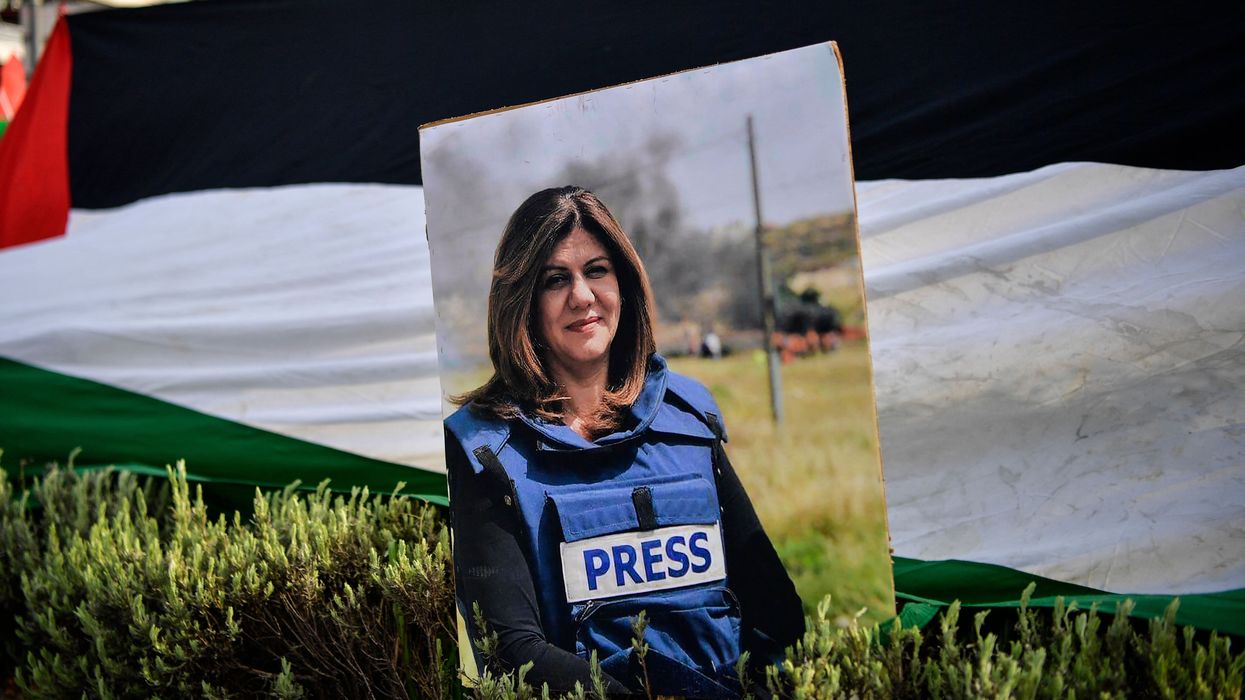
A top Muslim civil rights group applauded retired Colonel Steve Gabavics for "bravely coming forward and confirming what was obvious to everyone: An Israeli sniper deliberately murdered an American journalist."
Retired US Col. Steve Gabavics went public Monday with an account he had previously only spoken about anonymously—the story of his investigation into an Israeli soldier's killing of Palestinian-American journalist Shireen Abu Akleh in 2022 and the unsuccessful attempts he made to ensure the US State Department would accurately report his findings: that Abu Akleh was intentionally shot.
Gabavics previously discussed his experience investigating Abu Akleh's killing just days after it happened in a documentary produced by Zeteo News, but he wasn't named in the film. On Monday, he came forward publicly for the first time in an interview with the New York Times to discuss the case he said has "bothered [him] the most” of any he investigated during his 30-year military career.
In the days after Abu Akleh was fatally shot in the head while reporting on an Israel Defense Forces (IDF) raid on a refugee camp in Jenin in the West Bank in May 2022, Gabavics was assigned to lead an investigation into the killing by the Office of the United States Security Coordinator, where he was chief of staff. The State Department office coordinates with Palestinian and Israeli security officials, and was ordered by the Biden administration to review Abu Akleh's killing.
He traveled to Jenin with three other people from the office to investigate the shooting and concluded "beyond a reasonable doubt" that the Israeli soldier who shot Abu Akleh must have known she was a journalist—and therefore required under international law to be protected from military attacks while reporting on a conflict.
They did not conclude that the soldier was specifically or deliberately targeting Abu Akleh, but they determined that:
Gabavics told the Times that the claim that the shooting was unintentional, ultimately included in the State Department's report, was "absurd."
The State Department's account of an accidental killing would mean that the "individual popped out of the truck, just was randomly shooting, and happened to have really well-aimed shots and never looked down the scope," said Gabavics. "Which wouldn’t have happened."
Gabavics explained the circumstances that led to the State Department announcing in July 2022 that Abu Akleh had been unintentionally killed: His superior, Lt. Gen. Michael R. Fenzel, who led the Office of the Security Coordinator at the time, disagreed with his assessment and repeatedly refused to publish a report that explained Gabavics' findings accurately.
As Gabavics told Mehdi Hasan at Zeteo News on Monday, Fenzel told Gabavics that he had spoken to an Israeli commander, who called the shooting an accident "that was a matter of tragic circumstances."
"So the US general takes the word of a foreign general over the word of his own officer, who he sent to investigate," said Hasan.
“My findings were beyond reasonable doubt that this was an intentional killing of Shireen Abu Akleh.”
Retired Army Colonel Steve Gabavics tells @mehdirhasan that the killing of Palestinian-American journalist, Shireen Abu Akleh, was intentional according to his findings. pic.twitter.com/9TbbNWboE4
— Zeteo (@zeteo_news) October 27, 2025
Gabavics also told the Times that Fenzel threatened to fire him as the two disagreed about what the State Department report should say. He included language saying the shooting was intentional in a draft report several times, but Fenzel repeatedly deleted his additions.
He said he and the other three investigators were "flabbergasted that this is what they put out."
Fenzel told the Times in a statement that he stands by "the integrity of our work and [remains] confident that we reached the right conclusions.”
Officials who spoke to the Times on condition of anonymity said Fenzel's office likely aimed to "preserve its working relationship with the Israeli military."
But Gabavics told the Times that the outcome of his investigation “continued to be on my conscience nonstop," and said he continued to clash with Fenzel over the US government's report on Abu Akleh's death until he retired in January.
The Council on American-Islamic Relations (CAIR) applauded Gabavics for "bravely coming forward and confirming what was obvious to everyone: An Israeli sniper deliberately murdered an American journalist and the Biden administration covered it up."
"We call on President [Donald] Trump to investigate Lt. Gen. Michael R. Fenzel and any other officials who were allegedly involved in the cover-up of Shireen Abu Akleh's assassination," the group said.
CAIR urged the State Department and FBI to "pursue a real investigation" into Abu Akleh's killing. The group condemned President Joe Biden and his top foreign affairs officials, including former National Security Adviser Jake Sullivan and former National Security Council Coordinator for the Middle East Brett McGurk for "enabling the Israeli government's abuses."
"These individuals must never again serve our government," said CAIR, "and should be fired from the prestigious roles they have secured in academia since leaving office."
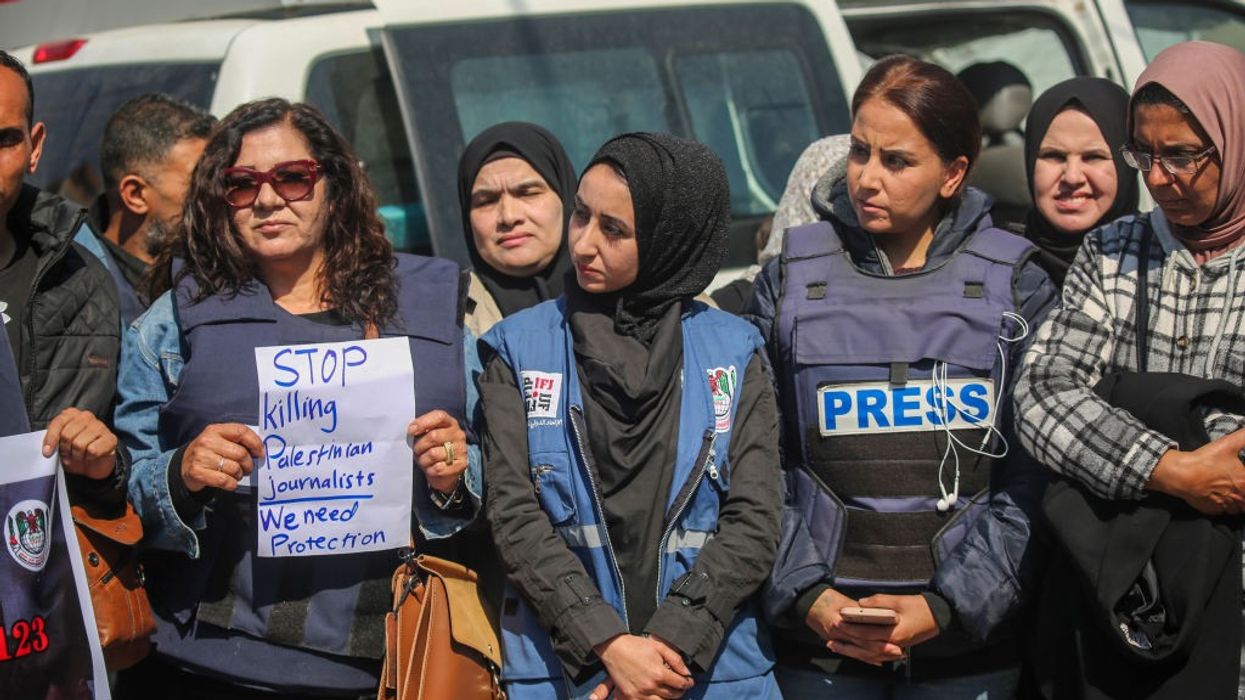
"Israel has repeatedly made similar unproven claims without producing credible evidence," said the Committee to Protect Journalists.
Seasoned observers of Israeli disinformation campaigns on Wednesday responded with pointed skepticism to a claim by the country's military that half a dozen Al Jazeera journalists are linked to militant Palestinian resistance groups.
The Israel Defense Forces (IDF) claimed Wednesday that intelligence recovered during the ongoing invasion of Gaza revealed that Al Jazeera journalists Anas Al-Sharif, Alaa Salama, Hossam Shabat, Ashraf Saraj, Ismail Abu Amr, and Talal Aruki are affiliated with either Hamas—which governs Palestine's coastal enclave and led the October 7, 2023 attack on Israel—or Palestinian Islamic Jihad (PIJ).
This, the IDF said, "unequivocally proves that they function as military terrorist operatives of the terrorist organizations in the Gaza Strip."
However, critics accused Israel of targeting the six journalists for exposing Israeli war crimes to the world.
"There's a very clear reason why Israel has been killing journalists," asserted U.S. investigative journalist Jeremy Scahill:
As the Washington, D.C.-based Institute for Public Accuracy noted:
Shabat... wrote Tuesday: "I'm a reporter on the ground in North Gaza, and I'm here to tell you that no aid has entered the besieged area for the past 21 days. The Israeli and American governments are spreading inaccurate information.
Al-Sharif yesterday posted a video of children killed, one with their head literally blown off. He just posted a video of civil defense crews working five hours to rescue a child.
University of Edinburgh professor Nicola Perugini noted that some of the six journalists "are covering the new phase of the genocide, the complete depopulation of northern Gaza."
"The aim is to transform the last witnesses into killable targets," he said.
Al Jazeera —which is banned from operating in Israel but is the only major international media network on the ground in Gaza, as Israeli authorities prohibit foreign reporters from entering the besieged strip—denies the IDF's claim.
Others noted that Israeli forces have killed numerous Al Jazeera workers as part of a war on journalists in which at least 128 media professionals have been killed, according to the New York-based Committee to Protect Journalists (CPJ). The United Nations says more than 170 media workers have been killed by Israeli forces.
"This is an assassination threat and an attempt to preemptively justify their murder," Scahill said of Israel's claim against the six Al Jazeera journalists.
"Anyone claiming Israel has offered 'irrefutable' proof to back up these allegations is either ignorant of the systematic campaign of lies, propaganda, and fake news unleashed by Israel or is trying to aid and abet the murder of more journalists," he added. "That is what is irrefutable."
CPJ said on social media that it "is aware of accusations made by the Israel Defense Forces against several journalists in Gaza accusing them of being members of militant groups."
"Israel has repeatedly made similar unproven claims without producing credible evidence," the group noted. "After killing Al Jazeera correspondent Ismail Al Ghoul in July, the IDF previously produced a similar document, which contained contradictory information, showing that Al Ghoul, born in 1997, received a Hamas military ranking in 2007—when he would have been 10 years old."
The Paris-based international press freedom group Reporters Without Borders (RSF) has filed multiple complaints at the International Criminal Court alleging "war crimes against journalists in Gaza," including the apparently intentional targeting of media professionals.
In one filing, RSF said it "has reasonable grounds for thinking that some of these journalists were deliberately killed and that the others were the victims of deliberate IDF attacks against civilians" and accused Israel of "an eradication of the Palestinian media."
"You don't shut down the media unless you have something to hide."
In June, the Gaza Project—an investigative journalism initiative led by the Paris-based nonprofit Forbidden Stories—"analyzed nearly 100 cases of journalists and media workers killed in Gaza, as well as other cases in which members of the press have been allegedly targeted, threatened, or injured."
The project found "a chilling pattern" of journalists who "may have been targeted even though they were identifiable as press."
In one case that enraged journalists and others around the world, at least one IDF member sent 19-year-old Palestinian reporter Hassan Hamad text messages threatening him and his family if he did not stop documenting Israel's assault on Gaza, which has left more than 152,000 Palestinians dead, maimed, or missing, millions more starved or sickened, and much of the territory in ruins.
Hamad refused. Earlier this month, Israeli forces assassinated him in a drone strike on his home in the Jabalia refugee camp.
U.S. citizens working in media have also been harmed by Israeli forces while on the job in Gaza and Lebanon, where IDF bombardment and invasion have killed and wounded thousands of people.
On Tuesday, a dozen members of U.S. Congress led by Sen. Bernie Sanders (I-Vt.) urged the Biden administration—which supports Israeli with billions of dollars in military aid and diplomatic cover—to investigate Israeli attacks on journalists including Dylan Collins, who was with a group of six other reporters covering cross-border clashes between Israel and Hezbollah in southern Lebanon when an IDF tank opened fire on their position despite their clear identification as press. Collins and five others were injured, and Lebanese Reuters journalist Issam Abdallah was killed.
Israel's targeting of American journalists predates the current war and includes the 2022 killing of renowned Palestinian American Al Jazeera reporter Shireen Abu Akleh. Multiple probes have concluded Abu Akleh was deliberately targeted by an IDF sniper as she was covering a raid on the Jenin refugee camp in the illegally occupied West Bank.
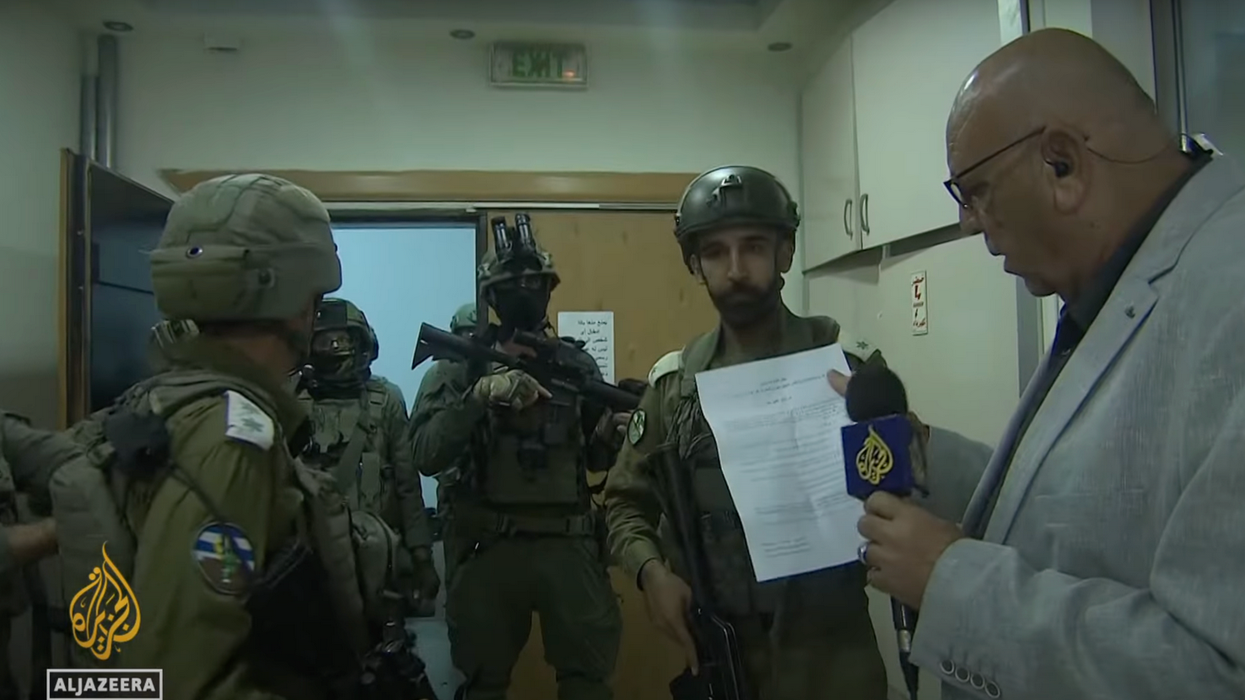
"Why would Israel shut Al Jazeera's bureau in Ramallah?" asked one human rights defender. "Because it has been the center of Al Jazeera's reporting on Israeli repression—the apartheid—in the occupied West Bank."
Press freedom advocates accused Israel of "trying to erase the truth" after heavily armed soldiers raided Al Jazeera's bureau in the West Bank of Palestine early Sunday morning and ordered the outlet—which has been the world's sole media window on the Gaza genocide—to shut down for 45 days.
Al Jazeera—which is owned by the Qatari government—said Israel Defense Forces troops stormed its bureau in Ramallah, the capital of the illegally occupied West Bank, at 3:00 am Sunday during a live broadcast. IDF troops confiscated documents and equipment and took the microphone from the hand of bureau chief Walid al-Omari as he reported on the raid.
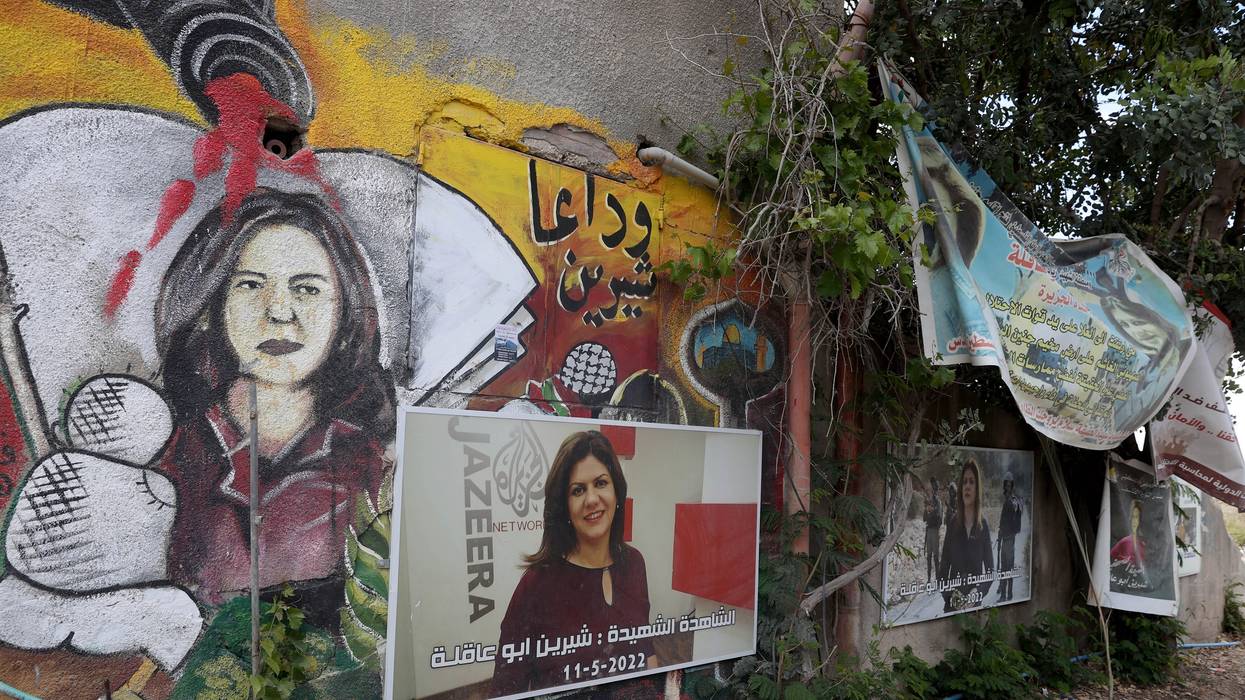
The network—which was ordered to cease operations for 45 days—said the soldiers tore down a poster of Shireen Abu Akleh, the renowned Palestinian-American Al Jazeera correspondent who was shot dead by Israeli troops in May 2022 while covering an IDF raid on the Jenin refugee camp.
"This is part of a larger campaign against the Palestinian outlets and media in general aimed at erasing the truth," al-Omari said in an interview with Al Araby Al Jadeed. "We've been under increasing incitement since the beginning of the war."
The Palestinian Journalists Syndicate condemned the shutdown as an "arbitrary military decision" and "a new aggression against journalistic work and media outlets."
Israel's Foreign Press Association said it is "deeply troubled by this escalation, which threatens press freedom, and urges the Israeli government to reconsider these actions," adding that "restricting foreign reporters and closing news channels signals a shift away from democratic values."
The IDF acknowledged the raid later Sunday, claiming without evidence that Al Jazeera's Ramallah bureau was "being used to incite terror [and] to support terrorist activities."
Sunday's raid followed a May raid and shutdown of Al Jazeera's Jerusalem bureau, which is believed to be the first such action against a foreign media outlet operating in Israel.
Responding to the raid, Carlos Martínez de la Serna, program director of the New York-based Committee to Protect Journalists (CPJ), said that the group "is deeply alarmed by Israel's closure of Al Jazeera's office in the occupied West Bank, just months after it shuttered Al Jazeera's operations in Israel after deeming it a threat to national security."
Al Jazeera is the only international news network providing nonstop on-the-ground coverage of Israel's war on Gaza. Its reporters work under constant risk to life and limb, as more than 100 media professionals, the vast majority of them Palestinians, have been killed by Israeli forces since October 7. CPJ and others say have decried what they say are deliberate attacks on media workers and their families.
In December, Israeli troops killed Al Jazeera cameraman Samer Abudaqa as he reported on the war in southern Gaza, an attack that also injured the network's Gaza bureau chief, Wael Dahdouh, whose wife, son, daughter, and grandson were killed in a separate IDF strike.
Previous independent probes—including investigations of Abu Akleh's killing—have confirmed that Israel has deliberately targeted journalists.
Last May, CPJ published Deadly Pattern, an investigation that found the IDF killed at least 20 journalists over the past 22 years with impunity. While some of the slain journalists have been foreigners—including Italian Associated Press reporter Simone Camilli and British cameraman and filmmaker James Miller—the vast majority of victims have been Palestinian.
Israeli forces have also attacked newsrooms in every major assault on Gaza, including in May 2021 when the 11-story al-Jalaa Tower, which housed offices of Al Jazeera, The Associated Press, and other media outlets, was destroyed in an airstrike.
U.S. investigative journalist Jeremy Scahill pointed out Sunday that Al Jazeera has also been targeted by American forces during the so-called War on Terror. He noted that U.S. forces "bombed its facilities, killed its Baghdad correspondent, and locked a cameraman in Guantánamo."
"Israel has repeated this pattern," Scahill added. "All journalists must condemn these violent assaults on freedom of the press."
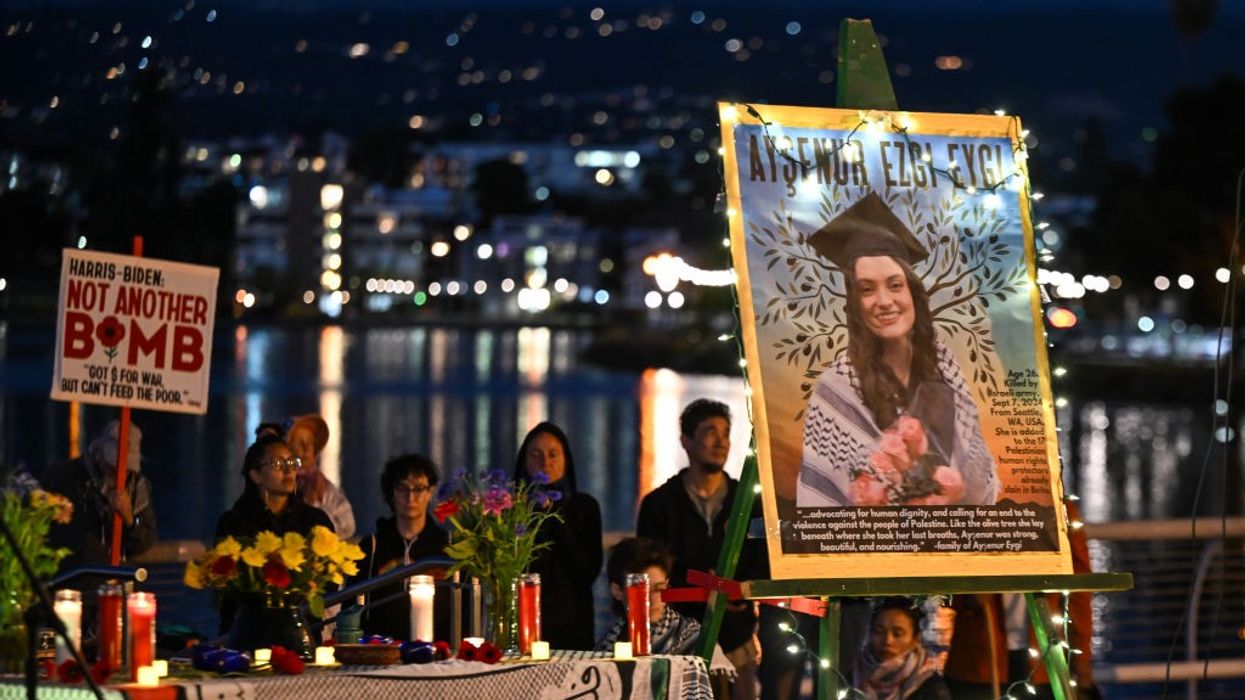
"There needs to be consequences," said Craig Corrie. "These are American weapons that are being used. That's against U.S. law, and it should be stopped."
The parents of Rachel Corrie—the American activist crushed to death by a U.S.-supplied Israeli military bulldozer in 2003 in the illegally occupied West Bank—this week called for an independent investigation into the Israel Defense Force's killing last week of a Turkish American Palestine defender who was volunteering in the territory.
Ayşenur Ezgi Eygi, a 26-year-old who recently graduated from the University of Washington, was volunteering with the International Solidarity Movement (ISM)—of which Corrie was a member—when she was shot in the head, allegedly by an IDF sniper, during a demonstration in Beita against Israel's illegal apartheid settlements.
Eyewitnesses said Israeli forces killed Eygi with "a deliberate shot to the head" for no reason.
While admitting that it is "highly likely" that Israeli troops killed the young woman, IDF officials called the killing "unintentional," claiming the fatal shot "was not aimed at her, but aimed at the key instigator of... a violent riot in which dozens of Palestinian suspects burned tires and hurled rocks" at occupation forces.
Cindy and Craig Corrie, Rachel's parents, told The Guardian Wednesday that Eygi's killing reopened old wounds.
"You feel the ripping apart again of your own family when you know that's happening to another family. There's a hole there that's never going to be filled for each of these families," Craig Corrie told the British newspaper.
"It's very personal," he added. "This one, you know, is very close, and there's so many similarities."
During a Monday interview with Democracy Now! co-host Amy Goodman, Cindy Corrie said news of Eygi's killing was "very disturbing and emotional for us."
"It's a parent's nightmare," she added. "And so, Friday morning, knowing that there was another family... who was getting that same kind of news was just very, very disturbing. And we continue to just feel deeply about what that family is experiencing right now."
U.S. President Joe Biden was widely denounced Tuesday after repeating an IDF claim that Eygi was accidentally killed when a bullet "ricocheted off the ground."
While calling Eygi's killing "totally unacceptable" and "unprovoked and unjustified," Secretary of State Antony Blinken has signaled that there will be no U.S. investigation of the incident, prompting Congresswoman Rashida Tlaib (D-Mich.)—the only Palestinian American member of Congress—to lament that the Israeli military "can kill Americans and get away with it."
Human rights defenders argue that the U.S. government repeatedly fails to hold Israel accountable or demand justice when it kills Americans. In addition to Corrie and Eygi, Israeli occupation forces have killed U.S. citizens including Al Jazeera correspondent Shireen Abu Akleh, whose killing was deemed intentional by multiple investigations.
An elderly Palestinian American man, Omar Assad, died in January 2022 after Israeli occupation forces dragged him from his vehicle and then blindfolded, gagged, and handcuffed him during a traffic stop in Jiljilya.
No one has been punished for either of these killings.
This year, Israeli forces have killed at least three Americans in the West Bank alone.
As Truthout's Sharon Zhang reported Tuesday:
In January, an Israeli settler and Israeli soldiers killed 17-year-old Tawfiq Ajaq, shooting him in the head while he was on his way to a barbecue in a local grove. Israeli military vehicles prevented an ambulance from reaching him for 15 minutes, and he was pronounced dead on arrival at a medical facility. Ajaq was born in Louisiana, and had only moved to the West Bank nine months prior.
Then, just weeks later, Israeli forces killed Mohammad Khdour, shooting him in the head while he was driving to a hillside where people often held barbecues. Khdour was 17 years old and a senior in high school who hoped to return to the U.S. to study law when he graduated.
"If you're the U.S., you know that there's going to be no accountability from the Israeli side," Bill Van Esveld, the acting Israel/Palestine associate director for Human Rights Watch, told The Guardian. "So the reason [the U.S.] is not pursuing it in cases where there's clear, credible evidence from credible sources of unlawful use of force, lethal force... the only explanation for that is political."
Craig Corrie told Goodman that "it's upsetting to our family to hear our State Department again, and I would expect them to say, that they are trying to find out the facts and looking to Israel for that."
"Israel does not do investigations, they do cover-ups," he stressed.
"Our family worked for an investigation into Rachel's killing, and we wanted some consequences out of that," Corrie added. "And we hoped—even though we didn't know the names of the people that would be killed in the future, we hoped that that would stop and it would not happen."
IDF officials denied intentionally killing Corrie, despite court testimony from army officers that Corrie and other activists were legitimate military targets who were "doomed to death" for resisting Israeli occupation forces during the Second Intifada, or general Palestinian uprising.
The IDF called Corrie's death a "regrettable accident" while blaming the ISM activists for their own harm because they had placed themselves "in a combat zone."
Another ISM campaigner, Tom Hurndall, was shot in the head by an IDF sniper in the West Bank as he attempted to rescue Palestinian children from an Israeli tank that was firing in their direction. The shooting—which occurred a month after Corrie's killing—left Hurndall in a coma; he died nine months later in a hospital in his native Britain. Hurndall's killer was convicted in an Israeli court of manslaughter and served six years of an eight year prison sentence.
While Rachel Corrie once wrote that she felt protected by "the difficulties the Israeli army would face if they shot an unarmed U.S. citizen," there were no such difficulties, just as there were no repercussions after Israeli warplanes killed 34 American sailors and wounded 173 others during a 1967 attack on the USS Liberty—an attack numerous top U.S. officials believed was deliberate.
Cindy and Craig Corrie sued Israel over their daughter's killing. Their case was dismissed in 2012, with the presiding judge ruling that the activist's death was the "result of an accident she brought upon herself."
Cindy Corrie told Goodman that Blinken—then a national security adviser to then-Vice President Biden—told them in 2010 that there had "not been a thorough, credible, and transparent investigation" into Rachel's case.
Craig Corrie called for more than just an investigation into Eygi's killing.
"There needs to be consequences," he told Goodman. "These are American weapons that are being used. That's against U.S. law, and it should be stopped."
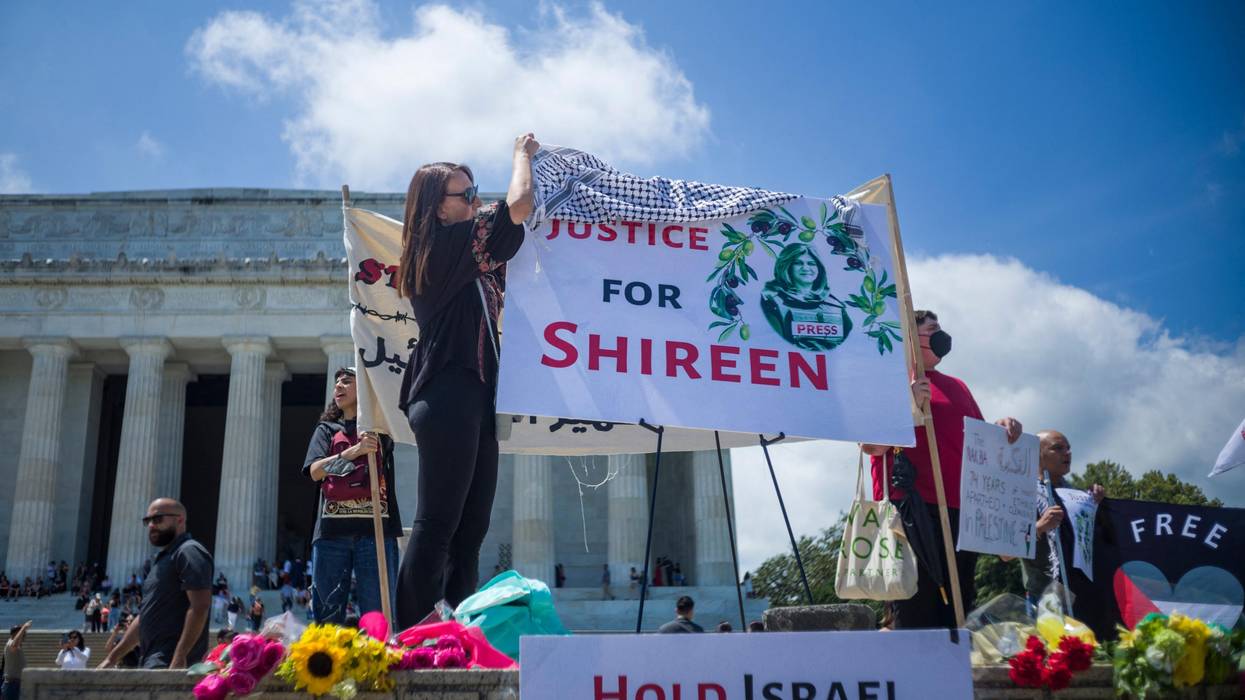
DAWN's leader slammed the department's "apparent failure to make progress on this investigation, which has fueled Israeli impunity, leading to the systematic and widespread killings of Palestinian journalists."
An advocacy group founded by an assassinated journalist demanded answers from the U.S. Department of Justice on Monday regarding its investigation of Israeli troops killing American Palestinian reporter Shireen Abu Akleh on May 11, 2022.
"Perhaps the DOJ thinks we will forget about the murder of Shireen Abu Akleh as well as the investigation it promised the American people two years ago, but we have not," said Sarah Leah Whitson, executive director of Democracy for the Arab World Now (DAWN), in a statement.
"The DOJ should take responsibility for its apparent failure to make progress on this investigation, which has fueled Israeli impunity, leading to the systematic and widespread killings of Palestinian journalists, at least 108 since Abu-Akleh's 2022 killing."
"Without an interim update on the investigation or a concluding report, it is hard to take seriously U.S. claims that it will vigorously investigate and hold accountable extrajudicial killings of American citizens."
Abu Akleh was fatally shot in the head by the Israel Defense Forces (IDF) while covering a raid on the Jenin refugee camp in the illegally occupied West Bank, according to firsthand accounts and various investigations that have been made public. The 51-year-old Al Jazeera journalist was wearing a blue press vest and helmet.
"A beloved and prominent figure in the region, Abu Akleh's killing not only led to prolonged unrest in the West Bank but also became emblematic of Israel's use of lethal force to intimidate and kill journalists," DAWN leaders wrote to U.S. Attorney General Merrick Garland, Deputy Attorney General Lisa Monaco, and Federal Bureau of Investigation Director Christopher Wray.
As the letter—signed by Whitson and Michael Schaeffer Omer-Man, DAWN's director of research for Israel-Palestine—detailed:
Since the launch of the DOJ investigation, you have not made any information available regarding the nature, scope, and timeline of the probe into the killing of an American citizen by a foreign army, despite prior comments by then State Department spokesperson Ned Price that "those responsible for Shireen's killing should be prosecuted to the fullest extent of the law." Regrettably, more recent statements coming from U.S. authorities imply that the administration has pushed the investigation to the wayside. At a news briefing on World Press Freedom Day, a State Department spokesperson insisted that Shireen's murder was "unintentional" despite credible reports to the contrary and noted that the U.S. had no further updates on the case.
Some critics have connected Abu Akleh's killing to what the Committee to Protect Journalists last year called a "deadly, decadeslong pattern" by the IDF—which, has slaughtered over 100 journalists and tens of thousands of other Palestinians in the Gaza Strip in Israeli forces' ongoing retaliation for a Hamas-led attack on Israel last October.
"The impunity that Israel has enjoyed for its attacks on the press, including for the murder of Abu Akleh, has made Israeli officials confident that they can kill as many Palestinian journalists as they want with no accountability," DAWN leadership wrote to the DOJ. "Israel's failure to identify the perpetrators, open a criminal investigation, and to cooperate with external investigations further compounds Israel's impunity in targeting journalists in the region."
The letter calls for the DOJ to provide a "timely response" to a series of questions about the department's investigatory steps, Israeli cooperation or lack thereof, and which specific U.S. criminal laws are being considered for the probe.
Schaeffer Omer-Man said that "without an interim update on the investigation or a concluding report, it is hard to take seriously U.S. claims that it will vigorously investigate and hold accountable extrajudicial killings of American citizens."
"The lack of communicable progress also adds to the grief felt by the Abu Akleh family, who filed a formal complaint with the ICC in May 2022 about Abu Akleh's killing by IDF forces," he added, referring to the International Criminal Court.
DAWN was founded by the late Jamal Khashoggi, a Saudi journalist and U.S. resident who—according to multiple investigations—was murdered at his home country's consulate in Istanbul, Turkey on October 2, 2018. As Common Dreams reported on the fifth anniversary of his assassination last year, human rights advocates continue to condemn the failure of international officials to hold accountable the people responsible for his death.
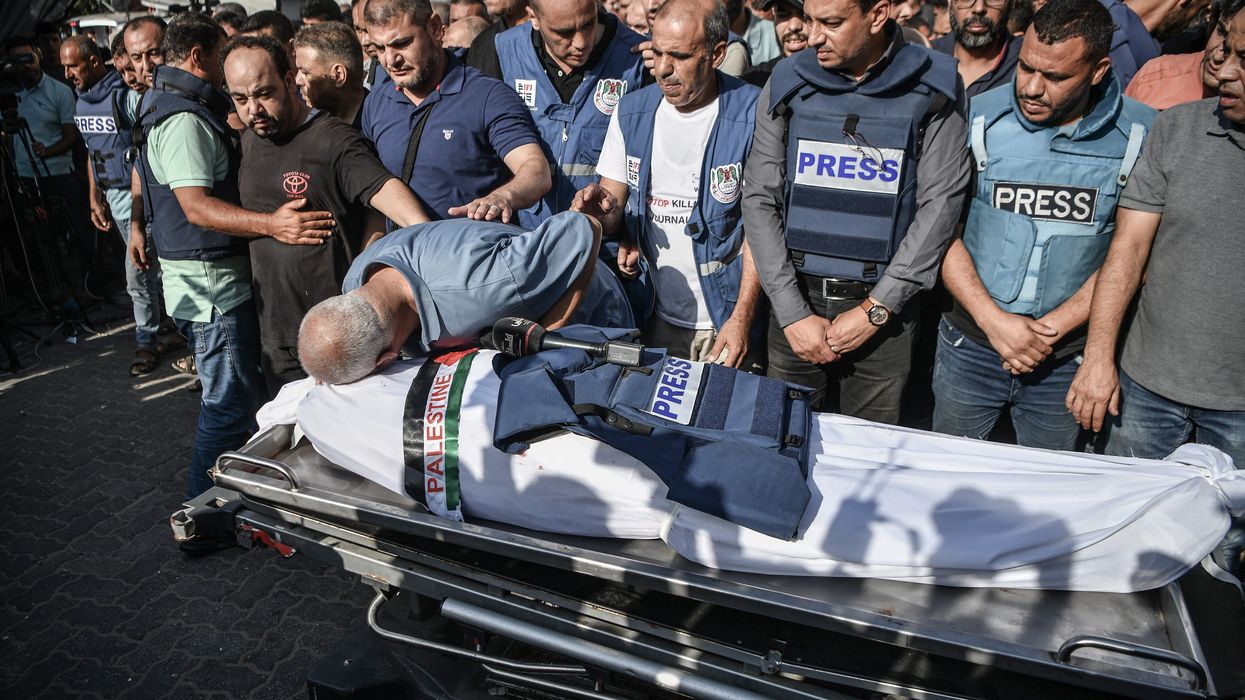
"The Biden administration's ongoing support for Israel's genocidal policies implicates it directly in the relentless targeting and massacring of journalists in Gaza, including hundreds of our colleagues and their families."
Palestinian journalists this week issued an appeal to their U.S. counterparts urging them to boycott the April 27 White House Correspondents' Association dinner over the Biden administration's complicity in Israel's genocide in Gaza.
"In the past six months alone, the Israeli military has executed over 125 Palestinian journalists in Gaza—10% of Gaza's community of journalists," notes the appeal, which is being organized with the help of Adalah Justice Project and the U.S. Campaign for Palestinian Rights. "The year 2023 marked the bloodiest year for journalists worldwide in over a decade, with over 75% of killed journalists targeted by Israel’s attacks on Gaza."
"As Palestinian journalists, we urgently appeal to you, our colleagues globally, with a demand for immediate and unwavering action against the Biden administration's ongoing complicity in the systematic slaughter and persecution of journalists in Gaza," the authors wrote.
"We bear the enormous burden of exposing the realities of Israel's genocidal campaign to the world while living through it in real-time. Israel has killed more than 32,000 Palestinians as we watch on," the journalists said. The death toll in Gaza now exceeds 33,000—mostly women and children—with at least 75,550 other Palestinians wounded since October 7.
The appeal continues:
In Gaza, journalism is synonymous with putting our lives on the line as Israel methodically targets us in its desperate bid to silence our voices and obscure the grim reality of its genocidal actions and its project of ethnic cleansing in Palestine. For Palestinian journalists in Gaza, the blue press vest does not offer us protection, but rather functions as a red target.
The Biden administration's ongoing support for Israel's genocidal policies implicates it directly in the relentless targeting and massacring of journalists in Gaza, including hundreds of our colleagues and their families.
"Western media has played an integral role in manufacturing consent for Israel's ongoing violence against the Palestinian people, while obfuscating U.S. complicity," the journalists continued. "Over the past six months, the mainstream press has become the mouthpiece of the homicidal Israeli regime, promoting dehumanizing anti-Palestinian propaganda and platforming genocide apologists and perpetrators, while simultaneously ignoring, downplaying, and underreporting Israel's war crimes against Palestinians."
"The White House Correspondents' dinner is an embodiment of media manipulation, trading journalistic ethics for access," the appeal argues. "For journalists to fraternize at an event with President [Joe] Biden and Vice President [Kamala] Harris would be to normalize, sanitize, and whitewash the administration's role in genocide."
"As journalists reporting from the belly of the beast, you have a unique responsibility to speak truth to power and uphold journalistic integrity," the Palestinians implored U.S. journalists. "It is unacceptable to stay silent out of fear or professional concern while journalists in Gaza continue to be detained, tortured, and killed for doing our jobs."
The appeal's authors noted that American media professionals have demanded justice for journalists like Palestinian American Al Jazeera reporter Shireen Abu Akleh—who numerous probes found was intentionally killed by Israeli forces in 2022—and Jamal Khashoggi, the Saudi Washington Post columnist gruesomely murdered in 2018 by Saudi Arabian operatives in Turkey.
"It is past time journalists take action for journalists in Gaza," the Palestinians asserted. "We call on all journalists of conscience to stand with us and uplift our call to boycott the White House Correspondents' dinner."
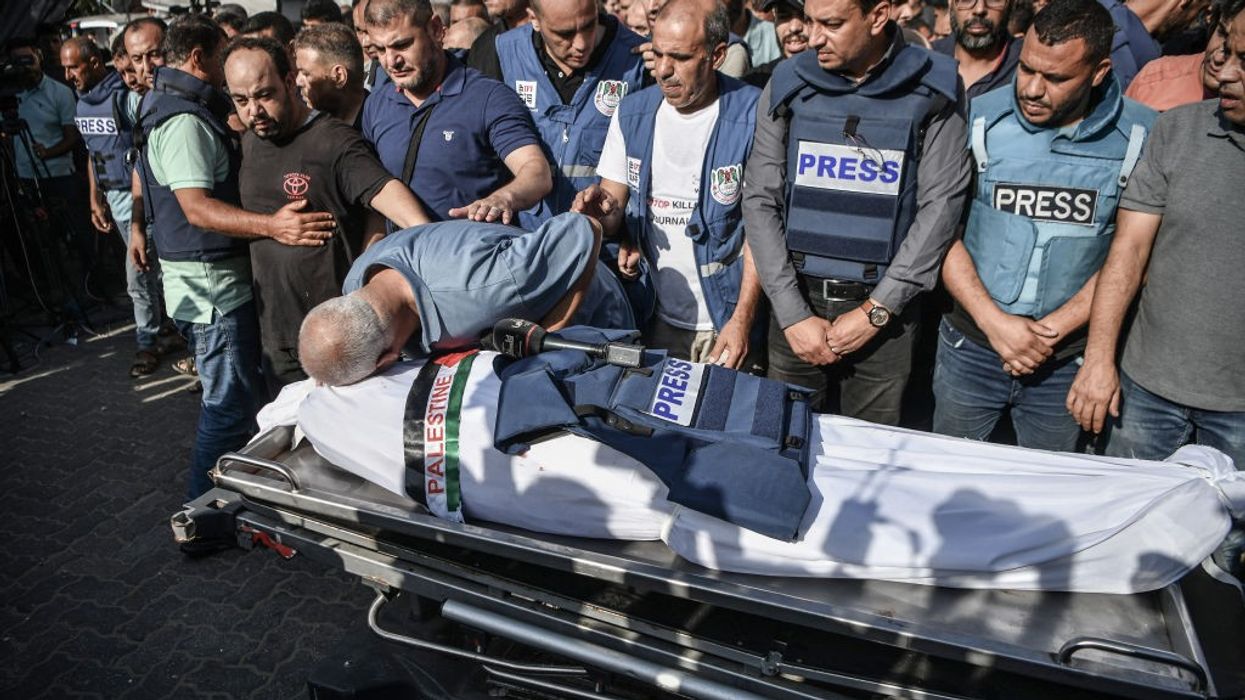
"We believe your administration can and must do more to effectively pursue accountability for journalists killed in the hostilities and to protect and support local and international journalists covering it."
With at least 79 Palestinian, Israeli, and Lebanese members of the media killed during Israel's war on the Gaza Strip over the past few months, half a dozen human rights and press freedom groups on Wednesday implored U.S. President Joe Biden to "act immediately and decisively to promote the conditions for safe and unrestricted reporting on the hostilities."
"The United States has a long record of strong support for Israel, including civilian and military aid, and is clearly one of Israel's most influential partners," states the letter from the Committee to Protect Journalists (CPJ), Freedom House, Freedom of the Press Foundation (FPF), Human Rights Watch, Knight First Amendment Institute at Columbia University, and Reporters Without Borders.
Since the Hamas-led attack on October 7 that sparked Israel's brtual response, Biden has bypassed Congress to arm Israeli forces while also asking lawmakers for a $14.3 billion package, on top of the $3.8 billion in military aid that the U.S. gives the country annually.
"The United States should use its considerable influence with the Israeli government to press them to ensure that journalists are able to safely document military operations and to shed light on their compliance with international humanitarian law."
"We believe your administration can and must do more to effectively pursue accountability for journalists killed in the hostilities and to protect and support local and international journalists covering it," the coalition wrote to Biden, noting other similar calls. "The United States should use its considerable influence with the Israeli government to press them to ensure that journalists are able to safely document military operations and to shed light on their compliance with international humanitarian law."
Committee to Protect Journalists president Jodie Ginsberg said last month that "the concentration of journalists killed in the Israel-Gaza war is unparalleled in CPJ's history and underscores how grave the situation is for press on the ground." The letter highlights that as of Wednesday, CPJ has tracked the deaths of 79 journalists: 72 Palestinian, 4 Israeli, and 3 Lebanese.
Local authorities in the Gaza Strip, which has been governed by Hamas for nearly two decades, said Wednesday that 115 Palestinian journalists are among the at least 23,357 dead, including many thousands of innocent civilian men, women, and children. Whatever the true figure for journalists is, the letter stresses that "almost all of them" have been killed by the Israel Defense Forces (IDF).
U.S. Secretary of State Antony Blinken—who is visiting the Middle East this week—faced intense backlash twice last month for calling 2023 "an extraordinarily dangerous year" for members of the press, without mentioning those killed in Israel's U.S.-backed blockade and bombardment of Gaza.
As the letter points out: "The U.S. State Department spokesperson recently said that the United States has not seen any evidence that Israel is intentionally targeting journalists. Yet credible reports by human rights and media organizations indicate that the IDF strikes in southern Lebanon on October 13 that killed Reuters journalist Issam Abdallah and injured six other journalists from Reuters, Al Jazeera, and Agence France-Presse were unlawful and apparently deliberate."
"The IDF has also acknowledged deliberately targeting a car in which journalists were traveling on January 7, killing two journalists and seriously injuring a third," the letter continues. "In at least two other cases, journalists reported receiving threats from Israeli officials and IDF officers before their family members were killed in Gaza. Of course, the targeted or indiscriminate killing of journalists, if committed deliberately or recklessly, is a war crime, and the International Criminal Court has said that it will investigate reports of war crimes committed against journalists in Gaza."
The groups detailed that along with risking their lives, those reporting on the Israeli war on Gaza and escalation along the Israel-Lebanon border face challenges including "the refusal of Israel and Egypt to allow international journalists access to Gaza except under Israeli military escort (and even then, with restrictions on reporting), internet shutdowns that prevent news and testimonies from Gaza from reaching the outside world, arbitrary detention, and harassment and intimidation."
"In addition, the Israeli government is requiring media outlets in Israel to submit almost any detailed reporting on the war to its 'censorship' office for review, while banning reporting on significant topics of public interest related to the war in Gaza," they wrote.
"The Biden administration says it cares deeply about journalists' freedom to cover the war but has failed to demand Israel ensure journalists' safety or hold it accountable when it doesn't."
The groups want Biden to pressure all parties to "respect the right of journalists to report on the hostilities, ensure journalists' safety, allow all journalists seeking to evacuate from Gaza to do so, abjure the indiscriminate and deliberate killing of journalists, promptly and thoroughly investigate all attacks on journalists, and hold accountable individuals found to be responsible for them."
They are also demanding increased access for journalists along with "personal protective equipment and materials used for newsgathering," as well as "thorough, transparent, and public assessments of the end-use of U.S. weapons and military assistance to Israel."
The organizations are further calling on Biden to "support swift, transparent, and independent investigations into the killing of all journalists and ending the long-standing pattern of impunity in the killings of journalists by the IDF, including Palestinian American Shireen Abu Akleh," who was killed in the occupied West Bank in May 2022.
"The Biden administration has been all talk when it comes to journalists killed by the Israel Defense Forces," said FPF director of advocacy Seth Stern. "The Biden administration says it cares deeply about journalists' freedom to cover the war but has failed to demand Israel ensure journalists' safety or hold it accountable when it doesn't."
The Committee to Protect Journalists—which recorded 68 media professionals killed since October 7—said it is particularly concerned by Israel's "apparent pattern of targeting journalists and their families."
Journalists are being slain during Israel's current assault on Gaza at a rate unseen in modern history—with more killed in the last 10 weeks alone than have been killed in any country in any whole year since records began, the Committee to Protect Journalists revealed on Thursday.
CPJ said that at least 68 media professionals—61 Palestinians, four Israelis, and three Lebanese—have been killed since the October 7 Hamas-led attacks on Israel and the Israeli military's retaliatory obliteration of the Gaza Strip.
Of particular concern to CPJ is Israel's "apparent
pattern of targeting journalists and their families."
"In at least one case, a journalist was killed while clearly wearing press insignia in a location where no fighting was taking place," the group said. "In at least two other cases, journalists reported receiving threats from Israeli officials and IDF officers before their family members were killed."
In October, Al Jazeera reporter and Gaza bureau chief Wael Al-Dahdouh found out during a live broadcast that his wife, son, daughter, and grandson had been killed in an Israeli airstrike.
Additionally, CPJ said 15 journalists have been injured—some seriously, like Agence France-Presse photojournalist Christina Assi, whose legs were blown off while she and a group of journalists were covering cross-border clashes between Israel and the Lebanese resistance group Hezbollah.
At least 20 media professionals have also been arrested and others have reported being abused by Israeli troops—including one CNN Türk photojournalist who was assaulted during a live broadcast. Three other journalists are missing.
"The concentration of journalists killed in the Israel-Gaza war is unparalleled in CPJ's history and underscores how grave the situation is for press on the ground," CPJ president Jodie Ginsberg said Thursday.
CPJ Middle East and North Africa Program coordinator Sherif Mansour asserted that "with every journalist killed, the war becomes harder to document and to understand."
Some critics say that's the point—and the same reason that Israel denies permission for foreign journalists to report from Gaza.
"They don't want us to see the truth. That's why they're taking out the journalists," U.S. journalist Abby Martin told Middle East Eye earlier this month.
After Israeli forces killed Lebanese Reuters photojournalist Issam Abdallah in an attack that Human Rights Watch and Amnesty International called "apparently deliberate," Ziad Makary, Lebanon's information minister, asserted that "it is in the military strategy of Israel to kill journalists so that they kill the truth."
Previous probes—like the investigation into Israeli troops' 2022 killing of renowned Palestinian American Al Jazeera reporter Shireen Abu Akleh—have confirmed that Israel has deliberately targeted journalists and other civilians in the past.
In May, CPJ published Deadly Pattern, a report that found Israeli troops had killed at least 20 journalists over the past 22 years with utter impunity. While some of the slain journalists have been foreigners—including Italian Associated Press reporter Simone Camilli and British cameraman and filmmaker James Miller—the vast majority of victims have been Palestinian.
Israeli forces have also attacked newsrooms in every major assault on Gaza, including in May 2021 when the 11-story al-Jalaa Tower, which housed offices of Al Jazeera, The Associated Press, and other media outlets, was completely destroyed in an airstrike.
The new CPJ report comes as the death toll from Israel's 77-day war on Gaza topped 20,000, with more than 50,000 other Palestinians maimed or missing. More than 1.9 million of the besieged enclave's 2.3 million people have also been forcibly displaced, with most of their homes damaged or destroyed by Israeli bombardment. Gazans are also facing an imminent risk of famine and contagious disease.
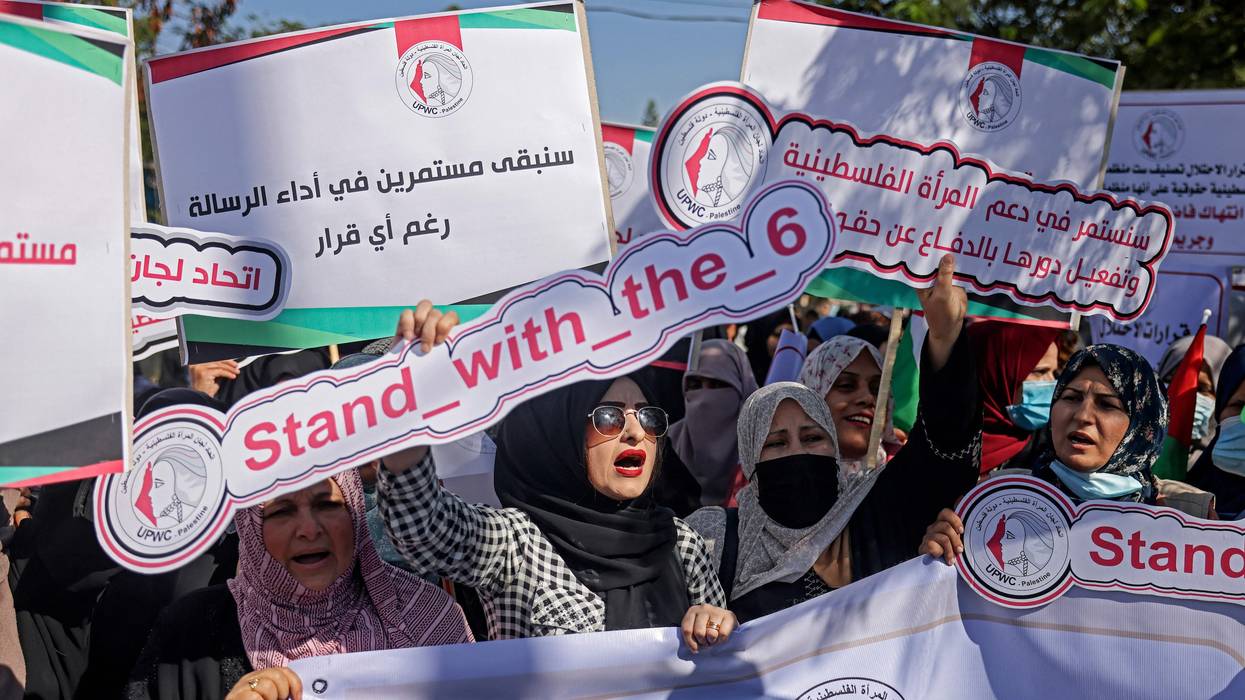
"We were particularly alarmed by the situation of Palestinian human rights defenders," reads the report, "who are routinely subject to a range of punitive measures as part of the occupation regime."
Civil society groups in Israel and Palestine face serious human rights violations by Israeli authorities seeking to perpetuate an illegal occupation and apartheid regime, according to a report published Thursday by the United Nations Human Rights Council.
The report—authored by the Independent International Commission Inquiry on the Occupied Palestinian Territory—examines "attacks, restrictions, and harassment of civil society actors by all duty bearers," including the Israeli government and occupation forces, the Palestinian Authority in the West Bank and East Jerusalem, and Hamas in Gaza.
"We concluded that all duty bearers are engaged in limiting the rights to freedom of expression and peaceful association," U.N. High Commissioner for Human Rights Navi Pillay said in a statement. "We were particularly alarmed by the situation of Palestinian human rights defenders, who are routinely subject to a range of punitive measures as part of the occupation regime."
The commission found that "the Israeli authorities' silencing of civil society voices that challenge government policies and narrative is intrinsically linked to the goal of ensuring and enshrining the permanent occupation at the expense of the rights of the Palestinian people."
"This includes criminalizing Palestinian civil society organizations and their members by labeling them as 'terrorists,' pressuring and threatening institutions that give a platform for civil society discourse, actively lobbying donors, and implementing measures intended to cut sources of funding to civil society," the report states.
According to the publication:
The Israeli authorities' use of anti-terror legislation to categorize civil society organizations as terrorist organizations aims to delegitimize and isolate them and undermine their activity, and to harm their international funding and support. The commission concludes on reasonable grounds that the designations by Israeli authorities of six Palestinian NGOs as terrorist organizations and a seventh Palestinian NGO as unlawful were unjustified, undertaken to silence civil society voices, and violate human rights, including freedom of association, freedom of expression and opinion, and the rights to peaceful assembly, to privacy, and to fair trial.
Israeli officials claim the six humanitarian groups—Addameer, AlHaq, the Bisan Center for Research and Development, Defense for Children International—Palestine, the Union of Agricultural Work Committees, and the Union of Palestinian Women Committees—have ties to the Popular Front for the Liberation of Palestine (PFLP), a secular political movement with an armed wing that has carried out resistance attacks against Israel. The groups deny the accusation, and a probe by the U.S. Central Intelligence Agency found no evidence supporting Israel's claim.
The report further states that "Israeli authorities are increasingly using surveillance to monitor the activities of human rights defenders, including through spyware planted on mobile phones," including by planting Pegasus spyware manufactured by the Israeli company NSO Group on the phones of Palestinian human rights workers and Israeli activists participating in 2020 protests against the last Netanyahu government.
A section of the report on the far-right government of Israeli Prime Minister Benjamin Netanyahu notes:
In late 2022, a new government in Israel was sworn in, with a stated mission of weakening the judiciary and increasing government control of the media and freedom of expression, which would have a significant impact on civil society in Israel and the Occupied Palestinian Territory. In February 2023, the government started enacting new legislation to weaken judicial independence amid large-scale countrywide demonstrations. The proposed changes would dismantle fundamental features of the separation of powers and of the checks and balances essential in democratic political systems. Legal experts have warned that they risk weakening human rights protections, especially for the most vulnerable and disfavored communities, including Palestinian citizens of Israel, asylum-seekers, and lesbian, gay, bisexual, transgender, and queer persons.
The report states that Israeli authorities are subjecting both Israeli and Palestinian journalists to monitoring and harassment, with Palestinians being "particularly targeted" for intimidation, "attacks, arrests, detention, and accusations of incitement to violence, seemingly as part of an effort to deter them from continuing their work."
According to the New York-based Committee to Protect Journalists, Israeli forces have killed 20 journalists this century, with none of the killers ever facing prosecution. These include at least one U.S. citizen, Al Jazeera correspondent Shireen Abu Akleh, who was shot dead by an Israeli sniper while covering a May 2022 raid on the Jenin refugee camp in the occupied West Bank. Al Jazeera producer Ali Samodi was shot in the back but survived. An independent international probe subsequently concluded that Abu Akleh's "extrajudicial killing" was "deliberate."
On Wednesday, 22-year-old Palestinian photojournalist Momen Samreen, who was covering Israeli forces' demolition of a suspected Palestinian militant's family home—an illegal act of collective punishment—was shot in the head with a "less-lethal" projectile and was hospitalized in serious condition.
The Israeli government—which maintains that the commission of inquiry "has no legitimacy"—rejected the report's findings. Israel's U.N. mission in Switzerland said that "Israel has a robust and independent civil society which is composed of thousands of NGOs, human rights defenders, [and] national and international media outlets, that can operate freely."
The report also states that the Palestinian Authority and Hamas are targeting human rights defenders "with the aim of silencing dissenting opinions," and that activists, journalists, and others have been harassed, intimidated, and in some cases arbitrarily arrested and jailed.
"The commission has received information on the use of torture and ill-treatment to punish and intimidate critics and opponents by internal security officials in Gaza and intelligence services, preventive security officials, and law enforcement officials in the West Bank," the report says. "The frequency and severity, and the absence of accountability, suggest that such cases are widespread."
"This apology on the anniversary of her killing, without any steps towards accountability, is an insult to her family. Justice must be done."
The Israel Defense Forces' chief spokesperson outraged people worldwide with a televised interview Thursday, the one-year anniversary of the IDF killing Al Jazeera correspondent Shireen Abu Akleh, who was shot dead as she reported from the occupied West Bank on May 11, 2022.
Noting that there has been "no justice or responsibility taken for her death" since the IDF killed the Palestinian-American journalist, CNN's Eleni Giokos asked Rear Adm. Daniel Hagari, "Is the IDF willing to apologize—ready to apologize?"
Hagari responded: "I think it's an opportunity for me to say here that we are very sorry of [sic] the death of the late Shireen Abu Akleh. She was a journalist—a very established journalist—and in Israel, we are a democracy, and in democracy, we see high value in journalism and in free press. And we want journalists to feel safe in Israel, especially in wartime, and even if they criticize us, we want them to feel safe. It's all about democracy and we are a liberal democracy."
Bloomberg Government reporter Emily Wilkins tweeted that the Israel Defense Forces' apology is "the smallest of steps forward—more must be done to protect working journalists, and the IDF must stop murdering reporters. #JusticeforShireen."
Others were even more critical. Rohan Talbot, director of advocacy and campaigns at Medical Aid for Palestinians, declared that "you don't get to intentionally kill a journalist, then just say, 'oops, sorry,' and hope everyone will just move on. This apology on the anniversary of her killing, without any steps towards accountability, is an insult to her family. Justice must be done."
"Also: Where's the apology for the lies, the smears, the obfuscations, the delays, the gaslighting, the brutal attacks on her funeral?" Talbot added, calling out the IDF for "the most hollow of PR apologies in a naked attempt to draw a line under an open wound."
Israel initially said that Abu Akleh—who wore a helmet and bulletproof vest labeled "PRESS"—was caught in the crossfire between the IDF and Palestinians, but firsthand accounts and multiple investigations over the past year have debunked that claim.
As CNN noted Friday:
A CNN investigation in May last year unearthed evidence—including two videos of the scene of the shooting—that there was no active combat, nor any Palestinian militants, near Abu Akleh in the moments leading up to her death.
Footage obtained by CNN, corroborated by testimony from eight eyewitnesses, an audio forensic analyst, and an explosive weapons expert, suggested that Israeli forces took aim at the journalist.
While the IDF admitted for the first time last September that there was a "high possibility" Abu Akleh was "accidentally" shot and killed by Israeli fire, its Military Advocate General's Office said in a statement that it did not intend to pursue criminal charges or prosecutions of any of the soldiers involved.
Hagari's CNN interview came after the Committee to Protect Journalists (CPJ) earlier this week released a report which reveals that the IDF shooting Abu Akleh in the head with impunity "is part of a deadly, decadeslong pattern" that goes back to at least 2001.
"The killing of Shireen Abu Akleh and the failure of the army's investigative process to hold anyone responsible is not a one-off event," said Robert Mahoney, CPJ's director of special projects and one of the report's editors, in a statement. "It is part of a pattern of response that seems designed to evade responsibility. Not one member of the IDF has been held accountable in the deaths of 20 journalists from Israeli military fire over the last 22 years."
The IDF said in response to the CPJ report that it "regrets any harm to civilians during operational activity and considers the protection of the freedom of the press and the professional work of journalists to be of great importance," adding that Israeli forces do "not intentionally target noncombatants, and live fire in combat is used only after all other options have been exhausted."
Sharif Abdel Kouddous—correspondent for the award-winning documentary The Killing of Shireen Abu Akleh, produced by Al Jazeera's program "Fault Lines"—pointed to the CPJ report during a Thursday Democracy Now! appearance.
After killing journalists, the IDF turns to a "standard playbook, which is preemptive denials of responsibility, pushing false narratives, discounting evidence in the case, and internal investigations that lack any kind of transparency and never lead to charges," he said. "This is exactly what happened in Shireen's case, and it shows that this is a pattern of impunity."
"This is one of the most prominent journalists of her generation, who was killed in broad daylight as she was wearing her press jacket and helmet with the word 'press' clearly visible on them, with much of it caught on camera, with her colleagues there to witness it, with the citizenship of a country that's the main backer of the Israeli military," Kouddous added. "If we can't find justice for Shireen, what chance does anyone in Palestine have?"
He also acknowledged a Thursday statement from Abu Akleh's family, which says in part: "Over the past year, our family has been forced to grieve while seeking justice and accountability for Israel's war crimes. From the beginning, we've called on the U.S. government to act in the same way it would if any other American citizen was killed abroad."
The family noted a Federal Bureau of Investigation probe announced in November—but as NBC News reported Thursday, the FBI has yet to contact Walid Al-Omari, Al Jazeera's regional bureau chief, or Palestinian journalist Shatha Hanaysha, who was with Abu Akleh when she was shot and told the outlet: "There is no serious investigation... It was just talking in the air to kill the story."
Al Jazeera's Ali Harb on Thursday highlighted frustrations that "the Biden administration has done next to nothing to push for accountability in the case," sharing remarks from critics including representatives of Amnesty International USA, Palestine in America magazine, and the think tanks Al-Shabaka and the Arab American Institute.
Meanwhile, Al Jazeera said in a statement Thursday that the Qatar-based media network "renews its appeal to international human rights and press freedom organizations to continue to support Shireen's case and help end impunity for crimes against journalists."
The network "remains committed to its pledge to Shireen's family and colleagues to seek justice for Shireen by pursuing all possible avenues to ensure her killers are held accountable," Al Jazeera added, "including through the International Criminal Court."