

SUBSCRIBE TO OUR FREE NEWSLETTER
Daily news & progressive opinion—funded by the people, not the corporations—delivered straight to your inbox.
5
#000000
#FFFFFF
To donate by check, phone, or other method, see our More Ways to Give page.
Daily news & progressive opinion—funded by the people, not the corporations—delivered straight to your inbox.
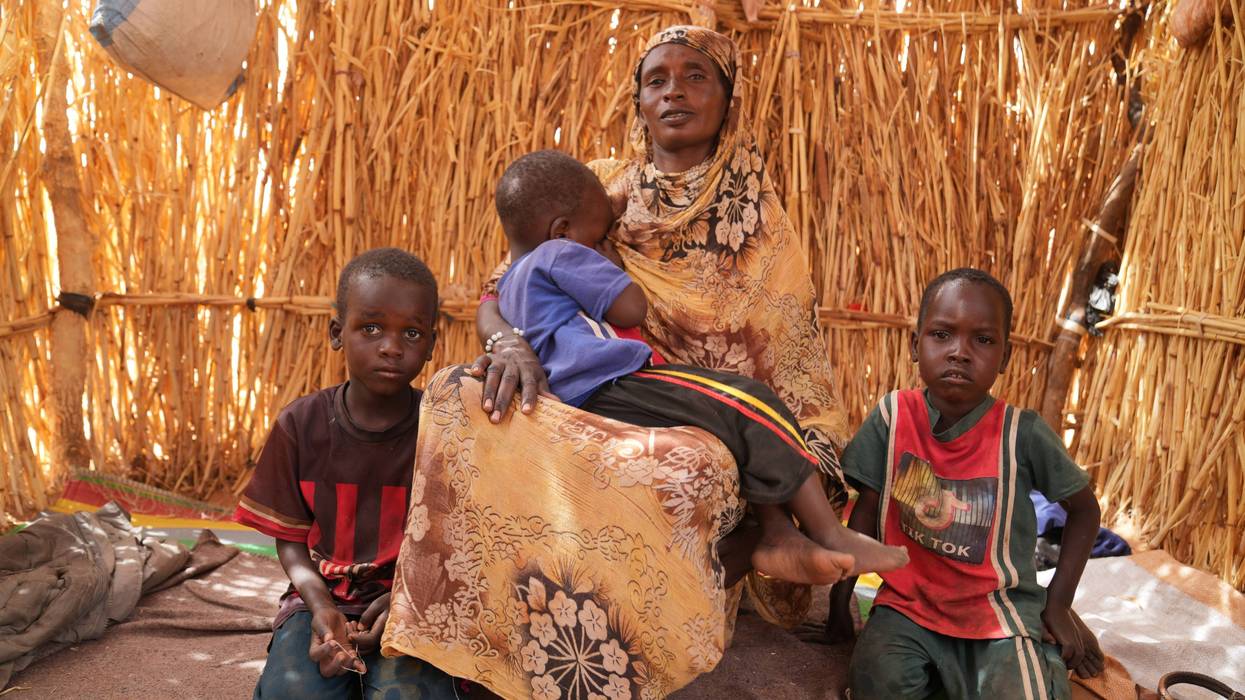
The US, said a group of senators led by Sen. Chris Van Hollen, must suspend weapons sales to the United Arab Emirates, which arms the Rapid Support Forces in Sudan.
Writing to Secretary of State Marco Rubio, Sen. Chris Van Hollen on Monday led 20 members of the Democratic Caucus in demanding that the Trump administration go beyond simply denouncing the Rapid Support Forces, the paramilitary group in Sudan that has been accused of war crimes in the country's civil war, and take "concrete action" to stop more mass atrocities as the group encircles the city of El Obeid.
"These actions should include ceasing certain US arms sales to external actors that are fueling this war, including the United Arab Emirates, which continues to arm the RSF," wrote the senators, including Sens. Bernie Sanders (I-Vt.), Elizabeth Warren (D-Mass.), and Ed Markey (D-Mass.).
The lawmakers wrote to Rubio as an estimated 500,000 civilians were at risk in El Obeid, where many people have sought safety following RSF attacks across the Kordofan region.
The letter came as the United Nations Office for the Coordination of Humanitarian Affairs said civilians are facing drone attacks in El Obeid, with humanitarian assistance also put at risk by the assault.
A number of the signatories, including Van Hollen and Sanders, have previously called on the Trump administration to end its complicity in RSF attacks like those that occurred in El Fasher last October, which United Nations investigators said bore the "hallmarks of genocide" after the group killed more than 6,000 civilians in the first three days of its offensive in the besieged city.
The senators described attacks like those on El-Saudi Hospital in El Fasher, where RSF forces "proceeded to search the wards and killing those they found, including patients, accompanying persons and medical personnel," killing an estimated 460 people before pursuing civilians who tried to escape.
Reports described "the perpetrators chasing people in open fields, firing at them with automatic rifles and mounted submachine guns, and running over fleeing persons with vehicles, causing mass casualties," the senators wrote.
More than 14 million people have also been forcibly displaced by the civil war.
But the scale of atrocities would likely not have been possible without the RSF's support from the UAE, for which the Trump administration fast-tracked a weapons sale in May after having provided the country with $7 billion in weapons just two months earlier.
Also in May, said the senators, Human Rights Watch released a report showing that the UAE trained hundreds of Colombian mercenaries who then took part in the atrocities in El Fasher and trained RSF recruits, including child soldiers.
Now, they wrote, the RSF's "encirclement and systematic crippling of resources in El Obeid increasingly parallels El Fasher, and this administration must use its leverage and influence to prevent a repeat of El Fasher’s horrors in El Obeid before it is too late."
They pointed out that the administration has acknowledged that further "mass atrocities could be imminent” in Sudan, as a State Department spokesperson said on June 22. In November 2025, Rubio himself said that the RSF was "clearly receiving assistance from outside" and that “something needs to be done to cut off the weapons and the support the RSF is getting as they continue their advances.”
Despite those acknowledgments, said the senators, the Trump administration has shown a "grave failure to act despite the chorus of alarm bells."
"What occurred in El Fasher is a stark warning of what could unfold in El Obeid and across Sudan if this administration—and the international community—continues this current pattern of inaction," wrote Van Hollen and his colleagues.
"While we welcome the State Department’s expression of concern about the escalating situation in El Obeid, words are not enough," they said. "The United States must use the leverage and influence at our disposal to prevent further atrocities in El Obeid and help bring this brutal war in Sudan to an end."
The senators called for a response to their letter by August 17, urging the administration to provide "an update on what other actions the administration is taking, beyond just words, to prevent mass atrocities in El Obeid."
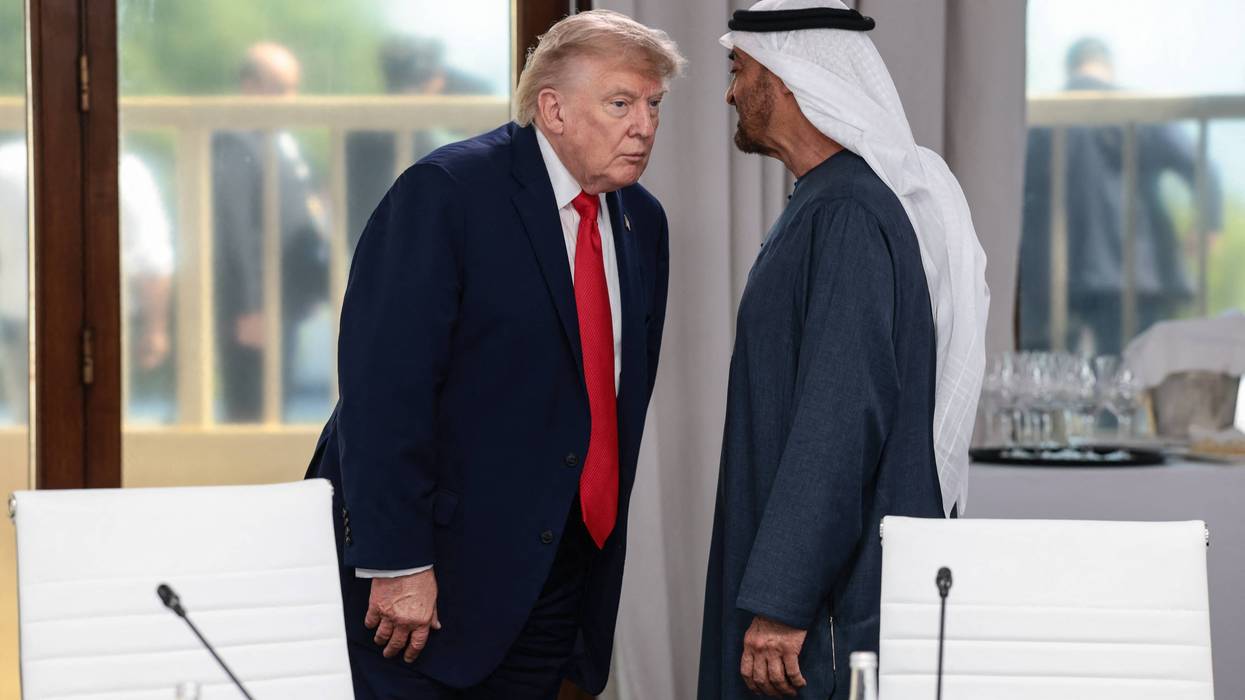
"Trump’s good friend and staunch US ally, the United Arab Emirates dictatorship, run by one of the wealthiest families in the world—has financed and enabled this genocide for years."
As the world fears another massacre by the Rapid Support Forces in Sudan, Sen. Bernie Sanders emphasized that the rebel group’s string of atrocities is being funded by a nation with deep financial ties to President Donald Trump—the United Arab Emirates—and urged an end to US military support.
"In the midst of the wars in Gaza and Iran, we cannot forget the atrocities in Sudan," Sanders (I-Vt.) said Monday in a post to social media. "As many as 150,000 killed since 2023, 14 million driven from their homes, 30 million need humanitarian aid."
"All of this is fueled by the UAE—one of Trump's closest allies," the senator continued. "We cannot be complicit in genocide."
The warning came as RSF encircles El Obeid, a city of half a million people, including hundreds of thousands who have been displaced.
For weeks, the RSF has launched drone attacks that have killed dozens of civilians and damaged critical infrastructure including water facilities, markets, and hospitals. Food, water, and fuel supplies have been disrupted. Some civilians have begun to flee as many entry points to the city have been cut off.
The United Nations Security Council warned last month that there was an "imminent risk of mass atrocities" and demanded that the RSF halt its assault.
Human Rights Chief Volker Türk stressed that the siege tactics followed a familiar "playbook" to the RSF's October attack on El-Fasher in which at least 6,000 people were killed in just three days as part of a campaign that UN human rights experts said bore the "hallmarks of genocide," including ethnically targeted killings and sexual violence.
While the US State Department and other governments have similarly warned that the RSF could be on the verge of committing atrocities, Nicholas Kristof argued in a New York Times column this weekend that "officials won’t say openly... that the power behind the RSF is the United Arab Emirates."
Despite denials from Abu Dhabi, the UAE has been extensively documented as supporting the RSF through weapons shipments routed via Chad, financing the militia, and recruiting, training, and transporting mercenaries to fight alongside the group.
Kristof pointed out that the UAE "has particularly close financial ties to the Trump family," most notably the $2 billion investment by an Emirati firm last year that benefited his family's cryptocurrency venture, World Liberty Financial (WLF), which has been a major source for the unprecedented growth of the president's wealth during his second term.
Recent financial disclosures reported this month by the Wall Street Journal show that Trump received $263 million from selling half his stake in WLF to a fund backed by Sheikh Tahnoon bin Zayed Al Nahyan, one of the UAE's most powerful royals and the brother of its president.
During his second term, Trump has rewarded the UAE with more than a billion dollars in weapons sales that were fast-tracked to get around holds imposed by Congress, and made an agreement giving the Emirates unprecedented access to hundreds of thousands of advanced computer chips per year.
“Trump’s good friend and staunch US ally, the United Arab Emirates dictatorship, run by one of the wealthiest families in the world—has financed and enabled this genocide for years,” Sanders said in a statement last week. "And why is this happening? Billions of dollars of looted gold from Sudan is flowing straight into the pockets of Emirati oligarchs—making a multibillionaire family even richer."He added that "Congress must demand that the UAE cease its military support for the RSF and work with the international community and the Sudanese people to bring an end to this horrific conflict and provide the humanitarian aid that is desperately needed there."
As warnings about a brutal new RSF offensive have piled up, there has been a push in Congress led by Sen. Chris Van Hollen (D-Md.) and Rep. Sara Jacobs (D-Calif.) for restrictions on the United States' ability to provide weapons to the UAE.
Last month, with help from some Democrats, the GOP-controlled Senate Foreign Relations Committee blocked two amendments aimed at halting US weapons shipments to the UAE unless it stops supporting the RSF.
The committee has passed a weaker bill that allows the president to impose optional sanctions on individuals who supply weapons to Sudan's armed factions, which now awaits a full Senate vote. But the committee rejected Van Hollen's amendment prohibiting arms sales to the UAE.

"Children are not incidental victims; they are directly affected, facing forced recruitment, sexual violence, unlawful detention, torture, and a lack of medical care," Amnesty International USA stressed.
Demands for a ceasefire in Sudan's three-year civil war mounted this week amid reports that more than 300 children have been killed or injured in the northeastern African nation this year alone, mostly by drone strikes.
The United Nations Children's Fund (UNICEF) said Modaysu that "children across Sudan continue to bear the brunt of a war that is becoming increasingly deadly, with at least 330 children reported killed or injured during the first six months of 2026. Darfur and Kordofan states continued to record the highest levels of child casualties."
"The situation in and around al-Obeid, and more broadly across North Kordofan, is particularly alarming," UNICEF continued. "Since May 2026, drone strikes and other attacks have reportedly resulted in more than 35 child casualties in the state, including at least 18 children killed and more than 17 injured. The affected children ranged in age from just 2 months to 17 years. According to reports, drone attacks accounted for 60% of these casualties, highlighting the growing impact of this method of warfare on children and families."
"Repeated drone strikes and shelling have also damaged civilian infrastructure, including homes, schools, health facilities, water systems, and markets; disrupted supply routes; and placed essential services under increasing strain," the agency added. "With an estimated 500,000 civilians at risk in and around al-Obeid and across North Kordofan, any further deterioration could expose even more children to death, injury, displacement, and other grave protection risks."
Amnesty International USA said Monday that both the Sudanese Armed Forces (SAF) and Rapid Support Forces (RSF) rebels "have committed numerous human rights violations, including deliberate attacks on civilians."
"Ethnic targeting has resulted in assaults on non-Arab communities, with women and girls subjected to sexual violence and exploitation," Amnesty added. "Children are not incidental victims; they are directly affected, facing forced recruitment, sexual violence, unlawful detention, torture, and a lack of medical care."
On Monday, the United Nations Human Rights Council approved a measure proposed by five European countries—Germany, Ireland, the Netherlands, Norway, and the United Kingdom—condemning escalating RSF-led violence in and around al-Obeid.
While both the SAF adnd RSF have committed documented human rights crimes, an independent United Nations panel released a report earlier this year detailing allegedly genocidal crimes committed by RSF rebels during last October's offensive in Darfur, where thousands of people were killed and others tortured, raped, and starved during the capture of el-Fasher.
The UN experts found that “genocidal intent is the only reasonable inference that can be drawn” from RSF's actions.
The ceasefire demands from UNICEF and Amnesty follow similar calls from governments, including France and the United Arab Emirates, as well as other UN agencies.
On Friday, UN High Commissioner for Human Rights Volker Türk warned that "another human rights catastrophe is unfolding" in al-Obeid.
"The signs from #ElObeid are clear & unmistakable: another human rights catastrophe is unfolding in #Sudan," @volker_turk told the @UN Human Rights Council.
"This is not a drill. It is a red alert that needs to land on the desks of Heads of State & Government around the world." pic.twitter.com/zH3bVIpX34
— UN Human Rights Council (@UN_HRC) July 3, 2026
“Civilians have been subjected to siege-like conditions for 18 months, battered by relentless drone attacks as the Sudanese Armed Forces and the Rapid Support Forces battle for control over areas surrounding the city," Türk noted.
“Some people are selling their belongings to finance their escape from the city," he continued. "For many, the exorbitant cost of transport and constant attacks on vehicles along exit routes, make leaving impossible."
"We have documented patterns of summary executions, abductions, torture and ill-treatment, sexual violence, and looting along the routes taken by displaced people across the Kordofan region," Türk added. "This is not a drill. It is a red alert that needs to land on the desks of heads of state and government around the world."
Since April 2023, Sudan's conflict has killed at least 59,000 people, displaced around 13 million others, and fueled famine in different parts of the country of approximately 52 million inhabitants. More than 30 million Sudanese are also in need of humanitarian assistance.
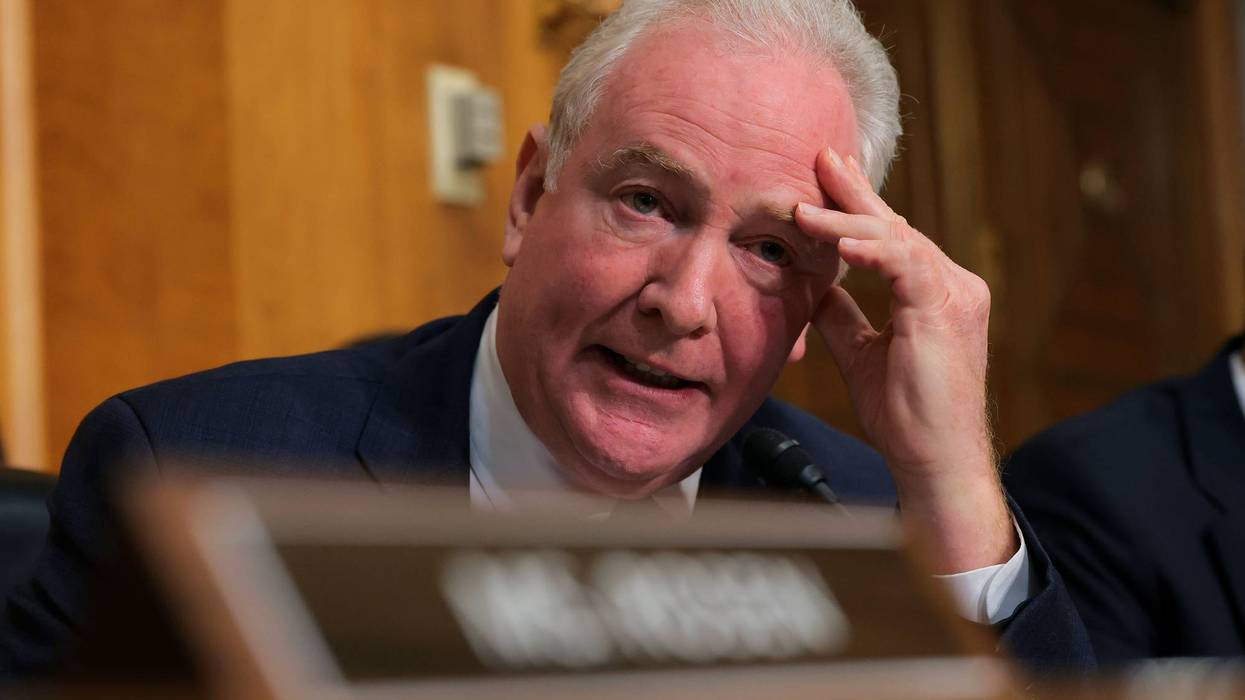
"The United States shouldn't just be talking about ending the slaughter in Sudan," the senator said. "We should actually be using our leverage."
After the US State Department warned earlier this week of imminent “atrocities” by Sudan’s Rapid Support Forces, Sen. Chris Van Hollen on Tuesday criticized the US Senate for missing a recent opportunity to cut off weapons to the United Arab Emirates, which has supplied the genocidal paramilitary group.
On Monday, the State Department warned that RSF forces were massing near the city of El-Obeid and could commit “mass atrocities” against civilians if allowed to take the city.
"The belligerents must uphold their obligations under international humanitarian law to protect civilians and ensure that those seeking safety can do so without fear or obstruction," the department said.
The statement echoed concerns expressed last week by a coalition of states at the United Nations Human Rights Council (UNHRC), which said that roughly 500,000 civilians, including more than 100,000 displaced people, could be at risk of violence if RSF escalated its assault.
UN human rights experts have said RSF's October offensive in Darfur bore the "hallmarks of genocide," with more than 6,000 people killed and numerous civilians tortured, raped, and starved during a three-day rampage across the city of El-Fasher.
But while Trump's State Department has sanctioned some entities accused of supplying fighters for the RSF, the Monday statement made no mention of the UAE, which rights groups point out is the group’s principal foreign backer.
A report issued last year by Van Hollen (D-Md.) and Rep. Sara Jacobs (D-Calif.) found that the UAE was continuing to provide weapons to the RSF despite telling the US that it was not.
Following previous failed attempts at pushing Congress to impose an arms embargo on Sudan through standalone legislation, Van Hollen attempted to do so again last week by tacking a pair of amendments onto the bipartisan PEACE in Sudan Act, which requires the State Department to assess designating armed Sudanese groups as terrorists and allows Trump to impose optional sanctions on foreign actors funding the war, but stopped short of introducing any hard leverage.
At a markup session for the Senate Foreign Relations Committee last week, Van Hollen introduced an amendment banning the US from selling or transferring military equipment to the UAE as long as it continues supporting the RSF. The amendment failed in a 15-7 vote, with four Democrats—Sens. Jeanne Shaheen (NH), Chris Coons (Del.), Tammy Duckworth (Ill.), and Jacky Rosen (Nev.)—joining every Republican on the committee, aside from Sen. Rand Paul (Ky.), in opposition.
A second amendment, which did not single out the UAE specifically but restricted arms sales to any country arming either side of the conflict, also failed 13-9, but received support from Shaheen and Rosen.
Coons said he'd have "enthusiastically" supported the amendment, but voted no because he believed it would "bring down" the broader Sudan bill in a GOP-controlled Senate. Duckworth did not explain her reasoning for voting no.
In light of the State Department's warning this week about RSF's march toward El-Obeid, Van Hollen told a Drop Site News reporter on Tuesday that he believed the no vote on his amendments "was a missed opportunity."
"The United States shouldn't just be talking about ending the slaughter in Sudan. We should actually be using our leverage," he said.
Noting that Trump likely would not support a restriction on arms to the UAE given his extensive financial entanglements with the Emiratis and his previous policy of fast-tracking weapons to the country without any strings attached, Van Hollen said his goal was simply to "keep the pressure on."
He said, "We need to keep showing the hypocrisy of the Trump administration policy, where they claim they want to do something but refuse to take some of the basic actions we can take as a country."

Companies, sports teams, and elected officials should stop partnering with the UAE or wearing Emirates-emblazoned swag until the country stops arming genocide in Sudan.
While little is reported about the role of the United Arab Emirates in provoking and supporting genocide in Sudan, the sheikdom is being celebrated at major sporting events here and abroad. I was reminded of this watching an interview with New York City Mayor Zohran Mamdani about the Knicks in the Athletic The New York Times sports website. During the interview I was alarmed to see he was wearing a sweater emblazoned with “Fly Emirates.”
I'm rooting for the Knicks and am a huge Mamdani fan, not only of the mayor but of his parents for many decades before Zohran caught my attention. It turns out that the sweater he was wearing is one a several outfits he wears in support of Arsenal, his favorite English Premier soccer team. During an Eid al-Adha celebration in the Bronx, he wore a kurta in the team’s blue and black colors. On it inscribed in large letters was “ Emirates—Fly Better.”
Emirates, the airline of the United Arab Emirates (UAE), has its major hub in Dubai linking a vast network of connections to Asia and Africa from Europe and the USA. The NBA and Emirates entered into a multiyear global marketing agreement. It is the official airline and a major sponsor of the NBA. The league’s annual in-season tournament is now called the Emirates NBA Cup and referees at NBA games wear EMIRATES on the back of their uniforms.
Numerous international organizations and media have identified the UAE (aka The Emirates) as a major supplier of arms, training, mercenaries, and material support for the Rapid Support Forces. The New York Times stated that, “under the guise of saving refugees, the United Arab Emirates is running an elaborate covert operation to back one side in Sudan’s spiraling war—supplying powerful weapons and drones, treating injured fighters, and airlifting the most serious cases to one of its military hospitals, according to a dozen current and former officials from the United States, Europe and several African countries.”
Refugees International wants prominent companies and organizations like the NBA, Disney, and Warner Brothers to suspend their partnerships with the UAE until it has ended its armed support for the RSF.
Mayor Mandani while condemning Israeli genocide in Palestine wears apparel endorsing the foremost sponsor of genocide in Darfur. The UAE supplies arms, equipment, and finances for the Rapid Support Forces who have committed countless acts of brutality including genocide and systematic rape. United Nations’ Secretary General António Guterres described the Sudan civil war as a “crisis of staggering scale and brutality.” He told world leaders that “the external support and flow of weapons must end.”
US-based Refugees International “calls for immediate accountability for the United Arab Emirates as new evidence emerges that it continues to fuel genocide in Sudan.” The Conflict Insights Group (CIG) report, “BLOOD MONEY: How UAE Support and Foreign Mercenaries Enabled the Fall of El Fasher,” uncovers the extent of Emirati operational involvement in the war.
The investigation documented “how a UAE-backed network of Colombian mercenaries provided critical military support to Sudan’s Rapid Support Forces (RSF), enabling the October 2025 capture of El Fasher, North Darfur. Colombian mercenaries flew drones, trained soldiers, and were present during the RSF’s takeover of El Fasher, where the Prosecutor of the International Criminal Court has concluded that war crimes and crimes against humanity took place.” The report states that these mercenaries were associated with Global Security Services Group, a UAE company with documented ties to senior Emirati government officials, including links to Sheikh Tahnoon bin Zayed Al Nahyan.
Donald Trump hosted a dinner for Sheikh Tahnoon on March 18, 2025. The sheikh met with the head of the CIA, various cabinet members, and CEOs including Jeff Bezos. The New York Times reported that leaked information indicated that Tahnoon sought Trump’s support “to shield the UAE from potential international sanctions and an ICJ (International Court of Justice) investigation into its alleged support for the RSF militia in Sudan.”
Ironically, on November 14, 2025, the BBC reported that “US Secretary of State Marco Rubio has called for international action to cut off the supply of weapons to Sudan's paramilitary Rapid Support Forces (RSF), who are accused of mass killings in el-Fasher. At the end of a G7 foreign ministers meeting in Canada, Rubio said the RSF had committed systematic atrocities, including murder, rape and sexual violence against civilians.”
Refugees International wants prominent companies and organizations like the NBA, Disney, and Warner Brothers to suspend their partnerships with the UAE until it has ended its armed support for the RSF. Hopefully, in that spirit, Mayor Mandani will denounce the UAE and offer a mea culpa for wearing genocidal swag.
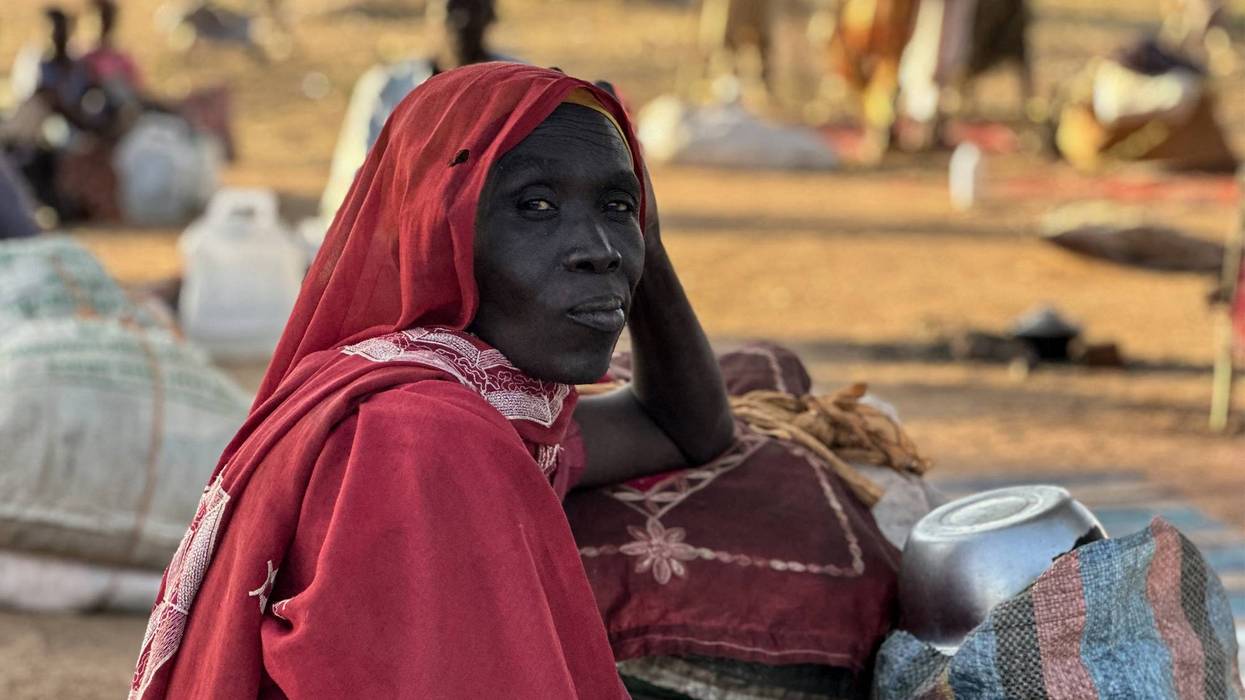
Their report detailed the Rapid Support Forces' "systematic pattern of ethnically targeted killings, sexual violence, destruction, and public statements explicitly calling for the elimination of non-Arab communities."
Independent United Nations human rights experts released a report Thursday detailing allegedly genocidal crimes committed by Sudanese rebels during an October offensive in Darfur, where thousands of people were killed and others tortured, raped, and starved during the capture of el-Fasher.
The Independent International Fact-Finding Mission for the Sudan report, titled Hallmarks of Genocide in el-Fasher, found that "genocidal intent is the only reasonable inference that can be drawn" from the Rapid Support Forces' (RSF) "systematic pattern of ethnically targeted killings, sexual violence, destruction, and public statements explicitly calling for the elimination of non-Arab communities, particularly the Zaghawa and Fur."
According to the mission's report, RSF—a United Arab Emirates-backed paramilitary force that originated from the Janjaweed militias used by the Sudanese government during the previous 2003-05 Darfur genocide—committed at least three genocidal acts as defined by the Genocide Convention: “killing members of a protected ethnic group, causing serious bodily and mental harm, and deliberately inflicting conditions of life calculated to bring about the group’s physical destruction in whole or in part.”
“The scale, coordination, and public endorsement of the operation by senior RSF leadership demonstrate that the crimes committed in and around el-Fasher were not random excesses of war,” said Mohamed Chande Othman, who chaired the expert panel. "They formed part of a planned and organized operation that bears the defining characteristics of genocide.”
A devastating report by the Independent International Fact-Finding Mission for the Sudan, finding that the 18-month starvation siege & subsequent atrocities during the fall of El-Fasher genocide, war crimes, and crimes against humanity.www.ohchr.org/sites/defaul...
[image or embed]
— Tom Dannenbaum (@tomdannenbaum.bsky.social) February 19, 2026 at 7:19 AM
The experts' investigation focused on events in and around el-Fasher—the capital of North Darfur—as RSF militants fought to take the area last October following an 18-month siege that deprived civilians of food, water, medical supplies, and humanitarian aid. The report says the siege “systematically weakened the targeted population through starvation, deprivation, trauma, and confinement."
The RSF captured el-Fasher last October 26. Its fighters ran roughshod over the city and its inhabitants, committing widespread atrocities including mass murder and summary executions, torture, rape, and kidnapping for ransom, according to the UN Human Rights Office, which said that more than 6,000 people were killed over a two-day period.
“We want to eliminate anything Black from Darfur," one RSF fighter allegedly told residents, according to the mission report.
"Is there anyone Zaghawa among you?" one militant is accused of asking. "If we find Zaghawa, we will kill them all."
Another survivor described starvation during the siege: “Life became unbearable. We were eating only... the food for livestock. When there was no more, we ate the skin of the animal. We soaked it in water and ate.”
In one of the worst atrocities of the el-Fasher offensive, RSF fighters massacred more than 460 people at the Saudi Maternity Hospital. One RSF militant recorded himself walking across a floor strewn with dead bodies and gunning down a survivor when they rise up from the pile of corpses.
The UN experts called RSF’s crimes in el-Fasher “an aggravation of earlier patterns” of attacks on other non-Arab communities in Sudan, “but on a far more lethal scale.”
"The body of evidence we collected—including the prolonged siege, starvation, and denial of humanitarian assistance, followed by mass killings, rape, torture and enforced disappearance, systematic humiliation, and perpetrators’ own declarations—leaves only one reasonable inference,” mission member Mona Rishmawi said.
“The RSF acted with intent to destroy, in whole or in part, the Zaghawa and Fur communities in el-Fasher," she added. "These are the hallmarks of genocide."
The Zaghawa and Fur are two of the largest non-Arab ethnic groups in Darfur. Both peoples have historically faced rampant discrimination and were targeted during the 2003-05 genocide. Many had already been forcibly displaced multiple times before the renewal of conflict in the spring of 2023.
That's when rival factions of Sudan’s military government—primarily the Sudanese Armed Forces (SAF) and their erstwhile RSF allies—began battling, with violence subsequently spreading rapidly throughout the northeastern African nation of 46 million people. The SAF has also been accused of widespread war crimes and has been blamed for famine conditions caused in part by its refusal to allow food aid to enter RSF-controlled areas.
The mission report lamented that "no effective measures were taken by any party to protect the civilian population," despite UN experts sounding the alarm as early as November 2023. US officials during the Biden administration were hesitant to accuse RSF fighters of genocide, reportedly because they thought it would spark criticism of then-President Joe Biden's denial of Israel's genocide in Gaza.
The US ultimately declared genocide in Darfur three weeks before Biden left office in January 2025—a determination affirmed by President Donald Trump's secretary of state, Marco Rubio, during his Senate confirmation process.
A group of US House Democrats led by Reps. Gregory Meeks (NY) and Sara Jacobs (Calif.) have called on the Trump administration to block weapons transfers to the UAE as it arms and finances the RSF and provides diplomatic cover for its atrocities.
Last March, Sudan filed a case in the International Court of Justice in The Hague, Netherlands accusing the UAE of "complicity in genocide."
Emirati officials strongly deny such allegations.

UN officials said they were "still very concerned about those who are injured, who we didn’t see, those who may be detained."
After weeks of pushing for access to el-Fasher, the city in Sudan's Darfur region that was taken over by the paramilitary Rapid Support Forces in October, United Nations officials reported on Tuesday that their recent visit to the city showed evidence of a "crime scene," with the few people remaining there showing signs of trauma from the mass atrocities they suffered and witnessed.
UN humanitarian workers gained access to the city last Friday, two months after the government-aligned Sudanese Armed Forces (SAF) lost control of el-Fasher to the United Arab Emirates-backed RSF.
The city was the SAF's last major stronghold in Darfur, and fighting has now escalated in the Kordofan region.
Reuters reported that the RSF has attempted to portray el-Fasher as "back to normal" since its takeover, even as the Yale Humanitan Research Lab published a report earlier this month on the mass killings that the paramilitary group have sought hide evidence of "through burial, burning, and removal of human remains on a mass scale."
Denise Brown, the UN resident and humanitarian coordinator for Sudan, told Reuters that the few people remaining in el-Fasher are living in empty buildings or tents made of plastic sheets. A small market was operating, but was selling only locally grown vegetables.
"The town was not teeming with people," Brown said. "There were very few people that [we] were able to see... We have photos of people, and you can see clearly on their faces the accumulation of fatigue, of stress, of anxiety, of loss."
Healthcare staff were seen at Saudi Hospital in el-Fasher, where 460 people were killed in an RSF attack, but they were working without medical supplies, Brown said.
Yale's report earlier this month relied partially in satellite imagery taken between October 26-November 28, which showed clusters of what researchers said were consistent with human remains in and around el-Fasher. More than 70% of the clusters had become smaller in satellite images by late November, and 38% were no longer visible.
The researchers said the RSF has used particular patterns of killing, including murdering people as they flee attacks, door-to-door and execution-style killings, and mass killings at detention centers and military installations.
Nathaniel Raymond, executive director of the Humanitarian Research Lab, said the UN's discovery of few signs of life in el-Fasher corroborated the lab's findings.
Brown said the UN team is "still very concerned about those who are injured, who we didn’t see, those who may be detained," and told Reuters the officials plan to return to assess water and sanitation access.
About 100,000 people fled el-Fasher in October, and about three-quarters of those forced to leave the city were already internally displaced people who had fled violence as many as three or more times. In total 1.17 million el-Fasher residents have been displaced.
Earlier this month, Doctors Without Borders, also known as Médecins Sans Frontières (MSF), released a short documentary detailing the experiences of people who left the city and are sheltering in Chad.
"They call it Paris, and now it is destroyed," a man named Noor told MSF of el-Fasher. "In the past it was a good city with all its lights on."
An estimated 30.4 Sudanese people are now in need of humanitarian assistance, and on Monday the UN Children's Fund (UNICEF) reported unprecedented levels of child malnutrition in the Um Baru locality in northern Darfur.
More than half of children there are suffering from acute malnutrition, and 1 in 6 are severely, acutely malnourished—a condition that could kill them within weeks if left untreated.
“When severe acute malnutrition reaches this level, time becomes the most critical factor,” said UNICEF Executive Director Catherine Russell. “Children in Um Baru are fighting for their lives and need immediate help. Every day without safe and unhindered access increases the risk of children growing weaker and more death and suffering from causes that are entirely preventable.”
Many of the families observed by UNICEF fled el-Fasher in recent weeks.

The NBA’s credibility as a league that stands for justice and fairness is at risk. Will they take actions to break off their connection to a government that is funding and arming some of the worst atrocities in the world?
The National Basketball Association, a league renowned for its support of civil rights going back to the Bill Russell era, is now connected to the former member of Sudan’s Parliament Siham Hassan Hasaballah, who organized soup kitchens out of her home after the country’s most recent war began in 2023. Just weeks ago, she was executed in Darfur by a genocidal militia called the Rapid Support Forces, or RSF.
The NBA, a league that actively promoted racial justice in the aftermath of George Floyd's murder, is now connected to the Saudi Maternity Hospital in Darfur, where RSF soldiers murdered hundreds of patients and health workers last month. One video shot by RSF soldiers themselves reveals a dozen victims lying on the floor, while an RSF soldier kills an elderly survivor. Tedros Ghebreyesus, the Director of the World Health Organization, was “appalled and deeply shocked by reports of the tragic killing of more than 460 patients and companions” at the hospital.
The NBA, a league undertaking major investments in youth programs in Africa and around the world, is now connected to the world’s fastest displacement crisis taking place now in Sudan, which is the “largest humanitarian crisis ever recorded,” according to the International Rescue Committee.
What’s the connection? The NBA has developed a deep and evolving commercial partnership with the United Arab Emirates, which is providing weapons and support to the RSF, that genocidal Sudanese militia. The most visible and public manifestation of the relationship is the Emirates NBA Cup, the increasingly popular in-season tournament sponsored by the UAE’s flagship airline. The tournament's final round will take place this coming Tuesday in Las Vegas.
Global business dealings are complex, but surely genocide should be a red line for the NBA.
The NBA also has a deepening partnership with Rwanda, which over the last two years has sent thousands of troops into neighboring Democratic Republic of Congo, sponsored one of the deadliest militias in all of Africa—the M23—in support of its Congo intervention, and looted Congo’s valuable natural resources.
The league is now one degree of separation away from the two worst abusers of human rights in all of Africa: the RSF and M23.
“Sportswashing” has a long history. The Roman Empire had its bread and circuses. Hitler hosted the 1936 Summer Olympics, Mussolini hosted the 1934 World Cup, and Putin hosted the 2014 Winter Olympics. Saudi Arabia owns the LIV golf league. They all recognized that attention from their own misdeeds could easily be diverted by investing in sporting events that entertain the masses.
To that end, the NBA relationship isn’t the only sportswashing the UAE is engaged in, as the Emirati government and its subsidiary companies are also sponsors of Formula One racing, US Open tennis, Ultimate Fighting Championship mixed martial arts events, European soccer teams, and National Football League teams, among others.
NBA Commissioner Adam Silver’s deputy, Mark Tatum, has argued that the NBA follows “directives and guidance” from the US government, and he has told private audiences that if American policy changed, the NBA’s action would change accordingly.
That change is underway. On November 12, Secretary of State Marco Rubio stopped just short of saying the quiet part out loud: “"We know who the parties are that are involved [in arming the RSF]... I can just tell you at the highest levels of our government that case is being made and that pressure is being applied to the relevant parties… This needs to stop."
At the moment, it remains unlikely that a US official would publicly name the UAE as the largest supplier of weapons to the RSF. But it is clear US policy toward the UAE’s arming of the RSF is shifting. NBA Commissioner Silver has a duty to recognize that change, as his deputy said, and “change accordingly.”
With the crisis in Sudan only getting worse, now is the time to act. The activist campaign Speak Out On Sudan, coordinated by a number of humanitarian and human rights organizations including Refugees International and The Sentry, is calling on the NBA to make it clear to its Emirati partners that as long as the UAE continues to fund and arm the RSF, this will be the last Emirates NBA Cup. The NBA is one of the most powerful sports leagues in the world—surely it can find another sponsor.
There is precedent for this. Recently, partly in response to growing activist pressure, the English Premier soccer club Arsenal announced the end of its commercial partnership with Rwanda, which has invaded neighboring Democratic Republic of Congo and is looting the Congo’s mineral wealth. The German club Bayern Munich did the same earlier this year. These teams have shown brand sensitivity and willingness to change when called out for commercial arrangements that connect them to horrific human rights abuses. The UAE's support for a genocidal Sudanese militia is no different.
The NBA’s credibility as a league that stands for justice and fairness is at risk. Will they take actions to break off their connection to a government that is funding and arming some of the worst atrocities in the world? Or is “shut up and dribble,” the infamous line used by Fox News host Laura Ingraham to LeBron James, going to be the way forward for the NBA on this issue?
Global business dealings are complex, but surely genocide should be a red line for the NBA. As this year’s Emirates NBA Cup concludes this week, let’s hope it’s the last.
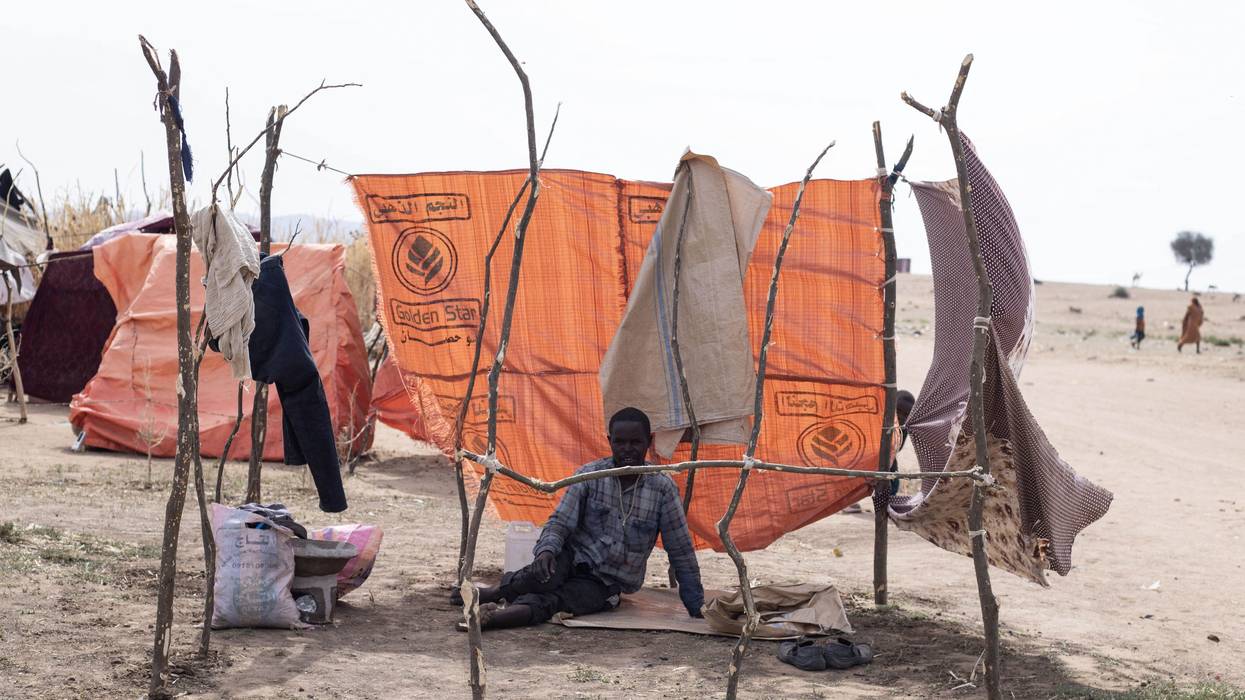
The court said the actions of Sudan's Rapid Support Forces, who are backed by a US ally in the UAE, "may constitute war crimes and crimes against humanity."
The International Criminal Court said it is collecting and preserving evidence of war crimes in Sudan's Darfur region following a massacre committed by a militia group and amid reports of widespread starvation.
In a statement published Monday, the ICC—the international body charged with prosecuting crimes against humanity—expressed "profound alarm and deepest concern over recent reports emerging from El-Fasher about mass killings, rapes, and other crimes" allegedly committed by the Rapid Support Forces (RSF), which breached the city last week.
According to the Sudan Doctors Network (SDN), a medical organization monitoring the country's brutal civil war, the militants slaughtered more than 1,500 people in just three days after capturing El-Fasher, among them more than 460 people who were systematically shot at the city's Saudi Maternity Hospital.
The ICC said that "such acts, if substantiated, may constitute war crimes and crimes against humanity under the Rome Statute," the court's founding treaty, which lays out the definitions for acts including genocide, crimes against humanity, and war crimes.
The court said it was "taking immediate steps regarding the alleged crimes in El-Fasher to preserve and collect relevant evidence for its use in future prosecutions."
The announcement comes shortly following a new report from the UN-affiliated Integrated Food Security Phase Classification (IPC), the world's leading authority on hunger crises, which found that famine has been detected in El-Fasher and the town of Kadugli in Sudan's South Kordofan province. Twenty other localities in the two provinces—which have seen some of the civil war's worst fighting—are also in danger of famine, according to the report.
The two areas have suffered under siege from the RSF paramilitary, which has cut off access to food, water, and medical care. The IPC says it has led to the "total collapse of livelihoods, starvation, extremely high levels of malnutrition and death."
According to the UN's migration authority, nearly 37,000 people have been forced to flee cities across North Kordofan between October 26 and 31. They joined more than 650,000 displaced people who were already taking refuge in North Darfur's city of Tawila.
Sudan's civil war, which began in 2023, has created the world's largest humanitarian crisis, with potentially as many as 150,000 people killed since it began. Over 12 million people have been displaced, and 30.4 million people, over half of Sudan’s total population, are in need of humanitarian support.
The recent escalation of the crisis has led to heightened global scrutiny of RSF's chief financier, the United Arab Emirates. In recent days, US politicians and activists have called for the Trump administration to halt military assistance to the Gulf state, which it sold $1.4 billion in military aircraft in May.
On Tuesday, Emirati diplomats admitted for the first time that they "made a mistake" supporting the RSF as it attempted to undermine Sudan's transitional democratic government, which took power in 2019 after over three decades of rule by the Islamist-aligned dictator Omar al-Bashir. Those efforts culminated in a military coup in 2021 and an eventual power struggle for control over the country.
However, as Sudanese journalist Nesrine Malik wrote in The Guardian on Monday, the UAE "continues to deny its role, despite overwhelming evidence."
"The UAE secures a foothold in a large, strategic, resource-rich country, and already receives the majority of gold mined in RSF-controlled areas," Malik wrote. "Other actors have been drawn in, overlaying proxy agendas on a domestic conflict. The result is deadlock, quagmire, and blood loss that seems impossible to stem, even as the crisis unravels in full view."
"Sudan’s war is described as forgotten, but in reality it is tolerated and relegated," she continued. "Because to reckon with the horror in Sudan... is to see the growing imperialist role of some Gulf powers in Africa and beyond—and to acknowledge the fact that no meaningful pressure is applied to these powers, including the UAE, to cease and desist from supporting a genocidal militia because the UK, US, and others are close allies with these states."

About 375,000 people have been pushed into famine after 30 months of civil war, said the world's top hunger monitor.
The world's top authority on hunger said Monday that a ceasefire in Sudan is needed to "contain the extreme levels of acute food insecurity and acute malnutrition" that have taken hold in the war-ravaged African country as it declared famine has spread to two regions there.
The Integrated Food Security Phase Classification (IPC), a United Nations-backed partnership, said it has detected famine in el-Fasher, the city in North Darfur State that the government's former allied militia, the Rapid Support Forces (RSF), seized last week, and Kadugli town in South Kordofan.
The IPC said at least 20 other areas in Darfur and Kordofan are at risk of famine, but fighting between the RSF and Sudanese government forces has impeded the group's assessments in places like the besieged town of Dilling, where the situation is likely "similar" to that of Kadugli.
"Urgent steps should be taken to allow full humanitarian access and assessment in this area," said the IPC.
In the towns where experts have been able to take stock of the humanitarian disaster—now one of the worst in the world, according to the United Nations—hundreds of thousands of people are facing “a total collapse of livelihoods, starvation, extremely high levels of malnutrition, and death.”
The IPC, which rates hunger on a scale of 1-5, determines that famine has taken hold in places where malnutrition has caused at least two deaths per 10,000 people, or four deaths per 10,000 children under the age of 5; at least 1 in 5 households severely lack food; and at least 30% of children have been found to suffer from acute malnutrition.
In the two regions included in the IPC report Monday, about 375,000 people have been pushed into famine (IPC Phase 5), and another 6.3 million people across the country face are in IPC Phase 4, classified as an "emergency" hunger crisis.
More than 21 million people face acute levels of food insecurity.
Towns near el-Fasher are also at risk of famine, including Tawila, Melit, and Tawisha.
Food supplies have been largely cut off in el-Fasher over the last 18 months as it has been under siege by the RSF, which killed more than 1,500 people in massacres last week as it took over the city.
Nearly 10 million people have been internally displaced by the civil war—the world's largest displacement crisis—with many sheltering in overcrowded public buildings with inadequate access to food as well as sanitation.
More than 19 million people in Sudan are expected to experience acute food insecurity by January 2026 as humanitarian aid groups continue to be blocked from getting supplies to starving households and harvests in Darfur and Kordofan are expected to be "well below average due to insecurity, despite favorable agroclimatic conditions."
Food prices are also expected to remain high and ultimately rise in the first half of next year as stocks decline.
"An immediate ceasefire and humanitarian access are a must to prevent further deterioration and save lives!" said Tedros Adhanom Ghebreyesus, director-general of the World Health Organization.
The IPC said only 21% of people in need currently have access to humanitarian aid, and in Kadugli, the aid group Save the Children said that its food supplies ran out in September as fighting there escalated.
Tens of thousands of people in the town are trapped there as the RSF—which is backed by the United Arab Emirates, whose government has received military support from the US—tries to seize more territory.
The IPC previously declared famine in three refugee camps near el-Fasher and in part of South and West Kordofan provinces, since fighting began in April 2023.
The UN has estimated more than 40,000 people have been killed, but aid groups warn the true death toll is likely much higher.
The International Court of Justice said Monday that it is "taking immediate steps regarding the alleged crimes in el-Fasher to preserve and collect relevant evidence for its use in future prosecutions."