
SUBSCRIBE TO OUR FREE NEWSLETTER
Daily news & progressive opinion—funded by the people, not the corporations—delivered straight to your inbox.
5
#000000
#FFFFFF
To donate by check, phone, or other method, see our More Ways to Give page.


Daily news & progressive opinion—funded by the people, not the corporations—delivered straight to your inbox.
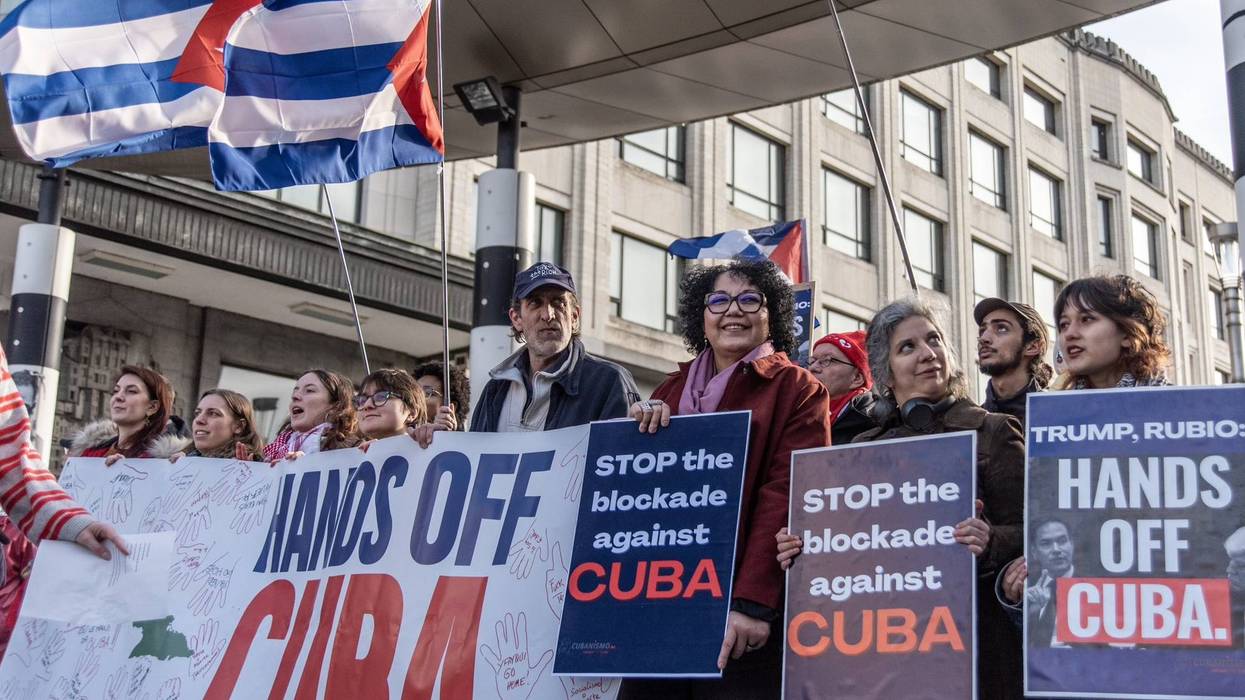
The latest escalation of the US blockade against Cuba — in the form of an executive order authorizing punitive tariffs on any country that dares supply oil to the island—is a cruel and criminal act of economic warfare that will bring nothing but starvation, deprivation, and despair to its people.
We will not mince words. The 'policy' of the Trump administration is a total siege: a modern mechanism for collective punishment designed to strangle life itself by cutting off fuel for hospitals, schools, water, transport, and food distribution.
Cuba already faces severe fuel shortages, with blackouts stretching daily and essential services collapsing under the weight of sanctions and depleted imports. Cuba’s remaining oil stocks could run out in mere weeks, threatening the lives of millions who have done nothing to justify this escalation.
This is the culmination of a long-standing strategy articulated in US law — from the expansive embargo codified by the Helms–Burton Act in the 1990s to the Cuban Assets Control Regulations first enforced in the 1960s — that openly sought to apply “maximum pressure” to force political transformation in Havana and defeat a vanguard in the struggle against the US's hemispheric domination.
Now, with this new Executive Order, the logic of siege has reached its apotheosis: sanction not only Cuba but every nation that dares show solidarity, effectively demanding that sovereign states choose between the interests of their own people and the dictates of an empire.
Cuba stood with oppressed peoples globally — from defeating apartheid in South Africa to sending doctors to the frontlines of epidemics — and now it is our time to act with audacity, moral courage, and collective force.
Already Mexico — Cuba’s last significant oil lifeline — has been pressed into uncertainty, warned that continued support could trigger tariffs on its economy. In doing so, Trump has revealed so-called 'secondary sanctions' as the empire's principal weapon against international solidarity.
Trump has been clear: this siege is but a springboard toward regime change. It is the same strategic blueprint that saw Venezuela’s sovereignty undermined, its oil lifelines severed, its people plunged into crisis while the world stood by in lethargy.
We cannot repeat that failure. The international community was too slow to prevent the bombardment of Caracas; we must not be passive while the groundwork is laid for similar violence against the people of Cuba.
If Cuba is to survive as an independent nation it will be because of the continued resilience and vitality of its revolutionary project — and the solidarity of movements and nations around the world defying empire and rising to challenge this injustice.
We must organize community support networks, coordinate diplomatic resistance, demand that governments refuse to enforce secondary tariffs, and amplify Cuban voices against this assault on international law, human dignity, and basic human rights.
Those efforts, both from within and beyond the Progressive International, must accelerate — today. History will judge those who saw this moment and turned away. Cuba stood with oppressed peoples globally — from defeating apartheid in South Africa to sending doctors to the frontlines of epidemics — and now it is our time to act with audacity, moral courage, and collective force.
Stand with the Cuban people now; stand against this siege, this economic assault, this unfolding humanitarian disaster; join together in the provision of key supplies to the island, from medicine to food to fuel for its people; and stand for the right of all nations to self-determination and human dignity, or be complicit in its destruction.
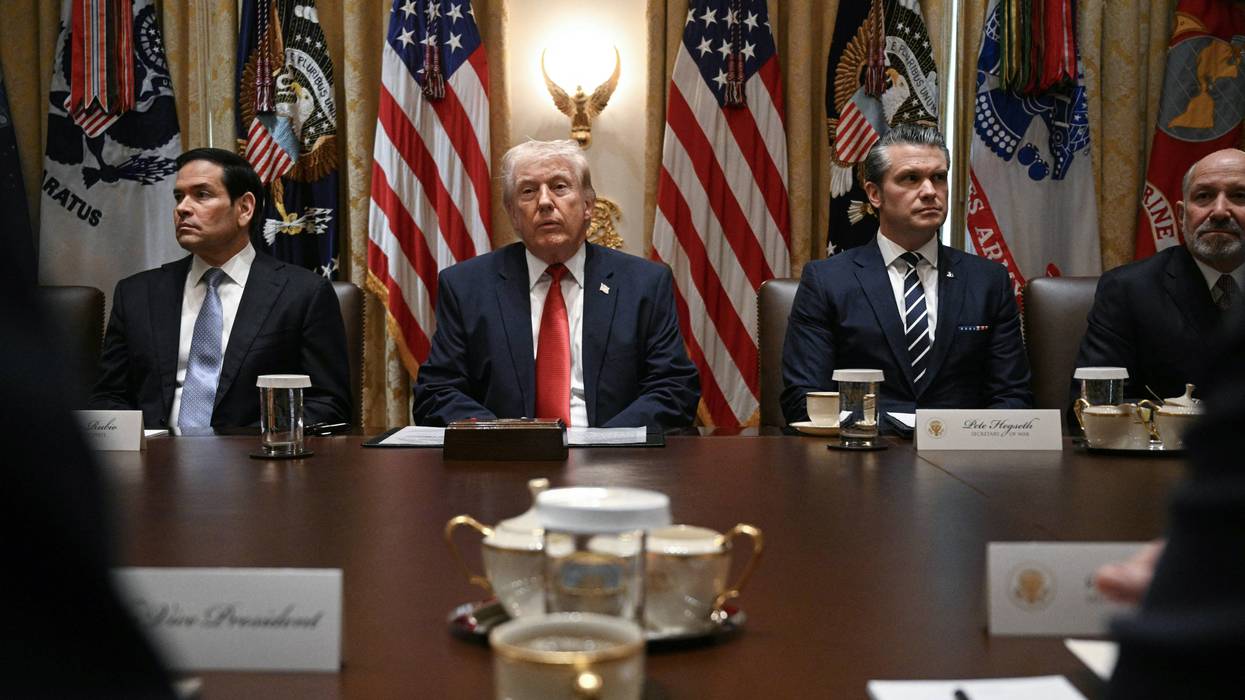
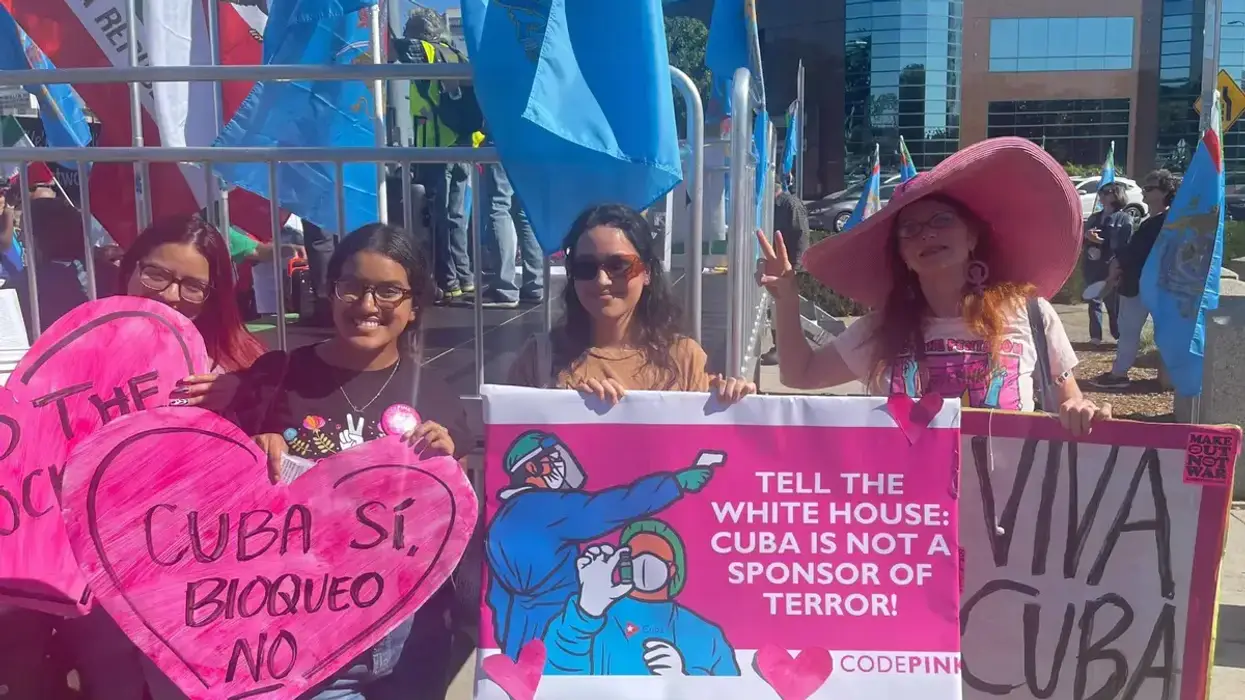
The White House accused Cuba of supporting terrorist groups as the Trump administration cut off much of the island's energy supply and threatened countries with tariffs if they continue to send Cuba oil.
Cuba's Ministry of Foreign Affairs on Monday said the country is open to expanding "bilateral cooperation" with the US, following President Donald Trump's comments that the White House is "going to make a deal with Cuba"—but diplomatic officials emphasized that they vehemently reject Trump's recent accusations that they harbor terrorists and pose an "unusual and extraordinary threat" to the US.
"Cuba categorically declares that it does not harbor, support, finance, or permit terrorist or extremist organizations," said the ministry.
The statement was released days after the White House issued an executive order to address what it called threats that Cuba poses to the US, threatening to impose new tariffs on countries that sell oil to Cuba.
Trump's invasion of Venezuela—which had been the top energy supplier to Cuba—and his push to take control of the South American country's oil has left Cuba's economy struggling with a virtual energy blockade and rolling blackouts. The US has also been pressuring Mexico to stop supplying energy to the island nation, prompting fears of a potential humanitarian crisis.
White House Deputy Chief of Staff Stephen Miller said last month that the US has the right to take over any country if doing so furthers its interests, and said the Trump administration should "secure our interests unapologetically in our hemisphere."
In the executive order last week, the president made sweeping accusations against Cuba, claiming that it provides support for countries including Russia and China—though the Trump administration has also sought improved relations with Russian President Vladimir Putin and Chinese President Xi Jinping—and offering no evidence for the allegation that it also supports Hamas and Hezbollah.
The Cuban storytelling platform Belly of the Beast called the accusation "laughable, if it weren't so serious," and spoke to some of the hundreds of Palestinian medical students who are studying to be doctors at the Latin American School of Medicine and other institutions.
"The vast majority of Palestinians in Cuba are medical students," said Ihab Masri, who is studying there alongside students from about 100 other countries. "Trump is a person who says he stopped 10 or 12 wars... a person who not only justifies but also denies the genocide in Gaza that they commit and have committed. You can't trust someone like that."
In his attempt to block oil shipments to Cuba, Donald Trump now claims the country is a safe haven for Hamas and Hezbollah, without presenting any evidence. Cubans say it’s complete nonsense. The real story? Hundreds of Palestinian students training to be doctors in Havana. pic.twitter.com/3X24dhF6mN
— Belly of the Beast (@bellybeastcuba) February 1, 2026
Trump's executive order also accused Cuba of spreading "its communist ideas, policies, and practices around the Western Hemisphere, threatening the foreign policy of the United States."
The Ministry of Foreign Affairs on Monday emphasized that "Cuba does not host foreign military or intelligence bases and rejects the characterization that it is a threat to the security of the United States. Nor has it supported any hostile activity against that country, nor will it allow its territory to be used against another nation."
The US has maintained a trade embargo on Cuba for more than six decades and has had hostile relations with the country since the communist revolution gave rise to the late President Fidel Castro and overthrew authoritarian leader Fulgencio Batista, who was backed by the US.
US Rep. Jesús "Chuy" García (D-Ill.) warned that Trump's "latest economic assault against the island is designed to cause a humanitarian collapse, deepening our collective punishment of the Cuban people and forcing more migration."
"Cuba poses no threat to the United States, but that’s not the point. Trump is manufacturing an excuse for cruelty and regime change," added the congressman, while Rep. Rashida Tlaib (D-Mich.) denounced Trump's executive order as "pure cruelty" that could "kill countless innocent Cubans."
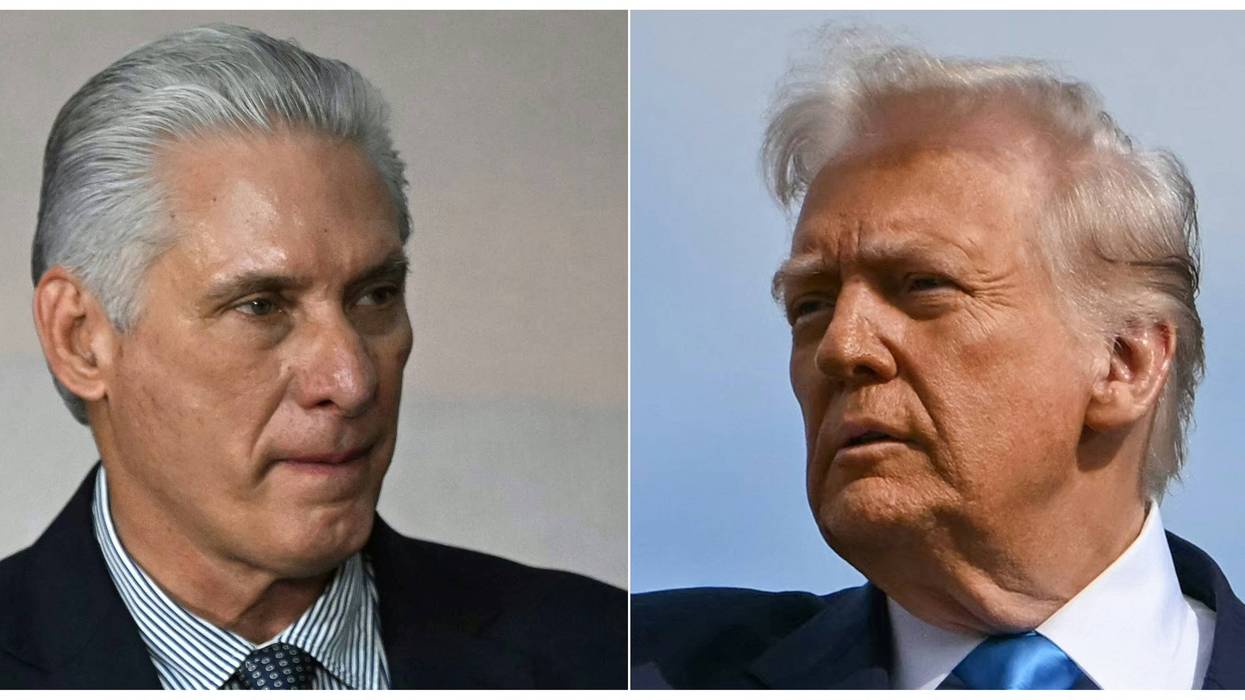
Cuban President Miguel Diaz-Canel said last week that Trump's threat against countries that continue to supply energy "reveals the fascist, criminal, and genocidal nature of a clique that has hijacked the interests of the American people for purely personal ends."
On Monday, the global organization Progressive International joined Cuban officials in denouncing Trump's executive order as a "cruel and criminal act of economic warfare that will bring nothing but starvation, deprivation, and despair to [Cuba's] people."
"With this new executive order, the logic of siege has reached its apotheosis: Sanction not only Cuba but every nation that dares show solidarity, effectively demanding that sovereign states choose between the interests of their own people and the dictates of an empire," said the Cabinet of Progressive International.
The group called on the international community to "coordinate diplomatic resistance, demand that governments refuse to enforce secondary tariffs, and amplify Cuban voices against this assault on international law, human dignity, and basic human rights."
"History will judge those who saw this moment and turned away. Cuba stood with oppressed peoples globally—from defeating apartheid in South Africa to sending doctors to the frontlines of epidemics—and now it is our time to act with audacity, moral courage, and collective force," said Progressive International."
"Stand with the Cuban people now," the group added. "Stand against this siege, this economic assault, this unfolding humanitarian disaster; join together in the provision of key supplies to the island, from medicine to food to fuel for its people; and stand for the right of all nations to self-determination and human dignity, or be complicit in its destruction."
"The people have spoken and they refuse to be complicit," said one campaigner. "Across continents, ordinary citizens demand an end to the fuel that powers settler colonialism, apartheid, and genocide."
Large percentages of people in five nations want arms, fuel, and machinery embargoes on Israel in response to its obliteration and starvation of Gaza, a poll published Thursday revealed.
The survey—which was conducted last month by Pollfish for the Global Energy Embargo for Palestine and endorsed by Progressive International—queried people in Brazil, Colombia, Greece, South Africa, and Spain about whether their governments, fuel companies, weapons makers, and heavy machinery manufacturers should stop, reduce, continue, or increase business with Israel.
Nearly two-thirds of Spanish respondents said they strongly support or support their government taking action "to reduce trade in weapons, fuel, and other relevant goods to pressure Israel to end its military actions in Gaza." In Greece, 63% back an embargo, while 35% oppose it. Sixty percent of Colombians, 58% of South Africans, and 48% of Brazilians strongly or somewhat support punitive sanctions on Israel.
Conversely, 27% of Brazilians said they do not support or strongly oppose an embargo on Israel, while 20% of South Africans, 14% of Colombians and Greeks, and 12% of Spaniards feel the same.
Support for ending or reducing weapons transfers was strong in all five nations, with 76% of Colombian respondents, 75% of Spaniards and Greeks, 66% of South Africans, and 59% of Brazilians favoring such action.
A majority of respondents in all five countries also said that companies providing arms, fuel, or heavy machinery to Israel "should be held responsible for how those products are used in Gaza."
📊 New poll: People across the world say companies selling weapons, fuel, or heavy machinery to Israel should be held accountable for how those products are used in Gaza.🇪🇸 76%🇬🇷 71%🇨🇴 70%🇧🇷 62%🇿🇦 60%#EnergyEmbargoNow #NoFuelForGenocide@progintl.bsky.social
[image or embed]
— Global Energy Embargo For Palestine (@palenergyembargo.bsky.social) August 7, 2025 at 2:33 AM
"The people have spoken and they refuse to be complicit," Global Energy Embargo for Palestine campaigner Ana Sánchez said in a statement.
"Across continents, ordinary citizens demand an end to the fuel that powers settler colonialism, apartheid, and genocide," Sánchez added. "No state that claims to uphold democracy can justify maintaining energy, military, or economic ties with Israel while it commits a genocide in Palestine. This is not just about trade; it's about people's power to cut the supply lines of oppression."
The poll was published 670 days into Israel's U.S.-backed assault and siege on Gaza, which has left at least 226,600 Palestinians dead, maimed, or missing and hundreds of thousands more starving amid increasingly deadly famine as Israel blocks aid from entering the embattled enclave.
The far-right government of Israeli Prime Minister Benjamin Netanyahu—a fugitive from the International Criminal Court wanted for alleged crimes against humanity and war crimes in Gaza—is moving ahead with plans for the "full conquest," reoccupation, and ethnic cleansing of the strip, which U.S. President Donald Trump wants to transform into "the Riviera of the Middle East."
Israel's conduct in the war is the subject of an International Court of Justice genocide case brought by South Africa and supported by around two dozen nations. Among the countries in the survey, Colombia—which severed diplomatic ties with Israel in May 2024—Spain, and Brazil have formally joined or signaled their intent to join South Africa's case.
The ICJ also found last year that Israel's occupation of Palestine is an illegal form of apartheid.
"What the Israeli government is doing to the Palestinian people is not war, it is genocide," Brazilian President Luiz Inácio Lula da Silva said in February 2024 shortly after recalling his ambassador to Tel Aviv. "If this isn't genocide, I don't know what is."
On Thursday, European Commission Executive Vice President Teresa Ribera—who is Spanish—told Politico, "If it is not genocide, it looks very much like the definition used to express its meaning."
"What we are seeing is a concrete population being targeted, killed, and condemned to starve to death," Ribera said. "A concrete population is confined, with no homes—being destroyed—no food, water, or medicines—being forbidden to access—and subject to bombing and shooting even when they are trying to get humanitarian aid. Any humanity is absent, and no witness[es] are allowed."
Of the surveyed nations, all but Greece support an arms embargo on Israel. The other four countries took part in last month's Hague Group emergency ministerial conference in Colombia, which was organized by Progressive International and ended with the publication of a joint action plan for "coordinated diplomatic, legal, and economic measures to restrain Israel's assault on the occupied Palestinian territories and defend international law at large."
"The message from the peoples of the world is loud and clear: They want action to end the assault on Gaza—not just words," Progressive International co-general coordinator David Adler said in a statement accompanying the new survey's publication.
"Across continents, majorities are calling for their governments to halt arms sales and restrain Israel's occupation," Adler added. "That's why states are coming together through the Hague Group to take concrete measures toward accountability. It's time for others to follow their lead."
Meanwhile, a survey published Tuesday by the Israel Democracy Institute revealed that 8 in 10 Israeli Jews "are not so troubled or not at all troubled personally" by "the reports of famine and suffering among the Palestinian population in Gaza."
Eight people, including a child, starved to death in Gaza that day, on which local officials said that more than 80 Palestinians were killed by Israel's bombs, bullets, and blockade.