

SUBSCRIBE TO OUR FREE NEWSLETTER
Daily news & progressive opinion—funded by the people, not the corporations—delivered straight to your inbox.
5
#000000
#FFFFFF
To donate by check, phone, or other method, see our More Ways to Give page.
Daily news & progressive opinion—funded by the people, not the corporations—delivered straight to your inbox.
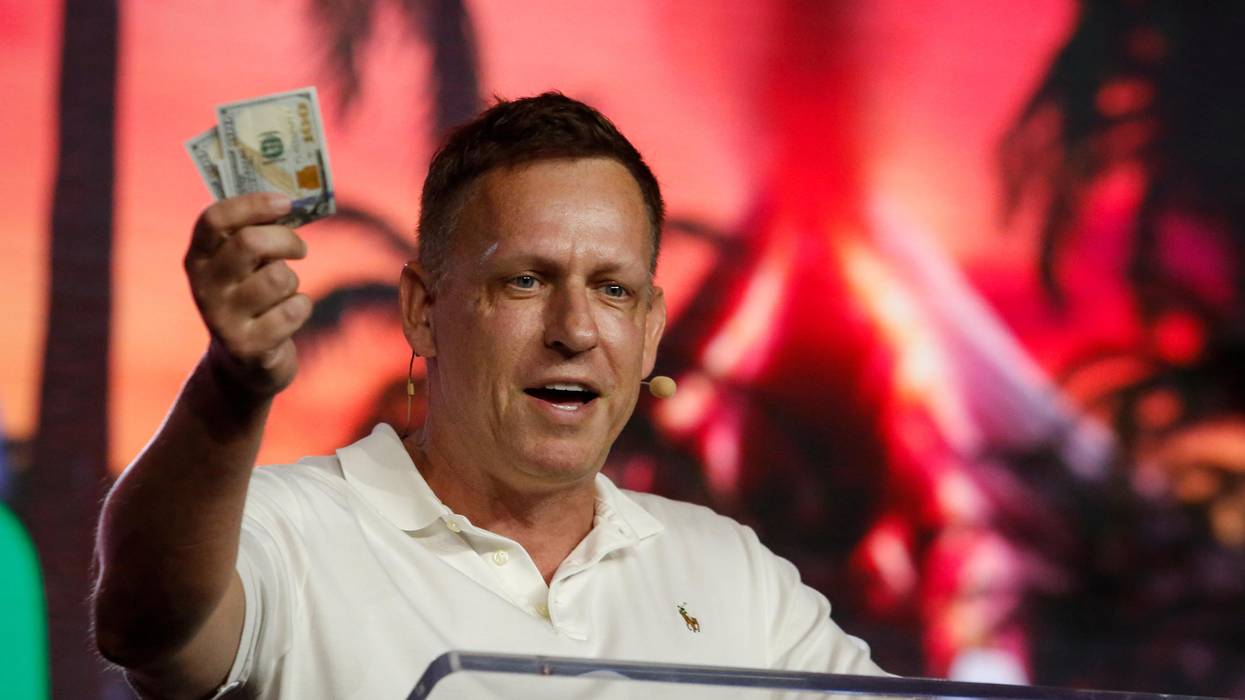
VCs are now becoming major Washington influencers while simultaneously jumpstarting defense’s newest and biggest names.
As conflicts ignite around the world, dragging on in Ukraine while sparking off in the Middle East, venture capital is banking on defense.
Indeed, United States-based venture capital investment in defense startups has doubled in four years. Only investing about $16 billion in 2019, U.S.-based VCs went on to seal over 200 defense and aerospace deals worth nearly $17 billion in the first five months of 2023 alone. Meanwhile, VC giant Sequoia invested in its first defense group, Mach Industries, earlier this year.
Through their collective efforts, prominent venture capital firms including billionaire Peter Thiel’s Founders Fund, Andreessen Horowitz (a16z), and Lux Capital are upstarts among today’s rising stars in the defense sector, including Anduril, Hadrian, and Rebellion Defense. And in the process, VCs accrue not only high investment returns, but also growing influence over U.S. foreign policy.
Moreover, VC-backed groups in the defense space are giving established defense contractors like Lockheed Martin and RTX (formerly Raytheon) a run for their money. As Jamie Martin noted on BookForum four years ago, Founders Fund-backed Palantir had beaten out RTX to secure an $800 million army contract, and Elon Musk’s VC-powered SpaceX had been gobbling up satellite sector funds, forcing Boeing and Lockheed Martin to develop their own venture capital operations, Horizon X and Lockheed Martin Ventures respectively, to compete.
Fast forward to 2023 and VC’s domination of the defense space has crystallized in a conflict-mired era. Newcomer machine-parts startup Hadrian was founded only in 2020, but has already soared to the defense industry’s forefront, raising almost $100 million in funding as of late 2023.
“It doesn’t seem to be that working for the Pentagon is a dirty word anymore.”
Likewise, venture capital has buoyed defense newcomer Rebellion Defense’s rapid rise to prominence, with Rebellion raising $63 million in 2019 through the likes of former Google CEO Eric Schmidt’s new venture capital firm Innovation Endeavors, Founders Fund, and angel investor James Murdoch, son of Fox News Founder Rupert Murdoch. Schmidt, Murdoch, and In-Q-Tel (the CIA’s venture capital firm) Trustee Ted Schlein sit on Rebellion’s Board.
“It doesn’t seem to be that working for the Pentagon is a dirty word anymore,” explains William Hartung, a Senior Research Fellow at the Quincy Institute for Responsible Statecraft. “It seems like a lot of these startups are very much seeking that, and then the VC companies are facilitating it.”
At its heart, venture capital is a risky form of private equity financing. Despite the hundreds of billions of dollars U.S.-based VCs invest each year, about 75% of venture capitalist backed startups fail.
Success in venture capital, therefore, depends on heavy-handed risk-taking in the hopes of big returns from a few investments. In the defense sector, however, high returns comparable to other VC-frequented industries, like tech, are uncommon, rendering VC investing choices complex.
Ultimately, these coveted, yet elusive returns become more plausible in periods of tension and conflict, when governments—which VC-backed defense groups “depend” on for business-sustaining contracts—have a greater appetite for weaponry and adjacent tech.
In any case, defense-focused VCs are gaming this primary client in their favor: Like the U.S. government-defense contractor revolving door’s advocacy for perpetual conflict, VCs are now becoming major Washington influencers while simultaneously jumpstarting defense’s newest and biggest names.
In this respect, billionaire VCs like Peter Thiel and Eric Schmidt are conspicuous for involvement in both sides of government-defense sector relations. While Thiel says he won’t fund candidates in the 2024 race, he’s previously supported a slew of successful Republican congressional campaigns. And after stints as chief financial officer for Thiel’s now-defunct Clarium Capital Management and chief of staff at Thiel Capital, Michael Kratsios took White House and Defense Department positions in the Trump administration, giving Thiel closer proximity to power.
Furthermore Rebellion investor Schmidt is a member of the Defense Innovation Board, which advises lawmakers and the Pentagon on tech policies and, as The American Prospect former managing editor Jonathan Guyer writes, is “allocating resources toward the exact technology Rebellion [is] selling.”
VC-powered defense organizations are making their allegiance with Israel clear as it continues to pummel Gaza, with Palantir and Anduril making public pro-Israel statements and Israel employing VC-backed Shield AI’s Nova 2 drone in besieged Gaza.
Rebellion Defense obtained U.S. Air Force contracts worth up to $950 million in 2020.
According to Guyer, the arrangement suggests “no firewall between Schmidt’s work for the government and the private sector.” Two Rebellion Defense employees also served on the Biden administration’s presidential transition team.
Indeed, VCs’ lack of transparency and visibility in the public eye shields their activities in the defense space from critical scrutiny.
“If the head of the Joint Chiefs goes on the board of Lockheed Martin, everybody knows about it,” says Hartung. “If a general goes on the board of some small tech company or as an adviser, that’s not as visible. But their activities may actually be more dangerous because they’re helping launch a whole new generation of technologies where we don’t really know what the consequences will be as they apply to military issues.”
Meanwhile, talk from defense-focused VCs and their beneficiaries’ suggests an urge to stir global tensions, or otherwise convince the Pentagon to prepare for the worst. For starters, VC-powered defense organizations are making their allegiance with Israel clear as it continues to pummel Gaza, with Palantir and Anduril making public pro-Israel statements and Israel employing VC-backed Shield AI’s Nova 2 drone in besieged Gaza.
Moreover, VC groups are poking the stick at China, now a nemesis in what Palantir senior policy adviser Jacob Helberg deems a brewing “tech war.” (Helberg is also a member of the U.S.-China Economic Security and Review Commission, putting him in a prime position to focus lawmakers’ national security-related policy concerns.)
Meanwhile, Lux Capital’s website plainly states that China is “a serious threat to U.S. global hegemony.” And a16z Cofounder Marc Andreesen has observed he has more success in policy conversations with lawmakers when he mentions China:“[A]ll of a sudden it’s like, ‘Oh well we need American AI to succeed, and we need American technology companies to succeed, and we need to beat the Chinese.’”
Teaming up earlier this year, further, a group of 13 prominent tech companies and adjacent VC groups signed an open letter requesting defense procurement reforms to better open the U.S. defense budget to startups. The letter warns that if no changes are made, U.S. “competitors will continue to gain ground on the technological battlefield” leaving American warfighters at a disadvantage on the physical one.
Anduril’s Palmer Luckey even characterized VCs as “hawkish” for the sake of protecting existing investments in a recent interview, observing that “[e]veryone who cares about Ukraine is also watching Taiwan, because…Taiwan going south is an actual existential threat to many of their investments [based there]. And so I think you’re seeing a lot of hawkishness on the part of venture capitalists” as a result.
More bluntly, VC America’s Frontier Fund (AFF) representative gloated that “if there is a kinetic event in the Pacific,” referencing Taiwan,“some of our investments will [go up] 10x, like overnight.”
Meanwhile, cash flows suggest VCs’ efforts are paying off: Anduril has earned an estimated $342 million in revenue in 2023, telling investors it’s slated to score $625 million in new government contracts this year. Rebellion Defense’s contracts doubled in 2023 alone. And, despite years of unprofitability, Palantir’s stocks jumped 20% after impressive third-quarter results, in which the company made $72 million in net income. As Palantir’s Alex Karp previously put it, “[b]ad times are very good for Palantir.”
Ultimately, VCs’ success in this sector relies on conflict. In other words, they’re looking for a fight.
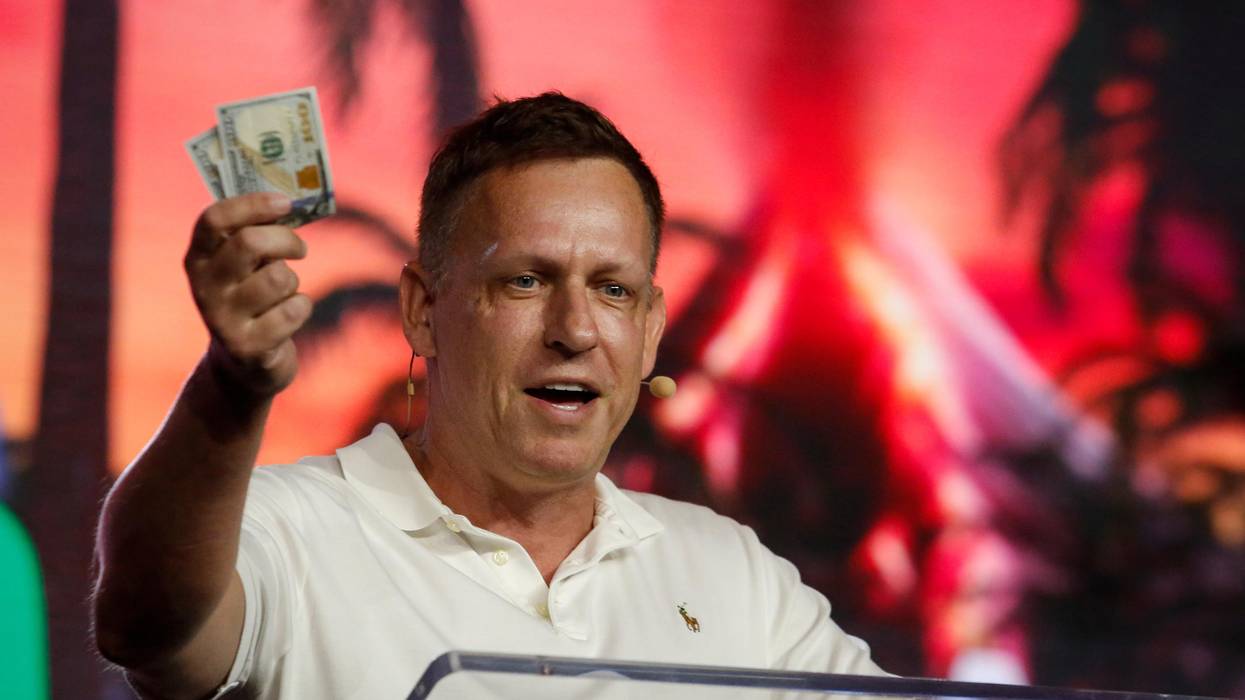
Ultra-rich individuals like Peter Thiel are a key part of the anti-democracy movement, of which Trump is the informal leader.
What connects the two biggest stories now dominating the news — Donald Trump’s likely arrest and the Fed’s bailouts of shaky banks?
Start with multi-billionaire Peter Thiel, and follow the money.
You may recall that in 2016, Thiel spoke at the Republican National Convention to make the case for why Trump should be the next president of the United States.
In the midterm elections of 2022, Thiel donated $15 million to the Republican Ohio senatorial primary campaign of JD Vance, who alleged that the 2020 election was stolen and that Biden’s immigration policy meant “more Democrat voters pouring into this country.”
Thiel also donated at least $10 million to the Arizona Republican Senate primary race of Blake Masters, who also claimed Trump won the 2020 election and who admires Lee Kuan Yew, the authoritarian founder of modern Singapore.
Masters lost. But thanks to Thiel’s munificence, Vance is now in the U.S. Senate.
Thiel and other wealthy self-described “libertarians” want Trump to be re-elected president in 2024. I’ll get to the reason in a moment.
Some $50 million of Thiel’s own money was still stuck in the bank. Then, guess what? Thiel and other rich depositors got bailed out by the Fed.
Charges of hypocrisy have been leveled at Thiel and other wealthy depositors who claim to be libertarians but were rescued by the government.
There was nothing hypocritical about it. Thiel and others like him aren’t really opposed to government, per se. They’re opposed to democracy. They prefer an oligarchy — a government controlled by super-wealthy people like themselves.
***
Thiel is part of the anti-democracy movement, of which Trump is the informal leader.
Their antipathy to democracy comes from the same fear that the extremely wealthy have always harbored about democracy — that a majority could vote to take away their money. That fear has been heightened by the fact that more and more of the nation’s wealth is going to the top, combined with demographic trends showing the majority of voters becoming less economically secure, more non-white, and politically left.
Thiel and his ilk see in Trump an authoritarian strongman who won’t allow a majority to take away their wealth. In December 2017, Trump and his Republican allies in Congress engineered a giant tax cut for the super-rich and the companies in which they invest. Many believe that a second Trump administration, backed by a Republican Congress, will cut their taxes even further.
They also support the Fed. Like most of the world’s central banks, the Fed is removed from democratic accountability, out of fear that financial markets otherwise won’t trust them to do unpopular things like bailing out banks or controlling inflation by slowing economies and causing millions to lose their jobs. The Fed is run largely by bankers. You might say it’s part of America’s oligarchy.
A few years ago, Thiel wrote that “I no longer believe that freedom and democracy are compatible.” Presumably he was referring to the freedom of oligarchs like himself to be unconstrained by taxes and regulations. In this narrow sense, he’s correct: Oligarchy is incompatible with democracy. Nor is oligarchy compatible with the freedom of the rest of us.
Thiel and others like him want to return to an era when American oligarchs had freer reign. In that same essay, Thiel wrote:
The 1920s were the last decade in American history during which one could be genuinely optimistic about politics. Since 1920, the vast increase in welfare beneficiaries and the extension of the franchise to women — two constituencies that are notoriously tough for libertarians — have rendered the notion of “capitalist democracy” into an oxymoron.
But if “capitalist democracy” has become an oxymoron, it’s not due to excessive public assistance or because women got the right to vote. It’s because billionaire capitalists like Thiel are undermining democracy with giant campaign donations to authoritarian candidates.
I’m old enough to remember a former generation of wealthy Republicans who backed candidates like Barry Goldwater. They called themselves “conservatives” because they wanted to conserve American institutions. But Thiel and his fellow billionaires in the anti-democracy movement don’t want to conserve anything — at least anything that came after the 1920s, including Social Security, civil rights, and even women’s right to vote (except for the Federal Reserve’s bailouts for the rich and its ability to draft average workers into fighting inflation).
The 1920s marked the last gasp of the Gilded Age, when the richest Americans siphoned off so much of the nation’s wealth that the rest of America had to go deep into debt to maintain their standard of living and sustain overall demand for the goods and services the nation produced. When that debt bubble burst in 1929, we got the Great Depression.
It was also the decade when Benito Mussolini and Adolf Hitler emerged to create the worst threats to freedom and democracy the modern world had ever witnessed.
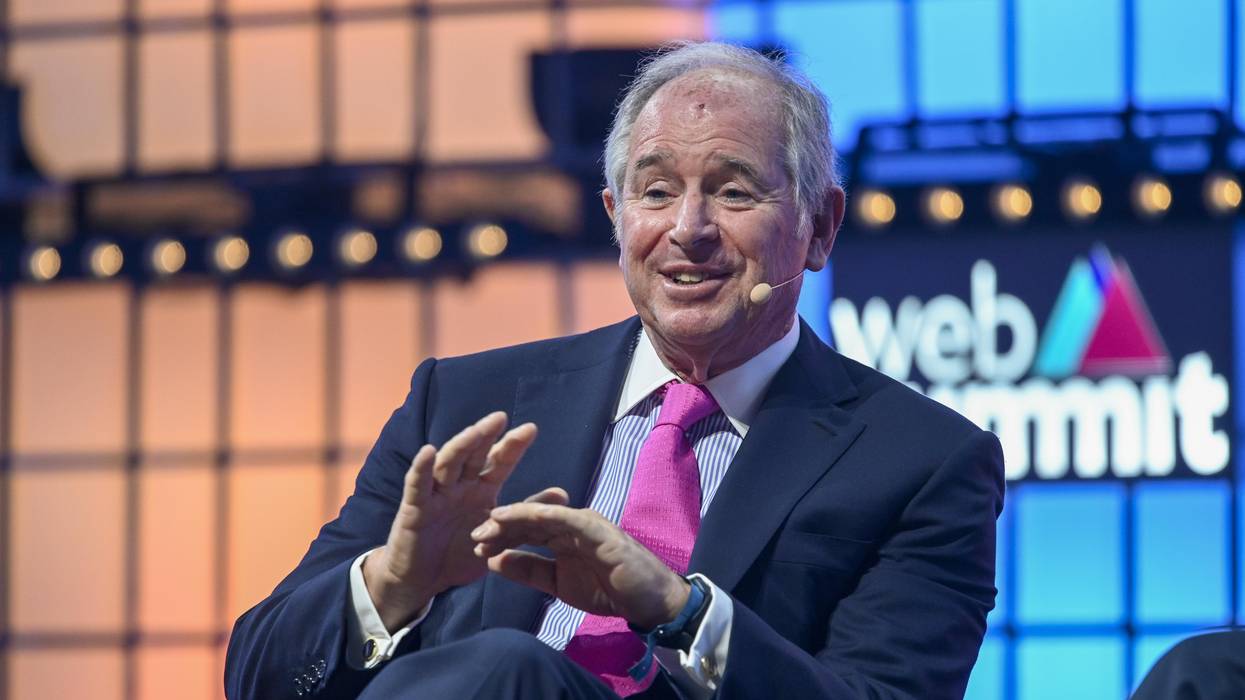
A few dozen billionaires are spending tens of millions of dollars on the 2022 midterm elections--mostly to support Republican candidates, including many who have parroted the dangerous lie that the 2020 presidential election was stolen--in a bid to ensure that Congress is full of lawmakers willing "to make their wealthy benefactors even richer," according to a fresh analysis.
"What's good for billionaires--including cutting taxes on the rich and corporations--is bad for working families."
Titled Billionaires Buying Elections, the report from Americans for Tax Fairness (ATF) details how "billionaires are increasingly using their personal fortunes and the profits of connected corporations to drown out regular voters' voices and elect hand-picked candidates who further rig the nation's economy--especially the tax system."
A pair of super PACs tasked with securing Republican majorities in the House and Senate--the Congressional Leadership Fund (CLF) and the Senate Leadership Fund (SLF)--raised a combined $188.3 million through the first 16 months of the 2022 campaign cycle, according to ATF. Nearly half--$89.4 million, or 48%--came from just 27 billionaires. A whopping 86% of the GOP's billionaire money came from "Wall Street tycoons" who are arguably the biggest beneficiaries of glaring loopholes in the tax code.
The Democratic counterparts of those two super PACs--the House Majority PAC and the Senate Majority PAC--raised a combined $154 million over the same time period. A smaller share--$25.8 million, or 17%--came from 19 billionaires. A majority of billionaire contributions to Democratic candidates also came from the finance and investment sector (35%), but other industries were also well-represented, including cryptocurrency (26%), and tech (18%).
"Unlike candidates and party committees, super PACs can raise unlimited donations from individuals and corporations," ATF explained. "In return they are not supposed to coordinate activities with the campaigns they support but instead act independently, though that rule is often flouted."
Top billionaire donors to congressional super PACs include hedge fund magnate Ken Griffin, who has given more than $28.5 million to CLF and SLF, and private equity mogul Stephen Schwarzman, who has pumped $20 million into the GOP's two super PACs.
"Anti-democratic vote-buying," ATF wrote, "has been facilitated by--and is facilitating--the accelerating wealth growth of the billionaire class and the record profits of the corporations they own."
The combined net worth of the nation's roughly 750 billionaires surged by $2 trillion, or 70%, during the first two years of the Covid-19 pandemic. The collective wealth of the 27 billionaires bankrolling the GOP's super PACs alone soared by $82.4 billion over that time period, meaning that the $89.4 million they have donated to CLF and SLF constitutes less than 0.1% of their overall pandemic-era gains.
Meanwhile, the return on that modest investment could amount to billions of dollars if Republicans take back Congress in November and preserve their 2017 tax cuts or further slash taxes on superrich people and the corporations they own.
Over a recent nine-year period, the 400 wealthiest people in the U.S. paid an average effective federal income tax rate of just 8.2% when the increased value of their stock holdings is included in their income. That is a lower rate than the nationwide average of 13.3% in 2019.
As ATF explained, focusing on contributions to congressional super PACs fails "to capture the full political influence of billionaires, who in addition to personal donations also steer money to favored candidates from related corporations and organizations."
Billionaires are among the ultrawealthy Americans who control corporations through their extensive stock holdings. Many corporate giants have been distorting the upcoming midterms, ATF pointed out, by spending tens of millions to help GOP candidates who have vowed to defend special tax breaks for the top 1% get elected, including 144 far-right members of Congress who voted to overturn President Joe Biden's electoral victory.
According to the report, seven powerful corporations--AT&T, Chevron, ExxonMobil, FedEx, GM, Merck, and UPS--have collectively given nearly $1.5 million to dozens of election deniers and various Republican PACs and election committees this campaign cycle. The companies' demonstrated lack of concern for democracy, ATF noted, likely stems from their desire to keep dodging taxes. In 2021, these firms paid an average federal income tax rate of just 2.7% on a combined $78.4 billion in profits.
"We need to rein in billionaire political and economic power through campaign finance reforms and tax reforms such as a billionaires income tax."
Notably, Peter Thiel, the co-founder of PayPal who is worth about $5 billion and openly opposed to democracy, has been spending big on his preferred Republican candidates but not through the GOP's congressional super PACs.
Thiel "has so far spent almost $30 million through super PACs supporting the 2022 senatorial bids of two former employees who share his anti-democratic and anti-tax beliefs," ATF found. "J.D. Vance won the Ohio Republican U.S. Senate primary thanks in part to Thiel's $15 million in spending. Blake Masters has a fighting chance in Arizona's GOP U.S. Senate primary in August due to Thiel's $13.5 million in contributions."
Another source of "billionaire dominance of campaign financing, especially on the Republican side," wrote ATF, are so-called "dark money" groups, which are not required to disclose the identity of their donors. Some dark money groups--including Club for Growth, which has received $32 million from billionaire Wall Street trader Jeffrey Yass over the years--are "notorious for having bankrolled insurrectionist members of Congress" like Sen. Josh Hawley (R-Mo.) and Lauren Boebert (R-Colo.), ATF noted.
According to the report:
Politically active billionaire Charles Koch has not personally donated to either GOP super PAC this cycle, but his corporation--Koch Industries--has so far given them a total of $1.75 million.
Two of the biggest "dark money" groups, which do not disclose their donors, are essentially sister groups to the two congressional GOP super PACs. American Action Network gave at least $26 million to CLF in the 2020 cycle and $18.7 million so far this cycle. One Nation donated $77.5 million to SLF last cycle and has given $16.5 million so far this cycle.
The ability of the nation's wealthiest individuals to translate their disproportionate economic power into political clout has increased exponentially since the U.S. Supreme Court's 2010 Citizens United decision eliminated effective limits on campaign contributions.
According to the report:
"Billionaires, who are used to buying whatever they want, have increasingly dedicated their almost unlimited resources to buying American elections," Frank Clemente, executive director of ATF, said in a statement.
"The problem is what's good for billionaires--including cutting taxes on the rich and corporations--is bad for working families," said Clemente. "We need to rein in billionaire political and economic power through campaign finance reforms and tax reforms such as a billionaires income tax."
Several legislative proposals have emerged to tax the increased value of assets owned by the nation's wealthiest households each year regardless of whether they sell or keep them, which would ensure that income derived from wealth is taxed more like income earned from work.
Biden's plan would raise an estimated $360 billion over 10 years, while Sen. Ron Wyden's (D-Ore.) plan would raise an estimated $550 billion over a decade, and Rep. Jamaal Bowman's (D-N.Y.) proposal possibly even more.
Billionaire-backed Democratic Sen. Joe Manchin (W.Va.), however, has joined Senate Republicans in opposing such a measure.
Leaning into the mic, face flushed, speaking with unhurried and angry deliberation, Donald Trump told a cheering New Hampshire audience: "We're gonna bring businesses back. We're gonna have businesses that used to be in New Hampshire, that are now in Mexico, come back to New Hampshire. And," pausing for applause, "you can tell them, to go fuck themselves! Because, they let you down, and they left!"
The crowd roared its approval.
It has become apparent that very few coastal lefties, progressives, or liberals actually watched any full-length Trump speeches. I have a different problem: I may have watched too many. During early spring I went down a multi-week long, late-night, Trump YouTube rabbit hole. I found myself watching hours of raw video feed of Trump campaign speeches. Insomnia got me there but I stayed for the mesmerizing dada quality of the Trump show, and for the mind-bending experience of watching a reality TV freak articulate surprisingly subversive political truths about the economy and America's role in the world.
Contrary to how he was portrayed in the mainstream media Trump did not talk only of walls, immigration bans, and deportations. In fact he usually didn't spend much time on those themes. Don't get me wrong, Trump is a racist, misogynist, and confessed sexual predator who has legitimized dangerous street-level hate. Most of all, Trump is a fraud. And his administration will almost certainly be a terrible new low in the evolution of American authoritarianism. But the heart of his message was something different, an ersatz economic populism, which has been noted far and wide, but also a strong, usually overlooked, anti-war message. Both spoke to legitimate working class concerns.
Furthermore, his message was delivered with passion and a strange warmth. Dare I say it? Donald Trump has charisma. It is a mix of almost comic self-confidence, emotional intelligence, a common touch, but also at times slight vulnerability. Let's face it, even the aura of sex around Trump--sleazy and predatory, sometimes sophomoric, as in the "small-hands" jokes--was at least part of a libidinal aura.
Hillary Clinton, on the other hand, constrained by sexist double standards and lawyerly calculation, too often came across as bloodless. At her best moments, like facing down the vainglorious Trey Gowdy, she exuded impressive competence, brains, and steely self-control. She bested Trump in the debates. But more often, Clinton came across like a scripted and dissembling Human Resources manager.
At almost every turn the liberal pundits misunderstood, or did not hear, what Trump was saying. After his win in the Nevada Caucus Trump said: "We won with highly-educated, we won with poorly educated. I love the poorly educated! We're the smartest people, we're the most loyal people." Liberals lampooned him, assuming that he had insulted part of his base.
A different interpretation translates those comments as: "Trump understands that it's not all my fault that I couldn't get an education. He understands that even people who don't have advanced degrees can make good decisions and are worthy of respect."
One of the few coastal elites to have cracked the Trump discursive code is the otherwise odious Peter Theil, who told the National Press Club, "the media is always taking Trump literally. It never takes him seriously, but it always takes him literally." Voters on the other hand, said Theil, "take Trump seriously but not literally." Bingo!
Or to translate this into the academese of Roland Barthes, perhaps Trump's discourse was more "writerly" (scriptable) than its simple sounds suggested; that is his meanings, because of the form of their delivery, were open to multiple understandings and re-assembly by the listener. Even his endlessly invoked wall, in reality a proposal for more militarized policing, could sound like a public works scheme, an infrastructure based jobs program.
The writerly nature of Trump's rhetoric was apparent in his contradictions. He infamously kicked off his campaign with his racist "they're sending rapists" comments. But later asserted that he had "a tremendous relationship with the Mexican people." And said, "I love Mexican people." "They're great workers. They're fantastic people and they want legal immigration."
Again, the smart set smirked at Trump's inconsistency. But in the logic of the Chaos Candidate's discourse each statement was a floating signifier that audiences could use as they wished.
In Trump's discourse A does not necessarily connect to B. If you don't like A, just focus on B. The structure of Trump's discourse will never demand that all the pieces be connected. That, in part, is what he meant with the Orwellian phrase "truthful hyperbole." He has even described his own statements as mere "opening bids" in a negotiation.
Clearly, some people of color took Trump's invitation not to connect the dots and focused more on Trump's disavowal of racism than on his racist utterances.
"Choppy as they were, Trump's speeches nonetheless had a clear thesis: Regular people have been getting screwed for far too long and he was going to stop it."
If in fact 29% of Latinos did vote for Trump (this shocking stat is disputed) having sunk into the variety-show style discourse of his stump speeches, I can imagine how some people could convince themselves to overlook Trump's racism and just embrace his ersatz populism.
Hillary never insulted Mexicans or threatened to deport them. Yet, she never seemed to declare her "love" for them either.
A typical Trump speech would tee-up with reference to "the wall" but then quickly pivot to economic questions: trade, jobs, descriptions of economic suffering, critiques of deindustrialization. His speeches were rambling, freewheeling, peppered with non-sequiturs and shout-outs to local businessmen, effusive thanks to key local supporters and to the crowd as a whole. "Beautiful. So, so nice. So nice. So, they say we set a record tonight."
Often Trump's sentences were just distinct phrases strung together. The lack of structure, far from boring, gave his stump talks an almost hypnotic quality. The listener could relax and just let it flow. In this regard Trump seems to a have stepped from the pages of Neil Postman's old book Amusing Ourselves To Death, in that he personified the cut-up dada style assault on coherent thought that is the essence of television.
Choppy as they were, Trump's speeches nonetheless had a clear thesis: Regular people have been getting screwed for far too long and he was going to stop it.
"When I see the crumbling roads and bridges, or the dilapidated airports, or the factories moving overseas to Mexico, or to other countries, I know these problems can all be fixed, but not by Hillary Clinton--only by me. The fact is, we can come back bigger and better and stronger than ever before--Jobs, jobs, jobs!"
And amidst the wacky bricolage he would suddenly sound like Bernie Sanders: "I would never support what has to be the craziest idea in the history of U.S. politics: allowing the government to invest Social Security retirement funds in the stock market."
Then he might read a few poll results, mock an opponent, and move on, perhaps to praising veterans. "So backstage, I met some of the vets, the greatest people we have in this country." From there he would slide into anti-war, anti-NATO, maybe even anti-imperialist riffs, delivered not in a "woke" fashion, but rather in the let them fight their own wars vein of American isolationism.
"She made a terrible mistake on Libya. And not only did she make the mistake, but then they complicated the mistake by having no management once they bombed the you-know-what out of Gadhafi."
He told his audiences what many of them already knew but never saw discussed on TV, that US foreign policy has delivered apocalyptic outcomes: "We would be so much better off if Gadhafi were in charge right now. If these politicians went to the beach and didn't do a thing, and we had Saddam Hussein and if we had Gadhafi in charge, instead of having terrorism all over the place, at least they killed terrorists, all right?"
Meanwhile, Hillary ramped up her anti-Russia and anti-Assad rhetoric giving voters the impression she would deliver yet more war.
Trump also linked war to economic suffering in America. Consider this, from a New Hampshire speech: "We spent $2 trillion in Iraq. China is taking a lot of the oil, just so you understand. ISIS may have it and Iran may have it, but China is taking out a lot of the oil. Can you imagine? We spent--we never do anything right with China. We spent $2 trillion. Thousands of lives of great people, mostly young, beautiful people, wounded warriors, who I love, all over the place, all over the place, not treated properly by the way."
And then: "Iran and Iraq, they were the same. They were twins. They have wars for years--wars, boom. One goes this way, one goes that way. One--and I said if you take out one, the other one is going to take over. Well, we took out one and look at the mess we have. We destabilized the Middle East and it is a mess.... I mean I'm not a fan of Saddam Hussein, but he ran the place. And, he had no weapons of mass destruction. And now instead of Saddam Hussein, we have far more brutal. We have ISIS... What do we get out of this? What do we get?"
Much to my surprise, the young Yemeni American shopkeeper at my local convenience store in Brooklyn supported Trump. Why? Because, instead of hearing in Trump's rhetoric a threat to round up Muslims, he heard a promise to stop supplying Saudi Arabia with bombs to drop on Yemen. "Over a thousand school kids killed by those bombs! Just little kids!"
Mainstream media typically treats American imperialism as sacrosanct, beyond criticism, and so Trump's anti-war message was mostly just ignored. But in much of the heartland - where the people who actually fight America's wars come from, and go back to with their PTSD, missing limbs, addictions and related financial burdens--there is deep if quiet concern about the broadly defined costs and apparent failure of our belligerent foreign-policy. Even the average "low information voter" --while perhaps confused about the details--knows that the country is at war, that this is expensive, kills people, and doesn't seem to lead to peace.
On election eve a friend in Alabama, a combat-disabled Iraq veteran turned contractor, sent me the following text: "I'll tell you man, this is how we won. Some percent of minorities, LGBT, women and Muslims crossed over....People are sick of the corruption and trump is going to be very socially liberal, minus abortion. And his spending priorities are totally anti-conservative, minus military. Honestly man, I'm praying that he doesn't let the system change him. It's gonna be a lot harder than he thinks. Fuck Koch brothers. And Fuck Paul Ryan too."
Turns out my Trump supporting friend was to some extent correct. Despite Trump's infamous bigotry he outperformed both Romney and McCain among African Americans, Asian Americans, and Latinos.
These were Hillary's firewalls and they all cracked, at least enough for a few sparks to get through. Half a million black women who voted for Obama in 2012 stayed home in 2016. Thirteen percent of Black men voted for Trump. And where Obama got 60% of voters making under $50,000 in 2012, Hillary was closer to 50%. That's not a crack; it's a gaping hole.
The Democratic Party Establishment, now spinning desperately to cover their own strategic incompetence is blaming the white working class as "deplorable" racists. Progressives and leftists who echo this line are making the worst mistake possible.
If Trump's victory were merely the result of racism how could it be that many white blue collar, rust belt areas voted for Obama by wide margins in 2008 and 2012 but then voted Trump? Obama received 1.5 million more votes from white men than did Hillary.
If Trump's victory were just sexism how could it be that, 42 percent of women with college degrees voted for him? Something deeper is going on.
Nate Cohn of the NYT described the geography: "The Wyoming River Valley of Pennsylvania -- which includes Scranton and Wilkes-Barre -- voted for Mr. Trump. It had voted for Mr. Obama by double digits. Youngstown, Ohio, where Mr. Obama won by more than 20 points in 2012, was basically a draw. Mr. Trump swept the string of traditionally Democratic and old industrial towns along Lake Erie. Counties that supported Mr. Obama in 2012 voted for Mr. Trump by 20 points."
Obama won Iowa in 2012 Trump won it this time. That same pattern--Clinton underperforming Barack Obama among white working class voters--spread all across the upper Midwest and Northeast. This cost her key electoral college states she had expected to win, most notably Pennsylvania, Michigan, and Wisconsin.
* * *
What was it that the voters saw in Trump? The mainstream media version of Trump was as a crazy and brutal pig--not entirely untrue. The words "huge" and "tremendous" were leitmotifs in mocking Trump's limited vocabulary. But his stump speech lexicon also included "loyalty" "win" "pledge" "beautiful" and "love"--lots and lots of "love."
In that New Hampshire speech where Trump dropped the F-bomb he followed it up with: "we want the businesses that stayed. I've toured a lot of businesses that stayed. Its hard for them to stay...those are the ones that we have to love and cherish."
Or consider the particularly emotional exchange Trump had with a father from upstate New York. "I lost my son two years ago to a heroin overdose," says the father from off camera.
"Well, you know they have a tremendous problem in New Hampshire with the heroin," says Trump. "Unbelievable. It's always the first question I get, and they have a problem all over. And it comes through the border. We're going to build a wall. "
Then, instead of moralizing anger, playing against type come compassion and respect: "In all fairness to your son, it's a tough thing. Some very, very strong people have not been able to get off it. So we have to work with people to get off it."
At this point it becomes clear that the bereaved father has started to cry. Trump shifts to tough-guy reassuring. "You just relax, OK? Yeah, it's a tough deal. Come on. It's a tough deal." And, in a veiled reference to Trump's own brother's death from alcoholism, "I know what you went through." Then, to the audience while pointing at the father: "He's a great father, I can see it. And your son is proud of you. Your son is proud of you. It's tough stuff, it's tough stuff, and it could be stopped."
* * *
My point is not that we should like Trump but rather that the left must understand why almost 60 million Americans voted for him. The answer seems clear: it was Trump's ersatz populism, anti-war message, and his ability to, in a Bill Clinton style, "feel" people's real pain.
"My point is not that we should like Trump but rather that the left must understand why almost 60 million Americans voted for him."
Ultimately, the Democratic establishment brought this loss on themselves. They spurned and tried to sabotage Bernie Sanders and his class message. Trump took the Bernie-style populism, emptied it of real class politics, reduced it to a jumble of affective associations, and used it to beat-up the smug liberals of the professional managerial class. It worked.
Alas, too bad for all those well meaning Trump voters and everyone else. Trump is a fraud, a ripoff artist who leaves unpaid bills and collapsed casinos in his wake.
The next four years look very grim indeed. As president he will attempt to govern by twitter and sound bite dragging American political discourse deeper into the muck. The worst case scenario is that Trump will establish a modus vivendi with the far-right Koch brother led wing of the GOP and achieve an historic gutting of the regulatory state plus a momentary debt, tax-cut, and infrastructure funded economic boom. This could consolidate a new right-wing populist base--at least until it all comes crashing down. If the Democrats continue shunning the working class, they will only help solidify Trumpism.
Or perhaps the Chaos Candidate's colossal ego, infamously short attention span, and apparent pleasure in firing people will produce the Chaos Cabinet and exacerbate divisions within the GOP and paralysis on the policy front. Perhaps, the Clinton- DNC cabal can be broken-up and run-off and the Democratic Party can re-launch on the basis of a neo-Rooseveltian/Sanders style set of programs.
Either way, the grassroots Left--as in social movements, advocacy groups, and organized labor--faces scary and unprecedented challenges.