

SUBSCRIBE TO OUR FREE NEWSLETTER
Daily news & progressive opinion—funded by the people, not the corporations—delivered straight to your inbox.
5
#000000
#FFFFFF
To donate by check, phone, or other method, see our More Ways to Give page.
Daily news & progressive opinion—funded by the people, not the corporations—delivered straight to your inbox.
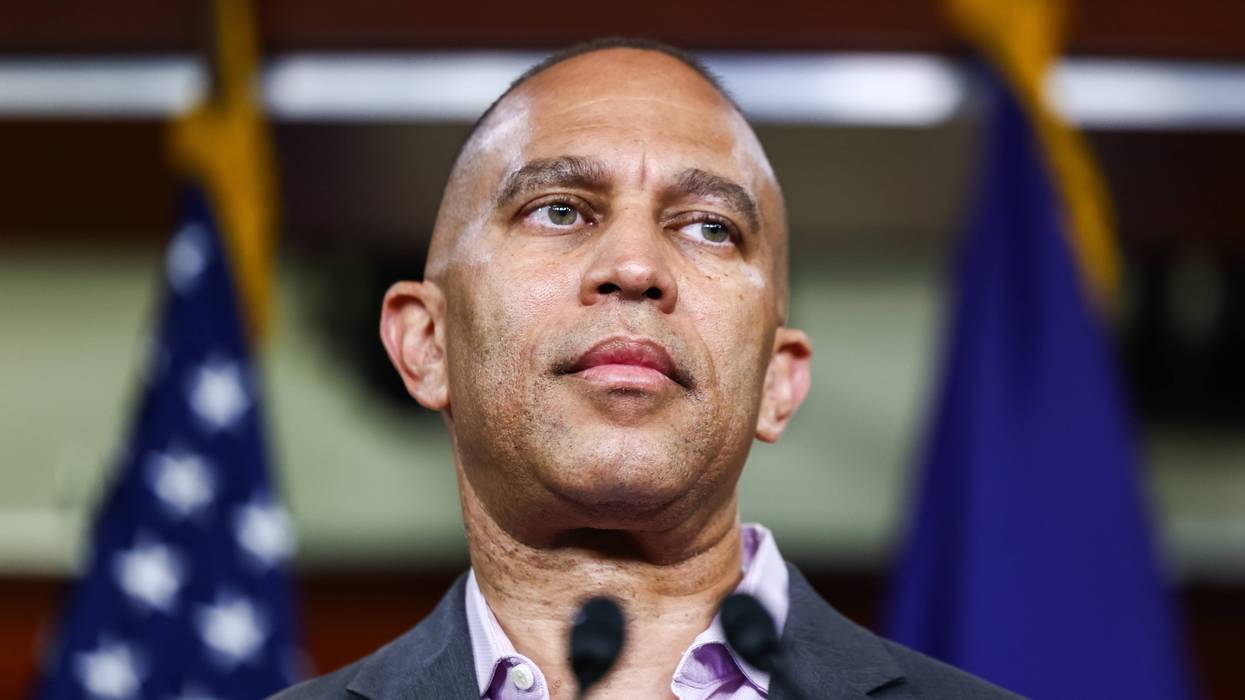
The only valid reason for such a meeting, said one critic, would be for the House Minority Leader to tell the president's son-in-law that he’ll be subpoenaed by "for a corruption investigation on day one of Democratic control of the House."
Persistent calls among progressive critics and Democratic voters that House Minority Leader Hakeem Jeffries and Senate Minority Leader Chuck Schumer should step aside from their leadership roles ticked up again on Sunday after it was reported that Jeffries met secretly in recent weeks with Jared Kushner, the far-right son-in-law of President Donald Trump, who has also served as a top White House advisor and envoy.
The New York Times reported Sunday that the two men "met privately in recent weeks" in order to discuss "potential areas of common ground" if the Democrats regain control of one or both chambers of Congress in the midterms.
According to the Times:
The rare engagement was held in a private space in New York City, offered up by a mutual friend of the two men, according to two people with knowledge of the meeting and a third who was briefed on it. They and others were granted anonymity to discuss a meeting about which they were not authorized to speak publicly.
Through aides, neither man would comment on the session, which was described by one person with knowledge of it as a broad conversation on a range of topics. Still, its timing underscored that those around Mr. Trump were well aware of the likelihood of a Democratic-led House, and trying to foster as much of a working relationship as possible before any change.
News of the meeting, later confirmed by other news outlets but which Kushner and Jeffries neither confirmed nor denied, landed poorly for progressive critics who make the case that Jeffries' political leanings and leadership tendencies are a roadblock to the kind of transformational change wanted by a majority faction of the Democratic Party and also needed to defeat Trump and his fascist allies once and for all.
"Jeffries and Schumer have to go if Democrats are even going to gain any ground," said David W. Pippy, a former school administrator and local union president, in response to the reporting. "They need fighters, not secret meetings."
Last Sunday, Jeffries went on a weekend news show and said he does not support Medicare for All legislation in the House, despite poll after poll showing Democratic voters overwhelmingly support it.
"The lack of political talent in New York is astounding," Gabe McKinley, an actor and director based in New York City, declared in a social media post. "Jeffries and Schumer are bad at their jobs."
The Times, citing its sources familiar with the meeting, reported that "the pair discussed housing, immigration and the high cost of living as potential areas of common ground." Kushner also suggested Jeffries connect with Trump's White House chief of staff, Susie Wiles, whom he reportedly described as the "most serious" person in the president's inner circle. It wasn't clear how Jeffries responded.
Journalist Mehdi Hasan responded by saying Sunday was "a good day to re-up my piece from almost exactly a year ago," in which he explained why Schumer and Jeffries, both of whom represent New York in Congress, are leaders that the party—which has now lost the White House to Trump twice—can no longer afford. In his op-ed, Hasan wrote:
Since Trump was inaugurated for a second time in January, Jeffries and Schumer have demonstrated time and again that they are not built for this particular moment. While Trump seeds the ground for an American dictatorship, these two top Dems pine for bipartisanship. While millions of rank-and-file Democrats across the country say they want leaders who will fight, Jeffries and Schumer fold. While younger Democrats like [NYC City Mayor Zohran] Mamdani and [Rep. Alexandria Ocasio-Cortez (D.NY)] offer energy and charisma, these two lackluster leaders in the House and Senate offer cringe chants and even cringier photo ops.
It is past time for both Jeffries and Schumer to step down and step aside. This fascist moment, this age of Trump, demands outspoken, unrelenting and fearless opposition. Whether you are a Democrat, or simply a democrat, we all deserve better.
On Sunday, Hasan argued that the only valid reason Jeffries should be meeting with Kushner is to "tell him he’ll be subpoenaed by the House for a corruption investigation on day one of Democratic control of the House."
Former Republican strategist Tim Miller, now with The Bulwark, agreed.
Otherwise, said Hasan, "This is just pathetic stuff from the House Dem leader."
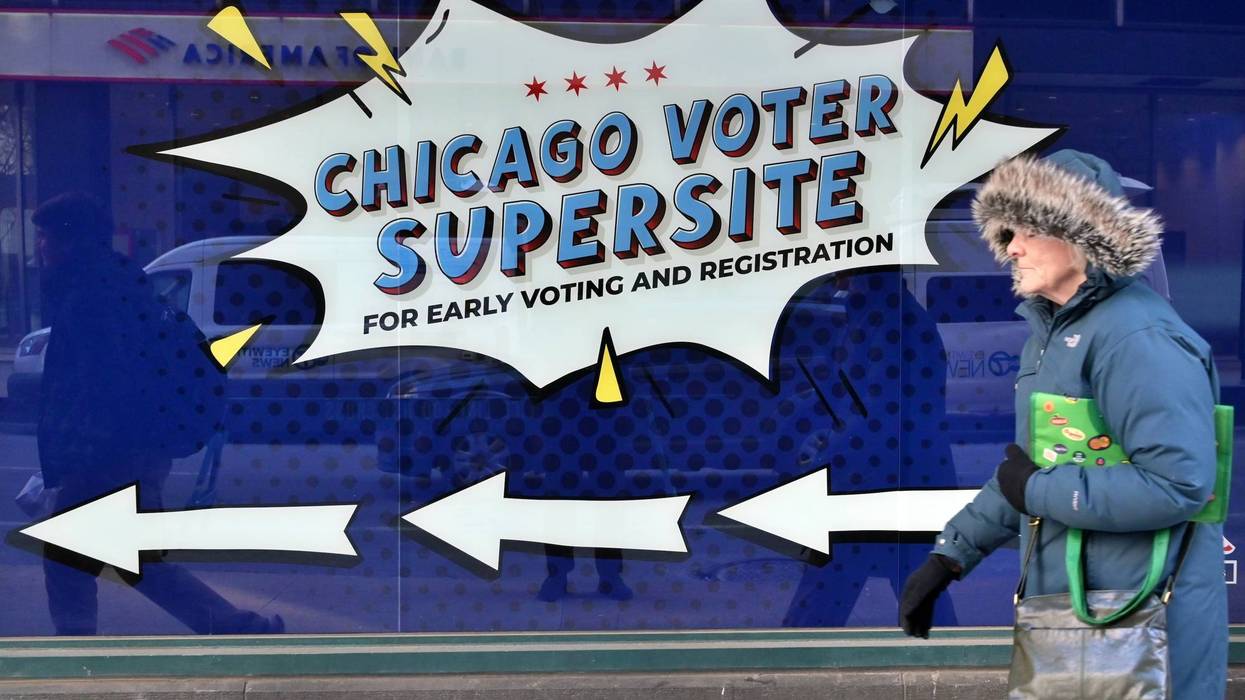
"It’s time to kick AIPAC and other billionaire-funded super PACs out of Democratic primaries."
The American Israel Public Affairs Committee failed on Tuesday to secure wins in the two Illinois US House primaries it invested the most money in, the latest electoral flop for the pro-Israel lobbying organization whose brand has become increasingly noxious to Democratic voters amid Israel's genocidal assault on Gaza.
In Illinois' 7th and 9th Congressional Districts, AIPAC spent millions backing Chicago treasurer Melissa Conyears-Ervin, who finished second, and Democratic State Sen. Laura Fine, who finished third. In the latter race, AIPAC pivoted from initially attacking Evanston Mayor Daniel Biss—who ultimately won—to concentrate on defeating Justice Democrats-backed Kat Abughazaleh.
AIPAC, which faced backlash for trying to conceal its spending in the Illinois contests using shell organizations, tried to spin the 9th Congressional District results as a win, despite spending more against Biss than against Abughazaleh.
"Though Kat narrowly lost this race, we are proud to have backed this campaign that helped ensure the people of IL-09 would not be represented by another AIPAC shill," Alexandra Rojas, executive director of Justice Democrats, said in a statement. "This outcome is a massive loss for AIPAC as they lose more and more influence within the Democratic Party. No amount of shell PACs or covert funding can hide their toxicity from Democratic voters, their monopoly over this party’s agenda is coming to an end.”
Two AIPAC-backed candidates did prevail Tuesday: Cook County Commissioner Donna Miller in the 2nd Congressional District and former Rep. Melissa Bean in the 8th Congressional District.
AIPAC's mixed results came amid broad alarm over outside spending that flooded Tuesday's midterm primary elections in Illinois, driven by pro-Israel, crypto, and AI special interest groups. Overall, more than $92 million was spent on campaign ads in Tuesday's contests in Illinois, a state record.
"I think we can safely say that almost $100 million spent in a handful of primaries is a full-spectrum disaster for democracy," wrote David Dayen, executive editor of The American Prospect, which called the torrent of spending "a corruption of democracy that is relatively unprecedented in modern elections."
The National Journal reported Tuesday that when the national midterm cycle is over, "the price tag for the Illinois primary will be an important footnote in what’s projected to be the most expensive midterm election ever."
"The nonpartisan research firm AdImpact estimates that more than $10.8 billion will be spent on ads alone this cycle," the Journal observed. "Even as the competitive map gets smaller, the price tag keeps increasing as more outside deep-pocketed groups invest more in primaries."
Super PACs, entities that can spend unlimited sums boosting their preferred candidates, pumped roughly $31 million into Tuesday's US House primaries in Illinois. AIPAC-linked organizations accounted for around $22 million of the total.
"It’s time to kick AIPAC and other billionaire-funded super PACs out of Democratic primaries," US Sen. Bernie Sanders (I-Vt.) wrote ahead of Tuesday's races.
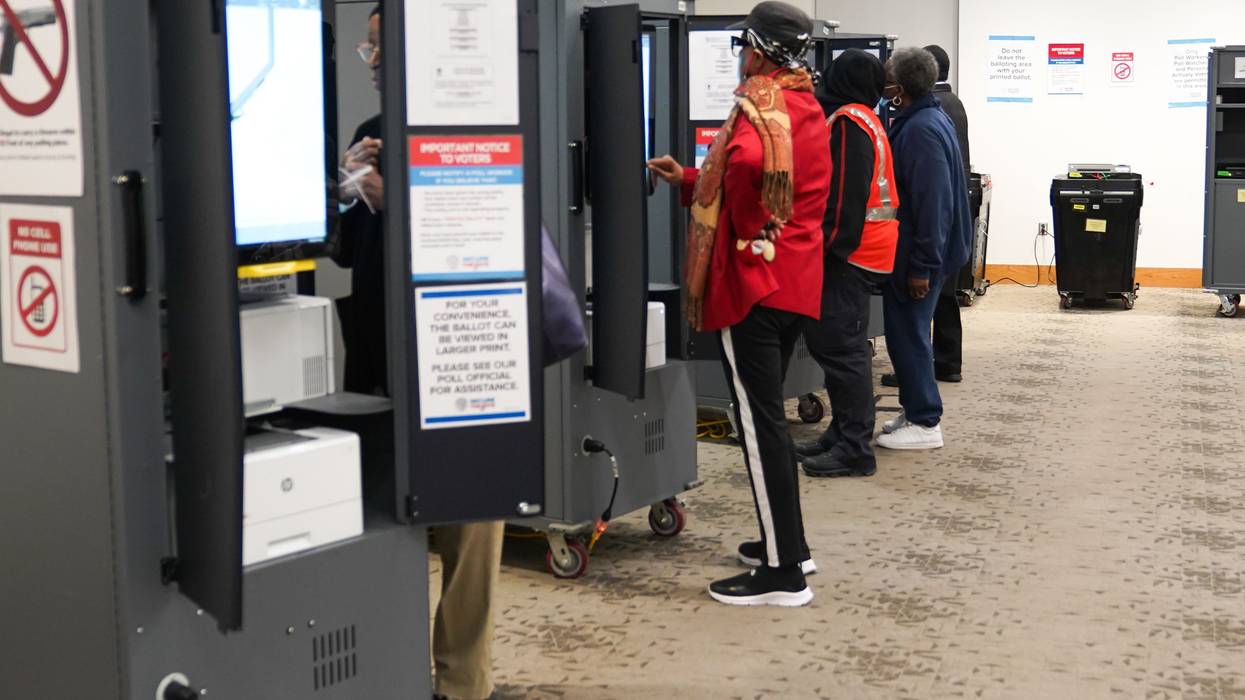
Beware the normalization of the idea that if the electorate appears likely to choose “wrongly,” an emergency can justify changing the rules of democracy.
Recently, Steve Bannon told an audience:
And I will tell you right now, as God is my witness, if we lose the midterms… some in this room are going to prison—myself included.
Now, it looks like President Donald Trump and the people around him are seriously considering declaring an emergency to let them seize control of this November’s elections, according to reporting yesterday in the Washington Post:
Pro-Trump activists who say they are in coordination with the White House are circulating a 17-page draft executive order that claims China interfered in the 2020 election as a basis to declare a national emergency that would unlock extraordinary presidential power over voting.
Donald Trump and the lickspittles and criminals he’s surrounded himself with are in a panic. If Democrats take the House or Senate in this November’s elections, they’ll have the power of subpoena so the regime’s crimes and corruption will be laid out for everybody to see. Some could even go to prison, including Trump himself.
He’s been basically screaming, “Do something!!!” at Republicans for the past year. It started publicly with his demanding that Texas and then other red states further gerrymander their elections to reduce the number of Democrats in the House.
If you’ve studied history—and you know I have—that’s the moment when the hair on the back of your neck should stand up.
In red states they’re purging voters in blue cities from the rolls like there’s no tomorrow, and the GOP is trying to recruit “election observers” to challenge signatures on mail-in ballots on an industrial level. As reporter Greg Palast pointed out, this is how Trump took the White House in 2024; if it hadn’t been for over 4 million (mostly Black) fully qualified US citizens being purged or having their ballots rejected after technical challenges, Kamala Harris would be our president today.
But given how badly Trump’s doing in the polls today, even all these efforts don’t look like they’ll be enough to keep the House and Senate in Republican hands.
So now Trump toadies like Jerome Corsi (the creator of the Birther movement and the Swift Boat slurs, who’s been a guest on my program multiple times) have an idea: Just imitate what Vladimir Putin, Viktor Orbán, Adolf Hitler, and other dictators have done to hang onto power when they get unpopular: Declare an emergency and use it to rig the election.
Yesterday, The Washington Post detailed how MAGA-aligned activists are now openly discussing manufacturing or exaggerating a national emergency to justify Trump’s agents in the federal government to interfere in this November’s elections.
These aren’t fringe anonymous trolls on some obscure message board; they’re people operating in proximity to the president of the United States. Corsi arguably destroyed John Kerry’s chances in 2004 and lit the Birther fuse that catapulted Trump into political fame.
And they’re floating the idea that if normal democratic processes don’t produce the “right” outcome, they could help create a fake crisis to seize control of the election nationally.
If you’ve studied history—and you know I have—that’s the moment when the hair on the back of your neck should stand up.
Because this isn’t new, creative, or even uniquely American: It’s straight out of the authoritarian playbook.
When political actors like Corsi begin talking openly about declaring an emergency to override or interfere with elections, they’re not blowing smoke: They’re testing a classic dictator’s narrative.
In 1933, Germany’s parliament building, the Reichstag, went up in flames at the hands of a mentally ill Dutch communist who was probably maneuvered into the act by the Nazis. Adolf Hitler declared it “proof” of an existential communist threat. Civil liberties were suspended overnight. Gone in the blink of an eye were freedom of speech, freedom of the press, and the right to assemble as Hitler’s goons began to round up his political opponents and throw them into his new concentration camp at Dachau.
Elections were technically still held, but under conditions so distorted they no longer qualified as free or fair in any meaningful sense, and the so-called “temporary” emergency became Hitler’s legal bridge to a permanent dictatorship.
Similarly, in Turkey in 2016, elements of the military tried to pull off a coup against Recep Tayyip Erdoğan while he was out of town. Erdoğan declared a national state of emergency and then kept it in place permanently. Tens of thousands of protesters were arrested. Judges and teachers were purged from their jobs, and media outlets were closed down for being “fake news.”
While emergency rule was in effect, Turkey held an election that transformed its parliamentary democracy into a hyper-presidential system tailored to give virtually all federal power to Erdoğan himself. It was the end of democracy in Turkey.
Vladimir Putin’s rise offers another variation. In 1999, a series of apartment bombings killed hundreds of Russians and the Kremlin blamed Chechen terrorists. The attacks propelled Putin, then a relatively unknown prime minister, into the presidency on a wave of fear and fury.
Putin then declared a state of emergency that expanded his police powers, gave him tighter media control, and let him seize control of the elections process. In the years since then, elections in Russia have become ritual rather than reality. The ballots are printed every few years, and the votes are counted, but the outcome is never in doubt.
Viktor Orbán in Hungary shows yet another model. He declared a “state of crisis” over migration by Syrian refugees in 2015 and kept renewing it long after migration levels collapsed. During the Covid-19 pandemic, he got the parliament to give him the authority to rule by decree on an indefinite basis; it’s still in effect.
As a result, elections still happen (there’s one coming up), but the media landscape was completely taken over by Orbán-friendly billionaires (see: CBS, WaPo, LA Times, Fox “News,” Sinclair, Wall St. Journal, NY Post, and 1,500 right-wing radio stations). Orbán didn’t need to cancel Hungary’s elections; he simply reshaped the legal and political environment in which they happened.
There’s a common thread in all of this. The crisis wannabe dictators inevitably declare—real, exaggerated, or cynically manipulated—become the justification for seizing extraordinary powers. Those powers narrow dissent, intimidate opponents, and functionally rig the elections.
That’s why this shocking new reporting in the Washington Post is so alarming. When political actors like Corsi begin talking openly about declaring an emergency to override or interfere with elections, they’re not blowing smoke: They’re testing a classic dictator’s narrative.
They’re trying to figure out—and will learn from the national reaction to this Post reporting—whether they can persuade the public that normal election processes are too dangerous to trust. After all, in each of the cases I listed above, the machinery of democracy was used to hollow out democracy itself.
And they may not even have to manufacture an emergency: if Trump can sufficiently provoke Iran, they may activate their proxy network around the world and in the United States, and we could be facing a genuine crisis on the order of 9/11. This is one of the few ways to make sense of today’s massive military buildup in the Middle East.
The danger here isn’t just a fabricated catastrophe or a retaliatory strike by Iran, although those are pretty damn severe. It’s the normalization of the idea that if the electorate appears likely to choose “wrongly,” an emergency can justify changing the rules of democracy.
This plot will only be stopped if it’s widely reported and an outraged public rises up in opposition.
History shows us, over and over again, that when a nation loses its democracy to an aspiring autocrat, the language and strategy used is always the same. “The nation is under threat.” “The moment is an emergency.” “Normal rules must be suspended—just temporarily—to save the country.”
And in every case, “temporary” turned out to be the most dangerous word of all.
We’re now at that moment where influential figures are publicly contemplating that path, and the lesson from history isn’t subtle. The real emergency, in a constitutional republic, begins when leaders like Putin, Orbán, Erdoğan and Trump—and their toadies like Corsi, Pam Bondi, Kristi Noem, and Tulsi Gabbard—decide that elections themselves are the problem.
Multiple observers have noted that this plan is grossly unconstitutional. But so were Trump’s tariffs (which also used the International Emergency Economic Powers Act emergency authority as their rationale), and the Supreme Court let him run with them for almost a year before stopping him.
Similarly, Immigration and Customs Enforcement goons kicking in people’s front doors and smashing their car windows to drag them off without a judicial warrant is a blatant violation of the Fourth Amendment to the Constitution, but Trump’s agents continued to do it every day. Something being against the law or the Constitution has never stopped our convicted felon-rapist-insurrectionist president in the past.
This plot will only be stopped if it’s widely reported and an outraged public rises up in opposition. Call (202-224-3121) your elected representatives—Democratic and Republican—and let them know you’re onto this plot and won’t tolerate it. And that if they have any fidelity left to the Constitution and American values, they won’t either.