

SUBSCRIBE TO OUR FREE NEWSLETTER
Daily news & progressive opinion—funded by the people, not the corporations—delivered straight to your inbox.
5
#000000
#FFFFFF
To donate by check, phone, or other method, see our More Ways to Give page.
Daily news & progressive opinion—funded by the people, not the corporations—delivered straight to your inbox.

Once again a self-defeating Washington consensus threaten the real security interests of the U.S. people. Military confrontations and preparations for great power war with China are a clear and present danger when our priorities should be international collaborations to address real threats to our security: today's and future pandemics and the existential dangers of the climate emergency and nuclear weapons.
With his trade war, provocative military actions, and his election-related scapegoating of China for everything that ails the United States, Donald Trump crystalized a new Cold War with China.
With Joe Biden's election, more than half the nation is exhaling with a sense of relief. Donald Trump's defeat provides a stay of execution for U.S. democracy and will hopefully lead to life-affirming changes in U.S. domestic policies. Unfortunately, the rhetoric will be different, but not a lot more can be expected to change as Biden, Blinken, General Austin and their comrades embrace the Cold War with China.
PARADIGMS, DOCTRINES & ALTERNATIVES
Two paradigms illuminate the present danger. First is the Thucydides Trap, named for the ancient Greek historian's analysis of the Peloponnesian War between Athens and Sparta. He stressed the inevitable tensions between rising and declining powers that more often than not have resulted in catastrophic wars. The post-WWII Bretton Woods international order and the transformation of the Pacific Ocean into an "American Lake" were both imposed by the United States when China was an extremely poor and technologically undeveloped nation. Chinese needs and interests were not considered. In recent decades, as China has risen to become the world's second largest economy and a technological and military power, it has understandably been pressing to revise, but not overturn, the rules of the road.
Similarities to the period leading to WWI include tensions between rising and declining powers, complex alliance structures, intense nationalism with the attendant hatred of others, territorial disputes, arms races with new technologies, economic integration and competition, autocracies, and wild-card actors. Just as a nationalist's gunshots in remote Sarajevo triggered a global war, today an incident, accident, or miscalculation - for example, a collision of warships or war planes in the South China Sea or near Taiwan - could easily escalate to a major, potentially nuclear, war.
We urgently need to understand the seriousness of the moment and the imperative of pressing the Biden Administration to reject the containment policies that date to the 1990s, and which were escalated by Obama and Trump. Despite our differences, detente and Common Security diplomacy with China are essential.
Human security is also endangered as the two powers expand their military capabilities at a frightening pace, diverting funds from critical human needs to military purposes, and igniting a new nuclear arms race.
We share common interests with the Chinese people and government, despite our profound differences. Together we face the existential threats of climate change, current and future pandemics, and the dangers of nuclear cataclysm.
The New Cold War is fueled by a dynamic of seemingly irreconcilable assessments of U.S. and Chinese behavior. A formerly marginalized but now rising power is asserting its interests against those of a long dominant hegemon, leading each side to assert ostensibly legitimate reasons for actions that the other side considers threatening, resulting in spiraling tensions.
Human security is also endangered as the two powers expand their military capabilities at a frightening pace, diverting funds from critical human needs to military purposes, and igniting a new nuclear arms race.
The Pentagon's new strategic doctrine is its third major transition over the past 75 years. It comes after cold war containment of the Soviet Union and the futile war on terrorism. The U.S. military and related institutions are again preparing for great power war against China and/or Russia. The Pentagon has designated China as its peer competitor. Secretary of State and possible 2024 Republican presidential nominee Mike Pompeo named the Chinese Communist Party as an enemy, not an adversary, while Antony Blinken sees China as a rival against which the U.S. has to bolster its military alliance. The U.S. is pressuring other nations to reduce their ties with Beijing, and despite Trump's "American First" unilateralism and disruptive diplomacy has already be reinforcing alliances and military ties with nations surrounding China. Largely unnoticed in early December, what used to be the "Atlantic Alliance" launched "NATO 2030", which makes containing China NATO's new priority.
The New Cold War is unfolding on many fronts. Biden will continue the Obama and Trump campaigns to contain China militarily, technologically, and economically. Beijing is being surrounded with hundreds of U.S. military bases, alliances, and near-alliances along China's eastern, southern, and western peripheries - including Japan, Korea, Taiwan, the Philippines Australia, and India, reinforced by the omnicidal power of the U.S. Seventh Fleet. This system is being reinforced by increasing military collaborations by the QUAD, the not quite Asian NATO: the U.S., Japan, Australia, and India. Add to this deployments of offensive land- and sea-based intermediate range missiles opposite China's eastern coast.
One measure of the military imbalance is that the US has five aircraft carrier groups in Asia Pacific, while China has two, one a 40-year-old Ukrainian carrier and the other a Chinese built ship, a replica of the Ukrainian model.
Recalling the dawn of the nuclear age, we live in a time when arms races and pursuit of dominance are wed to scientific and technological breakthroughs. Vast U.S., Chinese, and Russian fortunes are being invested in the weaponization of artificial intelligence, robotic, cyber and hypersonic technologies, several of which may operate beyond human control. This race for technological military superiority is deepening the militarization of the societies of all three great powers, including mining their private sectors and universities for the technologies that can assure victory in a future war. Star Wars science fiction is becoming 21st-century reality.
As part of its containment campaign, the U.S. is blocking Chinese access to U.S. technologies. Most well-known is the global campaign against Huawei. But a growing number of Chinese scientists in the U.S. are being charged and deported as spies, which in turn fuels anti-Asian racism. Barriers are being raised against Chinese students studying in our colleges and universities, and visa restrictions are making it increasingly difficult for Chinese tourists to visit Disneyland.
China, of course, is no innocent. It has blocked its citizens' access to Facebook, Google, and other U.S. tech platforms, and its lack of respect for intellectual property rights and its history of industrial espionage are well known.
Because economic power serves as the foundation of political stability and military and technological capacities, the U.S. is working to "decouple" its economy from China, stifling Chinese exports to the U.S. with tariffs on Chinese goods that the Biden Administration is likely to continue. China has retaliated with high tariffs on some U.S. products.
At the very least, we need to work for demilitarization in contested regions, beginning with ending military provocations that could escalate beyond control. The U.S. has increased naval show-of-force operations in waters adjacent to China, especially in the East and South China Seas, in order to intimidate and humiliate China. The South China Sea, over which 40% of world trade and nearly all of the oil which fuels China's economy travels, has become the geopolitical center of the struggle for world power. Were the U.S. to blockade China and cut off its oil supplies, the Chinese economy would screech to a halt. Add to that, the U.S. Air-Sea Battle doctrine is designed to hold hostage China's economic and financial foundations, concentrated along its coastlines.
It is no wonder that China is engaged in a major military buildup, including its construction of military bases on islets in waters claimed by other nations, in violation of international law and a recent Permanent Court of Arbitration ruling.
The Pentagon recognizes that China's policy is strategic defense. Beijing is focused on its traditional strategic vulnerability: the threat coming from the sea, as it did during the murderous Opium Wars and Japan's 20th century invasions. Chinese industry is concentrated in Southeast and East China. Its navy faces the threat of being bottled up in the South China Sea, and there are those hundreds of US bases and the 7th fleet.
Even as the Pentagon warns of a rising Chinese military threat, Beijing is hardly on a par with the U.S. The Pentagon budget is three times that of China and Washington has twenty times more nuclear weapons than China. And the U.S. military as been continuously at war for the past four decades, making it battle hardened, while China has not been to war over the same period.
Although she was passed over as Joe Biden's Secretary of Defense, a statement by Michelle Flournoy reflects a key Pentagon goal: the ability to sink China's navy within 72 hours. That said, China's asymmetric warfare capabilities should not be underestimated. Its cyber and space warfare, and artificial intelligence capacities could prove able to offset the imbalance of power.
All of this has fueled China's massive military modernization and buildup since Bill Clinton sent two nuclear-capable aircraft carriers through the Taiwan Strait in 1996. It is also the source of China's unjustified claims of sovereignty over 80-90% of the South China Sea, its construction of military bases on rocks and islets in waters claimed by other Asian-Pacific nations, and its massive naval and related military buildup. But China's priority has been creating area-denial capabilities within the First Island Chain, not global military hegemony. This comes at the expense of Vietnam, the Philippines, Indonesia and other claimants to South China Sea waters.
As the Philippine scholar and political figure Walden Bello has repeatedly stated, this is the wrong solution to the very real challenge China faces. The solution lies in demilitarization of the region and intensified Chinese-ASEAN diplomacy.
The second major flashpoint is Taiwan, which since 1949 the Chinese government has seen as a renegade province. The situation has become more complicated with the development of a democratic society there since the 1980s and China's recent consolidation of control over Hong Kong, which undermines confidence in its ability to respect one-country two-systems reunification commitments in the future. As part of the Trump administration's ratcheting up of tensions with China, the U.S. has upgraded diplomatic and military ties with Taipei, increased its air and naval presence in the area, and committed to an additional $3.4 billion in arms sales to Taiwan, including potentially offensive weapons. In response, China has responded with increased military muscle-flexing in waters near Taiwan and in and around Taiwanese airspace. The dangers of an accident, incident, or miscalculation are thus very high and could lead to a catastrophic war.
In an era in which our society and the rest of humanity are confronted by pandemics, the climate emergency, massive unemployment, poverty, crumbling infrastructures and nuclear dangers, the pursuit of hegemony and preparations for catastrophic war are self-destructive and insane.
Pressing for peaceful resolution of U.S.-China tensions in ways that provide mutual benefit for both sides and other Asia-Pacific nations needs to become a peace movement priority. Peaceful alternatives are available and must be pursued. Among them: halting freedom of navigation provocations, encouraging ASEAN-Chinese negotiations, cancelling arms sales to Taiwan, and encouraging Taiwanese-Chinese negotiations. Equally important is insisting on changing U.S. national budget priorities. Real security lies in investing in public health, education, housing, and food for all. With the seas rising, our security and future health can be achieved only by investing in green energy and the infrastructure needed to protect our coastal cities.
Remarkably, we can even find a call from the U.S. Naval War College for the U.S. to meet China halfway. A host of new peace and anti-war formations have emerged to prevent and reverse the Cold War with China. Among them, look for statements and webinars in the coming months from the newly created Committee for a Sane U.S. China Policy and a more movement-oriented Asia-Pacific Working Group.
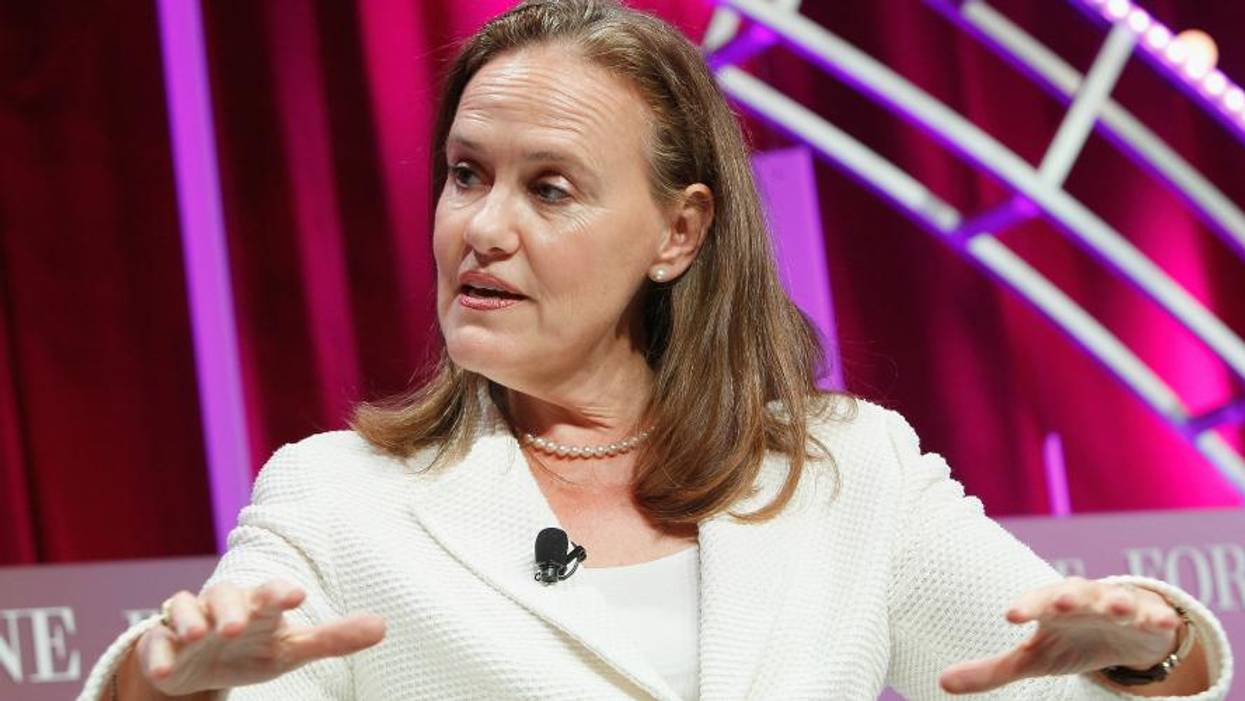
Just a few weeks ago, super hawk Michele Flournoy was being touted as a virtual shoo-in to become Joe Biden's nominee for Secretary of Defense. But some progressives insisted on organizing to raise key questions, such as: Should we accept the revolving door that keeps spinning between the Pentagon and the weapons industry? Does an aggressive U.S. military really enhance "national security" and lead to peace?
By challenging Flournoy while posing those questions--and answering them in the negative--activism succeeded in changing "Defense Secretary Flournoy" from a fait accompli to a lost fantasy of the military-industrial complex.
She is "a favorite among many in the Democratic foreign-policy establishment," Foreign Policy magazine reported on Monday night, hours after news broke that Biden's nomination will go to Gen. Lloyd Austin instead of Flournoy. But "in recent weeks the Biden transition team has faced pushback from the left wing of the party. Progressive groups signaled opposition to Flournoy over her role in U.S. military interventions in Libya and the Middle East in prior government positions, as well as her ties to the defense industry once she left government."
Of course, Gen. Austin is a high-ranking part of the war machine. Yet, as Foreign Policy noted: "When Biden pushed to draw down troops from Iraq while vice president, Flournoy, then Pentagon policy chief, and then-Chairman of the Joint Chiefs of Staff Mike Mullen opposed the idea. Austin did not."
Video of war-crazed Sen. John McCain grilling Austin several years ago shows the general willing to stand firm against zeal to escalate killing in Syria, a clear contrast to positions that Flournoy had staked out.
Flournoy has a long record of arguing for military intervention and escalation, from Syria and Libya to Afghanistan and beyond. She has opposed a ban on weapons sales to Saudi Arabia. In recent years, her advocacy has included pushing military envelopes in potentially explosive hotspots like the South China Sea. Flournoy is vehemently in favor of long-term U.S. military encroachment on China.
Historian Andrew Bacevich, a graduate of the U.S. Military Academy and former Army colonel, warns that "Flournoy's proposed military buildup will prove unaffordable, unless, of course, federal deficits in the multitrillion-dollar range become routine. But the real problem lies not with the fact that Flournoy's buildup will cost a lot, but that it is strategically defective." Bacevich adds: "Strip away the references to deterrence and Flournoy is proposing that the United States goad the People's Republic into a protracted high-tech arms race."
With a record like that, you might think that Flournoy would receive very little support from the leaders of organizations like the Ploughshares Fund, the Arms Control Association, the Bulletin of the Atomic Scientists and the Council for a Livable World. But, as I wrote more than a week ago, movers and shakers at those well-heeled groups eagerly praised Flournoy to the skies--publicly urging Biden to give her the Defense Secretary job.
Many said they knew Flournoy well and liked her. Some lauded her interest in restarting nuclear-arms negotiations with Russia (a standard foreign-policy position). Many praised her work in high-ranking Pentagon posts under Presidents Clinton and Obama. Privately, some could be heard saying how great it would be to have "access" to the person running the Pentagon.
More traditional allies of militaristic policymakers chimed in, often vilifying the left as it became clear in late November that progressive pushback was slowing Flournoy's momentum for the Defense Department's top job. Notorious war enthusiast Max Boot was a case in point.
Boot was evidently provoked by a Washington Post news story that appeared on Nov. 30 under the headline "Liberal Groups Urge Biden Not to Name Flournoy as Secretary of Defense." The article quoted from a statement issued that day by five progressive organizations -- RootsAction.org (where I'm national director), CodePink, Our Revolution, Progressive Democrats of America, and World Beyond War. We conveyed that a Flournoy nomination would lead to a fierce grassroots battle over Senate confirmation. (The newspaper quoted me saying: "RootsAction.org has a 1.2 million active list of supporters in the U.S., and we're geared up for an all-out push for a 'no' vote, if it comes to that.")
Reporting on the joint statement, Common Dreams aptly summarized it in a headline: "Rejecting Michele Flournoy, Progressives Demand Biden Pick Pentagon Chief 'Untethered' From Military-Industrial Complex."
Such talk and such organizing are anathema to the likes of Boot, who fired back with a Post column within hours. While advocating for Flournoy, he invoked an "old Roman adage"--"Si vis pacem, para bellum"--"If you want peace, prepare for war." He neglected to mention that Latin is a dead language and the Roman Empire collapsed.
War preparations that increase the likelihood of war may excite laptop warriors. But the militarism they promote is madness nonetheless.

President-elect Biden's choice for Secretary of Defense has turned out to be one of the most controversial and difficult of his Cabinet appointments. The early front-runner, Michele Flournoy, was originally seen as a shoo-in and was touted as a great breakthrough for women, but her hawkish views have provoked serious concerns. Biden now appears to be also considering two Black Americans promoted by the Congressional Black Caucus: Jeh Johnson and retired General Lloyd Austin.
All three are flawed candidates to anyone who wants to see an end to the endless wars and to stop the revolving door between the Pentagon and military contractors. They all sit on boards of companies that profit from militarism--Johnson at Lockheed Martin, Austin at Raytheon and Flournoy at Booz, Allen, Hamilton. All have supported most or all post-9/11 U.S. military interventions. None would be our preference.
But Biden is not going to appoint someone truly committed to peace and disarmament, like Congresswoman Barbara Lee or retired Colonel Ann Wright, a senior diplomat who resigned from the State Department to protest the Iraq War.
So who is the "least worst" choice? While General Austin has some good qualities--his experience in overseeing major troop withdrawals from Iraq and his opposition to further U.S. involvement in Syria--appointing a recently retired military officer would violate long-standing traditions and laws that stipulate that the Secretary of Defense must be a civilian.
The Republican-controlled Senate set a dangerous precedent when it approved a waiver of the National Security Act and confirmed General Mattis as Trump's Defense Secretary in 2017. As Senator Kirsten Gillibrand, the Chair of the Senate Armed Services Subcommittee on Military Personnel, said at that time, "Civilian control of our military is a fundamental principle of American democracy, and I will not vote for an exception to this rule." We agree.
That leaves Flournoy and Johnson. We are afraid that Flournoy would be an especially dangerous choice for America and the world. Given the additional time that President-elect Biden is taking over this decision, he, too, seems to have reservations about her.
As Under Secretary of Defense for Policy during Obama's first term, Flournoy clearly did not see eye-to-eye with Vice President Biden on many of the Obama administration's most fateful decisions. Biden opposed military escalation in Afghanistan, while Flournoy supported it. Flournoy also backed military intervention and regime change in Libya, while Biden insists that he argued strongly against it.
Flournoy has held a head-spinning number of revolving door positions--her board seat at Booz, Allen Hamilton, co-founding WestExec Advisors, the Center for a New American Security, and advising the private equity firm Pine Island Capital that is heavily invested in military industries, and other compromising jobs.
Even more problematic, however, is that Flournoy has repeatedly demonstrated throughout her career, both in her official Pentagon positions in the Clinton and Obama administrations and in her published writings and statements, that she actually believes in the normalization of war.
She was the main author of the Clinton administration's 1997 Quadrennial Defense Review (QDR), which politically justified the unilateral use of U.S. military force all over the world. For Flournoy, normalizing war was just a matter of making a persuasive political case for the widespread use of military force, by defining things like "preventing the emergence of a hostile regional coalition" and "ensuring uninhibited access to key markets, energy supplies and strategic resources" as "U.S. vital interests" that justified the use of force.
In every U.S. dispute with other countries since the 1997 Defense Review, she has supported exactly the kind of threats and uses of force that she set out to ideologically legitimize in the QDR, from invading Iraq to attacking Libya to militarily confronting China to fighting "hybrid" wars--a mix of conventional war, insurgencies and cyber threats. "In the future," she blithely says, "warfare may come in a lot of different flavors."
So what about Jeh Johnson? From 2009 to 2012, under Obama, he served as General Counsel of the U.S. Department of Defense, where he was the senior legal official signing off on air strikes, drone strikes and other U.S. uses of force around the world. Johnson wrote the still secret legal memos that justified the targeted killing of people overseas by drones--a program that has killed many innocent civilians.
Legal experts were highly critical of both Obama's policy and Johnson's defense of it. We at CODEPINK repeatedly protested against Johnson, including projecting images of drone victims on his elegant home in Washington, D.C. We also opposed many of his policies as Secretary of Homeland Security in Obama's second term.
But there are indications that Johnson would be more inclined toward restraint in the threat and use of force, reliance on peaceful diplomacy and compliance with U.S. and international law than Flournoy.
While Flournoy supported the 2011 US/NATO bombardment of Libya, Johnson did not. He advised Obama that the bombing constituted "hostilities" under the War Powers Act and must be ended by May 20, 2011. Tragically, Obama chose to ignore that advice from his top military lawyer and what Biden says were strong arguments against that war from his Vice President.
Johnson has also been quite unique among U.S. officials who have served the U.S. post-9/11 war machine in calling for the demilitarization of U.S. anti-terrorism policies and questioning the normalization of war that Flournoy worked to legitimize.
In 2012, while still at the Pentagon, Johnson made two ground-breaking speeches, one to the American Enterprise Institute and one to the Oxford Union debating society in the U.K., in which he discussed ending the U.S.'s militarized terrorism policy and once again treating terrorism as a crime to be dealt with by civilian law enforcement. He went on to say this:
"War must be regarded as a finite, extraordinary and unnatural state of affairs. War permits one man - if he is a 'privileged belligerent,' consistent with the laws of war -- to kill another. War violates the natural order of things, in which children bury their parents; in war parents bury their children. In its 12th year, we must not accept the current conflict, and all that it entails, as the 'new normal.' Peace must be regarded as the norm toward which the human race continually strives."
Johnson went on to explain that, like Martin Luther King, Jr., he graduated from Morehouse College in Atlanta. "I am a student and disciple of Dr. King," he said, "though I became an imperfect one the first time I gave legal approval for the use of military force."
For Johnson, war cannot be the "new normal," and no clever political arguments can make it so. His actions at the Pentagon appear to weigh on his conscience and conflict with his moral compass. Whatever the political or legal justification, war is still a "finite, extraordinary and unnatural state of affairs."
Johnson's views echo what former President Jimmy Carter said when he accepted the Nobel Peace Prize in 2002, "War may sometimes be a necessary evil. But no matter how necessary, it is always an evil, never a good. We will not learn how to live together in peace by killing each other's children."
If, as reported, President Biden is trying to choose between Michele Flournoy, General Austin and Jeh Johnson for Secretary of Defense, we urge him to choose the one out of the three who has upheld this basic principle that most Americans believe in, that war is "extraordinary and unnatural," and peace is "the norm toward which the human race continually strives."

No matter who ends up winning Senate confirmation for top positions on President Biden's "national security" team, an ominous dynamic is already underway. Some foreign-policy specialists with progressive reputations are voicing support and evasive praise for prospective Cabinet members--as though spinning through revolving doors to broker lucrative Pentagon contracts is not a conflict of interest, and as though advocating for an aggressive U.S. military posture is fine.
Rationalizations are plentiful, but the results are dangerous. It's an insidious process--helping to set low standards for the incoming administration. Enablers now extol potential Cabinet picks who've combined pushing for continuous war and hugely expensive new weapons systems with getting rich as dealmakers for the military-industrial complex.
As journalists have brought to light, Antony Blinken and Michele Flournoy shamelessly teamed up to cash in while rotating through high positions at the State Department and Pentagon. At the same time, Blinken (the Biden nominee to be Secretary of State) and Flournoy (in the running for Secretary of Defense) have backed nonstop U.S. warfare.
"Many progressive activists and organizations have mobilized since the election to offer well-documented opposition to highly dubious potential members of the Biden Cabinet, and that includes contenders for 'national security' posts."
Meanwhile, Flournoy is grimly notable for urging potentially catastrophic military brinkmanship with China. Like her unabashed pursuit of wealth from the weapons industry, her dangerously aggressive approach toward China is anything but a secret. Yet, in her current quest to run the Pentagon, she has received unequivocal support from numerous individuals who are respected in progressive circles, including those with avowed dedication to beating swords into plowshares.
From the top of the influential and well-heeled Ploughshares Fund, Joe Cirincione and Tom Collina have jumped onto the Flournoy bandwagon. Days ago, Cirincione proudly tweeted news coverage of the "Open Letter on Our Support for Michele Flournoy to Be the Next Secretary of Defense," which he had signed along with Collina and 27 other "nuclear experts."
Other signatories of the open letter included Rachel Bronson, the president and CEO of the Bulletin of the Atomic Scientists, as well as the Arms Control Association's board chair Tom Countryman and executive director Daryl Kimball. Former Defense Secretary William Perry also signed.
Cirincione's tweet, touting the pro-Flournoy open letter, ran into pushback from longtime peace activist Marcy Winograd, who tweeted back: "Joe, pls read her essay, 'How to Prevent a War in Asia,' which should be retitled 'How to Start a War in Asia.' Did you know she wants to continue to send 'defensive' weapons to Saudi Arabia while we 'pivot' to SCS [South China Sea] & more war games next to 2 nuclear powers?"
The reply from Cirincione offered little more than wishful thinking about Flournoy. "I disagree with many of the positions she has taken in the past," he wrote. "She is, however, the best qualified candidate for the position; the one most likely to implement serious changes should President Biden order them. Dems have also moved away from the Clinton policies she favored."
While Flournoy has awaited word on whether she'll get the nod from Biden for the Pentagon job, Tony Blinken--the man with whom she co-founded the influence-peddling outfit WestExec Advisors--is already the nominee for Secretary of State. Oddly, two of Blinken's most high-profile progressive boosters for the job have worked in key roles for Bernie Sanders, a leader second to none in challenging corporate greed.
Faiz Shakir, the campaign manager for Sanders' latest presidential campaign, tweeted that the selection of Blinken was a "solid choice." And the top Sanders foreign-policy adviser in the Senate, Matt Duss, declared: "This is a good choice. Tony has the strong confidence of the president-elect and the knowledge and experience for the important work of rebuilding U.S. diplomacy. It will also be a new and great thing to have a top diplomat who has regularly engaged with progressive grassroots."
That's a common rationale for supporting potential Cabinet members, despite the fact that their records and policy prescriptions are contrary to progressive principles. In effect, we're supposed to be grateful--and mollified--that at least they talk with us.
At the Council for a Livable World--which says that it "promotes policies to reduce and eventually eliminate nuclear weapons and to minimize the risk of war"--the executive director, former Congressman John Tierney, told the group's members that Blinken is a real good guy: "I, and our organization, have worked with him over the years, and I trust that he can restore and rebuild a State Department badly damaged by the Trump administration."
What does all this praising and access-drooling amount to?
Here's a cogent assessment from Winograd, a tireless antiwar activist: "Progressives may be tempted to trade truth for access to the powerful and privileged, thinking they can influence the course of events if they bite their tongue when Flournoy talks of fighting and prevailing in a war with China. But this sort of thinking is misguided. The power progressives hold must be wielded now before it's too late, before Flournoy is crowned and the U.S. slips further into decline, mired in a high-stakes high-tech arms race--or worse, another endless war, this one with a nuclear-armed nation of over 1.3 billion people."
Disturbing information about Flournoy and Blinken has long been available. And just this weekend, the New York Times published a devastating in-depth news article that shed more light on their direct financial involvements that amount to classic conflicts of interest.
Many progressive activists and organizations have mobilized since the election to offer well-documented opposition to highly dubious potential members of the Biden Cabinet, and that includes contenders for "national security" posts. Outside the Beltway bubble, grassroots groups are organizing to put up a fight against nominees who have repeatedly pledged and shown their allegiance to the warfare state.
Joe Biden's historic value was to defeat Donald Trump, and progressives played a vital role in that defeat--while often being candid about the many awful parts of the Biden record. Now, progressives should emphatically challenge every odious aspect of the Biden administration, every step of the way.

The incoming Biden administration is facing a major test of transparency and ethics after the New York Times reported Saturday that three former government officials tapped to run President-elect Joe Biden's national security team have been stakeholders at a private equity firm which is promising investors big profits off government business because of its ties to those officials.
Pine Island Capital Partners lists former Under Secretary of Defense Michele Flournoy and retired General Lloyd Austin as a DC Partners in the firm, and lists former Deputy Secretary of State Tony Blinken as a DC Partner on leave of absence. Blinken, together with Flournoy, also founded WestExec Advisors, a "strategic advisory firm" that doesn't disclose its clients, after leaving the Obama administration and ahead of Biden's 2020 campaign. Good government advocates have raised questions about the structure of the organization, which--unlike lobbying shops--does not have to register with the government.
"This is so explicit that it's astonishing Pine Island even put it on paper," said David Segal of Demand Progress, a grassroots group pressing Biden to reject cabinet appointments tied to corporations. "This is not an example of people who happen to work at a big company--these are partners at a firm whose stated business model is to profit from the revolving door and connections gained from time in government."Flournoy and Austin are reportedly among the leading candidates being considered for secretary of defense, and Blinken is Biden's designated nominee for secretary of state. Pine Island's chairman is John Thain, the former top executive at Merrill Lynch when the company paid out huge executive bonuses as it began to collapse during the financial crisis.
The New York Times reports:
...The consulting firm, WestExec Advisors, and the investment fund, Pine Island Capital Partners, call themselves strategic partners and have featured an overlapping roster of politically connected officials -- including some of the most prominent names on President-elect Joseph R. Biden Jr.'s team and others under consideration for high-ranking posts.
Now the Biden team's links to these entities are presenting the incoming administration with its first test of transparency and ethics.
The two firms are examples of how former officials leverage their expertise, connections and access on behalf of corporations and other interests, without in some cases disclosing details about their work, including the names of the clients or what they are paid.
And when those officials cycle back into government positions, as Democrats affiliated with WestExec and Pine Island are now, they bring with them questions about whether they might favor or give special access to the companies they had worked with in the private sector. Those questions do not go away, ethics experts say, just because the officials cut their ties to their firms and clients, as the Biden transition team says its nominees will do.
WestExec's founders include Antony J. Blinken, Mr. Biden's choice to be his secretary of state, and Michele A. Flournoy, one of the leading candidates to be his defense secretary. Among others to come out of WestExec are Avril Haines, Mr. Biden's pick to be director of national intelligence; Christina Killingsworth, who is helping the president-elect organize his White House budget office; Ely Ratner, who is helping organize the Biden transition at the Pentagon; and Jennifer Psaki, an adviser on Mr. Biden's transition team.
After the story in the Times, The Daily Poster's David Sirota reported:
"She represents the epitome of what is worst about the Washington blob, the military-industrial complex's revolving door," says CodePink co-founder Medea Benjamin. "Her whole history has been one of going in and out of the Pentagon ... where she supported every war that the U.S. engaged in, and supported increases in the military budget."In Securities and Exchange Commission filings, Pine Island describes one of its investment vehicles as "a newly organized blank check company incorporated in Delaware" that will use its connections to top officials to take advantage of rising government expenditures on the national security agencies that Flournoy and Blinken could oversee. Pine Island's first filings about the investment vehicle were made in September--the same month Biden suggested that he will not push for significant reductions in Pentagon expenditures, which have reached record levels.
"This is so explicit that it's astonishing Pine Island even put it on paper," said David Segal of Demand Progress, a grassroots group pressing Biden to reject cabinet appointments tied to corporations. "This is not an example of people who happen to work at a big company--these are partners at a firm whose stated business model is to profit from the revolving door and connections gained from time in government."
Flournoy would become the first woman to lead the Department of Defense. "She represents the epitome of what is worst about the Washington blob, the military-industrial complex's revolving door," says CodePink co-founder Medea Benjamin. "Her whole history has been one of going in and out of the Pentagon ... where she supported every war that the U.S. engaged in, and supported increases in the military budget."
According to an article in The American Prospect--titled, "How Biden's Foreign-Policy Team Got Rich"--published in July:
...Flournoy could carry her own private practice, but she didn't want a firm with her name on it alone. The trio reached out to defense and intelligence honchos, but with no luck. Then a particular Washington fixture came to light.
He had been Vice President Joe Biden's right-hand man for almost two decades and finished out the Obama administration as deputy secretary of state. He was known for his unimpeachable ethics. Having written Biden's speeches for years, he had started to enunciate with the vice president's drawl when he appeared on CNN. He had never cashed in on his international connections, years of face time with Saudi, Israeli, and Chinese leaders.
His name was Tony Blinken. With his commitment to join Flournoy as founding partner, a new strategic consultancy was born. They called it WestExec Advisors.
WEST EXECUTIVE AVENUE runs along the West Wing of the White House, the connection between presidential power and the offices where aides sit and do the real work. The name WestExec Advisors trades on its founders' recent knowledge of the highest echelons of decision-making. It also suggests they'll be walking down WestExec toward 1600 Pennsylvania Avenue some day soon.
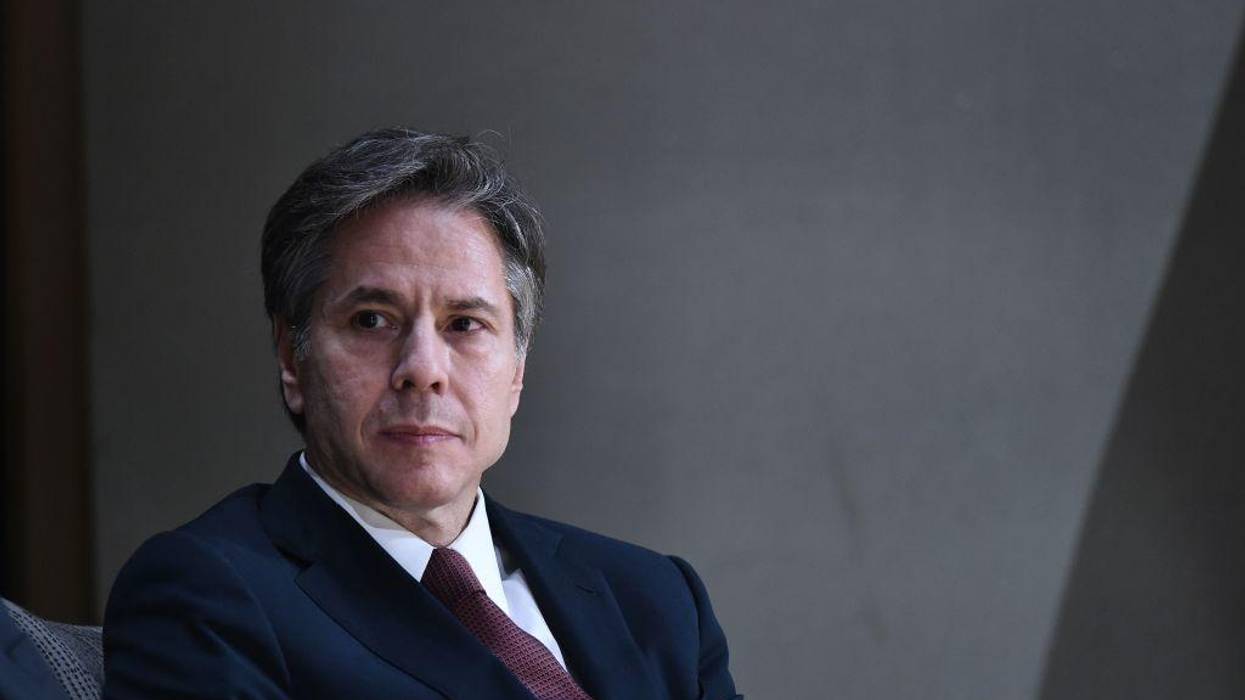
There was no reason to think that a Biden administration would be to the left of the Obama administration when it comes to foreign policy. Biden comes with a long political career of supporting the wars of the United States and its allies, from the 2003 invasion of Iraq to Israel's aggression against Palestinians to the protracted occupation of Afghanistan. And whatever limited overtures he made to the Left during his campaign for the general election in 2020 (while he simultaneously ran on distancing himself from the Left), foreign policy was almost entirely omitted, as evidenced by the issue's exclusion from the unity task force with Bernie Sanders.
Obama, with Biden at his side, oversaw intervention in Libya, disastrous involvement in the Yemen war, ongoing occupation in Afghanistan, support for the coup in Honduras, and much more.
Perhaps the most distinguishing foreign policy position Biden took on the campaign trail was his saber rattling toward China, which was not quite as racist at Trump's, but nonetheless got so bad a Biden ad was rebuked by progressive Asian-American groups for its racist content (Biden eventually walked back some of the ad's rhetoric). Biden did say during his campaign that he wants to end "forever wars" (many of which he helped start) and that he's against the war in Yemen (a position he only took after he served in the Obama administration that supported the war), but he neither centered these platforms nor accompanied them with concrete policy proposals that would actually bring an end to endless war.
In keeping with this trajectory, Biden is already drawing from a host of pro-war individuals from the Obama era to fill his cabinet. Because many of these people have been around for a while and have relationships across Washington, there is no shortage of well-known political figures who are testifying to their decency and smarts--that's how the relatively insular world of Washington "national security professionals" works, after all. But for those on the outside of the Washington Blob looking in, the operative questions are, "What are these appointees' records, and what does this say about what exactly we are up against in a Biden administration?"
Antony Blinken -- who will be nominated for Secretary of State, as the Biden-Harris transition team announced Monday -- has rightfully attracted considerable criticism for a record of supporting wars and so-called humanitarian interventions. Blinken was a top aide to Biden when the then-Senator voted to authorize the U.S. invasion of Iraq, and Blinken helped Biden develop a proposal to partition Iraq into three separate regions based on ethnic and sectarian identity. As deputy national security adviser, Blinken supported the disastrous military intervention in Libya in 2011, and in 2018 he helped launch WestExec Advisors, a "strategic advisory firm" that is secretive about its clients, along with other Obama administration alumni like Michele Flournoy. Jonathan Guyer writes in The American Prospect, "I learned that Blinken and Flournoy used their networks to build a large client base at the intersection of tech and defense. An Israeli surveillance startup turned to them. So did a major U.S. defense company. Google billionaire Eric Schmidt and Fortune 100 companies went to them, too."
But other, lesser-known Obama administration alumni deserve greater scrutiny. Among them is Avril Haines, who has been tapped as Biden's Director of National Intelligence. Haines was one of the co-authors of Obama's "presidential policy guidance," the infamous drone playbook that normalized targeted assassinations around the world. Here's how Newsweek described Haines in 2013:
Since becoming the National Security Council's legal adviser in 2011, she had been working on a wide array of highly complicated and legally sensitive issues -- generally until 1 or 2 in the morning, sometimes later -- that go to the core of U.S. security interests. Among them were the legal requirements governing U.S. intervention in Syria and the range of highly classified options for thwarting Iran's nuclear program. All the while, Haines was sometimes summoned in the middle of the night to weigh in on whether a suspected terrorist could be lawfully incinerated by a drone strike.
During the Biden presidential campaign, there was a concerted effort by former Obama aides to cast Haines retroactively as a voice of restraint and protecting civilians, as captured in an article by Spencer Ackerman. This revisionism should not be believed: Whatever civilian protections Haines may have written into drone law, they clearly did not work, as evidenced by the devastating toll of U.S. drone wars on civilians. While the Trump administration escalated the drone war and loosened restrictions on killing civilians, it was the Obama administration -- aided by Haines -- that normalized the widespread use of targeted assassinations that turned the whole world into a potential U.S. battlefield.
There are other aspects of Haines' record that are worrying. She has "in the past described herself as a former consultant for the controversial data-mining firm Palantir," as Murtaza Hussain reported for The Intercept. Palantir was co-founded by a Trump-backing billionaire, and is implicated in some of the worst wrongdoings of the Trump administration, including mass surveillance and immigrant detention. As Hussain reports, little is known about Haines' role at the firm, and she scrubbed any mention from her bio when she came on as a Biden advisor. (Haines also worked for WestExec, as Guyer reports.)
In 2018, Haines angered progressives when she spoke in support of Gina Haspel's nomination for CIA Director. Haspel was widely opposed for her role in running CIA prisons where torture took place.
And then there is Linda Thomas-Greenfield, tapped to serve as United Nations Ambassador. Thomas-Greenfield lists her most recent employment Albright Stonebridge Group, a secretive "global strategy firm" somewhat similar to McKinsey & Company, and chaired by Madeleine Albright (Thomas-Greenfield is currently listed as "on leave" from the firm). Albright Stonebridge Group is a black box: It's near impossible to get any info about who its clients are. The firm claims that it does not lobby the U.S. government or do work that is covered by the Foreign Agents Registration Act, but many of its staffers double in roles that certainly do exert influence, or have in the past. The firm's UAE office is headed by Jad Mneymneh, who previously was in the Crown Prince Court of Abu Dhabi's Office of Strategic Affairs.
There is nothing remarkable about Biden appointing someone who hails from a shadowy global strategy firm for a powerful role, but that is precisely the problem. As Guyer points out, Jake Sullivan, set to be Biden's National Security Advisor, went to work for Macro Advisory Partners in 2017. "Run by former British spy chiefs, Macro Advisory Partners has about 30 full-time staff and reported $37 million in revenue last year," notes Guyer. "Macro Advisory Partners has used Sullivan's involvement as a selling point in offering 'trusted counsel in a turbulent world,' with his face atop the roster on their website's landing page. But when Sullivan publishes a magazine article about U.S. foreign policy or delivers university lectures, he almost always omits this job from his biography."
Then there is Michele Flournoy, considered the favorite to lead the Pentagon (though this hasn't been officially announced yet). Not only is she on the board of military contractor Booz Allen Hamilton, but she co-founded the the hawkish center-left think tank Center for a New American Security (CNAS) -- which receives significant funding from the weapons industry, including General Dynamics Corporation, Raytheon, Northrop Grumman Corporation and Lockheed Martin Corporation. She served in the Obama administration as Under Secretary of Defense for Policy from 2009 to 2012 and then played a powerful role at CNAS. She was a major backer of the 2011 military intervention in Libya, a supporter of the occupation of Afghanistan, and firmly opposed the complete removal of U.S. troops from Iraq.
More Biden nominations will be trickling in over the coming days and weeks, and we have every reason to expect more of the same: His transition team is a clear tell. As I reported on November 11, one third of Biden's Pentagon transition team alone lists as their "most recent employment" think tanks, organizations or companies that are either funded by the weapons industry or are directly part of this industry. Many of these entities are well-known and even respected, including influential think tanks like CNAS and the Center for Strategic and International Studies. Staffers of these think tanks do not get the same bad flak that lobbyists receive, but they deserve it: Via policy papers, media outreach and relationships with politicians, these staffers effectively do the same thing lobbyists do, but dressed in a more academic veneer, and the think tanks Biden is drawing from have proven track records of pushing weapons systems on the U.S. government. Indeed, in 2016 even the New York Times accused CSIS of lobbying for General Atomics, a California-based manufacturer of Predator drones, based on a cache of emails showing it doing just that. And then there are the many that do not disclose their funders, including four transition team members (Linda Thomas-Greenfield among them) who hail from Albright Stonebridge Group.
There is a temptation to take a moment to breathe, to celebrate that the Trump administration has been voted out (although Trump appears determined to maintain power), and to hold on to hope that Biden will mark a turn away from some of Trump's worst impulses, including his war mongering. But we learned from the earliest days of the Obama administration that it is sober assessment -- rather than projection -- that is called for in moments like this. Obama, with Biden at his side, oversaw intervention in Libya, disastrous involvement in the Yemen war, ongoing occupation in Afghanistan, support for the coup in Honduras, and much more. And Biden is now pulling from the same team of advisors and influence peddlers and consultants who helped make it all happen.
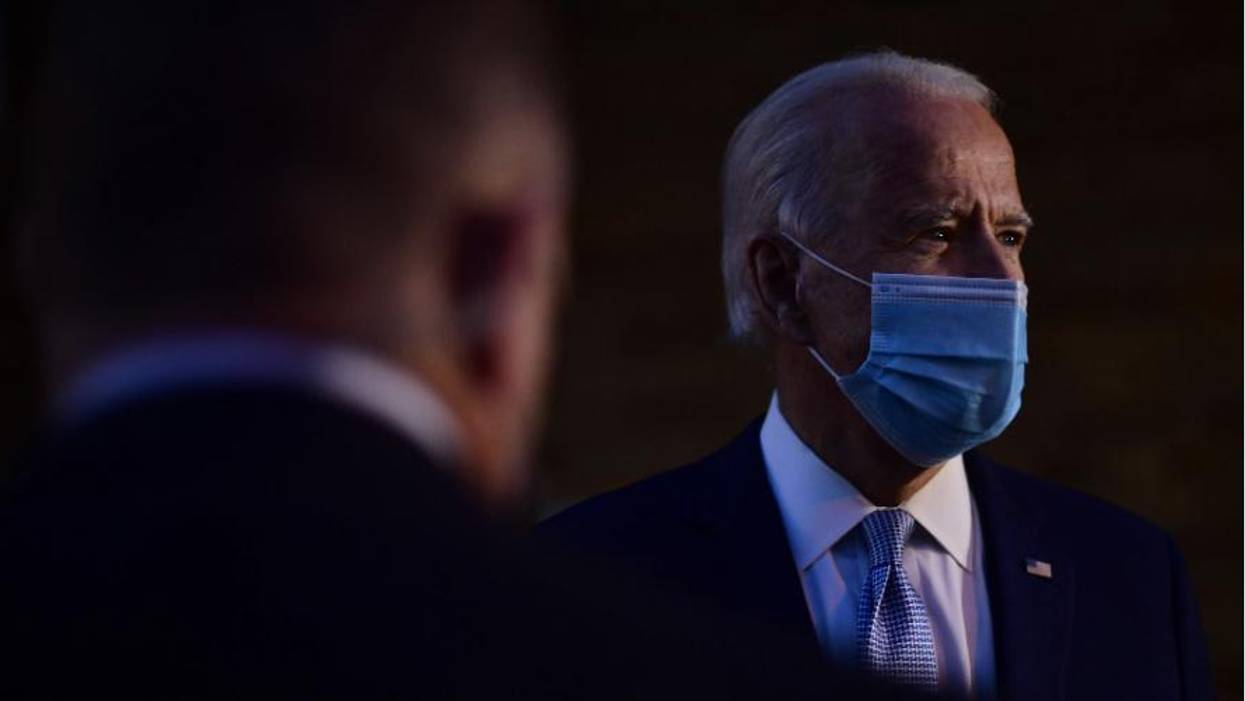
Bolstering calls for President-elect Joe Biden to keep business insiders and industry lobbyists out of his Cabinet, new survey results reveal that 68% of Americans want members of the U.S. Senate to reject any corporate-linked nominees proposed by the incoming president.
The Data for Progress poll, sponsored by Demand Progress and first reported Tuesday by The Daily Poster, found that a majority of Democrats, Republicans, and Independents across all documented demographics agree about how the Senate should respond to such nominees.
The majority of likely voters surveyed believe that if Biden tries to install corporate executives and lobbyists in top positions of his administration, senators should vote against confirming them and urge the president-elect to "instead put forth nominees who have worked to forward the interests of everyday Americans.
The polling, conducted after Election Day in November, has a margin of error of plus or minus three percentage points. The results come as Biden continues to fill out his administration, with the president-elect having announced key appointments and Cabinet nominees in recent days.
Those selections have been met with mixed responses from progressives and others calling on Biden to forgo a "Corporate Cabinet" in favor of picking--in the words of Demand Progress executive director David Segal last week--"people dedicated to working in service of the general welfare."
As The Daily Poster noted, along with pushing Biden to "break with the Clinton and Obama administration tradition of installing corporate allies in key governmental positions," Demand Progress and the Revolving Door Project "are poll testing potential nominees, with descriptions of their backgrounds, to gauge potential public support and opposition for a Biden Cabinet."
For example, the new survey explains that Larry Fink "is the CEO of BlackRock, a financial firm which is the largest asset manager and the largest investor in the fossil fuel industry in the world," before asking whether respondents would support Biden appointing him to a Cabinet post. Sixty-six percent of those polled said they would somewhat or strongly oppose Fink.
The American Prospect reported Tuesday that Brian Deese, also of BlackRock, is under strong consideration to head Biden's National Economic Council. Half of survey respondents said they oppose Deese.
The survey results were similar for Mark Gitenstein--"a corporate lobbyist who has pushed to undo regulations at the behest of large agribusinesses, insurance companies, Wall Street, and defense contractors"--as well as Tony James, Steve Ricchetti, and Rhode Island Gov. Gina Raimondo. All four of them are not only opposed by a majority of voters but also targets of the "No Corporate Cabinet" campaign.
Launched last week by Demand Progress, the Revolving Door Project, and other partner groups, the initiative has "Persons of Interest" webpage about potential appointees whom Biden "should avoid," according to organizers. The page features Fink, Gitenstein, James, Deese, Ricchetti, Raimondo, former Energy Secretary Ernest Moniz, Jason Bordoff, Heather Zichal, and Bruce Reed.
The Daily Poster highlighted the corporate ties and progressive critiques of some selections Biden has already announced:
On Monday, Biden announced that he has chosen Tony Blinken to serve as Secretary of State. Blinken founded WestExec Advisors, a secretive business consultancy that has worked with defense contractors. Avril Haines, a former WestExec principal, will serve as Biden's Director of National Intelligence.
Biden is also reportedly considering nominating WestExec co-founder Michele Flournoy to serve as Secretary of Defense, as well as two corporate lawyers--Sally Yates and Karen Dunn--to serve as Attorney General and the head of the Justice Department's antitrust division, respectively.
Biden did appease some progressives with the nomination of former Federal Reserve Chairman Janet Yellen to serve as his Treasury Secretary. Yellen would be a rare Treasury Secretary who didn't come straight from Wall Street, and she has supported deficit spending and tougher banking regulations, though she has also echoed some of the austerity rhetoric of groups aiming to cut Social Security and Medicare.
In the Data for Progress survey, a majority of respondents said they somewhat or strongly support Biden appointing Yellen to a Cabinet position and the Senate confirming her.
While the polling shows a bipartisan desire for lawmakers to block Biden from putting together a corporate Cabinet, control of the Senate remains uncertain. If Democrats were to win a pair of January runoff races in Georgia, the party would have 50 seats in the upper chamber, and Vice President-elect Kamala Harris could break tie votes.

By all accounts, the frontrunner to be Joe Biden's pick for Secretary of Defense is Michele Flournoy. It's a prospect that should do more than set off alarm bells--it should be understood as a scenario for the president-elect to stick his middle fingers in the eyes of Americans who are fed up with endless war and ongoing militarism.
Warning and petitioning Biden to dissuade him from a Flournoy nomination probably have scant chances of success. But if Biden puts her name forward, activists should quickly launch an all-out effort to block Senate confirmation.
The foreseeable dangers of picking Flournoy to run the Pentagon are compounded by Biden's selection of Antony Blinken to be Secretary of State.
As the Biden administration takes office, progressives have an opportunity to affirm and amplify the position that Martin Luther King Jr. boldly articulated when he insisted that "I never intend to adjust myself to the madness of militarism." In the present day, the pernicious and lucrative aspects of that madness are personified in the favorite to be Biden's Defense Secretary.
Days ago, the Project On Government Oversight (POGO) published a detailed analysis under the headline "Should Michele Flournoy Be Secretary of Defense?" The well-documented answer: No.
Citing "extensive defense industry ties," POGO provided an overview of Flournoy's revolving-door career. When she wasn't oiling the war machine in the Clinton and Obama administrations, Flournoy was profiteering from servicing that machine:
Running parallel to Flournoy's financial conflicts of interest was her long record of advocacy for military conflicts.
"Flournoy was widely considered to have been one of Obama's more hawkish advisers and helped mastermind the escalation of the disastrous war in Afghanistan," Arwa Mahdawi pointed out in a Nov. 21 Guardian piece. "She has called for increased defense spending, arguing in a 2017 Washington Post op-ed that Trump was 'right to raise the need for more defense dollars.' She has complained that Obama didn't use military force enough, particularly in Syria. She supported the wars in Iraq and Libya. . ."
The president-elect is hardly in a position to hold such a record against prospective appointees. He has never fully acknowledged, much less renounced, his own roles in advocating for disastrous U.S. wars -- most notably and tragically, the war in Iraq.
Biden hasn't gotten his story straight or come clean about supporting the U.S.-led invasion of Iraq in 2003. His specious claims that he didn't really support the invasion have been gross misrepresentations of the historical record. Actually, Biden was the Democrat in the Senate who exerted the most leverage in support of the Iraq invasion, and he did so with public enthusiasm.
The foreseeable dangers of picking Flournoy to run the Pentagon are compounded by Biden's selection of Antony Blinken to be Secretary of State. It was Blinken who, 18 years ago, served as staff director for the Senate Foreign Relations Committee while its chairman, Joe Biden, oversaw the pivotal and badly skewed two-day hearing in summer 2002 that greased the congressional skids for approving an invasion of Iraq.
Blinken, along with Flournoy, co-founded WestExec Advisors, which the Washington Post's breaking-news coverage of the Blinken nomination gingerly described as "a political strategy firm." It was a nice euphemism, in contrast to how POGO describes the WestExec Advisors mission -- "helping defense corporations market their products to the Pentagon and other agencies." The term "war profiteering" would be even more apt.
If past behavior is the best predictor of future behavior, there are ample reasons for apprehension about the top of the military and foreign-policy team that Biden has begun to install for his presidency. But realism should not lead to fatalism or passivity.
Extricating the United States from the grip of the military-industrial complex will require massive and sustained organizing. With that goal in mind, a grassroots campaign to prevent Michele Flournoy from becoming Secretary of Defense would be wise.

In this mystifying moment, the post-electoral sentiments of most Americans can be summed up either as "Ding dong! The witch is dead!" or "We got robbed!" Both are problematic, not because the two candidates were intellectually indistinguishable or ethically equivalent, but because each jingle is laden with a dubious assumption: that President Donald Trump's demise would provide either decisive deliverance or prove an utter disaster.
While there were indeed areas where his ability to cause disastrous harm lent truth to such a belief--race relations, climate change, and the courts come to mind--in others, it was distinctly (to use a dangerous phrase) overkill. Nowhere was that more true than with America's expeditionary version of militarism, its forever wars of this century, and the venal system that continues to feed it.
For nearly two years, We the People were coached to believe that the 2020 election would mean everything, that November 3rd would be democracy's ultimate judgment day. What if, however, when it comes to issues of war, peace, and empire, "Decision 2020" proves barely meaningful? After all, in the election campaign just past, Donald Trump's sweeping war-peace rhetoric and Joe Biden's hedging aside, neither nuclear-code aspirant bothered to broach the most uncomfortable questions about America's uniquely intrusive global role. Neither dared dissent from normative notions about America's posture and policy "over there," nor challenge the essence of the war-state, a sacred cow if ever there was one.
That blessed bovine has enshrined permanent policies that seem beyond challenge: Uncle Sam's right and duty to forward deploy troops just about anywhere on the planet; garrison the globe; carry out aerial assassinations; and unilaterally implement starvation sanctions. Likewise the systemic structures that implement and incentivize such rogue-state behavior are never questioned, especially the existence of a sprawling military-industrial complex that has infiltrated every aspect of public life, while stealing money that might have improved America's infrastructure or wellbeing. It has engorged itself at the taxpayer's expense, while peddling American blood money--and blood--on absurd foreign adventures and autocratic allies, even as it corrupted nearly every prominent public paymaster and policymaker.
This election season, neither Democrats nor Republicans challenged the cultural components justifying the great game, which is evidence of one thing: empires come home, folks, even if the troops never seem to.
The Company He Keeps
As the election neared, it became impolite to play the canary in American militarism's coal mine or risk raising Biden's record--or probable prospects--on minor matters like war and peace. After all, his opponent was a monster, so noting the holes in Biden's block of Swiss cheese presumably amounted to useful idiocy--if not sinister collusion--when it came to Trump's reelection. Doing so was a surefire way to jettison professional opportunities and find yourself permanently uninvited to the coolest Beltway cocktail parties or interviews on cable TV.
George Orwell warned of the dangers of such "intellectual cowardice" more than 70 years ago in a proposed preface to his classic novel Animal Farm. "At any given moment," he wrote, "there is an orthodoxy... that all right-thinking people will accept without question. It is not exactly forbidden to say this, that or the other, but it is 'not done' to say it... Anyone who challenges the prevailing orthodoxy finds himself silenced with surprising effectiveness."
And that's precisely what progressive paragon Cornel West warned against seven months ago after his man, Senator Bernie Sanders--briefly, the Democratic frontrunner--suddenly proved a dead candidate walking. "Vote for Biden, but don't lie about who he really is," the stalwart scholar suggested. It seems just enough Americans did the former (phew!), but mainstream media makers and consumers mostly forgot about the salient second part of his sentiment.
With the electoral outcome now apparent--if not yet accepted in Trump World--perhaps such politeness (and the policing that goes with it) will fade away, ushering in a renaissance of fourth estate oppositional truth-telling. In that way--in my dreams at least--persistently energized progressives might send President Joe Biden down dovish alternative avenues, perhaps even landing some appointments in an executive branch that now drives foreign policy (though, if I'm honest, I'm hardly hopeful on either count).
One look at Uncle Joe's inbound nieces and nephews brings to mind Aesop's fabled moral: "You are judged by the company you keep."
Think-Tank Imperialists
One thing is already far too clear: Biden's shadow national security team will be a distinctly status-quo squad. To know where future policymakers might head, it always helps to know where they came from. And when it comes to Biden's foreign policy crew, including a striking number of women and a fair number of Obama administration and Clinton 2016 campaign retreads -- they were mostly in Trump-era holding patterns in the connected worlds of strategic consulting and hawkish think tanking.
In fact, the national security bio of the archetypal Biden bro (or sis) would go something like this: she (he) sprang from an Ivy League school, became a congressional staffer, got appointed to a mid-tier role on Barack Obama's national security council, consulted for WestExec Advisors (an Obama alumni-founded outfit linking tech firms and the Department of Defense), was a fellow at the Center for New American Security (CNAS), had some defense contractor ties, and married someone who's also in the game.
It helps as well to follow the money. In other words, how did the Biden bunch make it and who pays the outfits that have been paying them in the Trump years? None of this is a secret: their two most common think-tank homes--CNAS and the Center for Strategic and International Studies (CSIS)--are the second- and sixth-highest recipients, respectively, of U.S. government and defense-contractor funding. The top donors to CNAS are Northrop Grumman, Boeing, and the Department of Defense. Most CSIS largesse comes from Northrop Grumman, Lockheed Martin, Boeing, and Raytheon.
How the inevitable conflicts of interest play out is hardly better concealed. To take just one example, in 2016, Michele Flournoy, CNAS co-founder, ex-Pentagon official, and "odds-on favorite" to become Biden's secretary of defense, exchanged emails with the United Arab Emirates (UAE) ambassador in Washington. She pitched a project whereby CNAS analysts would, well, analyze whether Washington should maintain drone-sales restrictions in a non-binding multilateral "missile technology control" agreement. The UAE's autocratic government then paid CNAS $250,000 to draft a report that (you won't be surprised to learn) argued for amending the agreement to allow that country to purchase American-manufactured drones.
Which is just what Flournoy and company's supposed nemeses in the Trump administration then did this very July past. Again, no surprise. American drones seem to have a way of ending up in the hands of Gulf theocracies--states with abhorrent human rights records that use such planes to surveil and brutally bomb Yemeni civilians.
If it's too much to claim that a future defense secretary Flournoy would be the UAE's (wo)man in Washington, you at least have to wonder. Worse still, with those think-tank, security-consulting, and defense-industry ties of hers, she's anything but alone among Biden's top prospects. Just consider a few other abridged resumes:
* Tony Blinken, frontrunner for national security adviser: CSIS; WestExec (which he co-founded with Flournoy); and CNN analyst.
* Jake Sullivan, a shoo-in for a "senior post in a potential administration": the Carnegie Endowment for International Peace ("peace," in this case, being funded by 10 military agencies and defense contractors) and Macro Advisory Partners, a strategic consultancy run by former British spy chiefs.
* Avril Haines, a top contender for CIA director or director of national intelligence: CNAS-the Brookings Institution; WestExec; and Palantir Technologies, a controversial, CIA-seeded, NSA-linked data-mining firm.
* Kathleen Hicks, probable deputy secretary of defense: CSIS and the Aerospace Corporation, a federally funded research and development center that lobbies on defense issues.
An extra note about Hicks: she's the head of Biden's Department of Defense transition team and also a senior vice president at CSIS. There, she hosts that think tank's "Defense 2020" podcast. In case anyone's still wondering where CSIS's bread is buttered, here's how Hicks opens each episode:
"This podcast is made possible by contributions from BAE Systems, Lockheed Martin, Northrop Grumman, and the Thales Group."
In other words, given what we already know about Joe Biden's previous gut-driven policies that pass for "middle of the road" in this anything but middling country of ours, the experiences and affiliations of his "A-Team" don't bode well for systemic-change seekers. Remember, this is a president-elect who assured rich donors that "nothing would fundamentally change" if he were elected. Should he indeed stock his national security team with such a conflicts-of-interest-ridden crowd, consider America's sacred cows of foreign policy all but saved.
Biden's outfit is headed for office, it seems, to right the Titanic, not rock the boat.
Off The Table: A Paradigm Shift
In this context, join me in thinking about what won't be on the next presidential menu when it comes to the militarization of American foreign policy.
Don't expect major changes when it comes to:
* One-sided support for Israel that enables permanent Palestinian oppression and foments undying ire across the Greater Middle East. Tony Blinken put it this way: as president, Joe Biden "would not tie military assistance to Israel to things like annexation [of all or large portions of the occupied West Bank] or other decisions by the Israeli government with which we might disagree."
* Unapologetic support for various Gulf State autocracies and theocracies that, as they cynically collude with Israel, will only continue to heighten tensions with Iran and facilitate yet more grim war crimes in Yemen. Beyond Michele Flournoy's professional connections with the UAE, Gulf kingdoms generously fund the very think tanks that so many Biden prospects have populated. Saudi Arabia, for example, offers annual donations to Brookings and the Rand Corporation; the UAE, $1 million for a new CSIS office building; and Qatar, $14.8 million to Brookings.
* America's historically unprecedented and provocative expeditionary military posture globally, including at least 800 bases in 80 countries, seems likely to be altered only in marginal ways. As Jake Sullivan put it in a June CSIS interview: "I'm not arguing for getting out of every base in the Middle East. There is a military posture dimension to this as a reduced footprint."
Above all, it's obvious that the Biden bunch has no desire to slow down, no less halt, the "revolving door" that connects national security work in the government and jobs or security consulting positions in the defense industry. The same goes for the think tanks that the arms producers amply fund to justify the whole circus.
In such a context, count on this: the militarization of American society and the "thank-you-for-your-service" fetishization of American soldiers will continue to thrive, exhibit A being the way Biden now closes almost any speech with "May God protect our troops."
All of this makes for a rather discouraging portrait of an old man's coming administration. Still, consider it a version of truth in advertising. Joe and company are likely to continue to be who they've always been and who they continue to say they are. After all, transformational presidencies and unexpected pivots are historically rare phenomena. Expecting the moon from a man mostly offering MoonPies almost guarantees disappointment.
Obama Encore or Worse?
Don't misunderstand me: a Biden presidency will certainly leave some maneuvering room at the margins of national security strategy. Think nuclear treaties with the Russians (which the Trump administration had been systematically tearing up) and the possible thawing of at least some of the tensions with Tehran.
Nor should even the most cynical among us underestimate the significance of having a president who actually accepts the reality of climate change and the need to switch to alternative energy sources as quickly as possible. Noam Chomsky's bold assertion that the human species couldn't endure a second Trump term, thanks to the environmental catastrophe, nuclear brinksmanship, and pandemic negligence he represents, was anything but hyperbole. Yet recall that he was also crystal clear about the need "for an organized public" to demand change and "impose pressures" on the new administration the moment the new president is inaugurated.
Yet, in the coming Biden years, there is also a danger that empowered Democrats in an imperial presidency (when it comes to foreign policy) will actually escalate a two-front New Cold War with China and Russia. And there's always the worry that the ascension of a more genteel emperor could co-opt--or at least quiet--a growing movement of anti-Trumpers, including the vets of this country's forever wars who are increasingly dressing in antiwar clothing.
What seems certain is that, as ever, salvation won't spring from the top. Don't count on Status-quo Joe to slaughter Washington's sacred cows of foreign policy or on his national security team to topple the golden calves of American empire. In fact, the defense industry seems bullish on Biden. As Raytheon CEO Gregory Hayes recently put it, "Obviously, there is a concern that defense spending will go way down if there is a Biden administration, but frankly I think that's ridiculous." Or consider retired Marine Corps major general turned defense consultant Arnold Punaro who recently said of Biden's coming tenure, "I think the industry will have, when it comes to national security, a very positive view."
Given the evidence that business-as-usual will continue in the Biden years, perhaps it's time to take that advice from Cornel West, absorb the truth about Biden's future national security squad, and act accordingly. There's no top-down salvation on the agenda--not from Joe or his crew of consummate insiders. Pressure and change will flow from the grassroots or it won't come at all.

Peace activists on Monday sounded the alarm over President-elect Joe Biden's pick for director of national intelligence, Avril Haines, citing her role in drone strike policy during Barack Obama's presidency and covering up torture perpetrated by members of the George W. Bush administration.
Haines, as former deputy national security adviser and former deputy CIA director, worked closely with Obama and former CIA Director John Brennan as the administration dramatically increased drone strikes.
"Appointing a woman to be the director of national intelligence DOES NOT justify, atone or excuse the US intelligence community's murderous drone strikes and violent counterterrorism strategies."
--CodePink
CIA Director Gina Haspel, as the New York Times noted, will report to Haines. Haspel had a role supervising the CIA's torture program, and Haines supported President Donald Trump's nomination of the agency chief in 2018.
As the Daily Beast reported in July, Haines approved an "accountability board" that spared CIA personnel reprisal for spying on the Senate's torture investigators, and was part of the team that redacted their landmark report. After the administration ended, Haines supported Gina Haspel for CIA director, someone directly implicated in CIA torture, a decision that remains raw amongst progressive activists. Until late June, she consulted for the Trump-favorite data firm Palantir, which emerged from the CIA.
Haines' nomination drew praise from Sen. Bob Menendez (D-N.J.), the ranking member of the Senate Foreign Relations Committee, who said he was "incredibly pleased" by the pick, adding it sends "a clear message of hope and support for American values to the world in choosing candidates who possess the qualifications, the demeanor, and the temperament to serve in leadership positions."
Other centist Democrats expressed similar sentiments:
Politicians, press, and pundits took to Twitter to say that Haines is a really nice person:
Peace and digital rights advocates--Haines also worked as a consultant for the surveillance state- and deportation-enabling tech firm Palantir Technologies--had a decidedly different take on her selection. Under the hashtag #FeminismNotMilitarism, the women-led peace group CodePink tweeted that "appointing a woman to be the director of national intelligence DOES NOT justify, atone, or excuse the U.S. intelligence community's murderous drone strikes and violent counterterrorism strategies."
In a Common Dreams op-ed earlier this month, CodePink co-founder Medea Benjamin and co-author Nicolas C. Davies noted that "Haines provided legal cover and worked closely with Obama and CIA Director John Brennan on Obama's tenfold expansion of drone killings."
Benjamin and Davies wrote that Haines taking a prominent position in the Biden administration would be just one more troubling failure to reorient U.S. foreign policy away from past mistakes.
Haines joins a growing list of controversial names either already chosen or under consideration for jobs in the Biden administration, including his highest-ranking Cabinet pick to date, secretary of state nominee and Iraq and Libya invasion supporter Anthony Blinken. Both Haines and Blinken worked for WestExec Advisors, a key player in the revolving door world between government and the corporate sector whose founders include Blinken and former Clinton and Obama hawk Michele Flournoy--who is widely considered the front-runner to become the first woman defense secretary.
Writing at the Guardian Saturday, Arwa Mahdawi cautioned against "acting like Flournoy's likely appointment as head of the Pentagon is some kind of win for feminism."
"There is nothing remotely feminist about women in rich countries dropping bombs on women in poor countries," wrote Mahdawi.