

SUBSCRIBE TO OUR FREE NEWSLETTER
Daily news & progressive opinion—funded by the people, not the corporations—delivered straight to your inbox.
5
#000000
#FFFFFF
To donate by check, phone, or other method, see our More Ways to Give page.
Daily news & progressive opinion—funded by the people, not the corporations—delivered straight to your inbox.
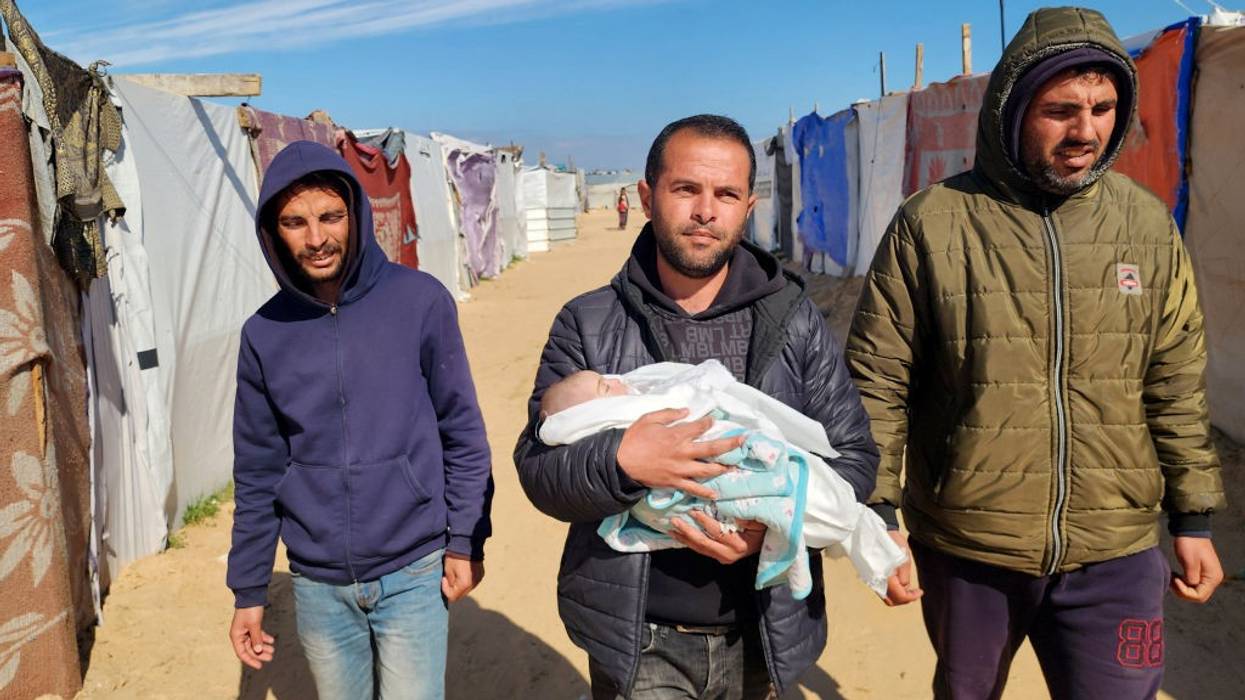
"Newborns should not be dying of hypothermia in Gaza," said one campaigner. "This is not a tragedy of nature but a man-made crisis."
Local medical professionals said Tuesday that at least half a dozen babies have died this week in Gaza amid winter weather and Israel's ongoing blockade of the obliterated Palestinian enclave, where hundreds of thousands of people are living in tent encampments and other unheated makeshift structures.
Dr. Saeed Salah, the medical director at Patients' Friends Benevolent Society Hospital in Gaza City, told reporters that three infants died on Monday and three more on Tuesday from complications due to exposure to the cold.
"In the past two weeks, we admitted eight newborns suffering from severe cold injuries," Salah said. "Three of them died within hours of arrival. They were only a day or two old, weighing between 1.7 and 2 kilograms (3.7-4.4 lbs.)."
"All of these children arrived with low temperatures, shortness of breath, and cold extremities that reached the point of freezing," Salah told The Washington Post by phone Tuesday. "These children live with their families in tents and destroyed homes and suffer from a lack of supplies that help provide them with the necessary warmth, especially with the Israeli intransigence in bringing in the necessary fuel."
Gaza experiences cold, wet, and windy winters, with temperatures often dipping well below 50°F (10°C) at night. Hypothermia can be deadly at temperatures over 60°F (15°C) in overexposed conditions such as those existing in Gaza, where the overwhelming majority of the strip's 2.3 million residents have been forcibly displaced, most homes have been destroyed or damaged, and bodies have been weakened from more than 500 days of an Israeli siege for which the country is facing genocide charges at the International Court of Justice.
The sixth reported infant death of the week was of 2-month-old Sham Yousef al-Shanbari, who died in her family's tent in the Mawasi area of Khan Younis in southern Gaza.
"Her body turned into a piece of ice... and her heartbeat stopped," uncle-in-law Obaida al-Shanbari told the Post by phone Tuesday.
Yusuf al-Shanbari, Sham's father, told The Associated Press: "Yesterday, I was playing with her. I was happy with her. She was a beautiful child, like the moon."
(Warning: The following video contains images of death.)
Dr. Ahmed al-Farah, the head of the pediatric department at Nasser Hospital in Khan Younis, told the AP that al-Shanbari did not have any illness but died from exposure because she lived in a tent. Al-Farah also said the hospital has treated two other infants for frostbite.
At least three Palestinian infants died from exposure to cold conditions earlier this winter, when Israeli forces were still carrying out their assault on Gaza that left more than 170,000 people dead, wounded, or missing.
Hamas, whose political wing rules the Gaza Strip, has accused Israel of violating the terms of a fragile monthlong cease-fire, not only by killing and wounding Palestinian civilians and postponing a scheduled prisoner release, but also by delaying the delivery of mobile homes, tents, and other lifesaving humanitarian aid. Israeli officials deny the allegations.
"If adequate aid, including shelter supplies, were allowed to reach civilians and hospitals, these deaths would be entirely preventable."
"Newborns should not be dying of hypothermia in Gaza. This is not a tragedy of nature but a man-made crisis," Fikr Shalltoot, Gaza director for the London-based charity Medical Aid for Palestinians, told the Post.
"If adequate aid, including shelter supplies, were allowed to reach civilians and hospitals, these deaths would be entirely preventable," Shalltoot added. "This suffering is the direct result of Israel's restrictions on essential humanitarian aid."
Edward Ahmed Mitchell, deputy executive director at the Washington, D.C.-based Council on American-Islamic Relations, said in a statement Tuesday: "The Israeli government's genocidal campaign in Gaza has left most of its population homeless. To block the entry of temporary housing so that returning Palestinians, including infants, die of exposure is entirely unconscionable."
"The Trump administration and the international community must take immediate action to force the Israeli government to allow desperately needed housing supplies to enter Gaza," Mitchell added.
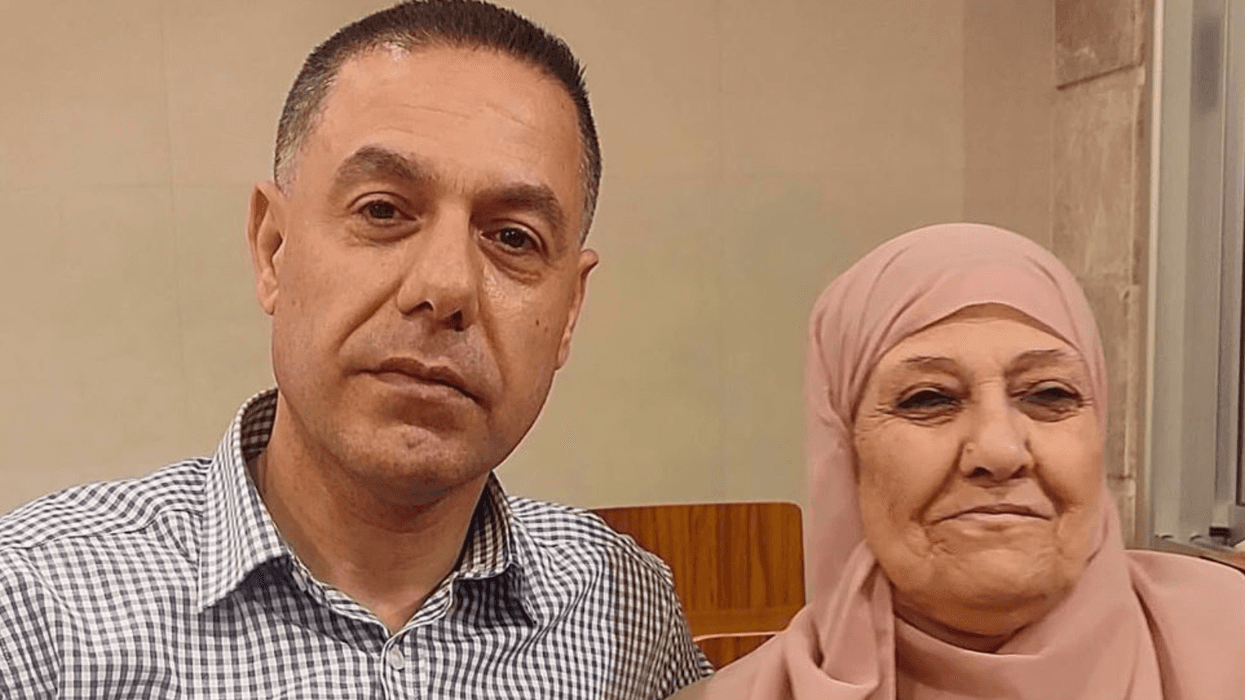
An Israeli court has ordered Kamal Adwan Hospital director Dr. Hussam Abu Safiya—whose distressed mother reportedly died earlier this week—to be held without charge until February 13.
The largest professional association of U.S. pediatricians is asking the State Department to intervene on behalf of a Gaza hospital director detained by Israel, where a court on Thursday ordered an extension of his imprisonment until mid-February.
The Gaza-based Al Mezan Center for Human Rights said Friday that the Ashkelon Magistrates' Court extended the detention of Dr. Hussam Abu Safiya, a 51-year-old pediatrician who is the director of Kamal Adwan Hospital in Beit Lahia, without charges until February 13, and without access to legal counsel until January 22.
Israeli troops forcibly detained Abu Safiya on December 28 amid a prolonged siege and assault on Kamal Adwan Hospital, from which he refused to evacuate as long as patients were there. Former detainees recently released from the Sde Teiman torture prison in southern Israel said they met Abu Safiya there. According to testimonies gathered by the Geneva-based Euro-Mediterranean Human Rights Monitor, Abu Safiya was tortured before his arrival at Sde Teiman and inside the notorious lockup.
Al Mezan said that Abu Safiya's attorney believes he is now being jailed at Ofer Prison in the illegally occupied West Bank.
Palestinian media reported earlier this week that Abu Safiya's mother died of a heart attack. MedGlobal, the Ilinois-based nonprofit for which Abu Safiya works as lead Gaza physician, said she died from "severe sadness" over her son's plight.
Dr. Sue Kressley, president of the 67,000-member American Academy of Pediatrics (AAP), sent a letter Thursday to Secretary of State Antony Blinken to "seek the assistance of the U.S. government to inquire about the whereabouts and well-being" of Abu Safiya, and to voice concern "for the children who are now without access to pediatric emergency care in northern Gaza," where 15 months of relentless Israeli attacks and siege have obliterated the healthcare system.
As Common Dreams has reported, children in northern Gaza are being killed not only by Israeli bombs and bullets, but also by exposure to cold weather after Israeli troops forcibly expelled their families from homes and other places of shelter while "cleansing" the area.
Kressley's letter asks Blinken to explain what the Biden administration is doing to determine Abu Safiya's whereabouts and why he is being held, what condition he is in, a status report on northern Gaza's hospitals and their capacity for care, and what the U.S. is doing to "improve access to pediatric care in Gaza."
On Friday, the Council on American Islamic-Relations (CAIR) welcomed the AAP letter in a statement asserting that "Secretary Blinken could pick up the phone and demand" that Israeli Prime Minister Benjamin Netanyahu—who is wanted by the International Criminal Court for alleged crimes against humanity and war crimes in Gaza—"release Dr. Abu Safiya and all those illegally detained and facing torture and abuse at the hands of Israeli forces."
"The Biden administration's silence on the kidnapping of Dr. Abu Safiya, and on the torture and mistreatment of Palestinian detainees by Israeli forces, sends the message that Palestinian, Arab, and Muslim lives and dignity are of no consequence to U.S. officials," CAIR added.
In the United Kingdom, the charity Medical Aid for Palestinians (MAP) on Thursday demanded that the U.K. government "take urgent action to protect healthcare workers and patients and ensure the immediate release of all arbitrarily detained medical staff."
"The Israeli military has escalated their systematic targeting of Palestinian healthcare workers, with hundreds currently arbitrarily detained under inhuman conditions," MAP said. "These detentions are part of Israel's systematic dismantling of Gaza's health system, which is making Palestinian survival impossible."
MAP Gaza director Fikr Shalltoot said in a statement: "We at MAP are extremely concerned for the life and safety of Dr. Hussam Abu Safiya and all Palestinian healthcare workers detained by Israeli forces. These detentions, alongside systematic assaults on hospitals in North Gaza, have left tens of thousands of people without access to healthcare and forced them to flee southwards."
"Dr. Abu Safiya spent weeks and months sending distress calls about Israeli military attacks on Kamal Adwan Hospital, and the dangers posed to his colleagues and patients," Shalltoot added. "His warnings were met with deafening silence from the international community. It is long overdue for the U.K. and other nations to act decisively to protect Palestinians from ethnic cleansing, ensure the safety of healthcare workers, and hold Israel accountable."
Back in the U.S.—where healthcare professionals staged a nationwide "SickFromGenocide" protest earlier this week—members of medical advocacy groups including Doctors Against Genocide, Jewish Voice for Peace-Health Advisory Council, and Healthcare Workers for Palestine-Chicago who recently returned from volunteering in Gaza held a press conference Friday in Chicago demanding the release of Abu Safiya and the "protection of hospitals and healthcare workers" in the embattled enclave.
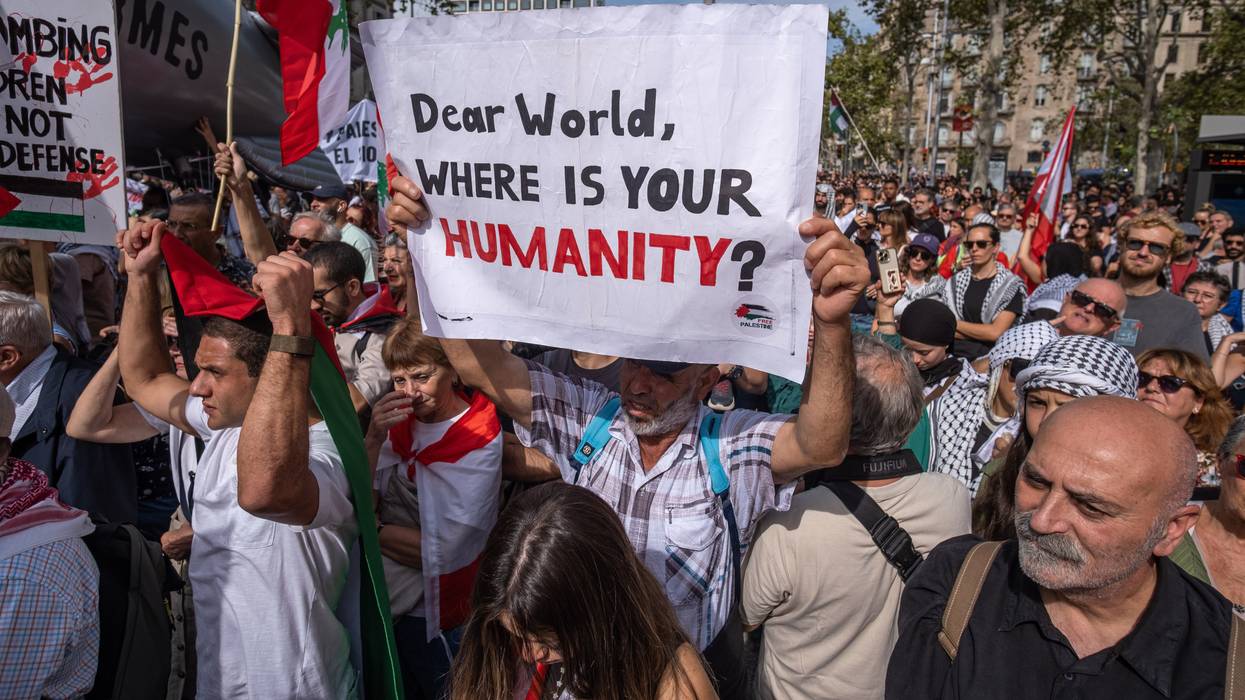
"The Israeli government is waging a campaign of death and destruction that has brought the Middle East to a state of war, with millions currently fleeing U.S.-made bombs," said Jewish Voice for Peace.
Tens of thousands of people around the world took to the streets Sunday just ahead of the one-year anniversary of Israel's catastrophic assault on the Gaza Strip, which has killed more than 41,000 people, decimated the enclave's civilian infrastructure, and sparked one of the worst humanitarian crises in modern history.
The assault, backed by the United States and other world powers, began in the wake of a Hamas-led attack on October 7, 2023 that killed roughly 1,200 people. Hundreds of others were taken hostage, dozens of whom are still being held captive in Gaza.
The Israeli military's subsequent onslaught has spared no one: Children, nurses and doctors, humanitarian aid workers, journalists, and Israeli hostages have been killed in the bombing campaign and ground war, which appears set to continue indefinitely as Israeli Prime Minister Benjamin Netanyahu sabotages cease-fire efforts.
Netanyahu, along with Hamas leaders, is facing a possible arrest warrant from the International Criminal Court.
Jewish Voice for Peace (JVP), an advocate group that campaigns for Palestinian rights, held demonstrations in U.S. 26 cities on Sunday to "mourn a year of death and destruction" and call on their government to "stop arming the Israeli military" as it continues to bombard Gaza and ramps up its attacks on Lebanon.
As the demonstrations took place, Israel's military killed dozens of Gazans in an attack on a mosque and school in central Gaza. A fragment of an American-made bomb kit was found at the scene.
"After a year of genocide against Palestinians, the Israeli government is waging a campaign of death and destruction that has brought the Middle East to a state of war, with millions currently fleeing U.S.-made bombs," JVP said in a statement. "From Portland to Knoxville, from Detroit to Los Angeles, from Tacoma to Milwaukee, to Boston to Atlanta, and so many more cities across the country, Jewish Voice for Peace members gathered in prayer and song to demand an immediate weapons embargo."
Thousands of people are taking to Storrow Drive in Boston demanding the US end the genocide and stop arming Israel!
One year of genocide and one year of mass mobilizations to oppose Zionism! pic.twitter.com/yzIRTG8byd
— Jewish Voice for Peace - Boston (@JVPBoston) October 6, 2024
Demonstrations also took place in Italy, Spain, France, the United Kingdom, Indonesia, South Africa, the Philippines, and other nations, with protesters calling for an immediate arms embargo and cease-fire.
"We need a cease-fire now, a suspension of arms transfers to Israel, and unobstructed delivery of humanitarian aid," said Rohan Talbot, director of advocacy and campaigns at the U.K.-based group Medical Aid for Palestinians (MAP). "We need all of this to stop a potential genocide and protect Palestinian survival in Gaza and, increasingly, across the region."
MAP's Gaza director, Fikr Shalltoot, added that "we have run out of words to describe the horrors our teams are witnessing and experiencing in Gaza."
"Frequent mass killings of civilians, the use of starvation as a weapon of war, and the systematic destruction of healthcare are an existential threat to people," said Shalltoot. "Gaza is being erased in front of our eyes."
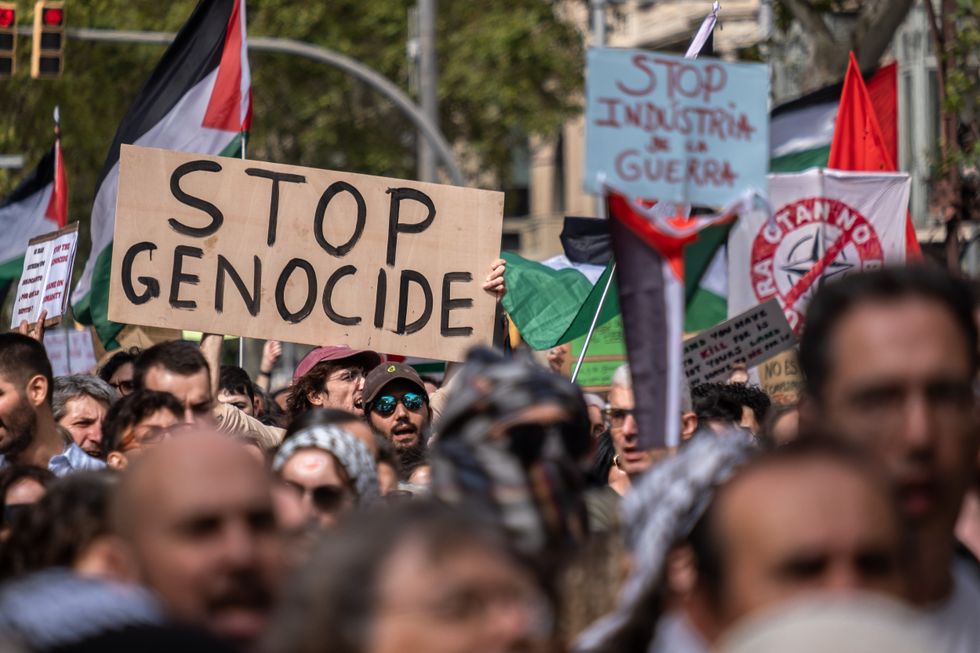 Demonstrators rally in Barcelona to demand an end to Israel's assault on Gaza. (Photo: Paco Freire/SOPA Images/LightRocket via Getty Images)
Palestinian officials said Sunday that around 50 people had been killed by Israeli forces in the preceding 48 hours in attacks on schools, homes, and shelters for displaced people.
Reuters reported that the Israeli army on Saturday "issued new evacuation orders in parts of Nuseirat camp in the central Gaza Strip, just north of Deir al-Balah, forcing hundreds of families to leave their houses." Additionally, "Israeli tanks pushed into the northern Gaza areas of Beit Lahiya and Jabalia overnight, and planes hit several houses, killing at least 20 people, according to medics."
The new operation in northern Gaza came amid reports that top Israeli officials are weighing what one outlet described as "a plan to liquidate northern Gaza," which is facing famine conditions caused by Israel's war and siege.
In a statement marking the one-year anniversary of the Hamas-led October 7 attacks and the start of Israel's latest military assault on Gaza, United Nations Secretary-General António Guterres said Monday that "the war that has followed the terrible attacks of one year ago continues to shatter lives and inflict profound human suffering for Palestinians in Gaza, and now the people of Lebanon."
"It is time for the release of the hostages," said Guterres, who last week was declared persona non grata by Israel's foreign minister. "Time to silence the guns. Time to stop the suffering that has engulfed the region. Time for peace, international law, and justice."
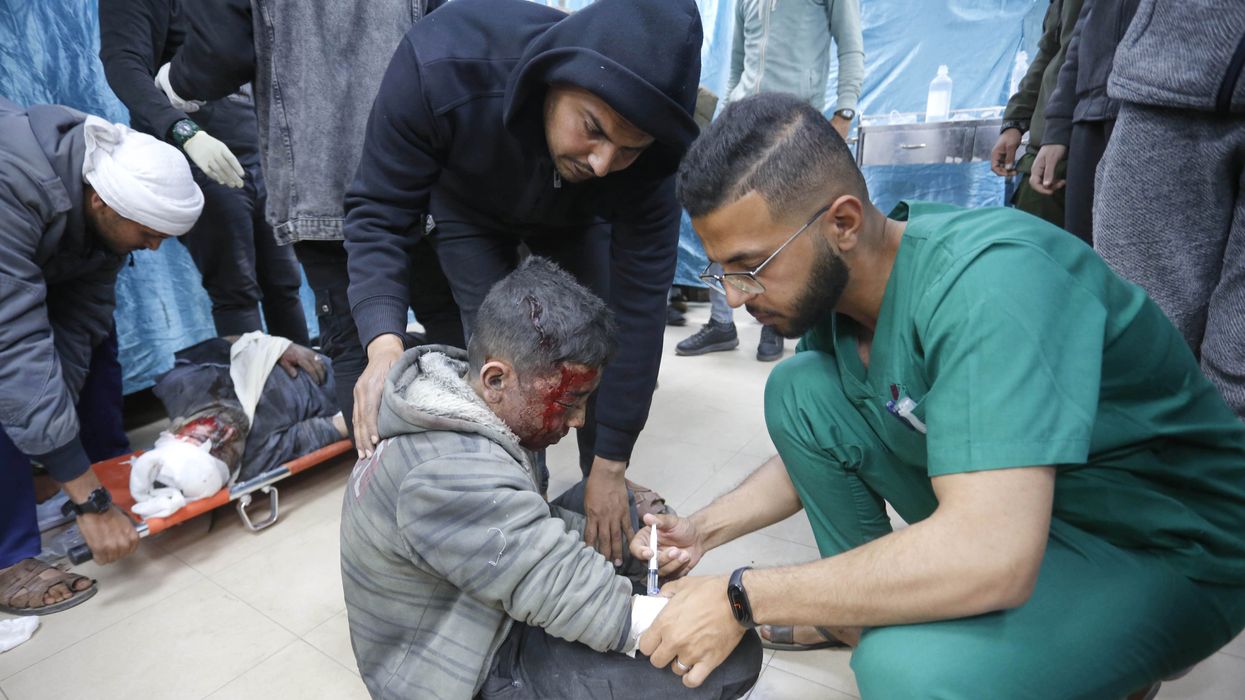
"We're doing everything we can, navigating through critical shortages and working with very limited resources, to save lives amidst this dire situation."
Members of an emergency medical team that has treated patients at a hospital in southern Gaza in recent weeks said Monday that the horrors they've witnessed there are "unimaginable," from worsening malnutrition to deadly infections stemming from lack of healthcare equipment.
The team formed by Medical Aid for Palestinians (MAP), the International Rescue Committee (IRC), and the Palestine Children's Relief Fund (PCRF) has been working at the European Hospital near Khan Younis, a city decimated by Israeli bombing. At least two hospitals in the city are currently under siege by Israeli forces, which have killed more than 32,000 Gazans and injured tens of thousands more in less than six months.
"The situation we're facing is beyond comprehension," said Arvind Das, IRC's Gaza team lead. "Continuous Israeli military operations near hospitals are making an already tense situation even worse for those seeking shelter or medical help, pushing the healthcare system to the brink of collapse."
"Despite the relentless efforts of our medical teams, the infrastructure necessary to deliver optimal medical care has been severely compromised by bombing, stringent restrictions on the entry of aid including medical supplies, and the overwhelming surge in needs," Das added. "We're doing everything we can, navigating through critical shortages and working with very limited resources, to save lives amidst this dire situation."
Not a single hospital in the Gaza Strip is fully functional after months of Israeli attacks, and the dozen that are partially operating are well beyond capacity, with patients and displaced people filling the hallways and outskirts of the facilities. The United Nations' special rapporteur on the right to health has accused Israel's military of waging an "unrelenting war" on Gaza's medical system.
Dr. Konstantina Ilia Karydi, an anesthetist with the emergency medical team, said Monday that the European Hospital "had an original capacity of just 200 beds, and at the moment it has expanded to 1,000 beds."
"There are around 22,000 people that have been displaced from other parts of Gaza sheltering in the corridors and in tents inside the hospital, because people feel that it's safer to be here than anywhere else," said Karydi.
"We worked around the challenges we faced and managed in a different way, but the staff here are overwhelmed."
MAP said in a statement that the medical team's surgeons "completed successful complex vascular and orthopedic surgeries on patients" at the hospital, but some "later died due to infections in the hospitals and the inability to provide post-operative care."
"This is due to the intense security situation that forced healthcare workers to evacuate hospitals and hindered their access," said MAP. "Moreover, significant damage to hospital infrastructure and facilities, coupled with a complete shortage of equipment and medicine—largely due to Israel's restrictions on medical aid entry into Gaza—severely impacted the ability to provide necessary care."
Dr. Husam Basheer, an orthopedic surgeon with the emergency medical team, stressed that healthcare workers in the territory are "managing with the bare minimum of resources," lacking even basic supplies such as gauze.
"We worked around the challenges we faced and managed in a different way," said Basheer, "but the staff here are overwhelmed."
The medical team's report added to the abundance of harrowing accounts from healthcare personnel on the devastating conditions inside Gaza's hospitals, many of which have been shelled and raided—in some cases repeatedly—by Israeli forces.
Al Jazeera reported Monday that the Israeli military has "surrounded the al-Amal and Nasser hospitals in southern Gaza, while pressing on with their siege of Gaza City's al-Shifa Hospital, the largest medical complex in the strip."
"Military vehicles, tanks, and attack drones are encircling these two facilities," Al Jazeera's Hani Mahmoud reported. "They're also blocking the entrance with piles of sand, preventing medical staff, patients, and injured people inside from leaving safely and constantly failing to provide a safe corridor for people and evacuees trapped inside the hospital."
Tedros Adhanom Ghebreyesus, director-general of the World Health Organization, responded with alarm Monday to reports that Israeli forces killed a Palestinian Red Crescent Society volunteer and a displaced person sheltering at al-Amal Hospital in Khan Younis.
"Another reported attack on al-Amal hospital in Gaza, another situation where patients and health workers are in great jeopardy," Tedros wrote on social media. "We appeal for their immediate protection, and repeat our call for a cease-fire."
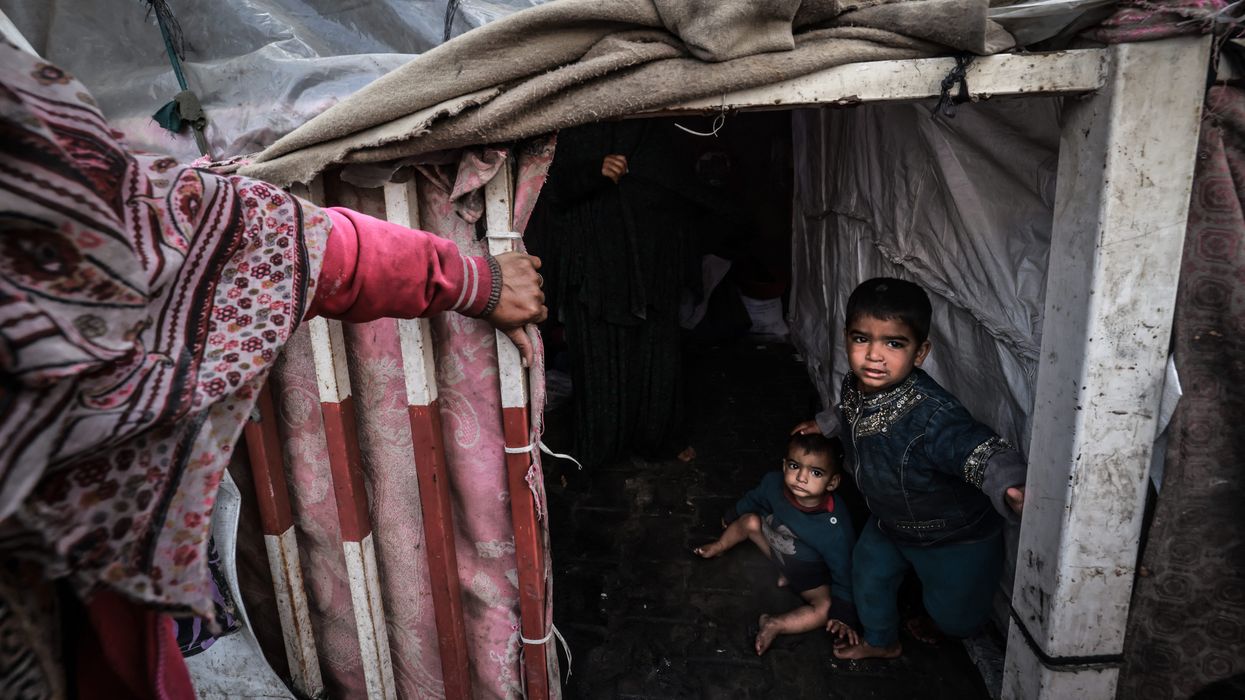
"There is nothing humanitarian about Israel's proposal to push civilians into 'humanitarian islands' in Gaza."
Aid groups reacted with alarm Thursday to the Israeli military's stated plan to transfer much of the population of Rafah—a small city in southern Gaza that's currently packed with more than 1.5 million people—to so-called "humanitarian islands" in the central part of the enclave.
William Bell, the head of Middle East policy and advocacy at Christian Aid, called the proposal "a preposterous idea" that the international community must reject in favor of an immediate, permanent cease-fire and a massive surge of humanitarian assistance.
"The half-baked plan to force more than a million displaced civilians out of Rafah into so-called 'humanitarian islands' further north beggars belief," said Bell. "And the suggestion that they will be safe simply cannot be given credence."
"How long will it take to build and equip these islands? And how much longer to get people to them?" Bell asked. "With Gaza on the brink of famine, children dying of malnutrition, and desperate families reportedly eating grass to survive, men, women, and children need lifesaving aid now."
"The past five months have taught us that places labeled 'safe zones' in Gaza quickly become death zones."
During a news briefing on Wednesday, Israel Defense Forces (IDF) spokesperson Daniel Hagari said the planned humanitarian zones would be created in concert "with the international community," but he did not provide specifics or a timeline.
Ahead of a planned ground invasion of Rafah, Hagari said the IDF intends to direct a "significant" portion of the city's population—most of which is living in makeshift tents—to designated areas in central Gaza, where he claimed they would be provided with temporary housing, food, and other necessities that Israel has systematically restricted.
Given that Rafah was once considered a relatively safe area for Palestinians displaced by Israel's assault and is currently under IDF bombardment, aid campaigners expressed deep skepticism that the plan outlined by Hagari is in any way viable or humane.
"There is nothing humanitarian about Israel's proposal to push civilians into 'humanitarian islands' in Gaza," said Melanie Ward, CEO of Medical Aid for Palestinians. "They are dangerous and must be stopped. The past five months have taught us that places labeled 'safe zones' in Gaza quickly become death zones."
An investigation published Wednesday by the London-based research firm Forensic Architecture shows how the Israeli military has used supposed humanitarian measures to advance its assault on Gaza's civilian population.
The investigation details the IDF's repeated bombardment of so-called "safe zones" to which it has instructed desperate Gazans to flee and makes the case that Israel's evacuation orders have functioned "as a tool of mass displacement, pushing civilians into unlivable areas that later come under attack."
NEW INVESTIGATION: Since 7 Oct 23, the Israeli army has weaponised humanitarian measures such as ‘evacuation orders’, ‘safe routes’ & ‘safe zones’ to support their military operations & facilitate the mass displacement of Palestinians.
View the platform: https://t.co/sOL45vXBcM pic.twitter.com/wr4SAtrIVj
— Forensic Architecture (@ForensicArchi) March 13, 2024
"Military evacuation of civilian populations is only legal under select, rare circumstances, and requires that displaced civilians be temporarily relocated to areas safe from conflict and with access to fundamental provisions for their safety and survival," the Forensic Architecture analysis said. "Where Israel's evacuation orders might individually be framed as humanitarian in nature, in fact when closely analyzed and considered over time, they reveal patterns of systematic mass displacement, with Palestinians deliberately and repeatedly being expelled from one unsafe and under-resourced location to another."
"A ground invasion in Rafah," the research firm argued, "would exacerbate the already dire humanitarian situation for the 1.5 million displaced Palestinians taking refuge there."
In an interview this past weekend, U.S. President Joe Biden said that an IDF incursion into Rafah would cross a "red line"—a remark that the White House has since tried to walk back after Israeli Prime Minister Benjamin Netanyahu vowed the planned assault would go ahead.
Asked about Israel's "humanitarian islands" proposal on Thursday, White House National Security Council spokesperson John Kirby said, "We can't confirm that that is in fact a plan that they have."
"Our position has not changed," Kirby said of a potential Rafah invasion. "We do not want to see large-scale operations in Rafah... unless there is [a] legitimate, executable plan to provide for the safety and security of the civilians that are there."
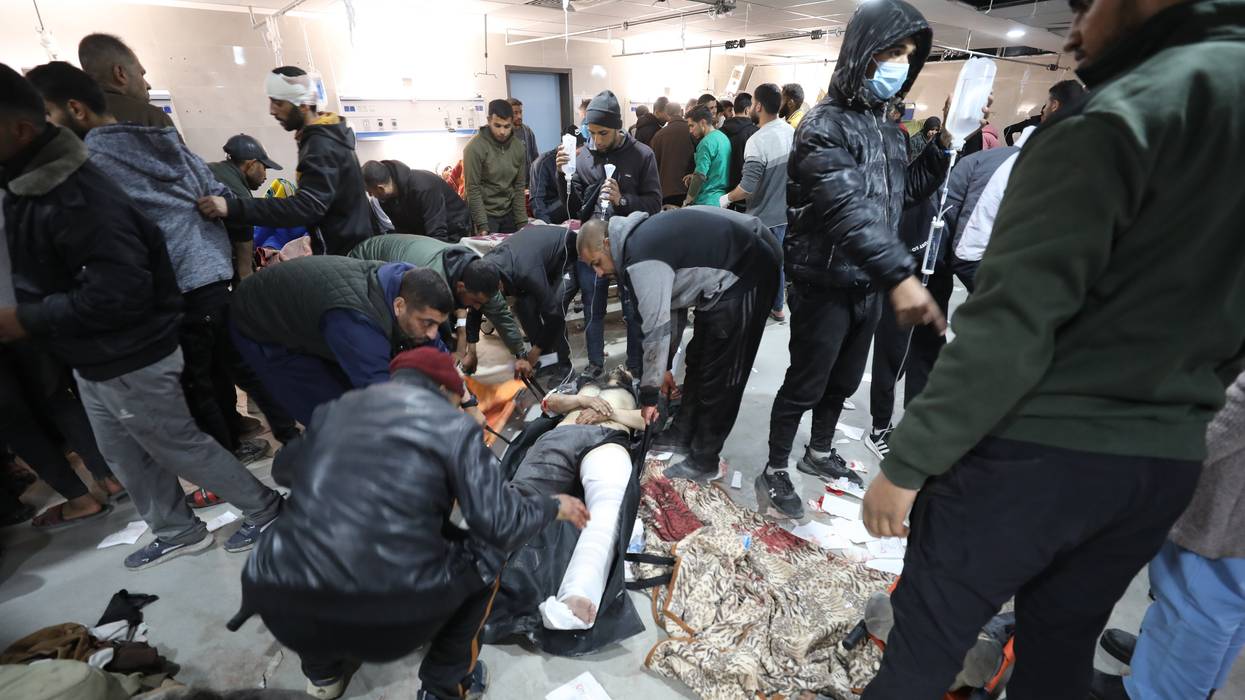
"Israel deliberately targeting civilians after starving them is a gross violation of international humanitarian laws and our humanity," said Oxfam. "The risk of genocide is real."
Israeli forces on Thursday opened fire on a crowd of desperate and starving Gazans waiting for food aid in the enclave's north, which Israel's military has cut off from humanitarian assistance almost entirely for months.
The attack reportedly killed more than 100 Palestinians and wounded over 700, further straining Gaza City hospitals that are barely functioning after Israel's monthlong bombing campaign and blockade, which has restricted the flow of fuel, medicine, and other necessities.
The massacre helped push the death toll from Israel's nearly five-month war on Gaza above 30,000, according to Gaza's health ministry.
"We are devastated by the 30,000 killed—and this is not just a number," Melanie Ward, CEO of Medical Aid for Palestinians, said in a
statement. "Every single life taken was a person with dreams and hopes for the future, left loved ones behind with no time to mourn their death. One in every 23 people has been killed or injured in Gaza. Everyone has been tragically affected in so many ways, including our own dear staff; their lives will never be the same again."
One eyewitness who was wounded by Israeli fire in Gaza City on Thursday told The Associated Press that he and others went to Gaza City's al-Rashid Street after hearing there would be a food delivery. The man, identified as Kamel Abu Nahel, told the outlet that "we've been eating animal feed for two months."
"He said Israeli troops opened fire on the crowd, causing it to scatter, with some people hiding under cars," AP reported. "After the shooting stopped, they went back to the trucks, and the soldiers opened fire again. He was shot in the leg and fell over, and then a truck ran over his leg as it sped off, he said."
Medics who arrived on the scene described terrible carnage, with hundreds of people lying on the ground dead or wounded. Donkey carts were used to carry some of the wounded off to hospitals, as there weren't enough ambulances available.
A spokesperson for the Israel Defense Forces (IDF) told Reuters in response to reports of the Gaza City massacre that "there is no knowledge of Israeli shelling in the area." One unnamed Israeli source told the news agency that IDF soldiers shot at "several people" in the crowd who allegedly "posed a threat."
The IDF also claimed in a statement that "dozens were killed and injured from pushing, trampling, and being run over by the trucks."
B'tselem, an Israeli human rights group, said in response that "whether they were shot or trampled to death, intentionally opening fire at civilians is a severe violation of international law and constitutes a war crime. This is especially grave given a crowd of thousands begging for aid.
“They mixed the aid with our blood”.
Wounded Palestinians who arrived at the Kamal Adwan Hospital in Beit Lahia reported that Israeli forces targeted them while they were waiting for food aid deliveries early this morning near al-Rashid Street, south of Gaza City pic.twitter.com/KKrVeJJ9la
— Middle East Eye (@MiddleEastEye) February 29, 2024
The humanitarian group Oxfam International
said it was "appalled" by Israeli attacks on people waiting for aid, which has become almost impossible to deliver across much of the Gaza Strip amid relentless Israeli bombing and targeting of aid workers.
"Israel deliberately targeting civilians after starving them is a gross violation of international humanitarian laws and our humanity," Oxfam added. "The risk of genocide is real."
Malnutrition and infectious diseases are spreading rapidly across Gaza as Israel continues to impede aid shipments, blatantly violating the International Court of Justice's binding interim order. Save the Children said last week that families across Gaza have been forced to "forage for scraps of food left by rats and eating leaves out of desperation to survive."
"All 1.1 million children in Gaza are now facing death by starvation and disease as aid delivery is impossible to carry out safely," said the humanitarian group.
Volker Türk, the United Nations high commissioner for human rights, said in a speech Thursday that "there appear to be no bounds to—no words to capture—the horrors that are unfolding before our eyes in Gaza."
"Since early October, over 100,000 people have been killed or wounded. Let me repeat that: about one in every 20 children, women, and men, are now dead or wounded," said Türk. "At least 17,000 children are orphaned or separated from their families, while many more will carry the scars of physical and emotional trauma life-long."
"This is carnage," he added.
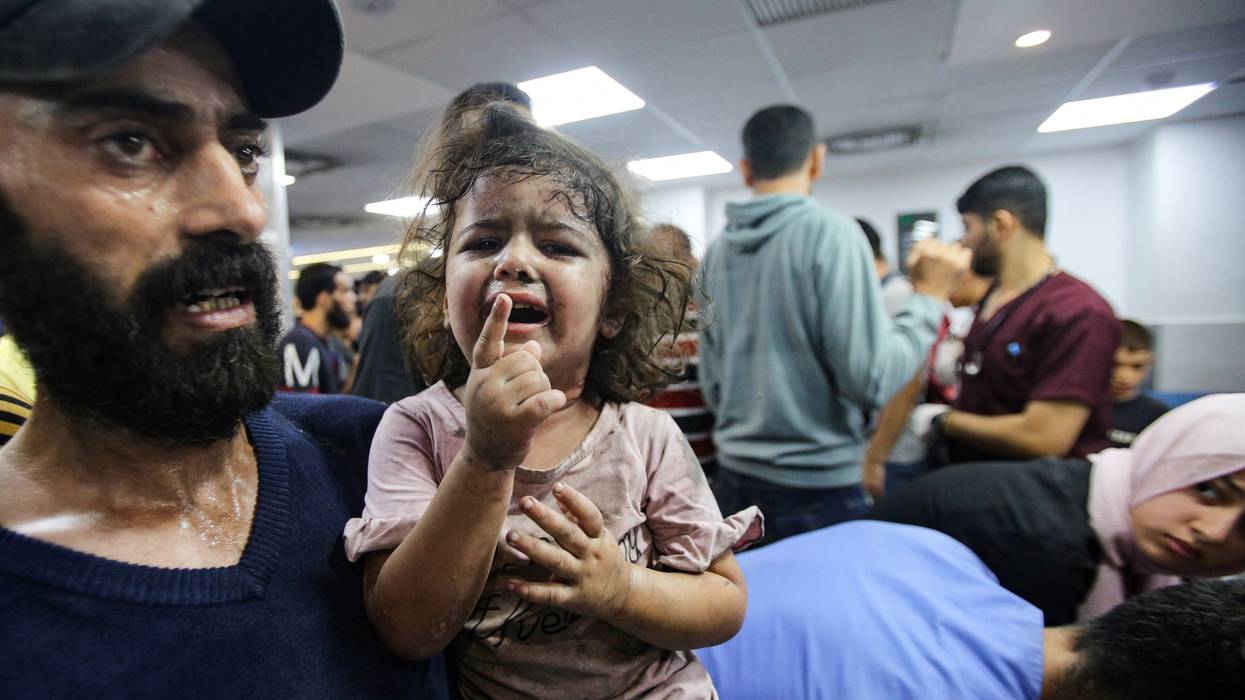
"When are you going to stop this?" Dr. Mads Gilbert asked U.S. President Joe Biden and the leaders of European nations.
A Norwegian physician who has volunteered in Gaza for decades said Friday that Western leaders, including U.S. President Joe Biden, are complicit in Israel's intensifying assault on the Palestinian enclave's hospitals, which are overwhelmed with airstrike victims and displaced people seeking refuge.
In a video message posted to social media as Israeli forces bombarded al-Shifa—Gaza's largest hospital—and other medical facilities, Dr. Mads Gilbert asked, "Can you hear the screams from innocent people, refugees sheltering, trying to find a safe place, being bombed by the Israeli attack forces this morning inside the hospital, hospitals that are the temples of humanity and protection?"
"When are you going to stop this?" Gilbert added, with audio of screams from Gaza's al-Shifa hospital playing in the background. "You're all complicit."
Gilbert's plea for immediate action from world leaders who are supporting and arming Israel's military came as Israeli forces surrounded al-Shifa and other hospitals in northern Gaza, claiming that Hamas is using the facilities as command centers—an assertion that hospital directors have denied.
Targeting hospitals is a war crime under international law.
Israeli airstrikes and sniper fire on Gaza hospitals have forced thousands of people who were sheltering at the facilities to flee, but many others "remain trapped inside," the U.K.-based humanitarian group Medical Aid for Palestinians (MAP) said Saturday.
The charity said it has heard "chilling testimony from inside Gaza's largest hospital, al-Shifa," including reports that "the intensive care unit has been bombed and damaged."
"Staff moving between buildings have been shot at and critically wounded," said MAP, which is calling for a cease-fire. "Those who have tried to flee have come under fire, and lie dead or wounded in the street as rescue is impossible. With the mortuary shut down, a hundred bodies are piled up and cannot be buried."
"Power has gone out, and staff are having to hand ventilate critically ill patients to keep them alive," the group continued. "At least one patient in intensive care has already died. Babies in the neonatal intensive care unit which MAP has supported over many years are beginning to die from lack of oxygen. More will die soon unless the power supply is restored. Day after day, week after week, we have been warning of catastrophic consequences if world leaders fail to protect healthcare in Gaza. Our worst fears are coming true."
Doctors Without Borders, which has been providing emergency assistance in the Gaza Strip, offered a similarly harrowing account.
"We are currently unable to contact any of our staff inside al-Shifa, and we are extremely concerned about the safety of patients and the medical staff," the group said late Friday. "Patients are still in the hospital, some in critical condition and unable to move."
Mohammed Obeid, a Doctors Without Borders physician at al-Shifa, said that "there is a patient who needs surgery. There is a patient who's already asleep in our department. We cannot evacuate ourselves and [leave] these people inside. As a doctor, I swear to help the people who need help."
Early Saturday, the group wrote on social media that its staff "are witnessing people being shot at as they attempt to flee the al-Shifa hospital."