

SUBSCRIBE TO OUR FREE NEWSLETTER
Daily news & progressive opinion—funded by the people, not the corporations—delivered straight to your inbox.
5
#000000
#FFFFFF
To donate by check, phone, or other method, see our More Ways to Give page.
Daily news & progressive opinion—funded by the people, not the corporations—delivered straight to your inbox.

"Protecting civilian water infrastructure and resources and developing water-governance structures that are just and equitable are necessary for both peacebuilding and peacekeeping," said one water researcher.
A global think tank said Wednesday that it has been alarmed by recent updates to its records on water-related conflicts, which now show a significant spike in violence breaking out over water access in 2022, following a steady increase over the past two decades.
The Pacific Institute, which regularly updates its Water Conflict Chronology, reported that at least 228 water conflicts were recorded in 2022—an 87% increase over 2021—driven in large part by Russia's invasion of Ukraine.
Russian forces attacked water pipelines and supply systems in a number of Ukrainian cities after invading in February 2022, targeting water resources a total of 56 times since the war began.
Dozens of civil society groups called the destruction of the Kakhova hydropowered dam in Kherson "an act of ecocide" after the attack inundated at least 50 towns, cut off water to 500,000 hectares of farmland, and killed more than 50 people. Russia and Ukraine have blamed each other for the dam's collapse.
"The extensive attacks on dams and water delivery systems in Ukraine have contributed to the recent dramatic increase in water-related violence," said Peter Gleick, co-founder and senior fellow of the Pacific Institute.
But aside from violence geopolitical conflicts, Gleick said, "violence associated with water scarcity" is being "worsened by drought, climate disruptions, growing populations, and competition for water."
The group's chronology found that despite the high-profile attacks on water resources in Ukraine, incidents are "disproportionately concentrated in the Middle East, southern Asia, and Africa," particularly as intense competition and rising demand for water supplies are exacerbated by planetary heating.
Currently, Israel's total blockade and bombardment of Gaza has left the enclave's 2.3 million residents facing severe water shortages. Israel's decision to cut off fuel and electricity access has caused water desalination plants to cease operations, fueling a rise in infectious diseases and fears that even more severe water-borne illnesses, like cholera, will soon take hold.
Before Israel's most recent escalation in the occupied Palestinian territories, the country's military demolished numerous water wells and supply lines last year in the West Bank. Settlers also flooded Palestinian lands with wastewater and sabotaged wells.
In sub-Saharan African countries including Burkina Faso, Mali, Ethiopia, Nigeria, Somalia, and Kenya, violence has escalated in recent years between ranchers, farmers, and herdsmen as competition for water and land resources intensifies.
One-third of the world's droughts occur in the region, and in 2022 Ethiopia, Kenya, and Somalia were especially hard-hit by the Horn of Africa's worst drought in four decades. At least four people in Somalia were killed last year in disputes over water resources, and in Kenya, at least 10 people were killed in fighting over watering points and pasture lands.
"We're seeing the effects of years of poor water resources management—due to politics, lack of financial resources, debt, corruption, conflict, or other priorities—together with the effects of climate change, and this is leading to more intense competition over water resources," said Liz Saccoccia, a water security associate at the World Resources Institute, told The Guardian.
The report comes days after the United Nations Children's Fund (UNICEF) released a report titled The Climate Changed Child, detailing how 1 in 3 children—739 million—face water scarcity, with countries including Yemen, Burkina Faso, a Namibia among the most affected.
With wealthy countries like the United States and the United Kingdom showing no sign of halting their support for the extraction of planet-heating fossil fuels, 35 million more children—particularly in the Middle East, North Africa, and South Asia—are expected to be exposed to "high or very high levels of water stress" by 2050.
In an opinion piece at The Guardian, Gleick noted that "although there is plenty of water on Earth, it is unevenly distributed in space and time, with humid and arid regions as well as wet and dry seasons."
The United Nations prohibits the use of water as a weapon of war, and recognizes access to water as a human right—but to ensure that right is afforded to all, said Gleick, "the international community and local governments must act."
"Technologies and policies that improve water-use efficiency, cut waste, and expand water recycling and reuse can enable us to grow more food and strengthen our economies while using less water and reducing environmental degradation," he wrote. "It must be unequivocally stated that attacking civilian water systems and using water as a weapon are war crimes. Politicians and military leaders should be constantly reminded of these laws, and violations should be prosecuted."
The Pacific Institute said that 2023 is set to be another record-breaking year for attacks on water resources, following 2022's unprecedented spike.
"Protecting civilian water infrastructure and resources and developing water-governance structures that are just and equitable are necessary for both peacebuilding and peacekeeping," said Morgan Shimabuku, senior researcher at the Pacific Institute. "Water can be part of the solution, and in many places, it is a critical part."
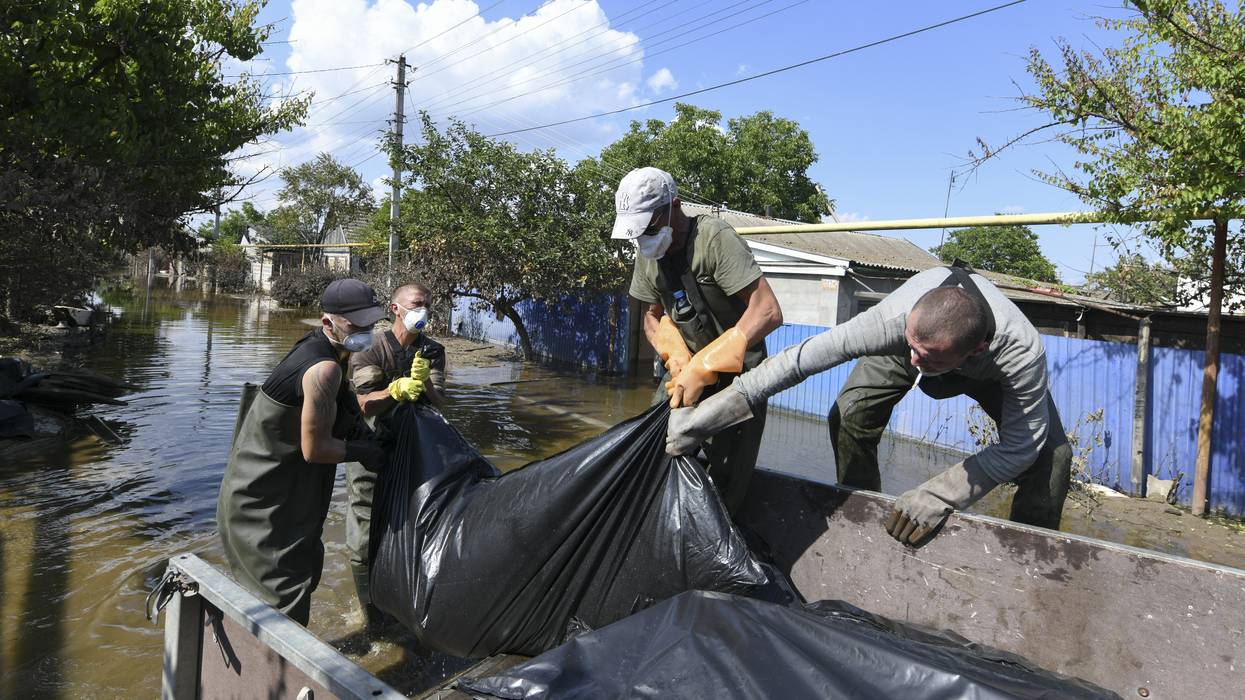
"The destruction of the dam represents the most serious single blow to the environment during the war," said one advocate.
"Dams must not be used as a weapon of war."
That's one of the key messages shared Tuesday in an open letter condemning "the weaponization of the Kakhovka hydropower dam, whose destruction has precipitated the manmade disaster unfolding in Ukraine, the impacts of which will be experienced by the environment and people for generations to come."
Signed by two dozen advocacy organizations from around the world, the letter recounts how "the destruction of the Kakhovka dam has severely affected the lives of hundreds of thousands of people upstream and downstream, impacted over 40 protected natural areas with dozens of endemic species, exposed or carried to the sea the toxic sediments accumulated in the reservoir over the dam's 70-year history, inundated at least 50 settlements on both banks causing mass displacement, and cut off water up to 500,000 hectares of irrigated fields, among other impacts."
According to the signatories, "Restoring a new liveable environment will take many years if not many decades."
"Restoring a new liveable environment will take many years if not many decades."
Kyiv and Moscow have blamed each other for destroying the dam, which was under Russian control when it collapsed on June 6. Some, including the new letter's signatories, have made the case for attributing the dam's failure to cumulative damage generated since Russia invaded Ukraine last year.
"The bursting of the Kakhovka dam caused by the brutal Russian military invasion in Ukraine has reminded humankind that large dams can often be a weapon of mass destruction," says the letter. "Building dams upstream of populated areas can threaten the lives of thousands—in the case of Kakhovka, 40,000 people live in harm's way, at least 50 of whom have been already confirmed dead and up to a thousand are still missing. The deluge has also taken a heavy toll on natural ecosystems and biodiversity of the unique wetlands and valleys of the Lower Dnieper—one of Europe's largest rivers."
The United Nations on Sunday accused Russia of denying aid workers access to Moscow-controlled areas of southern Ukraine that are home to people suffering the most direct consequences of the dam collapse.
Oleksii Vasyliuk, chair of the Ukraine Nature Conservation Group, which co-organized Tuesday's letter with International Rivers, said in a statement that "this ecological catastrophe and large-scale destruction of nature provoked by the Russian invasion are undermining the future well-being of all of Europe," though its deadly effects could extend beyond the continent's borders.
The dam's disintegration has intensified concerns about the structural integrity of the besieged Zaporizhzhia nuclear power plant in southeastern Ukraine and sparked multiple warnings, including those detailed in the new letter, about long-term harm to the area's drinking water supplies, wastewater infrastructure, and agricultural land. Given the region's role as one of the world's major "breadbaskets," fears are mounting that the global hunger crisis could grow worse as a result.
"The destruction of the dam represents the most serious single blow to the environment during the war," said Vasyliuk. "This is an act of ecocide against the environment and is a crime against humanity."
"Unsafe in times of peace, dams constitute a mortal danger in cases of war, violent conflicts, and terrorist insurgence," said International Rivers co-director Josh Klemm. "The weaponization of dams during wartime represents a real and growing threat."
In 2017, for instance, the U.S. bombed Syria's largest dam during its war against the Islamic State, endangering tens of thousands of civilians in the process.
"The weaponization of dams during wartime represents a real and growing threat."
The letter describes the destruction of the Kakhovka dam as a war crime and calls on the International Criminal Court to investigate it as such.
Even in the absence of war or sabotage, "dams are increasingly at risk of failure as decades-old dams reach the end of their lifespans, and climate change-induced floods threaten dams and communities located downstream," says the letter. "By 2050, most people will live downstream of a large, aging dam."
Pointing to the Ukraine Recovery Conference scheduled for Wednesday and Thursday in London, the signatories implored participating officials "to urgently rebuild more sustainably and avoid the inherent dangers and problems of rebuilding the 70-year-old dam and rehabilitating the obsolete plant."
"More than ever Ukraine needs support for its speedy and sustainable recovery," states the letter. "However, the destruction of obsolete Soviet infrastructure also brings an opportunity for economic, social, and environmental improvements by using new efficient and nature-friendly approaches and technologies while avoiding mistakes of the past."
According to the letter:
The restoration of the 350 MW Kakhovka hydropower plant has been estimated to cost over €1 billion, though the full cost is likely to be much greater when factoring in the restoration of the vast reservoir. It would also take years to complete, and restoring water supply from the reservoir to Crimea may take over a decade. Rebuilding the dam and its 2000 km2 reservoir would not represent the best path forward given its extraordinary expense, high environmental impacts, climate vulnerability, remaining threat of destruction, and availability of more sustainable solutions.
A comparable solar power plant, for example, would occupy less than 1% of the former reservoir area, cost a fraction of restoring the hydropower facility, and could be completed in less than two years.
Dedicated water supply systems and more water-efficient irrigation schemes that do not require restoring the dam can and must be undertaken immediately, rather than choosing an option that would take many years to complete. These efforts are already underway.
Developing solar energy in the former reservoir could serve to power pumps for new water systems while protecting native vegetation from drought. This could be complemented by wind farms to harness naturally strong winds in the valley. The emergence of over 1000 km2 of vacant land is a real opportunity to develop renewable energy and other nature-friendly economic activities.
"We are confident that under conditions of climate change, it will be optimal to restore natural ecosystems on the site of the already emptied water reservoir, which in the past has submerged the largest natural forest in the steppe zone of Ukraine," said Vasyliuk. "Restoration of the river flow will not only bring back the stability of natural ecosystems and restore biodiversity lost in the past, but also increase the quality of water used by people, thereby improving the quality of life."
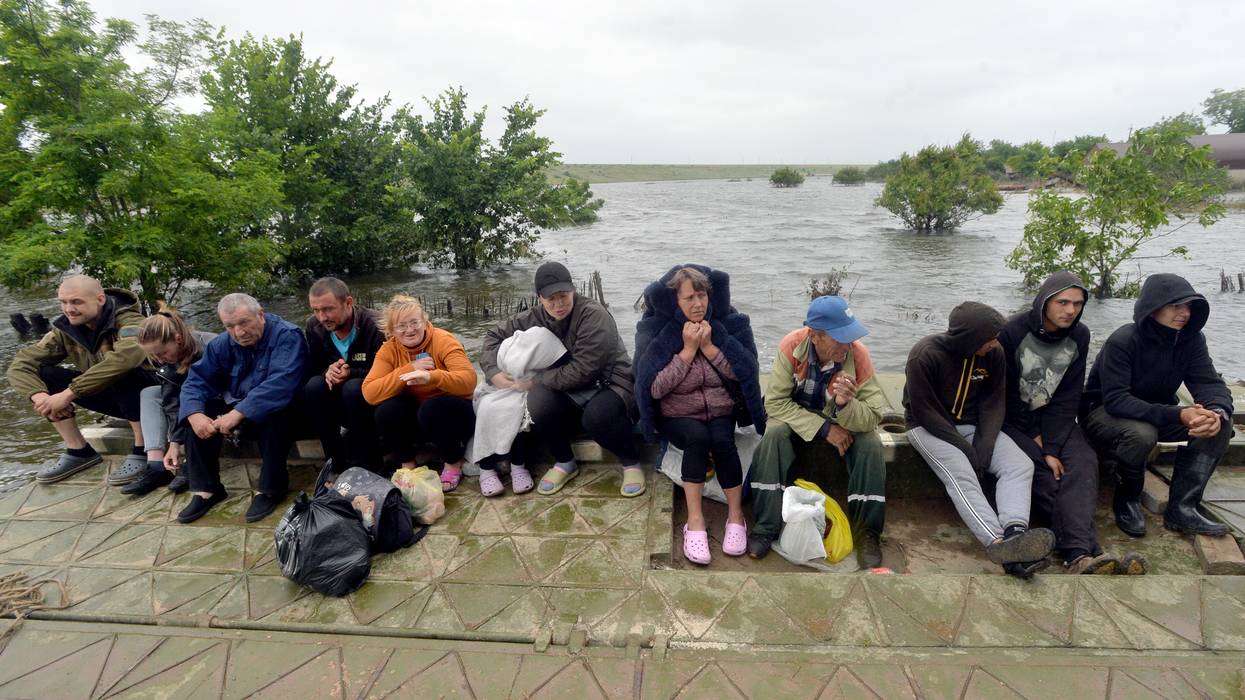
"Aid cannot be denied to people who need it," said the U.N. humanitarian coordinator for Ukraine.
The United Nations on Sunday accused the Russian government of denying aid workers access to Moscow-controlled areas of southern Ukraine that were impacted by the devastating collapse of the Kakhovka dam earlier this month.
Denise Brown, the U.N. humanitarian coordinator for Ukraine, said in a statement that Russia has "so far declined our request to access the areas under its temporary military control" and implored Moscow officials to "act in accordance with their obligations under international humanitarian law."
"Aid cannot be denied to people who need it," said Brown. "The U.N. will continue to do all it can to reach all people—including those suffering as a result of the recent dam destruction—who urgently need life-saving assistance, no matter where they are."
Dmitry Peskov, a spokesperson for the Kremlin, said it would be unsafe to allow aid workers to access the area due to ongoing fighting.
"There has been constant shelling, constant provocations, civilian facilities, and the civilian population have come under fire, people have died, so it’s really difficult to ensure their security," Peskov told reporters Monday.
The dam's collapse sparked a humanitarian and ecological disaster, forcing thousands to flee their homes, intensifying concerns about the structural integrity of a major nuclear plant, and potentially causing long-term damage to the area's drinking water and agriculture—a crisis with global implications.
More than 50 people have been confirmed dead as a result of the dam's collapse.
Ukraine and Russia have blamed each other for the disaster, while some have suggested the fall of the dam—which was under Russian control at the time of the collapse—was a result of damage accumulated from months of war.
Citing two U.S. engineers, an explosives expert, and a Ukrainian engineer with "extensive experience with the dam's operations," The New York Times reported Friday that "given the satellite and seismic detections of explosions in the area, by far the most likely cause of the collapse was an explosive charge placed in the maintenance passageway, or gallery, that runs through the concrete heart of the structure."
The Associated Press separately reported Sunday that "images taken from above the Kakhovka dam... appear to show an explosive-laden car atop the structure, and two officials said Russian troops were stationed in a crucial area inside the dam where the Ukrainians say the explosion that destroyed it was centered."
Moscow says Ukraine sabotaged the dam with "mass artillery attacks" or missile strikes.
Whatever the cause, the consequences have been profound and will likely be long-lasting.
"I worry a lot about the effect on global food prices and, as much as anything, on global food availability," Martin Griffiths, the U.N.'s under-secretary-general for humanitarian affairs and emergency relief coordinator, told PBS late last week.
"We will see the extent of that damage as the waters recede," Griffiths added. "It is a catastrophe for the world."

"One thing is clear," observed U.N. Secretary-General António Guterres, "this is another devastating consequence of the Russian invasion of Ukraine."
With a renewed call for peace, United Nations Secretary-General António Guterres is warning that the destruction of a huge dam in a Russian-controlled area of southern Ukraine "will have grave and far-reaching consequences" for people in the region, as officials Wednesday took stock of the incredible damage.
Speaking from New York Tuesday, Guterres said the U.N. could not independently verify how the Kakhovka Hydroelectric Power Plant dam in Kherson was destroyed in what the world body called "the most significant incident of damage to civilian infrastructure since the start of the Russian Federation's invasion of Ukraine" in February 2022.
"But one thing is clear," the U.N. chief asserted, "this is another devastating consequence of the Russian invasion of Ukraine."
Noting that at least 16,000 people have already lost their homes due to the dam's destruction, Guterres called the disaster "yet another example of the horrific price of war on people."
"The floodgates of suffering have been overflowing for more than a year, and that must stop," he said, adding that "above all, I appeal for a just peace, in line with the U.N. Charter, international law, and the resolutions of the General Assembly."
Also speaking Tuesday, U.N. Under-Secretary-General for Humanitarian Affairs and Emergency Relief Coordinator Martin Griffiths said that the dam's destruction "will have grave and far-reaching consequences for thousands of people in southern Ukraine," while noting that "Ukrainian authorities have reported that at least 40 settlements in Kherson are already flooded or partially flooded, a number which is expected to rise."
The International Atomic Energy Agency—the U.N.'s nuclear watchdog—warned Tuesday that the dam's destruction has already caused a "significant' drop in water levels in the reservoir that supplies the Zaporizhzhya Nuclear Power Plant. ZNPP—Europe's largest nuclear power plant—was shelled by Russian forces in March 2022 during fighting for control of the facility, located in the eastern town of Enerhodar.
IAEA Director-General Rafael Grossi further warned that the "absence of cooling water in the essential cooling water systems for an extended period of time would cause fuel melt and inoperability of the plant's emergency diesel generators," although he added that there is no "immediate" safety risk.
Human rights groups echoed many of the U.N.'s concerns. Marie Struthers, Amnesty International's regional director for Eastern Europe and Central Asia, said in a statement that "the human and environmental cost of the destruction of the Kakhovka dam is a huge humanitarian disaster, and the international community must unite to bring those responsible to justice."
"The rules of international humanitarian law specifically protect dams, due to the dangers their destruction poses to civilians," Struthers added. "The destruction of the Kakhovka dam is a catastrophe that endangers the life, safety, and well-being of tens if not hundreds of thousands of people living within range of the flood waters. It is literally an open floodgate for catastrophic human and environmental disaster."
Robert Wood, the U.S. alternate representative for special political affairs at the U.N., on Tuesday called the dam's destruction "yet another casualty in Russia's brutal, full-scale invasion of Ukraine."
"I want to make absolutely clear: It was Russia that started this war, it was Russia that occupied this area of Ukraine, and it was Russian forces that took over the dam illegally last year and have been occupying ever since," Wood continued.
"To be clear: Deliberate attacks on civilian objects are prohibited by the law of war," added the American, whose country's military has deliberately attacked countless civilian targets during wartime, including the Tabqa dam in Syria in 2017.
Ukraine and Russia blame each other for blowing up the Kakhovka dam, with Sergiy Kyslytsya, the Ukrainian U.N. ambassador, accusing Moscow of committing "a terrorist act against Ukrainian critical infrastructure" and Vassiliy Nebenzia, his Russian counterpart, charging Kyiv with perpetrating "an unthinkable crime."