

SUBSCRIBE TO OUR FREE NEWSLETTER
Daily news & progressive opinion—funded by the people, not the corporations—delivered straight to your inbox.
5
#000000
#FFFFFF
To donate by check, phone, or other method, see our More Ways to Give page.
Daily news & progressive opinion—funded by the people, not the corporations—delivered straight to your inbox.
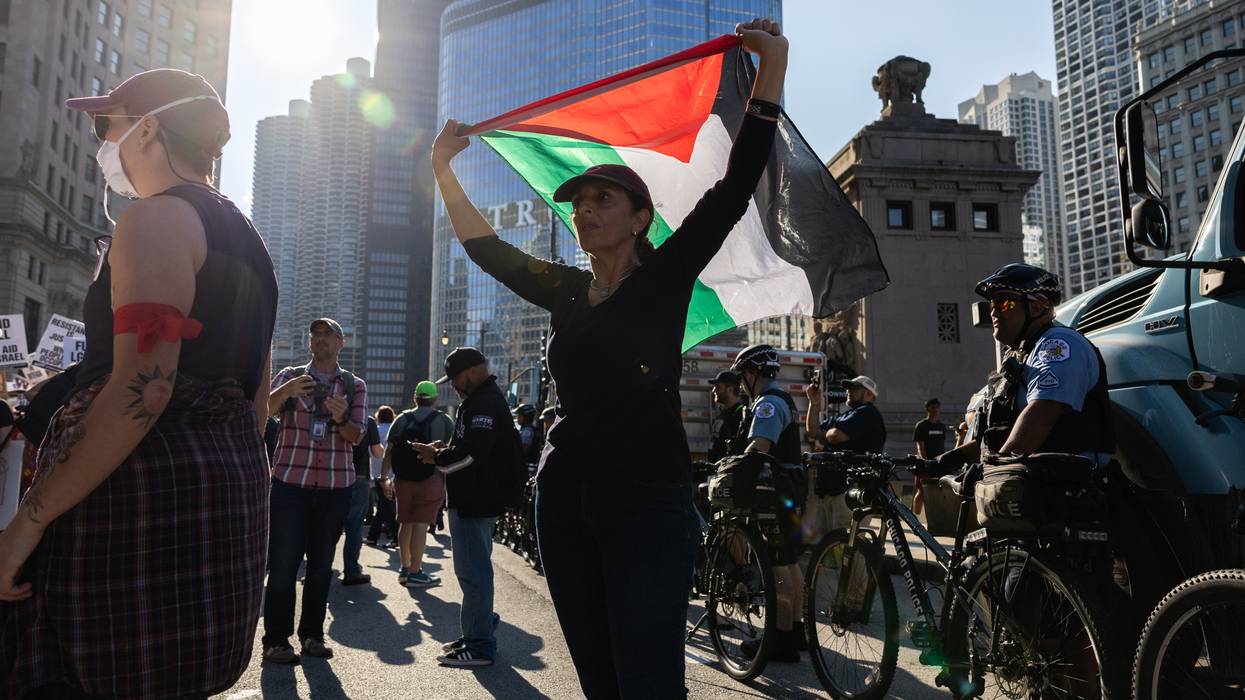
By appearing to put the profits of arms manufacturers above the lives of Palestinian children, a refusal to condition offensive military aid could subject Israel hawks to primary challengers or result in lower turnout for incumbents in the general election.
Nearly two years in to the US-backed genocide in Gaza, there are clear signals that the Democratic Party’s base is moving far away from supporting the Israeli government and its war machine.
And while party leadership is beginning to show some hopeful signs that it might be starting to listen to constituents’ changing attitudes on the issue of Israel and Palestine, such a shift wasn’t immediately obvious from the summer meeting of the Democratic National Committee (DNC) in Minneapolis last month.
Recent polls have shown 78% of Democrats support recognizing the State of Palestine, which three-quarters of United Nations member states—including some of the United States’ closest allies—already do. Similarly, 75% of Democratic voters oppose sending additional military aid to Israel, which is already illegal, according to Section 620I of the Foreign Assistance Act, which bars the United States from providing military assistance to countries blocking humanitarian aid.
Still, at its August meeting, the DNC Resolutions Committee voted down a resolution calling for recognizing Palestine and suspending military aid with a decisive margin.
Following the defeat of the resolution, which had been endorsed by College Democrats and other progressive constituencies, and rejecting the sponsors’ offers to compromise on the language, DNC Chair Ken Martin and 17 other top party leaders successfully pushed through a different resolution which, while advocating a two-state solution, insisted the creation of a Palestinian state only come “through direct bilateral negotiations.” Critics, however, note that no such direct Israeli-Palestinian talks have taken place for more than a decade while the current Israeli government categorically rules out Palestinian statehood. Combined with the DNC’s objection to conditioning aid to Israel, this appears to have been a de facto endorsement of ongoing Israeli control over and colonization of the occupied territories.
While the party leadership’s resolution specifically condemned Hamas for its October 7, 2023 terrorist attack, calling the killing of 1,200 Israelis a “massacre,” it did not condemn Israel’s killing of over 50 times as many Palestinians, referring to their deaths in the passive voice and not even saying who did the killing—the resolution only noted the “loss” of tens of thousands of lives in “the war between Israel and Hamas.” The resolution also implied that Hamas was equally responsible for the growing famine in Gaza as was the Israeli government, which is imposing the siege on the enclave. The resolution’s call for a ceasefire was linked to the unconditional release of the remaining Israeli hostages while failing to call on Israel to release the estimated nearly 5,000 Palestinians held without charge in Israeli prisons.
However, that resolution never even made it to the full DNC. Aware of the backlash following the two votes, Martin immediately withdrew his resolution from consideration. Recognizing the vote’s potential impact, the DNC chair for the first time acknowledged that “there’s a divide in our party on this issue,” saying, “This is a moment that calls for shared dialogue, calls for shared advocacy.” He then announced a taskforce “comprised of stakeholders on all sides of this” to help formulate the party’s position on Israel and Palestine.
The willingness to finally challenge the party’s traditional blank check to the Israeli government may be tactical: Increasing numbers of Democrats, particularly younger voters, are not just questioning Israeli policies, but Zionism itself.
There is likely no other issue where the party leadership is as out of sync with its base. Allison Minnerly, a young DNC member who sponsored the defeated resolution, noted how only 8% of registered Democrats support the party’s current position in support of Israel’s war on Gaza. And the defeat was not for lack of mobilization: Members of the committee received hundreds of thousands of emails encouraging support for Minnerly’s resolution.
Harold Meyerson, editor at-large for The American Prospect, noted, “We’ve been here before: widespread Democratic opposition to an outrageous war, particularly among the young, while a good chunk of the party’s establishment remains unwilling to halt US involvement in that conflict. In the ’60s, that was Vietnam. Today, it’s Gaza.”
According to James Zogby, a longtime DNC member and advocate of Palestinian rights, the Minneapolis meeting should be seen in a somewhat positive light as a result of the unprecedented level of debate—and the fact that Martin felt obliged to withdraw his resolution. In a statement following the meeting, Zogby, president of the Arab American Institute, wrote that the outcome should be seen as “a recognition of the shifting tides within the party and the reality that the status quo has become unacceptable and untenable. Supporters of Palestinian rights should understand that this was a victory and an important step forward in the long struggle for justice.”
In addition, there are signs of a real shift among Democratic officials, even in Washington. While Democratic Senate leader Chuck Schumer, Democratic House leader Hakeem Jeffries, and most others in the congressional leadership still strongly advocate arming and supporting the Israeli government, for the first time a majority of Democratic senators voted in favor of an unsuccessful resolution earlier this summer to block US President Donald Trump’s proposal to send additional bombs and missiles to further destroy Gaza. As a result of the dramatic shift among Democratic voters in recent months regarding US policy toward Israel and Palestine, it appears that at least some Democratic politicians are now becoming more scared of their constituents than they are of the American Israel Public Affairs Committee (AIPAC).
Notably, increasing numbers of Jewish Democrats in Congress are calling for suspending offensive military aid to Israel, as are some Democrats who previously received AIPAC funding and supported the group’s unwavering support for the Netanyahu government.
Just as Democratic officials became more willing to oppose the Vietnam War once it was being waged by Republican Richard Nixon instead of Democrat Lyndon Johnson, Democratic members of Congress today are appearing more willing to challenge Trump’s support for Israeli Prime Minister Benjamin Netanyahu than they were former President Joe Biden’s.
With over two-thirds of registered Democrats saying Israel’s actions in Gaza constitute a genocide or are “akin to genocide” (nine times those saying otherwise), the party’s 2024 platform, which insisted that billions of dollars’ worth of unconditional military aid to Israel remain “ironclad,” is becoming increasingly controversial. And the Democratic Party’s longstanding position of prioritizing the national rights and security interests of Israelis over Palestinians is harder to defend when polling shows only 12% of registered Democrats say their sympathies are more with Israel.
By appearing to put the profits of arms manufacturers above the lives of Palestinian children, this refusal to condition offensive military aid could subject Israel hawks to primary challengers or result in lower turnout for incumbents in the general election.
Liberal Zionist groups like J Street are now for the first time supporting some restrictions on military aid and are trying to push the Democratic Party to take a more critical position against Netanyahu, the war on Gaza, and the occupation of Palestine. A number of state Democratic parties, even in swing states like North Carolina, have gone on record calling for a suspension of military aid to Israel.
Historically, the Democratic Party leadership has initially been out of line with its constituents on key foreign policy issues, including in Vietnam, Central America, Southern Africa, East Timor, Iraq and, Afghanistan, as well as on the nuclear arms race.
The willingness to finally challenge the party’s traditional blank check to the Israeli government may be tactical: Increasing numbers of Democrats, particularly younger voters, are not just questioning Israeli policies, but Zionism itself. There is also a growing sense among progressive Democrats that, with increasing colonization of the West Bank by Israeli settlers, it may be a too late for a viable two-state solution and the focus should be on ending Israeli apartheid and creating a single binational state between the Jordan River and the Mediterranean Sea.
As a result, there is growing recognition that if party leaders do not explicitly break with Netanyahu, Democratic voters may demand that Democratic candidates in the upcoming midterm elections and beyond take outright anti-Israel positions.
Rep. Ro Khanna (D-Calif.) has said that arms transfers to Israel is “going to be a defining issue in the Democratic Party in the midterms and for 2028.” Already, potential 2028 contenders like Rep. Alexandria Ocasio-Cortez (D-N.Y.), Sen. Amy Klobuchar (D-Minn.), Former Transportation Secretary Pete Buttigieg, Khanna, Sen. Chris Murphy (D-Conn.), and Illinois Governor JB Pritzker have gone on record supporting conditioning further arms transfers.
Meanwhile, in New York City, long a bastion of the pro-Israel wing of the Democratic Party, Democrats have nominated Zohran Mamdani, a vocal critic of Israel, to be their nominee for mayor.
It is not just the undeniable horror of the humanitarian situation in Gaza and increasing settler violence in the West Bank that are responsible for this shift. Credit should also be given to the widespread popular mobilization against US support for Netanyahu, not only from traditional pro-Palestine groups, but mainstream liberal and progressive organizations which had traditionally avoided the subject. Over 20 prominent groups aligned with the Democratic Party have formed the Reject AIPAC Coalition to push Democratic candidates to refuse money from AIPAC, an influential right-wing Zionist organization.
For example, Peace Action, the largest multi-issue peace group, has long taken solid positions regarding Israel and Palestine, but only rarely made it a priority, and their PAC was willing to endorse supporters of Israel’s wars and occupation if they were progressive on other foreign policy issues. Now, however, they have been among the leading groups mobilizing against US support for Netanyahu, having made it their number one issue over the past two years, and are pushing hard to restrict US arms transfers. They are currently spearheading support for the Block the Bombs Act in Congress.
Jon Rainwater, Peace Action’s executive director noted: “How can Sen. Chuck Schumer lead the Democratic Party against Trumpism if he sides with Bibi Netanyahu’s worst authoritarian instincts…? How can someone like Sen. Cory Booker give anti-authoritarian speeches about fighting ‘for the moral soul of the nation’ while he votes to keep the US complicit in starving a people and other war crimes?”
There can be major political costs if Democratic candidates refuse to side with the majority of their constituents. Kamala Harris lost the 2024 election due to a major drop-off in Democratic voters from four years earlier. One poll indicated that the single biggest reason cited by voters who had cast their ballots for Biden in 2020 but didn’t back Harris in 2024 was the ongoing Israeli war on Gaza, which Harris was seen to support.
Historically, the Democratic Party leadership has initially been out of line with its constituents on key foreign policy issues, including in Vietnam, Central America, Southern Africa, East Timor, Iraq and, Afghanistan, as well as on the nuclear arms race. Eventually, however, the party’s base has been able to force changes in position. It is looking increasingly likely that such a change may be in store regarding Israel and Palestine.
The question is how long it will take—and how many more Palestinians will have to die before it becomes a reality.
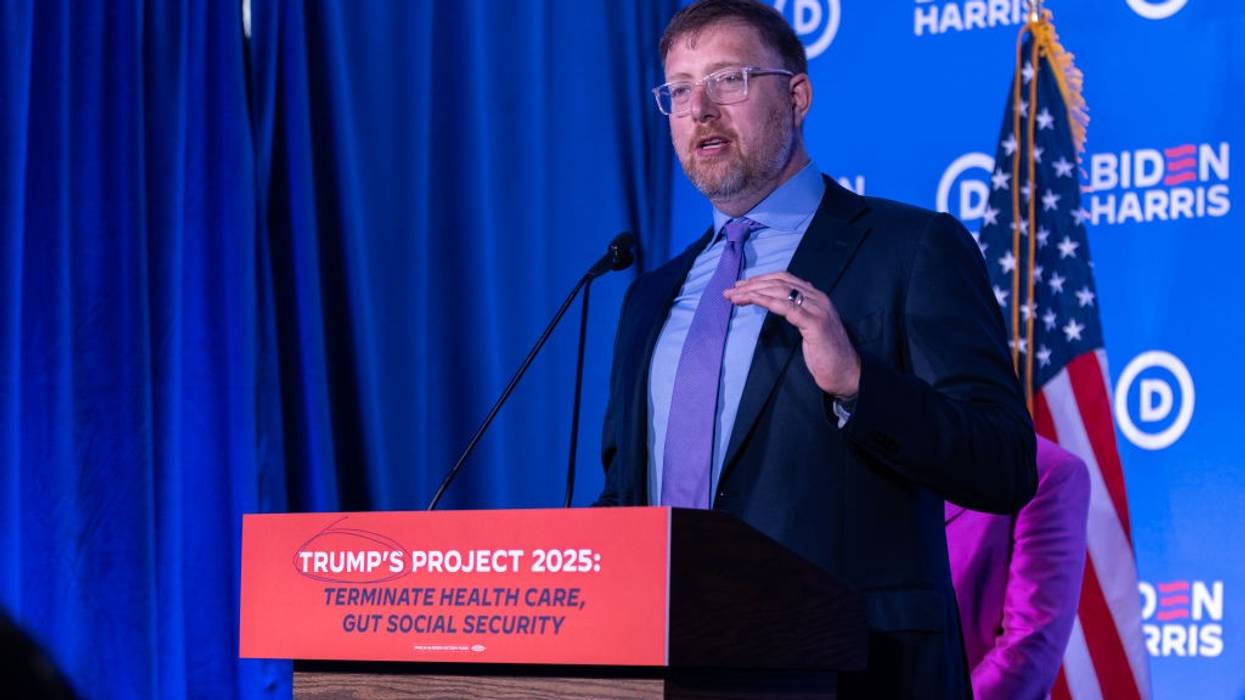
"If we're gonna win, the only path is representing regular, everyday Americans who are about to get screwed by Trump and the oligarchs," said the head of Our Revolution.
Amid intense nationwide debates about what Democrats should learn from devastating electoral losses to Republicans last November, progressive groups on Monday night held a two-hour virtual forum for candidates seeking Democratic National Committee leadership roles.
"This forum is different than the official Democratic forums that are now underway," Joseph Geevarghese, executive director of Our Revolution, said in his opening remarks. His group organized the event with Progressive Democrats of America (PDA), RootsAction, and the State Democratic Party Progressive Network.
These organizations "represent the progressive, working-class base, the Warren-Sanders wing, of the Democratic Party," said Geevarghese, referring to U.S. Sens. Elizabeth Warren (D-Mass.) and Bernie Sanders (I-Vt.), whose 2016 presidential campaign led to the formation of Our Revolution.
Participants in Monday's forum are preparing to face off against a Republican-controlled Congress and U.S. President-elect Donald Trump, who is set to be sworn in next week. Since the GOP's November victories, Sanders, who caucuses with Democrats, has been a leading critic of, in his words, "the big money interests and well-paid consultants who control the Democratic Party."
Geevarghese similarly said Monday that "we don't believe, I don't believe, that the corporate hacks who got this party into trouble in the first place are gonna be the ones to save us," and "we need a Democratic Party that is on the side of America's working class."
"Give up on being the corporate party. Trump has got that locked up," he urged party leadership. "If we're gonna win, the only path is representing regular, everyday Americans who are about to get screwed by Trump and the oligarchs."
The DNC elections are scheduled for February 1, and The American Prospect last week published a previously secret list of "448 active members of the national committee, including 200 elected members from 57 states, territories, and Democrats Abroad; members representing 16 affiliate groups; and 73 'at-large' members who were elected as a slate appointed in 2021 by the party chairman, Jaime Harrison."
Harrison, who has been hostile to arguments that Democrats lost last year because working-class voters felt abandoned by them, is not seeking another term. Seven candidates to replace him joined Monday's forum: Quintessa Hathaway, Ken Martin, Martin O'Malley, Jason Paul, James Skoufis, Ben Wikler, and Marianne Williamson. Robert Kennedy Houton and Nate Snyder did not participate in the livestreamed event, which had over 25,000 viewers and is available below.
Since last month, Our Revolution has been circulating a petition that calls on Democratic Party leaders to adopt four key reforms: ban dark money in primaries and reject corporate money; invest in state parties and grassroots organizing; make the budget transparent and hold consultants accountable; and adopt a progressive platform and small-donor democracy.
During the forum, chair candidates were asked what they planned to do to curb the influence of corporate interests and lobbyists in the party, particularly dark money political action committees (PACs).
"We need to make sure we call out the dark money in our politics, and it's corrosive," said Martin, who chairs Minnesota's Democratic-Farmer-Labor Party and is endorsed by several key Democrats from his state. "These billionaire donors and these large corporations who are trying to essentially subvert the will of the people, they do it by buying people off."
Martin said the party must ensure "that we are only taking money from people and entities that share our values" and pledged that under his leadership, the DNC wouldn't take money from corporations that are union-busting or "preying on" the most vulnerable people in U.S. communities, and would focus on small-dollar donor programs.
Wikler, who chairs the Wisconsin Democratic Party, called for building "a party strong enough to be able to resist the people who are trying to ransack this nation top to bottom, to divide us across our identities, to divide us by cutting us apart, in order to rip off everybody, no matter what our skin color is, no matter who we love, no matter how we pray or whether we pray."
He suggested that Democrats can fight big money in politics "by choosing the fights that we fight and choosing those not based on who's making donations, but choosing those based on actually delivering change in the lives of working people, and stopping the far-right ultrawealthy from rigging this country to ensure that working people don't have a voice."
Wikler is backed by key leaders in his state plus Senate Minority Leader Chuck Schumer (D-N.Y.). He and Martin are widely seen as front-runners in the chair race, though Wikler has faced some scrutiny for his relationship with billionaire LinkedIn co-founder Reid Hoffman, who has poured millions into Wisconsin politics.
Chair candidates were also asked about whether to reform the process for at-large members, and the responses were mixed, with some supporting a change to the bylaws and others favoring the current approach but recognizing the importance of being thoughtful about appointments.
The forum also featured remarks from two potential vice chairs, Shasti Conrad and James Zogby, as well as Jane Kleeb, who is running to head the Association of State Democratic Committees (ASDC), currently led by Martin.
Zogby is the founder of the Arab American Institute, a strong advocate of progressive priorities including Palestinian rights, and a longtime DNC member. He explained Monday that although he initially considered stepping aside after the last cycle, "to this day, I'm the only Arab American in a leadership role in the party and I'm not giving it up."
Sharing some of his frustrating experiences at the DNC over the past three decades, Zogby said that "we need accountability and transparency," particularly with the budget. He railed against a "sick, corrupt system" in which consultants "never lose an election" because they make money either way and called for investments in state parties.
In a Monday opinion piece published by Common Dreams hours before the forum, PDA executive director Alan Minsky wrote that "rank-and-file Democrats want a progressive party. Unfortunately, the defining feature of American politics in the neoliberal era is that money matters more than people. The heretofore dominant wing of the Democratic Party, aka the party 'establishment,' is first and foremost a money-raising behemoth."
"This is why progressives must bring their A-game," he argued. "Many party loyalists embrace centrist policies out of a misguided notion of pragmatism. Our goal is not to chase these Democrats away, but to persuade them to support something more ambitious and inspiring. We have a very compelling case to make on all fronts. We can win them over."
Calls for major shifts within the party aren't just happening in and around events for potential Democratic leaders—who participated in the first DNC-sanctioned forum on Saturday and are set to join another one co-hosted by Politico in Michigan on Thursday.
As Common Dreams reported earlier Tuesday, the Sunrise Movement, a youth-led climate group, and several allied organizations, launched an open letter calling on DNC leadership candidates to revive a ban on corporate donations to the committee and to prohibit super PAC spending in Democratic primaries.
Also on Tuesday, the PAC Justice Democrats—which helped elect leaders like Congressional Progressive Caucus Chair Greg Casar (D-Texas) and Rep. Alexandria Ocasio-Cortez (N.Y.)—launched a 50-state effort to recruit "everyday, working-class people to run for Congress after a cycle of unprecedented spending from the billionaire class and right-wing super PACs in Democratic primaries."
"Until party leadership leads the way to take big money out of politics, ends the billionaire influence over our elections and policies, and puts the needs of working-class people back at the center of its agenda," said Justice Democrats, "voters will see its populist platitudes as lip service."
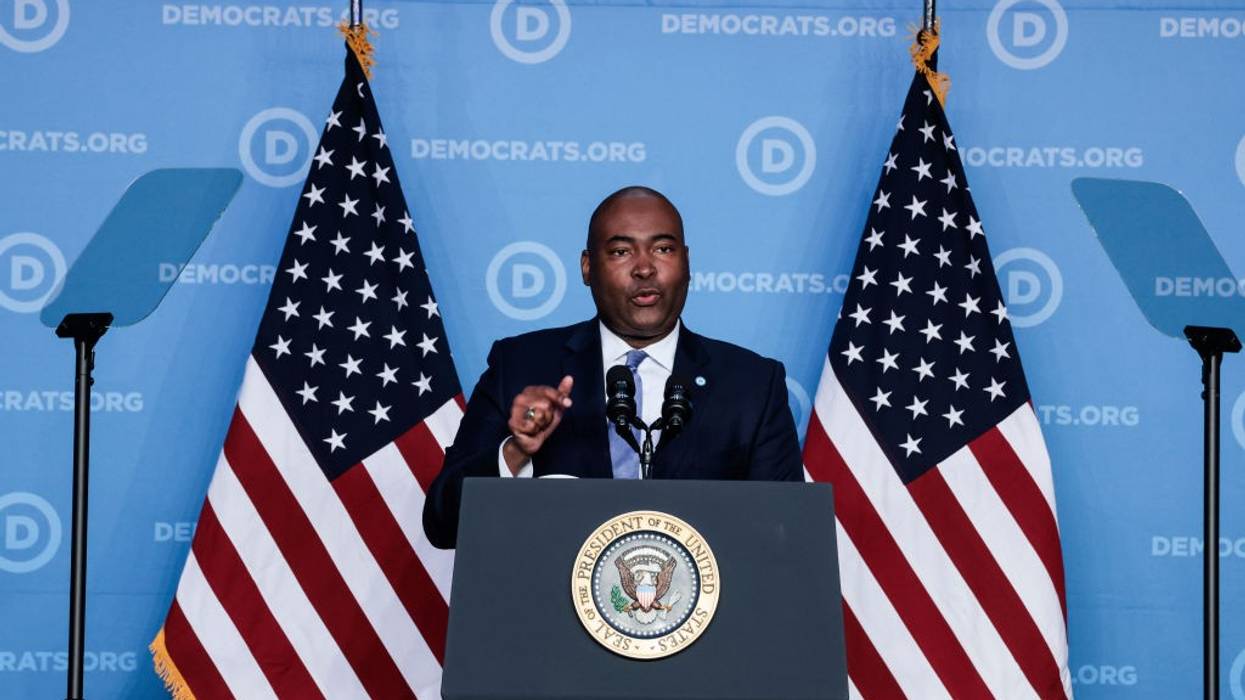
Corporate lobbyists and big-time fundraisers are among the Democratic National Committee members set to decide on the organization's leadership in the coming weeks.
With the Democratic National Committee set to vote on its next chair in just over three weeks, a progressive magazine on Friday published in full a previously secret list of the DNC members who will decide on the next leader of the party organization in the wake of the disastrous November election.
The American Prospect's Micah Sifry reported that he obtained the closely guarded list from a "trusted source with long experience with the national party."
"This person thinks it's absurd that the party's roster of voting members is secret," Sifry wrote. "Indeed, since there is no official public list, each of the candidates running for chair and other positions has undoubtedly had to create their own tallies from scratch—making it very likely our list comes from a candidate's whip operation."
Based on the DNC's public statements, it was known that the DNC has 448 active members who will decide on key leadership posts in the coming weeks. But the identities of the individuals were, until Friday, kept under wraps.
Michael Kapp, a DNC member from California, told the Prospect that the committee's leadership "holds tightly to the list to prevent any organizing beyond their control."
"Knowing who has actual voting power over the DNC's governance may give grassroots activists around the country who care about the party's future some greater capacity to focus their efforts on the people who actually pull the levers."
The newly revealed list includes more than 70 "at large" members who were all "whisked into their current positions on the DNC roster by [outgoing chair] Jaime Harrison in 2021," Sifry wrote.
"According to DNC bylaws, at-large members must be voted in by the rest of the membership, but the current class was put forward by Harrison as a single slate that was voted on up-or-down as a bloc," Sifry added. "The hacks definitely stand out among Harrison's handpicked cohort. Those include top fundraisers Kristin Bertolina Faust and Alicia Rockmore of California, Carol Pensky of Florida, and Deborah Simon of Indiana, as well as David Huynh of New York, whose main claim to fame appears to be his work as a consultant to now-jailed cryptocurrency hustler Sam Bankman-Fried when he appeared to be the Next Big Funder of the Democrats in 2021-2022."
The list also includes several lobbyists—such as Scott Brennan, a DNC member from Iowa who works for a lobbying firm with clients such as JPMorgan Chase and PhRMA—as well as union leaders, including American Federation of Teachers president Randi Weingarten.
The DNC membership list was revealed as the organization prepares to vote on key leadership posts, including the committee's chair and vice chair positions.
Wisconsin Democratic Party chair Ben Wikler, Minnesota Democratic-Farmer-Labor Party chair Ken Martin, and former Maryland Gov. Martin O'Malley are among the contenders for the chairmanship.
James Zogby, a longtime DNC member and outspoken progressive, is running for a vice chair post with the goal of improving "accountability and transparency" at the committee and curbing the influence of dark money—something the DNC has repeatedly refused to address.
Sifry acknowledged Friday that "making the DNC's membership roster public may have little overall effect on the direction of the organization."
"It is, after all, highly dependent on big money and exquisitely attuned to the political needs of the party’s leading officials in Congress," he noted. "According to OpenSecrets, the top contributors to the DNC in the 2023-2024 cycle, after House Democratic Leader Hakeem Jeffries' campaign organization, were Bain Capital ($2.9 million), Google parent company Alphabet ($2.6M), Silicon Valley venture capital firm Kleiner Perkins ($2.5M), community media conglomerate Newsweb Corp. ($2.5M), Jeffrey Katzenberg’' holding company WndrCo ($2.5M), Microsoft ($2.4M), Reid Hoffman’s VC firm Greylock Partners ($2.4M), real estate developer McArthurGlen Group ($2.2M), and hedge fund Lone Pine Capital ($2.2M)."
However, Sifry added, "knowing who has actual voting power over the DNC's governance may give grassroots activists around the country who care about the party's future some greater capacity to focus their efforts on the people who actually pull the levers."
"What they do with that potential," he wrote, "is up to them."

"Democratic voters should decide who wins our primaries, not outside groups," said the longtime Democratic National Committee member and outspoken progressive.
Longtime Democratic National Committee member James Zogby formally launched his candidacy for DNC vice chair on Thursday, citing the urgent need for internal party reform in the wake of the disastrous 2024 election.
Zogby, the founder of the Arab American Institute and a vocal supporter of Palestinian rights and other progressive causes, has served on the DNC for more than three decades, and he's used his positions on the body's Executive Committee, Resolutions Committee, Unity Reform Commission, and other panels to push for changes such as a ban on dark money in the Democratic primary process—a proposal that the DNC has twice refused to even consider.
Eliminating dark money from Democratic primaries is one of five points on Zogby's platform, which also includes changes to ensure "accountability and transparency" with the DNC's finances, building the "organizing capacity" at the state and local levels, and "increasing Democratic Party membership."
"The DNC is supposed to serve as the governing body of the party, but we've been reduced to props who fill chairs at meetings and listen to speeches," Zogby told Common Dreams on Thursday. "Our input isn't sought, nor do we fulfill our responsibility to review and evaluate the budget. Control has been surrendered to consultant groups and the White House."
On his website, Zogby writes that the massive influx of dark money into Democratic primaries is "something that we and our state parties can regulate or call out."
"Democratic voters should decide who wins our primaries, not outside groups," he added.
Zogby announced his intention to run for DNC vice chair in a column for The Nation earlier this month, but his candidacy wasn't official until he secured the required number of endorsements on his nominating petitions—a goal he achieved last week.
In a statement on Thursday, Zogby said his candidacy for a vice chair position has been endorsed by Sen. Bernie Sanders (I-Vt.), Reps. Ro Khanna (D-Calif.) and Pramila Jayapal (D-Wash.), and Rev. Jesse Jackson, among others.
"In the aftermath of our 2024 electoral defeat, many in our party have been engaged in hand-wringing and soul-searching in an effort to understand what went wrong—and what we must do differently moving forward," Zogby wrote in his Nation column. "Like any good Democrat, I have my views on all of these matters, but that's not why I'm running for one of the vice-chair positions of the Democratic National Committee."
"The issues I intend to raise," he continued, "are those related to governance and party building: the need for budget transparency and accountability; the need to address the financial drain and loss of decision-making control created by our dependence on outside consultants; the need to build state parties; the need to take 'dark money' out of our primaries; and the need to create a sense of belonging and engagement that brings young people and others who feel rejected and disenfranchised into our party, finding a place for them in our work."
Politico reported last month that the DNC is "expected to elect a new slate of officers, including chair and a handful of vice chairs, early next year as it charts a path forward after losing" to President-elect Donald Trump in last month's election.
David Hogg, a survivor of the 2018 Parkland high school shooting, announced earlier this week that he's running for a vice chair post.
As for DNC chair, several candidates have officially announced they're vying for the position, including Wisconsin Democratic Party Chair Ben Wikler and former Maryland Gov. Martin O'Malley.
Rahm Emanuel, the disgraced former mayor of Chicago, is also reportedly considering a run, drawing ire from progressives.
"Rahm is a symbol of everything that's wrong with the Party: coziness with corporate America, a brand of politics completely disconnected from working people, and an old way of thinking about elections that has failed Democrats time and again," the progressive advocacy group Our Revolution wrote in an email on Thursday.
"We're in a fight for the very future of this country," the group added. "Trump is heading into a second term after beating the Democratic Party elites AGAIN. Yet, corporate Democrats are still fighting progressives harder than they fight MAGA extremism. But there’s hope if we elect a DNC Chair that takes the Party in a new direction. Rahm is NOT the leadership we need right now!"

"If you want people to vote for you, you gotta give them a reason," said James Zogby, president of the Arab American Institute.
With the high-stakes U.S. presidential election less than a month away, warnings about the possible political consequences of Democratic nominee Kamala Harris' refusal to break with President Joe Biden on supporting Israel's assault on Gaza and beyond are taking on fresh urgency amid new survey data showing the vice president narrowly trailing GOP nominee Donald Trump in Michigan—a critical battleground state.
A Quinnipiac University poll released Wednesday found that Harris is trailing Trump by three percentage points in Michigan—a reversal of the university's survey last month, which showed the vice president with a slight lead over her Republican opponent. The new survey showed Harris leading in Pennsylvania and Trump leading in Wisconsin.
While Trump's polling lead in Michigan was within the margin of error, the results amplified preexisting concerns about Harris' chances in the state, which has a large Arab and Muslim population—many of whom have lost family members in Israel's yearlong assault on the Gaza Strip, a relentless military campaign that has intensified in recent days as the prospects of a cease-fire agreement appear nonexistent.
The Quinnipiac poll found that by a margin of 53% to 43%, Michigan respondents said they think Trump—who has expressed support for Israel's devastating bombardment of Gaza—would do a better job "handling the conflict in the Middle East" than Harris.
James Zogby, president of the Arab American Institute, told Rolling Stone earlier this week that he has expressed to the Harris team that "if you want people to vote for you, you gotta give them a reason."
"They don't seem to care enough about the Arab American vote to do something to get it," said Zogby.
Last month, Zogby's organization released a poll of its own showing that support for Harris would climb nationally if she endorsed an arms embargo against Israel—something she has openly opposed despite pressure from advocacy groups who say it's essential to end Israeli Prime Minister Benjamin Netanyahu's obstruction of cease-fire talks.
Zogby noted in his interview with Rolling Stone that Michigan's Lebanese American population is the largest in the United States—potentially compounding Harris' political vulnerability in the state as Israel ramps up its assault on Lebanon with the support of the Biden administration.
"Many of the constituents are Lebanese who have deep attachments to Palestinians," said Zogby, arguing that Israel's escalation in Lebanon "will either put an exclamation point on the outrage or depression—causing them either not to vote or to flip and vote elsewhere."
"The reaction I'm getting, when I go around the country and talk to people, is they want to punish Democrats," Zogby added. "That's not a smart political move, but that's what people are feeling. And I don't have an argument to make because [members of the Harris campaign] haven't given us arguments to make."
"Harris should give a speech in Michigan where she breaks with the Biden administration on Israel."
Harris has repeatedly acknowledged, including during her speech at the Democratic National Convention in August, the "immense suffering of innocent Palestinians in Gaza who have experienced so much pain and loss over the year."
But Harris has rebuffed calls to create distance between herself and the Biden administration's unwavering support for Israel's assault on Gaza and Lebanon.
"No," the vice president responded when asked during a recent televised interview whether she would support withholding U.S. arms shipments to Israel, whose forces have used American weaponry to commit war crimes in Gaza and Lebanon.
Harris has also declined to meet with Americans with family members in Lebanon and Gaza, according to the co-founder of the Uncommitted National Movement.
Donald Trump won Michigan in 2016 by approx 10,000 votes. There are over 200,000 Arab Americans in Michigan.
Harris's decision to treat them with complete contempt is a massive, suicidal electoral error.
— Nathan J Robinson (@NathanJRobinson) October 10, 2024
Speaking to Mother Jones earlier this week, Dearborn Mayor Abdullah Hammoud—who is Lebanese American—said Trump "is a threat" to Arab Americans and hardly an advocate of peaceful resolution in the Middle East.
But Hammoud said the Harris campaign is not helping its case with voters when it fails to support an arms embargo against Israel, a position that—according to one recent poll—is backed by a majority of the American electorate.
"What I keep pushing back on is it's not this community that has to move in its values and principles and any issues that it's taken a stance on. It's the candidates who have to move," said Hammoud. "And don't move because of Dearborn, by all means. I'm not telling you to move because this small city in the Midwest is telling you to move on these issues. Move because the general American populace has said these issues matter to them."
"And this idea that people will forget?" he continued. "Remember we heard this nine months ago: 'People will forget come November.' People are not forgetting... Genocide is not something you can cast aside."
On Thursday, Emerson College released survey data it collected with The Hill showing that Trump and Harris are in a dead heat in Michigan—further indicating that a small swing in favor of either candidate could tip the scales and potentially decide who takes the White House.
Moira Donegan, a columnist for The Guardian, argued Wednesday that "Harris should give a speech in Michigan where she breaks with the Biden administration on Israel."
"This is very obviously in her self-interest to do," Donegan wrote on social media, adding that she doubts the vice president will take her advice.
If she did, wrote IfNotNow co-founder Yonah Lieberman, it "would be a seminal political moment that would win Michigan, stop a second Trump administration, and help end a genocide."

The public rebuke of the Israeli prime minister, said one observer, "demonstrates the international community's rejection of genocide."
A large number of diplomats and other officials walked out of the United Nations General Assembly in New York City on Friday as Israeli Prime Minister Benjamin Netanyahu prepared to defend his nation's slaughter of more than 41,000 people in the Gaza Strip during the past year and over 700 in Lebanon this week.
Journalists and critics of the "global pariah" shared photos and videos of people filing out of the hall before Netanyahu's address—which came just a day after 25 anti-genocide protesters were arrested for blocking his motorcade in Manhattan.
While there was some audience applause from the sparsely populated room on Friday, Al Jazeera Arabic's Rami Ayari explained that "the people you hear cheering the PM during the speech are in the gallery who he brought for that purpose."
Council on American-Islamic Relations national executive director Nihad Awad said in a statement that "as the far-right, openly racist Israeli government continues its genocide in Gaza and expands its campaign of state terrorism to civilians in Lebanon, this mass walkout during war criminal Benjamin Netanyahu's U.N. speech demonstrates the international community's rejection of genocide."
Awad added that U.S. President Joe Biden "should take note of our government's growing isolation on the international stage, change his policy, and support human rights and international law, without an exception for the Palestinian people."
Since Israeli forces launched their assault on Gaza in retaliation for the Hamas-led October 7 attack, the United States government has stood by Israel, sending billions of dollars in weapons and opposing U.N. resolutions, while claiming to be pushing for a cease-fire. Addressing the General Assembly earlier this week, Biden called for "security for Israel, and Gaza free of Hamas' grip."
In response to diplomats' Friday walkout, Trita Parsi, executive vice president of the Quincy Institute for Responsible Statecraft, said that "the impunity Biden has offered Israel has been used by Netanyahu to make Israel an international pariah. Neither good for the U.S. nor for Israel."
Parsi also highlighted a clip of Slovenian Prime Minister Robert Golob's speech to the U.N., in which he urged Netanyahu to "stop this war now!"
Netanyahu began his Friday address by taking aim at the world leaders who throughtout the week have condemned the recent escalation against Hezbollah in Lebanon as well as the past year of Israeli forces bombing and starving Palestinians in Gaza.
"I didn't intend to come here this year. My country is at war fighting for its life," Netanyahu said. "But, after I heard the lies and slanders leveled at my country by many of the speakers standing at this podium, I decided to come here and set the record straight."
Armed with more of his infamous maps of the Middle East, the right-wing leader went on to claim that "Israel seeks peace," while also pledging to wage war on Hamas-governed Gaza until "total victory" and telling "the tyrants of Tehran" that "if you strike us, we will strike you."
Noting that Netanyahu also spoke of "savage enemies who seek to destroy our common civilization," James Zogby, co-founder and president of the Arab American Institute, said: "Words spoken by the man who has been charged with genocide and crimes against humanity. This is a disgrace. Abusing the General Assembly platform to lie and incite."
Israel faces a South Africa-led genocide case at the International Court of Justice, and the International Criminal Court prosecutor has sought arrest warrants for Netanyahu, Israeli Defense Minister Yoav Gallant, and three Hamas leaders—one of whom Israel recently assassinated in Iran. Israel also claims to have killed a second Hamas leader, which the group has denied.

Dozens of people were killed and hundreds more were wounded during Israeli attacks on the besieged Gaza Strip over the weekend, Palestinian officials said as Israel and the militant resistance group Palestinian Islamic Jihad declared a truce late Sunday night.
"It's outrageous that the Biden administration gave Israel 'full-throated support' for its murderous 'preemptive' assault on Palestinians in Gaza."
The Palestinian Ministry of Health said Sunday that so far 44 people, including at least 15 children and four women, died during the 66-hour Israeli onslaught--officially called Operation Breaking Dawn--in which militants also reportedly fired at least hundreds of rockets at Israel, resulting in three light injuries. The ministry said that 360 other Palestinians were wounded during the attacks, which ended with the 11:30 pm truce.
"Let those numbers sink in," tweeted Marwa Fatafta, a Berlin-based Palestinian writer, researcher, and senior policy analyst at the digital rights group Access Now.
Jehad Abusalim, the education and policy coordinator at the American Friends Service Committee, a Quaker peace group, tweeted: "Fifteen kids. Born into a brutal blockade. Their lives defined by wars, bombardments, trauma, fear, poverty, isolation, and dehumanization by the rest of the world."
A 16th child--10-year-old Haneen Abu Qaida--died Monday of injuries sustained during a Saturday Israeli attack that also killed her mother, Palestine's Wafa News Agency reports.
"And we failed them," Abusalim said of the children killed. "During the last war, and the wars before, we promised not to give Gaza seasonal attention anymore. The last aggression ended, and we forgot about Gaza again. We went back to our work and busy lives, like these kids went back to their schools and whatever kids do in Gaza, but unlike the last time."
"This time," he added, "when we go back to our work and busy lives, 15 kids in Gaza won't go back to their schools and whatever kids in Gaza do. Israel killed them, and Israel will get away with it."
The Palestinian human rights organization Al-Haq--one of six humanitarian associations dubiously declared "terrorist organizations" by Israel--said in a statement Sunday that Israel had "indiscriminately targeted civilians and nonmilitary structures" and that the assault constituted "a grave breach of international humanitarian law and may amount to war crimes and crimes against humanity."
Palestinian Islamic Jihad, which is considered a terrorist group by Israel, the United States, and others, said Monday that 12 members of its military wing, including two top commanders, were killed during the Israeli operation.
In a Sunday evening media briefing, Israel Defense Forces (IDF) spokesperson Gen. Ran Kochav said the military believes Israeli strikes killed 35 people in Gaza during the operation, 11 of them civilians.
Kochav also claimed that Islamic Jihad's rockets killed more Gazans than IDF attacks, which struck 170 targets in the densely populated strip, roughly twice the size of Washington, D.C., where more than two million Palestinians live.
However, observers asserted that given the IDF's record of targeting civilians and subsequently lying about it, its claims cannot be trusted.
U.S. President Joe Biden on Monday professed his "unwavering" support for Israel while condemning the "indiscriminate rocket attacks launched by the terrorist group Palestinian Islamic Jihad" and praising the "steady leadership" Israeli Prime Minister Yair Lapid and his government. Biden also called for a "timely and thorough investigation" of civilian casualties.
Biden added that he is "proud" of the $1 billion in U.S. support for Israel's Iron Dome anti-missile system, which IDF officials said intercepted around 380 rockets fired by Gaza-based militants. The IDF also claimed that around 200 projectiles failed to clear the Israeli border and landed inside Gaza.
James J. Zogby, founder of the Arab American Institute, tweeted that "it's outrageous that the Biden administration gave Israel 'full-throated support' for its murderous 'preemptive' assault on Palestinians in Gaza."
"Israel started it, egged it on, and Palestinians were sitting ducks," he added, lamenting that the "U.S. denounces Russia for crimes but absolves Israeli crimes. Double standard."
Since 2008, Israeli forces have waged four wars in Gaza in which more than 6,000 Palestinians were killed, according to figures from the United Nations Office for the Coordination of Humanitarian Affairs. Last year, during the most recent of those wars, Israeli attacks killed at least 129 civilians, including 66 children.
Over the course of the 21st century, more than 2,200 Palestinian children have been killed by Israeli military, police, and settler-colonist attacks, according to the group Defense for Children International.

As we enter the final week before Christmas, my thoughts turn to Bethlehem, its struggling people, and the shocking disregard for them displayed by many Christians in the West. This is not to say that that these same Christians don't love Bethlehem. But the city they love is the one of the story that's 2,000 years old.
"Today, Bethlehem is surrounded by dozens of Israeli settlements, many built on land confiscated from Bethlehemites."
In that story, we are told of how Mary and Joseph, living under Roman occupation, were required to travel to Bethlehem to enroll in a mandatory census. Because the town had become overcrowded, Mary and Joseph could not find housing and were forced to stay in a cave where Mary gave birth to Jesus.
The story has been romanticized in song and poetry that have come to define our understanding of that "quiet little town," the manger where Jesus was placed, the angels, shepherds, and "wise men from the East" who came to praise the birth and bring gifts to the newborn.
In all of this, the reality of contemporary Bethlehem is ignored, as is suffering of its people. Today, Bethlehem is surrounded by dozens of Israeli settlements, many built on land confiscated from Bethlehemites. It is cut off from much of the West Bank by two Israeli bypass roads and a massive concrete wall. And just this month, Israeli Prime Minister Benjamin Netanyahu announced plans to advance a new settlement that, when built, will completely sever Bethlehem from nearby Jerusalem.
The resultant loss of land, the growing impoverishment of its citizens, and the hostile actions of Israeli occupation forces and settlers have forced many Bethlehemites to leave their beloved city and homeland. Given these accumulated violations of human rights and their impact on Christians and Muslims, alike, one might expect Christians in the West to speak out in defense of these residents of the little town they celebrate each year. That, sadly, is not to be--most especially (and I might add ironically) among powerful Christian conservative groups in the U.S. which, after all, claim to be the defenders of their co-religionists world-wide.
To most in the West, Palestinian Christians are simply invisible. To conservative Christians, they are at best a nuisance who stand in the way of their unquestioning ideological attachment to Israel.
I saw this up close during my four-year tenure as a Presidential appointee to the U.S. Commission on International Religious Freedom. As a Lebanese Maronite Catholic, who had traveled throughout the Middle East, I was aware of concerns of Christian communities in the region and I was excited to play a role in protecting their rights.
Despite having been charged by the White House to "push back" on the hold that conservatives had over the commission and its operations, because I was the newest commissioner, I thought it best to spend months learning the ropes, before raising any concerns of my own. I learned early on that I wasn't going to have the luxury of waiting.
In December of 2013, my third month on the commission, the staff circulated a draft opinion piece that was to be sent to newspapers under the authorship of the commission's Chair and Vice Chair. It began:
"As we enter the Christmas season, Christians look joyously ahead to celebrating Christ's birth in a manger. But across parts of the Middle East, the cradle of Christianity, followers of Jesus are under siege and live in fear, facing a rising tide of repression, intimidation, and violence...Unless circumstances change, some are pondering the unthinkable: will Christianity survive in the area of its origin?"
The piece went on to devote full paragraphs to the plight of Christians in each of the following countries: Egypt, Iraq, Syria, Saudi Arabia, Iran, Nigeria, and Pakistan.
Soon my inbox began to fill with notes of approval from my colleagues on the commission. I had to act quickly before a majority approved and the article would be sent out. I, therefore, wrote in response:
"How on earth can we publish an article about the plight of Christians in the Holy Land without even a mention of the concerns of the Christians in Bethlehem...and Jerusalem, etc. They too are suffering--losing their lands and ability to survive under harsh occupation. The wall, the settlement construction on confiscated Bethlehem land, and the closure of Jerusalem are choking these cities and forcing their residents to leave."
The response from some of my fellow commissioners was one of indignation. How dare I criticize Israel? Didn't I know that Israel protects Christians and allows them to prosper? And didn't I know that the problems facing Christians in the Holy Land are the result of Muslims?
After a number of further exchanges, they agreed to add a single disturbingly "no fault" sentence:
"In Bethlehem, birthplace of Jesus, many Palestinian Christians, who are part of a small and diminishing minority, feel marginalized and insecure."
This was not the last time I was to witness the gross insensitivity of my fellow commissioners to the plight of the Christians in Palestine.
The next year, I invited the Catholic Patriarch of Jerusalem to address the commission. He had come to Washington seeking help on a number of issues, including stopping Israeli plans to confiscate church lands to build the barrier wall. The route for this section of the wall would separate a monastery from its vineyards and a convent and Christian children from their school. Not only did his appeal fall on deaf ears, but he and I were both shocked when two commissioners bizarrely upbraided him for not using his position to challenge Hamas!
The following year, my conservative fellow commissioners wanted to issue a statement denouncing UNESCO for honoring a Palestinian request to declare Bethlehem a World Historical Site. We were able to table this statement after a prolonged battle.
In my final year, the commission received two appeals: one from a liberal Jewish group and the other from the heads of all the Christian churches in the Holy Land--accompanied by a 192 page report compiled by a group of Palestinian lawyers arguing the case for why the commission should address Israel's violations of the religious rights of Christians, Muslims, and non-Orthodox Jews.
When a liberal Jewish colleague and I introduced a motion to consider both the requests and the report, the reaction from our conservative Christian and Jewish colleagues was near hysteria. They had two major objections: Why were we singling Israel out for criticism? And didn't we realize that if the commission were to act on this request it would lose its Congressional funding?
Deeming the latter challenge insulting, I focused only on the former and responded that we were not singling Israel out for criticism, since we had in fact joined with our colleagues in challenging violations of religious freedom in dozens of countries worldwide. In fact, it was the conservatives on the commissions who were singling Israel as the one country that could never be criticized.
Our motion was defeated.
This shocking disregard for human rights and religious freedoms is what allows Israel's behavior toward Palestinian Christians to continue. As a result, Bethlehem is being strangled and its people are in pain.
And this shameful silence continues. On this Christmas Day, the very conservative Christians who will sing of Bethlehem and tell the story of what happened in that city long ago will remain willfully blind to the current reality of that place and its people.

It was more than a century and a half ago that Abraham Lincoln told us, "You can fool some of the people all of the time, and all of the people some of the time, but you cannot fool all of the people all of the time." While the wisdom behind these words is clear, what has long confounded me is, quite simply, "why can some folks be fooled all the time?"
Answering this question has never been as important as it is today because we have a president who, despite having a strained relationship with the truth, retains a hard core base of supporters who continue to believe in him.
It appears that Donald Trump can't spend a single day without using Twitter or press meet-ups to make statements that are obvious exaggeration or outright fabrication. Some of these have been dismissed as harmless or even laughably silly, while others can be legitimately categorized as dangerous acts of incitement.
Some media outlets have kept a running tally of his falsehoods--we are now somewhere in the neighborhood of 12,000 --or an average of 13 a day since he took the oath of office. The problem has become so concerning that many major newspapers and television networks have taken the unprecedented step of allowing their journalists to now describe the president's statements as "lies."
Among his bizarre exaggerations are those about the size of his rallies, the extent of his wealth, the number of jobs he has created, or the honors he has claimed to receive. There are, however, the more damaging false statements he has made targeting individual members of the media, judiciary, Congress, or vulnerable minority communities--painting them as dangerous or even anti-American, "enemies of the people."
In addition to these, there are the tweets or harangues that have caused uncertainty about our foreign policy, resulting in consternation and insecurity among our allies, and boasts or threats about trade issues or domestic policies that have created havoc in world markets.
What is troubling is not just the accumulated mass of distortions that have become even more frequent over time. More disturbing are the polls that show about 30% of the electorate saying that they believe that this president almost always tells the truth. These are the folks to whom Lincoln was referring when he spoke of fooling "some of the people all of the time." This is where we must ask the question "Why?" What don't we understand about Trump supporters? How have the political experts continuously been so wrong about this president and those who believe in him?
Ever since the early days of the 2016 contest, the pundits proclaimed Donald Trump unfit to run for president and assumed after each of his early outrages that he was finished and would never become the nominee. They then convinced themselves that he would never be elected president. And even now, there are almost daily columns by the very same commentators saying how exhausted they are with Trump's outrages, making predictions that his presidency is doomed.
They were wrong because they missed a fundamental point: there remains a sizable base of voters who despite all evidence to the contrary continue to believe that what Trump says is true and who, therefore, cling to his leadership.
In addition to the 30% who are "true believers," there are also those mainstream Republicans who support the president because, as I described on an earlier occasion, they made a "Faustian deal." They recognized the power of his base, feared confronting it, and felt that if they got behind him, they could ride on the back of his presidency to achieve their goals of deregulation, more conservative judges, and implementation of more regressive taxation - all of which they have, in fact, realized.
What was key was that they feared his base. They saw the fervor generated at his rallies. And they came to understand that given the devotion he generated, it would be dangerous to oppose him. They also came to believe that the irrational support he had earned was so strong that he could, as he himself once boasted, "shoot someone on 5th Avenue" and get away with it.
This is the problem we must understand and the dilemma we must confront. We know why the GOP's leadership supports this President--he is fulfilling his part of the "deal". But why is it that his "base"--made up of a disproportionately large percentage of lower income, less educated white folks, who are living in formerly prosperous farming, mining, or industrial communities--why do they continue to suspend disbelief and support him? And why do they stay with him despite the fact that the policies he has promulgated have not only not been to their benefit, they have proven harmful to their economic future?
He promised to protect their jobs, to provide them with better health care, to bring prosperity back to their communities, to reopen their closed mines or bring back their factories. None of this has occurred and yet they remain supporters. So while we can see Lincoln's words playing out--that indeed "you can fool some of the people all of the time"--the challenge is in understanding why, despite all the evidence to the contrary, they continue to believe in him.
If I might propose an answer, it's not because they are bad or dumb or easily misled. Rather, it is because: they are profoundly alienated from the institutions that have failed them; they are worried that they are losing control of their lives and their values in a world that is changing so fast and leaving them behind; they are angry that governing elites either look down on them or do not consider their needs; and they are desperate to believe that Trump is different because he speaks directly to them about their anger and disappointment and insecurity and their need to feel empowered.
This, as I see it, is why they continue to believe--because they need to believe in something and he's "the only show in town."
When I hear Democrats running for president make defeating Donald Trump the focus of their campaign, I am worried that they are missing the point. Even more shortsighted and dangerous are those who run against Trump's voters by disparaging them. To make this campaign about mobilizing "our voters" to become more numerous than and victorious over "their voters" may produce a short-term victory but at the cost of an even more deeply divided country and may even lead to greater social unrest.
Rather, the goal must be to address head on the anger, disappointment, alienation, and loss of control of those who feel left out of the national discussion. What is needed is a message that speaks to voters across the spectrum, telling them that they are being heard and their needs will be addressed by proposals for economic and social progress that will include and benefit everyone.
Only if they and their needs are directly addressed and their anger and alienation are understood will they be able move beyond feeling slighted and disparaged. At that point, they may be in a position to shake the dust from their eyes and realize that, all along, they had been fooled by a huckster who had exploited them.
Seizing on the Democratic National Committee's (DNC) reluctant concession allowing him to appoint five members to the committee that writes the party platform, Bernie Sanders on Monday announced a suite of picks that included activists across the progressive sphere.
Sanders' appointees to the 15-member Platform Drafting Committee include: racial justice activist and scholar Dr. Cornel West, 350.org co-founder and noted environmentalist Bill McKibben, Native American activist Deborah Parker, Progressive Caucus co-chair Rep. Keith Ellison (D-Minn.), and James Zogby, a pro-Palestinian scholar as well as founder and president of the Arab American Institute (AAI).
The announcement came roughly two weeks after Sanders sent a letter to DNC chair Debbie Wasserman Schultz (D-Fla.) accusing her of stacking the party's three standing committees, including the drafting committee, with "Clinton loyalists."
According to the Washington Post, party officials and the two Democratic candidates "worked out" a compromise "based on the number of popular votes each has received to date." Under the agreement, frontrunner Hillary Clinton would be allotted six members and Sanders five, while Wasserman Schultz will name four.
The final selections were made "in consultation with the campaigns and the DNC from larger slates of 12 and 10 suggested by the campaigns," the Post reports.
The deal falls short of Sanders' recommendation that each campaign choose seven members for the Drafting Committee and the 15th member would jointly picked by the two campaigns. Nonetheless, it is an improvement over the standing rule, under which the DNC chair would consider a list of ten names from each candidate, choose four from each and then appoint an additional seven.
"We believe that we will have the representation on the platform drafting committee to create a Democratic platform that reflects the views of millions of our supporters who want the party to address the needs of working families in this country and not just Wall Street, the drug companies, the fossil fuel industry and other powerful special interests," Sanders said in a statement.
The list of progressive appointees was welcomed widely. Canadian author and activist Naomi Klein noted on Twitter that two of Sanders' picks "were arrested for peaceful civil disobedience during [the] Obama years," referring to West and McKibben.
As for the remaining appointees, the Post reports:
The Clinton campaign's choices are Wendy Sherman, a former top State Department official and Clinton surrogate; Neera Tanden, president of the Center for American Progress and longtime Clinton confidante; Rep. Luis Guttierez of Illinois; Carol Browner, a former former director of the White House Office of Energy and Climate Change Policy; Ohio State Rep. Alicia Reece and Paul Booth of the American Federation of State, County and Municipal Employees union.
Wasserman Schultz also named former California Rep. Howard Berman; California Rep. Barbara Lee and author and executive Bonnie Schaefer.
The platform announcement comes amid a growing rift between the Sanders campaign and the DNC, which has been accused of deliberately rigging the system in Clinton's favor.
Over the weekend, Sanders threw his weight behind Tim Canova, who is running a progressive challenge to Wasserman Schultz's House seat, and said that if he wins the presidency that the chairwoman "would not be reappointed."