

SUBSCRIBE TO OUR FREE NEWSLETTER
Daily news & progressive opinion—funded by the people, not the corporations—delivered straight to your inbox.
5
#000000
#FFFFFF
To donate by check, phone, or other method, see our More Ways to Give page.
Daily news & progressive opinion—funded by the people, not the corporations—delivered straight to your inbox.
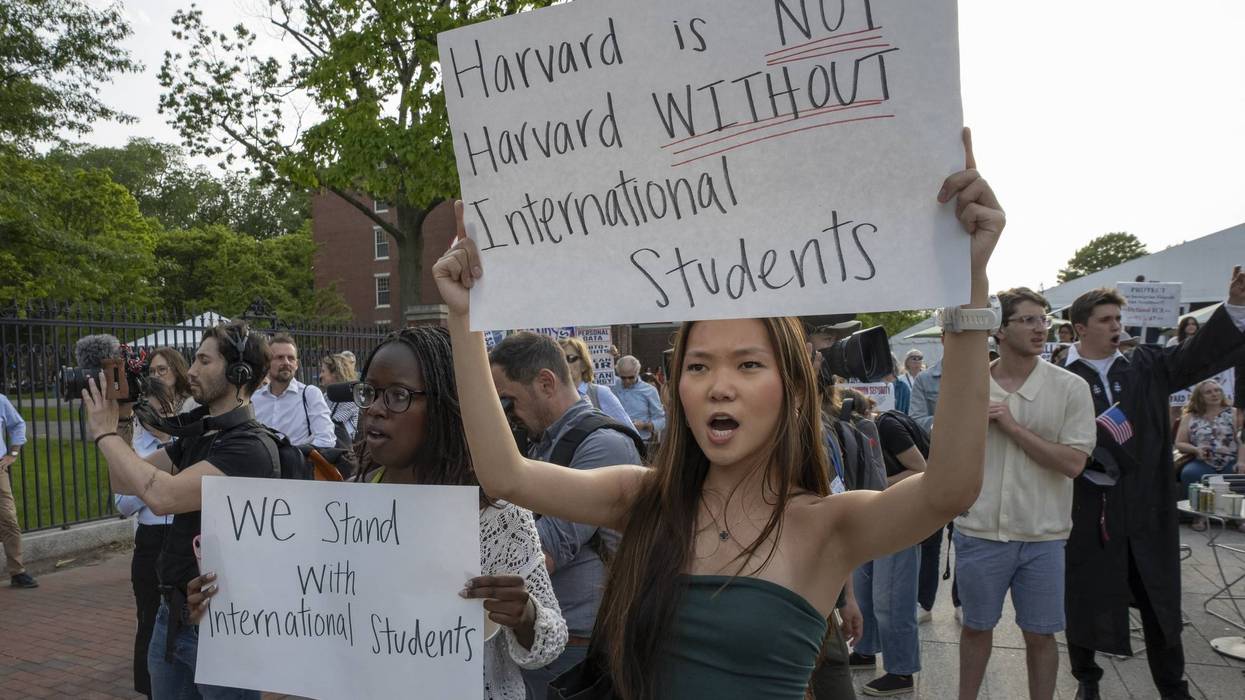
One legal advocacy group said the rule change "will be costly, cause chaos, and cut legal immigration."
The Trump administration on Thursday finalized sweeping new visa restrictions that immigration advocates and higher education professionals say will make it significantly more difficult for international students and journalists to study and work in the United States.
The Department of Homeland Security (DHS) said it is replacing the long-standing "duration of status" system—which allowed students to remain in the country as long as they complied with the terms of their visas—with fixed admission periods that generally cap student and exchange visitor stays at four years.
Foreign journalists, meanwhile, will see their visas limited to 240 days, while Chinese journalists will face an even shorter 90-day limit. Visa holders will have to apply for extensions if they need more time.
NEW: The Trump admin finalized a regulation which makes the largest changes to the student visa process in 50 years, along with changes to rules for exchange visitors and international journalists. 🧵on some of the most consequential changes set to go into effect in September.
[image or embed]
— Aaron Reichlin-Melnick (@reichlinmelnick.bsky.social) July 16, 2026 at 12:09 PM
Homeland Security Secretary Markwayne Mullin claimed that “for nearly half a century, the outdated 'duration of status' system has compromised national security and created an environment ripe for immigration fraud."
"For decades, foreign students have been admitted into the US indefinitely, allowing thousands to abuse our immigration system by perpetually enrolling in courses to avoid having to leave the US," Mullin added. "By implementing clear, finite limits on these visas, the United States is reclaiming its ability to properly screen, vet, and monitor individuals within our borders."
However, Todd Schulte, president of the bipartisan political advocacy and lobbying group Fwd.US, warned that “these new restrictions will only make it harder for international students and researchers to complete their studies in the US and contribute their education to the US workforce after graduating."
"These changes will hurt America’s global competitiveness, hinder businesses’ ability to hire US-educated talent, impose significant and unnecessary costs on universities and students, and increase the workload for federal agencies already struggling with backlogs and delays," Schulte added. "This rule will create more bureaucratic backlogs and delays and help grind the legal immigration system to a halt.”
"Have these people no understanding of how life works?"
The American Immigration Lawyers Association said the rule change "will be costly, cause chaos, and cut legal immigration."
David Bier, the immigration studies director at the libertarian Cato Institute, told Reuters that "international students, many of whom will have spent years in the USA, will now have just 30 days to find an employer to sponsor them or immediately be turned into illegal immigrants. Have these people no understanding of how life works?"
Fanta Aw, executive director of NAFSA: Association of International Educators, said in an interview with The Washington Post that “DHS’ decision to end duration of status is a misguided and unnecessary policy shift that injects uncertainty, bureaucracy, and fear into a system that has long worked effectively."
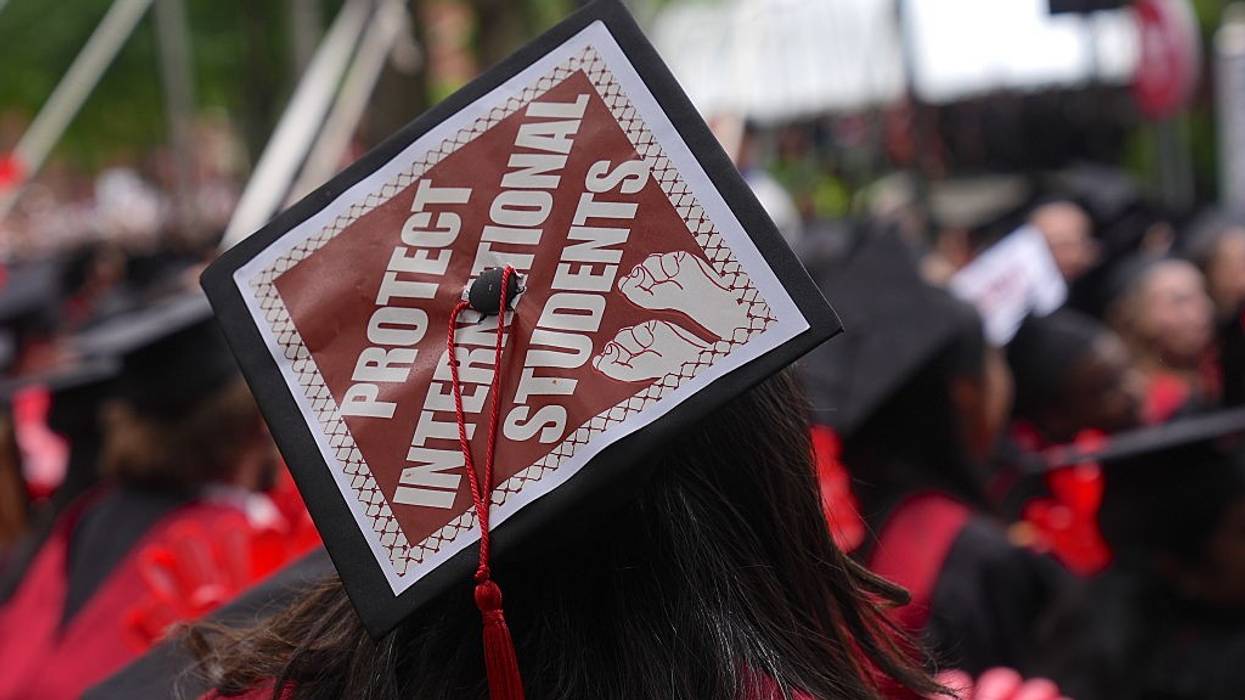
We often talk about immigrants as beneficiaries of American opportunity. But in higher education, healthcare, research and beyond, immigrants are also architects of institutional improvement.
The US Department of Education recently withdrew its unlawful directive that would have restricted diversity, equity, and inclusion efforts in schools and universities nationwide. The guidance was framed as an attempt to enforce “neutrality” in education. In practice, it would have narrowed how institutions identify and address inequity, discouraging efforts to create learning environments that reflect the realities of an increasingly global student population.
That national debate can feel abstract, just another skirmish in a broader culture war over higher education. But equity is not abstract. It lives in the quiet mechanics of institutions: who gets seen, who gets filtered out, and which barriers are treated as incidental rather than structural. I am reminded of this not by a court ruling or federal directive, but in the ordinary work of teaching and mentoring students from around the world as an assistant professor at the University of Illinois Urbana-Champaign. It shows up during office hours, committee meetings, and the quiet moments when institutional rules do their work.
Americans are fluent in a familiar story about immigration: Immigrants come to the United States for opportunity—better education, better jobs, better lives. That story is not wrong. But it is incomplete. What is talked about far less is how immigrants improve the institutions they enter, often by exposing the limits of systems that were never designed with them in mind.
Case in point: Like many graduate programs, ours used procedures that filtered out applicants who had not paid an application fee before faculty review. When they failed to pay, I was never supposed to see their application. The fee, common by US standards, was prohibitively expensive in some local currencies. Until I learned about that procedure, I hadn’t fully appreciated how many judgments about who “belongs” in graduate school happen long before any evaluation of research potential or intellectual fit. Once I understood the implications of that policy, I advocated to have it amended, and a student I would never have otherwise met was later admitted and enrolled.
The real work of equity is not expanding opportunity within unchanged systems but interrogating the systems themselves—especially when those systems quietly reward conformity.
That experience crystallized something for me. The student’s presence highlighted how even well-intentioned programs can struggle to value ways of thinking they were never designed to account for. The student, meanwhile, navigated those gaps with a practicality that exposed where the system itself needed adjustment.
The same design logic operates across American institutions that confuse neutrality with fairness. Even institutions that are equity forward, including my own, must navigate a shifting and often constraining federal landscape, making progress real, but necessarily incomplete.
This kind of exclusion is not unique to admissions policies. Across higher education, international students routinely navigate US systems calibrated to financial, cultural, and administrative norms that quietly penalize difference. More than 1 million international students are enrolled in US colleges and universities, and an analysis from the Association of American Universities estimates that international students contribute nearly $44 billion to the US economy annually. Yet research consistently shows that international students experience higher levels of social isolation than their domestic peers.
From a public health perspective, these barriers are not incidental—they are risk factors that function as chronic stressors. Uncertainty around visas, financial precarity, cultural dislocation, and exclusionary policies shape mental health and academic persistence long before a student ever sets foot on campus. Research shows that rates of anxiety, depression, and suicidality among international students have risen sharply over the past decade, even as access to culturally responsive mental health services remains uneven.
In public health, we name these design failures plainly: policy choices—not personal deficits. Improving the experience of international students is less about individual support than about whether institutions are willing to change the conditions they create.
What struck me most, though, was not my student’s resilience in the face of these barriers, but what institutions gain when those barriers are confronted. They were adept at finding workarounds where institutions offered only walls—and unapologetic about pointing out the walls. That resourcefulness did not just help them navigate the system; it revealed where the system itself needed to change.
The real work of equity is not expanding opportunity within unchanged systems but interrogating the systems themselves—especially when those systems quietly reward conformity.
We often talk about immigrants as beneficiaries of American opportunity. But in higher education, healthcare, research and beyond, immigrants are also architects of institutional improvement. They expose inefficiencies, challenge inherited assumptions, and force clarity around what we actually mean by merit.
Immigrants make up a disproportionate share of the US healthcare workforce, including physicians, researchers, and direct-care providers—roles that are essential as the country grapples with workforce shortages and widening health inequities.
Opportunity is not a one-way transaction. Institutions that welcome immigrants while resisting the changes their presence demands are not neutral—they are extractive.
Some people change institutions not by asking for permission, but by refusing explanations that don’t make sense. The question isn’t whether immigrants benefit from coming to the United States—the evidence is clear. The more uncomfortable and more important question is whether institutions are willing to reckon with how much they benefit from immigrants, and whether they are prepared to change to welcome them.
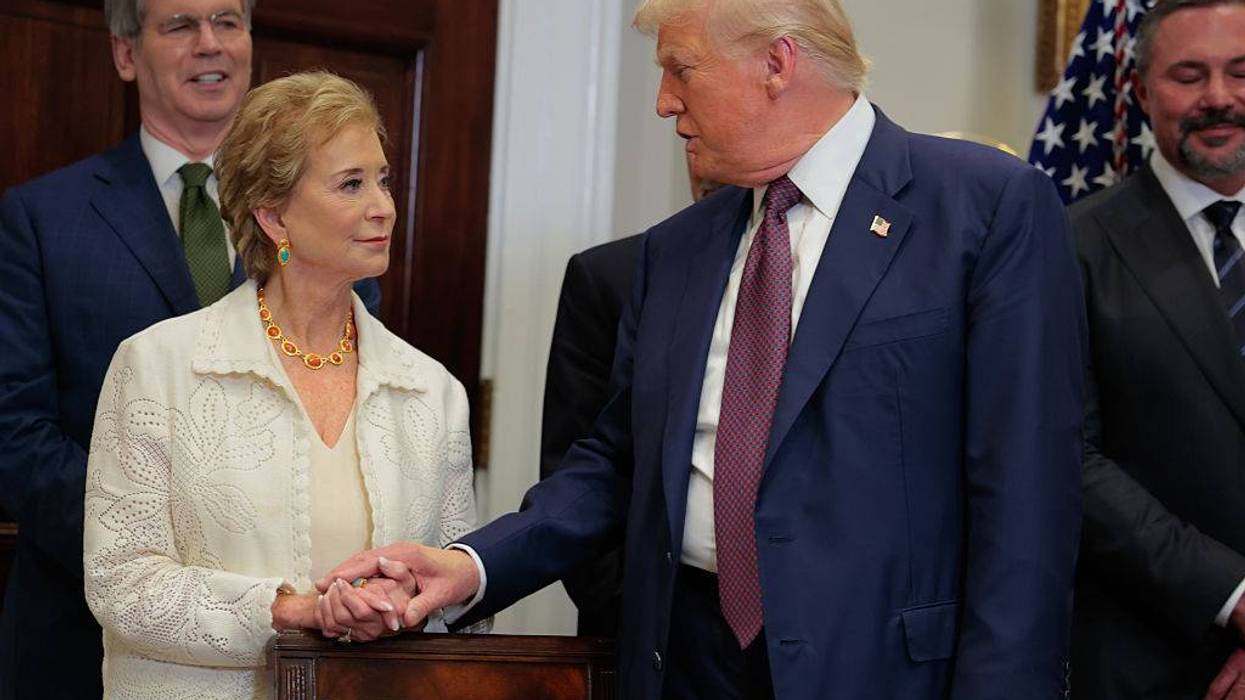
"It is a document of unconditional surrender," one professor said of a compact "urging campus leaders to pledge support for President Trump's political agenda to help ensure access to federal research funds."
President Donald Trump's war on academia continued this week with letters pressuring the leaders of top universities across the United States to sign his "Compact for Academic Excellence in Higher Education" for priority access to federal funding and other "positive benefits."
The New York Times reported that "letters were sent on Wednesday to the University of Arizona, Brown University, Dartmouth College, Massachusetts Institute of Technology, the University of Pennsylvania, the University of Southern California, the University of Texas, Vanderbilt University, and the University of Virginia."
The letters "urging campus leaders to pledge support for President Trump's political agenda to help ensure access to federal research funds" were signed by Education Secretary Linda McMahon and two key White House officials, according to the Times.
The compact, published by the Washington Examiner, states that "no factor such as sex, ethnicity, race, nationality, political views, sexual orientation, gender identity, religious associations, or proxies for any of those factors shall be considered, explicitly or implicitly, in any decision related to undergraduate or graduate student admissions or financial support, with due exceptions for institutions that are solely or primarily comprised of students of a specific sex or religious denomination."
"Signatories commit themselves to revising governance structures as necessary to create such an environment, including but not limited to transforming or abolishing institutional units that purposefully punish, belittle, and even spark violence against conservative ideas," the 10-page document continues.
In an apparent response to campus protests against US complicity in Israel's ongoing genocide in the Gaza Strip, the compact adds:
Universities shall be responsible for ensuring that they do not knowingly: (1) permit actions by the university, university employees, university students, or individuals external to the university community to delay or disrupt class instruction or disrupt libraries or other traditional study locations; (2) allow demonstrators to heckle or accost individual students or groups of students; or (3) allow obstruction of access to parts of campus based on students’ race, ethnicity, nationality, or religion. Signatories commit to using lawful force if necessary to prevent these violations and to swift, serious, and consistent sanctions for those who commit them.
The compact also requires strict definitions of gender, including for sports, as well as limits on the enrollment of international students. Transgender athletes and foreign scholars have been key targets of the Trump administration.
While Kevin P. Eltife, chair of the University of Texas Board of Regents, told the Times that the school system "is honored" that its flagship in Austin was "selected by the Trump administration for potential funding advantages" and "we enthusiastically look forward to engaging with university officials and reviewing the compact immediately," the other eight schools declined to comment.
The president has already used federal funding to push for changes at major institutions, waging battles over admission policies, trans athletes, and campus protests against US government support for Israel's genocide in the Gaza Strip. Brown and UPenn are two of the schools that have already reached agreements with the administration, while others have fought back.
Critics were swift to condemn the Trump administration's effort as "blackmail," "extortion," and a "shakedown."
"This administration is extorting universities to sign away academic freedom—nothing meritocratic or 'small government' about it," said Salomé Viljoen, an assistant professor at the University of Michigan Law School, on social media.
The compact was decried as a "loyalty oath" and "political bribe." Damon Kiesow, the Knight chair for journalism innovation at the Missouri School of Journalism, said that "it is a document of unconditional surrender."
Edward Swaine, a professor at the George Washington University Law School, warned that "this steps boldly toward a scheme in which the federal government's role in relation to all colleges and universities, public and private, is akin to how state governments presently govern state institutions."
"Federalism aside, at what point does every school become a state actor?" he asked.
Despite Republican officials' long-standing opposition to student debt relief and tuition-free higher education, the compact also calls for a five-year tuition freeze and free tuition for students studying "hard sciences" if a school's endowment exceeds $2 million per undergraduate student.
Richard W. Painter, the chief White House ethics counsel under former President George W. Bush and now a University of Minnesota law professor, said Thursday that "the Trump administration is absolutely right that universities must freeze tuition."
"Price gouging of students and wasteful spending must stop," he added. "The administration's obsession over 'definition of gender' is a silly sideshow undermining higher ed reform."
America will not be great again by closing its doors. It will flourish through welcoming the world’s best minds and taking pride in that.
Once, the United States truly was the land of opportunity, a place where young scholars arrived with suitcases full of hope, chasing the white picket fence version of the American Dream: studying in leafy college towns, dreaming of raising families under skies of limitless possibility.
But in early June 2025, US President Donald Trump delivered a shattering blow to that promise. With two sweeping proclamations, one banning all new visas for Harvard bound international students and the other reimposing travel restrictions on 19 countries, many of them Muslim majority, the Trump administration effectively expelled the very brilliance that makes America great.
These orders not only redirect visas, but they also overturn a national identity built on access, freedom, and merit. The administration justifies the actions under the guise of protecting against foreign influence, radicalism, and even campus antisemitism. But in truth, this is a punitive escalation, a direct response to elite universities like Harvard and Columbia resisting federal overreach in governance.
It sends a chilling message: that merit and dreams matter less than nationality or ideology. That the invitation once extended to the world’s best and brightest is now conditional. This is not a means to protect national infrastructure; it is a means to coerce institutional compliance with injustice.
We must fight for a country where politics do not gate opportunity and where the world’s brightest minds are not exiled but embraced.
International students earned nearly half of all STEM PhDs in the US in recent years and contributed nearly $44 billion to the US economy in 2023–24 alone. Breaking this pipeline will hollow out AI labs, biotech firms, and university research hubs.
Experts warn of a looming brain drain that will hand leadership in critical fields to other nations. This represents an ideological turn in presidential power, unchecked and unprecedented.
The Trump administration has already suspended Harvard’s Student and Exchange Visitor Program status; frozen billions in research funding; and implemented intrusive social media vetting for visa applicants.
Thousands of international students, many of whom simply expressed political views or joined peaceful protests, have seen their legal status revoked. Rather than investing in long-term domestic talent pipelines, the Trump administration is deliberately dismantling the systems that anchor America’s intellectual and innovation ecosystems.
The shrinking H‑1B visa access, reduced Optional Practical Training (OPT) retention, and ideological bans reflect a shortsighted, transactional worldview. And economic theory makes one thing clear: These restrictive moves will not fix the trade deficit—they will erode America’s competitive edge.
So what must be done?
Lawmakers and universities must ground policy in principle and pragmatism. They must codify protections that prohibit ideological or religious discrimination in visa decisions, ensuring no future administration can replicate Proclamation 10949. Visa policy should be amended to retain international STEM graduates, scaling OPT, and opening clear talent pipelines to citizenship.
Academic autonomy must be protected by rejecting funding threats tied to political compliance and affirming universities’ independence.
America’s strength has always come from being a place where merit and motivation, not birthplace or belief, determine opportunity. Expelling brilliance to score political points may win applause from a few, but globally, it signals surrender. America will not be great again by closing its doors. It will flourish through welcoming the world’s best minds and taking pride in that.
When brilliance, innovation, and the freedom to think, speak, and believe are driven out, we must be wary and active citizens; we cannot stay silent. We must fight for a country where politics do not gate opportunity and where the world’s brightest minds are not exiled but embraced. The future of America depends on it.
"The immediate economic losses projected here are just the tip of the iceberg," explained the CEO of the NAFSA: Association of International Educators.
The number of international students enrolling at U.S. colleges looks set to plummet this fall, according scenario modeling by an organization that advocates on behalf of academic exchange worldwide.
Insider Higher Ed reported on Tuesday that new data from the group, NAFSA: Association of International Educators, has found that American colleges could lose up to 150,000 international students in the coming academic year, which would represent a decline of up to 40% in foreign enrollment. In fact, the projected drop in international students is so large that it could lead to a drop in overall enrollment of 15%.
NAFSA cited multiple factors leading to the projected decline in international students: a three-week period between late May and the middle of June where student visa interviews were suspended all together; limited appointments available for students in countries such as India, China, Nigeria, and Japan; and new visa restrictions on 19 different countries stemming from an executive order U.S. President Donald Trump signed in early June.
NAFSA projected that the consequences of losing 150,000 international students this fall would be grim not just for universities but also the American economy as a whole. In all, the association found that a drop in students of that magnitude "would deprive local economies of $7 billion in spending and more than 60,000 jobs."
Fanta Aw, the executive director of NAFSA, emphasized that the United States would suffer even greater long-term damage from its policies discouraging the enrollment of international students.
"The immediate economic losses projected here are just the tip of the iceberg," Aw explained. "International students drive innovation, advance America's global competitiveness, and create research and academic opportunities in our local colleges that will benefit our country for generations. For the United States to succeed in the global economy, we must keep our doors open to students from around the world."
Trump and his administration have been going to war with the American higher education system by withholding federal research funding from universities unless they agree to a list of demands such as eliminating diversity, equity, and inclusion programs, and reviewing their policies for accepting international students.
The administration has also cracked down on international students who are already in the U.S. and has detained them and threatened them with deportation for a wide range of purported offenses such as writing student newspaper editorials critical of the Israeli government, entering the country with undeclared frog embryos, and having a single decade-old marijuana possession charge.
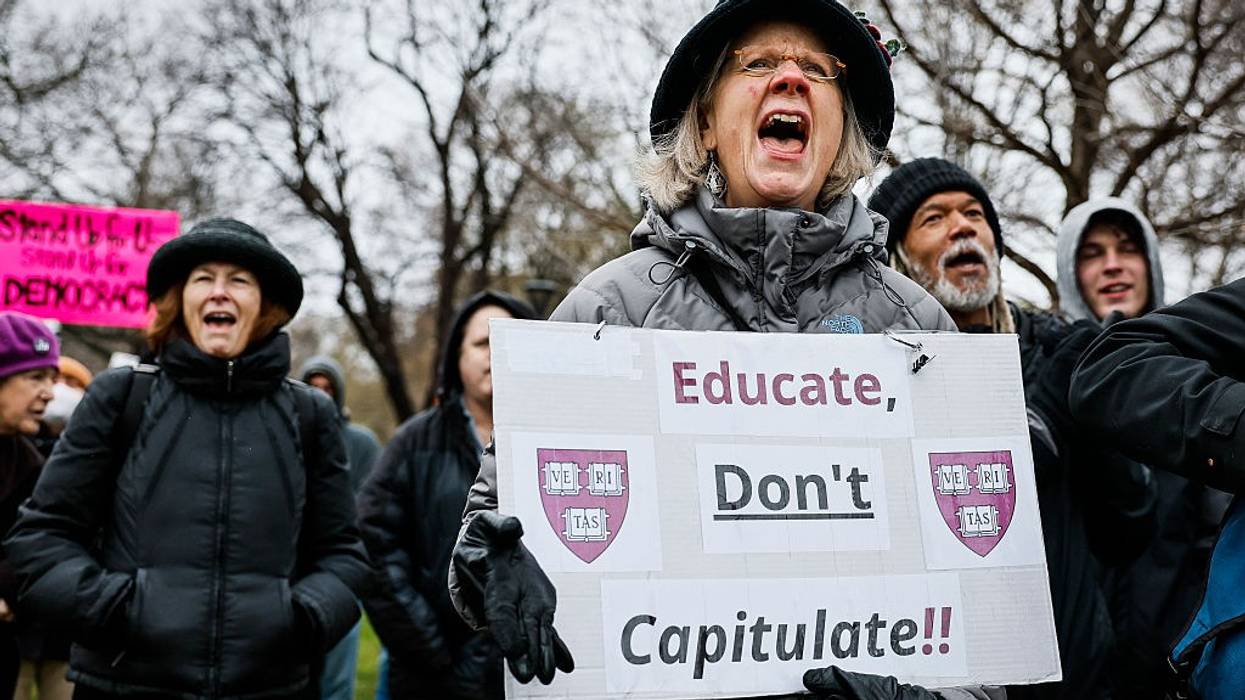
To shy away from this fight signals one of two things: a lack of faith in the principles and strength of our democracy; or cowardice; or both.
Recently, our law firm filed a friend of the court brief on behalf of former government officials supporting Harvard in its legal battle with U.S. President Donald Trump over federal funding and control of its curriculum, hiring, and admissions. We came to Harvard's defense because of the threat Trump's attack on academic freedom poses to our democracy.
That case has been consolidated with another Harvard has brought to protect its right to host international students. So far Harvard has won three temporary injunctions stopping Trump in his tracks. A hearing is scheduled on July 21 to decide both cases on the merits and determine if Harvard is entitled to permanent relief.
Despite the fact it is winning, there are disturbing reports Harvard is now in talks with the White House to make a deal. That would be a grievous mistake, both as a matter of principle and common sense. And it would amount to a betrayal of those who have fearlessly stepped forward in defense of Harvard.
The point about principle should not be lost on Harvard.
Harvard's courage so far in standing up to Trump has empowered other universities and institutions to do the same. If Harvard makes a deal, it will signal weakness and others will follow.
As it well knows, Trump's actions have violated the Constitution in ways never before seen in this country. He is using the power of the federal government to force Harvard to conform to his ideological views. Democracies like ours survive only if the system of checks and balances proves it can work. With Congress in Trump's pocket, that job has fallen to the courts.
At this moment, the legal arguments in the Harvard case are framed and ready to be decided. This is the wrong time to back out of the fight. Harvard needs to let the court rule. The legal process can and will establish the unconstitutionality of Trump's orders and how they infringe on academic freedom and First Amendment rights.
This fight is not just to save our democracy. It will determine our place in history. When future generations look back at this pivotal moment, they should understand that what Trump did was not just aberrational, it was unconstitutional. They need to understand the threat it posed to academic freedom and democracy, and how our constitutional democracy responded and prevailed.
Harvard, of all places, should understand the importance of history. Its own history is entwined with the founding of our Republic and its democratic values. Eight Harvard graduates, starting with John Adams and John Hancock, signed the Declaration of Independence. At the time of the American Revolution, Harvard was 140 years old. It dismissed its students and turned the campus over to the Continental Army. Eight Harvard alumni have served as president, and 15 have served on the Supreme Court since 1902.
For almost 400 years, Harvard has taught and led. It has made history as it has studied history. It has produced some of our greatest constitutional scholars and countless Nobel laureates in every field of learning. Of all places, it should care what history will say it did when faced with this existential threat to our Republic.
From a practical standpoint, making a deal gets Harvard nothing. Trump is using the same playbook as with the law firms. He will change the terms of any deal and cut off funding in a heartbeat if Harvard does something he doesn't like. A deal does not end Trump's involvement with Harvard—just the opposite. It guarantees there will be more efforts to assert control.
The law firms that made deals look foolish now. They are losing business and partners while the firms that fought have won permanent relief in the courts. Had the firms who did the deals joined the firms that fought, the legal profession would be stronger and freer than it is now.
Harvard's situation is no different. Why would Harvard give in to any of Trump's demands when it is winning in court? If he continues to deny funding in the face of a court ordered injunction, then Harvard should be prepared to take this to the Supreme Court. That is the only way to prove we have a constitutional democracy that works. And it is the only way for Harvard to ensure academic freedom. To shy away from this fight signals one of two things: a lack of faith in the principles and strength of our democracy; or cowardice; or both.
Some supporters of Harvard wring their hands and lament the temporary loss of funds. But that is what a $53 billion endowment is for. It is there to ensure the independence of the university in a time of crisis. Whatever is spent now will be recovered from grateful alumni and supporters in the years ahead once the battle is won.
Harvard will prevail if it stands firm. Administrations come and go, but institutions like Harvard stand for ideas and principles that are designed to survive transient political movements.
Harvard's courage so far in standing up to Trump has empowered other universities and institutions to do the same. If Harvard makes a deal, it will signal weakness and others will follow.
And that, in the end, is all that Trump really wants. He understands how the perception of power can be used to build and project power. He will exploit the opportunity afforded by any deal, no matter what it requires or says, to lie about its content and terms to promote a narrative that helps him consolidate more unchecked power.
We have enjoyed the fruits of freedom and democracy for the last 85 years because in times of maximum peril, the principled resistance of those like Winston Churchill triumphed over the expediency of appeasement. This is a Churchillian moment for Harvard, one that tests its true mettle. History will judge whether it had the courage, wisdom, and strength to stand firm in defense of democracy.
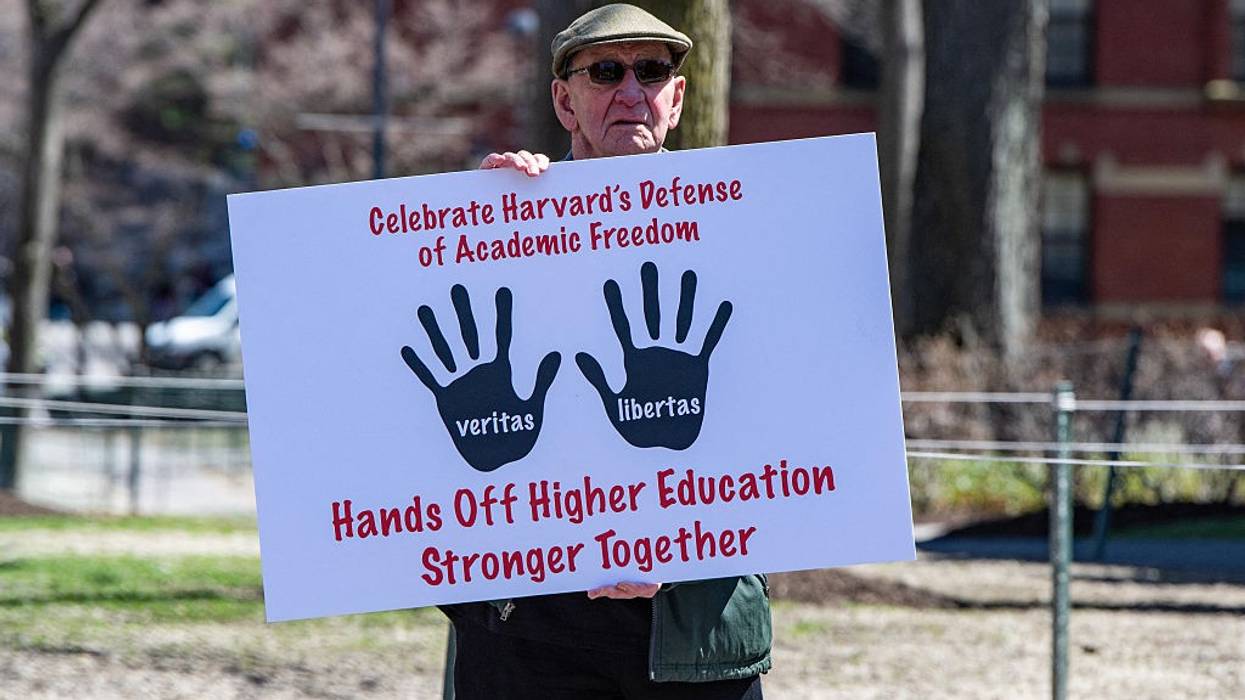
Trump is determined to make an example of Harvard so that other universities and institutions with money and power will do his bidding.
This month, our firm filed a friend of the court brief in the Harvard case on behalf of 18 former government officials who were responsible for enforcing Title VI of the Civil Rights Act of 1964, the law the Trump administration relies on to justify termination of billions of dollars in federal funding to the university. The signatories to the brief are senior career and non-career appointees who served in both Republican and Democratic administrations from the 1970’s to January of this year.
One of those former officials is David Tatel, a highly respected retired judge who served as director of the Office for Civil Rights in the Department of Health, Education, and Welfare (HEW) under President Jimmy Carter, and later as a judge on the U.S. Court of Appeals for the District of Columbia Circuit, often called the nation’s second highest court. Judge Tatel discusses his experience overseeing Title VI enforcement in the brief. It illustrates just how lawless, destructive, and dangerous President Donald Trump’s vendetta against Harvard has become—and how different it is from any Title VI enforcement action that has gone before.
Title VI requires institutions that receive federal funds to follow civil rights laws. Institutions that discriminate can lose their funds, but it is an option of last resort.
Rather than conducting a proper investigation with detailed findings, engaging in good-faith negotiations, and allowing Harvard an opportunity to defend itself, Trump moved immediately to the nuclear option that hurts everyone.
Before funds are cut, the government must conduct a proper investigation to determine if discrimination exists and the law has been violated; it must make genuine, good faith efforts to work with the fund recipient to secure voluntary compliance; and where settlement is unsuccessful, the recipient must have a chance to present its case in court.
These constraints are written into Title VI and the regulations federal agencies must follow. They protect the interests of universities like Harvard, but more important, they maintain the delivery of services to the ultimate beneficiaries of federal programs as much as possible. In the case of Harvard, those beneficiaries include not just its students and faculty, but millions around the world who benefit from advances in science, medicine, and technology that flow from Harvard’s research programs and facilities.
Judge Tatel refers to fund termination as the nuclear option: “it is like dropping an atom bomb—everyone gets hurt.”
In his time enforcing Title VI, Tatel faced egregious violations of civil rights laws by school districts and universities, involving refusals to comply with court desegregation orders, and the firing of Black teachers.
Tatel recalls traveling to remote school districts in Texas and Arkansas, meeting with school superintendents to learn about their issues and work out agreements. He did the same with the city of Chicago, taking months to investigate concerns and negotiate over how to achieve voluntary compliance with a desegregation plan that would serve the interests of students, the city, and the federal government.
Universities were no different. Tatel carefully negotiated agreements with the public university systems of Arkansas, Florida, Georgia, Oklahoma, and Virginia to remove the vestiges of racially dual education systems in those five states.
The University of North Carolina took longer, but Tatel and his boss, HEW Secretary Joseph Califano, stayed with it for years, meeting repeatedly with the UNC president and North Carolina Gov. Jim Hunt to craft an acceptable plan. Ultimately an agreement was worked out by the Reagan administration.
The approach to Title VI enforcement Judge Tatel followed and that is mandated by the statute has worked time and again. As a result, the termination of funds has been rare. Thousands of Title VI complaints have been filed during the decades Tatel and the signatories to the brief oversaw enforcement. They are aware of none that has resulted in fund termination since 1982.
Contrast this with way Trump has pursued alleged Title VI concerns with Harvard. After receiving notification of the government’s allegations of antisemitism on campus in February, Harvard explained the reforms it had undertaken and said it was open to exploring further reforms. Trump responded with an unprecedented and unconstitutional demand, requiring Harvard to submit to government control of the viewpoints expressed on campus. When Harvard refused to cede control of its teaching, community and governance, Trump moved within hours to terminate all federal funding.
The consequences to Harvard are dire. The cuts affect billions of dollars in funding that support medical breakthroughs, scientific discoveries, and national security. Harvard filed suit in court, challenging the fund termination as unconstitutional retaliation for exercising its First Amendment rights and its right to defend itself.
Trump responded by doubling down, ordering the Department of Homeland Security to revoke Harvard’s certification to host the 7,000 international students currently enrolled at Harvard. Harvard filed a second suit to protect these students, and Trump retaliated yet again, issuing a new Executive Order directing the State Department to take actions designed to prevent new international students coming to Harvard from entering the country.
Nothing could be further from the process mandated by Title VI for resolving allegations of discrimination, or the process successfully followed by past administrations and those charged with enforcing Title VI. Rather than conducting a proper investigation with detailed findings, engaging in good-faith negotiations, and allowing Harvard an opportunity to defend itself, Trump moved immediately to the nuclear option that hurts everyone.
What explains this blatantly lawless conduct? In my view the answer is clear.
Trump is not interested in resolving allegations of discrimination, any more than he is interested in determining if the allegations have merit in the first instance. His motives are retaliatory and punitive. They are designed to assert control over America’s oldest, wealthiest, and most prestigious university—a powerful institution he has concluded is not aligned with his political ideology.
He is determined to make an example of Harvard so that other universities and institutions with money and power will do his bidding.
We are now well down a path toward authoritarianism. The importance of the battle between Trump and Harvard cannot be overstated. It will determine more than the future of academic freedom in America. It may well determine the future of our democracy.
"This is yet another illegal retaliatory step taken by the administration in violation of Harvard's First Amendment rights," the school said.
U.S. President Donald Trump on Wednesday released a directive invoking national security powers to impose a six-month ban on international students from entering the United States to study at Harvard University—a move that was quickly panned by observers and the university itself.
The ban could be extended. The order also directs Secretary of State Marco Rubio to consider, at his discretion, whether non-Americans currently attending Harvard on F, M, or J visas should have their visas revoked.
"This is for crucial national security reasons," according to the statement.
The order from Trump is yet another escalation in the feud between the Trump administration and the Ivy League school that began this spring, and also comes not longer after a federal judge handed down a temporary restraining order halting the Trump administration's termination of the school's ability to enroll international students.
"This is yet another illegal retaliatory step taken by the administration in violation of Harvard's First Amendment rights," said a spokesperson for Harvard in a statement that was sent to multiple outlets. "Harvard will continue to protect its international students."
"This is ridiculous and has nothing to do with national security," wrote Rep. Pramila Jayapal (D-Wash.) on X on Wednesday. "It's a thinly veiled revenge ploy in Trump's personal feud with Harvard, and continued authoritarian overreach against free speech."
Larry Sabato, the founder and director of the Center for Politics at the University of Virginia, wrote late Wednesday: "Absolute insanity. The damage Trump is doing to our country is incalculable."
Separately, Trump on Wednesday announced a travel ban on 12 countries, including several in Africa, and restrictions on seven other countries.
Trump's statement comes mere weeks after the U.S. Department of Homeland Security (DHS) sought to strip Harvard of it's Student Exchange and Visitor Program certification, effectively preventing the school from hosting any international students.
The administration rationalized the move by alleging that the school's leaders have permitted "anti-American, pro-terrorist agitators to harass and physically assault individuals, including many Jewish students. Many of these agitators are foreign students."
Harvard challenged the move in court the following day and a federal judge temporarily blocked DHS from taking that action. The judge then extended the block and indicated a preliminary injunction would be forthcoming.
Trump's order calls out Harvard for its financial ties to foreign countries, including China. "Our adversaries, including the People's Republic of China, try to take advantage of American higher education by exploiting the student visa program for improper purposes and by using visiting students to collect information at elite universities in the United States," the order states.
A spokesperson for China's Foreign Ministry pushed back on Trump's latest move. "Education cooperation between China and the U.S. is mutually beneficial. The Chinese side has always opposed politicizing the cooperation," the spokesperson said.
Harvard has over 10,000 international students and scholars. International students made up 27% of the student population during 2024-25 school year, making tuition from international students a sizable share of Harvard's revenue.
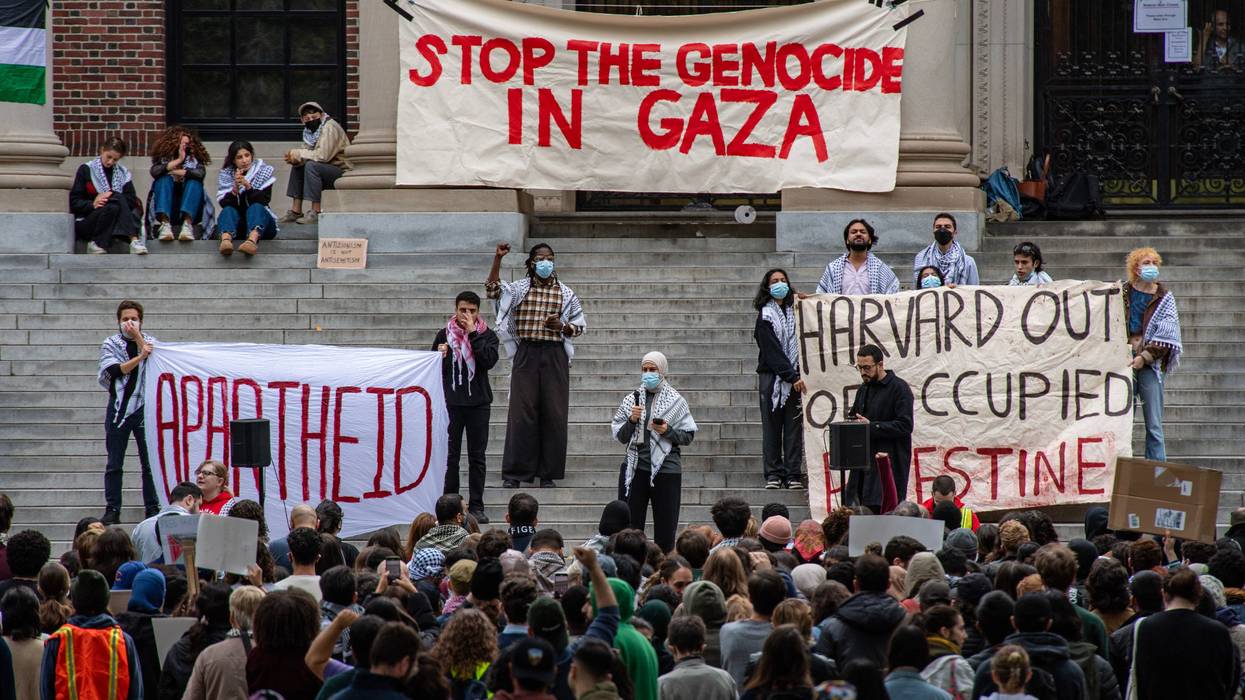
Trump’s aim is a campaign of terror and intimidation against universities and colleges designed to suppress free speech and critical thinking.
People in the United States of America continue to allow the normalization of very dangerous measures solidifying authoritarian government, and the administration of President Donald Trump continues to escalate each measure. The latest measure arrived on May 27 when Secretary of State Marco Rubio ended all embassy reviews of applications for student and exchange visas from foreign nationals, stating that a new policy including social media vetting will be announced soon. Rubio also suspended scheduling any new interviews for three types of visas that enable foreign nationals to participate in U.S. institutions: F (for students at academic institutions), M (for students in vocational or non-academic schools), and J (for teaching and research exchange visitors). The new policy has not been revealed yet.
Here is yet another case that should break the people of the U.S.—if not the feckless supposed opposition party, the Democrats—from their political paralysis. The Trump administration inherited a largely informal apparatus of campus repression relying on the defamation, arrest, and suspension of students and faculty members who opposed the U.S. role in supporting what the Israeli government now openly admits is a campaign of deliberate starvation and full land dispossession of the Palestinian people in Gaza and the West Bank. Trump’s administration seized upon the zeitgeist already brewed by university leaders and fueled by a coalition of Zionist and far-right organizations, and seized it with an aim far more expansive than simply punishing pro-Palestinian activism and speech.
Trump is not attacking Harvard, but extorting the institution in an attempt to put its allowable pedagogies and discourses beneath his state.
Trump’s aim is a campaign of terror and intimidation against universities and colleges designed to suppress free speech and critical thinking. The “Palestine exception” has proven to be a useful proxy as its enforcers are not simply the usual MAGA suspects, but include many liberal Democrats and cultural custodians who spent the last few years warning of Trump’s dangers while gladly serving as the handmaids of a repression whose contours they foolishly believed they could limit to one supposedly justified cause. The collaboration with only nominal opponents of antisemitism was a clever move by the MAGA right, as it bound them to silence in a pivotal early phase.
Now the later phase of the Trumpian war on free speech and free thought in higher education is unleashed, and the sorts of powers that Rubio will soon wield over student and researcher visas will allow for the state to pick and choose who enters the halls of academe—and who will be punished for eventually transgressing servitude to the ruling ideology.
Some people are mistakenly calling Trump’s higher education measures an “attack on universities.” Trump’s agenda is far from an attack—it is a right-wing elite capture, in which the current liberal managerial keepers of institutions either are replaced with MAGA counterparts or the current keepers break down and comply (and some already have). Jokes abound about the possible mismatch of some poorly-educated MAGA bootlicker running Harvard or Yale, but Trump’s administration and its congressional lackeys are mostly Ivy Leaguers themselves. U.S. Rep. Elise Stefanik (R-N.Y.), the most strident congressional Inquisitor of college presidents, is a Yale graduate like Vice President JD Vance. Trump went to Penn. Steve Bannon went to Harvard, like Pete Hegseth.
Trump is not attacking Harvard, but extorting the institution in an attempt to put its allowable pedagogies and discourses beneath his state. He has tried the same at Columbia University, and his administration states that the University of California system is next. The Task Force on Antisemitism led by gadfly former television commentator Leo Terrell functions as a spear tip of moralistic outrage masking the shakedown that Trump’s gangster presidency is actually waging. Trump and his collaborators don’t want to shut down Harvard, Columbia, or any institution of higher education whose trustees will turn over the keys to the MAGA regime. As the DOGE “cuts” demonstrate, the Trump administration understands how to effect ideological capture using traditional but empty Republican rhetoric about balancing budgets and preventing “waste.” The goal is to claim the spoils of the state, and use all state organs to assault private institutions that harbor resistance to the state.
Of course, this ideological capture is far from abstract as it brutally impacts the lives of foreign students lawfully studying and exerting their First Amendment rights (which apply to everyone on our soil, contrary to the Trump doctrine’s insistence otherwise) in the United States. Before both the U.S. Senate Committee on Foreign Relations and U.S. House Committee on Foreign Affairs in May, Rubio reiterated his servile liturgy on the pro-Palestinian students targeted by the Trump administration, sometimes at the behest of Zionist organizations like Betar.
“I will continue to revoke student visas,” Rubio stated, while also repeating an argument ad hominem that the targeted students occupied and damaged campus buildings and threatened other students. When asked about the case of the now-released Tufts doctoral student Rümeysa Özturk, who was arrested and disappeared to Louisiana for the mere act of co-signing a student newspaper editorial, Rubio reset to the same defamatory lines about breaking campus rules and a visa not being a right but a privilege.
Georgetown University postdoctoral researcher Badar Khan Suri, baselessly accused by the Department of Homeland Security of spreading Hamas propaganda, was chained at the ankles and wrists during his detention at Prairieland Detention Center in Texas, where he was housed from his March arrest until a federal judge ordered his release in May. Columbia University graduate Mahmoud Khalil, who actually holds a green card and not a visa, remains incarcerated in Louisiana and missed the birth of his child and his graduation ceremony.
While the ultimate goal of the Trump administration is a right-wing elite capture of higher education, especially its most prestigious institutions, the weaponization of the Palestine exception will not be dissipating any time soon. In the wake of federal judges freeing some of the students disappeared for their speech, Trump ally U.S. Rep. Randy Fine (R-Fla.) declared that “Palestinianism”—by which he means all recognition of Palestinian people as human beings—is terrorism that should not be allowed in U.S. Fine also endorsed dropping an atomic bomb on Gaza to murder its entire remaining population. After the terrible murder of Yaron Lischinsky and Sarah Lynn Milgrim outside of the Capitol Jewish Museum by a purported pro-Palestine activist, Israeli Prime Minister Benjamin Netanyahu declared that even stating “Free Palestine” is equivalent to saying “Heil Hitler.” Hate speech that keeps possible opponents of authoritarianism divided—and causes real harm—tragically is one of the main currencies of Trump’s MAGA movement.
No one should expect any consistency even on the question of antisemitism, because Trump is only committed to hegemonic power for his state and its collaborators. There is no moral principles held categorically, which is why moralistic opposition politics have largely done nothing to stop Trump’s hold on power tightening. While Rubio is railing against pro-Palestine students, Trump’s white nationalist supporters were cheering the admission into the U.S. of 49 Afrikaaner farmers from South Africa, including one who had called Jewish people “dangerous” and “untrustworthy.” Again, Trump wants immigration just like he wants Harvard—just in forms that extend his ideological capture and venerate his broadly racist, patriarchal nationalism.
As international students comprise 5.9% of U.S. university admissions, they represent a mighty financial cudgel. In 2023-4, 25% of international students in the U.S. were studying math or computer science and 20% were studying engineering, they may be less likely to engage in political activism than their domestic counterparts and even before Trump more likely to keep a low profile to their host government (not to mention governments back home). Trump’s coalition includes a lot of people who are genuine extremist Zionists, so expect him to offer up more international students and for the State Department’s new policies to include social media scans of pro-Palestine content. Yet also expect Trump to be ready to make deals with any and all institutions of higher education who will cave to his demands for controlling allowable teaching and expression—and any nations who pledge that their students will arrive obedient. And, tragically, expect a lot of U.S. universities and colleges to fall in line.
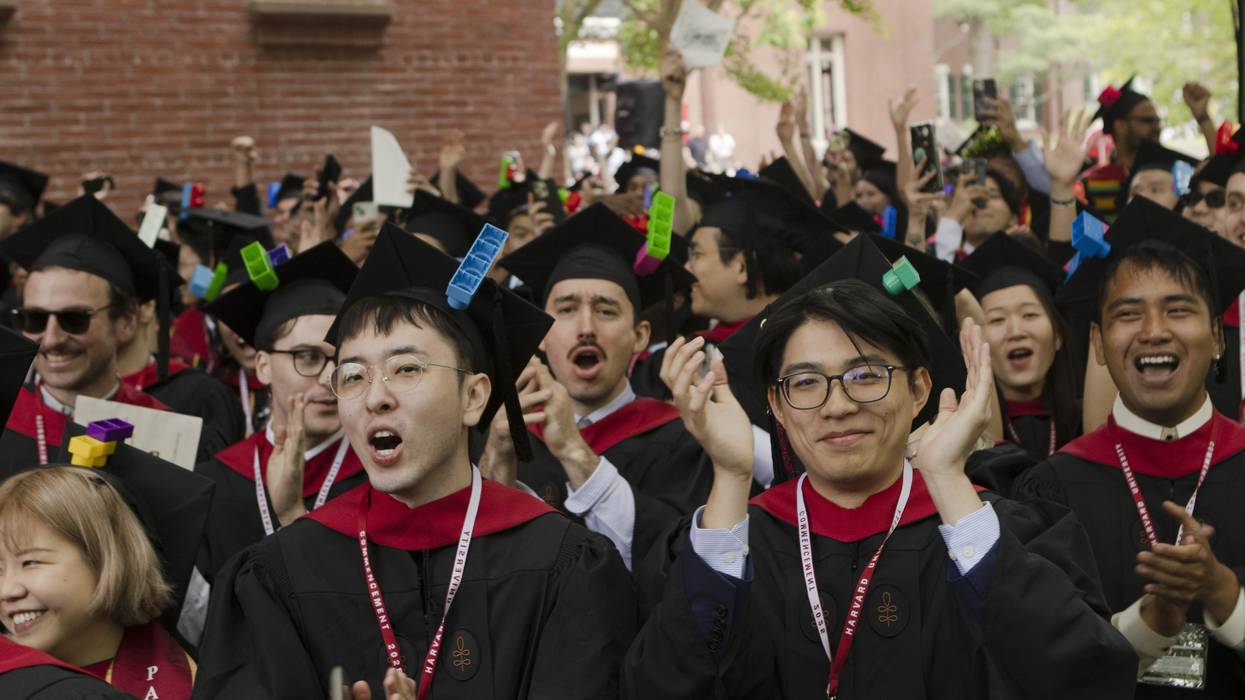
"Too many international students to count have inquired about the possibility of transferring to another institution," said the school's director of immigration services in a recent court filing.
A federal judge on Thursday extended an order blocking the Trump administration's move to end Harvard University's ability to enroll international students, a small victory for the elite school.
The U.S. Department of Homeland Security (DHS) announced last week that Homeland Security Secretary Kristi Noem ordered the agency to yank Harvard's Student Exchange and Visitor Program (SEVP) certification. "Harvard can no longer enroll foreign students and existing foreign students must transfer or lose their legal status," said DHS in a statement.
The following day, Harvard sued over the move. That same day, U.S. District Judge Allison Burroughs handed down a temporary restraining order freezing the ban while the litigation proceeds. And on Thursday, Burroughs ordered that the temporary restraining order remain in place until a preliminary injunction is issued, according to the court docket.
Earlier Thursday, the Trump administration submitted a letter to the court that it had sent to Harvard the day before, letting the school know that it has 30 days to respond with "any sworn statements, documents, or other evidence on which the school relies to rebut the alleged grounds for withdrawal" of the university's SEVP certification. Failure to respond to the notice within that time period will result in a withdrawal of the certification, according to the letter.
Politico reported that despite this revelation that the Trump administration is no longer immediately imposing the cancellation, Burroughs said during the hearing that an order barring the Trump administration from taking action against Harvard is still needed.
In its lawsuit, Harvard wrote that its more than 7,000 F-1 and J-1 visa holders and their dependents have "become pawns in the government's escalating campaign of retaliation."
During the the 2023-2024 school year, international students accounted for 5.9% of the total U.S. higher education population, or over 1.1 million students.
In a Wednesday court filing, Maureen Martin, director of immigration services at the school, said that because of the Trump administration's revocation notice currently enrolled international students are "reconsidering their futures at Harvard."
"Too many international students to count have inquired about the possibility of transferring to another institution," Martin told the court.
Harvard also held its commencement on Thursday.