
SUBSCRIBE TO OUR FREE NEWSLETTER
Daily news & progressive opinion—funded by the people, not the corporations—delivered straight to your inbox.
5
#000000
#FFFFFF
To donate by check, phone, or other method, see our More Ways to Give page.


Daily news & progressive opinion—funded by the people, not the corporations—delivered straight to your inbox.
"He has unlawfully blocked funding and created a massive affordability crisis across the country. Congress and the American people deserve answers."
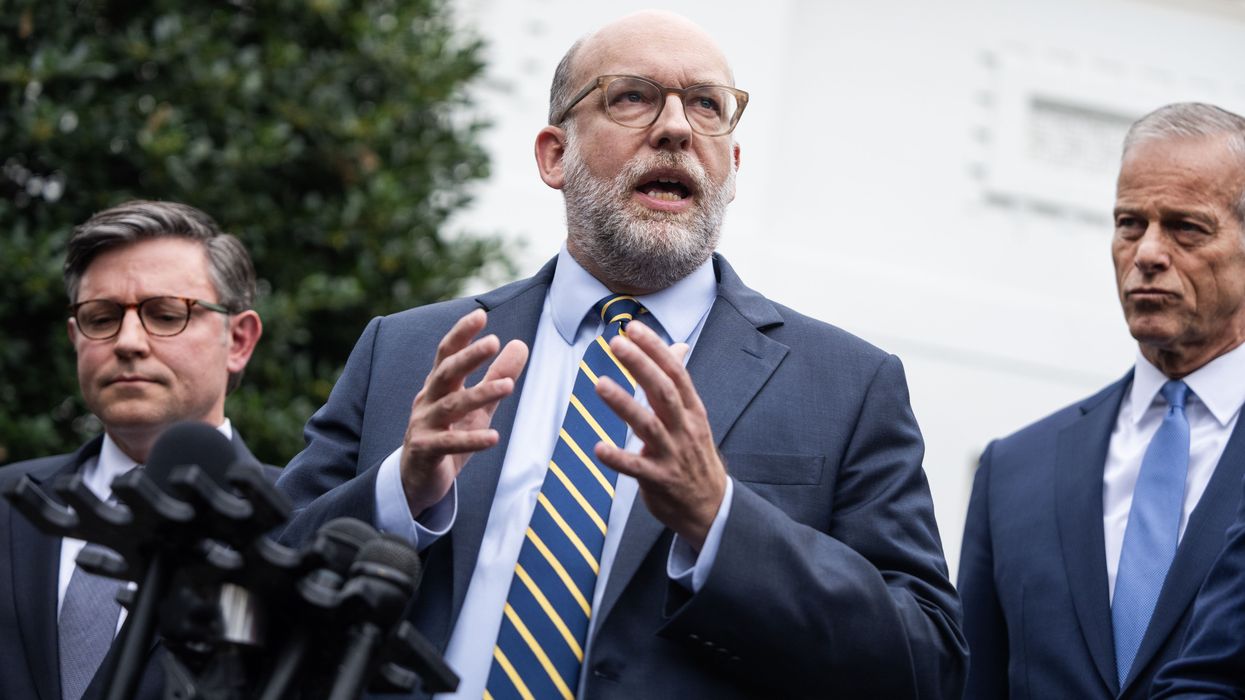
A group of House Democrats on Tuesday called on President Donald Trump's budget chief, Russell Vought, to publicly testify on the administration's unlawful withholding of funds approved by Congress and broader economic agenda, which the lawmakers said is "driving up costs, weakening the labor market, and inflicting real economic harm on the American people."
"We remain alarmed that you persist in implementing an extreme agenda that jeopardizes the economic security of the American people and shows open disregard for Congress' constitutional power of the purse," House Budget Committee Democrats, led by Rep. Brendan Boyle (D-Pa.), wrote in a letter to Vought, the director of the Office of Management and Budget (OMB) and a lead architect of the far-right Project 2025 agenda.
The lawmakers accused Vought of dodging the House Budget Committee, noting that the head of OMB typically appears before the panel shortly after the release of the president's annual budget request. Trump unveiled his budget blueprint all the way back in May.
"Not only has the committee yet to hear from OMB, you have also found time for multiple closed-door meetings with House Republicans," the Democrats wrote. "Under Democratic chairs, the public was never shut out from these important exchanges. What is the administration trying to hide?"
The letter points to Government Accountability Office (GAO) reports finding that the Trump administration has repeatedly violated federal law by withholding or delaying the disbursement of funds authorized by Congress, including National Institutes of Health research grants and money for Head Start.
The House Democrats also condemned Vought's attacks on government transparency, citing his agency's decision earlier this year to cut off public access to a database that tracks federal spending. OMB later partially restored the database after losing a court fight.
"If you fail to appear before this committee before the end of the year, this will be the only administration in the last 50 years to not send the OMB director—a basic standard you yourself met during President Trump’s first administration (appearing in both 2019 and 2020)," the lawmakers wrote on Tuesday. "If you disagree... it will make one point unmistakably clear: you know you cannot defend an extreme agenda."
We’re demanding that Russ Vought, Trump’s OMB Director and the architect of Project 2025, testify before the House Budget Committee.
He has unlawfully blocked funding and created a massive affordability crisis across the country. Congress and the American people deserve answers. pic.twitter.com/kxde5mCYs9
— Rep. Pramila Jayapal (@RepJayapal) December 2, 2025
After playing a key role in crafting the notorious Project 2025 agenda ahead of Trump's 2024 election win, Vought has emerged as one of the most powerful figures in the administration, wielding power at OMB so aggressively that ProPublica recently dubbed him "the shadow president."
"What Vought has done in the nine months since Trump took office goes much further than slashing foreign aid," the investigative outlet noted. "Relying on an expansive theory of presidential power and a willingness to test the rule of law, he has frozen vast sums of federal spending, terminated tens of thousands of federal workers and, in a few cases, brought entire agencies to a standstill."
One anonymous administration official told ProPublica that "it feels like we work for Russ Vought."
"He has centralized decision-making power to an extent that he is the commander-in-chief," the official said.
"Because authoritarians love using censorship to silence opposition, it's likely gonna keep rearing its head," warned one rights group.
While welcoming the removal of legislation in House Republicans' budget reconciliation package that would empower U.S. President Donald Trump's administration to revoke the tax-exempt status of any nonprofit it deems supportive of a terrorist organization, rights groups on Monday urged vigilance, warning that GOP lawmakers could slip the contentious provision back into a future draft of the legislation.
In an unusual late Sunday night session, the House Budget Committee voted 17-16, with four Republicans voting "present," to advance the One Big Beautiful Bill Act—named in an act of GOP fealty to Trump's description of the proposal—which would extend the president's 2017 tax cuts that have disproportionately benefited ultrawealthy households and corporations while slashing vital social programs upon which tens of millions of people rely.
The latest version of the proposal no longer contains an amendment based on the language of the Stop Terror-Financing and Tax Penalties on American Hostages Act, or H.R. 9495—which critics have dubbed the "nonprofit killer."
"The removal of the nonprofit killer bill from the House Republicans' advanced tax package is a promising sign, not a victory."
According to the advocacy group Free Press Action, the bill allows the treasury secretary "to accuse any nonprofit of supporting terrorism—and to terminate its tax-exempt status without due process."
Civil liberties defenders say the proposal's lack of clarity regarding the determination of whether and how a nonprofit supports terrorism would enable Trump to follow through on his threats to cancel the tax-exempt status for organizations with which he disagrees, including universities, advocacy groups, media outlets, charities, religious institutions, and others.
Organizations that support Palestinian rights or oppose Israel's annihilation of Gaza—which is the subject of an International Court of Justice genocide case—have been particularly concerned about the bill, citing the Trump administration's moves to defund universities and other institution that oppose crackdowns on Gaza protests and the arrest and detention of foreign nationals, including green-card holders, for constitutionally protected protests.
The Nonprofit Killer Bill was pulled from the GOP tax package, but this is no victory. It could return at any moment. If we want to protect the right of nonprofits to speak truth to power, we must act now. 🛑 Tell Congress: Keep the Nonprofit Killer Bill OUT 👉 action.cair.com/a/nonprofit-killer-bill
[image or embed]
— CAIR (The Council on American-Islamic Relations) (@cairnational.bsky.social) May 19, 2025 at 12:58 PM
While welcoming the removal of the measure from the reconciliation package, groups including the Council on American-Islamic Relations (CAIR) warned of the possibility that Republican lawmakers could re-insert the provision in the reconciliation package, which is scheduled for consideration by the House Rules Committee later this week.
"The removal of the nonprofit killer bill from the House Republicans' advanced tax package is a promising sign, not a victory," CAIR government affairs director Robert S. McCaw said Monday. "This provision could come back at any time, and if Americans want to preserve the right of nonprofits to speak truth to power, now is the time to flood Congress with messages demanding they keep this language out of the bill."
"We are defending nothing less than the future of nonprofit advocacy and our core constitutional freedoms," McCaw added.
While it is uncertain why the proposal was removed from the reconciliation bill, ACLU senior policy counsel Kia Hamadanchy told The Intercept that "it's possible they took it out to rewrite it in some way, because we know that this package is going to be amended."
"But for now, it's not in the text of the bill, and that's an improvement from where we were at last week," Hamadanchy added.
Addressing everyone who contacted their federal lawmakers or took other action in opposition to the bill, the digital rights group Fight for the Future said on the social media site Bluesky that "pressure from YOU is making a difference."
"We killed this bill in the fall, but because authoritarians love using censorship to silence opposition, it's likely gonna keep rearing its head," the group added, referring to the legislation's failure to receive a Senate vote before the previous congressional term ended.
"The only reason this vote passed tonight is because they've plotted behind closed doors to hurt even more families."
Republicans pushed their massive reconciliation bill through the House Budget Committee late Sunday after striking a deal with GOP hardliners who tanked a vote on the package late last week, complaining that the measure's proposed cuts to Medicaid and other programs were not sufficiently aggressive.
The final vote on Sunday was 17-16, with the four Republicans who voted against the bill on Friday switching their votes to "present," allowing the legislation to clear the committee.
Rep. Ralph Norman of South Carolina, one of the Republicans who switched his vote, said during Sunday's hearing that he is "excited about the changes we've made"—prompting Democratic committee members to ask, "What changes?"
"Do not be fooled," Democratic Rep. Stacey Plaskett of the U.S. Virgin Islands said Sunday. "The 'no' votes from certain Republicans on Friday were because the cuts were not fast or deep enough. In the back room, Republicans agreed to deeper and especially faster cuts to programs."
WATCH: Republicans admit they made a backroom deal to change their budget bill — but they won't tell the American people.
One thing is clear: the only reason this vote passed tonight is because they’ve plotted behind closed doors to make their health care cuts even worse. pic.twitter.com/BWeEHlafMq
— House Budget Committee Democrats (@HouseBudgetDems) May 19, 2025
Rep. Chip Roy (R-Texas) wrote in a social media post after joining Norman in voting "present" that "after a great deal of work and engagement over the weekend," the legislation "now will move Medicaid work requirements forward and reduces the availability of future subsidies under the green new scam"—a reference to clean energy tax credits established by the Inflation Reduction Act.
Roy and other Republican hardliners are also reportedly pursuing changes that could force states to end their Medicaid expansions, which would strip coverage from millions and potentially kill tens of thousands of people per year.
In its current form, the Republican reconciliation bill would inflict the largest cuts to Medicaid and the Supplemental Nutrition Assistance Program (SNAP) in U.S. history, slashing or eliminating benefits for millions by implementing strict work requirements and forcing many Medicaid recipients to pay more for coverage, among other changes—all while giving major tax breaks to the wealthy.
The legislation's Medicaid work requirements, which policy experts have condemned as cruel and ineffective, were slated to begin in 2029, but GOP hardliners want them to start immediately.
The changes sought by Roy, Norman, and other far-right Republicans must get through the House Rules Committee before the bill can reach the House floor. The GOP controls the panel, and both Roy and Norman are members.
Rep. Brendan Boyle (D-Pa.), the top Democrat on the House Budget Committee, said following Sunday's vote that "Republicans have spent months lying about their plan to make the largest cuts to healthcare and food assistance in American history."
"Kicking 13.7 million people off their healthcare apparently wasn't enough for House Republicans," Boyle added. "The only reason this vote passed tonight is because they've plotted behind closed doors to hurt even more families while refusing to share this backroom deal with the American people. This fight isn't over, and we're going to make sure every American knows exactly how they've been betrayed by Donald Trump and the Republican Party."
"Their plan would force the largest Medicaid cuts in American history—all to pay for more tax giveaways to billionaires," said Democratic Rep. Brendan Boyle.
At a press conference last week, U.S. House Majority Leader Steve Scalise claimed Democrats are lying when they warn that Medicaid is in the Republican Party's crosshairs.
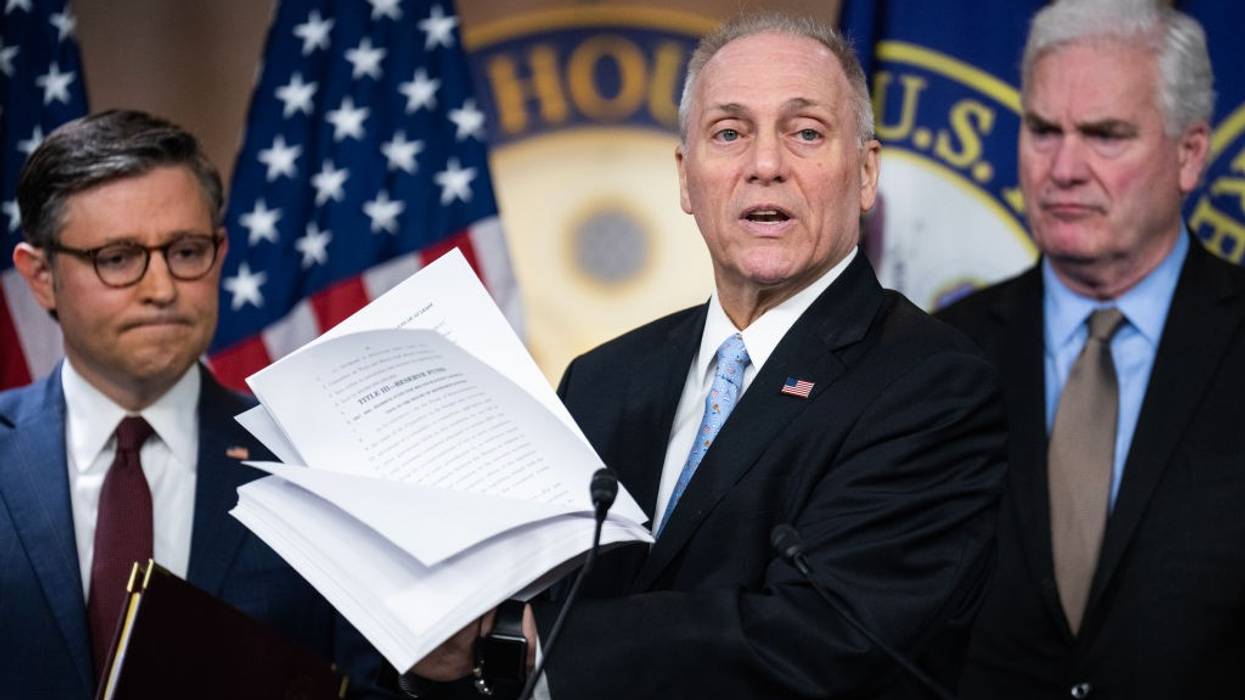
"The word Medicaid is not even in this bill," Scalise (R-La.) declared, waving the text of a budget resolution that House Republicans went on to pass over unified Democratic opposition.
But an analysis released late Wednesday by the nonpartisan Congressional Budget Office (CBO) makes clear that deep cuts to Medicaid would be required under the House GOP resolution, which President Donald Trump has endorsed.
The analysis, produced at the request of leading House Democrats, shows that Medicaid accounts for 93% of projected mandatory spending under the jurisdiction of the House Energy and Commerce Committee over the next decade, not including Medicare.
That means Republicans would have to cut Medicaid, the Children's Health Insurance Program (CHIP), or Medicare to achieve the $880 billion in spending reductions that the House budget resolution instructs the energy and commerce panel to impose between fiscal years 2025 and 2034.
"This analysis from the nonpartisan CBO confirms what we've been saying all along: Republicans are lying about their budget," said Rep. Brendan Boyle (D-Pa.), the top Democrat on the House Budget Committee. "Their plan would force the largest Medicaid cuts in American history—all to pay for more tax giveaways to billionaires."
I keep hearing Republicans claim their budget doesn't cut Medicaid. We all know that's a lie — so I asked the nonpartisan CBO to look into it. Their analysis confirms it: the Republican budget delivers the largest Medicaid cuts in history to pay for giveaways to billionaires.
[image or embed]
— Rep. Brendan Boyle (@congressmanboyle.bsky.social) March 5, 2025 at 5:45 PM
According to the CBO, just $135 billion in spending under the House Energy and Commerce Committee's jurisdiction over the next decade would be available for cuts when excluding Medicaid, Medicare, CHIP, and programs that are "budget-neutral with revenues offsetting spending."
That would leave the GOP far short of the $880 billion in energy and commerce spending reductions proposed in the House budget resolution, which still must make its way through the Republican-controlled Senate before the GOP can move ahead with Trump's legislative agenda.
The CBO's analysis comes a day after Trump neglected to mention Medicaid during his first address to Congress of his second term, a decision that one advocate said confirms the president "knows his plan to cut nearly $1 trillion from Medicaid is so deeply unpopular that he would rather sweep it under the rug."
Rep. Frank Pallone, Jr. (D-N.J.), the top Democrat on the House Energy and Commerce Committee, said Wednesday that the CBO analysis "confirms what we've been saying all along: The math doesn't work without devastating Medicaid cuts."
"The reality is the only way Republicans can cut at least $880 billion within the Energy and Commerce Committee's jurisdiction is by making deep, harmful cuts to Americans' healthcare," said Pallone. "Republicans know their spin is a lie, and the truth is they have no problem taking healthcare away from millions of Americans so that the rich can get richer and pay less in taxes than they already do."
"Instead of choosing to protect the American people, they chose to protect billionaires and corporations," said the top Democrat on the House Budget Committee.
House Republicans advanced their budget plan out of committee Thursday night after a 12-hour markup session during which they rejected dozens of Democratic amendments, including proposed changes that would have protected Medicaid and federal nutrition benefits from the deep cuts the GOP hopes to impose to help finance trillions of dollars in tax breaks for the richest Americans.
The House Budget Committee advanced the Republican resolution, unveiled earlier this week, in a 21-16 vote along party lines. Prior to the vote, GOP members agreed to adopt an amendment offered by Rep. Lloyd Smucker (R-Pa.) that, according to Politico, effectively caps "the cost of the tax cuts at $4 trillion, with a dollar-for-dollar increase in that ceiling if Republicans cut more spending, up to a total of $2 trillion in cuts."
Democrats on the panel offered more than 30 amendments to the budget resolution, all of which Republicans rejected.
"Each of our amendments was a direct effort to shield the American people from the reckless cuts embedded in this proposal, cuts that will hurt the most vulnerable while giving trillions of dollars of handouts to the ultra-rich," Rep. Brendan Boyle (D-Pa.), the top Democrat on the House Budget Committee, said in his closing remarks at Thursday's hearing. "We fought to protect Medicaid and Medicare, ensuring that seniors, low-income families, children, and people with disabilities don't see their healthcare stripped away."
"We proposed amendments to maintain funding for public education, ensuring that schools remain adequately resourced and that teachers don't bear the burden of budget shortfalls," Boyle continued. "And we stood up for veterans who risked their lives for this country and deserve more than empty rhetoric. They deserve fully funded healthcare, food assistance, and the benefits they earned through their service. Yet, despite the clear benefits of these proposals, Republicans oppose all of them."
"Instead of choosing to protect the American people," he added, "they chose to protect billionaires and corporations."
"This isn't government of, by, and for the people; it's government of, by, and for billionaires."
The Republican budget blueprint calls for more than a trillion dollars in cuts to Medicaid and the Supplemental Nutrition Assistance Program (SNAP), which provide healthcare and food aid to tens of millions of low-income Americans.
"These aren't just numbers," Sharon Parrott, president of the Center on Budget and Policy Priorities, stressed in response to the House GOP resolution. "The loss of Medicaid means, for example, a parent can't get cancer treatment, and a young adult can't get insulin to control their diabetes. Cuts to food assistance mean a parent skips meals so their children can eat or an older person who lost their job has no way to buy groceries."
In addition to advancing the GOP's far-right ideological project, such cuts would partly offset the costs of Republicans' proposed tax breaks—which would disproportionately benefit the wealthiest people in the country, including the billionaires in President Donald Trump's Cabinet.
"Republicans are cutting Medicaid and SNAP to pay for tax breaks for the richest 1% of Americans," the progressive advocacy group Americans for Tax Fairness wrote in a social media post on Thursday. "They are literally taking $1.1 TRILLION away from you, and giving it to the wealthiest people in the country."
Thursday's vote marks a first step toward passage of a sprawling, filibuster-proof budget reconciliation package that will include a slew of Republican priorities.
But the House GOP must resolve its differences with Senate Republicans, who are pushing for two bills instead of one. The Senate plan, which Republicans advanced out of committee earlier this week, also calls for major cuts to Medicaid and SNAP.
"This Republican budget opens the door to massive cuts for families," Sen. Jeff Merkley (D-Ore.), ranking member of the Senate Budget Committee, said Thursday. "Democrats on the committee offered amendment after amendment to protect healthcare, housing, and education—all of the foundations working families need to thrive—and Republicans blocked every single one of them, all to later divert those cuts into massive tax breaks for the richest Americans."
"This is the Great Betrayal," Merkley added. "Trump campaigned on protecting families, but President Trump and Senate Republicans are all about protecting their billionaire friends. This isn't government of, by, and for the people; it's government of, by, and for billionaires."
"House Republican leadership put a giant bullseye on Medicaid, with the intent to strip Americans of their healthcare benefits to pay for tax cuts for billionaires and big corporations."
House Republicans unveiled a draft budget resolution on Wednesday that calls for $4.5 trillion in tax breaks that would disproportionately benefit the wealthy while proposing $2 trillion in cuts to Medicaid, federal nutrition assistance, and other programs.
Lawmakers are set to mark up the House GOP's budget blueprint on Thursday as Republicans look to craft a sprawling reconciliation bill that can pass both chambers of Congress with a simple-majority vote. Last week, Senate Republicans released their own budget resolution that proposed significant cuts to Medicaid, the Supplemental Nutrition Assistance Program (SNAP), and other spending that benefits working-class families.
"Instead of tackling rising prices and delivering relief for American families, House Republicans are charging ahead with trillions of dollars in deeply unpopular tax breaks for billionaires like Donald Trump and Elon Musk," Alex Jacquez, chief of policy and advocacy at the Groundwork Collaborative, said Wednesday in response to the House GOP resolution.
"And, they're paying for their billionaire handouts by ransacking healthcare, food assistance, and other vital programs that American workers and families rely on," Jacquez added.
The new resolution released by the Republican-controlled House Budget Committee specifically calls on the chamber's energy and commerce panel to "submit changes in laws within its jurisdiction to reduce the deficit by not less than" $880 billion over the next decade. The House Energy and Commerce Committee has jurisdiction over Medicaid.
The measure also instructs the House Committee on Agriculture, which has jurisdiction over SNAP, to cut no less than $230 billion in spending between fiscal years 2025 and 2034.
"They wanna do a giant tax cut that disproportionately helps the rich while taking away people's health insurance and food while still adding trillions to the debt," Bobby Kogan, a former Senate Budget Committee staffer who is now senior director of federal budget policy at the Center for American Progress, wrote in response to the resolution.
Overall, the House GOP's budget resolution calls for $2 trillion in cuts to "mandatory spending" over the next decade, taking aim at a category that includes Medicaid, Medicare, Social Security, and SNAP. While Social Security benefits cannot be cut through the reconciliation process, Supplemental Security Income (SSI) can.
Congressional Republicans have outlined a number of ways they could slash Medicaid and SNAP, including punitive new work requirements that analysts say would strip benefits from tens of millions of low-income people.
But Families USA executive director Anthony Wright said Wednesday that "we don't need to know the mechanisms of how Medicaid would be cut to know the impact would be catastrophic: The sheer size of the proposed cuts means millions of Americans losing coverage, hospitals and clinics plunged into budget shortfalls, and healthcare services we all depend on being eliminated."
"This budget resolution is a five-alarm fire alert for our healthcare," said Wright. "House Republican leadership put a giant bullseye on Medicaid, with the intent to strip Americans of their healthcare benefits to pay for tax cuts for billionaires and big corporations."
Kobie Christian, a spokesperson for the progressive coalition Unrig Our Economy, issued a similarly scathing statement on Wednesday, arguing that House Republicans "showed us that what they value is more tax breaks for greedy billionaires and giant corporations with everyday people paying the price."
"At a time when everyday Americans face increasingly higher prices, Speaker Johnson and his stooges want to write billionaires a check and force working-class people to foot the bill for their outrageous tax breaks for corporations and the ultra-wealthy," said Christian. "Everyday Americans will not stand for these games—it's time for Republicans in Congress to end their campaign that puts the ultra-wealthy first on the backs of the rest of us."
"The legal theories being pushed by Elon Musk and Vivek Ramaswamy are as idiotic as they are dangerous," said the top Democrat on the House Budget Committee.
Democrats on the House Budget Committee said Friday that the plan Elon Musk and Vivek Ramaswamy outlined to eliminate spending already appropriated by the U.S. Congress would run afoul of a federal law enacted in response to former President Richard Nixon's impoundment of funds for programs he opposed.
In a Wall Street Journal op-ed published earlier this week, Musk and Ramaswamy specifically mentioned the 1974 Congressional Budget and Impoundment Control Act (ICA) only to wave it away, arguing it would not hinder their effort to enact sweeping spending cuts as part of the "government efficiency" commission President-elect Donald Trump appointed them to lead.
But House Budget Committee Democrats said Friday that the Nixon-era law and subsequent Supreme Court rulings make clear that "the power of the purse rests solely with Congress."
"Fifty years after the ICA became law, Congress once again confronts a threat attempting to push past the long-recognized boundaries of executive budgetary power," the lawmakers wrote in a fact sheet. "During his first administration, President Trump illegally impounded crucial security assistance funding for Ukraine in an effort to benefit his reelection campaign. Now, Donald Trump and his far-right extremist allies are pushing dangerous legal theories to dismantle that system."
"They want to give the president unchecked power to slash funding for programs like food assistance, public education, healthcare, and federal law enforcement—all without congressional approval," the Democrats continued. "American families would be forced to pay more for basic necessities, investment in infrastructure and jobs would decline, and our communities would become less safe. Instead of working within the democratic process, Trump and his allies want to sidestep Congress entirely. But the Constitution is clear: only Congress, elected by the people, controls how taxpayer dollars are spent."
" House Democrats are ready to fight back against any illegal attempt to gut the programs that keep American families safe and help them make ends meet."
The fact sheet was released days after Musk and Ramaswamy, both billionaires, offered for the first time a detailed explanation of their plan to pursue large-scale cuts to federal regulations and spending, as well as mass firings of federal employees, in their role as co-heads of the Department of Government Efficiency (DOGE).
The pair noted that Trump "has previously suggested" the ICA is unconstitutional and expressed the view that "the current Supreme Court would likely side with him on this question." The former president appointed half of the court's right-wing supermajority.
"But even without relying on that view, DOGE will help end federal overspending by taking aim at the $500 billion-plus in annual federal expenditures that are unauthorized by Congress or being used in ways that Congress never intended, from $535 million a year to the Corporation for Public Broadcasting and $1.5 billion for grants to international organizations to nearly $300 million to progressive groups like Planned Parenthood."
Other programs that would be vulnerable if Musk, Ramaswamy, Trump, and Rep. Marjorie Taylor Greene (R-Ga.)—who's set to lead a new related House subcommittee—get their way are veterans' healthcare, Head Start, housing assistance, and childcare aid, according to The Washington Post.
Rep. Brendan Boyle (D-Pa.), the top Democrat on the House Budget Committee, said in a statement Friday that "the legal theories being pushed by Elon Musk and Vivek Ramaswamy are as idiotic as they are dangerous."
"Unilaterally slashing funds that have been lawfully appropriated by the people's elected representatives in Congress would be a devastating power grab that undermines our economy and puts families and communities at risk," said Boyle. "House Democrats are ready to fight back against any illegal attempt to gut the programs that keep American families safe and help them make ends meet."
"Trump's Project 2025 agenda will take us backward and leave more Americans sick, uninsured, and burdened with crushing medical debt."
Congressional Democrats marked Medicare's 59th anniversary on Tuesday by releasing a tool showing the potential district-by-district impact of Republican presidential nominee Donald Trump's proposal to roll back the Inflation Reduction Act, a law that
capped insulin costs for seniors at $35 a month.
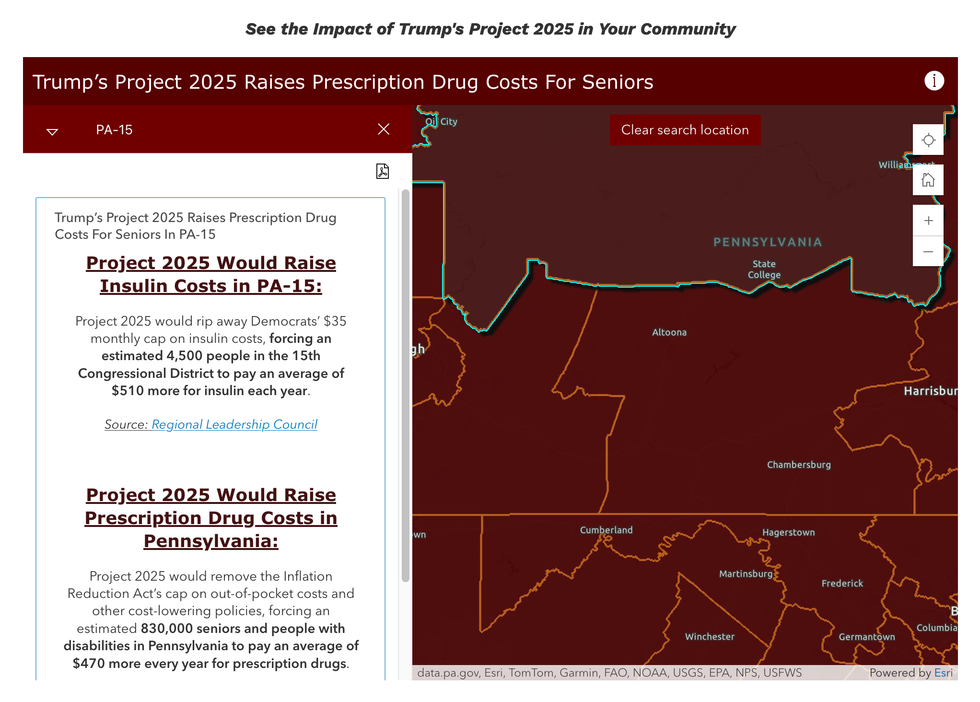
The new tool, produced by Democrats on the House Budget Committee, allows users to plug in their address, ZIP code, or district to view how a repeal of the 2022 law would affect the costs of insulin and other medications.
In Pennsylvania, for instance, "830,000 seniors and people with disabilities in Pennsylvania" would have to "pay an average of $470 more every year for prescription drugs" if Trump and the right-wing groups behind Project 2025 get their way.
Project 2025's sprawling policy document—which at least 140 former Trump administration officials helped craft—calls for the "repeal of massive spending bills like the Infrastructure Investment and Jobs Act (IIJA) and Inflation Reduction Act (IRA)."
"These programs are lifelines for millions of Americans, but the Trump-Vance ticket and their extreme allies threaten to cut funding."
Nationwide, Democrats on the House budget panel estimate that a repeal of the IRA would raise drug costs for at least 18 million seniors.
Project 2025 would also "make Medicare Advantage the default enrollment option" for seniors—a step toward the
total privatization of Medicare.
"For 59 years, Medicare and Medicaid have served as a critical lifeline for seniors, families, children, Americans with disabilities, and so many others," Brendan Boyle (D-Pa.), ranking member of the House Budget Committee, said in a statement Tuesday. "Unfortunately, extreme MAGA Republicans have a different, darker vision for our healthcare system."
"Trump's Project 2025 agenda would repeal the lifesaving provisions of the Inflation Reduction Act, raise premiums on seniors, and risk their access to doctors and services under Medicare," Boyle continued. "House Republicans' budget plans show they are 100% on board with Trump's Project 2025 agenda, which will give Big Pharma a windfall while putting the tens of millions of Americans who get their health coverage through Medicare, Medicaid, and the [Affordable Care Act] on the chopping block."
"Make no mistake," he added, "Trump's Project 2025 agenda will take us backward and leave more Americans sick, uninsured, and burdened with crushing medical debt."
Since President Joe Biden signed it into law, Trump has repeatedly assailed the IRA, calling it a "mammoth socialist" law and signaling that he would work to dismantle it should he win another four years in the White House.
While Trump and Republican lawmakers have postured as defenders of Medicare and Social Security—the GOP's 2024 platform vows to "fight for and protect Social Security and Medicare with no cuts"—their actions while in positions of power belie their rhetoric.
Trump proposed major cuts to Social Security, Medicare, and Medicaid programs during each of his first four years in the White House, and a congressional panel comprised of three-quarters of the House Republican caucus released a budget blueprint last year that called for raising the retirement age—which would cut Social Security benefits across the board.
As recently as March, Trump declared in an interview that "there is a lot you can do... in terms of cutting" programs like Social Security and Medicare. The former president later tried to walk back the comments.
Sen. JD Vance (R-Ohio), Trump's running mate, once described Social Security and Medicare benefits as "the biggest roadblocks to any kind of real fiscal sanity."
"These programs are lifelines for millions of Americans, but the Trump-Vance ticket and their extreme allies threaten to cut funding—just like Trump proposed every year of his presidency—and undo the Biden-Harris administration's work to lower prescription drug costs for seniors," Alex Floyd, rapid response director for the Democratic National Committee, said Tuesday. "Trump and Vance's Project 2025 agenda to leave our seniors high and dry is destructive, extreme, and deeply unpopular—which the American people will make clear when they reject it in November."
Ammar Moussa, a spokesperson for Vice President Kamala Harris' presidential campaign, echoed that sentiment, calling Trump "the biggest threat to Medicare, Medicaid, and Social Security since their inception."
"He tried cutting Social Security and Medicare every single year he was in office," Moussa said Tuesday. "There is only one candidate in this race who will protect and expand earned benefits programs that millions of Americans rely on—Vice President Harris."
"This Republican budget is an attack on seniors, veterans, and the middle class," said the House Budget Committee's top Democrat.
U.S. House Budget Committee Democrats on Wednesday released a tool to help Americans understand how a newly unveiled Republican plan to cut Social Security "would hurt families across America."
The panel's Democrats targeted the Republican Study Committee (RSC), which includes around 80% of the chamber's GOP members and last month released a budget proposal for fiscal year 2025 that, according to Social Security Works president Nancy Altman, shows "the Republican Party is the party of cutting Social Security and Medicare, while giving tax handouts to billionaires."
Congressman Brendan Boyle, (D-Pa.), the House Budget Committee's ranking member, said at the time that Republicans had "now gone further than ever with their attacks" on the key programs, noting that their "extreme budget explicitly calls for cutting Social Security benefits for millions of Americans, ending Medicare as we know it, and making trillions in devastating cuts that would raise the cost of living for working families."
"Instead of saving Social Security and Medicare by making billionaires pay their fair share, House Republicans would rather break the sacred promise that every American should be able to retire with dignity. This Republican budget is an attack on seniors, veterans, and the middle class," he added.
Boyle also pledged that President Joe Biden and congressional Democrats "will fight to ensure it never becomes reality."
Nationally, the committee's Democrats warn on the webpage that hosts their new tool, the RSC plan would force "Americans to work longer for less" and "cut Social Security benefits for 257 million people, or 3 in 4 Americans."
The tool enables Americans to see how Republicans' proposal would impact each congressional district. For example, raising the retirement age for Americans 59 and younger would cut Social Security benefits for 620,000, or 80% of people in Pennsylvania's 2nd Congressional District, which Boyle represents. Statewide, it would affect 9.6 million—or 74% of residents.
RSC Chair Kevin Hern represents Oklahoma's 1st Congressional District. The plan would impact 630,000, or 79% of people there, according to the tool. Across the state, 3.1 million—77%—would face cuts.
The tool says that in Louisiana's 4th Congressional District, represented by Republican House Speaker Mike Johnson, 590,000, or 76% of people, would see cuts. The state total would be 3.6 million—also 77%.
The RSC plan for the next fiscal year—which begins in October—followed the release of budget proposals from Biden and House Budget Committee Chair Jodey Arrington (R-Texas), who is leading the fight for a fiscal commission that critics call a "death panel" designed to force through Social Security and Medicare cuts.
Biden, who is seeking reelection this year and expected to face former Republican President Donald Trump, has vowed to "protect and strengthen" the programs. Social Security Works' Altman has praised the president's proposal and warned that "Social Security is on the ballot this November."
"The term 'fiscal commission' is the ultimate Washington buzzword, and it translates to trading away Americans' earned benefits in a secretive, closed-door process," said Sen. Ron Wyden.
The chair of the Senate Finance Committee said legislation advanced Thursday by the GOP-controlled House Budget Committee is a "backroom scheme" to cut Social Security and Medicare outside of the regular political process, a warning that came as Republicans signaled their intention to attach the bill to a must-pass government funding measure.
"Republicans in Congress know their plans to gut Americans' Social Security and Medicare benefits are deeply unpopular, so they are resorting to schemes that short-circuit the legislative process, rushing through cuts to Americans' earned benefits," Sen. Ron Wyden (D-Ore.) said of the Fiscal Commission Act, which passed out of the House Budget Committee in a largely party-line vote.
Three Democrats—Reps. Earl Blumenauer (D-Ore.), Scott Peters (D-Calif.), and Jimmy Panetta (D-Calif.)—joined Republicans in supporting the bill, which now heads to the full House.
Wyden argued Thursday that "the term fiscal commission' is the ultimate Washington buzzword, and it translates to trading away Americans' earned benefits in a secretive, closed-door process."
"Instead of trying to cut Social Security, Medicare, and Medicaid," Wyden added, "Republicans should work with Democrats to ensure the wealthy pay their fair share, which would go a long way towards securing Social Security and Medicare long into the future."
If passed, the Fiscal Commission Act would establish a bipartisan, bicameral, 16-member panel consisting of both lawmakers and individuals from the private sector, all chosen by congressional leaders.
The commission would be tasked with crafting and voting on policy recommendations for Social Security, Medicare, and other trust fund programs. If approved by the commission, the recommendations would receive expedited consideration in both the House and Senate, with no amendments to the final document allowed.
Social Security defenders have long warned that the GOP-led push for a fiscal commission is a ploy to slash the New Deal program, which helps keep tens of millions of seniors and children above the poverty line every year.
During Thursday's budget committee hearing, Republican members did nothing to assuage concerns about their intentions, voting down a proposed amendment from Rep. Brendan Boyle (D-Pa.) that said the fiscal commission "shall propose recommendations to strengthen and secure Social Security" by "protecting Social Security benefits" and requiring the wealthy to contribute more to the program.
Republican committee members also rejected Rep. Sheila Jackson Lee's (D-Texas) amendment stating that the fiscal commission "shall propose recommendations to strengthen and secure Medicare" by "protecting the traditional Medicare program" and extending its solvency by "requiring taxpayers with incomes above $400,000 to contribute more" and closing a loophole that allows rich business owners to avoid Medicare taxes.
"This bill should be opposed by any member of Congress who cares about Social Security, Medicare, and their constituents who depend on them."
At a press conference following Thursday's hearing, House Budget Committee Chair Jodey Arrington (R-Texas) said that Speaker Mike Johnson (R-La.)—a longtime supporter of deep Social Security and Medicare cuts—is "100% committed to this commission" and hopes to tie it to government funding legislation.
"Probably that's its best chance of success, but I also think it's most germane to attach it to our final funding bill."
The Fiscal Commission Act has some support in the Senate. In a joint statement on Thursday, Sens. Joe Manchin (D-W.Va.) and Mitt Romney (R-Utah)—both of whom declined to run for reelection this year—applauded the budget committee for "advancing this commonsense legislation."
"We also appreciate Speaker Johnson's continued support for this effort," added the senators, who are leading a companion bill in the upper chamber. "Taking immediate, corrective action to reverse this catastrophic financial demise of our own making will help ensure that our children and grandchildren are not burdened by our poor fiscal choices."
But the National Committee to Preserve Social Security and Medicare (NCPSSM) stressed Thursday that "Social Security and Medicare Part A are fully self-funded and do not contribute to the debt."
"The biggest drivers of the debt are 'tax expenditures'—giveaways to the wealthy and large corporations like the Trump/GOP tax cuts of 2017 that Republicans insist be extended," the group noted. According to a recent analysis by the Center for American Progress, debt as a percentage of the U.S. economy would be on the decline if the Bush and Trump tax cuts were never passed.
Max Richtman, NCPSSM's president and CEO, said in a statement that the fiscal commission push is "designed to give individual members of Congress political cover for cutting Americans' earned benefits."
"Any changes to Social Security and Medicare should go through regular order and not be relegated to a commission unaccountable to the public and rushed through the Congress," he added. "This bill should be opposed by any member of Congress who cares about Social Security, Medicare, and their constituents who depend on them."