

SUBSCRIBE TO OUR FREE NEWSLETTER
Daily news & progressive opinion—funded by the people, not the corporations—delivered straight to your inbox.
5
#000000
#FFFFFF
To donate by check, phone, or other method, see our More Ways to Give page.
Daily news & progressive opinion—funded by the people, not the corporations—delivered straight to your inbox.

"Childcare is a public good and needs robust federal investment to maintain progress that was made with relief funds and to avoid further crisis," reads an analysis.
With the last of the federal childcare funding included in coronavirus pandemic relief set to expire at the end of September, two civil society groups on Thursday released an analysis of the "significant benefits" the funding included for families and early childhood educators across the U.S.—showing that the federal government could, and "must," gain control of the nationwide childcare crisis with robust investments.
Published by the National Women's Law Center (NWLC) and the Center for Law and Social Policy (CLASP), Cliff Notes: Key Takeaways From Pandemic-Era Child Care Relief and the Child Care Funding Cliff analyzes the childcare benefits included in the American Rescue Plan Act (ARPA) of 2021, which provided $24 billion in childcare stabilization grants and $15 billion in supplemental money for the existing Child Care and Development Block Grant (CCDBG)—the latter of which is set to expire September 30.
The funding helped stabilize 220,000 childcare programs across the country, according to the report, assisting centers to pay staff members, rent, and continue providing services to families. A 2022 survey of childcare programs by the National Association for the Education of Young Children (NAEYC) showed that the funding also allowed 75% of respondents to pay employees sufficiently, with 53% providing bonuses and 38% increasing baseline wages in a notoriously low-paying industry.
When the childcare stabilization grants expired last September, Thursday's study found, it was felt across the country by families and childcare workers alike. Twenty-nine percent of families faced higher tuition due to rising operating costs for providers, and as employees told NAEYC in another survey in February 2024, staff shortages led to increased burnout among early childhood educators.
"Childcare is a public good and needs robust federal investment to maintain progress that was made with relief funds and to
avoid further crisis," reads a fact sheet accompanying the report by NWLC and CLASP.
The $15 billion in supplemental CCDBG funding set to expire at the end of the month allowed states to make "substantial improvements to their childcare assistance policies," which in turn eliminated waiting lists for childcare assistance, expanded eligibility for assistance, lowered or waived copayments for families, and increased payment rates to providers.
Now, said the groups, "the United States can and must make long-term investments in women, children, and families."
Melissa Boteach, vice president of childcare and income security at NWLC, said Congress must pass "$16 billion in emergency relief, alongside long-term investments, so that families and early educators can have the robust, fully funded childcare system that they need and deserve."
The report emphasizes that the U.S. government "has the resources to fulfill this vision," using as an example tax cuts for the wealthiest Americans that were included in former Republican President Donald Trump's 2017 Tax Cuts and Jobs Act.
"The soon-to-expire $15 billion ARPA supplemental CCDBG discretionary funding was a drop in the bucket compared to the amount of revenue lost from decades of tax cuts for the wealthy and large corporations," reads the report. "We can't afford to put off investing in early learning and childcare any longer, and we have an imminent opportunity to raise public dollars to support investments in childcare. In 2025, some provisions of the 2017 Tax Cuts and Jobs Act are scheduled to expire. If we allow the tax cuts for the wealthiest to expire and make additional progressive changes to the tax code, we could raise trillions of dollars in tax revenue that could support investments in women, children, and families."
Increasing the law's federal corporate tax rate from 21% to 28% would raise $1.35 trillion over 10 years, "which could fully fund President [Joe] Biden's childcare proposal twice over and still have money left over," reads the report.
The report makes clear, said Boteach, "that public investment in childcare works, and that our current childcare crisis is a policy choice."
The report was released as U.S. Rep. Ro Khanna (D-Calif.) prepared to introduce a bill that would cap childcare costs for families earning under $250,000 per year at $10 per day, modeled on a Canadian initiative. The proposal includes a grant program that would allocate $780 billion over 10 years to fund childcare providers.
"As a father of young kids, I understand how difficult this is for families," Khanna told Time magazine. "Particularly for those who are away from grandparents or uncles or aunts and are working or middle class. But I also think that it is fundamental to giving people a fair shot at the American dream—that the biggest investment we can make is in young children to have a big economic return."
Unless the federal government makes a "significant and sustained" investment in childcare, said Stephanie Schmidt, director of childcare and early education at CLASP, "the challenges and inequities plaguing the childcare sector will worsen and states will backslide on the progress they achieved using the relief funds to make care more affordable and easier to find."
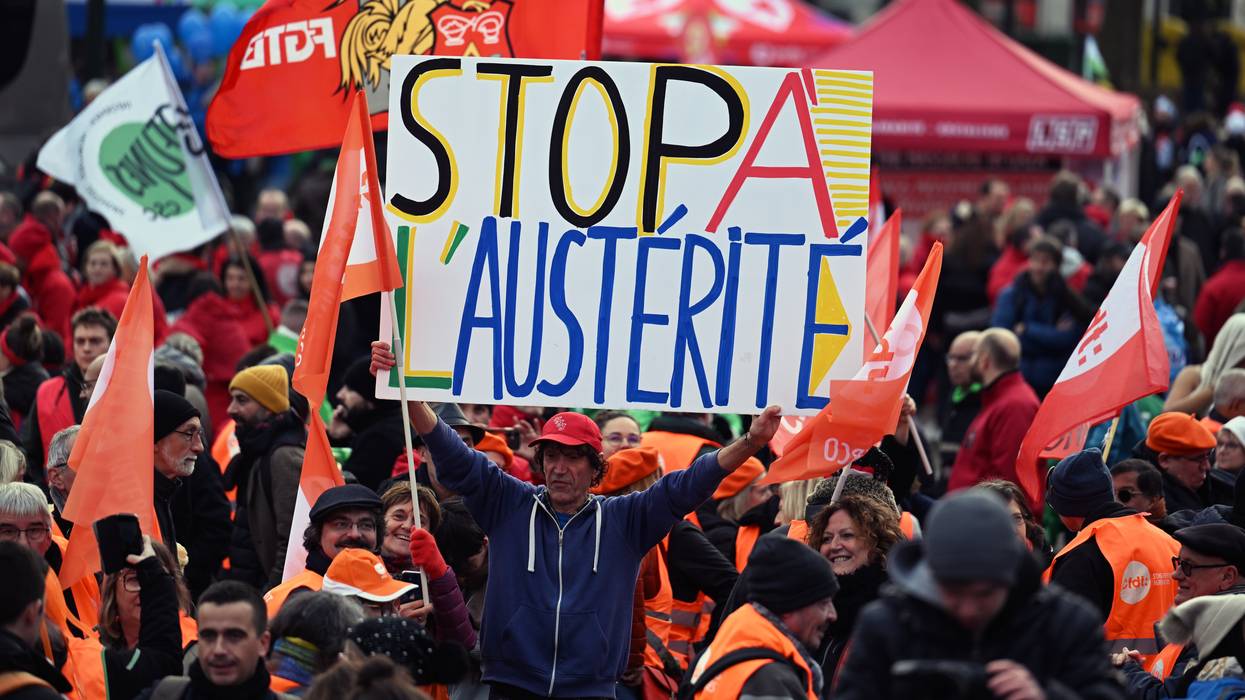
"Austerity is always aimed at the same people: working people," said one French labor leader.
Labor leaders in the European Union on Tuesday estimated that 15,000 people from across the bloc had traveled to central Brussels to march against austerity measures expected to go into effect after the New Year, with workers demanding fair wages and sufficient funding for public services.
Organized by the European Trade Union Confederation (ETUC) and other labor organizations representing workers in the agricultural, tourism, and food industries, among others, the march through the E.U.'s capital was planned in response to the Stability and Growth Pact—a set of economic rules that were paused during the coronavirus pandemic.
The rules that are set to go into effect again in 2024, following months of negotiations by finance ministers, require that member states' public debt doesn't exceed 60% of their gross domestic product and that their annual deficit stay below 3%.
The ETUC said 14 of the E.U.'s 27 member states would be required to cut a combined 45 billion euros ($49 billion) from their budgets next year under the plan, followed by more cuts in the coming years.
In a letter to the European Council on Monday, the union, which represents 45 million workers, noted that wages are already falling in the bloc, despite the fact that profit margins of corporations are increasing.
"Further austerity would have a devastating effect on the economy and on workers, deepening the social justice emergency," wrote Esther Lynch, general secretary of the ETUC, noting that the early days of the pandemic in 2020 saw European governments invest in public health measures and worker protections. "We must maintain a solidaristic and forward-looking approach."
The union called on the council to approve a further one-year extension of the Stability and Growth Pact's "escape clause," which was invoked in 2020.
"The ETUC is calling for a rethink," wrote Lynch. "A smarter reform is needed. The austerity measures imposed following the financial crisis had a profoundly damaging effect on Europe, with the scars still visible in our economy, our society, and our politics."
The New Economic Foundation released an analysis last year showing that without restrictions on public spending that were imposed in the E.U. after the 2008 financial meltdown, the average citizen of the bloc would be more than $3,000 better off, and governments would have invested $575 billion more in infrastructure and $1,000 more per person on education, healthcare, and other social services.
A return to such austerity would "kill jobs, lower wages, mean even less funding for already over-stretched public services, and all but guarantee another devastating recession," Lynch told the Associated Press.
One education worker who traveled all the way from Portugal to march told the AP that "fair taxation" is needed "so that there is enough money to go to the public services and all European citizens and all European workers can live with dignity."
"People deserve to live in dignity, to have decent salaries, to have good working conditions and they are not getting it from most governments in Europe and this austerity," Manuela Mendonca told the outlet.
The ETUC said investments in social spending and meeting climate targets must be excluded from spending limits, and called for the Recovery and Resilience Facility, which was passed to aid climate action and a digital transition across Europe, to be kept in place.
"Austerity is always aimed at the same people," said Sophie Binet, secretary-general of the General Confederation of Labor in France, at Tuesday's march. "Working people."
Marchers carried signs through Brussels that read, "For jobs and public services" and, "Stop austerity."
"Austerity has been tried and it failed," Lynch told the AP. "It is time to learn the lessons of the past and ensure the E.U.'s economic rules put the wellbeing of people and the planet before totally arbitrary limits."
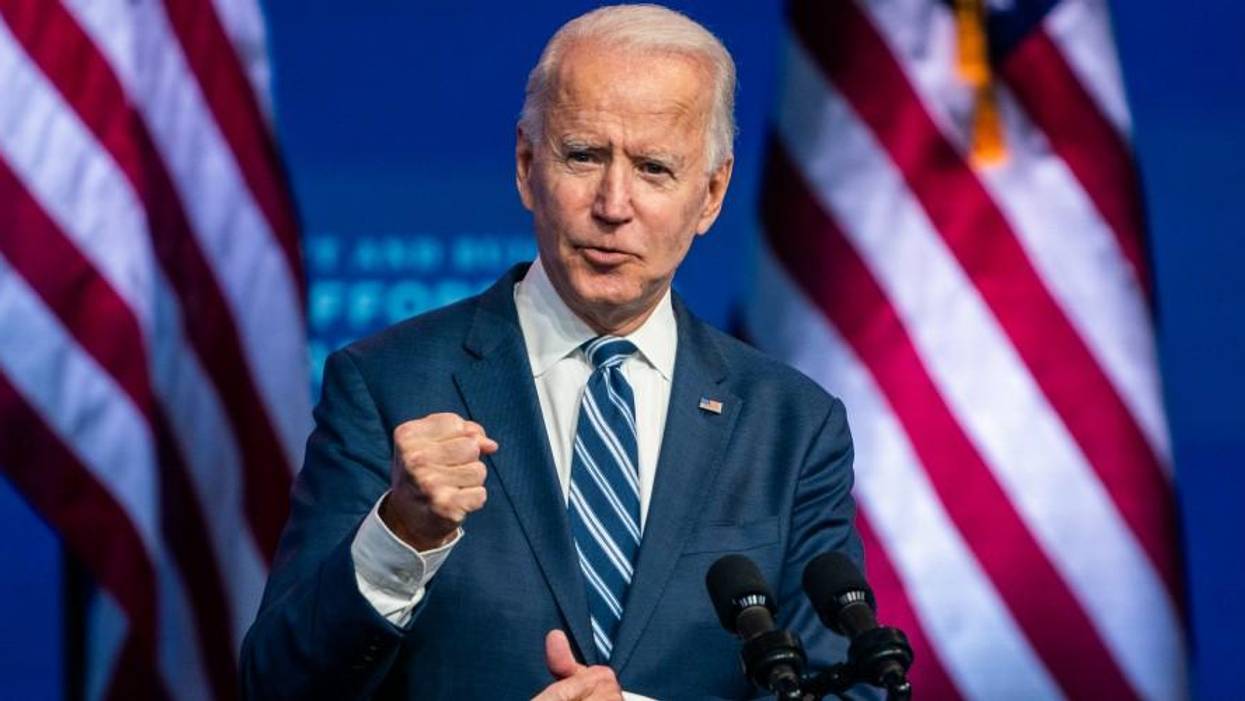
Joe Biden came into office facing historic, overlapping crises: a pandemic, a recession, racial unrest, and flagging faith in democracy and government.
He had two choices: Govern from a mythical middle and risking failing to structurally address any one of these overlapping crises, or step boldly into the moment and reassert a role for effective government.
He deserves credit for surrounding himself with social movement advocates, who have greatly improved his approaches to a range of issues.
On the pandemic and the economy, Biden largely chose to boldly meet the moment.
The nearly $2 trillion American Rescue Plan was packed with necessary help for working people and small businesses, including a big new child tax credit, an extension of unemployment relief, and direct payments to most families.
The law also made bold strides to end the pandemic--including an effective plan for vaccine distribution and COVID-19 health care, with a focus on the most impacted populations. As a result, the administration was able to more than double its goal of administering 100 million vaccinations in the first 100 days, ultimately reaching over 200 million.
Biden's proposed American Jobs and Families Plans take the next step: building a more prosperous, equitable, and sustainable economy after the pandemic.
His American Jobs Plan is a robust 21st century infrastructure plan. It would create millions of well-paying jobs repairing roads and bridges, developing green technology, and expanding broadband, while also protecting the millions of care workers who proved so essential during the pandemic.
Biden's American Families Plan, unveiled in his recent address to Congress, represents yet another desperately needed investment in the economic well-being of ordinary families. It includes plans for universal pre-k education, paid family and medical leave, and robust funding for child care and free community college.
Importantly, Biden is choosing to pay for these plans entirely with taxes on the wealthiest people and corporations, who have unfairly taken advantage of loopholes, regressive tax policies, and outright cheating for decades.
These are all important steps--many of which Biden has taken under pressure from social movements and anti-poverty advocates. But of course, much remains to push him on.
For instance, Biden's child care proposal provides care for kids up to age 5. Why not raise it to 13? His investments in expanding affordable housing are long overdue, but he'll need to increase funding for vouchers so low-income families can actually live there.
Biden also needs to live up to his promise to raise the federal minimum wage to at least $15 an hour. And while Biden has said he wants to expand health care and lower drug prices, anything less than Medicare for All--which Biden still opposes--will fall short.
Meanwhile Biden has yet to come through on other critical domestic issues--like immigration, criminal justice reform, canceling student loan debt, and cutting the bloated Pentagon budget.
Still, 100-plus days in, Biden deserves praise for going big and bold on long overdue structural overhauls to our economy, as well as for making moves to address systemic inequities. He deserves credit for surrounding himself with social movement advocates, who have greatly improved his approaches to a range of issues.
Our job is to make sure he understands where he falls short--so we can make maximum use of what may well be a once-in-a generation chance to build a truly equitable society.

In the Frontline documentary "Growing Up Poor in America," 13-year old Ohioan Shawn and his mother and baby sister were subsisting on $885 a month in benefits during the early days of the pandemic--half in food stamps and half in rent assistance for their trailer. Shawn's mother had been diagnosed with kidney disease, yet still had to risk exposing herself to COVID-19 by "working off" hours required to receive her benefits at the local Salvation Army. Shawn tried his best to help at home as a so-called "brother-father" to his younger sibling. This included taking her to get free lunches for school-age kids at McDonald's. "To climb out of poverty is probably a really hard struggle," Shawn says in the course of the documentary, but he remains hopeful about his future. Shawn is one of the many children in the U.S. living in poverty, which has only been exacerbated by the pandemic.
The Biden administration's $1.9 trillion American Rescue Plan is a complex legislative prescription for the economic hardship COVID-19 has inflicted on families like Shawn's. The plan aims to affect a massive economic recovery by putting more money into the hands of more Americans in need. It provides:
These legislative provisions could have a profound impact on the landscape of American poverty, particularly child poverty, after more than a year of an unprecedented health crisis.
The Center on Social Policy at Columbia University has estimated that the American Rescue Plan will cut the child poverty rate by as much as 56% this year, which would affect children of all races. The poverty rate for Black, Hispanic, and Indigenous children, who are disproportionately affected by both poverty and COVID-19, would decline by 52%, 45% and 61% percent, respectively. However, as the Children's Defense Fund's Director of Poverty Policy, Emma Mehrabi, cautions, "Th[is] data will only live up to its projections if families--especially the hardest to reach--know about the benefits [offered through the plan] and can easily access them. So we need to make sure that families and communities on the ground are aware of this program, and we need to work aggressively to get them signed up."
Payments in support of children have appreciably reduced child poverty in real time, but have also produced more benefits.
The plan's newly liberalized child tax credit (CTC), which is a cash transfer that can be spent as parents and caregivers determine, has been receiving a lot of media coverage because of its transformational potential. The plan's CTC is fully refundable, such that it will benefit 93% of the parents of American children, or 69 million people. Before the legislation, the poorest 10% of children did not receive any benefit from the CTC and about 25% received only a partial benefit. Many of the children whose families were excluded from the original CTC were the children of single parents, Black and Hispanic children, and children who live in rural areas.
Effectively, parents who receive the CTC under the Rescue Plan are getting a small taste of what it would be like to have a guaranteed minimum income to support their children. According to a recent UNICEF report, at least 23 countries guarantee a minimum income for families with children. Canada, for example, provides a scaled yearly benefit to any Canadian residents primarily responsible for the care and upbringing of a child under its Canada Child Benefit program. The current iteration of these payments has its roots in "Family Allowances" that were introduced in the country after World War II. Germany also offers families a monthly stipend (kindergeld) paid from birth through at least age 18--and extended through age 25 should a child pursue higher education or vocational training.
Payments in support of children have appreciably reduced child poverty in real time, but have also produced more benefits. For instance, in Canada, research has shown that children with a guaranteed income improved their performance in school, had better health outcomes, and earned more income as adults. Likewise, the Stockton Economic Empowerment Demonstration, which provided $500 a month, no strings attached, to 125 low-income families for two years, demonstrated that regular payments to families can significantly reduce income volatility, and lead to improved physical and mental health and more full-time employment opportunities.
While extending cash aid to more American families in need has its benefits, it has not been without controversy in the past. The United States federal government largely moved away from cash assistance after the New Deal and the burgeoning prosperity of post-World War II. President Lyndon Johnson, invoking the idea of the Great Society for the first time, articulated a war on child poverty in his 1964 speech at Ohio University. He envisioned "a society where no child will go unfed, and no youngster will go unschooled." However, LBJ's top economic adviser, Walter Heller, advised against implementing a minimum family income as part of the administration's ensuing War on Poverty. As Joshua Zeitz explains in Politico, Heller believed that such a strategy was not only cost-prohibitive, but that it would "leave the roots of poverty untouched and deal only with the symptoms."
Moral and ethical obligations aside, child poverty is expensive.
Accordingly, the Johnson administration opted for a combination of educational, workforce training, medical care, and food assistance programming. This was how the Food Stamp program (now SNAP), Medicare, Medicaid, and Head Start were launched, as well as an expansion of the already-existing Social Security. Woven together, these programs created a social safety net in this country for our most vulnerable. Initially, Zeitz notes, these programs had a marked impact on the national poverty rate, which decreased by 42% between 1964 and 1973, and they remain important today. But ultimately, the decline in the poverty rate began to level off.
Compounding this deceleration of the poverty decline, subsequent presidential administrations invoked the idea of deserving versus undeserving poor. Ronald Reagan condemned "welfare queens" and "con artists" who enriched themselves on the back of the federal government. President Bill Clinton enacted the 1996 "welfare reform" supported by then-U.S. Sen. Biden. "Personal responsibility" became more than a catchphrase; it became the rationale for withholding government benefits to many children and adults living in poverty in America. Unfortunately, the legacy of this welfare reform bill was that it increased poverty and further marginalized the unemployed. And instead of viewing poverty as a societal indictment, many Americans still view it more as an individual moral failing.
In 2021, the detrimental and far-reaching economic impact of the pandemic has created an opportunity for the federal government to reconsider its traditional responses to poverty and joblessness. American businesses were devastated, whole industries were endangered, and many individuals were left struggling to pick up the pieces, save their homes, and put food on the table. In response, the government's outlook on poverty may be beginning to shift, such that socioeconomic forces and not individual initiative are highlighted as the root cause. "We need to be very clear here that the systemic issues with poverty--the racial disparities and the racial wealth gap--didn't just create themselves. Lawmakers have divested in communities of color and put up barriers to [their] well-being," said Mehrabi.
While the American Rescue Plan is a vital first step, it will not by itself lift children in America out of poverty. The first important obstacle to the plan's efficacy is its temporary nature: the extra assistance offered now expires after this year unless Congress acts. Without an extension of the CTC, child poverty is projected to double in 2022. The Biden administration has recently backed away from pursuing permanency, and is instead opting to push an extension of the CTC--a path it feels is more realistic given Senate gridlock.
Second, the cash transfers in combination with more poverty-alleviating measures would have an even more aggressive impact on ending child poverty. For instance, Columbia University's Center on Poverty and Social Policy studied the impact that refundable tax credits would have alongside an expansion of the Housing 8 Voucher Choice Program. Other key poverty-alleviating measures that would complement the CTC include free school meals for all children, baby bonds, and building and preserving affordable homes through investment in the National Housing Trust Fund. The USDA has just taken another crucial step in the right direction by extending free universal school lunch until the end of the 2022 school year.
Third, current gaps in the assistance are extended through the American Rescue Plan. For example, the 2017 Trump tax law rendered 1 million undocumented children from low-income working families ineligible for the CTC because they lack SSNs. Reversing this restriction would broaden the measure's impact so that all children with ITINs may benefit.
Moral and ethical obligations aside, child poverty is expensive: an estimated $800 billion to $1.1 trillion annually in health expenditures, lost productivity, and higher crime. Why not spend that money investing in children such as Shawn?

Few people welcome change when they benefit from the status quo. So it's not surprising that players within the philanthropic community would raise concerns about a proposal to change how much they are required to take out of their warehouses and give directly to charities.
On the other hand, during a pandemic that has decimated the non-profit sector--and will likely continue to drain resources for another two years at least--such concerns might be best keep to oneself. After all, the point of philanthropic funds is to support charities, not to save the funds for the next generation or to provide management fees to companies that manage the warehouses where some $1.2 trillion of charitable donations are sitting today. Plus, the people who set aside those funds have already received a tax deduction, so why shouldn't charities get the funds right away?
But when people actually give voice to concerns that seem silly at best or selfish and greedy at worst ... well, sarcasm often seems the appropriate response.
In this case, the proposal for an emergency charity stimulus would have Congress mandate an increase in foundation payout from 5 percent to 10 percent each year for three years. What's wrong with that, you might ask. Well, dear reader, here's when you might be surprised. See many of these concerns raised in a widely circulated Associated Press story.
Concern: An Emergency Charity Stimulus will take money away from future needs. Spending more now means spending less in the future.
Response: Perfect - let's keep hoarding it. If donors are waiting for a rainy day, we believe it is pouring now. In 20 years, there could possibly be a crisis almost as bad as this one - at which point they could make exactly the same argument.
Concern: "It's really a solution in search of a problem."
Response: The loss of nearly 1 million nonprofit jobs in the pandemic isn't a problem?
Concern: Nonprofit groups will be challenged by ebbs and flows. As one critic put it, "it's hard for a lot of groups to handle sudden surges of money, then a pullback. It's hard to run an organization like that."
Response: That's what happens in an emergency! And nonprofits are well used to on again, off again funding roller coasters: that's what happens now.
Concern: Won't it create weird incentives? This won't accelerate giving at all. In fact, some foundations who are already giving more might REDUCE their spending, viewing the 10% minimum as an unshakeable target number.
Response: We're confused; didn't you just say this would actually cause a sudden surge of money that nonprofits would find hard to handle because it's only temporary?
Concern: Shouldn't we instead give incentives for increasing payout? We should add a sweetener, like lower excise taxes on foundations, or bigger tax deductions for donations.
Response: Why do wealthy givers need even more incentives? They already get big tax breaks when they put money into private foundations and donor-advised funds (DAFs). We taxpayers give the wealthiest donors a subsidy of up to 74 cents for each dollar they give when we lower their income, capital gains, and estate taxes in exchange for their donations.
Concern: Didn't donor-advised funds (DAFs) give out more last year than any previous year? Fidelity Charitable, the largest DAF sponsor, says its grants jumped by 24%, to $9.1 billion in 2020.
Response: Great! But Fidelity also took in $14.4 billion in new contributions, $5 billion more than they gave out in grants! So instead of opening up their warehouses during the pandemic they actually stashed more away, adding to their stockpiles of over $30 billion (that was their reported assets in June of 2019; they won't say what current assets are).
Concern: This impinges on donor choice. Government shouldn't tell charitable givers what to do.
Response: Donors can choose to write any checks to any groups they want. But if they want those gifts to be subsidized through tax deductions, they need to play by the rules Congress sets.
Concern: Complying with these regulations will impose undue burdens on community foundations and other DAF sponsors.
Response: This is the standard response any industry makes about regulations. They market themselves as sophisticated stewards of charitable investments - we're confident they can figure it out.
Concern: The philanthropic and nonprofit sector are divided over this matter. As one national charity leader put it, "Members of Congress have nothing to gain by passing legislation in any sector, including the nonprofit sector, that the sector is divided on."
Response: Right. Congress shouldn't do anything unless everyone agrees.
But seriously: While ham-handed objections from the stewards of American philanthropy might deserve sarcasm, there's nothing funny about the needs of charities in the wake of the pandemic. The stock market is once again at record highs. Foundation and DAF asset values have more than recovered. But far too many nonprofits, like the vulnerable communities they serve, will feel the aftereffects for much, much longer. Let's all pull together to help charitable dollars move out of the burgeoning warehouses and into the charities that need them. Now.

Joe Biden is embarking on the biggest government initiative in more than a half century, "unlike anything we have seen or done since we built the interstate highway system and the space race decades go," he says.
But when it comes to details, it sounds as boring as fixing the plumbing.
"Under the American Jobs Plan, 100% of our nation's lead pipes and service lines will be replaced--so every child in America can turn on the faucet or fountain and drink clean water," the president tweeted.
Can you imagine Donald Trump tweeting about repairing lead pipes?
Biden is excited about rebuilding America's "infrastructure," a word he uses constantly although it could be the dullest term in all of public policy. "Infrastructure week" became a punchline under Trump.
The old unwritten rule was that if a president wants to do something really big, he has to justify it as critical to national defense or else summon the nation's conscience.
Dwight Eisenhower's National Interstate and Defense Highway Act was designed to "permit quick evacuation of target areas" in case of nuclear attack and get munitions rapidly from city to city. Of course, in subsequent years it proved indispensable to America's economic growth.
America's huge investment in higher education in the late 1950s was spurred by the Soviets' Sputnik satellite. The official purpose of the National Defense Education Act, as it was named, was to "insure trained manpower of sufficient quality and quantity to meet the national defense needs of the United States."
John F. Kennedy launched the race to the moon in 1962 so that space wouldn't be "governed by a hostile flag of conquest."
Two years later, Lyndon Johnson's "unconditional war on poverty" drew on the conscience of America reeling from Kennedy's assassination.
But Joe Biden is not arousing the nation against a foreign power--not even China figures prominently as a foil--nor is he basing his plans on lofty appeals to national greatness or public morality.
"I got elected to solve problems," he says, simply. He's Mr. Fix-it.
The first of these problems was a pandemic that's killed hundreds of thousands of Americans--Biden carries a card in his pocket updating the exact number--and its ensuing economic hardship.
In response, Congress passed Biden's $1.9 trillion American Rescue Plan--the most important parts of which aren't $1,400 checks now being mailed to millions of Americans but $3,600 checks a child paid to low-income families, which will cut child poverty by half.
Now comes his $2 trillion American Jobs Plan, which doesn't just fund roads and bridges but a vast number of things the nation has neglected for years: schools, affordable housing, in-home care, access to broadband, basic research, renewable energy, and the transition to a non-fossil economy.
Why isn't Biden trumpeting these initiatives for what they are--huge public investments in the environment, the working-class and poor--instead of rescue checks and road repairs? Why not stir America with a vision of what the nation can be if it exchanges fraudulent trickle-down economics for genuine bottom-up innovation and growth?
Even the official titles of his initiatives--Rescue Plan, Jobs Plan, and soon-to-be-unveiled Family Plan--are anodyne, like plumbing blueprints.
The reason is Biden wants Americans to feel confident he's taking care of the biggest problems but doesn't want to create much of a stir. The country is so bitterly and angrily divided that any stir is likely to stir up vitriol.
Talk too much about combatting climate change and lose everyone whose livelihood depends on fossil fuels or who doesn't regard climate change as an existential threat. Focus on cutting child poverty and lose everyone who thinks welfare causes dependency. Talk too much about critical technologies and lose those who don't believe government should be picking winners.
Rescue checks and road repairs may be boring but they're hugely popular. 61 percent of Americans support the American Rescue Plan, including 59 percent of Republicans. More than 80 percent support increased funding for highway construction, bridge repair and expanded access to broadband.
Biden has made it all so bland that congressional Republicans and their big business backers have nothing to criticize except his proposal to pay for the repairs by raising taxes on corporations, which most Americans support.
This is smart politics. Biden is embarking on a huge and long-overdue repair job on the physical and human underpinnings of the nation while managing to keep most of a bitterly divided country with him. It may not be seen as glamorous work, but when you're knee-deep in muck it's hard to argue with a plumber.

A solid 916,000 jobs were added in March, the strongest job growth we've seen since the initial bounceback faded last summer. Even with these gains, the labor market is still down 8.4 million jobs from its pre-pandemic level in February 2020. In addition, thousands of jobs would have been added each month over the last year without the pandemic recession. If we count how many jobs may have been created if the recession hadn't hit--consider average job growth (202,000) over the 12 months before the recession--we are now short 11.0 million jobs since February.
Even at this pace, it could take more than a year to dig out of the total jobs shortfall. However, today's number is certainly a promising sign for the recovery, especially as vaccinations increase and vital provisions in the American Rescue Plan (ARP) have continued to ramp up since the March reference period to today's data. The benefits of the ARP will continue to be captured in coming months.
Key points of note in today's report:
In addition to the 9.7 million officially unemployed workers in March 2021, we must add four more groups of economically hurt workers:
In total, this means that 23.6 million workers are currently harmed in the coronavirus downturn. We include the 5.7 million baseline unemployment level prior to COVID as part of the number hurt right now because job search was made much more difficult by the labor market impacts of the recession. We include the 2.7 million estimated undercount of the unemployed prior to the start of COVID based on Ahn and Hamilton (2021) because again job search was made much more difficult by the labor market impacts of the recession.

Former Ohio State Sen. Nina Turner calls into a virtual fundraiser February 24, hosted by Our Revolution, the grassroots political advocacy group that used to call Turner its president. The event is one of dozens as her run for Congress ramps up in Ohio's 11th Congressional District, around Cleveland and Akron.
Per usual, Turner includes a call for radical change. "This nation is going to be better because there are some 21st-century freedom fighters who are willing to put it on the line," Turner tells attendees.
"They want to know that their vote does really matter," Turner says. "That when they do vote for Democrats, that something materially is going to change in their lives."
Turner, who frequently cites famous Black politicians and activists, this time references former Rep. Barbara Jordan (D-Texas), who famously said in 1977: "What the people want is very simple. They want an America as good as its promise."
"Whether it's dealing with the damage that we're doing to Mother Earth, to ensuring that everybody in this nation has Medicare for All, to canceling student debt, to dealing with the injustices in the criminal justice system--you name it, baby, that is about creating an America that is as good as its promise, for everybody," Turner says.
Turner announced her run to replace Rep. Marcia Fudge in December 2020, shortly after President Joe Biden announced Fudge as his pick for secretary of the Department of Housing and Urban Development. Turner is one of seven Democratic candidates, but what sets Turner apart early is her national following.
Turner quickly won an endorsement from Sen. Bernie Sanders (I-Vt.), whom she campaigned for in the 2016 and 2020 Democratic presidential primaries. Reps. Cori Bush (D-Mo.) and Ro Khanna (D-Calif.) endorsed Turner the day she announced. The progressive political action committee Justice Democrats endorsed Turner in January, and Reps. Ilhan Omar (D-Minn.) and Rashida Tlaib (D-Mich.) followed suit in February. And in March, Rep. Alexandria Ocasio-Cortez (D-N.Y.) backed Turner as well.
"I'm looking to have her seated next to me, fighting this fight," Bush says at the February fundraiser. "We need somebody like Sen. Nina Turner who is unapologetic, who is unbossed, who is not ashamed and not afraid of her progressive values."
Inside the district, no polling data has been released and campaign finance reports have been slow. But in the first few weeks of the campaign, Turner--who has pledged on Twitter not to accept any lobbyist or corporate PAC money--had raised $646,744. The next highest fundraiser, Cuyahoga County Councilor (and local Democratic Party Chair) Shontel Brown, had around $40,000.
Liz Shirey, Turner's campaign manager, says they raised more than $1 million by early February in "tens of thousands of small-dollar donations from across the country."
The former state senator's local name recognition goes back more than a decade. Turner served on the Cleveland City Council from 2006 to 2008 before being appointed to the Ohio Senate. She won her seat in 2010 but chose not to run in 2014 to make a bid (unsuccessfully) for Ohio secretary of state.
Turner is joined in the race by Brown, former Cleveland Councilor and current state Sen. Jeff Johnson, former state Rep. John Barnes Jr., former state Sen. Shirley Smith, and lesser-known candidates Tariq Shabazz and Bryan Flannery. Based on fundraising and endorsements, Turner and Brown are considered the frontrunners.
In a state that went for former President Donald Trump in 2020, District 11 is a Democratic stronghold. Demographically, it is 53% Black with a strong working-class voting base and a median household income of $42,000.
Turner's platform includes a $15 minimum wage, recurring stimulus checks and free public college, which she believes her working-class constituents need.
"I'm running for big mama who needs some relief," Turner says. "I'm running for the babies in our community, some of whom don't have the hardware, the software, the internet connection they need to even be able to study and learn. I'm running for frontline workers."
Local endorsements in the race are slowly rolling in. The Amalgamated Transit Union (ATU), which represents around 1,800 workers in the Cleveland area, endorsed Turner in late February, as did the Bakery, Confectionery, Tobacco Workers and Grain Millers Union Local 19, and the Retail, Wholesale and Department Store Union.
ATU was one of the first unions to endorse Joe Biden in the 2020 primaries, so its vote of confidence in Turner hints at her ability to win over mainstream organizations, despite the more traditional Democratic candidates.
Still, Turner faces stiff competition to win the labor vote. Brown has the support of the local Bricklayers Union, the Pipefitters Union, the Cleveland Building & Construction Trades Council and the Black Contractors Group, among others. The steelworkers have yet to endorse.
Fudge's seat became officially vacant when her federal appointment was confirmed by the Senate on March 10 and she resigned from the House of Representatives, paving the way for Ohio Gov. Mike DeWine to call a special election. The primary will likely be in early May.
Turner has faith in her district and believes voters want real, systemic change.
"They want to know that their vote does really matter," Turner says. "That when they do vote for Democrats, that something materially is going to change in their lives."
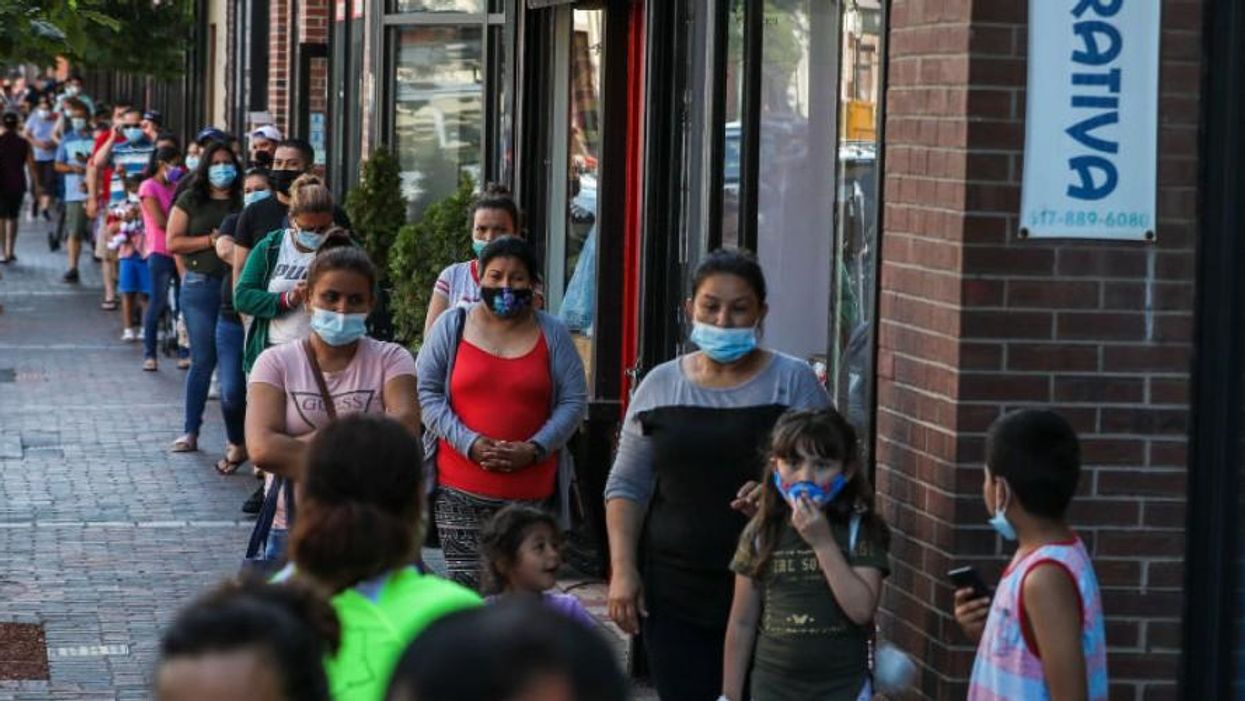
Imagine what could be achieved i a portion of the money spent on military expenditures were pooled into a global fund, and redirected towards ending hunger.
If nations had a referendum, asking the public if they want their taxes to go to military weapons that are more efficient in killing than the ones we currently have, or if they would prefer the money to be invested in medical care, social services, education and other critical public needs, what would the response be?
Probably the majority of people would not have to think long and hard, since for many life has become an endless struggle. Even in wealthy countries, the most basic social rights can no longer be taken for granted. Social services are increasingly being turned into commodities, and instead of helping ordinary people they must serve shareholders by providing a healthy profit margin.
This crisis cannot be addressed by weapons of mass destruction or personnel prepared for war, but only through properly funded healthcare and other public services that protect our collective human security.
The United States is a prime example, where seeing a dentist or any medical doctor is only possible if one has health insurance. Around 46 million Americans cannot afford to pay for quality healthcare--and that is in the richest country of the world.
In less developed nations, a large proportion of people find it hard to access even the most basic resources to ensure a healthy and dignified life. One in nine of the world's population go hungry. And the Covid-19 pandemic has only exacerbated this crisis of poverty amid plenty, with the number of people facing acute hunger more than doubling.
There are now 240 million people requiring emergency humanitarian assistance, while over 34 million people are already on the brink of starvation.
But the United Nations' funding appeals are far from being met, condemning thousands to unnecessary deaths from hunger this year. With aid funding falling as humanitarian needs rise, aid agencies are being forced to cut back on life-saving services.
Does it make any sense for our governments to spend billions on defence while fragile health systems are being overwhelmed, and the world is facing its worst humanitarian crisis in generations?
Global military spending continued to reach record levels in 2020, rising almost 4 percent in real terms to US$1.83 trillion, even despite the severe economic contractions caused by the pandemic. The United States spends two-fifths of the world's total, more than the next ten countries combined, and still cannot afford to prevent 50 million of its own citizens suffering from food insecurity. Most shamefully, the United Kingdom is massively boosting its arms budget--the largest rise in almost 70 years, including a vast increase to its nuclear weapons stockpile--while cutting aid to the world's poorest by 30 percent.
Consider what a fraction of military budgets could achieve if that public money was diverted to real human needs, instead of sustaining the corrupt and profitable industry of war:
These opportunity costs highlight our outrageously misplaced priorities during an unprecedented global health emergency. The coronavirus pandemic has exposed just how ill-prepared we are to deal with real threats to our societies, and how our 'national security' involves a lot more than armies, tanks and bombs. This crisis cannot be addressed by weapons of mass destruction or personnel prepared for war, but only through properly funded healthcare and other public services that protect our collective human security.
It's time to reallocate bloated defence budgets to basic economic and social needs, as long enshrined in the Universal Declaration of Human rights. Article 25 points the way forward, underscoring the necessity of guaranteeing adequate food, shelter, healthcare and social security for all.
There is an imperative need for global cooperation to support all nations in recovering and rebuilding from the pandemic. The United Nations and its frontline agencies are critically placed to avert a growing 'hunger pandemic', and yet are struggling to receive even minimal funding from governments.
Imagine what could be achieved if just a portion of the money spent on military expenditures were pooled into a global fund, and redirected towards ending hunger and massively investing in public health systems, especially in the most impoverished and war-torn regions.
The common sense of funding 'peace and development, not arms!' has long been proclaimed by campaigners, church groups and engaged citizens the world over. But it will never happen unless countless people in every country unify around such an obvious cause, and together press our public representatives to prioritise human life over pointless wars.
In the words of arms trade campaigner Andrew Feinstein:
"Perhaps this is an opportunity. Let's embrace our global humanity, which is how we're going to get through this crisis. Let's put aside our obsession with enemies, with conflict. This is an opportunity for peace. This is an opportunity to promote our common humanity."

Usually, the Powers That Be swat away the kind of big-ticket reforms our country needs by haughtily asserting a few hoary economic fables they dress up as immutable "truths."
"We don't have the money."
They cluck that it would be nice if everyone could be given the right to top-quality health care, education, child care and (fill in the blank), but alas, the money just isn't there. A year ago, however, a pandemic slammed into America, and suddenly, trillions of dollars gushed out of Washington for everything from employment checks to crash medical programs, revealing that if our country has the will to do what ought to be done, the money is there.
"The debt! My God, think about the debt!"
No, don't. Sure, there can be too much debt, but the USA is a resource-rich, sovereign nation, not a fly-by-night corporate huckster. The only debt problem our government has in this time of immense national need (and extremely low borrowing cost) is that we're not incurring enough of it--for the right purposes. Recall that in 2017, then-President Trump and the Republican-majority Congress didn't hesitate to shove the national debt through the roof to let a few millionaires and billionaires pocket a trillion-dollar tax giveaway. So, if those drunken spenders can declare that it's good to use federal borrowing to make the likes of Jeff Bezos, the Koch brothers and Mark Zuckerberg richer, wouldn't it be even better to use borrowed funds for such clear national needs as infrastructure investment and quality education for all?
"The rich are the 'makers' whose work contributes the most to society."
This silly myth quickly melted right in front of us as soon as Senor Coronavirus arrived, making plain that the most valuable people are nurses, grocery clerks, teachers, delivery drivers, med techs, farm workers, postal employees and millions of other mostly low-wage people. For the past year, even the richest families have been urgently crying out for those "lowly" ones to provide truly essential needs. The lesson is that this is the same invaluable workforce that sustains our economy and society every day, year in and year out. So let's capitalize on the moment to demand that lawmakers start adopting policies that reward these grassroots makers over Wall Street's billionaire takers.
" Tax cuts drive economic growth, which lifts everyone."
Once again, the sirens of corptocracy are mouthing the same old refrain: To help workers, cut corporate taxes. They trill that freeing corporations from the "burden" of taxes will encourage CEOs to invest in worker productivity and--voila--wages will miraculously rise. This scam has never worked for anyone but the scammers, and at last, it's obvious to the great majority of workers that the way to increase wages is to increase wages ! Enact a $15 minimum wage; restore collective bargaining; punish wage theft; implement a green energy jobs program, etc. With such strong, honest policies, workers will pocket more and spend more, and the economy will rise. Percolate-up economics works; trickle-down does not.
Well, say those in the know, recalcitrant Republicans in Congress won't allow such a bold FDR-style agenda, so who could get it passed? Try the people themselves.
--Two-thirds of America (including a majority of moderate Republicans) say yes to doubling the minimum wage.
--Seventy-two percent of the people, including 46% of professed Republicans, shout their approval for "Medicare for All."
--Eight out of 10 Americans, including strong majorities of Republicans, support a paid family leave program like the ones all other developed nations provide for their people.
--What about increasing taxes on the rich, expanding Medicaid for poor families, raising teacher pay, spending more for early childhood education? Yes, yes, yes, yes, say majorities, not just in blue states but also in GOP strongholds such as Idaho, Nebraska and Utah.
These are not just poll numbers but solid ideas embraced last year by a broad cross section of voters in ballot elections across the country. Instead of fearing the people, Democratic leaders need to get out of Washington and join them.