

SUBSCRIBE TO OUR FREE NEWSLETTER
Daily news & progressive opinion—funded by the people, not the corporations—delivered straight to your inbox.
5
#000000
#FFFFFF
To donate by check, phone, or other method, see our More Ways to Give page.
Daily news & progressive opinion—funded by the people, not the corporations—delivered straight to your inbox.
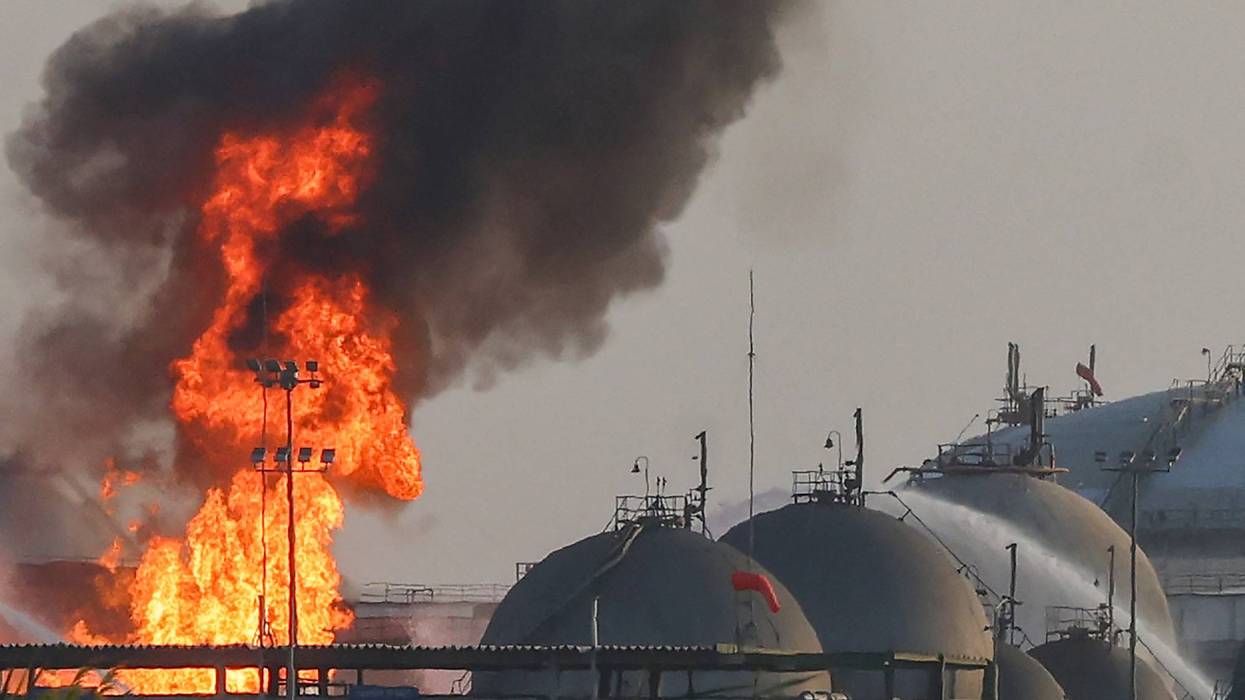
The US is providing military advisers and helping the Saudis choose targets in a war that has already displaced nearly 150,000 people and put much of the country on the brink of acute food insecurity.
Yemen is spiraling back toward full-scale war after its Saudi-backed government launched a major offensive on Sunday to retake territory captured by the Iran-backed group Ansar Allah, also known as the Houthis.
President Rashad al-Alimi said the armed forces would seek to retake all Houthi-controlled territory, which is home to about 70% of Yemen's population, including the capital Sanaa. He said the offensive would continue “until the country is liberated from the grip of the terrorist militia."
Houthi officials said Saudi forces have launched 50 air and missile attacks in the last 12 hours. As al-Alimi announced the new offensive, the Houthis responded by launching ballistic missiles and drones at Saudi Aramco oil facilities, including one near Riyadh that was engulfed in flames.
Last month, the Houthis captured major strategic areas along the Red Sea coast, giving them unprecedented leverage over one of the world's busiest shipping routes and adding to the economic stranglehold Iran is asserting by restricting travel through the Strait of Hormuz in response to US-Israeli attacks.
Earlier this month, it was reported that President Donald Trump had rebuffed Saudi Crown Prince Mohammed bin Salman's request for the US to launch airstrikes against the Houthis.
However, US officials told Axios on Friday that the military is providing Saudi Arabia with "everything short of direct combat, mainly intelligence and targeting data."
While the Saudis conduct a new campaign of airstrikes, Yemen's government could reportedly mobilize as many as 100,000 troops, one of the largest military buildups since the 2022 truce that halted the nation's brutal eight-year civil war.
That war, in which the US also provided extensive military support to a merciless Saudi air campaign, is estimated by the United Nations Development Program to have caused about 377,000 excess deaths by the end of 2021: 154,000 from the fighting itself and 223,000 from indirect effects such as hunger, disease, and the collapse of healthcare and basic infrastructure. An estimated 259,000 of those deaths were of children under 5.
Even before Sunday's escalation, renewed fighting was already fueling a major displacement and hunger crisis. More than 149,000 people have been driven from their homes, according to the International Organization for Migration. Meanwhile, the World Food Program says fighting has disrupted food delivery routes, placing 18.3 million Yemenis at risk of acute food insecurity.
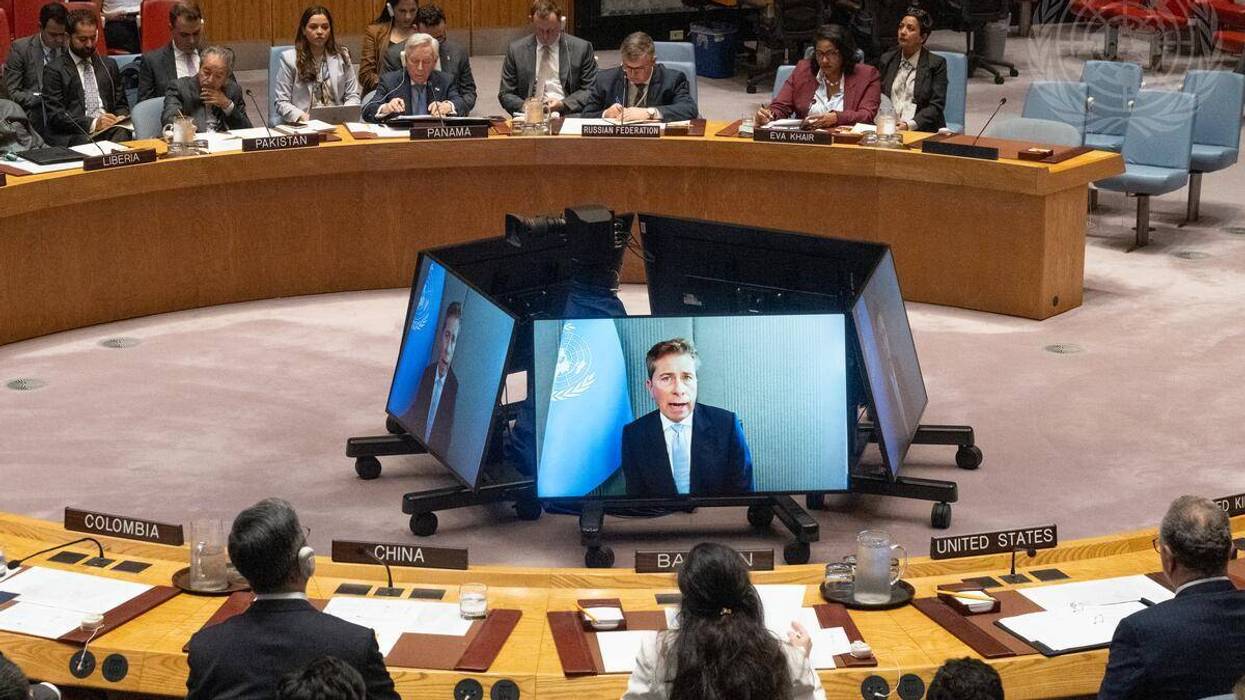
"Humanitarians are seizing every opportunity to reach those in need. But we need protection for civilians. We need de-escalation."
Over three years into a civil war in Sudan, the humanitarian crisis is getting worse in the African nation due to "a lack of action" by the international community, a United Nations leader told the UN Security Council on Monday.
The war between the government's Sudanese Armed Forces and a paramilitary group called the Rapid Support Forces (RSF) began in April 2023. Now, "more than two-thirds of the people of Sudan are in desperate need of lifesaving support," said Tom Fletcher, UN under-secretary-general for humanitarian affairs and emergency relief coordinator.
"Humanitarians are seizing every opportunity to reach those in need. But we need protection for civilians. We need de-escalation," Fletcher stressed, detailing efforts to provide aid throughout the country. "Across Sudan, our teams navigate frontlines, drone attacks, insecurity, and bureaucratic red tape."
"I usually end these briefings with three asks: Uphold international humanitarian law, fund the response, and help end the conflict. But today I won't because this council has heard those asks again and again," he explained. "Instead, the ask is that we not have another meeting where the council simply describes the problem."
According to Fletcher: "Sudan does not suffer from a lack of analysis. It suffers from a lack of action. The people of Sudan need food, water, and medicine. Yet the world sends drones, weapons, and mercenaries. The people of Sudan need sustained, courageous diplomacy. Yet the world is too often indifferent and distracted. The people of Sudan need peace and dignity. Yet others use Sudan's land and people as pieces in a regional struggle for power, gold, and pride."
"This council is not powerless," he emphasized. "The international community is not powerless. The tragedy of Sudan is not that we do not know what to do. It is that we have not yet found the will to do it."
Fletcher also pointed to remarks to the Security Council from Rosemary DiCarlo, under-secretary-general for political and peacebuilding affairs, who noted the deadly impact of drones and that the true death toll "is likely to be in the hundreds of thousands."
Roughly 13 million people have been displaced, making it hard to tally deaths, but "brutal mass killings and atrocities, abductions of women and girls, and mass rapes are recurring patterns," DiCarlo said, declaring that "the consequences of this conflict will be long-lasting and should shock us all."
The Security Council meeting came less than three weeks before a two-decade-old Darfur arms embargo is set to expire, absent a new agreement. The US envoy in attendance, Massad Boulos, called for broadening the embargo to cover all of Sudan.
"The United States has put forward a strong resolution that provides for four key things," he said, including "expanding the arms embargo across the entire territory of Sudan," applying the restrictions to all armed parties, making clear that it applies to drones, and strengthening surveillance of violations.
Earlier this month, US Sen. Chris Van Hollen (D-Md.) led 20 senators in demanding that the Trump administration go beyond denouncing Sudan's paramilitary group and take "concrete action" to prevent more mass atrocities. They wrote that "these actions should include ceasing certain US arms sales to external actors that are fueling this war, including the United Arab Emirates, which continues to arm the RSF."
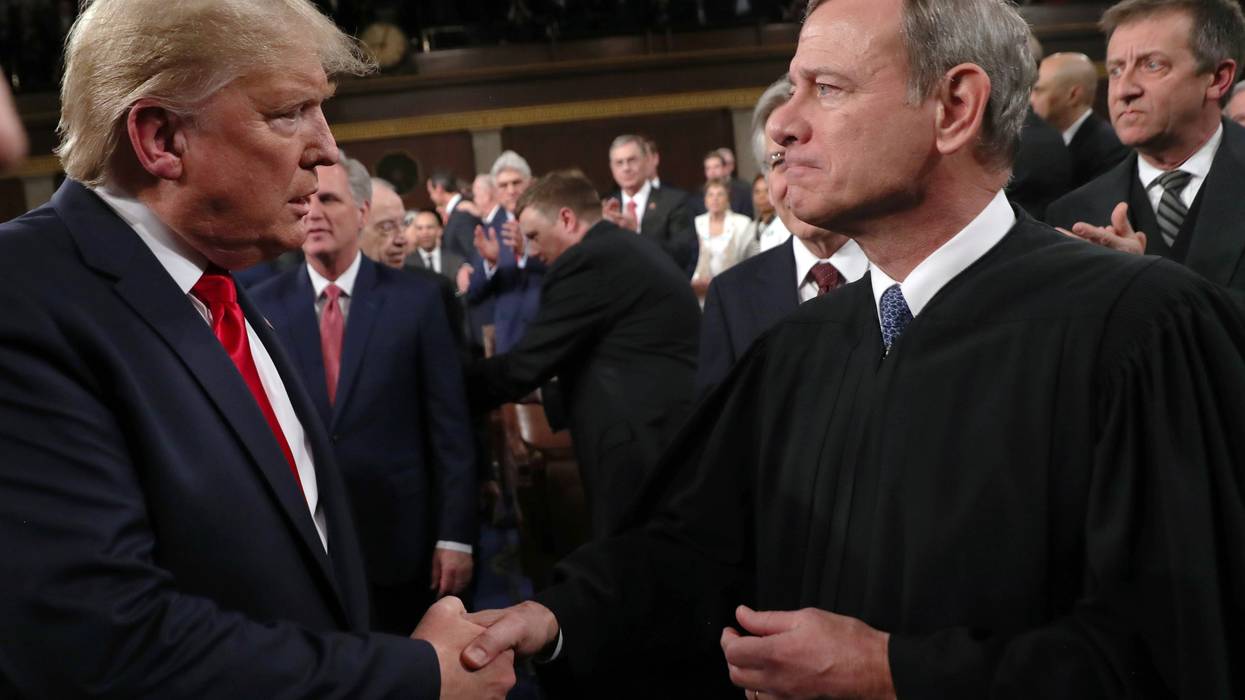
By gutting the Voting Rights Act and granting President Donald Trump irmmunity, the Supreme Court has helped set up a fight over the future of US democracy.
Is the United States headed for a second Civil War? According to a survey of likely midterm voters published by the Leadership Conference on Civil and Human Rights, 57% of Americans believe it is. Sixty-nine percent say democracy is under serious threat; and an equal percentage of non-white voters say they fear rising white supremacy.
While President Donald Trump and his MAGA movement deserve the lion’s share of blame for such findings, the Supreme Court has done its part. Under the stewardship of Chief Justice John Roberts, the court has issued a blistering succession of dangerously polarizing rulings, ranging from presidential immunity, union organizing, the death penalty, environmental protection, and gun control to affirmative action and abortion rights. The resulting jurisprudential carnage has accelerated the nation’s rupture into irreconcilable belligerent tribes and prompted speculation that we are headed for another existential conflict.
The Roberts Court has taken a particularly malevolent interest in destroying the Voting Rights Act (VRA) of 1965. Last month’s decision in Louisiana v. Callais gutted Section 2 of the landmark legislation, which was amended in 1982 to permit the Justice Department and private citizens to challenge election laws that have the effect of diluting minority voting power.
The court’s 6-3 majority opinion by Justice Samuel Alito invalidated Louisiana’s 2024 congressional map that created a second majority-Black congressional district to operate alongside the state’s five white-majority districts, roughly reflecting the size of Louisiana’s Black population. The ruling handed a victory to the lead plaintiff in the case, Phillip “Bert” Callais, an election denier and alleged conspiracy theorist who had attended the January 6, 2021 “Stop the Steal” rally on the White House Ellipse that eventually snowballed into the insurrection at the Capitol. Barely concealing their racial animus, Callais and his co-plaintiffs described themselves in court filings as “non-African American voters” who were the victims of reverse discrimination. Louisiana has since moved to redraw its voting maps.
Neutering the Voting Rights Act represents the culmination of Roberts’ lifelong calling and warrants his ranking alongside Taney as the most disgraceful chief justice in history.
With the demise of the “effects test,” future Section 2 plaintiffs will have to meet the nearly impossible burden of proving that redistricting maps were created with overt discriminatory intent rather than for political purposes. And as the court held in a 2019 opinion written by Roberts in Rucho v. Common Cause, political gerrymandering claims cannot be brought in federal courts because, as the Republican majority sees it, they present nonjusticiable “political questions.”
Both Callais and Rucho built upon Roberts’ 2013 majority opinion in Shelby County v. Alabama gutting two other sections of the VRA that required state and local jurisdictions with histories of egregious voter discrimination to obtain advance federal approval—known as preclearance—before making changes to their election procedures. Like Alito in Callais, Roberts declared in Shelby that racial discrimination in voting was a thing of the past and thus special protections for minorities were no longer necessary.
The combined effects of Shelby and Rucho have led to a proliferation of voting roll purges, onerous photo ID laws, and limitations on mail-in ballots in red states across the country. Now, with Callais, election law experts predict that as many as 19 Democratic congressional seats in Tennessee, Alabama, Mississippi, South Carolina, Florida, and Louisiana could be eliminated, returning the former states of the Confederacy to one-party rule.
The court’s handiwork has sparked outrage and alarm. Rep. Bennie Thompson, the only Democrat in Mississippi’s congressional delegation, who will likely lose his seat to gerrymandering, has condemned Callais as “equivalent to a second Civil War.” Other observers have compared the current moment in the US to the 1850s, when debates over the future of slavery eventually led to secession and war.
Chief Justice Roberts has also drawn comparisons to Chief Justice Roger Taney, whose 1857 majority opinion in Dred Scott v. Sandford held that Black Americans had “no rights that the white man was bound to respect.” The Dred Scott decision helped precipitate the Civil War, and is widely considered the most infamous in the court’s history.
The parallels between Taney and Roberts are beyond hyperbole. Both men began their legal careers as zealous partisan political advocates. Before ascending to the Supreme Court in 1836, Taney was elected to the General Assembly of Maryland, and later served as a loyal foot soldier to President Andrew Jackson, first as secretary of war and then as attorney general, in which capacity he penned an advisory opinion that prefigured his Dred Scott ruling, arguing that the Constitution and the Bill of Rights were inapplicable to Black people, even those living in free states.
Similarly, the young Roberts established himself as a dependable right-wing operative, clerking for Chief Justice William Rehnquist and afterward serving as special assistant to Attorney General William French Smith in the Reagan administration. There, he authored upward of 25 memos opposing the 1982 amendment that added the effects test to the Voting Rights Act in addition to ghosting op-eds for Smith and preparing administration officials for their testimony before Congress on the test. Later, as an attorney in private practice, he played an important role as a consultant, lawsuit editor, and prep coach for the GOP’s legal arguments in the run-up to Bush v. Gore, the case that decided the 2000 presidential election.
Neutering the Voting Rights Act represents the culmination of Roberts’ lifelong calling and warrants his ranking alongside Taney as the most disgraceful chief justice in history. As the civil rights activist and writer William Spivey argued in an essay published earlier this month in the online journal Level:
Taney held that no Black person, free or enslaved, could ever be a US citizen. He believed that Black people were not part of the political community and the Constitution was written for white men only.
Chief Justice Roberts has been more effective than anyone in disenfranchising Black people. Most of what Taney accomplished can be traced to a single decision that remained in place for 11 years before being reversed [by the 13th and 14th Amendments]. Roberts has spent an entire career whittling away at the Voting Rights Act of 1965, affirmative action and, most recently, the diversity, equity, and inclusion movement.
Roberts will also be remembered for composing the majority opinion in Trump v. United States in 2024 that gave the president near-complete immunity from criminal prosecution for his official acts. That decision, along with the evisceration of voting rights, has emboldened Trump to threaten the deployment of Immigration and Customs Enforcement and the military to polling places and hatch other plots to rig the midterm elections and consolidate Republican power.
It may be premature to conclude a new Civil War is upon us, but a high-stakes battle for the future of the country is well underway.
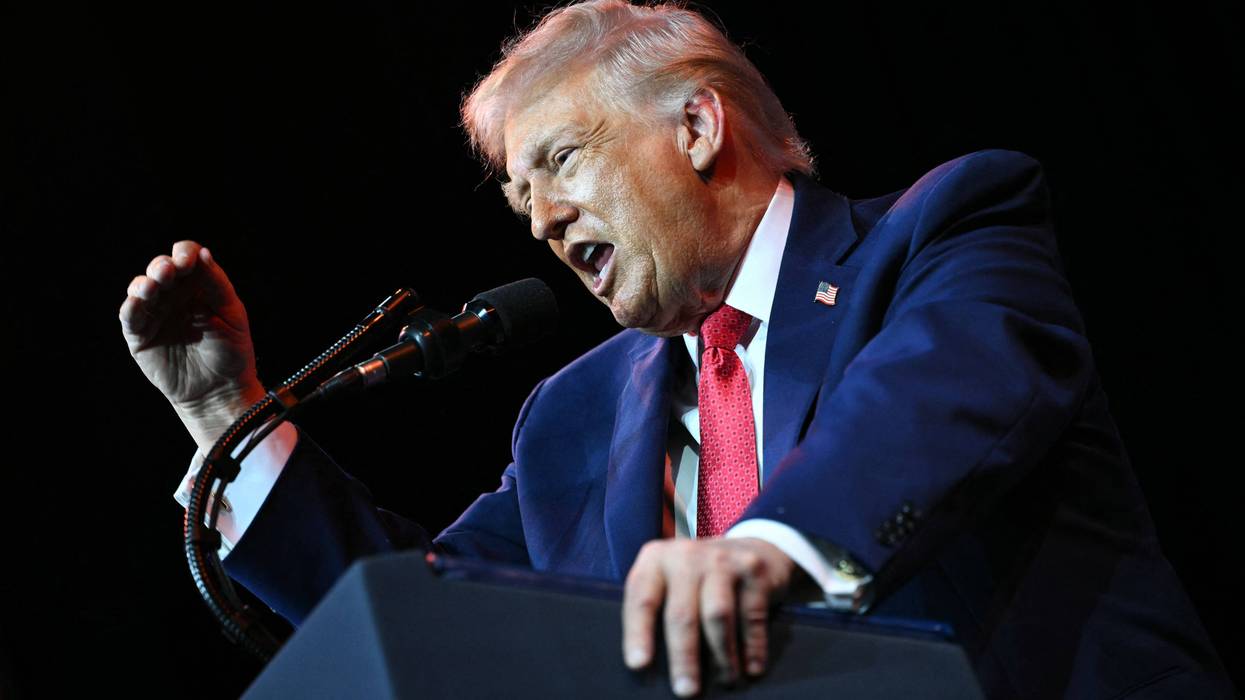
In a healthy democracy, all sides generally recognize the legitimacy of the system itself, regardless of internal squabbles. In the United States, this is no longer the case.
A January 2026 Gallup poll showed that 89% of all Americans expect high levels of political conflict this year, as the country heads toward one of its most decisive midterm elections ever.
Gallup, however, was stating the obvious. It is a surprise that not all Americans feel this way, judging by the coarse, often outright racist discourse currently being normalized by top American officials. Some call this new rhetoric the "language of humiliation," where officials refer to entire social and racial groups as "vermin," "garbage," or "invaders."
The aim of this language is not simply to insult, but to feed the "Rage Bait Cycle"—tellingly, Oxford’s 2025 Word of the Year: A high-ranking official attacks a whole community or "the other side"; waits for a response; escalates the attacks; and then presents himself as a protector of traditions, values, and America itself. This does more than simply “hollow out” democracy, as suggested in a Human Rights Watch report last January; it prepares the country for “affective polarization,” where people no longer just disagree on political matters, but actively dislike each other for who they are and what they supposedly represent.
How else can we explain the statements of US President Donald Trump, who declared last December: “Somalia... is barely a country... Their country stinks and we don't want them in our country... We’re going to go the wrong way if we keep taking in garbage into our country. Ilhan Omar is garbage. She’s garbage. Her friends are garbage.” This is not simply an angry president, but an overreaching political discourse supported by millions of Americans who continue to see Trump as their defender and savior.
We are entering a state of regime cleavage—a political struggle no longer concerned with winning elections, but one where dominant groups fundamentally disagree on the very definition of what constitutes a nation.
This polarization reached a fever pitch at the 2026 Super Bowl, where the halftime selection of Puerto Rican artist Bad Bunny ignited a firestorm over national identity. While millions celebrated the performance, Trump and conservative commentators launched a boycott, labeling the Spanish-language show “not American enough” and inappropriate. The rhetoric escalated further when Homeland Security Secretary Kristi Noem suggested Immigration and Customs Enforcement agents would be “all over” the event, effectively ostracizing countless people from their right to belong to a distinct culture within American society.
The weaponization of culture and language was not limited to the stage; it split American viewers into two distinct camps: those who watched the official performance and those who turned to an “All-American” alternative broadcast hosted by Turning Point USA featuring Kid Rock. This "countering" is the very essence of the American conflict, which many have rightly predicted will eventually reach a breaking point akin to civil war.
That conclusion seems inevitable as the culture war couples with three alarming trends: identity dehumanization; partisan mirroring—the view that the other side is an existential threat; and institutional conflict—where federal agencies are perceived as "lawless," sitting congresswomen are labeled "garbage," and dissenting views are branded as treasonous.
This takes us to the fundamental question of legitimacy. In a healthy democracy, all sides generally recognize the legitimacy of the system itself, regardless of internal squabbles. In the United States, this is no longer the case. We are entering a state of regime cleavage—a political struggle no longer concerned with winning elections, but one where dominant groups fundamentally disagree on the very definition of what constitutes a nation.
The current crisis is not a new phenomenon; it dates back to the historical tension between 'assimilation" within an American "melting pot" versus the "multiculturalism" often compared to a "salad bowl." The melting pot principle, frequently promoted as a positive social ideal, effectively pressures immigrant communities and minorities to "melt" into a white-Christian-dominated social structure. In contrast, the salad bowl model allows minorities to feel very much American while maintaining their distinct languages, customs, and social priorities, thus without losing their unique identities.
While this debate persisted for decades as a highly intellectualized academic exercise, it has transformed into a daily, visceral conflict. The 2026 Super Bowl served as a stark manifestation of this deeper cultural friction. Several factors have pushed the United States to this precipice: a struggling economy, rising social inequality, and a rapidly closing demographic gap. Dominant social groups no longer feel "safe." Although the perceived threat to their "way of life" is often framed as a cultural or social grievance, it is, in essence, a struggle over economic privilege and political dominance.
There is also a significant disparity in political focus. While the right—represented by the MAGA movement and TPUSA—possesses a clarity of vision and relative political cohesion, the "other side" remains shrouded in ambiguity. The Democratic institution, which purports to represent the grievances of all other marginalized groups, lacks the trust of younger Americans, particularly those belonging to Gen Z. According to a recent poll by the Center for Information & Research on Civic Learning and Engagement (CIRCLE), trust in traditional political institutions among voters aged 18-25 has plummeted to historic lows, with over 65% expressing dissatisfaction with both major parties.
As the midterm elections approach, society is stretching its existing polarization to a new extreme. While the right clings to the hope of a savior making the country "great again," the "left" is largely governed by the politics of counter demonization and reactive grievances—hardly a revolutionary approach to governance.
Regardless of the November results, much of the outcome is already predetermined: a wider social conflict in the US is inevitable. The breaking point is fast approaching.
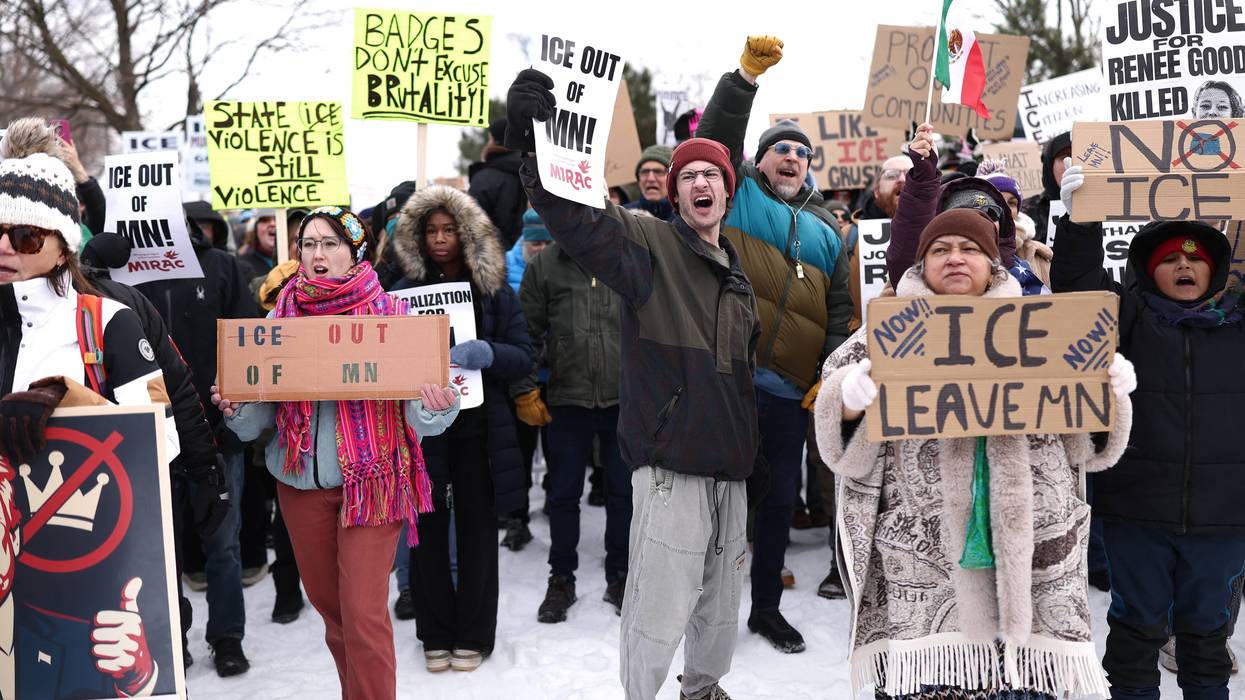
As the Trump regime promises to end its surge of federal agents in that city, perhaps it’s a good time to reflect: What have we learned that might be helpful in the Great Unraveling?
In a recent article I argued that the world is now crossing a threshold from decades of growth and increasing integration to decades of economic shrinkage and political breakdown. This shift will create stresses that extend in scale from ecosystems and international relations down to households and individuals. Everyone will be personally—and likely profoundly—impacted by the polycrisis.
There are three components to this tectonic shift: environmental, economic, and political. It’s useful to think of this in terms of disasters, e.g. natural disasters, economic calamities, and government repression or civil war.
Every disaster is unique, but some general observations apply. When a disaster happens, our normal sense of time is interrupted and our priorities get scrambled. Suddenly, nothing matters but the immediate necessities of escaping harm and helping others to safety. People’s attitudes tend to be sober, purposeful, and helpful; hysteria is rare. Everyone’s implicit goal is to get back to something approximating normal. Importantly, disasters also tend to evoke a similar community-minded response in people: At least in the short run, they work together creatively to meet one another’s basic needs.
Environmental disasters are sometimes the easiest for victims to mentally comprehend, though not always to recover from. After floods, fires, earthquakes, and chemical spills, immediate response efforts are led by the affected region and surrounding communities, while longer-term recovery typically depends on national governmental assistance. Neighbors pull together to make sure all are safe (see this account of my experience during the 2017 wildfires in my hometown of Santa Rosa, California).
Severe political conflicts can therefore be more psychologically devastating than environmental or economic disasters. But, as we will see, they can also evoke extraordinary levels of community solidarity and mutual aid.
Economic disasters can linger for years and can scar a generation, as occurred during and in the wake of the Great Depression of the 1930s, and in the currency collapses that have plagued several nations over the last century. The Global Financial Crisis of 2008 and the Covid-19 pandemic, though relatively short in duration, saw large-scale failure of businesses and disappearance of jobs. Again, it’s typically up to local communities to help meet people’s immediate needs until the national government can intervene to provide aid and stability.
Political disasters (including civil conflicts) are often different in significant ways. In some instances, they turn neighbor against neighbor, or communities against their national government. Government may hurt rather than help; indeed, government may be out to get you. Severe political conflicts can therefore be more psychologically devastating than environmental or economic disasters. But, as we will see, they can also evoke extraordinary levels of community solidarity and mutual aid.
The Great Unraveling of environmental and social stability will feature all three kinds of disasters. Currently, global breakdown is being accelerated primarily by an ongoing and worsening political calamity in the United States. In this article, we’ll go to the frontlines of conflict in Minneapolis to see how people are responding to a violent—even deadly—government-imposed crisis. As the Trump regime promises to end its surge of federal agents in that city, perhaps it’s a good time to reflect: What have we learned that might be helpful in future crises?
Recent events in Minneapolis and surrounding communities are being widely reported and analyzed. They’ve even been iconified in a Bruce Springsteen song. Our purpose here is to see what we can glean that’s relevant for the larger project of surviving the Great Unraveling.
First, some background facts. Following deployments of troops and Immigration and Customs Enforcement (ICE) agents to Los Angeles, Chicago, and Portland, on January 6, 2026 president Donald Trump sent nearly 3,000 ICE and Border Patrol agents to Minneapolis—a medium-sized city of fewer than half a million residents. There is widespread speculation that the ICE surge was politically motivated, as Minneapolis is a bright blue* town in a blue state whose governor, Tim Walz, was the Democratic vice-presidential candidate in 2024. The massive deployment of federal agents dwarfed the city’s police force of 600 officers.
Trump and his officials have stated that the purpose of the ICE surge is to remove “the worst of the worst”—undocumented immigrants who are thieves, rapists, and murderers. However, officials have imposed unrealistic arrest quotas on agents, requiring them to round up more undocumented people than can be vetted for criminality—as well as US citizens and legal immigrants with green cards or refugee status. The Transactional Records Access Clearinghouse, a nonprofit research organization, has found that roughly three-quarters of individuals currently detained by ICE do not have a criminal record, and that many who do were convicted of only minor offenses, like traffic violations.
Federal agents have focused their attention on places where undocumented people are likely to be found: restaurants, Home Depot stores, schools, and churches. Often, agents simply grab anyone who looks brown-skinned. They sometimes break into homes without warrants and effectively kidnap the residents, who are then sent to makeshift detention centers; family members may have no idea where their loved ones are for many days.
As a result, many immigrants and non-immigrants alike feel as though they are living under occupation by a hostile army. People are terrified, businesses are closed, workers are staying home, rent payments are falling behind, and children are not going to school.
The response of the people of Minneapolis and its surrounding suburbs has been peaceful but organized and insistent. Neighbors are protecting neighbors.
Minnesota has a longstanding tradition of mutual aid and of neighborhood organizing, which intensified after the killing of George Floyd by a police officer in 2020. Residents are making a disciplined effort to avoid violence, even when protesters are being attacked. They’ve created a leaderless cell-based pattern of organization, communicating through Signal (an encrypted social media app). Participants use pseudonyms, and every effort is made to maintain anonymity.
Actions undertaken in response to the specific needs of the community fall under four broad headings: documenting the actions of ICE agents; protesting their presence; protecting vulnerable people; and helping meet those people’s daily needs for food, shelter, schooling, and doctor visits. Often these actions require courage and creativity, as when massed members of the group Singing Resistance walk frozen streets, raising the spirits of fellow community members with songs of solidarity, grief, and rage.
I recently reached out to a friend who lives near Minneapolis to ask about their experience in resistance networks there. The story of what is happening there is best told by someone who is in the thick of it themselves, so I am giving over remainder of this article their words. This is an edited transcript of the comments from my friend, who wishes to remain anonymous:
“My first encounter with ICE was in mid-December. It was a very cold day. I saw construction workers trapped on the roof of a house they were building, and ICE had surrounded it. Very quickly, observers started gathering and blowing whistles. The workers on the roof weren’t prepared to be up there for a long time, so observers were trying to throw them blankets and handwarmers. In the end, one of the workers had to be taken to the hospital for possible frostbite.
"If anything positive is going to come from all this, it’s the fact that people are going to be more connected and more willing to help their neighbors."
“Later, I got involved in response efforts. We have ICE agents staying in hotels where I live, and there are some nicer restaurants that they like to frequent. There were reports of ICE outside one local restaurant. We talked with employees, who said there’s a table of ICE agents eating. Then we were able to identify a car of ICE agents outside, and people started surrounding the car and honking. This was before any of the observers had been killed [i.e., Renee Good and Alex Pretti, both gunned down by ICE and Border Patrol agents], so I think we were a little bolder at that point. One man even got out of his car and walked right up to the ICE vehicle and yelled at them. Then the local police came, but the cops usually say they can’t intervene."
“On another occasion, there was a report of ICE agents outside a [Mexican] restaurant. I was the second observer on the scene; there was already a lady there with her megaphone, making noise. We had identified three ICE vehicles in the parking lot. So, we started driving around trying to get their plates so we could have them in our records and verify they were in fact federal agents. The goal was to make enough noise to hopefully get the agents to leave. We’re honking and flashing lights at them, and they’re flashing lights at us. They were obviously irritated. Within 20 minutes, between 15 and 20 additional cars showed up to observe and show support for the cornered workers. One by one, they slowly left, and community members helped the workers who were trapped inside to get home safely in cars that weren’t identifiable to them."
“We’ve got a couple of contacts who live in big apartment buildings and who are vulnerable, and they’ve been go-betweens for fundraising. We’ve been able to fundraise to help people pay rent. It’s a domino effect: People are worried about going to work. They stop going to work, and restaurants temporarily close because a lot of their workers are vulnerable. As a result, they can’t earn money, and they’re at risk of losing their job."
“We get specific calls like, hey, we have this family that needs this or that, and people can raise their hands either to fund that, or to drop it off to the liaison who then distributes it, all to keep people’s information private."
“The ICE agents are adapting all the time. They’re changing up their cars, and they’re switching plates. There have been occasions where they are driving around without any plates at all. They were all wearing masks, and now a lot of them are wearing plain clothes to try and blend in more. But as they adapt, we do too."
“I think the community building going on has been impressive because, unlike what the media says, none of us have been paid a cent for this and never expect to be. At a protest the other night, one guy said, ‘There’s no amount that anybody could pay us to not show up for our neighbors.’ I don’t know why people can’t comprehend that people would be doing this just because they care about the well-being of others."
“It’s been an evolution. As people get more involved, they see the different pieces of the puzzle, and then they can contribute. The biggest thing for the people who’ve been leading it longer is that they’re getting burnt out. Many involved already have full-time jobs, and they’re also putting in full-time hours for this effort. So, the longer-term observers are keen to get more people in leadership roles so that the work can be distributed. And the ability to do that has come from just building trust with people you initially may only know anonymously through the phone. That trust comes from showing up repeatedly, putting in the time and effort, and vouching for each other."
“This is a community effort. I don’t think anyone is trying to be recognized for what they’re doing. Everyone involved knows that this is the right thing to be doing. There are a lot of people out there, especially in our government, who try to spin what’s going on here as being terroristic in intent, or that we’re just trying to interfere with government operations or hurt people. But that is so antithetical to what anyone here is actually trying to do."
“There’s risk involved, and the distributed leadership model helps diminish that because then individuals can’t be targeted as easily. But I know some of my local elected representatives have been involved, and they’ve been subject to threats, because they’re public and they’re not hiding their identity."
“Even when the imminent threat of people constantly being taken dies down, there’s going to be more need for community organizing and mutual aid. And so, hopefully, this is cementing a framework that we can continue to expand upon as needs in the community grow through whatever challenge may arise. I think if anything positive is going to come from all this, it’s the fact that people are going to be more connected and more willing to help their neighbors."
“Having these federal agents here and knowing my community is under extreme surveillance is unfamiliar and infuriating to me, but I know it is something like what many marginalized groups have contended with for decades or centuries."
“It is increasingly difficult to leave the house and drive somewhere without viewing every car with suspicion. We wave and smile as I pass through vulnerable neighborhoods, to show we are here to help and not harm. There is a sense that we are always ‘this close’ to an agent feeling justified to smash in our windows or detain us for simply practicing the rights the US Constitution entitles us to. We fear what may come next, what the retribution may be. It is frustrating knowing that if we call the cops with concerns regarding the illegal or unethical behaviors of these agents, we will be met with no response."
“But there is a power in this resistance, a feeling of deep connection and kinship to those around you, even if you just met or only know their online alias. You know you are on the same side of this battle for basic human rights. There’s a feeling that so many people have your back, even if they have never met you. Seeing extreme bravery from regular people encourages your own commitment."
“The biggest feeling of all, though, is the feeling that none of us are doing enough. Despite our efforts, people are still being taken from their families every day to potentially disappear in the system."
“The other frustrating thing, to me, is that this shouldn’t have to be our priority. It wouldn’t be if our United States government were set up in a way that wasn’t so focused on exploiting and ‘othering’ people for money and greed. We could be putting all this energy toward trying to build a more sustainable world rather than just protecting people from being abducted. But this is the imminent threat right now.”
What we choose to love fully and unconditionally is Planet Earth itself—a planet without borders—and all who live within it.
And here I am, an American, staring at the border again... and slowly coming to realize the paradox of it. Borders don’t actually exist. They’re invisible lies. They’re also virtually everywhere.
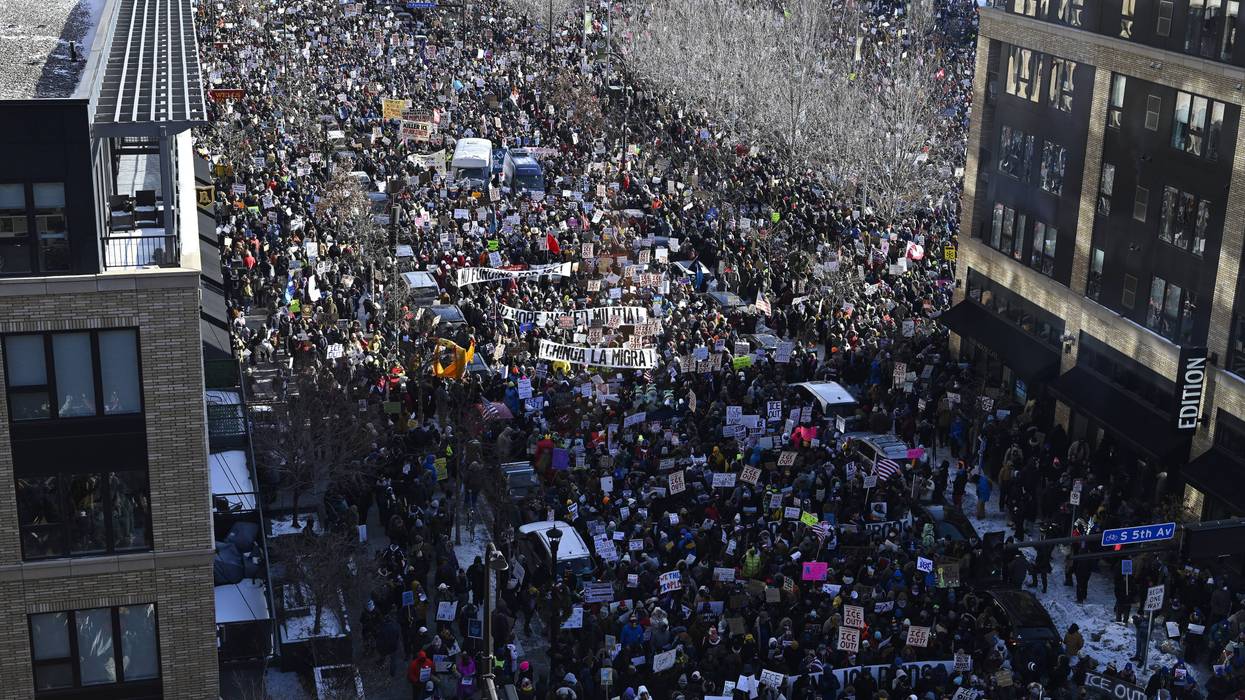
Consider the border Alex Pretti crossed on January 24, on a street in Minneapolis, as he stepped between some US Border Patrol agents and the woman they had just pushed down. He crossed the border that separates ordinary people from the federal Proud Boys (or whoever they are), the masked invaders who were occupying the city to enforce The Law. Pretti interfered with them! He dared to try to protect the fallen woman, who herself had just crossed the same border. In so doing, they both went from being ordinary citizens to “domestic terrorists.”
“Yet our greatest threat isn’t the outsiders among us, but those among us who never look within.”
The words are those of poet Amanda Gorman, who wrote a poem honoring Alex Pretti after the agents shot him, almost 10 times. Another killing! Oh my God! Another cut to the American soul—a cut, by the way, that comes with complete immunity, according to Team Trump. They’re waging civil war against those who cross the border that separates right from wrong. “Fear not those without papers,” Borman’s poem continues, “but those without conscience.”
Oh, let us evolve toward a trans-border world! This is the core of the American civil war that is now, seemingly, getting underway.
You know what? As terrifying as the idea of a new civil war sounds, I prefer it to something worse: a great national shrug and acquiescence to the Trump agenda. Immigration and Customs Enforcement (ICE), as so many people have pointed out, is acting like the Trump Gestapo, as his administration rids sacred (white) America of the brown-skinned other, who may or may not be immigrants. What matters is that they’re different from “real” Americans. Right?
Regarding the whole concept of the border: It seems so real and viable until you start questioning it, which includes looking into its history.
As Elisa Wong and Raymond Wei write:
The way we think of borders today, as firm boundaries that are violently enforced, is a relatively new thing, and we would argue it doesn’t serve humanity’s best interests. While ‘strong borders’ are often argued as a necessity for our security, we think they limit humanity’s potential as a global community.
In ancient times, rivers, oceans, and mountains marked the boundaries of territory... As humans began building kingdoms and empires, more walls began to form, thus more firmly delineating borders.
And in Medieval times, from around 1000 to 1700 AD, European kingdoms started engaging with each other in a state of unending warfare, violently squabbling over the limits of their territory. And plunk! Global borders were created, and whole contents started getting divided almost randomly into European territorial possessions.
“At the Berlin Conference in 1884,” Wong and Wei write, “European leaders met to carve up Africa for themselves, which split local tribes across arbitrary lines and laid the groundwork for ethnic conflicts that still rage today’”
Oh, let us evolve toward a trans-border world! This is the core of the American civil war that is now, seemingly, getting underway. This is why protesters are flooding the streets in Minneapolis and across the country. This is why they’re enduring pepper spray and tear gas and flash bang grenades. This is why some people are being killed. But the rational—effective—response to violent aggression is not counterviolence.
“Anger and hatred are natural in response to such atrocities,” David Cortright writes, “but it is essential to avoid causing physical harm, to maintain a nonviolent intention and commitment despite increasing government provocation. A major outburst of protester violence would be disastrous, diverting attention from the message of support for victimized communities. That’s exactly what the White House is hoping for—to cover up ICE abuses, reinforce their lies about violent protesters, and justify additional domestic militarization.”
And he quotes—who else?—Martin Luther King: “Hatred multiples hate. Darkness cannot drive out darkness; only light can do that. Hate cannot drive out hate; only love can do that. Violence multiplies violence.”
Yeah, that’s the world as we know it: endless war. But America’s new civil war must not—will not—go that way. “Loving ICE” doesn’t mean accepting their actions or their purpose, but rather, challenging it head on, courageously and nonviolently. What we choose to love fully and unconditionally is Planet Earth itself—a planet without borders—and all who live within it. Yes, that includes ICE agents. It includes Donald Trump. But loving them also means standing up to them—and handing them their conscience.
It is time for local and state governments to resist more forcefully the lawlessness and cowardice of an out-of-control federal government under the thumb of Trump.
He broke it! He did not wait for permission to change things. He simply bent and, in most cases, broke it. If the answer was going to be no, why wait for the no is his strategy. The strategy is to test the basic mores of the country. Don't ask about tearing down the West Wing of the White House. He ordered the dismantling of DEI and government and businesses fell into line. It resulted in one of the biggest reductions in workforce in government employment with workers surprised and left scurrying to find new job security. Vastly significant portions of Black women, estimated 300,000 "lost their good government job." He did not ask for permission to do that. He demanded that historical language be sanitized in museums and on official signage erasing historical social and racial justice messaging. He just did it. As he bombed boats in the Caribbean Sea, killing a hundred people, he did not ask whether it was legal but simply let the incendiary devices fly. The justification offered was that they were bringing drugs to America which was not feasible or truthful given where the boats were. When he commandeered ships carrying oil from Venezuela he did not ask. He hijacked the ships without seeking permission. He sent troops into American cities without respect for local governments using the weight of the national government.
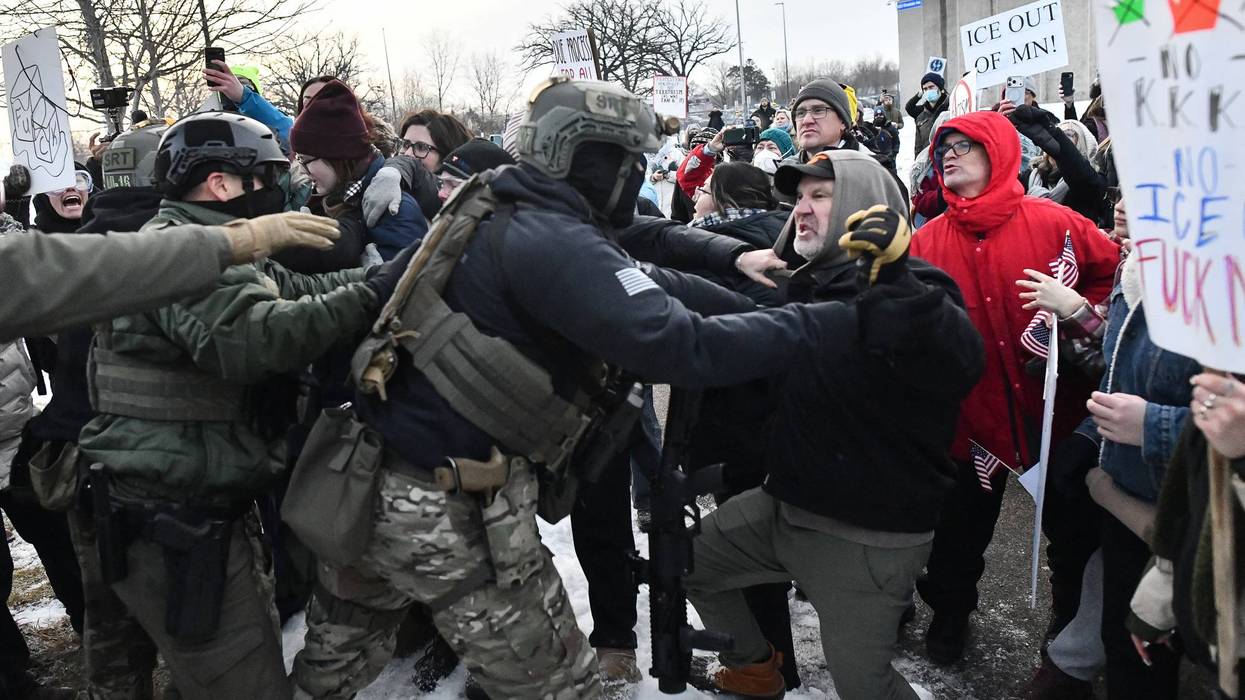
Trump's right-wing agenda has inspired and turned loosed a viciousness embodied in the actions of trained and also hastily onboarded federal law enforcement that are acting more like storm troopers than anything else. Renee Good was shot three times as she served as a monitor observing these storm troopers. She seemed to try and connect appealing to the humanity of the federal agents, as observed on video but was spurned and in futility she tried to drive away. As she turned the wheels on her vehicle to leave the hatred and right-wing zeal of a federal agent stepped in front of her vehicle and discharged his weapon. He killed her for no apparent reason other than she for watching and monitoring the action of these federally protected agents. She was not an immigrant, but she was a mother, wife and an American citizen. They shot her three times. Then approximately two and a half weeks later, early on a Saturday morning Alex Pretti, an intensive care nurse at the VA was shoved to the ground, brutally beaten by this death squad and shot nine time in five seconds. He died on the spot. He also was an American citizen exercising his right to protest trying to safeguard the community from this lawless occupation. The Trump administration quickly swung into action to discredit and devalue their lives by calling them "terrorists". This is a word DHS and Christie Noem use to justify any and all ICE shootings and killings. ICE and immigration officials have discharged their weapons into the American public at least 16 times. The headlines, as the media try to collect information, expands not necessarily daily but certainly. In January 2026, The Wall Street Journal identified at least 13 instances of immigration officers "firing at or into civilian vehicles" but by the end of the month that figure was obsolete. There is a violent, murderous hatred embedded in the attitudes of these so-called officers of the law.
Local government has tried to resist. In Montgomery County, Maryland there is currently a bill, The County Values Act, that would require a judicial warrant for ICE to access nonpublic areas in county facilities. It would also prohibit the use of county-owned parking lots, garages and vacant lots for immigration enforcement. There is also The Unmask ICE Act, that would prohibit federal, state and local law enforcement from wearing masks on the job. That seems only fair since because in many jurisdictions it was already illegal for citizens to be masked! Currently some 15 states have proposed bills to prohibit law enforcement officers from wearing masks. The federal law enforcement agencies claim that masks are to protect DHS officers and their families by shielding their identities. That is ironic since cameras are in use by ICE and other federal agencies to build a facial recognition database. There are and has been attempts to pushback against federal masks and the conduct of federal agents. Bills have been proposed in Alaska, Illinois, Massachusetts, Michigan, Minnesota, New Jersey, New York, Oregon, Pennsylvania, Vermont, Washington, Florida, Georgia, and Tennessee. Each of these legislative bodies are appalled by the dangers of troops in the streets and are seeking to reestablish democratic norms. Twenty-one state attorney generals penned and sent a letter to Members of Congress urging them to pass legislation to prohibit immigration agents from wearing masks. They warned that ICE agents wearing masks “have the effect of terrorizing communities rather than protecting them.” They further stated in the letter that “the commonplace use of masks and the failure of ICE to identify themselves as law enforcement makes everyone less safe and weakens the integrity of our justice systems.” The pushback is admirable and needed but the issues are far more than masks but the overall viciousness and violent attacks being carried out with impunity on American streets against immigrants and citizens alike.
These bills and letters are local governments and political leaders operating within the culture and structure of American conformity where decorum is presented and the traditional rules of law applies. Civil protest and discourse are exercised believing that the structures have power. They have been trained to abide by the rules of civility. Meanwhile the federal behemoth is trampling standard political decorum by bending things until they break and using the weight of the federal government to crush any the resistance. What is needed now and before it is too late is the deliberate creation of a constitutional crisis.
The 10th amendment has swung in opposite streams through US history. Its purpose was to maintain boundaries between the federal government and the states. It was ratified in 1791 as part of the Bill of Rights. This is one reason why it took so long for slavery to be abolished in the United States. The federal government was restrained in ordering states what to do and nearing the Civil War battles were fought within certain territories of whether they would become a free state or a protectorate of enslavement. It took the Civil War for slavery to be abolished. Then with federal troops stationed in the former slave states there were several years where enfranchisement and relative freedom was advanced. That period is called Reconstruction. The federal government used its powers to enforce political and social inclusion. However, the racists fought back through acts of terror and sabotage until Reconstruction ended with federal troops being withdrawn from the south. Once again, those former slave states were free to institute Black codes and legally enforced racial stratification and separation. The federal government did not intervene for another 100 years until the civil rights movement challenged the legalities of racial segregation by pushing and passing laws using the weight of federal government to restrain the racial excesses of local governments. We in the racial justice movement wanted the federal government to regulate the behavior of the states. So, you can imagine the angst I have in this historical moment for a stronger state and local government.
The irony is that in this historical moment I would like to see a strong local and state government that is able to muster its own law enforcement to confront, challenge, question, apprehend, and arrest masked federal armed marauders. This requires local governments to call upon local law enforcement to be loyal to the local community and committed to protecting the community from the violence being perpetuated by federal authorities.
The local authorities need to have future employment predicated on whether local law enforcement is committed to the safety of the local population or will continue to stand assisting federal agents as they assault the population. They need to be tested as to whether they are more loyal to local government or obedient to federal agents who are racially targeting, terrorizing, assaulting, shooting and killing the local population. This is where the wheat is separated from the chaff. Local government must demand that members of local law enforcement go after masked agents, arrest them for every act that threatens, every person kidnapped without due process, each violation of property rights, and for acts of violence against the local population. In other words, local law enforcement should be pressured to do what they have always done in every social and racial justice uprising - demand order, protect property, people, and make arrest!
We are in a civil war, and the tables of history have turned because the federal government is trampling over all the rights at the local level.
This historical moment demands that we find strategies to bend it back and maybe do our own breaking in this horrific moment of American history. When this federal behemoth monster is subdued then we can redress normal order. However, as the behemoth tramples the landscape in America bending things until he breaks them something more graphic and demonstrative is need then bills that are proposed and passed but have little to no impact. Local governments and the states need to precipitate a national and constitutional crisis where the local governments challenge the legalities of national government in more than letters, bills and grassroots petitions.
Local governments need to demand local officials to enforce local laws, and in most cases laws that are already on the books. This would be the wake-up call that is needed for the courts to pay closer attention, create a vigorous debate in Congress, and challenge the powers of these grotesque beings that are occupying our cities and towns and shooting and killing our neighbors and friends.

"If we keep having these crises, one of them is going to get really ugly."
Experts are warning that the Trump administration's ongoing crackdown in Minnesota could quickly get out of hand and could even result in a second US civil war.
Claire Finkelstein, a professor at the University of Pennsylvania Carey Law School, wrote in a Wednesday column published by the Guardian that she and her colleagues at the Center for Ethics and the Rule of Law (CERL) conducted a tabletop exercise in October 2024 that simulated potential outcomes if a US president were to carry out law enforcement operations similar to the ones being conducted by the Trump administration with US Immigration and Customs Enforcement (ICE) officers in Minnesota.
"In that exercise, a president carried out a highly unpopular law-enforcement operation in Philadelphia and attempted to federalize the Pennsylvania’s National Guard," Finkelstein explained. "When the governor resisted and the guard remained loyal to the state, the president deployed active-duty troops, resulting in an armed conflict between state and federal forces."
Finkelstein noted that such a scenario is alarmingly close to what's currently going on in Minnesota, where Gov. Tim Walz has placed his state's National Guard on standby and President Donald Trump has threatened to invoke the Insurrection Act, which would give him broad powers to deploy the military on US soil.
The simulation also projected that the judiciary would be of little help to any state that found itself in the president's crosshairs.
"We concluded that in a fast-moving emergency of this magnitude, courts would probably be unable or unwilling to intervene in time, leaving state officials without meaningful judicial relief," Finkelstein explained. "State officials might file emergency motions to enjoin the use of federal troops, but judges would either fail to respond quickly enough or decline to rule on what they view as a 'political question,' leaving the conflict unresolved."
Steve Saideman, a political scientist at Carleton University in Ottawa, Canada, argued that the situation now is even more dire than the one Finkelstein and her colleagues imagined in their simulation.
In a post on Bluesky, Saideman argued that the US is "hours or days away from civil war."
"This might sound extreme," he acknowledged, "but if Walz has the Minnesota National Guard blocking ICE operations, the usual response of the federal government to governors using National Guard against feds is to call out the Army... What happens if the Army confronts Minnesota National Guard? We have no idea. But one real possibility is: bam."
Saideman added that, given the nonstop chaos of Trump's presidency, it's only a matter of time before it eventually boils over into real civil conflict.
"If we keep having these crises, one of them is going to get really ugly," he said. "Crises under Trump are street cars—there is always another one coming along. We have gotten lucky thus far, but if a citizen shoots at ICE or if the Minnesota National Guard tussles with ICE, things may escalate very quickly."
In a New York Times column published on Monday, Lydia Polgreen argued it was no longer a stretch to equate what is going on in Minnesota with a war being waged by the federal government against one of its own states.
"It might not yet be a civil war, but what the White House has called Operation Metro Surge is definitely not just—or even primarily—an immigration enforcement operation," wrote Polgreen. "It is an occupation designed to punish and terrorize anyone who dares defy this incursion and, by extension, Trump’s power to wield limitless force against any enemy he wishes."
We will become loud about who we are, what we have experienced, and how we have overcome the impossible.
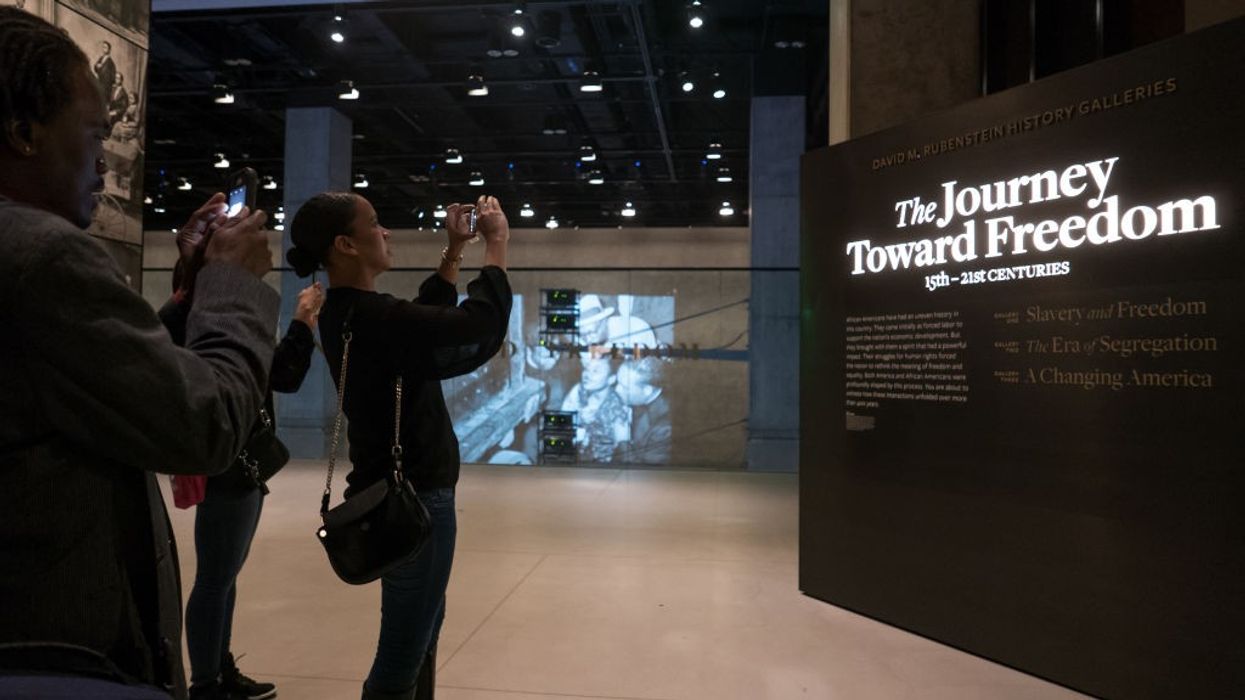
The Trump-MAGA-white supremacist administration is ordering the removal from displays information and depictions of the era of slavery in the United States. One of the most emblematic images of enslavement is the graphic and soul-shocking image called "The Scourged Back" that depicts the back of Peter Gordon photographed circa 1863 in Louisiana. It shows graphically his healed but black keloid bareback. The photograph of his scarred back yells loudly the horrors and brutality of enslavement. The wounds on Peter Gordon's back were inflicted on him by his so-called owner.
To remove the histories and experiences of Black people in the US is part of the educational pogrom enacted to "whitewash" America's real history. To "whitewash" history is the political project to change the narrative of America and make that narrative into the blessings and triumphs of white people, while ignoring the blemishes, scars, and overcoming that is as great a part of America's history as any other.
The beginning and institution of slavery in North America's British colonies commences in 1619 in Jamestown, Virginia. It doesn't legally end until 1865. A Civil War had to be fought to settle the question and end the legal institution of slavery. And even when slavery had legally ended, new systems and schemes were developed, particularly in the Southern US, to reinstitute slavery de facto. This system called Jim Crow would continue through to its painstakingly dismantlement by courageous individuals and movements that exposed it and brought about its demise. This means that formal enslavement lasts for 246 years. Then the era of Jim Crow lasts for at least another 100 years, and its effects still persist for many today.
In 2026 the United States of America will celebrate its 250th birthday. In those 250 years of existence, in comparison, there are 89 years of enslavement. Then, there is de-facto enslavement, called Jim Crow or American Apartheid, that lasts for at least another 100 years. So, there is no way that America was born, existed, nor its story told without the story of Black people, and for most of us our saga from enslavement to liberation, and from hardships to overcoming. To remove the histories and narratives of Black people in North Americas is like removing the heart from a living body and along with its heart it also loses its soul. The body and its story without Black history is really a dead and empty narrative and will remain so until America has the courage to tell the whole story.
Not recognizing the presence and history of Black people is to render in perception, historical understanding, and official narrative the pronouncement and indoctrination that the United States is a white Christian nation without blemish or scar.
The American narrative is the Statue of Liberty greeting scores of people arriving at Ellis Island. The words on a bronze plaque invites: "Give me your tired, your poor, your huddled masses yearning to breathe free, The wretched refuse of your teeming shore." And in the statute's left hand in the form of a tablet is the date July 4, 1776.
There is a limitation in knowing the full history of most Black people. This is because we were treated as property and given names for inventory—bought, sold, raped, and worked to death. Doing genealogies there is usually a brick wall that Black families encounter. What we do know exists through oral traditions that attempt to teach and convey to us experiences and history in a world where we live and work but never existed.
The other story for me is before Ellis Island. My family arrived on Sullivan's Island, South Carolina. This was a major marketplace and auction block for the precious and enriching cargo of Black people. When talking to my family, it seems from the narrative, that they and their descendants were on the same plantation in South Carolina for at least 200 years—46 years, more or less, shy of the existence of this country.
There have been ludicrous reasons presented for removing images and memories of slavery. One is that it makes white people feel guilty. The Trump-MAGA-white supremacist administration says that it is "corrosive ideology," which means that a new ideology is being fomented. Evidently the current ideological narrative that includes slavery and overcoming that ordeal somehow eats away and corrodes the so-called American narrative.
But in reality, who is being bothered and feels corroded are the people who want to sanitize and de-color the real history of America. It is not that they are embarrassed by the brutal history of enslavement, but for them they embrace a politically racialized framework proffering that the history, experiences, and existence of Black people don't really exist. This administration has proven how racialized it is. Their efforts through the Department of Government Efficiency cost 350,000 Black women their jobs. Mobs called law enforcement, some in masks and with no identification, roam the streets removing brown and Black immigrants. They have succeeded in some circles in criminalizing immigrants so that they could carry out their agenda of removing non-whites from the population. And not recognizing the presence and history of Black people is to render in perception, historical understanding, and official narrative the pronouncement and indoctrination that the United States is a white Christian nation without blemish or scar.
A scripture says that "you shall teach them diligently to your children, and shall talk to them when you sit in your house, and when you walk by the way, and when you lie down, and when you rise up." Our story will be told despite this racist agenda of erasure. We will talk about the good, the bad, and the ugly. We will tell the story unto generations, and we will become loud about who we are, what we have experienced, how we have overcome the impossible with possibilities, and declared, no matter how hard we have been pressed down and ignored, in the spirit of Maya Angelou, "Still I rise!" And so will the history of our experiences rise to the heavens and invade all of American history, and we will not be erased.
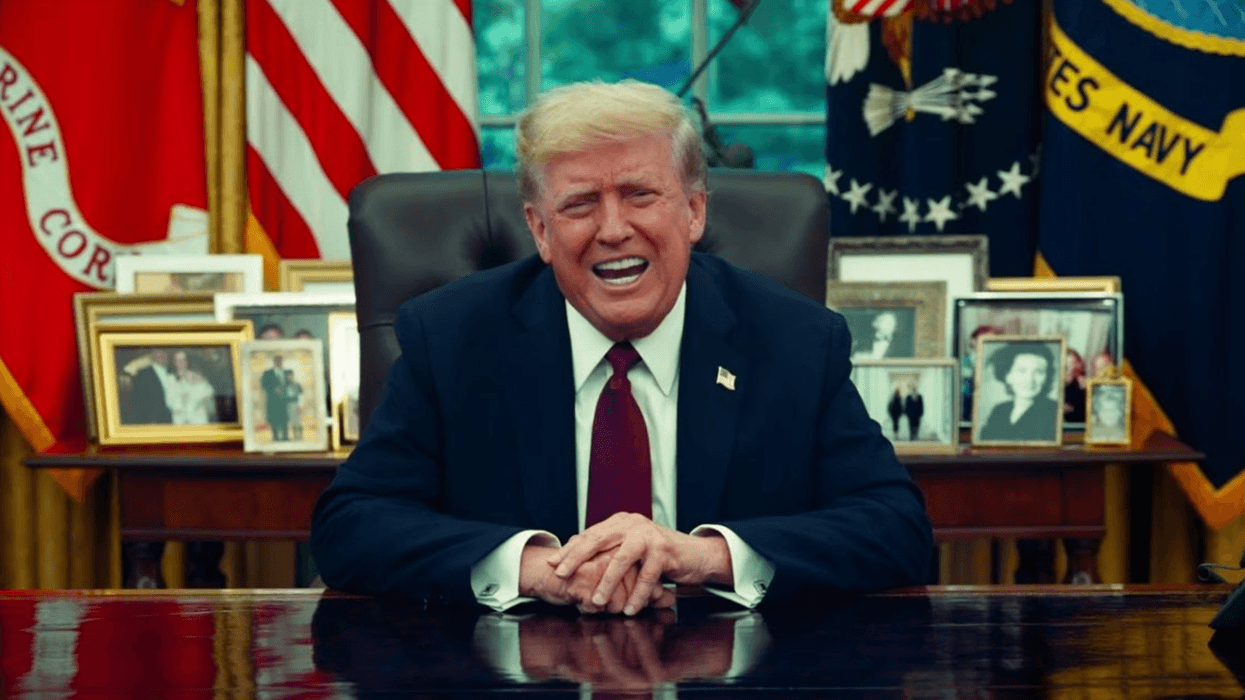
When a government points its finger at you — when it decides you are the enemy — the entire machinery of the state lines up behind that accusation. That’s not hyperbole; it’s the lesson of history, written in blood and exile and mass graves.
Every president and most members of Congress have known for the past two centuries that having the ability to wield the power of government is a serious responsibility that carries with it real obligations for self-control.
The reason is simple and obvious, although our media appears to not realize it when they act like Trump’s and Miller’s rhetoric is normal: Government can legally kill you, imprison you, and take everything you own. Fox “News” and other commentators can’t.
When some bigot on Fox or another rightwing outlet goes off on how Democrats are “left wing extremists,” “terrorists,” or “traitors” he doesn’t have the power or ability to do anything about it. They’re just words, which is why they’re protected by the First Amendment. Inflammatory words, certainly, but just words.
But when a government official slaps one of those kinds of labels on you because of things you’ve said or political views you hold, you can lose literally everything.
Just ask Mahmoud Khalil or Rümeysa Öztürk, who were imprisoned for expressing their opinions on the genocide Netanyahu is carrying out in Israel, or Kilmar Abrego Garcia, who had the bad fortune of being brown-skinned when Stephen Miller was on one of his racist jeremiads even though he had legal permission to stay in the US.
This is why even after 9/11 George W. Bush measured his words, going so far as to emphasize that Islam wasn’t our enemy. So did Abraham Lincoln, for that matter, even as the country he led was under attack by actual traitors committed to ending democracy in America. In his first inaugural address, on the verge of the Civil War, he said:
“With malice toward none, with charity for all, with firmness in the right as God gives us to see the right, let us strive on to finish the work we are in to bind up the nation’s wounds…”
Utah’s Republican Governor Spencer Cox understood that, as a government official with the power to kill by firing squad or imprison, it was his obligation to turn down the heat.
“We can return violence with violence; we can return hate with hate. That’s the problem with political violence. It metastasizes,” Cox told the nation when Robinson was arrested. “We can always point the figure at the other side. At some point we have to find an off ramp, or else it’s going to get much worse.”
Trump, Miller, and the GOP more generally haven’t gotten the message.
Trump blamed the “radical left” — as if there actually is any meaningful number of people in America calling for communism — for the killing, and then on Thursday told reporters, “We just have to beat the hell” out of “radical left lunatics.”
When Matthew Dowd notes on MSNBC that Kirk engaged in hate speech, the worst that happens is the network fires him. Ditto for when Fox’s Brian Kilmead called for America to emulate Hitler’s Aktion T4 program, where physicians killed homeless and disabled people by lethal injection, later moving on to mobile vans that used their exhaust to kill. The worst Kilmead can expect is to be fired, although given how shamefully unprincipled Fox management is, that’s probably unlikely.
But when government officials describe people using language that could lead to any of us being investigated, arrested, or even imprisoned or deported because of our politics, it’s an entirely different thing. It’s a genuine threat to our system of government, our rule of law, and to the safety and security of all of the American people.
Because when they start hauling away Americans for their opinions, when they threaten to pull our citizenship or passports — as Trump and other Republicans have recently done — history tells us it’s not a long trek to using those same tactics against people who thought they were on the “right side.”
Indeed, it’s already started to happen: just ask Republicans James Comey, John Brennan, and James Clapper, who are all now facing criminal investigations for speaking out against Trump. All these lifelong Republicans had to lawyer up after Trump publicly called them “criminals.”
When Stephen Miller — who the White House wants you to know definitely does not play with porcelain dolls — says the Democratic Party (which he can’t bring himself to say; he instead uses Joe McCarthy’s “Democrat Party” slur) “is not a political party; it is a domestic, extremist organization,” he’s laying a legal foundation for criminal investigations and arrests per the Patriot Act.
When he vows to “dismantle and take on the radical left organizations in this country that are fomenting violence,” promising under Trump’s leadership to use law enforcement to “strip them of money, power, and freedom” and threatening that members of the left who “spread evil hate” will “live in exile” he’s not just a commentator: he’s a man who wields actual power over life and death, imprisonment or freedom.
This rhetoric is particularly troubling since all of the previous 31 politically-motivated violent attacks in America have been committed by rightwingers.
Or consider Elon Musk, the world‘s richest man who created and ran the DOGE program to dismantle our government. He was in England this weekend and said:
“The violence is going to come to you. You will have no choice. This is a, this is, you're in a fundamental situation here where you, where, whether you choose violence or not. The violence is coming to you. You either fight back or you die. You either the fight back or you die. And that's the truth.”
And he wasn’t talking about Osama bin Laden or anybody like that; he was talking about people like you and me:
“[Y]ou see how much violence there’s on the left with our friend Charlie Kirk getting murdered in cold blood this week and people on the left celebrating it openly; the left is the party of murder and celebrating murder. I mean let that sink in for a minute. That’s who we’re dealing with here. That is who we're dealing with.”
When Trump is asked how to heal the country and says, “I couldn’t care less” and adds that, “The radicals on the left are the problem,” he’s inciting stochastic lone-wolf terror against Democrats and setting up rationalizations for government actions like Hitler’s Reichstag Fire Decree that ended all free speech protections in Germany in 1933.
And now a member of Congress is introduced legislation to strip the passports of anybody who “supports terrorism.“ The bill’s author is a former soldier in the Israeli military: you know what direction this is going.
The few rational people still left in the GOP need to reach out to this administration and convince them to follow the example of every other president since Andrew Jackson to dial back the rhetoric, acknowledge the fundamental humanity of Democrats and others on the “left,” and their absolute right to advocate for their own, different vision of a better America with fewer guns, more unions, and free healthcare and free college (the actual “radical left” positions).
Because when a government points its finger at you — when it decides you are the enemy — the entire machinery of the state lines up behind that accusation. That’s not hyperbole; it’s the lesson of history, written in blood and exile and mass graves.
Every authoritarian regime began not with tanks in the streets but with leaders who used words like weapons and convinced their followers that fellow citizens were traitors. Every one. Trump and his enablers are replaying that script, right here, right now.
The only question left is whether we’ll recognize it for what it is and slam on the brakes, or whether we’ll watch, paralyzed, as the state’s power to cage, exile, or kill is once again turned inward, but this time, against us all.