SUBSCRIBE TO OUR FREE NEWSLETTER
Daily news & progressive opinion—funded by the people, not the corporations—delivered straight to your inbox.
5
#000000
#FFFFFF
To donate by check, phone, or other method, see our More Ways to Give page.
Daily news & progressive opinion—funded by the people, not the corporations—delivered straight to your inbox.
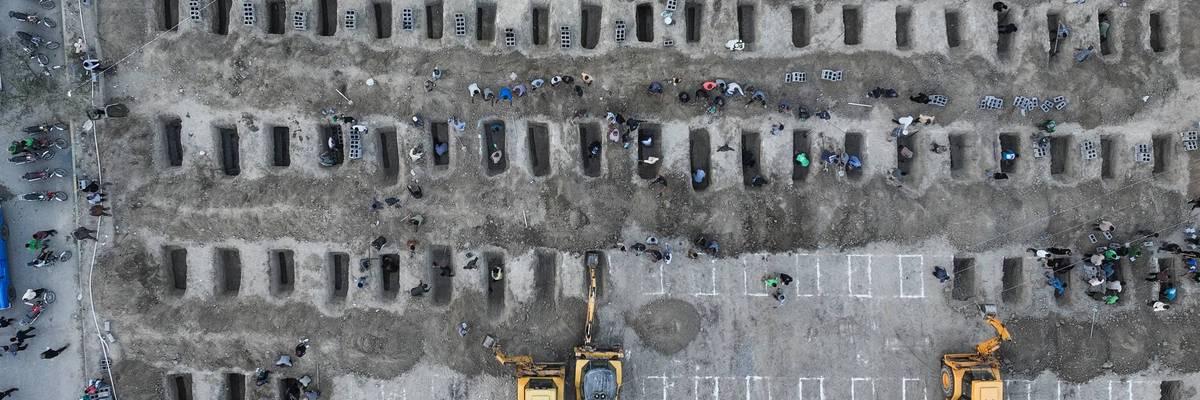
In this aerial handout picture released by the Iranian Press Center, mourners dig graves during the funeral for children killed in a reported strike on a primary school in Iran's Hormozgan province in Minab on March 3, 2026.
The US strikes on a wedding in Kuhestak and a school in Minab expose a larger test: whether the laws protecting civilians constrain powerful states as well as their adversaries.
On September 1, a US airstrike hit a family compound in Kuhestak, southern Iran, as women and children gathered for a wedding celebration. At least five people were killed and dozens more injured. Associated Press reporters who visited the town documented extensive damage and civilian suffering. Reuters later reported that imagery, debris, and weapons assessments were consistent with a direct hit by a US munition, while US officials said the incident was under review. The immediate facts matter. But the larger question is already unavoidable: What happens to the laws of war when civilian spaces repeatedly become part of the battlefield?
The significance of Kuhestak extends beyond the number of casualties or the identity of the weapon. The deeper danger is what incidents like this can do to the norms meant to limit warfare. If homes, schools, hospitals, wedding gatherings, or refugee sites are repeatedly treated as tolerable consequences of military necessity, the distinction between battlefield and civilian life begins to lose practical meaning.
International humanitarian law was designed precisely to prevent that erosion. Its rules do not make war safe, and they do not prohibit every attack that may harm civilians. They do, however, require parties to distinguish between civilians and military objectives, prohibit attacks expected to cause excessive incidental civilian harm in relation to the concrete and direct military advantage anticipated, and require feasible precautions to minimize civilian loss. The principles of distinction, proportionality, and precaution are not political preferences. They are the legal architecture intended to preserve a minimum boundary between military necessity and human life.
International law rarely collapses in a single dramatic moment. More often, norms weaken when exceptional conduct is repeated, defended, or left without meaningful scrutiny.
That distinction matters when assessing the US position as well. Washington says it does not target civilians and that its operations in southern Iran were aimed at military infrastructure, including air-defense, communications, and maritime assets. The Associated Press reported those stated objectives alongside the civilian toll in Kuhestak. Under the laws of war, the existence of a legitimate military objective can matter greatly. Civilian casualties, by themselves, do not automatically prove an unlawful attack. But that is precisely why transparent investigation is essential: Was the target properly identified? Were the expected civilian risks assessed? Were feasible precautions taken? And was the anticipated military advantage sufficient to justify those risks?
Kuhestak is especially troubling because it follows another catastrophic episode in the same province. On February 28, a strike hit a school in Minab. In March, Amnesty International said its investigation found US forces responsible for the attack, which killed 156 people, including 120 children, and concluded that the United States had failed to take all feasible precautions to avoid civilian harm. Amnesty called for a transparent and thorough investigation and accountability for those responsible. Minab therefore cannot simply be treated as an unresolved rumor in the background of the current war.
Seen together, Minab and Kuhestak raise a deeper concern. One catastrophic civilian strike may be explained as a failure of intelligence, targeting, weapon performance, or judgment. A pattern of incidents, however, raises a different question: whether civilian protection is being pushed too far to the margins of operational decision-making. The danger is not only the immediate loss of life. It is the gradual normalization of exceptions.
If civilian protection becomes a principle honored only when convenient, the damage will not stop with one town or one conflict.
International law rarely collapses in a single dramatic moment. More often, norms weaken when exceptional conduct is repeated, defended, or left without meaningful scrutiny. Each time a serious civilian-harm incident is absorbed into the routine language of war without transparent findings or accountability, the practical force of the rule diminishes. What is described today as an exceptional mistake can become tomorrow's accepted risk.
Some will argue that this concern overstates the implications of incidents that occur in a high-intensity conflict. War is chaotic. Military assets may be located near civilian areas. Information can be incomplete, and even precision weapons cannot eliminate human error or unintended harm. Those points are real, and international humanitarian law itself recognizes that civilian casualties can occur even in attacks directed at lawful military objectives.
But acknowledging the realities of war is not the same as accepting the erosion of its limits. The law matters most precisely when military pressure is intense and operational decisions are difficult. If the protections owed to civilians become flexible whenever the strategic stakes are high, then their universality becomes conditional on power, geography, and political convenience. A rule that constrains only weak states, while powerful ones receive the benefit of endless exceptions, is not a universal rule for long.
The consequences would reach far beyond Iran. The laws of war function only if states expect them to apply across conflicts and regions. A standard weakened in the Middle East will not remain neatly contained there. Future belligerents in Europe, Africa, or East Asia can point to conduct tolerated elsewhere and demand the same latitude for themselves. Selective enforcement does more than produce unequal justice; over time, it changes what governments believe they can do.
A rule that constrains only weak states, while powerful ones receive the benefit of endless exceptions, is not a universal rule for long.
The appropriate response, therefore, is not to prejudge every disputed strike or to assume that every civilian death proves a war crime. It is to insist on independent, transparent, and verifiable investigations; publication of meaningful findings; and accountability wherever violations are established. The United States should be held to the same standards it expects other states to observe. The same standard must apply to Iran, Israel, and every other party to an armed conflict. Universality is the point.
The question raised by Kuhestak is ultimately larger than one wedding, just as Minab was larger than one school. It is whether the international community still believes that even in war there are people, spaces, and rules that military necessity cannot simply sweep aside. If civilian protection becomes a principle honored only when convenient, the damage will not stop with one town or one conflict. What will have been weakened is the boundary that keeps war from becoming limitless—and once that boundary disappears, no nation can assume that its own civilians will remain safely on the other side of it.
Dear Common Dreams reader, It’s been nearly 30 years since I co-founded Common Dreams with my late wife, Lina Newhouser. We had the radical notion that journalism should serve the public good, not corporate profits. It was clear to us from the outset what it would take to build such a project. No paid advertisements. No corporate sponsors. No millionaire publisher telling us what to think or do. Many people said we wouldn't last a year, but we proved those doubters wrong. Together with a tremendous team of journalists and dedicated staff, we built an independent media outlet free from the constraints of profits and corporate control. Our mission has always been simple: To inform. To inspire. To ignite change for the common good. Building Common Dreams was not easy. Our survival was never guaranteed. When you take on the most powerful forces—Wall Street greed, fossil fuel industry destruction, Big Tech lobbyists, and uber-rich oligarchs who have spent billions upon billions rigging the economy and democracy in their favor—the only bulwark you have is supporters who believe in your work. But here’s the urgent message from me today. It's never been this bad out there. And it's never been this hard to keep us going. At the very moment Common Dreams is most needed, the threats we face are intensifying. We need your support now more than ever. We don't accept corporate advertising and never will. We don't have a paywall because we don't think people should be blocked from critical news based on their ability to pay. Everything we do is funded by the donations of readers like you. When everyone does the little they can afford, we are strong. But if that support retreats or dries up, so do we. Will you donate now to make sure Common Dreams not only survives but thrives? —Craig Brown, Co-founder |
On September 1, a US airstrike hit a family compound in Kuhestak, southern Iran, as women and children gathered for a wedding celebration. At least five people were killed and dozens more injured. Associated Press reporters who visited the town documented extensive damage and civilian suffering. Reuters later reported that imagery, debris, and weapons assessments were consistent with a direct hit by a US munition, while US officials said the incident was under review. The immediate facts matter. But the larger question is already unavoidable: What happens to the laws of war when civilian spaces repeatedly become part of the battlefield?
The significance of Kuhestak extends beyond the number of casualties or the identity of the weapon. The deeper danger is what incidents like this can do to the norms meant to limit warfare. If homes, schools, hospitals, wedding gatherings, or refugee sites are repeatedly treated as tolerable consequences of military necessity, the distinction between battlefield and civilian life begins to lose practical meaning.
International humanitarian law was designed precisely to prevent that erosion. Its rules do not make war safe, and they do not prohibit every attack that may harm civilians. They do, however, require parties to distinguish between civilians and military objectives, prohibit attacks expected to cause excessive incidental civilian harm in relation to the concrete and direct military advantage anticipated, and require feasible precautions to minimize civilian loss. The principles of distinction, proportionality, and precaution are not political preferences. They are the legal architecture intended to preserve a minimum boundary between military necessity and human life.
International law rarely collapses in a single dramatic moment. More often, norms weaken when exceptional conduct is repeated, defended, or left without meaningful scrutiny.
That distinction matters when assessing the US position as well. Washington says it does not target civilians and that its operations in southern Iran were aimed at military infrastructure, including air-defense, communications, and maritime assets. The Associated Press reported those stated objectives alongside the civilian toll in Kuhestak. Under the laws of war, the existence of a legitimate military objective can matter greatly. Civilian casualties, by themselves, do not automatically prove an unlawful attack. But that is precisely why transparent investigation is essential: Was the target properly identified? Were the expected civilian risks assessed? Were feasible precautions taken? And was the anticipated military advantage sufficient to justify those risks?
Kuhestak is especially troubling because it follows another catastrophic episode in the same province. On February 28, a strike hit a school in Minab. In March, Amnesty International said its investigation found US forces responsible for the attack, which killed 156 people, including 120 children, and concluded that the United States had failed to take all feasible precautions to avoid civilian harm. Amnesty called for a transparent and thorough investigation and accountability for those responsible. Minab therefore cannot simply be treated as an unresolved rumor in the background of the current war.
Seen together, Minab and Kuhestak raise a deeper concern. One catastrophic civilian strike may be explained as a failure of intelligence, targeting, weapon performance, or judgment. A pattern of incidents, however, raises a different question: whether civilian protection is being pushed too far to the margins of operational decision-making. The danger is not only the immediate loss of life. It is the gradual normalization of exceptions.
If civilian protection becomes a principle honored only when convenient, the damage will not stop with one town or one conflict.
International law rarely collapses in a single dramatic moment. More often, norms weaken when exceptional conduct is repeated, defended, or left without meaningful scrutiny. Each time a serious civilian-harm incident is absorbed into the routine language of war without transparent findings or accountability, the practical force of the rule diminishes. What is described today as an exceptional mistake can become tomorrow's accepted risk.
Some will argue that this concern overstates the implications of incidents that occur in a high-intensity conflict. War is chaotic. Military assets may be located near civilian areas. Information can be incomplete, and even precision weapons cannot eliminate human error or unintended harm. Those points are real, and international humanitarian law itself recognizes that civilian casualties can occur even in attacks directed at lawful military objectives.
But acknowledging the realities of war is not the same as accepting the erosion of its limits. The law matters most precisely when military pressure is intense and operational decisions are difficult. If the protections owed to civilians become flexible whenever the strategic stakes are high, then their universality becomes conditional on power, geography, and political convenience. A rule that constrains only weak states, while powerful ones receive the benefit of endless exceptions, is not a universal rule for long.
The consequences would reach far beyond Iran. The laws of war function only if states expect them to apply across conflicts and regions. A standard weakened in the Middle East will not remain neatly contained there. Future belligerents in Europe, Africa, or East Asia can point to conduct tolerated elsewhere and demand the same latitude for themselves. Selective enforcement does more than produce unequal justice; over time, it changes what governments believe they can do.
A rule that constrains only weak states, while powerful ones receive the benefit of endless exceptions, is not a universal rule for long.
The appropriate response, therefore, is not to prejudge every disputed strike or to assume that every civilian death proves a war crime. It is to insist on independent, transparent, and verifiable investigations; publication of meaningful findings; and accountability wherever violations are established. The United States should be held to the same standards it expects other states to observe. The same standard must apply to Iran, Israel, and every other party to an armed conflict. Universality is the point.
The question raised by Kuhestak is ultimately larger than one wedding, just as Minab was larger than one school. It is whether the international community still believes that even in war there are people, spaces, and rules that military necessity cannot simply sweep aside. If civilian protection becomes a principle honored only when convenient, the damage will not stop with one town or one conflict. What will have been weakened is the boundary that keeps war from becoming limitless—and once that boundary disappears, no nation can assume that its own civilians will remain safely on the other side of it.
On September 1, a US airstrike hit a family compound in Kuhestak, southern Iran, as women and children gathered for a wedding celebration. At least five people were killed and dozens more injured. Associated Press reporters who visited the town documented extensive damage and civilian suffering. Reuters later reported that imagery, debris, and weapons assessments were consistent with a direct hit by a US munition, while US officials said the incident was under review. The immediate facts matter. But the larger question is already unavoidable: What happens to the laws of war when civilian spaces repeatedly become part of the battlefield?
The significance of Kuhestak extends beyond the number of casualties or the identity of the weapon. The deeper danger is what incidents like this can do to the norms meant to limit warfare. If homes, schools, hospitals, wedding gatherings, or refugee sites are repeatedly treated as tolerable consequences of military necessity, the distinction between battlefield and civilian life begins to lose practical meaning.
International humanitarian law was designed precisely to prevent that erosion. Its rules do not make war safe, and they do not prohibit every attack that may harm civilians. They do, however, require parties to distinguish between civilians and military objectives, prohibit attacks expected to cause excessive incidental civilian harm in relation to the concrete and direct military advantage anticipated, and require feasible precautions to minimize civilian loss. The principles of distinction, proportionality, and precaution are not political preferences. They are the legal architecture intended to preserve a minimum boundary between military necessity and human life.
International law rarely collapses in a single dramatic moment. More often, norms weaken when exceptional conduct is repeated, defended, or left without meaningful scrutiny.
That distinction matters when assessing the US position as well. Washington says it does not target civilians and that its operations in southern Iran were aimed at military infrastructure, including air-defense, communications, and maritime assets. The Associated Press reported those stated objectives alongside the civilian toll in Kuhestak. Under the laws of war, the existence of a legitimate military objective can matter greatly. Civilian casualties, by themselves, do not automatically prove an unlawful attack. But that is precisely why transparent investigation is essential: Was the target properly identified? Were the expected civilian risks assessed? Were feasible precautions taken? And was the anticipated military advantage sufficient to justify those risks?
Kuhestak is especially troubling because it follows another catastrophic episode in the same province. On February 28, a strike hit a school in Minab. In March, Amnesty International said its investigation found US forces responsible for the attack, which killed 156 people, including 120 children, and concluded that the United States had failed to take all feasible precautions to avoid civilian harm. Amnesty called for a transparent and thorough investigation and accountability for those responsible. Minab therefore cannot simply be treated as an unresolved rumor in the background of the current war.
Seen together, Minab and Kuhestak raise a deeper concern. One catastrophic civilian strike may be explained as a failure of intelligence, targeting, weapon performance, or judgment. A pattern of incidents, however, raises a different question: whether civilian protection is being pushed too far to the margins of operational decision-making. The danger is not only the immediate loss of life. It is the gradual normalization of exceptions.
If civilian protection becomes a principle honored only when convenient, the damage will not stop with one town or one conflict.
International law rarely collapses in a single dramatic moment. More often, norms weaken when exceptional conduct is repeated, defended, or left without meaningful scrutiny. Each time a serious civilian-harm incident is absorbed into the routine language of war without transparent findings or accountability, the practical force of the rule diminishes. What is described today as an exceptional mistake can become tomorrow's accepted risk.
Some will argue that this concern overstates the implications of incidents that occur in a high-intensity conflict. War is chaotic. Military assets may be located near civilian areas. Information can be incomplete, and even precision weapons cannot eliminate human error or unintended harm. Those points are real, and international humanitarian law itself recognizes that civilian casualties can occur even in attacks directed at lawful military objectives.
But acknowledging the realities of war is not the same as accepting the erosion of its limits. The law matters most precisely when military pressure is intense and operational decisions are difficult. If the protections owed to civilians become flexible whenever the strategic stakes are high, then their universality becomes conditional on power, geography, and political convenience. A rule that constrains only weak states, while powerful ones receive the benefit of endless exceptions, is not a universal rule for long.
The consequences would reach far beyond Iran. The laws of war function only if states expect them to apply across conflicts and regions. A standard weakened in the Middle East will not remain neatly contained there. Future belligerents in Europe, Africa, or East Asia can point to conduct tolerated elsewhere and demand the same latitude for themselves. Selective enforcement does more than produce unequal justice; over time, it changes what governments believe they can do.
A rule that constrains only weak states, while powerful ones receive the benefit of endless exceptions, is not a universal rule for long.
The appropriate response, therefore, is not to prejudge every disputed strike or to assume that every civilian death proves a war crime. It is to insist on independent, transparent, and verifiable investigations; publication of meaningful findings; and accountability wherever violations are established. The United States should be held to the same standards it expects other states to observe. The same standard must apply to Iran, Israel, and every other party to an armed conflict. Universality is the point.
The question raised by Kuhestak is ultimately larger than one wedding, just as Minab was larger than one school. It is whether the international community still believes that even in war there are people, spaces, and rules that military necessity cannot simply sweep aside. If civilian protection becomes a principle honored only when convenient, the damage will not stop with one town or one conflict. What will have been weakened is the boundary that keeps war from becoming limitless—and once that boundary disappears, no nation can assume that its own civilians will remain safely on the other side of it.