SUBSCRIBE TO OUR FREE NEWSLETTER
Daily news & progressive opinion—funded by the people, not the corporations—delivered straight to your inbox.
5
#000000
#FFFFFF
To donate by check, phone, or other method, see our More Ways to Give page.
Daily news & progressive opinion—funded by the people, not the corporations—delivered straight to your inbox.
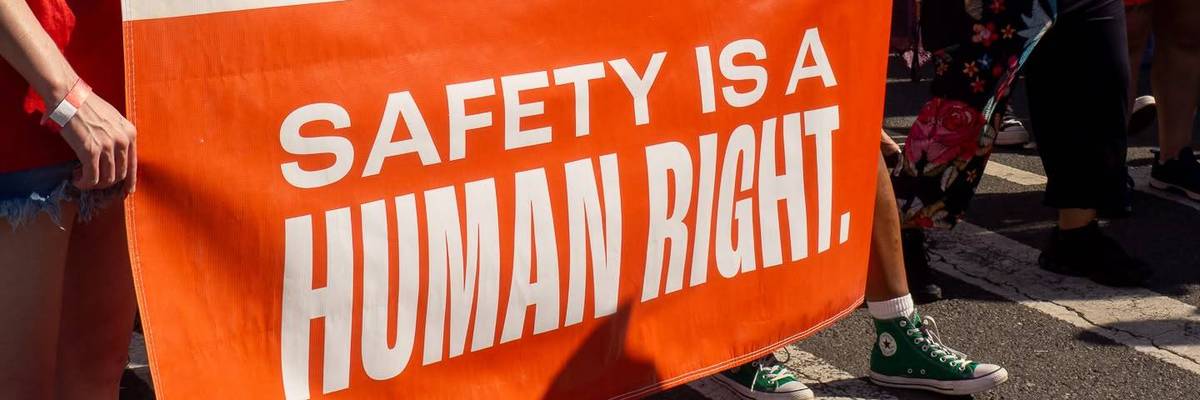
Members of Safe Horizon carry a banner in the NYC Pride March on June 28, 2026.
A proposed Office of Management and Budget rule change giving a small group of presidential appointees final approval over $1 trillion in grant money would be devastating for nonprofits and the vulnerable people they serve.
Three months ago, the Office of Management and Budget proposed new rule changes that would greatly politicize federal grant making, with the potential to restrict, stall, and even terminate grants to nonprofits, state and local governments, universities, and community organizations across the country at will.
Just this week, the House passed a stopgap funding bill to temporarily block the finalization of these rule changes, with bipartisan support. If signed by the president it means that federal agencies will now continue to be funded through December 11, and no changes to the Office of Management and Budget (OMB) rules will take place before then.
While this funding patch is good news, come December we'll need much more than a temporary fix to address the dangerous impact these changes will ultimately have. If these rules are finalized, $1 trillion in annual discretionary grants will soon be subject to approval by a group of presidential appointees, based on alignment with the president’s extreme and erratic policy priorities. Shifting this crucial decision-making power to a small set of political appointees is highly concerning for tens of thousands of nonprofit organizations addressing public health, housing, transportation, scientific research, and more. For the survivors we serve, the consequences could be devastating.
I lead Safe Horizon, the nation’s largest victim service organization, serving 250,000 survivors of violence, abuse, and exploitation each year. We offer domestic violence shelters, criminal justice programs, case management, mental healthcare, support for unhoused youth, and expert legal advice and representation. This is lifesaving work.
A cancelled grant may mean that a woman is forced to leave emergency shelter and return to her unsafe home, or that a young person may lose their supportive housing and find themselves sleeping on trains.
Like so many of our peers in the human services sector, we rely on federal funding—through direct federal grants as well as through state and city pass-through funding—to support our clients. The proposed rule changes threaten the safety and health of our clients by adding questionable legal interpretations and ideological differences as criteria for granting funds.
Domestic violence, child abuse, homelessness, and immigration are all issues that cut across gender, race, religion, and identity. We serve ALL survivors who come through our doors, including people with marginalized identities who are disproportionately impacted by violence and abuse. Last year alone, 901 survivors of domestic violence and their 1,098 children found safety through our shelters, and we answered 93,935 crisis calls through our 24-hour hotline.
Under the new rules, federal agencies will be empowered to terminate or pause grants based on changes in agency priorities or the “national interest,” meaning grants could be cancelled at any time for any reason, disrupting critical services to those who need them. These changes will directly impact our clients’ safety. A cancelled grant may mean that a woman is forced to leave emergency shelter and return to her unsafe home, or that a young person may lose their supportive housing and find themselves sleeping on trains. A survivor of sexual violence may have no one to turn to when the hotline number stops picking up in times of crisis. Nonprofit domestic violence shelter providers across the country could be forced to pause or reduce their services, and even close their doors, leaving survivors more vulnerable to violence and uncertainty.
Beyond ideological interpretations, procedural rule changes will weaken the integrity and stability of the federal grant-making process itself. Currently, grants are reviewed by peer subject matter experts. This means independent professionals make informed decisions about which programs are most qualified to receive funding. Giving political appointees who lack this expertise the power to approve or deny grants makes grant making political, essentially reducing it to a tool of the president, instead of prioritizing the real needs of a community.
These proposed changes are alarming, and yet, we are no longer surprised. There is a pattern of manipulation at play: Just this summer The New York Times reported that the Trump administration admitted that they had canceled more than $7.5 billion in federal grants for clean energy projects, based solely on their location in Democrat-led states. We are already witnessing the misuse of congressionally approved funding for political targeting—these rule changes would hasten that process.
After OMB published their proposed rule changes on May 29, a 45-day public comment period opened during which nearly 500,000 comments were submitted by nonprofit organizations, prosecutors, law enforcement, academic institutions, and more. The majority of these comments vehemently opposed the changes.
In our work, we follow a client-centered practice model where we trust that clients are the experts of their own lives. We provide care, guidance, and options toward safety and healing, but ultimately, we listen to survivors first. I hope that after this temporary funding fix, the Senate, OMB, and this administration can follow suit, and that they won't ignore half a million voices of service leaders advocating that these proposed rule changes be withdrawn. Safety is a human right, and the well-being of our communities depends on it.
Dear Common Dreams reader, It’s been nearly 30 years since I co-founded Common Dreams with my late wife, Lina Newhouser. We had the radical notion that journalism should serve the public good, not corporate profits. It was clear to us from the outset what it would take to build such a project. No paid advertisements. No corporate sponsors. No millionaire publisher telling us what to think or do. Many people said we wouldn't last a year, but we proved those doubters wrong. Together with a tremendous team of journalists and dedicated staff, we built an independent media outlet free from the constraints of profits and corporate control. Our mission has always been simple: To inform. To inspire. To ignite change for the common good. Building Common Dreams was not easy. Our survival was never guaranteed. When you take on the most powerful forces—Wall Street greed, fossil fuel industry destruction, Big Tech lobbyists, and uber-rich oligarchs who have spent billions upon billions rigging the economy and democracy in their favor—the only bulwark you have is supporters who believe in your work. But here’s the urgent message from me today. It's never been this bad out there. And it's never been this hard to keep us going. At the very moment Common Dreams is most needed, the threats we face are intensifying. We need your support now more than ever. We don't accept corporate advertising and never will. We don't have a paywall because we don't think people should be blocked from critical news based on their ability to pay. Everything we do is funded by the donations of readers like you. When everyone does the little they can afford, we are strong. But if that support retreats or dries up, so do we. Will you donate now to make sure Common Dreams not only survives but thrives? —Craig Brown, Co-founder |
Three months ago, the Office of Management and Budget proposed new rule changes that would greatly politicize federal grant making, with the potential to restrict, stall, and even terminate grants to nonprofits, state and local governments, universities, and community organizations across the country at will.
Just this week, the House passed a stopgap funding bill to temporarily block the finalization of these rule changes, with bipartisan support. If signed by the president it means that federal agencies will now continue to be funded through December 11, and no changes to the Office of Management and Budget (OMB) rules will take place before then.
While this funding patch is good news, come December we'll need much more than a temporary fix to address the dangerous impact these changes will ultimately have. If these rules are finalized, $1 trillion in annual discretionary grants will soon be subject to approval by a group of presidential appointees, based on alignment with the president’s extreme and erratic policy priorities. Shifting this crucial decision-making power to a small set of political appointees is highly concerning for tens of thousands of nonprofit organizations addressing public health, housing, transportation, scientific research, and more. For the survivors we serve, the consequences could be devastating.
I lead Safe Horizon, the nation’s largest victim service organization, serving 250,000 survivors of violence, abuse, and exploitation each year. We offer domestic violence shelters, criminal justice programs, case management, mental healthcare, support for unhoused youth, and expert legal advice and representation. This is lifesaving work.
A cancelled grant may mean that a woman is forced to leave emergency shelter and return to her unsafe home, or that a young person may lose their supportive housing and find themselves sleeping on trains.
Like so many of our peers in the human services sector, we rely on federal funding—through direct federal grants as well as through state and city pass-through funding—to support our clients. The proposed rule changes threaten the safety and health of our clients by adding questionable legal interpretations and ideological differences as criteria for granting funds.
Domestic violence, child abuse, homelessness, and immigration are all issues that cut across gender, race, religion, and identity. We serve ALL survivors who come through our doors, including people with marginalized identities who are disproportionately impacted by violence and abuse. Last year alone, 901 survivors of domestic violence and their 1,098 children found safety through our shelters, and we answered 93,935 crisis calls through our 24-hour hotline.
Under the new rules, federal agencies will be empowered to terminate or pause grants based on changes in agency priorities or the “national interest,” meaning grants could be cancelled at any time for any reason, disrupting critical services to those who need them. These changes will directly impact our clients’ safety. A cancelled grant may mean that a woman is forced to leave emergency shelter and return to her unsafe home, or that a young person may lose their supportive housing and find themselves sleeping on trains. A survivor of sexual violence may have no one to turn to when the hotline number stops picking up in times of crisis. Nonprofit domestic violence shelter providers across the country could be forced to pause or reduce their services, and even close their doors, leaving survivors more vulnerable to violence and uncertainty.
Beyond ideological interpretations, procedural rule changes will weaken the integrity and stability of the federal grant-making process itself. Currently, grants are reviewed by peer subject matter experts. This means independent professionals make informed decisions about which programs are most qualified to receive funding. Giving political appointees who lack this expertise the power to approve or deny grants makes grant making political, essentially reducing it to a tool of the president, instead of prioritizing the real needs of a community.
These proposed changes are alarming, and yet, we are no longer surprised. There is a pattern of manipulation at play: Just this summer The New York Times reported that the Trump administration admitted that they had canceled more than $7.5 billion in federal grants for clean energy projects, based solely on their location in Democrat-led states. We are already witnessing the misuse of congressionally approved funding for political targeting—these rule changes would hasten that process.
After OMB published their proposed rule changes on May 29, a 45-day public comment period opened during which nearly 500,000 comments were submitted by nonprofit organizations, prosecutors, law enforcement, academic institutions, and more. The majority of these comments vehemently opposed the changes.
In our work, we follow a client-centered practice model where we trust that clients are the experts of their own lives. We provide care, guidance, and options toward safety and healing, but ultimately, we listen to survivors first. I hope that after this temporary funding fix, the Senate, OMB, and this administration can follow suit, and that they won't ignore half a million voices of service leaders advocating that these proposed rule changes be withdrawn. Safety is a human right, and the well-being of our communities depends on it.
Three months ago, the Office of Management and Budget proposed new rule changes that would greatly politicize federal grant making, with the potential to restrict, stall, and even terminate grants to nonprofits, state and local governments, universities, and community organizations across the country at will.
Just this week, the House passed a stopgap funding bill to temporarily block the finalization of these rule changes, with bipartisan support. If signed by the president it means that federal agencies will now continue to be funded through December 11, and no changes to the Office of Management and Budget (OMB) rules will take place before then.
While this funding patch is good news, come December we'll need much more than a temporary fix to address the dangerous impact these changes will ultimately have. If these rules are finalized, $1 trillion in annual discretionary grants will soon be subject to approval by a group of presidential appointees, based on alignment with the president’s extreme and erratic policy priorities. Shifting this crucial decision-making power to a small set of political appointees is highly concerning for tens of thousands of nonprofit organizations addressing public health, housing, transportation, scientific research, and more. For the survivors we serve, the consequences could be devastating.
I lead Safe Horizon, the nation’s largest victim service organization, serving 250,000 survivors of violence, abuse, and exploitation each year. We offer domestic violence shelters, criminal justice programs, case management, mental healthcare, support for unhoused youth, and expert legal advice and representation. This is lifesaving work.
A cancelled grant may mean that a woman is forced to leave emergency shelter and return to her unsafe home, or that a young person may lose their supportive housing and find themselves sleeping on trains.
Like so many of our peers in the human services sector, we rely on federal funding—through direct federal grants as well as through state and city pass-through funding—to support our clients. The proposed rule changes threaten the safety and health of our clients by adding questionable legal interpretations and ideological differences as criteria for granting funds.
Domestic violence, child abuse, homelessness, and immigration are all issues that cut across gender, race, religion, and identity. We serve ALL survivors who come through our doors, including people with marginalized identities who are disproportionately impacted by violence and abuse. Last year alone, 901 survivors of domestic violence and their 1,098 children found safety through our shelters, and we answered 93,935 crisis calls through our 24-hour hotline.
Under the new rules, federal agencies will be empowered to terminate or pause grants based on changes in agency priorities or the “national interest,” meaning grants could be cancelled at any time for any reason, disrupting critical services to those who need them. These changes will directly impact our clients’ safety. A cancelled grant may mean that a woman is forced to leave emergency shelter and return to her unsafe home, or that a young person may lose their supportive housing and find themselves sleeping on trains. A survivor of sexual violence may have no one to turn to when the hotline number stops picking up in times of crisis. Nonprofit domestic violence shelter providers across the country could be forced to pause or reduce their services, and even close their doors, leaving survivors more vulnerable to violence and uncertainty.
Beyond ideological interpretations, procedural rule changes will weaken the integrity and stability of the federal grant-making process itself. Currently, grants are reviewed by peer subject matter experts. This means independent professionals make informed decisions about which programs are most qualified to receive funding. Giving political appointees who lack this expertise the power to approve or deny grants makes grant making political, essentially reducing it to a tool of the president, instead of prioritizing the real needs of a community.
These proposed changes are alarming, and yet, we are no longer surprised. There is a pattern of manipulation at play: Just this summer The New York Times reported that the Trump administration admitted that they had canceled more than $7.5 billion in federal grants for clean energy projects, based solely on their location in Democrat-led states. We are already witnessing the misuse of congressionally approved funding for political targeting—these rule changes would hasten that process.
After OMB published their proposed rule changes on May 29, a 45-day public comment period opened during which nearly 500,000 comments were submitted by nonprofit organizations, prosecutors, law enforcement, academic institutions, and more. The majority of these comments vehemently opposed the changes.
In our work, we follow a client-centered practice model where we trust that clients are the experts of their own lives. We provide care, guidance, and options toward safety and healing, but ultimately, we listen to survivors first. I hope that after this temporary funding fix, the Senate, OMB, and this administration can follow suit, and that they won't ignore half a million voices of service leaders advocating that these proposed rule changes be withdrawn. Safety is a human right, and the well-being of our communities depends on it.